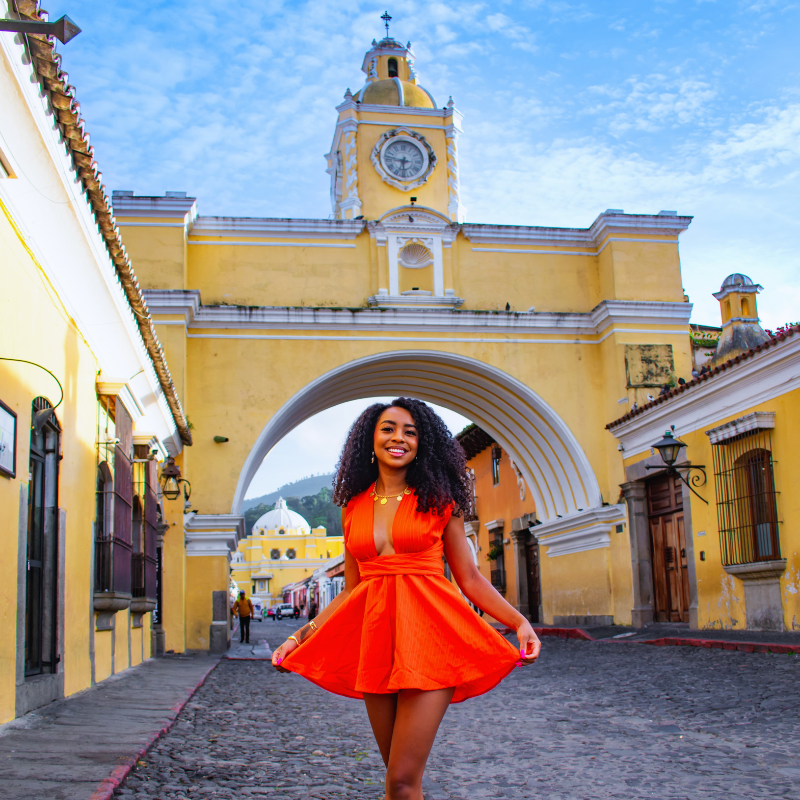
Matt Bowles: My guest today is Marissa Strang. She is a Washington D.C. based travel creator, storyteller and tourism marketing professional who has built a global community of over 100,000 travelers through culture first experience driven content that inspires people to explore the world with more confidence, curiosity and intention. A lifelong traveler with a passion for immersive experiences and community led tourism. Marissa has explored destinations across North America, Europe, the Middle East, Africa and the Caribbean with a travel style centered around local culture and highlighting underrepresented stories. She will also be a featured speaker at the upcoming Women in Travel Summit 2026.
Marissa, welcome to the show.
Marissa Strang: Hi there. Thanks for having me.
Matt Bowles: I am so excited to have you here. The last time we hung out in person was in New York City almost a year ago. We’re going to see each other at the upcoming WITS conference in Chattanooga, which I’m super excited for. But let’s just start off by setting the scene and talking about where we’re recording from today and the fact that we have agreed to make this a wine night. Let’s also talk about what we are drinking. I am actually in the Blue Ridge Mountains of Asheville, North Carolina tonight and I have just opened a bottle of Chilean Carmenere so I am going to be drinking through that tonight. But where are you Marissa and what are you drinking?
Marissa Strang: Yum. That sounds so good. I am in Fairfax, Virginia. It’s just about 30 minutes outside of the D.C. area where I’m actually raised. And today I have a Petit Manseng from 50 West. It’s this gorgeous winery in Middleburg, Virginia which is Virginia’s best wine country. So, I’m enjoying that ton.
Matt Bowles: I feel like because we are drinking wine, we should start off with a wine travel story. When you think about the different travels that you have done, you’ve been to a number of different wines producing countries. I know that what is one of the top wine experiences around the world that comes to your mind that you still think about?
Marissa Strang: So, one place that really surprised me, I feel like nobody talks about Santorini when they talk about wine. It really blew me away. And I’ve been wine tasting in Tuscany. I’ve gone to Napa Valley. But something about Santorini was so surprising to me. The wine was so delicious. It had this rolling hills and countryside that I never thought I would ever experience. And for the day, we just had a half day tour with a private driver. We hit four or five different wineries in the countryside in Santorini. It’s my best friend and I and it was so gorgeous. They have this really cool method with the wine vines where they wrap them into baskets to protect them from the wind. So that was so cool to learn about. But also, just drinking my way through Santorini, which is a bucket list of places for me, was insane. We’ve got wine tasting in a cave and we went to this beautiful outdoor scenery with rolling hills and it was just a dream. It doesn’t even feel real.
Matt Bowles: Well, I have been wine tasting in Greece. I have never been to Santorini, but I have been to some of the other Greek islands and the wine scene is legitimate. So, if people don’t know about Greek wines, I think that is an excellent recommendation to put people onto. All right, Marissa, the next thing I have to ask you about, you and I have not caught up in a couple months and I have been following your travels vicariously through your Instagram and there are some stories I have not heard that I must ask you about. First, to start off this podcast, I saw Instagram footage of you not just going to the NCAA Final Four in Indianapolis, but I saw footage of you hanging out in person with Post Malone, posting videos and selfies together. I need the story for this entire experience and how that came about.
Marissa Strang: So, I was obviously at the NCAA Final Four. I was on a brand partnership actually with Capital One, which is a dream to even be at an event like that. But we were hanging out. I think a lot of people don’t realize it really was spontaneous. It was not because I was there for a brand partnership. It really was the most random thing ever. So, we are in the Capital One lounge and we’re just hanging out, grabbing some food, taking a breath, because March Madness has this amazing music festival called Jam Fest and they have all these headliners and Post Malone obviously was one of them.
So, we were like, okay, let’s just go to the lounge and hang out for a little bit, revamp before the first set, have a little bite. And they were closing the lounge, they were kicking everybody out. And I decided, let’s just hang out for a couple more minutes. Everyone’s filtering out. Let’s just stay, maybe have one more little bite before everyone actually gets kicked out. And my husband was taking a picture of me with some really good food. And then you see in the background this blonde lady spot us out, walking towards us. And she literally approaches my husband with backstage passes and hey, do you guys want to introduce Post Malone to come on stage as the next headliner? And we were like, what? Is this really happening? So of course, we said yes, because that’s a no brainer. But we got to go backstage, go on stage and actually announce that Post Malone was coming out next and hype the crowd up.
I’ve never imagined that I would get to stand on stage and see a sea of 30,000 people just excited for Post Malone to come on stage. But we got this really cool opportunity to like hype the crowd up. Are you ready for Post Malone? And announce that he’s coming out? And it was literally insane. And then when he came and he performed, we just so happened to be in the front row and he came down and said hi to the audience and said hi to everyone and he stopped to take a picture with me. It was really insane.
Matt Bowles: That is unbelievable. So, all right, you are now a full-time professional travel content creators and you get these epic brand partnerships to go and do stuff like that. I feel like we need to start the Marissa Strang story at the very beginning and go all the way back and give people context on this journey of how you got to where you are today. You mentioned that you grew up in the Washington D.C. metro area. Can you just share a little bit about your childhood and growing up there, what that was like for you and how your early initial interest in travel started to develop?
Marissa Strang: So, taking it way back. I’ve been in the D.C. area for about 17 or 16 years somewhere around there. And my family was military growing up. So, I was born in El Paso, three months old. We left, we moved between Georgia and Virginia and all these different places and eventually we settled in the DMV area. But growing up and being military, you’re always moving around, you’re always starting new at a new school and having to re-establish your friends and your connections. So, I feel like that made me a really adaptable, very curious person when you’re constantly having to start over and talk to different people from different walks of life and establish yourself in new social circles and things like that.
So, I always became this naturally curious person who just loved to talk to people and love to learn. And then throughout that period, my family was just super into travel. My mom was the OG traveler of the family and, and she would just plan all these weekend trips. Let’s go to the beach, let’s go on a cruise, let’s go to Mexico and go to an all-inclusive resort. So, I grew up with these stories, traveling with my mom and dad and just having these family road trips. But the very first time that I really understood travel and the power of it, outside of let’s just go on a vacation was junior year of college when I went on a study abroad to Cuba to study salsa dancing. And that just unlocked the world for me because when I was in Cuba and I got to really learn about the roots of salsa and African tradition and the way it came over to Cuba and the way that it developed and learn about Santeria and their religion, that’s when it really clicked for me. Like, okay, wait, it’s not just all-inclusive resorts and beach vacation. You can learn so much more.
Matt Bowles: So, what made you decide to do that particular trip? Can you think back to when you were coming into college? I know you went to George Mason University, big shout out to GMU. But when you were in college, what made you decide to sign up for that study abroad trip in Cuba and what were you hoping to get out of it? If you think back to when you were anticipating and you were about to go on that trip, what were you hoping for? What was the mindset?
Marissa Strang: Yeah, I think there’s so many moments in my life I can trace back to this mindset of I just did it for the plot and then it ended up being a pivotal moment for me. It’s the craziest thing. So as far as the Cuba thing, I was a marketing major doing my bachelor’s and I was just looking for an easy elective. That’s really where it started. I did an elective and I studied Afro Latin dance and did a semester of it at Mason just for an easy credit. I always loved to dance and I knew it would be a fun class, so I did it. And then I fell in love with it. I absolutely adored it. Learning about the music and the instruments and partner dancing in the middle of my day between classes and having this day where I could just partner dance. So cool, so fun.
And my professor was awesome, and he told me. He’s like, I do this thing every year where I take the kids to Cuba, and you get to learn about salsa more intimately. And I was like, I don’t know if I want to do that. So, the first semester actually didn’t. I was like, okay, I’m just going to take the class. I returned to take part two of the class, and he mentioned it to me again, and I was like, okay, this would be really cool. I don’t know much about Cuba. I know I love dance, so let’s make it happen. Okay, I know I love traveling. Let’s make it happen. And so, it really was just the spur of the moment. Okay, I took this elective. I needed credits, and now I fell in love with something, and I want to learn more about it. And so, I decided to go on this trip. But I feel like I got so much more than just learning about dance on the trip. I got to learn, like I said, about the culture, about the drums, about this connection to African diaspora. It was really something so unique for me.
And being in Cuba was unlike anywhere else, right. You’re going to the square to get Wi-Fi cards because you can’t just get on the Internet while you’re there. I remember having a ripped dollar bill, realizing I couldn’t spend it. This guy takes me through a corridor in the back of a bar to switch it out. Some random guy sitting on, like, a bar stool. It was just like anything I had ever seen. And then, even though the people have this way of life, maybe suffering from poverty, they always were so, like, positive and kind and just uplifting. And I fell in love with their joy. I know I can trace that back to the moment where I was like, I have to see more of the world.
Matt Bowles: So, from there, based on that trip and how you felt, how then did that shape your future trajectory? What was next for you when you got back from that trip?
Marissa Strang: So, getting back, I went back into my studies, right? And I was still a college kid, but I saw an uptick in me trying to plan trips with my friends. Oh, did you know there’s Ocean City is only a few hours away. Let’s go to the beach or. Oh, my mom said she got some kind of deal to go to Mexico. Oh, I invited myself on the trip. I know I was not invited. She was going to go and go to a resort. I’m like, oh, can I come? That’s when I noticed these upticks in me just trying to get out of my bubble anytime that I possibly could. Whether it was spring break. I remember going on some trips to Miami over spring break. So, it started very local, but it was just what a college kid could realistically be able to afford and do. But I was just trying to get out of the circle as much as possible. And during that time, I had started documenting my experience on social media when I would go travel. And people started having questions like, how are you doing this? How are you finding deals? How are you booking flights? Things that I thought were easy or were common sense that I may be learned from my mom growing up. That’s when I started to learn that people wanted to know those things from me. So that also started to spark me sharing my experience on social media and also sharing those tips and tricks for other people to travel, too.
Matt Bowles: I relate to that so much as well, because when I was in college, I studied abroad in Ireland, and I’m Irish American. So that for me, also was a really amazing sort of heritage reconnection trip. But even more than that, it was college student living independently outside of the country. For me, I did the entire year, my junior year abroad in Ireland, and so my roommate and I took the winter break. You get like a month off over Christmas and New Year’s, and we just bought a Euro rail pass. It was at the time, it was like a hop on, hop off as much as you want through 17 countries and just buy it for a month. And they have these super amazing discounts for students.
And so, we were like, okay, so we just backpacked through Europe for a month. Completely changed my life. This is my first time being meaningfully out of the country, let alone on your own, independently out of the country. And it was just like, whoa. And so that completely changed everything for me. So, for you, I’m curious. I know you eventually went on your first solo trip, which was to Iceland, and I’m wondering if you can talk about what led up to that, because you said, okay, you did this trip with your class, with your school, and then you were doing things and organizing with friends and are tagging along with people. What prompted you to do your very first solo trip to Iceland, and what was the plan for that trip?
Marissa Strang: Yes. So that was also another do it for the plot moment. So, we’re fast forwarding now because we went from Cuba junior year of college. Now I’ve graduated with my master’s and I’m working in corporate America. And I am miserable. Not because I didn’t like my job. I actually am maybe one of the few people that loved my job, but they wouldn’t let me go remote. So, I was in the office every single day. And I know that’s so Gen Z. Oh, no. I had to go to the office every day. But that’s genuinely how I felt and I just hated it. So, I was quietly planning my exit from corporate America. So, this solo trip to Iceland happened right after I exited corporate America. It was the first place I went.
And I was sitting at my desk maybe a couple months before I planned to leave. And I got this email from going formerly Scotch cheap flights. We all pretty much know what is Scotch cheap flights now, right? But now they go is going. So, I get this email, $400 round trip to Reykjavik from the D.C. area, which was insane. I was like, there’s no way. So, I’m like, okay, someone’s going to come with me. Let me just book it. I booked it immediately. Okay. You know that 24-hour rule. You can always cancel for 24 hours. So, I just booked it on impulse. I was sitting at my desk, supposed to be working, just booked it. And I text my boyfriend at the time and hey, I have this deal. Do you think you can come? Oh, this might not be a good time for work. I text my friend, like, hey, do you think you could come? No, I don’t think so. And I said, okay, screw it, like, I’m going no matter what. And that was the beginning of a one-week road trip solo across the southern coast of Iceland.
Matt Bowles: Okay, so I have not yet been to Iceland, so I would love to hear from you what it is like there and what some of the highlights were. And for people like me that have not yet been. Can you describe how you planned the trip and what turned out to be some of the most epic moments for you of that trip?
Marissa Strang: That trip was so insane. If I tell anyone how it felt like I was in outer space, these are landscapes that I have never seen in my life. You look out the window and it’s just mossy rocks for miles and miles. You can be somewhere and its mountains with snow caps and covered in snow, glaciers, waterfalls. There are these hiking trails with trees. It is just the most diverse landscape I’ve probably ever explored. Planning that trip was a beast, especially because I was road tripping. I was like, I don’t know anything about doing this by myself. And I’m like trying to plan all these different cities. The southern coast, you’re driving, it might be like you’re driving two hours. And you go to another waterfall, it’s two more hours. You go to another place, it’s four more hours. So, it really is a beast to drive. And I remember doubting myself going into it. Can I do this alone?
But at that point, I had no choice, right? Because everything was booked. This trip was absolutely beautiful. I started in Reykjavik because that’s where you fly into going to the Blue Lagoon. And I remember thinking, this is something that’s been on my bucket list for so long. It really is as blue as it looks like that blue turquoise water and steam, and it’s just so gorgeous. But I started in Reykjavik and then I went to the east and I went along the southern coast, all these fishing villages and these different waterfalls, all the way to the glacier Lagoon, which I’m probably going to screw up the pronunciation, but it’s like Jökulsárlón Glacier. And I went all the way across this coast. So going across the southern coast, there are many beautiful waterfalls. It’s like Skogafoss. And I’m going to mess up all the names because the pronunciation is tough, but it’s all these beautiful waterfalls across the southern coast.
And then you can keep going up to Vík, the fishing village. But I didn’t make it up that far. I went up to the glacier and saw Diamond Beach. It’s huge, sparkling little pieces of icebergs that have broken off and washed up onto shore. And the black sand beach is gorgeous with these basalt columns that have formed over years and years from volcanic sediment. It’s all these beautiful landscapes that you would never imagine. And then after going all the way to the east, I turned around and I went up west to the western peninsula, which is Snaefellsnes, the Snaefellsnes Peninsula. And I road trip that for a day. I was actually supposed to go on a tour for that, but that did not happen because I missed the tour bus. Cause I couldn’t get to my hotel or something crazy like that. So, I hopped in the car and I drove and I just made it a day. But it was so incredible. And seeing the northern lights, which are surprisingly elusive, was also insane.
Matt Bowles: Okay, I want to hear your northern lights story. And I’ve seen your Instagram footage of this so I have a sense of what the story is, but for folks that have never attempted to see the northern lights, can you describe what you mean by they are elusive? And then ultimately describe what you were able to see before you left Iceland?
Marissa Strang: So, when I thought of the northern lights, I thought it was just like when you go out at night and you see the stars, they’re just going to be there. You’re going to go out and they’re going to be there. And so, I remember I booked a tour, I think it was for the first or second night when I was in Reykjavik, to go on a bus and be with professional northern lights, finding people. We all loaded on this bus, we drove out maybe three hours. It is literally, I think at this point, maybe 12 o’ clock in the morning. I’m so tired. I get out of the bus. We’re standing there for what seems two hours. We don’t see anything. We see little glimmers of what looks like smoke or something. And I’m like, what is that? And I’m just extremely disappointed. There are apparently all these factors with the magnetic field of the Earth, cloud coverage, and all of these things that I did not know about.
And so, I just remember being very disappointed. Okay, I guess I’m not going to see the lights. I was there for a whole week and did not see the lights at all until the last night before I was set to leave. The airport from Reykjavík, the capital, is about an hour away. So, I decided, let me just book this random little airport hotel right next to the airport for my flight the next morning. And I was so exhausted at that point, so I slept the entire day. And I mean the entire day. I got to the hotel at maybe 10am and I was on and off sleep all the way, probably until 9pm. Almost 12 hours. And so, I got out of bed and I checked this little app that tells you about the magnetic field of the Earth or whatever. I checked this little app and it says like, 55% of Northern Lights tonight. I’m like, all right, it’s probably a wash, but whatever. Let me go outside. So, I grab my camera, I run outside, and I look up in the sky and I see nothing.
And I turn around and go back in the lobby. I say to the lobby girls, because that was my first solo trip. So, you know, I’m like, extremely diligent. I’m like, hey, guys, I’m going outside, look for the lights. If you don’t hear from me in an hour, here’s my number. I still think that’s good advice. But I was just out in the parking lot and they’re like, you know, some people actually saw them tonight. You could get lucky. I said, okay. So, I go back outside and I stand there and I see this gray streak across the sky. I’m like, huh. I had learned from my tour that you don’t actually see the northern lights in this vivid green most of the time. The way that the rods in your eyes apparently filter color at night, you are not going to see that strong green at night. Your eyes just don’t filter it that way. It usually looks like that just on the camera. I see this gray streak across the sky and I say, huh, that looks interest.
And then I just keep staring. And maybe within the next two to three minutes, it opened up in a way I did not expect. It was literally like someone was on the other side of the sky with a paintbrush, just drawing streaks and creating a masterpiece in the sky. And I just remember being in that parking lot alone and there was nobody there. It was just me with my camera. And I just remember staring up in the sky and being in awe of this incredible thing that was happening in front of me. And yeah, that was my story of how I saw the northern lights and didn’t see them for the entire week, but saw them the night before I left.
Matt Bowles: That’s so amazing. Well, you mentioned your then boyfriend, now husband. Since we last hung out together a year ago, you got married. So, first of all, congratulations. I have not yet met your husband in person, but I have seen a bunch of footage of you two traveling together, and you are absolutely adorable together. So, I am so happy and so excited for you. And then after you got married, you went on your honeymoon. And I have to ask you about this because of all the places in the world that you could select, and I’m always curious what world travelers would select for a honeymoon destination. You and your husband chose Egypt, which I appreciate so much because I lived in Egypt for about a year. It was actually the very first destination I went to when I became a digital nomad.
So, as you know, I lived in D.C. for about seven years, and then I lived in LA for about seven years after that. That was my last permanent base. And the reason I went to Egypt for a year is because I was in a relationship at the time. And my relationship partner was doing her PhD at UCLA and she was Egyptian American and she was doing her PhD in Egyptian history. And so, we were living together. We’d been together for four years at the time. And so, one day she comes home and she’s, yes. So, I got to go to Cairo for a year to do my dissertation research. And I was like, cool. I was like, cool. I’m location independent. I’ll go to Cairo for a year. Let’s do that. And so, I had already shifted to building my own remote business and all of that. And I was just living in LA because I loved la and I was in a relationship in LA and I was just there. I didn’t have any business purpose there. I was working remotely, but I was in la. So, I was like, yeah, let’s go to Cairo for you. Let’s do that.
And we actually, technically, for people that actually know my specific story, I was like, you know what? If we’re going to Cairo for a year, we’re getting rid of all of our stuff in LA. We don’t need to be here for the summer, so let’s go somewhere on the way to Cairo for three months, because pretty much any place in the world is cheaper than LA anyways. And then we’ll go to Cairo. And so, we picked Buenos Aires, Argentina, which is on the way to. That’s on the way to Cairo, isn’t it? From LA-ish. Roundabout, is it? Kind of, sort of. So actually, technically, the very first place I went was Buenos Aires, and some people know that story for three months. But then after BA, I went to Cairo, and we lived in Cairo for nine months, actually. But we had previously gone there for like two months a couple years earlier because she needed to do some stuff. So, we went for two months and then we’re like, all right, we’re moving there. And we went there for the year. And so, while we were there, of course, then my sister came over and we traveled around Egypt and stuff like that. It was a really special year. I have a lot of love for Egypt just because of how long I spent there and how deeply I was able to immerse in all that.
And of course, one of the things I love about yours, because I’ve seen your videos and it’s amazing. Like, you did such a beautifully spectacular job. Like, I was actually really quite touched by how beautifully you represented the different parts of Egypt and the different temples that you went to. It really came across in the quality of your videography and your content creation, how special these places were to you. And just in general. So, the tribute that you created, I think, through your content, really touched me and was really special and wonderful. But obviously even more special than that for you is the fact that it was your honeymoon. And so. So, let’s just start with you and your husband are choosing a destination. How do you land on Egypt?
Marissa Strang: First of all, thank you so much. That actually means a lot, I think, when anyone who has lived in a place or someone who grew up there is a local says that my content represented somewhere. Well, that means a lot more to me than anything because you always want to represent a place and do it justice, right? And so, yeah, the Egypt thing, it’s so crazy because we didn’t quiet picked that first. It really was just another, I guess maybe a running theme of my life is things just happen sometimes. And so, my husband and I, we were going back and forth about a honeymoon destination and we could not agree. I am more than willing to say we went back and forth about it probably for like months.
I wanted to do Vietnam. He is a magnet for mosquitoes and I don’t know why. He just was like, I’m worried about the mosquitoes. I don’t want to go. I was like, all right, fine. He wanted to do South Africa. He’s already been twice. I was like, I’m not going somewhere you’ve been before. We’re going to experience somewhere new together. We wanted to do Italy, but the time of year that we needed to go, there were going to be all these places we wanted to visit and they were going to be all closed for the season. So, we had just went around and around, around in circles and I was tired. And so, one day I’m just standing in the kitchen cooking dinner and he just walks in the kitchen and goes, what if we do Egypt? And I literally looked at him and said, okay, great, let’s do it. I guess part of it was exhaustion of this conversation of how we reached this point. But also, I had always wanted to go to Egypt. So, I’m like, okay, this will be adventurous and it’s a little different than what most people do. And I’m always about doing something for the plot. So, I was like, okay, let’s do it.
So, we had chosen Egypt. Somewhere along the way of me trying to start planning this thing, and this thing was a beast. I feel like logistically, I’m not sure how it is with you. And having been like someone who lived there, logistically, I feel like getting around Egypt can be a beast. If you don’t have the local person or you don’t have any roots there, it can be pretty confusing to plan all of the missing pieces and put it together. This puzzle of what was supposed to be our 11-day trip, we decided we were going to go and we were trying to start planning it. And somewhere along the line, my friend, now friend, but at the time she was a total stranger, had cold emailed me. Her name’s Anina and she runs a Latina Self-care but also group travel, a company called the World Within Us. And she had reached out to me and was like, hey, I just want to connect with another entrepreneur. I’m Anina, I live in New Jersey, New York area, and I plan trips for groups and let’s connect. So, we hopped on the phone and through our conversation, I discovered that she had been to Egypt seven times. And I was like, girl, I need your help. And it’s so funny because as a self-sufficient traveler, I like to plan everything myself. But at this point I was like, I need your help.
And so, she planned this amazing trip for us for 11 days. We started in Cairo; we did the whole circuit. We did the Nile cruise from Aswan to Luxor, and then we ended in Hurghada and at the beach, and then we went back to Cairo. But it was amazing. But in the meantime, I think something really important to mention is the day before we left, the current administration issued a warning for all travelers to return from Egypt immediately. There was a list of 40 countries that they said, let’s go ahead and return our travelers. If you’re American, come back. And Egypt was on the list. So, we had this very real conversation the day before our honeymoon trip that we had already paid for in full and made the mistake of not buying travel insurance. Usually, I do. This time I didn’t. I was like, we’re going no matter what. I didn’t have any travel insurance. Now we have this question, should we go?
And we talked to our local guides, and first and foremost, I think the local people have more knowledge about a situation than anyone else could anywhere. And they said, you should come. Everything’s great. And we said, okay, let’s do it. And I just remember this feeling hanging in the air between us as we were like packing our bags and getting ready to leave. But we still decided this is something we should do. And we went. And it was the most beautiful time. It was incredible. The people were so nice to us. We had such a great time there.
Matt Bowles: So, I, as you know, went through all of your Instagram video content in detail. And as I said, I was personally just emotionally moved by how you represented the different places in Egypt that you saw. I thought it was really spectacular. But I’m curious for you and your husband how you actually experienced some of these places. And for people that have never been to Egypt and they’ve never seen any of these places, one of the things that I really loved is how much of the country you saw and you went to Cairo and you went to Luxor and the Karnak Temple and those types of things. But then you also went to some places that are more difficult to get to. You went to the Temple of Horus at Edfu. You went all the way down to Abu Simbel. You spent time in Aswan. I was so happy that you saw so much of the country and the way that you represented. It was just amazing. But I’m curious, just for you, too, as travelers and also honeymooners who are there at a very special moment in your life, what were for you some of the most special highlights of that trip, and just describe what some of these places are like for people that have never heard of Abu Simbel or the Temple of Horus or the Karnak Temple or some of these places that you went.
Marissa Strang: I think Abu Simbel is definitely one of the most beautiful temples I’ve ever seen in my life, or historic sites, if that’s the more proper term. But it was so incredible. When you walk up to it, I just remember feeling so small. It’s these four statues in the front that are standing tall, guarding the entrance. And you just can’t really wrap your head around the fact that this wasn’t even located in the place that it currently is. They had to extract it piece by piece and rebuild it for people to be able to visit it. So, it’s this huge project of them extracting a full temple and rebuilding it so that people could have the privilege of being able to visit at this historic site. But going to Abu Simbel and just being inside, seeing the hieroglyphics, seeing all these amazing pictures that represent different stories and offerings and different goddesses, Isis, and all these different figures in Egyptian history. I feel like you have to be there to experience it, because you can’t really wrap your mind around how old it is, and you can’t really wrap your mind around the fact that you’re standing in this place where all this history was made.
History that you studied in history books and you were in social studies class maybe when you were third grade and you heard about it, but now you’re standing there having that experience and, of course, sharing it with my husband. There were just so many moments on this trip where we were pinching ourselves, like, how is this even possible? And, of course, everyone knows the pyramids of Giza, but I feel like it deserves all the hype that it gets, because there is no part of you, there is no version of your brain that is able to wrap your head around how big these Pyramids are and the fact that even 5,000 years later, after they’ve been built, they’re still debating on what the actual purpose of them was. Yes, they were burial chambers, of course, but there are other different mystical things we don’t have to get into. Everyone can do their research, but there are so many different things about them that you just can’t understand that moment being in a bucket list place. I think anyone who’s had a bucket list experience that they’ve always wanted to see knows that feeling of excitement when you first walk up and you see it with your own eyes. You’re like, wow, I cannot believe this.
Matt Bowles: I also want to ask you about the time that you spent in Nubia. For people that don’t know, Nubia is in southern Egypt and northern Sudan as the historical region of Nubia, and that includes Aswan. And I know you went there and you spent time in the Nubian village. I have said publicly on this podcast in all my travels, perhaps the kindest, sweetest, most thoughtful humans I’ve ever met in my life anywhere on the planet are the Nubians. I was blown away by a level of hospitality that just floored me. And I’m curious, what was your experience like? And for people that have maybe never heard of this region and are not familiar with Nubia, what did you learn going there? And what was your experience like spending time with the Nubia?
Marissa Strang: You know what? I will say I feel like that’s one place that I really wish I spent more time. Because, like you said, when I got there and it was around, like, sunset time, so we were just going towards the end of the day. But being in the Nubian village and getting to meet the people there, they were so kind. And I felt so incredibly welcomed by them being there. And they’re like, oh, you look like me, or, oh, my family, or, oh, welcome home. These little phrases they would say. When I was there, I remember just feeling this sense of, I belong here and they’re happy to see me here. And I loved to be able to experience that. But we had gone to this place where they had created music with drums, and we sat in the living room of this space and just had this delicious hibiscus tea with them and fellowshipped and talked, and they were just so sweet and so welcoming and just walking around the village, all the people, they didn’t expect anything from you.
So, if you wanted to just see their shop or they have all these beautiful artworks outside of their house, represent their family name, and having the key of life and different symbols. And I love art. So, there was just a moment where I said, oh, I just want to be able to wander around and look at the artwork and look at the colors. And I remember that anytime I saw a house or like, I was just intrigued by their artwork or by what their paintings that they had, they’d be like, oh, come in. Look, you don’t have to buy anything, you don’t have to eat anything, you don’t have to do anything. Just come in and look. And they were just happy to have you there, just admiring their homes, admiring the artwork. And so, I just really felt this sense of family, this sense of sweetness that I wish I spent more time there, honestly, because it really was, like you said, such a warmth, a hospitality, and a kindness that is so unique.
Matt Bowles: I am so happy that you did your honeymoon there and that it was so special for you guys. I also want to ask you about other places in the Middle east where you have spent time. I know you also, within the last couple years, went to Jordan. Can you share what your experience was like in Jordan?
Marissa Strang: Yeah. So that was another trip where it was another time that I felt like it was so needed for me to visit there and to also tell my story online. Even with the Egypt story, I feel like people have these preconceived notions and maybe misconceptions about places, about people and what they’re like. And so, Egypt was definitely one of those places that I wanted to make sure I did its justice online. But Jordan was also another one of those places that I thought was. Was so important to do that justice online, especially when it comes to travel and the hospitality story of these tourism operators who are losing revenue overnight.
I remember when I was in Amman and I was taking this tour with a local operator, and he says to me, I used to run about two tours a day. Now I’m lucky if I run five in a month because of how much the tourism had lessened. And so, Jordan was a really special experience for me because I felt like I was there doing something really important. When it came to sharing content online. I felt like I was able to share this story and to support the local people there who create these tours and help support tourism and hospitality in the region and just being able to tell everyone, look, this is a beautiful place with beautiful people. I remember being at this party one night and the girls were teaching me, have you seen that dance called the Dabke?
Matt Bowles: Of course.
Marissa Strang: Yes, they’re like, teaching me how to do it. I think I’m a pretty good dancer, but I was struggling, I’m not going to lie to you. I was like, do I kick? Do I jump? Now I don’t know what’s going on, but I just remember being with them under the desert sky, learning how to do that and learning about their cuisine and their culture and getting to meet these different tourism and hospitality operators that were women led and were using their revenue. I went to one restaurant where they were using their revenue to help the children and create childcare opportunities for working women. And so, it was really such a special experience getting to experience that Jordanian hospitality. I feel like that Jordanian hospitality, the tea and all these things, it’s something so unique to their culture. Hospitality runs through their veins, and welcoming people runs through their veins. It’s not something they do as a fakeness or for money or whatever else. They do it because they genuinely are just people who like welcoming people into their culture. And so, I really appreciated that.
Matt Bowles: Marissa, listen, I’ve done Palestine solidarity work for, like, 25 years, so the number of Arab parties that I have been to and the number of Dabke s that I have either seen or attempted to participate in are plentiful. So, for your Jordan trip, though, I’m also curious, again, for people that have never been to Jordan, what were some of the most spectacular moments on your trip? And I’ve seen some of your videos. So, I have seen you walking into Petra and I have seen some of these things. But for people that. That don’t even know what this looks like, they’re just listening to this audio podcast and maybe this is their first-time hearing about some of these places. What for you did it feel like? And can you describe what some of those moments were like in Jordan?
Marissa Strang: Yeah. I love that you brought up Petra. Of course, that’s something that I would be remiss not to mention, but Petra was insane. It was even better than I could have ever imagined. Just walking in and you’re like kind of in this slot canyon as you walk up to it. So, you can’t really see much, but you’re walking through the slot canyon, you’re waiting for that grand moment. And then when it does happen and it opens up and you see the treasury building and all its glory carved into this solid rock over a thousand years ago, and you’re looking at it and you can’t even wrap your brain around it, you really can’t, because it’s something that you’ve only seen in pictures and you’re getting to see it in real life.
And the stone is this gorgeous deep orange color, and it’s just so beautiful. And something that I feel like most people don’t know and something that I certainly didn’t know is that Petra is so much more than just the treasury building. That’s like the poster child, I feel like, for everyone when they learn about it. But then you go through and you realize it’s an entire ancient city. So, there are all these different buildings, all these different religious sites and places where maybe people inhabit it. And it’s all carved into the rest rock, which you can’t understand. Like, how do they even carve all of this? How do you carve a whole city into rock? And it’s also interesting of how it was lost for so long.
So now you’re seeing these water systems they had years and years ago to somehow bring flowing water to the desert. And you can’t really understand. It’s something you just have to be there to understand and to see. But as far as description, I would just say these bright orange stones that have been carved into a city in the side of rock, you can’t even understand it. So being there and seeing Petra was something that almost felt spiritual in a way at times. I’m not even sure why, but I just remember breaking off from the group and, like, walking alone and just, like, strolling through and feeling this sense of there’s so much that happened here. It used to be a trade hub for the Middle East. Getting to picture that in your head of what actually was here was absolutely insane. But I’d also say driving through the Wadi Rum Desert is another thing that I would say was crazy. It is literally just miles and miles, as far as you can see of desert and these beautiful rock formations.
And you just feel the sun and you’re walking through and it’s, wow, I can’t believe this is real. It almost messes with your head a little bit. You’re like, is this a dream? Is this a simulation? Can’t believe it. I think I’d also bring up the Dead Sea, of course. Getting to float in the Dead Sea, and you’re like, I can’t drown here. It’s so salty that I can’t drown. Now, that is one thing I’m willing to say I will never do again, probably ever. Because it is sensory overload in the water. Super salty. It’s on your skin. It feels oily for some reason with the minerals, like, oily on your skin. If you even get the teeniest, tiniest bit of water to splash in your eye, you’re going to be screaming in pain. It’s another moment where you have to do it for the plot. So, I went in and I floated and got to experience that. And that was also just an incredible thing to experience.
Matt Bowles: Well, you mentioned that there are a lot of misrepresentations about the Middle east region, about Jordan, and that you wanted to debunk some of those misrepresentations. I’m curious for you, did you realize that before you even planned this trip and went over there? Or were there things that you learned on the trip? Are there moments or conversations with particular people, whether they’re Bedouins or Palestinian refugees or Jordanian folks that you met there on your trip that helped to challenge some of those stereotypes and that you wanted to put out into the world?
Marissa Strang: I just think starting from a standpoint of safety, I think that’s like. The main thing is people are like, I’m going to stay away from there. Cause it’s not safe. And everyone’s in survival mode there. And I’m sure to an extent, people are in survival mode. A high percentage of them are from Palestine, and they’re seeing their families go through this awful thing right now. So, yes, but no, when you’re there, everyone is very welcoming. They’re happy to see you there. They want you to experience their country. They want you to experience their culture. They want you to feel comfortable. They want you to be happy while you’re. And I think that was my first time really being in a place that had a reputation of being in conflict or potentially being dangerous. And so that was definitely something that I considered leading up to it.
I consult my friends; I consult the people around me that have a more expanded worldview than I do. I’m still a traveler. I’m still learning myself. I’m still growing myself. I’m not an expert on all subject matters. So, I remember having these conversations before I went off, how should I prepare myself to be there, there? And what mindset should I be in? And then I got there and all of that went out of the window because I’m like, I’m having the time of my life. I’m having so much fun. I don’t feel like I’m in danger. I don’t feel like I’m not safe at any moment. In fact, I feel maybe more safe here than I do at home sometimes. Let’s talk about that. Let’s clock that. I feel more safe here than I feel at home. And so, it’s just so Important to think for yourself and talk to people on the ground and go there, live it for yourself.
Matt Bowles: Another place that I want to ask you about is India. I feel like some of the best travel stories come from India. So anytime I’m interviewing people that have been to India, I always want to ask about their India experience. So, for you, can you give the context of this trip? What places in India did you go to? And then what was your experience like in India?
Marissa Strang: India was the most insane sensory overload of a place that I have ever been to in my entire life. If I had to use two words to describe it, that is exactly what I would say is “sensory overload”. I have never been more overstimulated in my entire life.
Matt Bowles: I love that, first of all, because once you go there and then you go to a place like Cairo, for some people, they land in Cairo and it’s like completely overwhelming because it’s just wild. It’s like none of the traffic lights work. The motorcycle is driving the sidewalk. You can’t get across the street unless you walk in front of four lanes of full speed oncoming traffic. And they’re just like, wow, this is crazy. But for you it’s just, oh, I’ve been to India. This is nothing.
Marissa Strang: Literally. I remember talking to someone and telling them, oh, yeah, I’m going to Cairo. And they’re like, whoa, it’s going to be so crazy. And I think I literally said, babe, I’ve been to India. Don’t worry. Like, I’m going to be fine. Don’t you worry because there is nothing that could be probably crazier than that. And it’s chaotic, but beautifully chaotic, I would say. Beautifully chaotic. Overstimulating in all the ways. It was like motorcycles, cows, elephants, tuk-tuks, cars, trucks, like seven different modes of transportation on the road and you’re just walking. And I still remember learning to cross the street and my guy just being like, you have to just walk. And I was like, just walk. I’m like, are they going to stop? And he’s no, just walk. I’m like, all right. So, it started off with being skittish and being like, oh, I’m trying to walk through the traffic and I don’t know what to do to getting to a point where I remember the bike, tuk-tuk or pedicab was coming, and I just walked in front of it and put my hand on the handlebars and looked him in the eye to establish my dominance and just kept walking through. I’m like, you’re not going to run me over today, sir.
Matt Bowles: So, wait, so what cities were you in? What was the scope of this trip? Where were you?
Marissa Strang: I was there for the World Tourism Summit, which is a global summit every year to talk about community tourism. And aside from the summit, we do some travel around. So I went to Delhi, Mumbai, Jaipur, Agra. Of course, we went to the Taj Mahal, which was beautiful. But you know what? I have to say that the Taj Mahal was not my highlight of India, although people would maybe be very surprised about that. What was the highlight for me personally was actually the people getting to talk to people. We went to this cafe called Sheroes Hangout, where, you know, a lot of women in India especially, maybe it’s starting to lessen now because new laws have been put in place. But a lot of women in India had been victims of asset attacks. And for those of you who may be not familiar with that, it’s when someone approaches someone with a vat of essentially acid and pretty much burns their face off. And it’s really gruesome. A lot of the times it happens because women are rejecting advances from men.
So, if a man approaches them and asks them on a date and they say no, and a man decides, I’m going to get revenge on you, they would throw acid on someone and it pretty much ends. What would be their chances to get work or to live a normal life? Because in India, a lot of times when people go through stuff like this, is that maybe like the same context of what you imagine in the U.S. where people maybe reintegrate into society and get jobs and maybe they have a tough life, but they’re able to have work and stuff like that, you would be essentially excommunicated from society. You aren’t really able to move through society as a normal person after that.
And so, this place called Sheroes Hangout gives women a second chance. Women who have been victims of these acid attacks. And I remember one case that was really moving for me was a woman who didn’t even know that the man was interested in her romantically. I guess he had just created this fantasy from afar that he loved her and wanted to be with her. And he never even communicated that to her, but he still decided to attack her with acid. And so that for me was just like a really emotional time, hearing these stories from the women, being with them and being at this cafe with them. They greeted us with coffee, we had lunch, and we all got to hear from them firsthand. These stories that they went through and how they reclaiming their life that someone intended to take away from them in a way that almost feels a little bit worse than death, if not on par. Because I’m not killing you, I’m just subjecting you to life that doesn’t even feel like life anymore.
And so, it was really amazing to see these women, but they also had such joy. And that’s the part that I’m like stuck on, is they were so joyful. I remember we wanted to take selfies together and they were like putting up peace signs and smiling and they’re like, oh, get a picture of me like this. Get a picture of me like this. And they like, were just so joyful and so welcoming. And I will never get over that in a society that has always historically been patriarchal, and seeing women reclaim their narrative by, first of all, having work in general can be an act of rebellion. Being financially independent can be an act of rebellion. After having your life almost taken away from you, it was so powerful and it’s just something that I think I’ll never forget.
And then getting to see some other women led businesses there, Pink City Rickshaw, which is a woman led chauffeur service. And then this other one called Tenacious Bee where women are making honey. I got to meet some women who had left their village for the very first time that day just to tell us about their honey and come meet with us and show us their product. And it was amazing. They’re like, this is my first time out of my village. It’s my first time taking. I think they took a train. It’s their first time taking the train and first time leaving their village. And I got to meet them. So yeah, Taj Mahal was great. But if someone asked me what was the highlight of India, I’d probably say learning to cross the street and also getting to meet the women there and getting to talk to them. And that was just so incredible.
Matt Bowles: What impact do you think that overall, India experience had on you as a traveler and as a person going forward?
Marissa Strang: It continued to create a sense of open mindedness that I’ve always tried to have, but not necessarily have always had the opportunity to exercise. When you’re actually in a place like that and you hear so many things, people always have something to say about India and just being there yourself and understanding it and getting to see it in real life and understand there is a beauty to the chaos, there’s a beauty to the craziness. The people are just so kind and just excited for you to be there. That was one of the places that of course I experienced a lot of curiosity because maybe they didn’t always see people who looked like me. Maybe they wanted to take pictures together to ask where I’m from. I wanted to know my story. I think that’s maybe a place that I got a lot more local interaction than what I don’t always necessarily get. Just being able to, to talk to people, being able to expand my worldview and being able to say yes, I’ve been to India and yes, it’s crazy, but it’s also a beautiful place and hearing people’s stories and seeing especially the women.
I’ve always been a champion of women’s rights and I’ve always known how important it is. But that’s always from my perspective as a person from the U.S. that’s my perspective as an American. But getting to go into a historically patriarchal society and see women who are pushing back and creating their own businesses and, and it’s this ongoing effort getting to see that it made me even more proud. It added a sense of pride to me as a woman. To continue supporting women led businesses and women led stories and to continue to do that on my platform but also with my dollar. Cause that’s really the best way you could do it is support through money and where you can realistically buy products or supporting their services. I think that it helped reinforce to me the importance of supporting women led businesses.
And now that’s something I even look for moving forward through my travels is how can I support any community that’s disadvantaged in a part of the world through spending my money with them. And that’s where I really understood the impact of community led tourism and making sure that when you’re traveling, you’re using your dollars and places and with tour operators that are supporting the people who are local on the ground trying to change their lives and push forward for a more progressive society where they are.
Matt Bowles: All right, we’re going to pause here and call that the end of part one. If you would like to hang out in person with me and Marissa, we are both going to be at the WITS Travel Creators Summit in Chattanooga, Tennessee May 29th to 31st, 2026. I will put a link in the show notes for where you can get your ticket and if you are going to go be sure to send me a direct message on Instagram @maverickshowpod so that we can plan to link up at the event. We’re going to put that link in the show notes, along with direct links to everything else that we have discussed in this episode, including all of the ways to find, follow and connect with Marissa. And be sure to tune in to the next episode to hear the conclusion of my interview with Marissa Strang. Good night, everybody.