
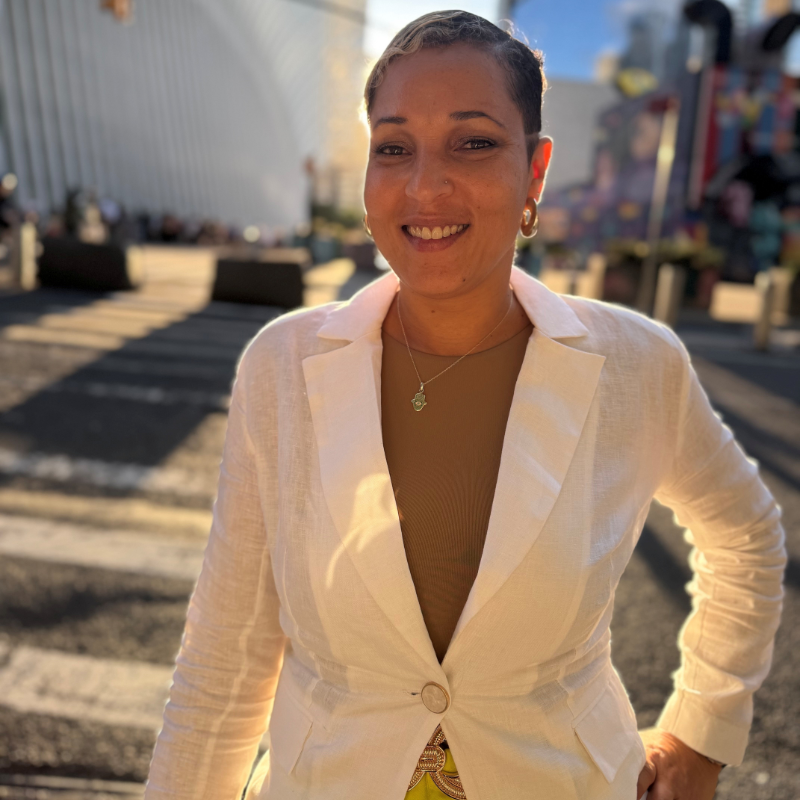
Matt Bowles: My guest today is Janine Jervis. She is a tourism marketer, storyteller, mother and entrepreneur who has spent nearly 20 years helping destinations connect with travelers in more meaningful ways. After nearly two decades leading communications and PR in North America for the tourism board of the country of Jordan, she recently launched CulturaLink Communications, a boutique agency focused on helping destinations and travel brands grow through authentic storytelling, strategic partnerships and human connections. Born and raised in Jamaica and shaped by a global career in tourism, Janine is passionate about meaningful travel, community-based tourism and challenging the fear driven narratives that often shape how people in the west see the Middle east and the global South.
Janine, welcome to the show.
Janine Jervis: Thank you Matt. It’s so wonderful to be here. It’s an honor to be on your show. Thank you for having me.
Matt Bowles: Well, I am so excited to have you here because you are one of my very favorite people and we have agreed to make this a wine night. So, let’s just start off by setting the scene and talking about where we are recording from and what we are drinking. I am in the Blue Ridge Mountains of Asheville, North Carolina on the east coast of the United States and I have just opened bottle of Pinotage from South Africa. So, I’m going to be drinking through that this evening. But where are you Janine and what are you drinking?
Janine Jervis: So, I’m in the beautiful tropical island, very hot at the moment of Jamaica. I’m in Kingston and I have opened a Rosé.
Matt Bowles: Well, that sounds like the perfect thing for a hot climate. A chilled Rosé all day is typically what I do when I am in places like that. So, I love that choice. Now Janine, the last time that I saw you we were in Rio de Janeiro together. We attended the Black Travel Summit and we hung out in Rio. I feel like maybe the last time we saw each other was at a street party around three o’ clock in the morning in Rio. What was your experience like at the Black Travel Summit but also just in Brazil and in Rio?
Janine Jervis: It was my first time to Brazil. What surprised me a lot is I didn’t know that that was the country where most black people outside of Africa were. I didn’t know that. So that was something I learned, which was very interesting. And then following that, obviously being there for Black Travel Summit, being there with the Black Travel Alliance, I think it was the best way to get my first experience in Rio de Janeiro, especially learning the history and even the fact that a lot of the black culture was their cultural tradition. Some of them were illegal up to recent times. So that was quite interesting and lovely to see a lot of interest around telling that narrative more so now and see the rich Afro Brazilian culture. And I want to go back to explore more because I was only there for the conference. I didn’t get a chance to come before or stay after, unfortunately. So, I need to go back and go further and go deeper. I have a very good friend and colleague, Giselle, who was the person who took me on my first trip to Jordan. She runs a marketing PR consultancy firm out of Brazil called Global Vision Access and she represents a bunch of Brazilian destinations in the North American market. And she’s actually one of my first clients for my new company.
Matt Bowles: Well, Brazil is an absolutely magical country. I have now been there five times and I try to go and stay as long as I possibly can. I stayed five weeks this time in Rio when I was there because it’s just such a magical place. It’s absolutely massive for people that haven’t been. It’s 50% of the population of South America lives in Brazil. So, it’s absolutely huge. And there are so many different really amazing and spectacular places there. So highly recommend that plan to return as soon as possible. But you are not just attending the Black Travel Summit, Janine. You were nominated for and you won the Victor Award for the Corporate Professional of the Year, which celebrates a leader within the corporate travel space who has championed inclusion, innovation and impact in the global black travel movement. Can you describe first of all just the Afro Future themed awards gala with what it was like to be there at that event and then what it meant to you to win that award?
Janine Jervis: Well, first off, the fashion. Can we talk about the fashion? I think that’s the thing that stood out so amazingly to me at the gala event in particular, like everybody looked just so absolutely stunning, you know, speechless, really. Black people, we do it in style all the time. So that’s the first thing. It was obviously a big honor for me because introducing Jordan to this market in the industry space, I would say when I first started working in Jordan, and for the first few years that I worked for Jordan, I hardly encountered creators or even travel advisors and operators that were black. This has to change. We have to be more present in these spaces.
So, I kind of pursued working with the Black Travel Alliance once they came about as an organization, I had a lot of interest in making this like a passion for me as a goal that I wanted to at least accomplish is to open up this, these doors to black travelers. And I work with content creators, photographers, travel advisors, and so on, who were especially rising in the travel industry. Being honored with that award definitely meant a lot, especially the timing, considering that I was actually on my way out from the Jordan Tourism Board. So, this was kind of my last event before I finished my contract with the Jordan Tourism Board.
And it was kind of bittersweet because I was being honored by an organization that I had such a passion for working with, and we had such a successful campaign for the time that I was there and we worked together. It felt good. And it will continue to be a passion project for me no matter where, you know, no matter where I am in my career, I will always advocate and push to make sure that whichever destination or space I’m working with diversifies their marketing and make sure that they, that we are in the room, we are in the space, we can see ourselves in the destination, through the images, through the marketing, through the communications, especially today with the environment in which we live.
Matt Bowles: I definitely want to talk about the story of how you initially got connected and so involved with the country of Jordan. But before we get to that moment, I would love to get a little bit of your backstory leading up to that. Can you talk about being born and raised in Kingston, Jamaica? When you think back to your childhood, what was that like? What do you most remember about growing up there?
Janine Jervis: As a child, the one thing that always felt special for me was even though in Jamaica you had classism as a Jamaican and as a brown skinned Jamaican, it didn’t matter. Like, that was never a thought process when you met someone, like at school where all Jamaican, you have Chinese, you have white Jamaican, blonde hair, blue eyes, you have Indian Jamaicans, you have mixed from different backgrounds, mixed Chinese, black, white black, you know, all these different mixes. So, the motto in Jamaica is out of many one people. And I will say that growing up, that was the thing that I valued the most. Because when I compare my experience to experience of say, my cousins who grew up in the U.S. or in London, our experiences were vastly different. There are things that they experienced or had to be concerned about that were never even a thought.
Anybody I met, color or race or ethnic background or none of that would come to mind. That was not something I was used to. But like I said, you had classism. But even that, the way I grew up, that wasn’t really how I was raised or brought up. Everybody was a human being. And even the woman that helped raise me, who was my nanny for many years and helped to take care of me, she was like a second mom. And I used to spend time with her and her family. I used to go to her house and stay, spend the night and hang out. So, it didn’t matter that she worked for us. She was a part of our family. And my mother obviously trusted me wholeheartedly with her. I mean, she did help raise me. And she was a part of our family for over a decade and the first important years of my life.
Those are the things that I remember and value about growing up in Jamaica and then the friendships that I made. Most of the close friends that I have are friends that I’ve had since I’m 4, 5, 6 years old. And I find that to be something that is common in the Caribbean especially. You tend to maintain childhood friendships because I guess we’re a small island, so you tend to grow up more as a close community. And whenever we do travel or move away, we tend to gravitate to. If there are Jamaicans around, you tend to gravitate to Jamaicans. You look for the Jamaican parties, you look for the Jamaican restaurants, you know. And as you can see, I’ve lived in the U.S. from ‘99 till 2023. And I don’t think my accent ever really changed.
Matt Bowles: Well, I know you moved to Trinidad for a few years as a teenager. Can you talk about that transition? What was that like moving there and acclimating? And what was your life like in Trinidad?
Janine Jervis: Wow, that was definitely a growing up period for me because of the circumstances under which I actually ended up living in Trinidad. Circumstances struggle and a parent immigrating to the U.S. looking for more sustainable life. And long story short, the decision was made that it would be better for me while my mom was making this transition that I live with my grandparents. And at the time, it felt like my whole world crashed, I was 15 years old. I had a whole life back in Jamaica. I had friends, I had crushes, you know, all these things at 15. And so, my life was uprooted without any plan or anything. So, at the time, it felt like my life was in full turmoil as a 15-year-old. However, it actually turned out to be the best thing for me in just the woman I am today has a lot to do with that decision, I would say. It brought me closer to my mom’s side of the family in particular because she’s one of six siblings. And so, as a result they have kids, so I have lots of cousins then some of my cousins have kids, so they’re grandchildren, great grandchildren, et cetera.
And my grandfather lived until he was 98 and my grandmother lived until she was 102. And when I moved in with them, they were in their 80s. I lived with them for three years. But having lived with them, even though it was a rough experience in some ways, because as a 15-year-old, you’re going to live with your eight to something year old grandparents, they’re very strict, they’re Caribbean, you’re under real strict rules and they’re old school of course. However, that’s what stabilized me at a time when I probably needed some stabilizing those teenage years when you’re rebellious and doing all the wrong things. So, they kind of kept me straight, kept me in line. And Trinidad is very good with the education system to Jamaica too.
But I guess not having all the distractions of, you know, the life I had in Jamaica, the fun life I was living, I was able to focus more on my schoolwork and I did pretty well in school as a result. But most of all, I became very close to my family because a lot of them would visit from around the world. They would visit because my grandparents’ home was kind of like the base point where everybody would come back to because they would always want to come back and visit my grandparents. And we had other family in Trinidad as well, like my uncle was there and other aunts and so on. So as a result, it gave me this closeness to a village that really, really helped sustain and was a village for me and my mom during a time when we needed one. For me that was the most important thing out of it.
And so, I went back to Trinidad often. After moving back to Jamaica and moving to the States, I would always go back to Trinidad whenever I could to visit my grandmother. I even went back and spent like a whole summer, two months, three months, worked there for a while, kind of spent time with my grandparents just because it was good to have people around them because they were living at home and they were getting older. The value on that is priceless. That’s really what has shaped a lot of who I am today.
Matt Bowles: Well, you and I both moved to Washington D.C. in 1999. Can you talk about what that transition was like for you arriving in D.C. in the 1990s?
Janine Jervis: My mom was there. That’s where she had migrated to because my mom’s sisters lived in D.C. at the time. Now, D.C. wasn’t unfamiliar to me because I used to visit as a child almost every summer. We would come up and spend time with my aunt, my mom’s sister and her family and we would drive to Canada. So, I was very familiar with D.C. and the family that was there. So basically, there was a big extended family in D.C. a village really. And they were very close knit, tight, had events all the time, gatherings for Thanksgiving and so on. So that made the transition really a pleasure. I have to say. I would say D.C. was the best place to have made a transition into the U.S.
And I say that because it’s such an international place. You meet people from all walks of life. I landed there because I come from an international family. So, I really like DC for that. It was progressive, a lot of educated people, well-traveled people, and easy transit to travel to different places as well. So, D.C. definitely Northern Virginia, Southern Maryland. D.C. is one of those areas. I’ve always said that living in the U.S. that’s the place that I like. I’ve traveled around the U.S. and I still would settle in D.C. in that area.
Matt Bowles: Well, you and I overlapped in D.C. from 1999 until 2006, which is when I left D.C. and while we were there, first of all, we were there during the September 11 attacks and then the aftermath of the September 11 attacks, which was a really intense campaign in the United States of racial scapegoating and racial targeting of Arabs and Muslims in the United States. And I’m wondering if you can take us back to that time in terms of what that was like for you. And then leading up to your very first trip to Jordan, to the Middle East, what were you expecting when you went to Jordan for the first time in 2007? If you can think back when you were boarding that plane, what were you anticipating?
Janine Jervis: To the first point about the 9-11 experience, on that morning I was actually driving to work at the time. I worked off Beeb Road, which is in Arlington. And I was driving from Springfield, Virginia, and I took the 395, was on the HOV, and I was listening to what was happening on the radio in New York. It was during rush hour; it was after 8 in the morning. And so, I started to panic because you’re trying to call people to See, Are they okay? What’s going on? And then all of a sudden, the traffic on 395 just came to a complete standstill. Just complete. It was already congested, but it just completely stopped. And then I saw a proof of black smoke which was coming from the Pentagon. And then I started to freak out because I didn’t know what was going on. What’s this black smoke ahead of us?
And then the traffic came to a complete standstill. And then agent cars, unmarked vehicles just started racing up the highway. Just out of Nowhere, just like 50 cars just driving, driving, driving. And we were at a total standstill. And then there was the news saying that the Pentagon had this plane crash into it and so on. But then of course, not too long after when you would drive past, you would see this big hole in the side of the Pentagon, which is the way I drove to work every day. But I wasn’t knowledgeable on the Middle East. I don’t think I’d ever met a Muslim at that point, not that I knew of. I wasn’t friends with any at the time when 911 happened. So, my narrative of Muslims and Arabs weren’t as strong because I never had any relations with anybody from that part of the world. Of course, over time you had all the media and weapons of mass destruction and all this pounding of 911 and the terrorists and then every movie. And then it became something, it became a subject after 911.
Before 911 it was never on my radar. It wasn’t a topic. I was just an island girl living on island time and doing island things like partying and carnival and those things. So then fast forward. I had graduated from George Mason University. A good friend of mine who was from Trinidad was interning with the Jordan Tourism Board, which was based in Virginia at the time. And she ended up having to go back to Trinidad. So, she was leaving and I had graduated and was looking for a job and so on. I started interning with them in October of 2006, just doing odds and ends. I met with Malia, who was the director, and I started working with them, learning, getting brought into the fold. And then March of 2007, there was a press trip that Giselle, who I’m now also working back with again, she was the communications marketing manager at the time. She took me on my first press trip to Jordan. They decided to hire me full time. And this was kind of a training trip because of course to sell the destination you need to know it.
And so, there was this opportunity for me to go and learn the job. And I have to say, say even with everything, I didn’t really have any negative expectations per se, but I just didn’t know what to expect at all. And the reason why I probably didn’t have any negative perceptions going on that first journey was because I was working with people who were from Jordan at the time. Malia is from Jordan, and we clicked. And then at the time there was two people from Lebanon working in our office. Giselle is from Brazil, and then our office manager was from the Philippines and there was somebody from Palestine. And I think that’s where I started to learn the difference.
Matt Bowles: So, your first trip to Jordan, if you think back to March of 2007, it’s your first time in that entire region in the Middle East, you land in Jordan, what do you remember first impression about arriving at and your first night in Jordan?
Janine Jervis: I was pretty excited, to be honest. It was so new. It was so like, wow, I’m flying. First of all, I was like flying for this 12-hour flight. And then once you step on Royal Jordanian, it’s like you’re entering Jordan and then everybody is so nice and warm and welcoming. It started off right because the people were so warm and welcoming. And there was just this air of excitement that I had because I was young and I was just like, wow, I’m going to the Middle East. All right, we’re doing this. Honestly, I would say it felt very overwhelming, the hospitality. At first I felt a little awkward because unfortunately in Jamaica a lot of times when people are overnight, sometimes as a local, I’m a little sketchy because I feel like, oh, they’re trying to get some money or, you know, they want me to buy something or there’s some agenda behind it, you know, because it’s a tourist place.
So, I kind of felt like, was that what it was because people were just so nice everywhere. That was the thing that stuck with me. Everybody would say, where are you from? Welcome! People would look at me a lot. Everybody was just very welcoming and telling you, welcome to Jordan. Everywhere you go, they’re serving you tea and food and tea and food. And it was just so much food. Everywhere you go, food. The tour guide we had was a young guy around the same age, my age, but he was just so cool. I did know, obviously, a little bit because I was working with the tourism board, so I was already getting acclimatized with how they promote and so on.
But being there, it was a little different. I could feel the ancient element of the place. I could feel the deep, rich culture. The call to prayer was obviously very new to me, but it was just so peaceful and so beautiful. I was just in awe. Everywhere I went, I was just like, wow. The places were beautiful. Amman, it was very hilly and all these white buildings. And the first day of the tour, I got an introduction to Jordan, and the guide was very good. So, from the first day, I just felt comfortable. I was like, oh, yeah, this is cool. And then the whole trip was fun. Like, we had so much fun on that trip. Some of the people in the group were really cool. So, the first couple nights in Amman, we would go out for drinks after dinner and so on, and so you feel the vibe of the city. I kind of got a little taste of the Amman nightlife on that first trip. So, it was very. It was like, wow, they’re a lot like us. Like me, I think just from the first day and then the trip was just so awesome.
Matt Bowles: Well, you have been back dozens of times over the last two decades and spent time all over the country. For people that have never been to Jordan, I want to ask you about some different parts of Jordan. Can you start off for people that have never been to Wadi Rum, and they’ve maybe never even seen a picture of Wadi Rum or perhaps even heard of it? Can you describe what it looks like and also what it feels like to be there and why it’s so special to you?
Janine Jervis: It’s otherworldly. And there’s no real way or word to describe it other than it’s a feeling because you get there it’s just this vast openness. And, yes, it’s a desert, but there’s just something special about Wadi Rum, I think, just the culture of the Bedouins, the silence of the place, the vastness and ruggedness of it, but yet still, it was just so peaceful. At the same time, we did the 4×4 tour, which was just like, aw, I’m just in total. All these rock formations and then the Bedouins driving us in the jeep and some of them were playing music. And the Bedouins are running jokes with you, even though they don’t speak great English, but they’re running jokes, and they’re just doing all these funny things to relate to you. And then you get to the camp, and at the time when I first went to Wadi Rum, that’s the Wadi Rum I fell in love with.
The Wadi Rum that didn’t have too many camps. They didn’t have these bubble tents so that wasn’t even a thing. It was just traditional Bedouin style camp at the time. And there was this one camp, it was called the Captain’s Camp, where they had a private camp more outside of the village area of the desert. Because there are some main camps that are close to the village and close to the road that leads into the desert. And then there are private camps where you have to take the jeeps to the camp and you’re out in the desert. So, you’re really able to capture the essence of it. And this camp was just very simple. They had little cots. It was still glamping because you weren’t using a common tent and a mattress, like a little blanket and mattress. You were actually had a cot and they would have nice warm blankets for you because it got cold at night.
And I wouldn’t even sleep inside the Bedouin, even though the Bedouin tent was made out of goat here, I wouldn’t even sleep in there. They would have a fire set out and then they would set up dinner and then they had some musicians come with the oud and different Jordanian drums and so on. And after dinner they would serve tea and coffee. And the guy that made the coffee, his name is Shabula. I’ll never forget Shabula. He’s actually from Egypt, but he had been living and working in Wadi Rum for a while. He was just such a personality. He would make the coffee; he would just keep us entertained all night.
And the Bedouins were just so cool. They would just chill with us and hang out. And even though he didn’t speak the language, there was still an element of connection. And then once the lights were out and the fire would start to dim and he just lie down on the Bedouin cushion under the nightstand sky it sees the Milky Way. It’s just like, wow, how did I get here? And from that night, that first time, that is one of my favorite places on earth. I will always go to Wadi Rum. I will never be bored of it. I recommend it to everybody. If I could go there every weekend, I would. I’ve even thought about maybe I could be a Bedouin and move to Wadi Rum. Who knows?
Matt Bowles: Can you share a little bit more about the Bedouin people and their history and culture and how they live and what you’ve learned from them, from your interactions with them over the years.
Janine Jervis: The Bedouins are resilient people. They live under these harsh conditions and they live with such connection to the land and to animals. They love animals, especially camels, of course. And camels are very important in their culture. Of course, they’re the ships of the desert. So that’s how they would usually traverse the desert. And so, they have this connection with camels, I would say, like how in the Western world, people have connection with dogs. I think Bedouins have connection with camels. And camels are such, like, spirit animals. But their traditions and the nature of hospitality embedded in their DNA is just what intrigued me the most. And the fact that they live such a simple life with not much in such harsh conditions, but are so welcoming to anybody. And it doesn’t matter who you are, where you’re from, they don’t care. They don’t even ask you where you’re from or who you are, what religion you are. Like, it’s almost offensive to ask that.
And so that kind of struck me as well. And they talk about that. And then the whole tradition of their coffee tradition and how coffee is so important within the Bedouin tribes and how they use coffee in so many different ways or ceremonial ways. So, for instance, if they are having a tribal dispute, they resolve it through coffee. Like, they have to sit and they have to have coffee. And depending on how they receive the coffee, you can tell whether they’re upset and they’re there to talk about something serious. So, there is this tradition with it. And also, there’s a way that they grind the coffee. There’s a specific sound that it makes with the brass, and they make this sound and it rings out through the area. And so, Bedouin families from the area, if they hear that, it’s a signal to come for coffee, come and commune and come for coffee, come eat some food and gather. You didn’t have phones and those things. You don’t have signal in the desert.
So, there was that. But then there was also the side of just being able to sit. You might think that because they’re Bedouin and they’re Muslims, they’re super conservative, or you can’t sit and talk with them. But I was so the opposite that I experienced I had. They were so friendly. They would sit around the fire with us, even after everything was done. They would hang out, we would talk, we’d exchange cultural questions. And I had so much in common with them more than anything else. Even though we were from different worlds, there was still a lot of commonalities that I found with the Bedouins and with Jordanians on a whole or with Arabs on a whole, really.
Matt Bowles: Well, there are also a substantial number of Palestinian refugees that live in Jordan and I’m wondering if you can share a little bit as you’ve gone back over the years, over the last couple decades and learning about the Palestinian history and the Palestinian struggle. Are there any particular encounters with Palestinian refugees in Jordan that you can share that really helped to shape your understanding of that history and that struggle and just give folks a sense of what the Palestinian experience is like in Jordan.
Janine Jervis: There was this one tour guide who was very passionate about the Palestinians because he is obviously of Palestinian heritage and he has family from Palestine. He’s been to Palestine. And so, he’s the one who really started to educate me on the Palestinian struggle and what the Israelis have been doing to the Palestinians for all these years. So that would be my real lesson and knowledge on what was happening. And some of my colleagues that I worked with were very well knowledgeable on the topic and would give me a lot of insights.
Matt Bowles: Well, you have, on a personal level, been very outspoken against the genocide and in support of the Palestinian liberation struggle, which I have appreciated so much. And you were on a keynote panel last year that I attended at the Women in Travel Summit in New York City entitled Travel, Power, and the Role of Creators in the World on Fire. You were on that panel with Yulia Denisyuk and Dr. Anu Taranath, who Maverick Show listeners know because they’ve both been on this podcast. And on that keynote panel, the discussion centered the genocide in Palestine and ended up getting a standing ovation from 600 people that were in the audience. Can you go back to that moment and describe what that felt like to you, to be a part of that panel and what that means to you, to be a creator in a World on Fire, and why you think that panel resonated so powerfully and emotionally with the audience.
Janine Jervis: When Yulia mentioned to me that they were having this panel and she had proposed for me to join the panel from a tourism board perspective, of course, being uniquely positioned with Jordan. I didn’t know Anu at the time, but met Anu, and it aligned so well. And it was something that Yulia and I bonded over, and we had had so many discussions about it, and we discussed how frustrated we both were with the silence of the travel industry during this genocide and just people going about their days and posting about travel and these things when the world is on fire. And it’s like, hello, where do we play a role in this? Where is our humanity? Where does it begin or end? So, when she brought up this panel to me, I was like, yes, I’m so glad that WITS, I was a little surprised, I won’t lie, because no other event has opened the opportunity for this discussion.
So, I was very honored. I felt compelled then to be a part of the discussion because it gave us an opportunity to challenge this idea that travel exists separate from the real world. And that’s what was driving us so crazy. It’s that it’s not separate and that we should be speaking about it and we should be able to share how we’re feeling and not just going about our merry lives and days at work as though we’re not seeing kids being blown up. So, it gave us this opportunity to talk about how that tourism doesn’t happen in a vacuum, and what is our role in shaping the narratives about whose lives matter, whose suffering is more than whose or whose humanity gets acknowledged. And do we just continue, like, what happens after the fact? Do we just continue to attend events where this entity attends these events and we are just side by side with this entity that promotes genocide? Are we just going to be okay with this?
So, for me, once the people of Jordan, and of course Palestinian people as well, became personal to me, it’s like, you can’t unsee their humanity, right? So, what is our role in the tourism space as creators who don’t say anything? And it’s not just the genocide in Gaza. We’re talking about Sudan. You’re talking about Congo; you’re talking about Haiti. All these destinations that are constantly dehumanized because of my role in communications with a country like Jordan. For me, perception matters, right? And that’s my job. My job was to challenge the perception that people were fed with by giving them what I personally experienced. And I think that’s the message I always want to get across to anybody that I meet with, and especially with creators, because I’ve seen where I’ve taken people to Jordan. They’ve come with all these fears because families like, oh, my gosh, how are you traveling to that part of the world? They don’t like Americans. It’s so dangerous.
And then same like when I went to Jordan, you land, the transformation happens because nothing that they portray in the media, in Hollywood, in everything that we see online, is nothing what the place is or the people are, right? And so how are we in the travel industry speaking about sustainability and the planet and indigenous rights and indigenous people? And you go to events where people acknowledge the land on which they are. Is that enough? Like, is just attending an event and acknowledging that this is on indigenous land? Is that supposed to make us feel better that we said that and now we just carry on. I just feel like we advocate for all these things in the name of travel and in the name of bridging gaps and bridging cultures. But there’s a genocide happening and cricket’s silence. When it really matters is silence.
And so having the opportunity on this panel to have this discussion and then see how people resonated with it and reacted with it spoke loud to me and I think to Yulia and Anu, that people want to talk about it, people feel this way. It’s just that sometimes it takes someone to start and then people follow. I think that was really the power of having this opportunity. And at the end of the day, if people have a problem with us crying out about being sick to our stomachs of watching what we have been watching for the last three years and seeing it unfold in Lebanon right now, exactly what we’ve been saying and screaming into this void is now spreading more and more. We saw what happened with Venezuela. We’re seeing what the narratives are moving towards Cuba. Who is going to stop them? Where will it stop? Where will it end? And if we keep silent, and we are the travel industry.
We are supposed to be the advocates for people around the world, for cultures, historical sites, biblical sites, UNESCO World Heritage sites are being destroyed. The planet is being destroyed. We are watching an ecocide happen. And all these advocates within the tourism space are not saying anything about it. Like, it’s just crazy to me completely. I just don’t understand it. And it gets you a little jaded about being in the space and going with the status quo, when really and truly you just want to go on stage and scream, what is wrong with all of you? Are we not seeing the same thing? And I give Beth a lot of credit for having the courage to go through with it and to stick with it and not give in to the pressures that I am almost 100% sure she was under for having such a topic discussed in a time where nobody wanted to touch it. So, I give her a lot of credit. That was a very bold move, but it was a right human move.
Matt Bowles: I’m super excited for Beth to hear that. I actually saw her about a week ago in person and I said pretty much the same thing that you just did, in my own words.
Janine Jervis: But I really do, because she’s really the only one that did it.
Matt Bowles: And this is how I’m now deciding which travel communities that I want to support. Another person that did that as well is Evita Robinson at Nomadness Travel Tribe and she had a keynote panel, she invited me to be on it and she invited Imani Bashir to be on it. And we both wore Palestinian keffiyehs on the keynote panel. And the whole thing was travel and activism was the theme of the keynote panel. So big shout out to the people that are doing that, shout out to Beth, shout out to Evita, because that’s really important stuff. And when people do that kind of stuff, those are the travel communities that I want to support. That’s what I want to promote, that’s what I want to attend, that’s what I want to participate in and I want to encourage people to go support those events.
And so, for me, I make those types of value aligned decisions based on where do I want to fit in and also who’s attracted to those types of events. Like what types of travelers do I want to hang out with? The ones that are going and giving standing ovations for the panel that you and Yulia and Anu did. Those are the types of travelers that I want to hang out with. And so, I think that is so important. I also want to ask you about a trip that you organized in 2024 to Jordan. You partnered with the Black Travel Alliance and you took a group of black travel influencers to Jordan, which included some maverick show guests like Briona Lamback. Shout out to her. But you took them on this trip and I followed some of it. I’m wondering from your perspective leading that trip, what was the experience like specifically for black folks to immerse and engage with folks in Jordan?
Janine Jervis: I mean, it felt good from the start, I won’t lie. Just excitement that people had that were coming on the trip. They were genuinely excited. I didn’t get a lot of fear-based questions. Most people were curious and they were just game from the get go. So, it made it nice to start with. And then the group was such a lovely group. They meshed well together. They had such a blast and it was such a joy to watch their joy in Jordan, the style they brought. I mean they had an outfit for every location we went to and it was a banging outfit. They just looked so amazing. There were like perfect models in some of these locations. I just knew the content was going to be amazing. And it was, the content was amazing. It was very well engaged with. It resonated with people. They were so open minded and so that made it easy as well.
And they just really soaked it in and that made it joyful to watch because they were just soaking it all in and thoroughly enjoying it. And everywhere we went, the people we met, they were very engaging and just very open to trying everything. So, it was just a joy to see them enjoy. And it was also a joy to see how the Jordanians welcomed them. They felt welcomed, like, genuinely welcomed.
Matt Bowles: So, you’ve now spent almost 20 years representing a destination that is often quite misunderstood in Western media. What has that taught you about how narratives are constructed? What are the power dynamics there? Who benefits from maintaining these narratives and how can we most effectively disrupt them?
Janine Jervis: I think we’ve all seen entire regions be completely psychologically collapsed because of the narrative in Western media. I mean, the whole Middle east is a crisis because of this. And I think the narrative is made as such so that they can exploit and do what they’re currently doing, and that’s why they’re getting away with it. And when you control the media and Hollywood and all the recording studios and you control everything, then it’s harder to unite the people because it’s divided and conquer, right? And to divide and conquer, you have to control the narrative. And I guess that’s where the brainwashing comes from. Now, I know people cancel trips to Jordan because of what’s happening in Gaza, but really and truly, Gaza is a whole other country and it’s not close to Jordan, right?
So, I’ve seen how the narratives can just kill the entire place, even those countries that are not affected. When you demonize a people and a society, then everybody suffers. And meanwhile, people on the ground still have to live. They still have to work. They’re still having family events. They bleed like us, they get cold like us, they get hot like us. Everybody’s just living their livelihoods as normal. So that disconnect between the headlines and the lived reality is just something impossible for me to ignore. I cannot be in the tourism space working for a country like Jordan, around Arabs and Muslims that have grown to have so much love and respect for and just allow people to continue to digest and reiterate or regurgitate the foolishness that they are fed with.
Especially when they have never stepped foot in any of these countries. And sometimes they’ve never even met any of these people. They’re just talking from what they see on TV or what they see on the news. Oh, well, the news said this, so, okay. And they said this about Jamaica, too. They said Kingston was the crime capital of the world. And in them time, my family live in Kingston. So, okay, yes, it has crime. Why? And where are they getting all these guns from? That’s the real question. Right? But the narratives will make you believe is gangs and it’s this. I come from the global South. I grew up in the global South. Majority of my family is from the global south, are my friends. We are victims of these misperception. And so, it is my duty to speak truth in the places that I have a space in. And there’s nothing that can take that out of me.
I’m a human being first before anything else. And so that is what keeps me and drives me to stay in this industry is having the ability to transform people’s perceptions, even if slightly, just by giving them my own personal experience. And I think it helped being that I was Jamaican-Caribbean. I don’t look Jamaican, but I sound Jamaican. And then when people meet me, they’re like, well, how did you start working for Jordan? Where is the connection there? And then my name is Janine, and every time I go to Jordan, they’ll be like, oh, Janine, you know, that’s a city in Palestine. It’s just all these connections. I got this opportunity to work for Jordan. I’ve traveled to Jordan all these years, falling in love. It is still, no matter how I’ve traveled through the job, it is still one of my favorites.
I would say my top destinations are Jamaica and Jordan, no matter where I’ve been. And it still doesn’t compare. There is a vibe, there’s a feeling, there is something spiritual about those two, about Jamaica and Jordan. I’m sure there is about other places that I may not have traveled too as well. But just in my experience and my travel experiences, I’ve been to Japan, I’ve been to South Africa, I’ve been to Namibia, Mexico, and all of them have their specialness about them. But Jordan and Jamaica speak to my soul.
Matt Bowles: So, Janine, you lived outside of Jamaica for almost 25 years and you just moved back to Jamaica in 2023. What was your experience like returning to Jamaica, living in Kingston, where you grew up, 25 years later? How does that feel?
Janine Jervis: It’s been a complete blessing. I feel so blessed to have the opportunity and the option to have been able to move back, especially in 2023, during a time we’re watching the U.S. government support and perpetrate this genocide, amongst other things. I always, in my heart and soul, knew that I wanted to move back to Jamaica. Living in the States was temporary for me because it was more for the opportunity of going to school and getting that international experience, which I’m very grateful for. And again, I’m also very blessed to have had this opportunity and to have had family to support me through it.
However, moving back to Jamaica was something I personally wanted for my own mental wellness. I’ve always been an island girl. Even though I lived in the U.S. for 20 something years. I made it a point that I would at least go back to Jamaica or Trinidad once for the year. It would have to be real serious circumstances why I didn’t end up going for a year. So, I came home almost every year. What mobilized it more than anything else was having a son, having a child, and quite frankly, after Covid and especially once the whole George Floyd and Breonna, these events happened. It brought a lot of anxiety in our household, in our family. I just had a lot of anxiety and panic over my family’s well-being. My husband is a black man. I worried about him going for jogs. I worried about him going to the truck next to our house to go exercise. I worried about him driving on the road and being pulled over by police. It was just a constant anxiety. When he left the house, will he come home? Is he going to be the next statistic? All these things. I’m also very pro-Palestine.
Before the genocide, I always wore my scarves in the winter. They were my favorite scarves. I have like hundreds of them. And since the genocide, I felt like I would have a target on my back by wearing this scarf. Everything is just all heavy. It was very heavy and fear mongering. Like I had so much anxiety, I ended up having panic disorder as a result. And that’s what really, I think pushed me to decide that I needed to be in a place that was good for my mental, good for my wellness state of mind, and somewhere where I wouldn’t have to worry about my son or my husband because of the color of their skin. Just because, literally.
So, Jamaica has always been that place. And like I said, I’ve always come back home over the years. And so, I, I knew that this was where I wanted to retire and raise my child. And because of COVID and working remotely through Covid, I just made a decision. You know, with everything that happened with COVID and people, life just seemed so fleeting that at this point it was like it’s either now or never kind of a thing. So, the opportunity presented itself and I took it. And it has been the best decision I ever made. My son is doing amazing in school. There is a community here. He doesn’t as a young child have to worry about color of anybody’s skin and being in a school doing drills for shooters and things like that. I think that was the biggest thing for me too. The whole school shooting epidemic that we see in the United States, I think that the racism and the school shooting epidemic, those are the two main driving forces that prompted this move. Regardless of anything else, that was the most important things that I just didn’t want to have to subject my family to.
Matt Bowles: And you are also in a career transition. Can you talk about your new entrepreneurial endeavor at launching CulturaLink Communications and what you have got coming up with that?
Janine Jervis: This came after a major ending to my 18-year career with Jordan Tourism Board North America. And it forced me to ask myself, who was I outside of this role? An identity that I had carried for like nearly two decades. There was definitely quite a bit of grief in that transition, I won’t lie, because it’s something that this is what I’m used to and now I have to completely transition my entire mindset. But there is an excitement and a kind of a freedom in building something that reflects my values, my relationships. There’s some excitement as well in working for myself and trying to carve out a space within this industry that I’ve grown to love and doing it my way. I give a lot of credit to the experience I had with Jordan. It definitely shaped a lot of who I am today as well, and it has really allowed me to make this pivot.
Of course, being with this organization for 18 years, there’s some level of comfort that you build and that’s what keeps you, you know, is a comfort. And it probably needed an abrupt end for me to make this transition. I probably would not have made this transition otherwise. I would have just continued with the status quo. But here I am, I’ve done it. It’s scary, it feels overwhelming at times, but I am pretty excited. It’s off to a decent start, I would say. All things considering I’m once again very blessed. I think my relationships and the years I’ve spent in the industry is showing up in many different ways. I’m so grateful. I have two clients already, like I mentioned, one with my colleague Giselle, who I started Jordan with in addition to Malia. And then the other client is actually a Jordanian DMC, which I can’t give up my love for Jordan.
So yeah, it feels quite good to be representing these two destinations as well because they’re kind of similar in many ways, meaning people aren’t so sure about these two destinations. So, I think it’s right up my alley because I like to transform and change people’s perceptions of places that they’re not sure about and convince them otherwise. So, I think the stars have just aligned.
Matt Bowles: How do you think that all of the travel that you have done up to this point has impacted you as a person?
Janine Jervis: I’m not sure I would like myself if I didn’t have this travel experience. I think I would be pretty ignorant. I’d be totally propagandized and ignorant. I feel like it has given me a priceless opportunity to see that we all have so much in common around the world. We have more things in common than we are different. The differences don’t make any one culture wrong or there’s nothing wrong, I don’t think with any culture per se. And it has basically taught me to not judge. It has taught me too not be judgmental. Even in my everyday life, I try not to judge any situation at all on the surface until I get to know deeper what something is or what a place is. It has taught me not to be prejudice before experiencing. It has taught me that you really don’t know until you know.
So, for me, travel is the most important thing in life. I think travel is even in some ways more educational than going and sitting in a class for eight hours a day. So, I have no qualms about taking my son out of school to take him on a trip to learn about another culture, see other people learn new things, and missing school for a week or two because what he gains from that is going to help him in his life more than anything anybody can teach him. And that’s how I felt. What it has done for me. I’ve opened up so many of the people around me, my friends who haven’t traveled as much. It has helped me to kind of open up their minds to be more open minded on even traveling to other places. I think my husband would credit me a lot for opening his world to travel. And now he loves to travel. He wasn’t a big traveler before we met and now, he attributes all his travels to me, of course. But yeah, it’s honestly, it’s such a healing activity. I think it should be in school curriculums, to be quite honest.
Matt Bowles: Well, Janine, I think that is actually the perfect place to end the main portion of this interview. And at this point, are you ready to move in to The Lightning Round?
Janine Jervis: Sure, let’s do it.
Matt Bowles: Let’s do it. All right. What is one book that you would recommend that people should read?
Janine Jervis: The book that resonated with me a lot is actually a self-help book. It’s called 101 Essays That Will Change the Way You Think. It helped me a lot. It teaches you about mindset and it really helped me when I was in a dark space going through some anxiety and panic.
Matt Bowles: All right, Janine, knowing everything that you know now, if you could go back in time and give one piece of advice to your 18-year-old self, what would you say to 18-year-old Janine?
Janine Jervis: I would tell her travel now.
Matt Bowles: All right, of all the places that you have now traveled, what are three of your favorite destinations you would recommend other people should definitely check out?
Janine Jervis: Jordan for sure. Jamaica for sure. Those two places, 100%. I did quite love Japan. Japan was also quite a special place as well for me. And I would also love to go back to Mexico.
Matt Bowles: All right, what are your top three bucket list destinations? Places you have not yet been highest on your list you’d most love to see?
Janine Jervis: Let’s see. I do want to go back to Africa. I want to go to like Zanzibar, Ghana. I would like to go to Johannesburg, and I would love to go to Peru.
Matt Bowles: Amazing. All right, Janine, we have now come to the most important question of this interview. I’m about to ask you to name your top 5 Jamaican dancehall artists of all time. But before I do that, can you give a little bit of context and just talk about Jamaican dancehall music and what it has meant to you in your life?
Janine Jervis: Well, I’m definitely a fan of old school dancehall. So, from the 80s and 90s, I think that was the best era for dancehall as it probably was for hip-hop and well, all music really.
Matt Bowles: A hundred percent.
Janine Jervis: You know, dancehall is, it’s very Jamaican. It really does give you an insight into Jamaican life. From the struggles to the girl scene to the boy scene, to the lover’s scene. It does give you a little depiction into Jamaican life. And I mean, dancehall has definitely influenced a lot of reggae in general, but dancehall as well has influenced a lot of other genres around the world. It speaks a message to what’s happening, whether it’s political or like I said, struggles of everyday life. I see dancehall as a voice for a lot of youth. It gives them an outlet, gives them an opportunity as well for a better life from whatever they’re probably used to. That’s kind of what I see dance hall as. and for who are some of my favorite artists?
Matt Bowles: Yes, let’s go with your Top five Jamaican dancehall artists. No particular order of all time.
Janine Jervis: Bounty Killer, Super Cat, Buju Banton. Of course, I would say Shabba Ranks. Too. I did like Shabba Ranks in his time, for sure. Sizzla, top, top, top.
Matt Bowles: Amazing. I have a special appreciation for the fact that you picked all 90’s artists as well. Because I was a hip-hop DJ in the 90s. And as you know, Jamaican dancehall, the stuff that started coming out in the early 90’s, 1992, all of these people just start coming out one after another. Beenie Man and Buju Banton, Capleton and Super Cat and Mad Lion, all these people. And then they start doing these collabs with the hip-hop artists. And so, a lot of people, I mean, if they weren’t around in the 90s, a lot of people don’t even know some of this history. Like The Notorious B.I.G. chorus I love it when you call me Big Poppa. He samples himself saying, I love it when you call me Big Poppa. And that sample is taken from the Super Cat song Dolly My Baby, where he featured Biggie. Well, before Biggie had an album, he just did a verse on a Super Cat song, right? And then you had Mad Lion collaborating with KRS-One, and you had Buju Banton doing stuff with Heavy D all the way back in 92. And so, all of these artists were just mixing in and doing these collabs. And it was just this magical, amazing period of music. And so, for me, all of the emotional, sentimental love that I have is so centered around the 90s. And so that makes me so happy that you picked all 90s artists I love. A lot of these people are still doing their thing. They’ve had longevity. They’re still, you know, doing their thing, for sure.
Janine Jervis: I have to give some credit to Sean Paul. Like, Sean Paul is still killing it, and he’s definitely one of the original, too, and he has definitely taken it international for Jamaica.
Matt Bowles: For sure. All right, Janine, at this point, I want you to let folks know how they can find you, follow you, connect with you. How do you want people to come into your world?
Janine Jervis: Well, you can definitely follow me on Instagram @jamaykey and Janine Jervis at LinkedIn.
Matt Bowles: All right, we’re going to link all of that up in the show notes. So, you can just go to one place at themaverickshow.com go to the show notes for this episode. There you will find it along with direct links to everything else we have discussed on this episode. Janine, this was such a special conversation. Thank you so much for spending the evening with me and having a wine night.
Janine Jervis: Thank you for having me. This has been really fun and enjoyable. Thank you.
Matt Bowles: All right, good night, everybody.