INTRO: This is part two of my interview with Phil Marcus. If you have not yet listened to part one, I highly recommend you go back and do that first because it provides some really important context for this episode. If you have already listened to part one, then please enjoy the conclusion of my interview with Phil Marcus.
Matt Bowles: Well, I also have to ask you about Pakistan and your experience in Pakistan again with over-the-top hospitality and kindness of strangers. And maybe just start and share a little bit about how Pakistan was for you. Just landing in Karachi onwards, what was your Pakistan experience like?
Phillip Marcus: That country is deeply embedded in my heart. It’s in the top 10 out of 190 countries. The main reason is the people, they are just so friendly and so hospitable and so curious. When I landed in Karachi, I had no money, so I went to the ATM, and it was broken. And so, they only had one atmosphere. I was looking for another one and someone saw me and saw that I looked like I was in distress. I wasn’t freaking out or anything, but I was trying to find a way to get some money for the taxi because there was no Uber. There was no online app for that at the time.
So, I approached him, and I said, hey, is there another ATM around here? And he said, no, but where are you going? And I told him where I was going, and without anything else, he just gave me some money for the taxi. And I thought that was just super crazy. He didn’t want anything from me. He just gave me whatever it was. I think it was a thousand rupees. It was the equivalent of $10 in Pakistan. I mean, that’s a lot of money. That’s a lot of work for a lot of people in Pakistan. Now, maybe this person had more means, but either way, this was the start of what turned out to be two months of really impactful experiences and people really going out of their way.
Matt Bowles: Yeah, man, those moments of landing in a completely new place and just having that level of kindness is so profoundly impactful. For example, I can remember when I went to Lagos in Nigeria for a month, and my very first day there, I went to a coffee shop and I ordered a couple coffees, and then I ordered something to eat, and then I go to check out and I go to pay the guy with my credit card, and it doesn’t work. So, then I say to the guy, okay, I’ll just go to the ATM, and I will get some money there, and I’ll just pay you for it. Where’s the atm? And the guy says, oh, I’ll walk you over to the atm. I’ll show you where it is. So, this waiter very kindly walks me over to the atm, and I put my ATM card in to pull the money out, and. And my ATM card doesn’t work. So now my credit card doesn’t work, and my ATM card doesn’t work. And I have already ordered this food and coffee from this place that I owe money for now.
So, I’m standing there and I’m like, oh, like, what am I going to do? And then this local dude just walks up to the ATM machine next to me, sees me standing there, and he’s like, bro, what’s the matter? The ATM machine’s not working. I was like, no, man, it’s not working. And he’s like, you got a bill to pay? I was like, yeah, I got a bill to pay. And he says to the waiter, how much is the bill? And the waiter tells him. And the guy pulls out of his pocket the money and a tip and pays the waiter for my bill, and then turns around, goes to get back in his car, and I was like, bro, thank you. But how do I get you back for that? He goes, don’t worry about it, man. Welcome to Nigeria. And so that was one day of my experience in Lagos, where I ended up staying for a month. And it was amazing. But those types of things are so profoundly impactful and they’re so important. I know in Pakistan, one of the videos that I watched that you did took place in the northern Himalayas and was just another incredible example. Can you tell that story?
Phillip Marcus: Yeah, this is wild. I was in a place called Skardu, Shangri Lake, which is super beautiful. If anyone has thought that Pakistan is just a desert, think again. The northern part of Pakistan is some of the most beautiful landscapes you will ever see. The mountains have a desert up there that’s 3,000 meters high and sand dunes, they’ve got incredible lakes, obviously they have mountains. This is a place called Skardu in Shangri Lake, one of the most beautiful parts of the most beautiful part of Pakistan. And I’m flying my drone, and it crashes into a forest of trees. The trees are 150 meters high. I have no idea where the drone is because it’s across the lake. So, I just assume that my drone is lost. But in this instance, one of the guys from the hotel approaches me and he says he can climb trees. And I say, okay, but it’s really high. And he said, no problem. So, we start walking across, it’s about 20-minute walk to this forest, so it’s really far. And I have no idea which tree is up. I mean, there’s hundreds of trees there. So, my expectations are very, very low. As we start walking, three or four other Pakistani guys see that we’re in distress and they just start climbing trees. I would never have asked anyone.
They are all offered, right? So, they have no shoes on, they have no gloves on, and they’re climbing pine trees that are 100 plus meters tall. And there’s hundreds of these trees, so it could be anywhere in this forest at this point I have a YouTube channel, so of course I’m filming this because this is crazy. And so, there’s three guys in different trees, they’re shaking them, nothing’s happening. And then they come down and they start climbing other trees. And the next thing I know, I can’t even comprehend how this happened. One of them found the drone at the top of the tree and he comes down, his hands are bloody, his knees are bloody. He doesn’t ask for any money. Of course, I gave him a tip, but he did it out of the goodness of his heart. And that, to me, was beyond anything I’d ever seen. This is for sure the craziest travel story that I’ve had. And the best part is that I documented it online.
Matt Bowles: Well, one of the other things that I love about your videos is how so much of your travel is spontaneous and unscripted. And you just end up making connections with local folks and winding up in all of these different types of scenarios, which you document on film. You wound up in a random wedding in Guinea. Can you share a little bit about how that came about and what the experience was like?
Phillip Marcus: Well, that’s just having the time, really, to travel to more than just the capital. If you’re on a road trip traveling through West Africa, or anywhere for that matter, if you’re actually just on the road, you’re going to find some things that aren’t on the lonely planet. This was unplanned, of course, but you have a decent guide who knows the lay of the land and can speak the language. And when you’re driving by and you see something, because he can speak the language, when we see something, he can connect us. So, yeah, we were just driving along the side of the road, and we ended up, obviously, as the only tourist at this wedding. And it was really, really crazy because I’d never seen anything like this. They were basically dancing and literally shoving money into the throats of the bride and groom and just dancing with them and seeing all the colors and the African countryside. It was really cool. And the best part, as you say, is that it wasn’t like something that was part of a tour group or anything like that. It was just the types of things that you see if you have a little bit more time to spend. And that’s really how I like to travel.
Matt Bowles: Yeah, man. Those are some of the best moments I can remember. I was traveling on the Trans-Siberian Railway, and we were getting off at a number of stops in quite remote places, and we went out to see lots of Lake Baikal, and we were posting up somewhere near there, and it was a super local area. And we were like, okay, who wanted to try to venture out and see if there’s anything open after 8pm and so there was maybe six of us, and it happened just coincidentally. All six of us just happened to be men in our group. Like, none of the women ended up coming on that particular walk. And we’re just like, okay, let’s go. And we’re walking through this tiny town in Siberia and everything is closed, right? And it’s nine or ten o’ clock at night. And then we see one light on at one place. We’re like, is that a restaurant? Is it a bar? It looks like there’s people there. Let’s just go over to the only thing that’s open. Turns out it is a not just a private party, it is a bachelorette party.
And one local woman is about to get married and is having her bachelorette party. So, it’s all women at this bachelorette party playing standard bachelorette party games and so on and so forth. And as we get closer, we start to realize and see what it is and so forth. And we’re like, should we go in? Should we go up? Would it be the party if six foreign dudes just rolled in to this bachelorette party? We’re like, let’s go see. So, we go up and sure enough, they are unbelievably excited that six men have just rolled up to the bachelorette party. They open the door, the music turns up, all of the people that I’m with start dancing. And then the bride to be is dancing in the middle of the circle of foreign men that just surprised and rolled up to the bachelorette party. And it was like this unbelievable evening. We had so much fun with it. But those are just those random travel experiences that you run into and then those are the stories that you tell. But going back to talking about the continent of Africa, I have spent about two and a half years on the continent.
Phillip Marcus: Wow.
Matt Bowles: But I have not been to nearly all of the countries. You have been to every country on the continent of Africa. And I want to ask you about one in particular that I have not yet been to, which you publicly stated in your video contains the most beautiful city on the entire continent of Africa. In your opinion, after you’ve been to every country on the continent of Africa, and that is Algeria. It’s super high on my list. I’ve been wanting to go for a long time. I have not yet been there. Can you share a little bit about your experience in Algeria and what is the most beautiful city in all of Africa?
Phillip Marcus: Constantine, Algeria surprised me to no end. I didn’t really have that much context going into it. I knew it was a place that we needed to go to, and I knew that it was a city of bridges. I live in a city of bridges in San Francisco, which I think is one of the most beautiful cities on the planet. Constantine takes it to another level because it’s not bridges over water, it’s bridges over canyons. The entire city is built up high on a plateau and the bridges are crossing these ravines, these canyons. You really just have to see it to believe it. Immediately when I arrived and I started walking over these bridges, it was very clear to me that it was one of the most beautiful cities that I’ve been to. Part of it was just the unexpectedness of it, but the landscape there and the people were just so nice. I just spent a whole day just walking around talking to people and I really loved it. I really encourage anyone to go to Algeria.
Matt Bowles: Well, I also want you to try to explain the landscape when you went out into the desert. And your video is truly spectacular because you had the drone and everything else. But explain what the desert scape looks like in the red mountain. Like I was watching this video, and my mind was blown, man. Can you explain this to people?
Phillip Marcus: Yeah. So, the Algerian desert, it’s the Sahara and I’ve been to the Sahara in most of the other African countries and it’s anytime you’re in the sand dunes like that, it’s like a spiritual experience. But the dunes in Algeria are as red as Mars. And you are literally walking up the sand dunes at sunset by yourself. It’s unlike anything you’ve seen before. But it’s not just the sand dunes, it’s the rock formations, it’s the thousands year old rock art that are on the side of the mountains. I mean, it’s really, truly a spectacular place. The red sand dunes are like nothing I’ve ever seen before. And you can camp there, and you should camp there. It’s really a cool experience to be there, to experience the sunrise with breakfast there, to camp out, to have tea as the sun is setting. It was really of all the desert experiences that I’ve had and I’ve been to pretty much all the different places in the Sahara, this is the best by far. And I encourage you to check out the video because it’s one of my favorite experiences in all of Africa.
Matt Bowles: We will link that up in the show notes for sure. Can you also talk about the Roman ruins and the extent of them in Algeria and what that was like?
Phillip Marcus: Yeah, I mean it’s everywhere along the Mediterranean. This is something that I really didn’t know about. I mean, of course you know about the Roman ruins in most of the more popular places, but in Libya, in Algeria, in Tunisia, some of the best, most well-preserved ruins in the world and you’re there without anyone else you can walk around. It’s not just about getting the photos without other people it’s about being in these grand amphitheaters without a bunch of people talking. Right. You can actually have peace in this place and sit there and contemplate life. It’s pretty incredible to go to these places that are just as good as the Coliseum or better and enjoy them in peace without other people. It’s really, really cool.
Matt Bowles: Well, we will definitely link up your videos in the show notes because you capture some of this stuff in just incredible ways, like the quality of the videography combined also with the drone footage and the way that the editing and production has all come together. I mean, its really professional quality stuff, and it’s just incredible to watch. So, we’re definitely going to link some of this up in the show notes so people can actually see the visuals of what we’re talking about. Phil, the other thing that I want to talk to you about is your passion for scuba diving. You have now completed well over 300 dives all over the world. And I want to ask if you can just start by talking about what you love about scuba diving and why you’re so passionate about it.
Phillip Marcus: It’s actually very interesting because as a kid, I hated the ocean. I was deathly afraid of being eaten by fish. I didn’t like the salt water. I didn’t like snorkeling. I didn’t like it getting into my snorkel. I didn’t like the stinging of my eyes. But once I actually started scuba diving, all that was taken cared of. I had a mask on; I can breathe and relax. That’s what did it for me. It’s the meditative state of floating in another world. And that’s why I like to travel, to see something new and being in another world. But when you’re scuba diving, you’re literally in another world. And around every corner, there’s something different to see. So, I have tried to experience it in all the major oceans. The Red Sea, the Indian Ocean, the Pacific. I’ve done crazy shark cage dives with great white sharks. I’ve gone in South Africa to the Sardine Run, which is a quite extreme experience. Have you heard of the Sardine Run?
Matt Bowles: No, what is it?
Phillip Marcus: Okay. The Sardine Run is the largest migration of sardines in the world. And it happens every summer off the coast of South Africa. Every year it’s different in terms of how strong it is, but there’s always a massive amount of sardines off the coast of South Africa. And so that sounds interesting. But what is more interesting is what the sardines bring in because there’s so many sardines in one place. Of course, there’s going to be predators that want to eat the sardines. So, you don’t go for the sardines. You go for the feeding frenzy that comes along with tens of millions of sardines in one place. So, you get on a boat, and you drive around looking for what they call bait balls. So, what a bait ball is, is when all the sardines are wound up by dolphins. So, the dolphins come in and, and they work together as a team and they round up the sardines into a ball, a massive ball that’s so thick that you cannot see through it because there’s so many sardines.
And then one by one, they start picking them off. They take turns because they work together, and they start eating mouthfuls of sardines. But wait, there’s more. Then the sharks come, because the sharks see that the dolphins have rounded them up and the sharks are opportunistic, and they come. But my favorite part is when the birds start diving in from above. So, you’re under there, you’re watching this. And as you’ve said, I’ve done hundreds of dives around the world, but I have never seen birds in the water like I did in the Sardine Run. That’s cool because they dive bombs in. They’re going like hundreds of kilometers an hour. And you have to be careful not to be right underneath these birds that come in. And they come in and you watch them, they snag like three or four sardines, and they shoot up and they fly away. It’s so ridiculously cool.
Matt Bowles: That is amazing. So, okay, of these 300 plus dives that you have done all over the world, what would you say are three of the most epic dive locations on the planet? And why?
Phillip Marcus: Okay, so number one is the Sardine run for sure. What I just said will not be beaten because of the variety of marine life and bird life that I just described that was out of this world. Number two is a place off of Borneo, Malaysia called Sipadan Island. And it is a protected area where on every dive you’re going to see at least 10 sharks, at least 10 turtles. Many times, 20, 30, you will see so many giant schools of jackfish that you cannot see through them barracudas for kilometers. It’s crazy. There’s so many barracudas and they’re circling. They call it the barracuda vortex. It’s just the craziest thing I’ve ever seen and it’s one of the places that I will always return to. In fact, I just went back last year for the first time in 10 years, and it’s a place that I will continue to go back to. Even though there’s so many places in the world that I have yet to scuba dive. This place is so pristine and so amazing. So that’s number two.
Number three was very recently, it was in the Philippines. The Philippines is one of the best places in the world to see microscopic critters, as they call them in the industry. I’ve done a lot of dives, but in the past it’s always been with a GoPro. And recently I’ve upgraded my equipment so I have the full-on scuba diving rig with the lights and the ability to shoot tiny little critters with a macro lens so I can get a shrimp that’s the size of your pinky fingernail to fill the entire screen. So, when you do that, when you’re looking for these types of things, you see critters and creatures that you didn’t know existed in the ocean before. And for me, that was really kind of a wow factor because I had been on all these dives looking for big fish and looking for giant coral.
But when you slow down and you’re looking under a rock or in the sand for these microscopic creatures that you didn’t know existed, and to find out that they’re super, super colorful and really animated, especially when you’re taking video, it’s a whole new world within a whole new world. I love scuba diving because it’s an alternate universe. But then when you get down to under rocks and see these critters that exist that you didn’t know, it’s like, wow, super cool. It’s a place called Darwin, Philippines. And along with the Lembe Straits in Indonesia, these are the two top places to find the variety of these colorful little critters, whether it be shrimp or little frogfish or ghost pipefish. The ghost pipefish look like floating twigs. They don’t even look like fish; they look like branches. Wild, weird, wacky stuff. I love it.
Matt Bowles: Well, Phil, I want to ask you a few questions now, just sort of reflecting on the way that you travel and the way that you document your travels. You know, as a podcaster, I have the ability to just go and travel and live somewhere, stay somewhere. I don’t take any video of any of the things that I’m doing or seeing. And then later on at some point, I can tell stories about it on a podcast, right? And I feel like bloggers and writers and stuff have a similar thing. They go. They have the experience, they’re fully immersed in the moment, and then they go back home, and later on they write about it, and they document their experience in that way. I feel like the shortcoming of audio podcasts and blogs is that you’re not able to bring people into the moment. They’re not able to see an experience and have that type of sensory connection with the moment and the emotional connection with the moment that you’re able to provide with video, which is why I think your channel is so amazing. I feel like the trade off, though, must be, and this is what I want to ask you about, is how you balance documenting these amazing moments versus being in the amazing moment.
Phillip Marcus: Yeah. Part of that is spending more time in places so that once I’ve gotten my shots, if you will, I can actually just relax and soak it all in a little bit more. Part of it is not shooting all the time when I’m in the experiences. Sometimes I wish I would have shot more because I know there’s stuff that I’ve missed, but I’m not recording all the time. So, it’s a conscious effort to try to live in it a little bit more and not film every single moment of every single experience.
Matt Bowles: I also want to ask you how you’ve navigated some of the ethics of doing this and some tips that you would have, because I feel like you really have presented this content in such an amazing way. I feel like a lot of the problems that I often see that come along with people photographing humans or taking videos of humans is that there are levels of objectification, levels of voyeurism, power dynamics at play there that come through. And I feel like one of the things that your content has been so intentional about and just shines through is the extent to which you humanize and also empower people. I mean, you might be talking to a shepherd in Afghanistan and you’re asking him personal questions about his flock and his life there and things like that. And you’re presenting human beings in a way that is really, I think, empowering and humanizing. I’m curious about the intention with which you approach the way that you document experiences with human beings and what tips you might have for how people can navigate some of the pitfalls that often come along with trying to do that.
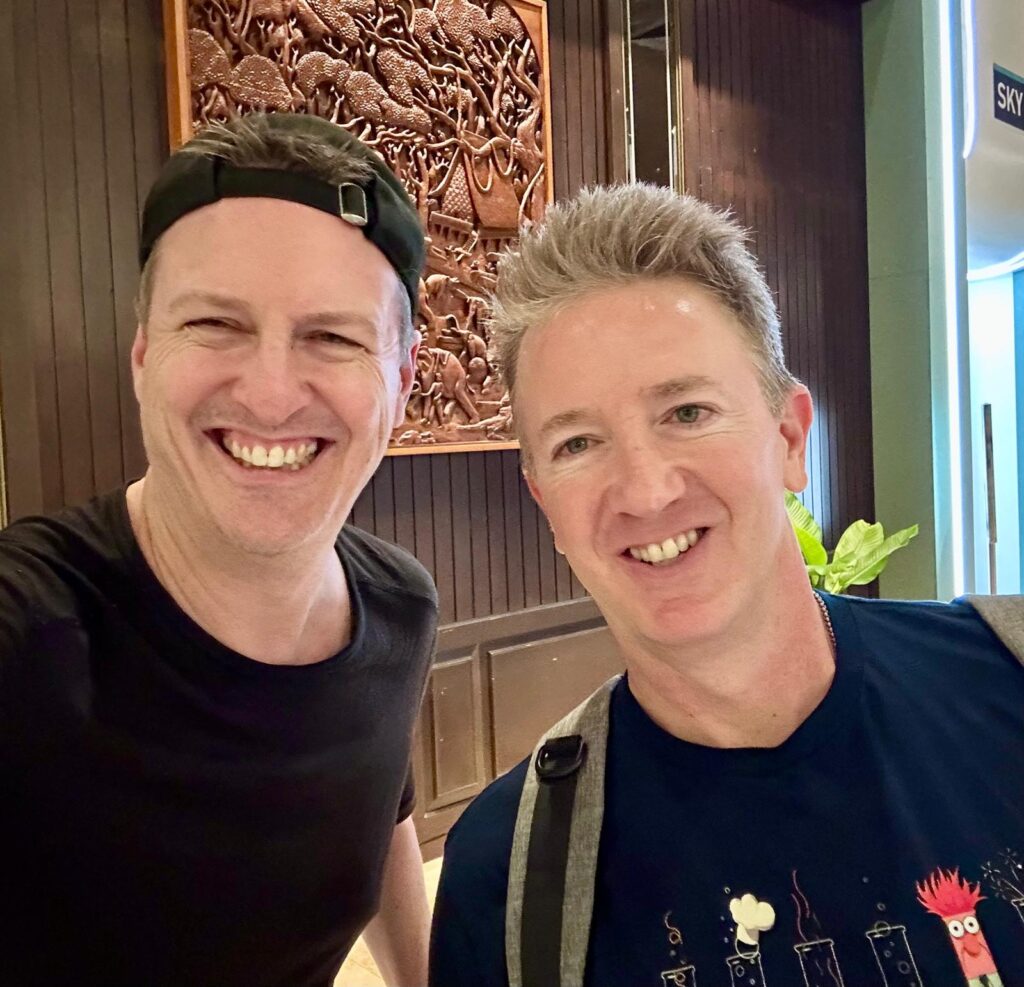
Phillip Marcus: Yeah. Tip number one, bring a Muppet. Yeah. No, I’m being serious. I mean, I’m not saying everyone should bring a Muppet, but have some humility, smile even when I don’t have beaker out. I will attempt to talk to people first and then develop some rapport before turning the camera on. And I know I’ve missed some things because of that, but I think the things that I capture are more impactful because there’s that respect factor involved.
Matt Bowles: One of the other things that you seem to do that shines through in your videos is that you seem to have a pretty solid handle on the cultural dynamics of the local places that you’re going. You seem to have mastered a handful of words, at least, in the local language. As you’re traveling through these places, it’s pretty clear that you’re culturally conscientious of local customs and things of that nature. And I’m wondering if you can just talk a little bit about how much research you do on the places that you go in terms of just cultural and historical awareness when traveling.
Phillip Marcus: I do research in certain countries where I want to be super respectful. And these are typically the countries that have the deepest traditions that are still going to this date.
Matt Bowles: As white Western men with American passports that are traveling to places that were either, let’s say, formerly colonized, or there are currently neocolonial dynamics of various sorts that are still in play, there are issues of power inequality, traveling to places where U.S. foreign policy has been particularly destructive in the past or in the present. What types of responsibilities do we have in order to travel to those places, would you recommend?
Phillip Marcus: Try to listen more than you speak. Try not to impart your views on them. I ask them about their upbringing, about their traditions. Try to just have an open mind. Really. That’s the way to get through these places and to really have the more impactful experiences.
Matt Bowles: Phil, when you think back about all the travel that you’ve had to these 190 countries, what impact do you think all of your travel experiences have had on you as a person?
Phillip Marcus: Really, truly feeling grateful for everything that I have and not stressing out about small things because you see people around the world having more struggles than you that are living their life and they’re smiling. And so, whenever something happens, it’s very, very small, and we all should know that. But when you see it in comparison and relative to other people around the world, there’s that, there’s patience. When you travel to places like West Africa or Central Africa or Central Asia. When you travel in general, things don’t happen the way you want them to happen a lot of the time, especially when you’re going around Without a plan. It really just teaches you to relax and just embrace these things when they happen and have patience. And so, I’m a much more patient person. I’m a more empathetic person. I feel much more gratitude. I relate to so many more people than I did when I was 20 years old and more sheltered. So, it just teaches you so much.
Matt Bowles: How has your conception of travel changed over the years, either in terms of your travel goals, your travel style, or how you conceptualize the important aspects of travel?
Phillip Marcus: Well, now that I’m pretty much at my goal, the only reason why I haven’t finished all 193 countries is because I’m not allowed as an American citizen, to go to North Korea. So that would be my 193rd country. There are two other countries in the Caribbean that I’m saving till the end because I have friends and family from Miami that actually want to celebrate with me my goal, and they don’t want to go to North Korea for some reason. So those are Saint Lucia and Barbados. But for all intents and purposes, I’ve completed my quest of visiting all the countries. And now, even though I’ve spent a lot of time in many of these countries, I kind of want to live for, like, two or three months in some of my favorite places. I’m actually slowing down a little bit more, and I’d like to do more volunteer work.
We haven’t talked about that, but I’ve done some volunteer work here and there, two or three weeks in Ethiopia and in Thailand and Cambodia and China. So, I’d like to do some more of that. But the other thing is returning to places that you’ve been. And I just did this this winter in Asia, going back to places that you’ve been maybe 10 or 15 years ago and rediscovering them and seeing how they’ve grown and how the buildings have risen, or going back to a place you’ve been in a different season, going back to Europe in the winter, going with a different person. You know, I’ve done a lot of these solo, and I would really like to show a significant other a lot of the places I’ve been to. So, there’s still a lot more to see. A lot of places I’ve been, I’d like to experience in different ways. But just because you’ve been to a country doesn’t mean you’ve scratched the surface. So, I still have a bucket list of places that I still want to go to in countries that I’ve been already.
Matt Bowles: I was going to ask about that, because I feel like a lot of folks that have such an extraordinary quest like this of going to all 193 countries, and you’ve mentioned how few people have actually completed that sometimes once people accomplish that goal, then maybe they’re on to the next quest or they’re onto the next goal or they’re onto something else and travel is no longer such a profoundly central part of their life. And I was just curious for you after you finished 193, what role do you envision traveling playing in your life, moving forward?
Phillip Marcus: Yeah, I think it’ll always be a part of my life. I tell people that even after being in all these places, travel is like being a baby. You’re still seeing something for the first time, whether it’s in a country that you’ve been before. There’s always something new to see. And so, I’m always going to be curious. So, I don’t think I’ll ever stop what I may stop doing as I get older and older. I don’t think in my 70s, I’m going to be seeing the Crab Whisperer in Cameroon and driving seven hours on the worst road that I’ve ever been on. I’m very happy to have done that. Strangely enough, the continent that I have spent the least total time on, even though I’ve been to every country in Europe. I’ve been in France, for example. I’ve been to Paris and Venice, but I haven’t spent months traveling around France. I envision a time in my senior age where I’ll spend three months living in France and doing that. So, there’s still a lot to see and do. I’m not worried about that at all.
Matt Bowles: That’s an amazing decision, man. Because I had only been to Paris and Nice, and then all of a sudden I started going to wine festivals in Bordeaux, and then I started doing wine tastings in Burgundy in medieval underground wine cellars where you have to dust the cobwebs off the wine bottles and stuff like this, and just having my mind blown by all of these other parts of France. And so, I think that is a great future travel goal. And I also think that’s a great place to end the main portion of this interview. And at this point, Phil, are you ready to move in to the Lightning Round?
Phillip Marcus: Okay. Yeah, let’s do it.
Matt Bowles: Let’s do it. The Lightning Round. All right. What is one book, maybe that has significantly impacted you, that you would recommend that people should read?
Phillip Marcus: I actually traveled around with this 13 years ago. It’s called Shantaram. I think it’s like eight or 900 pages. It actually was a TV series on Apple TV a couple years ago. It’s about a guy who escapes prison in New Zealand and goes on a fake passport to India and becomes involved in the underground in India. And it really vividly describes the dichotomy of the rich versus poor in the country. And it’s really well written. I was reading it while I was traveling in India for a couple weeks before I went to India. And while I was traveling in India, it took a bit because it was 800 pages. But it’s a wildly descriptive book about life in the country and the sights and the sounds and the colors. And if that doesn’t inspire you to go to India, I don’t know what it would is it truly spellbinding book. I recommend it to everyone.
Matt Bowles: All right, Phil, what is one travel hack that you use that you can recommend?
Phillip Marcus: This one may not be for everyone, but for anyone who’s a long-term traveler like me, meaning more than a month at a time, I travel with my own pillow from home. And the reason why I travel with my own pillow from home is because it’s the one thing at every hotel that’s going to be consistent. For example, when I’m camping, I have a good pillow. When I’m in Afghanistan, when they give me a pillow that’s basically half an inch thick and is hard as hell, I have my own pillow. If I go to a hotel, even a nice hotel, it’s one thing that I have that’s consistent across the board and it’s important. Have a good night’s sleep.
Matt Bowles: All right, Phil, who is one person currently alive today that you’ve never met that you’d most love to have dinner with, just you and that person for an evening of dinner and conversation?
Phillip Marcus: Have you seen the documentary A Year in Space?
Matt Bowles: I have not.
Phillip Marcus: So, there’s an astronaut named Scott Kelly. I think it was a PBS special where he and a few other astronauts spent a year at the International Space Station. And it documented their journey from getting ready for it, to leaving their family, to going in space, to coming back and their homesickness. And for many reasons, I was really compelled by this story because A, it’s long-term travel, which is something that I do, but B, it’s another frontier which I’m really interested in. And if I’m very fortunate in my lifetime, I will go to space, because that’s kind of the opposite of scuba diving, right. So, seeing the Earth from that perspective, I can’t even imagine. It just blows my mind. So, I would love to hear his stories about circumnavigating the earth in whatever it is. I think it’s like 24 minutes to do a whole lap around the planet. But to be up there for a year and to hear the day to day, I couldn’t get enough of it, I’m sure.
Matt Bowles: All right, Phil, knowing everything that you know now, if you could go back in time and give one piece of advice to your 18-year-old self, what would you say to 18-year-old Phil?
Phillip Marcus: Slow down and be more open-minded and take things that they come and appreciate the small things and the weird things. The weird things that you experience along the way are what make life worth living, I think.
Matt Bowles: All right, Phil, of all the places that you’ve now traveled, what are three recommendations for maybe underrated or less traveled places that you would put people on and highly recommend people should definitely visit?
Phillip Marcus: Well, number one is my favorite place on earth by far, and that’s Antarctica. Talking about being in another universe, I mean, that’s about as far away from reality as you can get. You’re literally at the edge of the earth, the bottom of the world, if you will. And the skies are so different. The feeling that you have down there is just so peaceful because it’s just you and 100 other people on a boat. But you get off the boat and then you’re walking around on your own and it’s just you and the penguins and the glaciers and the sky are just so different. The cloud formations, everything. It just feels like another planet. So that’s a place I’ve been dying to go back to. And when I do, at the top of my bucket list is to scuba dive in Antarctica.
Matt Bowles: Well, the bucket list is the next question. But so, okay, so Antarctica, number one. What are your other two?
Phillip Marcus: One of those places is Turkey because it has such a variety of things to see and do. The food is probably along with Sri Lankan. Turkish food is up there for sure. But it’s just more than what most people see, which is Istanbul on the beaches and Cappadocia. If you go to the eastern part of Turkey, you’re boring up against Syria and Iran and Georgia and Armenia and it’s really, truly the crossroads of civilization. So, you have so many different cultures within one country. I highly recommend getting out to the east side of that country. I did a road trip in eastern Turkey, and I absolutely loved it. You have places on the Black Sea that just feel completely different than the capital. So, I really love Turkey. I’ve been several times, and I highly recommend it.
Let me think about a third one. I love Madagascar. For your listeners who have seen Madagascar, King Julian was the main character, and he was a ring-tailed lemur. And that’s the most common lemur there is. But there’s 30 plus different types. There are little rodent lemurs that are maybe five inches big. They have the eye, which is a nocturnal lemur that looks like right out of Gremlins, the movie. There’s a lot of different types and you will be surprised. But it’s not just the lemurs, it’s the landscapes. And it’s not just the baobab trees that everyone has heard of. Those are spectacularly beautiful, but they have different types of trees. They have a spiny forest of trees that look like porcupines. Very cool. They have rock formations like limestone. You can go hiking there through a limestone forest which is really, really unique. The beaches are great. The food is really good. French inspired food, believe it or not. It’s just a really, really cool place. But you can’t just go for a few days because the travel in between places takes some time. There are long road trips in between places, so you have to budget at least a couple weeks. But it is so worth it. I will definitely go back.
Matt Bowles: It is super high on my list, and you have just pushed it up further. All right, Phil, last question. What are your top three bucket list–they could either be places or experiences–that you have not yet seen or done, highest on your list?
Phillip Marcus: I made a list of places I wanted to go once I finished all 193 countries. I made this list a few years ago when I thought I was going to be finished by now. But because of the ban of U.S. citizens to North Korea, I’m not allowed to go. So, I have this list handy actually. Number one is scuba diving in Antarctica, which we mentioned. That’s at the top of the list. It’s been at the top of the list for a very long time. Number two, I would love to spend a lot more time in Japan. I’ve been to Japan four or five times, but I have never made it to the north or to the south. So, in the north it’s mountainous and you can go skiing and they have the ice festival up there. And in the south, it’s tropical and like Southeast Asia. So, I really would like to spend a couple months road tripping through Japan, and I would also like to spend a couple months road tripping through Australia. I’ve been to Australia before, but I have not been beyond Sydney or the Great Barrier Reef, so there’s so much there to see.
Matt Bowles: Amazing picks. All right, Phil, at this point, I want you to let folks know how they can find you, follow you on social media, connect with you, and check out your amazing videos and documentary films on Phil’s Guide to the World. How do you want people to come in to Phil’s World?
Phillip Marcus: There you go. Phil’s Guide to the World on YouTube and on Instagram @philsguide.
Matt Bowles: All right, we are going to also link that up directly in the show notes, folks. So, you can just go to one place at themaverickshow.com, go to the show notes for this episode. There we’re going to have Phil’s Instagram handle and certainly the link to his YouTube channel, Phil’s Guide to the World, so you can check out some of these amazing videos that we have been discussing and subscribe to so that you can get access to his upcoming videos. Phil, this was absolutely incredible, brother. Thank you for coming to the show.
Phillip Marcus: You’re absolutely welcome. It was a pleasure. Thank you for having me.
Matt Bowles: All right, good night, everybody.