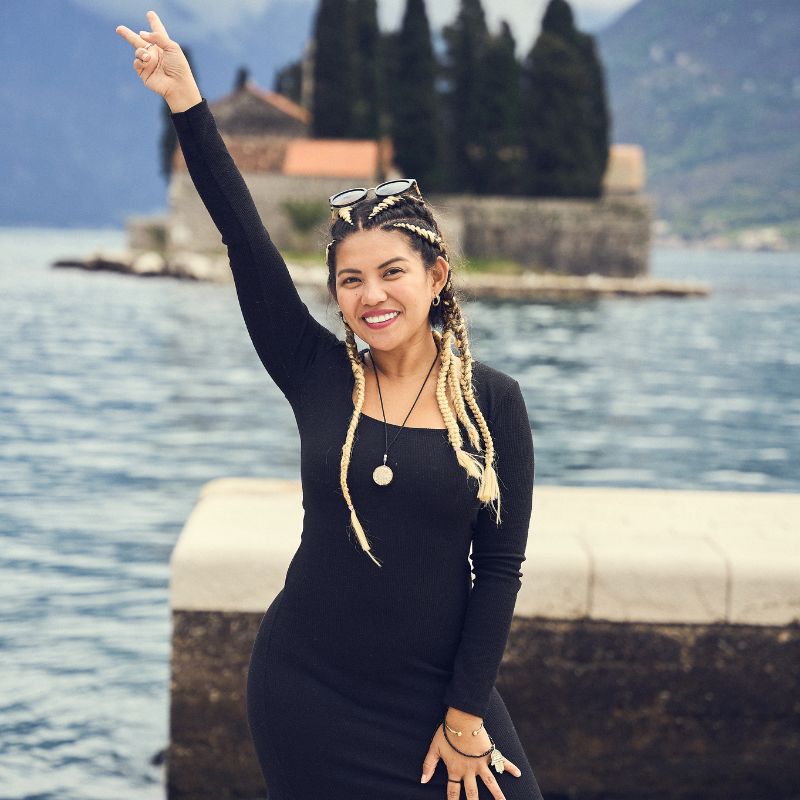
Matt Bowles: My guest today is Kach Umandap. She is a location independent entrepreneur and world traveler who has been to 173 countries and territories on all seven continents, and she has done it all on her Philippines passport. She is attempting to be the first person ever to travel to every country in the world on a Philippines passport. Kach has her own show broadcast locally in the Philippines where she discusses travel tips and advice for traveling outside the country. She is also the founder of filipinopassport.com which helps other Filipinos get tourist visas so they can explore the world and also helps them to relocate and get residency in other countries. Having recently stablished her own base in Montenegro; Kach is now most passionate about helping people relocate to live and work in Montenegro. She is the founder of the Montenegro Digital Nomads and Remote Workers Facebook group, which has over 3,000 members. And cash is also a travel blogger and influencer who has been featured in Forbes, the New York Times, CNN, Time Magazine, BBC, Business Insider, and the list goes on.
Kach, welcome to the show.
Kach Umandap: Thank you, Matt. Really, really appreciate this and thank you for the opportunity. How are you?
Matt Bowles: I am amazing and I’m so excited to have you here today for this conversation. But we need to start off by setting the scene and talking about where we are doing this today. Unfortunately, we are not in person and also the fact that we have agreed to make this a wine night. So, let’s talk about where we are, I am actually in Asheville, North Carolina. I’m in the Blue Ridge Mountains on the east coast of the United States, and I have just opened a bottle of Malbec from Cahors, France, which is a super cool wine because a lot of people think about Malbec and they think about it being from Argentina, which of course is a really prominent region for Malbec. But it was originally a French grape that comes from France. And the Malbec from France actually tastes a little bit different from the Malbec in Argentina. So, it’s kind of a really cool wine. And so, I’ve just opened a bottle of that that I’ll be drinking through during this interview. Where are you, Kach and what are you drinking?
Kach Umandap: I’m currently in Herceg Novi Montenegro, where I decided to make my home base. And I am drinking a local wine from Plantaže, which is the biggest winery in Montenegro. And I’m having Vranac, Vranac somewhere else, like they pronounce it differently, but you can only find these grapes in Montenegro.
Matt Bowles: Amazing. Well, cheers.
Kach Umandap: Cheers.
Matt Bowles: Well, I want to start this off by going all the way back and I’m wondering if you can talk a little bit about your experience growing up in the Philippines. Where in the Philippines you grew up and as you were coming up, can you describe to people sort of the entrepreneurial culture in the Philippines and as you were growing up, what were some of your earliest entrepreneurial tendencies as you think back?
Kach Umandap: Yeah, I grew up in San Pablo city, Laguna, which is two hours’ drive now because we have expressway, the roads are much better two hours away from Manila. It’s in the south of Luzon. And I grew up with my mom and my sibling, one sister, one brother. And my mom is a single parent, and she raised us with the help of my grandparents as well. My family doesn’t have a lot of entrepreneurs on my mother’s side, but on my father’s side most of them are into real estate. But since my parents separated when I was seven years old, I never thought of becoming an entrepreneur. But I was already like that when I was young because every summer season, I usually tend to have my own little business. At some point I was selling garlic like to different neighbors and then I was selling pork and chicken barbecue to some people and ice candy and different things because I just want to have my own money so I can buy whatever I want just to have freedom. Oh, I made this because my parents or my mom would give me money anyway. And when I studied in university, my intention was to take up economics so I can take up law in the Philippines. You have to do prelaw, which is like a four-year degree course, and then study law for another four years. And usually, pre university you need to have specific degrees that will be accounted for. But yeah, my initial plan was to become a diplomat, but it didn’t happen.
Matt Bowles: And so, when you think about your interest in world travel, can you talk about where that came from? Like you think way back growing up in the Philippines, how did that interest in world travel originally develop?
Kach Umandap: To be honest, can you believe the first time I left the Philippines was when I was 20 years old. That’s the first time I stepped foot outside of my own country. I knew about international travel from my grandparents and from our neighbors and other people in our little city. My grandfather loves to watch History Channel, not GEO and those things. And I was telling him when I was young, I want to be like that, I’m going to be traveling. And they’re like, okay, you can be whatever you want, something like that. And when you were young, the funny thing is that there is this weird kind of mindset wherein if you live abroad, you’ll be rich and then you’ll come back there and then you feed the entire village or the neighbor. Like if someone is from abroad, they’re going to come with nice shoes, nice food. And we’ve been seeing it a lot from our neighbors who works on the ship because there’s a lot of cruise ship workers or like neighbors who married foreigners, Europeans or Americans. And you have that kind of thinking, oh my God, their life seems to be better. But when I was young, I didn’t even think of that much. Like I knew I’m going to study hard so I can have a job that will bring me abroad.
Matt Bowles: And then what was your path to initially leaving the Philippines and what was that first experience like your first time leaving the country?
Kach Umandap: Yeah, I actually left the Philippines one month after my university graduation. My initial plan was to go to the Middle east, to Kuwait, because my father was there, he’s working there and he got me on the job training, like an internship at the Philippine Embassy so I could do it for three months and then come back to the Philippines and take up law to study again. But when I arrived there, I was like, oh my God, this is not a nice place for a first timer, 20-year-old going to a new country. I don’t want this kind of lifestyle. And I asked my father for help so I could get a job in the private sector. And when I got my first salary, I was like, oh gosh, I’m earning way more than anyone in my batchmates and stuff. So, I told myself, okay, I’m going to go stay here, save up enough money and then go back to the Philippines and study again. But it didn’t happen.
Matt Bowles: And so, what ended up happening instead?
Kach Umandap: I ended up working for four years in Kuwait. I work for a healthcare company. First is a dental institution, it’s like a dental chain. And the next was a hospital, international hospital. And I started working in the customer service until I got into quality assurance and Then I became a quality assurance supervisor for one international hospital. And I was like, wow, this is awesome. If I’m doing HSE and quality assurance thing, then why not work for an oil company? Just get few certifications and my salary will be triple. I got a little bit heartbroken. So, I ended up moving from Kuwait, and I moved to Kurdistan, Iraq, where I worked for five months. And I stayed there. And I think it was a quarter of a life crisis because I was like 24 years old. And then I quit my job. And I was telling myself, okay, I’m going to just take six months off sabbatical leave or take a break from all of these things. And I’m always trying to chase, there’s something missing, there’s something wrong my whole life. And I quit my job. April 2013, book a flight to the Philippines, pick up my brother and sister. It was their first time travelling abroad. And I started my backpacking adventures in Thailand.
Matt Bowles: I feel like a lot of people start their backpacking adventures in Thailand.
Kach Umandap: Which is the easiest. I think it’s the easiest, the cheapest.
Matt Bowles: That’s awesome. And so how did that backpacking trip go? I mean, both in terms of traveling to new countries and having those new experiences but also doing it with your siblings and all of that.
Kach Umandap: So, they traveled with me from Thailand to Laos to Vietnam, and then we separated ways and I got into yoga, and then I ended up living in Vietnam with my previous partner. I was teaching English there for a few months. And that trip in April 2013 continued until now, but now I have a home base which is in Montenegro, but it continued to be no base from 2013 to 2019.
Matt Bowles: Can you talk a little bit about as you’ve been traveling around; how did you start to understand this concept of passport privilege and the difference of traveling on a Philippines passport versus traveling on an American passport or Japanese passport or something like that?
Kach Umandap: I already knew about the passport privileges just by working in the Middle east, because your nationality is actually one of the bases for the salary. So, if you have a Western passport, then your salary, even though you’re doing the same job, your salary is double and triple. But if you’re Filipino, then of course it’s different kind of thing. Even though you have the same position, same everything. And we knew already from the beginning, I myself knew it already from the beginning when I was younger, that it’s going to be very hard for Filipinos like me to travel the world. That’s why my intention was to become a diplomat, so I can have a diplomatic passport. Because the hearsay in my country, when you’re young is it’s so hard to get U.S. Visa. It’s so hard to get to Europe. If you’ve got U.S. Visa or go to Europe, your kind of big deal. And I didn’t apply for my USA visa until I started traveling two years later because I was so scared about rejection. And it’s really, really difficult. But I know that in any difficult situation, that’s where if you know how to grab the opportunity, that’s when and where you will drive. And I know it’s hard for me as a Filipino to get these visas. And they ended up writing about how to get visas and that’s how people in the Philippines get to know my travel blog.
Matt Bowles: Well, you have subsequently traveled to a lot of really different and really interesting places. I want to ask you about some of them. I am actually on my way back to East Africa this year. I was there in 2018. I’m going to go back this year and spend some more time there in Tanzania and Kenya and hopefully some other spots as well. I know you have spent time in East Africa. It’s one of the regions I want to ask you about. How was your experience there? What were some of the highlights of your trip?
Kach Umandap: Oh, East Africa, I really love it there. I actually traveled solo there to 17 different countries, including Madagascar, Comoros, Mauritius and the Seychelles. At the beginning, I had a friend who joined me in Kenya, Tanzania, Mozambique and Seychelles leg of the trip. And then I continued my journey on my own and going to Rwanda, Uganda and those kinds of places. And I actually took public transportation, bus and flights and trains and everything. And it’s been incredible. I was so surprised that there’s a lot of Indians in Eastern Africa. A lot of Indians. So, it wasn’t something shocking for me because when I arrived there, they thought I was a local. I looked like a local Indian girl just traveling there, visiting the cities or visiting family and friends. So, I didn’t feel endangered, or prices were up or anything. They just thought I was a local. So, it felt like, oh, I belong.
Matt Bowles: Yeah, there’s a big Indian community in a lot of the British colonies in Africa. In fact, I mean, West Africa as well, in Ghana, Nigeria and those kinds of spots as well. So yes, amazing Indian food too in a lot of those countries. Really incredible treat when going there to hang out with the Indian communities. Well, another country that you’ve been too that’s super high on my list that I want to go to is Pakistan. I’ve been to India a Couple of times. I was supposed to go to Pakistan in 2020 and then Covid happened. So, I still haven’t been there. But I know that you have spent some time. I wanted to ask about your experience as well.
Kach Umandap: I was so grateful to make it to Pakistan. I was actually on my last leg of my Central and East Asia solo travel. So, I visited most of the stands. I just came from Iran that time and then flew to Qatar to fly to Pakistan. And I was so grateful because I got the visa and it’s so hard for Filipinos to get the visa. And the trip was awesome. From Islamabad to Karakoram highway until reaching the border. And unfortunately, on the way back from the border of China, going back to Islamabad, I encountered a car accident which I think happened for a reason. The scary part was not the accident. The scary part is when they were bringing me back from Karakoram back to Islamabad because there’s a lot of landslides. And then I was reading so many accidents there because the road is good, but the drivers are driving really crazy fast.
But I’ve realized how kind the people are there. If you get into an accident, they could steal your things, do this, do that to you. But no, they really help you. They fed me, they helped me, they carried me. And they were really good people. And the food, spicy food, really good. And if you’re going to Pakistan and you’re going to go to the Hunza Valley to the north, I highly recommend that you take the flight, which is very limited schedule, but it will save you a lot of time and it will save you a lot of dramas. You could still do the road trip. It’s going to be okay. But I highly suggest that you just fly and then go, and you’ll have more time to visit the other cities, Ahmedabad, and go south. Because I was only in the north.
Matt Bowles: Amazing. Well, then I have to ask you about Iran as well, because that is also tippy top of my list. Places I have not been that I have heard amazing things about. How is your experience in Iran?
Kach Umandap: I love Iran, to be honest. I crossed the border from Turkmenistan to the border of Mashad Iran, and I thought it’s going to be so complicated. Turkmenistan is a closed country, Iran too. But I walk from Turkmenistan border. Just walk. Less than 10 minutes’ walk. And I was on Iran border. And then from there my driver picked me up and brought me to Mashad, which is another sacred place for the Muslims. And from there it flew all over. I think for you. You definitely love Iran. It’s so diverse and the food is Amazing. The scenery is good, the history, everything is so good there.
Matt Bowles: Yeah, I’ve been close. I spent about a month in Azerbaijan in 2019 in Baku, and there’s just so much Persian history there and all of that, which was amazing. And I was very. But I still have not been to Iran, so that is tippy top high on my list. Okay, Central Asia then as well. Since you mentioned it, let’s talk about that, because I have not been to Central Asia either. Very high on my list. To go through the stands, can you share a little bit about what some of your highlights were in that region and any tips you have for people that want to experience it?
Kach Umandap: My first stop in the Central Asia, the stance, was in Tajikistan. And from Tajikistan, we drove the Pamir highway to go to Kyrgyzstan. I was joined by a couple from Poland, where it’s like three of us in the car. We shared, you know, the cost of the driver and everything. And we were staying in not hotels, but hostels and motels and home stays. And it’s kind of chilly there. And from there, I actually was able to get a visa in the Pamir highway to enter Afghanistan. I was planning to do Wakan Valley, but I got a little bit scared. Like, I was planning to do it, like, for three, four days, but I ended up just doing a day trip, which I should do more in the near future, going back to Afghanistan. And then from there I went to Kyrgyzstan and also of course, Kazakhstan, Uzbekistan, Turkmenistan, and then I also went to Mongolia and then Iran. For a solo female traveler, I also did a solo trip there. It’s actually pretty safe. So, you, Matt, you’re going to enjoy it. But I think it is a country that is so much fun to do with one or two of your mates sharing expenses, or if you can drive and rent a nice 4×4. I think the Pamir highway from Tajikistan and Kyrgyzstan is going to be the best.
Matt Bowles: Well, I also want to ask you about a totally separate region. Didn’t you, like, sail around the Caribbean on a boat for two years or something like that? Can you talk about that experience?
Kach Umandap: Yeah. My ex-partner is sailing. Actually. He learned how to sail when we were together, and it was his dream to sail a sailboat. And we sailed with other people’s boats. But in 2017, we ended up buying a sailboat in Florida in Marathon, Florida, and we fixed it. I didn’t know anything about sailing, so we stayed in Florida Keys for almost eight months while fixing the boat because Hurricane Irma also hit the eye in Florida Keys that time. So, we ended up having to stay longer to fix everything that’s got damaged. And we ended up adopting a cat in Florida Keys, Captain Ahab. And we sailed from Florida to the Bahamas to Turks and Caicos to Dominican Republic to Puerto Rico for two years and live on the boat full time. I went on solo trips from time to time and work trips, but our home was the boat. We called boat SV Empress. We didn’t know anything about sailing at that time and learned everything along the way. It was really cool adventure, but very expensive. I would love to go sailing again. Sailing is calming for me and unexpectedly very, very therapeutic. But I will never leave on a boat again full time.
Matt Bowles: So. All right, you’re doing all of this travel and all of these continents, and eventually at some point along the way, you sort of start to become this blogger and travel influencer. Can you talk about how that started and then how you evolved that to where it is today?
Kach Umandap: When I was starting to write a blog, I didn’t know it was going to go big or get followers or people starting to know you. I started it in 2014 with the intention of just writing all of the adventures and document everything, have your little memory and also get discounts from hotels. Because during the time we were volunteering and doing different things to save money on travel. And someone mentioned to me, oh, why don’t you write reviews? How can you write reviews? TripAdvisor or anything? No, on your own website. Write about it and you’ll get a discount and maybe someone else will give it to you for free. It’s like, oh, my gosh, how is that? And during the time, there are a few Filipino travel bloggers, but not someone who is traveling full time on the Philippines passport.
And then I started writing about how to get a visa and everything. And then that’s when things got bigger. And I’m not really like a destination travel guide, like things to do here, things to do there, because a lot of people have written about that. But technically, it’s very niche thing that. Okay, I’m a Filipina with the Philippines passport. This is how I traveled to this place. And this is the cost, this is the budget, and this is my experience. This is the sad part, the good part, and those things.
Matt Bowles: I also want to trace your entrepreneurial journey a little bit. So, can you talk about how you were financing your travel in those very, very early days and then how that evolved on your entrepreneurial trajectory?
Kach Umandap: I started my around the world trip like sabbatical during the time in 2013 from the income and savings that I had while I was working in the Middle East. So, I was in the Middle east for four years and I was single, I was young, and I don’t have a lot of obligations. I had a condominium that I was paying, an apartment in the Philippines. And other than that, I didn’t have any obligations. So, I have enough money. And then from there in Vietnam, I started teaching English and saved up enough money and then studied yoga and Ayurveda massage in India and then started to make money from it as well, like as we go by and then started the travel blog. And before the travel blog, we were also volunteering in hostels in exchange for free accommodation and free breakfast. And then I’ve done some social media marketing jobs for other people, and I’ve done different things, but online stuff is how I ended up moving forward and from the blog, from the affiliate marketing, from sponsored posts, social media promotions, and different ways of earning passive income on the website. Until I started to write an eBook and started offering coaching services and different kind of services for Filipinos.
Matt Bowles: Well, I love that you have focused a lot of your expertise and experience on helping Filipinos in particular to travel the world. Can you talk a little bit about that decision? Talk about how filipinopassport.com came about and how all that has evolved.
Kach Umandap: Yes. So, I started the blog 2monkeys travelgroup.com first in 2014 and then I started filipinopassport.com just last year. Technically, filipinopassport.Com will just, just totally evolve in the fact that for Filipinos who wanted to apply for USA visa, UK visa, Schengen, not just for tourist visa, but then to get spouse visa, fiancé visa, student visa, then to eventually immigrate, how and where Filipinos can immigrate, if you have this money, where can you go? And to become like a one stop shop platform for Filipinos who wanted to travel and immigrate abroad. And I know that there’s so many bloggers, so many digital nomads, so many different things. And there are a lot of Filipino travel bloggers too who are writing about these things. But I knew that if I could just focus on this niche and we have 100 million Filipinos, there’s always space for everyone to follow and to read. But even if I just get 1% of my Filipino people to support the business and use our services, then I’m okay.
Matt Bowles: Well, you have now been to 173 countries and territories. And so, after experiencing all of those places. How did you decide to create a base for yourself in Montenegro of all the places in the world?
Kach Umandap: I first visited Montenegro in 2017, and we got invited by the tourism organization. I was like, oh, this is cool. But we were here during winter. Oh my God, it’s so sad. It’s so cold. It’s rainy. But it’s a beautiful country, really beautiful. And I didn’t hear about it until 2017. I just thought it was Yugoslavia. I didn’t know that there’s this. This tiny country that is beside Croatia that is easy for Filipinos to enter. It’s like, okay, this is cool. 2018, they invited again. I was like, okay. I brought my sister and her boyfriend with me. So, we traveled around. Wow, this is amazing. Before it was cool, I saw Montenegro during summer season. Wow, this is amazing. So many activities, underwater activities in the mountains. You can go hiking, you can go sailing in one day.
And then 2019, if visited again. I didn’t have any intention of leaving here, to be honest. The plan was to live in Portugal and make Portugal as the base, but I think that’s going to be my retirement plan. So technically with Montenegro, I had a car accident in Pakistan, and I couldn’t walk for three months. And I didn’t know that Montenegro has the best physical therapy institute. And they gave me residency while I was getting treatment there and I was able to walk. And this institute is one of the oldest in the Balkans and a lot of Scandinavian people go there for rheumatitis, arthritis and physical therapy issues. I was like, wow, this is freaking amazing. And ended up buying a small stone house here. And this has become the home base now.
Matt Bowles: And can you talk a little bit about what some of the advantages are for remote workers of residing in Montenegro? If people are thinking about creating a base or something like that. What’s that side of it look like?
Kach Umandap: Actually, they just approved the law for the digital nomad visa, which I think is going to be implemented by January next year. But even not just for the digital nomad visa for those remote workers who are already traveling in Schengen Zone. I know a lot of you guys, Americans, even the British and other nationality, if you’re not EU, you can only stay in EU for 90 days, then you have to do visa run. And I think Montenegro is the best bet for you because after Croatia, you can just cross the border to Montenegro, and you could stay here 90 days. And aside from that, the cost of living here is really low for local people. It’s not low because the salary is low. But for someone like you and me who are working online and earning money abroad, this is the best bet. You could rent an apartment fully furnished for one bedroom for 300 Euro, you can have a decent meal for 2 Euro, you can have a bottle of wine for 3 to 4 Euro, you can buy a car for 1,200 Euro. A secondhand car. Yeah.
And the taxation is 9%. But I think when they implement the digital nomad visa, you don’t even have to pay taxes. You could live here for two years without paying taxes. And they just wanted to have an indirect income. And I’ve been pushing about this since 2019 and I’m so grateful that the government was really understood. Ah, how come remote workers should come. They’re not going to pay taxes, but they finally understood. And Montenegro is so strategic because even though the country only has two airports, Podgorica and Tivat, it’s also close to Albania, Tirana airport and also the Dubrovnik airport. So technically, coming from Dubrovnik, going to the border of Montenegro of Albania, it’s just like five hours and you’re already. You step foot in like three different countries. Except traffic is horrible. During summer.
I think Montenegro is really good. And the weather is fantastic on the coast, excluding Kotor during winter because it’s going to be rainy and there’s not a lot of sun. But the remote workers should really know this place. There are destinations in the country where the Internet is really slow. For me, I can do streaming, I can talk, I can upload. It will take a little bit of a while because I live up the hill. But if you stay in hotels or hostels with fiber optics, you’ll not have a problem. So technically you just have to choose. Cool city we’re in. It will be aligned with the job that you have.
Matt Bowles: All right, so I want to ask your recommendations there. I have only been to Montenegro once, although I have been talking about it ever since I went and I’ve only been to Kotor, so I was doing exactly what you said. I was on my way to Dubrovnik in Croatia and the Bay of Kotor is very close. It’s just a little hop over the border. And I went there in the summertime, and it was just jaw droppingly gorgeous. I mean, stunning. You got to swim in the Bay of Kotor and then you’re looking up at all of these mountains that are surrounding you from 360 degrees and hiking around. And it was just one of the most beautiful places that I had have seen in all of Europe. I mean, it was just absolutely incredible. But that’s all that I’ve seen, and it was a pretty short trip. It certainly inspired me to go back and spend more time. And so, when I do, or when other people do for the first time, where should people go, what should people see? And if folks want to have that kind of longer-term base there, let’s just say, even if it’s just for like a few months. But if nomads want to go and have a good place where they can work and get good Wi-Fi and be in a really cool area, what types of spots in Montenegro would you recommend for that?
Kach Umandap: Okay, it depends on the season. I don’t recommend it if you’re only here for a few months. If you really like to go to parties, then go to Budva and Kotor during summer season. But it’s so crowded, traffic is really horrible. A semi local, like an expat. I don’t really go to those attractions during summer season. But if you want to look for like a long term home base, if you just want to have like good Internet, good restaurants, good cafe, then go to the capital city of Podgora. There’s no water, but then the coast bar and Budva and other destinations are just like an hour drive away or like a bus away. It’s not really a big deal, but Podgorica is going to be your best bet. And if you want to meet a lot of expats, a lot of western Europeans or Americans, then you should go to Tivat and all of the luxury fine dining and a lot of activities and resorts, beach parties and everything.
Then of course in Tivat, if you want to have scenery, go hiking, quiet place. Maybe the Internet is not that fast. Then go to Herceg Novi, where I live right now. If you don’t need to look for a job, you need to drive. In Herceg Novi you need to drive, but better transportation. It’s in Podgorica. But if you want a city that doesn’t die, even winter, there’s always action, there’s always restaurants. Some of the restaurants here are closed during the winter. They’re only open during summer season. And the locals don’t work during winter. They’ll just go skiing or travel. Then go to Budva if you want like a yearlong kind of thing. Kotor is perfect for summer because of the weather, but it’s traffic. But I don’t recommend Kotor during winter. The location of the mountains there, it’s Very rainy. It’s a different kind of temperature in that area than the other places.
Matt Bowles: Well, I know that one of the things that you have done since relocating to Montenegro is you have started a business of consulting services that helps people relocate to Montenegro. Can you talk a little bit about that business and the suite of services that you offer, who that’s for and what they can get from your business?
Kach Umandap: So, we have moved to Montenegro. It’s m o v e number two montenegro.com technically our initial clients are mostly Filipinos who wanted to immigrate here with their entire family with the plans of setting up their own companies or getting employment. Other things that would allow them to get permanent residency on a self-sponsorship scheme that eventually could give them a different citizenship. Because with their Philippines passport and because I got really, really involved with the digital nomad visa, we are now going to assist as well on how remote workers could get residency in Montenegro. The two years digital nomad visa. What will be the requirements?
Because here if you’re a foreigner, every move that you’re going to do, you need to have appointments translator with you to do anything that is involving paperwork, you need to have translator. And all of your documents should be translated to Montenegrin, Serbian. It should be translated like that. And you have to pay each page. And there’s so many bureaucracies because still it’s not yet as modern as other countries wherein you could do everything online. So, we wanted to offer more services to digital nomads and other startup tech companies who wanted to start their base here in Montenegro. Aside from that, we help as well with accommodation, transportation, buying a car, getting your license and those different things.
Matt Bowles: Amazing. We are going to link that up in the show notes so folks could just go to themaverickshow.com and go to the show notes for this episode and there we’re going to have the link to your website so that if folks want to get more info on relocating to Montenegro or getting into the digital nomad visa or any of that kind of stuff, any questions and info about life there, they’ll be able to check out the link and go through that link.
Kach, I want to ask you now at this point in your nomad journey, when you think back about all of these travel experiences that you’ve had and the ones that we’ve been talking about, what impact do you think all of this travel has had on you as a person from age 20 until now?
Kach Umandap: I think I develop empathy. It’s different now. I think my maturity started understanding more other people from their perspective and finally dealing with them according to not how I wanted or how I felt, but how both of us will be in a win situation. But yeah, I think more on empathy side. Sometimes I complain about a lot about my life, about other people, but then just realize that’s how travel really impacted me.
Matt Bowles: And can you talk also about why you are so passionate about continuing to travel? Is it actually really important for you? Not for even, let’s say a country counting thing or for followers or for things like that, but for you personally, do you still enjoy world travel? And if so, why? What does it mean to you today?
Kach Umandap: I enjoy travel more now than before. A few years ago, when I didn’t have a base, I was just so tired, burned out because I was working. And then after this work in this country I wanted to go to another place, and it’s just become a rat race because I don’t know what I’m trying to prove to myself and to other people those days. But when I change and shift my mindset to a different thing like what I am aiming for, what is it for? Am I really happy doing it? I’ve had more appreciation with my travels to some of the beaten countries and territories. I feel alive when I travel. I feel freedom. Travel is a lifestyle for me. It’s not like me running away. Montenegro is my home, and I love it here because the lifestyle is very slow paced. I’ve been home for two months now dealing with other things and I’m actually itchy. Like I want to go somewhere now. Not because I want to escape my life here because I have a really good quiet life, just chill. But I don’t feel like I am growing. This is my relaxing.
But travel makes me grow, like learning something new and it smells and feels like freedom for me, and I don’t think I’m going to stop. Maybe I’m going to change the way I travel in the future. If I decide to have kids and decide to do other things, it will change. But I don’t think I would stop. But what I’m going to do is have a break. Three months home, two months traveling. Three months home to have a cycle. And believe it or not, I’m the person who loves routine, I love routines and with traveling it’s a little bit so. But even though I’m traveling I am still able to keep up with some of my routines. The only thing that I struggled with is the food because I try to eat as much as I can but. But if I know that I have an end date of my traveling and I’m going to be able to work out when I go home. Then I was like, okay, that’s why I appreciate it more. There’s an end and then resume again.
Matt Bowles: Do you have any tips that you can share for digital nomads that are maybe at the earlier part of their journey? Because you’ve done the full-time itinerant nomad thing with no base for many, many, many, many years and you were able to build businesses and things like that during that time and you’re also now choosing to maintain a base but travel for a good portion of the year from that base. So, I’m curious, just reflecting back on all of that, if you have any tips or lessons that you can share with folks about how to sustain a lifestyle of long-term travel in a way that is fulfilling and productive and joyful.
Kach Umandap: I really believe that you need to have different skills that would allow you to work online and before you leave your corporate job to go remote, I highly suggest that you have like a very good cushion of money, so you don’t have to go travel and then come back again and start something new. But you need to have a plan to begin with your finances. And I think the main advice is if you’re a remote worker, I highly suggest to learn and enhance your networking skills because that’s where you’re going to have the opportunity to learn from these people who have done it and maybe opportunity from people who might be able to hire you or to mentor you or to travel with you and save cost. So that’s it. Networking and building your contacts and really just establishing a good network of friends.
Matt Bowles: And what about the concept that you mentioned of creating routine as you’re waking up in different places and traveling to different time zones, but needing to be disciplined and to do your work and things like that, and then also balancing your work with wanting to see and experience all of the amazingness of the places that you’re in. Any tips for that?
Kach Umandap: Yeah, so now I’m glad to have been in a situation wherein I have people who works with me full time now. So, I have a team where I outsource most tasks that don’t involve a lot of decision making. But still, even for the last few years, wherever I go, my body automatically wakes up at 5am and now it’s now like I’m like so laid back, like I don’t know what’s going to happen tomorrow, so I’ll just sleep until 8 or 11 or what. But for years I wake up at 5 o’clock in the morning and when I wake up at 5 o’clock in the morning, just meditate and stuff. But for a few years before I got burned out, I didn’t. I was just automatically on my phone checking everything but what I usually do, even before and now the night before, I wrote down five things that are so important that I have to accomplish and how long it will take me. So, if I know that I have to finish all of my emails in the morning, then I have to wake up at 5 and finish it by 6am but if I am in traveling in America or in that side of the world, then the Philippines, which is mostly on my market, it’s ahead of time. So, whenever I wake up in the States, it’s okay, or I do it at night. I just have to make sure that I have at least three hours in the morning and three hours at night to work on the things and just be very spontaneous in between.
Matt Bowles: Amazing. All right, Kach, I think that’s a great place to end the main portion of this interview. And at this point, are you ready to move in to The Lightning Round?
Kach Umandap: Yeah.
Matt Bowles: All right let’s do it. The lightning round. Okay, catch. What is one book that has significantly impacted you over the years that you’d most recommend people check out?
Kach Umandap: So many. But right now, I highly recommend The Seven Spiritual Laws of Success by Deepak Chopra. It’s actually not a book; a mini book and you could listen to it on audible. Really good one.
Matt Bowles: Kach, what is one travel hack that you use that you can recommend to people?
Kach Umandap: Gosh, so many. But for flight tickets, I highly recommend you use Google Flight, Skyscanner, Kiwi.com, Momondo, all of like the platforms and then just compare and usually they book it directly with airlines later on and use VPN.
Matt Bowles: Can you talk about the VPN thing and why that’s important?
Kach Umandap: It really depends. There are a few VPNs that you could use on your Chrome or on your platform, like for free and sometimes on your phone because you could just adjust the location of your IP and then you could get the rates of the local destination instead of being in a foreign country. Because I didn’t know that they were changing the prices, the matrix. I didn’t know that for years. I was like, no, it’s the same. They will not find out. But they do.
Matt Bowles: That is a really significant tip. That is awesome. All right, catch. If you could have dinner with anyone who’s currently alive today that you’ve never met just you and that person for an evening of dinner and conversation, who would you choose?
Kach Umandap: Naval Ravikant.
Matt Bowles: Naval has been a really popular pick on The Maverick Show.
Kach Umandap: Oh, really?
Matt Bowles: Yeah, yeah. A lot of people have picked him. I think that would be an amazing dinner. And we will link him up in the show notes so people can go check him out if they’re not familiar with him.
Kach Umandap: There’s so many people who requested that. Why don’t you organize a dinner with Naval and all of your guests? I’ll be there in a gun.
Matt Bowles: You’ll be there? Yeah. I’ll see if we can make that happen. I’ll see if he’ll show up. That would be pretty incredible. All right, Kach, knowing everything that you know now, if you could go back in time and give one piece of advice to your 18-year-old self, what would you say to 18-year-old Kach?
Kach Umandap: When I was young, I always blame something for anyone or my past or my trauma. If I will go back, I’m going to tell myself, stop being a victim by taking responsibility and followed by accountability and just keep going. Everything is going to be all right in the end.
Matt Bowles: All right. Of all the places that you have now traveled to in the world, what are your top three favorite travel destinations you would most recommend other people should check out?
Kach Umandap: Okay, Antarctica, Venezuela. And of course, I’ll just say Montenegro because they need to see it and I really love it here.
Matt Bowles: Can you talk about why Venezuela?
Kach Umandap: Venezuela. I lived in Latin America from 2014 to 2017, traveled all over this continent and I think there’s this charm of Venezuela that it looks so hard to get into witches and it’s kind of hard to explore. But once you get there, it feels so amazing. Going from Canaima to the Angel Falls on a small boat for five hours and just sat there without something in your back. Taking this Cessna plane that it feels like it’s going to drop in the water so close. And I was watching Miss Universe in Orinoco Delta and there was like a little monkey in my head and that won’t leave me and just treated me like a mom. And there’s so many things that I could just say that Latin America is gorgeous, so many cool attractions, but there’s this rawness of Venezuela because there’s not a lot of tourists visiting there. So, I really think it’s going to be the next big thing in the next few years when politically it’s going to be more stable and safer.
Matt Bowles: Amazing. All right, Kach, last question. What are your top three bucket list destinations? Places you have not yet been that are the highest on your list. You’d most love to see Greenland.
Kach Umandap: I’m hoping to get there. Not really destination, but I really want to do overland trips in west and Central Africa starting from the north to south, the entire region. And I really want to cross the Atlantic Ocean on a sailboat and just explore Oceania. I don’t know how to reach a specific destination, but I really want to cross the Atlantic on a small sailboat.
Matt Bowles: That’s so amazing. All right, Kach, I want you to let folks know at this point how they can find you, how they can follow you on social media, check out your blog and also how they can check out your services for our Filipino listeners, how they can check out your Filipino specific services. And then for our other nomads that are interested maybe in learning more about Montenegro and digital nomad visas there and stuff like that, how do you want people to come into your world?
Kach Umandap: Thank you. Not just for people who wanted my services, but if you guys are going to Montenegro, I usually host few small parties and I could host you, drive you around, or maybe host you in my house if I am around. You can find me on Instagram; it’s kach.umandap or 2monkeystravel on Instagram. On Facebook as well, it’s Two Monkeys Travel or Filipino passport by Kach. Like just type Kach and then Filipino on Google you’ll find it. So yeah, if you guys just want to go on adventures or visit Montenegro or any just random questions about visa or digital nomad scheme here, I’d be happy to help and host you guys.
Matt Bowles: Amazing. Well, I’m certainly looking forward to taking you up on that and coming through Montenegro and hanging out sometime soon. So that’ll be definitely very high on my list. Now I know you are there and all of these amazing things to do.
Kach Umandap: Book your flight. I’ll buy you like 10 bottles of Plantaže wine. Don’t worry, I got you.
Matt Bowles: We need to do a wine night in Montenegro asap. So, I’m excited about that. For everybody else, we are going to link up everything that you just mentioned in the show notes so folks can just go to one place at themaverickshow.com go to the show notes for this episode. There you will find all of the ways to contact Kach and to check out all of her amazing content and services and everything else and you can just reach out to her from there. Catch, this was amazing. Thank you so much for being at the show.
Kach Umandap: Thank you. Thank you so much, Matt for this opportunity for someone like you to interview me in your show. Thank you. Thank you, really. And I hope to meet you personally soon.
Matt Bowles: Yeah, let’s make that happen very soon. All right, good night, everybody.