Matt Bowles: My guest today is Tue Lee. She is the CEO of Remote Year. Over the past six years two have helped build Remote Year into the leading and most trusted community based platform for remote working and learning globally. Today, Remote Year enables location independent professionals to live and work in different cities around the world as part of an immersive cultural and community experience. Participants get to work and live like a local for one, four or 12 months in some of the world’s most vibrant cities with a group of other professionals from different backgrounds and industries. For a monthly fee, Remote Year plans all the logistics including flights, accommodations, workspace access with 24/7 Wi-Fi, as well as connecting you with locals and planning activities on the ground in each city. Remote Year also offers social impact programs as well as week-long retreats. At the time of this recording, over 4,000 participants have gone through the Remote Year program. Prior to Remote Year two held leadership positions at the largest consumer product company in the world, Procter and Gamble. She led brand building and growth for iconic billion-dollar brands, won numerous awards there and served as an executive consultant for other Fortune 50 companies. Tue is also heavily involved in non-profit causes, focused on closing social inequalities around the world and is always thinking of how to make the world a better place each day. She holds a bachelor’s degree in international relations and political science from Yale University. She has been a full-time digital nomad with no base for over eight years and travels the world with carry-on luggage only and she has now been to over 140 countries.
Tue, welcome to the show.
Tue Le: Thank you so much Matt. If all of the intros go like that, I’m coming on to every show.
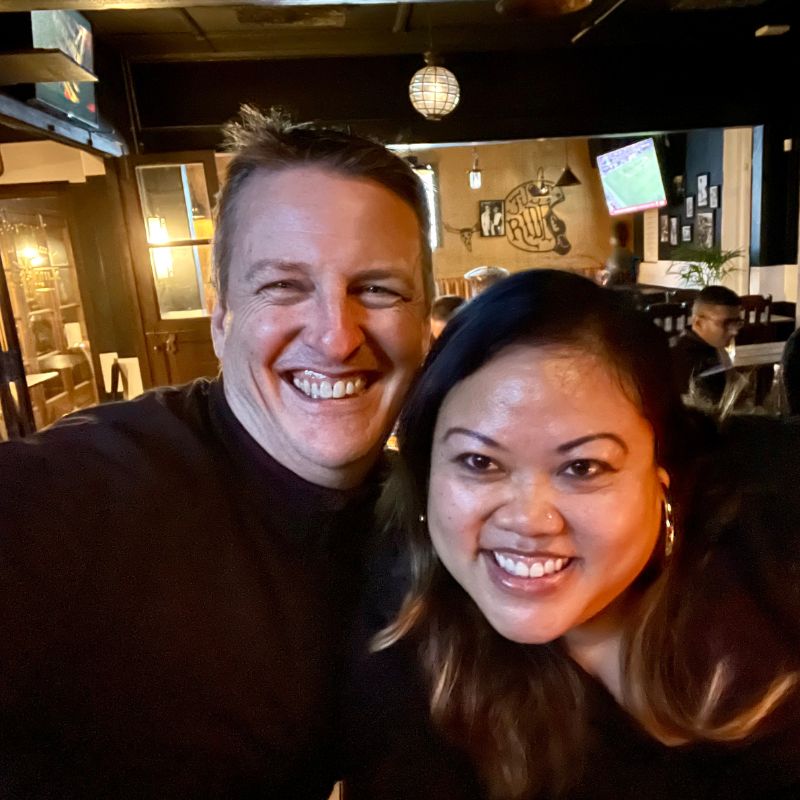
Matt Bowles: You can come to this show anytime. I am so excited to have you here. We need to set the scene and talk about where we are recording this from today. We are in person, and we have been hanging out for about a month together now in Cape Town South Africa.
Tue Le: That’s right. It’s so crazy. We’ve been trying to meet each other for months now and then this is the perfect backdrop to finally have it happen.
Matt Bowles: It’s been such a spectacular month, and I feel like it would be great to just share a little bit about what we are doing here. I am actually on the first month of a four-month Remote Year program. I’m a participant in that program. This is now my second Remote Year program. The first one of course was my 12-month Remote Year program that I did back in 2016 and I’m now on my second program which is a four-month program this time. But this is the first ever all-Africa itinerary and I’m so excited to be part of this. But you really were a large impetus for this trip happening and you were very involved in designing this trip and everything else. And I would love maybe to just start off with talking about that and what this trip is going to be all about.
Tue Le: Absolutely. For those who don’t know, we’ve been around for about seven years, and I’ve been there for about six years of that journey. And when we first started out, we were primarily Latin America and Europe based programs. So, it’s so exciting to kind of fast forward from seven years ago to now where this year we’re not only in Latin America Europe, we’re in Asia. We just launched into U.S.A. and then this is our first expansion into Africa with four distinct countries on a four-month itinerary. So, to just say that I’m excited is not enough. I’ve been waiting for this moment literally since the day that I joined Remote Year, and it just felt like all the ingredients were finally right to make it happen.
Matt Bowles: I am so excited, and I was so excited when I heard that you were doing the program. And so, we’re in South Africa this month. Next month is Tanzania. The third month is in Kenya, and the fourth month is in Senegal. Dakar, Senegal is one of my favorite cities. I was there in 2019. I’m so excited to go back. But I also love Kenya, and I also love Tanzania. So, I’m excited about the whole thing. But let’s start just by talking about Cape Town because we’ve been here now for a month. Can you share a little bit about Cape Town, why you love it, what you love about it, and what you’ve put together for remotes who come on the program to experience Cape Town?
Tue Le: Absolutely. So, you know, I know everybody has the stunning images of Cape Town in their mind. It’s beautiful, it’s coastal, there’s mountains. We’re sitting in Matt’s apartment right now. And just from every single corner of this apartment, you can just see stunning views all around. So, Cape Town is known for being beautiful. But what I’m really excited about here is that Cape Town is a broader part of South Africa which has a very long and complex history that’s still writing itself. And for us to be able to be here and expose the remotes, that’s what we call our participants on our programs, to these complex stories and be a part of writing that present and that future is why we’re here. So, during the we create 10 to 15 different activities that we hope will help open people’s minds and hearts in a way that they didn’t have open before they arrived here. So, we do our best to get them out of their comfort zone. So, where we’re at right now, it’s a beautiful location. We’re at the waterfront right now, but we know that just 30 minutes away there are still some townships that still persist and still have some stories that need to be addressed and amplified. And then we sat just again minutes away from where there were a lot of historical events that happened. So, throughout the month, we hope that through the programming that we curate that people are able to experience just a little bit more of the diversity that this rainbow nation has to offer.
Matt Bowles: Yeah, it’s been super incredible. We’ve, of course, been to a number of parties so far. The nightlife here has been incredible. We went to local hip-hop concerts, we’ve been to the parties in the township that they have every weekend, went to the Rans party and all that, which has just been amazing. But there’s just been so many things that Remote Year has had to offer. So, I went back to the Boat Cap, which, by the way, was the first place that I lived. The first time I came to cape town in 2015, I lived for about a month in the Bo Cap, which is the Muslim quarter, and has all these beautiful bright colored houses and all of that but also has a really significant and important history in South Africa and in Cape Town in particular. And so I went back as one of the Remote Year events to the Bo Cap, which was really cool, and just reconnecting with the people there and having them tell their stories and their narrative and give us the history and then make us lunch in their home and all that kind of stuff, and then went down to Kicha Township with folks that are from the township, and they were able to show us so many different things and so much incredible diversity of the types of things that are going on there and the types of initiatives that are going on there was just really amazing. I mean, we met artists, we met musicians and rappers and all different kinds of interesting people. We met entrepreneurs who are starting coffee shops in the township and bringing in fine coffee and just really doing remarkable things. And so, it’s just been a really incredible thing the way that Remote Year has been able to connect with the different communities and then empower people from those communities to share their narratives and share their experiences directly with the people from Remote Year. So that’s been super enriching for me.
Tue Le: Absolutely. I love hearing you say that. It’s music to my ears. Everybody comes here and they always ask us all the time, how do you guys come up with your programming? And, you know, I always tell them, look, if you want to come here and you want to see Vineyard Stellenbosch, you want to see the Penguins, you’ll see that. You’ll definitely see that. But we have a higher response, responsibility, in my mind, to expose people to the exact same type of stories that you’re talking about. People who are incredible entrepreneurs and starting these businesses, social impact initiatives, all these incredible things that people need to know about, and the fact that you’re going on all of these activities and then you’re using your platform like this one to talk about it, that’s success to us. So, I’m really excited to hear you say that.
Matt Bowles: Well, what I want to do, I mean, we certainly want to go into a whole bunch more stuff. But what I think would be a great place to sort of start with this interview is just to do a little bit of your background too. And maybe even before we do your background, if you want to start way back and talk a little bit about your parents’ background for context and then into where you were born in your upbringing.
Tue Le: Absolutely. So, thank you so much for giving me this opportunity to talk a little bit about my parents, my two favorite people. I always tell people I can’t tell you who I am without telling you who my parents are. So, my mom and dad are both Vietnamese. My dad is from a town called Vinh Long, which is right outside the Mekong Delta. It’s literally a swamp country. My mom is from DH Lac, which a lot of local Vietnamese people will say is the most beautiful city in Vietnam. It’s in the mountains and the valleys where a lot of poetry is written about. And so, they come from these two places. They met later, moved to Saigon, and ended up there. And obviously for many people who follow history, that there was a war that happened in Vietnam. And all of a sudden, my parents, who had achieved this great life of success in different areas, my mom as a professor and a teacher, and then my dad in the government that was opposing the EFF efforts at the time, basically ended up having to leave their country.
And that came after years of reeducation camp that happened right after Saigon fell. And they ended up somehow with 52 other people getting into a small fishing boat and leaving their country just for the promise that their children could go to school in a different place and have a better future than we would have had in the country. So fast forward, my parents end up becoming refugees living in Malaysia for about a year and a half before they were able to get political, political asylum into the U.S. and then they ended up out of all places in the Bay Area, Oakland, California, sponsored by the Oakland Catholic Church Association. And that’s where our story in the US started.
So, my brother was the only one that made it on that fishing boat with them. He was four months at the time. And then a year and a half later, he was almost two years old. And then my parents really just kind of started their journey there, trying to work 2, 3, 4 jobs just to kind of get food on the table. Later on, they had my sister and then later on me. So, we spent my childhood bouncing around the Bay Area, moving every two or three years. But my journey, I tell people all the time of fortitude, resilience, anything that I can attribute that’s good about what I have going on in my life started with my parents’ story.
Matt Bowles: And can you talk a little bit about the San Francisco Bay Area and some of the dynamics there as you were growing up? What type of community were you in? What types of folks were you surrounded in? And what was that experience like for you as a kid?
Tue Le: Yeah, I am so blessed that I was able to call the Bay Area the backdrop of my childhood. People talk a lot about diversity, but unless you live in the Bay or you’re from the Bay, you don’t really understand how diverse it is around you. So, growing up, the community was black, Mexican, Filipino. Really, every single one that you could think of was represented in my neighborhood. So, for me, I didn’t have to watch movies, I didn’t have to listen to music to understand that there was a more diverse world. I just needed to go out my front door, talk to my next-door neighbor on all three sides, and I was able to come away with a richness of cultural understanding about other people’s cultures. So, I’m so infinitely blessed for that. And I tell people all the time, if you get a chance, go move to the Bay and experience this incredible diversity.
Matt Bowles: The other thing you have in the Bay is an incredible hip-hop culture. And I know that you connected with that starting from a pretty young age. Can you talk about that?
Tue Le: Yes. Well, if you don’t already know my obsession with Tupac, but there’s a reverence to hip-hop throughout the entire Bay. Obviously, there’s, like, too short and, like, kind of a lot of the influences of hip-hop through music, but everywhere you go, somebody can quote a lyric from some song and then do a whole think piece on it in church, anywhere that somebody will listen, whether it’s a bus stop, et cetera. And I remember the first time that I even picked up the rose that grew from concrete and just reading this line, did you hear about the rose that grew from a crack in concrete proving nature’s laws wrong? It learned to walk without having feet funny it seems but by keeping its dreams it learned to breathe fresh air. Long live the rose that grew from concrete when no one else even cared.
And I know that sounds like it’s just a lyric or a verse to somebody else, but I remember every single time I read that, it took on more meaning for me. So, the first time I read it, for those who aren’t understanding what the lyrics mean, Tupac wrote this, and he likened himself to a rose that grew from concrete. So, against all adversity, all odds, so first time I heard it, I thought, wow, I’m also a rose that can grow from concrete. Then a few years later, I reread it, and I started to think, think, wow, how can I use my platform, the little one that I had at the time, to tell other people that you too can be a rose that grew from concrete.
Then a few years later, I evolved, I grew up a little bit more, and I started to think, how do I become the water or the sun that nourishes other roses to grow from concrete? And then now I’m in the stage in my life where I’m looking at the concrete and I’m thinking, how do we dismantle this concrete that is oppressing other roses from thriving and reaching their full potential? And so, when people tell me, oh, it’s just hip-hop, it’s just lyrics, it’s just poetry. It’s not. It’s literally the soundtrack to my life and something that I very much modeled as this blueprint of what I wanted to aspire to be, which was always better than I was yesterday.
Matt Bowles: That’s so amazing. Hip-hop had such a significant impact on me as I was growing up and sort of in addiction, different situation because I was growing up in a super majority white suburb where I didn’t have exposure to a lot of the diversity that you’re talking about. And so, it was through political hip-hop, through groups like Public Enemy, that for me, I was able to immediately be connected with the music just like spoke directly to my soul when I heard hip-hop for the first time. And then I started listening to the lyrics very carefully. And I credit Chuck D from Public Enemy with my early political education. And that started me asking questions, and it started me on a path that continued to unfold as I continued to ask questions and try to learn and try to understand things. And so incredibly significant for me as well.
Tue Le: Oh, I agree. Oh, Chuck D helped all of us right on our journeys through his music.
Matt Bowles: So, can you talk a little bit more about your political consciousness? And when you think all the way back on your journey, kind of starting in the bay as a kid coming up, how did that develop for you in terms of your politics and your awareness and your social consciousness?
Tue Le: Yeah, for most people, their political consciousness, whether they realized it or not, started at home first on the four walls of their house. And this is not something that I’m proud to always say, but for a lot of Vietnamese people, they are Republicans to this day because of the anti-Vietnam War stance from the US government that was led by Democrats at the time. And so, when I was growing up listening to parents, generations, there was always this impression that Democrats were terrible and had forsaken a lot of the Vietnamese people that had supported the US Side of the war. And so that was what I grew up listening to it was really honestly a very single-issue voting type system where everybody was voting Republican merely for this historical context.
And so, I was going from hearing that in the home and in the Vietnamese community to walking outside and seeing outside my front doorstep up these issues that people were highlighting that were relevant to me at the time. So teen pregnancy or the effects of drug wars, with a lot of people’s parents being incarcerated over tiny crimes that were unfair, people not having access to education and me myself having that conflict of knowing that I directly benefited from social systems that uplifted my family. When we came to the U.S. so Social Services, we were on welfare, we lived in a housing project. When we first came on board, people were constantly donating things to us. My first toys, my first clothes, my first everything. Everything came from the kindness of somebody else.
And so that was the first time that I started to feel the separation between what I was raised to believe and what I saw and what I witnessed just in my circles and in my communities. And that started getting me to question everything that I kind of thought was true. And then obvious, you know, going to college and then working and being in those circles where you were able to challenge those thoughts and give a common vocabulary to it and learn the terminology behind it. That’s what really started to shape my political consciousness.
Matt Bowles: And I’m also curious about your international consciousness and your interest in world travel, because you were telling me that even as a very young kid you had aspirations to work for the UN and this kind of stuff. Can you talk about where that came from?
Tue Le: Yeah. So, when you’re a poor kid, going to the library is your favorite day of the week or month whenever your parents take you because you don’t have anything else to do. So, I would go to the library, and I would just try to check out as many books as I could. But one of them was always whatever the latest Nat Geo magazine was. And then I was this nerd. So, I would start checking out books on political history from different countries around the world. And then somehow, by the time I was seven years old, I was this strange kid. I kept telling my parents, parents, I don’t feel like I belong here, so I need to prepare myself for my journey. For when I leave the U.S. you imagine a 7-year-old saying this to their parents. And I was like, I therefore require you as my parents to help me on this journey by taking me to local community college classes or classes at Stanford, which was kind of like the biggest university nearby, and also helping me check out more language. So foreign language audio tapes back then.
So, I just started to try to just soak up as much international knowledge as I could. And I still remember this. My feet didn’t even touch the ground. I was taking this class on international relations and political science, and the teacher was lecturing that day about taxes. And I raised my hand and said, what are taxes? And he started laughing. He said, you’re so young, you don’t even know what taxes are. But trust me, one day you’ll know what that is. But that really just kind of shaped me at a very young age. I started learning languages. I started taking a lot of foreign history classes, and I would always challenge them. So, what point of view is this written by?
And I think being a Vietnamese American born to immigrant parents caused me to ask more questions. So even when we were learning about the Vietnam War, I would say, well, why is it called the Vietnam War? I grew up hearing this was called the American War. And so, I started challenging my teachers. And that was when I started realizing I have this huge love and fascination for learning about more. Not just about people’s cultures, but about histories which helped shape people’s cultures.
Matt Bowles: So, can you talk about your first international trip that you ended up taking and how you built up enough money to take that trip?
Tue Le: Yes. So, you know, they always say, never get high off your own supply. So, at a very young age, I realized, okay, I have to sling something, but it has to be something legal. So, we tried all kinds of steps. We tried Rice Krispies, treats that we would bake ourselves. And then I finally got into this Costco game where we would go to Costco and buy these boxes of candy, so Snickers or whatever. And I don’t eat sugar, and I don’t eat sweets. So, it was really easy for me. I would sell each one for a dollar. I would make a ton of money. I would go back and buy another box, another box, another box. And so, every single year I was making somewhere between five and seven thousand dollars that I would just stash into boxes. And I kept saying, this is going to be my money for when I go abroad.
So, one year I turned 17 and I realized, okay, I’m going to go. I bought my one-way ticket to Madrid. I didn’t even know what I didn’t have a place to stay. I hadn’t enrolled in my program yet, a Spanish program. I hadn’t enrolled in any classes whatsoever. I didn’t know anyone there. But it was life changing for me because it told me in that moment, if you have confidence, you have the desire to go out of your comfort zone. And that was so far out of my comfort zone. Going from the bay to Madrid, Spain, I felt like I could do anything. And that was just the beginning. And then from then on, I started going nonstop. Haven’t stopped since.
Matt Bowles: That’s amazing. Can you talk then about your college experience, where you went to college? And I’m also curious about when you reflect back sort of on that Vietnamese American identity and how that developed growing up in the bay. And then once you go to college, can you take us on that journey?
Tue Le: Sure. So, I mentioned that my parents were Vietnamese immigrants in the U.S. I think they did a fantastic job of trying to instill our culture in us. So, at home, we spoke Vietnamese, we watched Vietnamese movies, we only listened to Vietnamese music, we only ate Vietnamese food. So, my whole life, I grew up in this Vietnamese bubble within our home, but in our community, we actually didn’t have Vietnamese friends. And so, I worked really hard with my mom to just ask her, please, can you teach me how to speak more Vietnamese? Can you teach me more songs? Because I didn’t have anybody else that was in my peer group to do that. We didn’t have family there for a while.
And so, when I came to Yale, I went to Yale University. I was so, so blessed that in my first year there, there were nine or 10 Vietnamese people. And I immediately drew right close up to them and said, teach me everything about being Vietnamese. And those guys became my cultural guides, coaches, mentors. For the first time, I spoke Vietnamese to someone my age. We had this kinship of just having grown up with similar life stories. All of our parents had some story of struggle during the war that led to all of us being Vietnamese diaspora, all attending a school like Yale, but all having stories of having come up through some sort of common struggle.
And so, I’m so grateful for those four years, because had I not been there, I wouldn’t have been able to take language classes. We also had literature classes in Vietnamese. We had a wonderful professor that just gave himself to us and said, what else do you guys want to learn? And I took every opportunity to learn about being Vietnamese, not just in the classroom, but also outside of the classroom. And that was really the awakening of my Vietnamese identity. Identity.
Matt Bowles: Well, I also want to ask you. I know you told me that in your first year of college, you went on a road trip to hit the different HBCU homecoming events, historically Black College and University homecoming events at Howard and FAMU and some other places, and I would love to hear the story. But before you talk about that particular experience, can you give a little bit of the background, again, just maybe going back to coming up in the Bay, about your connection with black culture and the black community?
Tue Le: I always get asked about this. What’s your affinity with these communities of color and especially the black community? And I always tell people it’s. To me, it’s not an affinity. I grew up in it. So, I don’t think that at the time I even realized that that was the case. I just knew that my best friend was black. My other best friend was probably black. My other best friend was Mexican. The other one was Filipino. I grew up with so much richness and diversity around me, so I never thought about it. But I think when you go to a school like Yale, you think a lot more about it, because all of a sudden, now you’re in a predominantly white institution.
At the time I chose Yale, actually, out of all the schools, because it had the highest number of POCs out of any of the schools that I got into. It was like around 36% when I matriculated. And so, when you’re at a school like that, where all of a sudden wealth, inequities, racial inequities, whole bunch of that starts coming to the forefront. That’s when I first started realizing and developing even more of a social and political stance on where I stood on certain issues, especially issues that were pertaining to POC or black communities. So anyways, in my freshman year, I had always heard back at home, people were going to Morehouse or Howard or Spelman.
So, I knew of these HBC but when I got to the east coast, where everybody had family or friends that were at those schools, all of a sudden everybody was going to these parties all the time, introducing me to this whole culture of HBCU parties. And I was like, wow, great music, great parties, great people. Why not? Let’s go to more. So, we just started doing road trips up and down the east coast and the South. And that was really were also my expansion of my music tastes started and continued. Because I grew up, I was very loyal to Bay Area music, even California west coast music, mostly west coast rap. And then all of a sudden, here I am developing an appreciation for southern rap, even Midwest. I even learned about Go-go, you know, from D.C. just was exposed to so much more than just parties. I learned a lot more about the rest of the U.S. as well.
Matt Bowles: And can you talk a little bit also about what you mentioned about the political consciousness and the coming together social and political views that you were drawing on in terms of understanding the manifestations of institutionalized racism and violence against communities of color and things like that and how that coalesced and came together in college.
Tue Le: Before college even, I had always grown up in a community, like I mentioned, of color. One year, I had a friend who was unfortunately a victim of police brutality. And that was the first time that I had heard about something happening like that to someone so close to me. So that was the backdrop before I even got into college. Now suddenly in college, you know, I was thrust into this arena where you almost had to figure out what your identity was. And I never really had thought about that before. So, all of a sudden, you know, I’m working with terminology. Oh, I’m Vietnamese, I’m hyphenated American, I’m all these things. I’m POC. I was also hanging around with a lot more people that had much more developed ideas and vocabulary. There were people whose parents, for instance, were in the Black Panthers or Nation of Islam, et cetera. Some of these people who might be list listening, know who I’m talking about.
But these were the educators, to my political and social consciousness was learning not just about something in the classroom, but again, what Yale did really well was they had us in these dorms where we had a common room. And so there would be six or seven rooms facing into a common room. And at around 10 or 11pm at night, everyone would just kind of mill to the common room and start talking about these issues. It was my first time ever talking about race, religion, and all of these topics with people who actually had the academic ability to debate, teach, and learn. And so that was really how I started to develop that even more.
Matt Bowles: Well, I’m also curious as you sort of pursued your academic career and your major and you went towards political science and you went towards international relations, and eventually you went into genocide studies. Can you talk a little bit about that trajectory and what you came out with in terms of worldview after studying things like genocide?
Tue Le: I always tell people, but I think half my education probably came outside of my time at Yale. And when I was at Yale, it was super expensive to fly back to California. So, I would actually spend every single break flying to a different country. And so, while people were going back home, I was flying to countries like Haiti, like Dominican Republic, all of these places where you can see on display what the impacts of oppression and colonization and these inequities that still persist in those countries. And so, all of a sudden, I’m coming back to campus after a week of Thanksgiving or Christmas now with my eyes wide open on learning about a topic but then seeing it in the streets of a different country and having to back and ask a lot of these questions, why is Haiti still like this? Well, because it’s still paying years and years of money to France, which colonized it. It just didn’t make sense to me.
So, I was coming back with all of these questions and none of my advisors could really help me answer all of these questions. And then I started learning about the topic of genocide. And obviously it was something I had heard about before, being Vietnamese, hearing about Cambodian genocide, side next door, et cetera. But I really started realizing that this wasn’t something that was an isolated thing in certain parts of the world. It was actually quite widespread and again, stems from usual years and years of some sort of supremacy that had come in and created these systems that hadn’t been dismantled yet. Nobody just up and decided to create genocide. It had persisted for years through policies. And so, once I started learning about that, I wanted to really research the topic more.
And that’s what led to me writing and focusing on Cambodian genocide. And then about one week before my essay, we called it a senior essay, which is like a thesis. One week before it was due, someone put this book into my hands about the Rwandan genocide. I couldn’t stop reading it, so I picked up another one, picked up another one, and I came into my advisor’s office, and I was like, you’re going to hate me, but I need to change my topic. I need to talk about genocide. But I want to highlight both Cambodia and Rwanda and how the international community just didn’t respond appropriately in both of these situations. But that was really where my love of Cambodia, Rwanda, and many other populations that are affected by this kind of came from.
Matt Bowles: Can you talk about what some of your conclusions were after looking into the differences of how the world perceives and responds to different genocides?
Tue Le: I think my biggest takeaway that I tell people a lot is, is challenge every assumption that you have and go back a little bit further in history before you make a conclusion. So, narratives are important. And when I travel especially, I hear people ask me, why are you going to Rwanda? Wasn’t there just a genocide recently? Cambodia, same thing. These countries are both very young, just 20 something years old after genocide. But I think it’s important for you to go back in history and figure out what were all of the conditions that led to the genocide happening. So, in Rwanda, the genocide didn’t start in 1994. That’s when the world heard about it.
But those policies started even all the way back to World War I, when Rwanda was transferred Germany and then to Belgium, all of these ethnic based policies that were put in place. And then France coming in, arming many of these forces that eventually, many decades later, led to the genocide. And so, I think it’s important when you take away any sort of research, it’s like going back, asking, why? Well, why did that happen? Well, why did that happen? And many times, you can go back and pinpoint to the very beginning. And it all started usually with some policies that led to that moment.
Matt Bowles: And you mentioned that when you started studying about Rwandan genocide, you felt very connected there. Can you talk about the first time you actually traveled to Rwanda and what that experience was like for you after having studied all this?
Tue Le: Yes, thank you for asking me about my favorite topic, Rwanda. I had traveled so much at that point. I probably had been at that time to 70 or 80 countries. And for some reason I think I was holding back from going to Rwanda because I was so scared of that intense connection in my heart. I knew, I felt this kinship with this people that I had read 400 books about probably, and just couldn’t stop thinking about. There were many nights that there were dreams that I had about Rwanda and for some reason I just never went. And then when I left my corporate job, I decided to buy a one-way ticket to Kenya. And within a week, the first person that I met in Kenya was actually somebody who was based in Rwanda and also doing some work there as well. Well, and I kind of felt like it was my sign from God. Girl, what are you waiting for? Go.
And so, when I finally landed there, I actually didn’t know anyone. She had just left two weeks earlier. I was at the airport, and I was doing what my parents tell me never to do, which is hop in a pickup truck with three men and ask them for a ride to town. But that’s what they did. I asked them where I should stay, what should I do? And they pointed me towards this party that was happening on Friday nights. I go in there and within minutes I meet this guy who was incredibly kind, Rwandan, looking at me, kind of crazy like, are you just here by yourself? And he asked me, what’s your purpose here? What are you doing here? Is this a vacation? I was like, no, actually, this sounds crazy, but I’ve been reading so many stories of tragedy about Rwanda that I actually just want to crash a wedding, but it’d be better if I got invited.
But I just wanted to want to experience Rwanda in a moment of joy and celebration. And so, if you know anyone who’s getting married, please let me know. And this guy was so incredible. He shows up two days later on Sunday in a stretch limo and invites me to his brother’s wedding. And that was transformative. I saw a completely different Rwanda than the one I had read about in books. I got to talk to people, hear their stories. I ended up staying for over a month, about five weeks or so. And I got to know as the girl that just randomly shows up at parties. So, people started inviting me to their baby showers, to their homes, to other kinds of parties, engagement parties. But parties aside, it was just such this incredible moment of just like putting a bow on this incredible journey I had about learning about Rwanda and now developing not just a kinship in my head, but truly with people who are actually living in this country. So, I can’t say enough about Rwanda. If you haven’t gone, you have to go.
Matt Bowles: I have not gone. And I am going to go in about six weeks because Remote Year has facilitated an opportunity to take a trip to Rwanda as part of this four-month itinerary, as a side trip. I almost didn’t do it because I want to spend a lot more time than just a side trip in Rwanda and I want to definitely go for an extended period. And so sometimes I turn those short trips down, but then talking with somebody, they’re like, yeah, but then some of those short trips that you turned down, you still haven’t been to the place, so might as well go for the short trip. And then you can always go back for a longer trip. And so, I said, yes, Rwanda is so high on my list. So, I’m going to go to Kigali in about six weeks for the first time.
Tue Le: Oh, you’re going to love it. That country is so special. I just recently went back for six weeks more, and you had to drag me out of there.
Matt Bowles: Can you also talk about your trip to Sudan? Because I know you also studied the genocide in Darfur and then you went, and you spent some time in Sudan. Can you talk about that?
Tue Le: Yeah, I mean, Sudan was one of those other accidental trips. All my trips are accidental, but I had always wanted to go to Sudan. And so, when one of my friends was like, oh, you know, I want to go too, or you should come visit, I immediately just jumped on. And Sudan is just incredible. There are so many people who experience North Africa, so they go to Morocco, they go to Egypt, sometimes Tunisia, but a lot of people skip right over Sudan and it’s such a shame. And when you learn about history and when you’re as passionate about history as I am, you know that a lot of the birth of civilization started in Nubia, which is now common day Sudan.
And so, to talk about history and to talk about civilization and not go, go there is such a huge miss and its neighbor is Egypt. So, Egypt gets so much love on the pyramids, but there’s actually thousands of pyramids in Sudan, more than in Egypt. And so, I tell people all the time, please, if you have a chance, go to Sudan. It’s one of those countries that isn’t going to jump off of a travel book page for you in terms of marketing. You’re going to have to dig a lot deeper underneath the surface to meet people, to experience stuff. And I tell stories all the time of walking down the street in Sudan, there’s these massive compound walls and so you don’t know what’s happening behind there. But when you get so lucky to be invited behind one of those and get to have dinner, break bread, have a conversation, have a party with the people living on the other side of that wall, it is unlike any other country I’ve ever been to. So definitely one of my top countries.
Matt Bowles: Didn’t you find a hip-hop party or something like that in Sudan?
Tue Le: I found more than one. In fact, I think we ended up throwing some as well while we were there.
Matt Bowles: So amazing. I just want folks to have context in terms of how much total time you have spent on the continent of Africa, how many trips you have made to the continent of Africa. Can you just contextualize that so folks understand the extent of love that you have for this continent?
Tue Le: I’ve been traveling to this continent for 12 years now, since 2010 when the world cup was in South Africa. And if I had to count now, I’ve probably spent collectively five or six years living on the continent in some form or fashion. I don’t know how many of the 54ish countries I’ve been to, but it’s probably the north of 35 or so. But at this point, for me, it’s actually not just going and trying to tap my foot into each place but actually going in and living there for extended periods of time. So, for one to three months so that I can really get a flavor of the culture and the people and also figure out ways that I can amplify their stories or give back. And many of these countries that I’ve been to, I’ve actually been to numerous times. So even South Africa alone, I’ve been here probably 20 times. So, I don’t intend to just check each one off, but actually to keep coming back so I can keep uncovering.
Matt Bowles: I totally feel you. I have been to all four of the countries on this remote air trip before and I am super excited to go back to them because I’m going to do totally new stuff that I didn’t do before and spend more time and immerse deeper. And I just love them all so much that I’m so excited to spend additional time there. Can you talk a little bit just given that context and the depth of connection that you have with so much of this continent? How did you select the four-country itinerary when you designed this first all Africa itinerary, which again is South Africa, Tanzania, Kenya and Senegal.
Tue Le: It’s crazy to imagine that even choosing just four countries is less than 7% of the entire continent. It’s like going to the U.S. and just saying I’m going to go to just New York. And that’s my impression of the whole United States. The United States. It won’t happen. And so, in the end, what we defaulted to was let’s try to get a little bit of regional diversity. So obviously we’re already in South Africa, but we said even then let’s challenge ourselves to re look at the experiences that we have, the narratives that we’re telling in the orientation that we’re doing and see if we could do it better and give it a more holistic kind of view.
And then we went with East Africa. We ended up with two countries in East Africa, Kenya and Tanzania. And a lot of people criticized us for that. They said, well, those are both East African countries. We’re like, again, would anyone ever say that Mississippi is the same as Florida? It’s not. And so, we wanted to tell these stories and then we said, let’s put a West Africa. And it was really difficult for us to decide. We were going through all of the countries and in the end, we said, you know what, let’s take people a little bit out of their comfort zone and go with a non-anglophone country and go to one that has a distinctly different culture than the rest of Africa. And that’s why we ended up with Senegal.
So, we’re not done with Africa yet. Actually, I’m already starting to think what’s the next two or three stops that we’re going to add to our Itineraries but the fact that there’s been such this huge excitement for our Africa itineraries tells me that, yeah, people really want to explore this continent. They don’t want to just do it in terms of tourism. They could do that with any other company. The fact that they’re choosing us or why you chose us, I hope, is that you hope that we’re going to do it in a much more conscious way and more intentional and deliberate way, and that’s how we want to do this itinerary.
Matt Bowles: Absolutely. I am so excited. When I saw the final itinerary, I literally signed up for it within hours of it being publicly released. And I remember this because I was in Colombia and so I got it, and it was 2:00 in the morning or something like that. I’m like, I’m doing it. I’m just. And I just filled it out and just knocked it out. I was probably the first. Unless somebody beat me speed wise, which I doubt, I was probably the first person. I think you actually signed up for Geosoft. Just like, I’m doing it. I mean, that’s amazing. Tue, I also want to ask you, just sort of going back to your personal travel journey, if you can talk about the first time that you went back to Vietnam and what that was like for you.
Tue Le: Oh, man, this one gets me emotional every time that I think about it. First off, growing up, my parents left Vietnam, but there was never a second of my childhood growing up that they didn’t talk about it with reverence and love and a lot of fond memories. And so, I always wanted to go. Unfortunately, because my parents just had a lot of traumas from the war in some of their memories, they collectively decided that they didn’t want to go back to their country. They kind of just wanted to remember it the way that they had left it in their heads.
So, my entire childhood I kept petitioning my family, can we please go to Vietnam? And first it was a financial thing. We didn’t have the money to go. Then I kept pushing again, can we please go to Vietnam again? There was never time. And then later on I realized there was no desire. And so, I gave my parents this ultimatum. I ended up moving to Singapore. I was living in Singapore for a few years, which is right next door to Vietnam. It’s like a $11 or $20 flight on a good day, on an expensive day, it’s $100. And so, I’m looking at Vietnam every time I’m going to the airport, and I see it on the flight board. But I wasn’t going. So, I gave my parents this deadline. I said, if you guys don’t go by Christmas this year. And I’m willing to pay for everyone in the family to go, but it has to be by this Christmas or I’m going by myself. And they kept trying to talk me out of it.
And Christmas passes, January passes, February passes. I realized I can’t wait any longer to be so fiercely Vietnamese and not go to your own homeland, even if it’s not one that you were birthed in. I just didn’t feel or sit right with me. So, I ended up going. I didn’t tell anyone I was going. I had so many butterflies. I was so nervous and scared about going because in my head, I had this irrational fear that I was going to land at the airport. Everyone’s going to look at me, point at me and say, oh, she’s a fraud. She’s not one of us. She’s not really Vietnamese. I had this crazy fear of that.
And the most beautiful thing happened. I landed, I went through immigration, I came outside to the taxi line, and I was trying to figure out what I should do. I’d never held a cab in Vietnamese before, but I ended up doing it, getting into the car. And when the driver sits down in his front seat, he looks at me in the rear-view mirror and he goes, welcome back home, sister. It’s so good to have you back home. And in that moment, I swear I saw my whole life flash before my eyes. And I felt for the first time I’m Vietnamese. He called me sister. He said, welcome back home. And it was just this validation that was again, not something that I really realized until later that I needed. I was so grateful for that moment.
Matt Bowles: That’s amazing. And then can you talk about when you made it back to your dad’s village and what that experience was like?
Tue Le: A lot of people, I realize, on this earth aren’t blessed enough to know where their homeland is from, where their village is from. And I was so grateful that as a kid, my mom and dad were so proud of their homeland and their hometowns that they would talk about it at nausea. And dad telling us stories of, you know, I was only three years old when I learned to ride a canoe 3km to go to school. And I would always just roll my eyes, okay, dad, you know, or my mom would say, you know, I had to scale mountains to go to classes. I’m like, okay. And I just thought these were just like Asian tiger parenting. Like, look how hard I had to work to go to school.
So, I had never gone but one year I was just going through a lot, and I wanted to just kind of clear my mind and go somewhere where there was literally just me and crickets. And I remember my dad’s stories of growing up in the Mekong Delta and how still and quiet it was. He was like, yeah, you just hear crickets. You just hear night noises from the Mekong Delta, but it’s just still. And that was exactly what I needed. So, again, never planned, copped on a plane, landed in the Mekong area. And then I hired this taxi guy, and I said, look, I don’t have any directions, but I have a lot of stories from my dad. And my dad has this impeccable memory. And as a kid growing up, he would always tell me, our family has the only gas station in town. It’s this one pump. And if you go straight from there along the Mekong Delta for exactly 37km, and then you turn left and you go for exactly 1.4km, then you get off, and you switch to a motorbike for five minutes, go into the rice fields, and then you walk for about two or three more minutes. That’s our ancestral plot of land.
So, I was like, oh, how hard can it be when my dad gave such good instruments instructions? But as the hours started dipping and the sun started dipping, I started getting really worried because we couldn’t find it. We went 37km, and my dad was right. There was a path that went left. We went 1.4km, but when we got there, we didn’t have motorbikes. And so, I remember my dad telling me, I haven’t been there in 40 years. But if you were to tell anybody that your uncle Four’s daughter. You know, in Vietnamese, we always talk about your status in the family. That’s your number. My dad was number four, but he was the oldest son. And he said, if you tell anyone that your uncle Four’s daughter, they’ll get you. You’re good. You’re covered.
So, it started getting so late. I was like, man, I wasn’t planning to do this, but now I have to ask people where this plot of land is. So, I kept asking, and then someone came up to me, looking at me through the gate. Who are you? I’m uncle for his daughter. And then all of a sudden, lights flooded on. They’re looking at me, and they go, oh, my gosh. Stay right here. The whole village wakes up. Everyone’s running around, they’re telling me, don’t move. And then all of a sudden, you know, five minutes later, two people came on motorbikes. They’re riding up to me, and it’s my dad’s cousins, and they’re all like, your dad is our family. We can’t believe you’re here. Get on this motorbike and hop on. We’re going to take you to this.
Just like my dad said, it was a five-minute ride straight into the rice fields. Once we got off there, all of a sudden, I saw the sun setting and it’s my family’s plot of. Of land where all of our ancestors were buried. So, imagine being able to fulfill my dad’s duties, which, as the oldest son, you’re the one who’s supposed to be cleaning the graves of your family and your ancestors. Being able to do that for him and pray over each one of the graves was this surreal moment and being welcomed by all these people who validated all of my dad’s stories and his childhood, told me about all the places he was hiding during the war where he was almost killed, showing me everything that he had told me about. This is where your dad went swimming.
This is the temple that he goes to every day. And getting to see that up close and personal. And I was so scared to tell my dad that I went, but they had already gotten to him by the time I called him. And it was the first time that I heard my dad say, I’m proud of you. I melted at that moment because it felt like I had fulfilled something that was so important to my dad and to my mom and dad, you know, for their families, because they were not able to. So, it’s just a moment that I will keep and treasure for the rest of my life.
Matt Bowles: That’s so amazing. Well, you and I just went out for a Vietnamese meal tonight. You took me to an incredible Vietnamese restaurant here in Cape Town. And I want to ask if you can talk a little bit about the way and the reasons that you connect intentionally with the Vietnamese diaspora around the world as you travel. You make it a point to do that. Can you talk about that?
Tue Le: Yes. It’s probably still a continued journey for me of validating my Vietnamese identity, continuing to grow my consciousness about Vietnamese stories. And so everywhere that I go, it’s easy to kind of fall into the trap of living in this bubble and not feeling this sense of home. And so, for me, it’s really important for me, anywhere that I go. The first thing that that I do is try to establish A sense of home. And to me that means going out and finding other people from the Vietnamese diaspora and Cape Town of all places and hearing their stories. What got you to this point? And I guarantee you a hundred times out of a hundred times you’ll hear this crazy story that almost defies logic on how much struggle, how much adversity, how many things they had to go through in order to just be standing in front of me. So, I always want to hear those stories because of me. I feel like it keeps me connected to my homeland, it keeps me connected to my culture, and it also gives me just more perspective, and I always come home with more appreciation from my parents. Like, thank you. Because I know how hard your journey was to get here.
Matt Bowles: Well, I want to ask you a little bit now about your transition into the digital nomad lifestyle. You were in the corporate world for over a decade. You were traveling a lot for work and in that capacity and stuff. But can you talk a little bit about the transition out of the corporate world and into becoming a fully itinerant nomad with no base?
Tue Le: During my entire corporate career, I would always go on these crazy trips. People would see me leaving on Friday afternoon and trying to come back by Monday morning so I could make a Monday 7am meeting. And so, I realized I was living this unsustainable life where I absolutely love to travel, I love to go to places, but I was anchored by just Saturday and Sunday and a corner of Friday and Monday. And so, I kept appealing, we should go remote. We have so many great technologies that allow us to stay connected. But perhaps it was a little bit too ahead of its time. And so, I ended up saying, you know, I’m actually just going to leave and go on my own self-imposed sabbatical around the world. And I had set this arbitrary goal. I’m going to travel to a hundred countries, and I’m going to listen and tell stories and just meet people and just find out. I am through my travels. And so along the way I ended up meeting Remote Year. I was actually considering being a customer, but they weren’t in Africa, Middle east and at the time were just starting in Asia. So, I felt like it wasn’t the right fit for me at the time. But I continue to go on my own self-imposed nomadic journeys. And so, I realized this is my lifestyle. I’m never going back into an office.
Matt Bowles: One of the things that I know is a priority for you is to shed light on marginalized or underrepresented stories, stories and to seek those out as you travel. Can you talk a little bit about that?
Tue Le: I think that everybody who travels has a duty to learn, amplify and empower. And so, I take that really seriously. When I travel, I go to places that often are a little bit off the beaten path, or even if they’re in main cities or main areas. I do my best to find those stories of marginalized communities and try to bring those to the forefront, because I know that all of us have some platform, no matter how big or small. And so, for me, I’ve tried to take that not just from a personal standpoint, but also from my professional standpoint too. When I go somewhere, is there a story that isn’t obvious? Is there, for instance, a tribe or a group of people that are not getting access to the same government services? Is there any group of people, again, that are stuck, undocumented, and because of that, not able to get asylum or work? How can I assist or tell them their stories? And so, I think the more that we have an opportunity to travel, it’s a privilege and I want to use it to keep spread awareness of people’s stories that deserve to get told.
Matt Bowles: Yeah, I agree. I think that’s super important. We were talking about just here in Cape Town, for example, talking to the Uber drivers and talking to the taxi drivers who are disproportionately and primarily immigrants from other African countries who have come to South Africa and listening to their stories and the reasons that they left their country and what it took them to get to this country and the struggles that they are having in this country with everything from rising xenophobia and in some cases vigilante violence in different places around the country against immigrants from other African countries, which is now moving its way into the political system and developing anti-immigrant policies against them and things of that nature. And just the sort of the precarity of the lives that these incredible people are living here in Cape Town and just having the opportunity to listen to their stories and understand their struggles, I think, has been for me a super important part of this particular trip.
Tue Le: Absolutely. Those are the experiences that we try to bottle up and put as part of our platform for Remote Year, because we know that anybody can come and do a lot of the touristy things that they’d be able to find through other travel providers. But for us, what we have an ability to do is again tap into these stories and elevate people’s consciousness by giving them opportunities to experience these one-on-one interactions with people who deserve again to tell these stories.
Matt Bowles: Well, I want to ask a little bit now about your Remote Year journey and how you eventually connected with the company, came on board. And also, I want to ask about the diversity, equity and inclusion journey that Remote Year has been on since you came to the company from then six years ago until now. And just for people’s context, this is a company that was founded by two white American men, and you came on within the first couple years of the company. But from then until now, there has been quite a journey in terms of diversity, equity and inclusion that you have been very central in. And I wanted to hear what that journey was like for you and maybe just give folks some context in terms of how far things have come in what the Remote Year demographic looks like today.
Tue Le: Yeah, absolutely. Thanks so much for asking about that because that’s a journey that we’re very proud of. But I think it’s important to set the context a little bit on this one. So, I mentioned earlier that I was thinking about joining Remote Year as a customer. This was back in late 2015 or so. So really the company had just launched its first trip four months before I found out about it. And I went online, and I saw a bunch of pictures, I saw a bunch of marketing materials and content that didn’t feel like it represented me, and I was still willing to give it a chance. I said, let me go through the interview process, let me find out a little bit more.
And again, throughout the entire process, again, I kept coming across people that didn’t look like me and didn’t represent me. And so, at one point I realized that I had had this long, incredible corporate career, but one where I didn’t always feel comfortable bringing my full self to work. And I said, there’s no way I’m ever going to work somewhere again unless I can bring my full self to work. And that’s the whole authentic me. And as I went through this interview, I told them, gosh, I started talking to them about actually being on the other side of actually being on the staff side versus the customer side. And I told them, frankly, the reason why I feel uncomfortable about this is because I think that I don’t want to be a part of something that is white centric and colonizing travel. And I was like, if that feels like something that you want to continue in, and this may not be the case, by the way, it’s just my perception at the time, if that’s what you truly want to do and attract, then this isn’t right for me. But if you ever have any sort of inkling about wanting to do conscious travel. And if there’s any way that could help on that journey, I’d love to be a part of that.
And to give Remote Year the credit to say something like that is really kind of crazy. I think an interview setting or in meeting people for the first time, you’re trying to get a job there. But we kept in touch for about eight months, so there wasn’t anything right at the time. But one day they called me, and I said, wait, are you sure? Because I’m bringing my whole self to work. And so, in that meeting, I ended up disclosing my political thoughts, my social thoughts. I put everything on the table because I wanted it to be really clear to Remote Year, don’t bring me on board unless you’re okay with me bringing my full self to work. And that means all of my opinions and my viewpoints on stuff. And so fast forward from that. I started off first, helping the company build out what is now our global experience. So, what does an experiential company look like versus one that’s more focused on logistics? And so that was like coming up with the stories, the experiences that we were going to include.
And so that gave me a way to really impact and shape the programming on our trips around the world. So that was step one. And then over time, as I started to grow in the company, I started to get a lot more input into our hiring practices, our marketing, and into even deciding where we went, who we hired. So before, before, we didn’t have all 100% local hires. And within the first year or so, we made that a goal, that we were going to hire 100% local teams. Who you’ve met a lot of them. They’re fantastic people that open up the entire world, the culture, the country. And I always tell those guys, you’re more important than the prime minister and the president because you are literally shaping how someone views your culture or country through your eyes and through what you curate. And so, we were really careful about who these people were, these cultural ambassadors that we would bring onto our team. But when I first came in, I did a survey just to do a little sense check where we were at. And we were at about 5 to 7% PoC, which is abysmal for a company that talks about wanting to create a better world and create better connections and diversity. And I felt like we were talking the talk, but we weren’t walking the walk.
And so over the years, we started implementing a lot of DEI programs, initiatives and policies to really change that, and I’m so proud. Looking now on the other side. Six years later, we’re at 57% POC as a customer base, and then our own staff is around 45% POC. And again, there’s other metrics of diversity that are important also, like nationalities, et cetera. But we flipped from being almost a fully American company now to less than 30% of our staff is American. So, there are so many strides that we made, but it was conscious, it required a lot of work, and its work that I think is important for the entire travel and hospitality industry to be doing, and also other work in travel companies as well. We’re just at the beginning, and there’s still so much left to be done.
Matt Bowles: Can you talk about some of the things that you did to get there over the course of six years? And I ask this question in part because I’m thinking about all of the different companies or sponsors of events and anything in sort of the Nomad travel space, which are now really beginning to proliferate. And some of them are incredibly homogenous, very white. And if people that were running those types of events or programs or services or companies or whatever wanted to actually engage in a serious DEI initiative and actually put resources into that because they wanted to prioritize ties, this. What types of things did Remote Year do?
Tue Le: The first step is getting real with yourself on what your blind spots are. I think a lot of these companies, I hear them talk all the time about, we can’t find these people. They don’t exist. That’s bull. The majority of spending and travel is actually POC travelers. So, I don’t buy the idea that you can’t find these travelers. That’s insane to me. So first off is like getting real about what your blind spots are and what you’re not achieving and then setting a goal and then actually measuring it. So, I’ll talk about some other things, but I think those are the first ones because for the longest time we kept saying that diversity, equity, and inclusion were important to us, but we didn’t set any goals. There were no tangible goals. We weren’t measuring it. There was no scorecard. So, every month was like, are we making progress? I don’t know. I think we are. And then we would get some reports back from some people on the ground saying, no, actually, this incident just happened, or maybe something else just came up. And so the first one was acknowledging that we weren’t doing a good job and that we needed to do better. So, I think that was step one.
Then it was about being transparent about what our goals were. So, we weren’t sure what they should be. So, we said, let’s just put a line in the sand somewhere and say, we want to at least reflect the makeup, at least in the US which is where a lot of the customer base is from. We have to do at least better than that, and we need to continue to also reflect on both the staff side and the customer side. So, we got a lot more aggressive about hiring and recruiting, making sure that we had diverse slates for every single role that we had. We question, is there an opportunity to make this a more diverse slate? Before we started the interview process, we started inserting into the questionnaire itself on all of our applications, you get asked actually to film a video about you talking about DEI for 10 minutes and teaching us about DEI. And you would find quickly who would not be able to do that, right? But we wanted everybody to at least be able to eloquently connect with us and share what their thoughts were on DEI.
We started instituting training as well, not just for staff, but for our customers as well. So, everybody that came in through our pipeline, now, actually it was required before you even went onto our programs to do unconscious bias training. And then we followed that up with a couple other things as well. We started changing all of our city orientations and welcomes and guides to be much more comprehensive, much more representative. We started addressing things like history, politics, social context, all these things that, again, are important to telling diverse stories about that country, but also making people reflect before they travel or as they travel as well. And then obviously, hopefully, people have seen what I think most companies do at a first level is really make sure that the marketing was very representative of that. So, in the last couple of years especially, you should have seen, we went really hard on.
When you go click on community or you click about us, there’s a lot more in there about what we stand for, how diversity, equity, and inclusion are important to us. And I think that’s important to say because once you start putting out your roadmap or what your stance is on things or what are your values, especially related to DEI, you start attracting a certain type of customer that’s different from what you might have had before, then that spreads. They start telling their friends to join us. And I think that’s why we’re sitting today with the numbers that we have today with 57% POC, for instance, heavy incidents of women, more than 50 nationalities represented, mostly non-American on the Staff like, there’s all of these things where, again, the direct result of policies that we put in place and also a scorecard to keep us accountable to get there.
Matt Bowles: I think one of the other things, as you mentioned, that you’ve also done is platforming and giving participants the opportunity to engage with local people, and particularly people from more marginalized locations, and to empower them to share their narratives and for people to be able to get out of the tourist bubble areas of the city and actually go to different parts of the city and see experience different marginalized communities with the people that live there. And I’m curious if you can share a little bit about the structuring of those experiences and how you navigated around some of the perils of things like poverty tourism that can be voyeuristic and things of that nature when you were designing this.
Tue Le: I think that for anybody that works in experience or programming or anything dealing with tourism and travel, I think the first question you have to ask yourself is, who does this benefit? And I think if you just make it your number one priority to always ask that question, it becomes really obvious what you should and shouldn’t do. And so, when we were launching especially, for instance, Asia is a good example of this. You know, everybody wanted to go to the organization orphanages. Everybody wanted to go to what some people would call the slums and where people were living in abject poverty. And that made me super uncomfortable because in my head it was like, ask yourself that question, who is that benefiting? That’s benefiting your sick voyeuristic desires to see people in uncomfortable situations?
So, we said, we’re not doing that. So, at every single turn, we try to look at our programming and try to ask questions like, how can we better benefit the local community by doing this? What is an impact initiative that we could work on that would really have a lasting legacy because of the people on our programs, the skills that they bring to the table, the efforts that they’re able to put into it that would benefit the local community. Is there a way that we could partner with a vendor, for instance, that is not just local, but from a marginalized community? And is there a story that we could tell that highlight or amplifies these marginalized communities or stories?
So, examples are, when we were first going to Asia, in Chiang Mai, for instance, we said, everybody wants to do a cooking class, but instead of just doing any cooking class, we’re going to make sure it’s not just Pad Thai, but we’d actually do Khao. Soi and we’re going to have the AKA Mountain Tribe School teach us actually how to make this dish. So again, you’re not just learning how to cook now. You’re actually learning some of the stories about a marginalized community that hasn’t usually gotten a lot of limelight back home. And we did the same thing everywhere else we went in Vietnam, same thing. We knew people wanted to go trekking, so we said instead of just taking people to Sapa Mountain Trekking with any group, we partnered with the only group that’s actually owned by a mountain tribe community. And their proceeds go directly to impacting and helping young girls in these mountain tribes be able to get access to education. So, we’re still teaching, teaching people, still giving them an opportunity to experience a highlight of that country, but doing it in a way that we know benefits the communities that are vulnerable, marginalized or underserved.
Matt Bowles: Similar question about Remote Year’s prioritization of positive impact, which I think is a really important concept. We as travelers don’t want to just move around the world and be extractive. We want to ideally give more than we take and leave places better than we find them and contribute something as we travel through the world. And Remote Year has really prioritized institutionalizing positive impact initiatives in each of the cities, in each of the places people go. Can you talk a little bit about how those positive impact activities were selected and also in this case again, how you navigated around some of the problems with the voluntourism space and tendencies towards the white savior complex and things like that as people from privileged backgrounds come into more marginalized situations and how Remote Year thought through that and structured their positive impact activities accordingly.
Tue Le: That’s been an evolution for us in terms of thinking as well. One thing I can say is over the last year you might have noticed that we actually revamped our positive impact initiatives. So first off, we called out, there’s going to be four pillars that we want to focus on as a company. Number one is global education. Number two is climate action. Number three is accessible travel, so access to travel. And the fourth one is shelter or basic life essentials. So as a company, we’ve now said that everything we do is going to fit in one of these four pillars, which also trace back to the UNDP goals as well, so that we can make sure that we’re part of this broader ecosystem of driving some of these initiatives. And so, we do some things at the corporate level, but on the ground, what we’ve said is we want to really focus all of our global initiatives on the ground in our cities on shelter and basic life essentials as much as possible.
And the reason we chose that is because as nomads or remote workers, we have the blessing of being able to call any anywhere home and define home however we want it. But we recognize that for a lot of the communities that we travel to, or we live alongside, these people do not always have a choice on where they call home or even if they have a home or sometimes are displaced from their homes. So, we really wanted to make sure that we continue to pour a lot of our time, money and effort into initiatives that especially help people have a basic living situation or basic life essentials, because we think that’s the foundation of prosperity. So that’s how we select a lot of the initiatives that we have on the ground is can it touch in some way on that topic?
We vet our vendors and our partners and make sure that they are also fair, ethical, sustainable organizations that we want to partner with for the long term. In a lot of these cities, we bring people back-to-back. There are programs coming in every single month. So, we have again the blessing of being able to have a long roadmap in relationship with these organizations where sometimes it’s been six or seven years that we’re coming in and really building up these communities through these initiatives that we have with these partners. So, it’s still just the beginning. I think we have so much more also to do in this area, but we’re really excited to really coalesce a lot of our efforts behind these four pillars.
Matt Bowles: Well, I also want to ask you a larger macro question. When you think about Remote Year scaling up even further and getting even more customers that you’re bringing to these different places, you think about five years out, ten years out, and now on the other side of the pandemic, there’s so many more remote workers and this lifestyle is expanding so quickly. And when you think about that at scale, I want to ask you sort of as on a macro level, what types of dynamics might be in play in terms of gentrification, style, impact of increasing amounts of foreigners coming in and staying places in foreign cities and foreign countries and the impact that that might have on local populations?
Obviously, there is some potentially positive stuff in terms of people coming in and spending money and patronizing local businesses and all that, which is why a lot of cities are trying to attract remote workers to them. And of course. But then on the other side, what are some of the gentrification Style dynamics or other things that could potentially be negatively impactful on the local communities. And how is Remote Year thinking about that? When you think about the Nomad movement.
Tue Le: At scale, gentrification is something that I think very much about in a lot of the communities that, you know, I’ve lived at some points in life, whether it was Oakland or Harlem, Cincinnati, New Haven, I’ve lived in a lot of places where I witnessed either the beginning or the end or middle of gentrification, and I saw the devastation that that had on the local community. So, it’s absolutely something that I keep top of mind, and I think about very much when we’re deciding where to go, how to do it, and why we’re there. I think first and foremost in our area of travel, one thing that we specialize in is slow travel. And I think that’s important to distinguish that versus fast travel, because like gentrification, when you come in and you’re coming in fast, you’re coming in with the intent of taking.
So, you take it fast and then you go on to your next spot. And you’ve pushed out a lot of the local communities because of rent prices, et cetera. And what I think we do is when we focus on slow travel, it’s much more about living alongside a community. And that means being a responsible member of the local community, however that’s defined. So, I tell people all the time, if you go in and you’re trying to figure out how do we always give back or put more into the system than we take out, the first thing is always consulting with local communities, first and foremost. I mentioned earlier our obsession with making sure that we find the right local team, the right local partners, and those guys really weigh in heavily on what we do and where we go, even in the selection of neighborhoods. So instead of going again into places that sometimes might be pushing out local communities, we might be on the outskirts somewhere, or we might be staying 12 months a year during off season, when a lot of these communities don’t actually get a lot of dollars coming into their economy.
Again, in a lot of places, because of the experiences that we curate, we’re actually working very closely with locals that sometimes have never had a business infrastructure in place, and we’re kind of teaching them how to create a business, almost like Airbnb experiences. A lot of these guys had never actually worked with people who were foreigners before, didn’t know how to attract their audiences, didn’t have marketing materials, didn’t have payment systems in place. So, in a lot of those situations, we also work to make sure that we’re developing and integrated, investing in local businesses, local infrastructure that benefit other communities. And then we talked about positive impact earlier. But when we look at these communities, we often see where there are places, we can go where we know our money and our time and our people will really make an impact. And so that’s led to selection of places like Antigua, Guatemala for instance, where a lot of other companies aren’t going to. But we know that by being there we’re able to make a very sustainable and huge impression on the local infrastructure and economy there.
Matt Bowles: Well, I also want to talk about some of the new initiatives that you are spearheading at Remote Year. Can you talk about the Venture Noire program?
Tue Le: Yes. I am so excited. So, I am in Cape Town right now because we are just one week away from launching an accelerator program in partnership with Valley Venture Noire. So, Venture Noire is actually a non-profit that is focused on improving the quality of black life in the U.S. The guy who runs Keenan Beasley is a really good friend of mine. And as Black Lives Matter was happening, a lot of that conversation was happening. You and I just were texting each other and we said, is there an opportunity for us to use our platform to amplify this initiative to help improve black and BIPOC lives in some way? So, we’re collaborating on this program. They actually run this program called in the Black. It’s an eight-week accelerator program that helps black founders scale their businesses and we pitch them. We said, actually let’s make this international.
And so, we’re running their first ever international cohort program. They’ll spend four weeks here in South Africa doing a lot of what you’ve done on Remote Europe, but with the lens of entrepreneurship and helping grow their businesses and learning about the local markets, learning about the local cultures and helping expand their global perspectives. Then they’ll go back to the US for the next four weeks of their program where it’ll be virtual and then they end in the ninth week with a demo week where they’ll pitch to investors. So, it’s this incredible initiative. They just wrapped up another cohort program just a week ago with a bunch of tiers. And so, I’m so excited that we’re actually going to be hosting this program coming in. And as part of our commitment to the local community, we’ve carved out that 10% of this program will actually be local South African entrepreneurs. And so, we’re very excited again to kick this off. I hope that this is the beginning of a three-year, multi-year partnership where we’re going to be able to launch many more accelerators like this.
Matt Bowles: That’s amazing. What is your vision for the future of Remote Year? When you start to think out two years, five years into the future from now, what other types of things do you see on the horizon?
Tue Le: We’ve talked about a lot of them. I am very much about using this platform to help further impact initiatives and goals. I think that’s actually a big area where I want to focus. Another one is just learning in general. So, this entrepreneurship program shows that there’s a possibility for you to travel, have fun, but also learn at the same time and grow your skills on entrepreneurship in the future of work, digital economy, tech, et cetera. There’s a lot of areas that I want to expand in terms of those two topics, so impact and also tech as well.
Matt Bowles: So, if folks are interested in learning more about Remote Year, we’re going to put a link in the show notes for this episode and there they can just go through that link and they can get more information. If they’re interested in a 12-month itinerary or a full month itinerary like the one that I’m on right now. If they want to do the next four-month Africa itinerary, they can learn about that or a one-month program or even a one-week retreat, right? Can you talk a little bit about some of the options?
Tue Le: Yeah, we have so many programs on right now. I think if you log on to remoteyear.com, you’ll probably see a hundred options in places you can go to again. We’re in Latin America, in Europe, in Africa, now Asia and USA. We’ve got a lot more countries and cities that will be popping in soon. We expanded into retreats last year, so we know that for the most part we’ve been known as a work and travel company. But we know that even people who work and travel need a break, need time to kind of invest in themselves and reconnect with themselves in nature. So, we’ve got one week retreats as well. And then we actually hope that next year or in the next few months, we’re going to be launching a lot more learning opportunities both on our digital platform and in person, and then also more impact programs as well.
Matt Bowles: Awesome stuff. And you were kind enough to give a little bit of discount credit to Maverick Show listeners. And so, we’re going to put a special link in the show notes which will give you about a hundred-dollar credit, right?
Tue Le: Yes, that’s right.
Matt Bowles: $100 credit to your first Remote Year program. If you click through the link in the show notes. So, you can just go to themaverickshow.com and click through that link and get a hundred dollars credit towards your first Remote Year program. Tue, I think this is an awesome spot to end the main portion of this interview. And at this point, are you ready to move in to the lightning round?
Tue Le: Yes. Bring it on.
Matt Bowles: Let’s do it. The Lightning Round. I want to ask you to recommend one book that has significantly impacted you that you’d most recommend people check out.
Tue Le: It is the one that I brought up earlier, The Rose That Grew from Concrete by Tupac Shakur. Pick it up. I promise you it’s worth it.
Matt Bowles: All right, two. If you could have dinner with anyone who is currently alive today, it’s a real possibility that you’ve never met just you and that person for an evening of dinner and conversation, who would you pick?
Tue Le: No question, Michelle Obama. And I hope I’m cheating here, but she introduces me to Steph Curry next.
Matt Bowles: Nice. All right, two. If you could go back in time, knowing everything that you know now, and give one piece of advice to your 18-year-old self, what would you say to an 18-year-old? Two.
Tue Le: Oh, so much. But the number one is learning more languages. Once you have the ability to communicate with someone in their own native tongue, I promise you, you’re going to get a lot closer to their heart.
Matt Bowles: That is awesome. What is one travel hack that you use that you can recommend?
Tue Le: Be flexible. I never plan my travels ahead of time. I just show up for the airport and then I look at the flight board and decide where I want to go. So, people always tell me, isn’t that so expensive? And I always tell them, no, it’s actually not. Because if you’re flexible and you look and you’re like, well, it’s only $500 to go to this country instead, or I could go to that one for 3,000, but I don’t have to because I can go to that other one instead. So, once you stay flexible and you stay open, you never know what’s going to land in your lap.
Matt Bowles: That’s amazing. The other incredible travel hack, of course, that you and I both use is that we both travel with Carry-on luggage only.
Tue Le: All Day Team Carry On.
Matt Bowles: Do you have any tips for people, perhaps particularly women that are interested in potentially downsizing to carry-on luggage? And maybe that’s a little bit daunting. Do you have any advice?
Tue Le: Yes, you’re talking to somebody who I kid you not, used to have 500 pairs of shoes, dresses, and a purse to match each one. And to go from that to team carry on is insane. But I always tell people, go back to basics, basic colors. So of course I love my neon oranges, my neon greens, my neon pinks. But black matches everything. Other basic colors match everything. And then another thing is parking some clothes in certain places. So, I have a few friends here and there who I parked, you know, a black-tie outfit I might need for a wedding or a dress that I might need for another event. So, I have these pockets of places where I have just an article of clothing just in case you end up somewhere, which always happens, I have to go to a wedding, and I don’t have wedding attire in my luggage. You can always buy it and then donate it immediately after you go. So, stay down on the KGS and stay basic.
Matt Bowles: Awesome. All right, two, of all the places that you have traveled to in the world, what are your top three places you would most recommend other people check out?
Tue Le: We talked about some of them already, but for sure, Vietnam for sure. Peru for the food and the diversity there, indigenous populations. And then Sudan, have to go with Sudan.
Matt Bowles: Amazing. All right, what are your top three bucket list destinations, places you have not yet been that are the highest on your list you’d most love to see.
Tue Le: So, I hope in the next 12 months I can move these off the bucket list into have done lists. But I really want to go to the DRC, so the Democratic Republic of Congo. I would love to go to Somalia, and I would love to go to Iran.
Matt Bowles: All right, two, we have now come to the most important question of this interview. I’m about to ask you about your top five hip-hop Emcees of all time. But before I do that, just for a little bit of context, can you share a little bit more about what hip-hop means to you and why you love hip-hop music?
Tue Le: We talked earlier about how important it is to see yourself represented in something and to amplify stories that are important. And I felt like that’s what hip-hop did for us as kids. Looking around, watching movies, watching tv. I didn’t see myself always in those spaces. But the minute I put on a hip-hop song or a hip-hop album, all of a sudden, I felt seen, I felt heard, I felt represented. So hip-hop is always going to be special for me for that reason. So everywhere I go now, I go to places, I go to hip-hop clubs. And it’s incredible that hip-hop has touched every corner of the world and even people who didn’t grow up with those same environments that sometimes might be in a hip-hop, hip-hop song, still identify with the culture, still want to be part of the culture, and still have a reverence for this music that speaks for so many people globally.
Matt Bowles: What are some of your top hip-hop experiences or moments outside the United States while traveling around the world? What comes to mind?
Tue Le: I really love music, so, you know, whenever I go somewhere, I try to google hip-hop clubs, hip-hop bars. And I’ll tell you, the first time I went to Japan, for instance, I was in Tokyo, looked up a hip-hop club, went there, and I could not believe that everywhere I was looking at was an entire club of Japanese people all singing every lyric to the song. And that’s where I started learning about Japanese take on hip-hop music too. And a lot of trap music, for instance, being done in local Japanese beats with local Japanese artists. And so just how pervasive hip-hop is still is astounding for me. You know, when I go to places like that that I would, would never have expected to see something like that.
Matt Bowles: Yeah, completely incredible. I can remember my very first month of my first Remote Year program back in 2016. We all landed in Kuala Lumpur, Malaysia, and I and a number of people that, you know, from my program went out to a hip-hop night in Kuala Lumpur that very first week. And it was absolutely incredible. And hip-hop in Asia is an incredible thing. I as well have been to a number of hip-hop clubs in Japan. I will tell you though, where I think in Asia, I was most blown away by the hip-hop scene was in Seoul, Korea, which I tell people I really feel is like the hip-hop capital of Asia.
Tue Le: Yeah.
Matt Bowles: In terms of what I’ve seen, first of all, the Korean B boy and B girl teams that just win the international breakdance competitions every year for like 15 years running, boys. But then you look up hip-hop clubs in Seoul and I feel like there’s so many clubs nowadays where it’s like, oh, like Thursday night is the hip-hop night or Friday night is this. There’s like 12 clubs in Seoul that are like, they have hip-hop in the name. It’s like every night, all night, like that’s the best.
Tue Le: That’s the only kind of music there should be.
Matt Bowles: And I can remember when I was going to Seoul, a friend of mine who had lived in Seoul for like three years or something, and she knew I was going over, she said, oh, I’ll connect you with the Rapper that I know who I’m friends with, who lives in Seoul. I said, cool. And I didn’t know if this Korean guy or whatever. So, she connects me with her friend, he’s a black guy, and he says, yo, we’re doing this hip-hop show at this thing. You should come through. I said, cool, no problem. Tell me where it is. I go before I’m able to meet him in person. I watched the whole show and he’s performing and it’s an incredible show. And I mean, the DJ is warming up. The crowd is playing all like 90s East coast hip-hop, like, really good stuff. And the audience is just incredible. I mean, they’re just hip-hop purists, you know, like, they love art, art form. They’re just so into it. And then after the show, he gets off the stage and then I, you know, I went up to him and I said, I’m so and so’s friend. He’s like, oh, what’s up, man? You know, so we started talking and I was like, bro, where are you from? And he goes, I’m from Durban, South Africa.
Tue Le: Wow.
Matt Bowles: And I was like, bro, I was like, what are you doing in Seoul, Korea? And he said, I moved to Seoul from Durban for the purpose of pursuing a hip-hop culture career.
Tue Le: What?
Matt Bowles: Because that’s how seriously they take hip-hop in Korea. That’s how much they love it. Yeah, it was amazing.
Tue Le: Yeah, yeah.
Matt Bowles: The hip-hop clubs in Seoul are something else.
Tue Le: Yeah, you’re right. On another level.
Matt Bowles: Yeah.
Tue Le: I feel like hip-hop has always been the outlet for people all around the world who want to tell their stories. Unconventional, untold, whatever. But anywhere I go, I always want to hear. And even if you don’t understand the language, you always feel this sense of connection through hip-hop music.
Matt Bowles: It’s amazing. Yeah. Everywhere. Every continent, every place, I do the same. I mean, I totally try to immerse in the hip-hop culture wherever I go, and I love to see how it manifests in different cultures and, you know, how different cultures both adopt and respond to American hip-hop, but then also how they develop their own hip-hop and their own expressions through that medium. It’s just amazing.
Tue Le: Exactly.
Matt Bowles: All right, Tue, last question. Who is your top five?
Tue Le: Oh, man, I could have 50 people on this list. But I’m going to go with who has impacted me and shaped me the most. So, number one is always going to be Tupac. Number two is Nipsey Hussle. Number three is Nas. Number four is Jay-Z. And number five is going to be MC Jen. So, for those who don’t know him, google him or look up Freestyle Fridays longest reigning champ Asian American dope as hell. Best bars ever. He’s from Queens, New York.
Matt Bowles: Amazing. We are going to link all of those up in the show notes so you’re definitely going to be able to check that out. Tue, how can folks find you? Follow you on social media? Learn more about what you’re up to? How do you want people to come into your world?
Tue Le: I guess IG is probably the easiest one. It’s at tuepac but that’s probably where you can find me the most amazing.
Matt Bowles: We’re going to put it all in the show notes folks. You can just go to one place at themaverickshow.com there we’re going to have links to Remote Year so you can get your $100 credit. If you want to try a Remote Year program as well as Tue’s social media handles and all of the books and hip-hop artists and everything else that we’ve mentioned and recommended in this episode, you can find it at themaverickshow.com. Tue, this was amazing. Thank you so much for being at the show.
Tue Le: Thank you so much for having me. It was such an incredible night with you and thanks again for being patient as we were trapped around the world trying to find each other.
Matt Bowles: Absolutely. All right, good night, everybody.
Tue Le: Good night.