INTRO: This is part two of my interview with Janessa Klatt. If you have not yet listened to part one, I highly recommend you back and do that first because it provides some really important context for this episode. If you have already heard part one, then please enjoy the conclusion of my interview with Janessa Klatt.
Matt Bowles: Speaking of Remote Year, in addition to my 12-month program that I did with them back in 2016, I have subsequently dropped in for a month here, a month there, in various different places around the world. And then I did their first ever four month all Africa itinerary. And you did. They’re no longer in business now, but you did their last 4 month all Africa itinerary right before they went out of business. And so, I want to ask you a little bit about that experience in terms of how was your time? Because you ended up taking that four month and extending it seven months consecutively on the continent. I did the exact same thing. I was on the continent for seven months. I did the Remote Year program and then just stayed because the continent, of course, is amazing, but I would love to hear a little bit about your journey and what some of the highlights of your trip on the continent were.
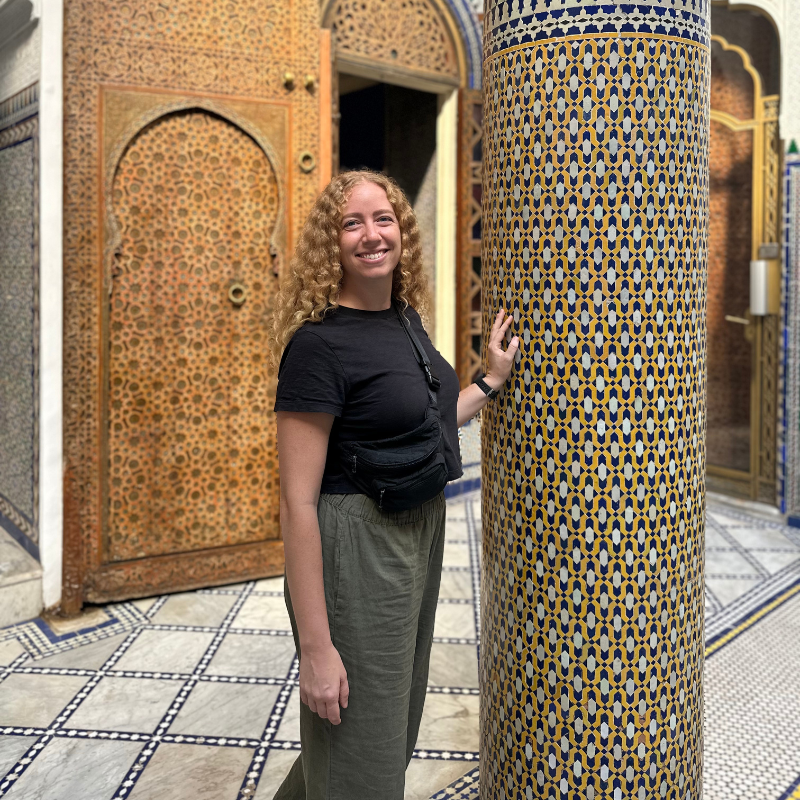
Janessa Klatt: So, I have not done a full year of Remote Year, but there was one itinerary that the company used to offer that stood out to me that every time you talked about it on the podcast, I was more and more intrigued. I started looking for it on their website at the time, once I was starting to get ready. And that was the 4-month All Africa itinerary. So, it was slightly different when I did it. The four countries we went to were Morocco, Tanzania, Kenya and South Africa. This was my first time on the continent. So, part of the reason I wanted to do the travel in this way was to get myself more comfortable with a continent that was new to me, especially as a solo female traveler who was trying to have good Wi-Fi everywhere I went.
And I think Cape Town, you know, I probably would have ended up there on my own anyways, but East Africa really intrigued me to go with this group. So, I started this 4-month journey in October of last year and it was meant to end at the end of January, as we know Remote Year went out of business. So, I unfortunately was one of the people affected by that. I was in my third month of the program when I got the news that it wouldn’t be continuing. So, I was in Kenya going, what are we going to do? And it was really amazing how our final destination was Cape Town, where a lot of former participants were going to be meeting.
Anyways, a lot of us were planning to stay beyond the initial 4-month program in Cape Town. We had already made those arrangements, but it was amazing how the community came together. We still essentially had a program. The city manager that had been there, Nat, was incredible in still making all of these experiences happen for all of us that showed up in Cape Town. And the whole 4-month journey was incredible. And we talked about it before I went on the trip. I kind of talked through all of my thoughts about it before I committed to it. So, you were actually a big part of the reason why I decided to try traveling in that way.
Matt Bowles: So, let’s talk about some of the highlights of the trip for you because you and I have a lot of the same types of appreciation. We fall in love with a lot of similar cities, I feel. And one of those cities is Nairobi, Kenya. I have been back a couple times now and you and I were just talking recently about how we love the city of Nairobi so much. Like I’ve been there twice for a total of two months. I’ve literally not seen almost any other part of Kenya. I haven’t been out to the coast, I haven’t been. And I have Kenyan friends, I’ve heard all this stuff from people that have gone. I’m sure it’s beautiful. I’m sure it’s lovely. When I land in Nairobi, I just want to be an urban resident in this city and immerse myself in all of the amazingness that is Nairobi. I’m sure the rest of the country is great. I just want more of this city. I just want to be here and live here and soak it all in. And I know you had a really similar experience, so I’m wondering if you can share. For people that have never been to Nairobi, Kenya, or what is that city like? Why was it so special for you? Why did it win your heart?
Janessa Klatt: Just like you, once I got to Nairobi, I did not take a single weekend trip. I spent the entire month in the city. I would love to go back and go to the coast, but at this point, as a solo female traveler, I would return to Kenya on my own. That experience gave me the confidence that I would do that. And there was just so much going on, so much happening, and it was just accessible enough as a foreigner who didn’t really know anybody. And I did make some local connections there as well. I had a friend of a friend that I met who then introduced me to his local friends, took me out one night. We went to a local bar and club. We went for street food. And I said, I’m along for the ride tonight. You just show me what you want to show me. And we had an incredible time in places that I would not have gone to on my own.
But it was even on my own or with my small group of friends there was just the music experiences in Nairobi were so diverse and fun. Like, there was the salsa night at Nairobi Street Kitchen, which is a weekly event. It was so much fun. Everyone comes out and dances salsa, bachata, kizomba. I had someone come up to me and ask if I danced kizomba, if I wanted to dance with them. And I said yes. And they were shocked. They’re like, what? Where did you learn to dance kizomba? I told them Bulgaria, and they were a little bit confused. But I tried to hold my own the best as I could on that dance floor. I went back a few different weeks while I was there. Another music experience that really stood out was this blankets and wine festival. That is an African music festival that they do a few times a year. And, you know, went with a friend who had local friends. And everyone there was just so into the music. They said, this was this group from my childhood.
I remember buying their first record. And I’d never heard of any of these groups and the music was just incredible. I had such a great time, kind of low key. It did start with a little picnic blanket and having some wine on the ground and then everybody is up dancing all night. It was so much fun and. And the experience that surprised me the most though was one night some friends said, hey, let’s go to this underground techno party. And I’m coming from Berlin, I do like some good techno. And I was not in the mood. We were out for pizza and I was like, I do not want to go to a techno party tonight. And I decided to go along for the ride. And it was literally underground. It was in the basement of a shopping center. Security guard let us in, we went down the stairs and there was just this little hole in the wall that they created this bar. And then the smaller room was this techno dance floor.
So, the event was called Underground Nairobi and there is another company now called Underground Kampala. And so, for this event, it was a crossover and they brought in the best DJs from Uganda and they were incredible. The music just kept getting better and better all night. It almost felt like being in some Berlin bunker basement where there’s the bright lights and everyone is getting sweaty on the dance floor. Just kind of in their own world, but to together. It was so unexpected in Nairobi, Kenya. But everything surprised me about Nairobi in the best way, 100%.
Matt Bowles: I love hearing that story and I am so glad that you love Nairobi as much as I do. I’m so excited to go back and just spend more time in that city. And as you just said, Kampala, Uganda, I know you haven’t been there yet.
Janessa Klatt: Not yet.
Matt Bowles: But it is absolutely incredible. The nightlife is completely next level. Especially as you just said, if you can go out with local folks that can take you to the best spots at Kampala. It is ridiculous. I went there, stayed with a friend of mine, Ugandan friend of mine who lived in Kampala. She was like, come through, stay at my place, I’ll take you out, I’ll show you Kampala. I was like, done. Say less. And I went and it was. I have been talking about it for years. So East Africa, super deep love in my heart for that region. I want to ask you though, also about Tanzania. This was your first time on the continent of Africa. You’d never done a safari before. You decide to do a safari in the Serengeti, which includes the Ngorongoro Crater for people that have maybe never been on a safari. What was your first safari experience.
Janessa Klatt: Like, I wish I could go back and do my first safari all over again. It was magical. It was like you’re in National Geographic, like you’re in the Lion King. The Serengeti is just so vast, and the Ngorongoro Crater was just this really surprising ecosystem because you look down on it and you don’t realize how large it is and how much wildlife is down in there. As you’re looking from above, it just looks like a beautiful landscape. And you drive into it, and it’s very similar wildlife. But some animals go in and out of the crater and the plains of the Serengeti, and some don’t. But just getting up so close to these animals, I thought that we see so much on social media now that these content creators all just must have amazing cameras and zoom. But no, the elephants were walking across the road right in front of us. The lions were taking a nap in the shade of our vehicle right next to us.
And then in the crater, on our last day, we were watching this herd of zebra. And there was a baby zebra in the group. My friend named it Zoe the zebra. And we were there watching for a while, and suddenly this pack of hyenas comes and they start chasing these zebras. And this chase went on for probably 30 or 40 minutes. And we just watched from our vehicle. At some point, they were a little bit further away. Our safari jeep very quickly divided into Team Zebra and Team Hyena. I was team Zebra, but I know this is natural and this happens every day. But eventually the hyena’s kind of stop and two of them sit down. I thought, okay, maybe it’s over. They’re taking a rest. And I look closer with binoculars, and someone says, wait, count the zebras. And the baby had been captured by them.
And it just this incredible thing that happens in nature. And these hyenas were unfortunately chowing down on this adorable baby zebra. But just to witness that, not everybody gets to. And so just seeing the herd of zebras walk away slowly after that, and the mother zebra had been hanging back with the baby until the very end. It was a little bit heartbreaking to see, honestly. And then that was close to the end of our trip. So, we’re driving out of the crater. We’re kind of quiet. Somebody puts on the Lion King soundtrack. There were some tears, there were some sing alongs. I’ll never forget that safari trip.
Matt Bowles: That’s so amazing. And then you go to Cape Town for three months, which is completely amazing. Can you describe for people that have never been to Cape Town what it was like, why it is so special, and some of the unique experiences that you had there that I haven’t even had. Like, you were there for Pride, right?
Janessa Klatt: Yeah, exactly. It was such a fun three months in Cape Town. I cannot wait to go back. I would love to get even deeper into the city. I feel like by the time I got there, there was still so much excitement. That first month of all these activities with this group of people, not only the ones that I had been traveling with, but the ones that were meant to meet us there for this program, that everyone still showed up, regardless of there being a program or not. So, I was very caught up in the structured activities of it. My work had also gotten very busy at that point, and I did kind of need relative stability. So, I stayed for three months. I joined a gym I went to every day.
And so, I want to go back and experience more. But the taste of it that I did get, if you can call three months a taste, it is just one of the most beautiful cities I’ve ever seen. You are right there by the ocean and by Table Mountain. Incredible hiking, incredible views, the city. There are just always things going on. The diversity in the city, the events, the things right outside of the city. We both love the wine tasting in the region very close to Cape Town. There is a wine tram that you can take that drives you around the different wineries, and you can get on and off this tram and visit all the local vineyards. I will definitely be doing that again next time. And Cape Town Pride also was amazing. I didn’t realize I would be there for it.
And once I realized I would be there for it, I was so excited. I tried to drag as many friends as I could to this event just to see everybody out in the streets celebrating together. People from all different backgrounds in Cape Town, locals and foreigners, and. And I have one photo in particular that is Table Mountain in the background. And there’s a Pride flag and a South Africa flag and a Palestine flag. And I just thought that was so beautiful to see that support all around from the community. They put on a great event. And actually, Cape Town will be Hosting World Pride 2028. Maybe. I’ll have to go back for that. So, it’ll be the first time that World Pride has been hosted on the African continent.
Matt Bowles: That’s so amazing. And yeah, it is so special as well to see the Palestine solidarity in South Africa. Of course, the South African government was the one that brought the genocide case to the World Court against Israel under the Genocide Convention and historically the anti-apartheid movement in South Africa and the whole anti colonial struggle in South Africa has been very closely aligned with the Palestinian liberation struggle. And so that solidarity goes back many, many, many, many decades. And it so wonderful to be in South Africa and to see that and to feel that and to experience that. And that’s one of the things you and I have connected on over the years as well. Janessa, is I have so much appreciated your Palestine solidarity and speaking up for that. I also want to ask you, I know you did another thing when you were in Cape Town that I have not yet done, which is you took a trip to Namibia and I want to ask you about that. It’s a country I have not been to yet. Can you share a little bit about what your experience was like in Namibia?
Janessa Klatt: Namibia is unlike any country I have been to before. I decided to add this on at the end of my Cape Town trip and I spent three weeks actually. I would have loved to spend more of that time road tripping around, but I primarily spent it actually at another Co Living that had a great community. It was a great place to work from. Shout out to Kamatjona in Windhoek. Tuta is the owner. He has formed a great place for people to come and work and he organized for us to go do a road trip on the weekends.
So, if anyone’s seen photos of Namibia, the classic is these sand dunes and these clay pans with these ancient dead petrified trees that are just there in the middle of the desert and just looks like you’re in another world. It’s such a beautiful country. It’s actually a very low population, so it’s very sparsely inhabited and there’s just so much untouched nature there. It’s an incredible road trip. So, I went and visited that area with the dunes. I climbed up on the dunes and there’s another area outside of Swakopmund on the coast called Sandwich Harbour where you can drive a 4×4 vehicle up on these sand dunes like a roller coaster right next to the ocean.
So, you see right where the desert meets the water. And I’ve just never seen anything like it. I would love to go back and road trip more of Namibia. You can also go on safaris there. I did not go to Etosha National Park this time. It wasn’t quite the right season for it and I’d already done these other incredible safaris. But I had an amazing time. I also one night in Windhoek, the owner of the Co Living was Like, hey, come out with my friends and I. We’re going to this vinyl cafe. And it was this bar with this DJ and the music was great. Everyone was just like having a good time. Everyone was so welcoming and excited that I was there and joining them. It was just such a friendly place. People are so nice.
Matt Bowles: That’s so amazing. And I’ve heard the same thing from everybody that goes, I mean, just incredible people and that the landscape is just preposterous, gorgeous and amazing. So, I’m so glad you got to do a road trip around the country. And I want to ask you also, just politically, what you learned about the history of Namibia and the genocide that the German government committed there?
Janessa Klatt: I had never learned anything about this. I think most people have not heard much about Namibia at all, let alone the genocide. But yeah, the Germans had occupied the country from the early 1900s. And a lot of what ended up happening, happening in the Holocaust happened first in Namibia with the local people there. So, I took a walking tour and there was a memorial and I went, what do you mean the genocide from the Germans? I had never learned anything about this. So, it was very interesting to see these parallels.
And I think it’s only in recent years the German government has even recognized that any of this happened. And it’s another one of those things that we don’t learn about in school. So that’s why it’s so great to get out into the world and see it for yourself, talk to local people, see the sites where these things happened and the ways that people are preserving the history and sharing it with visitors. I always try to go on a walking tour as soon as I arrive in a new place just to get that local perspective on the history.
Matt Bowles: That is so important. I actually was in Rwanda, at the Genocide Museum in Rwanda. And they at that museum were paying tribute to other genocides and highlighted the genocide in Namibia. And I really started looking into that. And this was the first genocide of the 20th century, happened around 1907. So, we’re talking 30 plus years before the Holocaust. And if you look at what actually happened, exactly what you just said, precursor, they created concentration camps, forced labor, using racial eugenics, scientific experiments on people, and then actually gave extermination orders from the government.
So, if you look into this genocide is really remarkable and powerful and important to study this particular genocide. And of course, recently, if folks have been paying attention to the, the international response to the genocide in Palestine that has been going on over the last couple years, the second largest sponsor of that genocide after The United States has been the German government supporting yet another genocide. And the Namibian government has been speaking out against the genocide in Palestine and highlighting the history of the German government’s genocide in Namibia as part of their opposition to the genocide in Palestine.
So, all of these really important connections, and I think, absolutely, Janessa, as we travel, these are the really, really important things to pay attention to and the really important connections to make. I’m curious for you when you reflect back on the way that your politics have developed and the way that your worldview has evolved and your awareness has become what it is, can you share a little bit just about that journey in terms of just how you learned about the genocide against first nations in Canada, and then all the way up to your outspoken support against the genocide in Palestine today?
Janessa Klatt: So, growing up, I didn’t know that much about politics or even about history. I was not very interested in it in school. I thought it was quite boring the way it was taught in a classroom. But as soon as I started traveling and being on the ground in these places and learning about history from people from there, I think it’s really important to reflect on how things that happened in history parallel things that are happening today. And in terms of the politics, I didn’t really grow up knowing anything about this. Like many people, I was not well educated in what was happening in Palestine up until a couple years ago when this became mainstream in the news. And that’s what really opened my eyes to. What do you mean? That this was happening this whole time, this genocide?
And that really started to catch my attention, of making sure that I do stay informed and that I do my best to help inform others as well. And that when we go to these places that we learn about the parallels. For example, in South Africa, you can see all of the street art in support of Palestine. And then, you know, you’re in good company because our values align. They understand what that oppression is like. There are a lot of similarities to what has happened in Canada that I think a lot of people are not aware of. I didn’t really know about this in school, and it was more in recent years that I started to learn about the genocide that the Canadian government and the churches committed against the indigenous people here that I just didn’t really know. And now you can’t unsee it.
Now it’s coming a lot more to national and international attention that this residential school system that the Canadian government started in the 1800s, it continued well into our lifetime. The last one of these institutions which were horribly abusive towards indigenous children, where they were taken from their families, put in these schools, if you can even call it that, where there was a lot of harm, that these lasted up until 1996. That is very, very recent history that many people do not know about Canada. And so, like with Namibia, I didn’t know it before I traveled there. So, I think travel is such a good way to learn about what is actually going on in the world and that we do kind of have a responsibility as travelers to not just enjoy the fun parts about these destinations. Sure, Cape Town is beautiful, the wine is incredible, the hiking is great, but there’s just so much more that you can learn by traveling and speaking to people. And I think that’s really important.
Matt Bowles: I appreciate that about you so much, Janessa. And as you know, that is one of the main things that you and I have connected on over the years and one of the things that means so much to me about you. I want to also now ask you about your history with the Zero to Travel podcast, first as a listener, then becoming part of the team, and now co-hosting a monthly segment called the Remote Roundup on the Zero to Travel podcast. Maverick show listeners, of course, know Jason Moore, the host of the Zero to Travel podcast. He has been on The Maverick Show twice. I’ve been on his show twice. So good friend of mine, personally good friend of the show, but would love to hear your Zero to Travel story and what you are up to now with this new segment.
Janessa Klatt: Yeah, this is one of the most full circle things for me right now, aside from this being on the Maverick show, but the Zero to Travel podcast I had hinted at earlier that during the pandemic, I had not been a podcast listener up until that point. And one day I typed travel into probably Spotify or something and a podcast called Zero to Travel popped up and I clicked on it and I was hooked. I loved it, loved Jason’s way of storytelling and interviewing guests and the types of people he had on the show. And it just really got me thinking about other ways that travel was possible. That’s what also led me to the location indie community.
A lot of these things are very connected. And so, I was a longtime listener of his show. Similar to this one. I listened to probably every episode that has come out since that point. And once I was a few months, months into my journey of working with podcasts as a manager, producer, editor, he was hiring for the Zero to Travel podcast. And because of the connections that I had built within this community, I was able to have Several referrals of people that knew him personally. And this was like a dream podcast for me. So, he did take me on to start working with the show. I’ve been with them for about two and a half years at this point. And I recently told Jason that I consider his podcast to be my gateway podcast because it’s the one that opened up everything else for me.
And this, I guess, addiction I have to podcasts at this point. It’s my favorite way of consuming content. I’ve always got something in my ear. But the Zero to Travel podcast is special because it was that first one that I can partially credit to the life I’m living now. It’s been a lot of fun to work with Jason and the team. And yes, most recently we are mixing things up a little bit on Zero to Travel, adding some new voices into the rotation. And I am now a guest co-host on a new segment called Remote Roundup, which is more about the digital nomad life. Because Jason was a longtime nomad, he is now currently living in Norway with his family. So, myself, my co-host, Caitlin, can add that perspective of us both being on the ground talking to nomads in that environment all the time. And it’s a really exciting opportunity. I never saw myself hosting a podcast.
Matt Bowles: Well, I listened to the first Remote Roundup segment and it was awesome. You guys did such a good job. We are going to link up the link specifically to that Remote Roundup podcast so people can go listen to it in the show notes for this episode, but let folks know what they can expect. I mean, both from the first episode, what you’ve done already, but then also what you plan to do in the future, like what is the concept of the segment and the value that you’ll be delivering.
Janessa Klatt: So, we’re dividing it into several different segments. We will be highlighting different destinations. We always love to talk about destinations. We’re talking about trends in the nomad world and what is happening, not just where people are going, but how they are living this life. We are talking about tools that can help with this lifestyle. So, whether that is mindset, tech tools, physical things you travel with that make the life easier. And we’re adding a little bit of extra bonus surprise categories each time as well to kind of keep it exciting.
Matt Bowles: Amazing. Well, I am a committed listener. Just as you listen to my podcast, I listen to yours as well. So big shout out to Zero to Travel and to Jason and huge fan of the choice to do this new segment with you as the co-host because I think it is an awesome compliment to the incredible interviews that Jason does as well. I recommend Zero to Travel already to people and certainly now that your new segment is there recommending that segment. So, all that stuff is going to be linked up in the show notes so folks can check that out as well.
Janessa, speaking of your expertise and experience as a digital nomad, I want to ask for some tips on minimalist packing. You and I are both on team carry-on as we move through this world. Can you share a little bit about your choice to use carry-on luggage and also give some minimalist packing tips, particularly for women who maybe aren’t quite there yet and would love to be able to travel the world with carry-on luggage only.
Janessa Klatt: Yeah, I started with carry-on only when I first moved to Berlin. I don’t quite know why I was so determined that I didn’t need to bring more luggage when I was planning to go there for a year. A suitcase would have been completely acceptable. But it was an interesting parallel how that kind of in some ways mimicked my grandparents’ journey of arriving in Canada kind of in reverse. Again, it was kind of a coincidence. That’s not the reason. But obviously I accumulated a few more things while I lived there for two years and then I hit the road and downsized again. So, I love the freedom that comes with traveling with just a carry on. And in terms of minimalist packing, yes, it is possible for women as well. I would say. I do laundry once a week. You have to. I don’t have a huge variety of things although I do travel multiple climates mitts within the same packing journey. I say when I go on a trip, but usually that’s 11 months around the world until I return and visit family where I have a few things that I may swap out.
But I have done the beaches of Mexico and the Christmas markets in Europe with the same backpack of things. So, I think it’s really about those layers. The key things are to dial in the footwear and the jackets. That’s what takes up so much space. Find two to three good pairs of shoes that will serve all of the purposes. If they are not multi-purpose, they are not coming with me. So, I’ve got one pair of black trainers that can be dressed up a little bit. They can be used for running, hiking, working out, walking around the city. One pair of sandals that can be dressed up a little bit. They’re also waterproof and they look good. They’re comfortable. I can walk for hours in them.
And then the jackets. I’ve got good quality rain jacket that rolls up relatively small, a packable down puffer jacket. And when you pair those together, you can get through quite a lot of weather. Not Canadian winter weather. I do keep a parka at my mom’s house that is a special occasion. But when I’m traveling, you can get by with a lot of just layers. And I travel with all kinds of random things as well. Like I think you do. I travel with an AeroPress coffee maker. I travel with a yoga mat. I travel with my own pillowcase. So, I mean, I’m pretty minimalist, but not that minimalist.
Matt Bowles: Yeah, as you know, same with me, Janessa. I am carry-on only, never check a bag. And my carry on includes an espresso maker, a wine aerator, a three-piece suit, because I like to dress it up on certain occasions. But to your point, I can also go to ski destinations and I can go skiing. I can spend time in winter climates. And one of the hacks there that I’ve learned is that you can rent gear. If I’m going to go skiing, which I do, I want to go to the Swiss Alps and go skiing, because it’s freaking amazing. I can go there and I can rent gear.
So, I have my layers, you know, that I have with me. And I have some winter clothes. But if I’m in a really cold environment or I’m doing something like skiing and I need ski pants, I need a real serious ski gear, or it’s super cold or whatever, you can just rent that stuff. Or sometimes what I even do if I’m going to a local cultural event or something that has a really specific dress code. Like I went once to the Diner en Blanc party in Paris, which is this a clandestine, pop up, elegant white party. And you have to wear all white. Everything has to be white. And it’s super, like shoes, socks, I mean, super strict. No off white, no ivory, all white, every single thing you wear. Janessa, I don’t have a piece of white clothing in my suitcase. So, I’m like, okay, I’m going to a white party. It’s a strict dress code. And I don’t own a piece of white clothing. What do I do?
And so, in that situation, I bought an outfit and then I wore parts of that outfit for the rest of the time that I was in that city. And then when I left that city and I needed to repack my suitcase, I just donated the whole thing. So, you can buy and donate, you can rent, you can do all sorts of things to augment what you’re actually carrying with you, which is your core stuff, which for me, as I mentioned, includes an espresso maker, which by the way, I carried up on my hike up Mount Kilimanjaro when I summited Kili. And I was able to make espresso every single morning on that six-night hike, Janessa.
Janessa Klatt: I want to be your hiking partner.
Matt Bowles: Yes. I was the hero of my group because I was making the other people in my crew espressos in the morning before we began our daily hike of Kilimanjaro.
Janessa Klatt: That’s incredible.
Matt Bowles: So, Janessa, when you think back about all of the travel that you have now done, what impact do you think all of that travel has had on you as a person?
Janessa Klatt: I think overall it’s made me a lot more resilient. I think that does that when you put yourself out of your comfort zone where you’re not just traveling to ‘easy destinations’, when you’re getting off the beaten path a little bit and you put yourself in situations where you do need to do a bit of problem solving, you do need to be a little bit uncomfortable. And I think that’s really important because like we mentioned, some people will just do the fun and chill and easy tourism part of travel. But I think you really do learn a lot about yourself as well and what you are capable of, especially when you travel solo. I didn’t know that I could make all of these connections all over the world and that I would have this global network and that now I am never really alone. And I think travel has just opened my eyes to so many things that are out there. Like I mentioned, I didn’t grow up learning about a lot of these things. And so, there’s just endless learning out there when you’re willing to listen to people.
Matt Bowles: You have mentioned to me that you have encountered a number of people that have done the nomad life for a couple years and they’ve lived that itinerant lifestyle and now maybe they’re finding a base, settling down, perhaps returning to a more traditional lifestyle. A lot of people do what you talked about in terms of a gap year. So, after high school or college or something, they’ll do a year and travel the world and kind of get it out of their system and then they’ll go back and resort, resume more sedentary traditional lifestyle. You have been traveling for years. You are still passionate about continuing to travel, to continue to have this itinerant lifestyle. Can you share a little bit about what travel means to you? Today and why you’re so passionate about continuing to travel at this point in your journey.
Janessa Klatt: Yeah, I agree that a lot of people get to that two year, two-and-a-half-year mark and they start to get burnt out because they are just racing from place to place while trying to keep their job while they’re at it. So, at this point I have slowed down quite a lot and the way that I’ve made it more sustainable for myself when I still have no intention of establishing one permanent base is to stay longer in destinations and return to places that are my favorites. So, I’ve found myself even already starting to develop a rotation seasonally of places that I really enjoy spending time where I have that community. I’m not starting from scratch every single time with figuring things out and meeting people. That’s my way of making this lifestyle more long term.
And what I love about this lifestyle and about travel is that it’s almost like you can live multiple lives in one. You’re not stuck in one thing. I’ve had obviously so many different chapters. It was a very nonlinear journey and I feel very lucky that I have experienced so many different things and different versions of a life that I could imagine and that travel has just been the way of opening up opportunities that I never would have thought were possible. I never would have expected I would work with podcasts, or that I would hang out with people that I do now, or that I would do all this scuba diving. And I’m so passionate about continuing to because you would never run out of places to explore and people to meet. And it just reminds you every time that people are great all over the world. The people you meet, whether that is other travelers or locals in cities, just people are generally good and they’re willing to share their life and their culture with you. And so hopefully you can be a good ambassador of your own life and culture and give something back to them as well.
Matt Bowles: Let me ask you one more question, Janessa, and then we’ll wrap this up and move into The Lightning Round. You talked about how you were inspired by Maverick Show guests that you were listening to three years ago when you were working at a job and you had this podcast in your ears and you were interested in learning how to become a digital nomad and making that transition. And now today you’re on The Maverick Show as a digital nomad guest. And I guarantee you there is someone listening to this episode right now who is in the position that you were in just a few years ago and they’re working at a job that’s location dependent and they’re interested in learning how to transition into a remote digital nomad lifestyle of exciting, fulfilling travel. And they’re hearing this right now. If you were speaking directly to that one person, what is the advice or encouragement or words that you would say directly to that person that’s listening to this episode in that place right.
Janessa Klatt: That there is no one right way to do this lifestyle, only the way that’s right for you right now. And that may change. That has changed many times for me. If you’re looking to transition out of a location dependent job that you do not like, explore all the other options. Podcasts are a great free resource to learn about what other people are doing. And for me, I, I basically had to create my own job because I was not that employable as a remote worker at that point. I had no experience working for companies. I’d never worked a job that involved a computer before. So even if you are working some kind of in person job, there are so many options out there that you can transfer your skills to or decide what you can learn. And it doesn’t have to look the way it looks for other people. It looks sexual. So exciting online when we see these content creators that are constantly traveling. Find something that you’re interested in figuring it out, go with that for a while and you can always change it. And just don’t go too quickly with the travel part of it.
Matt Bowles: All right. I think that is the perfect place to end the main portion of this interview. And at this point, Janessa, are you ready to move in to The Lightning Round?
Janessa Klatt: Let’s do it.
Matt Bowles: Let’s do it. All right. What is one book that you would recommend that people should read?
Janessa Klatt: Your Money or Your Life by Vicki Robin and Joe Dominguez.
Matt Bowles: Okay, who is one person currently alive today that you’ve never met that you’d most love to have dinner with? Just you and that person for an evening of dinner and conversation?
Janessa Klatt: This is another podcast related answer. This is a podcast host named Katie Gatti Tassin. She’s best known as the host of the podcast Money with Katie, but she has another podcast called Diabolical Lies, which is one of my absolute favorites. She covers such a huge range of topics related to politics and culture and what I love about her as a person, because maybe people have not heard about her, is that even though she’s a personal finance educator in her day job, she strongly identified identifies as an anti-capitalist and every episode is the most thoroughly researched piece I’ve ever heard and I learned so much from her. I find myself nodding at all of her opinions and just shaking my head at every ridiculous thing she points out about society. So, I think she would be a great conversation partner.
Matt Bowles: Amazing. I have not heard of her or the podcast, so I am going to check it out and we’re going to link it up in the show notes of course, so everyone else can check it out as well. Janessa, what is one travel hack that you use that you can recommend?
Janessa Klatt: This has worked for me. It may not work for everybody. I just wrapped up an experiment of using one ESIM for an entire year that was a 12-month 20 gigabyte package. And before you say only 20 gigabytes for a whole year, I set this challenge and told myself I would have it as at least a starting in every country. So, I would touch down and be connected. And if I needed to get more physical SIM cards in person, I would. I only did those two times in 12 months. One of them was in South Africa. I went through a lot more data there because I was taking Ubers everywhere and one of them was in Namibia because EIMs are not really a thing there. So, it didn’t work. And other than that, maybe like $15 extra. I used to this one global plan that was very inexpensive so I’ve actually decided to do it for a second year now. I spent $54 and that will be 90% of the cellular data that I’ll need for the entire year.
Matt Bowles: So how does someone else do this?
Janessa Klatt: So, there’s so many ESIM companies out there right now. So, depending on your needs it might be different. There’s no best one. This one happened to be through Airalo and it is a global 365-day plan like me. And you use one gigabyte one and a half per month. You don’t need to be paying these plans every single month or buying a new one in every single country. So, it has worked great for me.
Matt Bowles: All right, we are going to link that up in the show notes as well. Janessa, knowing everything that you know now, if you could go back in time and give one piece of advice to your 18-year-old self, what would you say to 18-year-old Janessa?
Janessa Klatt: Maybe this is cheating a little bit, but I wouldn’t. She figured it out. I would just give her a big hug because everything turned out the way it was supposed to. I had a lot of difficult things I went through between 18 and 20 and came out the other side better for it and all of the twists and turns on this path, it worked out so I just gave her a big hug.
Matt Bowles: Love that. All right, of all the places in the world you have now been, what are three of your favorite destinations you would most recommend other people should definitely check out?
Janessa Klatt: Mexico, I keep returning to so many more places I would love to go. It’s such a large country, we’ve already given it a lot of love. But Kenya and I will also give Canada some love. I think a lot of even our neighbors in the US have not spent much time in Canada. Go beyond Toronto, go beyond Montreal. Check out Canada.
Matt Bowles: All right, last question. What are your top three bucket list destinations? Places you have not yet been, highest on your list you’d most love to see.
Janessa Klatt: Number one Antarctica. Two, Thailand. I’ve wanted to go for years and have not made it there yet. And surprisingly Ireland I have not yet been to. Even though I have so many amazing friends, friends from Ireland, most of them don’t live there. So, I like to say I’ll have to go and do a tour around the country visiting all of their mums. But I can’t believe I haven’t been to Ireland.
Matt Bowles: Those are fantastic picks. I have spent a bunch of time in Thailand and obviously, as you know, in Ireland as well. So, when you’re ready to plan those trips, Janessa, hit me up. At this point I want you to let folks know first of all just about the services that you are offer, who your ideal type of client is in case they are listening and how people can potentially work with you.
Janessa Klatt: Yes. So as a podcast manager, podcast producer, podcast editor, I do everything behind the scenes of other people’s podcasts. Whether that is the editing or just making sure everything runs smoothly for existing podcasts or launching a brand-new podcast. I am such a nerd about the strategy behind growing a podcast and I love working with business owners that use it as a marketing tool for their business. You can find more information about all of my services and what I do with podcasts on my website. That’s just janessaklattt.com.
Matt Bowles: And for people that just think you are dope and a super amazing human being and traveler like I do, and would like to follow you on social media and would like to hear your Remote Roundup segment on Zero to Travel Podcast, how can people come into your world?
Janessa Klatt: I am very easy to find online. Just my name, Janessa Klatt. Same as my website. You’ll find me on Instagram and LinkedIn and Zero to Travel whatever app you are currently listening to this podcast, just look at Zero to Travel and you will find the Remote Roundup series. And I also do some guest writing for the newsletter. Done some newsletter takeovers lately so you can also find my written thoughts about travel and nomad life and the changing definition of home, all of that kind of things at zerototravel.com/newsletter.
Matt Bowles: We are going to link all of that up in the show notes so you can just go to one place at themaverickshow.com go to the show notes for this episode and there you’re going to find direct links for all of the ways to find, follow and contact Janessa. Listen to her amazing Remote Roundup segment on Zero to Travel and all of the other things that we have discussed on this episode. Janessa, this episode was such a long time coming and this was such a special conversation. Thank you so much for being on the show.
Janessa Klatt: Thank you so much Matt. Such a full circle moment and it was great to catch up with you.
Matt Bowles: Alright. Good night, everybody.