Matt Bowles: My guest today is Yazan Badarny. He is a Palestinian digital nomad, keynote speaker, remote entrepreneur, and the founder of HomeAwe, the first Arabic platform that organizes volunteer cultural exchange and internship opportunities for Palestinians worldwide. Born and raised in Arabi, a village in northern Palestine, his mission is to connect Palestinians with the world and empower them through travel, helping them step out of their comfort zones, break societal limitations, and discover new perspectives. HomeAwe currently has over 400,000 followers on Instagram, reaching millions of people each month.
Yazan, welcome to the show.
Yazan Badarny: Hello. Thank you so much, Matt.
Matt Bowles: I am so inspired by what you are up to and excited to dive into that. But let’s just start off by setting the scene and talking about where we are recording from today. I am actually in the Blue Ridge mountains of Asheville, North Carolina, on the east coast of the United States today. And where are you?
Yazan Badarny: I’m in Haifa right now. It’s a city in Palestine, northern Palestine. And I’m in a small apartment now. I can see the sea in the daylight, but now it’s night. So, I’m so excited to be hosted in your podcast.
Matt Bowles: I am so excited to have you here, brother. I would love to start all the way back and just share a little bit about your experience, where you grew up in Palestine and some of the memories that you have, what that was like coming up as a kid in your village.
Yazan Badarny: All right, so I grew up in a small city in Palestine. It’s in the 48 borders lands in Israel, and I was raised as a Palestinian in a Palestinian village there. I went to school there. It’s only a Palestinian village and there’s no Israelis living there with us. The thing is you grow up a bit confused about your identity, so, you grew up as a Palestinian with Palestinian parents speaking Arabic. And then you start going to school and there you are forced to learn another language. And then they tell you before school that you live in Palestine and then you go there, but you actually live in a country called Israel that really occupied Palestine in 1948. And then the confusion starts to grow and that basically reach us to something called the identity conflict that we all face here as Palestinians living in Israel.
Matt Bowles: And can you talk a little bit about how you processed that when you started to go to school and you started to encounter those things and then you started to come of age, what types of things did you encounter? What types of experiences did you have? What was that like for you?
Yazan Badarny: You’re not really totally aware of what’s happening. You just know that you are occupied somehow, and you live in a racist environment that you’re not really welcome to be here, even if it’s your land and it’s your grandparents land. But you start to recognize these things when you finish high school actually, and you go out of your village to work somewhere or to start studying in college or university. Then you start facing the real world.
And of course you hear things, you hear stereotypes. A lot of people say, okay, you are Palestinians. Some people say, ah, yeah, we are, but I mean, we have Israeli IDs, so you don’t really know who you can really connect with, and you just maybe establish some ideas in your head. But usually as kids here, we don’t speak about it that much. Even if we want to speak about it or teachers want to speak about it, they can’t really speak about it freely. They have to go through a process, a system. They can’t really say whatever they want. There’s a system that Israel put for us to study about and about the history of Israel. So, you hear something inside the class, and you hear something outside the class. So, you keep really confused until you reach a point, and you face some stuff outside of school.
Matt Bowles: And can you share a little bit just for folks that may not be familiar with the experience of Palestinians who are also citizens of Israel, which is about 20% of the entire population of Israel. And also, as you were getting older, and you were starting to realize how the whole system works institutionally and the way that rights are distributed differentially and so on and so forth and just explain for people what life is like for Palestinians who live inside and have this Israeli citizenship.
Yazan Badarny: Basically, we face racism on a daily basis because we are involved. We have to go to work with Israelis all the time and we have to speak the language. So, I would say a lot of people look at us in a different way that like we are a bit less and we are less qualified. And of course, the government doesn’t support any in any kind. They support less maybe now because we as Palestinians community here, we grew and we are now more strong. We ask for what we are supposed to have, but they try to support less and less and less.
So, for example, if you go to my city, it’s now a city, by the way, it’s not a village anymore. If you go to my city and five minutes away you go to an Israeli city, you can see an actual difference, the infrastructure and the parks and the space. And it’s less crowded, our village is more crowded. So, you can see obviously there’s more money in the Israeli cities. There’s less money in the Palestinian cities. And opportunities about opportunities also are hard. If you apply for a job, for example, and there’s another candidate that he’s Israeli, ah, okay. So, he has the upper hand to be accepted because he did the military for example, and we don’t do military service.
They always have the upper hand and the first to be accepted and you have to work twice as much as they have to do. And it’s basically what I felt because I’m ambitious, I want to do something big, I want to create something. I never felt supported, I never felt accepted. I always felt like there’s a concrete ceiling above me. And of course, there’s certain jobs also that you can’t really get anyway. Like whatever you do, you can’t really get it because you’re not Israeli. So basically, this is the general thing. You are a second-degree citizen. And even if you are Palestinian and you want to be Israeli, you’re not also fully accepted. They always give you this eye contact that you are not one of us.
Matt Bowles: So, when you were growing up in this environment, I’m also curious about how your interest in international travel, how did that start to develop and what type of travel experiences did you have when you were growing up?
Yazan Badarny: My travels were actually a lot growing up with my parents because my parents financially were really stable and fine and good. So, they could afford for me and for my two siblings to go abroad. It was all the time to Europe. We didn’t go anywhere else. But it all started when I was really a kid. Let’s go, there’s summer now we have a holiday. Let’s go to Germany or let’s go to Romania or let’s go to France. This feeling, of course, anyone who travels loves it. But I think because my father gave us this opportunity and exposed us to the world as kids gave me an advantage now on what I do now. But yeah, it was really cool. I really enjoyed traveling with my parents until of course, I was a bit more mature, and I was like, ah, no, I don’t want to travel with my parents anymore. I want to do it by myself. But I took it on another level. I went really extreme for that.
Matt Bowles: Well, let’s talk a little bit about the traditional path that you were on in terms of your career path and your life path and probably what was expected of you and what direction you were initially going before you took that course deviation.
Yazan Badarny: Usually it’s really traditional that you finish high school and then after that maybe you can work for a year to get some money and then you start university. You have three, four years of university studies. You finish your degree after four years, maybe five years, depending. And then you start working, get a job, you get one job, that’s it. And you save money, you buy a house, you get married, that’s it. That’s our traditional life here usually.
Matt Bowles: And what were you studying? What field were you working in? And what sort of was the vision or the trajectory that you were on?
Yazan Badarny: I was a bit fascinated by computer science for a bit while I was studying high school. And I was good at it for some reason, maybe also because my teacher was also giving me more attention, that he saw something in me. And so, I decided to go and study computer science. That’s the path that I thought will connect me with the world. Because in my fantasy, in my dreams, I felt that I would do something, I will build something related to technology to make a difference in the world. That’s what I had.
Matt Bowles: All right so let’s talk about now how this course deviation came up and what led up to your decision to go and live in South Africa of all places. How did that come about?
Yazan Badarny: It was really, I would say, an awful period of time for me studying computer science. I didn’t expect at all that this field is super hard and it needs a lot of studying a lot of time just to put effort into studying these theories and mathematics and all of these things that I still don’t like. And it was really hard for me. Really, it wasn’t easy. So, for me I was putting a lot of effort in studying to just keep going, you know, not like achieving a lot of things, just to keep going and keeping up with this hard degree. And a lot of disappointments for myself, really.
I entered this field dreaming about big things, maybe starting a company. And then my dreams got smaller and smaller. Okay, I will accept any job in any company. I don’t care. So that puts me in a way to think that I’m a victim, put me in a victim mentality. I felt that everything is happening, is happening against me. No one loves me, everything is bad. I’m occupied here; I’m not supported. Nobody cares about Palestine. My parents, even though they gave me a lot of things, they offered me a lot of things, even then, I started to feel like, ah, why did you give me all of this? If I have less, maybe I will do more. This victim’s mentality was really deep inside me.
And then after thinking and brainstorming and trying to recognize what I really want in life; I really admit to myself finally that I am in a victim mentality. I’m not really a victim. I just. I have this mentality or mindset now that it’s not helping me to achieve what I want. And that was the start. And then I asked myself what I want to do in life. I didn’t get the answer, but I started to ask myself what I don’t want to do in life. And the answer was, I don’t want to work in tech, I don’t want to work in a company, I want to do something else. And after that I also asked myself, how can I really discover my passion? So, this idea of going to do an internship or a culture exchange program, I didn’t even know that internships exist abroad or volunteering. I didn’t really know. It’s just a cultural exchange program that I tried to apply through universities maybe three times. I couldn’t, so I planned to do it by myself. So, I started looking and then I saw this program in South Africa.
Matt Bowles: So, let’s talk about that. The decision to go to South Africa, you had only been around the Arab world and then to Europe. So, first of all, how did that go over with your parents? And also, what were your initial thoughts before you got there? What were you anticipating? How did you feel about it?
Yazan Badarny: I had this thinking that, okay, the States is cool, and Europe is nice, but if I want to go for a long time, maybe it’s cheaper for me and the smart choice to go to somewhere that is cheaper than here, then I can spend more time. I didn’t want to go for one week or two weeks. I could an internship in Europe or the States for two weeks and pay the same amount of money to go for six months in South Africa. So, I thought that’s a big opportunity for me. So, I told everyone that I wanted to do that and they didn’t receive it really well. It was crazy. It was for them like I’m doing something that they don’t really get, that it will lead me somewhere bad in life. Because usually we don’t travel to Africa.
Africa is out of limits. It’s out of consideration. We travel here only to Europe. Maybe if I told my father, yeah, I’m going to Europe to do this, he will be fine. But going to South Africa is like with the stereotypes and it’s far away and we don’t know the culture and he doesn’t know what is happening there for him was too bad. But yeah, I did it anyway. I thought that maybe a place that far and that different can affect me in a good way and maybe I can really discover myself because of this big, huge difference in cultures.
Matt Bowles: So, what was the internship that you were going to be doing in South Africa and where in South Africa where you based? And then when you got there, what was your first early impressions of South Africa?
Yazan Badarny: Okay, so basically the thing is, because it was really crazy, not only because I chose South Africa, but it was crazy because I finished a degree with computer science so I can work in a tech company here and get good money. But instead, I chose to do an unpaid internship in South Africa and also pay some money for an agency to find me this internship. So, I’m deciding not to have money, and I paid money to work in South Africa. That was really extreme for everyone and for myself, I thought it’s worth it for some reason, I don’t know why, I had some visions. Maybe I dreamed about it a little bit. And for me also was scary. To be honest, I lowered my expectations. But when I arrived there, it was like a door of glass was broken. I felt so good from the first day. It felt so amazing. I felt so alive. I connected with a lot of people in the first two hours.
And even like my English, I didn’t really believe in my abilities in English and apparently, oh, I can communicate. I’m fine. I’m not the best and maybe I’m still not the best, but I can at least communicate. And a lot of confidence covered me in the first day. And that’s only the first few hours. I’m telling you And I spent there six months doing this internship in computer science, working for free with a startup of 10 people to receive this experience in tech. And it was really cool, and the guys were really amazing. They tried to guide me through work, and it was overwhelming. I remember starting the first day working there, it was really overwhelming. But I was like, ah, I will do it. I did keep up and it was really good.
Matt Bowles: And what city were you based in?
Yazan Badarny: I was in Cape Town and in a neighborhood called Observatory, Obs they call it. And it’s really close to UCT, University of Cape Town.
Matt Bowles: I love Cape Town, man. I have spent probably spent about six months. Cumulatively, I didn’t do a full straight six months, but I did, you know, a month at a time. And then I just kept going back. The first time I went was probably about a decade ago. And then I just keep going back because it’s just such a special city. So, I also have to ask, were you aware when you initially were going to South Africa about the history of South African solidarity with the Palestinian liberation struggle? Because that goes back and that has been so strong for so many years. Was that something you were conscious of as you went there?
Yazan Badarny: I want to be totally honest. So, while I was here, living here, growing up, and arriving to this state of victim mentality, I was trying to just not talk about politics anymore. I was really hating everything that is happening here. So, I didn’t really know about the whole history about supporting Palestine. But since I discovered the program and I start reading about South Africa, it really got me excited. I was like, oh, that’s amazing. And of course, when I went there and started talking to people, I was like, oh, my God, I can say whatever I want. And they really understand what I’m saying.
Matt Bowles: That’s really nice that you had that context starting in 2021 and then you had that sort of cemented understanding once the South African government then would be the one to bring the genocide case against Israel to the International Court of Justice. And you were able to sort of watch that unfold with the context that you had there. So that’s really special. The other thing I have to ask you about, I told you I’ve spent about six months in South Africa too, but I have not taken the world’s highest bungee jump. Yazan, can you share a little bit about that? For people that maybe have never heard of this, they don’t know about it, can you share what that was like?
Yazan Badarny: I can start by saying that I’m really scared of heights. I’m still scared of heights, but meeting a lot of people. The first month there, we decided to go on a trip, a road trip, but the bungee jumping activity was there. I heard it’s one of the highest bungee jumping from a bridge in the world and it’s 217 meters. I decided even when I heard about it, that I’m not doing it. But we went on this road trip and it was like a dream, living this environment with internationals. And I started to feel that I really am discovering myself. I know who I am and of course it’s related to my identity also, I would say, because it was like the first time for me to say who I am and what I do. Because usually with the identity conflict that I have, I try to escape these questions.
When they say, where are you from? I try to avoid it because I want them to accept me anyway. And after this experience with a lot of people saying about themselves and explaining who they are, about their lifestyle, about their history, it was for me the first time that I speak up and say about myself, about how I lived, about how I feel, about, about my parents, about our history, about Palestine. And that gave me a big connection to my roots, and it was amazing. So, with this experience and the road trip the day before the bungee jumping, I was like, I love these people so much. And some of them also bit scared. Not like they are fine, they’re also scared.
But we were like talking as like, guys, we’re living life once and we are here together now. Let’s do it together. Let’s everyone jump. And we decided to jump. I was scared; I was terrified. I was. Yeah, my God, it was. Yeah, it’s really high. It’s 217 meters. It’s really high. But the thing is, with all of these feelings, I felt that I already took the leap, right? I already jumped when I decided to go to South Africa and the first place that was even more scary than bungee jumping. So, I got this realization that it’s not going to be that hard, it’s going to be easier because I did way harder decisions in my life. And I actually stood up, put my hands up and just let myself go. And it was one of the most amazing experiences I ever did. Wow. Wow. Big, big, huge adrenaline, huge self-respect. And it got me, it got me. I was like, yes, I did it. A sense of achievement and doing something that you are scared of with people that you love also and appreciate is something different.
Matt Bowles: So, by the end of your time in South Africa. Can you talk about the personal transformation that has occurred? Who you were before you went to South Africa and then who you were at the end of that experience?
Yazan Badarny: I came back after this experience a totally different person, way more confident. I love myself. I appreciate a lot of things in my life, simple things. I appreciate my parents and what they gave me because I saw a lot. I was exposed to a whole new world that was really blindfolded from. I got this sense of connection to my Palestinian identity more. And I wanted to talk more about it because also when I was in South Africa, the issues in Jerusalem with Sheikh Jarrah had happened. While I was there, they tried to displace Palestinians from their houses. It really got me there because I was still there living with a lot of people from the States and from Europe and from everywhere, even in the world.
So being there and seeing what’s happening, and people really got crazy here in the streets. So, everyone was danger. And I wasn’t with my parents at the time and with my family. I felt responsible. I felt for the first time in my life that I am responsible. I need to speak up more. I need to say something myself. Being here with these people is a responsibility, and I need to take it. I need to tell them what is happening. I need to tell them more details.
So, I had this vision that I imagine myself because whatever happens when I was here, we were posting on Instagram, but on Instagram I had only maybe 50 followers or friends. And that’s it. So how can I really reach? Even if I keep posting for thousands of years, no one will really see what’s happening. But because I was there, it can really make a difference because I’m speaking, I’m telling what I feel. I am telling my part of my story. I said to myself, what if there’s thousands of people like me right now traveling and experiencing this culture, exchange programs and do the same and speak up. That will actually make a difference. So, I felt more responsible about my conflict, my history, my country, my roots, my identity. So, I started speaking up more about it.
Matt Bowles: Well, I know that also started planting the seeds for what would become your company, HomeAwe. And I want to go a little bit on that journey and on that trajectory. And I know another place that actually had a pretty significant impact on you was Switzerland. Can you share a little bit about your experience after South Africa, your choice to go to Switzerland and what that experience was like?
Yazan Badarny: After my South African experience, I went back and they offered me a job remotely in the same company that I was interning. In. And even though the money was not that good, it was South African salary, which is five times less than what I would get here if I work here. So that’s also a different decision that made my parents go crazy. Anyway, I took the job because I felt it’s an opportunity. I wanted to stay abroad. I felt something because of my internship, I knew that I will not work in tech for my whole life. I don’t want to sit with my laptop for eight hours a day, and that’s it. No, I want more. I want to travel more.
So, I took this opportunity and traveled to Europe. I was backpacking there for a few months. I met a lot of people. I visited my friends that I met in South Africa. So, I was really traveling cheaply in hostels, visiting friends, sometimes not paying anything. And I actually saved money with this South African salary. So also, I was exposed to another new world, which is traveling cheaply. And I was trying to expose a lot of people about this way of traveling and the internships, specifically in South Africa. I tried to market it on Facebook pages with universities to talk to people and tell them, listen, you can do this, you can do that, you can do an internship. South Africa. My name is this. I did this.
Some people got excited, but they were like, ah, no, I’m not paying money to go and volunteer. And because of that experience, but also because of my belief in this concept, I didn’t give up. And I opened this Instagram page to show the people what I do and how can you really travel and volunteer abroad and do internships? So, while traveling in Europe, I opened the page, I called it HomeAwe. And for me, it was just like, go to South Africa again and maybe try to make videos about the Internet experience living in Cape Town. And that’s what I did. I did that for six months in South Africa, and no one really cared. No one really signed up. I gained some followers, but not a lot.
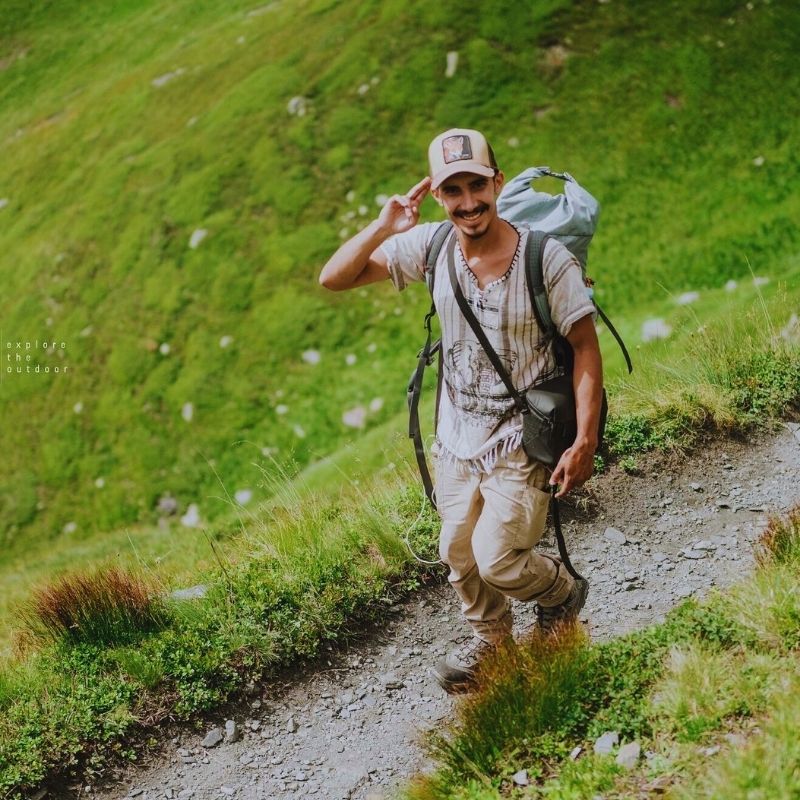
And then I went to Switzerland because I was asking people to go to South Africa to do internship, and it’s really far away, and I’m asking them to go there for like two months and three months. So, it doesn’t really make sense. So, I was like, maybe from South Africa, I can create a line to Switzerland. The most safe place and green, and it’s amazing. There are cows and there’s lovely people. So, I did create this line. I went to Switzerland, and I started to make videos about it. And I met some people there that they are really actually businessmen and entrepreneurs. And since then, we’re doing a lot of things together, and I have been doing a lot of projects there in Switzerland, specifically with volunteering with groups and do some hiking. But, yeah, it was a big turning point.
And from there, people started to see that I’m actually doing more than just volunteering in South Africa. There’s Switzerland, and it’s growing. So, people started to sign up to South Africa when I was in Switzerland. But in any case, it was really a turning point for me meeting these people, and they became business partners in a lot of ways.
Matt Bowles: So, in South Africa, one of the things you did to put yourself well outside of your comfort zone is you did that bungee jump in Switzerland. I know that you decided to learn to ski in the Swiss Alps. Can you share a little bit about your decision to do that? And then what the experience was like, learning to ski.
Yazan Badarny: Skiing is one of the best sports I ever tried. It’s amazing. And for me, I’m a kind of sport guy. Whatever I play, I really get it really quick. Not like mathematics, but sports. I’m really good. It took me maybe one or two hours to ski in a beginner slope, and it was really good. And a lot of people, they were like, how he did this. But, yeah, for me, skiing really symbolizes more than just a sport for me. It’s a lifestyle, It’s a mindset. Because when I tried it the first time, in my head, I was saying, I don’t want to fall. I’m afraid of falling. But actually, this sport, you need to fall down, and then your brain will be processing and, okay, next time, I will do a different move, and then I will not fall, fall.
So, basically, it presents how life goes and how success goes through our lives. You have to fall down sometimes, but the thing is, you have to not accept, try more and try harder and stand up again until you reach what you want. So, for me, whenever I go skiing, it’s just a mindset, okay? I’m in this winning success mindset. I will do it even if I fall. It’s going to be fine. I will try again and again. Then I will start again. I will stand up, I will do it, and I actually do it. I try to deliver this message also to anyone who joins me with skiing. And I actually met a lot of people that love skiing, but they don’t have this kind of mindset. And when I tell them that, it’s like, oh, wow, I love it. Can I use it? Of course, it’s the best. Yeah, for me, skiing is something different.
Matt Bowles: Can you talk about the continued trajectory of HomeAwe, how you continue to build the company and then your transition from having it as a side hustle while you were working to becoming your full time business?
Yazan Badarny: I remember while traveling in Europe backpacking at New Year’s 2022, I decided to open this page to show the people what they can do in South Africa if they choose to do an internship there. So, I opened this Instagram page. I was in Austria back then. I was doing a hike, and it was nice. I reached the top and I had this vision, yeah, let’s do it, let’s do it. I’m coming down now. I will just click on Instagram new profile and let’s see, let’s start. Why not? And that’s what I did. And after I opened this page, I started to post some pictures from my first experience. I didn’t have even any content and just a few pictures. And then my experience in editing and making videos started there. It really got me. It’s like I was enjoying making videos or color grading pictures. So, I was like, that’s interesting. But in my mind, HomeAwe was really specific, really small. I was thinking in one way, I was only promoting internships in South Africa. I really like the idea.
I still believe that it’s one of the best programs that I have now with HomeAwe is the South African experience that I did the internship program. But when I went there back, I felt like there’s something missing. It’s not complete, It’s a nice idea, it’s good idea. It doesn’t exist in our society. It’s new and I’m doing great videos, but there’s something missing. So, at the same time I was trying to finish my job, going in the daylight, trying to record some content, make some videos. But I was feeling so sad reaching 5pm and it’s already dark. So, I was like, I need more daylight. I can’t really do both because my plan was to keep my job and do this HomeAwe page as a side hustle. But I really enjoy making videos. That’s the problem. I was like, yeah, I want to finish this job to do just more work for myself.
So, it was crazy, whole month. But because I put myself in this experience, I want to make it work and I want to make more content, I want to do more videos. And. And my mind was processing all the time. I was dreaming about it, even when I was sleeping. What is missing? What is missing? I need to find it. There’s something that makes me not to quit my job. I want to find this missing part. To quit my job and just focus and HomeAwe. And just in a moment, while I was thinking during the day, I have this vision, I was like, oh yes, finally I got it, let’s do it. And that was that. Why I’m focusing only in South Africa. I can do really the same exactly with volunteering abroad, everywhere in the world. And this is a huge idea. From only South Africa to the whole world, that for me made a difference.
And in the same moment, I’m not kidding, in the same moment I called my manager and I told him I quit. I didn’t think about it because I got my idea. I got this whole new amazing experience that I can bring through HomeAwe to everyone in the world, not only Palestinians. So, let’s do it. So basically, now we have programs in South Africa, Tanzania, Switzerland, Italy, Portugal, Bulgaria, Brazil, Thailand, also Sri Lanka. Now there’s more and it’s growing. And I experienced a lot of different trips, and it was crazy. The one in Tanzania, for example, I was living with a Tanzanian family in the same house, eating the same food they eat and volunteering in the school, in the neighborhood and try to help in the community there after school. It was really amazing. It’s just different, different mentality, different mindset, different culture. So, you’ll be exposed to different things.
And of course, Switzerland, we have amazing programs there with summer schools and language camps and ski camps. There are different opportunities in farms in Italy, in favelas, teaching in Brazil, of course South Africa, you can volunteer in hostel, you can volunteer in townships. Different and amazing experience that it’s really worth. It really can really affect your life in a positive way. You can discover a lot of things about yourself. I always say that HomeAwe is a self-discovery journey. So, if you’re lost in life, you want to discover some new things about yourself. HomeAwe is the first door to take.
Matt Bowles: Well, you and I have both done safaris in Tanzania and have done sort of the camping experience out with the animals. And I was wondering if you could share your experience doing that and what that was like for the first time.
Yazan Badarny: The Tanzanian experience was really special for me. And of course, being in Serengeti, the biggest safari in Africa, is something really cool. You have this big car driving, you see animals and you enjoy, you have lunch, you meet people and then the night comes and then the guides say, we are camping here. I look around me like, where’s the fences? No, there’s no fences, man. You will sleep in the wild, like, oh, my God, why you didn’t tell me before? And he was like, no, it’s going to be okay. And no animals come here with the light and whatever but just don’t go at night, don’t go alone at night. Like, oh, man, you scared me even more now.
And it was nice. We had a really nice chilly night with a lot of people from everywhere. And at some point we’re like sitting outside the tents and with a small table with four people. And we heard something from far away. And one of the guys had this big flashlight and he pointed at the cars. And we saw small hyenas really close to the car. We actually saw them. So it was, for us, the first time we see hyenas, even though it was a bit scary. But when we pointed on them, they escaped. And the guy told us that hyenas don’t even bother to attack anyone because we are taller, so they will not come here. So, I was like, okay, it’s fine. And we kept having a great night until me and my friend, because we’re sleeping in the same tent, we wanted to go to sleep and we closed our tent. And our tent is the closest to the cars where the hyenas were. And I’m fine, I’m ready. My pillow neck is already inside the tent.
But my friend forgot his pillow neck in the car, and he insisted that I join him to go and get it. I was like, man, we just saw hyenas there. Why would you go there? Just sleep in any position you want. Even take my pillow neck. I don’t want it. It’s like, no, please come with me. He really insisted. I was like, he convinced me. For some reason, I didn’t know why. I’m still asking myself why. And we went together. So, we’re going towards the car. And it was really scary. And with the flashlights, looking for hyenas, maybe here and there. And then we reached for the car and my friend told me, see, nothing happened, nothing is here.
And he opened the door. And at the same moment we heard some roaring, like really close. It was really scary. So, at this moment, I just turned around. I didn’t care about anyone. And I started running towards my tent. I didn’t care about my friend’s life. So, I was going really fast. And then I reached the tent. I need to check on my friends. I looked back, I saw nothing. No one was there. I was like, oh, my God, where is he? But apparently while I was running, not seeing anything, he crossed me, he was faster than me and he’s usually slow even. And he already inside the tent, he was like, did you hear that? So, yeah, it was scary and funny in the same time. So, we didn’t get the pillow neck after all. And we slept.
Matt Bowles: So amazing. So now, today that you have HomeAwe built out the way that you do, what would you say is the primary mission, the primary vision, the primary goal that you have with HomeAwe?
Yazan Badarny: To connect people together, to expand their horizons, to discover themselves, to spread peace awareness everywhere, to bridge cultures, to break barriers and stereotypes is going to be the biggest platform for bringing peace to this world.
Matt Bowles: Can you talk specifically about some of the impact already and some of the experiences already and this concept that you have about helping to bring Palestinians to see the world and the world to connect with Palestinians?
Yazan Badarny: Yeah, of course, there’s a direct effect on me and of course, a lot of people because of this experience in South Africa in the first place and starting to speak up more and tell people about our story that we exist, I really create this huge and deep passion of just saying that we exist and saying our story to the world. I want it to be the leader. I’m not waiting for anyone to help me. I will help myself. I will go abroad. I will be there with a lot of people from everywhere and say my story, say that I exist.
Matt Bowles: Well, I also want to ask you if you can talk about this Switzerland ski trip that you now offer. This is in a little bit different category than the volunteer cultural exchange, internship opportunities. It’s basically, if you want to go on an amazing ski trip, you can pay to go on an amazing ski trip. But I’ve seen pictures of this, and you’ve got all of these Palestinian and skiing down with the Palestinian flag. I was like, yo, I want to be on that ski trip. That looks amazing. Can you share a little bit about that?
Yazan Badarny: Yeah, sure. For me, whatever I do, I always ask myself a question, because I don’t do normal trips. I always do something with culture exchange. So even if it’s supposed to be a touristy trip that we go skiing somewhere, no, there’s a cultural exchange involved. I mean, in Palestine, here, skiing is not a sport. So go there and try this sport in one week for the first time, that’s a big challenge. That’s a culture exchange. Because in Switzerland, small kids, they do skiing. So apparently, we’re exposed to a new culture or a way of life that they do usually. And it’s amazing. And also the whole experience, I always say it’s not a ski trip, it is a ski experience because you will meet a lot of people from everywhere that they come to this same hostel that we will live in and we will share together these memories, this amazing sport, this amazing food, and we go together, we go back together. It’s amazing. It’s like a full package of a culture exchange experience.
Matt Bowles: Well, I also want to ask you a little bit, just sort of behind the scenes, for the entrepreneurs that listen to the podcast and people that are trying to build a social media audience that are listening right now, can you share a little bit about your strategy growing HomeAwe organically to over 400,000 followers that you have now, and just the type of content that you’re creating that’s resonating with your audience.
Yazan Badarny: So, there’s of course the key values of succeeding all the time: You have to commit, you have to be consistent, you have to post a lot of videos because it really works. I did all of that. I remember when I quit my job in South Africa, I did a commitment. I was like, okay, that’s cool, I left a job, but now I don’t know where I’m going. So, I need a big commitment. So, I told myself I will make end post one video every single day. And I did that for one year and a half. I didn’t miss any day. So, every day, even though I woke up, I didn’t have any idea what I’m doing or what kind of video I will do. I just go film anything, try to make it really high-quality content, and then I post. So, it’s a big commitment. I would say consistency. If anyone wants to grow on Instagram organically, he needs to be consistent.
So, whatever you do, you have to be consistent all the time and don’t give up. I did that for one year and a half and actually I would say in one year and something, one of my videos got viral and then my business started to grow really, really, really quick. Of course you can focus to be more spontaneous, not doing professional video making, especially if you’re a content creator. People want to see the real reality, really. Not like big editing and filtering and color grading. No, they want to see actual spontaneous moments. That’s related, of course, to traveling. So, if you can do that, that’s a big advantage.
But I would say with all of these key values that we really usually know, there’s one more thing that I did that made me really grow really quick. And that’s the reason why I do it, because I have a message, and I have something to deliver to the people. Not only trips, not only volunteering abroad, not only culture exchange. Because there is something I read about, it’s called you have to start with why. And that’s a book for Simon Sinek. And if you start with the reason why you do it, you will change the world. Because people will not buy what you do or how you do it. People will buy why you do it.
So, through this journey, even if I wasn’t really aware about this phrase, about this book or about this concept of why I was doing it, already I was telling why I’m doing it. I was going on a camera explaining to people why they should try this experience. It’s not like you will have fun. No, you will benefit a lot from it. You will discover yourself. It’s amazing. It’s necessary, it’s necessary to speak up, it’s necessary to say that we exist. It will change your world, it changes your mind, it will change your life. So, I was giving reasons all the time why they should do it. That’s, I think, what made HomeAwe grow that big in three years. Because I have a reason, I have a why. I have a big, huge why.
Matt Bowles: Well, I love the way that you pair together the concept of personal growth and self-discovery with affecting positive change in the world and doing meaningful things for others. And I’m wondering if you can share a little bit about just some of the people that you’ve seen go through these HomeAwe experiences and the impact that it has had on them and some of the broader impact HomeAwe is having.
Yazan Badarny: I actually receive a lot of good messages, good feedback from participants who tried HomeAwe experience and they thanked me a lot about this opportunity. They told me that this experience changed their lives, they changed their mentality, they think in a different way. They go back with more passion, more energy to do more, they are more ambitious now. They can see more opportunities that they can do in the future. So, I really received a lot of feedback from a lot of participants. I would say 99% of people who really tried HomeAwe had an amazing life-changing experience in different ways. Of course, some people, maybe they did it, they had an amazing time and then they went back to the same routine.
But I think this effect will stay with them and they will use it at some point. And some people, they did actually do the change in the same moment. Some of them, they even work with HomeAwe now. They also do the same thing I do. They travel abroad, they discover places, they make content, they bring these experiences to HomeAwe platform, and they get money from it. So, there’s instant effect and there’s maybe a long-term effect for all the experiences and abroad, I would say, because I’ve been exposed to big entrepreneur world and I’m always invited to be there now and I go and speak on stages about it. So I did that in Bansko, the Nomad Fest. I had a speech. The title was I Carry My Identity in My Heart, Not in My Pocket.
And I told people how I really succeed with HomeAwe as a business and how it’s related to my Palestinian story. And it was amazing. And that’s how actually we connect. The thing is, when you start speaking up, you will reach somewhere. And that’s what actually I said yesterday to my followers, to the story, because we’re facing a lot of struggles now here, now at the moment as Palestinians living in Israel. And people feel frustrated, they feel bad, and they want to leave, they don’t want to live here anymore. And there’s a lot of systematic approaches from the government to do that and a lot of crime motivators inside. So, a lot of people just complain. And I said that you need to speak up, you have to say something, you have to act.
And I did this example that I did speak up in Bansko, for example, and I actually reach you in the States. So, when you speak up, you reach. So, yeah, I really felt that. I really did a big difference there because a lot of people from everywhere heard the story and they started to talk about it. They felt inspired. So, it is making a difference in the world.
Matt Bowles: Yeah. So, I gave the opening keynote at the Bansko Nomad Fest the year before you spoke there. And then I wasn’t actually at the Bansko Fest when you spoke, but I looked through the speaker lineup and I saw that you were going to be speaking. And so, I reached out to some friends of mine. I reached out to Nora Dunn, who is the one that connected us. Shout out to Nora Dunn, the professional hobo. She’s been on the podcast twice, dear friend of mine. And I said, Nora, you have to go to this talk and then go up and find Yazan and say hello to him. So, I literally sent her the talk and she was like, oh, yeah, that’s already on my thing. I’m already planning to go to that for sure. I was like, okay, but absolutely, brother. I mean, I think that’s right. And I think what you’re doing is so important.
Let me ask you one more question and then we’ll wrap this up and move into The Lightning Round. Why are you still so passionate about continuing to travel, continuing to see new places at this point in your journey? What does travel mean to you today?
Yazan Badarny: Traveling for me is, that’s my lifestyle. I would say traveling is not just going to new spots or a new country. I don’t really count countries anymore. I just count experiences. Because whenever I leave the airport, I have this mindset. It’s like, okay, let’s go back to zero now it’s a new experience. Whatever I faced, whatever I had, whatever I learned, now there’s going to be new things coming. I will receive it with love, I will try to enjoy it, I will try to learn from it and to grow more and more and be more aware and try to improve my personality, improve my message, improve anything I can improve or help during my experience.
So yeah, when I say I’m traveling now, between my friends and family, they got used to it. But for me, it’s just now a new experience, a different mindset now. I need to observe, I need to learn, I need to receive. And sometimes I feel sad because I know how big the world is. I will not experience everything in one lifetime. I want more lives. I need three, four, five, six times to live and experience more and more things. I love to experience and meet people and have a chat and talk about new things and do something crazy, do something extreme, get out of my comfort zone more and more and more and try to learn from everything.
Matt Bowles: Well, I think that is the perfect place to end the main portion of this interview. And at this point, Yazan, are you ready to move in to the Lightning Round?
Yazan Badarny: Yes. Amazing.
Matt Bowles: Let’s do it. All right. What is one book that you would recommend that people should read?
Yazan Badarny: Start With Why by Simon Sinek.
Matt Bowles: All right, who is one person currently alive today that you’ve never met that you would most love to have dinner with. Just you and that person for an evening of dinner and conversation.
Yazan Badarny: Bill Gates, I think. I know his story. I even had a poster in my room while I was studying. It’s related to technology more. But I think I would like to sit with him and talk about what he’s doing now because it’s also inspiring.
Matt Bowles: All right. Knowing everything that you know now, if you could go back in time and give one piece of advice to your 18-year-old self, what would you say to 18-year-old Yazan?
Yazan Badarny: Be careful with the victim mentality. It’s really dangerous and a lot of people, they live by it and it’s not really good.
Matt Bowles: Okay. Of all the places that you have now traveled, what are three of your favorite destinations you would most recommend, other people should definitely check out?
Yazan Badarny: Cape Town, South Africa for sure. Switzerland is amazing, but not the big cities. Just try to go somewhere in these small villages. Tanzania was really an amazing experience for me. So, yeah, living with a family, wow. It was great. So, Tanzania.
Matt Bowles: Okay, what are your top three bucket list destinations? These are places you have not yet been highest on your list you would most love to see.
Yazan Badarny: Recently I started to think about New Zealand for some reason. Hawaii and Costa Rica.
Matt Bowles: All right, Yazan, I want you to let folks know how they can find you, how they can follow you on social media, how they can learn more about HomeAwe and all the amazing things that you were up to. How do you want people to come into your world?
Yazan Badarny: Yeah. So, the main platform is on Instagram. This is the main channel. And there’s a website, of course, that also we’re trying to upgrade and scale up. And it’s going to be also in English. Usually on Instagram, I speak in Arabic. That’s because my most followers are from Arab countries. But there’s also a vision of myself that I create content in English, and I can be more international, and I can do more and create culture exchange experiences with a lot of people from everywhere in the world. So that’s the plan. Going international then you need someone to speak English.
Matt Bowles: All right, we are going to link all of that up in the show notes so folks can just go to one place at themaverickshow.com, go to the show notes for this episode. There you’re going to find direct links for all of the things that we have discussed in this episode, including how you can follow and connect with HomeAwe. And Yazan, brother, this was absolutely incredible. Thank you so much for coming to the show.
Yazan Badarny: Thank you so much. I appreciated it and I enjoyed it. I really appreciate the effort to reach me and have this talk. Thank you so much. It was great.
Matt Bowles: Well, thank you, brother. Hopefully all of The Maverick Show listeners will come into your world and follow all of the amazing things that you’re up to. And thank you for listening, everybody. Good night.