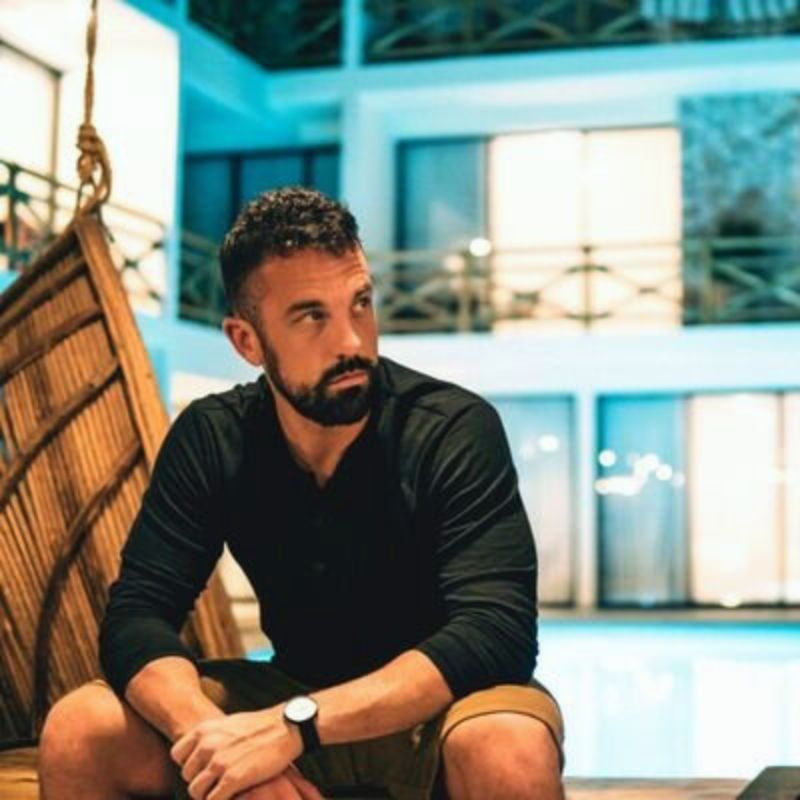
INTRO: This is part two of my interview with Dan Demsky, the co-founder and CEO of Unbound Merino. In part one, we talked about his travel journey, and he told some of his most epic and impactful travel stories. And we also went through his entrepreneurial journey leading up to the founding of Unbound Merino. In this episode, I go deep with Dan on how he scaled Unbound Merino to a $40 million a year company while traveling the world as a digital nomad. And I pull out tactics from him like what are the most effective digital advertising strategies that are working today, how to create digital ads that are converting today. But I also talked to him about his CEO leadership style and tips on building company culture with a fully distributed team and how to attract top talent and build those remote teams. And then I go into some personal questions with him, and I ask him how he personally approaches business problem solving and stress management, and his tips for becoming business partners with personal friends. And then we also talk about tips on managing business cash flow during periods of high growth. And we talk about the evolution of the Unbound Merino brand, the launch of the women’s line, and how you can get a 10% discount if you would like to check out some Unbound Merino apparel. All of that is coming up in this episode, as well as the way that Dan currently designs his lifestyle as a digital nomad and balances travel with a high level of business productivity, personal health and relationships. All of that is coming up in this episode. Please enjoy Part 2, the conclusion of my interview with Dan Demsky.
Matt Bowles: So, you position this, you test it as a minimum viable product. It does dramatically better than expected on the crowdfunding campaign. And then can you talk about from there now, looking back, how did you modify and iterate and improve and evolve the offering over time from that point?
Dan Demsky: You know, when we started with shipping, the crowdfunding, I remember speaking to a friend of mine who’s a business coach, and he said, this is fantastic. What you guys did is unbelievable. But you don’t have a business yet. You have a kickstart. You have reason to believe that you have some product market fit, which is the hardest thing to do. You have that, but you don’t have a business. You have a business when you have a website that people are going to and are checking out and buying your product.
So, okay, let’s set up our store. And we went on Shopify. We made our Shopify store. And one of the great things about doing a crowdfunding campaign is not only do you figure out that you have a product market fit. You also have to create a lot of assets like photography and all the copywriting and videos and logos and all that stuff. So, we just broke apart the crowdfunding campaign, slapped it onto a Shopify template, and we’re like, okay, now we’re going to figure out, are we going to launch this to the rest of the world and create a real business?
And I remember it was in December of 2016. I was in the back end of Shopify and I was going to swap some photos and do some stuff. Now, I’m completely technically illiterate, but I was doing a lot of the template built for the original Shopify store, which goes to show how easy it is to get a Shopify store up. And I was on the back end, and I noticed, wait a second, there’s some orders already on our website. We haven’t even launched the website yet. There are people that found our website and started buying. I’ll never forget that feeling. It’s not like I had my app on my phone and the cha ching went on, which is the sound effect it made. I’m like, who went on? How did they even find our website? How are they finding it?
And what I realized was because we had the crowdfunding campaign and that was successful, and we started shipping. I forgot about the word of mouth. These people were telling their friends, and they were looking for us and they found us. And I realized how powerful that is because the product was great. And that was, I think, the core of any good business. You have to have a product that’s good enough that people will come back for more and or tell their friends and family about it. So, in that moment, I realized our product is good. We shipped a really good price, knew it was good, and that’s when I realized, oh, a word of mouth is a real thing and returning customers is a real thing.
So, they started coming back and we were just off to the races. But then we had to figure out, well, how do we get new customers? Because the crowdfunding gave us so much exposure to first time customers, we really started marketing in 2017. And I found a guy, someone referred me to him, who’s a consultant for Facebook advertising. And he was the most expensive human being I have ever met at the time. He charged $6,000 a month. And you got two one-hour phone calls with him. Apparently, he was really good. And I said, listen, I don’t have $6,000 to pay for two calls. And he said, here’s the thing about Facebook Ads, if you pay me $6,000 and I will show you what to do, you will be more than paying my fees in profit within the first month.
And I thought, that is so bold that I’m just going to scrape together the six grand and take a bet on that. Because he’s saying, I’m going to make enough profit to pay his fees within a month. It’s not going to have to wait a year and get fleece. I’ll know right away. And this guy showed us how to advertise on Facebook in 2017, which was a different era for Facebook advertising. And we were selling so fast that we couldn’t even keep stuff in stock. We were calling our suppliers; do you have any extra fabric? Make more shirt?
Just we couldn’t keep stuff in if we tried. We had to slow the Facebook ads down just to try to look as if we were running out of inventory. So that was sort of the start of us figuring out how to do digital advertising. And since then, it’s gotten quite sophisticated. We’ve really learned to scale the advertising, amongst other things.
Matt Bowles: Well, I’m curious about that distinction from 2017 till today in terms of the evolution of digital advertising. And then of course the competition and the prices and all these types of things. What are you finding today are the most effective digital advertising channels for you this year?
Dan Demsky: I think there’s a couple of things. Well, first of all, the landscape for meta-advertising specifically has changed. Back then, it was really about the media buying, just spending money on the right audiences and it worked. It just worked. And it worked so easily. And now the media buying is important, but what’s more important is the creative and really understanding and measuring. We get really into the data.
So, we see ads where people are stopping. There’s a thumb stop ratio that you get scroll do they stop and look? And we know which ads get people to stop the most, but we also know if they’re holding on the ad for long enough and if they’re clicking on the ad. So, if we have a good thumb stop but not a good hold rate, well, we try a better second shot. If we don’t have a good clip through rate, we try a better call to action. And we have this machine, this feedback loop and a production team to do so, being more creative to make more versions of the winning ads and to fix the losing ads. And it’s become quite robust. And that’s how you win with meta-ads. You have to have really, really strong creative and the ability to edit and cut and do new stuff and test new stuff. More so than just buying the right audiences.
But the thing that works the best is influencer. And we are not very sophisticated with influencers yet. But there are a few influencers, travel creators, YouTubers, podcasters, that are customers of ours. We didn’t go find them and work a deal with them, but they’ve come to us and said, I wear your stuff, and I love it. And we have done some sponsorship stuff with them, but they’re authentically unbound customers. The impact those people have is so enormous. I would say we have three we consider mega influencers. They’re mega to us. They’re not mega in the world. The average person wouldn’t know who they are. But they’re viewers, know them and love them and they’re very influential. They do have a couple hundred thousand subscribers on YouTube. It’s not small, it’s big, but they’re not celebrities. But they’re very impactful to their audience.
So, I think the number one thing for us right now is identifying the creators that are authentically living the way that I’m living and the way that our customer lives, because their audience is also living that way, and they look to them as trusted advisors. So, I can’t say we’re great at that right now because we don’t know how to really onboard them. In fact, the best success we’ve had are just people who are already customers and they came to us. So now we’re trying to figure out do we have more of those people and how do we find people that should be wearing our stuff that really authentically would get it in the same way you get it. You know, the way you’re talking about how you travel, Merino. Well, you just get it.
So, that is, I think, the most impactful. Just to put it into perspective, the biggest marketing channel we have is Meta, but we spend a fortune on Meta. Every single day we spend a fortune with our creators. We don’t spend nearly as much, but it makes us about as much money. We spend probably a tenth as much on creators as we do on Meta. And the creators is probably making us as much money, and are acquiring us, as many new customers as all of Meta. So, we look at that, we’re like, okay, how do we do more of that?
Matt Bowles: I think that makes a lot of sense with the authenticity of the actual testimony of people that are living the life and can talk about what they personally use and refer people to what they personally use. I mean, that’s the kind of stuff I do anyways. I mean, I talk about Merino Wool on the podcast all the time. I talk about all the other stuff that I use on the podcast all the time as well. Right. And people find value in that. So, I agree. I think that makes a lot of sense.
So would you say just with regard to the advertising on Facebook and Instagram and those kind of channels today, that it has become more expensive, not just the Ad buy as a result of the competition or the keywords or the target markets or whatever, becoming more expensive to pay for the ad, but also more expensive in terms of, like you said, the quality and the number of iterations that have to go into the creative and the team that has to be doing that at the level and caliber that they have to be doing it. And to have that entire operation going into that, the ROI on those types of ads on those platforms is lower just because the expense of doing it well has increased so much. Or like, how would you assess the landscape today for people that are potentially interested in that and any tips you might have for how to do it successfully today?
Dan Demsky: I don’t think it necessarily is more expensive now. I think it’s just a little bit more difficult. And you really have to figure out how to reverse engineer what good ads are and be clever at how you see what your winning ads are and how to make more of them.
Fortunately, if we put a lot of money into an ad, a really beautiful shoot, really good production, those ads tank. They suck. The best ads are often the cheapest. It’s just a simple photo. I mean, one of the best performing ads we’ve ever had, I shot myself on a cell phone I was in Mexico selfie. I set up a selfie mode and I talked to the camera, and I said, look, when I travel, I pack Merina wool because I can pack with just the care. I just sang the whole thing that we’ve been talking about. It costs nothing. And that ad has performed incredibly.
So, you don’t necessarily have to have this big, sophisticated machine. We do because we see the value of pumping out tons of ads, but we’re also good at it. I have a background in video. My old business partner from the video business is now our head of production in the company. That’s an advantage that we have, but you could do it with a cell phone and it could be super cheap. The best thing that you could do if you really want to figure out ads, is look at. We all know those brands that just have a million ads. Once you go on their website, you’re seeing them for weeks and weeks. A million different ads, you get targeted on Instagram, you get targeted on Facebook.
Go to the Facebook ads library, which is a library of all the ads that are active on Facebook and type in one of those companies could be a huge T-shirt company or a blender company or whatever. It might be just the ones that you think. These guys seem to be advertising a ton. You look at Facebook ads library, you type in that brand, and you can look at all of their active ads. And if you find an ad that has tons, like hundreds of likes and hundreds of comments, the reason it has hundreds of comments is that ad has been running for a long time. And if that ad has been running for a long time, it’s because that company knows that that ad performs, and they keep it running. So, look at that ad and try to say, what is it about that ad that makes it good? Is it high production or low production
Find those low production value ones, usually those are the ones that work the best. And you could do that just sort of copy. Honestly, the best thing I’ve ever done in marketing is looking at what’s successful and just ripping it off. That’s how our crowdfunding campaign worked. We do that a ton with advertising. We don’t do that from competitive brands. We don’t want to be like brands that are in our space. But our head of production will go and look at brands that are completely unrelated in completely different categories.
I’ll give an example. Here’s a really cheap ad, it’s basically free to produce an ad like it, and it’s insanely effective. It’s a screenshot of a Google search. It says best Merino wool T-shirts. And then the search results are Unbound Merino so you can Photoshop this. And it’s just a still image. He saw another brand do that and he’s like, this is ads clearly been running for a long time. He did it for us. It a killer. It’s a slayer. It took him two minutes to make the ad. It cost $0 and it’s crashing. So just go on there and find other brands winning ads. And that’s your sign of stuff that’s working.
Matt Bowles: That’s awesome. Well, I want to talk a little bit more about Unbound Merino and the evolution of product lines. You mentioned that you and your business partners, who are all men, started designing and creating the clothes that you wanted to wear for your lifestyle. Today you have a women’s line. You have expanded quite a bit. Can you share a little bit about that evolution of both the men’s line in terms of all the additional products you have now, but also how you expanded and went about doing that to build and create a line of clothing that women are extremely excited to wear as well?
Dan Demsky: Well, I mean, in the first few years, it was very obvious what the next product should be. We had our T-shirts in just a couple colors. Well, that a couple more colors. And we realized we didn’t have a sweater or hoodie. And like I want a hoodie. We went and made the Combat Travel hoodie. Also, another crowdfunding campaign because we were running out of inventory so fast. We didn’t have extra cash, or we didn’t want to raise any money.
So, we launched new products through crowdfunding. But it was all very obvious, we had two T shirts, we had a crew neck and a V neck. And we had socks and underwear. Well, what was the next thing? We needed a hoodie. Then we needed a long sleeve T-shirt, and then we needed a sweater and then a beanie. And all the stuff that we just felt like we wanted for us, we just started making and we grew the business with that as we were running our Facebook ads and writing new crowdfunding campaigns. And we were always toying with the idea of also launching women’s. And we were doing that because we had tons of women writing in where’s the women’s? Why don’t we have women’s lives? They’re finding us and realizing their husbands and boyfriends and kids were loving this brand and Merino. But there was nothing for women.
So, we were building up a list. We’re collecting names and that list was just building and building and building. And we got to a point where we were growing, and our product development needed to get more sophisticated. So, we started to get into the place where we could afford to hire a real product designer, real product development, and work with them and have them start to roll out more products faster. But the most important thing for us was to have someone who aligned with our vision and our core values that was a woman. Because I’ll tell you one thing, Andrew, Dima, and myself were not going to be the people who had the vision for what women wanted, finding the right lead designer who was a woman. Now, we had a lot of say in the men’s stuff we know we want, but he also has a really, really strong, strong opinion and strong takes on the men’s line.
But we needed to have someone who was a kindred spirit, who aligned with us, who had experience, had jobs, and was a woman because they know what women want. So, when was it? It was almost three years ago now. We launched the women’s line, and it’s almost half of our business now. So, it’s growing super-fast. And by next year, it will be more than half of our business.
Matt Bowles: Wow. So, I want to go behind the scenes a bit, we have a lot of business owners and entrepreneurs that listen to the podcast, and I would love to chat a little bit the business side about how you built and how you scaled this from $0 to $40 million. Can you, reflecting back, share maybe what some of the key leverage points were that enabled you to do that?
Dan Demsky: Sometimes I look at the business and I see that it’s grown, and it’s grown in headcount, and it’s grown in revenue, and then the product assortment is growing and everything has grown. But in a way, it feels similar to how we started. That’s not to say that it’s not way more complex. The complexity is enormous compared to what it was when we started, when we had just a few SKUs that we’d sell out of all the time. But at the core, it’s really simple.
The main thing that we try to accomplish is the first rule of business in Unbound Merino that we talk about all the time with our team is make the world’s best travel clothing, and that is finding the absolute. We obsess over the details. So, a T shirt, we can toy with the GSM, which is the weight of the fabric, and the micron level, which is the finest of the fiber and the specs of the fabric. So how long is the sleeve and how tight is the sleeve, how wide is the body, all these little details. And we’ve tinkered with all of those little things so many times. There’s been dozens of iterations of the shirt to get the perfect drape. We’re just obsessing about making the best T-shirt we can and then the best sweater and the best underwear and all of that stuff.
And if you really, really work hard to make the best quality, people will spend the money on it, and they’ll be happy with their purchase and they’ll come back. So, we’re just trying to get people to love our stuff the most, come back a repeat purchase, tell their friends about it, and roll out new products. So, at the core, that’s everything. There’s tactics to get more people to find out about us for the first time. But what makes it really work is the fact that people come back and that’s all on product. That you can’t sustainably grow a business if the product offering is not great. So, we just focus all our energy on that. And because we’re a premium price product, we are okay if we have to spend a little bit more to develop the product to make it the best.
And the customer will be happy to pay those extra few dollars. We’re never trying to dial it back and make a few extra bucks by making it a little bit cheaper because the customer is going to know. And because we don’t have any outside investors, we don’t have to be at anyone’s beck and call to like maximize profitability. There are the first two steps, we have this company, Flywheel, that we run the whole business on. It’s a series of actions, each one leading into the next. There’s a book called The Flywheel by Jim Collins, and I think every business owner should read it. You can read it in one sitting. It’s like 50 pages. And it’s probably one of the best business books of all time.
And we’ve created a Flywheel, which is the series of actions that we focus on. And the first two in our Flywheel one is to make the world’s best travel clothing. So, what is everything that we can do to make sure that we are either making the world’s best travel clothing now or stepping towards making the world’s best travel cool. And if that product we don’t feel is the best in the world, and that’s all the sourcing that we do, all the QA that we do, all of the product development stuff and making new iterations and all the fittings that we do.
And the second thing in our Flywheel is get travelers to pack it. So that’s all the meta-advertising that we do, the word-of-mouth initiatives, the affiliate marketing that we do, doing stuff like this, where I get to talk about the business and reach new audiences, preach the gospel, get people to know that we exist. Those are the two foundational things. Let’s just make it the best and get as many people to know about it as possible. I know that sounds kind of simplistic, but we’ve just been doing that since the beginning and it’s like a snowball that just has gotten bigger and bigger. And whenever things get a little bit more complicated, we just find someone who’s better at doing that thing.
When product development gets complicated, we find better product development. Right now, inventory management is a big challenge of the business. So, looking for a senior head of supply chain. If anyone here that’s listening to this is that we’re looking, we need it. That’s sort of the rambly high level of how it’s done, but really, to me, as complicated as it is, it’s so simple. Just make the best travel clothing in the world.
Matt Bowles: Dan, can you talk about your CEO leadership style? How do you lead and inspire your team and what attributes, in your opinion, make a great CEO?
Dan Demsky: I think I had a little imposter syndrome about the role. As company started to grow at first, and then I started to realize, no, I’m actually really good at it. And I’m good at it because I don’t think I have all the answers. We find people that we think are great. We give them the benefit of the doubt that they are great, and we let them make mistakes and have autonomy and we celebrate the wins. We only hire people that have the core values that align with what ours are, which we find are very, very important. And we make people feel like they’re looked after, and they’re appreciated. And it’s very easy to do that. One, pay them well. Two, give them autonomy to make decisions and them to know that their work matters.
And I think the fact that the company is growing very rapidly is exciting for them. So, think about if you’re the social media person or company or if you’re the product development or the product design person. It’s cool, your work matters, and you are at the helm. I’m not telling you what to do. I’m collaborating with you. I’m giving you some of my feedback and we’re collaborating. But they feel like their work matters. They have a say and we don’t breathe over their necks. I mean, this company’s about freedom. It’s about freedom for me.
So, I let them have the same freedoms that we have. We’re fully remote. I ask them all the time. I say, do you love it? Do you love being remote? Does it sometimes get lonely? Sometimes they say, sometimes it gets lonely. And I tell them things I do. If you’re sitting in an Airbnb by yourself for a few weeks, why don’t you find a cowork space? I tell them what I do. So, the people on our team are highly motivated because they’re looked after, and they’re given an opportunity to work on a brand that’s really growing into becoming something cool and exciting. Their good work is celebrated. They have the autonomy to do it their way, and they have the freedom to go wherever they want and to live all over the world however they want, and they’re treated with respect.
And I’ll tell you something, we’ve been in business for over eight years. We have 40 people. One person ever quit, and they quit. They were in the warehouse, and they got a job with Uline, and there was an opportunity that they felt was a little bit higher of a ceiling for them, and they left on great terms, and I gave them a great reference, and that was the only person that ever quit our company.
Matt Bowles: Dan, how important is it to build company culture, and how have you done that with a fully distributed team? I would love any tips that you have on that. Specifically for remote companies, the culture is very good.
Dan Demsky: And I think the culture starts with the founders, and it’s how we approach our work and how we show up and how seriously we take things and how much we have fun and how we’re loose. But we were really focused on the results. So, the culture, that’s in terms of the work, in terms of the team getting to know each other, we struggle a little bit with that. So, I’m trying to do more virtual town halls and get together with more of a focus on people getting to have some fun and see each other’s faces. I mean, a lot of people work together in their own departments. So, the warehouse team works with the warehouse people, and the product team works in their own silo. And they don’t really know each other. So, I’m working on a town hall right now.
And I realized it’s like they want to know about the strategy of the stuff that is outside of what their own planning is. So, we’ll share some wins, and we’ll Share some strategy. By the way, I’ve only done this once and done another one in a couple weeks. Going to get people to play some games and get to know each other. But I asked the team, I said, hey, I want to get people to know each other a little bit more and do it virtually. Can you give me some ideas? Like I asked our head of production, our social media person, and I asked a few other people, just, can you give me ideas? And what would be fun? Would this be boring for you? Would I be forcing you to do this? Do you actually want this? And they all said, I love it. I’d love to get onto one hour Zoom where I get to see everyone’s space and just note what they’re up to and see some stuff.
So, putting together a little thing and once a year, most of our team is in Toronto, in the greater Toronto area and we did it for the first time this summer. But we’re going to do a once a year get together where I want to fly everybody in, and we do in Toronto. So that’s happening this summer again. And we have some team members. We have one in Buenos Aires. I just went for the fugazetta, the onion pizza with her the other day I met her for the first time. She’s going to come in and we have employees in Mexico and Brazil and Boston and everyone’s going to come in. We eat dinner together, do some fun stuff together and I let them have a little Toronto experience in the summer. So, working on it, but it’s tough.
Matt Bowles: What tips do you have for attracting and hiring top talent to build and scale remote teams?
Dan Demsky: It’s easier when the company has grown and it’s really, really exciting and people want to be a part of that feels like they’re attaching themselves to a rocket ship. It’s been easier in the past two years. I think ultimately, it’s just being respectful and great person and we’re doing something cool. I think at the end of the day your reputation matters and people love working with us and it makes it easier. For example, one employee of ours is bringing people that she used to work with from other companies and saying, come over here, it’s awesome here. She’s an unbelievable talent and a player is no other a player. So, when she says this person is someone that could be my collaborator in this role and she’s unbelievable, it’s like, we’re going to do an interview, we’re going to do a core values, we interview all that stuff. But we kind of know I’m like, I almost don’t even need to do the interview.
So, treat people really, really well. And that’s kind of the core of it. And also, we don’t hire a ton. Like, we hire for what we need, and we hire to get ahead of the curve so that we can grow sustainably and profitably. At the end of the day, I think the number one thing that you need to concern yourself with hiring is know what your core values are. And when I say core values, I don’t mean like, lip service, customer first, or just whatever. It’s really reverse engineer. What are the things that have gone really well in this business? And what actions, behaviors, and values did we have that let that thing happen? So, we did this exercise where what were the biggest pivotal points of growth that we’ve had? And we just racked our brains to think of, like, what were all of those inflection points?
And then for each inflection point, we said, what is it about us that made it happen? Was it because we had this entrepreneurial spirit? It’s because we were really candid with each other. What is it about us that allowed that thing to happen? And those are, like, our true core values. And that’s who we are. That’s how we work. I’m not kidding. It took us years to figure out a set of core values that really speak truthfully to who we are. And when we do our interviews, we’re just trying to find people who embody those core values because those are people that fit on the team. So, we hire and fire on core values.
Matt Bowles: Well, I also want to ask for any tips that you have about managing business cash flow during periods of rapid growth and scaling because I feel like this also is an area where entrepreneurs tend to make mistakes. And reflecting back on the way that you did that as you scaled so quickly, any tips that you have on cash flow management and how to do that?
Dan Demsky: Yeah, so you’re going to run into walls, and you’re going to have moments where you mess things up, and you’re going of course, correct. But the biggest things that we have done come from a book. And I read a blog post that recommended this book, and it’s the cheesiest title of all time. It’s called double your profits in six months or less. And it’s a no bullshit. There are 60 little tips of things you could do to clean up your finances and make you profitable. And we read it at just the right time.
And look, we’re not perfect. We still run into the walls. Sometimes we make mistakes where we overstock on some inventory. It just eats your bottom line, and you have to sit on product. Fortunately for us, it’s not perishable stuff. We order too many T shirts, they’ll sit on the shelf, we’ll sell them eventually, but we have a little more money tied up in some inventory. One thing that really stands out is cut your costs on as many non-value creating things as possible. So, there’s two categories of spend it’s value creating and not value creating. And value creating is stuff that when you put money into it, it creates value for your business and for your customers that generates revenue.
So, you want to maximize spending on the value creating things. So those are things like advertising and influencers and new product development. Anything where you can immediately attach. If we spend this money, we believe it will make us more money and be really relentless in cutting all of the other stuff, fancy stuff in your office, nonsense, overspending meals and entertainment. We do have dinners and things like that. And, and sometimes we spend, you know, we shouldn’t have gone to that steakhouse. We scrutinize that spend. It’s worthless, it’s not valuable to our business. And when it comes to marketing and advertising, we take the risk. If you think it can make money for the business, just put money and try it. So read the book double your profit in six months or less. It’s loaded with incredible tips that’s been really helpful for my business.
Matt Bowles: I’m curious also about your personal approach to business, problem solving and stress management when there are challenges, when there are setbacks, when the entrepreneurial roller coaster takes a downswing, if you will, how do you approach those situations and work through them?
Dan Demsky: When I was in my old business, I got into some stressful cash situations. I felt like the sky was falling. And I remember, I don’t know what I’m going to do. Life is over. We’re screwed. And I remember thinking, is it really though? I was in my early 20s, and I remember this thought that I had where I said, one day I’m going to be 40 years old and I’m not going to care about this little situation. I mean, it’ll be so far past it. I’m 40 now, so I’ll tell you one thing, I was right. I don’t care. It was just a blip in my story. I don’t know if it’s genetic or I don’t know if it’s from experience, but I can go through some really stressful situations and feel like well, what can we do about it? And let’s do those things, and it’ll be fine. I’ve been through it all. I think having a clear head and not getting overly stressed and being optimistic and not losing your enthusiasm.
I’m saying this like, it’s easy. It’s easy for me. It’s just the way my brain works. My business partners, not so much. They’ll say things like, oh, my God, this is insane. We’re screwed. Are we? And then it’s like a week passes. It’s like, it’s fine. He’s the one who has the heart attacks about stuff, and we’re always fine. I think it’s just business, and you go through hard things, and I think that resilience that you need as an entrepreneur is, I think, what you need. I think it comes with entrepreneurship to be resilient. And sometimes things will be tough. Just do what you can and don’t stress. I can be in a really what other people would deem a really stressful situation. And I’m like, all right, well, I’ll think about what I need to do. I’ll do some planning. And I go to sleep, and I sleep eight hours. Good.
Matt Bowles: Well, you and I both have business partners in our business that we were personal friends with, close personal friends with before we went into business together. And I want to ask you about that because that can be pretty tricky at times. Any tips you have about running businesses with friends and how you balance that personal business relationship.
Dan Demsky: The friendship is first and is the pleasure of my life, and we all know it. It’s one of the best ways to be happy and to live healthy is to have meaningful relationships. Listen, I’ll tell you, it’s been an insane ride. My best friend was my business partner in my first business, one of my best friends, and he was starting a family, and he wasn’t willing to go and start a new company. And I was, yeah, I wasn’t starting a family, and I was wanting to start Unbound Merino and start from scratch, and we split up as business partners. And then I started this company with my other two best friends, and one of the best friends that is my current partner we fired from a previous business.
So, there’s been the tough business things that have happened. And my old business partner, who now works in my new company, he said to me, he’s like, when we split off as business partners, it’s stunned. You’re starting a new business. Like, it’s stunned. I had to process that for a bit he’s like, but does it matter? So what matters is the friendship. We’ve been friends since junior kindergarten, and this is first. And that’s what I truly believe, business is fun. This is a fun activity to do with my best friends. I wouldn’t trade that for the world. And if we sell this company, those are the guys I want to start the next thing with. We get mad at each other all the time. I can’t count how many times one of my business partners calls me a dumbass. Are you a dumbass? And it’s all in the love. We’re best buds and that’s it. You treat it like a marriage, do the things, don’t fight with each other, but have structured ways of communicating the things that you need, the future that you want to create.
So, we have a same page meeting once a month where it’s an open invite to talk about the really hard things without ego. And I’ve had moments where they’ve said really tough things to me. He said, as we’ve grown, it’s like we need to re qualify for jobs. It’s like, I don’t think you’re a great CEO. And I was like, ouch. God damn, that hurts to hear. And then I had to just swallow my pride instead of saying, what the. Okay, tell me why. And he explained and I listened. I’m like, you know what? That’s some good feedback. And I wrote it down and I read it all the time and I just made changes. And he told me, dude, I don’t remember if it was three months later, half a year, whatever it was. You’ve really grown into this man. He’s very sparing with his praise, but he’s like, I’m proud of you. It’s awesome. I almost had held in tears. I really want his respect.
And one of the greatest gifts of working with your best friends is you can be candid with each other. That’s a gift. And I think if people say business and friendship don’t mix, they’re missing out. They’re missing out. It mixes. Well, as long as you’re all showing up and putting your hearts into it and you all care about the other person winning and growing. And it’s not about ego. None of it’s about me. It’s about the thing and we’re doing it together and it’s the most fun thing ever.
Matt Bowles: Well, I also want to ask you about how you structure your digital nomad life, and you run this business and also travel the world at the same time. I’m curious if you can share a little bit about your personal productivity techniques and habits and how you structure your day. You’re obviously in Buenos Aires right now, which is an epic city that both of us love and there’s an amazing things to do all the time. And you’re also the CEO running this company. So how do you structure your days and how do you integrate the work and the travel into the digital nomad life?
Dan Demsky: When I first started doing remote work, I really didn’t want people to think I was here just frolicking around the city, having fun while everyone else worked. But I think I overcompensated by working extra hard, not going out on the weeknights, exploring the cities on the weekends, and worked really hard. And at the end of the day, with our strategic planning, we know what we need to get done in a quarter. It’s very clear to me and to my team what I need to get done and what they need to get done. So, they don’t care if I’m working in a different time zone slightly, they don’t care if I take an extra few days off. I don’t care if they do. No one tracks anything. What we track is what our milestones are towards, what our main company priorities are.
And if those are getting done, we’re winning. And I know what I need to get done this quarter, as everyone does, and it’s up to me to try to decide, like, how I’m going to get that done. So, I wake up, I get the sunshine, that beautiful Buenos Aires summer sun, and I’ll tell you something, I have a regular workday just like I do back home. What’s the number one thing I want to get done today? I know what my priorities are for the week. I have more energy here, so I just get more work done. That’s why I’m here. I’m here because the sunshine gives me energy and enthusiasm and I get more done, and I love it. No one cares.
We all travel around, and we actually have a Slack channel in our company to encourage people to like, go. Take advantage of the fact you have this freedom. It’s called unbound travel. Post your trip. Are you going to Brazil? Are you going to Mexico? Are you going to Europe? Do it your way and we celebrate it well.
Matt Bowles: I also want to ask you about any techniques you have or tips you have for maintaining a healthy life, things like fitness, things like relationships in a high growth startup environment, which when you throw travel on top of it, a lot of times certain things suffer from that and all of a sudden you find out, oh, I wasn’t paying as much attention to my fitness or my relationships with people I care about or things like that. And I’m curious for you how you strike that balance and any tips you have for doing so, particularly in a high growth startup environment where you’re putting so much energy and time into the business.
Dan Demsky: I think health is first. So, the first thing I do whenever I travel is find a gym. I’m not a big runner, but when I go to a place for the first time, I’ll go for runs and explore the neighborhood. I haven’t done that on this trip yet. The gym is first. And that’s also. Everyone in my company is like that. Get your workout in, we celebrate that. We celebrate that desire to better yourself and grow and that’s stimulating your mind, stimulating your body. I have a lot of friends and acquaintances, and I have a few really close friends that I check in all the time. I work with them all. It’s kind of like half a family business. Not my actual family, but my chosen family, my best friends all, we all work together. And I have a girlfriend, she’s a remote worker.
She’s here investing in the relationships that matter, the friendships, the romantic relationships, the relationship I have with myself, which is making time to think, to write to exercise. I want to read as much as I can. I struggle with that one sometimes. And knowing what my hobbies are, it’s just I have goals for a year and I just reflect on them regularly. Although I’m reading a book now called the 12th week year and it’s making me think differently about how to get more done. I can’t recommend it yet because I’m only 30, 40% of the way through it, but I’m starting to make me think, oh, I could do things a little differently.
So, I always, always thinking about how I can be the most optimal and effective and build structure. I have so much looseness in my life by being traveling all around, but I try to have structures that I can be the faceplate on wherever I go. So, I don’t care if I’m back in Toronto or I’m in Tokyo or I’m here. I just had a checkup. Do I, am I going to the gym? Am I eating healthy? I’m really only going out on the weekends. I try not to have drinks throughout the week. I just do things that make me make it work better. And I definitely try to work as hard as I can when I travel because this is such a gift to be able to do this. I don’t want to take it for granted and feel like I’m on vacation. And people say to me, oh, you’re. Well, you’re vacationing in Buenos Aires. I say, I’m not vacationing. I’m not. I will take a vacation. I will happily take a week off and go traveling here while I’m here. But I don’t look at it as vacation. It’s just relocating.
Matt Bowles: What is your vision for the future of Unbound Merino? When you think ahead five to 10 years, I mean, when you look back and look at the last eight years and where you are now, when you look ahead to the next eight years, what’s your vision?
Dan Demsky: We’re working on that right now. There’s the conversation. Do you build this thing to sell, or do you build this thing to continue to grow and have, like, fun? But I’ll tell you where my head’s at right now. And it’s a part of the vision is we’re at that point where our brand could be truly one of the great merino wool brands, one of the most known and one of the great apparel brands in the world. That’s something that excites me. If I would show myself five, six, seven, eight years ago where we are now, I’d be very excited and proud. Like, we, we’ve come a far away and it’s great. Like I’m really out of fun. I don’t take it for granted. But now we’re like, well, what’s next and how do we grow to that next tier? And I think we could be a really well-known global brand.
And when I talk about that with the team, it’s not just a delusion at this point. It’s really something that’s in our wheelhouse. It’s possible that excites the whole team. So now that we are in a place where we can hire more and more unbelievable talent, and we’re lucky to have had unbelievable talent from the get-go, it’s just more leverage to get us to the point where we can do something really awesome. So, where I see us in five to eight years is just the brand is really globally known, the business is really profitable, and we could do really cool, creative and exciting things with really amazing, talented people. So, I don’t feel tired from this. I truly feel we’re just at the starting point. I’m so excited about where we go from here. So, we’ll see.
Matt Bowles: Dan, let me ask you one more question. And then we’ll wrap this up and move into the lightning round. When you think back about all of the travel that you have done so far, how has all of that travel impacted you as a person? And why are you still so passionate about it? What does travel mean to you today?
Dan Demsky: Sometimes I’m traveling to explore new places and cultures, meet new people, and it just shapes your worldview. It’s like a way of growing. Like, I love sitting in a new city, hearing new people talk about things in new ways. Sometimes I’m relocating, and it’s totally strategic for me being happy and productive in Buenos Aires is my third year here, and I haven’t seen a lot of new stuff. I’ve gone to all the old restaurants that I miss. I mean, the same building that I was in last year. So, there’s a piece of this right now.
It’s like I’m not getting that adventure part of the travel. I’m on the weekends; I’ll explore a little bit more. Sometimes it’s about lifestyle design. In this case, it’s like the sun is coming up at 6 in the morning. It’s setting at 8pm I mean, 7:20pm here, and it’s full daylight out. So, I’m here for that right now. So, for me, travel is about appealing to better life decisions and lifestyle design sometimes. And I call that relocating more than I do traveling. And then there’s the adventure.
So, March, I’m going to Papua New Guinea, and I’m going to dive into a whole new culture, and I’m going to Australia for the first time. And that’s huge for me because the origin of our wool, the first point of where the wool source is. I’m going to the wool farm, which I have a relationship with, but I’ve never been yet. I haven’t been in person. So those are the trips where I feel like I’m watching an episode of Anthony Bourdain when I’m on those trips where I get to talk with people and eat food and break bread with them and have wine with them and just see how something is different there. And it makes me understand myself and where I come from a little bit more and I love it.
Matt Bowles: All right. I feel like that is the perfect place to end the main portion of this interview. And at this point, Dan, are you ready to move in to the Lightning Round?
Dan Demsky: Let’s do it.
Matt Bowles: Let’s do it.
All right. What is one book that you would recommend that people should read?
Dan Demsky: I mentioned it before, and I’m going to say it again. The Flywheel by Jim Collins. It’s so simple and sometimes the stuff doesn’t need to be complicated. Unbelievable business book.
Matt Bowles: All right, what is one travel hack that you use that you can recommend?
Dan Demsky: I’ll tell you one thing. A quick jet lag. One way to beat jet lag. Have 8 ounces of water every hour on the hour for the entire flight. And as soon as you get to your destination, try to sweat. Get outside, get sunshine and try to sweat. I have AB tested this without doing this and I know that you could beat jet lag. Eight ounces of water every hour from an hour before your flight to an hour after on the hour. You’ll pee like a racehorse, but you’ll beat jet lag.
Matt Bowles: Amazing. All right, Dan, who is one person that’s currently alive today that you’ve never met that you would most love to have dinner with, just you and that person for an evening of dinner and conversation.
Dan Demsky: Shaquille O’Neal.
Matt Bowles: That’s an amazing pick. That would be an incredible dinner.
Dan Demsky: He’s the whole package. He’s an entrepreneur who’s incredible. He’s a police officer and NBA hall of Famer and can you imagine how much that guy can eat? And he’s hilarious.
Matt Bowles: He’s hilarious. That would be an unbelievable dinner. That is a great pick.
All right, Dan, knowing everything that you know now, if you could go back in time and give one piece of advice to your 18-year-old self, what would you say to 18-year-old Dan?
Dan Demsky: I would just give a workout routine that would work. I don’t want to say buy Bitcoin or any business advice because you have to journey of making mistakes is how you learn. But I would have focused on fitness a little bit differently earlier on while I was loaded with that youthful testosterone.
Matt Bowles: All right, of all the places that you’ve now traveled, what are three of your favorite destinations you would most recommend, other people should definitely check out.
Dan Demsky: Mexico. City, Buenos Aires and Berlin, Germany.
Matt Bowles: Great picks, man. Okay, Dan, what are three of your bucket list destinations? Places you have not yet been highest on your list you’d most love to see?
Dan Demsky: I want to do a road trip through all of Texas. I’m very drawn to Texas for some reason I’d never been to Spain. Barcelona is at the top of my list. And this place might be a little cheesy for some people, but Dubai I’ve never been, and I really just am fascinated by mega tall buildings. I don’t think I would love it there because it’s a little bit too opulent for me. But I just want to stand in front of the Burj Khalifa. I love tall skyscrapers.
Matt Bowles: It’s also a super interesting city. I’ve been to Dubai multiple times. It’s a super interesting city because 88% of the residents there are foreign nationals from all over the world. So, it is this remarkably diverse city of incredibly recent immigrants that have just moved there from countries all around the world. So, someone as well traveled as you, you’ll be meeting people from all of these different countries that you spent a ton of time in and have some really amazing conversations. So that’s actually one of the things that I find the most interesting about Dubai, which doesn’t actually get talked about as much. But then you land there and you’re like, oh wow. Like the conversations I’m having are amazing.
Dan Demsky: Yeah, I have a lot of friends there too that move there and yeah, it draws me in some of it. It’s a little much for me, but I’m dying to go for sure.
Matt Bowles: Yeah, most of my trips there are shorter term, but it’s a very interesting place. So that is an awesome list.
Well, Dan, I want to close this out by letting folks know how they can find you and follow you. We definitely are going to send them over to check out Unbound Merino. You have given us a discount code for Maverick Show listeners. What I want to put on people’s radars, they can get to your website through a special link, it’s themaverickshow.com/unbound. If you go through that link, you’re going to end up on the Unbound Merino website and then you just enter the code Maverick at checkout and you’re going to be able to get 10% off. But Dan, tell folks what they will find on the Unbound Merino website. What is the product offering that they can find there and then also any other ways that you want people to follow you on social media or connect you or come into your world.
Dan Demsky: Yeah, you can find us on just type Unbound Merino. We’re on Instagram and TikTok and Twitter and all of that stuff. Unbound Merino and go on our site we make timeless, classic looking, well-fitting basics. No logos. It’s just stuff that makes you look, feel great, that has versatility and most people that buy it, they get hooked. They love it. So that’s what you’ll find there.
Matt Bowles: Yeah, once you get into merino wool clothing, it’s highly likely that it’s going to become a very high percentage of your wardrobe, especially if you are a traveler or a digital nomad. But even if you’re not, it will definitely change the game for you. So go to themaverickshow.com/unbound and then use the code Maverick at checkout for a 10% discount on your Unbound Merino purchases.
Dan, this was amazing, brother. We’re going to link up everything that we have discussed in the show notes. So, all of the books that Dan recommended, everything we’ve referenced in the show, and again, that link and the discount code, all of that’s going to be in one place. Just go to themaverickshow.com, go to the show notes for this episode.
Dan, I’m going to let you get off to your dinner in Buenos Aires. You could go drink some more wine, have some of that amazing food and have an incredible, incredible night out on the town. But thank you so much for coming to the show, my friend.
Dan Demsky: It was really great to hang and thanks so much.
Matt Bowles: All right, good night, everybody.