INTRO: So, what I’m going to do today is something I’ve never done before. I’m actually going to pass the mic to Christine Job and I am going to publish one of her episodes from Flourish in the Foreign. So today, instead of hearing me conduct the interview, you’re going to Christine interview Jackie Omotalde, who is an incredible digital nomad. I think you are going to be really inspired by her story, as I was. So please enjoy this episode from Flourish in the Foreign by Christine Jobe.
Christine Job: Hey everyone, welcome back to Flourish in the Foreign, the podcast that elevates and affirms the voices and the stories of Black women living and thriving abroad. I’m your host Christine Job and today we have Jackie and Jackie is so wonderful. We had such a great conversation. She is a serial digital nomad, a slow mad. And her story and the advice she shares about being a digital nomad in a slowmad, I think is really great. I’m going to let Jackie tell you all about it.
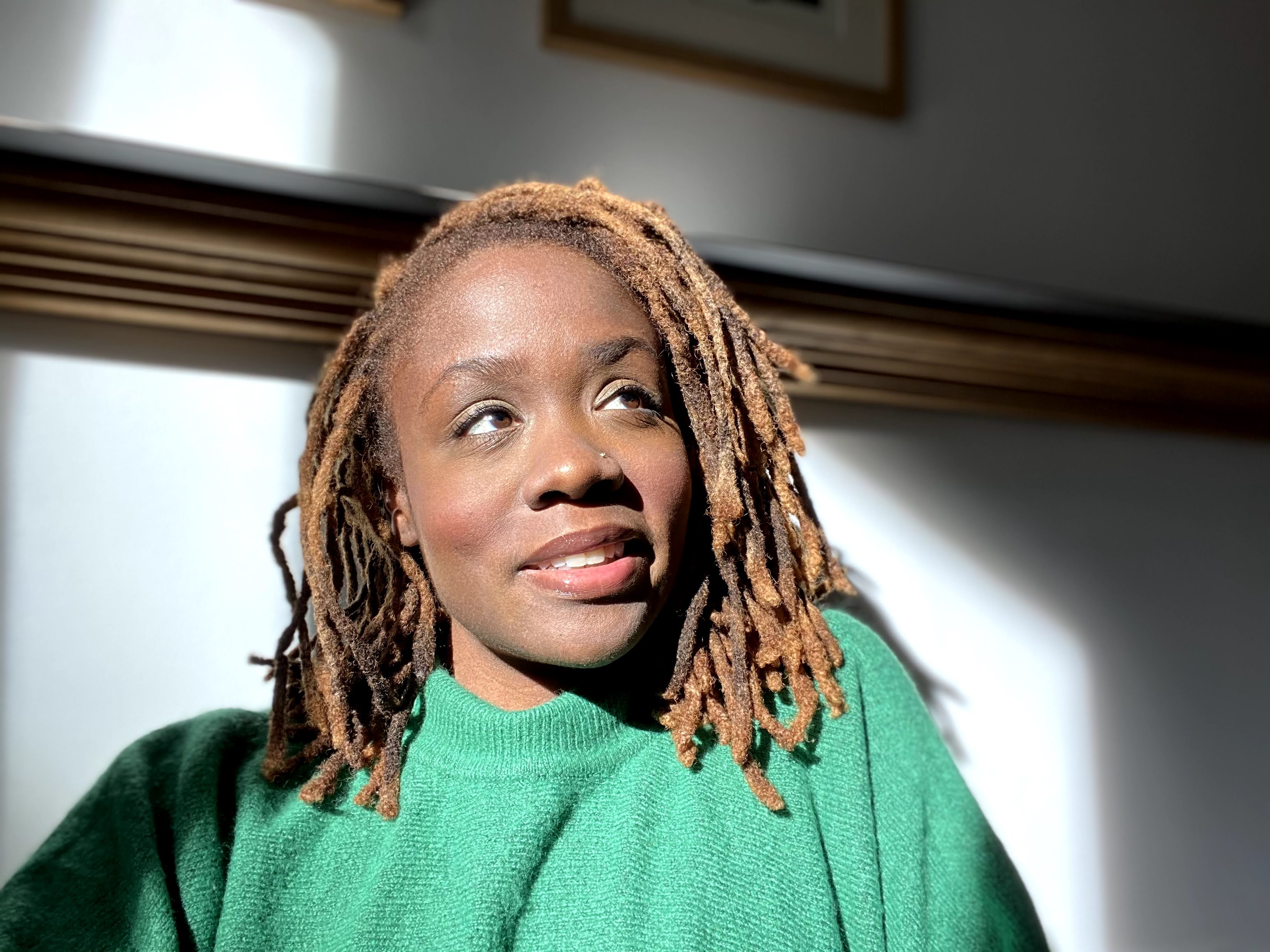
Jackie: My name is Jackie Omotalde, and I am 41 years young, and I am currently located in San Pedro La Laguna, Guatemala. My hometown is Pittsburgh, Pennsylvania. Go Steelers. And the first time I left home to live abroad was when I was 16 years old. For me, I had a very international and diverse childhood.
My mother is African American, my father is Nigerian. I already had that very strong connection to the continent of Africa, to Yoruba people, to Nigeria specifically. And I was fortunate enough to be raised by a mother who exposed me to books. I remember when I was probably 7 or 8, she bought me my first encyclopedia, which for folks who grew up with Google, may not seem like a big deal, but I grew up before there was a thing called Google, before the Internet was a thing, before computers were in everyone’s household. Although I do remember getting my first computer, which was a Commodore 64 as a kid.
I also had a mother who had traveled by herself. My mom has lived and been to Russia, the U.K., most of Europe. So, I really did grow up in a very international and cosmopolitan household. And I think that that planted a seed in me very young that it is possible, especially for a little black girl who doesn’t all the time have those images of being international, being cosmopolitan. But I had my passport when I was three years old, I had both my U.S. and my Nigerian passport. So, for me, it never was a question of if I would travel abroad. It was just a matter of when I would actually not only travel abroad but live abroad.
Christine Job: I knew that I wanted to live abroad by the time I was 17. So, I was super intrigued to learn how Jackie went abroad at 16 and what that experience was like for a teenager.
Jackie: There was a lot of racial tension in my high school. Pittsburgh, I would say, is a fairly racist city. And I just knew I. I wanted to be out. I knew I wanted something different. I knew that this wasn’t it. Pittsburgh, wasn’t it? And I actually went to the library because I was going to figure out a way to be out. I was going to figure out a way to be deuces. And I researched a program that would actually pay for me to study abroad. And it was called the Congress Bundestag program. It was partially funded by the U.S. Congress and partially funded by the German Bundestag, which is the German equivalent of Congress.
I filled out the application. My mama gave me some money to get some stamps. She signed all the paperwork, submitted my application. I went in for an interview and I would say probably six to eight weeks later I was on a plane to Germany to study abroad for a little over a year. Being 16 years old, staying with a German host family, being in a very small, it’s called a Kudor. It was a tiny town with cows that I had to actually take a bus every morning to the next town which was slightly larger so that I could study at a German gymnasium.
But it was an eye-opening experience. Even though my town was tiny, there were actually still Afro Germans there. I got to learn to speak German. I got to Euro rail all over Europe with my friends. I got to go to Munich and drink beer. I just had a wonderful time. I joined the German theater group; I joined a German band. I went to Frankfurt every couple weeks to get my hair done by African immigrants there. It was just one of the most amazing experiences of my life. And from there I knew that I was going to do more. My life was probably going to be spent abroad. I loved it. I felt whole and complete. I wasn’t necessarily just defined as that black girl. There was so much more depth that I was allowed to experience living in Europe during that time.
Christine Job: After having this life changing experience in Germany, I wanted to know where did Jackie go to university and how was her university experience?
Jackie: I have been fortunate enough to have two parents who graduated from HBCU historically black colleges and universities. From a young age I knew that I was going to HBCU. At the time, one of my uncles was very good friends with the president of Spelman. She had just come as president, then Dr. Genetic Hole. I applied to and went to Spelman, which coming from super white Germany to all black, historically black Spelman was a bit of a culture shock, but a culture shock in the best of ways because it just immersed me in the fullness, the robustness of my blackness. I was with black people from all over the U.S. Caribbean, Africa. Spelman for me was life changing.
There probably is no single experience that was more profound for me as an African American woman than to attend Spelman College. Just because your professors are black, all the other students are Black. Not only are they black, but they’re the best of the best there is. Like as W.E.B. du Bois would say, it’s the talented tenth. It is the black middle class. I mean, HBCUs produce the black middle class in the United States. That has historically been true. That is still true. And it was just a wonderful feeling not to be just that only smart black girl, but you’re amongst a whole college full of highly intelligent, capable, sophisticated black women. And then you have Clark Atlanta, you have Morris Brown, you have Morehouse. And it just truly shaped and changed my life. And at Spelman, we were encouraged to be connected internationally.
And so, I had the immense pleasure of studying abroad in my junior year. And I studied for a semester in France, and I studied for a semester in Spain, which was just. Just a wonderful experience to be overseas and connect. And as I was coming more into my identity as a strong black woman, to be able to connect that to a greater part of the black diaspora worldwide. Because black people, we are everywhere, and particularly if you look at Europe, we have such a strong influence on European culture.
Christine Job: I was curious to know what Jackie did after graduation and how did her pursuit and love of travel manifest after graduation.
Jackie: After I graduated from Spelman, I mean, I’m a daughter of an immigrant. When you’re a child of an immigrant, you don’t really have that many choices. Once you graduate from college, it’s either become a lawyer, become a doctor, or become an engineer. I chose to become a lawyer, and that’s the route. I went to law school, and then I actually went to graduate school as well for a master’s in public health. I took my bar exam. I actually took two bar exams at one time, passed them both, and then initially started, like, law clerking, just because I’ve always appreciated the intellectual part of law, and I truly enjoy writing and I enjoy researching.
I did both a federal clerkship and I did a state clerkship for the Pennsylvania Appellate Court. And that was truly just an amazing experience to just see how that’s particularly played out for African Americans in the judicial system. And then after that, a gentleman by the name of William Jefferson Clinton, who was finishing up his term as president of the United States, came calling and I was invited to help, from a legal and policy perspective, help launch his Clinton foundation in East Africa.
Christine Job: It’s not every day that a president taps you to help in the launch of his foundation. I was interested in learning what Jackie’s experience was like and what did she do there.
Jackie: So, from there, I actually moved to Ethiopia and Addis Ababa. And I spent almost two years working with the 13 public hospitals within Ethiopia to develop both legal and health policies to improve primary health care with the long-term goal of improving overall HIV care within the country of Ethiopia. Ethiopia was never formally colonized, unlike other countries within Africa. And they will proudly say they were never colonized. They were occupied by the Italians for a period of time, but they were never actually colonized.
They are very proud of that history. And I almost say when it comes to that history, there are academic scholars who believe that Ethiopia or Somalia was where the Garden of Eden was located. If you believe in that. They have one of the oldest Christian churches in the world. They have or had a very vibrant Jewish population, most of which has been expatriated to Israel at this point. But it truly is just a beautiful culture and just wonderful people. In some ways, they do matter match Nigerians and their arrogance and also just their quest and their thirst for knowledge. That is a beautiful thing that I can always appreciate. I just love sitting down with black people, having intellectual conversations about black things and how they impact the world.
There is also very much Chai culture. And if you don’t know Chai, Chai is the tea that lots of Ethiopians drink, in addition to coffee, of course, which they’re famous for. I really enjoyed sitting down with the doctors and the physicians and having conversations about how to improve healthcare within their country, which is really interesting for Ethiopia, because Ethiopia actually has more physicians in DC. Just the District of Columbia, than they actually do in the country of Ethiopia.
For Ethiopia, brain drain is a reality. I also have the just immense honor of working with Dr. Tedros. If you don’t know who Dr. Tedros is, he is the guy who leads the WHO right now. He is the one who was leading the fight against Covid19 and got to work with him, particularly on a cholera outbreak that was happening. It was just an amazing time to be in Ethiopia, to experience Ethiopian culture and history and the dance and to see the different tribes and ethnic groups. The thing that was very similar to Nigerian culture is that there is a lot of ethnic conflict in Ethiopia as well.
And I think that especially as people as African Americans, even though I’m African American and I’m African, people think of Africans as being connected in that oneness. A lot of times that is not true. There’s just a lot of ethnic tension that happens. I know a lot of times in meetings, there would be arguments over what language to even conduct the meetings in, Aroma or Amharic. I mean, there’s so many different languages that Ethiopians speak. But it was just truly, it was just an amazing experience. Just because when you are surrounded by Africans, particularly African academics and medical professionals, who probably weren’t even educated in the west, although a lot of Them were, and that helped me a lot. A lot were educated in Cuba.
So many doctors I worked with spoke with Spanish, which my Spanish even then was fairly good. Now it’s very good. It was easy for me to communicate even if they didn’t speak English, because they had been educated somewhere outside of the country. But because they were used to working with scarcity, they came up with such innovative ideas to help solve some of the country’s biggest challenges.
Christine Job: After Jackie’s experience in Ethiopia, she made her way to Indonesia on a Fulbright scholarship. And I was really interested in how and why she decided on Indonesia.
Jackie: I had always wanted to do a Fulbright. When I was in college, I was a Rhodes Scholar finalist. I made it to the last level before you actually become a Rhodes Scholar. And I bombed my interview. I had to kind of redeem myself and do something to make my mom and dad proud. I say that, Jess, they’ve always been proud of me. When I was in graduate school, one of my friends who was working on her PhD was actually doing research on what is called the warrior people. And those are people who are third gender in today’s terms, we’d say they are transgender individuals. In Indonesian society, historically, they actually have a very important spiritual because they are people who are kind of have the yin and the yang. They inhabit both the male and the female spirit. Pre Islam-Indonesia, they played a very important role in society.
One of my friends was doing research on them from an HIV AIDS perspective because the rates of infection is very high with that population. So, I was introduced to Indonesia via her, via the research she was doing. And I ended up in graduate school, spending a couple summers in Indonesia, both learning Indonesian language because I love learning languages and just learned about Indonesian people. During that time, the tsunami in Aceh happened and one of the things that I was studying was the disaster response. I actually had an opportunity to do some research on cultural competency and the response to the disaster in Aceh. When I came back to Indonesia, what I knew I wanted to research was the treatment of Indonesian domestic workers.
Because most people, when you live in developing countries, if you have even a little bit of money, you usually have some sort of domestic worker during that time. Even now, there are a lot of news stories about the abuse of women who go to other countries to be domestic workers. For instance, Filipino women in Malaysia, Indonesian women in Saudi Arabia. There are lots of stories circulating about abuse, rape, maltreatment, trafficking. But the reality is that that same thing is actually happening in countries. Indonesians are abusing Indonesian domestic workers. I was lucky enough to connect with the first domestic worker union within Indonesia.
And I was able to sit down, have conversations with those women about what it was like being a maid in Indonesia and what it was like organizing for their rights as domestic workers, their rights as human beings, their fundamental rights to decent pay, to decent working hours. Because most these women are working 15 hours a day, seven days a week, 365 days a year. Maybe they get a bit of some of the Muslim holidays off for a half a day or so, but that is it. Most of the women, if they get pregnant or get married, they get fired. So, lots of them are subject to sexual harassment, sexual assault and sexual violence. For me, it was very important to get their stories told and their stories out there. And I’m glad that the work that, you know, I started, geez, over 15 years ago is still continuing on today.
I was in Indonesia for almost two years. I was in a province of Java called Yogyakarta. And Yogyakarta is different from any other place in Indonesia for the most part, because in instead of having a governor, they actually have a sultan. They have the equivalent of a king who performs that governor role just because historically he is the go-to person that people go to for both legal, spiritual advice and he lives in a palace and all that good stuff. I feel blessed to know another side of Indonesia and to have been able to travel throughout many of the islands in Indonesia because each culture, each island is very different. I feel very lucky that I speak a little bit of Javanese, which is an extremely difficult language to learn. It has three different levels.
But it was truly just a wonderful experience to live there, to connect with people there. I also had the opportunity while I was there to spend some time working with the government. Indonesia has the largest Muslim population in the world. And most Muslims at some point in their life, life, if they can, are required to do what’s called the Hajj, which is to go to Mecca at some time in their life. Because Indonesia has so many people going to the Hajj, going to Mecca each year, it can potentially be a public health disaster. And as someone who studied public health, this is truly fascinating for me because the way polio spread to places like Nigeria was from Nigerians going to the Hajj, connecting with millions of other pilgrims and bringing polio back to Nigeria.
So, the government has a whole department dedicated to the Hajj and educating its citizens on what to do when they get there, and how to keep themselves clean. Lots of people bring the equivalent of holy water back with them, how to contain that holy water, how to keep it from getting contaminated. And I think that in some ways Indonesia’s experience with such a large percentage of their population going in the Hajj has really helped them to be able to address other public health crises happening now.
Christine Job: Jackie’s career has been varied and super interesting. She’s also had an experience in Silicon Valley, and I wanted her to share her experience in Silicon Valley, especially as a black woman.
Jackie: The fundamental lesson I learned in Silicon Valley is that you can have what I would think is the dumbest of ideas, but if you can present it with confidence, you can get people to invest in it. And for me, I think my lesson from Silicon Valley was have confidence in your words when you are presenting, when you are introducing yourself, present it like you are the authority of whatever you’re talking about, even if you’re not, because that’s what the white boys are doing. And I think that lesson alone was worth my time in Silicon Valley.
I appreciate the work ethic of folks doing the day to day grind in Silicon Valley because I think there’s just something to be said about having a dream and just staying on it, pursuing it. That’s one of the things that I learned from Silicon Valley. I also had lots of frustrations when I was in Silicon Valley as not being appreciated or respected as much for being a black woman in a world that is majority youngish white males. But one of the things that I truly learned was to stand up for myself and to stand in my power and to be confident in who I am. And I think that was not just necessarily Silicon Valley, but it was a culmination of my whole history from studying abroad at 16, having just an amazing mom and an amazing childhood, to attending Spelman College where we were encouraged over and over again to own every aspect of who we are.
By the time I made my way to Silicon Valley, I was in such a state, mentally, emotionally and physically, that there was just some things that I just wasn’t going to tolerate, just wasn’t going to happen. And for me, and I also pushed back when people would try to box me in as like, why are you angry? I’m not angry, I’m expressing an opinion. Bob, why are you angry? Angry? I do think that in a hyper masculine, because in some ways that is what Silicon Valley is, an environment that can either work for you or you can work against you. For me, I was fairly successful in Silicon Valley despite the fact that I could be bold, and I can be brass. I can also be super, super personable and super, super engaging. And I think those characteristics in itself made me not necessarily the person who was most liked, but I definitely was a person who’s respected, expected.
Christine Job: Jackie has been traveling extensively for years, and I was really interested in learning about her experience as a black woman traveling abroad, living abroad, and being a slow nomad abroad.
Jackie: Most of my experiences as a black woman abroad have been positive. Now, I have had episodes with white Americans abroad, or I’ve had to put them in their place. I have had episodes white people in various countries. I know in South Africa, I struggle there. I know a lot of people love South Africa and enjoy being there. I have a lot of issues sometimes with how either white people or colored people, which, if you know how South Africa’s history, there’s a group of people who identify as colored. How they talk to me sometime. I ain’t that girl. I ain’t that one that you want to talk down to. I was like that in America. I’m like that now. I take that with me wherever I am in the world.
Sometimes when I’m in Asia, I do get a little annoyed with people wanting to take pictures of me and being just excited by me wanting to touch my skin, wanting to touch my hair. That can get a little annoying. And most of the time, people don’t necessarily mean any harm. So, I say, for the most part, I have not had bad experiences. I’ve had experiences that just show me how uninformed and unenlightened some people can be. I have used those to kind of be a bridge builder. I think that the worst experiences I’ve had as a black woman have definitely been in the United States. Right. Like, I think if you are a black woman who grew up and lived in America, there pretty much is no place in the world that you can’t hold your own just because you’ve been through it all, you’ve seen it all.
Yes, there are places in Europe, particularly like Italy, where Nigerian women are being trafficked in large numbers. Where I and France has happened to me, where I’ve been mistaken for prostitute. That’s not fun. But for the most part, I mean, it’s no different from being in America and being presumed to be like a big booty hoe. I will say the blessing of having an American accent is as soon as you open your mouth, most of the time. Time, particularly when you get mistaken for a prostitute, as soon as you open your mouth, people get hugely embarrassed.
Christine Job: Because of it, Jackie has been living abroad for so long; I wanted to know her experience dating abroad and what that was like for her.
Jackie: The highs and the lows about dating abroad. Sometimes I do have a problem being, because you’re different, right? And men typically are attracted to different quote unquote exotic things. And that can get for me at least a little annoying. I am an almost 6-foot-tall black woman with dreads to the middle of my back. I can get a lot of attention, particularly male attention. And it doesn’t matter whatever country I go to be like Vietnam. Countries aren’t particularly fond of dark skin. I still get a lot of attention. Be it healthy attention, be it not so healthy attention, I still get it.
Dating can be interesting just because one, there’s the language and there’s the cultural distinctions. One is the language for instance, for me, dating in Spanish is not necessarily difficult because my Spanish is fairly good. But yet many of the, the nuances to who I am are all in English, if that makes sense. I always feel like if I’m dating someone in the Spanish language, do they really get to know like the authentic complete me? Because I feel like there’s still. Even though my Spanish is fairly good, there’s still a part of me that is, I almost feel like box within the English language, if that makes sense.
And then there are various cultural issues. When I think about the whole idea of masculinity and chivalry, particularly in Africa and South and Central America, men can be very chivalrous in ways that I never really experienced in the United States of America. In the sense of opening doors, buying flowers. If you’ve ever dated Nigerian men, they are over the top in terms of gifts and writing love letters and all that stuff. For me that can be a little bit too much. And I’m also a very independent woman. It’s just navigating all of, of that and just trying to figure that out and then understanding that as a U.S. passport holder that is something that is very desirable. Understanding that everybody who’s trying to date you does not have the best intentions and be able to decipher through that.
And some guys will go all out to like date the blue passport holder and just having that in the back of your head as well before you go and fall head over heels for somebody and six months later you married to somebody you shouldn’t have been. He got his papers, and he went on with the next one. Immigration doesn’t happen that quickly. But I’m just, I’ll just tell this story. But overall, I’ve enjoyed it, like, particularly African men, appreciating my blackness and my boldness. I would say in many ways, there is so much that I see in African Americans they don’t even realize is, like, Hella African. I look at most black women, I’m like, oh, yeah, you got some Yoruba blood in you. Definitely the stuff that you refuse to tolerate, that comes back to your Africanness. And I think particularly African men, they just appreciate that. And I also feel like African men of the diaspora. So, all over the world. And that’s the amazing thing when you can date melanated people from all over the world.
Christine Job: Jackie is also a single mother living and thriving abroad. And I wanted her to speak to her experience of motherhood, especially as a digital nomad.
Jackie: I have a daughter now. She is almost two years old. Her name is Ruth, but she is actually my second daughter, my first daughter who I traveled the world with. Unfortunately, she passed away when she was 7. Most people say, well, how were you able to, like, carry on? How did you continue your life? And I say, because one thing that I learned from my first daughter’s death is that life is to be lived. We had the most amazing seven years of living together. Exploring Egypt, exploring Nigeria, exploring Indonesia. That it feels like a lifetime of memories in my heart and in my soul. I know that for whatever reason, her time on this earth was short, but she had such an amazing time. And I’m grateful. And every day I wake up in the morning and one of the first things I write in my journal is that I’m thankful for her life. I’m thankful for the time that we have got to spend together. And I’m thankful that she was here.
And that it also makes me appreciate motherhood this time around so much more. I mean, even on my worst days with Ruth, when she is acting a hot mess, when we are in the midst of potty training and she is pooping and peeing all over the floor, I am thankful that she is here. I’m thankful for this time. I’m thankful that I know enough about myself that I know the type of environment that I need to be in to be the best mother possible. And I know the type of life that I want for her because I know her time on this earth is not promised, it’s not guaranteed. So, I want each moment for her to be powerful and memorable.
Christine Job: Because Jackie is both African American and Nigerian, I wanted to ask her what was her experience being on the continent as an African American and an African, and discuss her thoughts on the Black American and African dynamic on the continent.
Jackie: It’s interesting because for me, I definitely feel the tension. There is a beauty, there is a magic that I feel because I am able to trace my ancestry all the way back to my home village where 500, a thousand years of my ancestry raised their families, ate. And I feel extremely privileged to be able to know that to be able to go back to the village, the hut where my father, my grandfather, my grandfather before that all lived and breathed and died and carried out their existence. Because for, you know, most African Americans, that is not a possibility. I know my historical language, Yoruba. I do not take that lightly. It is something that I am instilling in my daughter as well, a love for Yoruba culture, knowledge of where on the continent she is exactly from and what that means. And I will always be bringing her to Africa. Living in Africa for certain periods of time.
At the same time, when I am on the continent of Africa, particularly when I’m in Nigeria, I’m not necessarily fully embraced as a Nigerian. Yes, they call me sister, but my lived reality is very different from theirs. Like, when I’m in the U.S. it’s easy to say, rah, rah, rah, go Nigeria. But when I’m there, there’s a distinction that comes when you have a blue passport. I can go so many places that the average Nigerian can’t go. I am firmly rooted in African American culture, whereas most Nigerians, when you come out of environment that is only black, where blackness has never been considered necessarily a barrier to anything. And for most young people, almost no connection to that deep and profound impact that slavery actually had on the continent of Africa itself.
And then a very superficial understanding of African American culture. And oftentimes, especially when I’m in my African circles, I am kind of like the antagonist to my African friends in the sense that there can at times amongst Africans be some animosity and lack of understanding of African Americans. And that just has to go from ignorance. I mean, it purely is ignorance. Their understanding of African Americans is strictly based on what they see on tv. And oftentimes they say very dumb things about African Americans. And I just have to repeatedly remind them of one, what African Americans have done just worldwide in terms of independence movements, in terms of activism. I mean, most independence movements within Africa were actually inspired by the activism of African Americans, by Malcolm X, by Martin Luther King, by all the activism that African Americans were doing.
And most of the rights that Africans enjoy when they immigrate to America were also those that were won and fought for by African Americans. There’s just a lack of information on both sides. And I find from my African American friends that they tend to idolize Africa just a little bit way too much. I mean, particularly now in these times when there is so much frustration and anger and pain around what is going on, the brutality that African Americans are facing in America, the gut response is, let’s all just go back to Africa. I see that a lot. Like, we should all just leave the United States and go back to Africa. And while that may be wonderful and an amazing option for some, I truly enjoy and love living on the continent, and I’ve lived in lots of different countries there.
All Africans don’t want African Americans back, and all Africans don’t consider African Americans African. Like, they don’t. And that’s a reality that African Americans have to kind of learn and understand. It’s funny because when I show my African friends, African Americans doing African dances or wearing Dashiki or on Cara, they think that it’s just the most hilarious thing in the world. Just because for them, it’s just, well, who do they think dresses in that ridiculous outfit that they’re wearing? And it’s like, well, you’re talking about people who have no real connection or knowledge of where their great grandfathers came from. And so, they’re doing the best they can to connect with a continent that their ancestors were forcibly removed from and stripped of any knowledge, history, and language.
Christine Job: Because Jackie has been traveling abroad extensively for all of her life, I wanted to know what languages she speaks and how does she pick up these languages.
Jackie: So of course I speak English. That’s the language we’re communicating in right now. I also speak Spanish, I speak German, I speak Indonesian, and I speak a little bit of Yoruba. But I would never say that around a native Yoruba speaker, because I just was in an Uber once, and I was trying my best Yoruba, which I think is okay. The Uber driver said to me, if only your Yoruba was as beautiful as your English, you’d just be a perfect woman. I love learning languages. My French is okay. It’s passable. I can speak in French and do what I need to do, but I wouldn’t say it’s beautiful by any stretch of the imagination. I’ve always had a knack for languages. I remember in sixth grade, I started off taking, like, Latin, and I loved learning, like, where words come from. The Roots of words. I just have always just loved languages. And I’m not shy and I’m not bashful at all. I’m not afraid to make mistakes. I just got out there and I just speak.
I mean, like people always appreciate when you try to speak to them in their language for the most part. And if you try and if you are open to being corrected, which I am, which is one of the reasons, I think that particularly in Spanish, my grammar has just come such a long way. I am a person who is just curious. I want to learn and know about everything. Even during Covid19, I’m doing some work here in Guatemala, right. And that’s almost a whole different vocabulary. When you think about public health and prevention and all that stuff, that isn’t something that’s in the everyday lexicon of even the average Spanish speaker.
And there’s just been amazing for me just to get out there and have conversations with people that are change makers in terms of how the country of Guatemala is and particularly the municipality that I’m in going to address Corona and prevent the spread of Covid19. It’s all about just getting out there. Yes, you can take language classes and I’ve done all that. But I think true language, like the nitty gritty of language, just comes from having conversations with people and just not being afraid to do it.
When I lived in Indonesia and I was working, for instance, with like domestic workers, all of them don’t speak English and a lot of them didn’t even speak Indonesian that well. They spoke like Javanese, which is their first language. I had no choice but to just figure it out. And the beautiful part of language is that it’s not just words, right? Language is probably 30% words. So much of it is inflections in your voice and body language and all those good things. I just appreciate the glory of languages and words and what they can convey.
Christine Job: As Jackie and I chatted, we discussed really her motivations for living abroad. And besides her love of travel and wanting her daughter to see the world, there was definitely a financial component to it. And Jackie really explained to me how living abroad factored into her plan of creating generational wealth.
Jackie: Girl, I’m not going to lie. When I get left to us, I do not have things like credit card debt. Like lucky, I wasn’t a person who relied on credit card, but I went to school for a long time. I have a student loan debt. One of my top reasons for moving abroad was that I, like before I even consider stepping back foot in the United States, a lot of things got to change from a political perspective but I knew that my debt would have to be zero because I live abroad and my cost of living is relatively low and my cost of living is relatively low but my standard of living is high girl. Cuz I’m 41 years old; I got a daughter, I’m not living just any nilly Willy. No, I’m spoiled, very spoiled and I have a very high quality of living. I have a nanny, I have a maid, I have all those things. And my daughter and I, we slow travel, we don’t stay in any location for too long, we might stay between 8 and 10 months but wherever I am I need to have those things.
One because in order for me to be the best businesswoman that I can be as a single mom, I have to have support. And that’s just the reality of it. I have an almost two-year-old daughter, I’m giving presentations to governments in West Africa. I can’t do that alone. I’m very open and honest about the fact that I have support. And if you are a single mom thinking about this lifestyle, just know that it is possible to have affordable childcare and support if you choose this lifestyle abroad. I have people who cook my meals, I have people who do my shopping. I have all those things because that’s important for me. But I’m able to do that and still pay them a decent livable wage that’s usually a little bit higher than what the local norms are because I believe in supporting local economies and supporting wealth. Women who are doing jobs that are not easy, like taking care of my daughter is not an easy job. I love her but she’s a crazy little two-year-old.
And then it’s about being able to save money, having a budget, understanding your budget, understanding your cash flow if you are not comfortable cash flow if you’re not comfortable with understanding and be able to look at spreadsheets, looking at banking statements, just get, just take a class, don’t like worry about it, don’t stress, don’t be ashamed of it. I know when I started off, I wasn’t necessarily the best person with money. I couldn’t tell you down to a sense where my money went every month. And that’s okay, right? It’s just, it’s a learning process and anybody can learn. Especially when you’re starting off your business you can get like an accountant to help you set up your QuickBooks. So, you can understand for me the basic principles are keeping my local cost of living relatively low all the while maintaining a high standard of living.
So, I’m very deliberate in the countries that I choose to go to. And the rest is about taking the money that I earn from my numerous businesses and supporting my quality of living. Investing. I have a portfolio of 501k. I invest just in retirement and, like, savings and paying off student loans. And then just also just because I work in, like, technology spaces, becoming a venture capitalist, investing in other technology companies that I believe in. And I think that will do well in the future. I do a mixture of it all and just educating myself. I mean, when you start actually having a healthy relationship with money, not being afraid of it, because I remember there was a large portion of my life that I was just afraid of money. I was afraid to open my account, and I made a lot of money.
I worked in Silicon Valley for a long time. I did very well for myself, but I also felt I never had enough money. I was just always spending. And once I became more comfortable with money and just having a conversation with, let me understand how much this is and let me really get into the nitty gritty of, like, how do I spend my money? How should I be spending my money? And that again, goes back to understanding, like, your why? Why are you doing this? And for me, one of the reasons why I wanted to live abroad is because I did not want to be broke. And you can be broke and make $200,000 a year. It’s possible. It’s possible. Definitely possible in the U.S. Is absolutely possible in the Bay Area. And it truly is possible anywhere in the world if you don’t understand where your money goes.
And that’s why you hear artists who sold 600 million records but ain’t got a dime. The first thing is just understanding spending habits and understanding any insecurities you have with money. And I know a lot of my insecurities with money come from the fact that my mom, who was actually very good with money but won’t spend any money. And I feel like for a large portion of my life, I was rebelling against that. I was, yeah, I want. I got. I make money. I’m going to spend money. And once I got over some of my insecurities and developed a healthy relationship with money, I haven’t worried about money since.
Christine Job: I asked Jackie to share some advice for black women that are thinking about moving abroad and maybe even starting their own business abroad, what kind of words of encouragement that she had for all of you.
Jackie: But for those who are just still sitting in the United States and saying like, like, how can I do this? How can I make this happen? My first advice for them would be to understand why. Why are you doing this? What do you want to change about your life? What are the tangible skills you need necessary to black women who want to do it? There are a couple possibilities. Like some people don’t necessarily want the “insecurity” of doing it for yourself. Like, I am an entrepreneur. I make my own money; I choose my own on schedule.
For those who aren’t ready to take that leap, I say remote work is such a big possibility. Actually, just getting a job where you work remotely for a company that is hopefully like U.S. or European based, you’re either getting paid in euros or you’re getting paid in dollars, because euros and dollars will take you far. And it’s just figuring out which company, if that is the path you want to go, is a good fit for you. And right now, during Covid19, it’s such the perfect time to do it because most people are working remotely anyway. And you can have a conversation with your boss or your employer about working remotely. Like that is not a foreign concept that people don’t understand how that’s possible. You can do your work and not be in the office every day.
So to me, right now, I feel like people who want to make that leap are in such a better position thanks to there’s nothing many things you can thank Covid19 for, but thanks to Covid19, people who want to work remotely are in such great position to actually start having those conversations about transitioning to working from anywhere in the world in their current job. Then start making plans of where you want to go to and how you’re going to get there and understanding why you want to do it. And if you’re someone who wants to be like me and it’s like I don’t want to work for anybody else again in life, then just figure out what inspires you, what are you passionate about and how can you monetize that?
And truly, I am a big advocate of journaling. I tell every black woman I meet, if you are not journaling, you should be. Because getting stuff down, pen to paper, just your thoughts down, even if you’re not clear, you’re like, I don’t know what my skill is, what do I have to offer the world? If you just write it down, even if it doesn’t make sense, just write down things you like doing, enjoy doing. I guarantee you, if you journal for 15 minutes a day, for two weeks. At the end of those two weeks, you will be so much closer to understanding what you want to do in life. And maybe you want to teach people how to sing and you can make money teaching people how to sing online.
Whatever it is, just go out and do it. I truly believe if you’re not doing something that makes you happy, you ain’t living your life right. I’ve lived abroad for two years. I’ve come back for six months. I’ve lived abroad for five years; I’ve come back for a year. And each time I came back to the U.S. I was like, this just isn’t working for me. Like, it just, just isn’t. And there were so many reasons for that. I was just over microaggressions. I was just over the wage gap, and I was paid very well in the United States, but I was over it. I was over being considered the angry black female every time I had an intelligent thought, or I didn’t agree with some of the majority opinions on things. And most of the time I ended up being right, but I was just over it.
And I have a daughter, and I just did not want her to be boxed into that sort of lifestyle, especially when she’s doing everything right, when she’s going to college, when she’s getting degrees, when she’s checking off the box and still just very much having this uphill battle. And for me, it was all about having a location, independence and being able to live where I wanted to live, when I wanted to live. But before I did that, it was about understanding what my passions were like, what actually made me excited. And there are two things that make me excited. And those two things are my two biggest income generators. One of those is technology. I’m passionate about technology. I am particularly passionate about technology on the continent of Africa because the amount of innovation that is happening there right now is just truly mind blowing. But the reality is that governments are very slow to keep up with technology and how the world is changing.
And most technologists aren’t experts at having conversations with governments, at strategic communications, at handling crises. And I knew that that was my expertise because I had knowledge, you know, science, because of my public health background. I had knowledge of legal stuff, from my law background and just in policy and communications. And then my other thing was just black women. And that was where my second business came from, which is basically, basically inspiring, educating black women of how it’s possible to move abroad and or travel full time. First thing is to believe you can do it if you have the belief that you can do it. You are capable of anything. And I say that again, again, particularly about black women. We are miracle makers. I mean, we truly turn garbage into gold. Lemons and the lemonade, like those things, are very true.
And you just have to believe that it is possible for you. Because I think everything that manifests itself in this world begins with the thought, the idea that you can do this. I think that’s another lesson that really was homed in from my years and, you know, Silicon Valley, right? All it takes is an idea. And that idea can be big or small. That idea can be something as simple as you want to wake up every day filled with joy. Or it can be something like, you want to change transportation on this planet from how people get from point A to point B, that uber story. And it can be, I want to make the best life for myself abroad. And once you actually believe that that is possible, even if you are currently abroad and you’re like, how am I going to continue this? You got to start with the belief that. Not how am I going to continue this, but I’m going to continue this. No, let’s figure out the reason, the ways, why, and how.
It’s all about that mindset shift. Because I know when I started shifting, how I contemplated different problems, trials and tribulations that I was going through, when I was very affirmative that, yeah, I’m going to get through this, yeah, I’m going to do this, Then the universe just started opening up doors for me. The universe, God, my ancestors, my spiritual guides, they just started showing me the path. I would also say, just don’t be afraid to ask for help. Like, reach out for help, ask people questions. I mean, even me, I’m always happy to chat with somebody for 10, 15 minutes and my day is Hella busy. But most people, if you come at them the right way, they are more than willing to help you figure out and do it. Because you can’t be an expert on everything. Sometimes you’re going to struggle, sometimes you’re not going to know exactly what to do. But again, if you came with the mindset that it is possible, then a way will present itself. Those doors will just start opening for you.
Christine Job: I also asked Jackie about her definition of wellness and how her slowmad life has contributed to her definition and practice of wellness in her life.
Jackie: I can honestly say I am living my best life. For me, wellness looks like what I have crafted for myself, which is the space to one not stress about money, which I don’t, because I feel very secure in my financial situation and money used to be a huge burden for me, but I feel like I’m in a position where I get to spend as much time with my daughter as I’d like, which is just given my history and where I am now. And the fact that I am a 41-year-old woman with a toddler is very important to me. I say again and again, every day is not promised.
And the fact that I get to not only spend every day with her, but spend every day with her in meaningful ways where I’m not tired or I’m not stressed, where I’m not worrying about where money is going to come from to pay the next bill, but also being able to have time for myself and being able to make sure that when she’s not with me that she’s in very capable hands. I’m a single mother. Having a nanny that I can rely on that is child centric, that spends quality time with my daughter who makes sure she is safe because she’s the most important thing in my life is just so important to me. And just be able to travel the world with my daughter and just see the world through her eyes and see it together and see her pick up new languages and see how quickly and fast it happens and then just be able to taste and eat new foods. Particularly when you think about things like the farm to table movement. Like I literally am sitting on my balcony right now watching the sun come up and I’m looking at a fisherman in the lake because I live on a lake and pulling up that fish and I know that I can go down there in probably an hour and buy that fish from him, and I know exactly where it came from. The same with my produce.
Just knowing exactly what I put in my body is. And putting my daughter’s body is just so important to me. I am in a very good place both mentally and physically and spiritually. I am Yoruba girl, maintaining that connection to like my aunt ancestors and to the strength of the people who came before me. In, in Yoruba culture it says that you should be able to recite seven generations of where you come from every single morning in front of your ancestor table and respect and pay tribute to those who came before you and ask for their blessings and help to guide you.
And I have made that a part of my practice too because I do definitely think it’s important just to understand where you came from because it helps guide where you you’re going, and it helps you understand why your body is a temple and you have to take care of it. And we are put on this earth to be happy. We’re not put on this earth to struggle. We’re not put on this earth to be miserable. And I feel like at 41 years old, I truly appreciate that taking care of myself is my number one and top priority. I need to do what I need to do to be the best human that I can be. Because if I’m not the best human that I can be, I’m not the best mother. I’m not the best businesswoman. I’m not the best at anything. And that is important to me.
Christine Job: That was so, so wonderful. Thank you, Jackie. And for all of you that want to keep up with Jackie on social media.
Jackie: Yes, everybody check out my website. It is www.thejackieolife.com, that is my page on Facebook. And my Instagram account at the Jackie O Life.
Matt Bowles:: All right, I hope you enjoyed that episode of Flourish in the Foreign. In addition to following Jackie on social media, you can also follow Christine Jobe on social media at Flourish Foreign. And now that you’ve heard an episode of her podcast, I want to encourage you to go over to Apple Music and leave a rating and review for Flourish in the Foreign. And of course, wherever you are listening to this podcast, you can also subscribe to Flourish in the Foreign, which I would encourage you to do. Go back and check out some of Christine’s other previous episodes. And then I know she has some amazing guests lined up for her future episodes. So definitely be sure that you subscribe to Flourish in the Foreign. Everything we discussed in this episode is going to be linked up in one place in the show notes. So just go to themavericshow.com go to the show notes for this episode and there you will find all of the resources and contact information discussed in this episode. Also, be sure you go back and listen to me interviewing Christine Job so that you hear her entire backstory on episode 177 of The Maverick Show. I’ll link that up in the show notes as well. Good night, everybody.