Matt Bowles: My guest today is Chris Joondeph. He is a travel content creator behind the brand Authentic Traveling, where he has over 3 million followers on social media.
With a focus on food, culture, and unique storytelling, Chris is all about getting the local experience in order to understand a place through the perspective of those living there.
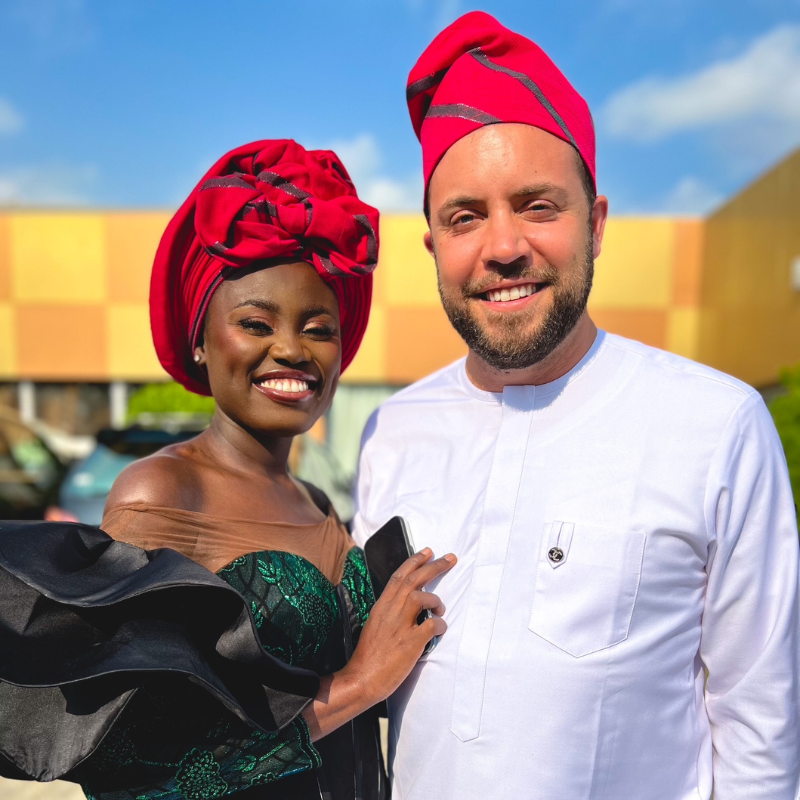
He is known for his fun, engaging videos that make it feel like you’re traveling along with him. Originally from the United States, he has now traveled to over 170 countries together with his Nigerian wife.
He runs a tour company in Nigeria that focuses on small-group tours designed to show the best of Nigerian culture, food, and genuine local experiences.
Chris, welcome to the show.
Chris Joondeph: Thank you so much for having me. Very excited to be here.
Matt Bowles: Man, I am so excited to have you here. Let’s just start off though by talking about where we are recording from today. I am actually in the Blue Ridge Mountains of Asheville, North Carolina, on the east coast of the United States today. And where are you?
Chris Joondeph: I’m here in Lagos, Nigeria. Ikeja, to be specific.
Matt Bowles: I have recorded a number of podcast episodes from Lagos, Nigeria, one of my favorite cities. I am super excited to dive into that, but I feel like a great place to start this conversation is with the name of your brand; Authentic Traveling. Everyone says they want authentic travel, but almost nobody defines it.
So, what does authentic travel actually mean? And how do you know when you’ve achieved it?
Chris Joondeph: Yeah, I think that’s a great question and something that I even still struggle to fully define myself. But for me, it’s really been about getting away from some of that mass-market tourism and really trying to understand a place through the eyes of a local.
So, a lot of things I like to do when traveling is maybe stay with some family, stay in their home, and really experience what their life is like beyond some of those major attractions.
And so, I feel like when you’re looking for that authentic traveling experience, it’s that opportunity to interact with people, to really understand a place, to see what it is like from their perspective, rather than more mass-market tourism where it’s jump in, take your picture, and leave.
And that was something I’ve always been really looking for in travel.
It’s all about learning, and I want to learn as much as possible. And what better than the people who live there and their experience?
Matt Bowles: When did you first realize that there was a huge difference between visiting a country and understanding a country?
Chris Joondeph: I’ve been to 170 countries, and so I’ve traveled to a lot of places that don’t necessarily have the best reputation, are “considered dangerous”, considered places not recommended to go.
Places like Syria, Iran, even Nigeria, where I currently am, often get a negative reputation in the media. And I felt like you can only learn so much from what is written about it, what is shown in the media, even reading books and things like that, which maybe have a less biased opinion.
You can really learn about a country by actually going there and by meeting the people and getting that experience. And so that’s something I’ve seen consistently throughout my travels.
When you travel to these countries, you see something one way in the media, but then when you actually go and you talk to the people there and you learn what it’s like, you have a completely different perspective.
And you realize that some of these places are really not accurately portrayed as they are. And that’s something I really enjoy about traveling, is getting to continually learn and challenge my perceptions about the world.
Even though I’ve seen this so many times, it’s always the same every time I go to a new country.
I recently went to Yemen, and it’s kind of, okay, here we go again. Yemen. I’ve heard about all this in the media. I know intellectually that’s probably not true, but I’m still a little scared.
And you go there, and some of it’s true, some of it’s not. And there’s really much more nuance that isn’t quite talked about. And so that’s something I really seek out when I travel.
Matt Bowles: So, I’m curious for you, how do you know when you’ve actually started understanding a place?
Because for me, when I went to Lagos, for example, I went to Lagos for a month. And I am so glad that I went to Lagos for a month because if I had only gone to Lagos for a week or even two weeks, my experience and understanding of that city would be very different.
It took me longer, I feel, to understand Lagos than it did some other cities that I’ve been to. And so I feel like, depending on the place, sometimes the duration of time there or the level of immersion that you have is important for understanding a city that has layers or that may be more difficult to connect with on a short-term trip.
And the same thing when I lived in Cairo, Egypt. My experience and understanding of that city, having lived there for a year, is super different from a lot of people that just kind of go for a week.
So, I’m curious for you, having traveled to all of those different places, how do you know when you actually start understanding a place?
Chris Joondeph: I think that’s a really great question. I think it’s really hard to appropriately put any sort of timeframe or anything like that. I think it always depends on what you do and how you experience that place.
Obviously, more time is better. The longer you spend there, of course you’re going to have more experiences.
But you could spend a year there and mostly have your head down working and not really experience anything. You go to work, come back home, come to your apartment, go to the gym, and not really understand the country at all.
And at the same time, you could spend a short amount of time and go really in depth and have a wide variety of experiences in different places and get a deeper understanding.
And so, I think it’s less about the actual amount of time that you spend there and more about maybe the things you do and the variety of things you do.
So, Egypt is an example. You might, of course, visit the pyramids. That’s an important part of Egypt. But understanding how a family lives in Cairo is a whole other part.
And a lot of people might come for a week, come for a month, and really go into depth with a lot of the ancient history, but not quite understand the country.
And so, on one hand, you visit some of the historic sites, but also you maybe see how people live. Maybe you go to a really nice restaurant and see how the other side lives and get this full comparison of the highs, the lows, everything in between, as best you can.
And I think that, to me, is always a more fulfilling travel experience than only doing one thing.
And so I think you can really get closer to understanding a place better in a shorter amount of time if you’re really putting in that effort to see it from different angles.
Matt Bowles: Totally agree. Well, I would love to at this point share a little bit about your background and your journey of how you got to where you are today. I feel like a great place if you can just start sharing a little bit about your family heritage, where you grew up, and what your early travel experiences were like as a kid.
Chris Joondeph: So, both of my parents are first-gen Americans, so their parents were born abroad.
On my mother’s side, family from Germany, and on my father’s side, from Eastern Europe—sort of Ukraine, Belarus, which was actually in Poland around the time they were born.
And so that’s the heritage of my family.
They came to the U.S. and were very focused on work and getting ahead in life.
I was born in Detroit, Michigan, and had a unique experience when I was about 10 years old to live abroad in New Zealand.
My dad’s a doctor, and it was very interesting. A doctor is not a typical person who would mostly travel abroad for work, except in some cases. But he had an opportunity to work abroad in New Zealand for three years, and we went there.
I went to local schools, and that was a really formative experience in my life.
And more so interesting, I think, when I moved to New Zealand, I was quite young. But when I came back to the U.S., I was about 13, so I actually felt like a Kiwi.
And then I was coming back to live in the U.S. We moved to Denver, Colorado, and that was a bigger culture shock and adjustment for me. It was actually moving back.
And so, these were some formative experiences in my life. Living between different cultures and getting that perspective, I think, has really influenced how I see the world a lot today.
And so, growing up, we didn’t travel a ton except for those experiences living abroad. That was obviously very important.
But it wasn’t really until I got to my college years that I started to have some opportunities to do some more travel on my own.
So, I did a study abroad in Argentina. I traveled around Southeast Asia a little bit. And ultimately, I got my first job out of college as an English teacher in Thailand.
And that was a really formative experience for me—living abroad, learning Thai as a language, and living in a more, not quite rural, but provincial capital.
And getting that experience and opportunity to travel around Southeast Asia really inspired my travel journey and ultimately led to the point I’m at now, at 170 countries.
Matt Bowles: Well, I know today you are married to a Nigerian woman, and one of the things that you do together is facilitate trips for Black Americans to reconnect with the continent.
And I’m curious for you, when you were growing up in the U.S. how connected were you with the black community and black culture in the U.S. at that time?
Chris Joondeph: I would say, to be honest, not very connected. I grew up mostly in Denver, Colorado, which is an extremely diverse city. I had a few Black friends growing up, but nothing I would consider a part of a Black community or anything like that.
And it wasn’t really until I started traveling in Africa in my mid-20s—traveling in West Africa and East Africa, starting to make travel content and build an audience, and really getting to know a lot of people on the continent—that I started to build these connections with Black Americans back in the United States.
And I have a really interesting story about that, or how some of these connections were built.
So, I would travel to Nigeria frequently, and this is how I met my wife, living here.
And I would make these videos about me going to local markets and just exploring and doing different things. And people were really shocked. They were kind of like, “Wow, this white guy is going out and doing all of these things.”
And I was back in Atlanta—this was like a year ago—and I met someone. And he told me, he said, “I met this girl online in Nigeria, and I always wanted to go visit her, but I was so afraid. And then I saw that you, this white guy, were going there to the markets and dating this Nigerian and doing all these things. And I was like, if he can do it, I’m not even going to be going to the markets. I’m just going to be going and meeting this girl. If he can go there, I can go there.”
And so he went to Nigeria, he met his now wife, and then I was in Atlanta, and both of them were there. And he was introducing me to her.
And it was so cool to be able to facilitate one of those connections.
I’ve always felt like not only Nigeria, but other countries, have this negative reputation that isn’t entirely true about them.
And to be able to really dispel a myth like that and build connections between two different cultures was such a rewarding and honoring experience, to be able to facilitate something like that.
Matt Bowles: That’s amazing, man. So as a kid who did not travel much growing up, other than the New Zealand experience, what inspired your travels in college to go to South America and some of those other types of places? And what was the impact of those types of trips? What do you remember from those trips?
Chris Joondeph: I wanted to see something different. That was my desire.
So I was in college, and everyone was doing study abroad in Prague. Prague was the place to go. And then Florence, Italy. And I was like, I don’t want to go to the same place everyone’s going.
And I found this program in Buenos Aires. This was back in 2010. It was a pretty rough place back then and quite out there to go. And I was like, okay, let me do this experience.
And on my way down, I had a friend from college. We were good friends, and she was from Ecuador originally. And I went to visit her on the way down.
I arranged the flights so that I would stop in Quito for five days, and then I would continue onward. And I was so blown away by that experience—seeing how she lives, how her family is, and how life is in Ecuador.
My only experience was knowing her in school in Orange County, California. Knowing her in that sort of environment and then seeing life there in Ecuador was something that really opened my mind to a lot of things and really encouraged me to want to see more and want to explore more of the world.
And so, kind of from then on, I was set. I didn’t know where I was going to go. I didn’t know how I was going to do it. But I really had a desire to see more.
And that’s one of those initial travel experiences that I always remember.
Matt Bowles: So, I want to also ask about your choice to move to Thailand after college to teach English, because moving to live and immerse in a foreign country is obviously a very different experience than just taking trips to experience a country for the short term. So, what inspired that choice at that age after college?
Chris Joondeph: It was the desire to see other parts of the world and understand how people live.
And so, when I went to Thailand, I had actually gone there previously. When I was a junior in college, I found this surf camp in Bali. I found it on the Internet. It sounded really cool.
I was doing some surfing in Southern California. I’m not a big surfer now, but at the time I was into surfing, and I went out there. It was a really cool experience.
I enjoyed my time in Bali, but on my way back, I had this flight where I was trying to book a flight home, and there was a layover in Bangkok. And I was like, oh, I didn’t really know that much about Southeast Asia. I had to kind of look up on a map where these places were.
And I was like, okay, well, I could do maybe three days there, do a little extra layover, check it out.
And I really fell in love with Thailand that first visit. I thought the people were so nice. I loved that people smiled and were so friendly. I loved the food. And I was like, I got to come back here. I don’t know how I’m going to do it, but I want to find a way to come back here.
The desire was, okay, I don’t have very much money, but I want to travel. I want to see different places in the world. And the best way, obviously, is if you have a job that can support you while doing that.
And so, I found this program in Northern Thailand teaching English and kind of went on a whim, with the understanding that if it was really bad, I at least had enough money to get home. So, I had a way out.
But I didn’t really have much of an expectation. I was just excited by the opportunity. And I loved being there. I loved the experience.
And I made a real effort to learn the Thai language. I was studying every day after school, found a tutor, learned how to read the script, so that I could communicate with locals because I had this desire to better understand the country beyond the surface level.
And that was a very, very rewarding experience and ultimately led to this brand, Authentic Traveling, being built around me. It started as a blog.
I was traveling to these places in Northern Thailand. I would rent this motorbike, and I would just go into the mountains and explore. And I would find these people living in these hill tribes, living in remote places. There might be a mention that there was a homestay there on the Internet, but no contact info.
And I would just go and find it. Then I’d speak a little Thai with them and figure out what it was. And I was like, I got to put this all on a blog so people can find out about it and really learn how they can get these immersive experiences and understand how people live.
And so that’s how the whole thing started. It was a blog to help people travel deeper, find unique places, and experience the sort of travel style that I love.
Matt Bowles: Was there a moment in Thailand, maybe a dinner table conversation, where you realized, this is the kind of travel I want to do for the rest of my life?
Chris Joondeph: I rented motorbikes, but I was not the best motorcyclist. And I would fall sometimes. Usually they were little ones, but I fell on my way down this mountain. It was enough to keep riding, but I was in a little bit of pain, and I had to limp down.
And I found this gas station. I think they sold gas, but it was just this little restaurant. It was getting dark, and there was a lady working there. And I was like, I need help.
And I could speak Thai with her, but I wasn’t super great at the time. But I could ask, “How many kids do you have?” “Oh, I have three children.” “Do you have any brothers or sisters?” “Yes, I have two.”
And answer those basic questions. But that was a cool experience because they took me in, they bandaged me up, they made me dinner. They said, “Hey, we’ve got a place you can stay.”
They had these little chalets that you could rent that were right next to it. And so, I rented one.
And it was cold. It was in the middle of winter. We were in the mountains, so they had this little coal fire, and we were all huddled around it.
And I was like, wow, this is really cool. These are people I would never normally meet, never interact with, and I’d have to go out of my way to have these experiences.
But here I’m learning about how real Thai people live. This is not going to a luxury apartment in Bangkok or visiting the Royal Palace. This is going way into the mountains and spending time with a family. And I was like, this is the kind of travel I love.
Meeting these people and seeing their life is, for me, what it’s really all about. And so that’s what I’ve tried to emulate through the brand Authentic Traveling, which started as a blog and then eventually made its way into short-form videos and things like that.
Matt Bowles: So, after this incredibly immersive Thailand experience, you come back to the United States to start your career.
And you and I actually have a lot in common in this regard because I lived in the Washington, D.C., area for about seven years. I did my master’s degree in D.C. at American University. I know you went to Johns Hopkins for yours, but mine was in International Peace and Conflict Resolution.
And then I worked in the nonprofit sector for a number of years. I know you also ended up doing a master’s degree in International Affairs. Prior to that, though, you worked on Capitol Hill in Washington, D.C., in politics.
And I’m curious if you can reflect back on that experience—maybe what you were hoping for or anticipating in going that route—and then, once you got there, what you found that made you disillusioned with the political system in the U.S.
Chris Joondeph: So, I’d come back after this experience. I taught English. I had an opportunity to travel.
And throughout some of those experiences—living abroad in Thailand and traveling—after I did this round-the-world trip where I left Thailand, I went to Central Asia. I went to Kyrgyzstan, Kazakhstan, and Turkey. From Turkey, I continued all the way through Europe and then finally back home.
So, I kind of went around the world the other way. And throughout that experience, I got really interested in trying to understand how the world works.
I was reading all these books on foreign affairs and found them very fascinating. I found this topic very interesting. I was like, maybe I want to work in this international affairs type of field. I was like, well, what better place than to go to Washington, D.C.?
And so, I got an internship with, at the time, my local congressman from Colorado. I was able to use some people we knew in Denver to make the connection and then got an interview for the job.
And it was a basic experience on Capitol Hill. You’re answering the phone and just opening letters and stuff. That’s how you start out. I’d been really interested in my congressman because he worked on the House Armed Services Committee. I was like, okay, maybe I could use this as an opportunity to get a job in foreign policy.
And I was young and inexperienced, so people had advised me, okay, maybe if you work on his campaign, you might make some connections. You’ll be paid a little better and have the opportunity to learn a little bit about the political side, and then maybe you can get a job after the reelection somewhere else.
And so, I worked on his campaign.
I felt like, throughout that whole experience, it was good for me personally. I learned a lot of skills in digital marketing, and that was good for my career—the hard skills I learned. But I felt like all politics was fundraising.
It had just become, if you’re a congressman, all you do is sit on the phone, make phone calls, and try to get people to give you money. And that’s it.
Everything was so flooded with campaign donations, and it was a really big turnoff for me.
And I was like, look, I don’t want to be a part of this. Maybe I want to go into the private sector.
And so that’s when I pivoted and also realized that, for some of these jobs, a master’s degree in international affairs is often a prerequisite.
So, I pivoted to Johns Hopkins, where I got my master’s in International Affairs. They had a really unique program where half of the incoming first-year class could study in Bologna, Italy.
When I initially applied there, I was living in D.C. I was like, okay, well, this is one of the schools in D.C. I think I applied to American as well as Georgetown and all the schools there.
And I was accepted into Johns Hopkins. They said, “Do you want to do your first year in Italy or D.C.?” I said, “I’m open to whatever,” because I didn’t know if I would even get in. I just said, “Open to whatever.” And they said, “Okay, you’ve been accepted to the Bologna, Italy program.”
And I was like, oh my gosh. I know where Italy is. I don’t know anything about Bologna. Let me look it up. And as I looked it up, I was like, okay, let me do some math here.
The rent is one-third of what it would be in Washington, D.C., and I get to live in Italy. That sounds amazing. Let me go ahead and do that.
And so, I took the opportunity and studied there my first year, studying International Affairs and Economics.
And then through that program, I was thinking, okay, I want to go into the private sector. I wasn’t necessarily interested in government.
And what made the most sense at the time was an MBA. So, I decided to do a dual-degree program.
I applied to a few MBA programs and ended up getting accepted into the University of North Carolina.
I moved back to the U.S. for one year at the University of North Carolina, doing my MBA.
And then, at the end of those three years rather than four, I got a degree in International Affairs and Economics, as well as an MBA.
Matt Bowles: So ultimately you then end up working for Delta Airlines. Can you talk about how that that came about and what that facilitated for you in terms of flight benefits?
Chris Joondeph: The airline industry is a really fascinating, fun, dynamic industry to work in. And so, how I got involved—I was a first-year MBA student, and Delta was one of the first companies to come onto campus to give their presentation.
So, if you’re in an MBA program, what often happens is these major corporations come to your school, talk about what they do, tell you about the internships they have, and these are a great opportunity to network your way into some of those roles.
And so, Delta came. I met a number of the people who were UNC alumni and was thinking, wow, this is really cool. This is an opportunity to really combine my interest in travel and the world, my interest in international affairs, and my interest in business all into one career. And from then on, I was really dead set on working in the airline industry.
So, I did an internship with Delta and ultimately ended up working for them for a number of years. And it was a really awesome experience because, as an airline employee, you get what are called flight benefits.
Basically, you fly for free or at heavily discounted rates wherever they go, and on partner airlines as well. And that sounds great in theory, but there are some caveats.
So, it’s really hard to go where you want to go. Obviously, there have to be open seats, you have to be able to get on a flight to go there, and you have to have worked at the airline for a long time. The longer you work, the higher you are on a seniority list.
So as a new employee, it can be difficult to go where you want to go. But you can travel every weekend. And so that was extremely helpful in building up this country count, visiting a lot of different places, using vacation wisely to stack it with long weekends and go on these trips. But I had also done a lot of travel before I even started at Delta.
I think I had visited 100 countries, but that really helped me get to some of the ones that would have been very expensive in terms of flights and all of that. And it was a fascinating career and came with amazing benefits that allowed me to travel the world like that.
Matt Bowles: So, what were some of the most unique or interesting places that you got to go with those travel benefits?
Chris Joondeph: There were a lot of fascinating places.
There are two kinds of trips that you end up going on. Some are the totally unplanned ones that you didn’t expect, and others are the ones where you use those benefits in a strategic way to get somewhere you couldn’t otherwise go.
So, I remember one of my favorite trips was this weekend I flew down to Santiago, Chile. Funny enough, I was trying to get here to Nigeria. I had tried on the Wednesday night, the Thursday night, and the Friday night. I couldn’t get on a single flight to Nigeria. They were all full. So that was one of the challenges.
I was like, okay, well, it’s Friday night. I can’t get on. I’m not going to go to Nigeria for 12 hours and come back. I’ll just tell my girlfriend at the time, who’s now my wife, that I’ll come back another time.
But I was like, okay, I see I could go to Santiago, Chile, this weekend if I want. So, I was like, but I don’t have winter clothes. So, I had to run home, pack a whole new bag, and come back to the airport.
Next thing you know, I’m in Santiago, Chile. And it was a surreal experience to be there during winter and experiencing a totally different world. And then Sunday night, you’re back on the plane and back to Atlanta.
And it was kind of cool to have this career where you’re working, you’re doing your nine-to-five, and then, on a Friday night, wow, next thing you know, I’m in another country for a brief visit, and then I’m back.
But then there were other trips. I think one I went to that would have been very challenging was Equatorial Guinea on those flight benefits. Equatorial Guinea is a small country in West Africa. I tried a couple of times to go before, but my visa wasn’t approved in time.
But eventually I was like, okay, I’m going to get the visa well in advance and try to go. And it was challenging to visit.
I had to go to Germany, and then there was a flight on Lufthansa that I could take down there. Only two airlines fly there. And so, it was a very challenging but interesting and rewarding trip.
And Equatorial Guinea is a country that not many people know about. It’s very rich from oil money, but the government is very suspicious of everyone. And it’s the only country in Africa where Spanish is spoken.
So, it was a fascinating trip. I probably could have never afforded to go there on my own. And so being able to go for about 100 bucks was an awesome benefit.
Matt Bowles: Well, I of course have to ask you about your amazing love story and the background of how you met your wife. I am a big fan of your content and my very favorite videos that you put out are the ones where you and your wife are in the videos together. You are absolutely adorable together. The videos are hilarious and delightful and I love you two together as a couple.
So, I would love to hear the backstory. Just rewinding the tape. How did you initially meet and then ultimately fall in love?
Chris Joondeph: So, we met on what we could say is really my first trip to Nigeria. It was in July 2021. And I had previously tried to come to Nigeria just before the pandemic. I’d gotten a visa but wasn’t really able to go. So, I still had my visa valid and wanted to come back.
And I was like, well, Nigeria—I hadn’t really visited there. Let me go for a quick three-day trip, get an opportunity to see it a little bit before going back over Fourth of July weekend.
And before I’d gone out, I’d reached out to a number of people on Couchsurfing in Lagos. I was thinking, maybe I’ll try and find a host to stay with to get a different side of the country, a different view into how life is there.
And my wife was the first person to respond to me and was very enthusiastic. She was like, “Hey, you got to come. I want to show you around.” She’s always been really about promoting Nigeria and about how great this country is.
And she was like, “I want to show you Abeokuta. We’ll travel out of Lagos for the day. I’ll take you around. You can meet some of my friends. Maybe we can go out for dinner and really get to see all these different sides of Nigeria.”
And I was like, wow, that’s amazing. So, I went out and spent the weekend with her, and it was a really incredible experience in Nigeria. But I left thinking, that was really amazing. I was like, wow, I kind of like this girl.
But I was thinking, okay, number one, I don’t want to cross that barrier with Couchsurfing. This is just for friends only. This is not a dating app.
And so that wasn’t in my mind. But the second piece was, she lives in Nigeria. I can’t get in a relationship with someone that far away.
I remember leaving thinking, I need to find someone like this, but maybe in the U.S. who’s a little bit closer to me. And I could never find that. So, I ended up coming back out here.
I came out again. She and I went to Benin and Togo. And I came out a third time to visit her grandmother’s village.
Her grandmother is from Ekiti State, which is a few hours from Lagos, maybe four hours by car. And I had told her I really wanted to experience a Nigerian village.
I asked, “Is there may be a way you can help me find something like that?” And she said, “Well, my grandmother lives in Ekiti State. Maybe we can make a visit.”
And it was really funny how she planned this whole thing. She hadn’t told her father yet about our relationship. Actually, at the time, we weren’t even officially dating or anything, so there was nothing really to tell. But she hadn’t told her father.
One of those things in Nigeria is you can’t tell your parents, “There’s this guy,” unless you’re about to get married. That’s when you tell them. So that was something she couldn’t tell her father, but she still wanted to bring this guy to her ancestral village. And it was like, how do we tell him this?
So, she told her dad that I was her client and that she was taking me on a tour. So, we were like, okay, we’ve got the story. And so I went, and we spent the night with her grandmother. We went to the market, bought a chicken, cooked it, and slept in a rural setting. There was no running water, just a little bit of electricity for a light at night. And it was a really cool experience.
The next day, we went to her actual village, where many of her relatives are from and where her late grandfather is buried. And they all swarmed us. There were about 50 people surrounding us when we got there. And they were saying, “Your husband!”
Because to them, if you’re bringing this guy to your village, you’re getting married. So, they were thinking we were getting married. We were like, “No. We aren’t even dating yet. We’re just coming to experience this place.”
But it was a really memorable experience. Traveling with my wife and seeing how she sees the world and enjoying those experiences together was something that really attracted me to her. She also has this very open and positive perspective, like me, and wants to learn more.
And that was something that I think we really bonded over—learning about different places. She has a travel agency as well, so she has helped Nigerians travel abroad.
At the time, her business was growing, and she had been doing some of her first few trips.
She went to Senegal. She went to Kenya and Tanzania and was getting all of these experiences, sort of seeing the world.
And it was both of us, at the same time, traveling to these places and comparing notes. And I think that’s something we really bonded over.
Matt Bowles: What did you learn from her about the way that she sees the world?
Chris Joondeph: I’ve learned a lot from my wife, and I can maybe break it up into two different things.
My wife, being a Nigerian and being an African, has a different perspective on a lot of things. And it’s really funny when traveling.
One example is when we first went to Europe for the first time, and she was really surprised that we were walking and taking the metro places.
Because in Nigeria, if you walk, it means you don’t have money to hire a car. You don’t have money to hire a taxi. Whereas the European perspective is, we all take public transportation, and we actually enjoy walking places.
And the thing is, we can afford the car, but we choose not to. Whereas they see us as extremely wealthy, so we should all be driving cars and not walking anywhere.
And so, it was one of these surprising experiences. There are these little cultural differences that I enjoy when we travel together. And so, I’ve enjoyed that aspect of traveling with my wife.
But I think the deeper part that I’ve really appreciated is that my wife came from not much, and it’s a true story for plenty of Nigerians as well. She has always had this really positive perspective on life and that things will work out and the good times are in the future.
In the U.S., we can be negative and have anxiety about the world. And her perspective has always been so positive. I’ve always found that to be something so grounding. It’s a different view of things.
Because for her to go from where she grew up to being able to travel the world is a really incredible story. And I always enjoy, or try to take on, much of that gratitude that she has about so many things. And I think it’s so important for me to carry that into my own life as well.
Matt Bowles: So, when did you realize that she was the one? And can you share your story of how you proposed and how the traditional dowry system works?
Chris Joondeph: It was over time that I realized she was the one. But I think it really came down to our values.
When you’re in an intercultural relationship like we are, you definitely have different values, and you have to be aligned on as many of them as possible. The big things are the most important. There are always going to be cultural misunderstandings that we have on a regular basis, but the big values are what really matter. And I think we were very aligned on those.
Her view on life, her upbringing, her perspective, and her values were all things that really attracted me to her and ultimately cemented her as the person I wanted to spend my life with.
And once we got married, the thinking initially, the plan was for her to move to the U.S. and live with me. I already had my career and a good salary, so it made sense for her to come there.
We applied for a U.S. visitor visa for her, but she was denied. We talked with some immigration lawyers because we wanted her to at least experience the U.S. before making the move, just to see if it was the right fit for her. But they told us, “They’re not going to approve a visitor visa because they’ll assume you’re planning to get married. You need to apply for an immigrant visa instead. Once that’s approved, then she can move to the U.S.”
We said, “Okay, let’s do that.”
Once we figured out that was the path forward, we realized we needed to start planning a wedding and getting engaged. We were facing a legal timeline, so we had to be strategic. With immigration, the earlier you get into the queue, the better, because the backlog is so long.
So, funny enough, we actually set our wedding date before I proposed. After that, I thought, “Okay, now I have to figure out how I’m going to propose.”
She had just finished leading a Europe tour with some of her Nigerian clients, and she was meeting me in the Netherlands for the weekend. I flew out there and arranged for us to visit the famous tulip fields. It was the middle of April, so it was perfect tulip season.
I proposed to her right there in a tulip field, which made for the perfect setting.
The way I did it was kind of funny. I set up a tripod and told her we were just going to take some pictures together. Everything was perfectly framed. Then I secretly hit record so I could capture the whole moment on video and later pull still photos from it.
So now we have both the video and some amazing pictures from the proposal.
She knew a proposal was coming eventually because our wedding was only a few months away, but she had no idea it was going to happen at that exact moment. So, it was still a perfect surprise.
A few months later, we got married in Lagos. My family came out for the wedding, although I only brought my immediate family. At the time, we thought we would be moving to the U.S. much sooner and eventually have another wedding there with more of my relatives, so we kept the Nigerian ceremony fairly small on my side.
We had a beautiful traditional wedding at her family’s home in Lagos with all of her relatives. But one of the most interesting parts of the experience was the dowry and everything I had to do to prepare for it.
In Nigeria, as in many other African countries and parts of the Middle East, a dowry is a common tradition. Essentially, the groom’s family presents gifts to the bride’s family as part of the marriage process.
In some cultures, that can involve large amounts of money. In others, it might include cows, goats, or other valuable items to demonstrate that the groom is financially capable of supporting his future wife. Sometimes those gifts stay with the bride’s family, while in other cultures they’re returned to the couple. It really depends on the tradition.
My wife is Yoruba, and in Yoruba culture, the dowry is much more symbolic. I was given a list of about twenty different items. None of them were particularly expensive, but every single one had a special meaning.
For example, one item was honey, symbolizing that our marriage would be sweet. Another was an umbrella, representing protection so that life’s storms wouldn’t fall upon us. Each item carried its own significance.
One thing I also had to get—which I suspect her father mainly wanted for lunch afterward—was a live goat. So, we went to the goat market and picked out a goat. I got get yams and several other food items because they would be used for the celebration after the wedding.
I decided to vlog the entire experience because I thought it was fascinating. I wanted to document everything, not only for my audience but also so our future children could one day watch the videos and see how their parents got married.
It was really funny because people at the market immediately recognized what I was doing. They saw the combination of things I was buying and said, “Oh, you’re preparing for a Yoruba dowry.” Some of them even offered to gather everything for me. They said they could buy all the items, bring them to me, and I could simply pay them plus a tip.
But I told them, “No.” I didn’t want someone else to do it for me. I wanted to experience the process myself. One of my wife’s friends helped me, and together we went from market to market buying every item on the list. It took almost two or three days because different items were sold in different markets, but eventually we found everything.
Looking back, I think it made the wedding much more meaningful. It wasn’t just about purchasing the items—it was about experiencing the tradition firsthand and learning about her culture through the process.
I learned the significance of things like alligator pepper and many of the other symbolic items that are important in Yoruba marriage traditions.
I really enjoyed that experience, and I learned a tremendous amount from it.
Matt Bowles: So, becoming part of her family. I’m curious, did she tell her family about the engagement? Did you have to go speak to her father? One on One before you asked her to marry you, and then how did her family accept you? What was that process like?
Chris Joondeph: I hadn’t really told her yet that I wanted to marry her. It was something we had talked about, but nothing was official.
I said, “Hey, we’ve been dating for a while, and I’d really like to meet your father.” So, we arranged an opportunity for me to meet her dad, but I didn’t meet her mother.
And the thinking was that if her mother found out, everyone would know. We hadn’t even set a wedding date yet, and the next question would immediately be, “When’s the wedding?” Once you tell your mother, the news spreads pretty quickly.
We figured her father could keep the secret, so we decided I’d meet him first. I flew out to Lagos, and he was incredibly warm, kind, and welcoming. It actually goes back to the story I told you earlier about why he liked me before we had even met. My wife had told him, “I want to take my client to meet my grandmother.”
He had heard about the trip from his own mother, and he’d seen the pictures of us together in the village. What really impressed him was how excited I was to experience his hometown and embrace his culture—to eat with his mother, spend time with her, and take pictures together.
He told me later that he had already fallen in love with me because of that. He said, “If this guy is willing to go all the way out there, where there’s no proper running water and very few comforts, and he’s genuinely excited to experience it, then I really like him.”
So, by the time I actually met him, he already knew me as “the client,” and meeting me in person simply confirmed the positive impression he already had.
It made that first introduction very easy. I think it was during our second meeting that I officially asked for his blessing. By then, we had already chosen a wedding date. I said, “We’re planning to get married on this date. Will that work for your family?”
At the same time, I had to check with my own family to make sure they were available and able to travel to Nigeria. Once both families confirmed they could make it, we started working backward from there.
We realized we still needed to plan the proposal, buy the ring, organize everything else, and check off all the remaining details.
So, it was a funny order in which everything happened. But it all came down to the immigration timeline.
We didn’t want to spend years waiting before even getting started, so we thought, “Let’s lock in the wedding date first, then work backward and make everything else happen.” And that’s really how it all came together.
Matt Bowles: So, can you describe the traditional Nigerian wedding that you had and what was your family’s experience like coming over to Nigeria for the first time to be part of that?
Chris Joondeph: They loved it. It was such a positive experience for them.
And they do this before the wedding. There was a family introduction ceremony. I wish I could tell you more about it because I actually wasn’t there. But it’s a traditional gathering where the two families officially meet and get to know each other.
During that ceremony, Nike and I actually had to wait outside in separate cars while our families met.
They spent time introducing themselves, exchanging gifts, offering words of welcome, and getting to know one another. It was the very first time our families had ever met, and it turned out to be a wonderful experience.
They really fell in love with each other.
The Nigerian side was incredibly warm and welcoming, just as Nigerians tend to be. My family loved the traditional clothing, the beauty of the ceremony, and the overall atmosphere of the wedding.
It was such a positive experience for everyone involved. For me, it just felt like the perfect match. Now my father-in-law and my dad are actually friends. They message each other on WhatsApp all the time. Since my dad is a doctor, my father-in-law will sometimes ask him for medical advice. He’ll send messages like, “What should I do about my high blood pressure?” or “Should I be taking this medication or not?”
So, they’ve genuinely become good friends through this whole experience, and that’s been really special to see.
Matt Bowles: For people that are not aware of how Nigerians are treated by the US Government. Can you explain why you two cannot live in the U.S. right now even though you’ve been married for a couple years?
Chris Joondeph: We’ve been married for over two years. We got married in May 2024, and my wife has still never been to the United States. We knew the process would take some time, but it’s certainly taken much longer than we expected.
For those who may not know, if you’re an American and you want to bring a foreign spouse to the United States, they need an immigrant visa. There are a couple of different ways to go about it.
One option is the fiancé visa. This is where the TV show 90 Day Fiancé gets its name. You apply for a fiancé visa, and once it’s approved, your partner comes to the United States. From the day they arrive, you have 90 days to get married. If you decide not to get married, they can simply return home within those 90 days without any issues.
The other option is to get married abroad first and then apply for an immigrant visa for your spouse. That’s the route we chose.
That process would often take several months, but things have changed significantly. The challenge is that citizens of countries like Nigeria can’t simply board a plane and travel to the United States. They need a visa.
Normally, someone might apply for a tourist visa, but if the U.S. government believes you have a serious relationship with someone in the United States and may not leave after arriving, they’re very unlikely to approve that visa.
Their concern is that someone might enter on a tourist visa, get married, and then adjust their immigration status while already inside the United States. That’s a legal process—as long as getting married wasn’t the original intention when entering the country—but immigration officers are understandably cautious about situations like that.
Because of that, my wife wasn’t granted a tourist visa. Marriage became our only realistic path. So, we got married, thinking the entire process might take about a year to a year and a half.
The process has two major stages. First, you file a petition with the U.S. government, and they have to determine that your marriage is bona fide—that it’s a genuine marriage. That involves submitting a tremendous amount of evidence: photos together, travel records, proof of every time you’ve met, your marriage certificate, communication records, and many other documents showing that your relationship is legitimate.
Today, that first stage alone can take about a year to a year and a half.
Once the petition is approved, the next step is an interview at the U.S. embassy in your spouse’s country. Some countries move through that stage fairly quickly, while others have much longer backlogs.
In our case, we’ve been waiting ten months just for an interview at the U.S. Embassy in Lagos after our petition was approved, and we still haven’t received an appointment.
At this point, we probably won’t even have the interview until sometime in 2027. That’s simply the current backlog under normal circumstances. On top of that, there’s another complication.
At the moment, immigrant visa processing for Nigerians has been affected by U.S. government restrictions, along with applicants from a number of other countries. I believe around 75 countries are currently affected through various bans or pauses.
What that means in practice is that even if someone attends their interview and everything goes well, their visa may not actually be issued immediately.
If the interview doesn’t go well, they could be denied. But in many cases, applicants aren’t denied—they’re simply told that their application is on hold until processing resumes.
So, we’re still waiting for our interview. Our expectation is that when we finally have it, they’ll likely tell us, “Everything looks good, but we can’t issue the visa right now. Your case will remain on hold until these restrictions are lifted.”
As a result, we’re currently in a situation where we don’t know when we’ll be able to relocate to the United States. For now, we’re living together here in Nigeria and waiting for the process to move forward now.
Matt Bowles: Since you have spent so much time in Lagos, Lagos and Nigeria, I’m curious about your perspective now, if you can share what are some of the things about the city that most tourists who maybe swing through for a week to check it off their list often miss about Lagos.
Chris Joondeph: I think Lagos is best experienced through a local.
It doesn’t have to be someone you met on Couchsurfing like I did. It could be a tourist guide, a friend, or even someone you know back home who has relatives in Lagos that can show you around.
I really think that’s one of the best ways to experience the city because it allows you to see Lagos beyond the major tourist attractions.
A lot of people come to Nigeria and travel independently. Unless they’re very experienced travelers, they often don’t have the best experience, in my opinion, because they only visit a handful of well-known sites—the Nike Art Gallery, the Lekki Conservation Centre, and places like that.
They’re not bad places by any means, but they don’t really give you the full Nigerian experience.
When you have someone who can show you around—take you to a local market, bring you to places like the Fela Shrine to experience Afrobeat music at night, introduce you to neighborhood bars and restaurants—that’s when you really begin to experience Nigeria.
Those are the moments that make the trip special.
You’ll quickly discover that Nigerians are incredibly friendly, incredibly open, incredibly kind, and incredibly welcoming.
A lot of visitors stay in five-star hotels and spend their time visiting art galleries. While those experiences are enjoyable, I don’t think they capture what makes Nigeria truly special.
The magic happens when you spend time with Nigerian people, share meals with them, hear their stories, and experience everyday life alongside them.
That’s what transforms a trip from simply thinking, “This is a beautiful country. I had a nice time,” to saying, “Wow, this was a once-in-a-lifetime experience. My entire perspective of Nigeria has completely changed.”
I think when you experience Nigeria that way, those are the memories that stay with you forever.
Matt Bowles: For people who don’t know, I think it’s important to understand that Nigeria is really the artistic, musical, and cultural mecca of Sub-Saharan Africa.
The film industry is known as Nollywood, and the Afrobeat music coming out of Nigeria is taking the world by storm.
That’s actually what drew me there in the first place. I thought, “I’ve got to go to Nigeria. I’m going to Lagos, and I’m going to stay for at least a month.”
I’m curious because you’ve now been there for quite a long time.
I remember that during my month in Lagos, every single week I felt like I peeled back another layer of the city. I started to better understand how it moves, how it functions, and how to connect with the aspects of the city that had drawn me there in the first place.
It wasn’t something that happened immediately. It took time, and I had to work for it.
So now that you’ve lived there for so long, what are some of the things about the city of Lagos that make it so uniquely special to you?
Chris Joondeph: I think you mentioned many of the things that make Lagos special.
Of course, there’s the music, the art, the nightlife—all of those things are truly incredible.
I think more broadly, what makes Nigeria so special to me—and Lagos in particular—is something a little different. One thing that really stands out is that English is widely spoken.
If English is your first or even your second language, you’ll find it very easy to communicate with people. That’s true in many African countries, but I’ve traveled across most of the continent, and I feel that the level of English fluency in Nigeria is exceptionally high.
People certainly speak English in other countries as well, but in Nigeria, many people speak it extremely well, which makes it much easier to connect with locals, have meaningful conversations, and experience the country on a deeper level.
And so, it’s very easy to communicate with locals and understand. I feel like that first is a really great thing for Nigeria, and then I think the second is the culture is so different than anywhere else. So, it creates this environment where you can interact with people and understand them and have conversations with them, but they are so different from you. And then on top of that, it’s a country that it very seldom receives international visitors.
And so, everything is really raw and authentic. And Nigerians are willing to, like, share that culture with you, are very open. And at the same time, there’s no mass tourism, so nobody’s jaded by anything. Everyone’s very open and willing to, like, share and bring you in.
And so, what makes Nigeria so special are these opportunities to have these really authentic experiences with people that you can communicate with and learn from that, that traveling the world. There’s not a lot of other places where you have that combination of everything in one place. And I think that’s what makes Lagos and Nigeria such a fascinating place to travel.
Matt Bowles: Well, one of the things that I did intentionally when I went there for a month is I stayed in Lagos the whole time.
And the benefit of doing that, obviously, is that you get this deeper, more immersive experience in the city. Obviously, the downside of doing that is that I did not get to travel around the rest of the country.
I know you have now traveled extremely extensively in Nigeria, including places like the northeastern part of the country where very few tourists go. And I’m wondering if you can share a little bit about some of the different parts of Nigeria outside of Lagos and what some of your favorite other parts of Nigeria are and why?
Chris Joondeph: Nigeria is a giant country. It’s the most populous country in Africa. And you can think of it as almost three distinct regions. There’s the southwest, or even four: there’s the east, the south-south, and the north.
There are over 200 ethnic groups that they call tribes within Nigeria, and there are about three major ones: the Yoruba, Igbo, and Hausa.
And going and experiencing and learning from those different cultures and different places is what makes it really unique. Because Lagos is nothing like Enugu, which is in the east. It’s nothing like Kano, which is in the north.
And so, seeing these different places really shows you the full Nigeria. In Lagos, you can see most because everyone comes there since it’s the economic capital. But really getting to see those places and where those different cultures are from.
And so, if I were to think of a few top places I would recommend, I would say one is to go out east, to go to Enugu and to a place called Obudu Cattle Ranch.
So, it’s quite a drive from Enugu, but worth it if you’re going to go for a few days. It’s a ranch resort high in the mountains, close to the Cameroon border. Because of its high elevation, it’s a lot cooler. It’s very peaceful, great for nature, and a really beautiful place to check out in the country.
Another one I would recommend is Jos, which is in the north-central part of the country. This is also another high-altitude area, mountainous, and really great for hiking, with really awesome views.
They grow a lot of the produce in Nigeria. So, a compliment is you call someone a “Jos tomato.” You’d call your girlfriend that because she’s so sweet, and you hear that in Nigerian songs. They’ll reference that because they grow the best fruit. They grow strawberries and different things there, and it’s a really beautiful place to check out.
And then finally, the north is so different. Kano is a really cool, ancient city. It was a former emirate and had an old wall around it. There are still emirs in the north that control their areas.
And the culture is totally different. There’s a lot of ancient history, ancient Trans-Saharan trade network history.
The other place you mentioned, I also went to the northeast, Maiduguri. It’s tricky to visit because there are always challenges with insecurity up there. That’s where a lot of the Boko Haram stuff started. So, there’s some instability.
But going there was such an incredible experience. The people were so incredibly kind and welcoming. And I loved Maiduguri. It was everything about Nigeria times ten.
And it was a really cool experience because I had a coworker. She was Nigerian, but from the north, and was living in the U.S. I was saying, “Hey, I really want to go visit the north of Nigeria.” And she said she had this uncle in Maiduguri. And I was like, “Can I get his contact?”
And so, she put me in touch with her uncle. My wife and I flew up there, met her uncle, stayed with him and his family. They fed us, they took us around, and really showed us Maiduguri in a way we wouldn’t get if we just came up there on our own.
And it was incredible. So memorable. I’ll never forget how kind the people are in the north of Nigeria.
Matt Bowles: Well, you and your wife now run tours to help people come to and experience Nigeria. Can you talk about the founding of your company, Authentic Traveling Tours? What was the void that you saw that needed to be filled that inspired you to start this company?
Chris Joondeph: So, we initially wanted to do just one tour to Nigeria. That was the plan.
So, for those listening, we now do these repeat tours to Nigeria, basically open to anyone. You can sign up and join these group tours. They’re on fixed dates, and you sign up and come to Nigeria and travel with us and visit different places.
And I had initially just done one, and the thinking was, okay, I wanted to visit some places in the southwest of Nigeria that I had never been to. And I was thinking of doing it over a week. And I was like, “Hey, maybe some other people on Instagram and social media might want to come with me.”
So, I threw up this Google Form on my story, and we had a hundred people apply. And I was like, “Whoa, okay, there’s a lot of interest here. This is crazy.”
And so, we sent out invites and ultimately ended up with 10 people who came on that first trip. And we went around southwest Nigeria. We visited Badagry, where we learned about the transatlantic slave trade history. We visited Abeokuta, Ibadan, Osun State, the more interior heartland of the Yoruba culture, and spent some time in Lagos.
We did a cooking class and all these fun experiences—just things that I personally wanted to do.
Most of the things on the tour I had never done. The only things I had done were some of the sites in Lagos. If you come here, you’ve got to come to places like Nike Art Gallery and some of these places, which are great.
And so, we took them there, but that was really some of the only things I had done.
And so, I was super excited for the tour, and we were just going to do it once.
But as we did it, we saw that, hey, there’s this real opportunity here because people want to travel to Nigeria, but they don’t understand how, and they don’t feel comfortable, and they might be afraid.
And Nigeria can be a tough place if you don’t know anyone.
I always tell people; you’ve got to know someone. That really enhances the experience.
And so, we were thinking, okay, we could do these sorts of curated experiences where we pick you up at the airport, we bring you to the hotel, plan out where you’re going to be going in a way that’s organized, so you feel comfortable, but also open-ended enough that there are all sorts of impromptu experiences and opportunities to interact with locals. And we thought, okay, maybe we could do this again.
Maybe more people would come, and this would give me an opportunity to not be based in the U.S. anymore. If we do this, we can make enough to support ourselves.
And the decision was, okay, now we have an opportunity to live together, we can work together, and we can do this really cool project that I think is really changing perspectives about Nigeria.
Because I’ve heard so many stories of people who come, and maybe they don’t have the best experience because it’s just not organized, or they don’t know where to go or what to do.
And so many times on our tours, we have people who say, “Wow, I heard sort of one thing about Nigeria in the media. But after this tour, I’m in love with this place.”
The Nigeria that I’ve seen, that I always see on my social media, that I portray—the Nigeria I fell in love with—that’s the Nigeria we show.
So, we work with local guides and give people an opportunity to learn from the people who live in the cities. The way it’s organized is we’re not really the tour guides. My wife is the coordinator.
And so, we’re coordinating, like, we’re going to go here, the guide here is going to show us around. That way, you kind of get these people who know the area really well, and you add to that all these impromptu experiences.
One of my favorites was we were just on a tour, and we came across this church service. These people were just about to start, and they were singing, they were praising, they allowed us to join in with them, they prayed for us, and it was on top of a mountain on a beautiful, sunny day. It was such a beautiful, impromptu experience.
I don’t know how you get that. To think that this is an organized group, and we have stops that we’re supposed to go to, and then here we are just like, “Oh, we found this church. Let’s just join it and be with these people.” And it was so cool.
The impetus was initially just an opportunity for me to go to some places and have some people join me. And then it went to, this could actually be a viable business. And we’ve been doing it. I think we’ve done six now, and we have our seventh currently for sale.
So, it’s been really exciting.
Matt Bowles: So, as you know, the mainstream tourism industry in Africa is notoriously imbued with neocolonial dynamics. And I know you and your wife have been very intentional about designing tours that benefit local communities instead of simply extracting experiences from them.
And I’m wondering if you can share a little bit about how you do that. And also, when you’re bringing mostly western travelers into Nigeria, how do you think about the power dynamics between visitors and local locals?
Chris Joondeph: So, I think we’ve really built this tour plan, and we do more than one tour. We typically do our southwest tour, but we also have opportunities to travel to some other places in Nigeria. But the way we have built this is really around the way I would travel, which is to dive into these local experiences, to meet the real people behind the places, and stay in local hotels and really see a place and meet the real people there.
And so, the way we’ve built these tours is by working with local guides, local museum curators in different places in Nigeria, local hotels, and local restaurants to create an experience like you’re just traveling with your Nigerian friend. And these would be the places you would go, and so these would be the guides you would hire.
What we’re able to do is, rather than we’re the tour guides or anything of this tour, we’re essentially facilitating a travel experience with locals in Nigeria within the different cities. And so, we look at what our responsibility is. We’ve got to arrange the transportation. We’ve got to find the right hotels that meet the standard. We’ve got to figure out that the guide knows that we’re going to be there at this time, on this day, and then, lastly, all the trip communication goes well—you know, what to expect in Nigeria, what to bring, making you feel comfortable traveling, and all of that.
And so, what we’re really doing here is facilitating this local experience where that money goes right back to the tour operators that are working here in Nigeria. And tourism isn’t a big business here at all. When we look at the guides we work with, most of their clients outside of us are schools. They might take schoolchildren around on other days, or sometimes local Nigerians, but rarely foreign guests.
And so, it creates this very raw and authentic experience. And I think the travelers coming are excited and open to that opportunity.
Matt Bowles: Now that you have run a bunch of these tours, what do you notice as being the biggest misconception that first time visitors have before they arrive in Nigeria? And what’s the moment during your tours when you can actually see people’s perceptions changing?
Chris Joondeph: I think the biggest misconception people have been they’re often afraid of Nigeria. They’ve heard something about the country—that it’s going to be a rough place or that there would be challenges visiting. And I think they’re always so surprised by how kind, friendly, and welcoming the Nigerian people are. And this is something you just don’t see regularly in a lot of content or reporting about Nigeria.
A great first example was my first trip here. I had been told—not directly, but by a friend of mine who had a friend living here, an expat working for a foreign company in Lagos—that if I came to Nigeria, I had better have an armed security escort to go anywhere in the city. Otherwise, I would be risking my life. But this was somebody who actually lived here, so it was a little unnerving to hear something like that.
Then I came to Nigeria. I had an incredible first weekend, and I made this video. It was one of my first videos that went semi-viral. I made it kind of sarcastically, joking, “Guys, here I am in Nigeria. I’m at this beautiful beach.” I was at Tarkwa Bay Beach, which is a really awesome place to visit in Lagos if you’re here. And I was like, “Look, I haven’t died. Nothing has happened to me. Look at me here in Nigeria. This place is beautiful. I have no idea what these people are talking about.”
Having had so many people come to the country, and having been here so many times, that’s the most consistent thing we hear over and over again: “Wow, the country is portrayed one way, but the people are totally different from that portrayal.” And they really fall in love with the place.
The moments that really reveal that happen multiple times throughout the trip. On the first day, they come through the airport and get to the hotel, so they don’t really have much of a chance to experience anything yet. But then, on that first day when we’re out on our tour, they’re like, “This is the Nigeria they were talking about?” Then maybe they think, “Okay, I’ll wait until day two and see if it’s still like that.” And then it’s day two, and they’re saying, “This is the Nigeria they were talking about? What are people talking about?”
I think there’s such a huge mismatch between the country’s international reputation and what it’s actually like when people come here. And so that’s what we really try to do with these tours: show them the real Nigeria. Show them what it’s actually like. Show them how the people who live and work here every day really are. And let’s not get caught up in all of these international headlines about the country.
Matt Bowles: What types of people mainly are coming on these tours? What is the vibe like among the group?
Chris Joondeph: We get about three or four different types of people. It’s always a fun vibe. One of the things I love about this is that I meet so many cool people from around the world. The fact that someone is the kind of person who’s like, “Hey, I’m just going to jump on a flight and go to Nigeria for a week,” already makes them an interesting person in my view.
So, when they come on the tour, I’m always so excited. They always have fascinating stories behind them. That’s something I love about this—meeting the people who come on the tour.
The types of people who come on the tour break into maybe three or four groups.
The first group is Black Americans, but also people from Caribbean countries like Jamaica and Haiti, who have maybe done a DNA test and discovered that they have Nigerian or Yoruba roots. They’re interested in coming to Nigeria to experience more of the country and learn about it. For many of them, it’s their first time—not just in Nigeria, but sometimes their first time on the African continent. They’re really excited by the opportunity, maybe a little scared, but excited. They want to experience Nigeria in a way where they know what they’re getting into, where someone is organizing everything and letting them know what to expect.
The second group is diaspora Nigerians. These are people who are Nigerian by blood and can trace their family directly back to Nigeria. Maybe their parents are from Nigeria. Some were even born in Nigeria and left as children. Sometimes they have Nigerian passports, not always, but they really want to experience Nigeria. Many of them grew up hearing from their parents, “Ah, you can never go. It’s too dangerous.” Others feel that if they do go, they’ll end up staying at their uncle’s house the whole time, and their uncle doesn’t really want to take them anywhere. They’re like, “I’ve been to Nigeria before, but I don’t want to just hang out at my uncle’s house. I want to go out and explore.” So, they come on a tour like ours.
The next group has no Nigerian DNA or family connection. Maybe they love West African food or Nigerian food and want to experience it firsthand. Maybe they love Afrobeats. We’ve had Americans who say, “I love Fela Kuti, and I want to come sees everything related to Fela Kuti,” even though they have no other connection to Nigeria. Others say, “I just want to eat Egusi every day.” We love having people like that.
And then finally, the last group is made up of experienced travelers—people like some of the travelers you’ve had on your show. They’re trying to visit a lot of different countries, and they’ve always wanted to go to Nigeria, but they’ve felt a little intimidated by the idea. So, they’re interested in coming with a group like ours.
The age range is all over the place. We get people in their early 20s, and we also get people in their 60s who say, “I’ve always wanted to go to Nigeria, and now is the time.”
Those travelers often want to continue on to Benin afterward to visit another country. Fortunately, Benin is only about a two-hour drive from Lagos, so it’s very easy to finish your trip in Nigeria, head over to Benin, and then fly home from there. You get to experience another country as well.
So those are the four different types of people who have been coming on our tours so far.
Matt Bowles: Well, I have to tell you, Chris, that since I went in 2019, I have been telling people that my experience getting a visa into Nigeria was the most difficult visa that I had ever gotten, particularly because I was trying to get it from outside the U.S.
Because I was already on the continent and I wasn’t trying to go back to the U.S. to get the visa. And it was quite an experience. I understand though that they have completely updated the system and there is now an E visa. Can you explain what the current visa situation is?
Chris Joondeph: Nigeria is so much easier to visit, and this has been so fortunate to have aligned with us as we’ve started this company.
This all started about a year ago, just before we were doing our first tour. A lot of our very first guests were able to use the new e-Visa system to come to Nigeria. It’s been amazing for the tourism industry because it is so much easier to apply for a visa now.
Previously, applying for a Nigerian visa from abroad was really difficult. People would often do these West Africa tours and end in Benin because they couldn’t make it to Nigeria. It wasn’t that they didn’t want to visit Nigeria—it was just too difficult to get the visa while traveling. You only have about 90 days to do a West Africa trip, and you might not even get your visa in time. So it was always challenging to include Nigeria.
Even applying in your home country could be difficult, especially in a country like the United States. If you wanted a visa sticker in your passport, you had to physically go to a Nigerian embassy or one of their processing centers. There are only four or five of them—Washington, D.C., Atlanta, New York, Los Angeles, and Houston.
When I was getting my visa before, I met people who told me, “I drove 12 hours from Ohio just to drop off my documents in person.” There were so many barriers that made tourism much harder.
Now, Nigeria has this e-Visa system, which is an online visa. All you have to do is go to the platform, enter your information, add your passport details, and upload a few documents like a bank statement showing sufficient funds, your flight booking, and your hotel reservation. Then you submit the application.
Lately, we’ve been seeing approvals come through in as little as 30 minutes, so it’s been pretty quick. That said, I would still suggest people apply at least a couple of weeks in advance because processing times can sometimes be slower. But for the most part, it’s been fast, and it has made traveling to Nigeria so much easier.
Matt Bowles: Well, I know you have a tour coming up in April of 2027. Can you share some information about that and what people will experience on that tour?
Chris Joondeph: Yes, we have a tour in April, and we’re soon going to be launching one in May. So come to our website, authentictraveling.co, and you can learn more about our tours there.
We are doing our Southwest Nigeria tour again in April. This is a nine-day tour throughout the Yoruba region of southwestern Nigeria, where you’ll have the opportunity to really dive into Nigerian culture, food, music, and everything that makes this part of the country so unique.
We’ll fly into Lagos on the first day, where we’ll have a chance to do a city tour and explore more of Lagos. From there, we’ll head to Badagry, where we’ll learn about the history of the transatlantic slave trade.
After that, we’ll travel to Abeokuta, a city that also has deep historical ties to the transatlantic slave trade. It is home to one of our favorite museums in Nigeria—the Olusegun Obasanjo Presidential Library—which offers a fascinating look at the country’s history and one of Nigeria’s former presidents.
Next, we’ll head to Ibadan, which is approximately Nigeria’s third-largest city, although that ranking changes from time to time. Ibadan has a much more relaxed atmosphere than Lagos. Lagos is energetic, fast-paced, and centered around business and commerce, while Ibadan feels more authentic and laid-back. The people are incredibly friendly. In Lagos, if you’re not buying something, people are often ready to move on to the next customer. In Ibadan, they’ll happily sit down, chat with you, and spend time with you. We always love the warmth and hospitality of the people there.
We’ll spend a couple of days exploring Ibadan before continuing to Osun State, where we’ll hike to a beautiful waterfall and visit the Osun-Osogbo Sacred Grove, one of Nigeria’s two UNESCO World Heritage Sites.
The other UNESCO site is located in northeastern Nigeria in a mountainous area that is much more difficult to access, so very few people get to visit it. The Osun Sacred Grove, however, is much easier to reach. It is the spiritual home of Ìṣẹ̀ṣe, the traditional Yoruba religion, and remains an important place of worship for many practitioners today. Osun State has one of the largest populations of traditional worshippers in Nigeria, making it an incredibly interesting place to learn about this important part of Nigerian culture and history.
Finally, we’ll return to Lagos, where we’ll enjoy a local market tour, a Nigerian cooking class, and a nightlife experience.
By the end of the tour, you’ll truly feel like you’ve experienced Nigeria from every angle. You’ll have visited local markets, traveled through the countryside, met incredibly kind and welcoming people, learned about the country’s difficult history through the transatlantic slave trade, explored traditional Yoruba culture, and experienced Lagos’ vibrant nightlife and excellent restaurants.
You’ll leave Nigeria with a balanced and complete understanding of the country from many different perspectives. That’s what makes the experience so memorable. You’ll get home and think, “Wow, I really did that. Just last week, I was in Nigeria experiencing all of this.” It’s the kind of trip you’ll never forget.
Matt Bowles: Man, I am super excited myself to come on one of your tours. So, folks can, I’m sure, find me on one of these upcoming tours. But for Maverick show listeners that would like to join would like to sign up, is it possible for them to get a special discount?
Chris Joondeph: Yes, we have a discount for maverick show listeners. $200 Off the tour price. Price. So, you can either sign up in the link that we will provide with this podcast or if you happen to come through our website, just mention the Maverick Podcast when you do that submission form and we can ensure that you would get that discount through that way as well.
Matt Bowles: Amazing. We will link all of that up in the show notes. As always, you can go to one place—themaverickshow.com—and visit the show notes for this episode. There, you’ll find the link to Chris’s tours as well as the discount code so you can get all the information and sign up.
All right, we’re going to pause here and call that the end of Part One.
If you would like to hang out in person with me and Chris, we are both going to be at the Extraordinary Travel Festival in Bangkok, Thailand, from October 22–25, 2026. You can get a $100 discount on your ticket just for being a Maverick Show listener.
To get all the details, go to extraordinarytravelfest.com and use the code MAVERICK at checkout. Then be sure to send me a direct message on Instagram at maverickshowpod to let me know you’re coming so we can plan to meet up at the event.
We’re also going to put that in the show notes along with everything else we’ve discussed in this episode, including how to get all the details on the Nigeria trip. If you’d like to join that tour and receive your special discount, everything will be in one place.
Just go to themaverickshow.com, visit the show notes for this episode, and you’ll find everything there. And be sure to tune in to the next episode to hear the conclusion of my interview with Chris Joondeph.
Good night, everybody.