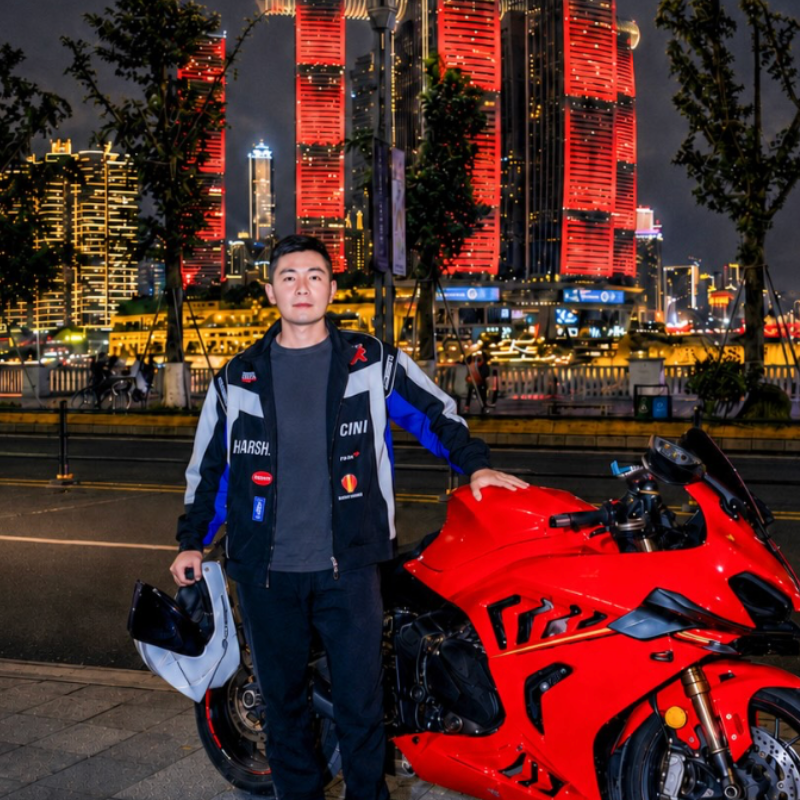
Matt Bowles: My guest today is Jason Wang. He is a former Silicon Valley tech entrepreneur who sold his company and walked away from the corporate world in 2016 to pursue one of the most ambitious travel quests on the planet: visiting all 193 UN-recognized countries, summiting the Seven Summits, and reaching both the North and South Poles.
One decade into the quest, at the time of this recording, he has reached 185 countries. He has been to the South Pole, and in 2025, he completed the Seven Summits by summiting Mount Everest. He has done it all together with his relationship partner, Grace.
Together, they also run City Foodsters, where they document their culinary experiences around the world. Jason now focuses on helping others break free from conventional travel and craft journeys that venture far beyond typical tourist circuits.
Jason, welcome to the show.
Jason Wang: Thanks Matt. I’m very excited to be on your show.
Matt Bowles: Man, I am so excited to have you here. I have been following you for a while. You are up to some really amazing and impressive stuff. And so, I’m super excited to dive into this conversation. But let’s just start off by setting the scene and talking about where we are recording from today. I am actually in the Blue Ridge Mountains of Asheville, North Carolina on the east coast of the United States today. And where are you?
Jason Wang: Well, you just caught me in between two trips. So, I just got back from Venezuela. I was actually there during the major earthquakes. Just got back a few days ago. I’m in California today and I leave again in a couple days.
Matt Bowles: So, what was the Venezuela trip like? Let’s start with that. And what was it like to be there during the earthquake?
Jason Wang: So not even 24 hours after I landed in Caracas, it was that evening I was actually on a tour with a local guide from Caracas. We were up in the mountains at a place called El Ávila, right behind Caracas. We had taken a cable car to go up to enjoy the sunset.
And then, exactly at 6:03, we were next in line to take the cable car back down. We finished our little hike, took photos, and were going to go down and get some arepas. As I was about to step into the cable car, I actually had my phone out to record myself going in, and the ground and the building just started shaking.
Wow, just to be in the middle of those two back-to-back 7-plus magnitude earthquakes, that was pretty insane. We didn’t even know what had happened. We lost communications, the cell towers were down, and it was really hard to even get back down because the roads just got completely destroyed.
So, we had to hike six miles in the dark, with no roads, down this mountain to get back into the city. And we had no idea what had happened. That was my first 24 hours in Caracas.
Matt Bowles: So, what was that hike like and how did things unfold from there once you started to realize what was going on?
Jason Wang: At first, we were just waiting to see if the cable car would operate again. We didn’t know the magnitude of the earthquakes because, again, we had no Internet anymore. As soon as it happened, everyone was just confused up there.
But then it started getting dark. It started getting cold. And we made a decision that the only way to get down was by walking. We didn’t know the conditions of the road going down, but there were no more roads. The landslide from the mountain completely destroyed them.
And there were some areas where there were trees stacked upon trees. There was almost no way to get through these trees. But we saw some people coming up the mountain, some locals, and they had machetes. They were literally chopping the tree branches up to create a tunnel. That was the only way to get through some of the path.
Wow, what a night.
Matt Bowles: And then once you understood the catastrophic level of the damage and the loss of human life and everything else, what was it like then being there for the rest of your time?
Jason Wang: We were literally by ourselves as the only tourists and foreigners in almost every place we visited because, one, the airport got destroyed. So, Caracas Airport was no longer functional.
And every lodge that we had already pre-booked, everyone just canceled because no one could get into the country. There were no flights to get into any of these places anymore. For example, the Orinoco Delta, there was no flight to go to the nearby city. And Canaima, where Angel Falls is, all flights were canceled as well.
So, I literally wanted to get away from Caracas because there was no flight out of the country, so we had to stay for more than two weeks. We still decided, “You know what? We’re here already. We’ll support the country through tourism.”
And these places were still open, but there were no more guests. So, we’ll go and try to complete as much of the trip as possible. And then I’ll be documenting and showcasing the beauty of Venezuela, and hopefully when they reopen fully, people will want to go because it was such a beautiful, beautiful country with the friendliest people.
Matt Bowles: So, what were those two weeks like for you and how did you eventually safely get out of the country?
Jason Wang: We had Angel Falls to ourselves. We were the only two tourists there for four days in the entire area, which was just surreal. And same with Orinoco Delta. It was just the two of us and we were headed to Los Roques. But when we got to the airport, they canceled the flight. We still stayed for an extra five days until they finally started opening flights again from a much smaller airport called Valencia. So, from there, I was able to fly to Panama and Panama back to the States.
Matt Bowles: Wow. I’m so glad that you two were able to return safely. It is great to have you back. I would love to do a little bit now of your backstory just to give folks some context on your journey.
Can you start, though, even before we talk about your journey and just share where your parents are from in China and what their life was like there and why they decided to immigrate to the U.S. soon after you were born?
Jason Wang: So, my parents grew up during the Cultural Revolution in China. That was the first time when you could take a test, and if you did well, you could go to college. So, they obviously took advantage of that opportunity, and they met at Zhejiang University in Hangzhou.
After they graduated, they had me. I was born in Nanjing, China. And just one year after I was born, my dad got into a master’s program at the University of Houston. So that was an opportunity for the entire family to move to America.
America was the Promised Land. It was a place where anyone who worked hard enough could make it, and you could get a good education in America. That wasn’t the case anywhere else.
So, we flew over with my grandparents. I remember we literally had only US$20. That was it. So, we were basically homeless, coming over and living in student housing at the university.
I grew up really frugal in Houston for the first six years while my dad was studying. My mom was a dishwasher at a Chinese restaurant making $2 an hour, and a dollar of it went to my daycare. But that’s how we survived growing up in Houston, Texas.
Matt Bowles: And then what was your experience like when you think back as a kid coming up in an immigrant home and navigating your Chinese identity and your American identity? What was that like for you?
Jason Wang: I was probably like, I think, one of two Asians in my school in Houston. I mean, to me, that was kind of normal. And my name wasn’t Jason until much later. And English was my second language.
And now it’s flipped. I can’t read Chinese anymore. I can barely speak it, but I can kind of understand a little bit.
My name, Jason, actually came when I moved out to California because I was in the playground and the coolest kid in class was named Jason. So, I told my parents, I want to change my name to Jason.
So, we ended up doing that legally when I moved out to the Bay Area. And then when I moved out to California, it was just much easier to integrate. There’s a lot of Chinese communities out here with people who lived around us.
Matt Bowles: And what was your life like in the Bay? Coming up as a teenager? I know you played basketball. You got into hip hop culture, different parts of that Bay Area culture. For people that may not be familiar with the dynamics of the Bay, what was it like coming of age there?
Jason Wang: The hip-hop culture was huge. I grew up with a couple artists in my class who were just into rap, and they were pretty big artists at the time. A group called The Pack. Hyphy music was coming up when I was in high school. That’s all we listened to.
We dressed very baggy as well, with spiky hair, dyed earrings, and a silver chain and a fake gold watch. So that was the culture growing up.
Behind the scenes, we were just nerds too. My group of friends, we would be up by 6am for band practice, after school activities, and we’d be studying all the time to try to get straight A’s in class and studying for the SATs. It was a balance of everything.
Now I’m looking back, wow, I don’t know how kids can handle all that. It was a lot of pressure. Seven days a week, no days off. Summers, we have to go take more classes. I went to community college to take more classes and get ahead, get credits for college.
So never, never crossed my mind that travel was a thing where I can go out and explore a place. My entire childhood, I had one trip to China, and that was it.
Matt Bowles: How connected with the Chinese diaspora community were you in the Bay? And how important was that to you culturally?
Jason Wang: So, in the bay. I live next to this community that grew out from like a Ranch 99, which is a really popular grocery store. So, all my friends were Asian because 50% of our school was Asian, and we would always hang out at Ranch 99. And then in college, I actually joined an Asian fraternity as well. It became a big part of my identity, being Asian American.
Matt Bowles: So even though you weren’t traveling abroad very much, did you develop an interest in learning about other cultures just by virtue of the diversity of the bay?
Jason Wang: To tell you the truth, I had zero interest in traveling until after college. Until I met my partner, Grace. In college, I would tell people, it’s a waste of time to go and travel in the summers. I’m going to go get a job and start making some money and get ahead professionally. That was my thinking the entire time until a couple years after college. My thinking was, why do I need to go see the Eiffel Tower or the Colosseum in Rome? I could just go on Google, look at an image, save myself time and money. That was me for a big part of my life.
Matt Bowles: So, take us a little bit on that academic and professional journey and what ultimately led you to entrepreneurship.
Jason Wang: Even growing up through middle school, high school, I had that entrepreneurship spirit already. I was one of the only kids in my class that learned how to code HTML at the time. So, I built a couple websites, and I was actually making really good ad revenue from this company called DoubleClick before they got acquired by Google.
I got to a point where I got big enough where the main site, it was called CardCaptors.com of this anime, they sent me a cease and desist, and I was in middle school. They used to pay like a dollar per every 1,000 impressions or something. And I’ll get like 70,000 impressions a day. That’s a lot of money for a kid in middle school.
So, I got shut down. But I was like, this is fun. I can make stuff. But then that poured cold water when I got into college because I went into focusing back on academics, had less time to go and build something.
And so that didn’t start up again until after graduation because I got sucked into a finance job because that’s what I studied, that’s what I was good at. I work for a bank, B of A Merrill Lynch, one of the largest banks in their corporate debt division. And I was there for nine months.
That was when the entrepreneurship bug came back. I’d be sitting in a cubicle with no windows, staring at an Excel and PowerPoint six to seven days a week, wondering, what am I doing with my life? I need to get out of here. My passion is in tech. I want to build stuff.
And so that was it. I got to go do something. This was in 2010, so startups weren’t really that sexy or a thing yet. It was just in the early days of Dropbox, and Airbnb had some success. They raised a Series A round at less than $10 million for some of these companies, where now a seed round could be tens of millions. So, times have completely changed.
It just grew from wanting to be my own boss. And someone once told me that the goal was to be able to do anything at any time with anyone. And that just stuck with me, and I wanted to accomplish that.
Matt Bowles: So take us in a little bit to that entrepreneurial journey. What was the business or businesses that you ended up building and what was the proverbial entrepreneurial roller coaster like for you? Give us a sense of what that period of your life was like.
Jason Wang: Right after my banking gig, I went to work at an entry-level job at Google. I just wanted to be in tech.
And at Google, I literally had 30 minutes of work every single day, which meant I had seven and a half hours of free time. I’m like, what am I going to do with all my time? There’s nothing to do here.
So that was when I started brainstorming ideas, and I just had so much time to think. So, my first company was actually a mobile app that I started with my dad. We built a Craigslist app for the Windows Phone.
So, at one point, Windows was trying to be a contender with Android and iPhone. We became the number one Craigslist app on Windows. We’re like, wow, this is great. But then Craigslist sent us a cease and desist, so we had to shut that down.
But that was my first serious foray into entrepreneurship post-college, and then pivoted to another idea right after that with some friends.
Matt Bowles: So, what was the successful idea that ultimately allowed you to sell your company and exit in your twenties?
Jason Wang: So shortly afterwards, I would go back to Berkeley pretty often because I was in a fraternity, and it was just fun to hang out. And actually, my co-founders for the company that we ended up starting were all my fraternity brothers.
And one day, a startup accelerator called Y Combinator—and they’re pretty big now, but at the time you only got $18,000 for 7% of your company—came to campus as alumni. I wanted to go check it out.
So we went, listened to one of the partners speak, and pitched an idea. He said, you should apply for Y Combinator. It was just an idea. We were just getting started with it.
We had a company called Munch On Me. It was like Groupon for food, so you can buy dishes at restaurants for 50 to 75% off. And this was during the height of the Groupon era, when Groupon was the fastest-growing company. They went IPO.
But unfortunately, after the IPO, that entire business model collapsed. So that’s when we pivoted into the company that became successful. We were the first on-demand food delivery company in the United States, a year before DoorDash and Uber Eats.
We had a company called Caviar where we could deliver you food from restaurants within one hour in like a dozen cities. So, we kind of created that concept. It’s pretty insane at the time, this was in 2012.
Matt Bowles: So, before travel became your life. Thinking back to that period, you were running a successful business. Who did you think you were going to become? What were your aspirations back in your 20s? How did you see your future at that moment?
Jason Wang: I just wanted to build a billion-dollar company. I saw the social network, even got to hear some of my tech idols speak at some events. I’m like, this is it. I love this stuff. I wanted to be part of the ecosystem. I was in the heart of Silicon Valley during the start of the startup boom. Just such a unique opportunity and I get to build with friends. Despite all the very tough times we have, that’s what kept us going. Looking back, it was a golden opportunity in life where we all really young and had nothing to lose, so we didn’t have anything. So very unique time.
Matt Bowles: So how did you meet Grace and how did she eventually influence your passion for travel? How did that all unfold?
Jason Wang: So, she was actually a volunteer photographer for that Groupon for food business. One thing that really differentiated our business, we had really nice-looking photos of the food on our website. We actually had photographers in every city go out, take the photos of the food, and we would upload it.
So, Grace was on her one-year break between college and starting dental school in San Francisco. So, she had applied to help us take photos of the food. And then, until we shut down the business, she ended up going to dental school.
And before she started dental school, that was when we started winding down the Groupon for food business. And she said, I’m going to go backpacking in Europe for a couple weeks. And she said, you can join me or not, but I’m going to go anyways.
And I was like, okay, maybe. I’ve never really been outside of the United States other than crossing the border to Mexico and Tijuana and a trip with my parents to China. So, I said, yeah, I’ll go for two weeks. We’re winding down our business. I can use the break.
And wow. We went to Paris, Rome, and Santorini. It just blew my mind seeing the Eiffel Tower for the first time and the Coliseum. When you’re in your early 20s, my whole thinking was just flipped.
I thought, I can just see this in photos and it would be the same thing. But it absolutely just changed my perspective in life. And just eating the food there, walking the streets, I was just blown away.
I said, one day, I want to be able to do this all the time. Go out and explore, see new cities, new places, eat food everywhere. This is a lot of fun.
Matt Bowles: So, talk about the successful exit that you had with your business and going back to that moment. What did that feel like, and what did that mean for you at that moment, at that age?
Jason Wang: It was just a couple years in. The business was just exploding. Everybody wanted to have on-demand food delivered. And there were like dozens and dozens of competitors starting to pop up all over the country, all over the world. It was one of the hottest spaces in tech.
We never knew that we were going to sell the business. We had just raised a big round of financing literally a couple weeks before we decided to sell. We had plenty of cash. We were actually profitable as a business.
At one point, we were constrained by how fast we could build because the business was growing faster than our operational capacity. So, we knew that we needed help.
And a couple companies came out to us. And it all just happened so quick. You do a few meetings, and then they send you a term sheet. Then you sign this NDA where, for three months, we do due diligence on each other. They look at everything under the hood for our business, and we get to ask them questions as well.
So, we got acquired by a company called Square. At the time, it was like a 3 to 5 billion company. They weren’t public yet, but it was really cool. It was run by Jack Dorsey, who started Twitter.
Like, wow. They have a really strong engineering team, and they can just give us a dozen engineers on day one. I think they want to help us really grow the business as a partner.
So, it just felt right. And we decided, this is a once-in-a-lifetime opportunity. The rest is history. Decided to go for it.
Matt Bowles: So, talk about your transition into a life of travel. Was there A moment where you realized you were no longer just taking vacations and you had actually built an entirely different life.
Jason Wang: Yeah. Had to stay two years after the acquisition. So that ended August 2016.
And Grace had just graduated dental school the month before. We decided, let’s go on a three-month sabbatical. We’ll travel to a few countries. The first one was the Olympics in Rio in 2016.
And once we were done, we were like, wait, this is amazing and awesome. Why don’t we just keep going? Why go back? We’re really enjoying this. We’re learning a lot. We’re experiencing a lot.
This is a really rare opportunity that, at our age, we can go and explore the world. We don’t have to wait another 40 years when we are retired to do this. We’re young, and our bodies can handle this.
Let’s keep going. And it’s been 10 years later, and we’re still at it.
Matt Bowles: I love that man. Well, you mentioned your passion for culinary travel. Can you talk about your process for designing travel around food experiences?
Jason Wang: Before traveling for anything else our entire travel was built around food. City Foodsters was a food blog before and we wouldn’t even do much sightseeing. We literally had lunch, dinner, lunch, dinner every single day, booked in every destination we went to.
In some places, we had to book like a year in advance. That’s all we did. We would eat three, four, five meals a day. At one point in time, we were top 10 in the world. For people who go around and eat, there’s this website that ranks people that do this. And I was surprised to see that there’s other people in the world who do this. This was our travel for the first few years before we got into more adventure travel.
Matt Bowles: And how has food become a way for you to explore and understand other cultures?
Jason Wang: Food is probably the easiest and best way. You don’t need to speak the language. For example, you’re in Vietnam. Some of the happiest moments, you’re just on a red plastic stool at midnight eating a bowl of noodles for less than a dollar. How awesome is that? You’re just seeing the city go by you and the hardworking person that major noodles and it’s just so tasty. That for me is a big part of travel. They don’t speak English; I don’t speak Vietnamese. And I’ve had that experience in so many countries now we just kind of bond, but not through talking, but just over eating the food and me making sounds like, mmm, that’s so good.
Matt Bowles: What is one place that you think is completely underrated for food?
Jason Wang: I would say Turkey because that’s not on a lot of global dining roadmaps. But I could eat a year in Turkey and almost never repeat something because there’s so much diversity and it’s just so good. Their techniques on grilling meat and everything, even like going across different parts of the country, you can experience different types of cuisine. Wow. I feel like that’s got to be up there.
Matt Bowles: One hundred percent. I totally agree with that. And I feel like it’s also from the high end to the street food. One of my favorite things in Istanbul, just wandering home at 2 in the morning and getting a Spicy Adana Kebab from one of the street vendors. They’re so magical and amazing. Do you have a favorite city or one of your favorite cities for street food specifically?
Jason Wang: Penang, which is also underrated in Malaysia. Most people think Thailand, Vietnam, but my favorite is actually in Penang. It’s just this little coastal city up in the north of Malaysia. Wow. I spent like a week there last year just eating. I love it so much. Penne laksa, some of the shaved ice that they have. Indian food, every flavor is just so bold and it’s just so diverse up there. Love it.
Matt Bowles: Man, I agree with Malaysia. I’ve spent probably four months in Kuala Lumpur, and I just explain to people the culinary scene in Kuala Lumpur is just unbelievably next level.
And it’s so amazing too because of how diverse that city is. It’s like a third Indian, it’s a third Chinese, it’s a third indigenous Malay. And there’s all of these different fusions of this perfectly beautiful and amazing spicy food.
And it’s open at like 4 o’clock in the morning too. Like you’re on your way home at 4 o’clock in the morning, and, oh, by the way, there’s this unbelievable Indian place open that can do this incredible dish for you.
And you’re just sitting there watching the sunrise, eating spicy Indian food. And I’m just like, where am I, man? This place is a culinary paradise.
And I totally agree. I mean, I feel like a lot of people, Malaysia in general and Kuala Lumpur also as a city, I feel like a lot of people just discount it, or it’s kind of like a pass-through city.
I’m like, listen, you need to pay serious attention to the food scene in Malaysia for sure.
Jason Wang: Because most people, when they stink street food also, it’s like Singapore, but for me, Malaysia is Singapore on steroids. In terms of food, another level.
Matt Bowles: Totally agree. I know you have had a lot of meals around the world and there’s a lot of epic documentation of that on your social media. Can you share one really memorable meal that still sticks in your mind years later that you can remember?
Jason Wang: So, there’s this place I really enjoy. It’s up in the Shiga Prefecture in Japan, out in the forest, and they serve bear hot pot. It’s a seasonal dish. Normally, that’s not something you eat on a day-to-day basis, but this place specializes in this.
And you go for Hana sancho season, and they put it in a hot pot. Bear meat, and it’s kind of like a tasting style where the chef will come out. The family-run place is in the middle of nowhere. You got to rent a car and drive there, take an hour-and-a-half taxi ride, and you’re just surrounded by nature.
Only a few rooms are available, but you have bear nabe, and wow, every bite is just so mind-blowing. You would just never expect bear to taste this good. You’d think it’s chewy and gamey, but it’s absolutely not when it’s done right.
So, I try to go back there once every year or two. I dream about it every so often.
Matt Bowles: That is amazing. All right, Jason, I want to talk about some of your travels, and I think I want to start with China for a variety of reasons, including the fact that I have only been to Hong Kong and Macau. I have not been to mainland China, which is completely ridiculous.
I feel like China deserves at least a full year of my time to just start slow travel around the country. And so, it’s super high on my list.
And then I was going through your content, and I was just like, oh man. I was so in awe of so many of the different places in China and the way that you highlighted your experiences there. And I’d like to go through some of them. But I feel like a good place to start off this discussion about China is just with your personal evolution of your relationship with China.
You mentioned you went once at 18, and it wasn’t a particularly compelling trip. And now I know it has a really important place in your heart and your travels and all of that. So, I would love to maybe just do a little overview, if you can, and share your journey and your evolving connection with your homeland.
Jason Wang: So, when I was 18, China was definitely not a cool place. All the Asian Americans around my age back in the day were like, man, China sucks. I don’t want to be known as Chinese.
When I went, it was just a lot of dirt roads and nothing great. The hotels were kind of old. Even going to the Great Wall of China, it just seemed so backwards. I remember going to Shenzhen as well. It was not developed like today, so China was never really on my list.
After I had a terrible experience, we literally went on a bus. The entire bus was filled with people my parents’ age. It was one of those tours where they take you from point A to point B, and there’s a microphone shouting all of the stuff you need to know, and you’re being herded like sheep. And then they send you to a place to go buy stuff. It’s one of those shopping tours.
And the food was just disgusting. They take you to places where it’s kind of more like buffet or banquet style. And that was the way you had to do China for a long time because it was hard to navigate that country as a foreigner.
And it completely changed in recent years. It was only last September 2025. Now, as a foreigner, you can pay for everything with a foreign credit card. So, prior to that, I had to bring cash, even though they’re a cashless society now.
So, with that in mind, and now all the apps have translation, it’s so easy to get online now with VPNs and eSIMs. I’m actually spending most of the year in China starting last year and this year, three to four months every year.
I think it’s one of the best value places for what you get. Price to value is just so amazing. Like, you get a glimpse of the future now. When you go to China and see how developed these cities are, you just can’t believe it.
Matt Bowles: What was it like specifically for you returning to your birth city of Nanjing?
Jason Wang: I went last year, almost 40 years later. The only thing I remember as a kid was taking a shower outdoors at a little sprinkler and our house barely had a roof, was made of mud. Nanjing now is like a tier one super developed city. Extremely beautiful, as one of the craziest Buddha temples on the planet. And everything is just so modern now. I was just very proud and blown away by the development over the last few decades.
Matt Bowles: Can you describe some of these places? Because I have seen the footage on your Instagram of the Porcelain tower of Nanjing and the Foding Palace. For people that have never heard of these places, can you just describe what it was like to go there and to be there?
Jason Wang: So Foding Palace, I think China spent hundreds of millions of US dollars’ worth to build it. It’s up in this hill area. You take an escalator up, it’s like this huge, oddly shaped building, but inside is six floors with thousands of Buddha pieces inside made of gold, and there’s really nothing like it in the world. And they also have Buddha’s crown or something inside. And I think they only show it once or twice a year publicly. You really have to go see it to believe that this place exists. It almost looks like a spaceship out of sci-fi, but it’s there. It’s in the hills of Nanjing.
Matt Bowles: That’s amazing. And then tell me about that porcelain tower as well, that you have some unbelievable footage of that.
Jason Wang: Actually, one of the seven wonders of architecture is in Nanjing. It is. The porcelain tower at the time when they built it was one of the marvels of the world. So now today it’s a replica, but it’s still really amazing. And they have fireworks show every night, a light show coming out of the porcelain tower. They also have the ruins inside of the modern version of it, showing what it used to be like. So that was really cool. Nanjing is just an awesome city. I could spend months there.
Matt Bowles: Well, I want to ask you about some other places around China as well as I was looking through your content. I want you to tell me about the Yandang Mountain. I saw a video of you climbing on the edge of a sheer rock face with I don’t know how far down the drop was, but I was very nervous just watching this video. Can you describe what this was?
Jason Wang: So, China does have some crazy places like that. I’ve stood on the edge of a plank at another mountain in Yandang. It’s called Via Ferrata. You just go up with a rope and a carabiner that’s tied to the clips. And then you go around this huge mountain. It could take like an hour to two, depending on your speed. So, I just went with a guy. I just showed up, hiked up to the top of it, and then I was like, okay, can someone take me around this thing? I’m here for it. And someone was like, yeah. And he took some photos of me. I brought my Insta360. I don’t know how safe any of this stuff is, but it was amazing.
Matt Bowles: Man, I don’t know how safe it is either, but I was worried for you when I was watching it. I mean, this is a sheer straight up and down rock and you were hundreds and hundreds of feet up from the bottom. I mean, this was unbelievable. This is the kind of stuff that you have on your Instagram and just amazingly documented. The other thing was the Ruyi Bridge. For people that have never seen or heard of this, can you describe this bridge and then what it was like to cross it?
Jason Wang: So, think of rural China next to this province called Taizhou in the southern part of China. Literally in the mountains, there’s two mountains and there’s this helix shaped bridge, but rainbow colored connecting these two mountains. I saw a clip of it, I went there, I flew my drone. It looks like Mario Kart when they go on Rainbow Road. But it’s a bridge connecting two mountains. You can go across it, take photos on it. And it’s like a glass bottom. So, you look down, it’s like, wow, this is crazy. So, if you’re afraid of heights, it’s maybe not the best place to go. You can stand from afar and look at the bridge. That was awesome.
Matt Bowles: Unbelievable. Well, one of the other things that has been on my radar for a while for this mainland China trip that is brewing in the back of my mind is Harbin. And I looked at your content and I have to say there’s a bunch of online content that show Harbin in the wintertime. And yours was some of the absolute best that I have seen anywhere on the Internet. For people that have never heard of Harbin or the ice and snow world that happens in the wintertime, can you give folks an explanation of what happens there in the winter?
Jason Wang: So, for just a month or so every year in January, in a Northeast China province called Dongbei, the capital, one of the big cities there, is Harbin.
And they create this huge magical frozen world with a ton of ice structures. It’s almost like a mini theme park. You can go on rides, listen to concerts, take pictures at all the ice sculptures. There’s a live performance, but the catch is it’s going to be negative 30 degrees, so you have to stay warm.
If you take your hand out of a glove, you’ve got 30 seconds before you could end up with frostbite. You got to just be prepared.
The beautiful thing about Harbin is they’ll sell you everything because it’s China. You can buy your whole outfit after you arrive. Like a down jacket could be like $10, and your shoes like 5 bucks, and your hat’s like a few dollars. You can get the full kit head to toe and be warm because a lot of things are made there. Harbin’s no exception. They’ll kit you out.
So, I actually spent a month going around all of Northeast China, and it was such an interesting trip because the culture there is very Russian. It’s very different from other parts of China because it’s not like Shanghai or Beijing. It’s just a very different world.
I think that’s the beauty of China because it’s so big and so diverse. Every province you go to, it’s got its own flavor and people and food as well. It was definitely a place to put on your bucket list.
Matt Bowles: Yeah. I mean, some people might have heard of the ice hotel in Northern Sweden and some of these other arctic areas that are coming up with the snow hotel or an ice hotel. And this is a completely different level. This is like an entire city made out of ice. And then at night, the whole thing lights up, and it’s this unbelievable scene. I have to ask you as well, about the ice slide. They have the world’s largest ice slide, which is all lit up at night, and you have some unbelievable footage of going down that slide. What did that feel like?
Jason Wang: So that’s one of the cool things you can do. You line up for this literal slide. You just go on this classic sled at full speed. It’s just super long, and you can see the whole ice world from there. It was fun. It goes by quick, and it’s really cold because the wind is just hitting your car face the entire time. So, if you do go to the Ice and Snow Festival out in Harbin, that’s one of the highlights of that entire experience.
Matt Bowles: Well, another place that I have to ask you about is Chongqing. I have recently just seen the footage that you’re posting about it, and I actually want to read, if I may quote, the caption that you wrote on one of your posts from Chongqing, and then I’ll have you expand on it.
You wrote, “They call it the 8D City, and up here, you feel it. The most vertical place I have ever stood. Roads that run over rooftops, and trains that slip straight through apartment blocks. Most cyberpunk city on earth, and every bit of it is real”. have seen the images that you took. For people that have never seen this or maybe heard of this city, can you elaborate and describe what it was like to be there?
Jason Wang: Chongqing is actually the largest city in the world. That’s what I learned when I went there. So massive. And a large part of it is exactly as you described, the cyberpunk city. And there are just so many, many layers to the city. That’s why I call it the 8D City.
You can be walking in, like, a plaza, thinking you’re on ground level. Then you walk a little bit more. You look down, you’re actually on a rooftop because the city is just so vertical. And you’re like, whoa, this doesn’t make any sense.
And then there are places you can go where you see trains going literally through apartment buildings. And people literally live there, and the train is going through their homes right above or below them. Super cool.
It’s also the place where hot pot was invented. So, I pretty much ate hot pot most of the days I was there. Really spicy, though. So, if you can handle spice and you like hot pot, Chongqing is a great place.
Matt Bowles: That sounds perfect to me, man. That is definitely on the list. Well, I have heard you say at this point in your life, for you, China is the best country in the world as a traveler. Why?
Jason Wang: It just became accessible to Westerners.
So before, when I went to China, it was really difficult. I had to hire a guide. I couldn’t pay for anything. It was hard to do research. Everything was in their apps. They didn’t have a translation function.
And nowadays, you can book your train tickets in English, you can book your hotels, you can pay for everything using WeChat or Alipay with your foreign credit card, and there’s more and more English popping up. It’s like this is a golden era where, before mass tourism hits China, it could be the next Japan, where now it’s just inundated with tourists. But it’s also accessible now, where if you wanted to solo travel there, you could.
And it’s very affordable. You can get meals for a dollar or two if you wanted. There’s every type of cuisine you can get around the country super easily on their high-speed rail. If you wanted to go from one city to the next, you buy a rail ticket, show up. It’s super nice, too. You’ll be there in an hour or two.
And there’s just so much to explore. I think you can spend five years nonstop in China and have no repeated experiences because of how vast and big it is. So, I think this is the golden opportunity and time to go to China.
Matt Bowles: That’s amazing. I think that’s really important for people to just contextually understand that, first of all, Mandarin is the most spoken first language in the entire world, more so than English. And second of all, China has almost 20% of the world’s population, something like 18% or whatever it is now, in the one country. It’s just unbelievably massive.
And that’s why I’m saying, the fact that I haven’t been to mainland China, like, how do I even call myself a traveler? That’s just ridiculous. I need to do what you just said and go spend years exploring China by itself.
By the way, how is China in terms of Internet access for digital nomads, people from other countries that would like to work remotely, going to China for a month or so? How is that dynamic?
Jason Wang: So, whenever I’m there, I have to get VPN because I need to access all my American apps, right? All of them are blocked, essentially, but super easy now.
You can just literally load up the Trip app, pay 50 cents a day for a Hong Kong eSIM, and it has built-in VPN. With that, your phone is already unlocked. You can access any website, any service, and then you can hotspot that to your laptop or download a couple VPNs, and you’re set and now able to communicate very well with the locals.
Live translation tools. I would often just put my phone in the middle. It would just do live translation. Very natural now. And it’s really good.
I went to a tea tasting in the place that literally invented the oolong tea. I didn’t understand a word of what the lady was saying. So, we just went back and forth using ChatGPT live translation, and we were able to have a conversation that was not possible a year ago.
So, all these tools are making it so much easier to get around as a foreigner.
Matt Bowles: All right, so I have to ask, and this may be a difficult question, but what part of China has the best food?
Jason Wang: For me, it’s Hangzhou, the best. It’s inside of the botanical garden in Hanzo. It’s called Ru Yuan.
That chef invented—have you ever seen a photo of a pyramid? But it’s made of pork belly. So that dish was invented by the chef who cooked for decades inside the Grand Hyatt Hotel. It was also a very acclaimed restaurant in Hanzo, but he left and started his own restaurant.
It’s a top 10 restaurant ever had. You got to go there.
And Hangzhou, in general, the food is very balanced. It’s the headquarters of Alibaba. There’s a lake there called Westlake. It’s very green, a lot of nature. Awesome place, awesome food.
Matt Bowles: So, if someone wanted to plan a 30-day trip through China, what would you recommend as the top priorities for a one-month trip?
Jason Wang: So, you can actually get a 10-year visa, which is what I have. You don’t have to think about getting another visa for 10 years, which is amazing.
But the first trip I would recommend, you go to Sichuan Province. That’s where Chengdu and Chongqing are. Great places. You see the pandas. You can see some mountains, do a little bit of hiking, go to Chongqing, see the mega cyber city.
And from there, you can go to this place called Zhan Zai Jie. That’s where the Avatar mountains come from. It’s not too far away. From there, you go see Zhan Zai Jie in real life.
From there, you go to Xi’an. You go see the Terracotta Warriors, and then you fly over to Yunnan. Beautiful place, a lot of nature and preserved villages. Spend a week to two just going through Yunnan, and you can end in Guilin.
Those beautiful karst mountains and rivers—you can take a wooden boat through them. Just pure paradise.
The first month you come back, you can do the cities like Shanghai, Beijing, Shenzhen. But for your first experience, you should go to that semi western region and south of China. It’s going to blow your mind.
Matt Bowles: I have been taking notes, my friend, and I will consult you when I plan that trip. You have been moving it up my priority list with all of your content and with this discussion as well. I now want to pivot and talk to you about your travels in Africa. One of my very favorite continents. I have spent probably two and a half years on the continent. But you have been to some countries that I have not been to, and I want to ask you about a couple of those.
I think I want to start with Burkina Faso. Can you describe the incredibly unique landscape and architecture that you saw when you went to Burkina Faso?
Jason Wang: Burkina, I went right around Christmas of 2025. So quite recently, it was part of a larger West Africa trip that I did.
So, I flew from Mali straight to Burkina, had six days there, and we were going to just go in and do a road trip across the country. And of course, we were the only tourists I ever saw during that whole week.
But it has some of the most unique landscapes anywhere in the world. These rock formations that’s been carved for millions of years. Of course, you’re the only one there. If that was anywhere else, like in the U.S. or something, there’d be tens of thousands of people. We just had a 4×4, our guide, and Starlink, went around. It was awesome.
And then I went to this village that’s this pond that has crocodiles, sacred crocodiles. And this is a place where the villagers live with these crocodiles. That’s very unique to Burkina because you can literally go up to these crocodiles, and they’re kind of like your friend. They’re not going to attack you like a crocodile would somewhere else.
So that was very unique. You’d be really up close with these crocodiles. So that’s another unique experience there.
Matt Bowles: I saw that footage on your Instagram, and that was another one where I was very nervous. While I’m watching it, you are right up touching these crocodiles. These are wild crocodiles. And you’re touching them, petting them. And I was a bit nervous for you.
But then I’m reading your caption, and you’re explaining that the children that live there actually swim with these wild crocodiles. That was just unbelievable. I have not seen anything like that anywhere else.
So, we’re going to, of course, link up in the show notes all this stuff that we’re talking about to your social media so people can go into see this stuff directly.
But you mentioned that you flew there from Mali, and that’s another place I definitely want to talk with you about. Can you share what some of your highlights were on your trip to Mali? Maybe just start with Bamako and what you experienced there.
Jason Wang: So, this was December of 2025. Booked a week in Mali, but didn’t know the exact itinerary. We didn’t know what was going to happen or what was going on. It was going through some issues and problems within Mali. There was a fuel shortage and there was supposed to be this music festival in Timbuktu, but before then we were in Bamako.
We didn’t know if we were going to make it. There was no confirmed flight. We were just doing a little bit tour of the city. We were the only tourists in the entire country, I believe. And shortly afterwards, actually, Mali banned Americans from even coming in. So, we were one of the last Americans to enter Mali. Very fortunate.
But literally the morning of, they said, pack your bags and time to go. We got a plane at Timbuktu. We didn’t know how long we were going to stay. No clue. The day before, apparently a rocket hit the airport, so it wasn’t completely safe either.
You just never know when you land. It’s just an army of military guarding the airport. And like even the Wagner group was there. You get escorted out by a caravan of armed forces and security. We were the only turfs in Mali at Timbuktu, so they wanted to make sure nothing happened to us.
But we were able to spend 48 hours, two nights at this hotel that was started by the founder of the nuclear program from Pakistan. So that was really cool. We had Internet too. I brought my Starlink, so we were able to stay connected in case something happened.
We just had a great time. The locals are friendly, and it’s just a place where you grow up kind of hearing about but never knowing if it’s possible to visit. So that was really special, going there, seeing the mosque, the manuscripts, walking around town.
And then the music festival. We did get to see a few performances. That was a cherry on top. Really made the trip.
Matt Bowles: So, what did you learn about the Tuareg culture while you were out there and what was the music festival like?
Jason Wang: So, they’re really into music. I actually really like their music after listening to it. It’s actually world-renowned music.
So, this festival called Festival au Désert, it used to happen every year, and they’ve only restarted it recently. And I don’t know if it’s going to happen again. It just depends on the security of the country every year. So, it was a short window of opportunity to go.
Tuareg people, they dress really cool. They cover their entire bodies except for their eyes. Tuareg tea and bread is amazing. Very strong though. And they make this bread that they cook under the sand. Really, really cool experience. They’re very tasty as well.
Actually, did a couple of nights in the desert in another country and camp with the Tuaregs. They showed us around in Algeria, so got to get some more Tuareg experience out there. And Libya as well.
Matt Bowles: Amazing. And then in Bamako, one of the other things that you had mentioned is that you found a Chinatown in Bamako. And I’m wondering if you can talk about that, what the Chinese diaspora culture in Mali was like and what your experience was like connecting with folks from the diaspora in Mali.
Jason Wang: So, one interesting thing is I found Chinese communities all over the world, and especially in Africa, and Mali too. I’ve always wondered, why did they move from China?
It actually makes a lot of sense. I’ve asked them this question, but in China it’s so competitive and there’s not a lot of opportunity. For example, I went to a boba tea shop in Mali in that Chinatown. The lady told me she makes more in a few days there than a month in China, monetarily.
And Chinese, they can go anywhere. They don’t care. They’ll go and make money for five to 10 years and then go back and send that money back to their families. And they have a community everywhere. I’ve seen Chinese communities in every country I went to, pretty much, in Africa. It’s just so unique.
I actually ended up leaving the hotel, staying at one of these Chinese hotels in Bamako. It’s super unique. I actually felt like, at times, I was in China because the layout of the rooms, the beds, everything. And good AC, because in China, they have great AC. It all comes from China. Good Wi-Fi and Chinese buffet food.
Now speaking Chinese to them. They also take, like, WeChat Pay. If you don’t have cash, you can just scan their WeChat and use your foreign credit card to make payments.
So, I’ve kind of connected the dots. Just a few months ago, I was in the opposite end where I went to a place called Little Africa inside of China in Guangzhou. I felt like I was in Africa because that’s the largest African community in China. And you know what they’re doing there? Trade. They have all these shops and they’re shipping goods back to their home country in Africa.
That’s why a lot of the goods you see in Africa are from China in the street markets, when they sell those shoes, shirts, pants from China. So, I think that relationship has been really good. And it’s kind of made traveling around easier for me because they just think I’m Chinese and I’m there to do business.
Matt Bowles: How has it been connecting with the Chinese diaspora communities in some of these different places? I imagine that the experience of Chinese immigrants is different in a lot of the different countries. But I’m also curious for you in terms of your ability to connect with them through language and heritage and culture, how that has been for you as a traveler.
Jason Wang: Once they know you’re Chinese, they’re super friendly because they have someone to communicate with.
The most remote place I’ve seen a Chinese community is in Nauru. My plane was all Chinese people because they go there. And almost every restaurant and shop in Nauru, that little island might be the least visited country in the world, with Tuvalu. But every business there is owned by Chinese.
They bring all the stuff over from China on the plane. And when I got off and I went to go get my luggage, boxes and boxes of stuff. And it’s the same story everywhere.
The economic opportunity in these places you would never think they would move to, but they’re there, is much greater than competing against a billion-plus people in China.
So, they come in rotation, stay for a few months at a time, make their money, go home. And it’s just super fascinating to see that literally all around the world.
Matt Bowles: All right, we’re going to pause here and call that the end of part one.
If you would like to hang out in person with me and Jason, we are going to be at the Extraordinary Travel Festival in Bangkok, Thailand, October 22nd to 25th, 2026. This is a super interesting gathering of the most accomplished, avid, and adventurous travelers. And you can get a $100 discount on your ticket just for being a Maverick Show listener.
So go to extraordinarytravelfest.com to get all the details on the event. And then, at checkout, use the code Maverick, and that will get you a $100 discount on your ticket.
And then be sure to shoot me a DM on Instagram @maverickshowpod to let me know that you’re going to be coming so we can plan to link up at the event.
We are also going to link this up in the show notes, so you can always just go to one place at themaverickshow.com. Go to the show notes for this episode. There you’ll find the link to the Extraordinary Travel Fest and your discount code, as well as links to everything else we have discussed in this episode and all the ways to find, follow, and connect with Jason on social media.
And be sure to tune in to the next episode to hear the conclusion of my interview with Jason Wang.
Good night, everybody.