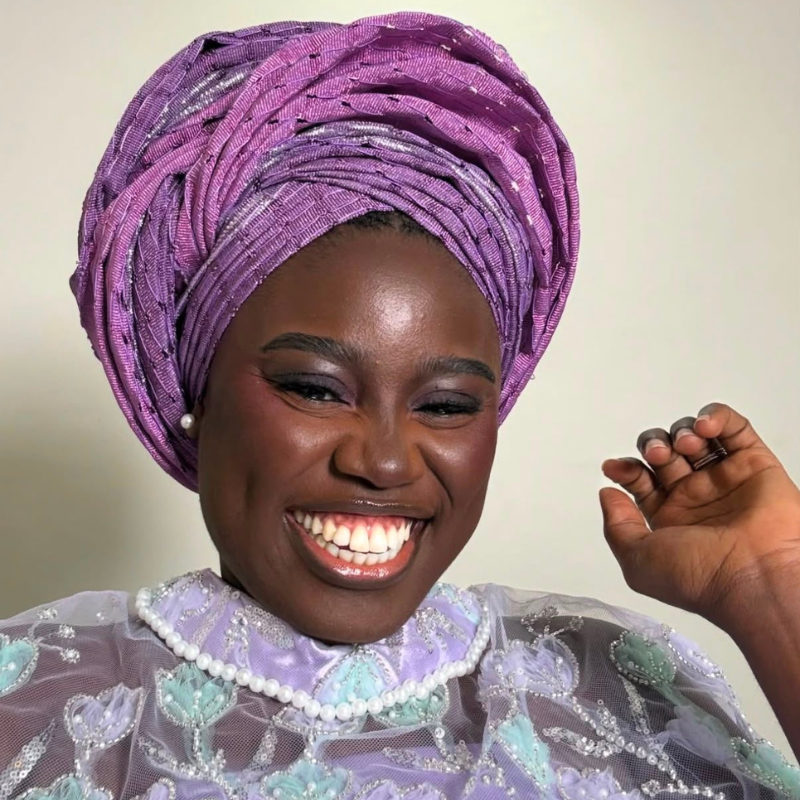
INTRO: This is part two of my interview with Adenike Daramola Joondeph, better known as Dara. In part one, we talked about her experience growing up in Nigeria, boarding her first flight in 20–, and then her experience and reflections on traveling to over 100 countries on her Nigerian passport. So, if you haven’t yet heard part one, you can go back and listen to it after you finish this episode.
But right now, in Part Two, we’re going to talk about how she met her husband Chris and co-founded Authentic Traveling Tours to bring people to experience Nigeria. She shares the biggest misconceptions people have about Nigeria before coming, what she’s most proud of about her country, and how you can get a special discount if you would like to visit Nigeria on one of her tours.
She also reflects on how travel has impacted her, why she feels it’s so important for Nigerians to travel internationally. And at the end, of course, I ask her to name her top five Afrobeat artists. So please enjoy the conclusion of my interview with Dara.
Matt Bowles: Well, you have mentioned your husband Chris a couple times now, and I would love to hear the story of how you met and fell in love. Can you think all the way back before anything romantic happened? What was your very first impression when you first met him? And explain to people what the context was.
Adenike Joondeph: We met via the Couchsurfing app, which is a travel app. It is not a dating app. Everybody needs to know.
So, I had benefited from Couchsurfing the year prior to the year he came. So, I just got my apartment, and I decided to put it on hosting because I had also been hosted before. I was hosted in Ghana when I did my paragliding. I stayed with a few hosts.
So, I put it on hosting, and then I hosted someone who was a Singaporean. And then he stayed with me. After he stayed with me, I was like, okay, this hosting is not bad. Maybe I can host more.
And my husband happened to be the second person that requested to stay with me. According to him, he saw my profile. It was interesting. As at that time, I had just started doing tourism. I’d been to a few places in West Africa that he had not been to, even though he had traveled to over a hundred countries at the time.
So, it was like, oh, this lady looks cool. She has also been to a lot of states in that country. She’d be the best to show me around. So, he dropped a message, and I saw it.
And what caught my attention was when he said, “I have been to 136 countries.” I said, wow. I adore what he’s doing, and I think it will be a nice person to hang around, to have conversations with, to pick his brain. Because this is something I was aspiring to be or to do.
I had just started traveling. I’d only been to, I think, five countries, if not less, at the time. So, I wanted to meet him. So, I told him, I said, “Oh, of course. You can come to my house. I can show you this place. I can show you that place.” And he was like, “Okay, let’s do it.”
But when I met him in person, the first impression was, this guy is so open-minded.
So, there’s something about Nigerians. They want to get to us. If we cook for you and you eat it with all your heart, and you eat it to the last goal, we’re just going to fall in love with you. Like, we love when people appreciate our culture. We love when people try to, you know, when you say cultural appreciation, you try to dance to our music, you try to sing our songs, you try to speak our language, you try to eat our food. Oh my God.
And that was one of the things I liked. He wanted to eat the way locals were eating. And to me, that was very fascinating. I just loved how authentic he was because I’m also a very authentic person.
And that was a natural attraction. Just like, I like this person. I like how he’s not forming. We say “forming” here. When you are acting like you’re posh or you’re trying to be a type of way, you say, “Ah, you’re forming. Why are you forming for me?” But for me, he was just himself. And that was one of the first few things that I noticed about him.
Matt Bowles: So, when you start dating and then you eventually decide to get engaged and married, what did your family think about you deciding to marry someone outside the culture?
Adenike Joondeph: My family is a very open-minded family. The fact that we could use Yahoo! Messenger and chat with somebody that is somewhere on another continent says a lot.
We’ve also had a few distant siblings that have also lived abroad. And my dad worked with some international brands like Heineken. And he had already associated with foreigners before. He had them as business partners.
So, it was quite easy for me to introduce him to my family. In fact, I think my dad fell in love with him first before I did. Because when I took him to my grandma’s village, that was the first day I was visiting her myself. Because in my culture, you don’t just take a man home if you don’t have an intention to marry them. And it’s very difficult to start to explain all of this.
And so, I just told my dad. He knew I was into tourism, so I just told him, “A foreign client, and he wanted to experience something outside Lagos. And I’m thinking of taking him to Ekiti, where I’m from and where my grandma is.”
And my dad was like, “Oh, really?” So, my dad wanted to put a lot of things in place. He wanted to take care of the toilet. I said, “Don’t worry. This guy that I’m bringing, he used to hop on the bus with goats when he was in other African countries. He has been through worse. He’s going to survive. Don’t adjust anything. I just want to inform you so I can tell Grandma that I’m coming, and then we’ll take care of every other thing.”
So, we got there. There was no electricity. We slept in the village. We cooked with my grandma. We ate. We took pictures with her. We visited my grandfather’s grave. Yeah, Dad, and that was what sold it for my dad. My dad was like, “This person that went to my mother’s house, saw my father’s grave, I like him.”
So, he was able to warm his way through to my father’s heart before I did the introduction. So that was it. That was easy for us as a family.
Matt Bowles: Well, I understand his family came into Nigeria for the wedding. Can you describe the wedding and what it was like to bring the families together?
Adenike Joondeph: Bringing them to Nigeria was very interesting. Even before the wedding, he gave them a tour. My husband gave his family a tour around Lagos without me. And I was like, “Oh wow, you’re now a Niger boy.”
So, they explored Lagos. It was very fun. It was just like we were having the best time. It wasn’t stressful at all.
The planning, of course, planning is always stressful. And I love how excited my husband was. Usually, when you are planning a wedding and you give your husband’s family a wedding list—we call it the dowry list—it’s always like 40 items: a live goat, 42 bags of yams, an endless list. And all the items on this list are very significant. We’re not trying to open a supermarket.
So, I love how interested he was. Here in Nigeria, it is the family of the groom that usually goes, not typically the groom. So, if he has women in his family, like sisters or just maybe aunts, the females would go to the market to buy these things so that they can negotiate. In our culture, it’s not really something men do, right?
But he was so interested. It was like, “I want to buy the goats. I want to be part of this. Yes, yes.”
And I didn’t even have to lift a finger. So, I was just home chilling, getting ready to be a bride, and my husband was doing the job.
But we both had fun. We’re still planning to do another wedding when we probably get to a stable location, maybe settle down somewhere.
We haven’t done the white wedding yet, but the traditional wedding was great.
Matt Bowles: Well, first of all, you two are absolutely adorable together.
Some of my very favorite content you do is when the two of you are in the video together, and you both have this amazing dynamic together. And it’s so lovely.
And you’re both obviously extremely passionate about Nigeria, and you have started this company, Authentic Traveling Tours, where you are bringing travelers and people from outside Nigeria into Nigeria to experience the country.
Can you share about the founding of that business and what type of tours you’re offering?
Adenike Joondeph: So, we started Authentic Traveling Tours last year, and this whole idea started from me showing my husband around.
I’ve also been doing some tours, individual tours, private tours, but nothing on a large scale. So, we just came together, and I have the expertise. I’m a native. I’m here. Even if I am not an all-round tour guide, I have contacts, connections, I can get around, I can make calls, I can put things together.
And he has the audience. He has been to a lot of countries in Africa, and he has also been to a lot of states in Nigeria. And he has a huge following when it comes to Nigeria and even Nigerians in the diaspora.
So, people love how he explores Africa and he talks about it. And we just thought about it, that this is going to be an opportunity to bring these people. They see him, they love what they see, and some of these people also want to experience the same thing, but they don’t know how to go about it.
Because Nigeria is not really that accessible. It’s accessible if you know someone that can hold your hand or hold you by the hand and show you around, but it is not accessible if you just want to book a flight and come here. You’re going to be lost.
And then we just thought about it. Let’s do it instead. We wanted to just do it as a one-off trip. And that was how it started.
We did the first one, and then we realized that from the first post he put out, 1,000 people showed interest. They filled the form. He had to select out of those people who filled the form, and he had to screen them and all of that.
I was like, okay, this looks like it’s going to be fun. Let’s do it.
And that was how Authentic Traveling Tours started. And it is also a business that we’ve been able to build together to help us build a stable life. Because at some point in our lives, he had to move from the U.S. to Nigeria. He wouldn’t have been able to do that if there was no backup or other option for him to fall back on.
We can’t start going into the employment market here in Nigeria. All of that is going to be very draining. So, we were just like, okay, this is an opportunity. This is already what we love doing. Let’s just build a market around this and extend our income, depending on when we can decide where we want to go and live or base permanently, since I cannot enter the U.S. right now.
But it’s been fun. It’s been amazing. We’ve hosted about seven group trips. Oh my God, I can’t believe that. It’s been like a year, and we’ve hosted about seven trips.
We’ve met amazing people. About 60 people have come to Nigeria to explore Nigeria with us.
So, our tour is in the southwestern part of Nigeria. I love to call it exploring the Yoruba culture because the southwestern part of Nigeria is occupied by the Yoruba people, which is where I am from.
I’m a Yoruba girl through and through. My dad is Yoruba. My dad is from Ekiti State. My mom is Yoruba. My mom is from Ijebu, Ogun State.
So, Ogun State is one of the states we explore on our tour. There are about six states in this geographical zone, the southwestern part of Nigeria, and we explore four states out of these six states.
By the end of the trip, our travelers can say they’ve experienced Yoruba culture. They’ve experienced the spicy food because we love it spicy. They’ve experienced the dance, the smile. We love to stay happy.
All of these things are things that we introduce to our people. The authenticity of all of these experiences, as raw as it is. And they go back home a different person than how they came. It’s an amazing experience.
Matt Bowles: What are the biggest misconceptions that first time visitors typically have before they arrive? And then is there a moment during your tours when you can actually see people’s perception changing?
Adenike Joondeph: People believe that the whole of Nigeria is not safe. That is not true at all.
Yes, we are experiencing insecurity in some areas. That is a fact. But then we know these areas. Some people stay away from those areas. Even in these areas that we’re talking about, some people still live there, and they know how to maneuver and maybe stay away from harm’s way and all of that, and still keep safe, right?
So that’s a major misconception.
People come, and then they get to Nigeria. By the third day, they see how warm people are. They see how people can just walk up to them on the street. Then we go out at night and have fun.
And at the end of the trip, they’re like, “I wish I had come here sooner. I’m glad I didn’t listen to what they said.”
Some people don’t even tell their family that they are coming. Yeah, they just book the flight and come. They’re like, “Okay, I’m going to take the risk.”
But then they realize that there’s actually no risk to take, especially if you’re exploring the southwestern part of Nigeria. Even if you want to explore the northern part, the locals know how to take you around without putting you in danger.
So Nigeria is relatively safe, and people should come to Nigeria.
Matt Bowles: So, who comes on your tours? What is the group vibe like?
Adenike Joondeph: It’s a mixed dynamic. The highest frequency would be from Europe and from the USA.
But then we’ve had Brazilians, we’ve had Caribbean travelers, we had one lady from Haiti. I was like, “This is my sister.”
We also have different age groups. We’ve had people in their 60s. We’ve had people in their 50s. We’ve had people in their 40s. We’ve had people in their 30s.
We’ve also had teenagers, maybe, who travel with their parents. Probably they were born in the diaspora, and then their parents are Nigerians, and they want them to come and experience their culture. And they entrust them with us because they’ve seen us.
It’s very interesting how Chris makes the trust stronger. If I was the one advertising these trips, I probably would not have that much structure, as much as Chris has got it.
Because they see Chris as a foreigner. And some of them are like, “If a foreigner can come to my country and enjoy my country and say these good things about my country, I’m in Nigeria. I need to go back home.”
Or, “I’m an African. I need to go back home. I need to retrace.” Or those that are born in Brazil or places like that, that have African lineage in their blood and all that, they see Chris and they’re like, “If a white person can do this, I need to go back to Africa.”
So, yeah, we have different types of people that come on our trip, and it’s so amazing to meet all of them.
Matt Bowles: What is one thing about Nigeria that you are most proud of? That you want to ensure everyone who comes on this trip gets to experience?
Adenike Joondeph: Hospitality. Number one, been to 101 countries, I can tell you nothing beats the hospitality of Nigerians. I’ve seen countries that have come close, but I think Nigeria is a country that everybody should experience.
I’ve seen the world from different perspectives, and I’ve realized that some people are living a life where they’re too careful. They’re just so closed up. They don’t want to open up to anybody because they are scared. They don’t know who to trust.
But you come to Nigeria, and somebody will just open their home for a total stranger. I grew up in a kind of home where we were taught that it is normal to have a spare room. And that room is supposed to be available in case you have any unplanned guests.
Because during my grandfather’s era, they traveled on foot, and they stopped along the way. We call them Janjo, a sojourner, or somebody who is traveling. And you stop anywhere you feel like it’s getting dark, or in any area. You just walk into any household, tell them you’re a traveler, and then they’re going to welcome you into their home.
They’re going to cook for you, give you food, take care of you, and then send you off the next day.
That is the culture I grew up in, and that is Nigeria.
Even though in places like Lagos it’s still a little bit diluted in that aspect, you would still find that hospitality. So, hospitality is top-notch. I love Nigeria for that. And I think that is one of the things that has been keeping us together.
The love, even though if you have learned about our politics, is also one of the major weapons that politicians use to try to cause separation amongst us. Because that love is very strong. And they know that if you use this as a weapon, you can penetrate that group. Because that way you want to start to hate each other, but you’re supposed to love each other.
So that genuine kindness—being kind to you without expecting anything in return—you would find it here in Nigeria.
Matt Bowles: I love that you said that because one of the stories that I have been telling since I went to Lagos in 2019 is how, on my first day in Lagos, I went to a coffee shop, and I was working there and ordered a coffee and some snacks and stuff.
I was ready to go, and I asked for the bill. And the bill came, and I gave him my credit card. And my credit card didn’t work. And I was like, “Oh.” And I was like, “Is there an ATM machine around here that I can get the money out of, and I’ll pay you that way?”
And the waiter says, “Sure, I’ll walk you over to the ATM machine. I’ll show you where it is.” I said, “Great, thank you.” He walks me over to the ATM machine. I take my ATM card out, I put it in the ATM machine, and my ATM card doesn’t work.
So now I have no credit card, no ATM card, no money. And I’m standing there, and I have a bill to pay, and the waiter’s standing next to me.
And just at that moment—there were two ATMs next to each other—this Nigerian guy comes up to use the ATM machine himself. He goes to the one next to me, and he looks over and he’s like, “Oh, what’s up, man? The ATM machines—you can’t get any money out?”
And I was like, “No, my card’s not working.” And he’s like, “And you got a bill to pay?” And I was like, “Yeah, I got a bill to pay.” And he just asked the waiter, “How much is that?”
And the waiter tells him, and he gets his money out of the ATM machine. He pays the waiter for my bill, gives the waiter a tip, and then just turns around and goes to get into his car. And I was like, “Bro, thank you, but how do I get that back to you?” He goes, “Don’t worry about it, man. Welcome to Nigeria.”
And that was literally the love that I felt and the welcome that I got in your country. And I have told that story many times on this podcast. I tell people all the time, and I said, “Listen, this is what my experience in Nigeria was.”
So, I love that you shared that because I felt that as well when I was there. And it is truly a special place.
Adenike Joondeph: Yeah, it is. And I’m so proud of it.
Matt Bowles: So, talk about what you have coming up for people that would like to go on one of your tours. When is your next tour that people can sign up for? What is it going to be like and how can people join?
Adenike Joondeph: So, for Authentic Traveling Tours, our next trip is going to be in April. It’s also the similar itinerary we’ve been having, we’ve been doing for a while, which is the southwestern part of Nigeria. It basically starts in Lagos. We show you what Lagos has to offer. We visit some of the major attractions in Lagos. And you also get to visit the legendary Fela Shrine.
Fela’s son is always performing every night, and sometimes even his grandson would be performing. It happens every Sunday night. So, it’s not like they’re putting up a performance for the tourists.
So, you get to see the authentic nightlife. You see locals, you see them hailing, dancing. You just feel the vibe, the music, the fun. The ambiance is great.
And then after Lagos, we go to Badagry, where we get to learn about history. We get to learn about the slave trade. A lot of people, some people, don’t like to hear that word, “slave trade,” but it is part of our history. It does not define us, but it’s something that happened to us. And some of our people were taken.
And we have to keep telling the story, not because we want anybody to hate anybody, but just for you to understand what we’ve been through, or what our people have been through, and what has made us strong and what has made us who we are today So, we’re going to visit Badagry. It is a historical town. And then we come back to Lagos.
Then we get on the journey outside of Lagos, where the real deal is, because the further you go from Lagos, the more authentic it gets. Because we know Lagos is a mega city. So, you need to go to the rural areas to see the authentic vibe, the tribe itself.
And the further you go, the more you begin to see the hospitality pan out, the more you begin to see the warmth. People are more patient with you. People are more friendly. They are more excited to see you.
So, we go to Abeokuta. We learn about the Egba people. Before Nigeria, we had kingdoms. We have the Dahomey Kingdom that is now Benin Republic. So, Abeokuta that we know today used to be another kingdom. They used to call it the Egba Kingdom. So, you learn about the Egba people.
We also get to visit one of the biggest presidential libraries in the world, which is the Olusegun Obasanjo Presidential Library. If you’re lucky, maybe we can see him. We can’t guarantee that. But he’s a very humble person. If he’s walking by, he can always say hi to us.
It’s a huge library, and we’re going to do a tour of the library. You also get to learn about his military life, when he was in prison, and all of that. It also gives you a political overview of what Nigeria is about. It’s a way to get to know about the country more.
And then from Abeokuta, we’ve moved to another state. Abeokuta is the capital city of Ogun State. So, you have left Lagos, you’ve moved to Ogun State.
Then we go to Ibadan, which is the capital city of Oyo State, another Yoruba state too. Whoever has tried to learn about Yoruba would have heard about the great Oyo Kingdom. Oyo people are affiliated with that. So, we’re going to visit museums there and just some other cultural activities.
Then we move to one of my favorite places, which is Osun State. And that is where, if you want to trace the origin of the Yoruba people, you trace them to Ile-Ife. And Ile-Ife is in Osun State.
Although we’ll not be visiting Ile-Ife, we’ll be visiting Osogbo. And in Osogbo, we have one of the only two UNESCO sites that we have in Nigeria.
So, you get to visit. It is called the Osun-Osogbo Grove, the shrine. You get to learn about the religious aspect of the Yoruba people. What were we practicing before the colonial era, before Christianity was introduced to us. It’s just an amazing trip.
And then we go back to Lagos, and then you do a cooking class, and you get to cook Nigerian jollof rice. You cook, and you eat. You also learn to cook other Yoruba cuisines and meals.
You can do nightlife if you still have the energy. Most people always feel exhausted after coming back to Lagos, but we still have more things for you.
And then on Sunday, if your flight is not early, you can join us to worship in church because we are very religious in Nigeria, and we love to dance and praise God on Sundays.
So, if you want to enjoy that aspect and see how people praise God, because church in Nigeria is definitely different from church in America, that is also on top of the list. We have the opportunity for people to enjoy that. And you leave Nigeria feeling like, “Oh, I’m so in love. I can’t wait to come back.”
But that is just one part of so many cultures that we have. A lot of people already know that Nigeria has 250 tribes. We have dynamic cultures. So, you can come back and visit the east to experience the Igbo culture. You can come back and visit the north to experience the Hausa and different tribes. There is Ibibio.
You can even decide to move to Nigeria. We want you to move here and enjoy. That is the end goal. That is the aim. But we have to dish it out bit by bit to make you fall in love gradually, and then you finally decide to come and be part of us. That is just an overview of what we offer for that trip.
We are also planning to extend to other areas in Nigeria. We have a big group that we are going to be hosting soon, and we’re going to be taking them to different regions in Nigeria.
So, from that experience, we would eventually put things together for those that have a longer stay or that can stay two to three weeks. Because you can’t explore all of these regions in just one week. It is not possible. So that way we can take you to other regions.
But for now, it is just the southwest. And our next trip is in April. For whoever that wants to join that trip, they can go to the Instagram page, Authentic Traveling Tours. The link is there. They can register and we can’t wait to meet you.
Matt Bowles: Amazing. And I understand it is much easier for Americans to get a visa to Nigeria now than it was when I went back in 2019. I have been telling that as one of my most challenging visa stories, especially trying to get it from outside the United States because I was already on the continent and it ended up being a whole process. But now, now they have an E-visa.
Adenike Joondeph: Yes, we do. It’s easier now. In fact, we’ve received some visas in less than 30 minutes. So, all you just have to do is upload your bank statement and some other documents, and then your visa drops. Very easy.
And for those that probably have future plans to visit Nigeria, if you would like to visit more than once, we always advise that you go for the sticker visa instead.
If you’re already in New York, you can easily get a visa there. And there are also a few other states in the USA where you can get a visa, and some countries in Europe too, where you can easily walk into a Nigerian embassy to get a sticker visa.
But if you just want to visit this one time, the e-visa is very easy, and it drops in like a few minutes. You can apply yourself. You don’t need a third party. You don’t need an agent. Very easy. So, yes, Nigeria is open and easier for you to visit now.
Matt Bowles: And for Maverick Show listeners, is it possible for them to get a special discount if they jump on one of your tours?
Adenike Joondeph: Yes, of course. We are offering you $200 off. So just mention you’re from this podcast and we take $200 off your fee and you pay the balance so you can reach out to us. And you can also contact us via our website, authentictravelingtours.com.
Matt Bowles: We’re going to link all that up, of course, in the show notes as well. Folks you can just go to themaverickshow.com go to the show notes for this episode and there we’ll have the link to get all the information, dates, itinerary, everything else about the tour, as well as your discount code to get your $200 off. I am curious, how can you tell if a traveler coming to Nigeria is genuinely curious about Nigeria or they’re just kind of collecting countries and trying to check it off their list?
Adenike Joondeph: I don’t think I really care about the reason you’re coming. I care about how you’re leaving because it’s possible. There are some countries that I’ve actually visited personally, and I’m like, “Wow, this is very close to Thailand. Let me go.”
That was how I felt about Cambodia. I was just in Thailand. I was like, “I can actually go to Cambodia. What is the visa policy?” I checked. “Oh, this.” And I was like, “Let me give it a try.” I got to Cambodia before I started to research about the country, and I didn’t leave the same way because I love the food, I love the people.
So, you can come with whatever mindset you have, whatever. Even if you’re country counting, we want you. But we know that you’re not going to leave the same. You’re going to fall in love with us, and you’re going to talk about us just the same way Matthew is talking about us. That is just… wow. You cannot help but fall in love in Nigeria.
So regardless of your first impression or your why, we are very accommodating of you. We just want you to come. We want to show you love. We want to show you who exactly we are. And you’re welcome to Nigeria.
Matt Bowles: Why is it so important for you to help more Nigerians travel the world? If every single Nigerian could spend a month abroad in the country of their choice, what would they gain by that?
Adenike Joondeph: Exposure. I think it’s very important that Nigerians travel because, coming from this part of the world, a lot of people do not know that there is something better out there. Because I don’t like to get into politics. But there is no way you want to talk about Nigeria that you won’t really talk about politics. Because everybody, I’m sure, even animals, know how corrupt the system is in Nigeria. And that’s one of the things that we are struggling with, or we are suffering from, at the moment.
So, a lot of Nigerians need to travel out to see what other leaders are doing for their citizens, to see what other governments are providing for their citizens, to see how they are giving back to their communities, how the people that they voted to serve are truly serving, and understand the service that we are experiencing here.
And I think that would help us to be more interested in politics because, if you check the percentage of people who do not have voters’ cards in Nigeria, you’ll be surprised. Because a lot of people believe that we’ve been voting and there’ve been no change. So, they just feel like, “I’m no longer going to vote. It’s a waste of time.”
But these are the things that they need to go and experience. And it also opens your eyes to a lot of things, like structured systems. You understand that shortcuts are not the only way. You can actually do things right, and things still work out fine for you.
Just a lot of things. I think it would really change our mindset and restructure our perspective about life. So, I want all Nigerians to travel, to experience that, to know that they deserve better, and fight for what they truly deserve.
Matt Bowles: And now let’s flip the question around. Why is it important for more Americans to spend time in Nigeria? If every single American citizen could spend one month in Nigeria, what would they gain?
Adenike Joondeph: To experience the true identity of Nigeria and not just what they’ve been told. Because that’s the major thing that I see or I hear when people come to Nigeria. There is this perspective that is being distributed out there: Nigeria is this type of way. As much as there are Nigerians also doing great abroad, the negative narratives are more than the positive.
So, I want these people to come to Nigeria to experience who we truly are. This is no filter. This is us. If you had not been to Nigeria, you wouldn’t have met the guy that did what he did. And what did he tell you? He said, “Welcome to Nigeria.”
That is who we truly are. We are hospitable, we are loving, we are caring, we have amazing food. We want to share our food. We want to share our culture. Because I know every single person that comes to Nigeria is going to go out there and be a marketer of the country. And gradually, we’ll begin to change the narrative that has already been put out there about this amazing country.
Matt Bowles: Well, you currently have over 100,000 followers on social media. Who do you create your travel content for and what are your goals with your travel content? Why do you create it?
Adenike Joondeph: I create my travel content for those that feel or think that the Nigerian passport is completely useless because that’s a term that a lot of people use.
Yes, we are ranked as one of the lowest in the passport index. We have fewer countries we can visit visa-free or visa on arrival, or even e-visa countries are banning us here and there. But this same passport, I used it to visit 100 countries.
So, it’s showing people that it is not impossible. Yes, it is stressful. Yes, there are a lot of challenges. But I want people to see through me that it is actually possible to achieve these things. And that’s why I also try to bring them along my journey. I also try to show them the raw experiences.
I experienced some struggles accessing Sabah in Malaysia recently, and I posted about it. And at the end of the day, I was still able to visit Sabah, and I still had fun. But people saw the journey to that destination. And that is what I aim to achieve.
To show people that the journey may not be easy, but the destination is actually worth the fight. That is what I’m driving at. And I’m also doing this to prove to myself—that 10-year-old girl that would never have imagined that she’s going to be traveling the world in how many years’ time—and then she’s doing it.
I post for myself, and I also post for Nigerians that do not think or imagine that they can visit or explore the world with their own passport because some believe they have to get a second passport to be able to travel. But I’m showing them that even with your Nigerian passport, there’s so much more you can do with that passport.
Matt Bowles: Thinking back on all of your Travels now to 100 plus countries, what impact has all of that travel had on you as A person.
Adenike Joondeph: Wow. A lot. A lot.
It has taught me to be more patient, to be more understanding. It has taught me to evaluate things from different perspectives and not just be close. Your way is not always the way. There are many perspectives. You can stand at the opposite side and see things from different viewpoints. It has taught me that life is beyond what I grew up to understand and to what I grew up to know.
It has also taught me that we are all humans. Sometimes on social media, you see things that makes you want to hate humanity, and you’re like, “Oh, why is this happening?” Things just come on your timeline. But then when you travel, you realize that humanity is actually beautiful. There are amazing people out there. You just need to cross the border to meet them.
So, travel has changed me in a lot of ways that I cannot even put into words. But I know definitely that I’m not the same person that I was when I started to travel.
Matt Bowles: And why are you so passionate about continuing to travel? What does travel mean to you today?
Adenike Joondeph: Two things. I started traveling just because it was a passion and I wanted to travel. And then somehow, I realized that, wow, I’m actually doing so much. Really, I’ve done 60 countries in such a short period of time. And then out of curiosity, I was like, “How far can I go?”
I’m married to an American. Yeah, America. Right now, it looks like a roadblock. I don’t know how long this is going to take, but eventually I’m going to become an American citizen. I don’t know how long that is going to take. So maybe I’m going to have another passport. But now my curiosity is, “How far can I go with this passport?”
I want to max it out. I want to get to a stage that I push the door, I try to kick it down, and they tell me, “No, you can’t get through.” So that’s what is in my head right now.
I’m not under pressure. I travel as I want, with no specific timeline. But I’m challenging myself to visit as many countries as possible before I have the opportunity to have another passport because I want to see how many countries I can visit on this passport.
Matt Bowles: Well, speaking of that, you are actually going to be a keynote speaker along with your husband Chris, at the Extraordinary Travel Festival, which is an entire event filled with people that have either already been to every country in the world or are actively pursuing the goal of getting there. It’s going to be in Bangkok in October 22nd to 25th, 2026.
I am going to be there as well. I was A keynote speaker two years ago, the last time they did it. I’m super excited to be there and hear you and Chris speak. Can you share a little bit for folks that might like to come through, meet you in person? What is your talk going to be about?
Adenike Joondeph: Oh, yeah. We’re going to be talking about different aspects of our life. Personal, how we met, our marriage, how we’ve been able to hang in there even during these challenges, immigration here and there, and how we’ve been able to travel to so many countries together.
My personal challenge is traveling with a Nigerian passport. All of these areas are going to be talked about. We’re going to be talking together, my husband and I, so I think it’s going to be more fun.
Matt Bowles: I already told you; my favorite videos are the ones with you two together. So, I am going to get a front row seat for this talk. It’s going to be amazing. If anybody wants to come through and link up with us in person there, you can get a ticket at extraordinarytravelfest.com and you can use the code Maverick for $100 discount on your ticket to the event. And then shoot me a DM on Instagram at maverickshowpod.
Let me know you’re going to come through and we’ll all be able to link up there in person. It’ll be amazing. I actually think that is the perfect point to end the main portion of this interview. And at this point, are you ready to move in to The Lightning Round?
Adenike Joondeph: Let’s go. Always ready.
Matt Bowles: Let’s do it. All right. what is one travel hack that you use that you can recommend?
Adenike Joondeph: Combo trips. I cannot overemphasize that combo trips. I think that has helped me a lot.
Traveling from Nigeria is very expensive. You fall ahead of the taxes we have to pay. So, it makes flights very expensive. So, whenever I decide to travel, I can as well just make it count. So, I try to add extra countries, nearby countries.
If I’m in Europe, where can I visit? How can I do four countries on one trip? I think that has been the act that has helped me to achieve the number of countries I’ve achieved now in a short period of time.
Of course, I don’t just jump and just visit and go. That is not the main goal of exploring these countries. There are some countries that I spend one month and some countries that I spend a day depending on the countries I’m going. But I always love to combine trips because it helps me to get real value for my money.
And who does not love an extra country on the count. So yes, combine countries, multi city fly tickets and get the best value for your money.
Matt Bowles: Knowing everything that you know. Now if you could go back and give one piece of advice to your 18-year-old self, what advice would you give?
Adenike Joondeph: I was just told that that’s girl everything is going to work out. You need not to worry about that. Eighteen, where was I? I’m sure a lot of things are going through my head but I would have told myself that you’re going to do amazing.
As a matter of fact, what you’re doing right now is not what you’re going to be doing in the next 15 years. So just keep going. The future is bright.
Matt Bowles: Of the hundred plus countries that you have now been to, in addition to Nigeria, what are three other places you would most recommend people should definitely check out?
Adenike Joondeph: I would say Belize. Belize was one of my favorite countries and I would say definitely check it out. São Tomé, I don’t know why a lot of people are not visiting São Tomé. That’s such a beautiful African country. I would say you should check it out up and Eswatini. Not just say this country is very tiny on the map. Don’t even dare because that country is going to shock you. You should visit Eswatini. So those three countries on top of my list.
Matt Bowles: All right, what are your top three bucket list destinations, places you have not yet been currently the highest on your list you would most love to see?
Adenike Joondeph: I always tell myself that it’s long overdue, I should have visited India a long time ago, but it’s at the top of my bucket list. I love the culture. We have a huge Indian community here in Nigeria, and there are a lot of Indian restaurants, so I’d really love to visit India and see where all those Bollywood movies come from.
The second country would be China. Apart from the fact that, if I’m not exaggerating, about 90% of everything we have in Nigeria is made in China—I don’t know if that’s the case in America—even my phone was probably made in China. So, I want to see where all those things are coming from. I’ve also been seeing videos about China on my timeline, and I’m fascinated by the technology. I just want to experience it.
The third would be Colombia. When I was very young, in primary school, there was an ice cream we used to enjoy called Colombia. We even had a little song that went, “Colombia, I love you, Colombia, I enjoy you.” That was the first time I ever heard about Colombia. Then, growing up, I joined a salsa class and started learning to dance salsa, and I learned about Colombia through that. So, I told myself, I am going to Colombia. Colombia, I can’t wait to see you. So those three countries are definitely at the top of my list.
Matt Bowles: Those are amazing picks. And I will tell you, one of the other things that surprised and delighted me about my time in Nigeria was, in fact, the Indian food because that is my favorite food in the whole world, I think.
And as you said, there is a substantial Indian diaspora population in Nigeria. The Indian food is amazing. I ate so much Indian food in Nigeria, and it was so good. So, I love that pick.
And then Colombia also. Yeah, definitely support that pick. Colombia is a super special and amazing country.
All right, we now have to talk about jollof rice. And for people that are not familiar with this dish, can you explain what the dish is? And then explain the, shall we say, competitive dynamic that goes on in West Africa, just so that people have context for the jollof wars. And then I would like you to weigh in on which country makes the best jollof.
Adenike Joondeph: Okay, so jollof rice is a type of rice that is cooked in a tomato-based ingredient, starting with tomato sauce, either the sachets or the grounded fresh tomato, and then some other ingredients like thyme, curry, and some other spices.
And then you’re just cooking your rice in it. Some people call it concussion, but it’s jollof because it’s a concussion rice. Don’t tell anyone in Nigeria I said “concussion,” but I don’t want to use the word jollof.
But it’s a type of rice preparation. It’s tomato-based, and it is very common in West Africa. And you can find it in Ghana. You can find it in Liberia, in Sierra Leone. You can find it in different African countries.
Some claim that their jollof rice is the best, but we all know where the real jollof rice is. But there’s this history that they are claiming that jollof rice is from Senegal. I don’t know what they are eating in that country, but what they have is not the same as our jollof rice.
So maybe there’s one jollof rice that started from Senegal, but the Nigerian jollof rice is different, and it’s owned by us, and it is the best. There is no question. The Nigerian jollof is the best, and we all know this.
So, apologies to my Liberian, Ghanaian brothers. Charlie, we love you, but you know our rice is the best. So, when you come to Nigeria, we will also give you the jollof rice to taste and be the judge. Thank you.
Matt Bowles: Let me go a level deeper. Is there a particular restaurant in Lagos that makes the best jollof? If someone was to say, I’m coming, I want to experience the Nigerian jollof, where do I go? Where do you send them?
Adenike Joondeph: Somebody coming to Nigeria or Lagos can be staying in any area in Lagos. So, for accessibility and also, I’ve tried their rice, and I know the rice is good. So, I would recommend item 7, go. They have different chain, different outlets in Lagos. They are also in Ibadan, so just look for item seven, go and order their jollof rice and chicken, and you’re going to love it.
Matt Bowles: All right. And for the final question, the final item, we have to talk about Afrobeats, which I told you is what brought me to Nigeria in the very first place and motivated my month in Lagos, which, of course, turned out to be magical and incredible.
Can you share a little bit about just the history and context of Afrobeats for people that may not be super familiar with the music genre? And then I would love for you to put people on to your top five favorite afrobeat artists.
Adenike Joondeph: So Afrobeat is a genre of music in Nigeria. We already know who the king of Afrobeat is. It all started from Fela Kuti, and then we started to have more artists. But now we have the new generation artists. We have Davido, we have Wizkid, we have Burna Boy.
So, my top five would be Asake, number one.
Kizz Daniel, number two.
Tems, number three.
Davido, number four.
And… drumroll… number five, Burna Boy.
Matt Bowles: Amazing. I love that. All right, we are going to link up everything that we have discussed in this episode in one place in the show notes. Okay?
So, folks, you can just go to themavericshow.com and go to the show notes for this episode. There you’re going to find the direct links to the Authentic Traveling Tours in Nigeria.
You can see the dates, you can see the itinerary, and we’re going to have your discount code to get your $200 off.
We’re also going to link up the extraordinary travel fest where you can come and hang out with us all in person. And you’re going to get your $100 discount off your ETF ticket there as well.
And then for people that would like to follow you on social media, come into your world. How can people find you in these Internet streets?
Adenike Joondeph: You can find me @dara_for_enjoyment_only, it’s an English word which means I am here for enjoyment. Find me @Dara_for_enjoyment_only on Instagram. The only one.
Matt Bowles: Amazing. We’re going to link that up as well in the show notes, of course. This was such a special conversation. Dara, thank you for coming on the show.
Adenike Joondeph: My pleasure. It was fun. We could go on and on, but it was such a pleasure. Thank you for having me.
Matt Bowles: And I am super excited to hang out in person in Bangkok, which will be amazing and hopefully some Maverick Show listeners will join us there.
I hope that I can end up on one of your Nigeria tours because I need to come back sooner rather than later and definitely want to see it with you and Chris, which would be super, super special. So hopefully I can get back and get on one of those tours myself.
And hopefully some maverick show listeners will come through and hang out with you guys as well. So, thank you for everything. I think what you’re doing is so amazing and I appreciate you guys so much.
Adenike Joondeph: Thank you.
Matt Bowles: All right, good night, everybody.