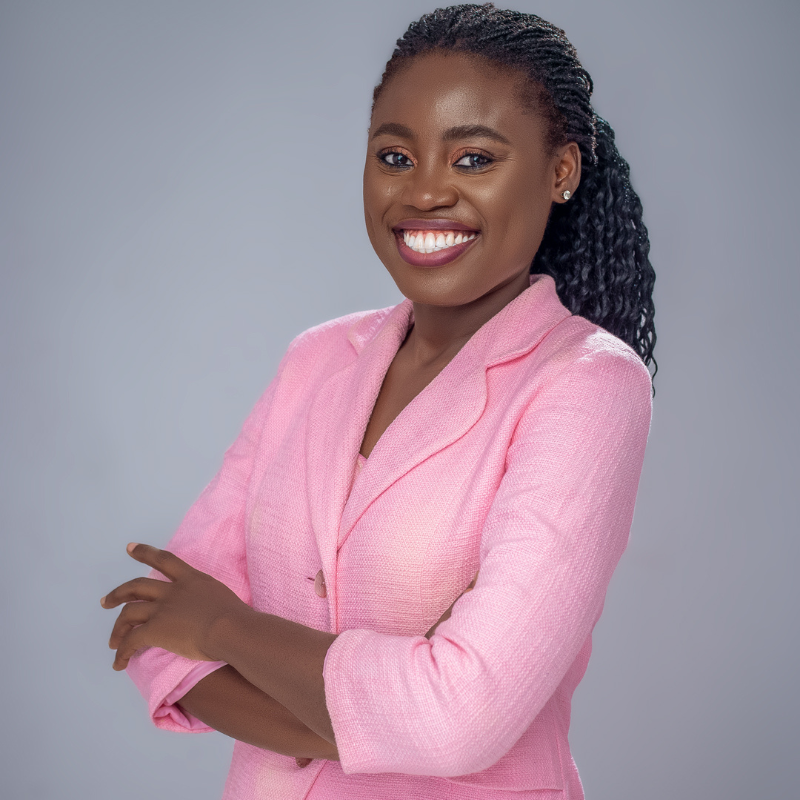
Matt Bowles: My guest today is Adenike Daramola Joondeph. She is a travel content creator, tour operator, business owner, and one of the most widely traveled Nigerians in the world.
Since boarding her very first airplane in 2017, she has now visited over 100 countries on her Nigerian passport. With over a hundred thousand followers on social media, she is one of the most prominent advocates for Nigerian travelers and aims to make travel feel possible for people who have been told it is not.
Based in Lagos, Nigeria, she is the founder of Tha Globetrotters, a travel company serving Nigerian clients with group trips around the world, private travel planning, and visa assistance. And she is also the co-founder of Authentic Traveling Tours with her husband, Chris, which brings foreign visitors to Nigeria on culturally immersive group experiences.
Dara, welcome to the show.
Adenike Joondeph: Thank you. I’m so happy to be here.
Matt Bowles: I am so excited to have you here. I am such a big fan of your content. You project so much warmth and joy into all of your travel content, and so it’s really delightful to be doing this interview with you today.
But let’s start off by setting the scene and talking about where we are recording from. I am actually in the Blue Ridge Mountains of Asheville, North Carolina, on the East Coast of the United States today. And where are you?
Adenike Joondeph: I’m calling from Lagos State, Nigeria. Precisely Ikeja, which is the center city of Lagos.
Matt Bowles: Well, represent for Lagos. As you know, Nigeria has a very special place in my heart. I have big love for Lagos. I stayed there for a month, and I have been talking about it ever since. That was back in 2019, and I have been telling people that they need to go to Nigeria.
And so, I’ve been so enamored with the way that you have been representing Nigeria and bringing people there and showing them the country. I want to dive into all of that, but I feel like a good place to start would just be with your background.
Can you share a little bit about where in Nigeria you grew up and what your childhood was like?
Adenike Joondeph: Okay, so I would say I had a little bit of mixed experiences when it comes to growing up.
I was born in Lagos—Lagos Island, precisely. Born to a single mother, I grew up in Lagos. I moved to live with my dad when I was about seven years old, so my life became more stable from that age. We lived together in Lagos with my older siblings.
Growing up was pretty normal. Go to school, come back. The only thing that I feel was different for us was the fact that we weren’t really allowed to go out. My dad separated us from the outside world. He wanted to protect us.
But the only thing we had while growing up was a computer. We had this desktop computer, and we usually took turns using the Internet. I would go on Yahoo Messenger and meet people from different parts of the world. That was my own social life at that point, so it was quite interesting.
Matt Bowles: So, you had a bit of international social life growing up there. I love that. What was your impression of the world outside Nigeria based on that? And did traveling outside Nigeria seem realistic at that time, or was that just something that other people did?
Adenike Joondeph: I was on the Internet. I could connect with people outside Nigeria, But I never really thought I would be able to travel outside Nigeria. So, it was just like having a pen friend. But I didn’t really think of traveling outside Nigeria at that time until possibly when I became a teenager or an adult.
Matt Bowles: So, I’m also super curious. As you were coming up, what type of music was playing in your house? Because, as you know, I am a big fan of Afrobeats.
For people who are fans of Afro beats, they know that over the last decade, Nigerian Afro beats have really taken over the world globally.
But prior to that, when you were a kid and you were coming up—or maybe when you were becoming a teenager, 12 or 13 years old, growing up in Lagos—what type of music were you interested in, and what role did music play in your life?
Adenike Joondeph: I was introduced to music through my dad. Every time he was driving us to school, he would always play music in his car.
And the type of music I got to know during those early years was gospel music. My dad was a pastor—he’s still a pastor—but he was also part of the choir. So, he would always listen to Don Moen and all those gospel artists. I first learned about gospel music before the other types of music.
But then gospel, blues, and R&B came about when I got to secondary school, with all the high school romance and love. Then you’re listening to the lyrics and you’re like, “Oh, my life. I waited for someone like you…”, those kinds of songs.
Hip-hop is just something that, even if we don’t love hip-hop music in Nigeria, you cannot escape it. It’s everywhere. You’re walking on the street—hip-hop. It was everywhere. You know the lyrics against your will. That is hip hop for all Nigerians. It’s just something that has become part of our culture and our daily life.
Matt Bowles: So, speaking of hip-hop, can I tell you one of the things that surprised and delighted me about Lagos?
So, just for background on me, I was a hip-hop DJ back in the 1990s, which, for me, was the golden era of hip-hop. The 1990s, New York City—hip-hop is my love language. That, for me, is super special.
Now, I also love Nigerian Afro beats, and that was what really drove me to come and stay in Lagos for a month. I was expecting to hear Nigerian Afro beats everywhere, and I was hoping to hear that and all of that. And, of course, that is the case.
However, what I was not expecting was the amount of 1990s hip-hop music that was being played all over Lagos at all of these restaurants. I was so enamored with it, too, because the DJs who were playing the 1990s hip-hop were young. They were not even born when Biggie dropped his first album, when Nas dropped his first album, or when Wu-Tang dropped its first album.
These were young people who were born after that, and yet they were playing all of the best stuff from the ’90s because they knew the best hip hop.
That just touched my heart because I was not expecting it, but I found that in Lagos to be amazing.
Adenike Joondeph: I got to know about people who would kill for Tupac. In fact, people had his face drawn on their skin. Everywhere you see the small local transportation we call the tricycle; you would see different types of logos. They’re like, “I’m Tupac.” They have the words that popular hip-hop artists would say.
So, I think hip-hop is huge in Nigeria. Both the Nigerian hip-hop artists and the foreign hip hop artists—they just love it. Those who love hip-hop are die-hard fans. They just want to go all out for it.
I can imagine what you’re talking about.
Matt Bowles: So just this year, in 2026, Fela Kuti was inducted into the Rock and Roll Hall of Fame in the United States. For people who don’t know, he was widely regarded as the principal innovator of Afrobeat as a genre.
I know today, when you bring people over to Nigeria, you take them to the Fela Shrine in Lagos on the mainland, which I have been to.
And I’m curious for you, just thinking back in your upbringing, about if you can share the role of Fela’s music in your life. Was that a type of music you were listening to? And how old were you when you started to also understand the political messages and the social and cultural impact of what he was doing?
Adenike Joondeph: I want to be sincere now. I think my growing up was a case of parents shielding their kids away from reality. I think it’s also what is happening in a lot of households right now. Because, there is politics, the situation of government corruption, and all of these things are happening. But some people still do not have an idea of what exactly is going on.
In my household, I didn’t hear about politics. Maybe my dad had these conversations behind me or behind us, but they made sure not to have such conversations around us.
As a matter of fact, my first impression of Fela was not great. The first time I got to know about Fela because I just sought was after his death, actually. That was the first time I got to know about him. A lot of people—I think his fans and those who were into his music—were talking about him, and people had diverse opinions about him and also about his music.
So, the first things I heard about him were, “Oh, maybe he died because he was smoking too much,” and about his lifestyle. I heard he had a lot of women. You know, those are the things that I heard on the street.
But I didn’t really get to know him until I entered the tourism industry. I was like, “Wait a minute. This guy was actually doing something great.”
Growing up, it was just something that I didn’t get to know. Just like I said, we only had our desktop for entertainment. Whatever we saw on TV was filtered. We had stations we could watch and all of that.
So somehow, I didn’t get to find out about Fela until I became an adult and started doing tourism. Then I learned about him on a deeper level, and I realized the kind of person he was. Exactly.
Matt Bowles: In your own words, I have heard you say that one of your goals is to help Nigerian travelers “navigate a world that was largely not designed to welcome them”. I’m curious just for background context on that, when you were growing up, how much did you learn in school about the history of colonialism in Nigeria and the power dynamics that shape our world and Nigeria’s place in it?
Adenike Joondeph: I personally feel like what we were taught in school was diluted when it came to colonialism, the pre-colonial era, slave trade, and all of those things. I grew up, and then when I started to travel, I was like, “Wait, was I even taught about this in school?”
I remember I did a tour. They took us on an excursion to Badagry, but the thing we focused on was Ajayi Crowther, who translated the English Bible into the Yoruba Bible. That’s the only thing I can remember about that tour. They took us to the first primary school, and that was the focus of the excursion. Whereas they were supposed to tell us about our history, how they had taken Africans away, and all of that.
I think it was after I started traveling, and I traveled to places like Brazil, that I told myself, “What? Slavery was on this large a scale? These are my brothers and sisters. What are they doing here? They should be back home with me.” And I started to do personal research about it, and I learned about a lot of things.
So, I think, for me, I had to do a lot of learning outside of school. The only thing I remember being taught was just surface-level facts, not the deep historical incidences and events that happened during that period.
Matt Bowles: So, let’s talk about your travel journey. The first time you boarded an airplane was in 2017. Can you give the background context about the decision that you wanted to travel outside Nigeria and then how you made that very first trip happen?
Adenike Joondeph: So, I took my first trip in 2017, like you said. As of that time, I just started working as an HR assistant. I didn’t even think I was going to travel or make that trip. Travel was not in my plans. It wasn’t something I intentionally said, “Oh, I want to travel,” or, “I’ve learned about travel.” It just happened.
As I was working as an HR executive, I was also part of a multi-level marketing company called Forever Living Products, which I think has its head office in Arizona, USA. They had different offices here in Nigeria, and I signed up to sell their products.
One of the compensation plans was traveling. Before my trip, there had been a few other trips, and during seminars they would show us different Nigerians who had traveled abroad and the way they would showcase them. You would see them in the yard, just living life and enjoying themselves. It started to plant this seed in my head. I was like, “Wow, I can also do this. What do I have to do?”
So, I started to ask questions, but I didn’t make the quota to qualify for that all-expenses-paid trip. I didn’t make it. But then I was like, “I have to travel.”
So, I saved up. I think I had to save for about nine to ten months for my flight. My manager at the time in the business promised to give me a hotel, and she was like, “Oh, don’t worry about feeding. I’m going to take care of you. Just get money for your flight and your visa,” which was what I did.
But at the end of the day, things didn’t really turn out as planned. That was my first time traveling, or my first-time planning to travel, and my challenges started from that moment because my visa was not approved.
They said I was underage, and I was 24—not under 18. I was 24. They said, “If you want to go to the UAE, you have to be more than 25 years old to travel as an unaccompanied female.” So those under 25 would need a guarantor, and the guarantor had to bear the same surname as you.
I didn’t find out about that until the last minute, so I missed that particular trip and event. But somehow, with my stubbornness, I was just like, “No, I’m not going to let this happen.”
So, I kept pushing. I got somebody to stand as my guarantor, and the trip eventually happened. Although I couldn’t make it to the event, I was still able to travel to Dubai.
I stayed with someone who used to be my ex-colleague, and then I experienced the trip. When I came back, it was life-changing.
Matt Bowles: How did it feel to take your first airplane ride and to touchdown in Dubai? What do you remember?
Adenike Joondeph: I had booked a flight, but I couldn’t get my visa. By the time I got my visa, I had to reschedule my flight, and there was no available date. So, I kept going to the airport. No date.
It was during Easter, so almost all the seats were booked. Because I worked close to the airport, somebody advised me, “Just bring your bag to the office. Keep it here. This is how we work. Sometimes just one seat can open up, and you have to be ready to travel anytime.”
So, the day I traveled, I wasn’t ready to travel, but because there was a seat, I had to go. I got on the plane. I didn’t even check my ticket. I didn’t realize that I had a 24-hour layover in Nairobi, and I was wearing my work clothes. I almost froze to death at the airport. Oh my God. I was like, “What?” It was such a bittersweet experience. But these are some of the things that also make it more memorable. A lot of beautiful memories.
I think one of the things that was outstanding for me was taking evening walks in Dubai. I know Nigeria also has skyscrapers, but there is nothing like what I saw in Dubai. I still have the videos, and I’m sure if you check my Facebook—if you go down—you’ll see those videos. The only thing I said in that video, for like five minutes, was, “Wow,” non-stop. I was just blown away.
I was like, “Okay, I think this is interesting. I have to see more. Wow, you mean there is something like this outside my country? I need to travel more.” It was a really life-changing experience for me.
Matt Bowles: There’s a lot of Nigerians in Dubai. Did you get a chance to link up with some folks from the diaspora? What was that like?
Adenike Joondeph: I literally lived with one of my former colleagues—someone who had worked at my company, and she resigned, and relocated to Dubai. She just told me, “Oh, you can stay with me.”
When I got there, I saw other Nigerians. It was a small room, but it had different bunk beds. There were other African nationalities, but they were mostly Nigerians. I had five Nigerian sisters. We call them sisters. When you’re from my country, we say “sisters.” It doesn’t have to be by blood.
What was really fun was that I was visiting. I didn’t really go for tourism. I was literally visiting, and I think that was also an eye-opening experience for me.
At some point in life, most Nigerians will probably think, “Oh, is there something better for me outside this country? Maybe if I relocate, I’m going to be better.” Even if we don’t act on it, a lot of people would have thought about that. And I think I also thought about that too, especially when I started working and I was like, “Oh, this is just going to be like a rat race.” The minimum wage was not encouraging.
Then, going to Dubai and seeing some of the Nigerians that had moved there—I know Nigerians are doing fantastic in other countries—but I just felt that lifestyle was not what I wanted at the time. It just felt like you were going to be working nonstop, and then you would probably have to send money home as part of the Black Tax, and you barely had time to take care of yourself. Some had three jobs, some had two jobs. It was just a lot of work.
These are the things that you don’t necessarily see on social media—the behind-the-scenes situations. People just receive money here in Nigeria. They don’t even know what people are going through to earn those funds or that money.
So, I just told myself, “I need to make it here in Nigeria,” because I wouldn’t want to go to these countries and live in a way that I don’t feel free. Because what is the point of making money when you cannot actually enjoy it, or you don’t have the time to enjoy it?
It was interesting meeting the Nigerian diaspora. I hung out with a lot of them. We went to the beach. But that was my own takeaway. From a deeper perspective, that was my own personal takeaway.
Matt Bowles: In terms of travel though, and wanting to see more of the world, was there a moment on that trip where you realized travel is something that you wanted to do with your life?
Adenike Joondeph: It was just a personal reflection, I was just like: “I want to do this”. This is fun. Even the plane was exciting for me. I couldn’t sit in one place.
The guy next to me decided me had to ask me, are you a student? You look too excited. Because I’m sure if you’re a business woman and you want to spend your money in Dubai, you will not be excited like this. I say I’m not a student. I actually paid for this vacation and yes, I’m still happy about it.
So, it was on my way back actually after seeing all the skyscrapers and just seeing something outside Nigeria, I’m like, I want to see more. I want to travel more. I just made it decision that I would like to do this in the nearest future.
Matt Bowles: So, can you talk about deciding to start your company, The Globetrotters?
Adenike Joondeph: A lot of people start businesses because they want to make profit.
But the major motivation behind my business then was to just find a way to fund my trips. I knew if I could bring six people to sign up for a trip, I just need to have maybe 20% on each person’s fees and then I pay for mine.
I wasn’t even bothered about profit. As long as I can pay for my own trip, that’s enough profit for me. And that was the motivation behind starting a travel company.
But I didn’t just start by traveling abroad. It started with just events, weekend events here In Lagos. And then I started growing from there, building my audience. And then we did our first trip two years later. First big trip, actually.
Matt Bowles: Let’s talk about that. 2019, You start traveling around the continent. You went to Benin and Togo and Ghana. What are some of your best memories from those West African countries?
Adenike Joondeph: Ghana was the country that brought out the adventurous spirit in me. I didn’t know I had that. I went to Ghana and I did the paragliding.
Matt Bowles: I have seen your video footage of you paragliding in Ghana, and I have also taken done paragliding. I actually did it in Medellin, Colombia. But for people that are not familiar with what paragliding is, can you describe your experience and what it was like?
Adenike Joondeph: I went into it without any research. There’s something about me when I think about a risky, adventurous or whatever. The first thing I check is, did anybody die from this?
But don’t check that when you want to do paragliding, because there are actually incidences that had happened in the past.
But anyways, I got to Ghana the first day I was supposed to do it. Thank God the weather was not great that day because I would have chickened out because I just became scared. I saw people jumping. I was like, what? The fact that I had to wait until the second day due to the weather situation. I felt more relaxed. And then I do it.
The first few minutes I was not leaking as a drown because I settled into it. Paragliding is similar to skydiving, but skydiving, you’re jumping from the plane down and paragliding is almost the same thing. But then you have to like, run and say, keep running. And then before you know it, you’re floating.
But yeah, it was fun. It was thrilling. Whatever is going to happen is going to happen at this point. But I survived, and I’ve survived more experiences after that.
Matt Bowles: So, after your West Africa travels, you went to the Seychelles. I have not yet been to the Seychelles. What was that trip like?
Adenike Joondeph: I think that trip actually made me realize that I can do whatever I set my mind to do. That trip was what I would say, I used to challenge myself, a very young girl going into the travel industry. The people who are in this industry are people who are very experienced. I didn’t have any background, no travel background. I didn’t study travel. I didn’t do tourism in school. Was just something I learned on the job.
And I had never been to Seychelles. And guess what? I planned a group trip to Seychelles, and 20 people signed up. Imagine a young girl taking 20 people to a country she had never been to. I was like, “Oh, my God, how am I going to do this?” But I spent sleepless nights making research. I just tidied things up. God helped me. I think it was just God because how did I do it?
And then I got there, and people were amazed. Fifty percent of those that traveled with me are people that have traveled with other people, that have traveled to other places. And they were like, “Are you working for somebody, or is this your company? How did you pull this?”
It was amazing, and it was challenging. But at the same time, I came back a different person. I came back realizing that I’ve been blessed to do this job, and I just need to believe in myself more and take on more challenges.
That was the first big group trip, and I’ve done a lot of group trips since that time. It was a beautiful experience.
Matt Bowles: Well, you have now been all over the world to more countries than I have. And I want to ask you about traveling as a Nigerian.
For me, as an American, I can just take a plane to Europe tomorrow, land in any of the 29 Schengen countries with no visa, and just walk in and stay for 90 days.
Can you explain for people what your experience was like attempting to travel to Europe on a Nigerian passport?
Adenike Joondeph: Let’s talk about it. Traveling with a Nigerian passport is very challenging. That is why I’m so passionate about what I do, because I need to show people that, yes, it is challenging, but it is also possible.
I made my first attempt to visit Europe in 2023. The first country I applied to was France. I applied in March 2023, and I got my rejection letter in April 2023. And what was the reason? “We are not convinced that you’re going to come back to your country.”
I wanted to appeal that decision, but then I learned how complicated the appeal process was for France. I would have had to send my documents to France and handle all the logistics and everything else. So, I gave up on appealing through France.
I think about three months later, in July 2023, I applied to Spain instead. Then I got my rejection letter in August. I applied to Spain saying that I was traveling there for my birthday, because my birthday is actually in August. They denied me for the same reason. They were scared that I was going to enter and not leave.
But this time, I learned about the appeal process for Spain. It was easier and more straightforward, so I decided to appeal. I attached all the documents I could. At that time, I had only been to 18 countries, but they were mostly African countries. So, what I did was pick a picture and highlight from each country, then put them together as a photo collage.
In Benin Republic, I had a snake around my neck. In Ghana, I was paragliding. In Senegal, I was walking with lions. In Ivory Coast, I visited the biggest church cathedral. In Gambia, I touched a crocodile.
I told them, “Do I look like someone who is not going to come home? I don’t just travel. I travel to experience things like this, and I’m coming to your country to experience your country.”
About two months after submitting my appeal, I got a call from the embassy, and that was how I got my first visa to Spain.
Since then, it became easier. But trust me, speaking about it now, the way I’m just talking about it—it was nothing like that. I had to go through a lot of emotional breakdowns. I cried. It’s just humiliating to know that you have a genuine intention to visit a country, and then they deny you or tell you that you have other plans.
So, it’s very sad. But now, the Schengen visa I have in my passport is valid for two years. I think it’s going to expire next year. I’ve been using it since last year.
I’ve been able to build my travel history and show them that I am a very credible person. They can trust me more now. They know that I travel for tourism and all of that.
Those were the first few challenges I encountered before getting my first Schengen visa. But it’s been worth it because I’ve visited all the Schengen countries.
Matt Bowles: So, let’s talk about some other parts of the world as well. I have been to Nicaragua multiple times on my American passport. I just show up. I pay the $10 for the tourist card, and I walk in and they’ll let me stay for 90 days. What was your experience like entering Nicaragua on a Nigerian passport?
Adenike Joondeph: So, at the Nicaragua border, I was doing my Central American tour. It was a solo trip. I traveled from Guatemala to Honduras, and then from Honduras I was going to cross over to Nicaragua.
When I got to the border before leaving Honduras, they didn’t even want to stamp me out. The immigration officers were like, “We don’t need to stamp you out because they’re not going to let you into Nicaragua.”
I said, “No, they will let me in because the policy on the official Nicaragua government website says that if you have a valid U.S. or Canadian visa, you can get a Nicaragua visa on arrival.” Even as a Nigerian, it was there.
Then I had to go through what we call Wahala in Nigeria, which means stress—just too many hurdles, going back and forth.
Finally, they still didn’t stamp me out. Instead, they told an officer to escort me to the Nicaraguan side because they were so certain that Nicaragua would turn me back. They didn’t want to stamp me out only to have to stamp me back into Honduras.
So, the officer followed me to the Nicaraguan side. And just like they had said, the Nicaraguan officers told me, “No, Nigerians cannot get a visa on arrival.” I just kept telling them, “This is the policy.” I even showed them. They don’t speak English—they speak Spanish—but I found a guy who spoke English. It was just a lot of back and forth.
Just when I thought I was going to be turned back, because they were determined to turn me back, I calmly made my last request. I told them, “I’m ready to leave the border. I know I’ve been a nuisance to you, and you’re already tired of me. I’m going to leave. But there is one thing I want to ask you to do for me one last time before I leave. Please call your own office, the Nicaraguan embassy, and ask them if I can get a visa on arrival or not. Please make sure you tell them that I have a valid Canadian visa.” The officer was like, “Okay.”
So he went, and then he came back. He said, “Oh, can I have your passport?” There was no apology. There was no acknowledgment that they were wrong. There was nothing. They simply did not have that information. They were ignorant.
Imagine border officials being ignorant of what the official policy is. I think this is also because they don’t see a lot of Nigerians crossing that border. They are used to seeing Americans. So, they’re like, “Nah, Nigeria. No.”
I spent three hours going through that problem. By the time I got into Nicaragua, I was almost stranded. But, yeah, that was a very tough experience for me. At the end of the day, I entered Nicaragua, and I think it paid off.
Matt Bowles: So, let’s talk about Asia now. I’ve been to Vietnam a couple times, and I do need a visa to go into Vietnam. But for me, I just apply online for the E-visa. I get it in three days and I walk into the country. What happened when you applied for a visa to Vietnam on your Nigerian passport?
Adenike Joondeph: So, Vietnam, to be fair, Vietnam visa used to be pretty straightforward. But then, 2024, I actually planned a group trip. We were a group of nine, and about six out of the nine had gotten their visas.
I noticed the first three got their visas on time, but then after that, I noticed how slow they were with responses. And they would just send auto message saying, update this. They keep telling us to update this, update this. We updated the same document, passport data page, and passport photograph like a hundred times.
And then they approved, like, three more. The remaining three of us—hi, and two other travelers—and then we waited for two months. No response. It continued like that.
I got to Thailand. I called the embassy. They said there was nothing they could do. I went to the embassy. They said there was nothing they could do. It was just very frustrating that, at the end of the day, we had to make alternative plans. So even until now, still the same issue.
So now my problem is, I personally do not have any issue with countries saying we don’t want to. But my major problem is, can you say it to my face? Why do you want to ban me silently? Why do you want to give me a radio silence? Why would you collect my money and act like I don’t matter? Why would you collect my money and just keep quiet?
I feel that is very wrong. And that is also one of the things I advocate for in Nigeria. Not just to call out these embassies, but also to call out our representatives in Nigeria. Because I think this is an unfair treatment, and our people are supposed to stand up for us and speak for us.
No nationality should be treated this way. It’s okay if you want to scrutinize people. It’s okay even if you feel like you want to ban a whole country. But you have to be public about this. You have to come out and say so, that we won’t even bother to waste our time, to spend our money, and spend our energy on visa application that is not going to yield anything.
It is still ongoing since 2024. Until now, Nigerians still have challenges securing a Vietnam visa. I even heard now some agents can get the visa, but guess what? It’s about one million naira or even more.
So that’s what they do once they feel like, oh, a lot of people are desperate to visit the country. They start to extort us and charge us ridiculous amounts of money for a visa. Imagine paying $1,000 for just one visa to visit. For how long? For one week, for two weeks? It is just very frustrating and ridiculous.
But, yeah, that’s the Vietnam situation right now for Nigerians.
Matt Bowles: And even traveling around the continent of Africa, what have been some of the challenges you’ve experienced with a Nigerian passport?
Adenike Joondeph: Oh, that’s another topic on its own.
You would think, as an African, travel within the African continent—I should be able to travel to other African countries. Let’s say if Europe is difficult, America is difficult, Africa should not be difficult for an African. But guess what? It is.
There are some countries. The one that’s still very fresh in my memory now is Mozambique. I tried to visit Mozambique recently. The last time I checked on the IATA platform, which is one of the most trusted platforms you can check to know what the visa policies are, what the entry requirements are. When I checked, Nigerians can get visa on arrival when they’re visiting Mozambique. So, all you just have to do is book a flight or just go to the border.
I tried it, and I was turned back. They kept saying, “Nigeria, Somalia, Afghanistan,” just a few countries, seven countries. And then Nigeria is part of it. What did we do? No explanation, just blacklisted. You cannot be reviewed individually. Just the country is blacklisted, and you, as the genuine traveler, you have to pay for that. You have to experience that. It’s very devastating.
There are other countries like that. Eswatini too was also difficult for me. Even though I later visited, and it is still one of my favorite countries until now, it was very difficult visiting Eswatini.
I was in South Africa, and we all know that Eswatini is interlocked, very easy to visit from South Africa. So, I tried to apply. I went to the embassy. I was not allowed in. I was told to apply online.
I sent a series of emails, and when they finally responded, they said Nigeria is grouped under Ethiopia. So, as a Nigerian, I have to travel to Ethiopia to apply for an Eswatini visa. Imagine how ridiculous that sounds. I have to leave Nigeria, that is in West Africa, book a flight to Ethiopia to get an Eswatini visa.
Meanwhile, as at this time, there was no e-visa platform available for Ethiopia. I personally went to the Ethiopia embassy in Abuja and met the staff. She told me to my face then, at that time, that they were not issuing tourist visas to Nigerians, that the only visa I could get then was a business visa if I was going for a conference or event, that there is no way I could travel to Ethiopia for tourism.
And tell me, how I would now get an Eswatini visa if I cannot visit Ethiopia, and you cannot apply for an e-visa to visit Ethiopia? Now we opened that platform recently, but these are some of the challenges we experience. And this is the African continent.
Matt Bowles: Well, less than 10 years from when you boarded your very first plane, you have now been to over 100 countries. I am curious, what is one place that completely changed the way you see the world?
Adenike Joondeph: My experience in Central America generally really made me realize that the world is not so much of a difference from Africa.
So, growing up, also watching the media or watching the TV, I don’t know, a lot of things just made some of us in Africa feel like we are inferior, or our things are inferior, or our ways are like old ways. And that’s why you see some maybe African kids are ashamed to rock their African hair. We want to wear wigs, we want to do makeup, we want to do all of these things.
But then I traveled in Central America, and I realized that we are just the same. I saw the way they used to do their hand washing. So, they had this ceramic basin where they wash their clothes, which is similar to how we wash our clothes. They have latrines, they have pit toilets.
It just gave me this perspective that we are all the same. Nobody is more special than the other. We are all the same. Yes, some things may be more modern in some regions than the other. Like, oh, maybe when I get to China, I’m going to be like, “Oh, technology.” But that does not mean that whatever we use now, they’ve never used it before.
And the old mindset that I used to have, that maybe Africa, we’re living in the village and everybody’s different, and all of that disappeared after I started traveling. I began to see everybody for who they are. We are all human beings.
Yeah, your skin color may be different from mine, but we are all humans. And it really changed my perspective about how I see, how I compare Africa to other continents, or my country to other countries.
Matt Bowles: Where in the world did you experience the greatest culture shock?
Adenike Joondeph: Oof. That was Europe. That was my first trip to Europe. Oh my God. I got lost several times.
The way the transportation system is designed is completely different. You know, now you’ve been to Lagos, just walk out and flag down a bus. But if you try this in Europe, if you do not plan your trip, know where you are going, you have to plan out to walk five minutes, a bus stop, take a bus number 10, stop, and walk another five.
Ah, that’s true.
That thing stressed my brain. That was a huge culture shock for me.
But now that I’ve been to Europe several times, I’ve realized that the structure is good. It helps you. You can target, you can plan.
But at first, you took me and threw me in a place that was full of confusion because I couldn’t figure things out.
Matt Bowles: Well, you did mention that you went to Brazil. And I have been back to Brazil probably four or five times. It’s one of my favorite countries in the world. I’ve spent time in Salvador as well. And I’m curious for you, particularly going to Salvador, but perhaps other places in Brazil as well. As a Nigerian, what was that experience like?
Adenike Joondeph: Brazil is the only country that I’ve gone to outside Nigeria that I, hands down, felt like I was home.
Salvador especially took me by surprise. Even if I’ve read or I’ve seen things about Brazil, nothing prepared me for what I experienced. You could literally be walking on the street, and then I’d see someone that looks like my uncle back home in the village. It was just a fascinating experience for me, really.
And the food, the spiciness of the food. Oh, the Garri, Faria, or Manyoka. The Faria we call Garri here, Manon. And I would say that is our staple food. In fact, there is a type of farina that is named after the Ijebu people, where my mom is from. They call it Ijebu Gary. It is so nice. Everybody knows it in Nigeria.
So, imagine, as an Ijebu girl, going to another continent and seeing Garri. And then I now discover that is actually where Faria, the Mayoka, came from. Oh, it was something else.
In fact, I started to do videos. I started to do research. I was just so interested. I told my husband; I think I’m going to go to school to study another degree in international relations and history. I’m so interested in history because of Brazil. It’s fascinating.
I love how dynamic the country is. It just makes me feel comfortable being married to somebody who is not from Nigeria. It’s an interracial marriage. And it’s just beautiful to see a country so dynamic, yet so beautiful. They have everything. They have the food, they have landscapes. They talk about it. I would just keep yabbing about Brazil from now until tomorrow.
So, yeah, Brazil was fascinating in all around the African side of it, which is El Salvador. I also like to always clarify that it is not the only old Brazil. That it’s like African vibe. Right? Specifically in Salvador.
And Brazil is also very dynamic. That you get to Allegri. Allegri is going to give you a European vibe. You go to Salvador; you would think you’ve been thrown into the African continent. You go to Sao Paulo; you feel like you are in one Asian country. And then you are in and you think you’re in the Caribbean.
So, it’s just the lakes. It’s just a beautiful, beautiful country. I love Brazil. I love it so much.
Matt Bowles: I agree with all of that. So beautifully put.
Adenike Joondeph: Yeah.
Matt Bowles: Well, you have also, at this point, traveled very extensively around the continent of Africa. And I’m curious what that experience has been like for you as a Nigerian. And now that you’ve been to so many countries on the continent, what are maybe three of your very favorite countries other than Nigeria?
Adenike Joondeph: The number one is going to be Benin Republic. And it’s an underdog, but it is a very beautiful country. And it is just 2 hours, 30 minutes from my house. How amazing that you can cross the border, go to a country that is calmer, more relaxed, peaceful, and just a lot of things are in place.
If you want to escape the chaos of Lagos, the beautiful chaos, by the way. I love it. Some days you just want to escape it. You go to Benin Republic. I’ve been to the Benin Republic more than 30 times, if I’m not exaggerating. I’ve done a lot of group trips there.
It was one of my first countries after Dubai. I did Dubai in 2017. The first country I did after I started my travel company was Benin. So, Benin has been my guy. I love Benin so much. And because it is accessible, it is calm, it is peaceful. Even though they speak French, you can still get around because people are nice. They want to help you.
And, yeah. The second one would be Eswatini. Eswatini took me by surprise. It’s so small, yet it has so much to offer. So, so much. We were there for eight days, and we couldn’t even do everything. We were moving from one region to another region. We went to different part of the country. It was just simply amazing.
So, I love the fact that it took me by surprise. I love the fact that they’ve preserved a lot of things in their culture. The food was great, was amazing. It was just beautiful.
And the fact that it is inside South Africa, or interlocked, and then as a Nigerian, a lot of people would already know the relationship between us and South Africa. I love South Africans. But this old xenophobia and everything that is happening right now. So Eswatini is that kind of brother that would say, I love you. I don’t care what my other brother is saying. I love all of you. They welcomed me with open arms, and it was just an amazing experience. So definitely on top of my list.
And then I think the third would be Cape Verde, definitely. Cape Verde is an island in West Africa, and it’s a beautiful country. Have you been?
Matt Bowles: I have been very briefly, and it’s an inexcusably brief visit because it was literally a single day excursion from a cruise ship. But I got an enough of a taste that it has been super high on my list. And I want to go back and spend a very extended time. But give it a shout out. A lot of people are just putting it on their radar now because of how well they did in the World Cup. So, shout out to them for that, but share a little bit about why it was so special.
Adenike Joondeph: Yes, you should visit Cape Verde. Cape Verde is amazing.
I visited before visiting Brazil, by the way. But thinking about it now, it gave me the little Brazilian vibe, the Rio vibe, but slower, very laid back, very peaceful.
Cape Verde was the first country that made me just think to myself that I would like to live here. If I ever want to live in an island country, I would definitely want to come to Cape Verde.
The people are nice. You just see people taking walks on a Monday morning. The dogs everywhere, the trees, the weather. It was just amazing. It was amazing. Everything about Cape Verde was really beautiful.
I didn’t do so much. We did more of island hopping. But the ambience, the vibe, it was just very peaceful.
And then it was also mixed and dynamic. As an African, I was looking at that hair texture, and I was like, are there any Africans? These guys look… look different.
But then the Africans, that was what made me to read about their history. And it was quite interesting to also find out that two Cape Verdeans can be Cape Verdeans, but then they can look completely different from each other.
It was just a beautiful country.
Matt Bowles: Well, you have also traveled through the Middle east and I wanted to ask, what was your experience like in Lebanon?
Adenike Joondeph: Lebanon was a beautiful country. I would say Lebanon is in the Middle east, but sometimes it gives you a vibe that makes you forget that you’re actually in the Middle East. You cannot compare Lebanon to Saudi Arabia, for example. Those are two different experiences.
Matt Bowles: Totally.
Adenike Joondeph: Yes. Lebanon is my guy any day, anytime.
The only thing stopping me from visiting Lebanon now is what is going on in the Middle East. And I feel so bad for them because it’s a country that has been struggling for the longest of time.
But Lebanon is beautiful. You go there during the summer, you love it. And, God, is this still the same Lebanon I visited, like, a few months ago? During summer, I’ve been there like three to four times, and it’s just an amazing country. It’s a country that I always recommend, especially for Nigerians. Very easy to go. I think it is the only country in the Middle East that loves us dearly.
I love Lebanon. It was also easy to travel. I respect the culture in the Middle East. I respect it. And that is why, when I’m traveling to some countries, if they have a dress code, I always respect that dress code.
But I would say Lebanon is the kind of country that you can just be yourself. They are open to tourism. I really love Lebanon. That was a good vibe. I would go there. You blink your eye, now I’m just going to go to Lebanon. I’m just waiting for things to get better, and I would book my next flight. Love Lebanon.
Matt Bowles: What’s another country that you’ve been to where you felt people understood or appreciated Nigerians better than you expected?
Adenike Joondeph: This will not come as a surprise. I would say Ghana.
Ghanaians, they are our brothers. We fight sometimes, even with our jollof. They know we are their big brothers anyways. But yes, geez. It’s like people that understand each other, you know. See, siblings fight. If you find two siblings that love each other the most, they fight the most.
So, I think that’s the relationship between Nigerians and Ghanaians. Going to Ghana is like I’m just going to another part of Nigeria. It is only the accents or the way they speak their English that would differentiate them from Nigerians.
But I feel they are the kind of people that I know that get us. They know the kind of people we are.
Another place that I possibly experienced that feeling was when I was in Zimbabwe. Although Zimbabwe was a little bit challenging to visit, but when I finally visited last year, August, I met a few people that were so obsessed about our Nollywood movies.
In fact, some of the movies that we’ve forgotten about, they remember back-to-back. They love Nigerians. They know the kind of people we are. They understand us. And I felt very welcomed when I was in Zimbabwe.
Matt Bowles: We’re going to pause here and call that the end of part one.
If you would like to hang out in person with me and Dara, we are both going to be at the Extraordinary Travel Festival in Bangkok, Thailand, October 22nd to 25th, 2026. Dara is going to be a keynote speaker at the event.
And if you would like to get a ticket, you can get a $100 discount just for being a Maverick Show listener. So go to extraordinarytravelfest.com. You can get all the details about the event there. And then, at checkout, just type in the code Maverick, and you’ll get your $100 discount.
And if you would like to visit Nigeria on a tour led by Dara, we are going to link up in the show notes how you can do that as well, and how you can get a special discount for being a Maverick Show listener.
All of that is going to be in one place at themaverickshow.com. Just go there and go to the show notes for this episode.
We’re also going to provide links to everything else we have discussed in this episode, including all the ways to find, follow, and connect with Dara on social media.
And be sure to tune in to the next episode to hear the conclusion of my interview with Dara.
Good night, everybody.