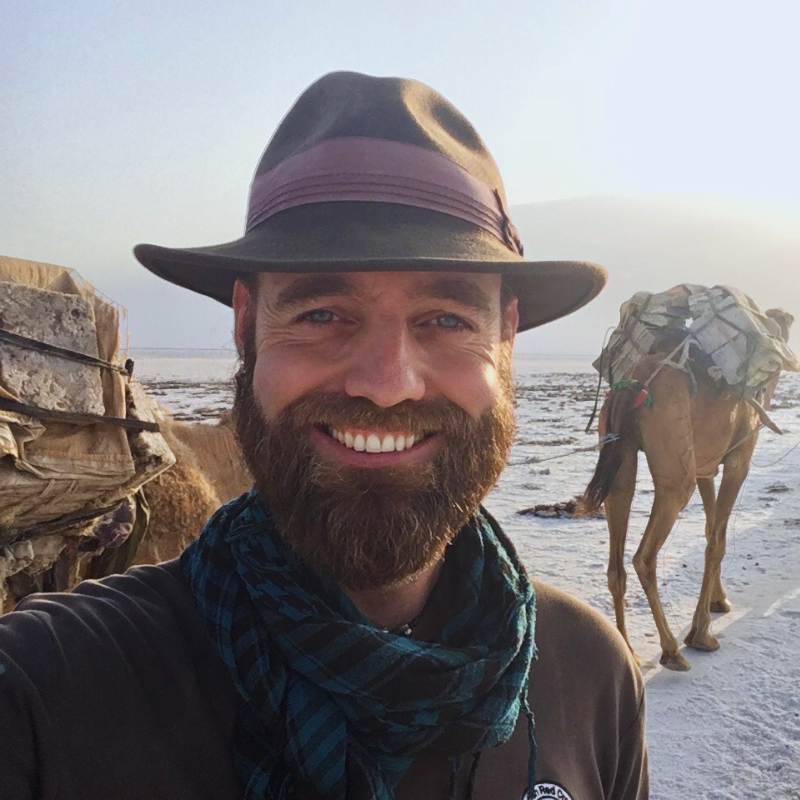
Matt Bowles: My guest today is Thor Pedersen. He is a Danish adventurer who in 2023 became the first person to visit every country in the world in one unbroken journey without flying. What became an epic 10-year journey began in October 2013 with these simple rules; reach every country on earth without boarding an airplane or returning home and spend no less than 24 hours in each country. Traveling by cargo ship, train, bus and overland routes, Thor navigated closed borders, logistical challenges and even a multi-year delay during the COVID 19 pandemic. All to prove that extraordinary goals can be achieved through persistence, patience and human connection. Throughout the expedition, Thor also served as a goodwill ambassador for The Red Cross, visiting The Red Cross and Red Crescent Movement in 190 countries while raising funds and awareness for humanitarian work around the world. His story is told in his international best-selling book, The Impossible Journey, which was just published in 2025, and through a new documentary that is screening in October 2026 at the Extraordinary Travel Fest.
Thor, welcome to the show.
Thor Pedersen: Thank you. What an introduction.
Matt Bowles: Man, you deserve quite the introduction, my friend. I am so excited for this conversation. You and I were both keynote speakers back at the Extraordinary Travel Fest in 2024. So, I’ve been wanting to do this interview for a while now, but I feel like this is the perfect time because the book is out, the documentary is out. Just finished reading the book by the way, which is incredible. So, I’m super excited to dive into this conversation, but let’s just start off by setting the scene and talking about where we are recording from today. I am actually in the Blue Ridge Mountains of Asheville, North Carolina on the east coast of the United States. And where are you today?
Thor Pedersen: I am in Copenhagen, in the Kingdom of Denmark, in the high north of Europe.
Matt Bowles: Well, I would love to give people some background on you before we dive into the impossible journey. Can you share where your parents are from? Where you grew up? And when you think all the way back to your childhood, where does your early passion for adventure and travel come from?
Thor Pedersen: I am born out of my mother, who’s from Finland, and my father, who’s from Denmark. I was born in Denmark in the winter months, December 19, and there was a snowstorm. And before I could walk, we had moved to North America. We moved to Canada. First, we went to Vancouver, two years there and then two years in Toronto, and then we went to New Jersey in the U.S. And I came back to Denmark when I was six and a half years old and barely spoke any Danish. My mother is definitely the source of imagination and adventure for me. She’s the one who would take me into the forest and tell me about trolls and Robin Hood and all this stuff. She’s the one that would give me interesting books to read. But my father was early in terms of traveling and expat life, because when he took our family to North America, he would have been the only one amongst all of his friends and his entire community that would do a thing like that. So that was very exotic back in the day when he did that.
Matt Bowles: Can you talk about your experience going into the military and then being deployed as a UN Peacekeeper to Eritrea in Ethiopia at such a young age? I’m curious about what that experience was like for you. First time in Africa, and for that reason, what was your experience like there?
Thor Pedersen: My father, he served in the army. He was a sergeant in the Air Force, actually, the Danish Queen, who’s now been replaced by her son, the King of Denmark. But back then it was the Queen. She would address the nation around the end of the year for New Year’s, and my father would always sit there in his sergeant’s cap saluting the Queen. There was a little bit of this military stuff that came in through my father. My father was a businessman and I was running in his heels and I wanted to go to business school so I could be a businessman of some sort. So, I did that. And then in Denmark, you go to something which we call session. When you’re 17 years old, the military asks you to come in, and you come in with all of your knowledge of life as a 17-year-old and they give you the rundown. They tell you about the Danish military. They say, we have the navy, we have the Air Force, we have the army, and explain a little bit about that. Then they do an intelligence test and a physical test for everyone.
And then you go to this tombola and you draw a number. And if the number is low, you do military service. And if the number is high, you can choose to go home or you can volunteer for military service. And the night before I went to draw this number, I was going back and forth, do I want to do military service or not? Do I want to or not? And the night before decided, no, I definitely do not. I do not want to do military service. I went in and drew a low number. And then being Denmark and all, it’s a very peaceful country and easygoing country. So, the military says, okay, now you have to do military service. What do you want to do? Can you give us your choice? Number one, followed by number two and number three. And then we’ll try to see if we can make it fit. Because some people, they want to do their military service close to where their parents are. Some want to go as far away from their parents as possible.
Now, Denmark’s a really small country, so it doesn’t really matter all that much. But then of course, some people might want to do navy, some want to do army, some want to do air force, that kind of stuff. So, I wrote down the royal ceremony. So, you have in front of the royal palaces, you have these ceremonial guards. And it’s very prestigious. And it’s also the longest time you can serve when you do conscription. So that’s 12 months. That’s the longest you could do. So, I put that as number one. And that’s what they gave me. So, I did one year of that. And at the end of that, I was completely brainwashed. I had no thoughts that went beyond what someone would order me to do. It’s just push-ups, polish this, dig a hole over here, eat this, wake up, go to bed. I was told everything. And I took really well to that to such a degree that I didn’t have a single independent thought left in my head.
So, on the day when we signed off, everyone had something. Some of these guys, they were going out to travel. Someone else was starting a job. Girls, friends were there, family were there, that kind of stuff. And I just stood there without a thought in my mind. And an officer came over to me and said, hello, have you ever thought about international service? And I was like, well, yeah, I thought a little bit about it. And he explained that he was a recruitment officer. And he looked at my paperwork, which was all right. And then he invited me into his office. And 45 minutes later, I had signed my paperwork. This was a Friday I went home, came back Monday. They issued me a new uniform and a blue beret, and we started UN training.
So that’s how that came about. So initially, we were training for a mission in Lebanon. We’re supposed to go to Lebanon. But then hell broke loose in Lebanon all of a sudden. And this was almost 30 years ago. So, it was inconceivable that a Danish soldier would die. That just couldn’t happen. Everyone you sent out had to come back home. So, they were looking for a new mission. And then peace broke out between Eritrea and Ethiopia, and they directed the airplane in that direction, and we went to Eritrea. It became my first visit to Africa. I was very young. Everyone was listening to Toto, when it rains down in Africa. And everyone who walked out of that airplane, they were wearing sunglasses. We have a video of this. Everyone came off the airplane wearing sunglasses because we were in Africa and we were in elevation, and we were well trained. I didn’t know much about culture or people or making connections, so it was a very different visit compared to when I came back many years later.
Matt Bowles: What was your experience like being there? I understand you decided to run a marathon in Eritrea. Can you talk about that experience? And I’m also curious. Was that part of you gradually seeking out increasingly ambitious personal challenges?
Thor Pedersen: You’d think. We were encouraged to stay fit. We were at elevation 2,400 meters up, so the air was pretty thin the first two or three weeks. Pretty much everyone had nosebleeds because of that. And then running, it felt like your legs were made of lead. So, you kept going at it. You kept running, and then eventually you adjusted to the elevation. Then one day, a sergeant came up to me. It was my day off. I was lying in my bunk bed and trying to rest, and he came and he shook me, and he went, TC. That was what they called me, TC, are you going to run the marathon? I’m like, no, I’m not going to run a marathon. Then try to go back to sleep. And he shook me again. Come on, T.C. Not enough people have signed up with us. We need more people. Well, I know I’m not running a marathon. He said, come on. Come on. I’ll put your name on the list. Okay? Go away. Put my name on the list. And that was kind of that.
A week later, I had to run this marathon. I was pretty fit, but I wasn’t marathon fit. And it was two loops. So, you start off in Asmara, which is the capital of Eritrea, and it was fantastic. So, we were running wearing our United nations, blue caps and army clothing, and you’re running through Asmar, and kids are running next to you and around you. And it was just magical. And all these Eritreans, they were looking at us like we were crazy. This was United Nations show of force. So, this is basically why they’d set this up. So, we run with these kids for about two or three kilometers, and you come to the outskirts of Asmara, and the kids disappear, and you’re in the desert, and then you’re alone, and you’re running on a desert road, and you’re told to stay on the road, don’t go anywhere, because there are mines everywhere. So, you have to stay on the tarmac, and you do this loop under the baking sun. And I did so well for the first loop. I mean, really well. I would have said a fantastic time for a marathon if I had kept that up.
But then I came back into Asmara, and kids are running with me again, and everything’s great. And you run back out into the desert and you’re alone. And then the wall hit me. I was so tired, and I started walking and running, walking and running. And at one point, I was running, and a vehicle comes towards me like a small truck. And the mirror on the side hits my shoulder. He comes straight towards me, and then he wears off last minute. And this side mirror hits me, and I fly off into the ditch, and it’s painful. And I’m in the ditch, and I’m looking around. There are bones everywhere. And I’m thinking about the mines and this kind of stuff. And he’s gone. And I’m all alone in the desert and the baking sun lying between all these bones in the ditch. And I kind of tiptoe out of there, because if you’re tiptoeing, you’re obviously more safe from mines, right? And I get back up on a tarmac, and then suddenly my shoulder starts pounding, and I have to go back a bit to pick up my cap and put the cap on my head. And I continue walking for a bit and start running and walking and running. And it wasn’t my best marathon time. I’ve done a few marathons since, but I did cross the finish line.
Matt Bowles: So, by the time you return to Denmark, what impact do you think that mission and that peacekeeping experience in Africa had had on you at that young of an age?
Thor Pedersen: It made me interesting to others. I was 20 years old, and I have this life experience, and everyone’s curious. They want to ask me about what went on and what it was like but most commonly people would say, did you shoot someone? Did you kill someone? I did come home with a different outlook on life and people. I was young, but still there was a lot of life experience packed into those seven months in Africa and a lot of experience, a lot of knowledge. And mostly people just wanted to know if I had shot someone. And then the conversation quickly moved on to if someone had bought a new bicycle or something like that. So, I wrote a diary. Well, I didn’t want to call it a diary. I remember it wasn’t a diary, it was a journal. But the same thing every day I would write something. And if I hadn’t done that, I think it would have been all lost now because I came back home and quickly things moved on and no one really asked, no one really wanted to know. They just wanted to know superficial stuff.
Matt Bowles: Well, I also know that you got to live in a number of very different and very interesting places around the world as part of your professional career in shipping and logistics. Can you share what some of those places were?
Thor Pedersen: Yeah, absolutely. So, I still had this idea I was going to be a businessman. When I went to business school, we had a day where everyone had to tell why they were attending business school or where they saw this going. And we had this one guy in my classroom who had a briefcase and wore a shirt and had polished black shoes and this kind of stuff. And he was going into shipping. And at the time, I had no idea what shipping was. And he elaborated, and he said, well, shipping, it’s this industry where no two days are the same, lots of money, and it’s international. It’s almost like a corporate James Bond. And I like, that’s me. I’m going to do shipping, that’s me. And then the military came in between. So, I did those three years military service, and then I found my way into shipping and logistics. And for the first four years, the money wasn’t good. It wasn’t international. Only the paperwork I was pushing was international.
And every day was the same. It didn’t live up to my expectations at all. But four years in, there was a change of management and I had a conversation with him. And not long after that, I was in Libya. So, I was dreaming about going to Kuala Lumpur or New York or Tokyo, but Libya did well. So, I was in Libya for a couple of years. And then after doing that job for within the company, I was just a guy that could send anywhere. Like, yeah, send Thor. Thor can do it. So, I was working in Kazakhstan, in Azerbaijan. I worked in the Arctic Circle. I was deployed to Greenland for a while. I worked for a short while in Florida and a number of places around Europe as well. Bangladesh for a year was good. Lots of interesting places around the world.
Matt Bowles: So, when you lived in Libya for such an extended period of time, for years, what did you learn from that long term immersion in Libya that most travelers who pass through for a week to check it off their list often miss and maybe share a little bit about what your everyday life was like there?
Thor Pedersen: I was in Libya as a logistics manager and I was coordinating the logistics on construction of a cement factory. So, this is back in 2004, Colonel Muammar Gaddafi was still alive and well and ruling Libya and the country was very safe at that time. You could pretty much go anywhere and feel very safe within Libya as long as you didn’t go against the government, you didn’t badmouth anything you’re not supposed to. And I’m pretty sure that they were listening in on our calls and they were scanning emails that were going through our laptops. And I was working together with a couple, they were from Bulgaria, but they’ve been living in Libya for decades. And they told me then, don’t trust anyone, even your closest friends that you make here in Libya, everyone’s an informant.
So, you just kind of live a little bit paranoid, but you get used to it. It was fantastic that it was as safe and as open as it was. So, any shot I had at going somewhere, I would go deep into Sahara. I’d go to old Bedouin villages, caravan towns and coastline and ships rusting on the shoreline. And I would go everywhere. I had a great time. I had a driver from Sudan and we were spending hours and hours and hours next to each other every day. And I would teach him stuff that I knew a little bit about our place in the solar system. And I’d show him how to use an ATM and some things that he didn’t know. And he would teach me about Arab culture and he would teach me Arabic out of the Quran. As he said, you learn it from the Quran, then it’s proper Arabic. And that was very cool.
So, I really immersed myself into Arab culture and Islamic, not that I was replacing anything within my life, more so that this was a huge opportunity to explore something that I knew very little about. And I got so good at Arabic that the Arabs that were seated at these company meetings, they would usually just talk and talk and talk in between each other that if I attended the meeting, they would be far more quiet because they assumed that I knew what they were talking about or there was a risk that I would know what they were talking about. So that was really good. It’s a country with a lot of heart. It’s an ancient, ancient country. It’s a Mediterranean country. It’s gone through all the Mediterranean history. So, thousands of years of civilization on the shores going back before that. I mean, you go into the desert, you’ll come and see cave paintings of giraffes and other animals that you really couldn’t picture living in the desert, because they didn’t. It’s because it was lush.
At one point I saw Gaddafi’s great man-Made River project, which is pumping water from underground lakes and rivers up to the surface and then trying to make towns and cities and the coastline green without thinking about what happens when you pump the water out of the ground. That’s someone else’s problem. But it was fascinating, fascinating project. I love spending time with the locals. I’d say one thing, you could learn this in a matter of minutes if you’re lucky. But it’s one thing that I took away from Libya is that people, they look hard, you look at people and they don’t look friendly a lot of the time. And then if you crack a smile in their direction, they will open up in one big smile and it’s just beautiful and heartwarming. I love Arab culture. I think that’s where you find a lot of hospitality in our world, is in Arab culture, because it’s embedded into the culture in some part in the religion as well.
Matt Bowles: I totally agree. I appreciate that, Thor. I lived in Cairo, Egypt for a year myself as well and found so much of that exactly how you’re describing it. So, I love that. All right, let’s talk now about what’s become known as the impossible journey. Your quest to travel to every country in the world in one unbroken journey without flying. I’m curious about the psychology of impossible goals. Can you take us back to when you were 34 years old and just set the scene, where were you in your life, your career, your relationship? And then how did you decide to set out on this extraordinary multiyear quest?
Thor Pedersen: January 2013, I had just come back to Denmark from a project where I was working as a camp manager in Arctic Sweden. That wasn’t a dream job and the income wasn’t as good as I was used to at the time. So, what had happened was that I had been working eight years for a freight forwarder and then after eight years I decided to go into a business on my own and become an independent businessman. Basically, what I thought was, if I can coordinate logistics on various projects or various companies around the world through them, I might as well do it on my own. And instead of giving the company a cut, I can take more for myself. And that went really well for two or three years. And then suddenly it didn’t. And the phone wasn’t really ringing a lot.
And I had just bought an apartment, which I really couldn’t pay for, but thinking that everything would continue the way it had, I thought, okay, well, I have the income, but suddenly I didn’t. And this friend said, just get something. As an accountant friend of mine, he said, just get some income and we’ll work out the rest. And I got this in the Arctic, and I went up and did that. And I worked as hard as I’ve ever worked. So brutal hours and brutal conditions. It was interesting and fun at the same time. And I came back home, and I wasn’t quite sure what was going to happen. And the phone wasn’t really ringing. I had money on my bank account.
Financially, things had balanced out, so I could be idle for a bit, but the phone just wasn’t ringing. No emails, no job offers. My father, he sends me an email at that time with a link, and I follow the link, and I read about some of the most traveled people in the world. And through all of that, I discover no one’s gone to every country completely without flying. And that just fascinates me beyond anything I can truly understand today. But it really had a grip on me. I thought that was so fascinating. So, I just started talking to friends and family about that, and nobody was remotely fascinated. It was just me talking about how amazing it was.
Matt Bowles: So, from there, you’re speaking with your friends and your family about it. Can you talk about how the trip evolved to the point of embarking on it? What was the plan in terms of living on $20 a day in terms of being a goodwill ambassador for the Red Cross? How was it designed?
Thor Pedersen: I was in a relationship in early 2013. So back when I was working in Arctic Sweden, I was invited for a wedding in Denmark, and I flew to Denmark, and I put on a suit and I went to the wedding, and I sat across from this gorgeous woman, and we spoke a little bit during that night, but we didn’t hook up that night, and I went back to the Arctic. And then after a few days, I received a Facebook request, as you did in 2013, and we started texting each other, and that went to emails and we became pen pals. And then I came back to Denmark in 2013 after the project up there ended. And then it developed and we started holding hands and we were an item. I saw myself going somewhere with this woman. I saw my future. I might marry her someday. We might have children someday. I’ll probably not be able to continue doing shipping logistics in the way I’ve done traveling around the world. I’ll have to find an office job somewhere in Copenhagen, this kind of stuff. She was studying medicine, studying to become a doctor. So that was also my situation.
So, the phone is still not ringing. I don’t really have an income. I don’t have to have an immediate income, but at the same time, I don’t like money. Just going out and nothing coming in. So, I start working at a homeless shelter and doing night shifts, and I start working at a Red Cross asylum camp and not far from where I live, also doing night shifts. And I’m doing this kind of stuff. And meanwhile, I’m just talking to everyone about no one’s gone to every country without flying, and the logistics. And imagine the adventure and the modes of transportation and the people you’ll meet and the things you’ll eat and the stuff you’ll see and the stuff you’ll hear. And people were not super interested. But a couple of friends were, though, and they slowly came on board and said, is this something you want to do? And I wasn’t sure if I was going to do it or not. I was toying with the idea and I was planning it in my head.
And eventually I bought a world map and two pens, a blue pen and a red pen, and went through the world and did my routes. And then eventually I got a job offer, which I had received a few job offers which weren’t interesting, but I got a job offers which was super interesting. And it was in South America, a continent I had never been to before in my life. I really wanted to do it, but I turned it down. And when I turned it down, I knew it was because I was committed to going to every country without flying. So, everything got a lot more serious when I turned that job down. I knew, okay, now I need to find sponsorships. I need to find a way to pay for this. I was researching different budgets. Some people live off $5 a day or $10 a day on sailboats, $5 a day. Some people, people cycling, they have a tent and they cook their own. Me figured $20 a day seemed like a fair average. Also, you don’t want to make it too easy. That’s a part of it. But also, I was hoping to find someone who wanted to sponsor it. And I was thinking if I was asking for a hundred dollars a day, which would have made everything a lot easier, then it would be harder to find sponsorship. So, I was going with $20 a day.
But in hindsight, I’ve heard this over and over again. Sometimes it’s well worthwhile asking for bigger amounts, because if the amount is too small, they won’t even consider. They won’t even take it seriously. But I got sponsorship and got a web page, and we found a project name. We named it Once Upon a Saga. There was a motto, a stranger is a friend you’ve never met before. I left home with a blog, which was a 2013 thing, and with Twitter, which was also on the rise back then. And I had a project group. I had three friends that came on board and were helping and supporting in various ways. And we agreed that this was a big undertaking and that it would be ridiculous if the overall objective would just be for me to go to every country without flying, that someone should be benefiting from it.
And because I had been doing some training within the Red Cross, I was training to become a logistics delegate within the emergency response unit (ERU), which I did become. I knew a lot about the Red Cross, and the Red Cross is the world’s largest humanitarian organization, and it’s found in pretty much every country around the globe. So, I thought there was a good match. And I approached the Danish Red Cross and I think they were a little dumbfounded and they didn’t really know what to do with it. So, they told me to go home and they would call me. And eventually they did call me. We had several conversations and they made me a goodwill ambassador and tasked me with writing an always present story for each national society around the world, which there were 187 of when I left home. But it grew since.
Matt Bowles: Okay, so since you were not able to fly, I want people to understand how you were traveling. Can you explain, for example, what it took for you to get from Iceland to Canada and describe what that journey was like?
Thor Pedersen: It was public transportation, so it’s mostly trains and buses and ferries, shared taxis and shared motorcycle, but sometimes you need to connect between bodies of water. And I had reached Iceland, which was difficult enough to reach at the time, and I’d gone to Greenland on a couple of vessels. And then I was stuck in Greenland for a bit because it’s hard to reach Greenland, but it’s also Hard to get away from Greenland without flying. And I’d come back to Iceland and I was looking for a vessel to take me westbound. I wanted to go to Canada and then connect to the U.S. and continue south. And it was just hard. It was wintertime and there weren’t many options. Iceland’s a small country, a small population. I was struggling a lot.
Eventually I do get passage on a container ship. The ship is 10 years old. I remember being on a container ship in Greenland which was 30 years old and it looked maybe 10 years because they loved that ship and they made it their second home and they took care of it. This one from Iceland to Halifax in Canada, it was 10 years old and it probably looked 30 because nobody cared. It had had a really rough life. And this ship was not ice class. And we’re setting out into the North Atlantic with North Atlantic weather and icebergs and whatnot. We’re out there in the wintertime on a ship which hasn’t been well maintained and it’s not ice class. And I’m up on the bridge with the captain. The captain was Ukrainian. His name was Andrei. A really nice guy, young guy as well. And he’s looking out at the horizon. We’re still in Reykjavik and we’re looking out at the horizon, out at the ocean and the sun is setting and there’s some magical colors on the sky and the water are pretty calm. And he says, it’s never like this, it’s never like this. You must be good luck. And I go, yeah, yeah, I’m good luck. Let’s go.
And we set out and within a couple of days again, the water starts to get a little choppy and it gets worse, and it gets worse. And then eventually we’re in a full-blown storm. We have 7-meter swell, the ship is pounding into the ocean. It’s getting lifted up and then hammered down into the ocean. It’s rolling, its pitching, it’s yawing, it’s doing every direction this ship could possibly do. It’s raining, its thunder, it’s lightning. The wind is just screaming at us from the ocean. And I’m scared, so, so scared. I’m absolutely positive that this, this was a dumb idea. My life is going to end here. This ship is going down. There’s no way this ship, this piece of metal can last in this kind of weather. And you’re getting thrown all over the place. You have to hold on to something at any given time and with two hands at best. And I’m making my way up to the bridge and I’m being thrown around on the staircase on. And I’m coming up on the bridge and it’s the end of the world. Up on the bridge you have this fantastic panoramic view, thunder, lightning, huge waves and swell. It’s just crazy. And the noise from the wind. And you have a ton of people up on the bridge, which is uncommon.
At most you would have two people up there, but now there were maybe seven. And most of them were officers. And they look calm, they look professional, they’re talking, they’re debating internally. And I’m not calm at all on the inside. On the outside I’m trying to portray that I’m cool, but on the inside, not at all. And at one point there’s a pause between two of the officers speaking and I kind of stutter a little bit. So, is this normal? And they turn around and they look at me and they just start laughing at me. Son, we’ve seen much worse than this. You’ll be fine. Just don’t go outside, stay inside, make sure you don’t fall off the ship. You’ll be fine. And I have to tell you, with their confidence, I gained confidence as well. But it was rough. It was four days, this storm. Four days where you barely slept. You lay your head down in your bunk bed and you get thrown on the floor and you slide across the floor and anything which wasn’t tied down would fly across. It’s difficult to eat, it’s difficult to go to the bathroom, it’s difficult to put on your pants and close your belt. Everything is just complicated.
After four days of that, it calmed down and the ocean went mirror like. It was unbelievable. And it reflected the blue sky to a degree where the ocean looked blue, but almost like oil, like really smooth blue. And anywhere where the ocean broke, that would be life. You would see whales and dolphins and fish. At night we had the northern lights come across and all the stars mirror into the ocean. It was surreal. And what was supposed to be an eight-day voyage ended up being 12 days and four hours before we could see land. Even with binoculars, you could not see land yet there’s just ocean in every direction. Four hours before we could see land, you could smell forest. So, pollen was being blown out from Canada into the ocean. And Canada became the first country I could smell before I could see it.
Matt Bowles: That’s amazing. Well, I want to ask you about one more experience traveling by boat. Can you tell the story of how you got from Venezuela to Trinidad and Tobago?
Thor Pedersen: So, Venezuela became my last country in the Americas. So, I’d done North America, Central America, and all of South America. And I was in Venezuela, and I had spotted a fisherman’s village on the coast not far from Trinidad and Tobago, which would be the southernmost Caribbean Island nation in this long island chain of Caribbean Islands. So, I figured, I’ll go to that fisherman’s village and I’ll find a solution and I’ll go across. It’s kind of naive, but it’s a little bit happy. Go lucky. Venezuela has been going through a lot for quite a few years now. Ever so much more right now. But I had a great time in Venezuela. It’s one of the most beautiful countries I’ve been to. I went to an exchange office with my U.S. dollar, and I don’t think it was a legit place. Did get a receipt, though. And I got so much local currency that my $20 a day might as well have been $200 a day. I was eating well and living well in Venezuela, and people were so sweet. The gas prices were nothing and people were jobless.
So, if they had a vehicle, and since the gas was kind of free almost, they had all the time in the world. So, someone would drive me to this fisherman’s village and drop me off at a guest house. And I’m lying on a bed in this guest house, looking at the ceiling, wondering, okay, how am I going to find a boat across to Trinidad? And then someone knocks on the door. I get up and I open the door, and there’s a short guy standing in front of me looking up at me. And he goes, I hear you need a boat? And I go, yeah. So, I have a boat. Come follow me. I have a boat. You need a boat? Come with me. I have a boat. And I’m just wondering what the heck is going on. So, I lock my room and I follow this short guy into the street. There’s a vehicle, and he points at the vehicle and says, get into the car. And I don’t know this guy, and I don’t know the car. And there’s another guy in the car, and he’s quite a lot bigger. I was in my comfort zone with the little guy. I could. If push came to shove, I could take him.
But you change the environment. Once you get into this vehicle, it’s out of my hands. I’m no longer in control, but a stranger to friends you’ve never met before and all. And this far, I’ve been treated with so much kindness, and I have hundreds, if not thousands of stories of complete strangers helping out and being kind and bending over backwards sometimes to assist and push me forward in this project of mine. So, I’m in this vehicle and we go to a house. Their Spanish is good, mine is not. Their English is not good. And I can’t really find out what’s going on. We stop at a house and the little guy jumps out of the car and he goes up a few stairs and knocks on a door. And the door opens and a woman is peeking out, and she grabs her handbag and she comes out, locks the door, runs down the stairs and comes into the vehicle.
And now we’re driving, the three of us, and I still don’t know what the heck is going on. And we drive for another 10 minutes, and we come to another house and a short guy and the woman jump out and they tell me to stay in the vehicle. The short guy comes up to my window and says, give me your passport. And I’m like, ah, I don’t know. This is. I need your passport. Come on, come on, give me your passport. Like, yeah, yeah, okay. So, I trust him. I give him my passport, and I’m sitting there with the big guy in the car, and these two, they disappear into that house and they’re gone for five minutes and 10 minutes. And I’m trying to get some answers out of the big guy, but we just cannot communicate. They really don’t know what’s going on. And these other two have disappeared with my passport, and I’m just reevaluating my life choices here. And then they come out of the house and come back in the vehicle, and I have no idea what’s going on.
And we turn around and we go back and we drop this woman off and she goes, adios. And she’s gone. And then we keep driving and we come back to my guest house, and the little guy opens the door and I come out of the vehicle and he gives me my passport and he says, be ready tomorrow, 6am and then the two drive off. And I’m just wondering, what was that? What on earth went on? And I have a look at my passport, and I see that I’ve now been stamped out of Venezuela. The case being that it was weekend, I think this might have been Saturday. And then Sunday we couldn’t reach immigration. And if I was to leave, then we actually went over and picked up the immigration woman and drove her to the immigration office so she could stamp me out of the country. It’s pretty good.
So, the next morning at 6am, the little guy is knocking on the door, he’s punctual, there’s no delay here. 6:00Am he’s there and he leads me down to a small port. And you have a lot of small fishing boats. It’s early morning, you have seagulls, you have the smell of the ocean and the smell of petrol from all these outboard engines on the small fishing boats. And you have a few men, maybe a handful of fishermen working their nets and prepping their boats. And it’s gorgeous. You have palm trees and blue sky and the beautiful blue ocean. And we walk down to an open boat and the little guy points and says, get in. And there’s another guy in that boat, he’s also pretty big. And I’m looking at the boat and I’m remembering what people have told me about the Caribbean. So, they said, it’s beautiful, its nice, people are friendly, lots of rum and palm trees and nice sexy accents.
But also, you have some guys that are really friendly and smile a lot and they’re very helpful and they’ll invite you out on a boat trip. And when you get far enough out into the ocean, they push you into the ocean and that’s the end of you. So, I’m looking at this boat and go like, they knew I needed a boat and they’re offering this and we haven’t negotiated a price or anything. And is this going to be the end? Are we going to go into the ocean now? And then I’m literally going into the ocean. Is that what’s going to happen? And it has four outboard motors, this boat, and we turn one of them on and slowly go out of the marina and we come out into the ocean and the other three come on and it’s noisy as you would not believe. And we’re just blasting out and the port is becoming smaller and smaller behind us and you can’t see Trinidad and Tobago, it’s too far out. And we’re going and we’re going and we’re going.
And the little guy is shouting at me and pointing at stuff. And I figure he’s trying to be a guide of some sort and telling me about mountains or a lighthouse and this kind of stuff. And suddenly I hear him say, now it becomes really deep. And I’m thinking, oh boy. But eventually he’s pointing out at a little black dot far, far into the horizon. And within seconds, that black dot is Coastal Guard, a big U.S. style Coastal Guard ship, but from Trinidad and Tobago. And you have uniformed men up there with sunglasses and armed with rifles, and they tell us to turn the engines off. So eventually they board us and they take everything apart. They do not touch me. They do not touch my bags. For all they knew, I could have had 40 kilos of cocaine in my duffel bag. They did not touch that, and I did not. But they asked me anything they needed to know. They would ask me first. They asked me if I spoke English, which I do.
And then they said, which port did you leave from? What time did you leave? Where did you meet these men? Where are you going? What’s the purpose of this journey? Everything they wanted to know; they would ask me. And they would also speak a lot of Spanish with these other two guys. And when they were satisfied, they would all go back on the Coast Guard ship and then let us pass. And then they just sat there bobbing in the ocean, observing through binoculars. If we were actually going where we said we were going, and we did. At the time when the Coast Guard arrived, you could probably see land. Maybe we were close enough. Anyway, so we went to Trinidad and I left the boat and the little guy comes up to me and he gives me some money and he says: “This is so you can get some breakfast. Have a nice journey.”
Matt Bowles: That’s amazing. There are so many themes and moments in the book that highlight the humanity of the world through your eyes as you’re going through it. And you’ve mentioned one of the themes is: “a stranger is a friend you’ve never met before.” When you were in Poland and you were headed to Lithuania, can you talk about what happened that night?
Thor Pedersen: This was early days in my project. I think a little more than a month since I had left home. It was winter and I was at a hostel. I was the only guest at the hostel, which had been the case for a lot of hostels across Europe, being that it was winter. So up close to Lithuania, there’s a city called Suwałki. Suwałki has about 20,000 people living there or so. And amongst people in Poland, they joke that it’s the coldest place in all of Poland. That’s Suwałki. And we’re in December and I couldn’t find anything. I couldn’t find any hostels. I couldn’t. Nothing. Nowhere I could stay. So, I asked the people at the hostel that I’m at in Warsaw and they do some searches in Polish and come back to me and say, okay, we found this guy in Suval. He did not sound very pleasant, but you can stay there for one night. You have to bring exact Change. Here’s his address, here’s his phone number. And they hand me this piece of paper and they say, good luck.
And I jump on a train and I go. It’s maybe three or four hours on a train. I have something to eat, and the train. And I arrived to Suwałki at this time early on in my project. For the first couple of years within my project, I wasn’t getting SIM cards, which was a mistake. It would have made my life easier, but I wasn’t getting SIM cards. I was relying on Wi-Fi. I’d go to Starbucks, or I would go out in front of people’s homes and see if I could guess. 1, 2, 3, 4, 5, 6, 7, 8, or whatever. So, I arrive in Suwalki, and I have no idea where this address is. And there’s no one I can ask. Maybe a handful of people got off the train and they just disappear into the night.
So, I’m all alone at the train station in Suwalki, and there are no shops. There’s no indication where the center of the city might be. There’s just nothing. There’s just snow and parked cars. And it’s late. It’s maybe 11 in the evening. And I had picked a direction, so I just walked off in one direction, could have been any direction. And I’m walking for a good 15 minutes with my big duffel bag on my back and my small day pack over my shoulder and my hat and my beard. And it’s snowing. You’re stepping through the snow and you hear your footprint. You hear yourself stepping into the snow. It’s making this sound, but other than that, it’s quiet. There’s just nothing. And 15 minutes in, I’m standing under a lamp post and the light is coming down on me. And there’s a T intersection. So, I’m looking down this side road and I’m looking at parked cars and homes. Some of them have lights on, some do not.
And snow is coming down. And I’m wondering how long it’s going to be before I find this address. I have no idea where it is. How long is it going to be before I find someone, I can ask to someone that can help me? And a door opens in one of these houses down the street that I’m looking down. And a woman steps out. And she has the light coming, just flooding out behind her. She looks like an angel. And I dash over. She’s at the top of six or eight steps. I’m standing below these steps, looking up at this woman. And I’m out of breath and she’s looking at me, which must have been a weird sight. And then I say, hello, do you speak English? And she says, yes, she’s actually an English teacher. And I go like, that’s unbelievable. This is just a part of the world where you probably wouldn’t expect to find anyone who spoke English. This woman did. She looks at me and she says, what on earth are you doing here at this late hour looking the way you do? So just say, I’m a traveler. I’m going to Lithuania tomorrow. I have this address. Show her this piece of paper. And I’m looking for the address. This is where I’m staying tonight. Do you know where it is? And she says, yeah, it’s not too far from here, but wouldn’t you much rather just stay in my home tonight? And I’m looking at this woman and she’s a middle-aged woman. She looks kind enough, she’s wearing jeans and a sweater. She’s certainly friendly and helpful, but at the same time I have no idea who this woman is. I have no idea what will happen once I go inside her home. She might lead me into the basement and I’ll go up unchanged on the wall. Who knows? But, so this other guy, okay, he’s unpleasant, but he’s expecting me.
And at least this has been organized. And for some odd reason that seemed like a more sane choice for me at the time. So, I excuse myself with that and that he’s expecting me. And she looks at this paper slip and she says, there’s a phone number, we can call him and say, you’re not coming. It’s really not a problem. I have a guest bed; you can come inside. Not a problem at all. At which point I reconsider. And I know it’s early days within my project that I’m going to go to every country there is in the world. And I thought it was quite narrow minded up myself to turn down this invitation from this wonderful woman who’s standing here inviting me. And then it’s cold and dark and I’m tired and her house looks really lovely. So, I convinced myself that I should be more open to these invitations and I should be far more open to people in general.
So, I accept. She calls this guy and then she tells me that the reason why she came out was because the storm was blowing across Europe and she was worried that some of the tall trees nearby would fall in her car, so she wanted to move her car. So, she does that and then she goes in and invites me into the house and she disappears around the corner. I’m standing in the hallway and I’m kicking off my boots and brushing snow off my jacket. And I find out that she walked into the kitchen, which was nearby. And I come into the kitchen and say hello. And I say, so my name is Thor. And she says, oh, her name is Maria. And she asked me if I’m hungry and I say no. And my stomach goes. She says nonsense, you’re a traveler, of course you’re hungry. It’s late, sit down, I’ll make something. So, she just makes something really easy. A little bit of meat and potatoes that she heated up for me and then gave me a cup of tea. And then we sat down at this wooden table, a really old wooden table, and talked and talked and talked for hours.
And at one point someone comes down the stairs. It’s a two-story house and someone comes down the stairs and it was her daughter; she was maybe 30 and she looks so confused that I’m sitting in the kitchen with her mother at 1am in the morning and she just blasts her mother in Polish. And I don’t speak much Polish, but I do think I understood that this related to that her mother was crazy and she shouldn’t let some strange guy into their home in the middle of the night. But the daughter spoke English and she was a lawyer, she spoke English quite well. And it ended well and she went back to sleep. She was sick and home because of that. And then when we finish talking, Maria leads me into the basement and there is a guest bed. And she gives me a towel and says good night. And I sleep like a baby. This duna that I had was so heavy and the storm was raging outside and I didn’t hear a thing. It was perfect.
The next morning, I wake up. Maria and her daughter had made breakfast and coffee and I had a shower. And then Maria goes outside and we wipe the snow off her car and she drives me to the bus terminal and she points at a bus and says, that’s the bus to Lithuania. Thank you for your visit. She never asked for anything in return. It’s a fantastic story for me because it really encapsules a stranger is a friend you’ve never met before. But it’s also a story about chance because from the train station I could have walked in any direction and I wouldn’t have met or Maria could have come out to move her car a little bit earlier, a little bit later and I wouldn’t have met her. So, everything just played out the way it had to for me to meet her.
Matt Bowles: Well, there were so many beautiful anecdotes like that throughout the book. I also want to ask you about your experience returning to Libya on this journey many years after you had lived there. Can you share what that was like and also tell the story of one of the most emotional days of the entire journey, when you went to the beach by yourself and what you saw there?
Thor Pedersen: I was in Libya under Gaddafi rule and there was a completely different Libya that I returned to. However, the history of the country remained. The culture would be the same, the people would essentially be the same, although some of them would have been a little jaded by recent years’ experience. The safety situation was completely different. The eastern part of Libya seemed to be ruled by General Haftar, which is still the case today. Actually, it was hard to get any knowledge. I tried to enter Libya from Egypt and there just wasn’t enough information and the Libyan Embassy weren’t giving me the visa.
So, then I opted to go to Malta and spent a lot of time in Malta speaking to Libyan businessmen and then trying to see if I can get on a ship to come to Libya. And I was warned against it and I went to the embassy a few times and they refused. And one of these ship owners told me that the last time they went they were shot at. So, there are bullet holes on the side of the ship. And then I went to Tunisia. That was my last option to enter Libya and I should have done that straight away. I had no idea how well connected I was in Tunisia. And before I knew it, I was introduced to a businessman and I got my visa and I was escorted into Libya via policemen. And I met this businessman in one of the first bigger towns across the border, about 50 kilometers into Libya, coming from Tunisia, which is west of Libya, going east into Libya. And this businessman that I met in Tunisia, he was there with his two children. There was a little bit mafia atmosphere around him. He was a big guy and he was well connected. He was very friendly towards me. This was Eid al-Fitr.
So at the end of the Ramadan, people were feasting, rejoicing with family, having a good time, celebrating. And that was also why I opted to go. Exactly. At that time, I felt it might be a little bit safer for me. And he explained to me that now I was inside this town, I was safe. So, every town, every village sits like an island within Libya. And everything between towns and villages is the Wild west. And there is no good information. The only good information is from the last person who came into the village who could say what they encountered on the road. So, you hope that it’s as safe as they tell you, or you don’t go if they say it’s unsafe. But as long as I’m in the town and it’s a coastal town, then I’m fine, I can walk wherever. No one’s going to touch me because they know I’m with him, I’m safe inside, so that’s fine. And I’m having a good time and they’re kind to me and I ask if I can go down to the beach. He says, yeah, you’re fine, you’re fine. As long as you’re within the perimeter of this, you’re fine. And I go down to the beach and there’s a long coast, Mediterranean coastline in Libya.
It’s 1,600, 1,800 kilometers. It’s a lot. It’s more than a thousand miles long. Beautiful coastline in Libya and beautiful Mediterranean Sea and no hotels, no nothing. It’s just yours. I’ve seen the coast many times. My thinking while being in Libya for the second time was I know that I can’t go wherever I want to go because of the safety situation. I have to be a little bit cautious. And also, I want the success of the project of reaching every country in the world. So, I have all of this. But on the other hand, I’ve spent two years in Libya. I’ve traveled extensively across Libya. I know Libya quite well. I don’t need to go and explore it. I just need to be able to come and do my little visit for the project’s sake. Now I’m at the beach and I smell something foul and there’s seaweed and a little bit of rubbish. So, I figured that might be it.
And I walk down on the beach and look around, and then I turn right and I follow the coastline and I’m walking, enjoying this pristine beach and the beautiful ocean and beautiful sky and a fresh breeze. And then I freeze. And I stop on top of my feet and I can’t move. I’m frozen. And I’m looking at a dead body and my heart is pounding. And it’s a really surreal experience. I don’t know why I’m seeing a dead body. I don’t understand. You lull yourself into everything’s fine and you hear what’s in the evening news and the stories that people tell you, but it’s Eid and everyone’s taking good care of me and I’m safe. In this village. So, you lull yourself into this false sense of security. Sometimes when you go to conflict areas, if you’re playing football or soccer with the children or you’re invited to a wedding, you might start saying it’s not as dangerous, it’s not as harmful as people, they say. But here I am suddenly looking at this dead body, and all of it comes back to me. Everything. Islamic State, the different fractions, people getting raped and murdered and robbed, and all the horrible things I read in preparation before going to Libya.
It all comes back to me. I’m looking at this dead body and every thought runs through my head. Everything from, am I next? Is this a place where they come to shoot people? Have I seen something I’m not supposed to see? Am I going to be punished for seeing something I shouldn’t have seen? Is this body going to rise and chase me like a zombie? Everything my head could do to me, it did. It was pretty horrible. I turn around, I go back, and I find that I’m between two dead bodies. I missed the first one somehow. It’s probably the one I smelled when I came down on the beach, some between two dead bodies. And I’m going out of my mind. I really don’t know what’s going on. I’m terrified of the situation. I’m confused. I pass that body and I walk for a bit and I find a third dead body. But now I’m also finding some debris, some life jackets, some tarpaulin, and I start to put two and two together.
I have an explanation, and that is that these are refugees. These are asylum seekers. These were people that were hoping for a better life. They wanted to go across the Mediterranean to Europe and start over. Their vessel was ripped apart by the ocean and sent back ashore in Libya. And that was the end of these three grown men. Now, when I have my own explanation for what I’m seeing, I feel far calmer. I’m not at ease with it at all, not even close, but it’s good to have an explanation. And I keep walking, and I find a fourth dead body. And then I keep walking, and I can see an area with some shade and people lying on the beach and people out swimming and playing in the water and just enjoying the coast. And I’m so confused by this, because I’m aware that there are four dead bodies between me and the people that are sunbathing and playing in the water. And I come closer to them, and it’s just so surreal that I’m back to normal life and people just enjoying themselves, getting a tan. And I turn around to see the dead bodies, and they’re so far away that you can’t make out that those are dead bodies.
So, they might have been completely unaware of this, the people on the beach. And I walk across this patch of the beach with a lot of people out in the sun, having the time of their life enjoying Eid. And I come on the other side of that and walk for a bit where there’s nobody, and I find a fifth dead body. At which point I turn inland and decide I’m done walking on the beach. And I’m not sure if I should tell anyone what I have seen. I worry I might offend someone. That hospitality and keeping face is such a big deal in that part of the world, that it could be offensive in a way to tell them that I’ve seen a different side of Libya, especially now that they’re trying to promote Libya as well as they can throughout eat and their visit and their hospitality. So, I keep it to myself. And I go to bed early that night and my mind is playing tricks on me. I have the worst nightmares I’ve ever had. It was just a horrible, horrible night.
And the next morning, this family is asking if I want to go with them to Tripoli. A driver came in and he said the road was safe, so we can go to the nation’s capital if I wanted to. And I say, no, I’ve done what I came to do. I’m ready to go back to Tunisia. And I said, that’s fine. And the policeman escorts me through these heavy, heavy, heavy checkpoints. You have checkpoints and then you have checkpoints. And these were heavy, militarized checkpoints. I couldn’t have gone through them on my own. I was so dependent on these people. And the policeman, he takes me in civilian clothing across these checkpoints and back to Tunisia. We do a selfie and Salam alaikum. And then I’m back in Tunisia and I switch on my Tunisian SIM card and I start calling people and then start getting it out of my system. I don’t think I went back in the ocean for a year after that.
Matt Bowles: In one of your blog posts that you wrote later on, you reflect back on that day. And, in the blog post, the context for writing it was that you had recently met with a Syrian refugee family in Switzerland. Can you share their story and why that was such an emotional moment for you?
Thor Pedersen: So, this was a family, a mother, a father, one small child, and they’d been going overland from Syria to Jordan and then Jordan, Egypt and then had made their way to Libya. And they were trying to find a boat that could take them across the Mediterranean. For one reason or the other, they didn’t. Maybe they didn’t feel comfortable. It’s a really rough environment with these people, smugglers. Maybe the cost was too high, but one way or the other, they decided to turn around and they went back the way they came from. And then eventually they were able to connect with a flight and they flew to Europe and became asylum seekers. I think meeting them and thinking about them being amongst the 220,000 people crossed the Mediterranean that year from Africa, it might as well have been them in a boat like that that was torn apart and they could have drowned and they could have been sent back.
I actually think that the project would have ended if I had found a woman or certainly a child on the beach that day. I don’t think I would have been able to cope with that. That would have been too much. The five men that I found were like any of the men I’ve been speaking to for months and months and months, networking, trying to find my way into Libya or surrounding countries. These were just guys in T shirts and jeans and with sandals on their feet. They were in these mangled positions, half dug into the beach, such a horrible, horrible, horrible way to end your days. I just think this family that I met in Switzerland affected me deeply because of the thought that it could have been the end for them.
Matt Bowles: How did that experience shape the way that you think about the concept of borders and the way you think about global inequality and humanity?
Thor Pedersen: In this world, essentially, it’s all about the lottery of life. I was born in Denmark and I once had a conversation with a guy in Yemen who was born the same year as I was born, the same month as I was. We were born within days of each other and we went silent and just looked at each other. And I think we were thinking the same thing, that I was born in Denmark and I had this privileged life based on that. Even being poor in Denmark, you’re still doing quite well. And he was born in Yemen and that’s just the end of that. So, it’s unfair. You have 8 billion people distributed across this planet and mostly based on where they were born, which religion they were born into, which culture and which passport they were given, if any. I tend to think that the caste system that people they know of in India and they say it’s so unfair that you’re born into a certain caste. It’s not much different from being born into a country. If you’re living in a well-off country, you have to recognize that you’re doing so because someone else is not doing so well.
Matt Bowles: All right, we’re going to pause here and call that the end of Part one. If you are appreciating the stories that you’re hearing on this episode, I want to encourage you to pick up a copy of Thor’s best-selling book. It’s called the Impossible Journey. Available anywhere books are sold. Whether you like the print version or you want the audiobook, both of them are available. And if you would like to hang out in person with me and Thor, we are both going to be at the Extraordinary Travel Festival in Bangkok, Thailand October 22nd to 25th, 2026. And Thor’s new feature length documentary about his journey is going to be screening at the festival and you can get a $100 discount on your ticket. As a Maverick Show listener, just go to extraordinarytravelfest.com and when you go to purchase your ticket just use the code Maverick at checkout to get $100 off. We are also going to link all of this up in the show notes so you can just one place at themaverickshow.com go to the show notes for this episode. There you will find direct links to everything we have discussed in this episode, including all the ways to find and follow Thor, how to buy his book, and how to get your discount on your ticket to the Extraordinary Travel Festival so you can hang out with us in person. And if you do, grab your ticket and you’re going to come through and definitely shoot me a DM on Instagram maverickshowpod so we can plan to link up at the event. And of course, be sure to tune in to the next episode to hear the conclusion of my interview with Thor Pederson. Good night, everybody.