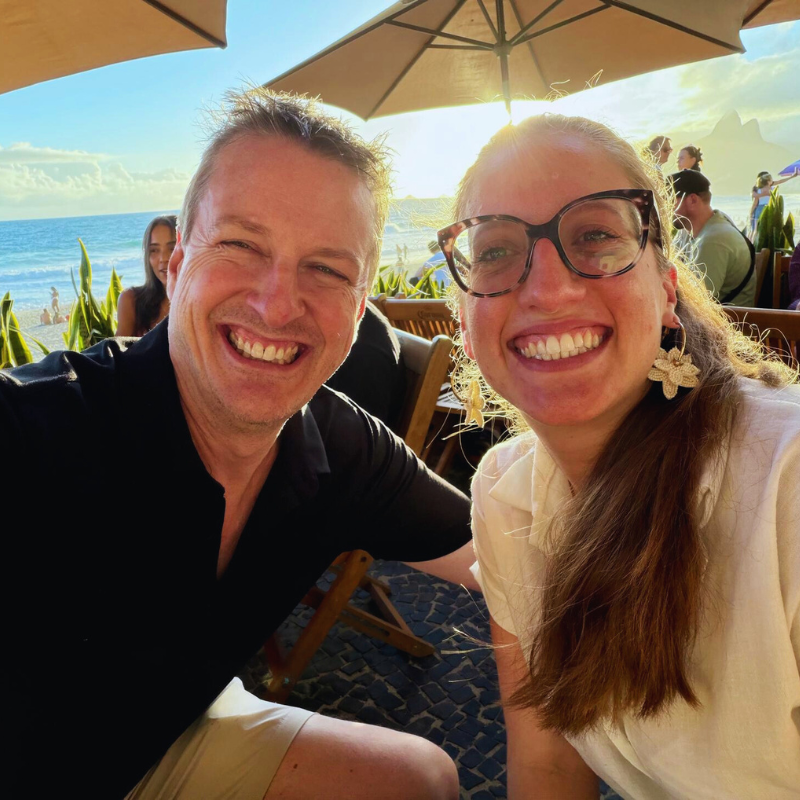
Matt Bowles: My guest today is Sarah Rapp. She is a global advocate for equal rights, a world traveler, and the founder of How to Be Global, an initiative which aims to connect the world by lowering boundaries, reducing fear of other cultures, and embracing diversity. She is an ambassador for the UN Foundation’s Equal Everywhere campaign for gender equality, and she serves as the senior manager of alumni and marketing campaigns at JA Worldwide, which is a 100-year-old NGO that has served over 100 million youth around the world. She is also the head of PR at Nomads Giving Back and Nomad Skillshare, and she hosts the How to Be Global podcast. Originally from Germany, Sarah has now traveled to over 45 countries.
Sarah, welcome to the show.
Sarah Rapp: Thank you so much. I mean, listening to my own intro, I’m like, oh, my God, that is a lot of things in a lot of different countries. I’m like, God, that’s very interesting to hear it from someone else’s perspective. So, thank you so much for having me.
Matt Bowles: So good to have you here. You and I have been meaning to have this conversation for quite some time and I’m so glad that we’re finally doing it today. Let’s just start off though, and talk about where we are recording this from today because unfortunately, we are not in person. I am actually in Chicago, Illinois today in the United States. And where are you?
Sarah Rapp: I am talking about global traveler. I am in Mexico right now in Mexico City. Very excited to be here, waiting for my 14 days out of the EU to be able to actually access the US so my final destination is Boston. So, I’ll be there on Sunday.
Matt Bowles: Wow. How Cool. We should definitely chat about that. I want to hear about your plans in the US and how long you’re going to be here. Maybe we can cross paths while you’re in town. That would be fun.
Sarah Rapp: Totally.
Matt Bowles: How long have you been in Mexico? CDMX, by the way, is one of my favorite cities in the world. I mean, what a spectacular place. I’d love to hear your reflections on it and what you’ve thought of it so far.
Sarah Rapp: Totally. I love Mexico. I have, like, it’s one of my top countries, top city. The people are amazing. I’m eating too many tacos, drinking too many of the, like, sugary things, which are also spicy at the same time. And I’ve been here two weeks now, and I’m very fortunate that I also have friends here in Mexico, so I get, like, the real Mexican experience while I’m here, which is very exciting. And it’s my first overseas travel, I think, for a lot of us in like, one and a half or two years. So, I’m even more excited to be abroad.
Matt Bowles: That’s amazing. Well, the other place that I want to ask you about that I know you were fairly recently is Albania.
Sarah Rapp: Yep.
Matt Bowles: I have been to the Balkan region. I’ve spent a couple months in Belgrade in Serbia. I have been through Croatia. I’ve been to Montenegro. I’ve been to Mostar and Bosnia, but I have not been to Albania. I’ve heard amazing things. It’s super high on my list. And you and I, of course, follow each other on Instagram, so I was watching your travels through then. I was super excited because we haven’t talked since you went there. So, I’d love to hear your reflections on Albania.
Sarah Rapp: Totally. So, it’s probably a coincidence that, like, in this year, where we kind of somehow are able to travel in certain restrictions again, I’ve been to my two favorite countries, which are Mexico and Albania. I mean, I sincerely do not understand why people don’t go there. Right. It’s not a popular destination at all. But literally, in the north, it looks like Switzerland. It has high mountains. They’re incredible. The nature is so untouched because not a lot of people go there. And then if you go down the coast, right, there’s like, Croatia and obviously Greece, which are totally packed with tourists, but the same coastline is in Albania, which is amazing. And it was just wonderful. And I was actually traveling 10 days and did the entire country from, like, north to south and then back up in 10 days, which was beautiful. It was very hot, to be honest. Like, that was maybe the only downside was super-hot, but otherwise it was amazing.
Matt Bowles: That’s amazing. I was in the region in 2019, just a few months before the pandemic, because I went to Macedonia with one of my best friends, is Macedonian and has family there. And so, him and his family are based in the United States. And, you know, they go back to Macedonia every year to visit the relatives and everything. And so, I was able to meet them there and just spend this incredible quality time with local folks in Macedonia. And we’re just drinking wine, sitting under vineyards and just, like, looking at lakes and just hiking around and eating amazing tomatoes and cheese and incredible food from the region. And what a special place. But Albania, very high on my list. Even higher now hearing your explanation of it.
Sarah Rapp: Yeah, totally recommended. Also, everything you said, hiking, good food, wine, local things. You get all in Albania, too.
Matt Bowles: That’s amazing. Well, I want to hear a little bit about your sort of origin story. I’d love to go all the way back because you were born and raised in Germany.
Sarah Rapp: Correct.
Matt Bowles: And I would love to hear a little bit about your upbringing, where in Germany you were raised, what your upbringing was like. And when you think back, how did your interest in travel and seeing other cultures, where did that sort of come from initially?
Sarah Rapp: So, when I grew up back in Germany, in the south of Germany, very close to the Swiss border, actually. So, I grew up in a very, how I call it, German environment. So, all the Germans will laugh now because they exactly know what I’m talking about. It’s like German food, German parents, grandparents all the way. Like, everyone, right? Like you. I feel like you can dig into, like, all the ancestors and whoever, all are German. So that’s pretty much how I grew up. So, no cultures involved, no nothing. Very small town. And I was actually not interested at all in any international things. I hated English in school. I hated French in school. I almost didn’t pass a class because of my English because it was so bad. And I was in school, like, I never need to do anything in English. Why would I need to learn this?
Well, here we go 10 years later, only doing global things. Don’t want to go back to Germany, right. So just fast forward. But when I grew up, I don’t know, I was never exposed to any other cultures, right? So, I was just in my German bubble. And this is what I usually talk about with how to be global. Everyone has their bubble, and you’re comfortable in it, and you don’t necessarily look outside, because why? You have pretty much everything talking about white privilege. I know that you and your podcast always like try to like bring up this white privilege because we have it, right? We don’t necessarily choose to have it, but that’s just a fact. And I think so many people don’t know and don’t recognize that they have it and don’t do good with it. Right. Because I think there’s so many things you can do good with that. But what happened then is I studied in Stuttgart, so some of you might know a bigger city in Germany. I moved out of my parents’ house when I was 19 and that was kind of the first time where it was a bit more exposed to other cultures because I was working in sports, so in a sports federation and we had giant international events and there obviously a lot of people from abroad came, like the athletes and the coaches and whatnot.
And then I felt like this is actually cool, you know, I like to communicate with those. And then I realized, oh, I should maybe learn English properly. I mean, I had it in school, but I really sucked at it. So, I actually took private lessons. I paid for it myself. I bought all these grammar books, which I never did in school myself, and then learned English in that way. And also, what added even more on that is my current job at JA Worldwide. So, I’m an alumna of the program. So, I also took part in this program school where you actually create your own startup and it’s a global network. So, after I finished that, I was also part of the European network where I also got to know a lot of people from other cultures. So, it all started kind of when I finished school. And then ever since then, I really loved it.
Matt Bowles: So, let’s talk a little bit about JA Worldwide. Can you say what that stands for? And then tell us a little bit about the organization, the scope of it, what it does, and also, I’m really curious about how you decided to participate in the program initially and what was your experience like as a participant before you started working for them?
Sarah Rapp: Yeah. So, I feel like we could do a whole other podcast season probably on my experience with JA Worldwide because it literally changed my life. And I’m not saying this because work for them, they don’t pay me for these things. Right. So, JA stands for Junior Achievement. So probably where you are, there is an office because we are in 115 countries around the world, so very widespread. And our flagship program is called the JA Company Program. So, what that means is in school when you’re approximately like 16 to 17 years old, you have, well, the Task to actually create a company with real money, real products or services. So, you have to come up with like, who is the CEO, who is the CMO, who does sales, who does what. And then you have to produce or create something which at the end of the day you will sell to end consumers.
So that’s the whole project, which is pretty cool because who learns in school how to actually create a marketing plan or to like pay out some like salaries for your employees? So, when we finished our school year, I was very interested in this whole. Well, back then I had no idea that this is entrepreneurship, right? I was just like; this was really cool. That sounds amazing that you can do something practical. That was me, 16-year-old on like, I want to do more. And then there was an innovation camp where I actually participated, which was far away from my hometown in Cologne actually. And that’s where I met more of how I now see like-minded people who are entrepreneurs themselves now. I mean, to be honest, just change the world to the better in whatever industry or field they are.
So, this is how I got to know the alumni network. And ever since I’ve been volunteering for the alumni network was heading up the European Alumni Network. Back then we had already 25,000 people. And then four years ago, my role, my current role actually to create these alumni networks around the world wasn’t existing before. So, this was really cool. They said, hey, we’re going to hire you and you’re going to make that work around the world. And I’m like, okay, let’s figure out how that works. And now four years in, we now have like over 70 alumni networks around the world, in 70 countries and so many more to come.
Matt Bowles: Well, I also want to hear a little bit about the development of your political consciousness through perhaps your travel experiences or other things that contributed to that and starting as far back as you can remember as well, because I’m always very interested in this. You and I have a lot in common, right? I mean I also grew up in a very homogenous, white upper middle class privileged suburb in the United States, very culturally insular. And then you and I both were able to eventually get on a track where we became very passionate about human rights and anti-racism and feminism and class inequality and all of those things. And then that led us into the international arena and all that kind of stuff. So, I’m always super really interested to hear from other people how that journey went for them, what kind of sparked that in the beginning. And can you share a little bit about that path Starting as far back as you can remember?
Sarah Rapp: Yeah, totally. Actually, I can remember very far back. It also has to do with Albania because the thing I remember now, obviously because I’ve been talking so much about culture and why German culture is most probably not the most open to the world and all of that kind of stuff. So, I just remember that I was very small, maybe four years, I don’t know, four or five probably. So next to our house in Germany, there was an old factory and they then refurbished it into a refugee home for people from Albania because obviously back then it was kind of after the war and it was still politically unstable, so we had a lot of refugees right next to our house. And I remember we had a fence in our garden and I was playing there, so I must have been very young. And I just remember that my parents or like my grandma and everybody said, oh, don’t go there, don’t play with them. But I obviously didn’t understand the reason, right. And I just remember that there was another girl I was always like playing with, but probably wouldn’t obviously speak with each other because she spoke alone and I’m German and this was kind of like from the very start.
So, I wouldn’t consider my parents as obviously the, well, racist or something like this. But there’s so many stereotypes and biases which are there and you don’t even realize when you don’t talk about them, right. Also, for my parents, they’re now much more open minded since I’m so much more out there in the world. And I’m bringing this like, hey, they are just like actual humans, you know, it’s like they’re humans. It’s not necessarily what the media tells you these are. People just in another place of the world might have different values, but at the end of the day, we’re all just human beings who want to survive and be happy in this world, right.
So, this was very young. And then I think while I was traveling a lot of the times, especially in the beginning, you have a lot of culture shocks. I don’t necessarily like the word shock, actually, because it always is negative. And I don’t think it’s negative. I think it’s very healthy actually to get these quotes, culture shocks because then you rethink on like, oh, well, I thought this is right and this is wrong. But the more you travel, the more you experience. I’m sure you can say the same. The more you realize there’s no right or wrong, it’s just like different. I mean, you not necessarily want to agree with everything other people do, but you just accept it as like, well, that’s different. It might not work for myself, but it’s great if it works for them.
Matt Bowles: And then as you continue to travel the world, I mean, I would love to hear a little bit about how some of those travel experiences impacted you. Some of the major experiences that you think sort of helped to shape the course of your life and the decisions that you made and the trajectory that you went on. What comes to mind?
Sarah Rapp: Oh, so many. Honestly, this is where we come back to Worldwide or JA. In general, right? On a lot of countries. Because luckily also my voluntary role on the European level, it was voluntary, but we got to travel, right? We had a lot of conferences. I was able to speak at the EU, you know, the EU Commission, which is amazing. When it was like, 22 or something, you know, it’s like, wow, I’m at the EU Commission. Like, what the hell is going on? Right? All the travel experience were amazing within Europe, but once I traveled outside the EU, I’m like, oh, my God, this is a whole new world, right? Because within Europe, we have a lot of different cultures, but the core ideas are quite similar, right? But then when you travel to, like, a country in Africa or to the Philippines, I mean, this is obviously totally different culture. And I remember the first time I went to the U.S. was actually in 2017. It doesn’t sound too far away, right? That was my first overseas trip.
And then now I’m like, all over the place all the time. I think the classic reaction was like, this is like a movie, right? It was actually to Atlanta, you know, all of all the places. Like, everything is huge. And I’m like, wow, this is like proper downtown, how you see it in all those movies, right? So, this was the first thing. And then right after I went to Mexico, actually, which was obviously amazing because I love the Mexican culture so much because they’re so much more open and, like, all the friends and family and everything, like, everybody’s dancing all the time. So, this really, really shaped on who I am, because I feel like wherever I go, I literally just take small pieces, which I think, oh, this is amazing. I really want to incorporate that into my life. And then I’ll just take them with me, right? And also incorporate them in wherever I live around the world.
Matt Bowles: Well, I know that you spent a bunch of time on the island of Malta as well, and I wanted to ask you about that. I spent about a month in Malta, which was just a fascinating, super interesting experience. I mean, for Folks that don’t know Malta, I mean, this is an island nation in the middle of the Mediterranean Sea, which is just absolutely unique in so many ways and so different from anything that I had seen. And you spent like four years in Malta. I would love to hear a little bit about your reflections on that experience. But also, for folks that have never been to Malta or don’t know much about it, why should folks go visit Malta as well?
Sarah Rapp: Yeah. So first and foremost, to clarify, also for Europeans, Malta is its own country, right? Everyone’s like, oh, you’ve been to Italy? I’m like, oh, no. It’s actually like Malta. They’re like, oh, yeah, Italy. I’m like, no, no, it’s a known country. It’s very tiny. As you mentioned, it’s in the middle of the Mediterrane. See, it has 450,000 people. That’s it, right? 100,000 Of those are foreigners. So not a lot of people. But there’s also not a lot of space. So how I ended up there, I was working five and a half years in Germany and I felt since I’m 16, I wanted to leave Germany. I’m like, I don’t think this is my place to be or right now, I don’t know. But then I didn’t, you know, studies and work and whatnot. But then I’m like, okay, I’m done. I’m going to leave Germany. And then I applied for jobs everywhere in Europe except of German speaking countries. So, I’m like, well, that’s at least something.
So, I don’t have, like, to choose between a great offer in Germany and somewhere else, right? And then I got a random, very random job offer in Malta which is also sports related. And then I’m like, okay, you know what, I’ll just go. And if I don’t like it, I’ll just go back. That’s obviously the beauty of the EU, that you can literally just take your luggage and move to a new country. So, I ended up there. It was very, very nice. It’s obviously totally different climate, so be aware. Don’t come in August, it’s too hot. Like the AC is your best friend. You’re going to sit in a coffee shop all day long because you’re going to die outside. But there’s so much culture on the island because they actually have underground pyramids. There’s so much cultural heritage because literally every country around was once ruling Malta. Like everyone, if you think, nope, all of them were there.
So, there’s like a lot of history because it’s a very strategic location in the Mediterranean Sea. It’s right in between the Middle east and Europe and North Africa, right. So, I was there. It’s beautiful because it’s also very international, English speaking, which is very helpful for international purposes. And then obviously it’s an island state. So, a lot of companies are coming to an island to maybe, or maybe not safe taxes, right? Let’s just say that.
Matt Bowles: Yeah. And the history is absolutely unbelievable. And like going like way back, like when St. Paul the Apostle was shipwrecked on the island of Malta, the held as a prisoner. And like going to the. Back to the Odyssey, when Odysseus was allegedly held captive by the calypso as a sex slave on the.
Sarah Rapp: I know.
Matt Bowles: And you can like go see the place where this supposedly happened. Right. And then the art history there. The, the. The history of Caravaggio in Malta is like one of the most fascinating pieces of art history. They have his only. I believe it’s the only painting he ever signed, which is in St. John’s Cathedral in Valletta.
Sarah Rapp: Right.
Matt Bowles: The Beheading of John the Baptist. You can’t take pictures of it or anything. You just kind of like go. You like, tiptoe in and like, you know, no cameras allowed. But like, I mean, what an amazingly fascinating place. The architecture, totally unique. I mean, like, super fascinating place.
Sarah Rapp: Yeah. And then on top of everything, it has this what I call lovely Mediterranean chaos to it. Right. So, it’s not at all organized, but it works. That’s the beauty. Right. There are like too many cars, they’re driving too crazy. Everybody’s honking the horn. Everyone’s late all the time. But they’re amazing. The people are amazing. But obviously, for everybody who likes to be very organized and very structured, Malta might not be the ideal place for you to live all the time. But once you get used to it, like, you know me coming from Germany, it’s not common to be like 45 minutes late for dinner. In the beginning, I did reservations in the restaurant because I felt like, okay, you know, nobody does that. Let me book a table. And then everybody was late. So, I was constantly calling the restaurant. I’m like, I’m so sorry. We were running 30 minutes late and they were like, why are you calling us? Probably because we’re running late. Right. So even the restaurant staff is so used to, I think they look weird at you if you’re actually on time for your reservation. So just as a quick side fact from Malta.
Matt Bowles: Yeah. And it’s like right in the middle of The Mediterranean. It’s maybe a 90-minute boat ride from Sicily. I mean, you can get to some other absolutely incredible places from Malta. So really, really cool place to post up. Well, I also want to ask you about some of your other world travels. I know you spent some time in Africa and you and I both have a shared love for Accra in Ghana. I spent about a month in Accra in 2019 and just fell in love with the city. I mean, what an extraordinary place. And I would love to hear about your experiences in Ghana and what ended up coming out of that.
Sarah Rapp: Yeah, totally. So, the first time I traveled to Africa was actually Ghana and it was in 2018. And me, it was all for work. So, most of my world travel things were for work. So, I’m very fortunate to have a job where I actually go to the places, explore with locals and help them on the ground, establish their networks, which is so powerful because there’s no one solution for all of that. You have to get used to. Well, there is no Internet. We’re like, okay, yeah, we’re going to switch to something else, right? So, I went to Ghana and this was honestly the first time for me where I saw like real poverty, right? I mean, we also have poverty in Europe and other places, but like real, real poverty.
And what was crazy, even after the conference, which is obviously like in the fanciest hotel in Accra, I always take more days in the country because I’m like, listen, this is great, amazing, but I want to see the world country, I want to meet the people, I want to see whatever is happening here. So, then they said, oh, you have to go to a tourist attraction, which literally was Jamestown. So, if you’ve been in Accra, you know Jamestown, right? And I’m like, okay, let’s go there. I had no idea what this quote, tourist attraction is all about. So pretty much for everybody who doesn’t know, it’s in Accra, the capital of Ghana, right at the seafront. And it’s a very poor area. There are also some markets, but there are a lot of orphans because their parents are fishermen, right? And they go out to the sea, but unfortunately, oftentimes the sea is too rough and then they just literally don’t come back.
So, there’s like a bunch of kids, orphans running around with like no chances in life. So, I sat there and I’m like, so first of all, why is this called a tourist attraction? Right? And then second of all, how can I help? That was my first reaction. I’m like, the orphans because with how to be global, my goal is to help everyone get a voice, give people a platform to speak up and be empowered to actually say what they want to say and really stand up for what they believe in. And I’m like, the orphans, they don’t even have parents. There’s no one. So, then I was there and I’m like, okay, so how I’m going to do this? So, I literally just took on my phone, did an Instagram story and I’m like, I’m here. I have no idea how, but I want to bring those kids in school or help them or do something, right? And I started a fundraiser actually on the ground while I was there. And like, here’s a fundraiser, let’s donate money, I’ll figure it out. I can’t promise you where this money goes. I don’t know what is going to happen, but I’ll make sure that these kids have a better future.
So that was one year, went back home and had the fundraiser for an entire year because I knew I’m going to back one year later. So, I’m like, let me gather money and collect money for one entire year. And I got around like €4,500, which is not too shabby actually for no actual, like this is what we donate the money for. So, everybody literally just trusted me and said, okay, Sarah, here’s money, just do something. And then in the meantime, luckily, I have also from our J location there, there’s also an alum who had an organization called EduCom World in Ghana and in the U.S. and they offer education programs to especially underprivileged into trying to give educational access to a lot more people. I’m like, hey, listen, let’s partner on this. So, what we did actually one year later we found a school in Jamestown Accra. So, it’s kind of like a. I would call it preschool. So, they literally bring the orphans into their school and teach them whatever they need to learn, like writing, math, anything to then actually place them in school. Because the orphans, right, they don’t have any education. Like Even if they’re 12 years old, they can’t write and read because from where?
And luckily, I was so happy that we could actually bring 35 orphans so in full school, we could pay for entire year for them. They got books, they got clothes, they have food in the school. And this is how the Halibu Global scholarships, how we called them in the end, were born. And then we had actually some money left. And with this money we were supporting single mothers because I ended up with my colleague from Ghana on Good Morning Ghana on the TV show. Don’t even ask how that happened. So, we were in Accra talking about the how to be Global scholarships on tv. I have no idea how this all happened. And then we did kind of a call to action to all the single parents out there who need support. And then literally our phones were ringing while we were on TV. And then we could support also 50 single mothers with at least something, right, so they could get their kids into school.
Matt Bowles: So. Awesome. So, can you give us a little more context on how to be global and maybe just take us back a little bit and talk about what was the impetus for starting how to be global initially? And then what is the vision and mission and what is how to be global?
Sarah Rapp: Totally. So, as you can see, my life went from German everything, to global all over the place, right? And I kind of went into this fully global world as probably everyone in the beginning on, like, very excited on, like, oh, my God, this is so cool. But then you slowly realize, oh, my God, there’s so many challenges. Can someone, like, help me navigate through this global thing? Because people get offended because they have different values, different backgrounds. If you’re in a work meeting, if someone shows up late, the Germans are mad, the Italians are mad, if the Germans write mad, you know, it’s like a whole mess. I mean, it’s a cool mess, but it’s still a mess.
And then I was kind of searching for solutions on, like, is there anyone who’s like, kind of bringing all this information together or, like, guiding people through? And I found a lot of different things, but not like one thing where you can learn how to be global. Seriously. And this is where I’m like, okay, you know what? Let me start with a podcast. Because in the beginning I felt like maybe it’s me. I need to check first if it’s me or if it’s an actual problem which is existing out there. So, what I did for an entire year, I was interviewing a lot of people from, honestly, various different backgrounds, people who work internationally, expats, digital nomads, people who have organizations, like, all kind of different contacts, but all with the global aspect to it. And what I found out is, well, it’s a real problem, right?
So, people were more connected than ever through social media and whatnot. But also, the cross-culture communication is not getting any better. Everybody’s just saying whatever they believe in. And no, you’re right and I’m wrong or the other way around, but this cross-culture, communication, which is so crucial for us to move forward. There’s not a lot of awareness about this topic that we need this communication, because otherwise we will just hate each other because we believe in different things. And this is honestly why I started it. And now, after a year, I’m excited to start soon, season two, which will be a bit more focused on various topics, a bit more on also my social channels, educating about different topics. It’s less about getting the big picture, more on zooming in on different and various topics all around, helping people to find their voice in this world and make sure that we all understand each other.
Matt Bowles: That’s awesome. So, one of the amazing things that I love about hosting a podcast is how much I learn from my guests. I just invite super fascinating, brilliant people on, and I just ask them questions, and I just learn things all day long. And you have now done something like a hundred episodes of the How to be Global podcast and had fascinating guests on from all over the world. And I’m wondering, as you reflect back on those first hundred episodes, what are some of the things that you have learned from your guests? Things that maybe stood out? Or when you think back on the whole series, how did you grow as a person from things that you learned from your guests?
Sarah Rapp: Oh, my gosh, there’s so many. I think one general thing I learned is how to talk to people in a more meaningful way, right. What usually happens is if you’re not, quote, trained in it to talk to a lot of people. I interview someone you’re always trying to, like. You ask a question, and then you rephrase the question, and then you rephrase it again because you think, for whatever reason, the person didn’t understand what you wanted to say, but you don’t even give the people this room to breathe for a sec to, like, actually answer your question, right. And this is something which you can use for everything now. Also, in work meetings, I’m not afraid anymore of this, like, well, some people call it awkward pause. I think it’s a very healthy pause, right. So, I’m, like, asking a question, give people two seconds to, like, breathe, reflect on whatever I said, and then they come up with an answer, right.
This is just a very practical approach, which has nothing to do with, like, how to be global, but just generally. And I think one other big learning was before I started the podcast and also my friends back in Germany, most of the time I felt that I’m, quote, the weirdo. There were so many different things in my head going on, and there’s so many things going on all the time. I’m also very creative that a lot of people, they just didn’t understand what the heck I’m doing, right? Or what I want to do or what I want to achieve and why I want to connect with so many people. So, it was felt a bit like, hm, not sure if this is like, I don’t know, it felt a bit off. But then connecting with people with like this global mindset, I’m like, these are my people. Like, yes, I know. You know, all the time in the podcast, I’m like, exactly. I was like, thank God someone else is thinking the same thing as I do.
And it could just be like small things on, like going back home after a long time into your own culture where you grew up and you feel like, totally, like, why would we even do this, right? And everything is just upside down. So, this is one of the biggest learnings that no matter what you’re interested in, no matter what you believe in, there is someone else out there who believes the same. Right? You just need to find, quote, your people. And in my case, well, they’re all across the world because I love this global mindset. So, the people I’m close with are not like physically closer, but they’re just like, close, you know, on a screen somewhere else in the world.
Matt Bowles: I also want to ask you a little bit about how you got involved with the UN Foundation’s #EqualEverywhere campaign regarding global gender equality initiatives. Can you share a little bit about how you got involved with that and then what the scope and mission of the campaign is?
Sarah Rapp: Yeah, it’s so cool. I feel like it’s probably the dream of all global minded people to somehow be involved with the un, right? So, when this happened, I was like, oh my God, what in the world is going on? So actually, when I started the scholarships, this is when it connected also with a friend of mine who was connected with the un, you know, like how it works in a network. And they were looking for people to feature on this #EqualEverywhere campaign. So, it’s a yearly campaign which talks about gender equality first. But how I interpreted it, which they really loved, is like #EqualEverywhere in terms of like literally everywhere, right? Not necessarily gender, but like the whole thing.
Obviously, since I’m a woman, this is obviously, you know, I can for sure also speak up for women rights. But I’m also more like, hey, let’s just include everyone in this, like, #EqualEverywhere. And then it was pretty cool because it was a social media campaign where how to be Globalist Scholarships got featured, and then also some videos where we literally just spoke up from various different areas around the world, various different people using the hashtag and creating this momentum and movement about #EqualEverywhere, which is very exciting to be part of this. And it’s a yearly thing, which is ongoing, so I’m very excited to have this coming up every year.
Matt Bowles: That is so awesome. And of course, I also have to ask you about Nomads Giving Back.
Sarah Rapp: Oh, yes.
Matt Bowles: Our mutual friend Tarek Kholoussy, whom Maverick Show listeners know because he’s been on the podcast before, who founded Nomads Giving Back and is a very dear friend of both of ours. But I would love to hear a little bit about how you got involved with Nomads Giving Back, what your role is there, and actually maybe just start for people that have never heard of Nomads Giving Back, just talk a little bit about what the organization is and what it does.
Sarah Rapp: Totally. So, also, fun fact, this all happened because of how to Be Global. Because in the How to Be Global podcast, as you might know, Matt, we’re constantly looking for great people to interview in various different areas. So, it’s literally just scrolling through Instagram, using some hashtags and be like, hey, I think it could be really cool to interview some digital nomads who are, like, in one place for three months and then move to the next and whatever. So, then I found on Instagram Nomads Giving Back. And what I read in the profile just resonated with me. They’re like, we’re an organization, and we want to make sure that the nomads, no matter where they are in the world, actually give back and have an impact, right? So, they are what we do. I mean, now I can say we, right? We are connecting digital nomads, or everyone who considered themselves as a nomad, right, with local organizations on the ground for, like, volunteering or whatever the local organization needs.
So, they tie in with the actual on the ground, how the world works there. Because a lot of times there are a lot of expats in some area, but they stick with each other, right? It’s like this expat community within a local community, but we’re breaking up these boundaries to make sure that we help the country wherever they live in. And then, you know, the country also benefits from foreigners coming to their country. So, what happened is I literally just reached out. This is also an advice for everyone. Just reach out to people. Like, reach out on social media. Just ask if they say no, but that’s great. But I ask them like, hey, I would love to have you on the podcast. And then I had Bianca, who was head of Impact on the show, and then obviously, how it goes. I followed her. I followed them. It’s giving back. And then they had a volunteer job opening on head of marketing and advertising. And I’m like, well, that sounds like me.
So, I had. Actually, it wasn’t even an actual interview with Tarek you just mentioned. And for everybody who didn’t listen to the episode, go back and listen. It’s really cool.
Matt Bowles: We’ll link it up in the show notes to this episode so they can go back and listen to that one. I agree. It was a great episode.
Sarah Rapp: Yeah, it’s so cool. So pretty much what happened? We just chatted for like two hours. And at the end of the two hours, we literally had our marketing campaign for Nomads Giving Back and Nomad Skillshare ready. And then he’s like, okay, so I think you’re in the team. And I’m like, hold on a minute. How does that happen? So, this was almost a year ago now, and I’ve been with them ever since. And just recently I shifted my role from head of marketing and advocacy more into the PR side. Right on. Really making sure that this great cause of Nomads Giving Back is brought to the world. And also, Nomad Skillshare, where we teach aspiring nomads or people who want to become a digital nomad on how to actually do it. Because there’s such a huge demand out there. And obviously, while bringing all those two organizations together, the more people are digital nomads, the bigger impact we can have at the end of the day, obviously.
Matt Bowles: That is so awesome. Well, I want to ask some of your tips in terms of approaching some of this advocacy work, particularly folks that are trying to approach it from a privileged position. And as you do that, you obviously spent a number of years now, you know, in the space and I’m curious about your reflections and tips that you have for folks. Particularly, for example, when doing work in Africa, for example, there are these sorts of tropes about the white savior complex and ways that we can sometimes inadvertently. Right. Like, well, meaning people can inadvertently reinforce representations of African American that it’s all people in poverty and that’s all Africa is. And you know, this kind of, you know, these types of racialized images and things like that. So, I’m curious where you’ve sort of arrived in terms of contributing and affecting positive change and also doing that in an empowering way for the folks that you’re working with, what advice do you have on how to navigate that?
Sarah Rapp: That’s such a great and also very important question. And honestly, the question I struggle the most with, probably out of all the things in this space, there’s always this fine line on what you said, presenting yourself as like, I’m saving everyone and on the other hand, not understanding what is actually going on the ground. So, I think my best tips would be, I say this all the time when I give a keynote, especially to younger people. Always switch out your stereotypes or your things. You think about the country with curiosity. Because I think if you approach things with a very curious mind and you ask if something is not normal for you, instead of judging or be like, what is this? Just be very curious and be open minded and also vulnerable to the other communities on like, hey, I noticed you’re doing this very different than I’m used to. What is this all about? And what I figured when you go about this like that with a very open mind, people are so happy to let you into the culture, explain you all the things, and are very happy to explain you on how it works on their end, for example.
Matt Bowles: Yeah, I think that’s really important. And I think that also lends itself to providing agency to people to define the terms of their own struggle and the challenges that they want to overcome on their terms, as opposed to somebody from the outside coming in and saying, clearly, these are the specific, specific things that you’re being oppressed by and these are what you and people might be like. No, actually I’m not really at all concerned about this first three things at all, or whatever it may be. And so, I think empowering folks with the agency to define the terms of their own struggle and then seeing how we can act in solidarity, totally to support those folks as opposed to trying to come in and save people or impose our, whatever it may be, kind of Western cultural solutions onto them or like whatever it may be, and instead to go in and to learn and to listen and then to be an ally and to be able to act in solidarity.
Sarah Rapp: Yeah. And I think also the word ally is so important because you don’t know what you don’t know. Right. When I started my journey, I wasn’t really aware of like white privilege because it’s just there. So, you have to unlearn certain structures you’re used to. And you also sometimes just have to take a step back and be like, okay, it’s a thing. Right. And it’s not easy. The journey I just wanted to clarify this. This journey is not easy. Like, you have to educate yourself, and there’s a lot of things where you’re like, oh, my God, what is this? Why did I think this? So, you’re going through a journey yourself where you’re like, oh, my God. And I think one great advice is also, I had an incredible mentor, and I’m still in contact with her. I love her dearly. She’s called Glow Graphics on Instagram. She’s now really big. I’m so excited for her. She’s just been on TV as well. And she’s a person of color.
So, I intentionally have a surrounding who are people from different backgrounds, totally different cultures, who are my mentors, who are my coaches to get, like, various different perspectives and really help me to understand different perspectives as well. So, whenever you can surround yourself with people from other cultures, it’s not easy, right? It’s not the easy way, and it’s not the most comfortable way because there’s always misunderstandings. There are always situations where you’re like, huh? But then going back to like, okay, it’s different and not right or wrong thinking. And then at the end of the day, it’s so worth it, and it opens your mind, and it’s just beautiful.
Matt Bowles: Yeah, totally agree with that. So, Sarah, as you reflect back on all of your travel experiences now, you’ve been to, like, four, 45 different countries, and you’ve interacted with so many different types of people all around the world. What would you say has been the transformative impact of travel on your life as you’ve kind of grown as a person now, especially over the last five years or so, as an itinerant world traveler, what would you say has been the transformative impact? Or maybe a couple things that, you know, you can point to that how travel has really shaped your life?
Sarah Rapp: Yeah. One is I’m very flexible. There’s not a lot of things which can actually, I’m fine with everything. I’m like, we’ll figure it out. It’s going to be fine. Because when you go to different places, things work so differently. So, I feel like I’m so, well, not a calm person, but inside, I’m very calm. And I’m like, okay, here’s the situation. It’s going to be fine. I just don’t know how, but it’s going to be fine. At the end of the day, I mean, this starts with, like, delayed airplanes, sleeping on an airport at the middle of the night, not knowing where and when you’re going to go into the next airplane. This is like with eating food on streets in the middle of nowhere where you don’t know what you’re really eating, but you’re like, okay, this is just what it is, you know? Or like me being now almost vegetarian now being in Mexico, I’m like, well, vegetarian is not a thing here, so I’ll just be non-vegetarian for two weeks. It’s just like this flexibility which just makes life so much easier, honestly.
Because you can adapt to situation much easier. Doesn’t mean that situations are easy, but you’re just much more calm and much more peaceful within you. You literally figure it out on the way. So that’s one. And I actually just literally said it the other week to my best friend. I feel so relieved that no matter where I go, everybody still has stereotypes. Right? That’s just the thing, like they’re existing, you can’t get rid of all of them. But now I go to a place and I go to a place with a very positive mind because I’m very curious about other people or especially I think growing up in Germany, when you quote, see people from the Arab world, how some Germans classify the entire Middle east, where I’m like, hold on, there’s so many different countries. You can’t just say the Arab world because it’s not a thing, right. They’re so different.
But they are obviously sometimes considered as like you have to be careful because of all the terrorism and whatnot, right. So, it’s the whole stereotype about this. But now I’m so open minded and I’m just very curious on talking to people from all kind of different cultures. I’m not scared if someone talks in a different language or if there’s a group of men sitting in a cafe in Albania, which is totally normal there, right. Like men just go and grab a coffee and that’s why there’s a big group of men, for example. So, these are like two major things which shaped my way of thinking.
Matt Bowles: And do you think that it was going to those particular places that you had been socialized to view in a particular way growing up in Germany, countries where you were really kind of inoculated with a lot of fear about those particular places or kind of racialized views that they’re either they’re dangerous or they’re in some other way problematic? Was it actually going there and just interacting with people and learning from them and just having those conversations, you think that created that impact for you?
Sarah Rapp: Totally. I would a thousand percent agree. Going to the places where you think, oh, I don’t know. It’s the same with Albania, right? Like when I told my parents, I think it was three years ago, I’m going to Albania. They’re like, why would you go to Albania? Isn’t there a war kind of thing? Right. I mean it was that crazy. But some reaction like this. And then when you go there, you’re like, why are people thinking this? Like, why is that even a thing out there in the world and especially through the media, right. So many things get infused into you because you see it through a certain lens. And already just watching media from another country will help you a lot. What I also wanted to say, actually it’s not only about traveling the world because I know not everybody can afford it. It’s not the best thing for the environment. There are a lot of negative sides also from traveling the world.
Obviously, there are sustainable ways. But what I would encourage everyone is to. I actually did an episode on the podcast called how to be global from your house or from while being at home and just like interacting with people from different cultures online. So, for example, best example with Nomads Giving Back. I’ve never met any of those guys like ever before in my life. I just know them through the screen. And I can already feel like what Tarek in Bali thinks just because we interacted through the screen. So, it’s not only about going to places opposite. If you have the chance, I would highly encourage you to do it. But this is not the thing you have to do to learn about other cultures. It’s being open minded on screen. Maybe join international organizations like, or volunteer somewhere or just watch media from another news channel that will already change your worldview.
Matt Bowles: Well, and the other thing, particularly with Europe, but also the United States or other countries like that is that it’s not just right like these racialized sorts of views about know, dangerous people or things like that. It’s not just about, oh, if you go over there to their country, no, we have all of these refugees that are coming to Europe that are coming to the United States and we get this hyper racialized, you know, rhetoric about the danger and other negative attributes of refugees and things like that. And so right in people’s home country, right. They can put into action sort of what you’re saying. Right?
Sarah Rapp: Yeah. And I think it’s also a culture of welcoming people, right? Again, it’s this right or wrong. I feel like a lot of the times, I mean especially with like the U.S. and Germany, they have very strong cultures themselves. And they might not be the most, like, open and welcoming to totally different cultures, let’s put it that way. Not everywhere, but generally. Also, Germans are considered as, like, cold, not hugging people kind of stuff. So, it’s this mix of, like, bringing a total foreign culture with, like, prejudice on. Like, oh, the women are wearing the scarves around the head because the men are forcing them to do so. Right. I’m like, did you actually ever in your life talk to someone about this? Like, some. For sure. You know, there are, like, some religions, very radical religions and, like, practices in some countries where this might actually be the case. But this is not like everyone. This is maybe a tiny, tiny, tiny percentage of what you hear from the news. But I encourage everyone, like, go out there and just be curious and, like, actually ask. On a cave, I saw that you’re wearing something traditional. What is that all about? Right. And that already changes the whole conversation.
Matt Bowles: Yeah. And just have some compassion, some empathy about what these human beings have been through and why they’re refugees in the first place that are coming to your country. And if you were a refugee, how nice would it be if you got to a foreign place that you’re not familiar with and someone was welcoming to you and gave you, you know, love and compassion and empathy when you arrived, right. So, I think a lot of these things we can practice in whatever country we’re in with people that are just coming to our own country, and we can welcome them and be compassionate and empathetic, sort of global citizens within our country and welcome the rest of the globe and do what we can to support from. From there, in addition to, of course, when we are traveling. So those are awesome, awesome, awesome tips.
Sarah, let me ask you one more question, and then we’ll move into the lightning round and wrap this up. I’m wondering, at this point in your life, you’ve done all this travel, you’ve had all these experiences and all this kind of stuff, why do you continue to travel the world? What do you get out of it at this point in your life? What does travel mean to you?
Sarah Rapp: I feel like this is so deep inside of me, in my heart, because I’ve been traveling so much because I met so many people. I can see there’s so much work to do. You don’t know again. Right. Once you start, you see, like, okay, this is bigger than I am. This has to last longer than I can live on this earth. But there’s so much work to do. And honestly, also what I want to do is I grew up in a German environment. So, I know kind of the culture and where the people are coming from. And especially for example, my childhood friends or anyone who is quote like me from the looks, if I tell them something, they might listen a tiny bit more than if someone who looks totally different from a totally background doesn’t understand the upbringing, they might not listen in the same way to this person. I mean, do I like this fact? No, you know, I don’t like this fact.
But sometimes I would really love to be, you know, more like the opening to the world for other people who are like on the totally other side who never jumped out of this thing. Right. Obviously not saying that I will speak up in behalf of someone, but I constantly want to speak up for and with especially with other communities and bring more on like hey, they do it different, but have you considered doing this as well? It’s pretty cool actually. And it’s not how you think it is. So, this is why I continue doing this in my big dream. You know, I’m saying it now all the time. So maybe someone is watching from Netflix. Hello Netflix. I would love to actually create a documentary episode on bringing those differences out there and really showing the world that they’re not that big of a difference. It’s like the core is all the same. Just how we package it around it is different.
So, in case you have a Netflix producer as a listener, hit me up. Or I also take Amazon prime. That’s also totally fine. Like any big platform where how to be global really comes to fruition on like because we will be so much more connected. Like cultures will melt together. So, we better learn how to actually communicate and live together. Right.
Matt Bowles: That’s awesome. All right, Sarah, at this point, are you ready to move in to The Lightning Round?
Sarah Rapp: I’m very ready.
Matt Bowles: Let’s do it. All right. What is one book that has significantly impacted you over the years you’d most recommend people read.
Sarah Rapp: Think Like a Monk by Jay Shetty. It’s a very recent book disclaimer. I’m not into spiritual things. Usually, I’m very practical logic. But this book is incredible because he combines the very practical approaches, I usually take in life with more of a higher power understanding because he was a monk and he combines it in a way that also practical brains, like I can actually use them and understand them.
Matt Bowles: Nice. I will check it out and we will link this up in the show notes as well for everybody else to check out. All right, Sarah, who is one person currently alive today that you’ve never met that you would most like to have dinner with just you and that person for an evening of dinner and conversation.
Sarah Rapp: So, it’s a classic one. But Oprah, but to be honest, Oprah is such a great figure in so many different ways for women, for underprivileged, for like all the different things. And I would just love to feel the energy around her and just learn from her while being at dinner. I mean it’s a classic one, but I had to say her.
Matt Bowles: Awesome. All right, so knowing everything that you know now, if you were able to go back in time and give one piece of advice to your 18-year-old self, what would you say to 18-year-old Sarah?
Sarah Rapp: I would say stop worrying about so many things because they’re changing all the time.
Matt Bowles: Anyway, awesome advice. All right, Sarah, of all the places you have been to in the world up to this point, what are your top three favorite travel destinations you would most recommend people check out.
Sarah Rapp: Yeah. So, we talked about all three already today. Number one is Albania and a very close. Number two is actually Mexico where I’m right now. And number three, I would highly recommend Malta because it’s such a special place. So, we talked about all three today already.
Matt Bowles: Awesome. All right, what are your top three bucket list destinations? These are places you’ve never been highest on your list. You’d most love to see.
Sarah Rapp: I love to travel to destination “nobody goes to”, right. Not a lot of people go to. So, I would love to go to a place like Kazakhstan for example, or Azerbaijan, but also Mongolia because these are such interesting culturally places where also the nature and the culture is so untouched because not a lot of influences there from other countries and not so many foreigners. So, these would be my top three destinations.
Matt Bowles: That’s awesome. So, I just did Azerbaijan for about a month in 2019. Super fascinating place. I think it’s a really, really interesting place to go. And then after Azerbaijan then I did Mongolia. So, I’ll tell you the route. Here’s my recommendation. Are you ready? So yeah. So, Azerbaijan, fascinating place, right? I mean the history of Zoroastrianism. I mean fire temples, like really interesting place. I spent about a month there in Baku and then I went up to Russia and I got the Americans can get a 30-day visa for Russia. I don’t know how long Germans can get, but I was able to get 30 days and I spent two weeks between St. Petersburg and Moscow and then I took the Trans-Siberian Railway and I took the Trans Mongolian route. Okay. So, you go from Moscow and I Did this with like 30 nomads. There was an event called the Nomad Train, which is like run by Russian nomads. We had people from all over the world. It was absolutely wild. It was amazing.
So, we did. And so, we went on the Trans-Siberian Railway from Moscow all the way across Siberia and then down across the border into Mongolia. And the trip ended in Ulaanbaatar and then we spent some time in Ulaanbaatar and then we went and we took like camels went across the ghost adobe desert and it has absolutely stunning scenery. Super, super interesting place. So, I think those are really, really awesome picks. So, when you’re ready to schedule that trip, definitely hit me up and I will give you some tips on it because those are amazing places.
All right, Sarah, I want you to let folks know how they can find you, follow you, connect with you, and how they can check out your podcast. Season two is coming up. Let them know what they can expect for that and also how they can just kind of put plug into all the awesome stuff that you’re doing and learn more about you.
Sarah Rapp: Totally. So, thank you so much for first of all having me on the show and then also sharing what I do. The easiest thing is gone on Spotify wherever you listen to podcasts and just type in how to be global. That’s it. You can find me on Instagram either also on how to be global or Sarah Rapp, it’s my usual name on all platforms. But the place where you can find most information is probably on Instagram. And I’m very excited to relaunch my websites where you then can also donate if you want to the scholarships. We’re making them even bigger and like also helping the kids not only with their education but also with like water supply in the schools because we are just adjusting to the needs and especially Ghana Accra over the pandemic. And then you will have multiple options and soon there will be hopefully also more things where you can participate on like advocacy pieces, speak up for you, believe in much more to come. How to be global, just check it out.
Matt Bowles: Amazing. We are going to link all of that up in the show notes so folks can just go to one place. Just go to themaverickshow.com go to the show notes for this episode. There you’re going to see everything we talked about in this episode, the books that Sarah recommended, all of her social media handles, her website, her podcast links, how to contact her, find her all that stuff in one place. Go to themaverickshow.com go to the show notes for this episode. There you will find it. Sarah, this was so amazing. Thank you for being on the show.
Sarah Rapp: Thank you so much and hopefully see you soon on my podcast as well.
Matt Bowles: I would love to be on your podcast. Yeah, hit me up. We’ll do. We’ll turn the tables and you can have me in the interview seat and let me know about your itinerary in the U.S. and if we’re overlapping here, would be absolutely amazing to connect in person.
Sarah Rapp: That would be amazing. Awesome. Thank you so much.
Matt Bowles: All right, good night, everybody.