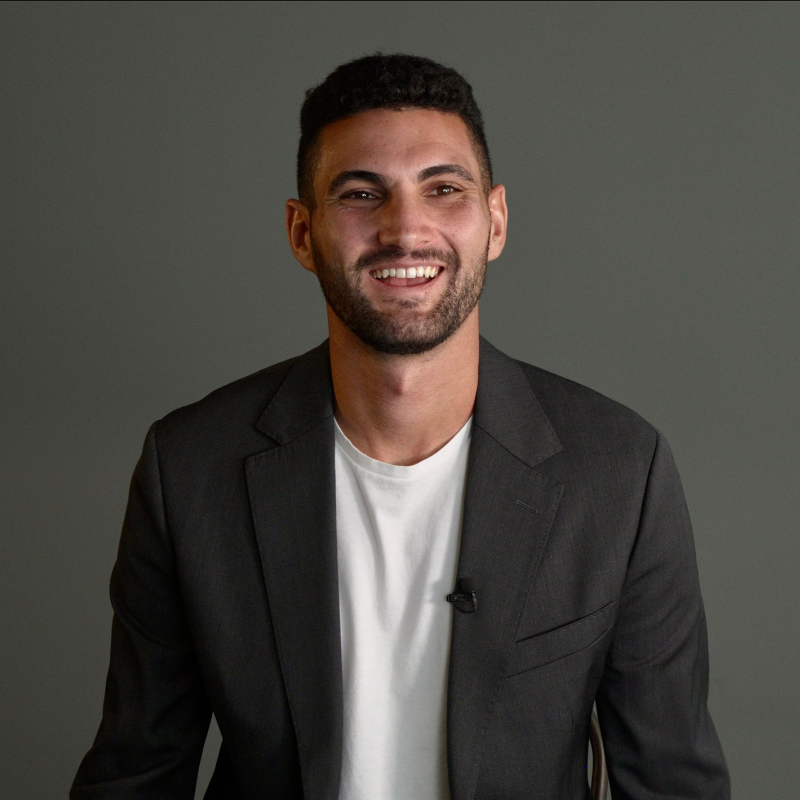
Matt Bowles: My guest today is Cameron Mofid. He became the youngest person to visit every country in the world in 2025. Completing the journey to all 195 countries at age 25 with North Korea as the final stop. Growing up with debilitating OCD, Cameron set out on a seven-year journey as a form of real-world exposure therapy. His experiences around the world now drive a message about navigating uncertainty, overcoming fear and redefining what we believe is possible. Cameron is also the founder of Humanity Effect, a non-profit organization supporting more than 750 children through two schools and an orphanage in Lagos, Nigeria. Today, he is a professional public speaker sharing his inspiring stories and lessons from his trip around the world. His story and his work have been featured in major media outlets including Forbes, CNN, CBS, Fox, NBC and People magazine.
Cameron, welcome to the show.
Cameron Mofid: Thanks Matt. That was quite the intro, man. Thanks for reading it so emphatically. It’ll be a bit hard for me to follow but I’ll do my best.
Matt Bowles: You deserve an emphatic intro my friend. You are doing some really amazing and inspiring and important things. I have been following your journey and we know a lot of people in common. So, I’m super excited to finally have this conversation with you today. But let’s just start off by setting the scene and talking about where we are recording from today. I am in the Blue Ridge Mountains of Asheville, North Carolina on the east coast of the United States today. And where are you?
Cameron Mofid: Far on the other coast in San Diego. Beautiful San Diego, in my opinion the best city that we have in the U.S. I’m very biased. I grew up here, but yeah, it’s paradise.
Matt Bowles: Well, let’s talk about growing up in San Diego. I as well love San Diego. I’ve never lived there but I did live in LA, so I would take the surf liner, train down to San Diego and hang out there and I Have a lot of love and appreciation for the city as well. But just to start off, Cameron, can you talk about your parent’s background, where they’re from, and what your multicultural experience was like growing up in San Diego?
Cameron Mofid: So, I grew up here in San Diego, as you said, to an Egyptian mother and a Persian father. Ethnically, both second generation. Unfortunately, they speak different languages, obviously in Arabic and Farsi. So, I grew up speaking Spanish and English. English at home and Spanish, because so many Spanish speakers here around San Diego, lots of Spanish friends. And that actually really helped me throughout my travels to every country. Around the time I was 13 years old, I started exhibiting signs of obsessive-compulsive disorder. For those who might have heard of it but don’t know exactly what it is, OCD is a disorder that traps people in cycles of intrusive thoughts and overwhelming anxiety. And in my case, it was kind of gradual and then fell off a cliff. So, I was unable to perform basic tasks. It was hard to wake up, to leave my room. I had to get waterproof case for my phone. Every time I’d leave the house, I’d have to wash off my phone, these sorts of things. That was tough. That really continued up until I was around 17 years old. I decided I needed to get out of San Diego and spread my wings.
Matt Bowles: Well, let’s talk about the San Diego part first, as you were coming up. First of all, I’m just curious, in the home, were you speaking Arabic? Were you speaking Farsi? And how connected were you with the diaspora communities in California?
Cameron Mofid: Very little. Now I’ve reconnected, especially with my Egyptian side. I have a lot of extended family there, but from my dad’s side, really don’t have any close ish relatives that are living in Iran. And on my mom’s side, my grandmother was always coming to visit. She would stay with us six months out of the year. But my mom’s Arabic is good, but she can’t read it right. My dad’s Persian is very poor. Really didn’t grow up speaking Arabic or Farsi. Had quite a bit of Egyptian food from my grandmother. But I was a sushi aficionado growing up. I loved it. My grandmother used to feed me salmon cream cheese when I was like 2 years old. So that’s probably why this mission to every country was really an awesome way for me to kind of reconnect and learn about both sides of my ethnic background.
Matt Bowles: So how did your interest in world travel and other countries and the world outside of California start to develop when think all the way back.
Cameron Mofid: I guess we have to owe it to my grandmother. So, growing up, we had this giant map on the garage wall of our home and she would play this game with me and my brother where she would call out a country and we’d have to race to point to it. So, first to five points won. For some reason, she loved Uganda. I had no idea why that was always one of the five. In fourth grade, I remember all the other kids during reading time were taking up the Harry Potter books and stuff like that. I asked if I could read the geography book, like the map book, which she thought was a little odd, the teacher, but she gave me permission to do that. And I just remember learning about the populations and the flags and the religions and all sorts of different stuff about these places.
And then in sixth grade, my parents saw that I really loved geography. This is right before my OCD symptoms started to set in. And they sent me to a three-week Model UN Advanced geography camp, so I was able to learn even more. For me, that was like Disneyland. Kids think they hate being in school, but every day we had a test on trying to put the countries and fill them out on the map. So, we had to do all 195 countries and work up to that by the end of the three-week term. And we got UN delegates. I was Togo, which at the time was on the Security Council. So just stuff like that. Over the years, I found history fascinating. Everything about travel and geography, how we came to be today, how the world currently functions.
Matt Bowles: Well, I know another huge part of your life growing up was the sport of tennis. Can you talk about how you came to love tennis, what it means to you, and then talk a little bit about your tennis journey.
Cameron Mofid: Not to foreshadow too much, but it’s cool to see thinking about this now, how they’re all kind of interconnected and how they have led into the travels. But I grew up playing tennis. I was a decent player. I’m 6 3, so that definitely helped because my mom put me at every sport. I was terrible in all of them. So luckily tennis worked out. I was playing in tournaments all over Southern California. I actually went for my senior year of high school to a tennis academy. So that was the first time I left San Diego when I was 17.
My mom, she’s strict, yet not strict at the same time. So, with some things, drinking alcohol or bringing girls around the house, that was a huge no, no. But then for tennis I’d be 13 or 14 and she can go take the train from San Diego to la. Stay with whatever tennis friend you have and just be back before class on Monday morning. I think in a way it also fostered that independence in me, helped me develop that and taught me a lot of life skills, how to be competitive, how-to problem solve, which again are skills that we use as travelers all the time.
And most importantly, it was an escape for me, my OCD. When I was on court, it didn’t seem to affect me. It was a bit of a reprieve from that and also gave me friends all over the world, starting off in San Diego and then Southern California, then playing some of the tournaments around the states and ultimately internationally at the end playing some of the ITF World Tour tournaments. So, to this day, some of my best friends come from my experiences playing tennis. I stayed with so many of them around the world on my journey to every country. In some ways the genesis of the trip.
Matt Bowles: Well, I’m really curious about the gap year that you decided to take before going to college, which for people that come up in the United States is a pretty unusual choice. So, can you share a little bit about what led to that choice and also the role of tennis in the gap year?
Cameron Mofid: I think for me it was honestly a bit of a mental health thing. I had not a good experience last four or five years that I was in San Diego, I’d gone to this tennis academy. It was awesome. And I wound up connecting with Nick Kyrgios. He’s a professional tennis player. His brother ran his non-profit so his brother invited me to work alongside them for a gap year if I wanted to do that. I also started writing for a tennis magazine as a contributing writer. I love to write and for me I was like, okay, I can take a year, learn to be independent. Further break three from this. I don’t want to be dramatic, but the prison in my head and go explore. And he was using this app called couch surfing. You heard of that, Matt?
Matt Bowles: Of course, but feel free to explain how it works for people that may not have.
Cameron Mofid: So, my budget was pretty low. So essentially you stay on stranger’s couches for free. So, I stayed with this guy in the Navy once, U.S. navy. I stayed in a RV home once. And then I was staying with mutual friends from tennis that I knew, someone that lived in one place where a tournament was being held. So, at that time I had no intention of saying, okay, I’m going to visit every country I knew. I just love to travel. And that year came to an end and I felt very ready and excited to start my freshman year at the University of Miami.
Matt Bowles: So, what were some of the highlights of traveling the world as a tennis journalist that young, before college, what still sticks with you?
Cameron Mofid: I think maybe it was a bit hard for some of the other journalists to take me seriously, but enormously grateful for that opportunity. One, of course, I think writing even today is a skill that is not taught enough that people should learn. And nowadays, unfortunately, it’s being replaced even more, but always something we should hold on to. So that was great. Now it doesn’t sound so exotic, maybe for you and me, but I was like, wow, I’m in Madrid and Barcelona and Munich. Then I got to go to Asia, to Singapore to write for the WTA finals back in 2018.
So, all of those experiences were one, okay, independence. Tennis was awesome. Got to meet the players, which I’d seen so much and watched so much over the years. But also, to experience solo travel for the first time to be able to do that as a young person, of course, extremely blessed and grateful to have that opportunity because that’s something that’s not afforded to vast majority of people around the world, even our own country. So, to be able to experience that so early, it was very transformative.
Matt Bowles: Well, I understand that before you went to college and concluded that gap year, you also got to take a two-month journey through East Africa and you were taking buses through Swaziland and Mozambique. Can you think back to that age? I would love to hear what your reflections were on that experience and what moments from that portion of the trip still stick with you.
Cameron Mofid: Thanks for bringing me back down memory lane. That’s beautiful. So, I was wrapping up my gap year. This is now April or May of 2019. And so, I just stopped working now for the magazine and for a tennis player. I was starting my freshman year in a few months and I had a bit saved up. I had not been to Africa yet at the time, or rather I hadn’t been to. I’d been to Egypt when I was a kid, but other than that I hadn’t been. So, I had my apartment in Boca Raton at the time, had a little apartment that I was based out of, and the frozen yogurt shop across the street was run by an Italian man and a Kenyan woman that were married. And every time I would go in, she would tell me about Kenya and how beautiful it was, how amazing it was. And I looked at flights one day and they were super cheap. Last minute it was like 500 bucks to go from Florida to Nairobi one way. And I did it.
So, I Booked this one-way flight to Nairobi. Had no idea what I was doing. Didn’t even know how to use booking.com or hotels.com because I was from the travels. I was staying like in couch surfing and I didn’t want to do that in Kenya. So, I was like, all right, I’m going to get a hotel and find a homestay. I didn’t know what to do. I was reading blogs about tourism and where to go. And I loved the movie Madagascar growing up. And I looked on the map once I was in Kenya and I saw that Madagascar was not too far away and that there was a cheap flight there. So, I flew to Antanarivo after that, spent some days looking back. I now realize that Madagascar is known for its beauty on the coast, which I certainly did not experience in the capital. After that I went to Johannesburg, which is, as you know, one of the more dangerous cities, especially in a CBD. And that would have made sense looking back, but I didn’t understand why the hotels were so cheap in the center of the city. That looked nice. And then when I arrived, they wouldn’t even let me outside the hotel at night because they said, it’s too dangerous. Can’t be wandering around here alone with your skin tone.
And then I took a bus to Lesotho and then picked up some hitchhikers on the way to Swaziland and Mozambique. I was just looking at the map and all of those places that I had learned so much about from that UN and events geography camp I did maybe six, seven, eight years before that. I was like, this is unbelievable. A chance to go to these places. I didn’t know I needed a visa at the time for Mozambique. And so, I had to go print documents running across the Swaziland, Mozambique border to print these visa documents and hotel bookings that they needed me to do. And I was like, what is a visa? I didn’t even know I needed this. This is something I’d never heard of. That trip was, I would say, the first time where I felt like this is the real deal in Swaziland right now. I’m not in Madrid anymore. And that’s something always hold very near and dear to my heart.
Matt Bowles: So, from there, I know you went to college. What was the process then for deciding that you wanted to go on this journey to every country in the world?
Cameron Mofid: So now we’re a freshman in the UM and crazy again. Tennis, right? Everything kind of loops together. So, I had a friend who was just finishing, um, he was a senior on the tennis team. And he had taken a part time job promoting nightclubs. So, he said that he needed someone to pass on his book of business to, let’s say. And he said, you can make a few hundred bucks a night, you’ll be able to go out again. Keep in mind, I was not drinking. I was not seeing girls at all in high school, and really not much during my gap year either, to be honest. And so for me to be able to say, all right, wow, I can go clubbing in Miami and get paid for this, that’s crazy. And I did. So, I was using that money to do little weekend trips at a travel addiction already.
So, I was going to El Salvador and Nicaragua and these sort of Caribbean, Central American countries, just freely traveling using the money I was making the nightlife promoting to do that. Then COVID happens. So obviously the nightlife shuts down, travel is all closed. I’m on my phone and scrolling like I think everyone else was during that period. And I saw a Facebook post that said that more people had been to space than every country in the world. And I thought that was insane. And I didn’t even know you could go to every country. I didn’t know that was a thing. I thought some countries you just straight up couldn’t go to. So, I did a little bit more research online and then I saw that there was a Guinness record for youngest person to do that. But I saw that they allowed airport transits and had given some sort of exemptions for North Korea and Syria, it looked like.
And then I came across more information that there was, I think, nomad mania at the time that had verified someone who was maybe around 27. And at the time that felt potentially achievable. Goal is a 19, 20-year-old. Something about OCD that I have is once an idea kind of comes into your head, it becomes very hard to get it out, whether it’s a good idea or a bad idea. And I just remember being obsessed with this idea of like, every country, every country doing research about it. I was like, okay, I’m going to try to set out and do that. And timing was good. I had just gone from promoting nightclubs to starting my own nightlife marketing company with a friend, which again, was bad timing with the COVID pandemic. But I knew that things would reopen. Miami was pretty open compared to rest of the world, rest of the country. I was like, all right, I’m going to do what I can. Save up, travel on school breaks, work as much as I can. And then after graduation in two, three years’ time, try to finish the remaining countries on the list.
Matt Bowles: So, let’s talk about the plan for this journey for these remaining countries. You’re fresh out of college. What was the plan for financing this journey? And also, how were you thinking about it in terms of exposure therapy with regard to the OCD?
Cameron Mofid: Prior to that, I really was just like, using kind of random money, like whenever I had travel stipends, go to the tournaments, and then freshman year, money I was making from the nightlife, promoting Spirit Airlines, rest in peace. But they were my best friends for a little while, taking flights from Fort Lauderdale down to Central America, the Caribbean. And then, of course, it’s one thing to do weekend trips to Nicaragua and El Salvador. It’s another financial commitment to say, I’m going to try to visit every country in the world. Right. Timing again was good. Like, I had just spent a year learning about the ins and outs of nightlife business. Event marketing was pretty well connected around campus at the time, everyone had known me as the nightlife guy. There was another guy from one of the frats who had heard about me. And so, he was the one that initiated this idea of us starting this nightlife business and leveraging our connections in, um, social scene.
Also, with the venues that I promoted at in the past to run college parties at a sort of wide scale. So that’s how I intended on funding it and how I wound up funding it. And as far as the exposure therapy, at this point had started to realize that travel was helping with my OCD. I always say if I didn’t have OCD, it would be an amazing disorder to research and kind of go into these people’s minds. Because I was able to do things traveling that I couldn’t do beforehand. If my room wasn’t perfectly clean in my dorm, in my apartment, I’d spend hours dusting it and wiping things down. But then I could go stay in two-star hotels in El Salvador, which have crickets and cockroaches, and that was okay.
So, I already started to realize that was going to maybe help my OCD. And I had started to learn about this concept called exposure therapy, which, for those that don’t know what that is, it means intentionally exposing yourself to small doses of the things that make you uncomfortable. And that’s just not for OCD people. Right. Whatever our greatest fears are, we start small. We start by pushing towards them. And once we’re able to overcome them, we keep moving forward. Forward. And I thought that visiting every country would be really the perfect way to face my OCD in the most extreme way possible. Right. All the situations that we would and looking back did have to face were treatment, real world exposure therapy, treatment for my disorder.
Matt Bowles: So, let’s talk about some of the places that you travel. I think I want to start with Egypt. You just mentioned that you had been there as a kid. Can you talk about the history of your travels to Egypt from the very first time you went until now and the deepening relationship you have with the country of Egypt?
Cameron Mofid: So, I went when I was very little, maybe two or three, and then I went again when I was eight or nine. I still remember bits and pieces of the 89 trips. I still have some pictures from that trip. And again, by being connected my grandmother lives there at the time, half the year now. She’s still alive, thank God, and she’s still living there and I go out to see her all the time. But yeah, I always was very proud of my Egyptian heritage. I wish I spoke the language. I wish I could be more connected in that way. But obviously looking very Middle Eastern has been a huge advantage because I blend in very well around the world. That’s something I don’t take for granted. People often mistake me for so many different ethnicities, and it works out all right. So, around the time that I was 17 to 20, I was not speaking much with my parents. I was being able to do these travels and breaking free, but I didn’t stay in touch with any of my San Diego friends. I was not in touch much with my parents, with my brother, and was trying to just create a sort of separation.
And so, I lost a little bit of that Egyptian identity during that period. So, travel healed me in many ways. And I had visited a few countries growing up with my parents, but I started at zero. One of the things that was important to me was when I decided after my 18th birthday, I was like, anything before that doesn’t count. So, I started zero. And that means that Egypt was on the list of countries that I had to visit when I finally went back 2021. So relatively early on, still in the mission and the travels, being able to see my grandmother after a long time, being able to reconnect with old family and feel that part of me Egyptian heritage that I had suppressed for some years to bring that back out was something that was really special to me.
Matt Bowles: Well, I would also love to hear about what it was like for you to finally travel to Iran. I have seen your Instagram stories and just looks unbelievable. I have not yet been everyone who has been that has been on this podcast, has said amazing things about it. But for you, having that as part of your heritage, can you share what it was like for you personally to go and experience Iran?
Cameron Mofid: There’s no place in the world like Iran, to be honest. It’s magical. I actually didn’t visit Tehran, interestingly, but I think I did better in that I visited Shiraz, Yazd, and Isfahan. So, these are the golden triangle of Iran, the most sacred, ancient cities that we have, Persepolis as well. And seeing the architecture, seeing a civilization that has been around for thousands of years going, a city of poets, I think they say that Isfahan is the city of heaven. And it truly feels like that. When you go into the square and these ancient mosques and you see traders selling gold, I just remember looking out and being like, wow, this is extraordinary. And this is my 175th countries. You know, I’d seen almost the entire world, and I was still left speechless. And the food in Iran is to die for.
One kind of funny thing I will say is that when most travelers, especially Western travelers, go to Iran, they talk about the hospitality, how when people see a visitor is there, they’re so excited and they bring them for tea and they want to feed them and all this sort of stuff. So I went to Iran, ready for this. Wow. I can’t wait for this amazing hospitality I’m about to experience. And I’m walking around the streets, I’m thinking, like, why isn’t anyone coming up to me and asking me if I want tea or food? And then I realized it’s because I look Persian. No one knew that I was a foreigner that I was visiting. I looked like everyone around me, and I think I looked pretty Persian. That was one of the few times, maybe the only time, where it’s like, wow, everyone literally looks exactly like me. Same facial hair, same hair, same everything. So that was a bit funny. But, no, Iranians are lovely. Food is incredible. Sights are amazing, Nature is beautiful. I really don’t have anything poor to say about the culture and the people there.
Matt Bowles: Well, I also want to ask you about your travels in your Yemen. Did I hear that you had to assume a fake identity in Yemen? Can you tell that story?
Cameron Mofid: So, a dear friend of mine, Alvaro Rojas, he’s the youngest person to visit every country twice. He has an amazing company called Wander Expeditions, and Alvaro is my travel hero. So, every morning I was in college, I look at this guy’s story and say, like, wow. I hope he doesn’t hear this, because I don’t want his ego to get too big. But I was like, wow, this guy is extraordinary. And those trips were way out of my budget at the time. I cannot spend thousands of dollars to go to a country. But I really would love to do one of these trips. So, I saw that he was offering a Yemen one. And with Yemen, your kind of pigeonholed in that you have to go through a tour guide. You can’t buy your own flights, you can’t show up alone, there’s no booking.com, all this sort of stuff.
So, I saw someone canceled last minute and he had a spot, and I was like, you know what? I’m going to have to spend it on this trip at some point, so it might as well be now. So, sign up for this trip with him. And he gives us this brief and he’s like, just so you guys know, I have to tell you, there’s a risk of kidnapping and we’re going to Yemen and all this sort of stuff. And I’m a little bit freaked out. And then he says, obviously all the women have to wear formal cobs. All the women in our group have to wear full black fits. And he says, we’re only going to wear local clothing. The moment we arrive, we’re going to go pick up local clothing. And we’re from Turkey. So, if anyone asks you, no one’s from America, no one’s from the UK, everyone’s from Turkey. Keep the conversation short and you can all pick a name. So, I chose Mehmet because I had a Turkish friend in college called Mehmet.
And at the time I thought it was a bit ridiculous, all of these security procedures that he was putting in place, his fake identity to staying at a compound, having the police escorts wearing the local clothes right away. But fast forward, I think a year. There were tourists that were killed in Afghanistan, Spanish tourists. And not to say it was preventable. I don’t know the full details, but I do know that they were wearing Western clothing. I don’t know if they had chosen their own names, if they chose a country that was a little bit more neutral. Maybe if the perpetrators to the violence had heard that they were Americans and saw that they were Western clothing. So, it does make a difference. Those things that maybe sound ridiculous or we think is ridiculous, but every time that someone would come up to us when we were in Yemen, I would say, Mehmet Turkiyeh, nice to meet you. And that’s it. I sounded maybe like bore out a bit. And there’s maybe some Turkish around. There’s Indonesians there. So it wasn’t, I think, too strange for the people to see that. I always hold those funny, funny memories near and dear to my heart. I journal and thanks for bringing that back. I love that.
Matt Bowles: Well, I also want to ask you about Iraq because I have heard you say that of all the countries you’ve been to in the world, that is one of your all-time favorites. Can you talk about what your maybe expectations were going in before you got there and then what you found and why it impacted you so much?
Cameron Mofid: So, Iraq was the first or second time I had gone to a country that maybe like a level four do not travel thing that we had deemed dangerous, that we’d heard a lot about the news. I’d never been to like Afghanistan or Syria or Yemen or central Africa at this time. And so, I was freaking out at the time. I was in my MBA. So, after I graduated, I did a seven-month MBA program and we had a week off for fall break and I was like, this is it, I’m going to do it. I’m going to go to Iraq and I’m going to go to Lebanon. And so, I remember it felt like I was like in a Jason Bourne movie. I love to romanticize things, right? So, I find a Doha. It’s late at night. The Doha airport as it is looking a bit like a mind fuck. It’s ultra-modern. And then take the bus to the airplane. And Qatar has one of these old planes for those sorts of flights. And it’s twilight just after the sunset time. My heart is like beating. I’m like, wow, what is this going to be like?
The guy next to me is a visiting professor. He tells me that he has like armed security picking up from the Baghdad airport. Airport. I’m like, wow, I don’t have any of that, man. I looked like a two-star hotel online that I had found. I took out a bunch of cash because I heard my cards weren’t going to work. And when I got there, remember thinking as an American I would be like public enemy number one. After U.S. invasion resulted in death of, I think over a million Iraqis and ensuing violence, these people in a way had every reason to hate me or at the very least be skeptical of me. And that was not the case at all. I thought I was going to feel in Iran is what I felt in Iraq, that walking through the streets, seeing the people ask where I’m from. And as soon as I say America, they thank me for taking the time off my schedule to come and visit their country. Imagine in France, if you were walking down the street in a French cafe, owner would be like, thank you so much for taking the time off to visit my country. It would never happen. But here in Iraq, people are truly grateful to change the perception of their country, that such a strong national identity to that that they want people to see Iraqis not as terrorists or violent people, but for the warm, hospitable culture that they are.
And I would be remiss if I didn’t mention too that Iraq is cradle of civilization. This is where so many armies have risen and fallen. I believe Alexander the Great died in present day Babylon to see that ancient history and then modern-day history visiting Saddam’s palace and then you have again Karbala that I would see at the time. And admittedly, hopefully the people don’t get mad at me because before this trip I had done a lot of this capital in Europe, capital here, San Salvador, not leaving around. And so I was like, okay, if I’m really going to experience the world, I have to make an effort to visit more of these beautiful countries. And Iraq and then later Lebanon was perfect way to say, okay, I’m not just going to go to Baghdad, I’m going to go to Samara, I’m going to go to Karbala, I’m going to go to Babylon. I’m going to go see all of these ancient places that make up the country. I recommend really and truly to anyone listening to go to Iraq. It’s unbelievable. It changed my worldview completely and I think it’ll change hopefully your perception of Middle East and your perception of people there.
Matt Bowles: Well, I also want to ask you about some of your travels through South America. And I think I want to start with Suriname, which is probably one of the least visited countries in South America. But can you talk about what your experience was like in Suriname and what happened when you got caught in a torrential downpour one night?
Cameron Mofid: I love the way you’re doing this, Matt too. You’re just bringing me back to so many of these crazy memories and we’re going forwards and backwards and I’m just living it all. So, I love that. So, Suriname was pretty early in my travels back when I was in Miami. And my intention was to try to tick off all the Western hemisphere countries because they were close. So, I could do those when I had a week or two off or when I had a weekend off. And Suriname was one of those countries. And so, I had a long weekend. I went over there, didn’t know anything about the country, of course. Learned about it in my model UN class, but didn’t know anything beyond that. And I wanted to do a day trip outside of the capital. So, I was in Paramaribo. I wanted to go see some cool places. And so, the boutique hotel I was staying at, I was the only guest. And the guy was an expat from India, super nice. And he had said that he would go with me, that we’d go explore. He’s like, you’re the only guest in the hotel, so I don’t know anything to do. So, let’s go.
So, we found a fishing boat driver for me and dropped me off and re explored a bit. And then he said, I’ll have the fishing boat guy drop you off at this island so you’ll go explore that place and then come back and meet me at the hotel that night. So, I said, okay, that’s great. We arrive and it looks like it could have rained, but not too bad, it was overcast. I get dropped off at this peninsula, very swampy, super underdeveloped. Paramaribo has some development, but this was super rural. And the boat guy leaves. You can flag a boat down. There’s always boats that are around this area. I get off, I’m in the swamp, I’m in the forest and the sky unleashes like the Greek gods, this crazy thunderstorm. I’m just in flip flops, running through this swamp. There’s mud splashing all over my body, nowhere to go. And I see some tin roof houses in the distance. And I turn and I hear a voice and there’s a guy shouting like.
Matt Bowles: Hey.
Cameron Mofid: So, I turn, I run over and he’s waving for me to come in. And I sprint over there. This guy, maybe in his 60s or 70s, his skin looks wrinkled and weathered. It looked like spending years and maybe farm work and this sort of thing. And that’s this beautiful smile on his face. He speaks almost no English, very broken. And he starts cutting up coconuts. At first, I was worried maybe it was a scam, that he was going to try to charge me for these coconuts. And then he brings out some bread and then a deck of cards and we start playing cards and he starts telling me in his broken English about his life. And then he invites me into his home, very humbled, tin roof house, but also very beautiful too, and invites me to stay the night because he’s like, do you need a place to stay? And thankfully the sky lit up later in the evening. So, I was able to go back, but I fully intended and yet every intention of letting me stay there for the night.
After the kind of rain subsided, this guy goes and shows me around this village. There’s like cows and grass and probably less than 100 people in the whole village. And I just remember thinking to myself, I’m in this country of Suriname. This is a place that probably 99.9% of people in the world have never even heard of or could point on a map. And this guy doesn’t speak English. Well, he spoke to some degree, but we don’t speak the same language, don’t share the same cultures, the same traditions. Cotton is man most likely comes from materially not very much, but was willing to give everything that he had to someone that he had never met before. He gave me new clothes, new shirt, towel, his food, his coconuts, his house, his bed. Everything that he had to offer; he was willing to give to someone that he had never met before. And that was a theme that I would soon learn in so many of the countries I visited, that it’s often the people with the least, not to sound trite, but the people with the least that are willing to give you the most.
Matt Bowles: Well, one of the other countries that we in the United States are socialized interviewing quite negatively is Venezuela. And I’m curious for you, what were your thoughts or expectations when you went to Venezuela and then what was your experience like in the country? What did you find there?
Cameron Mofid: So, we need to give some context before I tell this part of the story. So, we’re just finishing up my MBA, and I had visited every country in the western hemisphere except for Venezuela. So, I had knocked off every Caribbean, Central America, South America. Venezuela was it. And the reason for that is because as Americans, we need visa to go there. And at the time, now things have changed. But at the time, there was no functioning embassy in the States. And so, this was a nightmare. I had not known about every passport stamp, and every passport stamp, for those who don’t know, is a Facebook group of the world travelers. So, I was using like blog posts or Reddit chat forums, trying to figure out how the hell can an American get to Venezuela. And people had recommended Mexico. But stubborn me, not wanting to listen, saw that there was an embassy in Barbados when I had gone. I remember passing it by and just jotting that down in my mind.
And then I found a Facebook page, the name. And then I went to the Facebook profile of the consulate and saw a WhatsApp number. And I call this guy, he’s Venezuela, but he’s on island time. He answers, and he’s chill. And I thought, it’s rare that you can get a personal number from a consulate or someone at one of these embassies. And so, I was like, all right, well, I could go to Mexico, or I could go to Barbados, where I have the contact of the guy. It’s actually closer to Miami than Mexico City. Direct flights. And the guy said, it’ll be easy peasy. So, flew over to Barbados, had to submit an extraordinary amount of documents. We’re talking about years of bank statements and a medical evaluation I had to do, and a literal letter saying, like, what I wanted to do in the country, why I wanted to go to Venezuela, scan pages of my passport, all this sort of stuff. Then I had to go to a bank, pay cash, get a cashier’s check, go to this embassy, submit it, finally get everything in, and fly back to the States. And the guy’s like, all right, in a few months’ time, max, 2 months, this will be ready. You come pick it up and you’ll go, so great.
So, I follow up. Two months later, nothing. Three months later, this guy’s, like, starting not to respond to me, which is where I get nervous. Then he’s responding. I’m calling the embassy. He’s like, we haven’t heard anything. I have American friends that have now gone the route of going to Mexico, and they got their thing in two months. So now I’m, like, heated. And I found out that I couldn’t go to Mexico because I already had an open visa application. So, my hands were completely tied. So, this goes on for 13 months. 13 Months of me wanting to get the visa, not letting me get the visa. Finally, I get a call from this guy. Congrats, your visa is approved. Get to Barbados and pick it up. So, I’m like, all right, thank God. So, I fly back to Barbados, and again, just the way that these countries work, bureaucracy, and that’s putting it generously, I go to pick it up, and he goes, you have to pay the new visa fee. It’s 200 bucks. I’m like, why is that? I already paid. He was like, because your visa fee was for the year before, but now we’re in the next year, and so you have to pay. I was like, the only reason it’s for this year is because you guys didn’t process it last year. He’s like, yeah, but it’s the only way. You got to pay.
So, I go back to the bank. It’s like about to close. 5Pm I beg the guy to let me in because my flight go back to Miami. He opens the door, I’m literally on my knees begging. I was on my knees in front of the glass of the bank trying to get this cashier’s check for this embassy. So that just to give some context of like two trips to Barbados and 13 months and all this stuff was what it took for me to get there. It actually was a wonderful thing in the end because I said If I took 13 months and two trips to Barbados to get a visa, I am not going to spend four or five days in this country. So normally, budget wise and time wise, I never spent more than a week or 10 days. But for this trip I was like, I’m going to do two weeks in Venezuela. I’m going to go to four or five different places. I’m going to fully explore the country. Maybe this will be my last chance to ever do that. And again, there was no direct flight, so I had to go to like Dominican Republic, Santo Domingo. Then I fly, I arrive, I’m of course stopped by the immigration.
They detained me, they wanted to know why I was in Venezuela, who issued my visa, why I went to Barbados to get it. Then they’re seeing all these stamps in my passport and they take me to this office, they pull out a camcorder, they’re like asking me all of these questions on camera, state my name, passport number, why I want to come to Venezuela, who encouraged me to come here, all this sort of stuff. So, I leave the airport and I’m like, ah, I made it. I did it. Okay. And wow, that country is just mind blowing beautiful, man. I can’t even put into words Canaima National Park. It’s funny because it’s Salto Angel. This is where the tallest waterfall in the world is. It’s in the more remote part of the country. I remember thinking to myself, this looks like Avatar. Real life Avatar. So, I’m going around telling people this is like real life Avatar. And someone tells me it is Avatar. And I was like, what do you mean? And they go, the movie Avatar was based on Canaima National Park.
And there’s no place in the world I can truly say 195 countries that looks like this. And the people there have suffered a lot from economic instability, political corruption. But now my hope is that Venezuela will start to open up for the world. I think it’s a beautiful country that unfortunately was severely affected by sanctions and obviously we know sanctions gets passed down to the poor people, right? So, the rich stay rich, the poorer even poorer. Seeing some of the poorest people in that country, didn’t hear their stories. I connected with an artist on Instagram. I went to one of the worst slums in Caracas. Everyone in Venezuela told me not to go, but I was like, I need to see this place. I need to meet this guy. And just seeing how vibrant the culture is. The food is, the hospitality is, the music is. It’s just underrated in every category that exists. Even now, I’m speechless just thinking about it because I have so many good memories from there.
Matt Bowles: What was it like going into the neighborhood to meet the artist?
Cameron Mofid: La Bomb via. There’s a lot of Venezuelans in Miami. Second generation, first generation. And those Venezuelans have very bad memories, let’s say, as you have a lot of immigrants, people that have left to escape corruption or war, asylum, whatever it is. And so, I’m telling my Venezuelan friends back in Miami, hey, I’m going to go to Petare, which is this slum. And they’re like, you’re going to get killed. I’m Venezuelan, I can’t even go there. So, I’m sending them my passport information. I’m sending them my live location on WhatsApp. My heart is beating. I even changed my Instagram to private because I was captured by some local bandits. I didn’t want to be able to see who I was online.
And then I went and everyone there is trying to give me high fives and smiling and cutting up pineapples and playing music on their little speakers and dancing and not to pretend that violence doesn’t exist in slums and not getting violence and all of this, but completely blown out of proportion. Media, social media has a way of doing that. These algorithms that we see and feed off of and security situation in Venezuela has improved dramatically over the last 10 years. Something that a lot of Venezuelans that have left, I think don’t fully realize. Ten years ago, you would walk around Caracas with your phone and you’re almost guaranteed to get mugged. Now it’s not like that. Hopefully my experience changed not only perception of potential travelers who are interested, but also Venezuelan people who maybe haven’t gone back in a long time and would like to go back and see their country.
Matt Bowles: Well, I also want to talk to you about some of your Asia travel. I think I want to start with Pakistan. I have not yet been to Pakistan. I have been literally to the border. I have been to Punjab on the Indian side. I’ve spent time in Amritsar. I spent Diwali in Amritsar. I’ve been to the border and all of that, and it’s so high on my list. I have so many Pakistani friends and some of my favorite food in the world. All the things. I was looking through your Pakistan content, though, and I would love to hear for you what some of the highlights of the trip were. And you have to tell me about this fire haircut that you got in Pakistan as well.
Cameron Mofid: So, this is one of the other countries that I told myself, okay, you cannot just come to Pakistan, like Kuwait. You can stay in Kuwait City and then you can leave after 48 hours. And I don’t think you’re missing very much. Pakistan is not like that. It’s only in, like, central and north. Let’s say I didn’t make it to the south of Pakistan and not even far north. I was in Lahore, Peshawar, Islamabad, Faisalabad, Abbottabad, Natagawi. So, I saw a lot. It’s incredible. But food, incredible hospitality, super warm. People are so happy to see visitors coming to Pakistan. It’s like that in all of South Asia. Bangladesh too. They love seeing the people. And I had heard that there was a guy in Pakistan who does these fire haircuts. It’s one guy, he’s made an extraordinary business out of it, I think from travel community. Doing it. He charges 20 bucks, which for us, we get a smoothie or whatever. It’s $15 over there in Pakistan. That’s obviously crazy. People are paying a dollar for a haircut.
So, I go over there and this guy just starts putting cream all over my hair or shaving foam, and straight up puts a lighter and like lights it on fire. So, he did the first round and I had someone take a video. And then he did a second round and had some video. And then I said, can we do a third round? He’s like, if I do a third round, your skin is actually going to burn and I don’t want to give you third degree burns. So, I was like, okay, so we’re not going to do a third round. The first two were suffice. Pakistan is just a country of contrasts and you go to different landscapes. I haven’t been to the far north. I haven’t been to Hunza, I haven’t been to Skardu, but I hear its mind blowing. And then Peshawar, which I did visit right in the border of Afghanistan.
I actually crossed the mountains into Afghanistan from there, but it feels like you’re going back in time. And I didn’t expect that in Pakistan. I expected it in Yemen, expected in Afghanistan, but I didn’t expect it in Pakistan. Between the different regions of the countries, you have some that are much more conservative, some that are less showers. On the far extreme of that very conservative woman in full niqab, very rustic, you have donkeys in the streets. You don’t see that in Islamabad. Just a country of contrast, of landscapes, of culture, of food and so much to see and do.
Matt Bowles: Can you set the scene and take us on that journey going from Pakistan into Afghanistan and what that border crossing was like.
Cameron Mofid: So, we have to backtrack a bit. So, I was planning out this trip, which is a very complicated trip to plan at the time. Now I had learned about every passport stamp, I’d done tons of research and I needed to get a visa for Afghanistan. And at the time, Taliban had taken over. The embassies from the old government were still functioning and Taliban were collaborating with them. It was all very confusing. And so, I was supposed to get it in Pakistan, but they were closed for Eid. I’d found out after I’d already planned to get in Pakistan. So luckily, I found out when I was in Dubai, right before I was flying into Pakistan and I’d saw a guy on one of these Facebook posts or Reddit posts, even a fixer who could arrange an Afghan visa for you in Dubai. So, I sent a WhatsApp to the sky. Granted, I’m only there for a nine-hour layover. So, I land, I find out the embassy’s closed as I’m landing in Dubai. So, the timing could not have been more perfect in a way. And so, sky responds right away.
And again, this maybe was the closest I got to feeling like Jason Borte. He goes, meet me 9am and I’ll see you there. So, I show up, I’m there. Looking around the mall is like just waking up elevators humming, but there’s no one around. Stores are just starting to open. And I see kind of off in the distance this shorter Indian guy walking towards me and gets up and speaks English very well. Crazy. He’s made a career out of this, organizing Afghan visas for people who want to visit. I give him the cash, I give him my passport, which was risky. It was my only passport. Again, this guy found on some Reddit forum or whatever and he says, okay, go wander around the mall, I’ll be back in a few hours. Before he leaves, he puts me in front of the white wall in the mall, pulls out his half-broken Android and takes my picture like A mug shot. So, then he leaves and I’m wandering around the mall. Have you been into my mall?
Matt Bowles: I have, yes.
Cameron Mofid: So, you know, it’s, it’s just crazy. I’m in the Apple store trying out the new iPhones, I’m having ramen, I’m looking at the fountain and this guy comes back some hours later, meets me and voila, he’s got my Afghan visa in the passport. And then I fly to Pakistan that night. So, I didn’t even overnight in Dubai, fly to Pakistan, experience this country, go all over, make it to Peshawar. Well, granted I was in Peshawar, I had gone back to Islamabad because my flight was from Islamabad into Afghanistan. So, I was supposed to take that flight, gets canceled, I get rebooked for the next flight. The night before, 10pm it gets canceled again and there’s no flights for the next five days. And planning these trips is a bit like a puzzle, the way the visa validity worked and the other stops on the trip. I couldn’t delay the trip five days or six days.
So, the only viable option was to cross by land through the mountains and Keeper Pass. And so, it’s now 10pm That I find this out. I make a decision at 11:30 that I’m going to cross the mountains. I need to find a driver, go downstairs. I’m asking the front desk guy of this hotel if he knows anyone that would be willing to drop me off at the Afghan border at some point in the next six hours during Eid time. And he says okay. So, he finds a guy. Guy shows up in one of these cars, it’s like 50 years old, the engine looks like it’s barely working. And they put on a local garb and we go in the middle of the night. So, it’s 3AM or 4AM Maybe that we start leaving and we’re driving from now Islamabad back through Peshawar. So, I’d just gone come back through Peshawar. This is on the ancient Silk Road. So, this is the same road that Alexander the Great and his army had taken thousands of years ago. And as a quick side note, a lot of the people in Peshawar are actually very white looking. And it’s said that these people are descendants of Alexander the Great and his army. So, when his army was traveling through Peshawar.
So just a side thing I thought was fascinating, but we’re going along this ancient Silk Road and finally sun rises or overlooking the mountains, feels like a movie and we arrive at the border. This is very notorious border crossing. It’s seen at times. Tens of thousands of people try to Flood through during a day, especially after Taliban take over. And the scenes, videos you see of this border, people holding on to chain fences, getting whipped, trying to cross one way or another, either from Afghanistan back or Afghans that are in Pakistan trying to visit families maybe that had been there illegally in Pakistan. So very stressful and that’s putting it ultra-lightly. And I had heard that if you waive up your passport from someone that had done it, that they see that you’re not Afghan or Pakistani, the immigration will come and get you. So I go to this border, there’s people like clinging onto the fence yelling, they’re whipping people. And I pull out my American passport and surely enough, one of the immigration guys sees me, comes out and grabs me and he brings me in. I’m like, okay, great. I’m getting the VIP treatment. And he asked me some questions and he look at me, I grown out my beard in preparation for this trip. I was wearing a local garb.
And then some plain clothed Pakistan guy comes up to me and he pulls out a badge and its Pakistani secret service. And he brings me in for interrogations. He puts me in this sandy kind of box like enclosure. I’m not sure if he was suspicious or confused, but he was like, why is an American here trying to cross into Taliban controlled Afghanistan? Why wouldn’t you have gone by plane? Why would you go by land if you are American? Why are you wearing local Pakistani clothing? Why do you look like Afghan or Pakistani? Because I’m a chameleon in the way I look a little bit. Who the hell goes to Afghanistan for tourism? What’s wrong with you? So, as he’s sitting there asking me these questions, it’s like 110 degrees outside. There’s a puddle of sweat below me that’s literally dropping off my face. To the right of me, there’s an Afghan being interrogated and they’re actually whipping him. They’re already whipping a guy next to me. And then to my left, off in the distance, I can see the Taliban flag, Taliban soldiers with their thick beards. And I’m just freaking out. Why am I doing this? What do I do? What’s going to happen to me then? I was even nervous if they release me that I have to deal with this same stuff. But I’m not dealing with Pakistani secret service, I’m now dealing with Taliban.
And so eventually they do release me. They accept my questions, take down all my information and they say, Godspeed, good luck. I walk over there and I’m expected. I’m going to be in Taliban jail. I knew they’ve detained Americans. I was like, this is what’s my fate, my future. I had forgotten to mention that before I set out on this car ride in the middle of the night. I texted one of my best friends and I said, if anything happens to me, please let my mother know. I love her very much. So that was my mentality going into that journey and then this kind of ultimate last stop before I enter Afghanistan. And again, the images in my head are just people clinging onto planes, trying to leave when Taliban had taken over. I arrive at the gate, there’s a Taliban soldier with this thick black beard, he’s got a machine gun strum across his chest. And he looks at me, he takes my passport, inspects it and then kind of looks back into my eyes. And I thought he was going to say something very obscure or cryptic or I thought I was going to be taken in. And he goes, welcome to Afghanistan. Can I get you anything? And I was like, what do you mean by that? Can you get me anything? Yes, can I get you anything? I was like, well what do you mean can you get me anything? He’s like, tea, coffee, do you want any fruit or drinks? And I was like again, I’m not glorifying these guys at all because I know a lot of trying to whitewash and change the reputation of Afghanistan.
And so perhaps maybe some of it’s genuine, most of it is, maybe not. You have to put yourself in my shoes here. I’ve just crossed in the middle of the night. I’ve gotten this visa from a fixer. Puddle of sweat below me, it’s 110 degrees. I’ve just been interrogated by Pakistani secret service. I watched someone next to me be whipped. I’m coming up. It’s my first experience ever with the Taliban. I look up and there’s this white Taliban flag with the inscriptions on it. And this guy is asking me if I want tea or coffee. And it felt like I had woken up in this alternate reality. The most anti-climactic, climactic thing that could have happened at the same time. And that was how I got into Afghanistan. And I eventually had one of the most extraordinary perspective shifting trips of the whole journey there. Because we think maybe in our minds Afghanistan is this desert left in ruins by war. But in reality, this is a country of like sapphire blue lakes and snow-covered mountains, windy roads where ancient minarets are rising against this dramatic scenery and backdrop. Nothing like we had expected.
And then to see Taliban, it’s just an experience. I don’t know how to put it. It’s just you hear so much about these things and then to actually be there looking at them in person was very bizarre experience. Having interactions with them. I don’t know the word to describe what I’m feeling, but of course, to hear the stories of men and women who had been persecuted by Taliban, learning about the different ethnic groups of Afghanistan, Hazaras that have been particularly targeted, hearing the stories how they’ve lost loved ones from Taliban, how they’re worried about their future. Being there in such a transitionary period, I guess for Afghanistan after old government now into Taliban was very sad. But it was very encouraging to see the resilience of the people there, that they were still finding ways to move through their lives. Women telling me, finding ways to secretly educate themselves in hidden classrooms, the stuff that they have to go through just to be able to get an education. Hearing about persecuted ethnic minorities who find ways to conceal their identities or find ways to continue their traditions, all of those things in some way just show how strong humans could be. And I think that was really remarkable.
Matt Bowles: All right, we’re going to pause here and call that the end of part one. If you would like to hang out in person with me and Cameron, we are both going to be at the Extraordinary Travel Festival in Bangkok, Thailand, which is happening October 22nd to 25th, 2026. This is a really unique and interesting conference that brings together the most accomplished, avid and adventurous travelers in the world. I was a keynote speaker back in 2024 at the last conference. Cameron is going to be a keynote speaker this is year. So, if you come through, you’ll be able to see him speak from the stage. I am also moderating a session this year as well, so we’d love to see you in person in Bangkok. And because you’re a Maverick Show listener, you can get a $100 discount on your ticket. So, to learn more, just go to extraordinarytravelfest.com you can get all the information there. And then when you buy your ticket, just type in the code Maverick and that will give you a $100 discount. We’re also going to put that in the show notes. So as always, you can just go to one place at themaverickshow.com go to the show notes for this episode. There you will see everything that we have discussed in this episode, including the link to the Extraordinary Travel Festival and the discount code to get your $100 off. You’re also going to find all the ways to find, follow and connect with Cameron and direct links to everything else we have discussed in this episode. And be sure to tune in to the next episode to hear the conclusion of my interview with Cameron Mofid. Good night, everybody.