
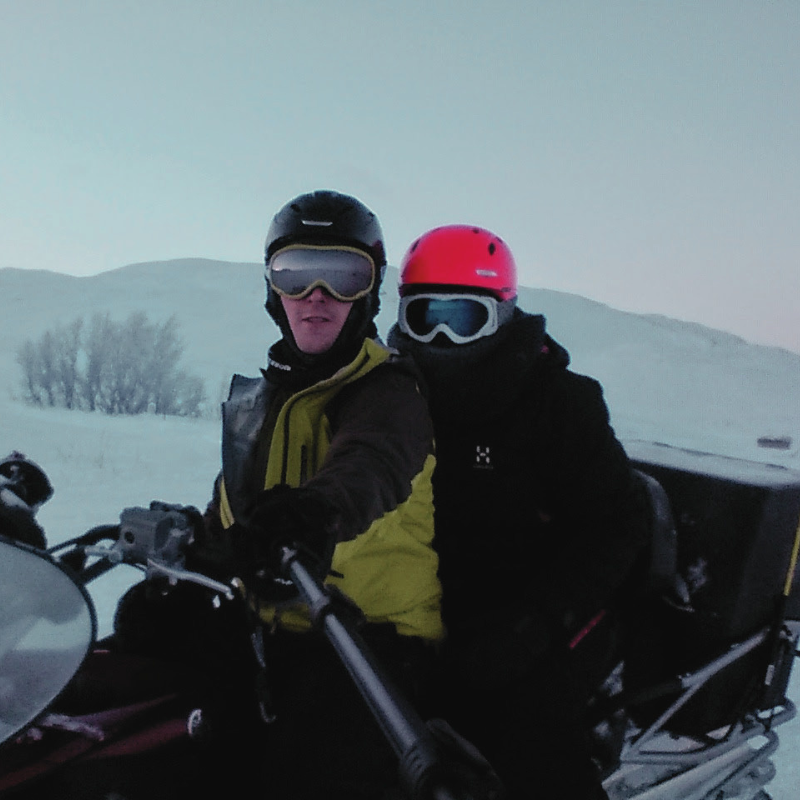
Matt Bowles: My guest today is Jonny Cooper. He is the founder and group CEO of the Pinnacle Travel Group, a collection of high-end travel brands creating emotionally rich, culturally immersive experiences for modern explorers across the Nordics. Originally from the UK, after a life changing trip to witness the Northern lights, he and his wife Kate were inspired to launch Off the Map travel and move to Swedish Lapland where they are now raising their kids. This on the ground perspective helps him create experiences that are authentic, culturally immersive, sustainable and deeply personal. Jonny is also the founder of Aurora Buddy, a platform designed to help travelers maximize their chances of seeing the Northern lights through smarter planning and real time insights.
Jonny, welcome to the show.
Jonny Cooper: Thanks for having me.
Matt Bowles: I am super excited to have you here, man. This is going to be such an interesting discussion. I have been so intrigued and impressed by so many things that you have been up to. But let’s just start off by setting the scene and talking about where we are recording from today and the fact that we have agreed to make this a wine night. So, let’s also talk about what we are drinking. I am actually in the Blue Ridge Mountains of Asheville, North Carolina on the east coast of the United States tonight and I have just opened a Crozes-Hermitage from France. So, I’m going to be drinking through that tonight. But where are you Jonny and what are you drinking?
Jonny Cooper: So, I’m up in Arctic Sweden, right up in the north, just a little bit south of the Arctic Circle. And tonight, I’m drinking an Australian Sauvignon Blanc.
Matt Bowles: Amazing pick. So, I have to ask, what is the wine scene like up near the Arctic Circle?
Jonny Cooper: Well, it’s not a place that you’re going to grow grapes. Up here, but there are some really good distilleries of gin, whiskey, those types of things. So, although there isn’t the ability to grow wine in these regions, the wine scene, like many places, good food requires good wine. So there obviously is an exceptional kind of choice of wines. But in terms of local, it’s all very much distilleries in terms of the vodkas, the gins, the whiskies, things like that.
Matt Bowles: So, what do most of the local people drink? Are there popular Nordic spirits?
Jonny Cooper: So, I don’t know if you’re aware, but alcohol is controlled a little bit differently in Sweden, so they have a state run off license in effect, so that’s the only place that you can buy wine or beer over a certain percentage. But on the flip side you actually get a really good service in there so they’ll help you with the wines. What I would class like an old fashioned off licenses you might have in the UK but that’s the only place that you can buy any spirits or wines or really any beers.
Matt Bowles: And what is the culinary scene like there? Have you had a really memorable meal in the Nordics since you’ve been living there that you still think about what stands out to you from the food scene?
Jonny Cooper: Some of the best restaurants in the world are actually based in the south of the Nordics, around the more capital cities. But even up here we’ve got some fantastic restaurants that are associated with accommodation. So Arctic Bath for example, I believe it’s just one or got into the Michelin guide for food and it’s a fantastic experience. It’s a feast for the eyes many local foraging is a very big thing up here. So, there’s so many fruits and mushrooms and different meats that you can get from the forest and they’re all brought together in delicious meals. And the rivers, actually there’s a lot of water up there. We have a really good selection of fish as well.
Matt Bowles: So, I want you to describe where you are sitting right now and what it is like, maybe what a typical day is like in Swedish Lapland in June.
Jonny Cooper: It picked a good day actually because today’s been a cracking one. So today it’s been wall to wall sunshine, 25 degrees and obviously right now we’re in that midnight sun period. For me right now it’s quarter past nine, but to be honest with you, it feels like it’s probably maybe 10 o’ clock in the morning, something like that. In terms of light, the sun doesn’t set here now, so really it doesn’t get dark. So, if you particularly wanted to, you can go and do absolutely anything whenever you want. During the day it does get hot, so there’s a kind of perception, I think maybe with a lot of people that they presume that it’s cold and snowy all the time. But we are a destination in a region of extremes. So, we go from an extreme winter to really what could be classed as an extreme summer. So easily, temperatures into the 30s, sunshine 24 hours, and then on the flip side, we get very cold and dark winters.
Matt Bowles: So, in the summer, do your kids just stay out forever because it never gets dark?
Jonny Cooper: They can do. We actually put a lot of effort into kind of darkening the inside of the house. It’s interesting because a lot of people suffer in the winter, but for me it’s the longer days that I suffer with because I don’t have a drop down in my kind of natural rhythm. So, for example, right now it’s quarter past nine here. If we talk for the next couple of hours, I’m probably not going to go to bed until 1 o’clock because I just won’t have that kind of slow wind down you would normally have as it gets dark around you.
Matt Bowles: So, what have you found that the midnight sun does to your body and your perception of time? What is it like to be there?
Jonny Cooper: The first time I experienced it, I remember we’re on some fam trips now. Fam trips are familiarization trips, so they’re trips that are by the tourist boards or hotel and it’s really off putting. I remember I was sat having a beer and I thought, oh, it’s about 10 o’clock. I looked on watch, it was quarter past one in the morning. So, the time doesn’t move quite in the same way because your perception of it is really different than what you’re used to. Obviously, you grow accustomed to that, but that’s the biggest thing, is that it can catch you out and it still does now. We will be easily caught out thinking it’s maybe on a half, nine, ten, and actually it’s half past twelve at night.
Matt Bowles: Before we talk about the journey that led you to move to the Arctic and make the choice to raise your family there. Can you give us a little background and talk about where you grew up in the UK and you and I were both DJs back in the day, Jonny. So, I have to ask you about that period of your life. What type of music did you DJ take us back to that scene and what was that period of your life like?
Jonny Cooper: So, I was brought up basically just north of London by about 50 miles, 60 miles, in a small little country village, actually. So, it was very much a farming community. There were lots of out on your bikes playing football, tennis, and grew up there for all of my school, actually. But it was when I was 16, a friend of mine and I basically said, shall we buy some DJing equipment? And we were all into music. That’s what you like. And dance music was the thing that was happening at this time for us. We’re talking about Armin van Helden and all of that type of period. And so literally we both went independently to our parents and said, will you lend us. I think it was 1500 pounds at the time. No, 750 pounds. So now that’s about $750 ballpark, I think. Lent us that.
And we went and bought all this equipment and it took off. Our parents were driving us every weekend to different venues to do weddings, to do parties. And then we started to get paid for it and we got ourselves a name. And then when we learned to drive, we got a little trailer. So quite often it would be out of school on a Friday into what we call the shopping center in the UK, which called an Arndale, to the music CD store. Buy all the latest records or CDs, and then we would be DJing that evening, Saturday job, and then doing the same Saturday night back out DJing. It was a fantastic period. It was exciting to be doing it. It was great to be earning some money and it was fun to do. At the end of the day, that was the day it was just great fun to do.
Matt Bowles: I had such a similar experience as you were describing, that this exact same thing. I started DJing in high school. For me, it was every Christmas or birthday, I would ask for another piece of equipment like a speaker or a bass cabinet, and I would build out me. And by the time I was at the end of high school, I was DJing school dances at other schools, proms. And then I started DJing weddings. And then when I would come home from college for the summer, my friends are working a job at the mall or working 40 hours a week doing something, and I’m just DJing every weekend and I’m out at the parties on Friday and Saturday night and I pay a friend of mine to come and carry my equipment and take requests and that kind of stuff. And then it just was such a blast and it was such an amazing time.
But you also, I feel, learn so many skills from that because you’re also, in addition to having play the music to move the crowd. You also have to be the mc. You get public speaking experience and then you get business experience for booking gigs and having to run an actual business. And so that I felt was such an amazing foundation for so much. And it was also a cultural experience for me because as I started doing these different weddings, people wanted really different types of music. So, then I had to learn about the different types of music. And then you have these different mixed intercultural weddings where the bride is from this culture and the groomers from that culture. And you got to play to both families and get them doing their traditional songs. It was just such a fascinating cultural experience. I’m curious for you as well, coming out of that, how did your interest in other cultures but also world travel start to develop? What type of traveling did you do when you were coming up?
Jonny Cooper: So, when we were younger, we did what we call classic holidays, certainly in the UK. So, we go Devon, Cornwall with the family, went to America a few times, did the Disneyland thing. But we’d always been interested in exploring. And at that time, the thing was to go off around the world after you’d been to university or finish your A levels, it was to pack your bag, get your backpack on and go. So that’s what Katie and I did. We finished university, we actually saved up money from doing some bits and pieces work to contracting, and then we booked around the world ticket and we literally packed our lives into a backpack and we left. That took us to some really amazing places. But I think the want to explore comes from to want to understand more and expose yourself too more. It’s so exciting when you’re seeing different cultures, different foods, otherwise the world becomes a bit boring if you don’t have that.
Matt Bowles: So, you decide to set off on this nine month round the world trip. What was the plan when you set out and then what did the itinerary turn out to be? Where did you spend time?
Jonny Cooper: I have family in New Zealand. That was the kind of halfway point, I suppose we want to get to New Zealand at some point. So, we’ve got two ways to go around the world from the UK. We either go east or we go west, obviously. And we wanted to go to India as well. But we actually thought to ourselves it might be a bit too much of a cultural shock for us and a traveling shot to just drop us on at Heathrow off in New Delhi. That might just be a bit too much of an explosion. So, we thought we’ll go west and we ended up in California. So, California down to Mexico a little bit, and then over to Fiji and then into New Zealand, where we then kind of set up home for a period of time, got proper jobs, bank accounts and all that kind of thing.
Matt Bowles: What was the most impactful part about living in New Zealand that stayed with you?
Jonny Cooper: When you go on holiday, you kind of have a snapshot of things. And when we’re in California and driving, we went all of those amazing places that you do, like Vegas. We broke down in the desert. We’re supposed to see Celine Dion and broke down in the desert. And we didn’t make it all of those things, but they’re all holiday things. I think we met Tom Cruise. We didn’t realize until afterwards there’s all these weird and wonderful things that happen when you’re traveling. But when we got to New Zealand, it was the first point where you have a bit of normality and you sit and go, okay, this is what it would be like to live somewhere else. And you’re able to compare then as well. When you’re moving from hotel to hotel or hostel to hostel, that’s not like comparing to your home. But when you’ve stopped for a bit, you get a job, you do the normal boring things, you go shopping, you do all those kinds of things. That’s when you really get the ability, I think, to say, okay, well, maybe there are other ways of living in other countries that you can live in that have difference and things that you might enjoy more.
Matt Bowles: So, I have to ask, because I know you did eventually get to India. Where did you go in India and what were your highlights of that trip?
Jonny Cooper: We did the Golden Triangle and we’ve been back since because we loved it so much. But I think the driving, we weren’t driving, we were being driven. But you’ve got to be a brave person to drive on some of those roads. But I think as well, just the intensity of it all, the temples, the smells, the food, the culture, the fusion of so many different elements all together. And I think seeing some of the forts, obviously, seeing the Taj Mahal, seeing the Red Fort, these are the bucket list places. These are the things where you tick the box and you go, yeah, I’ve seen it, I’ve done it. I’ve got the photo to prove I’ve been there. So, I think they live up to the expectations as well. That’s the thing about India, in my opinion. Sometimes in places you go and you’re like, oh, well, you know, it was okay, but maybe Instagram have either hyped it a bit, all the posts. But the Taj Mahal, I think, is as spectacular as you imagine it’s going to be.
Matt Bowles: It is amazing.
Jonny Cooper: The Red Fort and all those places and the details and the history, it just oozes so much. And you can see all these layers of it. I think that’s the bit that really impacted me most.
Matt Bowles: All right, so I also have to ask you about the very first time that you saw the Northern lights and what that experience was like for you the very first time?
Jonny Cooper: Even just thinking about it, it makes my hair stand up on end. My relationship with the Northern lights is strange. For whatever description, I miss them. I can’t see them now, and I physically almost miss them. I’m not a religious person at all, but it’s the closest thing that I can imagine to having some type of experience. And the first time I saw him, it was in Tromsø, and it was just behind a cloud. I really didn’t see them per se, but it was enough to ignite the spark, enough to make me want to experience more. And I describe them sometimes like a drug, because I need to see them. It’s not that I want to see them. It almost feels like I need to see them. And every time I see them and every display I see, I want it a bigger, more impressive display. And the bigger, the more impressive you get. It gives you that adrenaline hit.
Matt Bowles: So, you saw them and then you wanted to go back and see them again. Take us on this journey about your evolving relationship with the Northern lights, the Nordics, the Arctic, and what eventually led to your decision to want to move there.
Jonny Cooper: It all started with the program in the UK. It’s quite a famous program now. It was with Joanna Lumley, and she went off to see the Northern lights, and that was the spark. It was on at Christmas time, so a lot of people watched it, and that’s what drove us to book that trip to Tromsø. But once we’d seen the Arctic light and the winter light, once we’d seen the Northern lights, once we’d experienced the vulnerability that you get in some of these Arctic regions where you’re not on top of nature, you’re in it. So, it makes you feel quite different if you’re in a much more urban environment where it feels like it’s all very controlled. And that then led us to go back the next year to Sweden and up to a place called Kiruna, which is up in the north, up in the Arctic Circle. And then we actually hired a car one night. We were there and we drove out to a little place called Abisko, which is right in the mountain.
So, if you imagine that you’re going from east Sweden through to west Sweden, effectively you go uphill because you’re heading towards the mountains, Norway. So, the drive from Kiruna to Abisko is when you start to see these massive mountains and they’re spectacular and the road winds through them and there’s nothing. There are very few buildings, there’s very few roads. So, we went to a place called Björkliden, actually, then the following year, which was next to Abisko. And I was an IT person at the time. My wife was a teacher. And it was February, half term, and there were amazing Northern lights. There were Northern lights in the sky. We were snowmobiling. We had a dog sledding trip. We were seeing things that we never imagined that we’d see in our lifetime, but we were seeing them all on our own. And it was a bit, okay, why is no one else here seeing all of these amazing things? Because it would feel to me that you want to share. This needs to be shared because it’s that amazing.
So, we literally went up to reception one night and said, okay, well, if we sent people to you, like holiday makers, would you take them? And they went, yeah. So, we thought, how do we do this? So literally we went home and we set up a travel business. And we’d never worked in travel before, we’d never run a business before, and we’d always had these kinds of entrepreneurial elements, hence the DJing. But this was the first, what I call proper, try a proper business. And we managed to actually sell some holidays and people were able to come and see the Northern lights with us. And the first one we actually sold was to Tromsø, where we stayed when we originally went to see the Northern lights ourselves. So how this whole thing started, it wasn’t planned. It was accidental and a real feeling of wanting to share what we’d experienced in that time that we’d had up in the north.
Matt Bowles: So, you could have stayed in the UK and just told people how great it was and sent people there and referred people up there. What was the moment when you and your wife decided you wanted to permanently move to Swedish Lapland and raise your family and build your life there.
Jonny Cooper: So, we’re selling holidays to Swedish Lapland and we actually wanted to expand a little bit into other parts of the Nordics. And we went on a fam trip. We got invited on a fam trip to West Sweden. So, this is Fjällbacka. This is kind of north of Gothenburg into Dalsland banks for those kinds of places. And it was amazing. I thought to myself, I could live here. I think I could live here. I went back home and I was like, Katie, you have to come and see this. So literally the next week we both were there and we did a similar trip round and we were obviously looking at different hotels and all these things for the business. I remember we were going to fly out of. I think it was a Ryanair Airport. I don’t think it exists anymore.
We’re a bit early, so we drove past the airport and we parked at the side of the road and we sat on this rock. And I vividly remember sitting on the rock and it must have been about this time of day where I am now. And I remember speaking to each other and we were like, I really like it here. I think we can move here. Should we give it a go? And we’d been going up to Björkliden in the north and everything, but at that point we didn’t think we were going to be able to live in the north because it is a very big jump from the UK. But we thought maybe we could do this in the south, though. So that was the point on a rock overlooking this beautiful view and the light was exactly the same as this. And that was the point where we said, because we didn’t want to go home and we thought, we can make this home.
Matt Bowles: So, you and Katie then decide that you’re going to take a road trip for the move and drive from England all the way to Swedish Lapland. Can you take us on that road trip journey? What was that like?
Jonny Cooper: So basically, the plan was that we would go up to Björkliden for a few months over the winter and then after that we wouldn’t come home. So, we would then basically drive back down south again. But this meant getting up north. So, at that time we had a little Audi A1 car. We packed our whole life into this little audio one car. We rented our house out and then one day we left, I think it was about 5am from my mother in law’s house, and we headed off on this journey and that involved getting the Channel Tunnel. So first down to Dover and Folkestone, across the Channel into France and then up through Belgium into Germany, which was all very much similar as a driving on UK roads, motorways, all that kind of stuff.
We get to Sweden; we get to Malmö and we’ve done some research. We had to swap our tires. Because you have to have studied tires at this time of year. And bearing in mind this is an English car, so we’re sitting on the wrong side of the road, as it were. So effectively driving what would be to the passenger side on all of these roads, all the way up. So, we got to the mechanics and we were like, yeah, some tires, please. And they’re like, what do you need? Ford winter tires? And he’s like, okay, and what do you want to do with your summer tires? And we said, we can’t put them in the car. We’ve got no way of doing anything, so you’re going to have to have them. Which he was like, oh, what? He was a bit shocked by that because he expected most people take them home or put them in a tire hotel or whatever. We’re like, no. And it was like, they’re almost brand new. And we’re like, we know, but we can’t do anything about it.
So on with the winter tires, then it’s the long stretch. It’s the long stretch up Sweden, because Sweden is a very long country. If you pivoted from the bottom at the top down, it would reach down to somewhere in Italy, in Europe. So, it’s extraordinarily long. So up we go there. And as we go, the weather starts to get more inclement, so we’re starting to pick up snow and a bit of ice. And then as we move towards Karlsudd, it’s getting a little bit more. And obviously by the time we get into the mountains, then we’re starting to get some proper winter conditions. We’ve driven in these before, but obviously not in a little Audi A1 car. But to be fair, it did a good job and it got us there.
Matt Bowles: So, at what point does it stop feeling like northern Europe and start feeling like the Arctic? Is there like a transition point for you that you identify as you go.
Jonny Cooper: Up the east coast of Sweden, basically, the stretches between civilizations start to get longer, so you start to see fewer and fewer villages, towns and cities. And then you start to see fewer cars because there’s fewer people. The best stat that I ever read was in Norrbotten. So Norrbotten is the biggest county in Sweden. And I think I’m right in saying it’s the biggest, if not one of the biggest, in the whole of Europe. There’s more people move through Heathrow Airport every day than live in Norrbotten. So that’s how big it is and how sparsely populated it is. There’s about, I think just over 100,000 people around that time. Maybe a few more actually. But more people pass through Heathrow Airport in London than live in this whole region.
Matt Bowles: So, after living in Lapland for a decade or so now, what have you found as the most striking cultural differences between life there versus the UK?
Jonny Cooper: I think the pace of life is different, that’s for sure. The way people work with and live within nature is really different as well. Because you have to be. You have to work differently. When it’s snowing or it’s minus 40, you can’t just continue to behave and live like you would in London or whatever. The seasons and the weather dictate a lot of the rhythms of life up here. And I think that is one thing that definitely is a big difference. You definitely feel the difference in way people are living depending on what time of year is.
Matt Bowles: Well, you’re obviously choosing to be there. You could be anywhere and that’s where you’ve chosen. What aspects of life in Lapland have you found to be objectively better than the UK for you and your family? And what aspects have you found to be harder?
Jonny Cooper: I think firstly, it’s Sweden particularly is great for children. It is a fantastic place to bring up children. The schooling, the support. We’ve just had our youngest, but when you’ve given birth, the midwife turns up with a tray and on that tray some sandwiches and two glasses of, it’s not champagne, it’s apple juice or something, little Swedish flags. And basically, it’s like a welcome and congratulations and a well done present to the whole family. And they do this for every single child. And that I think really cements how important children are within society in Sweden. From the moment they arrive, they’re treated really well and they’re really looked after and all of those things. So, I think it’s a fantastic place for them to grow up. And I think some of that as well is because of the way they are in nature all the time. They’re continuously out outside daycare and school. A lot of it is out amongst in nature, but it’s truly immersed in it. And I think one of the reasons and one of the things I love about it.
Matt Bowles: What values do you think that your kids are growing up with in Lapland that would be different from if you were raising them in the UK?
Jonny Cooper: They have this phrase that they kind of came home from school with, which is not good for the future. It’s not something we’ve taught them. They apply that to almost everything they do they’ll see. A crisp packet on the floor and they’ll be like, that’s not good for the future. And they’ll go and pick it up. My eldest is really into cars, so electric cars are good in his eyes, comparatively to the petrol ones. So, it was a real respect for the environment that you live in and the community that you are in, and nature is in that community. And I think that is a differential thing, because I don’t think necessarily in the UK, the nature element is intertwined as much as it is here in the Nordics.
Matt Bowles: So, they’re growing up there, they were born there, they’re speaking fluent Swedish in school. How are you finding that their identity, in terms of being Swedish, being British, how is that evolving for them?
Jonny Cooper: It’s interesting. My wife did a little experiment the other day. She asked them who they were going to support in the World Cup. Are they going to support England or are they going to support Sweden? Quite a clever thing. Okay, well, let’s.
Matt Bowles: That’s a great question.
Jonny Cooper: And there was a lot of deliberation. The eldest is a little bit more acute, so I think he might have thought, I think England are more like. They’ve got a better chance, maybe. So, I might back that horse. But younger ones said Sweden. I think they see themselves as both, but I think it will change and continue to change as they get older.
Matt Bowles: So, what would you say that your kids have taught you about cultural integration that a lot of adults may often struggle with?
Jonny Cooper: The thing that actually I’ve taken away most from it is watching them learn the two languages. I’m not very good at languages at all. It’s not my forte. So, speaking Swedish I still embarrassed to say that I’m not very good at it, but what they have taught me is I don’t think as they’re learning, they see it as two different languages. And I think that’s the key. So, for an adult, when you think about learning a language as an adult, I think you go, okay, this is called a glass. Okay, what’s it called in Swedish? In English, you might say, this is a glass. It’s a goblet. You might have multiple names for the same thing. That’s what they do when they’re learning another language. It’s the same object, just with another name that happens to be that one set of people understand and the other people don’t. So, I don’t think when they’re learning the language, I don’t think they actually are learning two languages, I think they’re learning one and later on it separates. I’ve tried to start to use that approach myself, rather than sitting there thinking, well, what is this in Swedish? If I just give this another name and just go, that’s another name for it, like we do in English, maybe that might help the whole process.
Matt Bowles: So, as parents, how and why are you being intentional about integrating travel into your kids’ lives as they grow up?
Jonny Cooper: Travel is important because it gives you the ability to see the differences not only where you travel, but then also back in where you live. I think without experiencing different cultures, different ways of living, different perspectives, you risk becoming too focused on what you think is your way of living and your way of doing things. So, I think travel is a fantastic way to demonstrate there are so many different ways of things. Working, lives, happening, people living their lives, all the spectacular things that nature provides as well. So, I think it’s a win, win. You can’t lose. I don’t think by taking kids traveling.
Matt Bowles: And you’re not only taking them back to the UK. I think you went on a trip to Costa Rica; can you tell me what that was like for you?
Jonny Cooper: Yeah. So, our eldest, we actually went over to Costa Rica and that was amazing. He wasn’t very old at the time, actually, I think it was one and a half, something like that. So, he probably won’t remember it, to be fair. But that was a real cultural experience because children there again, there is a different relationship. I remember we were standing one day in the street and a guy came over and he just took Jolin. He just picked him up and took him and started to talk to him and we were like, okay, what’s going on here? And then he called his mate over and his mate came over from the shop and they just were happy to see and interesting to see the children. That was really interesting, really nice to see actually, because again, in a lot of the Western world, there’s that hesitancy. Why are you playing, why are you smiling at me? Or why do you want to do this? But actually, at the heart of it, people seeing children and helping them understand the world is great for everyone.
Matt Bowles: So, if your kids eventually grow up and choose to leave Lapland, what do you hope they will carry with them from growing up there?
Jonny Cooper: I think that respect for nature, as we discussed earlier, I think that’s a really important thing. I’m really pleased that they’re able to see the impact that they have on their environment, not just individually, but as a group as well. So, I think that’s really important. I think also the ability to speak another language. I think once you’ve got two, then more might become easier for them to pick up as well. So, in Sweden, you’re entitled to have four weeks of holiday off in a row. And so, what will happen in the summer is basically the country kind of shuts down in the summer to a certain degree because everyone goes on holiday. Now, initially you’re like, oh, this is frustrating because I can’t get this done. I can’t get that done. But actually, over time, you realize that’s because by having that time off, they get a true reset. You’re able to actually properly reset yourself to then start again when you come back fully recharged, rather than lots of little breaks.
Matt Bowles: I also want to ask you about the indigenous Sámi people. Can you talk about who they are and what you’ve learned from spending time with their communities?
Jonny Cooper: So, the Sámi people are the indigenous people to this region. So, they have been up in the north of Norway, Sweden, Finland, parts of Russia for a very long time, and they have been associated, obviously, with a reindeer and that kind of nomadic lifestyle around these regions. I have had many very interesting conversations with different zombie people about their history, where they see how they fit into things in terms of natural environment. But one of the things is they don’t leave any footprint. So, when the first Southerners came up here, they actually thought this was empty. They didn’t think anyone lived in this region. But that’s because the Sami population had been living here with nature for so long that you just couldn’t tell that they were living here. They’ve got many words for snow. Someone told me once and again, I wouldn’t want to be 100 sure that this is completely true, but I believe some of the older Sámi generations first started to see differences in the snow structure that indicated that the climate was changing. So, they were able to identify some of the ways that the snow was forming and behaving and that was being caused by changes in the climate that had not been seen by previous generations. So, they are truly entwined into this environment.
Matt Bowles: So how visible is Sámi culture in everyday life where you live?
Jonny Cooper: There’s traditional Sámi dress, things like that, but you don’t walk around the street and people are wearing these things. Commonly, a lot of Sami people are doing what the rest of us are doing, in effect. Jolin’s got some friends at school that have Sami background, but obviously a lot of them still are reindeer herders. So, they’re Keeping the reindeer and herding those still. So, you see it and certainly you can experience it. If you come up here as a tourist and you see some of the Sámi nature, for example, was an experience where you would go and see a Sámi camp and learn the different ways and cultural and the ways that they live within this environment. So, you see it, but it’s not as though it is sat there, extremely different, as it were, from day-to-day life.
Matt Bowles: What do you think that modern urban societies can learn from indigenous Arctic cultures?
Jonny Cooper: I think some of this kind of understanding nature element, we’re starting to see things from a scientific perspective. They used to think that trees were individual organisms, and actually now maybe they’re communicating through fungal networks under the ground and stuff. And there’s a lot of science research gone into that now. So, I think we can learn from the Sámi that it’s far more complicated than we probably think it actually is. And actually, we need to understand that complication and respect that complication for us to continue to live in the world that we want to, in terms of imbalance.
Matt Bowles: As you’ve spent the last decade traveling around and immersing in the different Nordic Countries and getting to know them very intimately, can you talk about the impact that learning about the indigenous people and their history and their culture has had in shaping your understanding of the Nordic Countries?
Jonny Cooper: When I first came here, I wasn’t aware of that culture at all. So straight away, there’s a whole new culture that I didn’t know about. And I think it’s really important that story is told and that people learn about these cultures, because I think that’s a fantastic way of preserving them. The story can be told, then the culture can be preserved. However, that is. So, I think going from people describe this as like a wilderness destination. And I know certainly some of the Sámi people I spoke to, they don’t like that description, because wilderness infers that no one’s there and no one has been there. It’s new, when in fact this is their land and their back garden and they’ve been here for a very long time. So, it’s not wilderness because it’s there. It’s where they live.
Matt Bowles: So, you talked earlier about how emotionally impactful it was the first time that you saw the Northern lights. Now that you’ve been living there for a decade and you’ve seen them so many times, do they still move you?
Jonny Cooper: Oh, yeah, absolutely. Like I said, I literally missed them. So, there’s been a geomagnetic storm in the last few days, but I can’t see any because it’s the midnight sun, so it’s too light to see any. I’m counting the days down now. As we get towards the end of August, they might start to come back and you start to see them a little bit. Even talking about them, it makes my hair stand on end. Because there’s nothing, in my opinion, that if you get a really good show, it just is humbling in so many ways. The closest thing I think that might do the same is, you know, when you see a picture of the Earth when you’re still on the moon. Not that you’ve been on the moon, but you know what I mean? When’s the astronaut so back? And you look at that and it makes you feel like, wow, okay, A little bit insignificant in the grand scheme of things. That’s what it does to me.
Matt Bowles: What was your most unforgettable Aurora experience? Do you have one that really stands out?
Jonny Cooper: I’ve been lucky because I’ve seen them hundreds, if not thousands of times, but there’s definitely a few. There is one where I was up in Bjorknyden, and it was a dome of Aurora. And, like, I stood in the cathedral and I was with guests. And we were like, okay, well, because it comes and goes really quickly, so if you’re not out sometimes you can miss it. But then there’s been other times where we had a guest. She’s been living with cancer. And she said to us she was there with a family. And she’d said, I get emotional about this because it’s just one of those things. She said to us, I have to see these things. Because she wasn’t particularly well at that point. She’d been there a couple of days and we’d been trying and trying to get to see them. And where we were staying, we had what we called the aurora window.
So, we used to be able to open our bedroom window. And basically, if there was Aurora, 99% of the time, we’d see it out this window. So anyway, we were getting ready for bed and we opened the window and the Aurora was there. And, right, we’ve got to go. So, Katie and I, we got clothes on and we ran up to their cabin, but the lights were off. It was about midnight, pop us 12 or something like that. And we stood there and we thought, do we or don’t we? Because she had young kids as well. So, we’re like, do we? Don’t we? And we’re like, we have to it. So, we knocked on the door and within not very long, there she was in her pajamas, stood at probably minus 12 or something, watching there all the lights. I think she had tears in her eyes as you watched them. So, it was the right decision. Those are the moments that you remember forever. Because when you’re combining all of those elements there, they say it’s a bucket list item and I think it really is. But when you add that kind of bits and pieces in as well, you can’t describe it.
Matt Bowles: That’s amazing. Well, Jonny, I understand that you also have seen a paraselenic circle, what’s known as the triple lottery. For people that have never heard of this, can you explain what it is and then describe what the experience was like?
Jonny Cooper: I’ll give it a go. Because literally it took me from when I saw it to when I worked out what it was. It was probably years. So effectively I was driving, I was with my dad, actually come out to visit and we’re up in Riksgransen, which is just on the border between Sweden and Norway. We’re driving back towards Kiruna. So, this is really up in the mountains. And when you see Northern lights from in the car, quite often it’s not obvious because you’ve obviously got the glass in between you. So, you’ve got refraction of light and all these types of different things. And I thought I saw Northern lights. So, I said, okay. We pulled the car over and got out and there were no Northern lights in the sky. I thought, that’s strange. But there was this light effect happening in the sky. And the best way I can describe is, you know those weird gyroscope things that people pay money to go in. I don’t understand why. Where they spin you around.
Imagine that each one of those circular things was light in the sky above you and you’re in the middle of it. So effectively you’ve got the full moon and then you’ve got a band going horizontally around you. You’ve got Moon dogs, but then you’ve got this kind of gyroscope effect of rings and circles that are encompassing your whole kind of area. And it’s really, was a very odd. Because we didn’t know what it was and at the time, we didn’t obviously know how rare this was. I look at it and you go, that’s pretty. It’s like a rainbow or something equivalent kind of thing. Well, that was nice. It’s only when you go back and you realize and you do the research that there has to be so many different atmospheric conditions that come together at that exact point. Even the type of snow dust in the sky has to be a specific type, I believe as well, sitting in a specific space to be able to give you that. I didn’t know that until it must have been five or six years afterwards when I was like, I need to find out finally what this was. And even now, if you Google it, there are very few photos. There’s hardly any information out there really, because it’s that rare. It was a kind of an unknown lottery win until five years later.
Matt Bowles: Well, at this point you have also traveled very extensively around the Nordics and you organize trips for people to experience many different areas, including some very remote regions that most people don’t go that have resulted in some incredible experiences. I think the first one I want to ask you about is to talk about the time that you took a group of university folks to Greenland to go dog sledding with the Inuit people.
Jonny Cooper: So, we headed out to Greenland. The premise was that the university students each year or each class had to write a book. And we’d taken a few different groups out. One of them done Northern lights book. These ones I think we’re doing on indigenous people. And so, we’d gone out to Greenland and we’d ended up in the Ilulissat, which is the main kind of place. And we had dog sledding organized, but it was overnight dog sledding. So, this already up the ante a bit because, okay, we’re going dog setting overnight in Greenland. Greenland for those that haven’t been there, the best way to describe it is there’s no road in or out, as it were. There’s just a road in the middle and you fly in and out a lot to a lot of these places. It’s extremely remote. So, we already knew it was going to be an adventure going dog sledding out there. And then it kind of transpired as we started to go on this dog sliding trip that really, we were just accessories in their fishing trip that guides were taking us on.
So, in effect what it transpired was that they were going fishing and they thought we take these people dog steady with us at the same time. So off we went. So, we had a guide, actually a Swedish guide who’d spent a lot of time in Greenland and stuff. So, he was the guy who was looking after us all wider context and safety. But the Docksteaders couldn’t speak any English. They actually smoked quite a lot. And the way they dog sled Greenland is you quite often you have the dog sledding we have in the Nordics here is they’re in a rug, so the dogs are in a row in front of you. In Greenland, they have a fan shape, so the dogs are in a fan shape in front of you. And rightly or wrongly, very much depends on what your opinion is here. And it’s a complicated situation. They have whips as well. And the whips, I say 99% of the times they’re not actually hitting the dog, they’re making a noise close to the dog to make the dogs basically go in the direction they want.
So, we’re on these dog sleds with the smell of smoke, a whip passing our area every few minutes as they’re kind of driving these dogs around, and we’re going off into the wilderness. And these students, they’re only 18, 19 years old. This is a big experience with them. We get to this place where we’re overnighting, and when we say we’re overnighting, we open up the door to this hut, and it’s just a bench that’s about as wide as a dining table and about as maybe slightly wider than a dining table. And we all just have to lie on this bench to sleep. So, we’ve got a sleeping bag and a roll mat, and we’re all lied out. We must look like the seven dwarfs all in the same bed in a row, basically. And we sleep relatively well, to be fair. But obviously there’s a lot of people in there. The dogs, I think, could probably get better straw. They get to sleep outside. But it’s interesting, when you see sled dogs sleep, they curl it into a ball so they put their nose under their tail, and then they let the snow just fall on them so they don’t shake the snow off. They literally sit down; they snowball down in the snow.
So, when you wake up in the morning, you go out, you don’t see any dogs. You just see mounds of snow. And it’s only when they start to wake up and shake them off, you realize the dogs are still there because they’ve just been snowed on. They’re like, this is going to keep me warm anyway. So, we go out then, and then we end up at their fishing spot. And the way they fish is they basically drill a hole in a nice kind of lake one end, and then they run a hook system right to the other. So, then we have to sit there for, I don’t know, I think it was about an hour and a half where they pulled this line in and they’re pulling halibut out the size of coffee tables. These massive fish are coming out of the water and they’re doing all of what they need to do literally by the side. And then next thing we know, they’re on the sleds. So, the fish are now on the sleds. So, we’re like, where are we going to sit? Oh, on top of the fish. Okay, fine. So that’s how we’re going home. We’re going home.
So, on the way back, we have a slight smell of smoke whips going round by our ears and we’re sitting on top of giant halibut. We head back towards a civilization. I don’t think it’ll be an experience any of one will ever forget. It certainly wasn’t in the description and when we first started out. But it’s one of those things where it’s just. You couldn’t pay for that experience, I don’t think, actually, even if you wanted to.
Matt Bowles: That is amazing. I also want to ask you about Svalbard for people that have never heard of it. Can you describe where it is, what makes it so unique? And tell me about the precautions you need to take for polar bears when you go there.
Jonny Cooper: So, Svalbard is a Norwegian territory. There’s a little Russian enclave on it as well, actually, but it sits right out in the Arctic Ocean north of Norway. So very remote, not huge, but it’s one of the only places I’ve ever been after being here where I thought, okay, you really got to think about what you’re doing out here. There is no we went on a snowmobiling trip. It was just a couple of hours snowman trip. This is a fam trip. And they took a whole trailer full of expedition gear with them with tents and food, I think for three days in case the weather changed. You’re talking that the short snowmobile trip for two hours, which people do in Sweden, Norway, just as an activity of a Saturday afternoon in the winter. They’re taking three days worth of kit in case the weather changes. It’s very different. And then you throw into it polar bears.
Literally, you’re told, don’t leave the village or the town unless you have a gun. And obviously most people don’t have a gun. Apart from his flare gun, where it seems that most people do have a gun for this very reason because of the polar bears. So, you’re thinking, okay, well these polar bears just walk into town. What have you got to do? So that’s one risk. But the funniest thing is, actually, is that when walking through town and you see the bank and outside the bank you go, oh, look, there’s a pot there for everyone’s umbrellas. That’s nice. What a quaint little place this is, that you can leave your umbrellas outside. You’re a bit closer to it. You look at it and you’re like, they’re not umbrellas, they’re guns. So, outside the bank there is a pot where you have to put your gun in before you go inside the bank. So, I’ve always thought it’s the easiest place to rob a bank, but then it’s the hardest place to escape from, because if you try and escape, you get eaten by a polar bear. So, it’s a fascinating place. You can see Northern lights in the daytime there as well in the winter because it is so dark. But it’s more wild than northern Norway and Sweden and Finland. It’s got that edge to it, which makes it exciting, but also that raw nature part again.
Matt Bowles: What other places in the Nordics continue to amaze you that very few people visit?
Jonny Cooper: There’s a group of islands between Finland and Sweden called Öland, and they’re like an autonomy, I think. They have their own little government, but kind of a civil structure. I never heard of them before, never heard of these places before, but they’re a beautiful little island. There’s not a lot going on there, but I think Sweden’s got the most islands in the world. There’s always somewhere new to discover. And these are big countries as well. Sweden, Finland, Norway, they’re not small countries, they’re vast. And there’s so much of them that is waiting to be explored by tourism. And for you to go and see, whether it’s waterfalls, whether it’s lakes, the wild swimming in these regions is just amazing. The kids were down on the beach today, just running in and out the water, and it’s just a fantastic place to just golf and explore.
Matt Bowles: All right, so let’s talk about your company, Off the Map Travel. You and your wife Katie, have dedicated the last decade plus of your lives to helping people experience these incredible regions in sustainable and culturally immersive ways. Can you share a little bit? You talked about the founding of your business a while ago. Can you talk about from that point over the last decade, how your company has evolved and what it offers today?
Jonny Cooper: So, I don’t believe in own luck. I believe you create your own luck. But we were lucky, if you want to call it that. When we started our business, it was at the same time as the revolution in digital photography, also the opening up of some of these places in the Nordics to more tourism. And when I say opening up, I mean people were starting to go, oh, you can go and have a look there. Taking pictures of the Northern lights historically would be, we’ll go out with our camera, we’ll take a load of photos, we’ll come home and we’ll realize they’re all out of focus. But you can’t do anything about that because it’s film. With the digital camera, you could take a picture, look at it. It’s good you get on social media, you can use it in your inquiries and your quotes and all these types of things. So, I think that combined with what we’d experienced, what we’d done was the catalyst and the timing for it to kind of really explode. And I think we just set about wanting to share this. That’s really what drove us, is wanting to share what we were exploring ourselves.
And then at the same time, as I alluded to before, businesses always fascinated me. The literal bones of business. So, these two bits combined have really helped grow the business from where it started with that trip in Tromsø to today where we’re sending many customers across the Nordics. But everything we do is tailor made, so we operate in that kind of environment where we want to design really nice high-end trips specifically for our customers to the requirements that they want. But also with that guidance from us of what should you see, how can you get those cultural immersions, where’s the best food? And that doesn’t necessarily mean the best restaurant, it means where’s the best food. There’s guides that you can take your foraging, where you forage for your food and then you go and cook it over the fire. You can go and fish, go and catch the fish, cook it on the barbecue that evening. That’s not a restaurant experience, that’s a completely different experience. But the little nuggets that we can really deliver to our customers.
Matt Bowles: Can you talk about that particular experience for people that would be interested in foraging and fishing? Where is a place where some of your customers have done that and how has that experience unfolded?
Jonny Cooper: I mean, you can do it pretty much anywhere. In Sweden you can go foraging. So, they have every man’s right. Which means in Sweden you can actually pretty much explore any piece of land yourself, as long as you don’t encroach too close to where people live and all those types of things. For example, out the back where I live in the autumn, we take the kids and the customers do this as well. We take the kids foraging for blueberries and those type of things. We take the blueberries, we air dry them, we ground them down, and then over the winter, that gives us blueberry power for the whole winter, so the customers can do those kinds of things. And then we have trips. For example, there’s a lady we work with, her husband was the Sabur culture, and she learned while she was with him huge amounts of information about what you can and can’t eat in the forest. So, she goes out forages and then makes sweets, makes cakes, makes all these things that you never expect to come out the forest. She’s the one that kind of takes the customers on that journey. And when you look at a forest, you think, it can’t be that much to eat in there. But actually, there’s so much to eat and so much of it is so tasty. And it’s the same with the fishing, really. You can go for a fish in the evening, you can catch a dinner, cook it, and then end up in the sauna for the rest of the evening with a beer. It doesn’t get much better.
Matt Bowles: And tell me about some of the other epic experiences that people could incorporate into some of these itineraries if they want to. I mean, reindeers and dog sleds and ice hotels and some of this kind of stuff that people may not be familiar with. They haven’t looked deeply into the Nordic opportunities.
Jonny Cooper: So, the dog selling, snowmobiling, they’re the kind of two after the Northern lights, they’re the winter ones that you want to do. I remember the first time I ever went to the ice hotel, which is in Kiruna. I actually snowmobiled from the airport to the ice hotel. And I’ll never forget that, because you arrive on a snowmobile to an ice hotel is just amazing because it just combines everything together. You’re getting that whole experience in one shot. Ice hotel’s been around for many years now. Every year they build it again. Every year there’s different designs. So that’s a really interesting experience for customers to go overnight and stay in cold rooms and have that overnight experience.
Matt Bowles: So, for people that have not heard of the Ice Hotel, let’s just say, can you describe what this is? They build it, an entire hotel entirely out of ice, and they rebuild it every single year.
Jonny Cooper: Yeah. So, it started actually as a little art exhibition, and then someone came up to the guy that was running it and said, can I sleep in your art exhibition? For a night, because I need somewhere to sleep. And they went, yeah, sure, okay. And that was the little seed that then started. Every year now, in kind of March time, they start to harvest the ice from the Torne River. And they take these massive blocks of ice out, so they cut it with a chainsaw and then lift these blocks of ice out and actually store that then over the summer in a big fridge. And then in around November time, maybe a bit early in that October, November time, they start to build the ice hotel again. So, every part of the ice hotel is built from the ground up every year. So new church, new rooms, new entrances, all of those things. And then every year in the spring, it all melts back into the river again. So, the cycle is really nice because you have this amazingly ornate structure in the winter. Artists from around the world produce these amazing rooms. I recommend anyone have a look at the different art rooms that you can stay in. And then you go there in the summer and it’s all gone, including all of that art. So, it’s got this nice rhythm to it. I think that reflects the rhythm we were talking about earlier.
Matt Bowles: And are there now multiple ice hotels around the Nordic Arctic region?
Jonny Cooper: The original Ice Hotel is in Kiruna. There is a snow hotel now, and there’s some other ice type of hotels in different places. But they all have slightly different angles of how they approach what they do and how they give the experience or the experience that the customer has.
Matt Bowles: So, being in the Nordic tourism business now for over a decade, how have you seen Arctic tourism change over that period of time?
Jonny Cooper: So, imagine you drop a pebble into the Nordics on the map, the change we’ve seen is initially the first ripple hits closest by. So, you’re talking like UK, you know, those kinds of northern European countries. And that’s where people were coming from originally. And they were doing three-night trips. They were coming in to see the Northern lights and they were going. But as those ripples move out further, so have we seen people coming further to experience this? And they’re staying for longer. So those three-night trips are now two-week trips. And they’re coming from America, they’re coming from Australia, they’re coming from Singapore, and then they’re also now coming in the summer. So originally it was winter. Now the summer has really exploded, specifically in Norway, Sweden and Finland. Iceland’s been slightly different. Iceland’s had a lot of summer tourism. Historically that’s been the difference is the cross border, as we call them trips. So, experiencing more than one country and then how far people are now coming to come and experience it.
Matt Bowles: Do you have concerns about the growth of tourism in these regions and the risk of over tourism?
Jonny Cooper: Yeah, I think we’d be naive to think that wasn’t a risk. I think part of what is the reason for coming to these regions is the lack of people at the end of the day. So, I think it is a risk, and I think how that’s managed is really important, not only for the environment, but also for the industry itself. I think over tourism could have a big impact on the experience the guest has, and I think that could be detrimental to the industry as a whole.
Matt Bowles: What tips do you have for travelers to engage with the Arctic communities as responsibly as possible?
Jonny Cooper: I think the key is not to rush. Slow travel, I suppose, would be the term. You’re not here just to take the photo and move on to the next thing. I think that’s the key to really get the most out of this. You have to sit in it for a while. You have to be in it for a while. You can’t come and think you can drive around all of the Nordics in three days and leave and have done the Nordics. So, my advice would be, is to break it into chunks. I remember one of the first customers that we ever had who were driving from BJLN to the Aurora Sky Station that had a hire car actually, at that point. And we get a call one night, and he goes, how do I get to the Aurora Sky Station? So, I said, okay, well, you got a higher car. It’s very easy. It’s 10km down the road. It’s 10km from beautiful to Abisko. And he said, yeah, but there’s no street lights. I said, no, there’s no street lights. He said, but I’ve never driven where there’s no street lights. And I was like, okay, I can understand that. But the reason I give that story is because I think I see people, as they stay longer, they become comfortable, and initially it’s a hit. Because it’s remote, there’s not as many people. You’re not seeing so much. But over a few days, people sit in it and they start to relax into it. And I think that’s the key.
Matt Bowles: So, we’ve talked in this discussion already about your appreciation and respect for the local environment, for the local indigenous people and cultures, and all of the amazing things about the place where you’re living and where you’re running your business. And I’m curious based on that, from a perspective of someone in the tourism industry that’s bringing people to the region, how have you thought about prioritizing ethical and sustainable travel principles in your business to ensure that it’s benefiting the local communities and the environment and not being extractive and harmful? And some of these things that we see elsewhere in the world.
Jonny Cooper: I think that comes from us knowing the products and the supplies that we use. We’re literally here. The suppliers we work with, we know them really well, we understand how their businesses work, we help them with their businesses. It’s a symbiotic relationship. We need them, they need us to a certain degree. So, I think that that’s key is to really know your product and to ensure that you’re not leaning towards something that doesn’t fit what your ethos is.
Matt Bowles: So, can you talk about what Off the Map Travel offers today in terms of the scope of the regions that you operate in and the scope of experiences that people can choose from when they’re having those discussions with you to customize their bespoke dream bucket list trip to the Nordics?
Jonny Cooper: So Off the Map operates now within the whole of the Nordics. So, all of the countries that fall into that region and basically, we try and do is put something together for the customer that kind of ticks what they want and what their interests are. We’ve organized meals with ex-prime ministers, we’ve got exclusive access to certain museums, all these types of things. Some people want that. We’ve dealt with some extraordinarily wealthy people before who haven’t wanted any bells or whistles. They wanted to take their tray up for breakfast, serve their own food, sit back down again and just be average Joe. I think knowing how people want their holiday to be and how they want to experience it is what we do. And we can do that because we’re here and we know where the bits of the puzzle will all fit together for.
Matt Bowles: So, for people listening right now that would like to schedule a Nordic trip and they have particular things that they’re listening to this conversation, like, oh, I would love to stay in the ice hotel and for sure, I want to take a dog sled and would love to do some of these things that we’re describing, maybe connect with some of the indigenous folks and experience some of that part of the culture and all that kind of stuff. Can you talk about how people can learn more about this and what the process is for connecting with you and planning a trip like that?
Jonny Cooper: Take a look at the website. The website Off the Map Travel is a great starting place and we call it very much a starting place because we don’t sell off the shelf packages. It’s full of just examples. Basically, this is what you could do, this is what it could look like. And then get in touch. And then one of my colleagues will start the process whereby, you know, having that first discussion with you, what is it you’re looking for? And then they’ll start to create these experiences and these itineraries to reflect what they think. And then it’s a back and forward process. Okay, we really like this bit, but we don’t like this bit. Okay, that’s fine. We will change that. We can chop and change that. Maybe this bit will work. And there’s discussions that we’ve got a vast amount of knowledge within the business now whereby even internal discussions can sometimes bring up different ideas that then can get reflected into the customer’s trip. So it’s very much about pulling those bits and strands together to really create that experience that someone can be excited and enthused to want to get going on it.
Matt Bowles: So, for people that are particularly interested in the Northern lights, you are also the founder of a platform called Aurora Buddy. Can you explain what that is, how it works and how people can access that?
Jonny Cooper: Yeah, that’s just because I’m a Northern lights geek. Basically, I built that. It’s almost like I built it for myself. Basically, it’s an app that I’ve produced. When you’re viewing the Northern lights, there are many factors that you have to consider when you’re looking at forecasts and things like that, but it’s not as straightforward as like, they’ll be there at 8 o’ clock on Tuesday. It doesn’t work like that. So, Aurora Buddy, basically what it tries to do is pull all of these different elements together and then give you an Aurora score, which effectively is a chance out of a hundred of what it thinks your chances of seeing the Aurora are at any given time. And it’s pulling all different data points there, from KP indexes to weather forecasts, to Aurora forecast forecasts, to atmospheric conditions, all these different things to try and make it as easy as possible for the user to go, okay, I should go out now. That’s what his objective is.
And then the community also play a role in that. So, where it works well is that people can load their own photographs onto this of the Northern lights. So, if I walked out in the winter, out of my house, take a picture of the Northern lights on my phone, upload it to Aurora Buddy, AI then analyzes that photo, confirms there’s Northern lights in it, logs the data that is associated with that, but then that then goes around and gets added into the score. So, if you’re five miles down the road, you’ll get an alert to say, Dave has just seen Northern lights and he’s not very far from you, so you should go outside. Because basically, if Dave’s seen it, the chances are that you can see it. So, the community element of it is really important as well. So, the idea is, the more people that use it, the more people get to see the Northern lights.
Matt Bowles: Is the Northern lights really what keeps people coming back to the Arctic, or do you think it’s something deeper?
Jonny Cooper: I think it’s something deeper. Northern lights initially are the hook. We definitely have customers where the Northern lights, it’s the same for them. It is for me. There’s an element, okay, it’s the wintertime and I need to go and see the Northern lights. But then there’s this secondary layer of how do I want to see them, where do I want to see them? What are we doing while I’m seeing them? There’s that element there. Once customers settle into the environment and all of a sudden, it’s like something clicks and they’re like, okay, I get this now. I get this destination. And then you have the discussion with them. If you come back in the summer, if I dropped you here, you wouldn’t think you’re standing in the same place comparatively to the winter, because it’s just such extreme.
Matt Bowles: So, what surprises visitors the most when they spend real time there?
Jonny Cooper: I think it’s different for different people, but I think definitely for the summer, I don’t think people realize how warm it can get. I’ve said for a long time now, what should happen is the tourist board needs to get the big Piccadilly Circus or Leicester Square boards in London and just put what the temperature is in Lapland or in 30 degrees near the northern Sweden, because I think a lot of people think it’s cold all the time. So, I think that’s a big surprise, the fact that we can be swimming and, and sunbathing and being outside all the time in the summertime. The colors in the autumn here are spectacular. It’s all these little things that I think add up for different people at different times of year. But it’s the time of year is really important in this area of the world. It’s critical. The experience is very different depending on when you’re here.
Matt Bowles: So, for you personally, what impact has living in Lapland for over a decade had on you as a person?
Jonny Cooper: The realization that we are part of nature, I think is one of the profound effects it’s had on me in regards to really in some respects how insignificant we are in all of this. That might sound a bit deep, per se. One of the things that we have to deal with in the summertime are mosquitoes. We have to deal with mosquitoes. And would it be great if the mosquitoes were not there? Yeah, sure it would. But all of the birds wouldn’t have anything to eat, all of the animals wouldn’t have anything to eat. This is all one big ecosystem and we can’t pretend that we are separate from it in a weird way. And I think that’s something because I’m in it. I’m in it much more than I would be in the UK. I think that’s the profound thing for me is a realization that I can have an impact on this because I’m actually part of the wheel.
Matt Bowles: Jonny, I think that is actually the perfect place to end the main portion of this interview. And at this point, you ready to move in to The Lightning Round?
Jonny Cooper: We’ll give it a go.
Matt Bowles: Let’s do it. All right. What is one book that you would recommend that people should read?
Jonny Cooper: I read a long time ago; Rich Dad Poor Dad. Very famous book had an effect on me. So that definitely that one.
Matt Bowles: All right, knowing everything you know now, if you could go back in time and give one piece of advice to your 18-year-old self, what would you say to 18-year-old Jonny?
Jonny Cooper: The grass is not always greener somewhere else.
Matt Bowles: Okay, of all the places that you have now traveled around the Nordics in particular, what would be three of your favorite Nordic destinations that you would recommend other people should definitely check out?
Jonny Cooper: Arbisko and Bjorknyden in northern Sweden for sure. And the west coast in Sweden. And then Oslo. I actually really like Oslo. So those three.
Matt Bowles: All right, Jonny, what are your top three bucket list destinations? Places you have not yet been highest on your list you’d most love to see.
Jonny Cooper: Galápagos Islands, Antarctica, although I’m torn because of the impact. And there’s the Coral Triangle in Indonesia. I’d love to see that.
Matt Bowles: All right, Jonny, at this point I want you to let folks know how they can connect with you. Learn more about Aurora Buddy, learn more about Off the Map Travel and come into your world. If they’re interested in planning an amazing trip to the Nordics where you can.
Jonny Cooper: Find everything you need. And get in touch with us for Nordic experiences at Off the Map Travel. And if you’re looking for a companion app, if you’re heading to the Nordics, then Aurora Buddy is where you’d find us. Go Google Aurora Buddy and you’ll find us on our app.
Matt Bowles: All right, we’re going to link all of that up in the show notes so everything is going to be in one place. Just go to themaverickshow.com go to the show notes for this episode. There you will find direct links to everything we have discussed on this episode.
Jonny, this was great, man. Thank you so much for coming on the show.
Jonny Cooper: Really been a pleasure.
Matt Bowles: All right, good night, everybody.