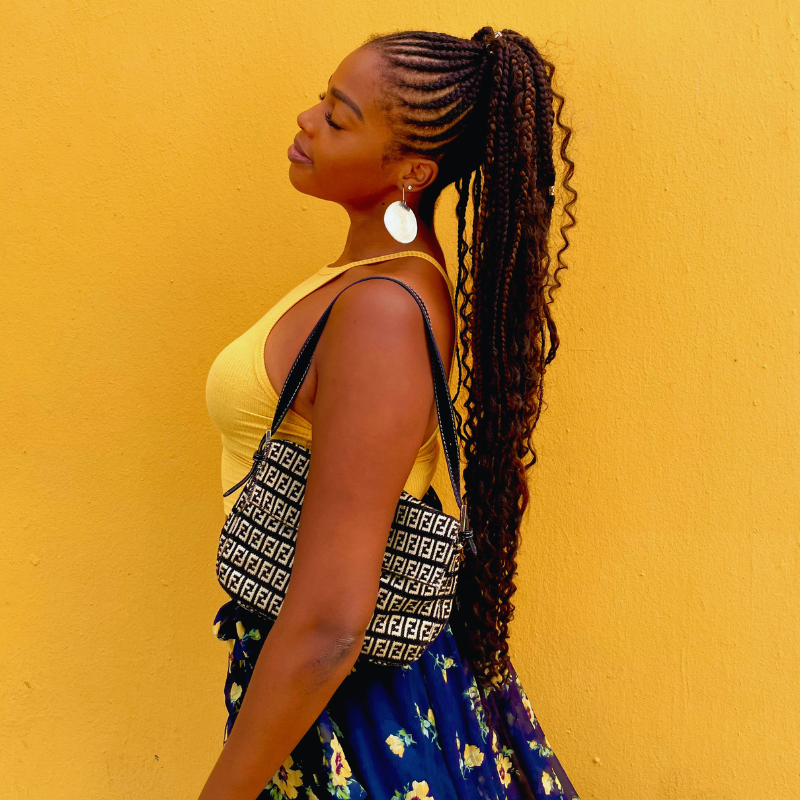
Matt Bowles: My guest today is Kylah Williams. She is a bilingual world traveler and cross-cultural marketing expert. After getting a master’s degree in marketing, at Fulbright and working for the New York Times, she now specializes in the cross-cultural nuances of advertising to different Hispanic and Latino communities. Originally from Sacramento, California, she grew up in an African American home, became fluent in Spanish through immersion and has lived in Chile, Mexico and Spain. She now runs immersive trips to Spanish speaking countries, creates bilingual content that teaches Spanish through bite sized lessons. And she is launching the Convo Club, a language learning community where virtual sessions are centered around a trending TV show, album or book making practice, fun, engaging and culturally rich. And she’s better known in these Internet streets as that bilingual chick.
Kylah. Welcome to the show.
Kylah Williams: Wohoo. Thanks for having me.
Matt Bowles: I am so excited to have you here and I’m so excited that we decided to make this a wine night. I feel like you and I have so much in common in terms of the things we appreciate about travel, the things that we like to do and wine is certainly one of those. So, let’s just start off by setting the scene and talking about where we are recording from and what we are drinking. I am in the Blue Ridge Mountains of Asheville, North Carolina tonight and I have selected a wine. I wanted to pick one from one of the countries that you lived in for this interview and so it was a choice between two of my favorite countries, by the way, for wine, Chile or Spain. And I ended up going with Spain. So, I have just opened a bottle, this is 100% Grenache and it is from the Campo de Borja region, which is in the Aragon region of Spain. So, I am going to be drinking through this tonight. But where are you, Kyla, and what are you drinking?
Kylah Williams: That sounds delicious. I’m currently in Los Angeles, California and I decided to stick to my California vibes and I went with a Cabernet Sauvignon from the San Robles Valley here in California. I have been to some wineries up in Napa because I am a NorCal girl. So, I felt like I needed to pay homage to my home state. And here we are with the California wine.
Matt Bowles: Well, big up to California and the West Coast. As you know, I lived in LA for seven years. It was the last permanent base that I had before I started my digital nomad journey. So, I as well have been up to Napa. But I feel like those Central Californian wine regions are super underrated. I feel like a lot of people do not know because you can get really good quality wines there and because it doesn’t have the brand of Napa, they’re a lot more affordable, but they’re incredibly good value. So, I would go up from LA and just drive up to various places in Central California and just do wine tours there because they’re gorgeous vineyards and the wine is amazing. So, I love that pick. I feel like a fun question just to start off with in all of your travels because you’ve traveled to some amazing wine countries. What is one of your favorites, most memorable wine experiences you’ve had around the world?
Kylah Williams: My favorite has to be my most recent trip to South Africa. I got to experience the Franschhoek wine region and I got to experience a wine called Chenin Blanc which is from France, but another major production is in South Africa. And so, it was one of the best things I had ever tasted. I brought some back for the family because I needed them to experience that wine. It was a white wine. I do like my wine a little sweeter. So, it was sweet, it had a little crispiness to it. It was delicious. So, in South Africa they allow you to do this wine tram, so it takes you to different wineries. And I got to experience Grande Provence and Klein Goederust, which is a black owned winery in South Africa. And it was really amazing. I would 100% say my best experience was there. I Don’t know if it’s because it was most recent or because of that Chenin Blanc, but it was amazing.
Matt Bowles: Yeah. Shout out to South Africa. The wines there are incredible. I first went Cape Town over 10 years ago. 2015 was the first time I went, and I’ve gone back so many times since then. I spent my birthday a few years ago in the wine region. We went to Stellenbosch and had some unbelievable wine tasting experiences. It’s such a special place, so I love that you got to experience that. Now, I do want to ask you about one of your other recent trips, though, because you went to the Philippines, and that is a country that I have not yet been to. Can you share a little bit about the context, why you chose to go to the Philippines? And then what were some of the highlights of that experience?
Kylah Williams: One of my closest friends is Filipina. And so, she grew up in a Filipino household. Moms is from Iloilo, which is a province, and dad is from Manila. And I’ve always grown up with her. Kind of was introduced to her culture, but never thought that I would travel to the Philippines. And one day she was on Hopper, she saw a low flight, and she was like, let’s book. And I remember I was at my workstation all of a sudden, switched gears, and immediately was ready to put the car down because we wanted to make that happen. I think she was so used to going with her family when she went to the Philippines. So, when she found out, well, I’m the travel friend usually. So, when she was like, I know somebody who would go with me, I was like, absolutely. And we booked the flights and then we came five months out, and we were like, maybe we should start planning for this because it’s happening.
And so, one of my most memorable experiences was visiting her family’s hometown in Iloilo. Leon, more specifically. It’s a province in Iloilo. And it just felt very homey, like the streets. You have your cousins on this side, cousins on that side. I got to see the house that her mom grew up in. And just walking down the streets, it’d be like, hey, ate. Or there’s like an older sibling or a familial family member. And it was just great. There were so many great sites, too. We went to a sardine run in Cebu, which was epic. I did get stung by a jellyfish, which is, okay, I have a battle wound, but I would do it again because you immerse yourself into the water. All these little fish are swimming out. It was Iconic. I don’t think I had ever imagined myself having that experience. But when in the Philippines.
Matt Bowles: Were you scuba diving the sardine run or snorkeling or what was that experience like? And for people that don’t know that term, sardine run, can you explain what exactly happens?
Kylah Williams: Yeah. So, I was in snorkeling gear, so I just had the eyepiece and the mouthpiece, but I was going depth as if I was a scuba diver. I would say I do have strong lungs, and I was also just filled by adrenaline. So, when the diver was like, all right, go. I was ready to just go all the way down deep into the water, hold my breath, obviously. And then there’s sardine schools that swim through the region. And so, when you go down, you kind of scare the fish and they start to open up and make this pretty park in the water. And it makes it like a cinematic experience where there’s millions of sardines just swimming, or maybe thousands, but just swimming away from your dive. And it was honestly beautiful. I look at the videos and pictures so often because I just feel like I couldn’t believe that that actually happened in real life.
Matt Bowles: So, I want to also ask you, as a Spanish language expert, when you were going to the Philippines, what type of context did you have on the Tagalog language? And then what did you learn and observe about the similarities between Tagalog and Spanish?
Kylah Williams: So, growing up, my friend’s parents would always speak to her in Tagalog. So sometimes I would pick things up and I always heard some similar words, but I couldn’t pick up the full context of what was being said. And it wasn’t until I had to do a little history dive on the colonization of the Philippines, which was done by the Spaniards. So, there’s still a lot of influence of that Spanish culture, religion. Catholicism is huge last names. A lot of people in the Philippines will have Spanish sounding last names. And then also words and phrases like in Spanish, familia is family, and in the Philippines is pamilya. Or there’s tsismis, which is gossip, and its chisme. I had a couple of other ones, but it’s just interesting hearing how just the words have changed a little bit, but the meaning of them still remains the same. And you can still hear Spanish being spoken. Pero is but. And it’s the same thing in Tagalog and in Spanish. So, I think that was unique because for my first time going to Asia, exposing myself to a completely different culture, to still have some little similarities of the languages that I speak was really nice.
Matt Bowles: Well, I would love to talk a little bit about your background and your early immersion into the Spanish language. Can you share a little bit about where you grew up and then your K-12 school experience? What was that like for you?
Kylah Williams: Yeah, so a lot of people ask me how I speak Spanish so well, but they’re not aware that I did go to a bilingual immersion school. And when I was young, my parents decided, we’re going to put all of our kids into a bilingual immersion school because they wanted us to be able to speak another language. I don’t know where the drive came from. It was just something that they felt was valuable and were like, go on, you know. So, I remember the first five years of my elementary school experience. I didn’t understand what was going on. Everything was in Spanish. And it was because all of the other people that were at the school, my peers, 90% of them were Mexican. So, all they spoke was Spanish and they were coming to that school to learn English. So, I feel like I just got dumped. I got dumped into a Spanish speaking world and was told that I just need to make it out. And so that’s what I did. I feel like it wasn’t until middle school that I started to realize, okay, I can actually speak some Spanish and they could speak English.
So, it was nice to see that mirror of both of us learning different languages. But it was also moments when I went to restaurants and my parents were like, hey, can you order? Or sometimes, hey, what are they saying? And I’m just eavesdropping, trying to hear what’s going on, because I do recognize that I can understand another language. So, I think that was an experience that is now becoming more adopted. I’ve seen a lot more bilingual immersion schools pop up. And also, Spanish is the second most spoken language in the state. So, I feel like people are starting to get on board and learn a little bit. So, I’m happy to have had that experience to give me that kickstart ahead of the curve.
Matt Bowles: So, when you were young and you were coming up in that environment with 90% Mexican immigrant kids, what were your reflections on the cross-cultural connections that you made as you were developing your own identity and the role that Spanish would play in your life and then being able to interact with all those immigrant kids?
Kylah Williams: Yeah, I feel like I always felt that I was different, visibly different. There was maybe three people that look like me, one Afro Latina, and then all of my siblings at the school. And so, I think I felt that But I didn’t necessarily feel the effects of being different because I think everyone took me under their belt, took our family under their belt, and was like, we’re willing to help you. At one point, I know the administration was like, this is going to be too difficult. They should probably pursue monolingual schooling. And there were also teachers on the other side of the coin that were vouching for us. Let them stay. Let them try. Because ultimately, the other kids were doing the exact same thing. They were coming to learn another language, so why not just allow us to do the same thing? But also, I feel like I learned so much about Mexican culture. We celebrated Día de los Muertos when I was younger. Tamales for Christmas, champurrado for Christmas, Día de los Niños. Also, we would always have the rosca, and we would try to find the little baby in the rosca. Like, those are parts of the Mexican culture that are ingrained in me, because from a young age, I was all in. I was like, oh, this is fun, you know. I learned how to dance the Caballo Dorado, I think. And so, it’s just funny thinking about going from that experience to actually traveling to Mexico and just seeing how some of those similar traditions are alive and well in the flesh. That was very cool for me.
Matt Bowles: Well, we also need to give some love to Sactown. For people that do not know about Sacramento, California, can you share a little bit about what it’s like there? I’ve been through, as you know, but very briefly. But the time that I went through Sacramento, I was super impressed with the international diversity of that city. I ate dinner at an Afghan restaurant, and I was just like, wow, this is super incredible. So, for people that don’t know about Sacramento, can you share a little bit about what it’s like there, what you love about it? And also, then once you got into high school, what were the dynamics like in your high school in Sacramento?
Kylah Williams: Yeah. Much love for Sactown, and props to you for actually making it that far north. I feel like people tend to stop in San Francisco, and that’s okay because we don’t need too many people trying to move out there. But Sacramento is amazing. I always say that it’s the place that raised me, which it did. I grew up there. But I think that the exposure to that many cultures during those transformative years of my life was so important. My community was made up of Latinos, Asians, Black people, White people, Middle Eastern. There were people from all walks of life that I’ve just grown up to be around. So, to me, going to a place that wasn’t as diverse was never on my radar. I was like, I’m so used to seeing a variety of people. And also, despite being the minority in my bilingual immersion school, they were also minorities. So, it felt like we were amongst each other. And that made it feel less minority ish. It made it feel a little more comfortable for me to continue to navigate.
When I got to high school, it was a very similar type of diversity. There were different clubs on the campus that catered to. It was like CCC (Chinese Culture Club) or something like that. And there was also the BSU. There was also Poli Club. And we would always have this one rally that brought all the different affinity groups together and they got to showcase their culture. So, I remember learning about some of the Indian dances. I remember learning about Bhangra at a very young age and seeing how expressive and excited they were to dance and a cultural dance. So, I feel like that was very important. And I attribute that to being raised in Sacramento, because had it not been for that, I don’t know.
Matt Bowles: Listen, I as well am a huge fan of Bhangra music, which is specifically a Punjabi form of music and dance. And I eventually, after being a fan of Bhangra for so many years, went to Punjab.
Kylah Williams: Wow.
Matt Bowles: In India, which was such a cool experience. I actually spent Diwali in Punjab. It was really, really spectacular and super special. But a lot of the Bhangra stuff also has been developed in the Punjabi diaspora outside of India, so there’s that dynamic as well. But I am a huge fan of Bhangra, so I’m so glad that you said that. Now, another thing that you and I have in common, Kylah, is we both hold a master’s degree from American University in Washington D.C.
Kylah Williams: Go Eagles!
Matt Bowles: Exactly right. But you also went to undergraduate at au. I would love to hear about that. Moving from Cali out to Washington D.C. what were some of the highlights of living in D.C. and your college experience?
Kylah Williams: You know what I think that people from California tend to stay in California because people idolize California and make it seem like it’s the best place to be. But if I didn’t decide to leave California, I would have never gotten, honestly, the international exposure that I got. It was because I decided to step out my comfort zone and go to DC, which was another melting pot. I know you experienced this back in the 90s. You got to see D.C. in its true, true glory. But I still got some of the remnants of that when I was there. And it’s truly a melting pot. From the cuisines to the people, to the languages, to the different museums that are in DC. I think it really makes it a unique place to visit and be. And especially during a collegiate experience, I think with American being up in Tenleytown kind of far away, you could get stuck in the bubble. But knowing that Howard is also in D.C. and all you have to do is go downtown and you can be at some of the parties, the black houses, all those get that real raw experience, I think made that experience 10 times better. Because I wasn’t stuck in a bubble. I was able to leave and experience the district for what it was. And then when I went into my master’s program, me and my girlfriends moved downtown. So, we were right in the mix of everything. Right off of U Street and Florida Ave. We were right there and in the mix. And I think that really allowed me to see D.C. in its glory in the 2000s. I know it was a little different, but it allowed me to see all that it really had to offer. And I wouldn’t change that experience for anything because it was amazing.
Matt Bowles: That’s so dope. Yeah. I have so much love for D.C. as you said, I moved there, so I did a study abroad program my senior year of college, which was 1998, and I was based in D.C. and it was an amazing time to be there. It was super interesting, too. I was interning with the NAACP and I was doing a Peace and Conflict resolution semester program where we were studying the Israel Palestine conflict. And that’s the first time that I went to the West Bank and the Gaza Strip. So, it was a really incredible and seminally important moment in my life. But it also inspired me then to go back to AU and do my master’s degree in International Peace and Conflict Resolution. So, I moved to D.C. in 1999, and I did my master’s at AU and exactly as you said. I lived up near AU, which is this part of the city that is just completely separate from all of the rest of the people that live in D.C. and so as soon as that was done, I moved out of Northwest, I moved down to Southeast, and then I eventually moved up and lived six blocks north of Howard on Georgia Avenue in Gresham Place, which it was amazing. I mean, D.C. is just such an incredible place. So, I’m so glad you got to experience that, too.
But in terms of your college experience, in developing your professional academic interests and passions, I’m curious about the merging of your interest in both business and your passion for language and how those two things came together. I know you won the national Spanish business case competition. Can you talk about that and what impact it had?
Kylah Williams: Yeah, I feel like, for me, starting off learning Spanish knowing that it was a part of me, it never really came to light until I was in the classroom. So, it was when I was in Spanish class that I felt like I thrived because everyone around me was just doing the same thing, trying to learn, wanting to talk. And I think that’s where I was able to come to life. I didn’t realize the impact that learning a language would have on the world of business until one of my advisors reached out to me and was like, you speak Spanish? I remember I was in a lower level of Spanish. The teacher was like, she has to go. You need to put her in another level. So, they ended up putting me into a native class for Spanish speakers. And my advisor saw that I was in that level of Spanish. I was in business school. And so, he was like, I have an opportunity, and I want you to be a part of this business language case competition that we want to compete in this year. And I think it was in Provo, Utah, and all expenses paid, they would cover everything, which also exposed me to the benefits of traveling with your work and with your job. And I was like, okay.
So, I remember working with my team, all language learners. Some spoke maybe three to four languages. Some were just learning Spanish. But I got to lead a team of phenomenal women who were doing business and also learning Spanish in that business case competition. And we competed on the national level and took first place. It was talking about diversification of products across borders. And that’s really what showed me, okay, language does mean that you’re working in different countries, different contexts. And so international business, consumer behavior, barriers, cultural nuances, all those flags started to go off in my head. There’s something here. And I think the validation that I got from some of the judges after the panel, after our presentation, just set me on fire. I was like, whoa, I can do business, and I can do it in Spanish. This is awesome. And I think that was the catalyst for me of wanting to keep going with it.
And outside of just that competition, I was also able to work at the center for Business Communication. It’s now called Professionalism and Communication at AU. So, if you ever need any support with papers, that’s a resource for you. But there were students that would come who didn’t have English as their primary language. And so, I would notice that based on some of their writing styles, And I would give them feedback in Spanish. And I remember my bosses being amazing. You’re reaching them in their native language, which probably is going to have more impact and will also help them improve their writing style. So, I think just seeing it continue to manifest in different ways in different parts of my life was, wait, why have I been shy about this my whole life? I could be doing big things. And so, I kept going with it.
Matt Bowles: So, Kylah, we have to talk about the country of Chile. You ended up studying abroad, moving to Chile and living there. Can you talk about that decision, what you were doing in Chile and where you were based and how you decided to make that move?
Kylah Williams: Yeah. So, I remember my sophomore or freshman year college. One of my closest friends from high school, Puerto Rican, she was living in Chile at the time. And she was like, visit me. I was like, with what money? Freshman year in college, I didn’t know where it was going to come from. And my dad ended up making a pack. If you can cover half, I’ll support you with half. And so that pushed me, obviously to work harder, make some money so that I can make this trip happen. And she hosted me for about a week and a half in Chile. And that was my first international experience and true solo experience because I did go alone, my world, my scope expanded, my eyes were opened. It was amazing. She was studying in Santiago at the time, but we did have the chance to travel through Chile to Pichilemu, Valparaiso and different regions in Chile. And I was like, this is amazing. So, I noted it. So, I remember the experience. I was like, this was great. I was coming up in my junior year of college and I knew I was going to study abroad. I knew I was going to do a full year abroad. My advisors were already aware, friends are already aware. But initially my plan was to do with a full year in Spain.
So, I remember having conversations with some of my friends. I just do a full year in Spain. And one of my friends said something that changed the trajectory of my life. She was like, Kylah, you speak Spanish, why not use it in two different contexts? And to me, that registered because I never really had friends speak to that ability to speak Spanish. I kind of just had them know that I spoke Spanish. So, when she said that, I was like, wait, that’s true. And that opened the world of Chile again for me because I had already been. This would be a great program because AU was such an international school. We had schools in different countries, as you know. And so, we had a program that went to Chile. And I was like, yes, this is going to happen. So, I decided to do one semester in Chile and one in Spain. And I was in D.C. just having conversations with friends when that decision came about.
Matt Bowles: So, since we’re drinking wine tonight, I got to ask you, what was the Chilean wine scene like before? And I’ll just say this too. Before I went to Chile and I lived in Santiago for about a month, and I just loved every single minute of it. But that was literally where I discovered Carmenere wine. I had never had it before I went to Chile and then I went there and I had Chilean Carmenere. And then I just started ordering it with every meal. And then it’s like wherever I find it around the world, it’s like, oh, you have Chilean Carmenere. Yeah, I’ll have a glass of that. So, I had just such a. An exciting experience with that, and I just fell so much in love with Chilean wines. But what was your experience like with the wine scene there in particular?
Kylah Williams: Yeah, I think when I was finally of age, which in Chile, you’re of age at 18. So, I was of age the first time that I visited Chile, and I was like, okay, let’s do a wine tour. So, I got to experience the winery with a very naive tongue, I would say, because I wasn’t drinking wine that often. But the winery that we went to was one of the oldest wine regions that is still owned by the family there. And so, I remember trying this wine. It was a cab and it was called Roble was the name of it. And I was like, I need to take this home to my family. It was so good. But I think it was a great experience to just see how the taste varies, how much people care for their grapes when they’re producing. So, it was a really good experience.
Matt Bowles: Well, another thing that you and I have bonded on is our love for the city of Valparaiso in Chile. For people that do not know, people that have never been, maybe there are some listeners, they’ve never heard of the city of Valparaiso in Chile. What is it like and why do you love it?
Kylah Williams: If you have never heard of Valparaiso, let this be your sign to visit. Both Matt and I can agree that it was an amazing place to be. It’s a very hilly, colorful, scenic because it overlooks the water culture filled city. It’s honestly like you’re walking through different graffiti art on all the different streets. It’s very vibrant. Some of them use words to create more impact with the work. Street vendors, Sopaipilla, if you’re not familiar with them, you should be familiar with them. They’re delicious little dough that’s fried and served with a little Salsita. And it’s amazing the ascensores, which are like the little gondolas that can take you up and down the hills in Chile. There’s many different Cerros which are the overlooks, so you can see just different views of the city, different outlooks. And honestly, it’s so worth a visit. One of my other favorite things is Chorrillana. I don’t know if you had the chance to try a Chorrillana, but it’s fries with the fried egg, a caramelized onion. Oh, it is so good. So, all those things take notes because if you have not been, you need to add it to your list and try every single one of them.
Matt Bowles: If you are a fan of street art, this is one of the most spectacular places in the world to see street art. It is like an open-air museum. And it was interesting because I’ve been to a number of cities and I actually seek this out. So, I will actually go to cities because they have an amazing street art scene. And I can remember going on the Bogota graffiti tour in Colombia, in Candelaria, and it was just absolutely spectacular. And I asked the guide, what other cities do you think would potentially be close to the level of Bogota? Because the street art scene in Bogota is next level. And he goes on this continent in South America he goes Sao Paulo, Brazil and Valparaiso in Chile he goes, those are probably the top three. And I said, enough said. And so, I of course have been also then to Sao Paulo and to Valparaiso, but those are some of the most spectacular cities for street art. I mean, you’re just walking around and just absolutely in awe of the graffiti art. They also have one of Pablo Neruda’s houses there, the amazing Chilean poet and political activist. You can go and you can tour that, which has an incredible audio tour.
And there’s just so much magical stuff about Valparaiso. And if you’re staying in Santiago, it’s literally just like what a one-hour bus ride or something out to the coast. And its sort of this gritty port city with all of the amazing authentic beauty that comes with that. It’s so, it’s just such a special place. And so, I’m so glad that you got to hang out there. Kylah. I also want to ask you about your experience though living in Chile. You mentioned it was the first time living out of the country. When you went to study abroad there on your own, and you got involved in all sorts of local activities, you were playing volleyball, you were doing all this stuff. Can you share a little bit about what life was like your first time out of the country in Chile.
Kylah Williams: Life was beautiful. I think that coming from the United States, where there’s so much pressure to always perform, it felt nice to have a change of pace. I was obviously studying. I was there studying abroad, so that was my primary thing. But I also got to get involved. Like you said, I was on the collegiate volleyball team at Chile. Me and a friend were like, let’s try out. We tried out. We made the team. And I was learning how to play volleyball in Spanish. And I think that that allowed me to connect were people that I still talk to this day. And it’s a different scene if you’re an athlete, if you know anything about teamwork and group sports, that you rely on each other not just on the court, but off the court.
And I think that that translated into my experience at Universidad Adolfo Ibanez, which was the college that I studied at, because I would see them around, they would invite me to hang out with their friends, they would build community with me. And it really felt like a strong sense of, this is my team mate. They’re on my team, they’re on my side. And I think that that translated very well. And also, our school was kind of at the top of a hill that overlooked the beach. And so, when I talk about being stressed at American University is not the same as being stressed. I was like, let me just go take my lunch break and sit and watch the waves crash versus let me go to let’s and just be side of the dorm room, you know? So, I think that that was truly a beautiful way for me to perceive a different collegiate experience. And if you ever have the chance or considering studying abroad in Chile, I know there’s a lot of great schools in Santiago, but Universidad is also an amazing option if you are considering venturing a little outside of the main city.
Matt Bowles: Well, you were living in Chile during the 2019 uprising, which, for people that don’t know, was the largest mass protest since the Pinochet dictatorship. They literally had a million people on the streets in Santiago at one point. So, I’m curious how it was to be there during that time. I know you actually went out to one of the protests. Can you describe what that felt like?
Kylah Williams: It was honestly surreal because it all happened so suddenly. I don’t feel like I fully sat down and unpacked that experience. I just remember being at one of my friend’s host sister’s friend’s houses and we heard things were going on. We were up in Reñaca and we were trying to get back to Viña del Mar, which was where we were staying, and there were no cars picking us up. She was taking silent calls from people, just getting yelled at in a sense of like, why would you bring these Americans outside during a time like this? And this was on the onset of the revolution that was taking place. And yeah, it was definitely something that if I take myself back, I was scared. I was also empowered. I felt like part of a movement, especially being a minority in the United States and always having to fight for rights and the way that we want things to be seen. So, when I stepped out to protest, though, it was completely advised against.
As an American being in Chile, I felt like it was the right thing for me to do because it allowed me to not only see the power of numbers, of community, of people, but it also allowed me to stand up for something that I also can believe in, relate to. I mean, I didn’t reap any of the consequences because I did leave after my six-month period. But I think just being able to be there and see how voices, how disruption impacts change and people. I remember seeing some of the propaganda saying, Chile, the world is watching you. Because as we see now, when it comes to civil unrest, social unrest, people take to the streets. And I think that’s always been a thing. It’s not Chile that started it, but I think things had calmed down for a while. So, to have seen it at that large scale, things burning them, burning buildings, infrastructures, vehicles and graffiti, just all things to make it clear that we aren’t going anywhere. What you’re doing to our livelihoods is unfair. And at that time, it was they had raised the prices and the fares for buses, which is a major way of public transportation in Chile. And affordability comes into play because if you’re taking it every day and they’re raising prices, you now make it inaccessible. And people have jobs, people have livelihoods that they need to. And for me, I had to get to school.
For other Chileans, they have places to go. So, I think just being in the mix of all of that was an empowering moment for me to see that. There was a phrase that said, la gente unida, Hamas, tierra vencida, which was the people united could never be taken down, destroyed, like we are better in numbers. And seeing it firsthand was truly a testament to that. And it transcends borders. It’s not just better in numbers in Chile, better in numbers in the United States, but globally. When we come together to fight for a cause, we can make a change. And I think that was the biggest takeaway and something that I’m grateful to have experienced.
Matt Bowles: Kyla, one of the social media posts of yours that I read said that your experience living in Chile allowed you to find, reinvent and love yourself all over again. And that you were such a beautiful version of yourself there. Can you talk more about that?
Kylah Williams: That often plays in my head because it still stands true. I feel like for a long time, like I’ve mentioned, I kind of hid the fact that I spoke Spanish from people because I knew my upbringing was very different. So, to be able to exist in a place where that didn’t have to be on the back burner, but it got to be me and I got to show up in this place as myself. It felt very rewarding. And I felt whole, especially coming out of college. I was coming after sophomore year where everyone is conforming, everyone wants to be like, everybody wants to have some type of impact and fame and all this kind of stuff on campus.
So, to step away from that world and just show up again. There was only three of us from American University that had gone to Chile to study at this school, and I didn’t know any of them. So, it honestly felt like a fresh start and to show up as myself and be so widely received. And I don’t say that in a way to brag or anything, but people liked me for me. People liked me in my English version, people liked me in my Spanish version, people liked me in my Spanglish version, in my volleyball version, academic version. It just felt like I was able to exist as myself, make so many connections along the way. And it made me leave with a sense of pride, but also self-respect, internal validation and happiness because I got to live out a chapter of my life that felt culminating in a way.
Matt Bowles: So, after your study abroad experience in Chile, you then did go and study abroad in Spain. Can you talk about that experience where you were based and what it was like living in Spain?
Kylah Williams: I was in Madrid and Madrid is much more of like a city life. When I was in Chile, I was living like beach, coastal life. So, coming back to busy streets, Plaza Callao, the public transportation going underground, the buses needing to get to work, to school, and the walking out of campus and seeing people left and right was like, whoa. I used to go to school on the hill, where all I saw was the beach. So, I think that was the first biggest adjustment for me was, okay, I’m no longer in that slow life. I’m back to the New York vibe, which I know we both love New York, but we are very much a fast pace of life. And there were also differences that I noticed within the language. Language has always been a big thing. And so, in Spain, they have a different accento. They pronounce their ‘s’ like Gracia. It sounds different. The people move different. They have a little more of a European poise. I would say, in terms of how they dress and carry themselves, that people in Chile were more laid back. It wasn’t always about shows, just about existing, living and loving life. So, I think that was one of the biggest transitions.
Matt Bowles: I know you also interned at a Spanish startup there. Can you talk about that experience and also the realizations that you had in terms of understanding marketing approaches and how they varied cross culturally?
Kylah Williams: Yeah. So, my first Spanish internship was in Spain. It was at a Spanish startup company called Ozone Drive, which was pushing through for electric vehicles. But I think it allowed me to see that Spaniards prioritize sustainability. They prioritize the convenience of being conscious of the climate. And this startup, which is doing very well now, being on the marketing side of things, helped me see different competitors, different types of approaches that they were taking in order to push the narratives. It’s not like sometimes in the United States, it might be trendy rage bait, but it’s more built on information, data, so that people are more likely to adopt. So, I think building trust within your audiences was something that was more prominent, I would say, in Spain, similarly to in Latin America, building trust. When it comes to, like banking, it’s like they’re not quick to jump into banking. They need to make sure that there’s something there, that they may be there. Abuelo has done it like someone older than them has done it. Word of mouth was huge in Latin America. So I think in Spain, it was just seeing the trust factor being really big part of that adoption curve. And language, they don’t have the same colloquial sayings that they might use in Chile or Mexico. And it’s not necessarily funny or sarcastic way of approaching. It’s more of a serious learn and then adopt versus just let’s crack a joke about it. And then everybody wants to be a part of the joke.
Matt Bowles: So, what did you take from that in terms of marketing and advertising, in terms of how cultural nuances shape consumer behavior? What did you learn from that?
Kylah Williams: The biggest thing that I learned is that it’s not one size fits all. And I think before when I said that I spoke Spanish, it was like, okay, if I speak Spanish, I can relate to everyone. But in reality, even in corporate settings in Spain, we’re not the same as corporate settings in Mexico, which I know we haven’t fully talked about. But people prioritize taking lunch breaks, getting to know their colleagues, and figuring out how to build true connections with people so that you can build that trust and then they can rely on you for things. It can be the exact same in the United States, but people are very transactional. So, it’s harder to see when someone is genuinely curious and wants to learn versus when they want to get something out of you. But seeing how seriously that’s taken in Spain. Also, familial ties, being able to bring family into advertising builds trust a lot stronger and make someone feel okay. I’m seeing something that I already live, and this is a great way for me to want to accept it because it’s a representation of who I am.
Matt Bowles: Well, I know you got to travel around Spain while you were there, and there’s so many super culturally distinct regions of Spain that are very different from Madrid. So, I’m curious, can you share where you went and some of your impressions, highlights, or memories from traveling around Spain?
Kylah Williams: Yes. I went to Toledo, which was a very monochromatic city. I don’t know if I have a better word for that, but it was a lot of beige, a lot of white, a lot of light browns in terms of the infrastructure, and it felt very uniform. I also visited the Sagrada Familia, which was in Barcelona, and it was still under construction. I feel like a lot of people who have visited know that. But it was very nice to see this architecture of this church that has been preserved over all of these years. But it was beautiful. And we went to Sevilla and visited the Plaza de Espana, which was this little bridge in this large plaza that had just people hanging out, walking around, appreciating this. It was like a bridge that was made of tiles, and it made me feel nostalgic. And it was a tour that I had done with a group that I had met when I was out in Spain. And so, they took us around there, ate around the area, talked with friends, and then we also visited Granada, and we saw the Alhambra. And if you have not seen the Alhambra in real life, I promise you it is one of the most breathtaking experiences you will ever see from the curves and the walkways, the tiles on the building, it’s large. So, you’re not just seeing this in one place, but you’re seeing little grass patches, fountains, and you’re able to just walk through and it’s serene and so you’re able to walk around. I remember singing and hearing my voice echo throughout. And then I heard someone else who was singing live music and it was just echoing off the walls around us. It was truly so beautiful. And the craziest part about it was we weren’t even supposed to be able to go. We found these last minute tickets and we’re like, we need to be there. And I just remember feeling like a princess almost in like this castle with so much history and still overlooking the city. It was beautiful. I know you said you had been. How do you feel the Alhambra impacted you?
Matt Bowles: It’s extraordinary. The Alhambra is one of the most spectacular pieces of Islamic architecture in the world. And when you go to Granada, the Albaicín Quarter, which is the old city, you walk around there and there’s just all of this Islamic history from the Moorish period. And really there’s parts of the Albaicín Quarter that feel like you’re in North Africa when you’re walking around there. It’s really a special thing. And then the Alhambra is just as you described it, absolutely breathtakingly spectacular. And pro tip to your point, you cannot just walk up to the Alhambra and get a ticket and go in. You need to reserve your ticket at least a day or 48 hours in advance for a specific entry time. So, if you’re just moving through quickly, be sure to do that in advance because trust me, it is worth it. It is a mind-blowing experience.
Kylah Williams: And you don’t want to get that far and say you didn’t get the chance to see it because had we not gotten those tickets, I would have been so upset hearing people talk about it and knowing what if I never got to see that. But another region that we got to visit was Bilbao, that is in the Basque country. Despite being in the same country, it was so different. They had their own little things called Pinchos, which was their way of having little snacks and appetizers. And every place that you these stood out to me because it was so new. Every place that you would go to would have like a variety, variety of a Pincho, which could be bread with some tomatoes and some olive oil, or they could be croquettes with jamon queso ham and cheese. It was a part of the culture. People might not have large meals. But you would have like a little bite sized snack at any given point. So, we got to see one of the tallest bridges and we were able to go up all the way to the top and walk across, and it was pretty cool. We also went to the Guggenheim Museum and I think that was a great experience. Everything was so new.
Matt Bowles: Describe that for people that have never heard about the Guggenheim in Bilbao. It’s a Frank Gehry architectural project, so people should just Google Guggenheim Bilbao just to see pictures of this place. But I lived in Bilbao for a month and so I would jog every day. I lived in the old city, so I would just jog along that river right down to the museum and back. So, I was seeing the museum from the outside every day as I would just jog up and down the river. And I was just like, this is unbelievable. But when you went there and you went inside and you walked around the outside, what is it like for people that have never been?
Kylah Williams: It was a work of art. I remember when we first walked up and saw. I don’t know if this spider, it’s like this very large spider with all these legs is part of the same person who built the Guggenheim, but you feel so small in this large sculpture. And then within that, you see the whole museum, which is different panels of metal that kind of make up the outsides of it. And inside there are huge sculptures. So, one of them you’re like walking down almost floor to ceiling type of wall. And it’s just. That’s the art. The art is the experience of you walking through the museum, seeing different pieces of art as well. While we were in there and sculptures, and then I remember we sat inside of a room that just had an auditory, visual experience. It’s projectors that I think are showcasing. I mean, it made me feel, I use that a lot because sometimes I can’t always remember, but I experienced something for the first time. I felt peaceful. I felt at ease. I think there were like color, shades of blue. I feel like there might have been a little bit of water that was being displayed on that visual thing that we were looking at. But I had gone with a friend, so we just sat there and talked for a while, just like appreciating. Wow. Museums really do have a lot to offer. And I don’t think at the beginning of my travels I was a huge museum girl. But now I really appreciate them. And I think it’s because I got to experience the Guggenheim. That was so unexpected but amazing.
Matt Bowles: It is truly spectacular. I want to encourage people to just Google Guggenheim Bilbao just so you can see pictures of this thing. It is absolutely spectacular. And fun fact about that spider sculpture on the outside, there are actually. I think it’s seven of those spider sculptures, and they’re in all different places around the world. So, there’s one that I’ve actually seen in Doha, there’s one in Tokyo, and there’s actually. This is completely random. There’s one in the city of Bentonville, Arkansas. And I’ve seen it because my sister lives in Bentonville, Arkansas.
Kylah Williams: Amazing. Wow.
Matt Bowles: Yeah. So, it’s totally cool. But the first one that I ever saw was in Bilbao. And then I went to Doha in Qatar, and I was like, this looks exactly like the spot. Wait a minute. And then I, like, looked it up and like, oh, yeah, there’s seven of them. Exact same sculptures. And they’ve just placed them in these different places around the world. So, you can travel around the world and see those spider sculptures, which is such a cool thing when you start going down, down these rabbit holes of artistic stuff and then looking for things as you move around the world.
All right, we’re going to pause here and call that the end of part one. For direct links to everything we have discussed in this episode, including all the ways to find, follow, and connect with Kylah. All of that is going to be in the show notes, so you can just go to one place at themaverickshow.com go to the show notes or for this episode, and there you will find it. And be sure to tune in to the next episode to hear the conclusion of my interview with Kylah Williams. Good night, everybody.