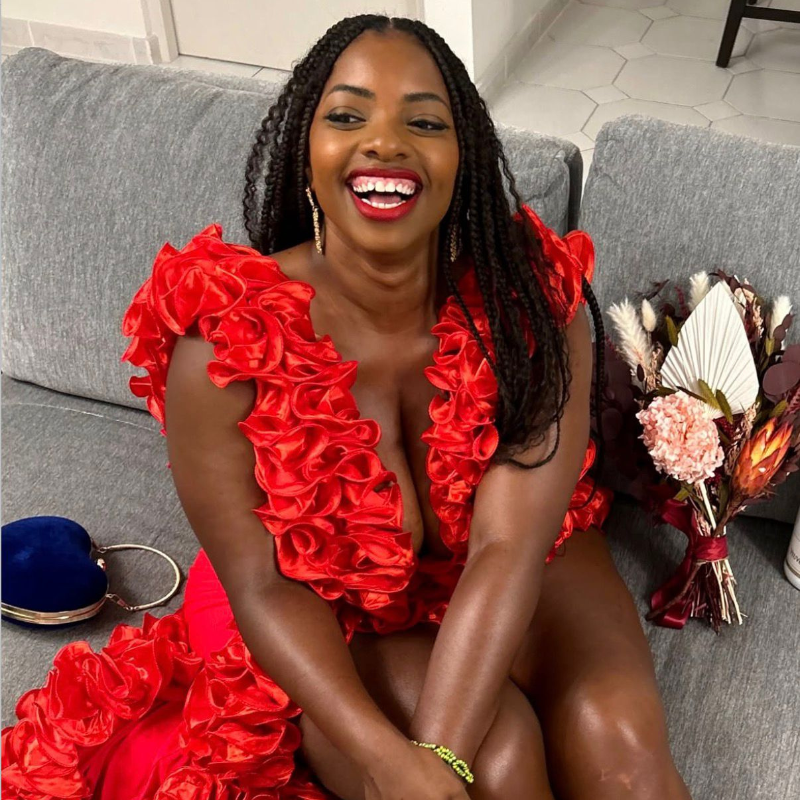
Matt Bowles: My guest today is Dash Harris. She is a Peabody award winning multimedia producer, activist, world traveler and public historian focused on Afro diasporic stories, identities, histories and futures. She is the co-found Afro Latinx Travel which facilitates group trips centering Latin America’s African roots that are led by black Latin American locals. She is also the producer and director of Negro a docu-series on Latinx identity and its deep-seated race, color and class complex. Born to black Panamanian parents, she grew up in Bed-Stuy, Brooklyn, New York and today she offers trainings, workshops and coaching on dismantling anti blackness in Latinx communities.
Dash, welcome to the show.
Dash Harris: Hello. Thank you for having me.
Matt Bowles: I am so excited to have you here. I have been following your work for quite a while. I am really appreciative of all of the content that you are producing and the trips that you organize and the work that you do. So, I’m super excited to have this conversation. But let’s just start off by talking about where we are recording from today. I am actually in the Blue Ridge Mountains of Asheville, North Carolina today. And where are you?
Dash Harris: I’m Panama City, Panama.
Matt Bowles: Well, you and I were just in Brazil at the same time last year. Although I spent the entire time in Rio. You were leading a trip and went around to a bunch of different places in Brazil and I was following your Instagram stories and I think I want to start this off with asking you about the November 25 Black Women’s March that you attended in Brazil. Can you give the context for what that was, where that was, and then what the experience was like being there?
Dash Harris: The Black Women’s March for Reparations and well-being that took place on November 25th in Brazil, Brasilia, the capital of Brazil. That November 25th date actually was literally the day after the Afro Brazil group trip ended, and then the day before the Afro Cuba trip was going to begin. But this march was extremely important for me. And I was like, I’ll suffer because I’m suffering already anyway, but at least in this case, I’ll be in community with other black women. And the march was incredible. It was the second edition. It was over 300,000 people that came.
The first edition was in 2015, I believe. And I wasn’t there for that one, but I was there for this one and a bunch of friends of mine were there. And it was a call for acknowledgement of the particular and unique intersectional lived experiences of black women in the diaspora. Because it wasn’t just black women in Brazil, even though very well could be, but it was black women everywhere; Hemispherically, diasporically. There were people from Panama, people from the States, people from. We met a couple people from Ecuador, from El Salvador, from Costa Rica, Colombia that were there. And so, it was a gathering of black women calling for reparations and calling for living well or well-being in terms of our material and lived conditions and how it affects us and our communities. Because black women are the main caretakers of black communities, plural.
So, it was an incredible experience. Hopefully they will have another march next year. But again, it always depends on resources and what can be accrued and acquired and organized. But it wasn’t just the march. They also had programming before and leading up to the march around the different intersections of being a black woman, black femme, gender, sexuality, class, especially labor, health, safety, policing, all of this. And also, imaginations and futurity. What do we want for the future? What do we want in reparative acknowledgement or reparative action? It was really a beautiful time. And so that was a huge gathering of black women. And it was interesting because speaking with friends in the US and elsewhere, you didn’t see it covered. We don’t do it to get it covered. But it’s also indicative of why this march was absolutely necessary and why black women’s concerns should be prioritized, because they’re not.
Matt Bowles: Can you talk about the impact of that march?
Dash Harris: I think one of the biggest impacts of that march is visibility, that whether people believe marches work or not is not the point. Actually, it’s not the point. The point is visibilizing lived experiences that have been suppressed and marginalized. But just the act, the effort of gathering in a specific space, doing the same thing, demanding the same thing, being in solidarity. It visibilizes that we do have some demands for transformation and accountability and repair. And I think that’s one of the biggest impacts, actually being able to vocalize our experiences without interruption, in many ways. Because in a lot of spheres, in a lot of contexts, when black women speak, they’re being interrupted. And we weren’t for those hours of the parade, for those hours of the programming, for those hours of even the convening.
When I was in the airport, I saw other black women there amongst themselves, amongst ourselves. And we’re having a conversation with one another without even speaking, because all of our presences are there. For me, I already knew the vibes were going to be immaculate. I already knew that. But being in a space with thousands of black women, it was total love and care. Everything was just flowing. Everything was with ease. And even if it wasn’t, it was solutions being presented and actions being taken, period. It was just beautiful to speak to other women. The majority of the women that I came across were Brazilian who spoke Portuguese. I don’t speak Portuguese. I understand a great deal. And usually when I’m speaking in Spanish, they’re speaking in Portuguese. We can understand one another, but in any case, we understood one another because we were there in our varied experiences.
And so, it was just a joy, really, to see people, to actually get a visual of other black women, of even what they were wearing, what they were adorning themselves, what statement T-shirts they had, what they were selling. Because there was also a marketplace, our creativity. And seeing the little kids there and the spiritual folks, the people who are part of Candomle, Umbanda, Bacumbal, all of these different African spiritualities represented in our various experiences. Because that’s extremely important as well. The Quilombolas and the generations that also was really great. And just the energy, I think the collective energy there in the action of fellowshipping and gathering is really powerful. That we can carry forth this type of transformative energy in a space to recharge, to regenerate, to generate, and then carry it forth to wherever else we’re going after we depart. It was healing. As much as that word is thrown around a lot these days. It really was. And it was embodied. You just felt it. It was the sensations. It’s things that you really can’t explain. You just have to experience it.
Matt Bowles: Well, I would love to talk a little bit about your backstory, Dash. And before we even talk about your story, can you share a little bit about your family history? Your parents experience living in Panama and then immigrating to New York City and what that was like for them.
Dash Harris: My mom was a teen mom. She was literally 19 when she had me. But in that time, that wasn’t so shocking anyway. By the time my grandma was 24, she already had at least five kids. By then, my mom is one of six. And so, my mom said that she wanted to get out of Panama. It’s so funny when she tells her story because she’s like, yeah, I just wanted to get out of there. I’m like, oh, okay. Living here in Panama, living here for 13 plus years, it is plus because I spent a significant part of my childhood here, I can see why she wanted out, and I don’t blame her. And I understand that it was extremely hard for her as well. And so, because it was hard for her, she immigrated pregnant with me.
And it’s funny because my grandma, who was a lifelong lottery player, she loves playing the national lottery, like many Panamanians in general, but specifically the older generation, they love playing the lottery. They love playing their numbers. My grandma actually won the lottery when they were trying to get my mom’s papers to leave, and she won $2,000 and she was able to get her papers faster. My grandmother had her residency in the U.S. I actually was thinking about that the other day. I actually don’t know how my grandmother got us residency, but she’s had it forever. At this point, she’s not interested. She doesn’t care to maintain it, if only to see some of her family members in the States.
But my mom left with me. She had me in Brooklyn, Kings County Hospital, and then I was shipped back to Panama until I was almost ready to start preschool. But I was here for a couple years with my grandmother, and my mom was in Brooklyn. And then I came back to rejoin her, and then we had my brother and then my sister, and then we moved out of Brooklyn. And Brooklyn was not only Panama Junior, but Cologne Junior. That’s where my family is from. My biological father never left Panama. He’s still here. And my stepfather, who is my father, he raised me. He’s also from Panama, from the same city as my mom. Colon, Panama, on the Caribbean coast.
Matt Bowles: I want to ask about your identity journey coming up. If you can take us back to 1990s Brooklyn and talk about your experience growing up between there and Panama and what that was like and how you navigated the milieu of blackness in the U.S. coming from a Panamanian immigrant background. And also, how at the time you understood the Latina identity and the extent to which you identified or didn’t identify with that as you came up.
Dash Harris: Well, the Latina identity was never my experience. My experience has always been ‘black woman’. Getting into specifics, sure, and contextual positionality and all of that, but I’m a black woman wherever I go, in whatever language that I speak. And so, in our household, it was very clear that we were black. For some of my peers who may be, I would say more mixed race or light skinned or they have those experiences, that’s not my experience. I am a brown skinned black woman. And so that is identifiable everywhere I go. And that’s how people will treat me. And so, my parents, both of my parents actually said that when they left Panama. And my stepfather was also young as well. When he immigrated to the states in his 20s. They were very clear they were black in Panama and they’re black in the States and they’re black everywhere.
And so, they said when they actually came to the U.S. The U.S. gave them a language to name what they had always felt in Panama, which was anti blackness. And I think even more so, anti-blackness is now becoming more popular in its usage and more and more people are coming to understand it. But racism, colorism was what my parents were talking about and in essence, anti-blackness. Without saying anti blackness, they just told me stories of how their racialized experiences were always marginalized or just not centered and things that they felt were dehumanizing that were normal in Panama. No one was talking about it. And so, they said that there was a conversation or conversations happening in the U.S. that they said, hey, that’s also my experience. And so, my mother was extremely intentional in how she raised us. We were living in Bed-Stuy, Brooklyn, when Brooklyn was Brooklyn, where Brooklyn was Caribbean. It’s still Caribbean Brooklyn. It’s very much still is or little Caribbean Brooklyn was Galon Jr. Like I mentioned, you had the Panamanian Day parades. You had the black Panamanian businesses all along Franklin. So much so that recently they wanted to name Franklin Panama Way. And they’re having efforts around that because black Panamanians, I would say, made this particular section of Brooklyn.
I didn’t have any type of identity crises. Luckily, fortunately, positionality, blackness is not confused. We know our positionality. We know what racial capital is. We know when other people wield racial capital. And so, we knew our positioning in the world. And I think that was one of the most important tools that my parents, particularly my mother, gave me. The things that she did not like in Panama, she corrected it in our house, whether it was racial, whether it was even aesthetics, because there is this Caribbean practice of always commenting on people’s weight and appearance. And she also stopped that in our house because she’s like, that’s just rude. Why would you comment on someone’s weight? Whatever you say about their weight, they know you don’t have to comment on it. And so, these were just her own political formations that she employed in our household. And so, she was the dissenter, the different one in her family.
And then I pushed it even further. She gave me that type of enthusiasm and fervor for being able to stand on your feet and be strong in what you know, even when others are denying it, even when others are trying to tell you to be quiet. She actually gave me those foundations. And probably at this point, maybe she regrets it a little bit because she’s like, I didn’t say to use it on me, but that’s just what it is. That was the path that brought us here. But in terms of identity, as far as identity formation, in black Brooklyn, it was black Brooklyn. It was black Caribbean at that time. It was Biggie, it was, I mean, for me, more so Lil Kim, that was who I was more so interested in Brooklyn in that time, you also had Puerto Rican folks as well, Caribbean.
And so, I was being affirmed in all of the spaces that I was in majority. I should say, majority of the spaces that I traversed in Brooklyn, physically, media wise, even during that time, I would say that I had a positive childhood in general. I think being represented in music, being represented in our lived environment, I would say that I feel very fortunate in that regard. I was being affirmed. My blackness was being affirmed in its many forms and its many iterations and reflected back to me by my community. And I also know that it was intentional decision making by my mother and also other members of my family. One of my godmothers, she worked at the Schomburg Center. She took me to the African Fest every year. It was just this multicultural, black diasporic experience. And so that’s why my name across social media platforms, Diaspora Dash makes a lot of sense. I was in contact with different types of black people from before I was born, at that point.
Matt Bowles: I would love to ask you a little bit more about the music scene, because these people you’re mentioning, Biggie, Lil Kim, these iconic rappers, were literally from your neighborhood in Bed-Stuy at the time. And then you also had El General, who was an Afro Panamanian pioneer of the genre Reggae en Espanol, who was recording most of his hits in Brooklyn in the 90s as well. So, what was it like to be growing up in that moment? And what influence did that music have on you as you came up?
Dash Harris: The thing was, my father was very much a music person. He used to play a lot of Biggie, actually. And he, along with the community, the black Panamanian community at large, El General at this point, Nando Boom, all of these early pioneers, men, I would say, because that’s another thing too. The men are aggrandized. And it’s basically the black Panamanian Brooklyn playlist, where you had El General, where you also had Haitian Kompa, where you also had Soca, where you also had reggae dance hall at gatherings, baby showers, birthday parties, etc. And first someone to be black, brown, dark skinned, black person with gold. Whether it’s the teeth, whether it’s on the ears, on the hands, on the fingers, who spoke English with an accent, who also spoke Spanish, who could weave in and out of both, who had Afro Caribbean, black Caribbean sensibilities and ways of being and ways of expressing, that was normal to me. That was a norm. A black person being multilingual was the norm also.
I think being around this creative incubator that Brooklyn was and still is, but I haven’t lived there in many years. But it was a cultural incubator where you could hear people who are from a couple blocks away from you on the radio or on a CD at that point. Because I was after the vinyl, of course, but we had CDs and I remember in our living room we had the CD towers. It was full because my father bought every cd, every tape. I also had cassette tapes then too. And so, it was the music being spread that way. Recording, re-recording, sharing it, sharing it at school, sharing cassette players or CDs, kids playing outside, music being blasted. The ice cream truck, you running inside for a dollar. Now the ice cream is $5, $6, but I remember running inside for a dollar or your cherry ice or your Italian ice or you. Or you want to get a Star Crunch at the dollar store. Everything was at the corner and so cliche. But you had to be on the steps when the street lights came on.
That’s just what it is. You’ve had to finish collecting your fireflies in your jar or whatever. And you had to be where your mother could look out the window and see you. That okay? Yeah. Okay. You’re right in front of the house. The rest of the day, they don’t know where. If you got abducted by aliens, they don’t care. But once it’s dark, they need to have eyes on you. You had to be close. And so, the fire hydrant being open during the summer, the sprinklers in the park, because I was living near the park on Van Buren, Herbert Hancock Park. And so, people were in the park. They had outdoor concerts, outdoor. Everything was outside. And so, the music was also outside. Yeah, I would say that the soundtrack of the 90s was the Biggie, was the Lil Kim’s was also the Dominican Merengue house. It was a lot of music. Where you had Spanglish, where you had black people speaking Spanglish. And that, I think, also marked a large part of my development was the usage of these languages, how it was being used, who was using it, when it was being used.
And so that also tells a story of migration and assimilation and non. Assimilation. Refusal of assimilation as well. And I think that especially during that time before this rise of social media, where I was typing my book reports on a typewriter, where we actually had to learn how to type in school, it was like this really creative, explosive, exciting time. But it was also, in my case, we lived in Brooklyn for up to a time, and then we had to move because of the violence. And I’m talking about state violence, I’m talking about the police. The police were as much as we were outside, the police were on our asses and policing space. And so, it was anti-black policing. Of course, it was guns, it was drugs. And my parents, they were very young and they said, okay, we immigrated, but not for this.
And so, we moved to the suburbs in Pennsylvania, where that was the first time that I was a minority, where I was like, this is a lot of white people in one space. I was not used to this and the ramifications of that in living in the suburbs. And what did that mean as a black girl as a family? That was immigrants as well. I think I had a really varied childhood because within that, every summer we were being. Me and my siblings were always being packed away to go spend the summers in Panama. And back then in Brooklyn, there was this strong black Panamanian identity, strong black colonense identity presence. And so, they had groups that would take children from JFK to Panama City. They would accompany them, so that they had an adult to accompany them on the plane ride. And so, our parents would take us to the gate, put us on the flight with the group, and then our family would meet us. We would then spend the summer with our family in Colon, Panama.
Matt Bowles: Can you talk about that suburban transition, how old you were when you moved there, and then what that experience was like? And then ultimately also when you ended up going to college in Philadelphia at temple, what that experience was like for you?
Dash Harris: I remember it was my senior year of high school and we were doing some. I can’t remember what it was. It was some after school activity where we’re making posters or something like that. And I remember saying something about Malcolm X and the valedictorian of my high school turned to me and said, who is Malcolm X?
Matt Bowles: Wow.
Dash Harris: So that should give you a little inkling of the experience that I had in Pennsylvania. Coming from a black centered household and being amongst white kids, obviously my age. But our politics, our lived experiences were very different. And I had already acknowledged that. I already knew that I wasn’t largely looking for acceptance, but I was trying to understand myself and where I fit in. I really do have to thank my foundation at home, where I did feel seen at home, there were difficulties, of course, there was trauma, of course, But I didn’t struggle to see myself in my family arrangement. So, I wasn’t seeking that outside of the house. More so than any other teenager or any other adolescent or someone who was coming into themselves. So, it was challenging. I couldn’t wait to graduate high school. I know a lot of people who look back at their high school experience with nostalgia. I was like, it happened. I had good times, I had terrible times, and I moved on. I made some great friends, I learned a lot, I formed a lot and I moved on. I would say that my university experience, that was long lasting. I still have much of the same friends that I had in college.
And so, I think my college experience was more transformative and generative, more so. But, you know, middle school, high school, I always found a community. I always found an affinity group. I always found somebody I could connect with. So even in this extremely white space, my best friend was black. I had a diverse group of racialized and also white friends in middle school and in college. I have a friend and shout out to Alaina because I’ve known Alaina from middle school, from when I was 12 years old. And she follows me on all social media and we still chat and she engages with my content. But I found my peoples and my parents also made their connections. There was another family who, the mother was black, Panamanian, from Colon and so we just made our way. We were able to arrange our community in these very whitened spaces. And we would go to one another’s houses, people had birthday parties. And so, we built our own kinship networks wherever we were, wherever we are. And so, it increased even more at temple because some people call temple an unofficial HBCU, but temple, I wouldn’t trade my temple experience for anything. I really did make lifelong friends at temple.
And a lot of these people went on to do what they say they were going to do. And we have connected even professionally over the years. And so, at temple, when you ask me that question about Latina identity or anything like that, Latinidad, being Latino, being Latina, I have black experiences, I don’t have Latina experiences. Sometimes I could, but that’s not the majority of my experiences. And so, I didn’t really feel comfortable, accepted or celebrated in Latino spaces, which ends up being non-black Latino spaces or Latina spaces. And so, at university I did try to join one or two Latinx student orgs and it was just as hostile as I knew it was going to be. And so, I didn’t try anymore because I was like, literally, I’m in college. Let me give it the old college try. Let’s see what this is about. It remains consistent. Latinidad and its commitment to whiteness remains consistent. So, I was never comfortable in those spaces. I was part of the organization of African students and other African or Caribbean organizations, or just in general the student government or student body. And so that was where I was affirmed and where I was reflected. And so, I go where I am centered. I don’t beg for acceptance in these impossible spaces, because why?
Matt Bowles: How did you decide to study abroad in London? And what are some of your memories from that period of your life and what was the impact of that trip on you?
Dash Harris: When you think back, you know, that study abroad in London hit me to the fact that I could travel for not a ton of money. You do have to have money initially, but going from city to city and then going from one city in one day to the next day, I was like, oh, hey, this is cool. But again, we had that experience growing up that we were shipped off to Panama. My father still commuted to New York even when we lived in Pennsylvania. So, we were always in a way mobile. We were mobilized at all times and we used to take vacations every year in our family. One random year we went to the Grand Canyon because my brother did a school project about it and wanted to see it. So, my parents were like, let’s go. I even got that kind of spontaneous spirit from my parents or curiosity, I would say.
And so being in Europe, it was interesting to be on my own in a foreign country without family members, without people that I knew because I didn’t know anyone in that program. But also making friends, also seeing how people traveled and seeing their biases and their fears and how they navigate the world, that was really eye opening and revealing. Being able to just be, in a way, very freeing because I remember one particular event where we had a week off and everyone was going to Italy because we were in London. Everyone was going to Italy for this week off and I really wanted to go to Florence because they did a season of MTV in Florence and I was like, this city is beautiful, I want to see it. I wanted to see that. And I also wanted to see Prague because I saw it on music video. Nobody in the group wanted to go to Florence or Prague. I’m like, I’m going to go by myself then. And that’s what I did. I think just the freedom, the freedom of mobility that was intoxicating.
And being able to see the places and be able to bear witness of things that you read, being able to verify if things that you read were actually true, being to see things that you didn’t read about and that you can experience and recount and retell, now that you bring it up, that was actually really impactful. I think that was the turning point in my experiences around travel and my ideas around travel, because I don’t think it’s a big deal to want to go somewhere for a week or even three months. And it also speaks to a certain privilege. Absolutely, absolutely, positively, without a doubt. But if it’s within my reach, then why shouldn’t I do it? Why shouldn’t I go? Why shouldn’t I experience? Why shouldn’t I speak to people? That’s the other thing. Speaking to people that live in these different places about their experiences and their lives and what they do. And so, yeah, I think that really kickstarted my enjoyment of moving through different spaces when I wanted to.
Matt Bowles: Well, I know you studied broadcast journalism in college and would love to trace a little bit of your professional trajectory. I just watched Negro, your Docu-series on Latinx Identity that was released back in 2010, which was excellent, by the way. I want to link it up in the show notes and encourage people to watch it. But can you share the background and origins and inspirations for that project? When did you first get the idea and what was the goal and vision as you set out and initially conceived of it.
Dash Harris: I started that in 2009. I was in Rio. I went for Carnival. I went with my best friend and we were in the street hanging out, having fun. And this black Brazilian man started engaging us in a conversation about race. And we were like, huh? Because we’re like, you know, in the revelry. And we were like, okay, sure. And so, we were chatting with him. And I remember I had a small Sony camera that I used to take everywhere with me because I worked in journalism. And I just had it. I was like, just in case. And also, to take pictures at that time, it wasn’t the camera phone, had to have your own separate camera. And it was small and it was cute and it was red. And I think I bought it with my first paycheck or amongst one of my first paychecks when I started working in news media after I graduated. So, I took that little camera everywhere.
And so, this man was saying how he was very proud that Obama was the president of the U.S. because he had never seen a black man in that position. Now, Brazil didn’t have an Afro Brazilian president, but that was a very, very long time ago, not in our lifetime. And so, he was saying that he didn’t think that Brazil would ever have a black president. And I was curious and I was like, why? And so, we were just chatting about that and I just started recording him. I was like, can I record you? He’s like, yeah, sure. He probably doesn’t even remember it was again Carnival. But it was intriguing that in the middle of this revelry, in the middle of drunkenness, he felt it was very important for us to have this conversation right now. And it was very important for him to share some of his thoughts to people from the States, from the U.S. around Obama as president.
And so, we understand that Obama is largely symbolic representation of empire anyway, but in that context, he was proud to see someone that looked like him in a position of power, essentially. And I started recording him. And I remember the last thing that I asked him, is it bad to be black in Brazil? And he’s like, it’s bad to be black in the world. That was the first video that I did in the series, the very first video that I edited and that I posted. And I just in a way became obsessed. And I think anyone’s art practice is an expression of being preoccupied with a particular subject, because I remember during that period I was obsessed with just I had a full time job, mind you, I had a full time job, but I was editing all the time and editing new videos and getting footage and also doing interviews in New York and then also working enough to take time off to then travel to different places to get interviews. And so that was the first interview. Then the subsequent interviews were from different places that I traveled to that had high populations of black people, such as Dominican Republic, Colombia, Puerto Rico, Costa Rica, Panama was easy, I was there. And then that interview that I had in Brazil. And so I also then went to Honduras, I went to Peru, and also people in New York, black Latin Americans in the US as well, I conducted interviews.
And so that comprises Negro, this Docu-series, which the two-hour length documentary is in a few university libraries. It’s in NYU, it’s in Cornell, it’s in Bucknell, Lehigh University, I believe, UT Austin too. But outside of that, it’s also available on ProQuest. I don’t know if you use ProQuest, but I certainly use ProQuest in university, especially in a journalism program. You had LexisNexis, we had to use these search tools. And so it’s actually really cool that I ended up in the search tool that I was made to use for my own research. My stuff is in it. So, my documentary is used as a reference in people’s thesis, in people’s dissertations, in people’s essays and their writings, because it’s firsthand accounts, it’s field work basically there for you. And that was one of my main goals, to visibilize people’s lives, their struggles, their sufferings even, and also how they’re resisting and how they’re making and world making and creating and the complexities of the ideas around Latin a people, Latinidad and how it’s being interpreted in the U.S. was really failing at representing the black folks who are part of this region that we call Latin America and its diaspora and its migration.
The media, the representation, the voices of Latines, Latinos, Latinas in the U.S. was just sorely lacking in my lived experiences. And what I had seen, this idea of brownness as well, that all Latinos are brown, this confusion around how Latinos can be racist, this is still things that people are confused about today. This is 15 years after the documentary and I’m still talking about the same things. Granted, the public discourse at this point in a way has normalized Afro Latinos, but still people are to this day still asking, what is a black Latino? What is Afro Latino? What is a white Latino? But again, this was just another contribution to the collective body of work as we have seen because black people have always spoken about our experiences throughout the Diaspora. And it’s just another way to spread those messages. And so, yeah, my biggest motivation for the documentary series is that I needed to say something. I needed to say something. Because what y’ all are saying, you may be speaking for what y’ all are going through, but I’m also going through some stuff. So, let’s talk about this here. And that’s really what it was.
I still have that way of thinking because I’m independent and largely self-taught, but self-taught in community because I have reference. People have done the work before me. I didn’t invent anything, but I am amplifying voices and points of views that have taught me as well, that have given me language, that has guided me in verbalizing and validating my worldviews and what I’m going through. So, to this day, I’m always like, well, we have seen media, we have seen dominant narratives say whatever they want. I can say what I want too. And so can this other person, and so can that another person. And we are grounded in that vast body of work. Because like I said, the visibility of it, it exists, but it’s not being visibilized. Our experiences, our racialized black experiences. And still to this day, it hasn’t sufficiently been visibilized.
Matt Bowles: Dash, can you talk about how that Docu-series inspired and laid the foundation for your company, Afro Latinx Travel?
Dash Harris: That documentary, Negro: A docu-series about Latinx identity, was started officially in 2009, but the documentary came out in 2010. While producing the documentary series, I went to places that had high populations and notable populations of black people. And as I was going to places like San Basilio de Palenque in Cartagena in Colombia and other places that had black communities, notable black communities, Loisa in Puerto Rico. And I’m trying to get around. I would ask people for directions. How do I get to this particular place, what bus do I take, where do I catch the bus, et cetera. And it was always the same answer and reaction. Why do you want to go there? It’s dangerous. And we know that these are dog whistles for it’s too black or it’s very black. Crime was always brought up immediately. And I was always or often rerouted to the more touristic areas that were invested in by the state, which those are okay. And what people would assume that I would want to see as a foreigner in that space. But I was interested. The black places, right?
And so, I noticed that pattern. I noticed a speech A recurring theme in the speech, a recurring anti-black mood and context in the language. And it was very similar to how people describe colon. Where my family is from. I already knew this. Or even Brooklyn, or even different places where black people occupy. And I was like, okay, I know what’s going on, right? And I didn’t listen to any of them waving me away. I’m like, I have a job to do. I came here for an objective. And it was always these communities that welcomed me, number one, with open arms. Places like San Basilio, Palenque. I remember one particular conversation with a mestizo man in Cartagena when I was explaining to him about my trip to San Basilio de Palenque, which at that time there was very little tourism. Now I would say it’s oversaturated at this point, but he said that it was very dangerous. And I said, really? How? He said, there’s a lot of crime there. And I’m like, have you been there? He paused and he was like, yeah, I knew he was lying, but he was like, yeah, I went as a kid, I’m like, what happened to you? And he was like, oh, nothing. I’m like, okay, so how do you know that it’s dangerous?
And so, I would ask these questions again because that’s just how I am. And again, that’s why I said maybe my mom regretted it because I also was questioning her authority. Right? But I would always ask these questions. You’re going to have to explain why you said that. You’re going to have to explain why you believe that. Because you said it. I didn’t say it. You said it. Now explain to me why you said it. To this day, people don’t like that. But if you had the gall to say it, then stand in it and tell me why you said it. And they couldn’t explain it without admitting that they were anti-black and racist. They couldn’t. And they’re not going to out themselves. Some of them did. Some of them don’t care, right? Because they believe that everyone agrees with black deviancy and degeneracy. But here I was and I was like, yeah, I don’t think so. I don’t think that’s true. Again, it’s this insidious practice of brokering legitimacy in their anti-black beliefs that this person that I’m talking to also believes what I’m saying. And we’re going to agree. I don’t agree. So now explain to me what you just said.
On top of that, I was tired of reading in guidebooks Panama guidebooks, people who came for a couple weeks to then give recommendations on what people should do in the country. It was consistent that they recommended people away from black spaces with certain words, certain adjectives, which betrays their beliefs around black people and black spaces that it’s not worth going to know the history of the country. I remember that it probably still is almost verbatim that I’m still remembering it because it was so specific that you didn’t have to go to Cologne to learn about Panama. And I was like, the hell you don’t. Because everything that anyone knows about Panama is coming from Colon. Most of the things someone would know about Panama is because of Colon and its people. And so, I’m like, yeah, that’s not true. I don’t agree. What I also knew was that when black people travel, they wanted to see other black people.
Because my experiences, again, like I mentioned earlier, somehow, I find my community. Somehow, I’m guided to people who have been very loving, because I really can’t think of another word very loving to me, that have opened their spaces or opened their homes. They didn’t have to. They could have just given me the advice and carry on. But we’re also talking about people who have been communal, who share space and occupy space and live with and have been relegated to black spaces because people will say, oh, yeah, Latin America, it’s so mixed. There are no defined black spaces. I’m like, what are you talking about? There are so many defined black spaces and people, and especially particularly in Colombia, because that was one of my first experiences traveling solo, not knowing where I was going, not knowing how to get there, and tapping from my adventures in my study abroad program. I was like, I know how to get around. And even more so, I speak the language. I look like folks. So, I’m like, this is not going to be any big challenge here. And it really wasn’t.
When I asked people for directions, they would be like, oh, just come to my house. I’ll personally take you to these places. And it didn’t surprise me because that has always been my experience in black communities, that majority of it, because nothing is absolute. But majority of my experiences have been people opening their spaces to me and helping me, assisting me actually get to whatever the goal was, whatever the mission was. They wanted to help me with it. And maybe it was that I was a foreigner. And they were like, hey, maybe she’ll get some of our points of view out to the wider world. Maybe it was, okay, let me help another black woman. She’s another black woman, part of the global community. Maybe it was that, I don’t know. But it was people that just spoke freely with me and then led me to the next person, which led me to the next person, which led me to the next person. And that’s been the trajectory of my travels to this day.
And I think again, you just talk to people, you tell them what it is that you’re looking for, what you’re seeking, your story. And when people resonate with your story, they want to be part of it, they want to involve themselves in it. And they do. And I’ve just had really beautiful positive experiences at every step of it. Any hostility that I have experienced came from non-black people. So, I’m not really interested in that. That’s not where my center is, that’s not where my North Star is. So, I’ve been able to get whatever knowledge that I have, whatever expertise that I have, whatever path that I’m on and things that develop out of it, like Afro Latinx travel, by honoring my path, by following my path. And the people that have helped me along the way because they believed in what I was doing, because they saw themselves in that mission as well. And so, it very much is.
Collective work is very much solidarity is very much also being open to people’s life stories and their experiences and their references as well. Because we design the tours based on the people that we do the tours with. It’s not this kind of consumer-based model. And we actually reject that. We don’t even accept everyone that wants to go on the trips, the Afro Latinx travel trips. Not everyone is accepted because not everyone may have the capacity, the humanity, to be in community with the communities that we work with. And that’s just the truth. And so again, these are very intimate spaces. But I was invited into these intimate spaces and I wanted to facilitate a wider understanding of how black people live, our shared historiographies, our shared experiences, and what that means in the present.
One of my clients said that she’s been on multiple trips and many people go on multiple trips with me because of the intentionality behind it. It’s also the curation and what one of our participants said, Eva on what black people owe to one another collectively. And she put it so beautifully. And she’s actually one of my favorite clients because she is very thoughtful, insightful, and we already had an aligned politics and that’s what Dr. Her to the trips anyway. And so, in general though, I would Say that we get really interesting people, really thoughtful people, people who want to expand their understanding of blackness globally, but in this context hemispherically and within Latin America and the Caribbean. And it’s to invite also other ways of thinking and being and knowing. And really, I think that each of my projects informed the other, from the documentary to the trips it just unfolded into its next chapter.
Matt Bowles: Can you talk about some of the destinations where you run these trips? I know your company has grown and evolved over the last decade+ and what you’ve got coming up in 2026.
Dash Harris: So, we started off with Panama because this is where Javier and I started off from. This is where I presented the idea with him. And I remember the New York Bagel Club. That’s where we had the meeting. I believe it’s closed now, but it lasted for a very long time. But we had our meeting there. And I really presented to him in a couple sentences, I didn’t really have to explain anything. And he was like, let’s do it at the end. Again, this is just following and honoring your path because as I mentioned, African spirituality, I am involved in Santeria or Ocha or some people in the States, say Lukumi. But aside from that, you’re dead or your spirits, they’re guiding your path. So, it’s always been alignment. It’s always been in alignment.
And so, we started off with Panama because we were living in Panama. Still living in Panama, I am. We started with what we knew we were familiar with. And then Cuba was added. That was 2015. That was when Obama went there. And that was the place to be. A lot of people were going there. That’s where I met my ex-husband. And we developed those tours in Cuba. And we still go. We have done Colombia; we have done Peru. Shout out to Faida Jailer, she’s actually from London and she facilitated a few of our Afro Latina trips. Shout out to her. She did a Peru trip, a Colombia trip, we did Brazil. Our inaugural Afro Brazil trip was last year. And we have two Brazil trips this year. We have Afro Costa Rica. The people that we collaborate with in Costa Rica are off the charts, freaking bad asses.
One of my really good friends, Tanisha, she’s a lifelong activist and also her mother is a lifelong activist who happens to be the first black vice president, Epsy Campbell. These are all on our trips. People just don’t understand the level of intention that goes in the trips because people are meeting lifelong activists, lifelong organizers, professionals in their creative fields, in their art. And it’s really something that you’re not going to get unless you know these individuals. And also, if they trust you, because not everyone’s also going to let you into their house. And these have been relationships that I have cultivated over many years, also because they trust me. They trust that I’m not bringing evil into their homes or into their space. And I’m bringing people who appreciate and actually want to learn and be in community.
Hopefully we’ll have Argentina and Uruguay this year as well, because that’s also a place that has continuously obscured and effaced blackness. And with all these countries where you have a robust black history and present and present black people doing what they do, creating their worlds. And people want to be part of it, part of their world. Like the Little Mermaid, one of my favorite films, they want to be part of their world. So effectively, I think that’s what we do, we merge worlds on our tours.
Matt Bowles: All right, we’re going to pause here and call that the end of part one. For direct links to everything we have discussed in this episode and all the ways to find, follow and connect with Dash, that is all going to be in one place, just go to themaverickshow.com go to the show notes for this episode, and there you will find all the direct links. And be sure to tune in to the next episode to hear the conclusion of my interview with Dash Harris. Good night, everybody.