INTRO: This is part two of my interview with Jimena Serfaty. If you did not yet listen to part one, I highly suggest you go back and do that first, because it provides some really important context for this episode. If you have already heard part one, then please enjoy the conclusion of my interview with Jimena Serfaty.
Matt Bowles: It was the longest train ride in the world, and we got off at a number of different spots. So, we had more stops than you did, so we broke it up and stayed overnight, and saw a number of different places on the way as we were going through Siberia, which I think helps. But even if you do that, there are still legs of the train between stations that are like 36 hours long, where there are no stops. And so, it’s just like you have to be prepared for a really epic long-distance train journey. It was really special. I mean, it really was such a unique experience. But once you got to Ulaanbaatar, what did you see and experience in Mongolia, because what a gorgeous country.
Jimena Serfaty: Mongolia was amazing. There’s a lot of things that I wanted to see. I wanted to see the eagle hunters and everything, but I only had two weeks. So, I decided to go on trip that I knew I couldn’t do on my own, which was go to the Gobi Desert, because I don’t want to get lost in the desert. The other places, I’ll be okay. So, I went on a tour for a week. The nature in Mongolia is just insane. We went to a canyon that looked like Mars. There you have kilometers and kilometers of this green, and it’s just flat. There were other canyons that we saw that there was more vegetation. There was just like a sandy kind of way.
And then we got to the sand dunes, and we went to the highest ones. They call them the singing sand dunes, because if you run down, they make sounds. So, we had to go all the way up there. Going up very steep sand dunes, it’s not fun. If you stop, you slide down. So, it’s never ending. It’s exhausting to go up a sand dune. But the view on top was just amazing. We went there for sunset. So, we saw the whole sunset. We saw the moon going up and just sand in front of us. That’s all we could see. The desert was in front of us. So that was just mind-blowing.
Matt Bowles: It was really special. We did the Gobi Desert as well and took the camels going through the desert. And then you just, the landscape is just insane. So, I have been talking about that a lot as well. The other place I want to ask you about is Laos. I have been briefly to Laos. It was incredible. I had a really great time. But you have traveled the country more extensively than I. I mostly just hung out in Luang Prabang. And you also took a hot air balloon ride. Can you talk about your experience in Laos?
Jimena Serfaty: I was in Laos for a month. I crossed from Cambodia and went up north. I went to one of the longest underground rivers. It’s not the longest one, because I know we have one in the Philippines. But that was very interesting. It was dry season, so there wasn’t a lot of water in there. We managed to go see a village and then I went to Luang Prabang, which was very interesting. Just the monks, the markets, the life over there. And then I went to Vang Vieng. And I stayed there for, I think, over a week. Because I know I spent Christmas over there. And Vang Vien, it’s very green. It’s in the mountains as well. I made a group of people. So, we would travel around there.
And we found this place. There was a tour that was selling. It was to the eating garden. By reading the description, we figured out how to get to the eating garden. So, then the six of us went there, and started hiking up a mountain. Then we had to climb some rocks and down those rocks on the other side, there was a valley in between the mountains. Walk across all these valleys, ended up in this river. And that was our eating garden. So that was incredible. But I went on a hot air balloon. So, one of the cheapest places to go was in Laos, in Vang Vien. And the other one is in, at least it was before, it was in Pai in Thailand. Because I wanted to do it in Myanmar. And that was $300. And that’s a month of my trip.
So, I can’t do it. I was backpacking. So, I didn’t have that kind of money. So, I booked it. And we went very early in the morning. They took us up these mountains in this valley. And after a bit, it’s just hot air balloons are very weird. Because they’re all flat in the ground. And you’re like, how are they going to inflate this? Then there’s this fire that they keep spinning all the time. Because they keep pulling this cord. Very scary. Very close to your hair. So, there were two balloons. And our balloon was the first one going down. And as we’re going down, there’s all these rice paddies as well. I’ve never been in a hot air balloon. I’ve never seen one land either. So, ours went down.
It slides through the rice paddy and hits one of the corners. Because there are some corners in the rice paddy. So, it hit that. And we went back up again. I was like, okay. So, it tried to do it again. And the same thing happened. And we were like, oh. So, the third time, it hits the rice paddy’s corner. And it ticks the basket. So, most people fell out of the basket. Me and another girl fell inside the basket through some guy’s legs. Because he’s just stood up like a starfish holding the edges of the basket. So, then we had to crawl out. And I was like; this is a weird way for our balloons to land. Maybe this is a way.
Five minutes later, the other balloon lands. They didn’t land like that. We just crashed. And I didn’t realize. So that was my experience with the hot air balloon. I still loved it. But it was very painful.
Matt Bowles: So, this was your childhood dream from the Alvin and the Chipmunks episode to travel by hot air balloon. And you finally got to do it. Did you make that connection? And was it particularly special to fulfill that childhood dream?
Jimena Serfaty: I always have it present, I actually have a hot air balloon tattoo on my shoulder. So yes, this was what I wanted to do. So, I was very excited. It was a great experience. I managed to do it with two of the guys that I met during my trip to Vang Vieng. And it’s very special to me. I still have great memories of the whole flight.
Matt Bowles: Well, speaking of your tattoos, I have to ask you about the story of the very special tattoo that you got in the Philippines. Can you set this story up? I know after you finished the train journey to Singapore, you then went to the Philippines. Can you set this up for us in terms of explaining what prompted this quest? Who the tattoo artist is and why she is so iconic? And then what the journey was like to try to find this woman?
Jimena Serfaty: When I first started this trip and I was planning it, the idea was just to do Southeast Asia. And then I was like, well, if I want to do this already, I might as well get to Southeast Asia by land. So that’s how everything started. The initial idea was to go from London all the way to the Philippines without taking a flight. But eventually I stayed in Malaysia way too long. So, I decided to change, and I flew from Singapore to the Philippines. Spent a month in the Philippines. It was my second time there. Philippines has a very special place in my heart. One of my favorite places ever.
And many years ago, I watched YouTube, a documentary of this lady that was tattooing people. Like most of the things that I’ve done, it just stays in my mind, and I keep thinking about it. So, when I was wrapping up this trip, I was like, I should go look for this lady. So, I checked, and I saw that she was Filipino. So, I was like, perfect. So, her name is Whang-Odd. She lives in Buscalan, North of the Philippines. And she is the oldest traditional Filipino tattoo artist in the world. She should be now 108. So, she’s still alive. She’s still tattooing. And I was like; this is the best way to just end this trip.
So, during my last three days of this beautiful nine-month trip, I decided to go look for her. So, to do that, at least back then, I had to take a bus to the bigger city in that province and take a local bus to a small, let’s call it city, but it’s more like a village. And then from there, you need to take a jeepney.
So, a jeepney is a car that has a bench at the back and people just sit in there, but it’s like a long van. It’s not as high as you think. So, you need to be sitting. You can’t be standing in the back. One of the things that people do as well is they put all their rice and chickens and all those things and suitcases on top of it. And some people travel to the top of it. So, I traveled on the top of this jeepney. And another thing that you need to know is these are in the mountains. There’s a lot of rice paddies all around. There’s nothing to save you and there’s a lot of caves. So, you’re on the top. So, if it turns too quickly, you might fall off.
But I was sitting there. I did the journey on the top. And then we got to this place in the middle of the road that we were driving through. We got off. And from there, there’s a road going up inside the mountains, like between two mountains. So, from there, they were building that road back then. So, they took us on a motorbike for like a five-minute drive. They drove us at the end of that. And then they were like, okay, from here, you need to hike. It was a half an hour hike. So, you go down into the valley, you cross and then you go up the mountain to their village. And then the thing as well is you need to hope that she’s tattooing and she’s feeling okay because she was 98.
So, I got there. It took me a day and a half, but I made it to her village. And then we had to wait until the next day because it was already afternoon. She doesn’t tattoo in the afternoon, only in the mornings. So, I was like, okay, let’s cross our fingers, spend the night in the village, in the homestay. It was just me. There was a couple that traveled that I met in the last, let’s call it, when we were taking the jeepney because I saw them and I was like, you are going to the same place I’m going. And I met a lot of Filipinos that actually go, at least they used to go there to get their first tattoo. And it was their first tattoo.
So, the next morning started, and they sent me to get tattooed first because they were like, you got more tattoos, you do it first. And I was like, okay. So, she sits on the floor, and she has a very not high little chair that she sits on. And they gave me the same thing. I fell off it. And the ground is dirty because it’s not very sanitary. That’s the reality. So, I sat there, and she got her suit. There’s a board and she only tattoo the traditional ones. So, in this village, they used to be headhunters. They used to be warriors. So, women are tattoo usually on their arms or chest. And that’s because of beauty. And men used to get tattoos when they were warriors. So, whenever you’ve done something, you get a tattoo that represents something else.
So, you have a board with all the designs that they can do for you and then you can pick them. And most of the people pick crab. The crab represents the traveler. And I picked the eagle. It’s an eagle what I got on my arm that represents freedom. So, I picked that one. She gets this little stick, and she just presses it against it to do the design. There’s no pen, there’s nothing. She just got the suit, just did it like that. And she has a bamboo stick, and they put a thorn through it. And then she just hit it like a hammer, like that. So, what you need to remember is that thorns are not sharp.
Well, they are sharp, but they’re not that straight. So, they tend to have a curve. So, it gets stuck on your skin. So once in a while, she had to pull it. She also decided on the size of my tattoo. So, everyone’s like, didn’t you want to have it smaller? And I was like, she can pick. I don’t care. I let her do her magic. So, she tattooed me, it took like 45 minutes. It bled a lot, but it was fine. It’s an incredible story. It’s just incredible that I managed to meet her. She only speaks the language of her village. And at least it used to be like that. She used to pick how much she wants to charge you
So that was also a fun thing. And then at the end, she puts her signature that is three dots. Right now, only once in a while, she does tattoo people, and she only does three dots. She never had kids, and she trained her sister’s kids, great grandkids or grandkids to tattoo. And that’s what they’re doing. She’s very strong because there were people getting tattooed by the younger girls, that their lines are more precise and whatever you want. But when they had to get tattooed by her, like her signature, they were just screaming and twisting because they were like, she’s hitting me very hard. And that’s why her tattoos last long. But it was amazing.
Matt Bowles: Wow. Well, after this trip, you eventually ended up moving to Australia for a couple of years. Can you talk about that decision? What brought you there? And then what it was like living in Australia? What were some of the highlights for you from Australia?
Jimena Serfaty: So, when I left London in 2015, I wanted to go travel, but I wanted to have a backup plan. If something happens, I wanted to know I could go somewhere to work and recover financially. So, I applied for my working holiday visa. Working holiday visas, depending on where you’re from, can be complicated. I had both the New Zealand and the Australian one, and they only open once a year for Argentinians. So, you have to be lucky that you get in that we only get like a thousand or something places a year. So, you need to be very lucky to get it.
So, I applied for it, got it in my trip. And at the end, moved to Australia, worked in Darwin for a few months because I didn’t want to be cold, but stay up north and then moved to Melbourne where I lived most of my first year. I knew somebody from London. Well, I met her in London. She is from Melbourne. So, I moved there, and I loved Melbourne. Melbourne is one of my favorite cities. I would have stayed and lived there forever and ever. I don’t like crowded places. So, Melbourne is spread out and you’ve got things all around. You’ve got vineyards very close by. You go to the market and then you can go see penguins because penguins come to the city anyways. It’s next to the beach. You go the Great Ocean Road. There are so many things to do.
Australia is another country that is really big. And it’s very different depending on the state that you’re in. And then in order for me to extend my visa for another year, I had to do work out in the outback. So, a lot of people do farm work and things like that. But because of my visa, I was allowed to do hospitality work. So, I ended up moving to the outback in Queensland. I lived there for four months, and I lived in a town with 17 people. I was the 18th one. And we were the only business in town. We could call it a town. And I was a barmaid.
So, I used to work at the bar. I used to clean as well because they had a motel and some rooms. So just picture this old hub on the side of the road that has rooms on the top floor and on the bottom one you just got like the restaurant and the bar. That’s where I worked. So, I knew everybody. Everybody would come here. People from the towns around. There were 40 who came one way and 50 the other one. And we used to get a lot of truckies. Train tracks as they call it. These massive, massive trucks that come through. There were mines not that far away from us.
So, I used to meet a lot of people. I had a great experience in the outback. Again, I lived there for four months. I didn’t have any money to spend because there was nothing for me to spend it on. And one of the very interesting characters that I met through my time here was a guy that his job was to be a gold digger. He literally had land and what he would do every day was search for gold. He had his metal detector, and he would walk around with that. He was doing that for the last 15 years. So once or twice a week he would come and show me what he found. Sometimes it was gold. Sometimes it was tins or different things from the war that got left over there. And he was one of the people that came for my living drinks.
That was my work last night. And as a gift he gave me a gold nugget that I still got with me. And one of the truckies came for my last night and drove me back to the city that was 300 kilometers away for me to take my plane out. So, I can’t complain. I had the best experience over there.
Matt Bowles: Well from that base you also got to travel to some of the Pacific islands. And I want to ask you about a few of them because I have not been to any of these. Can you talk about your experience in Tuvalu?
Jimena Serfaty: I read about Tuvalu the first time in 2002. On a magazine in Argentina. And I kept that magazine. I still have it. And it talked about this country that was affected by the rising waters because they’re just one meter above sea level. Which means it’s going to get covered eventually. And how they were getting money. So, one of the ways that they get money is because the country letters when you go like .com, .uk, things like that. What they got assigned was .tv. So anytime you get channels and things like that that they use TV they pay them. So that’s how they get a big part of their income as a country.
So, I found that incredible. And I said before this country disappears; I want to go. So, it took me 15 years. You can only fly from Fiji. Well, I think there was a time when I would fly from somewhere else. But there were only like two flights a week. And I was like I’m going there. There’s no way I’m missing this. I’m going there. So, I did. I went to Fiji. And as I’m at my hostel asking how to get to Suva.
That is the capital for me to take this flight. There’s a guy on the other side that says sorry excuse me. Are you taking a flight at 8 a.m. from Suva on Thursday? And I was like yes. He was like me too. So, Tuvalu was until a few years one of the least visited countries in the world. And I managed to find another crazy person that was on the same flight as me by chance. So, the thing as well is flights used to be on Tuesdays and Thursdays. So, people what they do, especially the people that want to travel to every country in the world is fly on a Tuesday and come back on a Thursday. So, they spend one day in Tuvalu.
I flew on Thursday and was coming back on Tuesday because I wanted to spend as much time there as I could. So, I flew to Tuvalu. Spent five days there. Met great people. Walked on every side of it. The width is one kilometer. And it’s just great. I met some sailors there. They were like I’ve been to Argentina. They were Tuvaluan. They were just drinking something very weird. Homemade. Didn’t try it. And they were like oh I’ve been to Argentina. I travel all over the world. I’m a sailor. So that’s what I do. And I was like great. Then we also made a neighbor. He took us in a boat to some of the islands to visit. And you could just walk around the whole island in like seven minutes. There’s nobody else. And I had the best time. We went clubbing.
If you can, call that clubbing. But there was a club that they used to go to on Friday nights. And we went. And I met the ex-prime minister. Very drunk. Dancing with some girls. But the best thing about that club was as soon as I walked in. And I still got the recording of this very dark place. They were playing Xuxa. Xuxa is a Brazilian entertainer that was very famous when I was a kid. And they were playing her songs. The same songs that I used to sing when I was five. In that nightclub. Crazy. I loved it. And then we met another neighbor that had a little scooter. And he has five kids. So, he has this makeup trailer where he sits the kids. And we wanted to go visit the end of the island. Like the north end of it. That’s where they got all the trash and everything is in there. Because one of the problems in the islands is that they can’t recycle. There’s no space. And rubbish is a big problem.
So, he took us on the back of his scooter. In this little trailer for kids. To the end of the island as well. And by the end of the trip. Something that they do. Especially when they’re saying goodbye to somebody. They give them some shell necklaces. So, I got a bunch of necklaces. I still got hanging here. And this is just for good luck when you travel. And it’s just amazing. Also, the runway gets converted into a playground. Because as soon as the plane is gone. That’s it. Nobody uses it for days. So, people play volleyball. Or they play football. Or if it’s too hot.
People go to sleep there. And I went there during the day. And just sat on the luggage trolley that they had there. And I have a sign from the old airport just behind me. So, it’s something that I treasure very much.
Matt Bowles: Well, I also want to ask you about another island that you went to. Which is Vanuatu. I’ve seen pictures of your volcano boarding in Vanuatu. Can you talk a little bit about what that place is like. And what your experiences were there.
Jimena Serfaty: Vanuatu is incredible. There’s a lot of different islands. And each island is different. You have Tanna. Tanna is where you got that volcano that you’ve seen. The Yasur volcano mountain. It was also the place where they said bungee jumping started. Because on one of the islands in Pentecost the native people what they do when boys reach adulthood is they jump from this makeshift tower that they built.
And they have vines on their legs. And they jump. So that’s the first time I heard about Vanuatu. It wasn’t the season when this happens. But I was like let me just explore. I went to the capital, Port Vila. You have a few things to do there. But something that is very famous is there’s an island just across from that you can go visit for the day. And they have an underwater mailbox.
So, you can get a postcard that is waterproof. You can write it. And you need to swim. There’s a booth there. But there’s a mailbox next to it. So, you swim down, and you post it. And they get delivered because my parents have it. So that works. Somebody goes and picks them up. So that’s always a fun thing to do.
But then the volcano. Something that is so much fun about Tana is that people tend to stay in tree houses. So, it’s fun when you think about it. When you have to go up those stairs. Not that fun. Especially with your luggage. But it was okay. So, we stayed in a tree house. The guy was lovely. He just started this place. And we went in to see the volcano. You have a lot of different tribes in Tana. But they are not the ones running the entrance to the volcano. So, they helped us, because I was traveling with somebody else, to go visit the volcano. And we had to go when nobody else was going to go. Because we weren’t going in the right way. So, we had to go through all the palm trees and climb some things. And as we were going and started walking down the street. No lights. No nothing. Just walking in the dark. We heard the vans coming up. We thought there were no more tours going up the volcano. But there were.
So, I had to climb this wall of sand that I couldn’t obviously climb. So, I know if I have to run for my life, that’s not going to work. And the little host that we had grabbed my arms and pulled me. And we hid there. We had to wait for the van to go up. For everybody to get off. Take their pictures. And then drive down. For us to then continue our trip to the volcano. We managed to get up. The volcano is an active volcano. A few years back it was erupting. They had a lot of issues over there. Especially because it’s so close to the villages. And we saw the volcano. There’s nothing that keeps you safe there. There’s no light as well. So, we needed to keep our distance from the edge. Because you can’t fall. We saw it erupt a few times as well.
And it was just another thing that you’re like. Is this my life? Is this real? Am I here for sure? So, I got videos. I got things like that. And I’m like. Sometimes I watch it and I’m like. Wow. I went there. I did that. So that was already an incredible day. And the day after I went ash boarding. So, it’s a makeshift. It’s not like when you go in Nicaragua or anything like that. We just went there. They had a snowboarding board. And I just sat on it. Because I was too scared. It was too steep for me to stand. So, I kept sitting on the board. And just going down and with my hands. So, then my hands were all black from the ashes. So that was amazing. And then I just went to see the village. And they did a little show for me. And they explained how medicine is used to work there.
They used to use plants. And they still do. For a lot of things. How they would carry people. The plants that they used to make. Like a makeshift stretcher. And how they would carry people around with those. Then I managed to cook with some of the ladies. And eat that food later. Which was delicious. And then I weaved a basket that I still got as well. So can’t complain. I love doing all those things. I would just sit with them on the floor. And I was like. What do I need to do? You tell me. I’ll do it. And it’s just great, I love spending time with them.
Matt Bowles: One more place that you have been that I want to ask you about is Kiribati.
Jimena Serfaty: Kiribati is the country that welcomes the new day, the one that is just there. And not only is the bluest water I’ve ever seen, and it’s incredible, but I stayed in a homestay over there in an over-the-water bungalow. If you want to call it, because that was where I stayed. And I stayed with a family. So, the mom would cook for me every day for all my meals. And I would just spend the whole day during my whole week with her. So, we will talk about life. She would tell me stories, tell me about her kids. She would teach me card games. So then I could go play with the ladies at the market and then we would go snorkeling.
We also met; there was a Swiss guy just across the road. He married a girl over there and they did a lot of work in one of the schools. There was a primary school. So, we went there just to spend time, building a little roof where they used to drink water. So, it was a bit better for them as it can get very hot, but just spend time with them, with the family and just talking. One of their nieces that was Australian went visit as well. So, it was just a great experience just to live their life and do things at their time with them. She was like, help me defrost this fish. So, how we defrost the fish was she put it in this bowl and then we got in the sea. And that’s how we were defrosting the fish, just by getting the water.
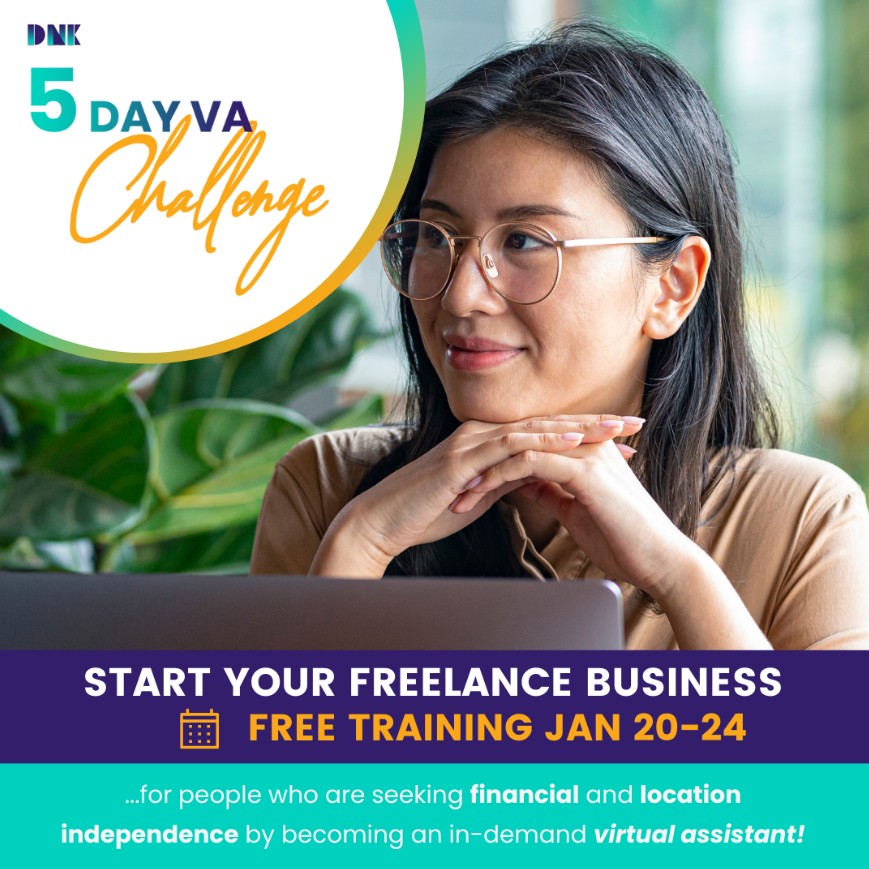
Matt Bowles: Well, I also want to ask you at this point a little bit about your professional career trajectory. You mentioned some of the different jobs you were doing in some of these places where you were staying and living. And then in 2019, you made a shift into the entrepreneurial direction, into the remote work direction. This is where I want to bring back into the conversation, our dear friend, Hannah Dixon. I know you did her 5 Day VA training and her virtual excellence academy and all of that. So, I would love it if you could share a little bit about that transitionary moment for you, what Hannah’s program was like to go through it. And then what your career has been like since then.
Jimena Serfaty: Hannah has such a special place in my heart because thanks to her, I could make the change that I did in my life. I looked for a way for me to work online for many years, but what I could see, especially just from the people that I knew, they were all either web designers, graphic designers, social media managers or community managers. And none of those things resonated with me. So, I didn’t know how to transition. And I searched and searched for a way to find somebody that could help me see the way and start this path. And most of the time I would find people in the U.S., especially like army wives and army moms, and they would talk about it, that they needed a side hustle. And it wasn’t me. I’m not married. I don’t have kids. So, it didn’t resonate.
And also, a lot of the things that I would see were just a lot of pink and flowers, which is great for some people. It’s just not me either. And then I met Hannah. And Hannah is all about be yourself, do what you want. So I bought her course and then I did her 5 Day Challenge. And during that 5 Day Challenge, one of the things that you needed to do was to reach out to people that you would like to work with and tell them what you were offering. And then ask them if they were interested in it or if they have got anybody that could use your services. There’s something that I realized during this challenge is that I could do admin. I’ve been doing admin since I’m 11. My parents are accountants.
So, I used to do invoicing and things like that when I was bored or during summer when I had nothing else to do. And I was like; I can do that. That’s Excel, my friend. Yes, please. So, I did email somebody. They told me that they knew somebody that needed invoicing and things like that. And during those first five days, I got my first client. (4:41) And I was like, OK, this is it. I need to see how I can do this full time. I met somebody else as well, but they were doing a different course. And with them, it evolved. I worked with them as well. So, I started gaining more experience. There were other people in this mastermind.
By then, I was doing operations in general. So, most people focus a lot on marketing and things like that, and they don’t work on their backend. So, then all the girls that were in the mastermind with me, they were hiring me because they needed somebody to help them with their contracts and all these things that they didn’t have automated. So, I quit my retail job. And the business started. And since then, it’s been evolving from an online business manager where I focus on Ops to learning more platforms and more things.
And I realized I love the process in itself. And when people talk to me about their business, I can see it in my head. I can already map it out. And I help them streamline it and automate it or standardize it. So, I know a lot of people don’t like automating things because they feel it’s going to be too cold. But that’s how it started. And it’s been going now for six years. So it worked. And I’m very thankful for Hannah, 100 percent.
Matt Bowles: Hannah Dixon is amazing. If anyone has not heard of the Hannah Dixon episodes of The Maverick Show, we’ll link those up in the show notes. You definitely want to come into her world. She has amazing communities. If you’d like to actually do the 5 Day Challenge completely for free and just sign up for the next one, you can do that. Just go to www.TheMaverickShow.com/virtual and you can sign up there for free. She also runs an amazing community called Rainbow Remote, which is for queer digital nomads and allies. So, I am part of that group. And it is amazing. She tracks wonderful people. And so, I definitely encourage everybody to come into Hannah’s ecosystem and get into her world because it’s an amazing world to be in. So big shout out to Hannah.
Jimmy, how are you at this point in your journey, how do you choose to design and structure your lifestyle in terms of work, in terms of travel, in terms of having a base, in terms of moving around? What is your ideal lifestyle at this point?
Jimena Serfaty: If I had started this earlier, I would have liked to be a digital nomad. That was the original idea. But as I got older, I realized I’m tired. And I wanted to be location independent. So, I wanted a job that I could do online remotely wherever I wanted to. So, I’m flexible with my travels. I can go to work wherever I want to go to visit, but I can also go home more frequently. Back in the day, I would go to Argentina every two to three years. Now I tend to see my family pretty much every year.
So, it’s a big change. And the reason behind it is because when I used to work, I only had holidays and then I would use all my holidays to go to Argentina to see my family and then I couldn’t travel. So now I can go see my family, but I can also go travel whenever I want. I did have some limitations because of my residency here, but now I’ve been here for five years. So now it’s a permanent residency and I don’t have to be counting how many months I’m out of the country.
Matt Bowles: So, I want to ask you also about your decision to want to travel to all 193 countries as a defined goal and a quest that you are now on. When did you make the decision that you wanted to be proactive about going to every country in the world? And why is that an important goal for you?
Jimena Serfaty: I don’t know exactly when it happened. I just know at some point I was just doing it without realizing. When I was living in Australia, I was like, I’m close to all these islands. I’m going to go visit all these countries because I’m not very close to this anymore. So, I think it’s just it just happened. It might have happened in the last five years, but I was doing it before that without realizing. I try to go to new places every year, but I also repeat a lot of countries. I’ve been to Italy a lot of times. I go visit my friends in Spain as well.
So, it’s not that I don’t repeat and I only go to new places each time. But yeah, it just happened. And then I decided to get into more in the traveling community in general. And I’ve always been interested in countries that maybe my friends back home, they were like, what, like me going to New Zealand or me wanting to go to Tuvalu or me going to Russia. It wasn’t something that a lot of people wanted to do. So, getting into the traveling community, finding other people that like it as much as I do, that are like, have you been to this one? Do you know about this place? I’m like, yes, it’s on my list.
It’s always very interesting and I very much enjoy it. It’s a different journey because even though it is a goal of mine and it’s going to be a life goal, I’m not going to be the youngest to do it or I’m not going to do it the quickest or anything like that. I think every country has something to offer and there’s always something to learn from it. I always find a good experience or just the people in general tend to be always really nice.
Matt Bowles: For people that are listening to this and think that this sounds amazing, but perhaps it sounds like an expensive endeavor. You have come up with all sorts of travel hacks and budget travel techniques that you have been using over the years. And I would love it if you could share some of the top ways that people can perhaps travel for a lot less expensive than they might think.
Jimena Serfaty: One of the things is being flexible. A lot of times I just check from where I’m at, what’s the cheapest flight out and then I go to a new place, a new city, something new. So being flexible is one of the things. Of course, sometimes you’ve got places on your bucket list that you want to get to. It’s just a matter of compromise. I stop calling it budget traveling because some places are not budget friendly.
The Pacific Islands are not cheap, especially if you travel on your own, because tourism tends to be diverse or businesspeople. So, there are not as many budget-friendly options. It’s just making it as affordable as possible. I do plan a lot and research a lot and I look for that cheap way to do it. So, I would say one is being flexible. The other one is research, research. And if there’s something that you want to do, if it is swimming with something or snorkeling in a special place or diving, make sure that you put that money aside. One hundred percent.
When I wanted to do with my whole air balloon, I put that money aside to do it. But at the same time, I was spending, I don’t know, a dollar per meal. So, it’s just about priorities. You can always do things cheaper, and you can always do them more expensive because there are always ways to do it. It happened a lot when I met people in the Pacific Islands that they were spending a lot of money just because they were trying to visit more countries in a shorter time than me. I was spending maybe a week in Kiribati or a week in Marshall Islands.
There’s not that much to do. I just would hang out with people. That’s what I would do. But for them, they would stay two days. And of course, those flights are more expensive. So, it’s just research, research, research. And you’ll find a way and ask people. There’s a lot of Facebook groups. There’s a lot of traveling communities. And there’s always somebody that is probably like you. And some places might take longer. As I said, it took me 15 years to get to Tuvalu, but I got there. It took me years to get to Russia, but I got there just because it takes me long, especially coming from Argentina when I used to work there. I used to put a little money aside to go out with my friends and then my whole salary would give me $100 a month. It took me ages to save, but I did it.
And then I had to make the decision to leave the country in order to get money for the thing that I love that was traveling. But it takes longer, but that’s okay. You will get there. There are more places on my list. I just need more money to do it. I’ll get there one day. It’s OK.
Matt Bowles: When you think back about all the travels that you’ve done over the last 20 years, what impact do you think all of that travel has had on you as a person?
Jimena Serfaty: I think it made me more understanding, just getting to know people, more resourceful. Again, I worked at minimum wage jobs. I didn’t have that much money. I just made it work for me. So just being resourceful, just being more open. And you realize that people are not that different. And even if you don’t speak the same language or any language in common, you can still get along, have a conversation somehow and have a good time with new people. And I’m an introvert. Usually I’m in my house, I don’t see many people. I’m not very sociable. But when I travel, I love talking to people and meeting and for them to tell me their life story or whatever is happening. So, it just gives me that thing that usually I don’t get at home.
Matt Bowles: Amazing. Well, Jimmy, I think that is an excellent place to end the main portion of this interview. And at this point, are you ready to move in to the lightning round?
Jimena Serfaty: Let’s do it.
Matt Bowles: Let’s do it. All right, what is one book that you would recommend that people should read?
Jimena Serfaty: I would definitely recommend Chronicle of a Death Foretold by Gabriel García Márquez. I read it during school. It’s a short book. It’s not long at all, but it’s brilliant. So, one hundred percent recommend it.
Matt Bowles: All right. Who is one person currently alive today that you’ve never met that you’d most love to have dinner with? Just you and that person for an evening of dinner and conversation.
Jimena Serfaty: I would love to meet Raven-Symoné from It’s All About Raven. She’s pretty much the same age as me. I’ve seen a lot of her growing up. She was somebody that didn’t look like most of the girls during the 2000s. So, feeling that there was somebody that represented as well. And she’s hilarious as well because I watch her podcast. I think we could be friends. That’s what I’m thinking.
Matt Bowles: All right. Knowing everything that you know now, if you could go back in time and give one piece of advice to your 18-year-old self, what would you say to 18-year-old Jimmy?
Jimena Serfaty: It would be OK to be different. So, keep doing it. It’s fine. There are other options to do and fulfill your dreams, even if people tell you you’re a bit quick.
Matt Bowles: All right. Of all the places, you’ve now been, to 92 countries, what are three of your favorite destinations you would most recommend, other people should definitely check out?
Jimena Serfaty: Number one, always the Philippines. There are over 7000 islands. There’s always one that is empty. Let’s go to that one place. Then it will be Vanuatu because it’s so diverse. Each island is different. People are lovely. And the last one would be Bosnia. I went to Bosnia, loved Bosnia, fell in love with it. One hundred percent recommend as well.
Matt Bowles: What was so special about Bosnia that impacted you so profoundly? What was your experience like there?
Jimena Serfaty: The history, the mix that you got in there, just learning more about everything that went on. The food, of course, like always, people, people make the place.
Matt Bowles: Amazing. Yeah, I spent some time in Mostar and Bosnia and as well. It really was just a super incredible, impactful, powerful, but also wonderful and heartwarming place. I mean, it was all of the things. And so, I appreciate that recommendation because I’ve been putting people on to Bosnia as well.
OK, Jimmy, last question. What are your top three bucket list destinations you have not yet been to right now? Highest on your list, you’d most love to see.
Jimena Serfaty: One is Syria, for sure. The other one, I’m just hoping they open soon, is Tokelau, which is not a country. It’s a Pacific Island territory that belongs to New Zealand. And the last one is Kamchatka in Russia. There are volcanoes there. There’s a lot of weird things. There are no roads going there. You can only fly to that place. But Kamchatka, it’s still on my list.
Matt Bowles: All right, Jimmy, with that, I now want you to let people know how they can connect with you, find you, follow you. How do you want people to come into your world?
Jimena Serfaty: You can connect with me on Instagram. My handle is
@inconstantresfeber. ‘Resfeber’ is a Swedish word. It means the nervousness that you get before a trip. That’s why I picked that name. And that’s where you can find me. I tend to post stories more than anything. So, I hope to see you guys there.
Matt Bowles: All right. We are going to link all of that up in the show notes. Everything we’ve discussed in this episode, as well as how you can find and follow and connect with Jimmy. All of that is going to be at themaverickshow.com. Just go there and go to the show notes for this episode.
Jimmy, this was amazing. Thank you so much for coming to the show.
Jimena Serfaty: Thank you so much to you, Matt. Thank you for having me here. It’s been great.
Matt Bowles: All right. Good night, everybody.