
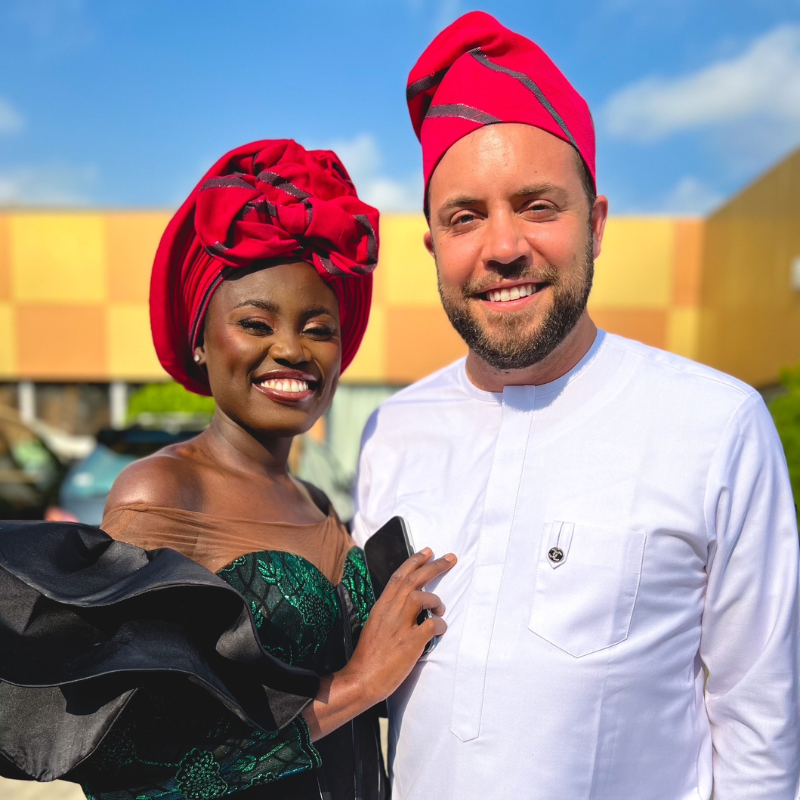
INTRO: This is part two of my interview with Chris Joondeph.
In part one, we talked about his background, how he met his Nigerian wife through couch surfing, got married in Nigeria, moved to Lagos, and then co-founded Authentic Traveling Tours to bring other travelers to Nigeria. So, if you haven’t heard part one, you can go back and listen to it after this one.
But right now, in part two, we talk about some of his most powerful travel experiences. After visiting 170 countries, he explains how visiting Iran completely changed his preconceptions. Then he opens up about how traveling with his dad to some of the world’s most misunderstood countries, like Yemen, Somalia, and Turkmenistan, deepened his bond with his father in some unique and powerful ways.
I also asked him, if a Nigerian was coming to the United States for the first time and wanted to see the authentic U.S. beyond the headlines and stereotypes, where would he send them? Then, of course, we talk about how Chris built an audience of over 3 million followers on social media. I asked him what responsibility he feels content creators have to the places they travel.
Chris was also a judge for a Jollof rice competition between different West African countries. At the end of this episode, he reveals which one he picked in a blind tasting. So please enjoy the conclusion of my interview with Chris Joondeph.
Matt Bowles: Chris, I want to also talk to you about some of your other travels. We mentioned that a lot of people have misconceptions when they come to Nigeria.
For you personally, other than Nigeria, what is a country where you arrived with preconceptions and had to completely rethink them?
Chris Joondeph: There are so many. But I think one in particular was my trip to Iran. And I’m sure a lot of people on your show who have ever been to Iran would have had a very similar experience there.
But such kind, friendly people. It’s a country that is portrayed in the media as a very dangerous place. Yet you go there, and it’s developed. People are extremely educated. It’s a country that you see as having so much potential. I found it to be one of the most misunderstood places because you go around Iran and you’re like, “This is the Iran I’m supposed to be so afraid of? These people are going to sweep me away if I come here?”
I really liked the place. I found it so beautiful. I found it packed with so much culture and history. I went to Isfahan, Yazd, Shiraz, as well as Tehran. I spent a week there, and I actually traveled with my dad.
That’s an interesting thing. I’ve done a lot of these quote-unquote “dangerous countries,” as some people call them, with my dad. It’s always interesting traveling with someone else, and you both have that same reaction: “Wow, they told us this about it, and then we came here, and it was nothing at all like what we saw.”
Matt Bowles: Yeah, I know that your first trip with your dad was to Iraq back in 2022. Can you talk about the context for that trip and what started the journey of YouTube going to all these countries and why that’s so special?
Chris Joondeph: So, I think the context is something that makes it really special. My mother passed away in October 2021, and, of course, it was a very hard time for our family, and especially hard for my dad. His wife of 30-something years passed away in her mid-60s.
During that time, my dad was going through a lot, and I felt like maybe I could help him by getting him to travel with me. I had done some trips like this before to unique countries, and I thought maybe I could get him to go somewhere totally out of this world, give him a new experience, and create memories that our mom would have killed us for if we had gone, because now that she wasn’t around, she couldn’t say no.
So, I was like, “Hey, Dad, do you want to go on an adventure with me?” And he was like, “I mean, sure, but where?” I said, “Do you want to go to Iraq?” To my surprise, he was completely down for it.
So, I helped plan out our trip. We went to Istanbul, stopped there for a couple of nights, and then flew into Baghdad late at night.
We had an amazing guide who showed us around for about a week. We covered the entire country, from Basra in the south all the way to Mosul and Erbil in the north, and really got to see all of Iraq. It was such a cool experience. I think, for him, it was very liberating to do something that he normally would have never done.
Since then, almost every year—sometimes even twice a year—we’ve gone on different trips together to these very misunderstood countries.
It’s always been a rewarding experience for us to bond and reminisce over those tough times, while also creating good memories in all the places we’ve visited together.
I’ve taken him to Iraq, Syria, Iran, Somalia, Yemen, Libya, and many others. It’s been so memorable to create experiences and memories like that with my dad.
My dad is also interested in politics and world affairs, so it makes for great conversations about how these countries are portrayed versus how they actually are in reality. He’s always a fun travel partner.
Matt Bowles: So what impact do you think that traveling to those types of places together had on your relationship with your dad compared to if the two of you had decided to spend time together in London, Rome and Paris?
Chris Joondeph: I don’t think we would remember it as much.
The difference is these countries are places that are so misunderstood, and that creates very strong memories and really changes what you learn from them and how you re-evaluate things.
They’re also countries that are not entirely misunderstood for no reason. They’ve been through difficult times. Think of Syria. We toured some of the cities and saw homes that were so badly destroyed. So many people had their homes destroyed. They left their homes—empty places.
I think it gives you a different perspective on your own life, seeing some of these places and understanding the challenges that people went through.
Then you look at your own life, and you think, “Wow, I’m complaining about my job, or how someone slighted me at work, or something like that.” Yet you really have no comprehension of the challenges other people go through.
I think it’s almost like losing a parent as well. It’s not the same as losing a home, but it’s a similar kind of challenge that people don’t appreciate until it has happened to them. I think it’s the same thing when leaving some of these countries. You don’t really understand until something like that has happened to you.
So, you see these places, and you think, “I, too, will never fully understand that, but at least I have some more empathy toward what has happened there.”
I think those are some of the things that make them more memorable and poignant in your memory.
Matt Bowles: Didn’t you and your dad also go to Turkmenistan? I have never been there. What was that experience like?
Chris Joondeph: Turkmenistan is one of my favorite countries, and I think it’s because it is so bizarre and so interesting. My dad and I went not knowing too much about it. We had read a little bit online, and we were thinking, “Let’s just go for a few days and check it out.” Truthfully, I wish I had probably spent more time there.
Turkmenistan is often called the North Korea of Central Asia, meaning it’s a highly closed-off country. You cannot travel there independently. You have to travel with a prearranged tour. There’s limited or almost no Internet. They have their own internal Internet, but accessing external websites is completely forbidden.
When I was there, we were trying to look at turkishairlines.com to check my flight that I would be leaving the country on, to make sure everything was good, and we couldn’t.
So, there are a lot of roadblocks to information getting into Turkmenistan. Yet what makes it different from a country like North Korea, which is very closed off to the world and has almost no political freedom, is that the country is extremely wealthy as well. That adds another factor.
You have this city, Ashgabat, that is beautiful—huge monuments, everything made of marble, spotless, but eerie because, in the center of the city, there’s hardly anyone around. It creates a very memorable, kind of creepy, but fascinating country that you just want to explore more, try to understand, and ask people, “What is going on here?”
I really enjoyed going there with my dad because it was something we didn’t expect. We landed, and we were kind of like, “What is going on in this place?” I think we really enjoyed it and would definitely go again.
I thought it was an endlessly fascinating country, and I would love to explore more of Turkmenistan.
Matt Bowles: Well, I also want to ask you about some of your other Africa travels because I’ve spent about two and a half years on the continent and it has so such a deep place in my heart. But you have been to a number of countries that I have not yet been to and I would love to get some of your experiences.
I know you’ve been back to Algeria three times in the last few years. Can you talk about why Algeria is so special to you?
Chris Joondeph: Algeria has some of the friendliest, most generous people I’ve ever met anywhere in the world. And my experience in Algeria started back in maybe 2022, when I went there for the first time.
Initially, I thought, “Let me just tick off a country, let me visit Algeria, and I probably wouldn’t go again.” I went, and I used Couchsurfing. It was so shocking because immediately I would send a request, and it was accepted. “You are welcome. Come to my home. Anything you want. I want to take care of you.” I was really taken aback by the hospitality.
Everyone was so happy to welcome me there and to show me around. I really needed their help too, because Algeria is not the easiest country to travel to. There was a language barrier. French and Arabic are the primary languages, and I speak neither one.
So, it was challenging just to get around and figure things out. Having their help was immensely beneficial. I just remember staying in people’s homes and people going above and beyond for me to introduce me to Algeria. It was such a positive memory that I thought, “I need to come here again.”
What I think is cool about Algeria is that it’s the largest country in Africa by land mass. What makes it so unique is that each city is very, very different.
You not only have the geographic diversity of the Mediterranean coast moving into the desert, with different mountain ranges and interesting geographical landscapes from the coast to the inland and into the desert, but you also have different historical periods running through the country.
From the Amazigh people, before different empires came in, to Roman ruins, to the Ottoman period, to the French period.
You’ll visit a city and think, “This is an Ottoman city,” and it looks very Ottoman.
Then you can go to another place and think, “This is a French-era city,” and it looks like somewhere in the south of France. Maybe you go into the desert, and that place is like nothing else. It’s totally different.
All these different eras of history make Algeria an incredible country that’s worth exploring deeper and deeper. That’s how I ended up going three times, because there were always more places that I had to see and couldn’t visit during my previous trips.
Matt Bowles: Well, another trip I want to ask you about is when you decided to rent a car and drive around southern Malawi. Can you share what you experienced there, but also the specific dynamics and benefits of driving your own car and traveling that way.
Chris Joondeph: Went to Malawi a few months ago, and my wife and I rented a car to experience the country. This is something I would encourage. I really like renting cars when I travel. I think you want to take a look at the price. In some countries, it’s extremely expensive and maybe not advisable. Sometimes you can get a private driver for cheaper.
But in Malawi, it just made sense financially to rent the car and get the experience of driving around the country. I think that opened up so many opportunities because I’d been to Malawi previously and had done public transit.
You just go to one place, stop, and stay there. With a car, we had total flexibility to stop in these small villages and meet local people.
It’s a country that’s very poor, but at the same time, the people are very, very nice and friendly. What I’ve always found interesting is that some of the poorest countries in the world are some of the naturally most beautiful countries.
You go to some developing countries and see trash everywhere. Even in some developed countries, you see trash everywhere. You see that as we generate wealth, we generate more waste, and we destroy our environments.
Then you go to a country like Malawi. There’s hardly any trash because people can’t afford a lot of the things that generate waste. Yet they live in this very beautiful environment. It is true that they don’t have many of the things you would find in more developed countries.
But you really gain a new perspective on what wealth means. Here are people with a smaller GDP per capita than, say, another country, yet they live a life that people in that other country would desire.
It really turns your head. It was one of those experiences where having a vehicle allowed us to get out there and explore.
Because of the rental car price and all of those circumstances, it made sense for us to have that unique experience. We loved it. We loved exploring around.
So, I would encourage people—although in Nigeria it’s maybe not recommended to drive a car because it’s a little challenging—I’ve driven in a lot of Southern Africa: Botswana, South Africa, Eswatini, Lesotho, Kenya, and some of these places.
If you can get a car and get out and explore, it really creates a fun, dynamic atmosphere and gives you opportunities to interact with locals that you can’t get on public transit or in a more organized tour-type fashion.
Matt Bowles: I also want to ask you about the Democratic Republic of Congo. Can you take us on that journey? What was it like and what are some of the moments that still stick with you from the DRC?
Chris Joondeph: So, the DRC, we visited the eastern part of the country, which is close to the border with Rwanda and Burundi, and we went there to visit the gorillas. You can visit gorillas, and it’s a great way to visit the DRC because if you contact the people at the gorilla park, they will send you a letter to get a visa on arrival at the border. Then you simply cross the border, and you go and see the gorillas.
But it’s not like you have to just see the gorillas and go back. You get 30 days. You can remain, you can do other things, and you can, I believe, even fly to other parts of the country. But I would want to verify that if someone was doing that. But that’s how we ended up going to DRC.
And it was right before things started to get really bad with the civil war happening in that region, to the north, North Kivu. There has been a lot of conflict over a long time in that northern part over minerals.
But there’s also a lot of foreign governments involved. And it was very interesting traveling there in that time. I think where we were was little affected at the time by that.
But we had the opportunity to really learn more about that conflict. I’ve traveled to a lot of places that do have some sort of active conflict. I think one question that comes up is the ethics of traveling to places like that.
And I think one of the things about DRC is there’s a lot of different facets to the conflict. Before talking about the people in DRC, I mean, facets of the conflict, a lot of foreign governments are involved.
So, to say we can’t visit one country means there’s a lot of places we can’t visit. Anyone using lithium is involved in these conflicts. Obviously, you’re not directly putting money into the hands of people involved in these conflicts.
But what’s really important to understand about some of these countries going through conflicts, especially in areas where it’s not, like, actively happening, there are real people there with real jobs and real needs and a real economy that rely on tourism coming in.
And especially places like where the gorillas are. I think it’s Kahuzi-Biega National Park, if I’m pronouncing it correctly. But the people there are advocates for the gorilla population, and they protect it. And if people stopped visiting those people, they’re passionate about it. They’ll probably stay back and try their best to protect the gorillas.
But eventually, they’re going to have to go and get other jobs to feed their family. And when people don’t come and pay to visit those gorillas, they’re going to stop protecting them. The poachers are going to come in. There’s going to be no more gorillas, there’s going to be no more tourism in the area, and a lot of people are going to suffer.
And so, of course, you always want to check the safety and communicate with the park. There are other parks in DRC where they will say, like, no, you can’t go. But we talked with the park, and they said it is safe to come.
When you go there, you get the opportunity to support them and learn about the conflict and better understand what’s happening in that region of the world.
Matt Bowles: Most people in the United States, I think, have no idea what is going on in DR Congo. When you go there as a travel content creator and you get the opportunity to learn about the dynamics and what’s actually happening there, what types of stories do you feel compelled to tell as a creator?
Chris Joondeph: I think my content style has always been about explaining the world in a more in-depth fashion.
So, rather than your typical content, which shows a highlight reel, the best places to stay, and the cool photos, I go in a lot more depth and talk about what’s really happening behind the camera and explain things.
And so, through a lot of my content about these places, I try to educate people about what’s happening and use that as an opportunity to explain the politics, something I enjoy researching and learning about. I explain the politics, the situation, and why it is the way it is.
And lastly, I think with my content, one thing I really try and do is humanize the place as well and show the people, the culture, and the things that make the place tick.
My content takes this different approach. For example, in DR Congo, we might talk about the conflict, we might talk about the gorillas, we might talk about the food and what makes Congo unique.
In a country like Syria, we talk about Syria, of course, the conflict, the abandoned buildings, and why they are that way. But also, what is the culture of Syria? I talked about drinking rakiya, which is an alcoholic spirit, for those that don’t know. And people have this view of Syria as this very religious Islamic country because that’s what you see in the news.
You think Syria, you think ISIS, if you watch the news. And while it is true that there has been, and probably still are, moments of ISIS within the country, there are very liberal Syrians that are just like Lebanon.
And Damascus is a city where you can go out in the evening, drink rakiya, and enjoy incredible food.
And so, I try to take an approach that explains the conflicts, but also humanizes the places and shows the parts that wouldn’t normally get seen.
And so, when you look at the news about Syria, yeah, it’s always ISIS, always another terror attack, often is what you’re seeing.
But you never get to see the nightlife in Damascus, the street food, the different vendors, and all the things that anyone who’s been to Syria would be like, “Yes, that’s the Syria I know. That’s the Damascus I know, not the one in the news.”
And so, I think, as a content creator, I’m explaining the conflicts, but I’m also showing a side that doesn’t usually get seen. And I think that’s a really important part of it.
Matt Bowles: How do you personally distinguish between genuine safety concerns and exaggerated reputational fears?
Chris Joondeph: I think the best way is to ask a local. Before I go anywhere, I ask a local, ask the people there to understand what life is actually like. And that’s been something that has been guiding me.
Of course, you want to understand who you’re asking. Sometimes there are some countries where a tour guide who’s desperately in need of a client is going to tell you, “Of course, yes, it’s safe.” So that would be the one situation where I would say to always be skeptical of what someone’s intention is.
But when you ask a local who’s living there, who’s going about their life, what is it actually like? That’s how we ended up going to Maiduguri. I was a little bit afraid of going to Maiduguri in Northern Nigeria because of, obviously, the reputation around the place.
Then we got in touch with a coworker’s uncle, who is an NGO worker up in Maiduguri, a Nigerian.
And he was like, “There are some roads leading out of the city you don’t want to go down, but in the city proper, you’re going to be completely fine. You can come and stay with me. I’m going to show you around.”
And that was something that gave me the confidence to go. And so, I always tell people, ask a local. Obviously, understand their intentions.
But you can get a much better understanding about a place from someone who actually lives there than from a report in the news by maybe a journalist who spent 24 hours in the city, saw something, and now it’s the leading headline.
Matt Bowles: Well, you mentioned your culinary content and I have also really appreciated the food content on your channel. How has food become a way for you to explore and understand other cultures?
Chris Joondeph: Food is what connects everyone. Everyone eats, so everyone has a connection to food.
And food is something that is so unique, from culture to culture, from place to place, whether it’s the local ingredients, whether it’s the religious beliefs and how they prepare the food, and all those things that go into making cuisine so unique. I always enjoy eating food.
Whenever I would travel to a new country, even before I was making content, I would always get a list of the top 10 foods that the country is known for. Then I would be like, “Okay, I need to find this, this, this, and this.” I would just try everything and wasn’t making content about it.
But then I started making these videos where I would say, “Okay, I’m just going to take a little video of each thing that I’m eating, and I’m going to put together a little explainer. These are the foods of Kazakhstan.”
Then I’m going to go through and list all of them, explain them, show them, explain what they’re made from, and, in some cases, how you’re supposed to eat them.
And I found people love that kind of stuff because it’s something that everyone connects with. Everyone has to eat. And it’s such a great way to learn about a culture by seeing what they eat because it goes back to so much of their history and memories from that country, what they would have on special holidays, and why. And that’s always been an important part of my content, making those food videos.
Matt Bowles: What is one of the most memorable meals that you have ever had, you still think about it years later?
Chris Joondeph: There is a fish that they serve in Côte d’Ivoire, in a place called Grand-Bassam, which is an hour from Abidjan, going to the east. So, it’s very close to the Ghana border. It’s kind of like a beach town.
And there are these little stores they have, typically in Francophone countries, called a maquis. It’s a local restaurant, I believe, the French word for it. And it’s common in West Africa.
There’s one in Grand-Bassam that sells this big tilapia fish, and it’s a braised fish. They serve it in Benin, in Togo, and other Francophone countries. It’s a big fish, and they serve it with onions and tomatoes on top. It soaks in all the juices with the onions, tomatoes, and the fish.
So, you’ll get that on a big plate. Then you get what’s called attiéké. It looks like couscous, but it’s made from cassava. You take it with your hand into a little ball, almost like a West African swallow. Take a little ball of that and eat it with the fish, and maybe a little spicy pepper. And it is so delicious. I always remember that.
So, whenever I’m in a Francophone country, I always try to get that braised fish, the poisson. They call it poisson attiéké, which just means fish with attiéké. And I’m always trying to get that.
But it never matches up to that first time in Côte d’Ivoire. I’ll never forget that fish. I would love to go back and have it again. I don’t know if it will live up to the memory, but it’s always one of my favorite meals. So satisfying is that delicious braised fish.
Matt Bowles: What is one place that you think is completely underrated for the food?
Chris Joondeph: I would go back to Iran. People know Iran. There are Iranian restaurants. But it’s often so mixed in with other politics around the country that it hasn’t gotten the attention to the food that it deserves. And I ate so much when I went to Iran. Every meal was so delicious. A lot of rice is used in the cuisine with saffron.
And there’s one particular food I really like. They have these barberries which are these almost like a small cranberry, and they put it with the rice, with the meat. Just incredibly memorable meals I had in Iran. My dad and I went on that trip and I think we probably gained like 5 pounds after it.
Matt Bowles: All right, and then in terms of street food in particular, what is one of your favorite street food cities in the world?
Chris Joondeph: My favorite street food city is Tijuana, Mexico. And it’s, again, quite a misunderstood city, quite a negative-headline city. But I do think, compared to the previous question, people do know that the tacos in Tijuana are very good. And there’s one in particular that I really like. You can travel around that whole city and have some of the best tacos in your life. But there is one called a Quesabirria taco.
Basically, what they do is there’s a soup in Mexico called birria, which is typically made from goat meat. It’s typically from the central part of Mexico. In the north, though, they make it with beef. And I prefer the beef over the goat. I like the flavor of the beef birria better.
So, they make this very thick, slightly spicy soup, and the meat is just falling off the bone, shredded. They serve it in a taco, but then they add cheese on top of that taco and serve it all together. Then they give you a little cup of the soup, which they call consommé. You have your tacos while you’re sipping the soup.
And I think that is my favorite street food in the world. Tijuana is a place I’ve been to a number of times. It goes two ways. A lot of Americans are scared to go, and then the ones who have been are like, “This place is amazing. I go all the time.” So, it’s a mix of people.
But I love going there, and I think there are so many fun experiences. One very memorable thing I did was go to a baseball game. They have their local team, and it was so much fun. What I loved about it was the food was the same price as it would be out on the street. Very affordable prices, but better than any taco you’ve ever had in the U.S., all served right there for you. They come around and serve it to you.
So, you go there just to eat and have an amazing time. If you are in the San Diego or Los Angeles area, I highly encourage a visit down to Tijuana. It’s known for, often, seedy things, but you can easily avoid all of that and enjoy the street food, enjoy the nightlife, enjoy the baseball games, the lucha fighters, and all this stuff. There are a lot of cool things to do in Tijuana.
Matt Bowles: Well, I have been such a fan of your travel content. I want to put people onto your channel. They can follow you on Instagram @authentic_traveling. We’re going to link everything up in the show notes.
But at this point, you now have over 3 million followers across your social media channels. And I would love to just talk about that journey. As a content creator, when did you realize that videos could change people’s perception of an entire country?
Chris Joondeph: I think I realized that videos are changing perceptions of countries when people started coming up to me in, like, the airport and saying, “Wow, I never thought about Country X in that way. And then I actually went and traveled there. And you’re so right about it.”
With social media, it’s very easy to look at a number on a screen. “Oh, this video got a million views.” The first time you do that, you think, “Wow, that’s really cool.”
But after you do that a lot, you forget that these are real people in the world seeing your content. And a million views are multiple World Cup stadiums full of people. Ten at least, or more. More than ten.
And that’s an enormous number of people seeing these videos, more than traditional media. So, content creators have this huge ability to shape narratives about the world that I think is so undervalued, even by ourselves. I forget that a million people saw this.
Then I’m hearing that people got married because they saw my content and felt confident enough to travel to that place. And all these sorts of things that you take for granted. But I feel like content creators have the ability to change perspectives because we’re trusted forms of media.
We also have this ability to really take you into places in an intimate way that you feel like you normally couldn’t experience. If someone’s going to set up a documentary, it’s going to be very formal. You might have your typical skepticism about it.
But here I am with a cell phone in my hand, showing you exactly what I’m seeing, showing you exactly what I’m experiencing. You can still be skeptical of it, but it’s a lot harder when you actually see someone there showing how it really is.
And so, I felt like content really has the ability to change perspectives because it’s such a real form of media. It has such a huge reach, and when done in the right way, it can really deliver that message and change a lot of people’s perspectives about a place.
Matt Bowles: What’s a video that surprised you by going viral?
Chris Joondeph: I don’t have the best answer to this because social media sometimes is a lottery. You put out a video, and you don’t really know how it’s going to perform. There’s sort of a genre of videos that I make that has surprised me, sort of how they’ve performed. These are live, first-person-view videos where I talk about, “Here I am,” especially in countries they told me that I shouldn’t be in.
And I’m like, “Look around. They told me that this is the most dangerous place in the world. And here I am at the beach with this beautiful setting. I’m at a beautiful restaurant. There are people here having dinner, enjoying themselves.” I’m not fancy editing anything. I’m just showing what I see.
And I feel like it’s always surprising how those quite simple videos about misunderstood places tend to go so viral. I’m not really doing much. I’m just showing what it’s like and offering a little opinion on it.
But I think people are, surprisingly and not surprisingly, so surprised to see that, “Wow, they have nice restaurants in Mogadishu, and people are working in cafés on their startup.”
And people are like, “What? I thought that was the most dangerous place in the world.”
And yet I’m meeting Somali Americans who are like, “Oh no. Actually, I moved back because I have this business idea, and I want to launch this app.” And you’re like, “That’s not how Somalia is portrayed in the news.”
So, making these videos about things that shouldn’t really be that surprising. When you travel, of course there’s going to be nice restaurants everywhere. It’s just how it is. But most people don’t perceive or view that.
Now that I know that it happens, it’s not surprising anymore. But I think the first few times, it was definitely pretty surprising.
Matt Bowles: There are a lot of travel content creators. There are extremely few of them that have over 3 million followers. When you think back, what do you think that you’ve done that was so fundamentally different from other creators to get to that 3 million follower mark?
Chris Joondeph: Sometimes I wonder. It hasn’t been fancy editing, and it hasn’t been huge production value. Those are not the things that are driving people to my page. I think what it has been is this real view of how things are. An honest take and an educational take.
I think people want to follow me because they learn something about the world, maybe something they were either surprised to learn, or because I can provide some context or understanding about certain places in the world.
I think people have always been drawn to me for that honest take. It really comes down to very real elements of storytelling. Putting together a good story that’s easy to follow, understanding, of course, how a good hook works, and getting people interested.
So, a lot of videos I start out with a misconception, some information that’s not quite true, or some question that’s unresolved, which makes you want to continue watching.
At the same time, it brings you along on this educational journey where you’re learning about the world, seeing things you normally wouldn’t see, and getting this honest take about things. Then you’re given some sort of conclusion or resolution at the end. I think that’s what has been a really successful formula. Rather than the fancy equipment or editing, it’s just been that raw reality that’s driven people to me.
Matt Bowles: When you think back on your audience growth journey and your brand building journey, what were some of the biggest leverage points that that really catapulted your audience the most?
Chris Joondeph: You don’t get to 3 million followers overnight. And it doesn’t come evenly as well. It comes in big spurts. Sometimes it will come slowly over time. It’s always slowly building, but it’ll come in these gigantic pushes. Sometimes you have these very big videos that might add hundreds of thousands of followers.
For me, it’s been a few major tipping points. I think what really got me started was actually my first trip to Algeria.
I went and made this video I’d mentioned earlier, talking to the camera and saying, “Hey, I’m here in this absolutely beautiful country that people make out like it’s so scary, and you shouldn’t come here. Very few tourists ever go to Algeria, and this place is incredible, and there’s so much warm hospitality.”
That was one of my first viral videos. I then had several more while I was traveling in Nigeria. Either they had a similar sentiment, talking about how it was not how it’s perceived, or I would make these videos. I think I had one very viral video, and it’s a format I’ve used a lot, where I do, like, a “$1. What can you get for $1 in a certain country?”
I think people like to watch it because they’re always like, “Oh wow, you can get all this for $1.” And it’s easy to follow because you’re building up to $1.
So, it’s simple chunks. We’re going to buy this, this, this, and this, and it’s going to add up to $1. I love it because it can also educate you.
So, I’m always buying something cultural. I did it in Syria. People were amazed by the prices.
So, I’d say, “Okay, this is a special juice that people drink before Ramadan, and here’s how it’s served, and this is what it’s made out of.”
Now you’re learning a little bit more about the food and the culture in that country. The videos I made about Turkmenistan surprised people because they were learning about a country, they knew very little about. That gained quite a number of followers.
Visiting Syria, visiting Iran, Equatorial Guinea, and many of these countries really grew the account because it’s just not something people typically see. It’s really alternative travel content, and I think that makes people want to follow and come back to see
Matt Bowles: How do you balance experiencing a place and a moment versus documenting a place and a moment? Has content creation ever gotten in the way of authentic travel?
Chris Joondeph: I don’t think it has, and I think it’s because of the way I do my content, which is I don’t really edit videos or put things together while I’m traveling in that particular place. Maybe I’ll do it while I’m traveling later, but I like to go in with a blank canvas, get the experience. I’m focused on the experience.
The only thing I’m doing, apart from the occasional POV video I want to do with myself talking, I’m just trying to get random clips of stuff I see. “Oh, this is interesting. Let me film it.” “This is cool.” “This is beautiful.”
Just try and collect it so I have it on my phone, and then I go home or I go to my next place, and I’m like, “Okay, I’ve had an opportunity to digest this. What is it that I want to talk about now? What is it that I want to tell?”
And so, I feel like it doesn’t interfere with my travel because I’m just here to learn, enjoy myself, see what I see, make sure to remember to get clips of stuff, and then kind of bring it all together.
But nothing really in my videos is staged at all. You might see something, “Oh, let me quickly get that. And maybe I’ll use it for later. I don’t know.” But when I get back, I look at all my footage and see, “Okay, when I went to Libya, I talked about what it is like.”
When you travel to Libya, you have to have these police escort you the entire time, and they’re basically there to make sure you’re not a spy.
And they told me they’ve actually had people on the tours that kept opening their phone every time they got through a police checkpoint and marking something, and then they took that person and sent them on a flight back to their country because they were obviously spying.
So, I was like, “Okay, I get that you have these threats.” And so, I was like, “Okay, this is going to be an interesting story.”
Let me just remember to get some random clips of the police walking around, of me walking, and you can see him in the background or something. Just show this guy shadowing me.
But at the end of the day, I’m just enjoying going through my travel experience and going to tell the story about the police that followed me everywhere afterwards.
Matt Bowles: What ethical responsibilities do you think travel creators have to the places they’re creating content about?
Chris Joondeph: I almost always try and create positive content about the places I go and try and find something that’s positive, worth sharing. Try and dive deeper on the culture. Even if it’s not a great experience for me, I think there’s still culture and interesting things.
I’ve been places where I got food poisoning, and okay, maybe I won’t eat the foods, but I’m going to make a video about the foods that they have here, and I’m going to get videos of it, and I’m going to put it together and try and showcase a positive view rather than dwelling on the negative.
And so, I think, from my perspective, you want to be real, and you want to share how things are, but you don’t want to overly go into the negative or just whitewash everything.
And so, I try and find that balance while giving someone a real and accurate, yet also interesting, perspective.
And I think one thing I do with my videos is I often lead them with a controversial intro, but then the whole video is educating you on why that is an incorrect thing to say or not quite accurate.
And here’s the nuanced view. What I try and do is show people some of these inaccuracies and bring you along on this educational journey about a place.
And so, from an ethics standpoint, it’s important to try and get things as accurate as possible, but you also have to make content that people want to watch.
If I’m just like, “This is the street, and here’s the cars driving by,” it’s not interesting.
But if I can lead with a provocative hook and get you watching, and then use that opportunity to explain to you the nuance behind that, that’s the middle ground between the two.
Matt Bowles: I want to also now ask you about some of your reflections on your overall travel journey up to this point.
I feel like as white American men, we are socialized into all sorts of colonial perspectives. Growing up in the United States, what has your journey been like unpacking and unlearning some of those through travel?
Chris Joondeph: I think through travel, one of the biggest things I have learned is that there’s so little I know about the world, and understanding and respecting that, and understanding that my viewpoint, or the viewpoint of where I come from and where I grew up, is only one viewpoint on the entire world.
And there are so many different ways to view things, so many different ways to live one’s life, to worship one’s God, to eat one’s food, to do all of these different things.
And so, through travel, I think has given me this epistemic humility about the world, that I recognize what I don’t know and don’t go into anywhere with assumptions, and has given me, of course, to the best of my ability. I’m not perfect.
We all have deep-rooted concepts that we grew up with, but the ability to have seen things from so many different perspectives in so many different places that you can say, “Okay, I’m going to come into this situation not judging.”
And not judging because, “Oh, I saw a few things in America,” but I’m going to compare this to somewhere in the Pacific Islands, and somewhere in Central Asia, and West Africa, and Central America.
And those are going to be my comparison points.
And it’s going to be because of this very broad perspective.
So, I felt like, through travel, overcoming some of those pre-biases, as you see more, you start to build up these reference points and understand that there’s no one way to be, and you’re coming into it a much more open way.
Matt Bowles: If a Nigerian came to the United States for the first time, wanting to authentically travel and understand America beyond the stereotypes, where would you tell them to go?
Chris Joondeph: I would tell them first not to go, and it’s not because they’re bad places or anything, but New York, Louisiana, Chicago, Las Vegas—those are the typical places. If you wanted to really experience the real America, visit the smaller cities.
Go to somewhere like Memphis, for example.
Go to somewhere like Tulsa, Oklahoma, some of these smaller towns, to see places where there’s a lot of history, where there are very friendly people that are willing to talk to you, and get to meet people as much as you can.
I think Americans are very friendly and open to talking with you.
To even experience the real America, do something like volunteer at a soup kitchen and meet people who are down-and-out, people who have been through drug addiction and come back.
And these are things you can easily do every weekend. You could go and find something like this.
But I’ve done things like this in the U.S., and these are the kinds of people that are really willing to talk to you and share their story.
And if you wanted to really get to know the place beyond just what you see in Hollywood, you can go to some of these places and meet people with different walks of life and really learn from them in a way that, again, these are not shown in the media about the U.S.
These are the places that are not shown, that people don’t get the perspective.
But I think if you asked most Americans, these are the real places. This is where real people are living real lives that are not covered in the media. Those are the kind of places I would recommend people to go.
Enjoy your Statue of Liberty, your Times Square, get your picture. If you didn’t go there, that would be a shame. But also visit some places like this.
Matt Bowles: What is something you’ve learned from your wife that no amount of solo travel could have ever taught you?
Chris Joondeph: I think for my wife, the biggest lessons I have learned have been renewing my faith. My wife is religious, and a lot of our discussions around faith have been really important.
But I also think being appreciative for things that I’ve been given in life. Growing up in the U.S., compared to a lot of people in Nigeria and how they grew up, and especially my wife, my life was on easy mode.
Any challenges that I had, and that I often even still encounter, were nothing compared to the different things that she has gone through. Meeting her and learning about her, and learning about her life, have given me a much more appreciative perspective for things. I’ve learned how to be thankful and learned how to even be thankful for the small things in life.
One kind of joke we had that we often tell each other: I was always surprised in Nigeria how they pray and what they pray for, and how it’s so different from what I felt like we prayed for in the U.S. growing up.
We prayed in the U.S. for success in business and in life, and big things—that the marriage will work out and all these things like that. And then Nigerians are praying that they will live to see tomorrow, that they will get their next meal. They’re thankful that they weren’t in a car crash on their way to wherever they were that morning.
And I always felt like, you know, I mean, these are, like, I hope these are given in life, that you’re going to have a lot of these things. But for some people, they aren’t. And I think I’ve learned a lot about being humble and appreciative for what I’ve had, and thankful to all the blessings from God. And so that’s something that has been really important for me, learning from my wife.
Matt Bowles: Thinking back on all of your travels now to 170+ countries, how has all of that travel impacted you as a person?
Chris Joondeph: I am not the same person at all when I started. The person before is unrecognizable. I think I’ve always had an open mind, but as travel has progressed, I had an open mind and was curious, but it’s removed any preconceived notions about anything and just given me this clean slate, which is good. You got to also know, too, what you think and what you believe in.
And I think so much travel can constantly challenge that. So, it’s important to stay grounded as well. So, for me, I’m a totally different person, and it’s for the better. It’s allowed me to be so much more open and understand people of all walks of life.
And I think one thing that has been really cool, and this is more so especially when I travel, or if I’m in an airport, or if I’m in the U.S. often, or places where there’s a lot of diverse people from different backgrounds, it’s always so easy to connect with people now from anywhere because I can say, “Oh, you’re from this country. I was there. I had your national dish. I went to this place.”
I can now immediately start a conversation with you, and you’re going to feel, “Oh, this guy gets me.” Because I would meet people that are from Guyana, and I had their pepper pot stew, and they were like, “I’ve lived in the U.S. No one has ever been to Guyana. No one has ever had that. No one has ever, like, told me about that.”
And it’s amazing for them to feel recognized, and immediately we’re friends. And that’s so cool. I haven’t been to every country I’ve been to almost. And even if I haven’t been to yours, I’ve probably been to the neighbor, and maybe they have some similar things.
So, I can connect with people. And it’s a very valuable skill and really, really cool when you’re in those environments where you meet people from all around the world.
Matt Bowles: Totally agree on that. Why are you so passionate about continuing to travel? What does travel mean to you today?
Chris Joondeph: For me, travel has always been about learning. And so, the opportunity to continually learn, to continually grow, even though I’ve seen a lot, if you were to sum up the world, it’s barely anything. You might have been to most countries, but haven’t been everywhere in those countries.
We just talked about the U.S. You could go to New York and say you’ve been to the U.S. Technically, yes, you have, but there are so many places that you still haven’t been, so many different perspectives on things.
Ultimately, I do want to reach every country in the world. That’s a great goal. It’s not something I’m racing towards. I’m not going to be the youngest person to do it. I’m not going to be the first of any kind to do it.
I would, of course, like to achieve it eventually, but for me, it’s about going to places more in depth, understanding deeper, visiting the communities within communities, the subcultures within countries, the minority community within a country that people don’t know that much about or that hasn’t really been seen or covered.
And I think I really enjoy that kind of travel.
And so, for me, that’s where I’m continuing, is going deeper in the places that I have already been, or countries I’ve already been to, but maybe different places within those countries.
Matt Bowles: Well, Chris, I think that is actually the perfect place to end the main portion of this interview. And at this point, are you ready to move in to The Lightning Round?
Chris Joondeph: I am ready.
Matt Bowles: Let’s do it. All Right, what is one book that you would recommend that people should read?
Chris Joondeph: My favorite book series I’ll tell you about is Bradt Guides. So, this is a guidebook for travel. I’m a huge fan of them. They really go in depth and explain the cultural context of places.
So, they offer a great guidebook with a lot of pages you can learn about things to do.
But it’s their first chapter that talks about the political, social, and religious aspects of the different countries that they cover that I hugely recommend.
Iran is my favorite book. They had an incredible explanation on the difference between Shia and Sunni Islam. That was maybe a few paragraphs that was like, “This is so concise and makes perfect sense. And I get it now.”
And I really recommend travelers to check out Bradt Guides.
Matt Bowles: All right, what is one travel hack that you use that you can recommend?
Chris Joondeph: There’s a website called FlightConnections.com. If you go on that website, you can view a map of the world and all of the airports. And if you click one of the airports, you’ll see this web sprout out of all the different places you can fly from that airport.
And it’ll tell you when the flights are, what time, what day for the next month, and you can get a premium subscription and see beyond that.
But it is perfect to know, okay, I’m traveling here. I made it to this city. Where can I go next? And you often might be searching for a flight and be like, ah, it’s so expensive to go to that city. But you’re searching on Saturday and they only have the flight on Tuesday.
So, if you use flight connections, you can see that they do fly there. If I go on Tuesday, I can arrange my schedule and it’s going to be much cheaper. And I can visit. Visit two places in one by using that website.
Matt Bowles: All right, who is one person currently alive today that you’ve never met that you’d most love to have dinner with? Just you and that person for an evening of dinner and conversation.
Chris Joondeph: I would pick Francis Fukuyama. So, he is a political theorist, and he wrote a very famous theory about the world that ended up being quite wrong.
But he revised it and deeply studied why the world works the way it is, and really went into depth in writing about political institutions, government, and people’s way of life.
And I think one thing, as I’ve traveled, and especially with a background in international affairs, you’re always comparing countries and their political systems and their economics.
Why is this one doing this way, and why is this one that way? And what’s the history behind it? And why is this one doing better than this one?
And I would love to go in depth with him and compare my notes from traveling with his theories on politics in the world and the way it works.
And I think that would be fascinating. conversation.
Matt Bowles: All right, knowing everything that you know. Now, if you could go back in time and give one piece of advice to your 18-year-old self, what would you say to 18-year-old Chris?
Chris Joondeph: I would say enjoy the ride, don’t get too stressed. It will all work out in the end.
Matt Bowles: Okay, in addition to Nigeria, what are three other underrated or less well-known destinations that you would most recommend people should, should definitely visit?
Chris Joondeph: Number one, Kazakhstan. One of the largest countries in the world. Incredible geographic beauty, very little population, surprisingly easy to get around with cheap domestic flights and trains, and a beautiful, beautiful country worth exploring.
Number two, I would say Chile. A lot of people know Chile, but it’s always overshadowed by Argentina and Brazil as the more favored tourism destinations. But I think Chile is a long strip of land with so much, again, geographic diversity. Beautiful mountains, deserts in the north, Patagonia in the south.
And then don’t forget Easter Island, which is a part of Chile. Beautiful Pacific Island culture out there, with an incredible history of how the people were even able to make it to the islands and the moai statues they created. I’ve been to Chile a number of times, and it’s a fascinating country to visit.
And then number three, I would say Micronesia. So, for those that don’t know, Micronesia is a small group of islands in the Pacific located between the Marshall Islands and Guam. And the best way to get there, there’s a flight called the United Island Hopper flight.
So United leaves—it’s either daily or every other day, depending on the time of year—but they leave from Hawaii, from Honolulu, and it stops in the Marshall Islands. Then it typically makes two to three stops in Micronesia on different islands and then ends up in Guam.
It’s very expensive at the cash price, but you can book it with points. It’s a relatively cheap flight, stopping at a few of the different islands. And I went to the island of Pohnpei, and it’s so beautiful, so remote. It feels like you’re just so far away from everything and gets very few tourists. And I would definitely, definitely recommend Micronesia.
Matt Bowles: All right, Chris, you have traveled all over West Africa and you produce food content.
So, I am going to have you weigh in on the Jolof wars and get you on the record officially here on The Maverick Show. Which country makes the best jollof?
Chris Joondeph: Nigeria.
It’s the truth. And it’s not just because my wife is Nigerian.
So, I went to the Jollof Wars Festival in Atlanta last year, and I was a judge, and I tried all four. They didn’t have every country, but they had Togo, Ghana, Liberia, Senegal, and Nigeria. And I picked Nigeria on a blind taste test. And what makes it unique is the smoky flavor. That’s what I really like.
But the truth about Jollof that I didn’t realize until I learned more about the Jollof Wars and traveled in these countries is that it’s actually very different from country to country. And so, to say one is better than the other isn’t truly accurate because they’re different rices.
Like the Senegalese one, they kind of break the rice, and they use different spices. The Ghanaian one uses different ingredients. The Nigerian one is smoky. And so, it’s not quite accurate to really say one is better than the other because they’re different.
So, you have your preference, but it’s not two Nigerian vendors cooking Jollof rice and one is better than the other. They’re different rices. There’s my diplomatic answer.
Matt Bowles: I love that. And that is an amazing answer.
The last question that I have to ask, also centered on Nigeria and West Africa, is I’m going to ask you to name your top five favorite Afrobeats artists.
But before you name the five, can you just give a little bit of context on Afrobeats, the music, the significance of Nigeria, and what your personal journey has been like learning about and falling in love with Afrobeats?
Chris Joondeph: So before I had ever been to Nigeria, I liked Afrobeats music quite a lot. The thing is, I didn’t actually know that it was from Nigeria. I thought this was generally African music.
But the majority of Afrobeats is coming out of Nigeria. The biggest artists are coming out of Nigeria.
So, I did not realize that most of the artists that I liked were actually Nigerian until I came here and learned about it. And so Afrobeats is a music genre that is particular to Nigeria generally, but also to other West African countries.
One of the first famous musicians of Afrobeats is Fela Kuti. Actually, Abeokuta is where his family home is from, which is about an hour from Lagos. He came to Lagos and was one of the first initial Afrobeats artists. And there’s actually a place in Lagos called the Fela Shrine where you can go on Sunday nights between 8:00 and 10:00 p.m. Fela Kuti has since passed away, but his son, Femi, is probably in his 50s or 60s, and he plays most Sunday nights.
Sometimes he tours internationally, so he’s not around. But he plays most Sunday nights there. It’s $2 to go to the show.
The beers are like a dollar, even for Nigerians. It’s very cheap and an enjoyable night out. And the Fela Shrine is a really fun place. But they call that the birthplace of Afrobeats.
There are many artists that followed in his footsteps. Some of the most famous ones are Burna Boy, Davido, and Ayra Starr. These are some of the most well-known.
Now, I’m not going to give you the most well-known because what would be the point of putting together a list of things everybody knows? And so, I’ll tell you my top five favorites.
The first one I really like is Asake. I love what he does with his music. He brings in the Yoruba language and really authentically does his music. I love it. And it’s also just so catchy. His songs are so catchy. So Asake is probably my favorite.
I really like Teni. She’s not as well known, but Teni is just like a real person. She comes from humble beginnings, is just a really, really cool person, and I love her music.
I love Mr Eazi, another amazing artist with really great music. And he does a lot of collaborations with really big, internationally known artists. So, Bad Bunny. He has a song with Bad Bunny. So, he’s putting Nigerian music out there, not just to people that already like it, but to totally new audiences.
Another one I really like is DJ Tunez. So, he is less of a musician himself, putting stuff out on his own, but he’s often on a lot of really famous records that I really end up liking. Really good songs by various artists that he works with.
And then the last one, I really like Omah Lay. Just more melancholic, reflective music. Not as party, party.
So those would be my top five.
Matt Bowles: Amazing. And for people that are particularly interested in Afrobeats and experiencing the music. Do you recommend coming to West Africa in December for people that don’t know what happens in at that time of year? Can you share a little bit about what that’s like versus coming at other times of year?
Chris Joondeph: So, in Nigeria, they call it Detty December. It’s not an official event by any means, but it’s called Detty December. People come to Nigeria during December, and that’s what it’s unofficially called.
But it’s not like the government is making the Detty December campaign or anything. It started as people would just come here during December because they’re on school holiday. They have a break from work. They want to visit their family.
The Nigerian diaspora were always traveling back for December, but in more recent years, and they were also doing this in Ghana as well—they have their own Detty December—it’s become more of a commercial activity where people are doing tour packages or having more events and stuff because they know people are coming. And so, Nigeria turns into this big party during Detty December.
I think there are some pros and cons to coming during Detty December. I think the pro is that’s when most of the stuff is going to be happening. That’s when most of the parties are going to be. It’s also a nicer time in terms of weather.
December is in the Northern Hemisphere, and even though we’re close to the equator, it’s a little bit cooler, and it’s not the rainy season or anything. So, it’s a good time to come. But it’s also going to be the busiest time, with the most traffic and the most expensive prices.
So, you kind of got to weigh what you want. You can come to Nigeria and see some performances during the year. There’s obviously more bigger stuff around Detty December, but you can still go to clubs, see a lot of Afrobeats artists, and you can go to the Fela Shrine.
At other times, they also have an event, I think it’s in October. It’s called Felabration. So, if you’re into that older Afrobeats, there’s a whole music festival they have every year for Fela Kuti fans.
And then there’s another festival that I know they have in Spain, and I think they have it maybe in Nigeria or somewhere else in West Africa.
But Afro Nation is, if you’re really into Afrobeats, a good one. Especially if you just want Afrobeats and you’re on a budget. Because I think they have it in Spain, and I’m not sure where else.
Sometimes it can be cheaper to just go there than travel all the way to Nigeria. A lot of Nigerians would go to that and would travel to that as Afrobeats lovers. So those would be my suggestions for those into Afrobeats.
Matt Bowles: Awesome. All right. And Chris, for people that would like to hang out in person with you, you and me, we are both going to be at the extraordinary travel festival in Bangkok, Thailand in October 2026. I was actually a keynote speaker at the last one. You and your wife are going to be keynote speakers this year. Can you share a little bit about what you’re going to be talking about?
Chris Joondeph: We are so excited to be in Bangkok.
So, my wife and I are going to be talking about how we met, our relationship, how we started this tour company in a place where very few people are starting tour companies in Nigeria, and how we have really spread the message about Nigeria, sold this country to people, and encouraged them to come.
And so, I think it’s going to be a really interesting event where we not only tell the story of this business, but also tell the story of our wedding, the dowry, and all of these intercultural differences.
There’s, of course, the intercultural differences between me and my wife, her being Nigerian and me being American, but traveling as well.
My wife has been to 101 countries on her Nigerian passport, so she alone has an incredible story of jumping through so many hoops and hurdles just to visit places.
And then you’ve got my perspective with an American passport, just waltzing in. But at the same time, we’re traveling together. So, I’m actually not waltzing in. I’m waiting with her in the airport. And we’re going through this together. So, we’ve got all these stories of those challenges of traveling, as well as the different perspectives. Like I talked about Nigerians going to Europe and being like, “Why are you walking places?”
And it’s so interesting to see these cultural differences. She’s going to share not just her experiences traveling with me and the things that surprised both of us, but also her experiences with her Nigerian clients and what was surprising to them when traveling abroad. Because she’s seen it and done it and was used to it.
But sometimes, when she takes Nigerians to Europe or Asia for the first time, she’s got a lot of stories about their reactions and how they view things.
And as Nigerians start to gain wealth, and more and more are able to travel abroad and go to different places, it’s going to be an important part of the global travel storytelling lore, as Nigerians are now coming into the conversation, and what do they think?
And it’s very, very interesting and fascinating to kind of hear how they approach travel.
Matt Bowles: Well, to get more information on the event, folks, you can go to extraordinarytravelfest.com, and you can get a special $100 discount using the code, Maverick. Then you can get your ticket, come hang out with me and Chris, and a whole bunch of other Maverick Show guests that are going to pull up in Bangkok. It’s going to be a super fun and interesting crowd if you want to come through.
And if you do, go ahead and shoot me a DM on Instagram @maverickshowpod. Let me know you’re coming. We can make plans to link up at the event.
We are also going to link up in the show notes the link for Authentic Traveling Tours.. You can get all the information on Chris’s Nigeria tour and your special discount code for that if you would like to join.
And then beyond that, Chris, can you share how people can find you and follow you on social media? I want to encourage everybody to go and do that right now because your content is amazing. It is some of my very favorite travel content.
And then, any other ways you’d like people to come into your world?
Chris Joondeph: I am on Instagram, TikTok, and YouTube. All use the username Authentic Traveling. So, find me on any of those platforms. I also have a Facebook page under the name Authentic Traveling. And if you would like, you can go to our website, authentictraveling.co, and join our mailing list. So, say the tour dates might not work for you this time.
Jump on that mailing list so that way, the next time we do have tours, we’re going to send out a blast, and you can be aware and join one if the dates don’t work for you.
Matt Bowles: Chris, I am looking forward to hanging out with you in Bangkok, my friend. This was such a special conversation, brother. Thank you so much for coming on the show.
Chris Joondeph: Thank you.
Matt Bowles: All right, good night, everybody.