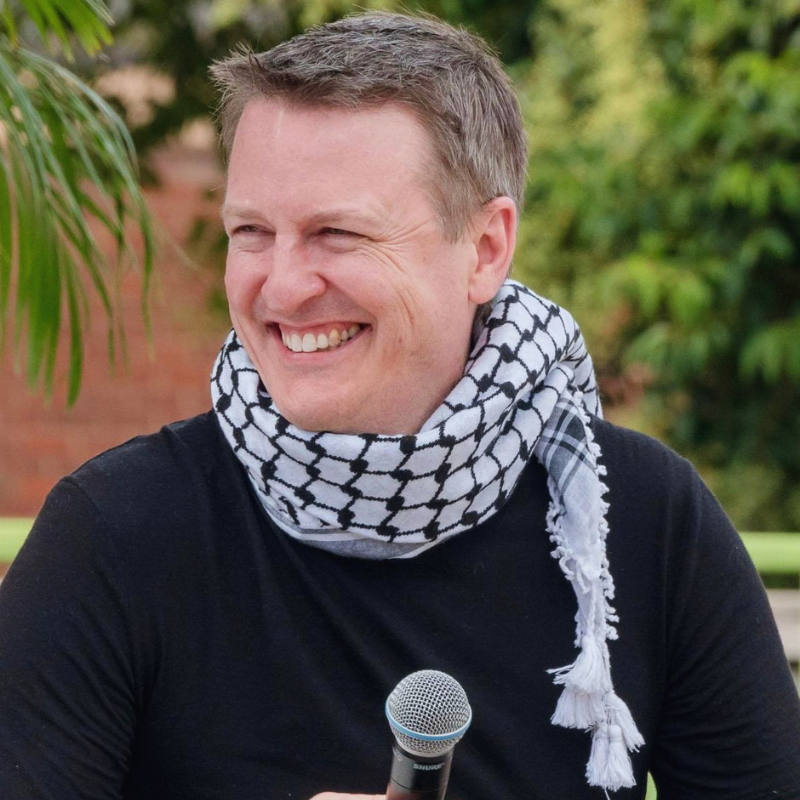
Matt Bowles: On this episode the tables are turned and I’m the one being interviewed by Lydia Lee from Screw The Cubicle. Now you’ll remember Lydia when I interviewed her on The Maverick Show. That was Episode #124. It was a spectacular episode, so definitely listen to that one if you have not yet. And on this episode, she is interviewing me on her show and we talk about all kinds of stuff ranging from my Irish American cultural heritage and how that’s impacted my politics and identity and worldview. We talk about how I co-founded Maverick Investor Group as a fully remote real estate brokerage that I have now run from 65 different countries around the world and how we built that company on four pillars of purpose. We also go into exactly how we work with our real estate investor clients and help them buy cash flowing rental properties in the best U.S. markets from anywhere in the world and how they can conduct their due diligence on these out of state rental properties without ever seeing them. We dive all the way into that. And then she pulls out my reflections on eight years of full-time world travel with no base. So, without further ado, please enjoy Lydia Lee interviewing me.
Lydia Lee: Today I am talking to Matt Bowles on building a location-independent business in a space that is not traditionally virtual and how he maintains trust and credibility with his clients even when he’s not physically in the same space with them. Matt is the co-founder of the Maverick Investor Group, which is a fully remote real estate brokerage to help people buy cash-flowing rental properties in the best U.S. real estate markets, regardless of where they live. He’s also the host of The Maverick Show podcast, where he interviews today’s most interesting real estate investors, entrepreneurs, and world travelers. He also calls himself someone that is a stylish minimalist and travels the world through multiple climates with carry-on luggage only. So, in this interview, Matt and I talk about how he built a location-independent business and, most importantly, a socially conscious business. Okay, Matt Boles, thank you very much for joining me today.
Matt Bowles: Lydia, so excited to be here.
Lydia Lee: We are definitely in different environments in our background. But I know it’s 10 PM for you, 10 AM for me, on the other side of the world. But it is our best times of working. So, we’ve connected really well for this interview in our genius zone.
Matt Bowles: 100% Super excited for it.
Lydia Lee: So, I usually love to start these conversations on this series about a personal question, and I haven’t told you what that question is. I wanted it to come from the heart and to come intuitively for you, but the question I love to ask firstly and foremost is, how has your family and your cultural background shaped your identity? And how has your own personal identity shifted as an adult?
Matt Bowles: That’s a good question. So, I am a fourth-generation Irish American. And so, I grew up primarily, though not with a lot of that. I kind of had a sense that I had some Irish heritage, but that was not a big part of my upbringing, right. I mostly grew up in primarily white suburbs in the United States. And for me, I was very fortunate to be able to study abroad my junior year of college. And when I did that, I studied abroad in Dublin, Ireland, went to Trinity College for a year. And that was life-changing on like 10 levels. I mean, it was the best year of my life up to that point. And it was significant in a lot of ways. One of which is that I was able to really start learning about Irish history, start learning about my cultural heritage, and start really getting in touch with that, which did a lot of things for me, right. It wasn’t only just learning about this different culture that is part of my history and heritage, but also, I was learning about Irish politics, right. I was learning about how the Irish were the first to be colonized by the British and the north of Ireland remains Britain’s last colony to this day, right. And so, what’s happened then is that the people in Ireland, right, and many of the people that are still living under occupation in the north of Ireland have historically had all of these solidarity alliances with other oppressed groups that are in struggle, other groups that were colonized by the British and others and so forth. And so, for me, that was also really quiet an entree into understanding anti-colonial politics and broader sort of politics of resistance to oppression and power and how all of that stuff works. So, for me, it was a totally game-changing experience. The other thing that that year did for me is it gave me the opportunity, on my winter break, I had a month off, Christmas, New Year’s kind of winter break, because I was there for the full academic year, and my roommate and I were able to take a Eurail trip through Europe, and we just got a hop-on, hop-off pass to go through 17 countries.
Lydia Lee: Wow.
Matt Bowles: And it was game-changing. It was amazing. And I just had that passion for travel, so that ignited a lot for me. And I was actually able, you know, after studying the Irish stuff that deep, to bring that back to my family. Right. And actually, tell them what I learned and then start taking my parents to political Irish pubs in New York City and hearing, you know, Irish political music and all this kind of stuff. Right. And really starting to reintegrate a lot of that Irish cultural history and those Irish politics and everything else back into my family in many ways. So, it was actually a really incredible experience.
Lydia Lee: Thank you for giving us that history lesson because that is doubtfully what we learned in school, you know, or even in other parts of how we learn about, you know, the histories of the places we come from. And that was amazing to hear. And also, for me, it’s great to learn that background of how that happened for you. And we’ll talk about this more in the interview about how that might have perhaps instigated you to do a little bit more of a socially conscious business. And we’ll talk about what that looks like, what that experience has been for you. But I can see how there was an alignment in that backstory. So, thank you for letting me know that. So right now, you are the co-founder of a fully remote real estate brokerage, right, where you help people buy property and rental properties in the best U.S. real estate markets, regardless of where they live. But your leap from employee to entrepreneur was actually instigated by getting fired unexpectedly, right? I think you said you started to deep-dive into kind of figuring out what your business should be and specifically wanting it to be location-independent, right? But that’s not a normal circumstance for real estate brokerages and businesses. And it wasn’t a reality, in a way, when you started in 2013. Or, to be honest, even now, I don’t see that many of those people as real estate agents or brokers that are doing remote businesses. How did you build a location-independent infrastructure for an industry that wasn’t traditionally virtual? And also, how did you convince people to trust you, even if you’re not physically there to help them invest in their next property?
Matt Bowles: Yeah, so we actually founded Maverick Investor Group back in 2007. So, there was really, really, I—we were talking about way back in the day. Here’s where I got lucky, though. Okay. So yes, as you said, I was working at an office job. I was actually working in the nonprofit advocacy space professionally for most of my career. And so, I actually don’t have a business background, right? And so, I was investing in real estate on my own, learning about it and all that kind of stuff. And then my friends had come up to me and said, “Hey, can you help me to invest in real estate?” Said, “Sure, you know?” So, I started helping my friends invest in real estate, and I wasn’t making any money off of it. I was just helping them. And I noticed, though, that the brokers that were helping us to buy the real estate, they were all getting real estate brokerage commissions and stuff like that, but we weren’t paying them. You know, I wasn’t paying them, my friends weren’t paying them, because in the United States, the seller pays 100% of the brokerage commissions. So, I was like, “That’s cool. We’re not paying it, and they’re helping us, so that’s fine. If they get paid, it’s not coming from me.” So, what I realized, though, is that, hey, if I could get on the brokerage side of this, it’s like the greatest business model of all time because I can just keep helping my friends buy real estate. I don’t have to charge them anything, and yet I still get paid, right?
Lydia Lee: Right.
Matt Bowles: So, I’m like, you’re telling me there’s a business where I don’t actually have to charge anybody any money, and I don’t actually have to sell them anything. I can just help them, and yet I get paid? Like, sign me up for that. And I understood the product. And, you know, because I’ve been doing it and all that kind of stuff for so many years. So, what happened was, one day, unexpectedly, as you said, I got fired from my job. I walk into work, I’m like, “Oh, my gosh, what do I do?” I’m 30 years old, right? And then I, on that day, I can remember saying to myself, “You know what? I’m not going to work for anybody else again. This is a sign that I should go and do my own thing, start my own business.” Only problem was, didn’t know how to start a business, so drove to the bookstore, started reading books on how to start a business. This was ’07, right? One day, I walk into the bookstore. There’s a book, brand new on the table that just came out. It’s called The 4-Hour Workweek by Tim Ferriss. Picked it up, read it the day it came out, and that book is where the light bulb for me went off, which basically said that a business really should not only achieve financial income for you, it should also create location independence for you so that you can have the freedom of mobility, which is a currency at least as valuable as the money that your business is generating that is going to allow you to design your lifestyle. If you only have money, but you’re geographically restricted and you don’t have control of your own time, you’re going to be very limited in terms of your lifestyle design options. Whereas, if you’re generating money and you also have total freedom of mobility and you have control over your time, and you can work from different time zones and all that, now all of a sudden, the world is yours in terms of designing your lifestyle. And it just made sense. I said, “That’s what I’m going to do.” And then what I did, I realized that I don’t think I have all the skills myself to start this business. I’m going to reach out and recruit two business partners that have complementary skill sets to me that are very good friends of mine, which I did. And then the three of us came together and we said, “Okay, this is what we want to do. We will build a location-independent business. We want to do it in the real estate investment space. How would we do that?” Right? And what we did is we literally just reverse-engineered it. We said, “This is our vision. We want to be able to live where we want, travel when we want, have all this stuff, do this, and we want to run this particular business. What are the perceived obstacles or challenges that would be geographically restrictive or, you know, difficult?” And let’s write those down, and then let’s just reverse-engineer that business plan and accommodate for all of those perceived challenges, right? And how would we overcome those? And we had a brainstorm strategy session. We literally flew out, I remember this, we flew to Las Vegas and we just got like a suite in the Venetian or something, and we just like posted up and just had this brainstorming session for like a week, right? And then at the end of that week, we had our plan. You know, we had our path that we were going to pursue to do this. And then, you know, as we built out the brand, one of the things that we realized is that we can do this. And it can be not only in our own interest in terms of being location-independent and allowing ourselves the freedom of mobility, but this actually, this new innovative model for a real estate brokerage is actually going to be in the best interest of our clients. And the reason why is because normally a real estate broker is licensed in one market, all they have access to is the properties in their local market. So, they have to tell you, “My market is the best market to buy in. You should buy here.” They take the product that they have access to and they retrofit their marketing materials to sell it and convince you to buy it. We were able to do the opposite. We were able to say, “We’re market-agnostic. We don’t care where you buy. We’re going to make money no matter where you buy.” So, we can put the client’s interest first and say, “Okay, at this time, you’re ready to buy. Now, here are the best markets in the U.S. because they change over time, right? As markets go up and go down and all this kind of stuff.” And we also want to talk to each and every client about their personal buying criteria, their personal real estate investment goals, right? Which markets are right for you? Because not every market is the same and is right for everybody. So, we’re actually able to develop a much more customized approach and give people much more options and help people actually build diversified portfolios of rental properties across markets and over time, and other traditional brokerages were not allowed to do that. So, we actually positioned it as a serious advantage that was beneficial to the client.
Lydia Lee: I love that. Well, a couple things that you said that I really love. Well, the first thing is about, like, not conforming, like when you first started brainstorming. First of all, I love that it was Vegas, and you probably ordered tons of room service and just hunkered down, right? Which is sort of the way that I do it, too. I like to every quarter take myself to an Airbnb somewhere else and actually just be away and do my brainstorm with a nice hotel robe and room service. My best brainstorming environment. But I love that you didn’t go, “How do I fit myself into the marketplace with what’s been done before and try to sort of redo that, right, or repeat that process for myself?” But instead, you sort of thought about what would make us happy and sustainable in not only just the profitability of that business, but it’s going to allow us to get the reward of living the kind of lifestyles that we need to live and just be neutral about what we think we can and can’t do right now and just be actually really honest about. If we were to do that and we reverse-engineer, we’re going to come up with some obstacles, which is very natural, but not to let those obstacles become the thing that stops you and instead be innovative in sort of going, “Well, how would we do this, being one of the first people that are doing this? And how could we creatively answer the call to some of these obstacles in a way that is authentic and honest?” Right. And I love that you do that. The secondary piece that I like as well is that you looked at it as seeing your product instead of, “Oh, we’ve never done this before, so you should just trust us.” You know, there was sort of a moment of where you were able to explain actually how this can benefit all of us, right? Having sort of a win-win situation, which is sort of a nice feeling in business, especially in the real estate market where sometimes, you know, the win is the bottom line, you know, and how many people can we get into real estate even if they can’t afford it? Right. But I love that you take the time of assessing what kind of investor are you? What are the right ingredients for a property investment for you so that we can put you in alignment with the right properties rather than shove a bunch of them down your throat and hope that you get the mortgage that you can be qualified for, right?
Matt Bowles: Yeah. And the other thing is, because we’re dealing exclusively with rental properties, we don’t help anybody buy a house to live in, a primary home. We don’t list primary homes to sell it on the Multiple Listing Service like a traditional brokerage. We don’t do any of that. We do one niche thing and one niche thing only, which is that we help our clients build their wealth over time through buying cash-flowing rental properties, right? Residential investment properties. So, single-family homes or two-to-four-unit properties. They come already either brand-new properties or fully renovated properties with a long-term tenant on a lease in place, paying rent, and a local professional property management company that’s managing that for you, that’s collecting the rent and handling any maintenance. So, you don’t have to be the rehabber, you don’t have to be the landlord, you’re not the one directly dealing with the tenant. You’re the owner, you’re the real estate investor, which means that you are making decisions and you’re cashing checks, and that is your role. You’re not the day-to-day landlord, property manager. You’re hiring someone to do that. You’re factoring that into your operating expenses as part of your cash flow analysis. And so, what we do is we work with our individual clients on a long-term relationship basis, where we are helping our clients build their wealth over time by continuing to buy and hold cash-flowing rental properties. In each property that they buy, their cash flow increases. And each property that they have, when appreciation occurs, they’ve got multiple properties that are appreciating in value. Each property that they have, their tenant’s rent is paying down their mortgage principal. So, they’re building equity like that. Each property they have has tax benefits. You can depreciate them and all of these things. So, we help them to build that over time. So, every client that comes in the door for us, very different from a traditional real estate brokerage, which is very transactional.
Lydia Lee: Right.
Matt Bowles: People go to a traditional brokerage, “I want to buy a house to live in,” they buy the house to live in, and then that’s it. They’re not going to move again anytime soon, usually, right? So that’s it. It’s a one-transaction thing. For us, no, it’s a relationship thing. And every client that comes in our door, we want to be working with them 20 years from now.
Lydia Lee: I love that. Now I’m going to read the minds of people who are watching this as like, “Okay, if I was the customer, I’m going on your website, I see a bunch of listings. Now I kind of want to know because, traditionally, I would walk into an open house, right? I would walk into a physical place that allows me to make sure that the plumbing is doing well, that there’s no problem with the foundation, and, you know, all the things, right? And then they’re also probably thinking, well, if you’re not physically there, does this mean that you have partners? Do you have agents? Do you have property managers? Do you have other people in your team that allows you to ensure that the properties that you are promoting are verified, you know, and is trustworthy, right? Of an assessment, how do you maintain that part of the questions?”
Matt Bowles: Yeah, super important question. And the answer is that we don’t ask anyone to trust us. What we do is we educate and empower each client to conduct a completely independent third-party due diligence regimen on every single property that they buy. Okay. So therefore, they don’t have to trust Maverick, they don’t have to trust the seller. What they’re going to do, and we’re going to teach them how to do this and give them resources to do this, is that for every property they buy, they’re going to hire an independent home inspector to professionally go in and inspect their property. That inspector is hired by the buyer and works for the buyer, not for the seller, not for Maverick. Same thing with the appraiser. Okay. If you’re getting a mortgage, the bank is going to require an appraisal because the bank is not going to lend you money on a property if you’re paying more than it’s worth. They’re going to protect their own investment of their mortgage. So, you’re going to have an appraiser go in, you’re going to have an inspector go in, you’re going to have all these independent parties, and then they’re going to give you that information. So, you’re going to have that independently. And the reality is that even if you live near a property, you’re not going to, unless you’re a professional home inspector, you walking into the property is not going to tell you very much about the plumbing and the foundation and all this other stuff. You need to hire that professional inspector to go in and do that for you. So, whether you live near the property or whether it’s on the other side of the country, or whether you live on the other side of the world and you’re buying it in the United States through us, you’re going to do the exact same due diligence, the same exact thing. You’re going to hire the same people, you’re going to verify the same stuff, and you’re just going to have the third-party professionals verify each and every piece of that for you.
Lydia Lee: I love that you’re arming people with the tools and the education because I think in the real estate market, just like the finance market as well, it’s blurry, right? Most people don’t know what really happens, what is going on. And there’s sort of this, “I’m just going to trust this person that says they have my back,” right? Whether it’s the banker or the real estate agent. It’s good to know, right, as an independent investor, what to expect and what is a good buy. What are the questions you should be asking so that every property you’re buying, there is a framework and how to ensure that you’re making the best investment. So, I can really see the value. It’s not just about being matched to the right listing and to the right type of investment, but also that I feel capable, with or without Matt down the road, to be able to make these sound decisions for my investment portfolio with ease and with confidence. And I can really see the value of why people continue working with you because it’s so much more than just the matched listing, which is really awesome. One of the things that you and I have in common is this idea of having meaning and purpose in the work that we do. Yes, we like making money. Yes, we love that this money helps to support the lifestyles that we have. But we want to do work that matters, and that actually has a ripple effect to the people that we’re truly hoping to help, right? I don’t know if you know this, Matt, but I came from the real estate industry as well. I used to work for real estate developers and sort of pre-sold homes that I did very well in during the heydays of Vancouver real estate. I also know that at times, the main priority has been to sell, sell, sell, and get as many people into homes or into investments that sometimes they can’t afford, but we rejig that with the mortgage broker and make sure they get it. And I’ve never really sat well with that for myself. I felt in crisis about my values, if you will. You know, when I did that, even though I was successful, I didn’t feel right doing it that way. Now, you’ve been really mindful about building a socially conscious business with something that you call the four pillars of purpose. Can you talk us through what this looks like for your business?
Matt Bowles: Yes. So, first of all, as I mentioned, I came out of the nonprofit advocacy space. So, an important background to understand is that I have my bachelor’s degree in sociology. I have my master’s degree in international peace and conflict resolution, and I worked my entire professional career in the nonprofit advocacy space all the way up until the age of 30, right? Now, my best friend Valerie also did her master’s degree with me, also did activism with me around all sorts of international human rights issues in Palestine and the north of Ireland and other places like this. So, she was my best friend. I trusted her with my life. And we were also just perfectly complementary in terms of our skill sets. She’s amazing at everything I’m horrible at, and vice versa, right? So, like, we complement each other very well. We work together so much. So, when I was starting this business, I was like, okay, if there’s one person that I know has complementary skills to me that I can trust a million percent, that also would be the perfect business partner, it would be Valerie. So, she’d be up for an adventure, I think. So, I was like, “Valerie, what would you think about quitting your job and coming to start a business with me? Real estate.” Because she was investing in real estate also, right? So, we agreed to do it. And then, as we did it, we said, okay, let’s think about this now, right? Because we had both worked our entire careers like, this is our whole passion, was progressive nonprofit advocacy, right, around civil liberties and human rights and all this kind of stuff. And so, we said, if we’re going to go in the business direction, the entrepreneurial direction, how do we retain our values? How do we make sure that we’re able to continue to contribute to the things that are important to us and that we keep our core values and worldview and everything like that aligned and congruent as we go in an entrepreneurial direction? So, we had that discussion, and we had that a number of times. And again, it was the same thing. We’re like, let’s brainstorm through this. So, what I tell entrepreneurs, I mean, and this isn’t only, to be honest with you, this isn’t only related to, like, “Oh, I wanted to remain true to my values and my politics.” That was part of it. The other part of it is, if you’re going to build a business, it is really hard, any kind of business. And so, you need to have motivations in place that are beyond the money you’re going to make, because if you don’t, it’s just too hard. I’m just very real and honest with people about it. And so, the way that I think about the four pillars of purpose in a business and how I encourage entrepreneurs to think about it is with our company. For example, first of all, the number one thing that we already talked about is that you are going to do this to achieve your dream lifestyle, okay? Whatever that is. So, that’s your vision board. I want to travel to these places and live here for this long and do this epic stuff, and like, this is my ideal lifestyle, and that is a legitimate pillar of purpose to create your own dream lifestyle. So, that’s number one. Number two is that with the success of your business, you are then able to hire other staff. And if you are running a fully remote company with a fully distributed team, you are giving your staff the same lifestyle benefits that you have created for yourself. They can work from anywhere, they can travel the world, they can make money and support themselves or their family or whatever it is and live their dream lifestyle, whatever that may be, okay? So, the more successful your business is, the more staff you can hire and the more you’re contributing to giving that to other people as well. The third one is your customers and the product or service that you offer, okay? You need to believe that your product or service is really adding value and dramatically improving the lives of your customers that are paying for it, right? So, for us, we’re helping people build their wealth through real estate. The more properties they buy from us, the more passive income they generate, the more wealth they build. And that passive income is able to then take the place of their active income and their need to work for their job. And it gives them more lifestyle freedoms for their families and their lifestyle design and everything else. So, again, now, the more successful our company is, the better our staff are, the better our customers are, and all of that. And then the fourth pillar is that we contribute upfront. And this is where that conversation with Valerie and I ended up. We said, okay, we are going to donate 10% of our net revenue before the managers take any and the owners take anything out of the company at all. We’re donating 10% off the top to causes that we really care about that are important to us. Because the reality is that as nonprofit employees in that space, you are able to work all day, every day, and put your time into these causes that are really important. And it was very meaningful to me and all of that. But you’re not making money. You’re not making much money. So, I was never able to donate money or contribute financially. I was able to contribute my time. And so, what we said is, okay, in the business context, number one, we are going to tie a specific percentage donation to our financial success. So, the better the company does financially, the more money gets donated to these causes that we care about, and we can make a real financial impact. Plus, we have more control over our time. So, we can do volunteer, activist work, or advocacy stuff on our own terms. That’s really the four pillars of purpose. You say, okay, I am motivated now to make my company succeed and do well, because there are all of these beneficiaries that are tied to our company’s success. And that is what’s going to allow you to get through the ups and downs of the entrepreneurial roller coaster and all of the difficult stuff that’s involved in building any business.
Lydia Lee: Wow, there’s so much goody value there of what you just said and just so well-articulated. Thank you so much for breaking that down. You’re so right. Like, I think, you know, this is when we see the statistics of people either checking out of their business before they should be checking out or not being able to feel motivated for their business. A lot of the times, the stories I hear as well is that they’re focused on one metric of success, which is that, am I making the money I can make for myself? And I’m glad you said that that is one part of the purpose, because there can also be the other thought process where people feel it’s too selfish. If I think about myself, it should be all about people and it should be all about giving. Especially when I’ve worked with clients that have come from nonprofits and they’re kind of self-professed do-gooders, right, that don’t. The thought of expressing that I actually need to get something out of it, that I need to live a better life because of it’s kind of can sometimes feel selfish because it should be all about, you know, somebody else. But I’m glad that you say that is one of the purpose pillars, because that you should have that. And I think the more that you’re lit up by your life, the more energized you are, the more time you get to spend with the people you love and have your hobbies, then you’re going to show up for your business in a much more meaningful way. And everyone gets that ripple effect, right, of your energy and your happiness that comes with your, you know, who you. But I also love that you talk about things beyond yourself, you know, because a lot of us in the Western world, we’re always about me, me, me, right? It’s me, my trauma, my this and my that, right? And it’s sometimes a lot harder to navigate all that for yourself, but it’s the easiest to help other people, right? The easiest to think about other people. And all of a sudden, your problems aren’t as jarring, if you will. Right? But I love that, you know, what gets you up in the morning is also about the impact that you’re making and how proud you are of the work that you’re doing. Kind of similar to my own experience in real estate when I was selling homes without a good intention, without a purpose behind every dollar I was making, that eventually burnt me out. It wasn’t the work. It was actually the reason behind why I should be existing in this particular industry at the moment. And that is actually what keeps people in bed, is when they don’t feel like they want to sell their thing or that they don’t even have the words to want to. You know, they’re just like, “Oh, I don’t want to sell today because I have to find another hook,” you know, to sell this product, when actually, if it’s authentic and purposeful, you can talk about these other benefits that are so much more human-focused. And I think that really attracts also the right people that share the same values as you. And I think that’s what equates to what I call a “Soulmate client,” you know, where you don’t have to convince that financial freedom and location independency is something they want. They’re like, “No, I really want that. Just tell me how I can get there,” right?
Matt Bowles: Yep, 100%.
Lydia Lee: So, I want to talk about freedom for a minute because one of the biggest motivators for a lot of people when it comes to a personal purpose is to have freedom, autonomy over their time, autonomy over their choices. That might be location, that might be also, you know, what it is that they let their kids experience in terms of a global education, right? And so, you said to me, “Could I ask you this question before the interview?” You know, what does Screw The Cubicle mean to you? And you said, you know, having total freedom of mobility and control over my time so that I can live and work from anywhere and spend time in the places and with the people that I choose. So, Matt, you’ve been a full-time digital nomad with no home address, no permanent base since 2013, which is the same year that I started. And you’ve also run your business from 65 different countries on six continents in the last eight years. And most impressively, I would say that you’ve been traveling the world through multiple climates with only a carry-on luggage, which I’ve only attempted once, and it was only two places that I went. So that’s pretty impressive. How have you been able to sustain a sort of health and lifestyle of long-term travel without a base? Because I can imagine, because I experienced it as well as a digital nomad for the last eight years too, that there’s pros and cons to this life choice. It’s not just sugar plums and gumdrops that everything’s perfect. They’re exchanges, if you will, that I have to make in order to continue building this kind of lifestyle for me. Now, how have you been making it work for you?
Matt Bowles: Yeah, so I think that there are a number of what I would call sustainability pillars. And when I meet folks that kind of try the nomad life for a year or maybe two, and then all of a sudden, they’re back in the office somewhere, they’re back in the lease and going into the office or something, and they’re like, “Yeah, it wasn’t for me,” or “I wasn’t able to hack it,” or whatever it may be. A lot of times there are different reasons for that. A lot of times what I find when I actually talk to people is that there were deficiencies in some of the sustainability pillars, and they chose to just call off the nomad life because there was such a deficiency in a particular pillar, right? Meaning that it wasn’t properly attended to, it depleted. And then they chose to deal with that by going back and ending sort of the nomad life. And those can be things like doing enough work and making money. I mean, I’ve run into plenty of nomads that they love to get out there, and then they’re partying and doing all this stuff, and there’s social stuff going on all the time, as you know, and fun and amazing stuff that you can do all the time, day or night, right? Interesting things and amazing people. And some people get overwhelmed by that, and they don’t actually do enough work. If they don’t do enough work and they don’t make enough income, then they run out of money and they end up back wherever they sort of started. So, one sustainability pillar is just being able to be disciplined and have control over your own time and your work hours, and really to be able to prioritize that and then schedule other things around it. Now, with you and I, we slow-travel the world, right? So, one of the things that’s, I think, a very easy way is just if you’re going to go somewhere, just stay for a while, and then you’re not feeling as much pressure. I have to go out and do everything and run around and see everything and all that because I’m going to leave quick. It’s like, no, I’m going to be here for quite a while, and I’m just going to have a regular work week at the workspace with whatever my optimal work hours are, right? For some people, that’s evening hours, some people’s early morning hours, whatever it is for you. And then around that, I’m going to be able to then go out at night, I’m going to go out on the weekends. I’m going to experience the place. And so, part of it is really just structuring in a healthy discipline that prioritizes your work and makes sure that you are able to do your work, build your business or whatever it is that you’re doing. So, you have the financial pillar. Another huge one that I see a lot of folks saying that really got depleted and really got to them is the community aspect and the loneliness factor, right? Because if you are traveling around and you are not immersed in community and you are starting to allow loneliness, it can compound, it can build up, and then over time it really, really can impact you, right? Where you’re like, “Okay, I need to go and just be somewhere and be part of a community,” and all that kind of stuff. So, for me, one of the things that I do when I travel is I am always immersing myself in a community. I mean, at this point, I’ve been traveling for eight years, so I know a lot of nomads. But earlier on, for example, I would pay to participate in a work travel program. Okay. There’s a number of companies, there’s a number of brands, and what they do is they bring communities of location-independent people together to either go to one city for four to six weeks or travel to multiple cities for four months, six months, 12 months, right? So, I’ve gone around the world on the Remote Year program for 12 months. I’ve plugged into shorter-term programs like Hacker Paradise, where I go to a city for a month. But when I do that, I know that there is going to be a community there. So, I’m paying money. My accommodations and co-working space are taken care of. So, I have the logistics set. And I know that there’s 20 to 30 people that want to get to know me, they want to hang out with me, they’re there to give me hugs, they’re there to explore the city with me, they’re there to support me if I have a bad day. Like, my people are there, right? And now I know so many nomads that I am very intentional about traveling with small groups of very good friends and seeing people that I care about multiple times a year in different places around the world. So, the way that I structure my travel is very community-centric, even if it’s itinerant. I am constantly immersed and surrounded by people that are interesting, and rather new people that I want to meet and get to know, or friends of mine that know me already and I want to catch up with, or whatever. But that’s a crucially important sustainability pillar as well. So, I would say those are two tippy-top ones. And then, of course, you have other ones like health and nutrition and fitness.
Lydia Lee: Yeah.
Matt Bowles: And all that kind of stuff, which is the same in any part of your life, right? I mean, if you’re in one place, that’s important as well. But when you travel, sometimes people will tend to neglect that, or they, “Oh, I don’t have a gym,” or whatever it may be. So, you just need to build in all of those things that you need to have a healthy life and just be intentional about planning for them, right? I’m not going to think about community and this and that. Maybe it’ll just happen, or maybe it won’t or whatever. No. Plan in advance. Every time I go somewhere, I know exactly who those people are that are going to be there, that I’m going to be able to have in my community, in that city.
Lydia Lee: I love that you say the planning part, because that is the one thing that I think I’ve seen so many migrations of different nomads, you know, that have come into Bali, for example, in the last eight years. And there is this sort of misconception that it’s like, “No, now that I’m free, I don’t want to have a schedule. I want to work when I feel like working. I want to just go and travel when I feel like traveling.” And you know what? If you’re on sabbatical, good on you. I was on sabbatical for two months when I arrived. And that was exactly right for that experience, because that was intended for that experience. But you’re so right that when you’re building wealth, you’re building an income, you’re building the learning curve, you know, that it takes to start a business, which is going to be a lot of learning, a lot of failures as well. And you need to have spaciousness and time to figure all that out. And it’s really hard to do that if you don’t have a routine, if you don’t have a schedule, because it’s really hard to show up when you feel like it, because you’re never going to feel like it when you’re learning something new, you know? And it’s so tempting and shiny and romantic to be like, “I just want to be on a fishing boat somewhere or sunbathe at the beach today.” But you’re not going to work, you know, and you’ve got to be very structured in sort of what is play time, when it’s meeting people time, and when is it that I’m going to actually do some deep work? Because the reward is that you can be a nomad, but it’s not something that you can just be, you know? That’s why whenever people sell courses like, “How to Be a Digital Nomad,” I’m like, it’s not a job title that you just learn how to be. You’ve got to learn how to make income. You’ve got to learn how to give value, and then you get the reward of digital nomadism. It’s not the thing you strive for, you know, it’s doing good work that really matters. And I love that you did do things at Remote Year. I’ve never done that, but I knew that it was important for me, and I too strategically travel slow because it is such a difference when you go into somewhere for two to three weeks versus two to three months, you know? You really don’t know the community, and you’re kind of a tourist versus an actual expat, you know, or someone that’s really immersed in the day-to-day. And it’s really hard to even know what is a good home base for you if you don’t give it that time to know that if your lifestyle does significantly improve from being at a certain place. And I too sort of look for places that I have friendships, I have co-working communities that I can sort of plug in, plug and play, and know that I don’t have to do this alone because loneliness is, I think, one of the things that does make people go home. You know, we need others, we need humans. I think in the time of COVID, we’ve learned a lot about that, about how much being alone is great. But also, we need a balance of having a sounding board, therapies, and friendships that can help us to keep going when the going gets tough. Thank you so much for sharing your location-independent story. Now, you have given us so much to think about when it comes to starting a location-independent business, especially in an industry that may not be traditionally virtual, and also some of the real important, meaningful choices that you make in your business to make it sustainable and purposeful for you. Now, for people who want to learn more about what you do, maybe get a bit of help, maybe they started to actually think about, “Yeah, you know, I would love to have my own or obtain financial freedom by having, you know, real estate investments as part of my portfolio, including my business and all the things. How can people get the tools or your income insight? Where’s the best place for people to find out information about how to buy and own cash-flowing rental properties in the U.S. real estate market and also not have to be there physically to be a landlord? Where are the resources that they would get your best information?”
Matt Bowles: Yeah, so our website is MaverickInvestorGroup.com and I want to offer people, I mean there’s a couple ways you can do it, right? If you want a really cool piece of content. I actually created one just specifically for digital nomads. It’s called Real Estate Investing for Digital Nomads. And so that’s Actually, a really cool, totally free white paper that you can grab if you go to TheMaverickShow.com/Nomad, that’ll be a free report on that. Or if you want to get a free consult with us directly, like a video consultation where we can get to know you and learn about your investing goals and your buying criteria and help you get pre-qualified for financing. If you qualify for that or whatever it may be, develop your plan for real estate investing and you want to join, jump right into a video consult before you check out that report. You can do that as well. And you can go to TheMaverickShow.com/consult. The Maverick Show, of course, is the podcast that I host where I interview location independent entrepreneurs and world travelers and all that. So, you know, that’s another place, I would say, where some of them are traveling based on real estate income and all that. I have interviewed people that are traveling the world on passive rental income. But a lot of the folks are also folks that have built location independent businesses in spaces that are not traditionally virtual and kind of tell their stories and break down their tactics and kind of share some epic travel experiences as well. And so that’s what The Maverick Show website is. And then through those links you can get to the real estate stuff, or you can just go straight to the real estate website, which is MaverickInvestorGroup.com and there we have entire pages of resource pages and articles and a lot more information on the real estate investing. So, if you want to kind of do the education stuff, you can kind of dive in there. But if you grab the free report or the consult, that’ll connect us directly. And we’d love to hear from folks and connect with you and answer your questions and support you in your real estate investing journey.
Lydia Lee: Lovely. And we will make sure the links are all there, all the links that Matt mentioned, whether it’s on our feature blog or on YouTube, you’re watching it, or on Instagram, if you’re watching it there, all the places that will put Matt’s face in. But I’ve been on Matt’s show as well, The Maverick Show, and I loved the questions he asked and it’s all very honest. When I’ve listened to other episodes as well. It’s not just like, here’s how I made an awesome business and just follow me. It’s a very transparent journey, you know, of what people have done, what worked, what didn’t work. And I think you have curated really, really good stories of people willing to talk out what’s happened. And not only just talk about the success stories, but also right all the different decisions that actually help them to make the right decisions for their business, which may not be the first-time round. So, I really love the conversations you’re having. And then lastly, you know that I’m always trying to pull you into this side of the world again because I’ve found out that you lived in Kuala Lumpur and never went to my birthplace of Penang, which is a mistake.
Matt Bowles: 100% I did.
Lydia Lee: Just going to say it out loud. You have made the biggest mistake of your life, Matt. But that should be our treat when we finally meet in person is we meet in Penang. I’m going to take you to the hawker stands. We’re going to eat the crap out of everything and you’re going to love it. You don’t have to ask me twice. I’m 100% in. You have my commitment publicly on this show. This will happen. Good. All right. Thank you so much for taking the time to join me. And yeah, love the conversation we have. I love that we get to have this conversation together from different parts of the world.
Matt Bowles: Thanks so much for having me, Lydia. This was great.