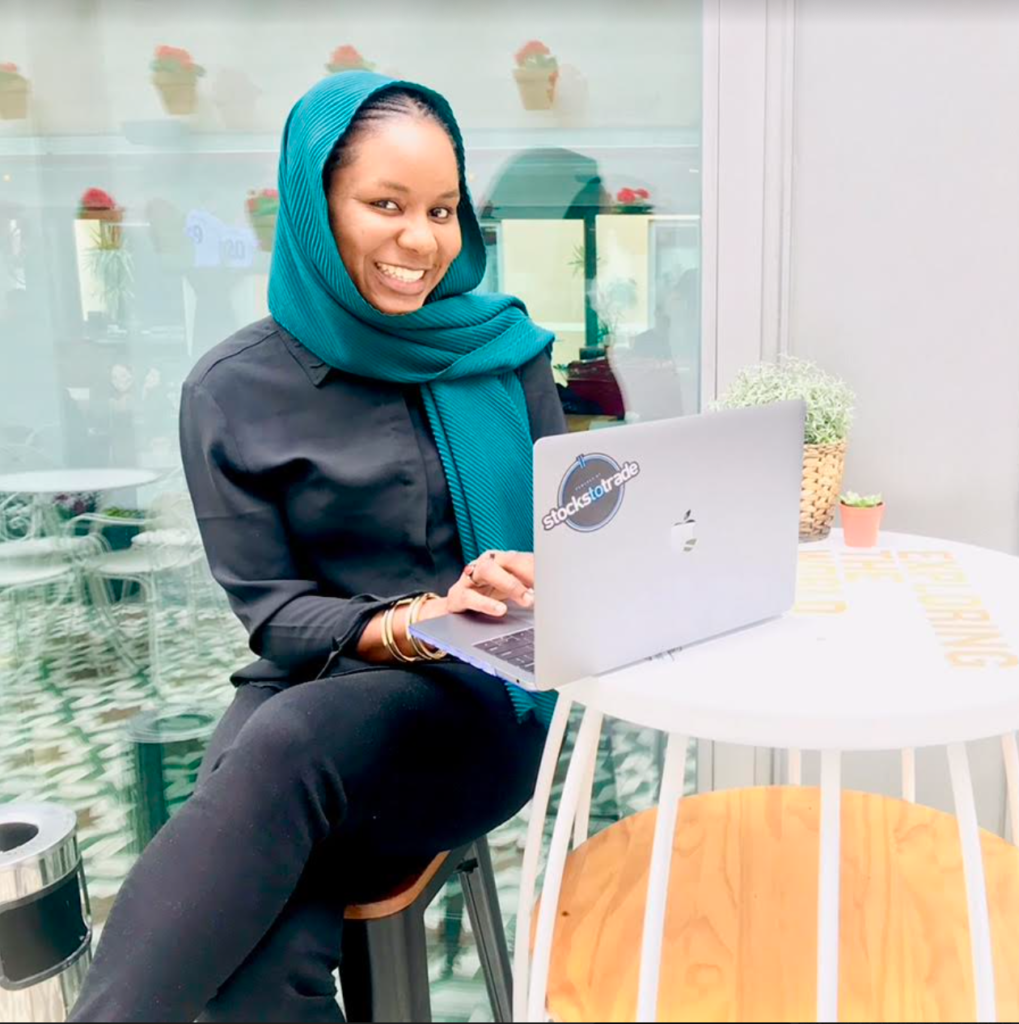
Matt Bowles: My guest today is Fadila Ahmad. She is a location-independent entrepreneur, business strategist, remote work advisor and the founder of Finance Express Limited a West African trade facilitation agency a West African trade facilitation agency that operates in four countries to provide trade payment, PR and business development advisory services. Fadila was born and raised in Nigeria, went to college in Ghana where she still maintains a home base and now runs her business primarily remotely as a digital nomad and has been to over 30 countries. She is also the founder of Africans Living Fully, a platform designed specifically to support and empower young Africans to live their life limitlessly by providing resources on remote careers, location-independent entrepreneurship, remote skill development, networking opportunities, long-term world travel and lifestyle design. Fadila is a strong advocate for youth economic and social development in her home country of Nigeria and has also worked with nine NGOs across six West African countries on issues of women’s empowerment, maternal health and youth skill development and education. She’s passionate about empowering all Africans to be limitless in their pursuit of a fulfilling career and life. Fadila, welcome to the show.
Fadila Ahmad: Thank you so much for having me. I’m super excited to be here and to be speaking to you on this amazing show. It’s my honor.
Matt Bowles: I am so excited that you are here. We are going to have an awesome conversation. But first let’s set the scene because we are in very different places today. We are not on the same continent even. I am recording this from the mountains of Asheville, North Carolina on the east coast of the United States. And where are you today?
Fadila Ahmad: I’m currently in Accra, Ghana, the vibrant city. It’s a beautiful evening and I’m still at the office working from a co-working location.
Matt Bowles: That is awesome. Accra in Ghana is one of my favorite cities in the world. I was spending about a month there last year, which was my first time, and I was completely enamored with the city. Totally blew me away. And I also spent a month in Lagos, Nigeria last year, which was my first time there, which was also amazing. And I know that you are originally from Nigeria, born and raised. And I would love to just start off this conversation just by asking you a little bit about your upbringing in Nigeria. And as you were growing up in Nigeria, how did your interest in world travel develop?
Fadila Ahmad: It’s so great to hear that you were in Accra and Lagos. Like literally I can say hands down, you’ve been in West Africa. So basically, my upbringing was very interesting. It was full of love, a lot of play, adventure in school, and visiting a lot of families during the holidays. So basically, I grew up in the northern part of Nigeria, in Kaduna to be precise, which used to be a hub of the northern region of Nigeria. And unlike other cities, we had relatively higher level of reliability for electricity. There are a lot of restaurants, amusement parks were like a go-to place for me and my siblings and my friends on a regular basis we’d have birthday parties literally every other month. So, I had a very interesting upbringing. The weather over there in the north is always sunny, like all the time. And then we have rainy season. So, we kind of plan our activities around this too. I will say seasons, but generally it was a very happy and very vibrant upbringing that I had.
Matt Bowles: And when you think back on that, what was the inspiration for you to travel, to see more of the world, where you come from? And then what was your first experience leaving Nigeria?
Fadila Ahmad: So, interestingly, I come from a multicultural home. I consider myself Malian-Nigerian because of my mother’s heritage. She is from the Fulani, which are generally known as nomads. So, I would kind of say that I was always curious to ask my grandfather why he decided to settle in Nigeria. Like because he’s been traveling literally all his teens until his mid-20s, before they kind of settled down. So, I would say that I kind of tuned back to the root of my ancestors. But on a more practical note, I have always been interested in geography and it was one of like my best subject. And my family used to travel within the country extensively during the holidays to visit other family members. And I was simply fascinated to experience other parts of the country as we are a very diverse country. And I was curious to kind of explore other places. So, growing up, basically when I finished high school or while I was still in high school, I made up my mind that I was going to study abroad. So, like right before I finished high school, I started studying for the SATs because I thought I was going to come to either the U.S. or Canada or the United Kingdom. So, I will say that my transition out of Nigeria came from a place of education. And then that translated into several other things that have happened over the years.
Matt Bowles: And so where did you finally decide to go to study? And what was that experience like when you left and went to another country and were on your own in another country for the first time?
Fadila Ahmad: So, it’s very interesting that Ghana was, I would say it’s my country of last resort because it was totally not on the map for me to come study here. I was applying to schools in Toronto, London, in the U.S. and Johannesburg, of which I got literally almost all the schools I applied for. But I was pretty young when I graduated high school. My father wasn’t very comfortable allowing me to leave the country at such a small age. So, he did not support my education or the ability of me to go overseas to study. So, I did go to a College of Education. Literally it’s like a community college of some sort where people train to become teachers. But I knew I didn’t want to be a teacher. So, while I was studying at that College of Education, one day I came home and I found the newspaper that was talking about a man called Patrick Awuah of Ashesi University. And I read his story and the dream that he has of building this thought, like, one of the most incredible universities where they will develop thought leaders to navigate the world of business and ICT. And I was curious so I tore that newspaper out and literally applied to school here. And I sure see having been, I will say, denied or unable to go to school in other countries. And that’s how I found myself in Ghana. I didn’t actually end up going to that university. I went to a different university. It was tough because I literally sneaked out of my country without my father knowing that I was leaving the country at like 16, 17 to come. So, it was not a smooth transition. But I think that was one of the most enriching experiences of my life because it enabled me to take personal responsibility in creating my reality and making this work. So that is my story of coming to Ghana.
Matt Bowles: Can you talk a little bit about that? Like when you go back to that age, right, and you think back on that time, how did you navigate and balance your desire to pursue your passion and pursue your life dream versus navigating your family dynamics, who you loved, your family members and they Wanted certain things for you. How did you navigate this sort of traditional family expectations versus pursuing your life dream that was a little bit different than that.
Fadila Ahmad: Frankly speaking, I would say that I have always been like a rebel. Growing up, I always used to have issues with so many people, not just my family members, but even in school, like, you’re a girl, you should not be running. I was running marathons. I was playing, like, boys’ kind of sports. So, I always had a mind of my own. But it was a very difficult. I would say it was the circumstances with which I came to the university that kind of toughened me up. And I knew that I was responsible for creating the life that I want to live. And it is my life. And I don’t want to end up having to live my life with regrets or blaming others for the lack of opportunities or, I don’t know, experiences that I wanted to create. So, I knew that I had to take that drastic decision. And I’m really grateful to my mother for supporting me through that period and just doing all that she could while I was doing the part that I could to make the education work.
Matt Bowles: And then from there. How did your world travels begin? How did you start traveling to countries outside of Nigeria and Ghana?
Fadila Ahmad: So, it’s very interesting. When I came to the university, or before I came to the university, I’ve been actively involved in social and developmental work from a very young age. I was like a HIV peer educator. As early as, I think 11 or 10 years old, I had worked with my mother because she works in the development space. I had this motivation to be a part of the solution to the social problems that I see in my community. So, when I came to college, I knew that I had to make this work. I had to work multiple jobs. I had to seek for opportunities, like actively, not just waiting for opportunities to come. So, I read every single notice board on campus. And one-time I was going for lectures and I saw this poster about a Model United Nations conference that was happening here in Ghana. And I’m like, Model United Nations, what is this? So, I literally called up the number on the phone after lectures, and I’m like, I saw this poster, World leaders, be a world leader or something funny like that. I want to attend this conference. So, I literally started or got my first exposure outside of Nigeria through Model United Nations, a year after that in Italy and subsequently. It has just been a very enriching experience and an incredible part of my journey as a student and a global citizen. And now location-independent entrepreneur.
Matt Bowles: Yeah, that’s awesome. You’ve been to a lot of really cool places now. But I want to also hit on that entrepreneurial journey because I know you did work in a more traditional work environment for a while after college right in Ghana. And I’m curious about your transition from that to becoming an entrepreneur. What was kind of the decision-making process about that where you knew you were an entrepreneur, you wanted to try to be one and then what was the actual process for you leaving your job and doing that full time?
Fadila Ahmad: So interestingly, I had no intention of starting a business this early in my life, I would say, or career. I had all planned out in my head that I’m going to work in management consulting or investment banking for like 10 years and then after that I will start my own consulting company or something like that. But in 2016, just having worked in corporate for just under two and a half years, like postgraduate work experience, of course, I quit my job in investment and portfolio management from a mid-sized organization here in Africa that took me to about three different countries to work. And I left because I wanted more freedom of flexibility in my life. I left because I really wanted to, have more personal control towards creating the life that I wanted. I knew that I could earn much more that I, was earning, I, and beyond just earning because frankly speaking, money was not my motivation. It was really about being able to pursue my passion, being able to do the work that matters the most to me and at the same time get paid or just make money from it. So, the job was a very enriching experience. It gave, it put me in a position of literally almost middle management as a freshman out of college, although I had like prior experience while I was in college because I had to work to be able to support my education. But I left because ultimately, I wanted more freedom and flexibility in my life. And the months that followed after that, because I had no job offer, I literally had no savings, I didn’t even have a university or graduate school application that was pending for me to go to. I literally left the country I was in to come back to Ghana. And I’m like, you know what, I’m not going to look for another job. I’m going to let whatever it’s supposed to be next in my life come to me. And I think two or three months down the line I saw an opportunity within the space that I’m currently operating in. And I knew that I had the experience, I knew that I had the tenacity to be able to make the business work. And that’s how I Became an entrepreneur. So, it was out of necessity.
Matt Bowles: Wow. So, you quit your job first and then you started your business after you quit your job. Can you talk a little bit about that in terms of the market niche that you identified, and then talk about the company that you built, what it offers, who it serves, etc.
Fadila Ahmad: Yeah. So basically, I was not a very typical girl who would have saved, I don’t know, 20, 50, $70,000 to quit the job. I literally had less than $200 in my bank account and I had three months of rent. That’s all I had when I quit my job and I came back to this country. But in 2016, there was a crisis that led to an opportunity in the financial markets here in Ghana, in Nigeria, that left a lot of people literally stranded, like Nigerians abroad stranded because they could no longer use their ATM cards. Traders could no longer receive money into the country, and people who were out of the country could not get money out of the country. So, I went to a service provider’s location, physical location, to also get a similar service that I’m offering, but with a different twist. And I saw the number of people in that particular queue. And this is a business that I had helped set up a similar kind of business in a different West African country, particularly in The Gambia, to be precise. And what I did was I literally at that very spot, found somebody who wanted what I had and I wanted what he had. So, I went in and I asked what their offer was, like the main service provider. And I came out. And on the spot, I made him a better deal. And I remember so well, I literally made like $24 or $25 instantly. And this is me having not had a job for almost two months or get into three months. And I literally made like $25 on the spot. So, I’m like, oh, shit, this is a service that is actually needed. But I didn’t have the capital requirements or the license or whatever it is that is required to offer the service. So, I started the business as a broker for existing service providers. We still have an element of brokerage, a lot of elements of brokerage in our business. And basically, what we do now is we’re a trade facilitation agency and we work through all the services that we provide is through a network of enabling partnerships to enable our clients pay and receive money for their goods and services in Ghana, Nigeria, Côte d’Ivoire, Benin and United Arab Emirates, and sometimes in China. We also help businesses or individuals who want to set up businesses in other countries within the region where we serve, set up the business and to be in compliance, we do trade advisory in aspect of sourcing, reliable suppliers, trade validation, future contract negotiations and price and advisory. And we also broker for commodity deals. So, these are like the current scope of our operations as a trade facilitation agency. But we’re also looking into brokerage of financial instrument for our clients. Business registration for aspiring, particularly location-independent African entrepreneurs in foreign countries that are remote-work-friendly and more efficient destination for tax and business efficiency. So that’s the scope of what we offer.
Matt Bowles: That’s awesome. And at what point in building this company did you decide that you wanted to build it with a location-independent infrastructure so that you could run it remotely and you could have the freedom of mobility to travel the world and be a digital nomad?
Fadila Ahmad: Okay. So, when I started the business, within the first year of the business, it was not location-independent. I had to learn how to work in the business. I had to establish trust and understand the different layers that exist to be able to pull the service together. Because basically the people we serve are medium- and small-scale traders, business owners and service providers who are trading within the region or they render their borders, their services across borders. And. these are small traders. So, there is an element of trust because you’re talking about money, you’re talking about goods and services exchange. So, I would say few months, about 10 months into the business, I knew that I’ve started this business as a physical business, but I need to be able to transition into a remote business because I wanted freedom. That was the reason why I quit my job. So, I don’t want to be held in a physical location and I wanted to travel more. So, what I did or how I made it work was I built simple funnels that manage the onboarding process for our clients and provide the service that they need to get within like less than 30 minutes. Using existing messaging platforms that exist and payment service platforms. And then later along the line, I trained about two to three people within my team on the core element of our service so that they can be able to handle that without having to come physically to the office location. We tested the system back and forth. I took multiple trips while we were in the process of the transition to see how effective the team could work and the systems could work without me being physically there. But I would say that one of the most important things is really about credibility and integrity. You cannot build a remote business in a service like ours without having the trust and without delivering on your part of the deal. So, one of the things that I did was to build multiple-layer partnerships and earn their trust over time by ensuring that I’m able to deliver on my part of the deal, even without having to be physically there. And then we still, I would say, run like a hybrid kind of system because we utilize network of partners as a proxy office location. So, our customers who still will not deal online or will not deal with us over the phone or over the email can walk into a physical location depending on what part of the country that they are in. So, we have of different proxy offices in different cities that we serve. And then we are currently even continuing to use the feedback that we are getting to build a digital platform because we were remote, but we were not digital per se. So, it is until now that we are making that transition also.
Matt Bowles: That’s awesome. And then once you were at the point where you were able to run your business completely remotely, you’ve now traveled to a lot of different countries. You’ve been to over 30 different places. And I would love to hear just a little bit of, you know, just sort of your reflections or some of your travel experiences that stand out. I know you’ve done a lot of off the beaten path stuff in your world travels and I would love to just hear any sort of highlights from your travel journeys and what your reflections on that experience has been.
Fadila Ahmad: I remember the first trip that I took, the first international trip, and when I say international, I mean like outside of Africa. Trip that I took when my business became completely remote was, I took a road trip across Europe and I went to so many different countries and for me, it wasn’t so much of a specific experience, but it was like the feeling of liberation that I could actually create this not just for myself, but for the employees that I had. Because majority of my employees are still even in college, they’re like college students. And we have a few people who have graduated from the university. So it was that feeling of freedom. But in respect to adventure, I would say one of my most profound travel experiences was actually just last year to Brazil and another one to Andorra. I experienced my first snow. I’ve been traveling for like 10 years, but I’ve never seen snow. And it has been like an intentional thing. And I got to experience not just snow, but a very deeply enriching experience with my host in Andorra. And I stayed like in the most elevated building in the whole of Andorra. I could literally see France from where I was. I also did an ice-bath challenge in a frozen lake in Andorra. So that was, like, pretty sick. And for Brazil, there are so many memories. It’s just the intersection between feeling like I am back home in Africa and I am in another different continent through the music, the food, the culture, beautiful people. I have met so many incredible people and have done so many amazing things in Brazil that I think I will remember for a very long time.
Matt Bowles: I agree. Brazil is one of my favorite countries in the world. I recommend it to everyone. It’s such a magical place. And each time I go back, I try to see a different part of Brazil because it’s so huge. My first time I went to Brazil, I went to Rio for two months. And I literally didn’t leave Rio to see any other part of Brazil because I was like, who would leave Rio? I don’t want to miss a day of this. It’s too amazing. And then next time I go back and I went to a different part and I was like, wow, this is amazing too. And so, Brazil is entirely magical, I think.
Fadila Ahmad: Absolutely. And in Africa, I would say on top of my, or the best experience I’ve had is actually in Swaziland and in Mozambique. I had no idea that I was going to visit those countries. I just literally decided to visit while I was on a business trip in South Africa. And Swaziland, I think, is one of the most underrated countries in the entire continent of Africa. And it felt like when you find a treasure in the middle of nowhere, literally that’s how Swaziland felt. It had one of the most eccentric views, mountains, lakes. Like, there’s just so much abundance in terms of natural experience that one can be able to experience in Swaziland and Mozambique. It was surreal. And I see myself definitely going back to live in that country for a couple of months or so because I didn’t get enough of it.
Matt Bowles: That’s amazing. That’s so awesome. I want to ask you about your tips for solo female travelers because I know you’ve done a lot of solo travel to a lot of these parts of the world. What are your tips for women who might be at their earlier part of their world travel journey?
Fadila Ahmad: Very simple, I would say first you have to trust yourself and trust your instincts. You need to first do a little bit of planning. If you are just getting started with solo travel. I would not recommend simply taking on a trip without planning where you’re going to stay, whom you’re going to stay with, if you are not renting your own place or something like that. I would also highly recommend that you have apps that can track your location and you can share your location with anybody, with somebody that you trust, or at least two people that you trust back home and just have that level of accountability to somebody just in case something happens. And, I would also say that when you are traveling alone, depending on where you find yourself, do not say that you’re traveling alone. So, I would say those are the key things for solo female travelers. And definitely you can start with countries that have good transport and Internet service. Unless of course like you’re doing host families in one of these other alternative or co-sharing kind of community applications and stuff. But even that you need to do your own due diligence to ensure that whomever you are staying with has a profile beyond just the applications that you are using to connect with them.
Matt Bowles: Awesome. That’s really good advice. I also want to ask your tips specifically for Muslim travelers.
Fadila Ahmad: So, all around the world, for the most part of the world, there’s a lot of misconception and Islamophobia happening all over the world. So as a Muslim traveler, you need to understand that this Islamophobia exists and there are people who will treat you in an unpleasant way simply because of the fact that you look Muslim or you are wearing a hijab or you’re wearing a turban. So, it’s really about gauging your level of expectations so that you don’t get excessively disappointed in some locations. That’s like one second. Also, it’s about ensuring that as much as you are seeking adventure, safety is very important, especially if you are a female and you’re a Muslim traveler. Like the guys, nobody can actually distinguish if the man is a Muslim or not because he’s not literally wearing anything to distinguish himself physically. So, you need to create a balance in you seek for adventure and your quest for also ensuring that you are safe. It’s also important that I will say do not be excessively in tune that I’m Muslim. So that’s why people are doing XYZ, so that you don’t ruin your own experiences. And another thing is you need to decide your level of comfort as to how you want to portray yourself in different countries. There are countries that are excessively Islamophobic. So, if you’re a Muslim woman and for example you are a hijabi, you have to gauge do I want to wear my hijab in this country or would I rather use a scarf or even use a cap or something that actually does not necessarily show that I am a Muslim? So, it’s really about finding a balance between your sense of identity and also your safety as a female Muslim traveler.
Matt Bowles: Good tips, that’s really, important. Can you also talk about any tips that you have specifically for African world travelers?
Fadila Ahmad: Okay, my people. So first I would say you have the right to travel and you deserve to travel the world for the sake of it, like, without having to be an immigrant or being an asylum seeker or anything like that. So never feel out of place and own your African privilege. I would say own the indigenous culture and swag that you have wherever it is that you find yourself. Don’t feel out of place. You don’t need to change your accent for you to sound like you’re foreign or something like that so people don’t look at you somewhere because you’re literally like your own cultural ambassador. And depending on the country that you come from, it’s very important for us to recognize our individual role that we have to play in redefining the African narrative. What conversations are you having with people when you travel? Are you talking about the war? Are you talking about Ebola? Are you talking about diseases? Or are you talking about the incredible innovation that is happening in our continent? Are you talking about the beautiful destinations that we have? Are you representing your culture from a place of strength and rather than from a place of mystery? You have to be careful what kind of narrative it is that you are sharing. And that is not to say that do not share, of course, the negative aspects, but you need to strike a balance because there’s already a lot of negative press out there about the continent and specific countries. And for me, as a Nigerian, how are my contributions to the Nigerian narrative? Am I contributing to the negative stereotype or am I amplifying, a better perspective of our people? Am I sharing the stories of incredible people in my country and places and the systems that work, as opposed to not just the systems that don’t work. So, it’s really striking a balance between you seek for adventure, your quest for learning new cultures without losing your own cultural identity, and also learning to navigate, I would say not misconceptions, but lack of education and ignorance that exists even within the black community of what the African traveler is. You don’t have to nod when people ask, are you American or are you from Britain or are you a black French? Like, no, I’m Nigerian and I’m Malian and that’s it and nothing else. You don’t have to change yourself or anybody. And you have to realize that you have a role to play beyond just the travel, but in changing the narrative of our continent.
Matt Bowles: That’s amazing. And you have been doing such an incredible job in terms of supporting folks from the continent that want to become location-independent entrepreneurs, become digital nomads, design their dream lifestyles. And you founded Africans Living Fully. And I want you to be able to talk about what that is, who it serves, and what inspired you to start it.
Fadila Ahmad: Oh my God. So, I started Africans Living Fully last year 2019, but I have had the concept for well over two and a half to get into three years. Initially I just wanted to start a travel community that focuses on remote work and digital nomads. But it took a while to actually even decide what the name of the project should be. And when I did decide to settle for Africans Living Fully, I wanted it to be a community of people who embody their Africanness. And beyond doing that, they tap into their innermost potential to live their life to the highest extent possible. Defining their lives without limit, choosing career paths that are true to them, choosing to embrace who they are, choosing to be more intentional about the life that they are creating and the choices that they are making and how that is making or unmaking who it is that they truly stand for. So basically, at Africans Living Fully, we create digital content, virtual experiences and live experiences centered around the future of work, particularly with regard to remote work. Giving people the opportunity to learn about alternative careers and alternative ways in which they can be able to fulfill their careers and their aspirations. In doing so, we also provide resources in relation to lifestyle design, longer-term travel, mindset. Because everything that we do begins with our mind. And if we can be able to be intentional about even our thought process and how it is that we see ourselves as people, then we can be able to embrace the digital opportunity that exists to create the life that we want.
Matt Bowles: That’s amazing. You are doing such incredible work on that. I want to ask you for your tips for African folks who are maybe on a traditional path right now and they aspire to be digital nomads. They aspire to take that location-independent path. They aspire to travel the world, but they feel that they are stuck in the traditional path. What would be your number one tip for someone in that position?
Fadila Ahmad: I would say it begins with your mindset. It is possible for you to either work with a corporation remotely or to be a freelancer or to run your own business remotely. So, the first thing that you need to do is to evaluate the existing skills that you have vis-à-vis the opportunity or the Solutions that you can solve in the market. So, let’s assume you are a corporate banker and you’ve been in a banking system for well over 10 years or 7 years or whatever it is, and now you are thinking about transitioning within the field of finance to become a remote worker. Have you considered companies like PwC companies like Accenture, so many other companies that have remote consultancy platforms where they are recruiting consultants in specific areas of finance online. So first, define the skills or the value that you’re going to bring into the market. Do your research if you are looking to find a job. So, it depends on what you’re looking to do. If you’re looking to find a job, definitely you need to have a remote skill. You need to define the role that you want to play. You need to take the time to do research to find companies not only in Africa, and I say this again, not only African companies. Find companies online that are recruiting remotely within the field. Have a list, three-priority list, high priority, middle priority and lower priority. Why do I say this? should be a combination of large organizations, medium organizations and small organizations that are operating remotely that you are specifically going to target for your job search. The second thing you need to do if you are a job seeker is to work on your digital footprint. How do you present yourself online? So, for example, if you’re looking to work with a remote company, they’re not going to see you physically, but they’re going to Google your name. What do they find? Do you have an area of authority that you are building? If you are a logistics person or you are an ICT person, are you writing articles or are you granting interviews? Are you teaching young students on ICT? What value can people be able to perceive of you from your digital footprint? So be intentional about digital footprint you’re creating. And thirdly, strategically begin to apply for the jobs. Before you can apply for the jobs, there are a lot of things that you need to do and one of these is basically defining the set of skills, adapting your CV for remote work. Because your CV that you use for your typical job will not be the same that you use for your remote job. So, there are a lot of resources out there. I can give you links so you can add to the podcast note where people can be able to find these. If you’re a freelancer or you’re looking to become a freelancer, what skill do you have? Are you a digital marketer or are you somebody who can help people close deals online now, instead of looking even on the digital online platforms that exist can you find local businesses within your community or within the city that you operate? Have a list of maybe like 10 or 20 of them. Go to them, pitch the service that you get, what value you can add to their business, and then if you can get a few clients, two or three clients that are in your physical location that you can be able to render the service, or you can apply the skill that you have for them before you now start going on online job sites like Upwork etc. or Fiverr to create a profile. So, for me, from the African perspective, it may be a little bit different because I do know that there are a lot of people who are struggling with finding jobs, especially those who are seeking for jobs, finding jobs or finding gigs online. But there is, I feel like a lot of people who are looking to work remotely are leaving behind the bread and going after the crumbs. And what I mean by this is how are you capitalizing on the immediate businesses that exist within your community, your country, your city that you can be able to offer your service to, rather than excessively having to go on the online job portals to find the gigs for entrepreneurs? It is absolutely possible for you to do this depending on the industry that you are in. I think beyond skill, you need to be a person of integrity and you need to be able to deliver on the promise of whatever it is that you are going to offer. And it is totally okay for you to start a physical business and transition it into a remote business, even if you are creating products, literally. You can start an e-commerce platform for those who want to start a business. Allow yourself to learn the different options that exist for you, whether you want to do, to totally go out of your field and start something else. There are so many online educational platforms that exist that can allow you to develop a skill. So, start with one skill or one particular profession or one particular value proposition and then over time you can expand into the others. But above all make sure that you are very integral and you deliver to your customers or to your partners whatever it is that you choose to do at Africans Living Fully will also seek to not just write the articles, but also provide you resources where you can find some of these tools, I would say to enable you to reach your dreams. So be sure to check our blog and if you are also listening to this podcast and you are already a current African digital nomad or online entrepreneur, you can also become a contributor to not just share your story, but share resources and tips on how others can be able to do this. Because we are Transitioning to building this more as a community-based platform.
Matt Bowles: Yeah, that’s awesome. I think you’re building an amazing community. So, we want everybody to go and check out your site. We’re going to let you give that out at the end and we’re also going to put it in the show notes so that folks can go there and connect with you and plug into that. I think it’s really, awesome the people you’re bringing together and the resources that you’re compiling. And I want to also ask you, once people become location-independent and they do achieve that freedom of mobility, I want to ask you, Fadila, how do you design your lifestyle? And let’s talk about pre COVID 19, right? So, in the ideal unrestricted travel environment, how do you decide what countries to go to, how long to stay there? What is your ideal travel cadence? What does your optimal lifestyle look like?
Fadila Ahmad: Okay, so for me, I want to operate. I’ll leave a lifestyle that comes from a place of gratitude, that comes from a place of adventure, that comes from a place of service, that comes from a place of limitless ability to have a skill, pursue an experience, or even make an impact without putting myself in a box. So that being said, it is important for me to be healthy, it is important for me to be happy and to continue to not just be inspired, but to develop the discipline that is required for me to create, be it as a project, a product or a service that I want to render to my clients. So, in relation to travel, it is a little bit more of a work than it is for the average digital nomad because of travel restrictions. So, I start with destinations that I would say Nigerian, passport friendly. I have traveled and will continue to do that extensively within the West African region. So, you can start your digital nomad journey by living in other African countries. It’s so beautiful. Like you cannot imagine the amount of beauty, the amount of knowledge and cultural awareness that you’re going to experience within this very region of ours. So, while you are traveling locally within the region and you can do this by bus, like literally, you don’t have to take on all of this expensive flight because it’s really expensive to travel within the region than it is even to travel to Europe. But you can systematically plan your stays first, starting with visa free countries that you can go to, which is Ecowas and a number of other East African countries and some countries in other parts of the world. You can start with countries who do not have high visa requirements, like the UAE, Kenya, Tanzania, even Europe, depending on your profile you can easily get a Schengen visa just so you wouldn’t get a long-term Schengen visa. So, in terms of staying in longer stays travel, I would say start with destinations that are visa friendly for your specific passport. And then you also need to plan extensively if you want to do multi-destination trips, which is typically what I do. By the end of my multi-destination trips, I decide to settle in one country for an extended period of time, which for me extended means three to six months maximum because they wouldn’t give you a visa that is more than six months unless for countries like the United States, UK and a few other countries. So yeah, basically I would say for travel advice, that’s what I would give to aspiring nomads. And in terms of lifestyle design, for me it’s really being intentional about nurturing the different aspects of my life, from my financial life, to my mental health, to my physical health, to my body, to my relationship with others, to my relationship with my community, to my relationship with my family, to my personal relationships and being more intentional about the choices that I make and the people and the experiences that I allow in my space.
Matt Bowles: That is awesome. I want to build on this concept of having a social impact because one of the things that you and I have in common is that we have done a lot of activist work, NGO work, volunteer work, supported struggles for social justice and human rights. And I did that long before I became an entrepreneur and long before I became a digital nomad. And I’m really fortunate that I did. I’m thankful that I did it in that order because those values and that worldview have really grounded me throughout my entire life and I still adhere to those. And I know you had a similar experience. I would love for you to talk a little bit about maybe just going all the way back and think about how to did your social and political consciousness get raised such that you became passionate and inspired to do the activist work that you’ve done? And then can you share a little bit about some of the NGO work and nonprofit advocacy work that you have done?
Fadila Ahmad: Absolutely. This is the place that I get really excited. So initially when I quit my job, I was thinking of going into the development space. Even early on in my career, I thought I was going to work with the United Nations or the World Bank or one of these development agencies. But later on, I actually realized a few years ago that we can be socially conscious people, we can be able to become volunteers, we can add value to our community through empowerment, through activism and all sorts of activities that are relation to development space without having to work in development. So just to take you a little bit back, frankly speaking, I will always give this to my mom all the time. She inspired the social consciousness, the ability of us to recognize that we do not live in silos. And if there is inequality or injustice somewhere, then there is injustice everywhere. And she, from a very young age I can remember, I think from like 8 or 9 years old, literally takes me out when she’s going for her community outreach, when she’s doing her training events. So, I will say my foundation started from home, but it didn’t stop at home. It was built upon the increased level of consciousness as I continue to navigate my life to see the large level of disparity that exists, especially economically and socially within our country, within our region of West Africa to be precise. Because that’s like, where my main focus has been. And for me, as I develop my career within the intersection of finance, digital transformation and media, I am continuing to find new ways to be able to continue to add value through my work, through my company and through my personal time to the communities in which I find myself. So basically I would say also when I was in the university and I got involved in the MUNs, the MUNs was just like a catalyst because after my first MUN, we launched a volunteer scheme at my university to peer underprivileged communities here in Ghana, not just in the Greater Accra region, but in other regions where students could go do like skill exchange kind of program and they can volunteer their skills, they can volunteer their time to social causes and to organizations who are advancing access to education, particularly for people from the less privileged community. One of the areas of my work in education is really advancing access to digital skills. That has been, I would say, a long legacy or a long area that I have long been involved in from teaching basic computer skills. I can remember when I was like 14 or 15, when I had like my first proper computer class, I would say, and then immediately I completed that program. I also became a volunteer ICT teacher at different local communities in Northern Nigeria, but more specifically in Ghana. I’ve been a Google Digital Skills trainer for a couple of years and I’ve trained well over 2 to 3,000 people in this field. I have also continued to personally call on my colleagues who are in the space to share their skill. On a more institutional level, I have worked directly and indirectly with the United Nations Information center, the United Nations Developmental Program for Youth Empowerment Initiatives where we train different communities on skills that can enable them to be able to be economically empowered. This started right from Nigeria, before I even came to the university. I have personally coordinated fundraising activities that have raised well over 100,000 to 160, I believe, thousand dollars up till date to train several women, particularly in Kaduna, Kano and Katsina, on vocational skills like sewing, knitting, ICT. Maternal health. We have a program in northern Nigeria with one of the NGOs there called HAWCO where we train traditional birth attendants who are deeply rooted in the community to help reduce the rate of maternal mortality in those areas. So that’s like one element of the work here in Ghana in respect to social development. I currently even actively serve as a board member at ZongoVation Hub, which is an organization that specifically targets at youth leadership developmental programs and entrepreneurship trainings for people who come from inner cities. Inner cities are like, you will call them ghetto, but yeah, it’s like a ghetto community. To enable them to be able to have decent skills that can enable them to have access to decent employment or to create their own jobs. In Liberia, I’ve worked with YAPD-J, which is the Youth in Action for Peace, Development and Justice. And we’ve done youth leadership trainings for members in the Nimba County and also in the Montserrado County in Liberia. We continue to do, because I still serve with that community as a board member, transition from a volunteer and then work up to the stage where they nominated me to serve on their board. We did programs in some of the most dangerous places in Liberia during the election in 2017 to sensitize youth on the importance of nonviolent election and to teach them different skills, particularly ICT skills and then youth leadership development so that while they are creating the businesses, they can also be able to contribute to social development of their own regions. In Benin, I’ve worked with NGOs who are in the youth leadership space also and in the environmental space to reforest some areas that have experienced deforestation over the years. So, it’s been a combination of different, I would say experiences, but at the heart of it is really being that person who coordinates the project, partnership and fundraising perspective and to a large extent also training the trainers and the implementers of this program so that beyond just doing a one-time action, those impacts can continue to be sustained within the communities where they were initiated.
Matt Bowles: That’s amazing. You are amazing. I know also this year you’ve been very vocal about your support for human rights and social justice struggles going on in Nigeria.
Fadila Ahmad: Absolutely.
Matt Bowles: I just wanted to open it up. Now, if anything, you want to share about the situation in Nigeria and you know, where folks can get more information or you know, how they can potentially support.,.
Fadila Ahmad: Absolutely. Thank you so much for that. I will start or will answer this question by saying that everybody who is listening to this needs to understand that you do not live in isolation. The social issues that exist in your country, depending on where you are in the world, there are social injustices happening, there is inequality happening, there is all kinds of madness literally happening around the world. And we cannot be silent because when we are silent, it’s like we are literally condoning those inequalities and those injustices continue. So, find a social cause within wherever it is that you find yourself. If you’re a digital nomad, what skill? How can you trade your skill to perhaps train the local community where you are staying? Even if it’s once a week or once in a month, what can you do to add value to the enrichment and the empowerment so that people can not only live out of poverty, but they can be able to be empowered to live a decent life and they have access to. decent access to justice because we talk about decent life. How can people live in a community where they do not have their rights to vote are denied, or their rights to be able to speak their mind and to speak against the oppressors are denied. So, for me, one of the reasons why I was quite vocal during the entire movement, and I don’t even think I was vocal enough, because I would give thumbs up to all of those people who were on the streets all across Nigeria, all across the diaspora, and the people who coordinated themselves and different groups, lawyers, financial people, like people going out to bail people, I give the shout out to them because they were indeed the ones at the forefront of this fight. But for me, basically as a remote work advisor, it means that working to change the perception about remote work and online entrepreneurship, because one of the bases for which the police brutality has continued to exist exists till today. And the new wave of police brutality that we are seeing is mainly targeted at people who are deemed remote workers or online entrepreneurs. Because people say you don’t go to work, how come you’re driving this car? Or how come you’re living in this rich neighborhood, or how come you’re able to afford the lifestyle that you have gone are those days where people have to physically leave their homes to be able to go make a living. And it’s important for people to understand that so God will, in 2021 I want to actually do this on a more sustainable manner by creating a series whereby I will not just only be interviewing African digital nomads and online entrepreneurs, but also sharing their stories, resources, and together we can create some kind of resources that perhaps we can even give to the security agencies for them to understand the different types of work that people do today and to be able to validate that so that they don’t continue to be harassed for literally no reason. And I would also like to add that a lot of social issues come and go, but it’s important that you define which one of the social issues are you going to stick through with for a longer period of time beyond when the hashtags are just trending. And how can you, in your own individual way, with the skill that you have, with the resources that you have, be able to continue to amplify the voice of this movement? So, in terms of the End SARS movement, I would say that we are no longer on the streets anywhere in the world. The protest on the streets is not happening, but the process continues online. You first need to, if you are security agents, for example, and you’re listening to this podcast, whether you’re serving in Nigeria or you’re serving in any other West African country, ask yourself and check yourself with your own bias, how are you simply profiling people based on the way they look, what they are wearing, how they talk, or anything like that? Secondly, if you are a neighbor, you live in a, in a compound house, which is like an apartment complex, and there is somebody in your house who doesn’t go out to go and work. And then you start gossiping and perhaps even report the person to the police that this person has not been going to work, but then he has all this fancy car and he’s always going out at night and blah, blah, you are part of the problem. So first, it begins with us checking ourselves and our own prejudice that exists or that we have kind of inherited, knowingly or unknowingly. Second is about getting yourself educated. If you are Nigerian and you’re listening to this, like, how well do you know your Constitution? How well are you holding your leaders accountable? Your people who are in Senate? Do you even know your senator? Do you have their phone numbers? Do you call them? Do you put pressure on them to vote for bills that are in favor of the development of our people? Or are they simply just in the House saying yeah, and yeah, and that’s it. So, for me, it’s higher than just seeking for justice, but also about Ensuring that we find and we are conscious about the effort that we are taking on a daily basis to first, not be a part of the problem, but become a part of a solution. Second, to demand accountability from our elected officers and for people in power. Third, using your skill and your experience to Demyst and to do whatever it is that you need to do to change the perspective and the reason why this is happening. And then fourth is to make sure that you do not stay silent. I will share this because I can’t share this like over the voice, but I’ll share some resources and links where people can be able to find more information on how to even report some of these atrocities that continue to happen because they have not stopped happening. There’s a lot of denial in the media by several people and different agencies about what happened and what did not happen. We need to be able to have an open-source platform that report these atrocities so that they can no longer deny the existence of these atrocities that are happening. So, I think I’ll leave it here for now.
Matt Bowles: Awesome. Any of those links that you send over to me, we will add those to the show notes. So, everybody can just go to one place and there’ll be links to everything that we talked about in this episode, including the links you send me on the situation in Nigeria. We’ll put that all in one place. Just go to TheMaverickShow.com and go to the show notes for this episode. And Fadila, at this point, are you ready to move in to The Lightning Round?
Fadila Ahmad: Oh, yes, I am super pumped for that. Bring it on.
Matt Bowles: Let’s do it. All right, the first question is going to be a surprise, one that I did not prepare you for, but it’s going to be a really important one and I’m going to put you on the spot. Are you ready?
Fadila Ahmad: Yes, I am.
Matt Bowles: Which country has better jollof, Nigeria or Ghana?
Fadila Ahmad: Hands down, Nigeria. You already know guys. You already know guys like the Nigerian jollof. The level of creativity, the level of innovation, the level of, oh my goodness, gastronomical orgasm that you’re going to actually experience from eating that food is beyond anything you’ve ever experienced. My Ghana people, I always say this. In fact, the best jollof is Nigerian jollof that is cooked in Ghana. Literally.
Matt Bowles: Okay, now just for the segment of the listeners, because we have listeners in about 130 countries. So, for the segment of the listeners that don’t know what we’re talking about and they don’t know what jollof is, can you just explain that for context.
Fadila Ahmad: So jollof is an indigenous West African dish which is basically rice that is cooked in tomato, pepper, chili, vegetable sauce, literally. And it can be served with fish, it can be served with shrimps, any kind of seafood, any kind of meats. So, it’s typically popular in The Gambia, Senegal, Ghana, Benin, Cameroon, Sierra Leone, Nigeria, Togo, and Mali. And it is said that it actually comes from the word ben, from the Wolof word, which is indigenous to the Senegambian tribe. So, there is an argument that it’s actually originated from The Gambia or Senegal, one of the two countries. But Nigerians beat them to their own game.
Matt Bowles: I wanted to give you that platform. The Nigerians that come on and the Ghanaians that come on, I’ll let them express their own views on who has the better jollof. So that’s amazing. All right, moving on to a less controversial question, Fadila, what is one book that has significantly influenced you over the years that you would most recommend people check out?
Fadila Ahmad: In terms of finances, it’s The Richest Man In Babylon. It has so much wisdom that is beyond comprehension. Like, you literally have to read that book and go back to it time and time and time again for you to understand, not just secret, actually the practical wisdom of creating wealth and creating abundance in your life. Yeah.
Matt Bowles: Awesome. If you could have dinner with any person that is currently alive today that you’ve never met, who would you choose?
Fadila Ahmad: Okay. So, I had to struggle to actually define who this person is because I have so many people in the back of my mind. But I would say it’s the current prime minister of the United Arab Emirates, Mohammed Bin Rashid Al Maktoum, because he symbolized the ability to create things without limits. And for me, that’s one of the principles of my life. How can we be able to not just empower people, but to practically give them the ability to become that level of visionaries where they could turn a desert into literally, like, oasis or something of that nature. So, I really love to meet him someday while he’s still alive. Yeah.
Matt Bowles: All right, of all the travel destinations that you have been to, what are your top three favorite places you’d most recommend people check out?
Fadila Ahmad: Okay. Outside of my country, Nigeria, of course. First is Brazil. That is, like, on top of the travel destination. I have experienced something that I still cannot put toward. What is it in Brazil, particularly Salvador, Bahia. For me, it’s a very sacred place, and it’s a very eccentric place that really resonated deeply with me. My cultural heritage and the Fascination to know that another kind of people whom we share so much in common but yet do not know much about exist in that place. So, Brazil at the top of the list. Second place will be Mozambique. I experience a level of serenity and a level of stillness that I’m yet to experience anywhere else in the world. Specifically, in Tofo, which is in the, I believe, northeastern part of Mozambique. That area has something magical. I don’t know how to tell you guys, but you got to go there and experience it for yourself. And it’s best for you to take a road trip in Mozambique rather than to fly, even though I know it’s quite a big country and you could spend hours driving. But there’s something really special about that country. And then the third place, let me see, Switzerland, not because of anything specific, but just it represents the kind of place that I see myself obviously having a home somewhere up in the mountains. It’s just an incredibly beautiful country. So, Switzerland is definitely the third country. And I would love to not just live there, per se. I don’t want to live there permanently, but I would like to have a tertiary home base somewhere in the mountains where I could go for a month or two with my family and just soak up the beauty. Yeah.
Matt Bowles: Amazing. Now, you prefaced your answer by saying outside of my home country of Nigeria. So, I do want to give you the opportunity to go ahead and let folks know why they should also visit Nigeria.
Fadila Ahmad: Guys, Nigeria is a world of its own. Nigeria is the heart and soul of West Africa. It’s the heart and soul of culture, of Afropop, of literally anything that you could possibly imagine. The level of intensity can overwhelm you. The country is highly diverse. We have well over 300 tribes. We have huge biodiversity that even till today, I am yet to experience, like half of it. I’ve been to more than 26 countries in Nigeria, but I still feel like I have not experienced Nigeria to the extent to which I want to do so. The level of cultural heritage, and not just cultural heritage, cultural pride that exists across the country from the south to the east, to the north to central, like, it’s just beyond comprehension. You will feel like you are traveling in different times of our existence because you will go somewhere and it feels like you are like 50 years behind, literally. And you go another place and you feel like you’re literally in New York City. So, it has this, I don’t know, sweet and sour madness that everybody in the world needs to visit Nigeria. Please don’t just stay in Lagos. We hope that when the security situation gets better, especially up north, for me, I’m more of a northern and Western person. I would really love to show my country to the world, literally. So, God willing, in a few years to come, when the security is much better, especially in the Northeast and the northwest, you can come over there and just soak up and experience something that I don’t think you can or will experience anywhere else in the world. So definitely, if you don’t have Nigeria on your bucket list, it should definitely be there. You will be filled to the brim plus the jollof.
Matt Bowles: And you get the world’s best jollof. Right, exactly. So, yeah, I went last year for my first time. I did spend the entire month in Lagos. And so, I am looking forward to going back and seeing more of it myself. But let’s build on that bucket list concept. Fadila, I want to know what your top three bucket list items are. Places that you’ve never been that you most want to go.
Fadila Ahmad: Oh, my goodness. I had to struggle with this question because I had so many. So many countries are on my list. But I think I will narrow it down. Not the first one will not be a specific country. It’s an experience. I want to see the aurora, the northern and southern lights in different parts of the world. In Iceland, in Canada, in wherever it is that I can see it. Norway, I don’t know. I want to experience the northern lights. Yeah, that’s one at the top of my list. The second place for me, this one is Mali. I have been to Mali when I was a kid, but I love to go back there because it’s a very special place for me and my family’s heritage. And it feels like a city that is getting lost. It is like the herb of civilization of West Africa. And I really want to go there. I want to go to the north, to the south, to the east, to the west. I want to listen to the story from the mouth of the orators, those who have been there and have been passed down the story of the Malian empire from one generation to the other. And the third. Oh, my goodness. I have two. I have two.
Matt Bowles: Well, I let you give four total favorite places when we added Nigeria in there. So, I guess you can have four bucket list items. So go ahead with the last two.
Fadila Ahmad: Indonesia. I have seen so much of it on the Internet. Sumatra. I don’t want to say Bali per se, but the New Guinea part of Indonesia. Definitely I’ll go to Bali. And I’m fascinated not only by the Culture of the country, but also the way in which that they practice Islam in Indonesia is something that is fascinating for me, and I want to experience that. I also know that they have over 700 languages in the country. So, it’s a country that I know that. But inshallah, I’m going to be there for at least six months when I do travel there. So, Indonesia is that country. And I’m interested to take, I don’t know, maybe a discovery trip, one of these scientists or something like that, to all of these new islands that they are finding around the world. Yeah. So, it’s not a place, but I would want to go on like, an expedition sometime in my life to be or to experience a place that no one else has been.
Matt Bowles: Nice. I like that. All right, we are down to the final and most important question of the lightning round. Fadila. Ever since I came back from Nigeria and Ghana, I have been putting my audience onto the amazing Afrobeats. And I want to ask, in your personal opinion, who are your top five favorite Afrobeats artists?
Fadila Ahmad: So, at the top of the list is the man, the legend, Burna Boy. That man is just on a different level. Like, he is raising a level of consciousness with his music and a level of depth that we have not heard in a very long time. Like, since the time of Fela, I would say. So, Burna Boy for me is number one. Davido and Wizkid are at par. Yeah, Davido and Wizkid are at par. I would say that Wizkid, definitely. We have to give it up to him for putting Afrobeats in the mainstream. I would say American and western kind of music scene, per se. And next to the two of them, I will definitely go with Olamide (Baddo), and probably Dbanj. Yeah. During his time, he’s not so active in music like he used to be. But you give it up to the Kokomaster. He is a genius.
Matt Bowles: Awesome. So, we’re going to link all of those up in the show notes so you can go there. You get the spelling of them. We’ll link you to the Wikipedia page and you can check out. Check them out on Spotify or wherever you get your music. Amazing. All right, Fadila, I want you to let people know how they can find you, how they can contact you, follow you on social media, and how they can learn more about Africans Living Fully and how you want people to come into your universe.
Fadila Ahmad: Thank you so much for this opportunity, Matt. So, you can find Africans Living Fully on our blog site and all other social media platforms. It’s the same name everywhere. We are currently looking out for contributors, we are looking out for guests, speakers for some of our webinar series and definitely if you are listening to this and you’re a remote worker, an online entrepreneur who have some incredible not just stories but also level of impact, we definitely would want to involve you in the work that we are doing. So that’s African sleeve in fully same name everywhere. Personally, you can find me on Instagram is where I’m most active. It’s fadila_aahmad yeah that’s the place that I’m most active and if you want to send me anything official is fadila@africanslivingfully.com I do write guest blog posts across different media agencies so you can catch me on my LinkedIn for all the professional stuff.
Matt Bowles: Awesome. We are going to link all of that up in the show notes. So, for all of Fadila’s contact information, website links, social media handles, as well as everything we talked about on this episode, you can find it all in one place at TheMaverickShow.com just go to the show notes for this episode. Fadila, you are amazing. Thank you so much for coming on the show. This was a blast.
Fadila Ahmad: Absolutely my pleasure. I would end this by saying that you are the creator of the life that you want to live and you have the power within you to be, to have and to do whatever it is that you put your mind to it. So go out there, be limitless and in your limitlessness, don’t forget to pull someone up together with you.
Matt Bowles: Amazing. All right, we’ll leave it there. Good night, everybody.