INTRO: This is part two of my interview with Cameron Mofid, who became the youngest person to travel to every country in the world in 2025 at age 25. In part one, we talked about how he developed his passion for travel, but also his choice to set off on this journey to visit every country as a form of real-world exposure therapy to help heal his debilitating anxiety and OCD. He talked about his Iranian and Egyptian heritage and his experience traveling to those countries. He also told stories about his travels to Yemen, Iraq, Suriname, Venezuela, Pakistan, and what it was like to cross the land border into Afghanistan and why visiting Afghanistan turned out to be so fundamentally transformative for him. So, if you haven’t heard part one yet, you can go back and listen to that after you finish this one. But right now, in part two, we’re going to talk about his remarkable journey through Africa. You’ll hear stories that range from winding up in jail in Djibouti to starting a nonprofit in Nigeria. And you’ll hear the story of how he was finally able to get into North Korea as his last country, what that experience was like, and how the whole entire journey changed him as a person. So please enjoy the conclusion of my interview with Cameron Mofid.
Matt Bowles: Well, I also want to talk to you about your travels on the continent of Africa. And I think the place I want to start is South Sudan. You spent time with the Mundari tribe. For people that have never heard of the Mundari tribe. Can you give some context and then share what your experience was like?
Cameron Mofid: So, the Mundari are a pretty famous nomadic tribe of South Sudan, and they have very, we can say, unique traditions. So, one of those is they shower with the urine of the cow. They believe that it’s an antiseptic so that it can protect them from different diseases and germs. I’m not a doctor, so I can’t tell you one way or another. And then they also use the cow dung as mosquito repellent. So, they burn these piles of cow coop, they light it on fire, they take the ash, and they put it all over their entire bodies. So, they bathe in the cow pee and they put all the cow poop on themselves, essentially. And the reason that this is shocking and important is not just because of how crazy the tradition is, but you have to remember, for someone with obsessive compulsive disorder who would freak out if there was a fly in my room or my phone were to touch the floor, going to a place like this was my literal worst nightmare, right?
I remember telling myself, okay, exposure therapy. I’m pushing myself. This is obviously a crazy extreme, maybe the most extreme that I got on the whole trip, but I was like, all right, I have to go. When I’m in South Sudan, these guys are famous. I’ve got to go see this tribe. I show up and it’s hazy everywhere. There are cattle moving through the smoke, and the ground is covered with these piles of cow poop. And I remember literally walking around and in between these piles like it was a minefield, like, tiptoeing around them like it was a minefield. And just thinking to myself, like, this is so far from the beautiful beaches in Fiji and in Seychelles that I had hoped to see later on in my journey. So, I’m in this camp, just walking through, and I see one of the Mundari guys walking towards me. So, this guy has cloth all over him. He’s got this V shaped tribal scar on his forehead, and he’s carrying a massive gun in his right hand. Massive gun. And he stops right in front of me. And then he puts his finger on my chest, which is his way of asking for my name. So, I give it to him and. And then he taps his own chest and he says, my name is Buyu.
And I guess once the introductions were done, this guy moved into part two of this guy’s plan, which was trying to get me to smear the cow poop on my face as an initiation ritual for me being there with this tribe. So, I’m staring at this guy and I’m like, there is no way in hell that I am smearing cow shit on my face. It is not going to happen. And this guy, mischievous looking, you could tell he was a mischievous class clown of his friend group. And he’s just standing there, refusing to let me leave, pointing at the poop with his gun. He’s pointing the poop with his gun. He’s pointing at me with his gun. I’m like, don’t point at me with your gun. Just chill out. And so, I get down and I’m staring at this pile of ash steaming. Remember, it’s like 115 degrees outside. The ground literally is cracking from the heat. That’s how hot it is. Ash kept drifting into my face. So, I’m just about to put the dung on my face. I’m standing there and then my hands just freeze. I’m like, I cannot put my hands in this cow poop. It’s not going to happen.
And then this guy drops his rifle, gets right next to me, grabs my hand, interlaces his fingers between mine, and then just shoves it into the pile of poop, just shoves it deep in there into the ash. And then he smears the ash on his face. And then he just looked back at me and gave me the eyes. Now it’s my turn to do this. This story sounds so ridiculous, and it is so ridiculous. And I just remember sitting to myself, this is happening. I’m in South Sudan. And thinking back to a few years earlier, I used to have to wipe my desk a hundred times over if I thought that there was a speck of dirt on it. And I had this guy in this tribe in remote South Sudan trying to get me to smear poop on my face. And I started laughing. And I was like, this is extraordinary. And I said it and I did it. I just remember it was horribly disgusting. Not going to shy away from that. Absolutely awful. And I don’t recommend anyone do it. But in my specific case of trying to overcome OCD, I just think how far I had come and that this exposure therapy was working, that I willingly was able to smear cow shit on my face. And if I could do that, then all of the other things that I didn’t think I could do growing up were possible.
Matt Bowles: Well, I heard that you also ended up in jail in Djibouti. Can you tell that story what happened?
Cameron Mofid: So, I’m in the markets in Djibouti, and this is a country that doesn’t receive lots of tourism, very centralized government. A lot of the countries in Central Africa, they have very paranoid, suspicious governments. It’s a little odd, but Djibouti is one of those countries. So, I’m in this market, and in Djibouti, they choose something called khat. It’s green plant leaves. And they chew it and it makes them high. So, it’s Somalia, Ethiopia, Djibouti, Yemen, I believe, is where they’re mostly using this stuff. I thought it was interesting, especially in a country where alcohol is forbidden. Strict Muslim country, no drugs. But they’re chewing this stuff to get high. So, okay, so I wanted to take pictures, but they don’t like pictures.
So, I was trying to secretly take some with my phone. Clearly not doing a very good job. I obviously stick out. I don’t look Somali at all. I’m six foot three, lanky guy, a bit maybe clumsy looking, very obviously trying to secretly take pictures of this cot to this vendor. And she looks up and she sees me. And then a shopkeeper next to her sees me, and I see them walk over to someone and they just keep walking. And the next thing I know, one of the police officers comes over to me and starts yelling and asking me for a visa and passport. And I don’t keep my passport with me when I’m walking around. I keep that in the hotel. So, I didn’t have that. And then he asked phone picture. And he sees the picture that I had secretly taken of this cot, which, again, wasn’t a big deal, but deeply offended him and upset him. And he started just yelling, why are you here journalist? Are you a journalist? I was like, no, journalist. Spy? What are you talking about? Journalist spy.
The next thing I know, there’s 10 shopkeepers surrounding me, like, pointing at me, yelling. And I’m like, what is going on? These people are super aggressive and hostile. Obviously, I take fault when I need to. I shouldn’t have done that. But this was a crazy reaction for a picture like this. And I thought that they were just going to be like, okay, you know, leave and get out of here and delete the picture. And he was like, jail. I was like, what do you mean, jail? And then he grabs my arm and the perp walks me. Imagine, like a perp walk. There are all these shopkeepers that are there with their eyes wide open, looking at me, pointing at me. And he walks me over to this jail cell, more than 100 degrees outside. I’ve got no one around he’s taken my phone, makes me unlock my phone and puts me in this holding cell. And I was just like, you’ve got to be kidding me.
And I actually wasn’t worried. I knew I hadn’t done really anything wrong. And I knew this whole thing was ridiculous, but I was like, this is just insane that you’re holding me here. There’s no one that speaks English. How long am I going to be here for? Eventually, because these guys have nothing better to do. They just love to create problems for no reason for themselves. Call the head of national police for Djibouti. I have to wait three hours for this guy to drive over to this village to come interrogate me. I’ll admit I’m a stupid tourist. I’ll gladly admit that you look at my camera roll and selfies of me in front of a volcano in Djibouti. Would any serious spy take pictures like the ones that I’ve just presented to you? Eventually he realized I was not a spy or journalist, just a very dumb American tourist told me that he never wanted to see me in Djibouti again. And they let me out after half a day. But talk about creating issues out of nothing. Talking about creating problems out of nothing. And that pretty much sums up for those that haven’t done any backpacking or over landing around most of Africa. This is a perfect anecdote to describe situations that you would face problems for no reason.
Matt Bowles: Well, I also want to ask about your experience going to Somalia. Can you share where you went in Somalia and what you experienced there?
Cameron Mofid: I had actually been to Somaliland earlier in my travels when I was too scared to go to Somalia. But then I’m wrapping up the trip to every country, and I’m just thinking to myself, I didn’t want to do any exemptions. I didn’t want to do anything that could have been one country. But Somaliland operates completely autonomously. And I was like, you know what? I’m going to go. I got to go to Mogadishu. I arranged this trip. Somalia is very unstable. I think everyone knows that. But situation has improved over the last 10 years in Mogadishu. It’s still bad, but it’s improved and it’s relatively stable. So, for a few weeks before the visit, I booked the trip. No incidents. Everything’s fine. I fly over there, relatively smooth. I arrive first day, everything is normal. It’s this chaotic African city. There’s markets and motorbikes and tuk-tuks everywhere, but nothing like I had not experienced.
And then I get a notification from the U.S. Embassy, an alert or a notification from some article maybe that there was an attack, mortar attacks had hit close to the presidential palace. And then the U.S. Embassy comes out with a statement that they have intel of more attacks across the city which could include the airport and government buildings. You should notify loved ones of your safety cherry on top. They put in their attacks could include car bombs and suicide bombers. So, then this stuff is all happening, I’m freaking out. And then the international airport shuts down. So, every airline cancels their flights. Mogadishu is like a two-day city. Most people that go, they’re there for 48 hours. So, my flight gets canceled with Ethiopian Airlines, can’t reach any customer service, anything. They didn’t even rebook me; they just canceled the flight straight up. And I have a dear friend of mine, Barry Hoffner, who is an amazing traveler, visit virtually every country himself and most reasonable, well thought out person I know.
So, I get back to the hotel room, I’m freaking out. I call Barry, Barry, what do I do? What the hell do I do? And Barry says, you should get the hell out of Somalia. I said, well, thank you Barry, thank you very much for that kind and helpful advice. And he said, as soon as you can find a flight out of there, leave. Because no terrorist would attack the airport when they’ve just come out with a statement that they’re planning to attack the airport, they’re going to call off their attack. There’s going to be heightened security and I just think you should get the hell out of Somalia. So international flights were canceled, but the domestic flights were not. They consider Mogadishu to Hargeisa Somaliland a domestic flight. Somalia does not recognize Somaliland. It’s like a 7am flight. Wake up, it’s still dark. I find a tuk-tuk to take me to this bus stop. And then I get on this bus, which security and military putting bomb scanners under the bus, 15 separate checks. And that’s not an exaggeration from the time I got there to got to the check in counter.
Then I think three rounds of you get off the bus, put your stuff in, dog comes in, take your stuff off, whatever it is. And I took Barry’s advice and I got the hell out of Somalia. I flew to Hargeisa. It’s funny, I was actually going to Eritrea. So instead of very easily being able to fly from Mogadishu to Addis, Addis, Eritrea, I went from Mogadishu to Hargeisa, Hargeisa to Dubai, and then Dubai to Asmara. So, it was a nightmare of a day. The main lesson to take out of this is that for us, this is a crazy experience being in Somalia during this Al Shabaab thing and the airport shuts down and you got to find a way in the middle of the night to take a flight north. But for people in Mogadishu, this is just life. I think two months after I left, there was a mass shooting on the beach. 100 People died. Same beach that I visited was in Mogadishu. This is not a common to have these sorts of unexpected attacks. It’s what we, you and I, live in a very stable country. Most of the west, it’s the same. But that reality doesn’t exist for billions of people around the world. People that come from countries of war, economic crisis, political corruption. And it becomes very hard to plan your life ahead when you’re always having to deal with these sorts of things. So, I think seeing how resilient people are to keep moving through their lives in that way is something that really stuck with me.
Matt Bowles: Well, I know that the country of Nigeria has developed a huge place in your heart and your life. And I would love to just start off with your very first time going to Nigeria. I’ve actually heard you say in another interview, you were asked, what country in the world has the best music? And you said, Nigeria. And I have to tell you, that was the reason that brought me to Nigeria. I was just so enamored with all of these Afro beats that I had heard around the continent and other places. I was like, I have got to go and spend at least a month in Lagos.
Cameron Mofid: Oh, our kids that we support in my nonprofit, which I’ll speak about, they’re such good dancers. And so, when I get back to the States, every time I feel like shit because our kids dance so well and I’m so uncoordinated. So, I actually signed up for an afro beats dance class here in San Diego that I’ve been going to because I only listen to his music. Our kids are amazing dancers. No shame. I got to learn how to do it. So that’s my quick side note. But Nigeria has a very important place in my life and in my heart. It’s my 115th country. So, kind of midway through the travels, and I visited this slum called Makoko. So pretty well known in travel community as a place that people visit when they go to Lagos. And essentially what it is a fishing community of 200,000 people who live on wooden stilts of a lagoon filled with sewage.
So, this is not Venice. This is black water, overcrowded, people dying from all sorts of different diseases. And I just remember thinking to myself that of the 115 countries I’d seen majority of the world, this was the worst poverty I’d seen in my entire life. Shocking. And so, I visited a school built above the water, primary school. And it was totally underfunded, so there was. Teachers had not been paid in months. Kids had uniforms full of holes, no shoes, no backpacks. A lot of cases the lights were flickering from a generator that was half working. Not to sound right, that people that have little are the most happy, but I just couldn’t wrap my head around how these kids living in these sorts of conditions were like, smiling and laughing and just so happy to be there. And one of them actually told me that he considers himself lucky because all the other kids in Makoko, they can’t go to school. And he’s one of the only few students that’s actually in school. And I felt the responsibility to support in some small way.
So, I started a GoFundMe when I left, raised thousand dollars for school supplies again. I was 22. I didn’t have many friends with real jobs. So, a lot of the donations are like $10 from college kids, $20 from college kids, $5, whatever. Some people I’d met on my travels and we raised a few thousand dollars. It was awesome. We got a lot of support. I was posting on my Instagram, still to this day, don’t have many followers, but at the time I think I had a thousand followers. So really for how big my reach was, I was really inspired that we were able to get so many people that were receptive to the goal of the fundraiser. And I’m wrapping the fundraiser up. I actually send out the thank you message on GoFundMe. We put up a little board where all the people’s names who had donated were. And I wake up the next morning to a $45,000 donation from Kyrie Irving, an email that says donated. I thought it was a scam. Then I get a call from the Dallas Mavericks and they confirmed that donation. I’d reached out to them, they called me, they confirmed.
And then I got some calls from ESPN, NBA and they wanted to do a story about it. And then we got even more donations. We wound up raising, I think, 60 or $70,000, something like that. With this GoFundMe, I was like, okay, I’m traveling for the next couple years. This is right after I finished my MBA. I have some time to be able to invest in a project like this. And it’s a community that I was very inspired by. So, I decided to create a non-profit to turn that generosity of people from all over the world into opportunities for those kids. And that was the start of humanity effect. And it’s been a life changing experience to be able to be involved in that community. We built a second school. We fully funded the first school, remodeled it, paid all the teachers. We built a second school so supporting 750 students between those. Then we did an orphanage.
So, there was like an empty building that kids were sleeping on wooden planks. We got beds and mattresses and fans and pillows and books and lights and all that sort of stuff. So, they can live comfortably. Of course, in the context of Makoko and then a medical center. So, we found that 10% of our students were orphans. So, we found that a lot of the parents were dying from preventable diseases. So, we built a medical center from the ground up. We had a nonprofit in Florida that was working with us to do that. We had a medical mission just last year. So, we sent a team of doctors and nurses to do some stuff. They took even some patients from Makoko from the medical center onto the mainland and did operations on them. This organization was really growing at an amazing rate. It plans to expand, to build more schools, to keep investing in opportunities for those kids and the people living there.
And then this past January, everything changed. Government signed a contract with a local developer to build luxury hotels and condos. Have a mega city because it’s in the water. But it’s based right next to the wealthiest part of Lagos. That just goes to show the contrast you have in Nigeria. You have Makoko people living off less than a dollar a day. Ten minutes away. You have $15 million homes. So, the government came in and demolished all of these homes. They tore down our orphanage. Our schools were badly damaged. They’re still standing for now. But they displaced more than 20,000 homes. I actually went this past March and saw all of that. And heartbreaking. We had a lot of support from our donors. We’ve now been in year four. So, a lot of people that were willing to support us and believe in our mission. And we’re now just confirming the final steps for a solution to partner with a new nonprofit to create something on the mainland.
The orphans can still be supported from Makoko. Our goal is to be able to move them to this new project that we’re working on and continue to do non-profit work in Nigeria. It’s just sad that we talk about in Somalia, the instability that people place every day, that uncertainty, and that you and I can in some ways plan our lives. Career, maybe finances, parenthood, marriage, whatever. But people there, things like this, mass shootings on a beach in Somalia or having your home bulldozed and lit on fire, all of these sorts of things are just things that are totally out of your control and can totally tear apart your life. And yet, despite that, our kids, people living there, they’re still finding ways to move through and to persevere. And I think that’s just a testament to the resilience of that special community.
Matt Bowles: Well, your final country was North Korea. Can you talk about your attempts to visit North Korea and then the context in which you finally made it in as your last country?
Cameron Mofid: So, I made a few attempts to go. The first one was there was a Danish traveler who is an awesome friend. We worked together in NomadMania, who was organizing a trip through the Swedish embassy for us to be sounds ridiculous, but table tennis investors, a delegation of sports table tennis investors. And this was going to be the way we were going to get in. So, we applied, we sent our stuff to Sweden. Fun fact, Sweden has an oddly close relationship with North Korea. They’re like the liaison between the west and North Korea. And the visas get approved, everything is supposed to be good. And then a week before the trip, the consulate cancels the trip. Said there was a monkeypox outbreak or something. I don’t even know if that’s true. North Korea operates very mysteriously. Maybe he had no idea why he had to cancel. I really don’t even know.
that gets canceled. At this point, I’m still trying to set this NomadMania record, which is now 25 years and three months old. And I’m 24 years and 11 months. So, I’m four months away. This trip gets cancelled. They announced that raison is opening, so special economic zone in the north of North Korea. They sent one group. I was like, great. I sign up for the first trip. It was going to be on my birthday. So, my 25th birthday, I was going to be in North Korea. And then we get the flights, everything is approved, hotels, tour ready to go. I even print out a sign that says March 16, 2025. My dream comes true. I bring that with me, pack it in my bag, and then two days before, canceled. So, I’m heartbroken. I made it to 194 countries. I was four months away from this record that I thought I was going to get. And then, surprise announcement. North Korea is reopening. This time not for tourism, not for business, for Pyongyang Marathon. So, foreigners would be allowed in the capital contingent on having to run some portion of this race. So, I signed up right away. But I see you smiling. Don’t give me too much credit. I ran for the 10k, not the full marathon.
My goal was to get in and out of North Korea safely and alive. And I think going into cardiac arrest was not going to help my chances of doing that. So, sign up for this 10k race and a few weeks later, reprint a new sign. So, I changed the date from March 16 to April 3. My dream comes true. Put in the bag, fly to Beijing, pick up this athlete visa, and then the next day make it onto this last flight of my journey to every country, which I’ll never forget. Getting that last stamp. That guy looks at me in the eyes and stamps me. I ran off the plane. I wanted to be the first person to get the stamp because I was like, I’m the first Westerner in Pyongyang. And five years, this is so cool. I don’t want to put North Korea into a single story that people think it’s totally futuristic and weird, but in some ways, it was because streets and the nights, you have creepy classical music playing on loudspeakers on the streets. They have to have a picture of Kim Il Sung and Kim Jong Il hanging in their apartments. Most of the buildings look the same.
And then you also have this juxtaposition of that weirdness. And then people going on their daily lives, riding their bikes to work, going to bars, having dates in coffee shops. So, it is two worlds living in one. The craziest place I’ve ever been by a mile. I don’t want to say I encourage people to go check it out for themselves because I don’t want to be liable if anything goes wrong. But I’d encourage people to look into it and research the place. And then the climax of that was this Pyongyang race. So, morning of the race, its cold, city is covered in fog. And I line up next to the other runners starting gun fires. And I just romanticizing life, right? That’s how I do things. So, I’m running through the streets and I’m just thinking to myself, every moment, every setback I had now led me here to this moment, running through these streets. And I went from not being able to pick up my phone off the floor, wiping my desk a million times, having an anxiety attack if there was my room to visiting 195 countries.
I am proud of myself to have been able to do that on my own, to be able to say that I accomplished that and maybe the world knows that I like these kinds of dramatic moments in a sense because I’m running through these endless rows of gray buildings. I’m exhausted. And yes, it’s a 10k but I’m still exhausted. I’m not a runner. And then I get into the stadium and there’s 50,000 people that are cheering in unison. And I think what happened was they thought that I was first place in the half marathon. Really, I was last place in the 10k. That’s what actually happened. So, I go into the stadium and they go insane. They’re like, they didn’t do this for the other runners. Joe, my Jo, you make making all these chants and standing up and I put my hand up and I’m, you know, running. And it was surreal. And when I finished the record was awesome. To get that from NomadMania to have completed a trip to 195 countries. But more importantly, it was like I finished this journey and the things that I used to not be able to do, I could do today.
And my life, I would say my OCD is 80 to 90% better than it was when I started. Things that I couldn’t have ever done before. I could never have considered having even a girlfriend. Living with someone, having certain friendships, going to a place like the Mundari tribe in South Sudan, finding a way to get into Taliban controlled Afghanistan after being interrogated, being stuck in Somalia during an attack, sitting in a jail cell in Djibouti, being on this thunderstorm in Suriname. Like these are all things that were absolutely inconceivable to me a few years before. I like to tell people that there’s a lot of poetry in having finished my journey with a race because for my whole life I felt like I was running. I ran away from San Diego, my parents, I didn’t speak to them for years, didn’t speak to my brother. Lost all my friendships.
And finishing with a race. This was like first time that I didn’t feel like I had to run anymore. Stop running from myself. And the reason why I encourage people to travel so much is because I think in some way everyone is running from something. And I think that travel, particularly solo travel, is a beautiful way to reconcile all of those things. Some People have social anxiety, some people depression, some people are workaholics, some people alcoholism, gambling, whatever it is, I think you really get to understand yourself better just being in a totally different environment where you’re not surrounded by the normal distractions that you are in your day-to-day life.
Matt Bowles: Well, I watched your TEDx Talk, Cameron, and it was very interesting because that was over five years ago that you did your TEDx Talk. So, I’m curious at this moment in your life if you reflect back on that two of the themes that I pulled out of the TEDx Talk were, Number one; Saying yes when it’s easier to say no, and Number two; Your memories belong to you and you owe it to yourself to keep them. At this moment when you think back on those two principles that you shared five plus years ago, what do they mean to you today?
Cameron Mofid: I’ll start with the second one actually. So, the memories one, I think I have done a good job of this. I think it’s important, which is that I think a lot of people make all these great relationships and then they lose, then they let time go. Keep in touch with your friends, especially your travel friends, really do try to stay in touch. And social media has made it easy. And go to a wedding in a couple months with a dear friend from Colombia who I had met in Spain. Like all of these sorts of things and people that you cross path with, you think you owe it to yourself after having those amazing experiences to hold onto them. So that’s what I mean by that. I stand by that a hundred percent. And what you said the first one, saying yes, so this actually the way I meant it is not being a yes man, saying yes to everything, it means saying yes to yourself. And that’s what I really meant by that is like saying yes to yourself. And I think a lot of times I knew that something needed to change in my life. I recognized that not everyone has the opportunity to travel to every country or travel at all.
There are different things that prohibit people from doing that. But I think we all have opportunity in some way to say yes to ourselves in our own lives, making some sort of change and not being complacent in that. And for me, obviously it was starting this mission, it was trying to find ways to push forward and over and over and over again. But the biggest transformations that we have in our lives come on the other side of something difficult when we say yes to ourselves. Because if we’re never going to say yes to ourselves. We’re never going to be able to do that thing that’s going to push us to the next thing and the next thing and the next thing and the next thing. I haven’t heard that talk. I haven’t watched it in five years. Probably should. It would be good for me to see that and now as a professional speaker. That was earlier in my travels when I gave that TEDx Talk, before I went to any of these crazy countries. It was right after my gap year. So, to see how those lessons have evolved, those stories have evolved, to share new insights that have changed me and also to share the ones that you’ve just mentioned.
Matt Bowles: I want to ask about that transition into being a public speaker. And I’m also curious, just in general, now that you have accomplished this goal, this multi-year quest, how does that feel? Does it feel the way you thought it would feel? How does it feel to no longer be actively in pursuit of this giant goal? And how have you now transitioned into the public speaking and talk a little bit about what you’re up to now?
Cameron Mofid: I’ll be honest, so, when I finished, you have this moment of euphoria. And I don’t want to in any way, shape or form compare myself to a professional athlete because I don’t deserve any sort of credit to that degree at all. But when you hear a professional athlete saying that they’ve accomplished something big, then they have that celebration and the next day they’re like, now what? I did this great thing. And then now what? And you feel a bit empty. And that is how I felt. I was like, after I finished, I’ll figure out what I want to do with my life. And there was about a year, six, seven months where I wanted to find something I was as passionate about as traveling. I thought about working in sports and tennis potentially, but I really lacked that sort of direction and that ignition that I had inside of myself when I was traveling.
And so, funny enough, I found speaking. My brother had a friend who recommended it. I didn’t even know that was a career. I knew that people speak right. I know people speak for money, or that there’s events that you could speak at and that you could do that and create a keynote that could impact people and really transform their lives. And I love writing, I love speaking, I love storytelling. So, these are all things that flow very well into this. And of course, you’re creating your own business, you’re creating your own brand. So being able to invest a lot of time and energy into that, into starting something that hope will be a great career, but also, I hope will impact a Lot of lives. If I can encourage people to overcome their greatest fears or break through whatever they feel is holding back their lives, whether that for me was OCD, for some people it might be childhood trauma, addiction, whatever regrets that they might have in their lives, to be able to move past that and achieve more, that would be, I think, the greatest gift of all.
Matt Bowles: Well, you are going to be giving a keynote speech at the Extraordinary Travel Fest in Bangkok, Thailand in October. If people would like to hang out with you and me there in person, we will link up in the show notes how you can get your tickets and you can get a special discount by using the code Maverick for $100 off. But Cameron, for people that have never heard of the extraordinary Travel Fest, can you share a little bit about what, what that community is like and what you’ll be speaking on?
Cameron Mofid: I think the travel community is just awesome because people that are like minded that want to see the world, I think everyone too is chasing something, right? Most people don’t just say I want to travel the world to do it. They have a reason. They love their geography. Learning about people, learning about history, learning about themselves. So, you’re really surrounded by the most extraordinary group of people in the world, in my opinion. I went two years ago and I was blown away by the talks that I had heard from a mom who was married to a Mauritanian and moved to Pakistan and married a Pakistani, to someone who climbed every peak in 54 countries in Africa, to someone who visited every country in the world without flying, to a blind traveler, to a woman who finished visiting every country when she was 80. The stories that come out of that place are extraordinary.
And I couldn’t wait to be back. Really happy to speak about my nonprofit work. I think that a lot of travelers are curious about how they can make a difference and a social impact in the places they visit. So hopefully I can give some tips and encourage people to be able to do that. I’m sure I’ll be very nervous because it’s funny. You guys are my peers. I feel like I’m speaking to my group of my peers. It’s not like its people I don’t know. And I’m adjusting my talk quite a bit to make it a little bit more nonprofit, social impact focused because most of the stories that I share I think would shock most people, but not this group of people. So, I have to do something that I think will leave you guys with a big mark and I’m really excited to be able to do that, to share that memory with you in the coming months.
Matt Bowles: Definitely looking forward to it and anybody that wants to meet us there. We’ll link it up in the show notes along with how you can get your discount. Cameron, when you now think about the future, you’ve already been to every country in the world. What role do you envisage travel playing in your life moving forward? What does travel mean to you today?
Cameron Mofid: It’s always going to be such a part of my life. I can’t imagine there’ll be another stage in my life that’ll travel as aggressively as I did when I was younger. But I did my first solo trip in a year in Indonesia a few weeks ago and I was like, wow, again. I just love the adventure. I got stuck in the fishing boat and the storm and just things like that really expand your worldview. Just so many things that travel can do. It lights my heart on fire and I hope to be able to share that with more friends. Encourage my friends who are not travelers, maybe from San Diego, to do a trip with me. Keep traveling with people from travel community, keep reconnecting with people I’d met on my travels and going back and visiting them. I think now a big change is that I love going back to the places that I really love. First time around, obviously you have the mission to visit every country. This time it’s like, okay, maybe I won’t have any trips planned to Chad anytime soon, but absolutely going to see friends in Thailand where we have our festival coming up across Europe and Spain and Italy and Brazil and Argentina and Venezuela. So going back to the countries that I really love and being able to make more memories in those places.
Matt Bowles: Well, Cameron, I think that is the perfect place to end the main portion of this interview. And at this point, are you ready to move in to The Lightning Round?
Cameron Mofid: Let’s do it.
Matt Bowles: All right, what is one book that you would recommend that people should read?
Cameron Mofid: I would say Belonging to the World by Barry Hoffner. I’m biased because I know him, but it is such a beautiful book about using travel as a way to reconcile with grief. So, I recommend it to everyone.
Matt Bowles: All right, what is one travel hack that you use that you can recommend?
Cameron Mofid: I would say points, your credit card points and use them for flights. And then also I go to booking.com, Skyscanner. These are maybe basic stuff for you, but I think for people maybe who haven’t troubled so much, make sure to check all of these different things.
Matt Bowles: All right, who is one person currently alive today that you’ve never met, that you’d most love to have dinner with. Just you and that person for an evening of dinner and conversation.
Cameron Mofid: Jay Shetty. I listen to his podcast every day when I walk on the beach, so absolutely him.
Matt Bowles: All right, knowing everything that you know now, if you could go back and give one piece of advice to your 18-year-old self, what would you say to 18-year-old Cameron?
Cameron Mofid: Don’t care about what anyone else thinks about you.
Matt Bowles: All right, you’ve been to every country in the world. So, I want to ask for three maybe underrated or less well-known destinations that you would most recommend, other people should definitely visit.
Cameron Mofid: Palau, which is a slice of heaven on earth. We’re going to say Venezuela, specifically Canaima National Park, real life Avatar. And let’s go with another tropical island, just because that’s my vibe is São Tomé and Príncipe. This is a very underrated country, less developed but shockingly beautiful. It’s funny, I told someone to go there for their honeymoon. They say it looks like Jurassic Park. And they said, I can’t believe you told me to go to Jurassic Park for my honeymoon. But it is that sort of beauty and landscape. So definitely recommend.
Matt Bowles: All right, you’ve been to every country, but you haven’t been to every place in the world. And I’m curious for you now, what are three bucket list destinations or experiences that you haven’t yet been to that you would love to visit or experience?
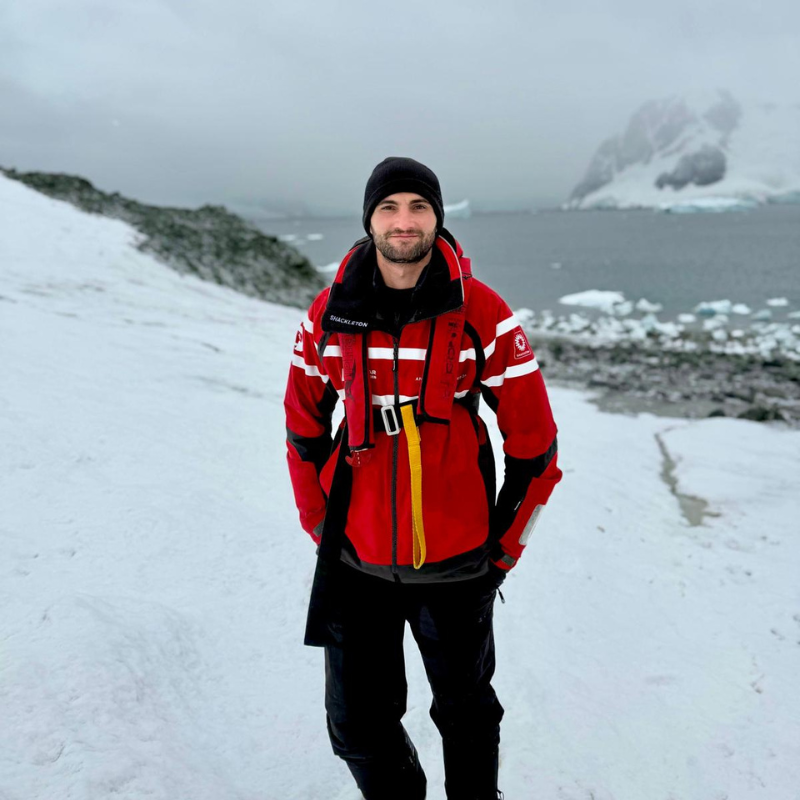
Cameron Mofid: Ooh. Okay, I like this question. Let’s go with the north of Pakistan, the far north like Hunza Valley. All of these sorts of places look like such dramatic, interstellar like landscapes. Then we’ll say Lalibela in Ethiopia. I love history and learning about religion, so this is a very sacred, important place. And lastly, I was able to go to Antarctica for the first time in February. But I’ve seen that people have gone to the South Pole. That’s like a daring adventure. Maybe one day I’ll be able to make that happen.
Matt Bowles: Amazing. All right, man. And I didn’t tell you I was going to ask you this, but to close this out, based on our conversation, I feel like we need to put people on to some Afrobeat artists that they can go and listen to. Can you name your top five favorite Afrobeat artists?
Cameron Mofid: Burna Boy is my number one by far. He’s got a bunch of hit songs. Davido is awesome. Let’s go with Rema. Let’s go with Ruger. And then fifth and final Omah Lay. Afrobeats just makes you want to dance. That’s all I can say. It just makes you want to get up and dance. Burna Boy is my number one by far.
Matt Bowles: I actually saw Burna Boy perform live in Ghana in Detty December 2022. It was unbelievable, man, and it was amazing. The first time I went to Ghana was 2019 and I was there for a month and I was there in the off season and I was just blown away by everything. And I can remember standing on Labadi beach at the Sunday beach party they have. There’s like 5,000 people out there, DJs lining the beach and this is all just local people. And people were like, you got to come back in December. And I was like, how can it possibly be more lit than this? Like this is unbelievable. And they’re like, just come back in December. I was like, okay, so 2022, I came back in December and that’s when they had Burna Boy headlining and they had. I mean everybody else was there. I mean Fireboy DML, the whole lineup was there. It was just unbelievably spectacular memories. So, I am so glad that you have fallen in love with the music as well, my friend.
All right Cameron, at this point I want you to let folks know how they can find you, how they can follow you on social media, how they can check out your website if people are interested in potentially hiring you for a speaking engagement. How do you want people to come into your world?
Cameron Mofid: So cameronmofId.com that’s my website. I’m sure we can put that somewhere, Matt, and have all my speaking information about my different keynotes. Perhaps some media that I’ve done people take a look at. Very active on Instagram at cameronmofid so share lots of travel tips through podcasts I’ve done and hopefully share some stories on there about different places that people can visit. Share my travels on there and LinkedIn as well at Cameron Mofid. People can connect with me and find me there and I would be happy to esports speaking at any schools, organizations, companies that might be interested in having someone share some pretty cool travel stories.
Matt Bowles: Amazing. We are going to link all of that up in the show notes so folks can just go to one place at themaverickshow.com go to the show notes for this episode. There you’ll find direct links to everything we have discussed in this episode including all the ways to find, follow and connect with Cameron and how to get your ticket for the extraordinary travel festival. If you would like to come hang out with us in person and you get $100 discount with the code Maverick.
Cameron, this was amazing, brother. Thank you so much for coming on the show.
Cameron Mofid: Thank you for having me, man. Can’t wait to see you in Bangkok.
Matt Bowles: All right, good night, everybody.