
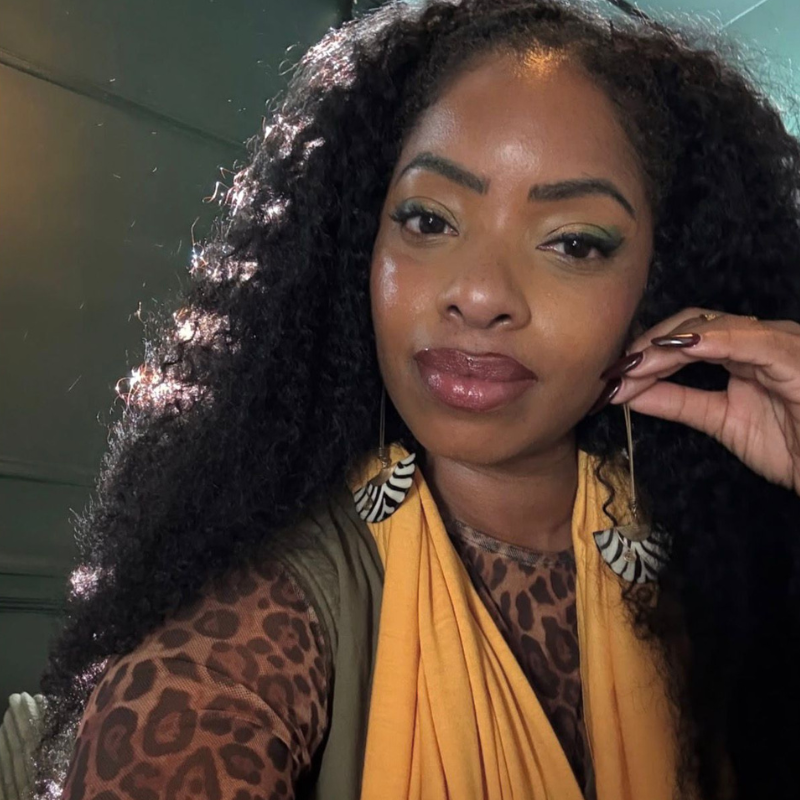
INTRO: This is part two of my interview with Dash Harris. If you have not yet listened to part one, I highly recommend you go back and do that first because it provides some really important context for this episode. If you have already heard part one, then please enjoy the conclusion of my interview with Dash Harris.
Matt Bowles: Well, I also want to ask you about the travel that you did in Equatorial Guinea, which is a country I have not yet been to, but I am aware that it is the only country on the continent of Africa that has Spanish as an official language. And I’m curious, when you went there, the cultural similarities or differences that you noticed between black Spanish speaking communities in the Americas and the Caribbean compared with black Spanish speaking communities in Equatorial Guinea?
Dash Harris: Yeah, so Equatorial Guinea, first of all, it was created as a penal colony for the Spanish colonizers. Actually, Afro Cuban resistance folks were sent there during colonial times. They were deported essentially. They were deported from Cuba to Fernando Po, which is in Equatorial Guinea. And so, this idea of deportation, that’s colonial. This is not anything new. And it was most deeply felt and still felt by black people. So that was a penal colony of the Spanish empire. And they did colonize it. People do speak Spanish in Equatorial Guinea, but they also speak their mother languages, which would correspond to their ethnic groups, whether it’s Fang or Bubi. It was really great to be able to meet people there and speak to them and ask them about their experiences.
And also, my dad went on that trip with me, so he was also very curious, and he was talking to locals. And I did a couple interviews. I have to find where I put those interviews. But they were speaking in Spanish. The Spanish was heavily accented by their mother tongues. So, it was multilingual folks, period. And really, this is one thing that if I know nothing else about people on the continent of Africa, multilingualism is what it is. And I’m always so very impressed by Africans who migrate to Spain. And they’re speaking Spanish in two seconds, right? Because you also have to survive. But the folks on Equatorial Guinea were multilingual. They spoke Spanish, I would assume, with the same facility as their mother tongue. But this is just my assumption.
And yeah, that really would be the most obvious thing that would connect them to Latin America is the colonization. But outside of that, it was an African country. As far as I know, it’s super corrupt. Of course, the government is different than their people. And so, it was really cool to be able to actually meet folks on the African continent and hear about their experiences. And also, my travels in Spain, I met a ton more people from Equatorial Guinea in Spain. That gave me the continuation of these threads each year. It compounds my experiences, the people that I meet, the people that I speak to, their history, their context. Because that Equatorial Guinea trip, that was before I went to Spain, and I met a ton of people from Equatorial Guinea or their parents were from there. And I knew that background already. And I was like, oh, okay, so this is another chapter. This is another layer. This is another nuance. This is another story.
Matt Bowles: Well, I know you also teach and facilitate workshops on anti-blackness in Latinx communities. Can you talk about those workshops, how you approach them with participants and what progress you’ve seen?
Dash Harris: So, we did trainings, whether it was professional development, whether it was public workshops around dismantling anti blackness in the Latinx community. Javier and I also did these virtual black Latin American history and contemporary topics courses as well. And I also do talks and lectures and keynotes at conferences at universities, colleges, organizations, et cetera. But my most recent was at Bucknell University, where I screened my documentary and also spoke about the topics and themes in the documentary, as well as anti-blackness and also film. And we’ve gotten testimonials and people that have come back, that have returned and told us what they changed in their daily lives because of the information presented at these workshops. A few had changed their curriculums in their specific area, whether it was their Spanish class or their social studies class or something like that.
Somebody changed their entire thesis, their master’s thesis. Because this is a question that we asked. You have this information, what are you going to do with it now? It’s about embodying it. It’s not just, oh, well, I learned an interesting thing and going on. It’s about transforming your actual daily practice, your cues, your contract, your stories, the collective fiction that you’ve been buying into, your imaginary, your way of thinking, your framework. Because we speak about experiences from the black lens, from people’s lived experiences as racialized black people on this earth. And I would say that the black perspective, especially as we’re talking about in Latin America, no one wants to hear that. No one was hearing that black people, we speak amongst ourselves and we do, we continue. That’s never going to stop. But outside of the black communities, people are like, wait, hold on, you’re telling me something else. You’re telling me something different. I’m like, yeah.
And so, we’ve had people with PhDs, Latin American PhDs, whatever the title is. And they’re like, I have a PhD in Latin American Studies is the first time I’m hearing about this. I’m like, of course it is. That doesn’t surprise me. This is what the institutions replicate. They’re going to replicate whatever state making narrative serves them. And it’s not going to be from a black point of view. We know that. And so, when people take that information, actually apply it, actually embody it into their daily lives, I’m pleased, but that’s not the point. I don’t need to be pleased. It’s really our humanity at stake. And so, when we address anti blackness, we address everything because everything is predicated on anti-blackness. And I have said this before and I will always say it when I say anti blackness, I’m also including anti indigeneity because that is what is the basis of anti-indigeneity is blackness where these populations to this day that are imagined as the black ones, even in Australia, there’s this notion of black for indigenous people and that’s how they identify themselves.
And so, we’re talking about global anti blackness. And my corner of contribution is for Latin America and the Caribbean. And so, in these workshops we talk about the long history of it, how anti Blackness is proliferated and perpetuated in media and education, in belief systems, in culture, in how we express ourselves, the things that we say, how we say it, the slurs, the racialized slurs in speech, in thinking, in how people treat racialized and gendered bodies. On this racial hierarchy, this pigmentocracy, who does the work, who does the labor, who is the most in danger, who is the most at risk, who is marginalized? And this is not oppression Olympics or any competition around that, but in identifying where people fall in geographies of power and geographies of dominant power, in whiteness, in blackness and how it’s expressed. And so, it invites people through history, though, I like to say receipts, because I love giving references, books, whatever you need to know, I got it for you.
Actually, I was just updating the Afro Latinx reading room that we have. It has tons of essays, media, film, books that people can educate themselves because I can only do so much. You have to embody this other way, these alternative ways, through the lens of the arrangements of anti-blackness in the world and how you’re benefiting from it, how you’re participating in it, how you’re perpetuating in it. And that’s a more difficult conversation when it comes to Latin people and Latin America because of these notions of mixedness, of mestizaje or miscegenation, that in some way, somehow, because race play was forwarded as a national identity, as these mixed populations are part of the nation building, that racial categorizations are too imprecise so much that racism doesn’t exist. And I’m quoting Tanya K. Hernandez, shout out to her, because she’s also someone who is very active in this space. Her book, Racial Innocence, Latino Anti Blackness and the Struggle for Equality and her other works, Racial Subordination in Latin America.
Racial Subordination in Latin America informed a lot of my documentary work. And I actually interviewed her for my documentary. We’ve worked together in the Afro Latino Forum for many years. She’s a law professor. She’s just another amazing, brilliant mind in this collective work. I continuously say collective work because I’m looking at my scarf behind me and it’s Lélia Gonzalez, Afro Brazilian feminist. And I was just talking about her today, as well as Sueli Carneiro, another black feminist from Brazil. We were just in Brazil and I was in heaven, because these are black feminists that were fundamental in my thought formation, in my language, in naming things. We’re talking about black women who were talking about this before I was born.
And my facilitating rests a lot on citing these black Latin American feminists, because they had everything that I’m saying, they had already said it, and even more eloquently and more intelligently than I ever could. And so, I rest on this collective body of work and I present it to the people that sign up for our workshops, for our classes. Whenever I’m speaking, I’m quoting another black woman, and particularly a black Latin American, black Caribbean feminist, because they had already said it. And also, African American feminists as well, because we’ve all been in conversation with one another. And so, these workshops, these classes, again, very much intentional, very much on this vast body of knowledge.
Matt Bowles: Well, I know that music is a central cultural theme of much of your work and your tours. Can you put my audience onto some of your favorite AfroLatin musical artists?
Dash Harris: The thing is, I’m very old school and I come to realize this. Some people might even say I’m so orthodox. I like huge talents like Benny Moré, and he wasn’t even of my time. That’s even further right. In general, salsa bands, El Gran Combo, Ismael Rivera and Old Salcedos that I grew up on. We were talking about reggaeton. Sure, you have the El Generals, you have the Nando Booms, you have those people. But La Sista, these are black women in these spaces. Everyone knows ChocQuibTown, the Afro Colombian group. But Goyo has her own independent projects and really Afro Colombian music, the modern music scene. And granted, because I’m so old school, I don’t remember the names, but when you plug into one, if you plug into Goyo, you will see the rest of these new Afro Colombian groups. Mabiland is one of them. Very much love the salsa bands like Elio Reve Orchestra. And then on the Brazilian side of it, Ludmila Issa. Very black centered, very black woman centered. And when you get one, you get others as well.
So also, really love Afro Colombian Pacific music. One of our trips, we go to El Petronio, which is one of the biggest celebrations of Afro Pacific or Black Pacific culture in Cali, Colombia, one of my favorite cities in general. That music where you have the marimba, which everyone was calling a xylophone on the trip. I’m like, it’s a marimba. I’m like, yeah, I guess it is a xylophone. But just those sounds, those very rich percussion sounds. Very much into Afro Cuban music in general, but particular to Afro Cuban music, I think there is just immense talent. But on the island, my favorite artists are the neighbors that I had in Cuba.
Honestly, my friends in Cuba who are professional artists who they don’t need a sound system. Their voice is a sound system. Their hands are the sound system. The instruments that they craft are their sound systems. My neighbor is my favorite musician, but what’s being recorded are those sonic traditions. But I’m very much into Afro Cuban music; Enje la banda. I grew up on El Grupo Niche, super famous Afro Colombian band. I am into Dominican Dembow. I cannot tell you any of the names of anyone because I put it on and it just goes Repartero music, which is Afro Cuban. Again, can’t tell you any of the names, but if you just put that in. Salsa Choke an Afro Colombian music. Again, can’t tell you any of the names, but you put that. I think it’s more the genres that I rock to. If you search out any of that Brazilian funk.
Matt Bowles: Yeah, I listened to a bunch of Brazilian funks when I was in Rio this last time, and I really enjoyed that genre as well. And getting back to Brazil, I was also curious, how was your experience in Salvador de Bahia?
Dash Harris: Salvador is very much romanticized because I have seen the evolution of the black travel movement into actual attention being brought to spaces where black people are. And I mean Salvador, that’s not a new destination. Black people have been talking about Salvador for generations at this point. But I just notice, and I caution, and this is something that I tread carefully with, is romanticizing and depoliticizing black spaces. Because Salvador people tend to go to the historic district. And the historic district, which is Pelourinho, just even in its name, its name is Whipping Post. That’s one. Two, Pelourinho reminds me very much of places like San Felipe or Casco Viejo or the walled city in Cartagena, where these are geographies of enslavement, of gentrification, and just this overwhelming sensation of erasure even within a black space. Because I personally, when I’m not giving tours, I’m not going to Casco Viejo, I’m not going to the historic center.
And a lot of black Panamanians are not as well, unless you live over there. Because at this point, these are touristic zones, gentrified spaces, super expensive. People have been displaced, people have been dispossessed, policed, even killed black people to leave these spaces. And these are exactly the spaces that black people from abroad come to. And it’s just this weird conundrum for me, because black aesthetics have been folklorized in such a way that even black people can’t even identify when it is. And so, I went to Pelourinho because I was obligated to, because this is part of the tour. I cannot eliminate that, because that is the context for a lot of what we discuss when we’re in Salvador. So, we do have to go there. Absolutely, I’m not delighted to go there. I’m not particularly looking forward to going there, I should say, because you have in these squares, same thing as Old Havana as well. You have what I see is black people working. Absolutely. And you should give them your money. You should give them all your money.
There are black people working. There is black history. But it’s just this suspended blackness at the same time. Hypervisibility. But the blood that actually built that. Those stories aren’t considered. And I don’t think that’s fair. And so, Salvador is not Pelourinho. That’s part of the history, part of the processes. Absolutely. And then you go into the neighborhoods where people live. I’m not seeing a lot of that kind of tension being held, because by and large, those historical centers, whether it’s full of black history, local black people, are being spatially policed as well. So, they’re not even, in many ways, not even allowed freedom in those places of blackness. So, it’s just this weird thing that I have. But this is just how I’m responding to how my body feels. Because I first have that embodied response, and I have to listen to that.
Matt Bowles: I’m curious how other people on the group trip processed some of those dynamics. And I’m also curious when you have folks that are actually from the continent, like Nigerian folks, coming on these trips to places where there is so much West African cultural influence, how they experience and process some of these dynamics.
Dash Harris: And Central African, Congo, the various ethnicities, as they say, ban to African peoples. But that’s the thing, that question about connecting your experience to the local experience. I think that’s what makes an experience and makes these trips is not particularly that you have to go to Pelourinho. You can go to Federação or any of those black neighborhoods around, because that’s where black people are and they’re living. And so, we do go to these neighborhoods. And when people look around, they’re like, oh, okay, this person looks like my cousin. This person is doing what my mom does. This person is doing. Well, I do. We’ve had Nigerians on our Afro Cuba tour. And Afro Cubans are delighted to meet people from the continent and people who are from the space where their religion and spirituality comes from. They’re very clear on that lineage and that continuity.
And it’s also funny because the Yoruba Nigerians and also Igbo, because there are elements of Igbo in Afro Cuban isms. But the Afro Cubans are very delighted to meet the Nigerians. The Nigerians are very delighted to hear Yoruba. And they have told me that it’s a Yoruba, that’s an old Yoruba that the Cubans are speaking. That is like Old English, if you want to compare it. And they’re like, oh, we don’t really say it like that anymore. But I understand what they’re saying. Even this cultural memory stuck in time, this archive, this preservation that we are still embodying today, I think that’s transcendental. I think that’s metaphysical. I think you have to feel it, to describe it, to know it. You can’t really explain it. It’s to be felt and to be felt in community. So, it’s always great to see different communities, especially African folks, see what’s going on, see the evolution in other spaces, especially the Caribbean and Latin America at large.
Matt Bowles: Dash, you wrote an article in 2020 titled No, I’m Not a ‘Proud Latina’. Can you explain the mestizaje myth and how Latinx identity has functioned to exclude or erase Afro descendants in Latin America and as a result how you currently personally identify?
Dash Harris: Mestizaje, if you follow me for two seconds on any platform, you know, that’s my arch nemesis. Because it’s an ideology that comprises the psychology of Latin Americans. This idea that Latin Americans are so mixed they are too mixed to be racist because there was a mixing of races which much of it was pushed by the state to whiten the population. It’s a whitening ideology because the mix is always forwarding to whiteness. In that regard, that we are so mixed that racism isn’t a problem and racism is a U.S. problem, that doesn’t apply here. Tanya K. Hernandez calls it racial innocence or a racial innocence cloak. I always giggle at that this racial innocence cloak that Latinas have around populations in Latin America being so mixed that race actually doesn’t apply. And that’s a lie. It’s myth making to obscure the very real class, race and gender struggles of black and indigenous people in Latin America and its diaspora. Mestizaje robs us of our racialized experiences because there’s no way you’re experiencing racism because we’re all mixed.
As if sleeping with another person of another race makes you have a racial consciousness. That was something that happened during slavery, still does. But racial terrorists were part of colonization and racial sexuation and sexual terror were part of colonization. And so having sexual relations with someone of a different race says nothing beyond you had sexual relations with someone of a different race and whatever other sociocultural baggage that comes around that which would be fetishism and things like that. But this idea that being of mixed race exempts Latin Americans from being racist, which in essence it really just makes more multicultural racist.
Matt Bowles: Can you share anything about your upcoming book, what the book is going to focus on as well as any other upcoming work and projects that you’re involved with?
Dash Harris: Well, you mentioned No, I’m Not a ‘Proud Latina’. I really put my foot in that one because it expressed some of my long-held feelings around Latinidad. This idea of Latinas and I come from a different angle. I’m not a proud Latina. What is that? That’s not a thing that I have ever accepted as what comprises me. And so, I’m like, yeah, I’m good. Because so much of the rhetoric has been, and not all, of course, but a lot of the rhetoric in this U.S. around Afro Latinos, Afro Latinas, is why don’t you include us? I don’t care about that, actually. I don’t care about being included. You come from me; I don’t come from you. The things that people know about Latinidad, by and large was created by black people. Why would I care if anyone considers me Latina? And so, I had to voice that because I know there are other people that are feeling the same way. And so why not? The book will talk about. And I’ve already built up a body of work online, on social media around Mestizaje myths or the myths of Mestizaje things that we have been taught, have been told to repeat, have been obligated to buy into.
And I just don’t buy into this idea of even a Latina community in the U.S. There is no Latina community. There are people from different countries in Latin America, different regions in Latin America. But even in one Latin American country, we have so much regionalism. If someone’s from the coast, if someone’s from the interior, the mountains, the islands, please, the city, the capital. And it’s supposed to be a pan Latin American identity in the U.S. Please it’s absurd, it’s ridiculous. And so, I would say that I talk about the absurdities in this nationalization, this identity in nationalism, this affinity with narratives that ostensibly offer membership to everyone. And it’s just not true. And so, the People that get upset with me are like, I’m causing division. I’m like I’m naming it and that’s why you’re uncomfortable. These are things that I’m just talking about. They exist. I couldn’t talk about it if they didn’t exist.
And so, I just share my observations, my analysis, my two plus two, my revelations. I just talk about it. I think I am a good writer, so I articulate it well. It takes me a while, though, because I’m always thinking and drawing connections because there’s so many. But hopefully that’ll come to fruition. Looking for an agent and a publisher. And that’s probably going to be the title of my book, not a Proud Latina the Black Woman’s Manual for Divesting from Latinidad. And so, I just speak about my experience with a little bit of humor, with a little bit of cynicism and analysis. But it’s always deeply researched, deeply cited, deeply rigorous. And so, yeah, hopefully people can plug in to understand the disaggregated, racialized experiences of Latinas, not only in the U.S. but globally. It’s really exciting for me to share what I have learned with people and that’s what I want to do.
Matt Bowles: When the pre order link is up, we will put it out to folks and publicize it. Dash, what tips do you have for travelers who would like to engage with Black diaspora communities in Latin America more meaningfully and ethically and sustainably?
Dash Harris: One of the “tips that I give folks” is that when they’re traveling, and I say this on all our trips, is to look at who is laboring and who is leisuring in terms of when people are paying for things. When people are tipping that most of the heavy labor that’s going to be completed are usually black women. You have to look at who is laboring and who is leisuring. To me, I don’t think giving a tip to the owner of the place that you’re renting makes more sense than giving a tip to the people who are cooking and cleaning in those places and being discerning of that and being intentional and cognizant of that, because oftentimes Black women will be the ones cooking and cleaning. They may get tips, they may not. But the people who are more mobile, the drivers, for example, could be black men. And they’re able to be in these spaces of fun with the clients. They can show their personality, they can take them places, they can recommend places. They have more freedom of movement. And you get to see their personality, too.
And so, of course, you’re being enchanted by them. You’re going to give them really great tips, as you should. But I find that Black women are usually in these very subservient, servile roles where they don’t show their personalities or they’re not allowed to show their personalities or allowed to speak much. It’s very much a silent positionality where you’re just serving and that’s about it, that you’re not really interacting on a personal level with these travelers. And so, you’re not being as enchanted. I mean, in some places, of course, yeah, some people do talk to the black women who cook and clean and all of this. Yeah, absolutely, that happens. But I was just thinking about. These are things that we tell our participants, our tour participants. Also, when you’re tipping black women or giving money to black women, you’re not giving the money only to her. You’re giving that money to her children and her community, because black women are the caretakers of whole communities. You’re also giving money to the person who’s watching, babysitting, or looking after her children that she probably had to leave behind to come and work with you. You’re giving money to her neighbor, her sister, her mother that she’s taking care of, because, again, Black women are taking care of these kinship networks. It’s them mostly.
So, you give your tips to whole communities when you give your tips to black women, because that’s just the basis of it. We were just in Brazil. You’re going to see black women overrepresented in the domestic labor sphere. And so, I’m always like, give them all your money. It’s okay, no problem. Because you’re facilitating some type of economical movement there. Is it sustainable? I don’t know. But at least it’s another way of embodying solidarity with black women across borders and diasporically.
Matt Bowles: I appreciate you sharing that. Dash, let me ask you one more question, and then we’ll wrap this up and move into The Lightning Round. When you think back about all of the travel that you’ve done over the years, how has all of that impacted you as a person? And why are you so passionate about continuing to travel? What does travel mean to you today?
Dash Harris: I think it indicates a huge privilege, a lot of freedom, a lot of access to capital. And also, for me, it means connecting and seeing myself in other places, seeing myself physically, racially, gender, but also meeting different personalities. Because when we initially schedule the meeting, you’re like, oh, what are you going to be drinking. So, before the call, I was like, oh, let me get my V checker now. Or the Viche. Viche is an Afro Colombian herbal and in many times, medicinal drink. And it’s coming from the black Pacific coast. And so, I met this wonderful and I would say she’s one of my good friends at this point. Lisette is the founder of Viche Canao, which is this ancestral drink from her community. Her father produced Viche for many years, and she has been able to actually make a brand from his efforts. And I met her in Colombia through a friend of a friend, and we just clicked. I love her. She loves me. Actually, I have to schedule a call with her because I haven’t spoken to her in a while, and we just met on my travels. And again, alignment.
She’s in this particular space of ancestral wisdom and knowledge and the proliferation of that, the sharing of that. She collaborated with us on an Afro Columbia trip. And so, it was me just traveling, not having a particular itinerary. And I meet these very interesting people, and I love that. I love having a global community. And other people have pointed this out. They’re like, you have a friend in every country. I’m like, I think I do. And it’s amazing to see their projects, to support them, to tell other people about their projects, to get global support around what they’re doing. Because she had a fundraiser, and I sent it to my friends, some people donated and just being able to connect folks and for other folks to know her as well. Because I think the more that you give, the more that you have. I will introduce any friend to anybody because I’m like, no more people should know about your amazingness. And we should build kinship with one another.
And so that’s what I love the most about traveling, that you just meet these really outrageous people. Because there’s a TikTok trend now about when an outrageous woman is in a space and a person is just laughing really loudly. And I’m like, oh, I guess I’m an outrageous woman. Then I identified with that so much. But I end up meeting other outrageous people. And I love that because it’s exciting and why not? And let me hear what you’re up to. And what did you do? And what’s your family about? And what did we do the same growing up? And what are our likes and our dislikes? Because people bond a lot through dislikes too, right? Being haters together, you know, your suffering is your bridge. But just meeting really, really interesting people that you otherwise wouldn’t. And I Also think, of course, social media facilitates in that as well. But actually, having time, face to face, one on one with people, it’s just really transformative. It has taught me so much. For example, ideas that I had before or preconceived notions or things that I thought that I knew, and actually sitting there and listening to people lived, immaterial experiences, the content of their lives, I think that is so important, more than ideology, more than what you thought you believed, that is not more important than people’s lived lives.
For example, my ideas around Cuba were completely shaken when I started speaking to Cubans, when I started seeing things as they are in this moment. That’s also something else, something relevant is time and memory. We work a lot with memory and what that means in the contemporary. Like when the classes that we gave, we gave Black history and Black contemporary, because that’s important. The passage of time and the moment that we’re living in is extremely crucial to act in, because we don’t live five years ago, we live now. And so actually being with someone in the moment and hearing what they go through, what they navigate, what they do in the moment is especially essential. And so, I think a big part of my knowledge base was just being there.
Being there, witnessing, listening to people’s testimonials and seeing with my own eyes, bearing witness to what happens, whether it’s historical moments, whether it’s just day to day, and actually to speak from experience, not just opinion. Those are two different things. Two very different things. I don’t care about people’s opinions. I care about their experience. And I’m quoting Louis Versailles from courageous conversation. This was an event that I did a keynote on. And that quote stuck with me. He’s like, I don’t care about your opinions. I want to know your experience. Where are you getting these stories from? What are these being based on? You have to be there. And so, I think that’s what travel does. It allows you to be there.
Matt Bowles: Dash. I think that is the perfect place to end the main portion of this interview. And at this point, are you ready to move in to the lightning round?
Dash Harris: Yeah, let’s do it.
Matt Bowles: All right. What is one book that you would recommend that people should read?
Dash Harris: I’ll say Child of the Dark by Carolina Maria de Jesus, and also the essay to an Afro-Latin Feminism by Lelia Gonzalez.
Matt Bowles: All right. If you could have dinner with any one person who’s currently alive today that you’ve never met, just you and that person for an evening of dinner and conversation. Who would you choose?
Dash Harris: I would pick Hortense Spillers. She is the blueprint for me. The porno trope of black woman was foundational for me. She’s, I would say, the biggest building block in my understandings and for many people. So, Hortense Spillers, all the love and respect and gratitude to you. So, yes, please, if I could ever have dinner with her, please.
Matt Bowles: All right, Dash, knowing everything that you know now, if you could go back in time and give one piece of advice to your 18-year-old self, what would you say to 18-year-old Dash?
Dash Harris: You were right, bitch. You were right. That’s what I would say. And I don’t know what that means because I’m me, because I’m consistent, so I know what that means. I don’t even need to explain anything.
Matt Bowles: All right, of all the places that you have now traveled, what are three of your favorite destinations you would most recommend? Other people should definitely check out.
Dash Harris: Salvador, Havana, Cali, Colombia. Those are the three places I think folks need to plug into. Oh, wait, can it be a fourth? Can I say Buenaventura? Because Cali and Buenaventura are so connected, but Buenaventura, because it’s the coastal place, is the ocean. There are whales there. Who doesn’t love whales? The people are amazing, the food is amazing, the nature is incredible, and it reminds me so much. It’s a port city, just like Colon, where my family is from. It’s very similar.
Matt Bowles: Amazing. I’ve spent about a month in Cali, also one of my very favorite cities, but I have not yet been to Buenaventura.
Dash Harris: Yeah, we go there.
Matt Bowles: Amazing.
Dash Harris: We go there on our trip. We go to Cali and Buenaventura because I feel like you cannot understand Cali without going to Buenaventura. You cannot have a well-rounded understanding of that. And Buenaventura it’s just gorgeous. People are gorgeous. Everything’s gorgeous culturally. And then again, the water, it’s just mind blowing. The nature is so beautiful, the mountains, everything. And they always cite Buenaventura being rich in the resources and the reason why there’s so much extraction there. Next time you go to Colombia. Absolutely. Try to find a way to get to Buenaventura.
Matt Bowles: For sure. All right, last question Dash, what are your top three bucket list destinations, places you have not yet been highest on your list you’d most love to see?
Dash Harris: Senegal. Absolutely. Still haven’t gotten over there. South Africa and actually Australia. I would say Nigeria too, but Australia only because I had always done projects on the Great Barrier reef, because every 90s kid wanted to be a marine biologist at one point. I don’t know what that was. I think it was because of the Free Willy. That was the era of, like, SeaWorld and Free Willy, but everyone wanted to be a marine biologist. And so, the Great Barrier Reef, I had always been obsessed with that and so I always wanted to go to Australia because of that.
Matt Bowles: Amazing. Do you scuba dive?
Dash Harris: I have been. I went once, I believe. And every time I’m always like, I need to get my license because we have licensing places in Panama. I just haven’t done it. I would love to, actually.
Matt Bowles: I love those picks. I have not been to the Great Barrier Reef, but I have been to all of those other places. I’ve spent about three months in Dakar, in Senegal, one of my very favorite cities. Spent about a month in Lagos and Nigeria. And I’ve spent probably at least six months in South Africa by now. So, when you’re ready to plan those trips, Dash, feel free to hit me up. All right, Dash, at this point, I want you to let folks know how they can find you, follow you on social media, learn more about your upcoming trips. How do you want people to come into your world?
Dash Harris: You can go to dashharris.com that’s my personal website. Also, afrolatinxtravel.com we have a few trips that are open right now and those are Afro Brazil in May. Afro Brazil in November we’re opening up soon, but we have our June trip to Peru. That’s exciting. June is Afro Peruvian month. We have Afro Panama in July. We have Afro Costa Rica in August, Afro Colombia in August, where we go to Petronio and Buenaventura, the Afro Colombian Pacific Coast. You can also check out my documentary series, negrodoc.com and also check out the Afro Latin America reading room where a lot of the texts and the readings that I recommend are there. And that’s on my website and also my social media handles. My personal account is diasporadash. We are AfroLatinx Travel on all platforms. I’m on all of them. I’m on TikTok, Twitter. Well, X, I guess.
Matt Bowles: All right, we’re going to link all of that up in the show notes. So, you can just go to one place at themaverickshow.com. Go to the show notes for this episode. There you’ll find all of the ways to find, follow and connect with Dash, as well as direct links to everything we’ve discussed on this episode. Thank you so much for coming on the show. This conversation was amazing.
Dash Harris: Thank you so much for the invitation. Hopefully you can get to those places I recommended.
Matt Bowles: Absolutely. They are now high up on my list. And good night, everybody.