
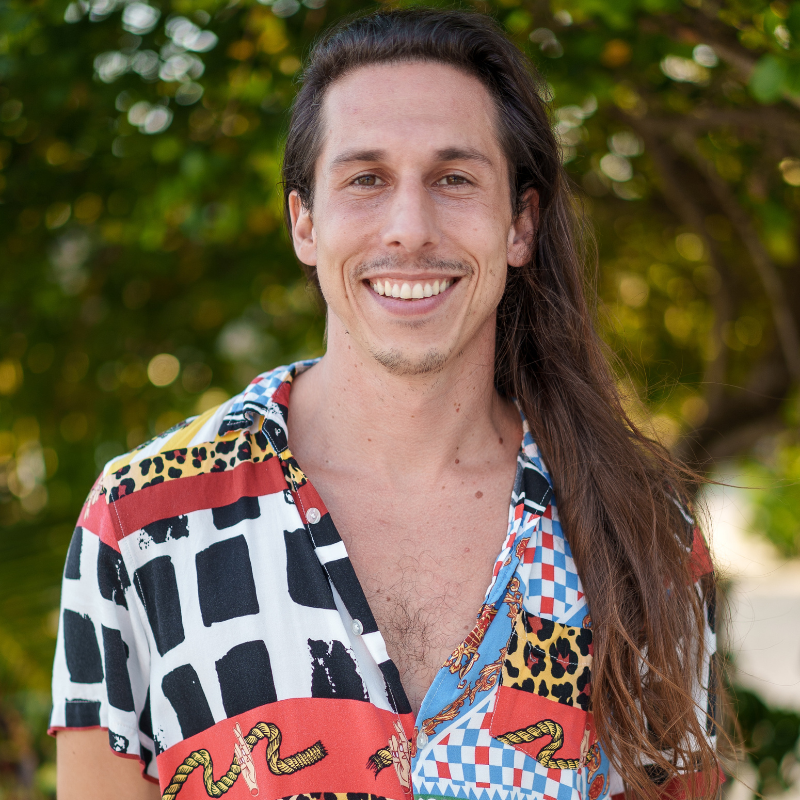
Matt Bowles: My guest today is Daniel Thompson. He is the co-founder and CEO of NOMA Collective, a global community of like-minded remote working professionals. NOMA workaway hosts trips in unique locations around the world, catered to working professionals by providing private accommodations, reliable W-Fi, logistical planning, community events and weekend excursions. Born and raised in the UK to a family of musicians, he worked in the music industry until age 25 when he left to travel the world and live abroad, which ultimately led to co-founding NOMA Collective in 2020 and then acquiring the work travel program Hacker Paradise in 2024.
Daniel, welcome to the show.
Daniel Thompson: Great to be here man.
Matt Bowles: I am so excited to have this conversation with you. As you know, I have been a longtime customer of Hacker Paradise, shall we say. I’ve participated in a lot of their work travel programs and as soon as NOMA Collective acquired them, merged the communities. We got to give a shout out to Sarah because she introduced me to you right away and she said you have got to have Daniel on the podcast. You have to introduce himself. I’m super glad we have put this interview together. Let’s just start off though by setting the scene and talking about where we are recording from today. I am actually in the Blue Ridge Mountains of Asheville, North Carolina today. And where are you?
Daniel Thompson: I am in Merida, Yucatan, Mexico. Taking some time in a relatively cool tropical moment.
Matt Bowles: Well, I understand you were recently in the United States. Can you share where you were, why you were there and share a little bit about the community dynamics there?
Daniel Thompson: So, I did a family Christmas and New Year’s. My family in Connecticut. My uncle immigrated to the States, lives in New York. We got this full snow, like a foot of snow for my son. So that was pretty epic. And then I took the odd turn to Lawrence, Kansas because my wife, who’s Uruguayan, actually has a sister who’s lived there for 15 years. So, I can always say that I have been to Lawrence, Kansas probably like. Five or six times.
Matt Bowles: What is the Uruguayan community like in Lawrence, Kansas? Because I have never been there. Although shout out to the Uruguayans because I’ll tell you this, I drink a lot of their wine. The Tannat from Uruguay is something that I use as a litmus test when I go into a wine store or I go to a major wine bar that has all this stuff from around the world. I will order a Uruguayan Tannat and that litmus test number one, it’ll tell me about the wine store, but it also tells them about me, because their eyes will perk up and then they’ll be like, oh, and then. Then they’ll go and get it. So big shout out to Uruguay. But what is the community like in Lawrence, Kansas?
Daniel Thompson: So, my wife’s grandparents were also artists and musicians, and they traveled and they immigrated to the states in their 80s, I think, really early for Uruguay, and they ended up in Kansas because I think it was something along the lines of the grandmother was scared of earthquakes, and so that was the place that they ended up, and she grew old there, and then consequently, their son moved over, and then now three or four generations have been there. I always said it was funny because you’re just changing earthquakes for tornadoes.
Matt Bowles: That’s so interesting, man. Well, I would love to share a little bit about your backstory growing up in the UK and your family’s musical history as well, because your dad was in a very famous British rock band, Manfred Man. And I’m curious if you can talk about what that was like for you as a young kid growing up in the UK, traveling around with him. What do you remember from that period qt that age?
Daniel Thompson: You don’t realize at the time, but you’re unbelievably blessed to be able to travel that much. I think a fundamental piece of me is that perspective that I got of just seeing so many different cultures and experiencing it. But that’s 2020 in the moment. It was a lot of new places. I remember going on the buses a lot. They would do European bus tours, and they had a PlayStation in the back of the bus. And that, for me, was just insane. You could be moving and playing PlayStation, I think a bit seven at that time or something like that. Going on stage and seeing him sing is pretty amazing. There’s a lot of awesome moments, but I think this is like the dichotomy of fame or jobs that take you away from the home. The thing I remember the most is often him not being there. There is real highs and lows. I can’t say I’m not super blessed. And it’s super beautiful. There was a lot of interesting things that you don’t even really understand that you then comprehend much later that really do shape your life.
Matt Bowles: How was the fame and the celebrity dynamic of it as you became old enough to realize how famous your dad was as a kid? What was that like?
Daniel Thompson: He just has like a lot of friends. That’s what you think when you go, he’s got a lot of friends, man, you don’t know until much later. And by the time. So, think his major hit, because they had three singers and his stint was in the 70s and 80s, and his major hit was 78. I was born in 87. So, it had cooled by the time I can remember it would have been 95 or 94. He did backing vocals at Live Aid. I remember that. That was pretty cool. You know, those big moments. I think the thing that’s interesting about fame when you’re around it, is you see how it changes people and the people around it. I think that’s the thing that you become a lot more aware of.
But honestly, my childhood for most of the time was pretty normal in the sense of I went to school pretty regularly in the UK and in the States. I think it was just a lot of traveling I had. I think it was like 60,000 flying air miles a year from 0 to 13, I guess.
Matt Bowles: From that period of your life, what are some of the places that you traveled that really impacted you, still stick in your memory profoundly?
Daniel Thompson: Instantly, the first one that comes to mind I think we were in Finland, outside of Helsinki, I think, and we were in the mountains in a ski resort concert. But it was thousands of people and they had those things where they strap you in on a trampoline and you jump up and down. And I remember the concert was in the mountains. I was on this trampoline and I was probably like 11 or 12, I met this girl and her family were so nice and they were like. Come home with us. I was like, dad, I’m going to go home with these people. He’s like, no, we don’t know those people. Come back. I’ll never forget that. That was mental.
Matt Bowles: Well, you’ve got a three-year-old son yourself now. So, I’m curious, when you think back about that period of your life, being so young and doing so much travel, what about your childhood you are intentionally trying to replicate and give to your son? And what about your childhood are you may be doing differently with respect to the travel and how you’d like it to impact him?
Daniel Thompson: And this isn’t just for Luciano, this is for anyone. I am a firm believer that travel is integral to everyone’s development in some way, shape or form. You have to travel because it allows you to see that there are many ways to live this life and you get a bit of perspective and hopefully become a bit kinder to the people who do it differently. And I think across the board that is really important for everyone. It’s why I do NOMA. That’s because these trips are often especially even more so than Hacker Paradise. NOMA is a lot of new people that are starting a new journey and we’re taking away the fear and we’re trying to give them a group of people that can be that moment where you take hold of your life and you go, actually, I’m not going to do this that everyone else is telling me I need to do. I’m going to do this other stuff over here seems way cooler and I think that’s really important.
So, to go back to a question, I want him to experience as many different things in as many different ways. I thought it was always really important when he was young to have him fall asleep wherever, come out with us, fall asleep in the restaurant. Because it just accustoms him to be able to do that so that you’re not bound by, oh, he can only sleep in this one place at this one time. I think the lifestyle of a digital nomad or a remote work traveler is so intrinsically different to the majority of people’s experience with travel. But I think with musicians, because you take your job on the road, there’s a similarity to it in the sense of being able to go to a bunch of different places and do your job, which up until very recently was reserved for very few industries. And now in theory, anyone from a computer can do that, which is insane. Arguably one of the most important things come out of the Internet. That ability to have freedom and liberty on your time and where you spend it, I’m all for that.
So, when looking at it, the problems that I’m coming up against and part of the reason why I’m building things that are family focused is there’s no infrastructure for you to do this. I think we’re all agreed within this circle that travels positive and you should do it. Great. Digital nomads have kind of figured out a way to do it while having their job. Great. Now add like a family into that. It’s like, well, man, I mean, I don’t know. My first attempt at a fun face to the camera video for NOMA Family, which is our family focused trip. And I’m in it and I’m just saying to the camera, it all went out the window when I had a kid. All of the systems I put in place is completely out the window. I think we now can live in multiple places and there is a progression from digital nomadism, where you build this personal stack and it can be multiple places where you use for varying reasons. So, you could have a place where you really like to be physically and where you spend the summers. You can have a place where you have your business registered and where you do your taxes. You can kind of split up a lot of things that were once bound to your geographical place permanency in that respect.
And so, when thinking about that lifestyle and how you can perhaps live in multiple places and even travel for medium length, three-month stints with your child, what’s the infrastructure to match that? And I’m figuring that out as I go about it. So those are the things that I’m thinking about. We just came back from Christmas. What did we do wrong? Well, again, we didn’t book the flights correctly with the time amounts in the sense of I was in Connecticut and we getting a flight out of New York. Now pre kids, that’s a train, a tube or a subway and maybe an Uber. You got your bags, you and your wife, boom. Did not think about that whole process using the subway lifts in New York, everything takes 20 minutes longer. Almost missed the flight and then stressed out. And so, I’m thinking like, okay, well that’s just a very specific example. But that’s the type of stuff that I’m thinking about because I’m 100% sure that it’s the right thing to do. We just need to make sure that we set up the infrastructure for it to work smoothly.
Matt Bowles: Well, I would love to go on a little bit of your personal adult travel journeys and go from when you left your job in the UK. But before we go on that journey, can you just share a little bit about your professional trajectory? Because you also came up in the music industry in the event space. Take us back to your early 20s and the types of dubstep events that you were putting together. What the scene was like, what was that period of your life like?
Daniel Thompson: So, I got an internship at my mom’s company because she also worked in the music industry. And it was a marketing and PR company for music specializing in online. And I started working cool acts. And the office was right around the corner from The Hawley Arms, which is the pub that Amy Winehouse used to hang out at. Which if you ever were following any of Amy Winehouse, you’d always see the photos of her in the pub pouring pints. It was that pub somewhere. My mate was a manager, manager of that pub. And there’s this show called the Mighty Boosh, which may not get to the States, but it’s very big in the UK and those guys were hanging out there as well. And it was a cool kind of just this very different scene. I was in a music scene. I was in a bustling city. I was in Orange County before then in California, which is surf. I moved to the Orange County because my dad was there, but also because right at that time the OC came out the show and I was like, I want to go live in where the show is, is like right in that moment.
So, there’s a big change from surf vibes to London music scene. We started doing nights in this club called Coco. Coco was a massive theater that now is a member’s club. But it ran these big indie nights on a Friday they’ve been running for 20 years these indie nights, super indie rock. Everyone looking like Liam or Noel Gallagher, that vibe very different to dubstep. And person I was working with one of the employees at the company, he had the top room. This place had like 10 different rooms and the top could hold about 150 people and the whole place like a thousand. And he was like, just do a night. They’re kind of losing their edge. They’re down to put whatever in this room. Dubstep was pretty young. This is like 2005. And I was like, all right, cool. And so, we put this in and for whatever reason, it was just such a different scene to the indie scene. The room would just get packed. It was like a cue to get in. It blew up for whatever reason. It was just this new thing.
And there is an element of grunge to the early dubstep that’s like coarse bass sounds that you could almost mosh to. And there was this feeling that it was there, right. It got pretty well known and we were doing well. And then we got approached to take over a Wednesday night at a club called the end, which is way bigger. It’s a thousand people. So, we were going to go from like 100 to a thousand and we’re going to go from monthly to weekly. So, like not a good idea. I always say don’t ever do a weekly event, it’s a terrible idea. But we did it. And it was one of those things that you know, you probably shouldn’t do. But if I hadn’t done it, maybe I wouldn’t be here. And so that was like a big jump. Found a couple people to do it with. Ended up being my long-term business partner Jack, who’s co-founder in NOMA. As well, and he and I basically ran this night for three years and we had everyone under the sun come through that night within that space. And even big artists like, have you ever heard of James Blake?
Matt Bowles: Yeah.
Daniel Thompson: He’s pretty big. He played for $300 and absolutely bombed and emptied the room. And he went on to make one of the biggest eyes in the scene. He broke out that scene. It was epic. We also did some cool stuff when the Haiti disaster happened. We had an amazing benefit. We raised a bunch of money. It was an awesome, crazy moment that. Yeah, I don’t think I’ll ever be able to recreate. High energy grime, which is like this, the rap of England or you could say is adjacent to a slightly different tempo to rape has a lot of an anchor in dubstep and there are really not many outlets for them to go to because a lot of venues didn’t want to put people up because afraid of gang violence and stuff. And so, when we did, we had a grime night. One of the days of the month was a grime night. And that was like some of the highest energy stuff I’ve ever seen. I remember sitting on the side of like 850 people and the booth was shaped like a spaceship that had bars so you could even hang onto it from below. And this guy’s like hanging off the top of it just going. And I was just like, this is very crazy cool moment.
Then like any night it becomes too cool or and then the cool people stop going. The moment the non-cool people hear that it’s cool, the cool people stop going. And the nights have a cycle like that. Very few become seminal where they break through and they’re ended up just being forever. That amazing night. Those are like unicorns really because they do have birth and death cycles night. So, it was about three years. I was kind of jaded by the music industry. I was working my day job doing that at night. I tell the story that I got the chance to work the album that Kesha’s first single. And I went into the board meeting but had the manager and the head of PR for print and radio and us online and they were like, yeah, we got it covered. It’s all paid for. This is going to be number one. And I was like, fuck this, man. I want to be a part of this. This is terrible. So many artists you see struggling and then someone who you know. And in the end Kesha has gone full circle and said that she was basically used and abused by the music industry and put in those places and now has made her own music.
So, it’s a bang on brand that they just put this person, picked her up and just pushed her in and did this because that’s the story order’s time in the music industry. Sadly I had enough money saved up and I was like fuck it, I’m going to go traveling. And everyone told me not to told me that I would have a gap in my CV. Oh man. God, what I’ve done if I I’m so happy I hopefully no one says that shit anymore. Maybe they do and I just not in those circles anymore. But anyone. There’s always going to be a job. If you’re able to critical think and you’re a smart person and you’ll always find work.
Matt Bowles: Can you think back to that moment and talk a little bit about that decision to leave your job and just travel the world, the mental and emotional position you were in and what prompted that decision and what it felt like in the moment as you were making that decision.
Daniel Thompson: All the thinking pre buying the ticket is where all the fear sits once you buy the ticket, at least for me then I was just all about every penny I’m saving now is going to go towards that trip, which is going to be amazing. But I think I can say this. With a bunch of data to back it that the number one reason why people don’t go traveling or take a HP or a NOMA trip is fear. That’s the main barrier for people. I’m talking about mainly first timers because that’s I think is where my mindset comes a lot of the time because. I’m always wanting to open that door. I think that’s where it’s really powerful. It’s scary but you can always go home. That’s what I didn’t understand and I think it’s probably because I had the life, the childhood that I had, which is what I was saying before. Why that I think is probably what allowed me to make that decision with the confidence because I’ve been to a. Bunch of countries and I’ve seen that. It’s fine and you can always come home. And I lived in England, I lived in the United States, I live in New Zealand. All places that, I mean granted they’re all commonwealth or ex colony or whatever you want to go, but they’re all English speaking. So, when I realized what it was, oh, you take a backpack and you do this and there’s a whole route and there’s loads of people doing it. So, you’re not actually on your own, unless you want to be, basically.
Matt Bowles: So, you embark on this trip and you spend about six months going through Southeast Asia. Can you talk about that portion of the trip? When you think back, what were some of the best memories or the most impactful moments from the Asia portion of the trip?
Daniel Thompson: Going on that boat down the Mekong River in Laos is pretty epic. We were on a local boat with a bunch of locals and it was stopping off in these places and it. Was just like, what this is. I love Southeast Asia. And I just went back recently. I went to the Network State conference in Singapore and I went to the Network school, but I went to Thailand to meet an investor of mine actually. And it was the first time I’ve been in Thailand 10 years and I’m like, man, this place is so cool. I need to go back now. I almost want to do a bit of the trail, but again, what, 10, 15 years later, just to kind of see what it’s like. But yeah, it was amazing. I mean, I fell in love with this place called Otres Beach in Cambodia, which kind of now I think isn’t the same as it used to be like a lot of these places, but it got bought out by Chinese investors and I think they put an airport there and some resorts and it just not the same. But when I was there, you had to get a tuk tuk over a hill and someone that wouldn’t take you. And there was dirt road and it was like a mini paradise with about 20 bars and about 20 guest houses. And so, I guess the highlights of that place is like, it’s so different. It’s just another world, isn’t it? There are these places and all the flower and the fauna is different and really is another world.
Matt Bowles: And then for the South America portion of that trip, what were some of the places that you went that really stuck out to you that you still remember? Any stories from that leg of the trip?
Daniel Thompson: I think instantly when I got to Argentina, I was like, oh, I could do this. It felt more like home. And within three days I actually met one of my best friends basically. And we met in this hostel over a joint myself, this biologist from, he’s originally from New Jersey, lived in California and there was a Swiss guy. In private equity working for JP Morgan or someone, this New York hipster and this lady from Finland who was on her gap years, like the most random group of people. And I met this guy and I was like, I’m thinking of doing a road trip. You want to go? He’s like, yeah, we went to the front desk. Like, where do we go? Like, well, carnival’s happening. I’m like, we’re not going to Brazil. No, they’re like this place called Uruaçu. What? Uruaçu it’s on the river, it’s in the. North, you should go. They do a whole carnival.
So, we rented a car and we put a posted on the front desk. The car’s leaving for Uruaçu tomorrow. There are three spaces. Who’s in Type of thing. And that’s how we recruited the private. Equity guy, the hipster and the gap student to go on this road trip with us. And it was mental. They had a whole full carnival stretch. They had all these river parties because they’ve got sand banks on the river. No one spoke any English, so we were relying on our friend who’s the only one who could speak. So that was a baptism of fire in the best possible way. Getting in there. I mean, that’s what’s just the beauty of a hostel, of traveling that is it. You’re just never ever going to have those people all in the same place at the same moment. So yeah, that’s one story that was really cool.
Matt Bowles: You ended up moving back there. Can you talk about for you, what about Buenos Aires really captured your heart, made you fall in love with the city for people that have never been. How would you describe what you love about it?
Daniel Thompson: It has this amazing ability to make you live in the now and there’s always something going on. And it really is the city that never sleeps. But it’s also called La Ciudad Furia, which is the city of fire, which I think says a lot about it because it could chew you up and spit you out. So, I think that Buenos Aires is one of those places that’s like, if you have self-restraint, you could find a place that matches anything you want. You get a steak at 5am It’s a wild city. I work in the music industry for a long period of time, so I’m used to that but even Buenos Aires was. And these people, it’s like they’re leaving for the club at 3:30am to go to the club. You’re like, this is insane.
Matt Bowles: I’ve been telling people about that since the very first time that I went there. It is the latest night city I have been to anywhere in the world. And it’s very European. There’s a lot of people of Spanish and Italian descent that are there and those are very late-night cultures in Europe. But Buenos Aires takes that to another level. Like I’ve spent many months in Spain, I’ve spent many months in Italy. Buenos Aires is another level. I explained this to people. If you try to go out to dinner at 8pm you will not find a restaurant that has the doors open. The doors open at 9, but nobody shows up until 10:30. Prime dinner hours around 11pm People have a long dinner with bottles of wine and stuff till about 1. They go to the bars from 1 till 3 and then they go to the clubs from 3 till 7. And I remember that when I went there in 2013, I was reading like the guidebook, the cultural do’s and don’ts for Buenos Aires. And one of the cultural don’ts, it said, whatever you do, don’t be that guy that shows up to the club before 3am.
Daniel Thompson: Good advice, man.
Matt Bowles: It is, you know, and I was. I can remember the last time I was there in 2021. I’m out with a bunch of people, including some local Porteños who are out. And it’s 5:30 in the morning on a Tuesday and people are still coming in to the bar that we’re at. The light is clearly coming up, the sun is rising outside. People are coming in to sit down at the bar to order a drink at 5:30 in the morning on a Tuesday. I was like, nowhere else have I seen this. Buenos Aires stands alone. It’s unbelievable.
Daniel Thompson: Yeah, man. It’s funny, I always talk about this, but I go to England and I have to book an advance, a coffee with my friend a month and I go to Argentina and I could be like, I do this, I’ll just don’t tell anyone I’m going. And I just, I’m like, yo, I’m here now. Like who’s around now? And you’ll get a good amount of people will come. Because I think that having such an unstable economy and therefore never knowing what’s going to happen tomorrow, you live for the day, you live for now. It’s part of this weird things with cultures by where the thing that makes it so amazing is caused by this really detrimental piece of the puzzle.
Matt Bowles: Yeah, it’s a wild place. Well, I would love to hear about your experience living in Buenos Aires because you started doing events in Buenos Aires. You were doing secret immersive experiences and you eventually founded the Art Members Club. Can you talk about that?
Daniel Thompson: I worked a bunch in festivals, I did a bunch of club nights. And honestly, I think that clubs for specifically going to dance for long periods of time are great to listen to the music, to like really listen to it. Like I rate a club. But actually, my ideal night out is a house party. Because if I want to go dance, I can go into the room where there’s dancing, or I can go to the kitchen where everyone’s talking and having fun. When I started going, I want to make events, I want to do events. How would I do them? That was ultimately what I based it all on, was that I think people actually want to go out to a place that isn’t a bar and isn’t a club and that has this feeling of home. But also, you can dance and listen to music and all these things. So that’s what we did. We went around trying to find houses that we could do these parties in. And we tried really hard to do it legally and they wouldn’t let us.
So, we did it illegally, basically. And we did these parties that were 2, 300 people house parties. We’d rotate the location. We do secret. You couldn’t get the address until the day of the event. You had to buy a ticket. The reality is in a lot of these places that you just have the police as a number on your P and L. Basically they’re going to come and you’re going to pay them like a couple thousand pesos and they’re going to have a drink and then they’re going to leave. We were always very careful about doing everything in an appropriate way. So, make sure that the houses were big and spacious and there wasn’t over capacity and all these things that funnily enough, two or three years after we finished, because of a lot of the things that we and other people did, they passed a law called the Cultural Center Law that had another level of license that allowed for events like this to happen in houses. Because it was happening so much illegally and they couldn’t stop it. It’s just one of the classic things of they made the laws.
In 1920, the laws had class A, B and C. Class A was a restaurant, class B was a bar, and class C was a place where you did ballroom dancing, you know what I mean? And that was it. And then changed the rules. And these whole multiple genres of music, generations pass. And then eventually that happens. So yeah, it was pretty wild. It was fun. Got to meet a lot of great people. We got pitched by this guy who was building a member’s club in a mansion in the south in San Telmo. And it was so beautiful. You can still check it out on Facebook. I think before Instagram is called Mansion Boero, we basically renovated it. It had to think about seven bedrooms. And we turned it into. Basically, didn’t have room, but it was like a co-work slash event place with a restaurant and it had a cinema and a place for exhibition. And it was really fucking cool, man. It took a lot of the people out of Palermo to San Telmo, which I’m always very proud of, because people never want to fucking leave Palermo. And I think that’s sad because I think that’s like a bubble. And you should get out of Palermo, people if you can, if you have a chance, get out of Palermo, because Buenos Aires is much bigger than that.
But I learned a very valuable lesson, which is know who’s the owner of the thing that you’re working for? Because I was working for someone who was the manager, not the owner. And his relationship with the owner broke down and we realized the owner was crazy. And it all blew up in a very spectacular fashion. This mansion was a wedding venue. We did a bunch of very successful weddings in this place. Weddings are amazingly profitable if you do them well as an event place. But also, it’s someone’s day, so high expectations. The owner, Joe, was a very short American guy, really short. Used to weigh these high, big cowboy boots. He’d be like 5, 2 with the cowboy boots. And he is big ego. One of the few people that I would honestly say is an evil person. Like, I don’t say that. Anyway, he’s a very, very evil person. And he’d never want to text you. He always wants to get on a chat and goes long, endless conversations that you’re not involved in. He just talks to you and he would just appear. You would never know when. His only other asset was a hotel in Haiti, which he would spend that most of the time.
So anyway, you can imagine. And he just turned up day before his wedding. We were like, okay, it wasn’t this is sure, I’m paraphrasing, but he’s like, I’m going to run the door. I was like, I don’t think that’s a good idea. So, I got him to agree that the person who’s the person to run the door at the wedding, definitely not him, was to do her job. So, event kicks off. He was a drinker, like a big drinker. So, he disappears because there’s two floors of the mansion that were ex servants’ quarters, which we converted into where we would stay if we had a late night or. And he emerges steaming, steaming drunk in his high boots. The stairs to the mansion are 12 marble stairs going down. So, there’s like this beautiful door with stained glass window. And then if you open that door. You go up the stairs and there’s another door and that, and you’re into the main foyer. Comes down the stairs, he slips on the stairs and he cracks his head open, blood all coming down his face. And then he proceeds to get up, not want help, and start walking round the wedding venue with the wedding happening, basically.
And the wife’s like, you need to get this. I felt so bad. And I was slowly but surely, we coerced him away and he fell asleep and I was like, do we call the hospital? He’s cracked his head, whatever. Like, get the wedding done. We finished the wedding. I’m sitting with my partner who’s a chef, he was running a restaurant. I was doing the event stuff and he appears in the back room. Didn’t wash his face, didn’t do anything, just covered in blood. He just kind of leans, he goes, need to have a talk with you guys, man. Thinking about the next thing we can do more weddings. And I was just like, I turned. To my buddy and we were both like, we’re done. That’s it, I’m done. No more. And that was it.
Matt Bowles: So, in 2018, you ended up moving to Uruguay. Can you talk about why you moved there, what you were up to and what you experience was like in Uruguay?
Daniel Thompson: In 2016, I got contracted to run a music festival in Uruguay and I had just done border runs and gone to a place called Cabo Polonio before, which is cool off the grid hippie community in a reserve in Uruguay, which if anyone’s going to Uruguay, check out Cab Polonio. Breathtakingly beautiful times stand still there. There’s no Internet, so highly recommend it if you want to disconnect, go do this event. It was a four-day festival including New Year’s, but not all back-to-back. So, I think like 28th, 30th, 31st, 4th, 7th, something that. Last night was the 7th. Lee Foss was playing. Lee Foss, pretty well-known DJ within Hot Natured. Hot Natured is the label of Jamie Jones. Jamie Jones in his moment was really famous, very famous. And he was like, I’ll play any after that you recommend, but I want a party. Basically, take me to the place. I was like, all right, cool. So, I call up my friend who is a well-known director. Now he’s a friend. I met him a couple days before I went to his New Year’s party.
There’s a place called La Casa de al Lado Casas, which is like the house of all the houses. It’s in the hills. It’s really cool. After party you go to a place where like everyone is lovely and friendly and beautiful and you’re just like, wow, this is like fairyland. So, when the DJ said that, I was like, I know where we’re going to go. We’re going to go this place. It was great. So, I take in this place, we’re entourage of like 20 cars from this party, we turn up. It’s like the end of the festival, I think. I’ve been in Uruguay for like six weeks working. So, it’s like ah, perfect. No, we’re talking about how late things. I think this event started at 8am and went to 3pm so like 10am there’s this lady comes into the circle. I’m like, who’s this lady? That lady turned out to be my wife called Evelyn. And that was when I met her and we spoke, we kissed once, didn’t see each other for six months. I then went to Uruguay and we started dating.
And so, I was already leaning towards Uruguay. In fact, Evelyn first came to Argentina, lived with me for two years or a year and a half in Argentina when all this went down. That’s why Uruguay was so potentially appealing because already had these connections and it filled the requirements of somewhere that was a bit more stable. So, by 2018 and it was kind of a slow because as you know it, it’s a 45-minute boat ride and then an hour and a half to Montevideo, two hours, it’s not far. We were actually back and forth for a lot of the first little bit and fine, looking at land and seeing what we could do because essentially, I had made this progression from big events, low ticket, high energy, way more variables and madness and then slowly wanting to actually do a higher ticket with less people and try and bring those variables down. And also, as you get older, you’re wanting different things. And I think if I look backwards, what was really interesting is that everything has been about creating safe spaces for people to come together using different vehicles, be it like music or travel or whatever. But there is a nice line of really, it’s just what’s increased is the time frame at which I’m trying to help.
So initially it was like just come to this event to just let go of the week’s madness because that’s what a lot of people do when they go raving. They want to just forget about that shitty week they had with their asshole boss. That is a good portion of people that go to a Rave do it for that exact reason. And that’s why they do it every week. So, I think that’s kind of then, you know, festivals are like the same, but it’s a week and a half. And then, you know, and then these travel trips are the start of a journey like yours, which is now like decades. And now when you ask me what the North Star for NOMA, it’s multi-generational communities, physical communities that have thousands of people that are going to hopefully outlive me. So, I’ve just gone from one day to forever, basically, right. Like, that’s how I’m kind of seeing it.
Matt Bowles: Well, shout out to Uruguay and your wife’s culture. This is going to sound crazy, but even though I’ve spent five months in Buenos Aires, cumulatively, I’ve literally never taken that boat ride over to Uruguay. And even though I drink the wine and I talk about it all the time and I give love; I’ve actually never spent time in Uruguay. So, for me, when I go and others listening who have not been to Uruguay, what would be some of your top recommendations for how to experience the country?
Daniel Thompson: It is a place that would be good to have a car. I think you experience so much more. Of it if you were able to just go up and down that coast. I think that you should go in January or February. I think that you should do it as part of that southern cone of the Rio de la Plata. You should include Buenos Aires; you should include all the way up to Rio in my opinion. I think it sits in because it you come into Argentina, it’s like mad. It is Argentina is hysterical in the best way, right? And Uruguay is like, boom, chill. They’re very respectful, they’re really chill. They have the best meat, they have some of the best wine, they have some of the best beer. Actually, I think, you know, they were also really forward thinking. It’s actually one of the few socially democratic success stories, right? You know, they were the first to legalize marijuana in the world. They were the first to legalize gay marriage in Latin America or South America at least.
Really important statements and things that you got to give them credit for. So, if you look at it on its own, Uruguay, you go, it’s a bit boring, small border country, not worth I’m a skip. But I think that’s a big mistake. I think you need to go with the vision of experiencing it in the summertime, going to those beach towns, getting to know the people and having it as part of a three-month trip across that area. That’s how I would do it.
Matt Bowles: What was your experience navigating the intercultural dynamics as you were dating your now wife and then eventually marrying into her family?
Daniel Thompson: When you look at stereotypes, they’re there for a reason, because they are partly true. And I’m talking for myself. Born English descent, my family totally had a stiff upper lip. Don’t cry. It looks weak. Don’t share your emotions. Don’t talk about money. All these things that now I’m like, what the fuck? But then there’s completely logical when talking and being able to go through stuff and have solid outcomes and put in time frames, money management. And then on the other side, I think being very passionate and having to scream those dynamics are true. Both sides of that, from the Latin culture to the English culture. And so, like, you know, me not really sharing my emotions versus her not being able to talk logically. Those are totally the dynamics that we had to play with and learn and understand. But the thing with Evelyn that’s so beautiful and why, you know, after 10 years, I’m still really happy is that no matter what happens, we’re always able to talk through stuff and have open and honest communication. It’s like you’re going to be pissed sometimes you’re going to not align a bunch, especially when you throw a kid in the mix.
But can you talk about it? Can you work through it? That is so important. And that’s something that I think has nothing to do with culture and has just for people really want, we got to work at it. It’s really hard. The relationships are hard. And if you have that willingness and a bit of luck in the tools you were given, then, yeah, I think you can overcome any dynamic.
Matt Bowles: And was there a shared vision for the role that you wanted travel to play in your son’s life and in your family once you started having kids?
Daniel Thompson: I didn’t really think about the dynamic. I was running a travel business, and then this happened. And suddenly I’m like, oh, I don’t want to stop living this life. And that’s what 90% of human people say is, oh, I got to go backwards, because there’s no way for me to go forwards. I just tend to think everything is in the lens of I’m the living beta test of how do we figure this out type of thing. Because it’s like, I’m building a product that I want to. I want to use or I need, and I don’t have.
Matt Bowles: So let’s talk about the origins of NOMA Collective. After you lived in Uruguay, you moved to Belize, and you were living there in 2019. Can you talk about your life in Belize, that’s another country I’ve never been to, what you were up to there, and then the foundation for the development of what would become NOMA Collective?
Daniel Thompson: So, the investor who’s going to invest in the project in Uruguay, that ended up not happening because the venue pulled out, had two hotels that he built and was running in Belize. And when the place fell through in Uruguay and we couldn’t find a replacement, he was like, look, I don’t want to, like, uproot your life in Uruguay or anything, but if you want to come to Belize and do your idea there, you can. I remember the moment so clearly. We just literally took out my phone. And was like, hold on. What? Belize? And there’s, like, palm trees. I was like, this nation sounds insane. It speaks English. Like, yeah, let’s do it. 100. Let’s go. And we basically got on a flight and moved to Belize, having never been there. And that was in November 2019. And we were literally painting this hotel to open it up. When COVID hit, it was like, what do we do? And to be fair, the guy who hired us was able to give me a job and was very gracious in giving me a job in that period of time. And we ended up staying in Belize.
And so, my first year and a half was during peak COVID. We were naturally socially distancing because we were in a beach town of like a thousand people. My friend. They were all the managers of all the hotels. A couple of them had islands that were hotels that were empty, so we would just go fishing. We were in a group of 10 people for a year. But it was, you know, all nature or outdoor focus. We just spent the whole time outdoors. Because in Belize, even during the worst. Lockdowns, because so many people eat by fishing for sustenance, they couldn’t stop you fishing. So, we would just go fishing every day because it was a way to get out. And I found myself looking after this hotel that was huge. It’s called Umaya, which is where we still do our NOMA trips today. And Zoom stock was going through the roof. And I kept seeing these signals, remote work. This is a thing. This is a thing that’s not going anywhere. And that’s when my friend got a call from a friend of his. There’s, like three of us that set up NOMA. And he was like, I’ve done this pop-up village, co working village in a chateau in France in 2019. I want to recreate it and maybe we could do it in Belize.
And so, I was like, okay, yeah, this is it. This is the one. Let’s do it. So, we put together some ads, rolled the dice, and it blew up and we had pretty much the whole of that year sold out. And at that point it was test in, test out, full bubble, 8pm curfew. So, we just had this resort. We basically just made this resort into a bubble and it was pretty special. And then as COVID restrictions started to roll back, people kept saying, where do I go next? And that’s when we were like, oh, well, maybe there’s actually something here to having multiple locations and this kind of pop-up format. And so, we launched in eight destinations in 22.
Matt Bowles: All right, we’re going to pause here and call that the end of part one. In the next episode, we are going to talk about the NOMA collective expansion all over the world and all of the destinations that they now offer across Asia and Africa and South America and Europe. If you want an island location, if you want a big city, if you want a beach, they have all of those options on all over the world. And we’re going to go into it in the next episode. But if you would like to check out in the meantime what the upcoming trips are that have slots available that you can join, as well as some of their niche specialty trips that are designed specifically for families or specifically for singles, that is available for you as well. And for any of these trips, you can also get a $200 discount on your first NOMA trip by using the code Maverick200. We’re going to link that up in the show notes as well. So, all of this stuff, the link, the discount code, as well as direct links to everything else we have discussed in this episode, it’s all going to be at one place. So just go to themaverickshow.com and go to the show notes for this episode. And be sure to tune in to the next episode to hear the conclusion of my interview with Daniel Thompson. Good night, everybody.