Matt Bowles: My guest today is Melissa Noel. She is an award-winning journalist, world traveler and media entrepreneur redefining how the Caribbean and African Diaspora are represented in global storytelling. She is the founder and CEO of Mel&N Media, a strategic communications and multimedia company producing award winning content and campaigns centering Caribbean culture and global black narratives. A proud first generation Guyanese American, she previously served as the senior news and travel editor at Essence magazine and her work has appeared in National Geographic, NBC, ABC and she was recognized as Diaspora Journalist of the Year by the Caribbean Tourism organization in both 2024 and 2025. She is also the creator and executive producer of the forthcoming Destination Diaspora Docu Series which explores the living cultural threads connecting people of African descent around the world. Uncovering how history, heritage, food, music and memory shape the modern diaspora which just won the Passport to Storytelling competition at the 2025 Black Travel Summit in partnership with BET.
Melissa, welcome to the show.
Melissa Noel: Thank you so much for having me. And just hearing all of that made me excited all over again.
Matt Bowles: I am so excited to have this conversation with you. You and I just hung out in person and had such an amazing Brazil at the Black Travel Summit. Let’s just start off though by setting the scene, talking about where we’re recording from today. I am actually in the Blue Ridge Mountains of Asheville, North Carolina, on the east coast of the United States today. And where are you?
Melissa Noel: I am at home in New Jersey.
Matt Bowles: Well, represent for New Jersey. I think I want to start this off just by asking you because this was your very first time in Brazil, even though it borders your home country of Guyana. You had not been to Brazil before you and I met up there. So, what was your very first impression of the country of Brazil?
Melissa Noel: That was one of the things I kept saying to myself, Brazil is next door to Guyana. Why have I never visited before? But sometimes I always say nothing before it’s time. So, the Black Travel Summit really brought an opportunity for me to be in community with a lot of people from all around the world. And getting to finally go. It was a bucket list destination for me. I saw so many similarities in terms of cultural diversity and landscape that were really similar to Guyana. And I really valued the deep African roots that I saw there in music and food and culture. And I really enjoyed everywhere I went in the Rio de Janeiro area, people keep asking me, what was my trip to Brazil like. And I keep saying, life changing. It felt very familiar.
I felt very connected to the people and the landscapes. I made a lot deep connection there. And one thing I’m always looking at, not just as a journalist, but as a traveler, are connections. And I saw connections everywhere in so many places I went there. They were so breathtaking that I can vividly see them in my mind as I’m speaking to you. And I really love that sometimes you go to destinations, and destinations change the way you think about the world or change the way you operate in Brazil, or at least seeing that part of Brazil, because that was just real to begin with. The country is so vast. Really gave me a different perspective. And I love that because that is what travel has done for me. And I want to go back and do so much more in Brazil. It was so good.
Matt Bowles: Listen, the first time I went to Brazil, I went to Rio. It was 10 years ago. And I was so mesmerized by the city of Rio. I didn’t leave to go see any other part of Brazil. I was there for two months. I was like, I’m not leaving Rio. I don’t believe anything could be more amazing than this. And then I started going back to other places, went to Salvador, I went to Sao Paulo, went to the northern beach town. And I was like, oh, my God. So, this was my fifth time back to Brazil. But it was my first time back to Rio in 10 years because I had been going to all of these other places, and it was just absolutely magical once again, but also so special because the Black Travel Summit was there, which we need to talk about.
You were participating in the Passport to Storytelling competition. I was in the audience. I got to see you shine, do your presentation, and win the competition. So, can you share? Just starting out, as you were preparing for this, you were coming to Black Travel Summit to present your Destination Diaspora project. Can you explain what the project was that you presented and the context of what was at stake in this competition?
Melissa Noel: Yeah. So, I had already booked my ticket and was ready to come to the Black Travel Summit when I saw the Passport to Storytelling competition come up on the Black Travel Summit Instagram page. And I said to myself, wow, I have been sitting on Destination Diaspora for almost five years now. I keep saying that I’m going to start new episodes. I keep saying that I’m going to work on it, but I’m letting everything else get in the way. So, when I saw the competition pop up, I was traveling. I think I was in Turks and Caicos at the time, and I bookmarked it, and I said, oh, my gosh, I’m traveling right now. I have so much to do, but no matter what, I have to enter this competition. It’s either now or never. So literally, the night of this deadline, I already had a pitch deck for this because this is something that I’ve worked on. I had YouTube episodes and things like that, but I had to cut my sizzle reel. And I said, you know what? I have this tight deadline, but I’m a deadline reporter. I can get this done. Treat it like I’m cutting a package.
And 20 minutes before the deadline passed, I got the sizzle reel, and I got the pitch deck in, and I prayed on it. And I said, you know what? I feel like this is my time. Destination Diaspora highlights how African culture has traveled, transformed, and thrived throughout the world. And it looks at how that has happened through food, music, language, and all the ways that people of African descent connect around the world. So, the work that I’ve done throughout my entire career, whether it was looking at Barbados and the Gullah, Geechee connection in the Carolinas, whether it was looking at masking traditions of Junkanoo in the Bahamas, whether it was or masking traditions of Mardi Gras, there were so many stories where I not only told the stories, but saw the connectivity in other places. And I said, wow. There should be a show that brings this all together.
And so, I created the concept during the COVID 19 pandemic. I had traveled throughout the Caribbean for probably seven years. By then, as a correspondent for one Caribbean TV CBS Puerto Rico for NBC, I was doing all these stories and the pandemic, like so many other people, I got laid off. I was home and I was like, how do I bring all these stories that I’ve been telling for all these years together? So, I was like, okay, Destination Diaspora is it. I’m home. I got laid off. But I said, you know what the first thing is Ownership. So, I put forth a trademark application for the name. I started doing YouTube, but then a year later, I started working at Essence. And then everything took a backseat. And this year, I said to myself, I cannot allow what I started to build with that and the passion I have for these stories die. And it didn’t die. It’s just that it took different form.
As an editor at Essence, I was doing written pieces, but to get back to video in the way I wanted to, I really had to take a big step. So, seeing that sometimes you just kind of get that light bulb moment. And seeing that on Instagram was my moment where it was like, Melissa, you have to enter this. If you don’t enter this, you’re going to regret it. So, getting that in 20 minutes before the deadline and then waiting, we got an email saying, oh, these applications were so good. The judges haven’t quite made a decision yet. So, I was like, okay, that’s good. But now I’m on the edge of my seat because I want to know, did I make it? Am I a finalist? The night I was headed to the airport to travel to Brazil, I’ll never forget, I was in my Uber on my way to JFK airport. I saw the email come in that I was one of the six finalists selected, and I started to cry because I knew that this was my time to really take what I had been working on to the next level. And I got in there and I knew I was ready to rock it. And that’s what I did.
Matt Bowles: So just to be clear, also, Maverick Show listeners know some of the people you were up against, people like Eileen Yvette who have been on the podcast. I mean, super serious heavy hitters, amazing creators.
Melissa Noel: Absolutely.
Matt Bowles: You were all up there doing your thing and then explain the role of BET Plus and what you actually won. But then how did it feel when they called your name?
Melissa Noel: Being up there was a little nerve wracking, but I Also knew what I was there to do. I have a very clear vision, not only for the show, but what it represents. People often call me the Connector, and I love that name. I value that name so much, because what I’ve done throughout my whole career with who I am is connect cultures and people and help people to understand how we are interconnected. So being up there was a little scary. It was Shark Tank style. They played our trailers, and then we had five minutes to sell it. But what I was able to bring into that room was all my years of reporting, editing, hosting, moderating, and also understanding what it takes to grab people’s attention, not only from a show standpoint, but a story storytelling standpoint.
And so, I brought all of that in there with me, and I was really proud of that, because sometimes you really don’t see how all the things, you’re doing are going to help you and come together in a big way. But it all came together in that space. And to hear the judges say things like, you could tell that you’re a journalist. You’re an amazing storyteller, this was really culturally resonant and timely, and that this would resonate with a wide audience. It showed me that I did my job as a storyteller. Whether you’re from one place or another, understanding how we’re connected is what would make somebody be interested in it. So, to be able to get that across in five minutes was no small feat. But it made me proud because it meant that all along, even though I was mad at myself for not working on it for these couple of years, I actually was working on it. I was refining all of these tools and all of these stories in my other roles that now gave me what I needed to bring it together on that stage.
And those stakes were high. They were incredible creators in that room. And so, it really showed me that when opportunity meets preparation. And I know that might sound cliche, but I had all this stuff sitting there all these years, and I wasn’t moving on it. But the minute I decided I needed to focus and move on it, this happened. And so, I just felt like it was one of those moments that remind you that when something is for you, when you need to do something, you may have to take a pause, but you’re going to get back to it, and that’s what that really showed.
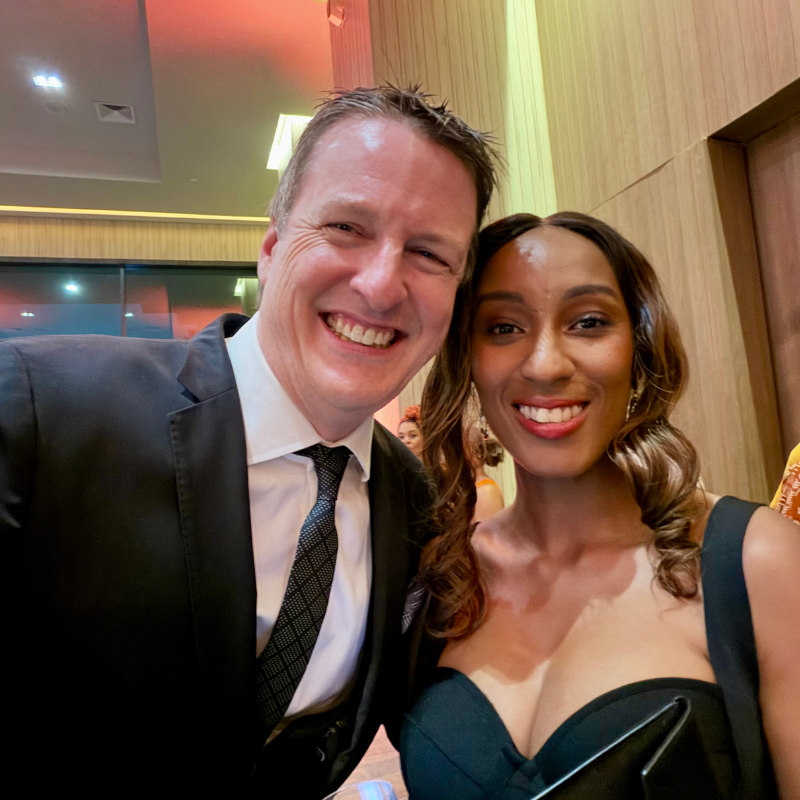
Matt Bowles: Well, it was such an amazing event. Seeing you win was amazing. And then we got to hang out at the Afro Future themed gala and had just such a blast the whole rest of the time. So, I have such incredible memories of that. I want now, though, Melissa, to go back and share a little bit about your journey, getting to this point where you are winning these competitions. And I’d love to start all the way back. Can you share a little bit even before we do your story about your parents and grandparents experience living in Guyana and then immigrating to the New York, New Jersey area and acclimating there. What it was like for them.
Melissa Noel: I am so proud of them for the risk that they took going into the unknown, facing a lot of inequality. Imagine coming from a country where you’re well educated, you have great government jobs, and then you come to a new country and you have to do everything all over again. You have to start over and people look at you or treat you in a manner that isn’t often the best. But they did what they needed to do and they worked hard and they became middle class. And I’m very proud of them for that. And I also really value and appreciate that they ensured that my sister and I, I’m the youngest, I have an older sister, that we were always extremely proud of, being Guyanese American, that we do live between these two worlds. But there’s absolutely nothing wrong with that. If anything, it has made us more aware, more mindful, and certainly more inquisitive and understanding of people. And my grandfathers, they never lived in the U.S. They stayed in Guyana until they passed away.
And unfortunately, I didn’t get to know them really well. Both my paternal and my maternal grandmothers, they did come to the U.S. in their later years after they were retired. I can remember my paternal grandmother, she lived in California, in Rancho Cucamonga. And she got off a plane right now at 2 something in the afternoon. It was in an hour. She had made 50 real tea. She’s making chow mein and fried rice, she’s cooking curry, she’s washing clothes, she’s doing all the things. And I loved her for that. And then my maternal grandmother, she was a dressmaker. And so, she was the one that was teaching me how to sew and making sure that we always looked the part, no matter where we went. And even if you didn’t have the money, you still needed to look the part. And she really inspired my love for journalism because we always used to read the Stabroek News from Guyana that would come to the West Indian grocery in New Jersey, the grocery I still go to this day. And I loved that no matter where we were, a piece of home is always with us. And that they weren’t Afraid of having to start over and do things differently. But I always say, I don’t know if I could have been that brave. And I really admire them for that.
Matt Bowles: Thinking back to your experience as a young girl coming up in the New York, New Jersey area, how did you navigate your Guyanese identity coming from an immigrant home, your American identity? Because New York, New Jersey, you have people from literally every country in the world. So, I’m also curious, as you were coming up, how you found the milieu of blackness in the United States to be in connecting with other Caribbean immigrants, immigrants from the continent, African Americans that have been here for multi generations. As you were coming up in New York, how was that experience?
Melissa Noel: I think it’s so important to just be honest. It was hard. 90s New York, New Jersey was not the accepting place we understand it to be now. As far as Caribbean people being so readily accepted and integrated into communities as they are now. There was a lot of bullying back then. I can remember distinctly my sister and I having to go to the trailer class for ESL because we spoke Guyanese Creole, which is English. But the way it was interpreted was that they’re speaking a different language. And instead of working with us and understanding that we can understand both Standard American English and a Guyanese Creole, we were going to trailer classes with students who actually did not speak English. And I remember my parents, particularly my dad, my mom is a lot more conservative, but my dad being the one saying like, this is nonsense and really going to bat for us in that, and them not understanding why we were being treated differently simply because in the home we’d speak Guyanese Creole.
And I remember it being something that really made me for a while not even want to associate with that or to be like, oh gosh, I don’t want anybody to think I’m different, or I don’t want curry and roti for lunch, just give me a sandwich from subway. Those little things that now seem so silly, but they were not. They were huge anxieties growing up in an environment where you were sometimes not accepted because you were from an immigrant family and you sounded different and you ate different food and you had different celebrations. So that was not the easiest. But I think once I got to my late middle school, early high school years, I really started to come into my own. And writing was what helped me do that. I remember being in this pre college program at Rutgers University, and we got to write about identity and we got to write about acceptance and we got to write about what we love about where we’re from. And I got to do some of those things in school, too. And that really helped me to express what I loved about both parts of me. And my parents always said, I will never forget this.
There are many things that you can be ashamed about, but being Guyanese is not one of them. That is your legacy, and that is part of who you are. And that is something to be so proud of. And I always remember saying to myself, yeah, you know what? They are absolutely right. I don’t have to choose. One thing that I often come up against is some people would tell you when you go and visit over many years coming up, being in Guyana, you’re not Guyanese enough. And then when I’m here, I’m not American enough. I would push back. And I always said, you know, I know who I am, and I don’t have to choose. I am both. And that is what’s beautiful about me, because I have a lens on things in a way that other people may not. And I know that that has helped really inform how I look at the world, how I treat people, how I go about my storytelling. Because I understand that a lot of times, people are straddling two worlds. I’ve always had to.
And that’s what’s helped me to be a connector, because I understand what it’s like to feel like another. But I also understand what it feels like when people are embraced for who they are. And that doesn’t matter whether that’s religion, whether that’s sexual orientation, whether that’s ethnicity. Being able to be embraced for all parts of you is something really special. And that’s what I bring to my storytelling always. And I’m really, really proud because Guyanese values, Guyanese culture, and that upbringing, it really shaped who I am as a person. And I could never repay my parents, my grandparents, my neighbors in Guyana, my uncles, my aunts, for everything that they instilled in me. But I’m so grateful that I’ve had them to do that and to keep reminding me that we have a rich legacy and culture that should always be a part of me. So, in any bio you read about me, anything that I’m talking about, you will always see Guyanese American. Because I’m not going to choose. I don’t have to choose.
Matt Bowles: I’m also curious how your identity, but also your understanding of the diaspora and blackness globally developed once you got to college, because you chose to go to Howard. Big up. As you know, I lived in D.C. for a number of years. I was about six blocks north of Howard University on Georgia and Gresham Place.
Melissa Noel: Oh, my God. Great parties on Gresham.
Matt Bowles: That’s what’s up. If you know, you know. And I have interviewed a bunch of HU alum on this podcast as well. Big up to Howard. But I am curious, once you got to Howard, what was that experience like?
Melissa Noel: Yeah, what I absolutely, positively love about Howard University is the way that it helps you to understand that your success is not only your success, but that of the global black community. So, I was going to school with Black people, literally from all over the world. Whether it was my classmates from Nigeria, Ghana, Trinidad, Jamaica, Egypt, France, wherever, you name it, Atlanta, Georgia, South Carolina. And what it helped me to do is see the complex diversity that exists amongst us. It was one thing to read about it or see it here and there in your local communities, but then to go to school with Black people, literally from all over the world, with different perspectives, upbringings, ideals, ideas. It really helped you to understand the nuances, understand how we may view the same thing very differently, but then also how to navigate, how to live, work and commune with people with different ideals who, yes, they may look like you, but that doesn’t mean we think the same, act the same, work the same.
And I love that because it helped me to strengthen my insights on things, but it also helped me to evolve as well. And I thought that was really important. And Howard really gave you the space to do it all. I can remember from my freshman year, I was hosting the island-hopping show on WHBC 8.30am, playing reggae and soca as an 18-year-old on this station, interviewing Damian Marley, interviewing Machel Montano, like getting to do it all and then really also having the opportunity to really sit in the Moreland Spring ARN Research center and learn about, really delve into civil rights, really delve into. I can distinctly remember going into the research center and pulling up microfilm for the first time and learning about Emmett Till. I distinctly remember learning about the black press, Chicago Defender, for example, and learning about the black press and its role in telling black American stories and how critical and crucial that was to our living memory as a global black, Black diaspora and what that did to shed a light on inequality and being so moved.
I remember our professors going the extra mile, and that was for an English class. I remember my sociology professors ensuring that we knew about black sociologists, math professors, making sure we knew about black mathematicians from across the U.S. and the diaspora learning about Stokely Carmichael and why it was important to know that we had Pan Africanism that spanned across the United States, the Caribbean and Africa, and why we had to understand how we were all interconnected as a part of that. And it wasn’t just one or the other. We all played a role. And that’s what it gave me was the know-how and the understanding and the knowledge to know that we all played a part. And so, a lot of times when I see and I hear diaspora wars, I do not ascribe to that at all. Because while I will never say that our experiences are the same, but to know that we have this interconnected history that we all have played a part in, I think it is really important to always share. I can never, ever fully express how much Howard has given me. But that was one of the best decisions I’ve ever made in my life. And I’m just so happy to be a Howard alum and just part of that family.
Matt Bowles: When were you first exposed to the writings of the Guyanese activist Walter Rodney? And can you explain who he was for people that may have never heard that name before? And then what impact his writing and activism and legacy have had on you over the years?
Melissa Noel: So, Walter Rodney was a really prolific Guyanese historian, scholar and activist. And I first came to know his work in my mid to late teens. But when I got to Howard University, I minored in English and Caribbean studies, and that’s when I really got into his work a lot more deeply. We were reading a lot of work by well-known Caribbean thought leaders and thinkers, and Walter Rodney was one of those people that we read about. And I was so intrigued, one, being a Guyanese American. But two, just looking at how the books that he wrote really examined the impact of colonialism and global inequality and how those things connect, whether you’re in the U.S. Africa, if you’re on the continent, if you’re in the Caribbean, if you’re in Europe, there is an interconnectedness with all of the things that take place. And he really broke it down to me in an easy-to-understand way.
And so being able to not just read his work, but the work of other great Caribbean thought leaders and make those connections and understand the roots of Pan Africanism, the movements, why they came to be, not just they happened, but why they came to be and who was a part of that. It was such an awakening for me because you learned a lot of things in silos, you know, growing up and in your school system. And at first, I was kind of upset. I was like, why did I not know all of these things before? How come I’m only learning about these things now? I think that’s part of the reason why I’m so grateful for my Howard education. Because it wasn’t just learning a technique or a foundation of journalism. It was literally learning how our histories are interconnected and what role that plays and how we see things play out today. And that’s such an important frame of reference to have when you are telling stories. Because if you don’t understand the sociopolitical background of a place or historically what happened between these two countries, it certainly takes away from your ability to really be able to go in depth in certain stories.
One of the best compliments I’ve ever gotten about my work from strangers is people would say to me, sometimes I thought you were from X country because you write as if you’re one of us. And that is one of the best compliments because that means that I am able to show and convey that I understand the background, the history, the people, the nuance. And to put that now, of course, I wouldn’t know everything ever. But to be able to convey it in a story where you thought I was from, where you are from, I think says a lot. So, getting exposed to Walter Rodney’s work at Howard was really eye opening for me. And the National Archives in Guyana was actually a couple years ago, renamed after Walter Rodney. And it is an incredible repository of information.
If you are looking at genealogical research, immigration records in the country, just Guyana’s history, first being a Dutch colony before it was a British one, and then going through the colonial period and then gaining independence, there’s so much information. And as someone who really loves genealogical research and doing my own family history and looking at my family in Guyana, my parents, my grandparents, my great grandparents, it’s given me a lot of insight into my family history. And I always say to anyone, whether it’s Guyana or wherever you’re from, take some time to go sit in the archives. Really take some time. It is an incredible way to connect with a place or with your roots while you’re traveling.
Matt Bowles: Well, I would first of all encourage people to go look up Walter Rodney and read about his life. We’ll link him up in the show notes. I mean, he was banned from Jamaica. He was teaching in Jamaica, and he got banned from the country for organizing poor and working-class people, which then prompted the Rodney riots in Jamaica that you can look up. And then he was assassinated in a car bomb by the government of Guyana in 1980, which it was 40 years later. I think it was just four years ago where they officially acknowledged knowledge state involvement in his assassination. And so, you really should just read about his life and what he was doing and the different ways he taught in Tanzania. He was all over the world doing really incredible stuff. And then you should definitely read his work. One of the books that I recommend to anybody that’s going to travel to the continent of Africa is his book How Europe Underdeveloped Africa. The latest version of that has a forward by Angela Davis, which is also really important contextually to read as well. So, I recommend that book.
And actually, speaking of that, I think the next thing I want to ask you about, Melissa, is your first trip to the continent, going to Ghana in 2019, the year of return. I was actually there the same year, but we were not there at the same time. I actually spent a month in the summer, and then everybody told me I needed to come back for Detty December, which I did a few years later in 2022. But it was a good year because we got to see Burna Boy perform and all of that stuff. So, it was pretty amazing. But I have been to Ghana multiple times. I have huge love for that country. But I’m curious for you. Obviously, you’d read Walter Rodney’s work, and you had been doing journalism on the diaspora for many years. And then in 2019, you finally got to go to the continent. So, I guess, first of all, if you want to contextualize anything, maybe some people don’t know what the year of return was. And if you want to contextualize that and why you went at that particular time. But then I’m super curious about your experience, first time stepping foot on the continent. What was that like?
Melissa Noel: So, the year of return was that global call by the Ghanaian Tourism Authority, the Ghanaian government, for people of African descent from all over the world to return to the continent to come home, to reconnect with your roots. And there are tourism campaigns that we see all the time, right. But I really felt like this one felt so different to a lot of people. It marked a shift in not only what we were seeing in the travel space, but definitely what we were seeing in black travel. A place that was intentionally and specifically calling on Black travelers to come and to connect or reconnect. And so, I said to myself, all these years, I’ve never been to the continent. I’m of African continental. I really think we should do this. So, it was me and seven friends, we decided we’re going to go to Ghana. We’re going to make it happen. And I’m really glad that we went as a group because I can think back to one very distinct memory. We went to Assin Manso and we were in the river.
And this was the river where enslaved Africans would take a last bath before they were then chained up and taken on boats and shipped away. And I can remember being in that river with my best friend. We’ve been friends almost 20 years. Now we are in that river and his hand is just on my arm. And I started crying. I was crying, because it was very spiritual. I could feel the energy on my back. Just being where our people were hundreds of years ago. And they didn’t get to return. But here we are, we are reconnecting. We get to be here. We get to return to a place that we were never meant to. And it was so important for me because there are so many Afro Guyanese who are able to trace their roots directly back to Ghana, to Nigeria.
And then what I learned about was that my family on my dad’s side can actually trace our roots back to Cameroon. So just being able to be in that space the same way that Brazil was a life changing experience for me, that’s what Ghana was for me. I knew that there was more work that I needed to do to show how we are connected all around the world. I saw myself in so many people. I saw my friends in so many people. I saw the wedding customs that we do in Guyana that we know come from West Africa. When you have a Kwekwe or the drumming circle, I got to see those things literally in my face. And it brought me to tears because, you know, the connections are there. You talk about it, you hear people say all your life, oh, this comes from Africa. You’re wearing the kente. I have pictures of my dad and his dashikis and his kente cloth when he was a teenager, but you never got to go.
And so to actually be there and experience it firsthand, it changed me in a really great way. And it gave me the resolve that was the resolve that pushed me to start Destination Diaspora. I said, I’m seeing all these connections. I know everybody else is too, but how do we package that and show people where these things came from and then how they manifested all over the world, I think is so important. It’s not just, oh, my gosh, that’s so familiar, or we’re cousins or, oh, we do that too. There’s a reason, you know, this comes from somewhere. How can we show that it was the catalyst for that? It was certainly the catalyst for Destination Diaspora. One thing about me is that when something is calling on me from a spiritual sense and telling me to do something, I’m going to do it. It wasn’t just, oh, you’re telling us come home, blah blah blah. It was really, this is the time you really have to take advantage of this momentum, of this togetherness of this shift that we’re seeing globally and make something of it. And we did.
And I think I spent almost three weeks and I did not want to leave because it was everything from going to Afro Nation, Afrochella, then connecting with HBCU alumni chapters who were having events and connecting with you. Then it was like Caribbean groups and Ghana. There was just something for everyone. And I really appreciated the intentionality behind it. And then also seeing how Black Americans, Afro Caribbean people and then Black people from across the continent were working together, whether they were in business together, whether they were really pushing forth tourism platforms. I saw real change and forward movement in terms of how we were connecting as African people across the globe. And I said I should be writing about this. And that’s what prompted my pitch for the Ethel Payne Fellowship from National association of Black Journalists. I said this is a story that we really should be telling because if I know if I’m seeing this, everyone else is seeing this too. We should really be amplifying the way that Black people from different parts of the world are truly working together and creating economic mobility and forward movement in the travel space without asking for permission or waiting on someone to say, okay, this is the next big thing, this is our thing and we’re going to go with it. And we’ve seen how so many places have tried to emulate Ghana’s year of return by doing similar programs. And I think it’s been great to see.
Matt Bowles: Well, in the five years leading up to that, starting in 2014, you had been living all over the Eastern Caribbean, working both as an on-air correspondent and as a digital reporter. Can you reflect back and that period of your life on how those experiences shaped your global perspective as well as your reporting approach?
Melissa Noel: I started in network television news. I was working overnight at ABC midnight to 10am I will never forget. It was one of the toughest times, but also it showed me exactly what I wanted and also what I didn’t want. I value those years because I was able to cut my teeth as a producer, work on Good Morning America, work on World News, I did all the things, but I also knew that that couldn’t be my end goal. I wasn’t going to just get there and become a producer, and that was it. I knew I wanted to tell more meaningful stories, and I knew that if I was going to do that, I was going to have to pick up and leave. So after I finished grad school, I worked for about a year. I was at NBC, and I picked up and I left, and I was in Trinidad for a little bit. I went to Guyana, stayed with family, and honestly, I was figuring it out along the way.
My parents, I love them, but they were like, girl, are you mad? Like, what are you doing? I’ll leave you a good, good job and go along and do what when you are at ABC. They were not trying to hear me, but I said, just trust me. Like, I got, you know, I’ll figure it out. Journalism school did not teach me the business side of things, so I was trying to figure it out, making all the mistakes, not understanding as I do now, like, the importance of ownership and copyright and clauses and all those things. But I knew that if I just got the opportunity to do it, I would figure it out. So, I started in Trinidad, was in Guyana for a little bit, and I got a contract with One Caribbean TV and a contributor’s role at NBC Black. And I was everywhere. I was in Curacao, I was in Barbados, I was in St. Vincent and the Grenadines, I was in Montserrat, I was in Antigua.
Any given time over those probably six or seven years, I was picking up and reporting in different countries almost every week. And I loved it because it really helped me to see the vast nuance, the difference in cultures, topography, landscapes, accents, just everything across the Caribbean region. And it also allowed me to sharpen my skills, both in reporting, but then also just as a traveler. You know, my curiosity, what made me fall in love with the place? What are my do’s and don’ts like? I learned a lot about myself. People often think that news was so glamorous, and it was not. I’m there shooting my own stuff, editing, staying in little small apartments, or getting up at the crack of dawn, just trying to figure things out and really hustling. And people will often say to me, oh, my God, you’re so lucky. You get to just work on the beach. I probably never saw the beach most of those years. Sometimes I wouldn’t even get to dip my toes in the sand. But what it gave me was an unshakable confidence in myself, in my reporting in my love for travel. And it also let me know that I was the person that should be telling these stories and that no matter what, I had to keep doing it.
One thing that I learned very early on, especially in traditional news, is that oftentimes, as a Black journalist especially, you were really told 12 years ago, you don’t want to pigeonhole yourself into just telling black stories, or you don’t want to be looked at as that reporter that’s just telling X, Y, Z stories. But I often push back on that. I said, if someone can be a sports reporter or focus on fashion or be an international correspondent, why can’t I focus on these stories too? It doesn’t mean that I can’t report on other things. I’ve proven that. I do that every day. Why can’t I specialize in this? And knowing that there aren’t Caribbean correspondence in the general sense in U.S. Newsrooms, I can only think of one major print outlet that has a Caribbean correspondent. I said, no, this is what I’m meant to be doing. And looking back, I’m really glad that I bet on myself. Because now when I walk into conferences, a lot of my colleagues who went the traditional news route and were on air and did all those good things, and I’m really happy for them, but now they’re trying to do what I did. Like, they want to travel and they want to tell these people nuanced stories, and they want to show more of their identity. Things I was doing when I was told that this is not the way you’re going to pigeonhole yourself.
But I just knew for me, if I stuck with this, it would pay off. And I’m so glad that I just bet on myself. And knowing that I was in network news, no one can take that away from me. I have the skills. I was covering the White House. I’ve covered elections. I’ve done all the things, and now I want to do my thing. And so, it’s interesting to see just how important identity has become in storytelling and how now news directors or journalists, you have to place yourself in the story more. And we want more people to focus on this. And culture is currency. Things I was saying 10 years ago, it’s reminding me that I shouldn’t let anybody deter me from what I know to be true, but to just keep going. Because sometimes other people don’t see it. They don’t get it, but that’s okay.
Matt Bowles: Well, in spending so much time in the region, I want to ask for some of your personal favorite things about the region. The first thing that I want to ask you, I have heard you say that you have a very special relationship with St. Vincent and the Grenadines. I’ve heard you say that of all the Carnivals in the Caribbean, that is your personal favorite. Can you talk about why St. Vincent has such a special place in your heart and any moments or highlights that made you feel that way.
Melissa Noel: So, I first went to St. Vincent on Valentine’s Day of 2017 when they officially opened the new Argyle International Airport. So, I got a call two days before the inaugural flight for Caribbean Airlines from JFK asking if I could come and cover it. And I remember calling one of my colleagues and I said, can you come and shoot for me? But we have to go to St. Vincent for like four days. And he says, you know what Noel, okay, I’ll do it for you. I said, thank God, let’s go and do this landing there. Understanding that this was the largest financial project in the country’s history and the way that it not only connects them regionally, but help with connectivity from a tourism agriculture. So many things would come on board just by having this larger airport where wide body jets could land. And I was there for those four days and then I went back for Carnival and then I went back again and then I stayed there for longer stints. And what I Love is that one is a multi-island destination.
There are 32 islands in Keys, so when you’re on the nine inhabited islands, everything is a different experience. So, the experience I have on mainland St. Vincent is going to be very different from the experience I have on Bequia if I go to Mustique. And I loved that it was a different vibe, different experience on each one because I felt like I was getting different vacations in one or different experiences. But more than anything, it was the time I spent reporting there. I made a lot of great friends and they really embraced me in a way that you would have thought I was living in St. Vincent my whole life. And I really appreciated the way that they embraced me, the storytelling that I did there and also how I was able to report from then to know just how things have evolved.
All the airlines that have come in, the expansion of tourism, the agriculture, the food scene, the local business owners, I got to do so much. It has really touched me because I’ve made such great friends. Some of my best friends, people are like, where are you going to save Vincent to do? Oh, my friend is getting engaged or oh, I have this person’s event or I Am just going there to rest and recharge, because I have found my little places, island to island, that are just a little slice of heaven. And I just love to go there to rest, recharge, regroup, and spend time with people who treat me literally like their cousin or their sister. And I really love it there.
Matt Bowles: Well, another personal passion of yours that I have to ask about is your love for hiking volcanoes. And you have hiked some of the most iconic ones in the Caribbean, both dormant ones and. And active volcanoes that have erupted in the last five years. Can you share a little bit about what you love about hiking volcanoes and then what some of your experiences have been?
Melissa Noel: I love the fact that if you were to look at me, somebody looks at me, it’s like, she’s a girly girl. I would be the last person anyone is thinking that she climbed the volcano. But that was part of the reason why I wanted to do it. I wanted to each place I go to, like, how can I better connect not just culturally, but with the land? And I thought, what a great way to challenge myself. Instead of just doing, like, let me just do this trail. I said, you know what? So many places have volcanoes. I want to challenge myself and see if I could do this. So, I did. I started in St. Vincent and I climbed that volcano there. And at first, I thought, how am I going to really do this? Am I doing too much? But I really like the fact that it forces you to think through moments where you want to give up, but then you realize that you’re rewarded for getting to the top. Even though the climb may be difficult, you can make it. So, I loved being able to climb La Souffre and prove to myself that, hey, it doesn’t always have to be the easiest or it doesn’t always have to be the expected, but you could do it.
I actually climbed that volcano two years before the 2021 eruption that took place at St. Vincent. And I was like, wow, I can’t even believe that I actually climbed the active volcano that no one expected to erupt. But then it erupted. And my friends there tell me that of course, because of the eruption, now it’s completely changed how this volcano looks, and you got to do it again. And now I’m like, do I want to do that again? But I love the fact that I tried something new. I love the fact that I climbed the quill in St. Eustatius. It started to pour. It was pouring rain in a way that I don’t think I’VE ever been that soaked in my life. And I really wanted to give up because I was like, I’m wet, I’m leaving, I’m going back down. But then it reminded me, hey, you came all this way. Keep going. So, I like the challenge, I like the workout it gives me. But I also like the reminder that if you just try a little bit more, you keep going, you will get to the top of anything, any mountain, any challenge, you’ll get there. And it’s fun, too. I’ve made a lot of friends along the trails. And you get to really talk to people when you’re on such an intimate climb. And it’s just you and nature. I would suggest it to anyone if I could do it. Trust me, so can you.
Matt Bowles: Well, speaking of volcanic eruptions, you have also spent time in the buried city of Plymouth in Montserrat, which I’ve heard referred to as a modern-day Pompeii. Can you share a little bit for people that have never heard of this at all, give the context for it and then what was it like when you went there?
Melissa Noel: Montserrat is known as the Emerald Isle of the Caribbean, and that has to do with its unique Irish and African heritage and history. And so, I went there for the first time in 2019, and I got to go to Plymouth, which is known as the Buried City. And the town was abandoned after the Sioux Hills volcano erupted in the mid-90s. I believe it was 1995. And what it did was that eruption left Plymouth like a modern-day Pompeii, literally frozen in time. And when I went in 2019, I believe that was the first time that they were allowing people to actually go into what is called the exclusion zone with a license guide to be able to show you around. And what struck me the most was I remember walking into an old hotel. You saw the phone book on the desk, you saw the phone covered in volcanic ash, you saw the chairs, everything just as it was the bakery. It was one of those things that reminded you that everyday life in that space and time paused. But the people of Montserrat, their resolve, their strength, who they are, they have continued to live and build and grow as a people.
And what it reminded me was to really sometimes take a minute and understand that, yes, people lost their homes, their businesses, people did lose their lives. But what they have done with now allowing people to visit and, you know, visit respectfully and observe, was that this is a physical archive of, of their history and that they have embraced this part of their history and are working to Preserve that and what I thought about as I was there with. Sometimes we often think about, especially in travel, how can you respectfully preserve or talk about or visit somewhere that may be a difficult time in a history for a place or a people, but do it in a way that educates and helps people to understand.
So, by being able to go to Plymouth and have that experience, I remember doing two reports for one Caribbean tv. It gave people not only an insight into Montserrat and Plymouth, but also it made people curious about how life continues outside of that. Because this is on one side of the island and then on the other side, there’s life, there’s beauty, there’s a rich culture that people do enjoy. But I will tell you, nothing prepares you to be to see a place frozen in time like I think people can talk about it or you can see pictures, but to really stand in a space and it be literally as it was left in the mid-90s. And you know, it’s just there. I don’t think anything can prepare you for how surreal it feels. I will never forget that.
Matt Bowles: Well, you mentioned Montserrat is referred to as the Emerald Isle of the Caribbean. And you covered the St. Patrick’s Day celebration in Montserrat, which commemorates a planned slave rebellion in 1768. Can you share what you learned about Black and Irish history as well as the dynamics today when you were covering that?
Melissa Noel: The St. Patrick’s Festival is a 10-day festival that happens in Montserrat. They have everything from reggae and soca concerts to juve to the big St. Patrick’s parade and feast day. And what is so unique about the history of the island and why it’s called the Emerald Isle is. Yes. So that St. Patrick’s Festival does commemorate the attempted slave revolt on St. Patrick’s Day in 1768. And so, although the revolt was not successful, what it does is really pay homage to the enslaved Africans who were trying to fight for their freedom and who were really pushing back against such harsh treatment. And so that 10 days of celebration is meant to honor them and pay homage to them. But then Montserrat also has a unique history in that there were Irish indentured servants who came to the island. I believe it was in the 17th century.
And that Irish heritage, that Irish and African heritage is something that’s so unique on the island. You see it in the street names, you hear it in the last names of the people. You see it when you’re in town. And it’s also interesting because you have a lot of people that might come from Europe, from Canada, from Ireland, that come and spend time in Montserrat and really embrace that unique heritage. And so, it was always really interesting to see how that was manifested into the parade. I’ve seen St Patrick’s Day’s parades my whole life, but I’ve never thought I’d. I’d see it with African heritage. But I think they embrace and intertwine that history in a really unique and powerful way. And I loved learning about it, especially not only in the names, but then in the food and in how they really embrace that. And I met people from all over the world who were there for the St Patrick’s Festival. There were people there from France. There were people there from British Columbia. There were people there from South Carolina. It was just really beautiful to see how they have taken that history. And while they’re commemorating and paying homage to that foiled slave rebellion, they also do embrace that Irish heritage that is uniquely Montserrat.
And even little things, like when you get your passport stamped, it’s a shamrock. Just little things. I can remember I flew into Amazon, Antigua, and then took the ferry over. And then when you get to the ferry port and you get your stamp, it’s a little shamrock. So just little things. And then there’s a point where you can drink from a spring. Fresh spring. Boredom. They say if you drink from that spring, you’re going to return to Montserrat. And I’m like, okay, let me drink from the spring so I can come back. So, I’m definitely overdue for a trip. I’m really excited to get back and to tell some more stories, especially because I’ve kept up with how things continue to evolve. I’ve missed many a St. Patrick’s Day’s since then. So, I really would love to get back and kind of to update things.
Matt Bowles: Well, it’s super high on my list as an Irish American to get there because I have not yet been to Montserrat.
Melissa Noel: You will love it.
Matt Bowles: Yeah. I think that history is so important when we look at Ireland being the very first British colony. And then, as you said, it was the mid-1600, under the absolutely brutal colonial repressive campaign of Oliver Cromwell, where all these Irish were sent as indentured servants over to Montserrat. But then you have this really important dynamic in the diaspora, which is Irish diaspora, all kinds of other places as well, which is that oftentimes the Irish were then eventually given a path to, “becoming white”, which then allowed them to ascend up into the colonial power structure and then become slave owners themselves or exert that colonial power, power themselves. But also, in almost every diaspora situation I’ve looked into, you also had some Irish people that refused that path and they chose to align with the oppressed people and not to take that path. And those are always the stories that I’m like most interested in looking into. Like who were the people that were supporting this St. Patrick’s Day rebellion?
I want to learn about those types of people because some of the Irish people that were being rebelled against were in the slave owning class and they were the targets of the rebellion. And then other Irish folks would have been supportive of that. And this you find all over in the diaspora. And the thing is that most of the Irish people in the diaspora anywhere that aligned with oppressed groups and refused to join in with the oppression, most of those folks get completely written out of history. Those are not the types of folks that you’re going to be learning about in Irish American history or anything else in American history. There is an extraordinary ordinary example. If people don’t know about the St Patrick’s Battalion, the San Patricios. I’ve talked about this before on the podcast, which was in the mid-1800s when all the Irish were coming to the U.S. from the famine. The British government had induced this famine and basically wiped out half the island, either killed him or forced them to emigrate.
All these people were coming over here and they were putting them right into the army and sending them down to conquer Mexico, which is what was going on in the mid-1800s. And there was a regimental of mostly Irish folks who decided to not just desert the army, but they formed the St Patrick’s Battalion, they switched sides and they fought on the Mexican side of the war against the United States. And the St. Patrick’s Battalion is commemorated in Mexico and they’re commemorated in Ireland. I have been to Mexico City; I have seen the San Patricios commemoration there. I’ve been to Clifton in Connemara and I’ve seen the, the birthplace of Captain John Riley, who led that battalion. And these are things that the Irish and the Mexicans are very proud of. But growing up as an Irish American in the United States, I never learned about that. That’s a piece that’s wiped out of history, right?
And so, you have a lot of times this same dynamic all over the place in the diaspora where Irish folks come. And even today, right, you look at Ireland, and particularly if you look in the occupied six counties in the northeast of Ireland which are still under British colonial occupation, by the way. There you will find some of the most robust international anti colonial solidarity anywhere in the world.
Melissa Noel: Anywhere in the world.
Matt Bowles: You will see the most robust pro Palestine solidarity activism coming out of the occupied six counties in the north of Ireland, as you will see anywhere. And the same thing was true with their support against South African apartheid and all these other things. And then you have this disjuncture when you get into the diaspora. And all of a sudden now when this path to whiteness and this path to power opens up, a lot of people end up taking that path. And so, I find there’s always people that didn’t take that path, though. And those are the stories that I’m always looking for.
Melissa Noel: And those are the stories that I’m always looking for and why I certainly appreciate how, yes, there’s a lot of fun that happens during the St Patrick’s Festival in Montserrat. There’s a lot of parties and things like that. But then they are intentional about the reenactments that happen. They are intentional about the historical pieces that you can learn about. And I really wanted to take the time to do that and I really appreciate that that is an integral part of the commemorations and celebrations that take place each year. So that there is an understanding of this unique, complex and layered history and why you really have to take the time to understand that these are people that you probably never heard of before, you know, now, or taking that time, because they are not the ones that are amplified in the history books.
Matt Bowles: Well, I’m totally down for a trip to Montserrat on St Patrick’s Day. So, you let me know, Melissa, give me a holler, I am there. We can do that for sure.
Melissa Noel: I will. I was in Barbados a couple months ago and I saw one of the team members from Montserrat Tourism Division. I said, oh, my gosh, I am so overdue. This is a sign. I have to. I have to come back. So, yes, it’s long overdue. And the last time I was there literally was 2020. And unfortunately, I had to cut the trip short because of COVID And I remember having to leave Montserrat early. The government had to shut down activities and racing to get on a ferry out of Montserrat into Antigua to fly back to New York so I could beat the shutdown was crazy.
Matt Bowles: All right, so this is going to happen. I’m down. You hit me up. You let me know when and I’m going to be there. This is going to happen.
Melissa Noel: All right, we said it, we put it out to the universe.
Matt Bowles: All right, we’re going to pause here and call that the end of part one. For direct links to everything we have discussed in this episode, including all the ways to find, follow and connect with Melissa, just go to themaverickshow.com and go to the show notes for this episode. And be sure to tune in to the next episode to hear the conclusion of my interview with Melissa Noel. Good night, everybody.