Matt Bowles: My guest today is Mari Monsalve. She is a Colombian American travel content creator and the founder of The Queen of Trips, a platform dedicated to empowering Latinas to confidently explore the world through solo travel. As a cancer survivor and first-generation immigrant who grew up between Miami and Medellin, she shares honest travel tips, cultural insights and personal stories rooted in her resilience with the mission of showing Latinas that they deserve adventure to no matter their background.
Mari, welcome to the show.
Mari Monsalve: Thank you.
Matt Bowles: I am so excited to have you here. You and I have just hung out twice in the last month. But before we talk about that, let’s just set the scene and talk about where we are recording from today and the fact that we have agreed to make this a wine night. So, let’s also talk about what we are drinking. I am actually in the Blue Ridge Mountains of Asheville, North Carolina tonight and I am drinking a Gamay, a red wine from the Loire Valley of France. Where are you Mari, and what are you drinking?
Mari Monsalve: Beautiful. I am in Acworth, Georgia, which is a suburb about 30 minutes north of Atlanta and I am drinking Costco’s Kirkland Signature Brut champagne and it is delicious I have to say.
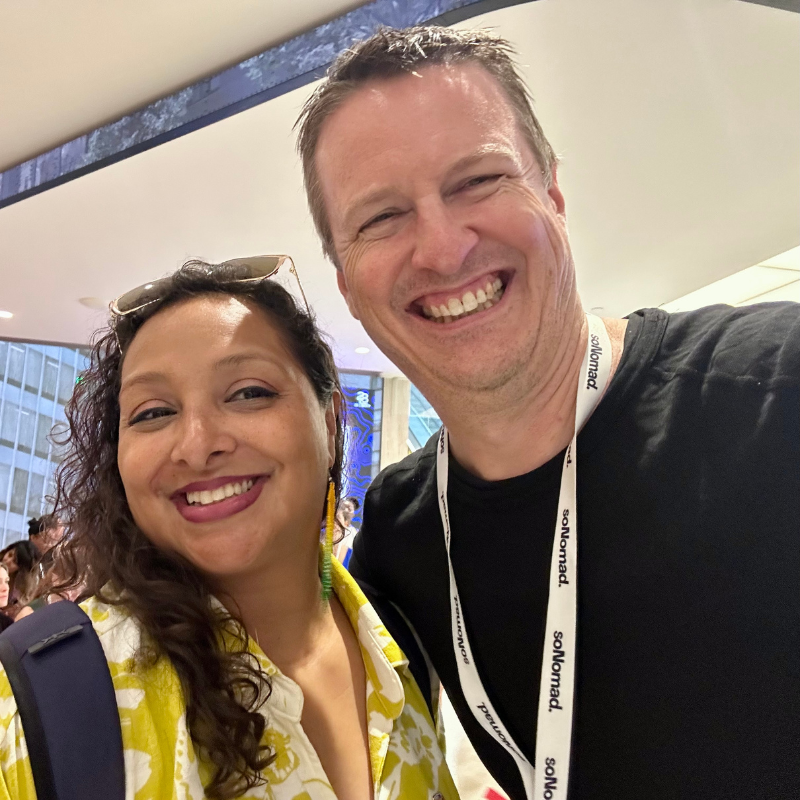
Matt Bowles: I love that popping a bottle of champagne for The Maverick Show. We love to see that. And big up to Atlanta. I was actually in Atlanta last month as well. Got to hang out there for a bit. Amazing city. I’ve interviewed a number of guests that grew up in Atlanta. So big up to The A. But you and I have hung out now twice in the last month. I feel like we need to talk about that. The first time that we hung out was at the WITS Travel Creator Summit in New York City. For people that have never heard of the WITS Summit and the wonderful community, let’s give them a shout out Beth Santos, the founder, has been on The Maverick Show twice. So longtime listeners know Beth. But for people that are totally new to WITS and this is their first-time hearing about it, can you share a little bit about your connection with WITS and the wonderful community?
Mari Monsalve: I came across Christine Lozada’s page at some point, and she was raffling off tickets for an event called Wanderfest, which was celebrated in New Orleans, and I won one of her tickets. So that is how I found out about the wonderful community. I flew out to New Orleans and spent a few days there, and I was in awe of this community, of all of these powerful women creating content and making a living off of the content that they were creating. That was mind blowing to me.
Matt Bowles: And you were just at the last WITS in New York City, as was I. There was over 600 people there. A bunch of Maverick Show guests were in the house for that. Probably at least 20 to 25 Maverick Show guests pulled up for the WITS summit. And I want to ask you about New York also, because I know that New York City has a very special place in your heart and that you like. I attempt to visit at least once a year. So, I want to ask you, what does New York City mean to you? What do you love about it? Why do you visit every year?
Mari Monsalve: I have a special love for New York because I feel like it’s such a real city. And what I mean by that is I’m from South Florida, and one of the things people say a lot about people in South Florida is that it doesn’t feel real. It feels like a facade of beauty. But people just don’t feel like there’s a very real human connection in Miami, which is sad to me, but I feel like there is so much rawness in New York City. I also tend to like gritty cities because I feel like they have so much character. And one of the things I also love about New York City is it’s really hard to be bored in New York City. I mean, you really have to do a hard job of being bored in New York. There is always something to do, something to see. And even if there’s not something that is an official event, an event is happening somewhere and people are doing something crazy. And I love the craziness of the city to a certain extent.
Matt Bowles: Well, you and I also subsequently the following month hung out at the Latino Travel Fest Maverick Show. Listeners know Vanessa Fondeur, the amazing founder of Latino Travel Fest. She of course, has been on the show, a number of Maverick Show guests. Also, we’re presenting, including you, and we got to spend some time in Chicago together as well. But for folks, this may be their first-time hearing about Latino Travel Fest. What was that event all about and what was it like for you?
Mari Monsalve: So, the Latino Travel Fest is also a project that is very dear to my heart. It is a gathering of Latino travelers and content creators that typically do not feel that we have a platform in other travel conferences. So, it is a project that is trying to grow and change the face of travel by providing a voice for Latinos that are traveling and are experiencing the world and want to learn more techniques on how to do it better and for longer.
Matt Bowles: Well, it’s always such a good time. I was there last year. They did it in Elizabeth, New Jersey. And then I pulled up again this year in Chicago. And always such an amazing, warm, wonderful and super special community. So, one of the highlights of my year as well. Mari, I want to do a little bit of your background now just to give folks some context on your story and your journey. And before we even talk about your story, can you take us all the way back and talk about your grandparents’ story, where they grew up and what their immigrant experience was like coming to the United States?
Mari Monsalve: All four of my grandparents are from Medellin, Colombia. On my mom’s side, those were the grandparents that migrated to the U.S. My grandpa Jose migrated to the U.S. in the mid-60s and he came here on a textile visa. At that point in time, the U.S. was reaching out to Latin American countries to find manufacturing laborer. So, my grandpa was able to come here with a textile visa and he worked in factories in Homestead, Florida, which is about 45 minutes, depending on traffic, 45 minutes from Miami. So, it’s south of Miami. And then a few years later, he brought my grandmother. And my grandparents’ kind of fluctuated back and forth between the U.S. And Colombia for a little while, but we migrated very early as far as immigration with regards to the Latino community in the state.
Matt Bowles: Well, I want to ask you about that because I know your grandfather came around 1964 and as you mentioned, he came to Florida and that was still during the Jim Crow segregation period in the American South. Can you talk about that specifically what he walked into when he arrived and what his early experience in the mid-60s was like.
Mari Monsalve: So, in Miami, he experienced, obviously, racism, as many people that had diverse cultural backgrounds experienced. And he didn’t speak English, so there was a lot of cultural contexts lost when he was facing discrimination, but he just knew that things were off or wrong. And then when my grandpa was trying to buy a home in south Florida, he could only choose from homes that were in certain pockets of south Florida, because Miami was a city that was very big on redlining, people that were black and Latinos and other cultural backgrounds. So, grandpa was only allowed to purchase a home in homestead, which was farmland, for a really long time.
Matt Bowles: And then, can you talk about what the experience was like then for your family coming up there and where you were born?
Mari Monsalve: My aunt was six years old when she came to the United States, and my parents and my grandparents had a lot of connection back to Colombia. So, they would come here for a while and then go back to Colombia for a little while and then come back to the states and work. So, she experienced and understood the brunt of racism, Jim Crow laws, segregation, because she, at her age, ended up having to go to an, I think it was like, 98% black children’s school, and they were not allowed to mix with Caucasian children. So, she is the person who probably experienced the brunt of Jim Crow laws as a child here.
So, there was a lot of her translating for my grandparents, you know, what was going on. And then my mom moved to Colombia for a little while. She met my dad, they fell in love, they got married in 1975, and then they moved to Florida. And then five years later, I was born in Miami, in Hialeah, more specifically, which has also been a recognized, predominantly Latino city. It’s called the city of progress, La ciudad del Progreso. It has nothing to do with what people think of Miami. When they typically envision Miami. You know, you envision Brickell, Coral Gable, South Beach. This was a very working-class community, experienced systemic racism. And 99% of the people in Hialeah and that area speak Spanish. So, it is a predominantly Spanish speaking community. You do not need to speak English to live there. So, it benefited parents that had a hard time assimilating to live in those spaces because they were able to function within the United States without needing to speak English.
Matt Bowles: Well, I know you lived the first 10 years of your life there. When you think back to that period, what was your life like as a kid? What do you remember from that time?
Mari Monsalve: I remember my mom and other immigrant moms formed a group of moms that would do things. I have to say I had a beautiful childhood as far as interacting with children from other Latin American countries. So, I had Chilean friends, I had Guatemalteco friends, I had other Colombian friends. And it was just so beautiful because I feel like now it’s 40 something years later, and many of us still stay in touch. I mean, I. I consider one of the friends from that time to be my sister to this day. It was such a beautiful childhood.
Matt Bowles: And then can you talk about your family’s decision to move back to Medellin in 1990 and what were your thoughts about that at that age if you can remember as a young kid leaving Miami to go back to Medellin.
Mari Monsalve: It was a cultural shock in many ways. I’ve always had a very deep love of Colombia. As a child, it was fascinating to me to get in an airplane in this huge machine, travel for three hours, and then be in a land that was completely different to anything I had ever seen in Florida. Beginning with the topography, for the listeners who’ve never been to Medellin, it’s a deep valley, and you have beautiful views, no matter which side of the city you’re in. And as much beauty geographically as there was there, the culture shock came from the turmoil that the city was in when we moved to Colombia.
My parents decided to move to Colombia in 1990 because they burnt out of the amount of work that people do here in the United States. Especially if you don’t speak the language, it’s very hard to get a job that is cushy or an office job. You really need to be able to speak the language in the U.S. to have a job that would pay enough for them to be able to survive and raise a family, etc. So, we moved to Colombia. It’s 1990, it’s the World Cup. There’s a lot of craziness going on. Pablo Escobar is still alive, so even more craziness in the city and culturally. It was very difficult for me and my sister. We spoke English at school only and Spanish at home.
And my sister was two years younger than me. It was really hard for her. She still had a lot of confusion between language, written and verbal. So, it’s really hard for her to move to Colombia, where not a lot of people spoke English at that time. And if you did, it was something you were not supposed to do in public because it was a high risk for people to be kidnapped, unfortunately. So, it’s something that we were constantly told to not speak English in public at all in Colombia, especially not in taxi cabs or anywhere outside of the house.
Matt Bowles: Can you share a little bit more just on that piece of historical context in terms of the Pablo Escobar era and the Medellin cartel, which operated up until about 1994? So those four years from 1990 to 1994, what were you observing at the time? What was it like for you as a kid coming up in that era?
Mari Monsalve: Miami at that time, when we left, was also going through a very violent wave. And part of it had to do with Colombian turf wars and corruption in Miami PD. And then there was also turf wars with Jamaican drug dealers. And the neighborhood we moved from out of Miami was also a violent neighborhood. So even though I had that background of experiencing that as a child, it was not as predominant as the violence that was present in Colombia when we moved there. I mean, there was some nights when you heard car bombing or grenades exploding and things like that, but they were smaller groups of sicarios in the neighborhoods, especially in the lower income neighborhoods, because that was the easiest way for a lot of people in those neighborhoods to make money if they had a good outcome out of one of their missions to who knows what Pablo Escobar had contracted them to do.
It was days and days of firing guns into the air and throwing off grenades. At first it sounded like firework, but you very quickly learn to distinguish between firework and guns when you live through a period like we were living in Colombia at that time. Also, Medellin had one of the highest murder rates in the world for a city that was not in active war. So, during that time, the amount of people that would die in the streets of Medellin was something that I don’t think people in the U.S. can ever understand.
Matt Bowles: And growing up during that period in Medellin and experiencing that, what impact do you think that that had on you as a person?
Mari Monsalve: When we look for something positive that was the outcome of this, I have learned resilience. I have learned resourcefulness. I have learned self-awareness and awareness of situations that I may not be able to control, but I can identify very easily. And I think that that’s given me a toolkit for solo travel where I’m not as scared of certain situations. So, I think that’s a positive impact of that. Obviously, the negative impact, it does cause trauma, and I do have some PTSD. And even when I go back home and I call Medellin home, it’s my first home, even though I was not born there. But when I go home, I do feel sometimes I’m very aware of people and a little jumpy.
Matt Bowles: So, you came of age in Medellin, and then can you talk about your decision to come back to the United States, how old you were, where you decided to go, and what your adult and professional career trajectory was like?
Mari Monsalve: The reason I came back to the States was my parents started a clothing line in Colombia with one of my dad’s sisters. And during the course of the 10 years, we spent there, some years were amazing and other years bad financial decisions were made. So, the clothing line was great for a few years, and then we went financially bankrupt, which was also a trauma in and of itself. So, I very quickly went from not being worried about money to being very worried about money, because it was very apparent to me that we were in a very bad financial position. And I was really at the cusp of turning 18, and there was not a lot of opportunities for me in managing. So being a U.S. Citizen, I decided that it would be a good time for me to come back to the States. I came back to the States with $40 in my pocket. My mom’s best friend in the U.S. let me stay with her for a whole year. They did not charge me rent, and they tried to help me as much as possible to then be able to help my parents and my sister.
Matt Bowles: And when you think back, how and when did your interest in world travel start to develop outside of the U.S. And Colombia? Your interest in other cultures and wanting to see the world?
Mari Monsalve: Well, one thing about education in the U.S. or at least when I was a kid in Miami, I remember having teachers that would tell us that the world was very big and that we weren’t limited. But it just didn’t resonate with me at that time because all I saw of travel were National Geographic magazines. So that wasn’t very apparent to me that it was reachable for Latino people to travel to other places outside of their home countries for leisure. That wasn’t something I saw. I saw in those magazines and Nat Geo magazines scientists that did not look like me on these expeditions that were anthropological and there were research and, I don’t know, biological expeditions to New Zealand to see the glowing worms, I don’t know.
And so, I start realizing that there’s travel outside of Latin America, or at least Colombia. But I did not correlate that that was a possibility for me. But even as a kid, I remember having this idea that I would maybe be a pilot or a flight attendant someday. One thing culturally about Latino community before now, I think we’re a lot more open was that we mostly traveled back and forth between the states and our parents’ home countries. And it was an inexpensive summer school for our parents basically. And that’s why a lot of us ended up traveling back home every year, because it was less expensive for our parents to send us home to Abuelita’s house for the summer or Tia’s house than to keep kids here and try to entertain us. Because most of the parents, they had to work one or two jobs, especially if they’re single parents.
It was really hard for a single mom to have children in the house all summer and not know what they were doing. And then I think I’m in that cusp of Gen X and Millennials where there was a lot of latchkey kids and kids had a lot of independence. So, I feel like our parents were much more prone to send us back home. But I started realizing when I started traveling for work in my 20s that it was a possibility for me to travel to other places that were not home.
Matt Bowles: Well, I know that you had a really impactful trip in 2016 when you went to Iceland, which is a place that I have still not been. It is super high on my list. But can you share a little bit about that trip, what Iceland was like for people like me that have never been, and the impact that that experience had on you?
Mari Monsalve: I’m going to quickly flashback to childhood. Mari, who is sitting in school with these Nat Geo magazines and I used to flip through them and one of the issues I remember is something about geothermal energy in Iceland. And I didn’t understand what geothermal was. I just saw this beautiful landscape that I had never in my life seen. And they were talking about aurora borealis. And I remember seeing the northern lights. So as a child who was very inquisitive, I wanted to see something that I had never even heard of in my lifetime.
So, in 2016, I happened to be at a bar with my ex-boyfriend and a childhood friend of mine, and we’re talking about visiting different places and Iceland comes up and she’s like, oh, I’ve always wanted to go to Iceland. And I said, you know what, me too. And in 2016, in the Latino community, especially in Miami, Iceland was not the country that a lot of people talked about. A lot of people said I was crazy because I love very cold temperatures and very cold countries because I’m sick of how hot Florida is all the time. And I wanted to experience something that was so different from that. So, a lot of people that I mentioned that I was going to Iceland to, they were like, are you fucking crazy? Like, why would you do that? Why would you go to somewhere where it’s so cold?
But anyway, I started doing the research and I kind of planned the trip myself. I had seen some posts on Instagram, and I reached out and this person was nice enough to send me their itinerary of the ring road. So, we bought the tickets going from Orlando through New York to Iceland because they were $600. Amazing price. I had never in my life thought that a ticket would cost $600 to Iceland because that used to be the price to go to Colombia. So that was insane to me. And that blew my mind because now we went from a very expensive place to a very inexpensive place that was a lot more attainable to me. So, we get to the airport at the time that we’re supposed to be there to board our flight, and they start asking for volunteers.
And if you’ve ever heard of people making a very pretty penny on airlines wanting volunteers, Iceland is one of those flights because they started offering a very low amount. I didn’t realize what was going on. At some point I hear them say, well, if you volunteer yourself seat to go to Iceland, we will give you fourteen hundred dollars. And that is when I stood up so fast, because at that point it was twice plus $200 what the flight cost me. So, I thought it was great. So, myself, my ex-boyfriend, and our friend that was coming with us, we all stood up and gave up our seats for fourteen hundred dollars. Then the next day we went and the airline was offering eighteen hundred dollars. So, it took us three days to get to Iceland, but basically Iceland ended up being almost free for us to go and see an experience.
Matt Bowles: That is awesome. So, once you finally get to Iceland and you had read about it and you had dreamed about it and all of this stuff, what was it like.
Mari Monsalve: Beyond it being a fulfillment of a childhood dream? It was everything beyond my childhood dream. I had never thought I would see northern lights flying into Iceland. And we got very lucky and we saw them. That in and of itself was an experience that was otherworldly to me. I could never grasp how beautiful seeing the northern lights is. And if it’s on your bucket list, by the way, I encourage you to find a way to do that very quickly because it is an experience that I feel like it’s so spiritual and it is such a beautiful experience.
So that’s how we got into Iceland, seeing northern lights. And then the first night we were there, we’re eating at a restaurant and I hear the servers. By the way, if you’d like to see northern lights, you can walk outside. They’re somewhat visible right now. Mind blowing to me. We were in Grindavík, which is close to the airport. We were eating there somewhere by a lighthouse that’s out there. In fact, we were able to see northern lights even though we were very close to Reykjavik. It was cold as fuck. But the amount of cold we felt as Floridians was worth the beauty of seeing this natural phenomenon. If I could redo an experience in my life, it would be that just to experience the wonder of that and the beauty of that again for the first time.
Matt Bowles: And then how was the ring road itinerary that you got in the rest of Iceland?
Mari Monsalve: So, it was ambitious. It was a lot more ambitious than I had bargained for. Because one thing about Iceland is the weather could be beautiful even in the winter. And then all of a sudden you have the worst snowstorm you’ve ever seen in your life. And something like an arctic snowstorm out of nowhere with enough force to blow the door off of cars to tip over RVs. The force of the wind in Iceland is no fucking joke. Okay. And that’s the third F bomb. Let me have a sip of the champagne.
Matt Bowles: The champagne is kicking in.
Mari Monsalve: Oh, my God. I’m used to hurricane force winds, but not Arctic hurricane force winds. That was insane to me. So, we experienced some weather delays which ended up cutting the itinerary around the ring road very short. I was only able to do the southern part of the ring road. And I ended up going all the way to Vik, which is the black sand beach that has the one single church in the middle of nowhere. If you look at pictures of Iceland, it is the typical churches that are seen out in the countryside. Also, the silence. It was a beautiful silence I had never experienced before. And that’s one of the times where I realized how beautiful nature is. And I really appreciated how beautiful. Sitting in such a beautiful landscape with this silence that all you could hear was the wind. And even sometimes you couldn’t even hear the wind, but you could feel it. So, Iceland was really an experience that was unexpected to me. And it went so much beyond what I had dreamt Iceland would be like.
Matt Bowles: Well, I know it really catapulted your international travel journey. I think the next place I want to ask you about is Italy. Can you share a little bit about the first time you went to Italy?
Mari Monsalve: The first time I went to Italy, I went with an ex-boyfriend, the same person that I went to Iceland with. And I have mixed feelings about that first trip to Italy, because if you read my blog, and this is really hard for me to share, but I feel comfortable enough to share some part of this. The relationship was not very healthy relationship, and there was emotional abuse and physical abuse in that relationship. And Italy, I think he tried to make as a trip to reconcile some sort of thing that was wrong in our relationship. And I think Italy made me realize that I was not happy in that relationship and that I really wanted to experience the world on my own. And I no longer wanted to be in any way, shape or form tied to this person that I was sharing a life with that was not very healthy for me.
And coming back from Italy, I had made the decision that I wanted to travel the world somehow, and I wanted to do that solo. And then two and a half weeks later, I was in a doctor’s office getting what I thought would be a regular checkup. And 24 hours later, I found out that I had cancer and that I was in between stages. I was in between stage 2B to 3, which means that the cancer was starting to travel to my lymph nodes. I was very fortunate to catch it at that stage because had I been in stage three, that means that your lymph nodes are affected, and it’s a lot riskier and the chance of survival is a lot lower. There’s still a chance for survival, luckily, but it’s a much more intense treatment than what I had to go through.
Matt Bowles: Well, I know that you decided to make travel an essential tool in your recovery, and I want to ask a little bit about that because I know the travel started almost immediately after you got your diagnosis. And I think that is such an incredibly inspiring story, and I would love if you can take us a little bit on your journey as a cancer survivor and the role that you chose for travel to play in that.
Mari Monsalve: Well, I came back from Italy, I find out I have cancer. And I’ve been working with the company that I work for at that point about five years. And I had never been on a business trip with that company. And out of the blue, my manager, my boss, was like, we have a business trip to London. And I was like, well, how am I going to miss out on a business trip to London? I had never been to London. It was obviously very high on my list of places in the world to see. And I’m like, a sponsored trip to London. How am I going to miss that right I didn’t know that I would be diagnosed for cancer when I said yes to that trip. But I told my doctor, I was like, well, if you say I have cancer, I’m going to negotiate my treatment with you. I don’t understand what I was going through mentally, but I thought that I had some power of negotiation in this shit. So, I told her, I said, look, I’m going to go to London for a week. Is this cancer going to kill me if I go to London for this week and I postpone treatment for one additional week? And she looked at some things, markers and things, and she said, I will grant you the permission to delay your treatment for one week, but when you come back, we better get on this very quickly, because this cancer will not wait for what you think is it’s going to wait. So, I said, okay, I will go to London and have the time of my life, and then I’ll be back. And we’re going to fight this head on, right?
Anyway, went to London for a week. And while I was there, I was like, well, fuck it, I’m going to go to Paris, because I’m already on this side of the world. And it cost me 300, which at the time I thought was very expensive, but I was like, how the fuck am I going to die and not see the Eiffel Tower ever in my life and not eat a macaroon in Paris and not have some fucking fabulous cheese and not drink the champagne and not see the CN river, all of the knots, right? Because I think it doesn’t matter what level or what stage of cancer they tell you, you have. The immediate thought in your mind is, I’m going to fucking die. And that was the first thing that came through my mind. I’m going to fucking die.
And I have all of this travel that I have always desired with my heart, and I am never going to get to see any of this. And that made me so sad. And I very quickly realized that I was missing out on so much because I was the responsible child, because I was the eldest kid and the caretaker of my entire family, and because I was the model child for all of my cousins that were younger than me and my friends. And I had all of this weight on my shoulders that I carried for so many years, and cancer kind of gave me an excuse to say, like, well, fuck everything. And I am not going to be a responsible person, and I’m just going to do whatever I want to do, at least for this trip.
So, I went to Paris for the day, for 10 hours. I ate cheese until I could not stuff a piece of cheese in my mouth again. I bought a bottle of champagne and I sat by the Eiffel Tower and I cried. And then I went on a purse shopping spree. But I didn’t do the thousand-dollar purses. I did the two $300 purses. I bought myself some purses. I bought 15 different perfumes from different. I just went crazy in Paris. I’m never going to be able to come back here and I’m going to miss out on all of this. And I bought chocolate I don’t even like. I ate so much food that day, I thought the world was going to end. And that’s kind of how Paris went.
And then right after I was done with chemo, my friend was going through a divorce. So, mind you, by then I’ve already gone through eight rounds of chemo. I have done Neulasta, which is a very painful shot. And the last Neulasta shot that I needed to get the dispenser, which is a device attached to your body for 24 hours, broke, which means that I got poked and it didn’t dispense the medicine. So, I had to go back and get poked again for this shot that was very painful, that produced so much pain. If any of your listeners have ever had an Neulasta shot, it is indescribable the amount of pain that an elastic shot produces in your body because it is forcing your body to create trillions of white blood cells in a very short amount of time. So, it takes a lot of energy for your body to do that, and it’s a very painful process.
So, I was just like torn down and beat over this. I couldn’t believe that the last day of my last treatment this would happen to me. So I was in very depressed mode, crying, etc. And my friend’s going through a divorce, a very painful one as well. And she was supposed to meet me to hold my hand for this shot and she didn’t make it on time. So, when she finally got to the hospital, I’m sitting outside crying my eyes out and she starts crying. And then we looked at each other. She’s like, do you want to charge a trip to Spain and Portugal and Morocco on the credit card that’s going to go through the divorce? I was like, fuck yeah, let’s be irresponsible, bitch. I do.
So, two weeks later, we were leaving on another 10-day trip through Spain, Portugal and Morocco, which was insane. I had never thought that I would make it to Northern Africa at that point in my life, I was bald. I looked like Voldemort. I felt like Voldemort, even though I tried to put makeup on and have this presence about myself to let the world know that I wasn’t as sick as I looked. So, it was very weird to be in a culture where women are normally covered and to be bald and bold. And a lot of women cried and prayed over me on that trip, even though we were in Tangier for just a day. But I think even though there was a language barrier, there was so much connection with women that saw me and being bold about not being covered and being bald in public.
Matt Bowles: Well, I also, of course, have to ask you about the trip that you planned at the beginning of 2020 as your cancer victory tour to Asia, Thailand, Vietnam. Can you give the context for what motivated and inspired the trip and then what your experience was like in Thailand and Vietnam?
Mari Monsalve: It’s 2019, and I finished all of the chemo, the reconstruction surgery. So, what happens with cancer, especially breast cancer, is you end up deciding whether you’re going to have a portion of your breast removed. I ended up choosing to have a double mastectomy, which is very invasive surgery, and it requires reconstruction depending on whether or not you want to remain flat or not. I had been through so much medically in those two years leading up to 2020 that I had saved money, and I had told myself that I was going to go for as long as the money would last. I had, I think, about $15,000.
And I very quickly realized that Europe was not going to be a good destination for $15,000, but that Asia would be a very good destination for $15,000, and that I would get a lot of bang for my buck. Great food. Even though I didn’t speak the language, I had never been to Asia. I had never even considered going to Asia by myself. But I was like, Thailand sounds like it’s a very nice place. I just can’t speak the language. So, I planned to visit every Southeast Asian country, as many as I could. So, I left on February 10, 2020. Of course, there had already been talk about COVID and all of this, but I was able to enjoy a month and a half in Southeast Asia. And I feel like those of us that were able to travel in the weeks leading to the global shutdown were very privileged because we were able to see worldwide sites without millions of people being there.
So, February 10th and the weeks before and after lead up to the Chinese New Year and what was happening in Thailand at that Time is they had closed the border to Chinese tourists because, of course, countries were still trying to control the spread of COVID without closing borders completely to the rest of the world. So, I have to say, the day I went to see the Royal palace in Bangkok, there was maybe 45 of us there. So, I got a very different view of the Royal palace than most people see. And I think people that were able to travel during that time period, we were very, very privileged to see world sites be very empty. Other than that, I think Thai people, they’re known around the world for being extremely welcoming, and it is the land of a thousand smiles. Definitely. People were very warm.
Matt Bowles: Well, I also want to ask you about the 2022 trip that you took in Colombia when you went out to El Pacifico. And I was wondering if you can share a little bit of context for folks about the Pacific region of Colombia in particular, and then your decision to go there and what your experience was like.
Mari Monsalve: One thing about cancer, for anybody that has gone through it, marks a before life, and then your life ends the day you’re diagnosed with cancer. And then a different life starts afterwards. For some people, it happens after you’re done with treatment. For some people, it never comes because their situation is ongoing. But cancer made me want to do things that I had never tried in my life. And one of those things was A, facing fears and B, seeing humpback whales. And I realized that I could see them in the Pacific coast of Colombia during a certain period of the year, and I didn’t realize that it was accessible to me financially.
Again, I always thought these things were for people that had excessive amounts of means. I never thought that it was something that somebody that had gone through the financial trauma that I have gone through in my life would ever be able to do something like see a humpback whale in the wild. So, on the note of facing my fears, another fear I have is insects. So, I had the brilliant idea of going to an eco-lodge in the Pacific in Colombia during a time period where I would be able to see whales. And that was another experience that made me cry. And I will never forget the feeling of seeing such a beautiful animal, because not only did I see this animal.
So, one thing about humpback whales is they return back to the same beaches every year. So, these whales know geographically where they were born. They come back to mate, they come back to have their children, and then in the same waters, they teach their children how to jump out of the water. We don’t know why they jump. I Don’t think scientists have figured out why they jump, but they teach their calves to jump. And seeing that and seeing a mom teach her calf, I felt so fortunate to be there in that moment and to experience that with my own eyes and to also understand the power of this animal and how tiny I felt in the grand scheme of everything, the universe, life. I felt like a speck of dust in the Sahara Desert. I felt so minute. And this beautiful, graceful animal is just displaying its beauty to us. And there was a pod of them teaching their calves how to jump and waving back at us, which was insane.
I have a video of it on my Instagram account because I have no words to explain the feeling when you see something like that. Especially in the second most biodiverse area of the world, which is Departamento of Choco in the States, we have states in Colombia. The Department of chocolate is an extremely vulnerable area. It is an area that has some of the most beautiful flora and fauna in the world. It is unprotected. The infrastructure is not good. It’s been neglected for centuries. It has been a neglected area. And the majority of the people that live in Chaco are Afro Colombian community and indigenous communities. So, they are extremely vulnerable to exploitation, to cartels. We still have El Clan del Golfo, which is a cartel that runs drugs from other places in Latin America through El Choco to Central America. And then they have routes to distribute product that is very widely consumed in Europe and the United States that is very profitable for them to do so.
Whether it’s human exploitation or human trafficking or drugs, there’s a lot of things that are running through that area. And of course, that makes the indigenous communities and the Afro Colombian communities extremely vulnerable to that. It makes me so sad because there is unsurmountable beauty in Colombia that has been extremely exploited for centuries by different powers. It’s been either U.S. Influence, U.S. Corporations, internal as well, internal conflicts. Hasn’t been peace since colonization in Colombia. So, it makes me sad, but it makes me also value the little that I’ve been able to see of Colombia so far.
Matt Bowles: Yeah, 100%. And I think that history is really important for people to look into. I think that when people travel to Colombia, they should read up on that history. They should be aware of that history. I think particularly people from the United States should read up on the role of U.S. foreign policy in Colombia and the amount of human rights abuses that the United States has been in, involved with funding, arming, backing and supporting in Colombia over the years. I think it’s just really important as context to understand what you’re stepping into and what the history is there, particularly the crimes of our own governments. For people that are from countries that have committed crimes around the world, it’s important to know what those are when you’re going to those countries, I feel. So, I’d encourage people definitely to look into some of that.
For people that would like to visit Colombia today, because it is one of my very favorite countries, I continue to go back. I have been to Colombia probably five times. I’ve spent at least four months in different places. I’ve spent a month in Bogota. I’ve spent a couple months in Medellin. I’ve spent a month in Cali. I have been out to Cartagena. And so, I keep going back. It is just a really special place. And for people that would like to experience Colombia, maybe people that have never been before, what would be your recommendations or top tips for how people could and should experience Colombia?
Mari Monsalve: Because I love Colombia with all of my heart, I would say be very mindful of respecting our local culture. We have a lot of people currently traveling for sexual tourism, and it’s to the point where, sadly, I feel like one of the most talked about things about Colombia is the prostitution. Colombian women are not there to just be prostitutes and be taken advantage of. The other thing where I feel that tourists should avoid at all costs is Narco Tourism. I don’t think people fully grasp even the environmental impact of what Pablo Escobar did to Colombia as a whole. Environmentally, financially, emotionally, there’s so many layers of Narco culture and how it affected everyday people of Colombia. So, if you can, please avoid involving yourself in any form of Narco Tourism. Colombia is so much more than its cartels. It’s so much more than partying and prostitution. Colombia has a beautiful culture, beautiful fauna that deserves the respect of people visiting it. The admiration and the fact that that we want people to come and enjoy their time in Colombia, but not to harm our people or our environment or to take advantage of the beauty and the givingness of Colombian people.
Matt Bowles: Do you have recommendations if someone was interested in planning a trip to Colombia and maybe an extended trip? A lot of digital nomads listen to this podcast and have the ability to slow travel and to work remotely. What are some of your favorite places in Colombia and places you might put people on to and recommend that they visit?
Mari Monsalve: I feel like Cali does not get the amount of attention it should. There is so much Culture in Cali. It is predominantly Afro Colombian and Afro indigenous. And if you want to learn a different style of salsa dancing, I definitely recommend going to Cali and spending a month in the salsa schools there. Colombians outside of Cali dance salsa in a very different style than Caliños do. And I recommend everybody to look up La Feria de Cali. It is one of the biggest salsa festivals in the world. It is not just a salsa festival, but it is at the end of the year and it is kind of like the culmination of year-round festivities in Cali.
But if you’re black and you want to learn more about Afro Colombian culture, I also recommend checking out a group called Origen Cultura; Origin and Culture. It is run by my childhood best friend. Her name is Andrea. And there’s all the other people in that community. I will preface this with my friend is white passing, but she is the daughter of an Afro Colombian man and an indigenous Colombian woman. But the focus of this group is to unite the Afro Colombian community with the Black American community and form avenues of exchange, of economical exchange. Right now, she has partnered to run a group of exchange students that are coming from Howard. She also works with Jet Black Travel, so she has a lot of experience and connections in Columbia with the Afro Colombian community. So, if you are interested in that type of travel, I definitely recommend you either connecting with Jet Black Travel or with Eileen Ivette or with Origin and Culture. They run the Black Joy Parade in Medellin a couple times a year. And again, they’re trying to set up avenues of exchange, economic exchange and cultural exchange between the black community in the U.S. that is interested in learning about the Afro Colombian community.
I also recommend traveling to some of our national parks like El Parque Tayrona. Respectfully understanding our indigenous cultures. We do have a huge indigenous community. There are multiple tribes and there’s multiple languages that are not Spanish spoken in Colombia. We have Emberas, we have Wayuus, which are in the northern part. And then as you get into the Amazon, there’s a lot of experiences that you can live in the Amazon with some of the native cultures. I would also recommend going to El Departamento de Santander. There’s some beautiful scenery in Santander. El Guaviare was not open to a lot of tourism and it’s now starting to form a lot of groups to travel to some of the natural wonders that we have. We have deserts that are very high. We have El Huila, which is also not very explored outside of Colombians. So, there’s a lot of territory in Colombia that are still very virgin and very untouched. And if you would like a very authentic experience, I would love for you to connect with local agencies that are setting up some of these trips.
Matt Bowles: Well, I appreciate all of those recommendations. Appreciate the shout out to Eileen Ivette, who Maverick Show listeners know who was on the podcast and talked also really extensively about El Pacifico and Afro Colombian experiences that folks can have when they go there. She has been leading some amazing trips and definitely second the recommendation for Cali. I spent a month posting up in Cali and it was just such a truly spectacular and special city. So, I have been talking about that a lot as well. All right, we’re going to pause here and call that the end of part one. For direct links to everything we have discussed in this episode, including all the ways to find, follow and connect with Mari. All of that is going to be linked up in the show notes. Just go to themaverickshow.com go to the show notes for this episode and there you will find it. And be sure to tune in to the next episode to hear the conclusion of my interview with Mari Monsalve. Good night, everybody.