Matt Bowles: My guest today is Lolly Spindler. She is a location independent entrepreneur world and the founder of Crea Content Marketing, a fully remote freelance writing business that she has run from 30 different countries over the last 10 years. She traveled the world for a year with me on the Remote Year program starting in 2016 where we lived in a different city each month for 12 months across four continents. She is currently based in Mexico City and now coaches other creatives who are looking to build a fully remote six figure freelance writing business so they can travel the world and live their best life.
Lolly, welcome to the show.
Lolly Spindler: Oh my God. Thank you so much for having me. I can’t believe it’s almost been 10 years since we did Remote Year. That’s insane to me.
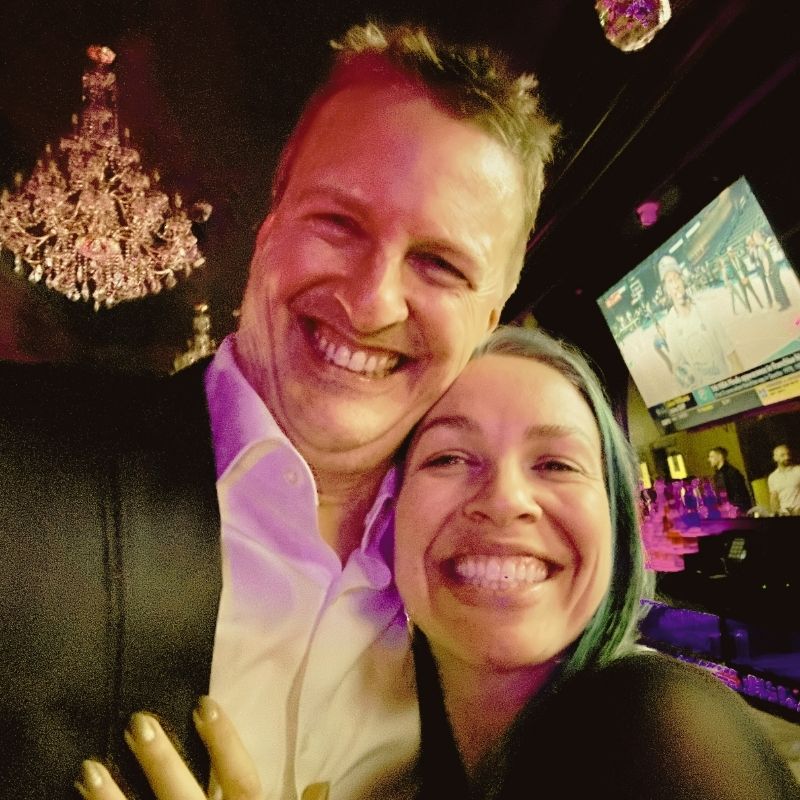
Matt Bowles: And you and I have hung out in so many places around the world since Remote Year. We just recently hung out in New York City for my birthday. We have hung out in Mexico City. We’ve hung out in Madrid. We have seen each other all over the world since then. You have been in my life for so long and this interview has been a long, long time coming. So, I am super excited to have you here today. Before we get into this though, let’s just set the scene and talk about where we are recording from today. I am actually in Bentonville, Arkansas today. And where are you?
Lolly Spindler: I am at home in Mexico City. My beloved Mexico City.
Matt Bowles: Let’s talk about your beloved Mexico City. You and I have hung out together in Mexico City twice. The first time was in 2017 when we were there for a month on our Remote Year program and. And then we saw each other again in 2023 in Mexico City, it is also one of my favorite cities. But I want to ask you, you have spent a lot more time than I have there, and of all the places in the world that you could be, you have selected it as your base. So, I want to start off by asking you, what do you love so much about Mexico City? What makes it so special to you?
Lolly Spindler: So basically, I knew when we left for Remote Year, I didn’t want to go back to the U.S. because I made a vow to myself, I would not live in Trump’s America. So, when that happened, when we were on Remote Year, I was like, all right, I really am home shopping. I need to figure out where I want to live after Remote Year is done. So, when I saw Mexico City on our itinerary, I didn’t even really think twice about it. I was like, I’ve been to Mexico, you know, been there, done that. I’m from Southern California, so I mean, my senior year trip was to Cabo. I had been to Ensenada, but it’s all these really tour university places that I’d been to. And I had known some of my friends who had gone to Mexico City, and I was like, huh, interesting choice. Why are you going there? And so, I really had never even considered it.
And then when we got here on Remote Year, I was blown away by this gem that had been under my nose the entire time that I’d been in California. It’s literally a three-hour flight away. And I just fell in love with it. It’s such a cosmopolitan city. The people, the culture, the food, the nightlife, the live music. Literally every aspect of this city is so rich and so warm and so welcoming. And I immediately was like, wow. I could definitely see myself living here. So, when our program ended, I was basically between Mexico City and Lisbon. And my sister called, and she was like, you know what? Mom and dad are getting older and I’m about to start having children, so you need to be closer. Because I had lived in Madrid previously, which was a 12-hour flight. She was, you need to be closer. And I was like, you are correct. I’m going to pick Mexico City. Not just because you told me to, but because I was probably going to do it anyways.
So that’s how I ended up here. And it’s my forever home. I finally found it. I’m so happy here. And I know I’ve made the right choice because everything I’ve done here has really been thriving. My community is thriving, my businesses are thriving, my personal relationship with myself and my spirituality. My mental health is thriving, so I owe so much to this city and its people and the culture, and I’m just so lucky that I finally found it.
Matt Bowles: Well, it was so fun to come down and hang out with you and get to immerse a little bit in your community and all of the wonderful goings on that you have around you in Mexico City. I do want to ask you a question, since you’ve been there for so long, so many years, Lolly, over the past eight years, since you’ve been spending so much time there, can you talk about the impact that you’ve observed of transnational gentrification on the local community in Mexico City and any tips that you might have for digital nomads who would like to experience this amazing city, but also want to be sure that they’re doing it as ethically and respectfully and causing as little harm to the local population as possible?
Lolly Spindler: Yes. So, I’ve really seen this city change a lot since I got here. Where I live is called the foreigner Bubble. It’s Condesa, Roma Norte, Juarez, some of Polanco. A lot of that area is where most of the foreigners basically live when they arrive. And when I first got here in 2017, 2018, there were foreigners, but it wasn’t as marked as it is now after the pandemic, basically, I would say it was pretty steady before. When the pandemic happened, everyone left. A lot of people went back to their countries of origin. And then once the transition to remote work happened, a lot of people from New York and LA started coming to Mexico City, and it was just way more foreigners than had been here before. So, I definitely have seen that impact firsthand. And it is pretty marked now.
If you’re in Condesa or Roma Norte, you hear a lot of people speaking English, you see a lot of more change. Restaurants and coffee shops are popping up. So, it is really sad in a lot of ways because they have come in and replaced a lot of the local people, especially with Airbnb. Basically, a few years ago, Airbnb was kind of. I don’t know if it was a competition, but basically, they wanted a test area to be like, we want to try to get as many Airbnb’s as we can. And Puerto Escondido was on top. And then Mexico City, when Claudia Sheinbaum was the mayor here, entered Mexico City and at the very last minute, and they won, of course. And so basically temporary housing, like all the Airbnb’s, has exploded since then.
So, you’ve seen a lot of displacement because of that because unlike other major cities like you saw, Barcelona has limited the amount of Airbnb’s and other short-term rentals that there can be as well as New York. Now it has to be like a month or longer that you can’t have anything less than a month. There’s. So, there wasn’t any regulation on that until I think recently, finally in the last year they’ve passed something, but it has not really made a dent in the problem. So, with the short-term rental, that problem has exploded and it’s displaced by a lot of people.
So basically, if you’re coming here, you need to integrate into the culture, you need to learn the language. You shouldn’t expect that this city is going to integrate into what you’re used to. And that’s what I see happening a lot is people come here, and they expect other people to speak English. They expect it to be a little Brooklyn or a little LA or wherever they’re coming from. It’s no, you need to learn the language. You need to make an effort to integrate into this beautiful culture, beautiful country, beautiful city that you’re a guest in. And so that I think has been my biggest issue, being another foreigner and seeing there’s obviously an array of foreigners that are here and they all act differently. But that has been my number one issue with some people. It’s no, no, no, you need to integrate into this culture, not expect it to integrate into what you’re used to at companies comfortable with.
Matt Bowles: And what was the organization you were telling me about that you’re a part of and the types of awareness that you’re trying to raise around some of these issues.
Lolly Spindler: So, during the pandemic, some of my friends started this volunteer organization called CDMX or Mutual Aid. And basically, lots of different teams were created within this umbrella community organization to basically raise money to be able to purchase groceries and medication for people who could no longer afford it during the pandemic because they lost their job or lost. They just didn’t have access to those things. So, we had people like I was on the fundraising team then we had people who were actually going and buying the groceries, and we had people in their cars or on their bicycles delivering those things. And then we had a whole team taking the orders.
So, after the pandemic, I want to say ended, but I mean, it’s ongoing. But once that immediate need wasn’t really there anymore, we had already organized this group and had this community and we’re like, okay, now where can we put these efforts now that we don’t have as Many orders coming in. So, they started another community organization within Ayuda Mutua called Gringo Tax, which is basically a community fund that foreigners can contribute either their money or their time to that is dedicated to redistributing wealth horizontally in the community to those most impacted by gentrification and by this influx of foreigners that have come in since the pandemic. So that’s been a new initiative if you’re interested in learning more there on Instagram, as I think it’s either Gringo Tex or CDMX Gringo Tex. It’s one of those. I can’t remember.
Matt Bowles: Okay, we will definitely link that up in the show notes. We’ll get the right Instagram handle and definitely encourage folks to check that out, see what they’re up to and read a little bit through that as a preparation for going to Mexico City to spend time. I think that’s a really great idea. I appreciate you putting people onto that, Lolly. The other thing that you have done while spending so much time in Mexico is traveled around to other parts of the country. Country. And I want to ask you, for you, what have been some of the highlights outside of Mexico City, in other parts of the country that you might put people onto who would like to see more of Mexico?
Lolly Spindler: So, one of my favorite places is a pueblo that’s only like a couple hours out of Mexico City. It’s called Tepotzlan and it’s really beautiful. It’s one of the pueblos Magicos are like magic towns of Mexico. And it’s situated basically in this little valley that’s surrounded by this gorgeous mountain. And the community there used to think the rock face was the entrance to the underworld. So energetically, it’s just got this incredible presence about it. And there’s a pyramid you can hike up to. The food is obviously amazing. I feel like in Mexico I’m spoiled everywhere. The food is incredible and it’s just a really special place just to go. And I try to go at least a couple times a year to reset. I mean, being in a big city can be exhausting.
So, to reconnect with nature and myself and see another part of Mexico, that’s one of my favorites. I also really love the region of Chiapas, which is in the south. And because it’s so close to Guatemala, they share a lot of culture. And so, it’s like being in a mixture of Guatemala and Mexico when you’re there. San Cristobal de las Casas, I spent a month there and it’s a really beautiful little town and there’s tons of things to do. If you want to use that as your base, you can go to the Canyon del Sumidero, which is this beautiful natural canyon. And you’re on the river. It’s gorgeous. And lots of beautiful pueblos around there too. If you’re into textiles and weaving, there are a lot of beautiful textile towns around there too. You can go and learn and see how these beautiful textiles are made directly with the artisans. So, I would say those are two of my favorite places outside of Mexico City.
Matt Bowles: That’s amazing. One of the very first places that I went about 25 years ago when I went to Mexico was to Chiapas. And I went for the purpose of doing solidarity work with the indigenous Zapatista communities. And so, we got to stay in the Aguascalientes, in the La Condone Jungle with the Zapatistas and celebrated at that time. This was the year 2000. So that was the six-year anniversary of the Zapatista uprising, which anybody that’s going to go to the state of Chiapas should definitely read the writings of Subcomandante Marcos and the history of the Zapatista uprising in 1994 and everything that has happened since, because it, it is extraordinary writing, and it is a really important piece of political history. So that is so cool. Yeah, you did that.
Lolly Spindler: That’s amazing.
Matt Bowles: Totally agree with the Chiapas recommendation, Lolly. I feel like at this point we need to go all the way back because I would love to give folks a little bit of context on your journey and how you got to where you are today. Can you talk a little bit about where you grew up and as you were growing up, how your initial interest, world travel, started to develop?
Lolly Spindler: I was born and raised in Long beach in Seal Beach, California. So basically, I love Southern California. I still love Long Beach. I think it’s one of the best cities in the U.S. can we pause.
Matt Bowles: There for a moment and just give some love to Southern California? Because I lived in Southern California for seven years and that was the last base that I had before I became a full-time digital nomad. And I absolutely loved it as well. Can you, before you even go into your own story, just put people on to what is so special about Southern California and if people wanted to come visit and spend some time there, what might you recommend?
Lolly Spindler: So, I love Long beach, especially because it has the best of both worlds. Like you literally have a city on the beach, you have the vibrancy and the cultural heritage of this really cool city. But you also have the chill, laid back structure of the beach. So that’s one of the number one reasons why I love it. Also, just the little neighborhoods within Long Beach, I love. You have Retro row, or you. You can go to all your little vintage shops, and then you can go to your really super divey dive bars, or you can go to the gay district with all the gay bars. You can go downtown if you want a fancy cocktail bar, like a nicer meal. And then if you want to go be with all the drunk college kids, you can go to Second Street. There are literally all these different pockets of things that are happening.
And also, the art at Long Beach is amazing. There’s so many different galleries and museums that you can visit. Another thing I love about it is that that’s where I really got into yoga. Dharma Shakti has yoga on the bluff, which is free yoga every single day in a park that literally overlooks the ocean. And so that’s when I basically was like, oh, my God, Yoga is not this pretentious, look at me, look at all these things I can do thing. It’s really community based. You give what you can, and it’s for all body types and for everyone at every different level. You just come and you do what you can. And so that’s really where I fell in love with yoga, too, is in Long beach because of Dharma’s initiative. And so, there’s just so many different reasons to love Long Beach. And this is actually kind of bittersweet that we’re talking about it, because my parents just told me they’re leaving next year. So, this will be my last Christmas and my last couple of times visiting home. When I go home, this will be the last time I’m really going home. So, it’s very bittersweet because now when I go home, I won’t be going there. So sad.
Matt Bowles: Can you talk a little bit about what it was like to grow up there? And as you were coming up at Long Beach, how did your thoughts about international travel, your interest in that start to develop as you think all the way back?
Lolly Spindler: So, we lived in Steel beach, which is next to Long beach, basically the San Gabriel River. If you’re on one side, you’re in Long Beach. If you’re on the other side, you’re on Seal Beach. And then my high school was in Los Alamitos. So, I mean, everybody there living in this part of California, well, even a part of the US where the majority of people speak Spanish. And I was always fascinated by that I was like, oh my God, like, what a beautiful language. I want to learn that. So, the very first opportunity I had, I started taking Spanish classes and it was eighth grade and then basically kept going with it in high school. I still actually am in touch with two of my Spanish high school teachers. One of them actually has come to visit me twice here in Mexico City. It’s been really beautiful, full circle moment, having him visit.
So, I think it was my sophomore year or junior year of high school. I had an opportunity to go with my Spanish department. It was the Spanish and French department at my high school. We’re putting on this trip and so we would go to England and then we go to France so that the French students could practice, and we go to Spain so that the Spanish students could practice. I think it was like a two-week program. We spent a couple nights in a handful of different cities. And when we went, I fell in love with Madrid. I absolutely fell in love with Madrid. And I was like, oh my God, this is my place. I need to live here. How do I make that happen? So, when I came home from that trip, I just told my parents, just so you know, I will be living here in the future. So, I’m just putting that on your radar now, so you have time to prepare yourself.
Matt Bowles: And how did you eventually make that happen?
Lolly Spindler: So basically, I studied Hispanic language and literature in college. That’s what I have my bachelor’s degree in. And the only thing was, when you’re getting a degree in something, I went to a Boston University. It’s like you’re listening to it a lot, you’re reading, you’re writing, but you’re not speaking it that much. I mean, you have your conversation classes, but they’re for an hour and there’s like 20 people. It’s like you’re still not really conversational or really speaking the language that much. It’s much more academic. So, I was like, you know what? I’m missing this piece of the puzzle. I really want to be able to feel confident speaking this language. Because that’s the number one thing I think that hinders people is confidence. I had all the knowledge in my head. I just didn’t have the confidence to trust myself to actually speak the language.
So, I moved to Madrid, and I did this program called Auxiliares de Conversación translates roughly to North American Language and Cultural Assistance. And they basically take people from all over the world who speak English, and they place them in public elementary schools around Spain. Because Spain to this day has some of the Lowest levels of English in Europe. So, they’re really trying with this program to get their level of English up to be comparable to other European nations. It hasn’t really succeeded, but, you know, for effort. So, I lived in Madrid for two years teaching elementary school kids English and science. And after those two years, I loved it. Obviously loved Madrid. I met some of my best friends there.
I got to work as a language exchange hostess and a brunch waitress, and they got to try all these fun things. But I knew I did not want to teach children for the rest of my life. Love children, love to play with them, don’t necessarily like to discipline them. So, I was like, okay, well, the teacher is not for me. For children. For adults, yes. Children, not so much. So, after those two years, I was like, all right, I would love to stay here, but I need to figure out what I’m going to do, what is my career path, what am I going to invest my skills in? So, I had to leave Spain, and I went back to the U.S. to figure out what I was going to do with my life.
Matt Bowles: Well, let’s give some love to Madrid, because I agree, it is really a spectacular city. I’ve been multiple times. You and I hung out there in person, person together in 2018, which was super amazing. But you have traveled really extensively around Europe, around Spain. Can you talk about why Madrid has such a special place in your heart, why it captivated you, what is so magical about Madrid?
Lolly Spindler: So, I always make this comparison where I say Madrid is more like Boston, and Barcelona is more like New York. So, if you want the cultural, historical, heart of the country, you go to Madrid. And if you want more of the glittery, international vibe, then you go to Barcelona. And I feel so many people loved one and they don’t necessarily hate the other, but it’s definitely one or the other for most people when it comes to the big Spanish cities. For me, I just love. You still have the old traditions that are still alive in Madrid. I mean, even though siestas, they still happen more in the pueblos in Spain. In Madrid, the kitchen is closed during siesta hour. You still have the old man drinking his coffee or even his Gania, his little beer at seven in the morning at his little. I call them the old man bars. I love the old man bars. There’s just so much of that that is literally. It feels like it’s preserved in a time capsule.
And so, I felt like I was walking into a world that was, like, hundreds of years old, because that’s one reason I went to Boston. I was like, I want to learn more about the history of this country. And then when I got to Spain, I was like, oh, my God. Obviously, this country is way older, and it’s still so well preserved with the little customs and the little places you can go see. The oldest operating restaurant is there, El Bottin. And it still literally looks the same. So that’s what I really love about Madrid is obviously the food, the accessibility, too, to other parts of Spain. It makes it a great place if you want to have it as, like a jumping off point. It’s a great place to start. And the community that I found there was also really beautiful. That’s my number one thing when I travel is community. So, I had a great community there. I still go back once a year to go see them.
Matt Bowles: So, for people that have never been to Madrid, and they would like to come experience it for the first time, what are some of the highlights you would definitely put people on to? How would you recommend people experience Madrid?
Lolly Spindler: Okay, so, I mean, weather dependent, depends on what time of the year you’re going, you have to do one day in El Retiro park, this big, beautiful park. They have the Estanke, which is like the little pond. You can rent a little boat, paddle around. There’s the Palacio de Cristal, that’s in the park. There’s also across from that, there’s like this little gallery, a little museum that a lot of people don’t know about. That’s in the park, too. And they have really great bathrooms there. If you need to use the restrooms around the park, Hot tip. So that’s definitely one thing I would do for one day. And then at the museums, you have the Reina Sophia, you have the Prado. Those are like my top two. I mean, you have so many more, but those are like my top.
So, if you’re into more contemporary art, if you want more Picasso, Dali, go to the Reina Sofia. If you like more classical Velasquez Goya, then you want to go to El Prado. So that’s another thing I highly recommend. And you could do both. You could do like half of your day at a museum, half of your day at the park. And then, honestly, I think one of the best ways to get your bearings is doing the free walking tour for your first day there. I feel like, Matt, I took you on this. I just did it for you. Well, Sandovans is a free walkie tour. And honestly, it hits all because cities used to be a lot Smaller because there weren’t so many people. So, you can literally hit the Plaza Mayor, Puerto del Sol, the palace, you can see everything in four hours on a walking tour. And then after that you can get your bearings and be like, I would love to go back and see this, or I would love to go do that. So those are definitely three things that I would recommend doing.
Matt Bowles: The other thing I would say is don’t sleep on the street art in Madrid. A lot of people, I feel, think about the street art scene in Barcelona, which is also fantastic. But when you go to Madrid, if you can get on a street art tour, I was very impressed with the street art scene in Madrid. So that is the thing that I would add and definitely put people on to if you are into that. So, Lolly, I would love at this point to talk a little bit about your professional and entrepreneurial journey. And I feel like in order to do that, we need to start with writing. And I would love if you could take us back and talk a little bit about the role of writing in your life and your journey and how ultimately that became the center of your professional and entrepreneurial direction.
Lolly Spindler: I have had very consistent love affairs with certain things throughout my life. If anything, I am very loyal. So, some of them are cities like Boston and Madrid and Mexico City, and some of those things were Spanish and writing. So, I started writing at a very young age. I always felt like I didn’t have someone to talk to, so I would just write. I would always write in my journal, or I love writing poetry. It’s my preferred medium. So, I would always be writing poems. And it was always obviously; my favorite assignments were always writing assignments. And thankfully that was the majority of my assignments as a millennial.
I knew I wanted to do something with writing, but I didn’t know exactly what. So, when I was in college, I was like, I wanted to try this out. Like, let’s see what this looks like in like the real world, right? It’s like a career. So, I did two internships in college. One was at the Boston Weekly Dig where I did more news stories when they were doing a toll hike on the pike. It’s like a little more boring, but kind of cool. I would go to community forums where people were talking about the pros and cons of debating, and I would interview them. So, it was cool to get into the local politics scenes of Boston and learn what it was like for an in-the-field reporter. And then, fun fact, undergroundhip.com has an actual, well-had rip. They went under during the pandemic, but they had a physical office space in Boston. So, one day I just walked in there and was like, hey, guys, you need an intern?
And so, I can’t say they hired me because I wasn’t getting paid, but they were like, sure, please write to us. So that was my first time writing for, like, an online medium because the Boston Weekly dig was still printed. So, I was like, oh, this is cool. It’s an online publication. There are forums. I was like writing their news articles and stuff. And so that was my first exposure to digital writing was on undergroundhiphop.com well.
Matt Bowles: One of the things that you and I have bonded on initially and over the years is hip hop music. And so, at the end of this episode, I’m going to ask you to name your Top 5 Hip-Hop Emcees of all time, but we are going to hold that until the end. So, you do these writing internships, you get this experience, and then after you go to Madrid, you realize that teaching young folks is not the career direction you want to go. So, you’re back in California, and then what does your professional trajectory look like? How did you ultimately make this passion into your entrepreneurial business that you control and can do remotely from anywhere?
Lolly Spindler: Yeah, so I love teaching, just not little my kids were so little. They were like 4 and 5. You know what I mean? Like, I don’t know. That’s more babysitting than teaching. So, I love teaching. Just older people keep that in the back. Right. I knew that was something I would eventually use. But I got back and so because I had already been teaching, those are the jobs I was getting. So, I actually tutored in Long beach for, I would say, a year, almost two years, which was actually a really enriching experience because it was for a lot of families who, the parents didn’t speak any English, so they couldn’t help their children with their homework assignments. So, I would go and I would help the kids, but also tell the parents, this is what the kid is working on. Let me explain to you how you can help them.
So, it was actually really cool being like this intermediary between these two worlds. And it was really beautiful to be in these families’ homes. It was a really beautiful experience. So, I did love that I got to have that experience upon coming back from Spain, but I was like, you know, I still need something that’s going to be able. I mean, teachers, man, they do the hardest work, and they make no money for it. And so, while I loved it, I just knew financially it was not sustainable. For me, especially since I wanted to continue traveling. So, I needed to find something that would work with my world. So, after a while I was like, you know what? I will take anything that comes to me for like a year or two to build up another financial base again and then I’ll figure it out. So luckily my friend from high school actually reached out to me and he had just been tasked with starting the social media team for a very old school real estate company that basically they had websites for local communities and they would sell local realtors those little micro sites which is like now terrible black hat SEO, but at the time that wasn’t necessarily seen as bad.
So, they were like, okay, we need more social media presence because we need to find these realtors to buy our micro sites. So, my friend calls me and he’s like, hey, we need a writer. Do you want to work here with me? And I was like; I don’t know anything about real estate. What are you talking about? And he’s like, I don’t either, but I know you can write. So, let’s figure out real estate together and we’ll build this team. So, it was him and me and then we hired a guy to do all the graphic design, all the visuals, videos and everything. So, the three of us were like in our early 20s were basically because they hired us because they were young and they figured we knew what to do on social media, which we did not. But basically, I had this year to learn digital marketing, which was really amazing because I taught myself. Hubspot.com has all of these free resources and literally we just went through all of them.
And the three of us learned as a team how to do inbound marketing, how much content we needed, how often we needed to publish. So it was like this year that we just got to dedicate learning this not just real estate, but also what our job function was, which was inbound marketing. But like I said, this was a very traditional old school real estate company. I remember once the president came in, we were on the floor where this is like in an office, like in a cubicle. My fucking nightmare. Which also was very reaffirming that that’s not what I wanted to do long term. But I remember him coming in onto the sales floor and saying to one of the sales guys, if you bring me in X number of leads, I’ll take you to the strip club. And I was like, oh no, I need to get the fuck out of here. This is not the environment for me.
So, I basically pitched to them, I was like, look, the future is remote work. The three of us do not need to physically be here. Why don’t we do a test period where you let us work from home one day a week and let’s just see what happens. And they were just like, so close off to it. And I was like, all right. I tried, you know, I tried to bring you guys to the 21st century. You don’t want to listen to me, so, you know, I’m out. What I realized is, now I have learned all of these skills. Like, that year totally served a purpose. I learned all of these, like, digital marketing skills. And I also realized that if I could learn a whole industry, real estate, and write about it professionally to other realtors and to consumers, I was doing B2B and B2C, that I could do that for any industry. I could use my research skills and my storytelling skills and my branding skills to then brand my written content for all of these different industries.
So, I left that company and I started Korea Content Marketing. And that was 2014. And I started with a few clients. I worked outside of a local co working spot called WE Labs on downtown Long beach. And that’s where I found my first clients. And that’s how I started my business from the ground up. Like, I did not have anything prepared. I had no safety net. I just full-on dove and was like, I’m going to do this. Let’s see what happens. And thankfully, it worked out.
Matt Bowles: And shortly after that, you decided to join the Remote Year program, which, for folks that don’t know, is a company that no longer exists. But it ran for about 10 years, and you and I did this program, and that’s where we met in the very first year of their operations. So, we did it in 2020, 2016. And the idea is that they bring all of these remote professionals together who do not know each other to start, and then you travel the world together for an entire year as a community. And Remote Year provides accommodation and co-working space access and all of that kind of stuff. And then you just travel across the world, across four continents, living in different cities every month. And you and I did that together for a year. And I remember you were building your business while we were on that program. Can you talk a little bit about that experience and what it was like to build a remote business while you are traveling around the world to all of these places?
Lolly Spindler: So in between starting Crea in 2014 and leaving for a remote year in the fall of 2016, I had another full-time job. This basically this inbound marketing agency from Texas contacted me and they’re like; we’ve seen your resume. We saw what you did for a house hunt was the real estate company and we’re a two-person team. It was literally just the two founders. But they’re like, our number one thing is content. It’s obviously our number one request and our number one-time drain. And we are not writers. Can you help us? So, I basically came on board as their third and I handled all of the content for them and for all of their clients. So, I was a content machine, right? Having to change my tone and style to write for all these different businesses.
And in the meantime, I told them, hey, I’m running a business, and I have some clients. And they’re like, that’s totally fine as long as you, you don’t take on any other clients while you’re working for us. I was like, cool. That’s when I applied for remote year because now it’s like I have a little more stability and can actually float this crazy work travel program for a year. So, I pitched it to them, they were on board. I was obviously already working remotely. They were in Texas; I was in California. I was like, the only thing that’s going to change is I’m going to be traveling, and I will not be working your hours. I will be working the local hours. I was not going to be part of the midnight crew that was working in U.S. hours in Asia. Like I was like, that’s not a thing.
Matt Bowles: I feel like we have to give a shout out to the night crew just so people understand. So, I just signed up for this program and I didn’t know what to expect. I didn’t know anybody on it, didn’t know how many people were going to be on it. Turns out there’s 72 people that show up in Kuala Lumpur, Malaysia. They’re like, okay, meet all your community. We’re going to be traveling the world together for a year. And there were at least eight or so people that were required to work on American hours and are. Our first three months were in Asia, which was about a 12-hour time difference.
So American hours in the first three months of this program in Malaysia, Thailand and Cambodia were basically 9pm to 5am every day. And so that’s what they did for three months. But it was actually so cool, if you remember this Lolly, because they would come into the workspace by 9pm and have their pajamas on, work all night and then they’d have like these morning Routines. They’d go out and do sunrise yoga or whatever, have breakfast, have some stuff and go to sleep. And then they’d get up at like three in the afternoon. They’d have the afternoon to see the city, have a nice dinner, and then come into the workspace. So, they actually made a routine out of it because they wanted to do this program so badly and they had that restriction that they were just willing to work around it. But because there was at least eight of them, they had this super cool niche community that was just able to make it work in a fun way.
Lolly Spindler: And some of them, their employers didn’t even know they were outside of the U.S. So it’s like an added layer.
Matt Bowles: Exactly. So how was it for you? You get nine remote year and then what was the year like? And the business building journey.
Lolly Spindler: Yeah. So, month two, when we were in Cambodia, I got a phone call from the startup I was working for and they basically were like, yeah, we’re going under, and you don’t have a salary starting today. There was no two-week notice. There was nothing. I was just alone in my apartment in Cambodia, and I was like, like, oh, okay. So, I was like, all right. Well, thank God I started gray at content marketing before all of this happened because at least I had the foundation that I could then work with. And I told my existing clients, hey, you know, I now have more time and capacity to do more work for you if you’re, there’s anything else I can help you with and also to bring on new clients. So actually Dave Tropka, another guy in our group, was like, actually my friend just started a business and he’s looking for content.
So, I wrote for his friend’s startup for the rest of remote year, and it basically floated me through the rest of remote year. And it was also a blessing in disguise that I lost that job because then I had the power to make my own schedule, and I no longer felt like I was tied to this 9 to 5. Like I had this responsibility to my bosses, to that company to be performing for them. Now I was like, oh, now it’s all me again. I can decide how many clients I want to bring on board. I can decide how many hours I want to work on in a day. And that really opened up a lot of time and energy for me to then actually see the places and enjoy the places and really be present in the places that we travel to.
Matt Bowles: So, for you, what were some of the highlights, just travel experiences, places we went, memories that you have from remote year. What were Some of the best things that you still remember and think about.
Lolly Spindler: So, the top two that come to mind, the first one is when we were in Croatia in December, which I loved, because obviously you think of Croatia as like a summer destination. That’s where yacht week is. That’s where all the crazy parties are. But being there in the off season was spectacular, especially because of all of the Christmas markets. Like Zagreb the year before had been named the number one Christmas market in Europe and there was no other tourists there. So, you were really seeing the city for what it was and how beautiful it was without all of these people there.
And I just remember walking through the streets of Split on my birthday, just finding this little hole in the wall restaurant and having such a beautiful meal by myself, this home cooked Croatian meal. And then I did a road trip through the country. So we went to Zadar, where there’s a sea organ. So literally, as the waves come in, the organ is playing notes. Amazing. We laid down on this organ as like the waves were crashing. And it was beautiful. And then we went to Plitvice national park, which is also known to be like this lush, green, beautiful park during the summer. But in the wintertime, it was silent because it was covered in this layer of pure, beautiful white snow. And the waterfalls were half frozen.
I literally can remember like it was yesterday walking around the corner of the path and seeing the huge waterfall and being half frozen and just being like, oh, my God, this is one of the most beautiful things I have ever seen. And I am alone. There’s literally just the three of us here witnessing this beautiful scene. My God, it just filled my heart so much. Croatia was definitely one of those places, especially in December, that I loved. And I highly recommend if you can visit Croatia off season, do it. I think it’s spectacular and way better than that. I mean, I haven’t been there in the summer, but I don’t think I would like it half as much. And then I would say the second favorite, most ridiculous moment was in Colombia. We went on. I don’t know if you were there, Matt, but we went on this coffee farm tour and there was like, I want to say, like 10, 15 of us.
And after we had our little demonstration of how they found the coffee beans and dried them out and blah, blah, they were like, okay, so you can either decide to go have a beer in this beautiful viewpoint or you can decide to go horseback riding. And I was like, I love horseback riding. Let’s do that. It was not horseback riding. They were mules. It had rained the day before. It was a pebble path, so the mules were sliding down this mountain. I was like, this is how I die. And we had been out on the Sheas bus the night before. I don’t know if you guys know what a Shiva’s bus is, but basically you just get on this bus and go around the city and get really drunk. It’s a party bus essentially. So, we’re all hungover, feeling like we’re going to die on these mules sliding down a mountain. But it was a really fun, beautiful experience because when we survived, we were like, why didn’t we just go and get a beer? But those are the two experiences that really stick out to me when I think about it. It.
Matt Bowles: Well, the last six months, this entire second half of our remote year program, we were in Spanish speaking countries. So, we were in Mexico City. That’s when we hung out there. We spent two months in Colombia. We went for a month to Bogota and a month to Medellin. We went to Lima, Peru, and then we went to Cordoba, Argentina and Buenos Aires, Argentina. And I want to ask because you were one of a small group of people in our program that spoke, spoke fluent Spanish. And I want to just ask, when you reflect on all of your travels over the years, because you’ve been to many different places, but when you travel to a Spanish speaking country and you’re able to speak fluent Spanish, how much does that impact the extent to which you’re able to immerse and connect with the culture versus maybe when you’re in a country where you don’t speak the language?
Lolly Spindler: Oh, it’s like night and day. Because you really are able to connect with people in a way that you just can’t. I mean, obviously if you’re like in Europe, a lot of countries speak English, so it’s not as much of a problem. But for example, in Asia, I feel like I was not able to connect with people in the way I wanted to because I didn’t share their language. Whereas in Spanish speaking countries, we already have this kind of common ground. And then it opens up a lot of conversations because they’re like, where are you from? What is your accent? Even the other day I was out with my friend, and he was, are you Puerto Rican? And I was like, nope. And then, you know, they’re like, where are you from? Are you from Brazil? And I’m like, no. You know, like you just start having these conversations with people and they’re like, why are you here? What do you like about my country? Please come see this. You wouldn’t probably get to that level of intimacy, per se, if you couldn’t share that common connection, that common language. So, it’s definitely been a beautiful skill to have to be able to connect a lot more deeply with people.
Matt Bowles: Well, I want to ask you also, what do you think the impact of that entire year that we spent on Remote Year had on your life and how it shaped maybe your future trajectory and so forth? But now, these many years, thinking back on that, I still reminisce about it as one of the most amazing, extraordinary, and special years of my entire life by far. I think it’s such a unique experience as well, that it really isn’t similar to anything else I’ve done. And since you’ve done it as well, and we did it together, of course, what are some of your reflections now thinking back on the impact of that year?
Lolly Spindler: So, number one, it introduced me to Mexico City. So, I will forever be grateful to Remote Year for just making this a space where I could come. And I already had the community built in and somebody to show me around the city. I’m still in touch with Paulina. We still talk all the time. She’s in Berlin now. But whenever she comes back, I try to see her. So that’s like one thing, and then the second thing is the community. Honestly, you could have done the Remote Year itinerary cheaper, but the value of Remote Year was the community. So, when you landed in any country, if you just wanted to go have a beautiful meal, there were people that were there to do that. If you wanted to go out that night, there were people who were interested in that. If you wanted to go see a museum the following day, there were people who were down to doing that too. So, it’s like you just had this beautiful aspect of. I have a soft-landing place wherever in the world I am. And even to this day, the connections I’ve made through Remote Year are still very alive in my life. For example, my number one client, my number one connector, who has probably brought in the most revenue for me in the past 10 years, is a woman I met through the Remote Year community who I’ve never actually met in person.
Matt Bowles: Wow.
Lolly Spindler: Yeah. And so even today, people will hit me up. They’re like, like, I know you live in Mexico City. You used to be Remote Year ambassador. Are you still there? I’m going to be there. Will you hang out? And I was like, of course I will. So even to this day, it’s very enriching and bringing me community and people I probably never would have been in touch with had it not been for that slack community.
Matt Bowles: Totally. And we still have a group chat with the people that finished the program, and we just saw a bunch of them in New York recently and we met up and saw people around the world and then as you said, other people that have done it as well. That’s now a network. And when I was in Mexico City last in 2023, I met up with people that had done a Remote Year program. At some point there was a meetup for drinks, and I met some new people that I hadn’t met before and saw some people that I already knew and so forth. So yeah, it was really, really impactful for me and continues to just be this incredible network of people that have done that and that have that shared experience. Know what that was like to have done it for the full year because they eventually started doing four months and one month and all this different stuff. But for the people that did it, especially early on the entire 12-month route, I mean, that’s a unique bonding experience where you meet anybody else that’s done that and all of a sudden you have a deep connection.
Lolly Spindler: Yeah, it’s like, oh, you’re the same type of crazy that I am. Okay, great.
Matt Bowles: Exactly. Yeah, that’s what I was saying. Like when I joined this program initially, I was like, what type of person? A person just agrees and commits to leaving everything they know behind and traveling the world for a full year with a bunch of strangers that they’ve never met? I don’t know. But those are all interesting people, and I want to hear every one of their stories and figure out who they are. So, it was amazing.
Lolly Spindler: It really was. I still can’t believe it was so long ago. It really does not feel like that long ago because I’m still feeling the repercussions of the beautiful doors that that opened for me.
Matt Bowles: All right, we’re going to pause here and call that the end of part one. If you are interested in checking out one of these international work travel programs where you can travel the world with a community of remote professionals, the one that Lolly and I did, Remote Year is no longer in existence. But there are other work travel programs that I have also patronized and those are still operating. And I will link some of them up in the show notes along with a discount code if you would like to try one of them and get a discount on your program. So, to find that as well as direct links to everything else we have discussed in this episode and all the ways to follow and connect with Lolly. Just go to one place at themaverickshow.com and go to the show notes for this episode and all of it will be right there for you. And remember to tune in to the next episode to hear the conclusion of my interview with Lolly Spindler. Good night, everybody.