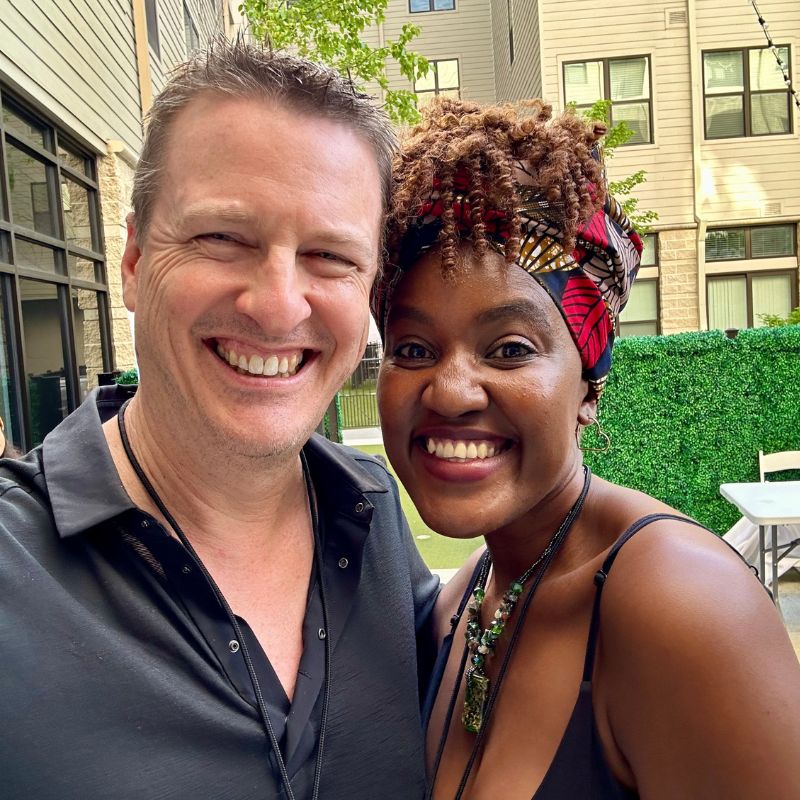
Matt Bowles: My guest today is Justa Lujwangana. She is a Tanzanian Brooklynite, storyteller and curious traveler. Born and raised in Tanzania, she went to boarding school in Uganda and then moved to New York City at the age of 12. After completing her bachelor’ and master’s degrees in the U.S., she then founded Curious on Tanzania in 2015 as a travel company that leads culturally immersive trips to Tanzania guided by passionate locals. Rooted in local culture and stories, Justa takes you beyond the usual tourist spots so you can patronize local businesses and uncover hidden gems known only to locals. She enables you to experience the beauty, wildlife and adventure of Tanzania, as well as its history, gastronomy, nightlife, and local cultural traditions. You’ll get to forge meaningful connections with the Tanzanian people while supporting the local economy. Today, Justa spends at least six months of the year in Tanzania, but she also hosts the annual experience Tanzania Fest every June in New York City, which attracts hundreds of people and brings to life the Tanzanian culture in New York. And by the way, she speaks five different languages.
Justa welcome to the show.
Justa Lujwangana: Thank you.
Matt Bowles: You are up to some really amazing things, and you have some amazing stories to tell and I’m super excited to have you on the podcast today. But let’s just start off by setting the scene and talking about where we are recording from today. I am actually in the Blue Ridge Mountains of Asheville, North Carolina, on the east coast of the United States. And where are you today?
Justa Lujwangana: I’m currently in Mount Vernon, New York. Just enjoying the cold weather.
Matt Bowles: Money Earnin’ Mount Vernon, represent. I know that place has an important part in your story. I feel like though, we should actually just talk about where and how you and I met because it was in the greater New York, New Jersey area. We need to give a shout out to Vanessa Fondeur, the founder of Latino Travel Fest. I was there at Latino Travel Fest, and you had a booth there talking about your amazing company, Curious on Tanzania. I saw it, I went up to you and I said, yo, I love your country of Tanzania. And then we just started chatting and got to connect there.
So, I am super, super excited to have you on the podcast today. We’ve known each other probably for at least a year now, so we’re finally putting this interview together. And I thought maybe a good place to start would just be all the way back, because you were born and raised in Tanzania for the early part of your childhood. And I’m wondering if you can just take us back there and share a little bit about what you remember at that age, growing up in Tanzania.
Justa Lujwangana: So, I grew up in a village in Tanzania, is called Bukoba. Bukoba is located on the northwestern part of Tanzania, next to Lake Victoria. In Lake Victoria is the second largest freshwater lake in the world. The fish there are amazing. So, we had a lot of fish, and a lot of bananas. That’s what we used to eat all the time. But growing up in the village with my grandmother, because my mom was in Raslam, there’s five of us in the family, myself and my four siblings. So, my mom ended up taking us to live with my grandmother because she had to work in Raslam. So, we grew up in the village. And life in the village was all about being outdoors between mango trees, climbing mango trees, going to fetch water. But we just did it for fun, fetching water with our neighbors, playing in the sand, to just being free as kids and just enjoying ourselves, performing our weddings.
Whenever there is a wedding, we’ll come up, we’ll sit down, we’ll create different songs, we’ll create different dances, and we’ll all dance and we’ll all celebrate together and celebrate somebody getting married. We were very immersed in the village culture at an early age. And then when I turned age six, my grandmother, who was very religious, she was Catholic, so she attended a lot the masses, which almost the whole village did, where there was an opportunity by a nun. They told her that she could be able to take us to school in Uganda, but we did not have that much. But they worked it out in a way where I was a guinea pig to go to Uganda first.
The reason why my grandmother accepted for me to go to Uganda, and my mom also said yes, was because Tanzania is predominantly Swahili spoken country. So, at that time, this is in the early 90s, Swahili was the language that was pretty emphasized to be spoken. And English was secondary. When you go to secondary school, that’s when you learn English. But my grandmother, they wanted us to learn English first. And so, Uganda was one of those countries that even in Primary school. They taught English first. They ended up taking me to Uganda. And actually, my first trip to Uganda, I did not even have a passport. I had to walk and sneak onto the border because my village is very near to the border of Uganda.
So, I literally had to hide under a certain tree. And then I was picked up from there. And then I ended up going to school in Uganda. But the second semester came around. My passport was able to come in, So I was able to go in on a regular basis. But while in Uganda at that time, I was around six or seven years old. I spoke Sawai, which is our traditional language. And then I also spoke Swahili. My English was nowhere, anywhere close. And that’s the reason why I went to Uganda, is to also be able to learn English. So, I ended up in a boarding school. All girls Catholic boarding school, which my grandmother took me there. At that time, I didn’t even think I had a mattress. They made me a mattress made out of grass.
And the COVID remembered, it was a green cover. So, I literally slept on the mattress made out of grass. For my first couple of. I think it was a semester or two before I was able to buy a regular mattress. As soon as I arrived at the school, I’m like 6 years old, 7 years old, did not know anybody. And literally my grandmother did not come with me. They dropped me off, which was a neighbor who was a teacher before. He’s the one who took us to school in Uganda. Because my grandmother also did not speak English. Or even writing was very few. She did not know how to write. We always had our neighbors who would help in any way that was needed.
So, he was the one who took me to school. I arrived at school; they checked me in. And I was left there by myself with almost 700 kids that were there. So, I’m in the middle of there. They put me in this. It was a pink dress. Because you have to wear a uniform during the playtime was pink dress. And then during school time, it was a green dress that you had to wear. So, I’m in that dress and I’m looking around. I’m like, oh, my God, where am I? Kids are coming to talk to me. The kids are speaking Luganda and I’m speaking Haya and Swahili. The kids in Uganda don’t speak Swahili. They only spoke Luganda or English. So, we are all looking at each other like, what is happening?
But luckily, Haya in Luganda, they’re very close where you could be Able to hear each other on certain words. So, while I was going to school, first grade, we were taught things in Luganda. So, I had to learn Luganda first. And then English was added on little by little as we were going on to school. So that’s how I had to adapt. So, learning a new language, being in a different country. And this is a time when the genocide was happening in Rwanda. So, there was a lot of war and a lot of uncertainty because, of course, Rwanda is very close to Uganda. And they had, like, the military from Uganda by my school. It was on the hill and under the valley. You could literally see the military training and all of that, which my mom did not know or my grandmother. We had to go there for education.
But I was able to adapt. First grade, I was able to do good. Second grade, I went to school there until I think it was fifth grade. But one of the things my mom always promised us was she was going to take us, because she was then in America already, that she was going to bring us to America for school. The first year went by. I had to go back to school again. The second year went by, I went back to Uganda again. So, I’ll go back from Tanzania to Uganda, Tanzania to Uganda with the promise that my mom made us. But that promise was never fulfilled until five years later, we ended up going back to Tanzania. We went into Dar es Salaam because that’s our capital. And from Dar es Salaam, we were lucky, my mom, then, fulfilled that promise. And at 12 years old, I was able to come into the United States for education.
Matt Bowles: Let’s talk about that transition. I think it’s interesting that you had the initial context of transitioning from Tanzania and your village and your language and everything that you knew there into Uganda. So that was one transitionary context that you already had experience. But then when you came to the United States, and you came to New York. Can you talk about what that transition was like, what you remember at 12 years old and what that acclimation process was at that age adjusting to New York.
Justa Lujwangana: In Uganda and also in Tanzania, everyone usually has to be a uniform. So, my hair was cut short. So, when I came into the U.S. I had an almost bald, very, very short haircut. And so, when I first went to school, everyone is looking at me and asking me, am I a boy or girl? And then I also had this thick, thick, thick accent when it came to my English. When you’re speaking Luganda’s English, the accents are very thick because of the language and the accents of it compared to Swahili in Tanzania. So, when I came in, majority of the kids did not know what I was speaking of. Of course they put me in ESL, the classes. But it was pretty much a very heavy adjustment.
One of the things was the way the kids dressed, the way the kids talked, the social groups that they had. So, for example, I came back home, and my mom took us shopping and I got these beautiful white sneakers. And then I was so happy that I got new shoes. All I knew was, they’re just new shoes. And I was super happy to have these new shoes go back to school. And at that time, they had braided my hair too. So, we then got new shoes, braided my hair because I couldn’t take the teasing, the bull length. So, I appeared at school and I had on these beautiful white shoes. And some of the kids saw me and looked at me. They’re like, are you wearing Payless? And I didn’t know I was wearing Payless because Payless at the time, for me, new shoes are new shoes. And in the middle, the kids had Timberlands, had Nike, had all the brand names that they had on them. But for me, I did not know the difference until later on when they told me. That’s when I came back home, and I was crying, and I was telling my mom I needed something different.
But it was very much a challenge finding a way to adjust and have I adjusted to the American culture? I would say even until today, I gave up on adjusting. And I was like, probably. I might not feel it all the way. I would just need to be me.
Matt Bowles: Can you talk a little bit about the dynamic of growing up in an immigrant home and how the Tanzanian culture and everything thrived in your home? But then also with that, like you were saying, juxtaposition with this sort of American culture that you were going out into every day. And also, being in New York, in South such a diverse place with immigrants from so many other different places, and how you navigated that as you came of age.
Justa Lujwangana: So, in school, because when I left Uganda, I was in fifth grade, and when I came, I was put into seventh grade. And then from seventh grade I went to ninth grade. So, I skipped a couple classes because I was taking tests and getting through with them, and then I’ll moved on to the next one.
So, some things were a little bit better in Uganda, but when I got to middle school in Mount Vernon, I noticed that, yes, I was different. And I had to find my community. So, I resonated a lot with people from the Caribbean and we all became friends because some of them were also in the ESL class, which is English as a Second Language. But that’s how we were able to adjust because we had that community between the Spanish kids and also the Caribbean kids. They understood how life was in almost like a third world country or like a secondary country, I should say.
So that’s how I was able to make friends. And they are actually still friends with me until today, especially a couple of my Caribbean friends. We’re still friends until today. When it came to my household, as soon as you step foot in the house, you take off your shoes, you are back to being a Tanzanian. Between the food that we ate, language wise, and our mannerisms, it’s like you are Tanzanian. This is how we act; this is how we are. And whatever you do out there, you better not bring it inside. Or when you leave the house, you are a representative of your mother, your father and your grandparents and everybody else who’s behind you. So, we always knew that we have to be of that person who represents and these people behind us that we had to show up for.
Matt Bowles: So at that age, when you were going through high school and coming up in New York, I’m curious also just how you navigated and how you found and what your observations were about the dynamics of blackness in the United States, coming from the continent to the U.S. in terms of encountering racism and white supremacy and those types of dynamics, but also in terms of your connection with the African American community versus the black Caribbean immigrant community versus the black African immigrant community and so forth, and how you sort of navigated that scene.
Justa Lujwangana: This is probably the late 90s, I think I came in ‘97 or something like that. So the late 90s and in Mount Vernon, where it is predominantly black, I should say, or the high school I went to was predominantly black, I definitely was able to connect more with the Caribbean and also Spanish because, like I said again, we were all going through the same journey of like migrating somewhere, not speaking the language or even having a different accent. We were different from everybody else, so we had to find our own grounds. But connecting to, like, in this case, African Americans, people who are completely like black Americans who are born in the U.S. and probably have never been either on the continent or in the Caribbean. It was pretty much challenging because we both saw our differences.
And what I know now is what a tribe is, a description of what a tribe is, is people like us do things like this. Now, to reflect back, I understand how people were acting in different ways because they were associating with people like us do things like this. This is our tribe. This is how we do things. So, when you come in from outside, somebody else will look at you. They’re like, no, I don’t see myself in you. So, I see, but I don’t see it. They will resist until you are able to prove, this is who I am and accept me as I am. So, what I ended up doing is I connected with my fellow Caribbean friends. We joined a Caribbean club where I was teaching them Tanzanian music, Tanzanian dance. They were teaching me Caribbean dances from, like, Jamaica, from Trinidad. We shared food. I shared my food. They came over to my house. In that way, we connected, and we got to understand each other. And so how we become a community.
Matt Bowles: Can you talk a little bit more about music and the cultural significance and grounding that music has given you through the years and how important that’s been in your life?
Justa Lujwangana: Music had a message behind it. When music was created for us, when we came together, like, there’s a wedding, so there’s a song that sang about that person getting married, congratulating them. There were jokes that were told in between if it was needed. But everything was done through drumming and also singing, a cappella. But I remember so many songs even with my family, when we come together, we always sing these songs, and it brings us all back to our village. Let me say, for example, sometimes even people who live in Dar es Salaam, in the capital, Dar es Salaam, that did not live too much in the village, they’re always wondering, like, how do you guys remember those songs from all the way from the village?
It’s almost like, but you live in Dar. You live in Tanzania. You should know your culture stuff. But for them, because sometimes it was not emphasized, or even people from here who are Tanzanian, they’re like, how do you guys remember all these things from the village? Our kids do not remember anything, or they don’t even speak the language. I’m like, it’s because my mom, that’s what she loves, and that’s how she lives her life through that way. And she’s able to reflect back and see where her joy comes from.
Matt Bowles: Could you sing one of those songs that has meaning to you?
Justa Lujwangana: I’ll do two. The first one is called Akanana. Akanana is a wedding song, and Akanana means basically this ripe banana. I would translate. It basically means ripe banana. That Is a metaphor for a beautiful bride. And you are taking this precious daughter of ours. She is ready. She’ll be able to come and be a good wife, be everything that you need. And it’s like a powerful joy song.
When you have a lot of people with you and they’re singing their songs, the drums are drumming and different tones. It’s just amazing. And you’re in that crowd, you just see the bride start singing, crying, because this is something that they’re singing about how beautiful she is and all the qualities that she has. And again, it’s a metaphor, reflective. Because predominantly, we eat bananas, and we have a lot of bananas, green bananas. There’s almost like 42 types of bananas. And we cook them. We eat them as snacks. We eat everything. We make wine out of it. We do everything with bananas. So, if somebody compares you to a banana, it’s a prideful joy thing. Some of the messages are like that.
Another song from Uganda that I still remember until today. This is a song that one of the nuns. Whenever we had the assembly every morning, we had to sing it.
So basically, what does that song mean, in this world, what am I doing in this world? What am I doing in this world? How do I want to be remembered? Do I want to be remembered by my debt that I have? Or do I want to be remembered by the excuses that I make? In this world, what am I doing in this world? How do I want to be seen in this world? How do I want to leave it?
And that song always reminds me. And whenever I do anything, even starting, like, Curious on Tanzania is one of those things I want. The day when I exit this world, people remember me for having the passion to love showcasing my country or just giving people the opportunity to be able to. Or even telling my own story and giving people that opportunity to be able to see me as I am, to see other Tanzanians as they are, and to be able to remember, okay, there was that part of the country that I want to visit because there’s this person who made me feel like this.
Matt Bowles: Can you talk about the dynamic of being an immigrant in the diaspora? And your family was really intentionally maintaining all of these aspects of Tanzanian culture, but you were away from the country, and there was physical distance from the country, even though you were maintaining a lot of the culture and the tradition, and then talk about your physical reconnection and going back to Tanzania and what that experience was like?
Justa Lujwangana: It’s a way of coping, I guess. You learn to appreciate Something really well when you are away from it. That’s one thing I learned, because sometimes when I go to my village, it’s a normal thing for them, and they’re so used to it, and it’s like, okay, we’ll move on about my life. But for me, every little thing, even, like when I go back and I watch people dancing and I look at the homes, how they build them, and I see how people live, it’s just amazing for me to reflect on that and knowing that I still have the opportunity to be able to go there and be with and speak the language and eat the same food with them and sit down and understand where they’re coming from and finding out ways of how we could probably be able to support.
For me, I cherish that a lot, maybe because I’ve been outside, and I’ve seen this as valuable. This is something that we need to preserve. And that’s all, my mom. My mom, every single day. You would think she’s in the village, she’s in America, but you would think she’s in the village. She never left it. And like I said, it’s maybe another way of coping and knowing that you do belong somewhere. Because a lot of Africans, like, Tanzania has 120 tribes, and we speak almost like 200 different languages. But it is such an honor to know you belong somewhere. And my mom always, when she was working three to four jobs and we come from the royal family, so anytime somebody said something negative about her, she told them, I’m a princess. This is who I am. In my village, I’m a princess, and we do things like this. And you cannot talk to me like this because this is where I belong. This is where I come from, and I know who I am.
So even for us, whenever we had, like, encounters where it wasn’t appropriate, I’ll tell you, I’m a princess. Don’t come after me because I know who I am. You cannot discredit who I am. And I am going to tell you who I am, because this is me. And you might need to understand me a little bit better to find a way to interact with me. So that was always like that. And it was always something that helped us. It never did not serve us. If it did not serve us, we would have put it away, but it always served us to kind of know who we are and where we come from. We spent a lot of time not visiting, but because of all the schooling that we were doing and not having time in between, time to be able to go when I was 18, my mom gifted me a ticket to go back into Tanzania. In that trip, I mean, Tanzania, I knew it. But then Tanzania became a stranger. I did not recognize anywhere where I was going, and I needed people to just take me around. Even for my mom, my mom did not end up like, after spending almost like 10 years without visiting or so. It was such a strange country to us.
Although we knew the language, we knew everything. But things have changed so much. Where was it like, where am I going? There’s no direction anywhere. There’s no signs. You just have to know places by the building and by the neighborhood. If you pass by this neighbor, you’ll be able to find it here. And that’s how we Tanzanians give directions. So that was a little bit challenging. And that first year when I went, it was basically, I went straight. I landed in Dar es Salaam and flew extra three hours to go straight to my village to be able to meet with our grandmother. And then we spent a lot of time with our grandmother, reflecting on everything. Then we came back to the restaurant and then we left back to the U.S.
So, I never got the opportunity to do all the tourist stuff until probably five years later when one of my uncles came to visit America. And that’s when I had already graduated from college with a bachelor’s and a master’s, and I did nutrition. So, when he comes, he’s like, what are my daughters doing? What are they doing here? Because he has a travel company and he’s been running it at that time for probably 25 years or so. And he’s like, you guys are here, but there’s this whole world that you need to see in Tanzania that you could be able to share with the rest of the world, because I know what you guys are doing. So, he scheduled another trip for us to Tanzania, which was an all-paid trip. And so, when I went back, that was like, yeah.
Matt Bowles: Well, let’s talk about that trip, what you experienced, and just in general, let’s give love to Tanzania and talk about some of the different amazing aspects of your homeland. As you know, I have been multiple times I have gone back and I have done a lot of the different types of things, which is one of the things I love about Tanzania is there is so many different and amazing things to do depending on what types of things you like, you can absolutely find it in Tanzania and have an amazing time.
I feel like the first thing we should start with is talking about the nightlife in Dar es Salaam for people that don’t know, for people that only think about beaches or safaris or things like that, and they don’t know about Dar es Salaam, I feel like we got to put them onto that. And I will tell you, my first time going to Dar es Salaam was pretty amazing. So I was in Nairobi, Kenya for about a month. I was based there because I’ve been digital nomading around. And I was there for a month. And some of the people that I was there with, one of the women shout out to DJ Fab Rock. She’s a hip hop DJ from Harlem.
Justa Lujwangana: Oh, wow.
Matt Bowles: Yeah. And so, while we were there, she started getting gigs in different places around East Africa. And so, she gets a gig at this nightclub called Maison in Dar es Salaam, which was the top hip hop club in Dar at the time. And they had had international DJs there and stuff before, including from New York. But she was going to be the first female DJ that was ever to headline at that club. So, she’s like, yo, you guys want to roll with me as my entourage? We’re like, hell yes. And so, we did. And we go to this club. Now, I will give folks some additional context as well about this. So, you and I were talking about the only NBA player from Tanzania in the history of the NBA. His name is Hasheem Thabeet, and he played for UConn in college. And then he was drafted. I think he was like the second or third overall pick in the NBA draft, and he’s the only Tanzanian that’s played in the NBA.
Now, I happened in 2009 to be at the Big East College Basketball Tournament in New York City, and that was the year that one of the most famous basketball games of all time was ever played, which was the UConn Syracuse game. Once the beat was on UConn and the game went into six overtimes. So, I was at Madison Square Garden until like 1:30 in the morning watching this unbelievable game. And so, I was really intimately familiar with who Hasheem Thabeet was because I was at this incredible game that he played in. So I go into Maison, and first of all, I am just amazed by this because of the Notorious B.I.G. and shout out to Brooklyn, because I know you have a deep connection with Brooklyn as well. I walk into Bazon and the entire foyer while you’re waiting online to get into this club, there’s a massive mural of Biggie with the crown lit up and it says it was all a dream.
That’s the entire wall getting into this club. So, I’m completely enamored with this and then we went into the club. Who is in the club? Hasheem Thabeet is in the club on the night that I am there. So, it was like an incredible full circle moment. Obviously Fab Rock turned it out. Like the party was incredible. We were there until the sun came up. And it was this absolutely amazing night that I continued to tell stories about this day. So, I have huge love for Dar es Salaam, but you have spent a lot more time there than I have. And I would love for you to share a little bit about what you love about Dar es Salaam and what you might put people onto about the capital city.
Justa Lujwangana: Maison, that was the spot. Maison was the spot. Who is who was there. So, I wouldn’t be surprised that Hasheem was there, because Hashim loved that spot. Yeah, I went there a couple times. I ran into him with his hammer and all. But that was the spot of who’s who. And if you needed to show off that you got it, that was a spot to go to. It was a really nice nightclub. Around 11 o’clock, 12 o’clock, that’s when you went in and then you were out all there until six, seven o’clock in the morning. And then from six o’clock in the morning you go for soup somewhere and you drink soup from your local mama or something like that to just cool you down, calm down with chapati, which is like flatbread, and then you just hit the sack. That’s what usually the time.
I mean, there are some. It’s still the same way. Right now, we have like a lot of new nightlife places. For example, by Coco beach, which is like our known strip, there is Wawovi, which is a really nice place to go to. And it runs from 10am all the way to 4am in the morning. So, you could be there and party all day. We have parties which are closer to Christmas and New Year’s. Our Wawovi, we have parties that go on for 72 hours. So, you could literally be there until morning time or like the whole day. We have sunrise parties that are happening around the area too. We have a lot of nightclubs, including elements, which elements you go there at around the same time, which take over the Maison schedule from 1am all the way to 4am in the morning. You go there. We have a warehouse where they have like really nice live music playing. Cape Town fish market. You eat really well. Evening. This is when you want to watch the sunset. You could do the sunset there. They have live music playing.
So, there’s a lot of new hit gems. There’s a lot of hidden gems that you have to know a local to probably take you there. And then there’s some places where a lot of people will know it, but those hit gems are usually like the one that I like taking people to.
Matt Bowles: Well, the last time that I came to Tanzania was in 2022. I came for about a month, and I was based mostly in Arusha. And from Arusha, I summited Mount Kilimanjaro, which was an unbelievable experience. I mean, it was for sure the hardest thing I’ve ever done in my life. But it was also one of the most special and rewarding and memorable experiences I have ever had. I did it with a core group of four very close friends of mine, and so that made it even more special and meaningful, but it was really special.
We’re talking about the tallest freestanding mountain in the world. You’re ascending through five different climactic zones. So, the scenery and the flora and the fauna and everything is completely different as you go up. And it’s just really an amazing experience. And then, of course, at the very top, when you’re doing the summit push, that is going to test you. It is going to test your mental fortitude more even than your physical abilities or anything else. Because the amazing thing about Kilimanjaro is that there’s no technical climbing, right? If you take the easiest route, the Coca Cola route, right?
And when I say easiest, that’s in quotes, folks, because none of it’s easy. But the thing about it is, there’s no technical climbing. So, it’s literally just a hike. You just put one foot in front of the other, and if you just keep doing that, you will eventually reach the summit. And so, it’s a lot more accessible for people that aren’t technical mountain climbers or things like that, like me. But, boy, you have to leave at midnight after you’ve been hiking all day, and you just took a nap, and you’re hiking through the night in freezing cold weather, and you’re going up difficult terrain and all that. But by the time you reach the summit, and the sun is coming up and you’re watching the sunrise from the uhuru peak, it is a feeling of accomplishment like no other, right?
Justa Lujwangana: Definitely. That’s usually what a lot of people usually say. I have climbed Kilimanjaro seven times, and each time I climb it, don’t ask me how far I went, but every time I climb it, either to the first level which is the Marangu. Usually, I take the Malango route. So, the first level, which is Malanda, or if I got the second one or the third one, is usually equally as exciting and as beautiful. And for those who are able to make it all the way on top like you, definitely that’s an accomplishment that it’s worth it. But I did it seven times. Just don’t ask me how far I went.
Matt Bowles: Well, if you do make it all the way up to the top, the other thing you have to remember is that you then have to come back down. And coming back down from the Uhuru peak uses different muscles than going up and is actually quite a challenging thing in and of itself. And so, by the time you’re all the way down the mountain, you will definitely be feeling it in your legs for the next week as you’re walking around. But it’s an amazing, amazing, amazing, amazing sense of accomplishment for me and was really, really a special experience that I’ll always remember.
And then after that, while you’re feeling this in your legs, one of the things you can do then is go on a safari in the Serengeti. And one of the things that I did, I went with a different group of friends of mine on safari. And I wasn’t sure initially if I was going to do it because I had previously, I told you when I was in Kenya, the last time I had done a safari in Masai Mara in Kenya. And they were like, yo, we’re going to go into safari in the Serengeti. And I was like, I already went on one of my San Mara. Do I really need to go on another one? And they were like, yo, first of all, we’re going to the Ngorongoro Crater. That’s way different. Second of all, we’re taking a hot air balloon at sunrise over to Serengeti. And I was like, okay, I’m in. And I went. And it was mind blowing. It was unbelievable.
Justa Lujwangana: Yeah, it’s almost like Lion King comes to life. That’s how the kids describe it. And a lot of people usually say, oh, my God, I saw this on Lion King. It was like, yeah, that’s the Serengeti.
Matt Bowles: It was incredible. And when you’re floating silently over the top of it, it’s just such an unobstructed view when you do the game drives and you’re in the jeeps and stuff, even though a lot of the animals are used to it, you know, still you kind of feel like you’re being a bit disruptive to their natural habitat. But when you’re literally just silently floating over the top, it’s just watching the animals, like, playing and jumping around and hippos jumping out of the water and stuff. I mean, it is really such a special and extraordinary experience. And it’s at sunrise, and it’s just, like, completely amazing.
So, I’ve had all of these Tanzanian experiences that I will just treasure forever. Now, the other one I want to ask you about, of course, is Zanzibar. Can you share a little bit about Zanzibar, both in terms of, I know you do the yacht parties and all this kind of stuff, but also in terms of just the historical and cultural significance of Stone Town and really diving into some of that history, because that, for me, was some of the most powerful stuff about going there and how culturally different Zanzibar is from the rest of Tanzania.
Justa Lujwangana: Right. Zanzibar is a gem. If you have somebody who’s guiding you that really, really understands how to curate your trap. Between the safari to Dar es Salaam all the way to Zanzibar, you will get to appreciate the country and your experience and yourself even better. But Zanzibar is basically an island that was before it was predominantly occupied by the Bantu people. And then in the 1700s, you had the Arabs, the Persians, the Indians, and the European who came in one. They came in because they brought in the spices with the spice trade, and then, of course, the East African slave trade that was taking place. So those are some of the mixtures that were included in there.
But the Bantu people were always there, and that’s how Swahili formulated between the coast of East Africa, where Swahili is a mixture of 72 different languages, including a lot of the Bantu languages. Portuguese, Spanish, German, Arabic. There’s a lot of fusion of Galileo languages, of how Swahili came about, which is a language that was also used for trading. So that’s how we, as Tanzanians are also ended up speaking Swahili, because it’s a language that brings us all together. But with Zanzibar, Zanzibar was independent. It got its independence in 1963. And then in 1964, the mainland, which was called Tanganyika, joined Zanzibar and they formulated Tanzania. But when you come in between the spice experiences, the local people’s experiences, and the beautiful beaches on the coast, you can never go wrong with coming to Zanzibar. But my favorite is always taking a yacht and just cruising around.
Matt Bowles: Well, speaking of the music that we have been talking about, I want to give you an opportunity to put people onto bongo flava music. For people that do not know about the genre, maybe have never heard of it. Can you share a little bit of context and then I would love for you to actually put some people on to some specific artists that they can go and check out on Spotify. I got Diamond Platinumz on my playlist. But give folks some context and talk about bongo flava music.
Justa Lujwangana: So, bongo flava music is basically, Bongo means brains. And then the word bongo is because it’s also a nickname for Dar es Salaam. The reason being you have to be very street smart to be able to rock in bongo, in Dar es Salaam, I should say. So that’s how they ended up calling Dar es Salaam Bongo, because Bongo in Swahili means brains. So, you have to have a lot of brains to be able to move in Dar es Salaam. It’s almost like you are coming to New York. If you are coming from the countryside and you’re coming to New York, you really have to be street smart to be able to run in New York.
So, for Tanzania, it’s the same thing. Dar es Salaam, almost 20% of the population lives in Dar es Salaam, and 80% of the population lives in the rural areas. So, everyone is always looking to come into their Eslam. So, the music, they named it according to that bongo flavor, but it’s a fusion. A lot of bongo flavored music, of course, has Swahili. Like, you will notice it first because of the language they will speak in Swahili. But they have an influence on a lot of other music. Like, let me say, in the beginning it was a lot of Cuban influence, and now it has a little bit of Caribbean influence. It has a little bit Haitian influence. They pick up from a lot of other music, and they kind of bring it in and form bongo flavored music. But then predominantly you will know is Tanzanian music when you hear Swahili, proper Swahili being spoken.
We do have music that goes into politics, talks about politics. We do have music about love. We do have music just in general, making jokes about fun of something. It’s very much metaphoric, I should say, like a lot of metaphors. So, the music everybody could be able to listen to, even kids, but kids might not understand the lingo that they use compared to what parents understand. What kids understand is two different things, but it’s the same songs. So, you’re not allowed to, of course, use aggressive words, which Swahili people don’t usually use. The F bombs and all of that. You must be very pissed to use that. Because in Swahili, it’s like you have so many other words that you could use to just rely on that.
So, if your music in Tanzania has those words, you will be canceled in two seconds. So, the music is kind of regulated. But some of my favorite musicians, of course, like you said, are Diamond Platinum. I think he’s the most popular one for Tanzania. But if you look up Diamond Platinum, he started from the humble beginning and now he’s like a multimillionaire. You could say, I like Jux Juma. He’s really nice music right now. He’s in love. So how does he sings about his love. Ali Kiba is also a really good musician, too. Female musicians; there’s Nandy, who I love her music. Vanessa Mdee used to be married to Romy, I think it is. She used to be a musician for Tanzania, but she took a break.
But, like, there’s a lot of other musicians, you appreciate it even more if you understand Swahili, you’ll be like, wow, did they just put those two words together? They just put that concept together. This is genius. But besides that, bongo flavor also expands into tribal music also. So, you will have people from various tribes that will sing in those languages. They will use the instruments from those tribes, like the higher people. You have Saida Karoli, who was very famous for her music, and she uses traditional drums and relates the messages towards anything that’s going on. Let me say, for example, when it comes to abortion, they will talk about it in music. When it comes to politics, everything will kind of be added to the music.
And also, politicians will partner up with the musicians to be able to share a certain message that’s needed to be shared. Or even the government itself, all NGOs. If it’s a message that needs to be communicated, it’s one of the ways to easily communicate these through music.
Matt Bowles: Well, we are going to link up some of these artists in the show notes so that folks can go and check them out on Spotify or wherever you listen to your music and get into some of the bongo flavor.
I want to talk to you now about your company Curious on Tanzania. And I think a great place to start would just be in your original conceptualization of the company. Maybe take us from the time when your uncle took you on that incredible trip and you saw all these amazing things about Tanzania to the founding of the company and what you wanted to do with the company and how you wanted to make it different and what it meant to you when you founded it.
Justa Lujwangana: So, it was a gift that keeps on giving. My uncle, when he came to the U.S. and noticed what we were doing was before that we had a TV show, like, a reality show. And that’s when, like, the Kardashians were doing their reality show. So, my family and I ended up putting cameras in front of our face, recording it, and my brother will edit it and then take it to Tanzania. It’s one of the national TV stations. They picked it up and they were showing our lives in New York. Basically, Tanzanians living in New York. It was called Growing Up African.
So, from there, our uncle noticed and saw that we had potential. So, he came to visit us in the U.S. and that’s where he proposed that we should go to Tanzania and see the other side of Tanzania. We were like, oh, we know Tanzania. Like, we don’t need to see it. So naive. But then we took upon the offer, and it brought us to Tanzania. And we climbed Mount Kilimanjaro. We went over to Ngorongoro Crater. We did Serengeti. We did so much, all in two weeks to just seeing the other side. And our mouth was, like, dropping. Every single place we went, we were like, why don’t we ever know about this part of Tanzania? Like, we don’t understand why.
But now to come to think about it, I do understand this because majority of the time we went, we had to go see family members, and we were only limited on time, and the other stuff was not as important. So throughout just seeing Tanzania in the eye of my uncle, I came back to the U.S. And I was like, I want to be a part of this. I want to show people what Tanzania is all about. Because this is, I saw it. I need to show it to everyone. I came back and I was talking to friends of friends, and I would tell them, oh, you need to come to Tanzania and see the safari and go to see the animals climb on Kilimanjaro. And that’s basically they were all looking at me, and they were like, oh, and then what? What else are we going to do? And then what?
So, I kept on, every time I would speak to somebody, majority of people I knew, they were not only interested in the safaris. They kept on saying, and what? And what? So, every time I would speak to somebody that kept on coming on so that I focused on that and then, what? What else? And so that’s how I ended up creating Curious on Tanzania is out of my own fascinations for the country, but also the fascinations that in what was the cultural experiences. It was just like immersing yourself into the Dar es Salam culture, going to the nightlife and experiencing that. For somebody who is just trying to find themselves and trying to understand where they belong, is this a place where I should come and figure out where I belong? I mean, it’s just so many different things. Like chefs who want to come and learn new, different cuisines. There were people who wanted to go somewhere and just disappear and find themselves for two weeks.
So, there was so much beyond just the safari. Then I was like, okay, let’s call it Curious on Tanzania because there’s so many people who are curious on something. We need to expand on that. So, I spoke to my uncle, and I told them that this is what I was going to do. And he was like, yeah, go for it, my daughter. Anything you need, just let me know. We’ll provide it for you. And that’s when I started learning more and more about branding, learning more and more about what tourism was all about. Because I went to school for nutrition, knew nothing about tourism. So, I started leaving work a little bit early. I sneaked into NYU for school because I had this entrepreneurship program by, I think Blackstone. It was after school program they were offering between faculty, students or ex students, alumni students, they were offering it.
So, I picked one of the categories, which I’m not going to tell you guys, but I picked one of the categories, I belong here. So, I went to the course the first year, which is in the computer lab that they had the first-year time I went there, they asked me for my ID. I told them I forgot at home. The second time I was like, hi. They asked me for again, I was like, oh. The third time they’re like, oh, hi Justa, how are you? So, it was almost a 10 week course. I attended it, I finished the courses, and I got the knowledge.
They kept the degree, and I kept on moving. But I literally did not have a means of understanding this world. And I was eager to do everything possible to be able to understand it. So of course I did attend a lot of festivals, I did attend a lot of travel expos. Anything that had to do with travel, with business, with entrepreneurship, anything that came about, you would see me there. You would literally see me there, just with open ears, just trying to observe all this information. And then after that I’ll come home and apply it to what I’m doing. How does this apply? So, I Attended one of these courses. Somebody referred this to me, The Lean Startup. I was so lost on how to start a business, because I was always told, put everything together and then put it out.
But then when I went to the conference for The Lean Startup, which actually happened at NYU too, I got lucky. I went to that conference, the first one, the first book, The Lean Startup, and they were talking about this method of how to start a business, of how to create a sample, put it out there, if it doesn’t work, pivot, and then keep on going back and forth like that. So, once I knew that model and of course I got the book The Lean Startup, that was my first entrepreneurship book that I got once I got that, and that was my bible for how to create my company. So, I was just putting things out and just sampling it. If it worked, I kept it. If it did not work, I put it off.
Matt Bowles: Well, one of the things that I really appreciate about your offerings is that you have trips that are themed around different things that people may be interested in. So, you and I were just talking about the nightlife in Dar es Salaam, and it’s amazing, and you’re out till the sun comes up and all this kind of stuff. And there’s some people that are listening to this, they’re like, yo, I want to do that. And then there’s other people listening to this. They’re like, yeah, I like to be in bed by 10, and I like to get up at sunrise. So, tell me more about that sunrise hot air balloon thing or whatever it may be, right? Different people have different interests.
And one of the things that I love about your offers is that you have trips. Some of them are centered around food and gastronomy and the culinary scene for all the foodies and the people that really want to center that. You have trips centered around fitness, you have trips centered around music and nightlife. You have trips centered around self-care and wellness. You’ve done all women’s retreats and so on. So, people can really come into your ecosystem and say, this is what I really most interested in. And they can get on a trip focusing on that.
You’ve also done trips now that you offer where people can see an additional country. So, it’s a Tanzania trip where you can also see Kenya, or you can also see Uganda. Right? Or you can also see Zimbabwe or something like that. So, you can get to more than one country on that trip. So, I really like the way that these offerings have evolved. Can you share a little bit about that and maybe just talk about some of Your upcoming trips this year, like, if folks are listening to this and they’re like, yo, I’d really love to go to Tanzania. Because you’ve got a number of things that are happening in 2025.
Justa Lujwangana: Oh, yeah. So, all those trips, because I love curating and putting things together. And one of the beauties of curating experiences is you are able to intentionally position in terms of supporting the local economy. And so that’s how I have curated experiences. So, from the women’s retreat in November, that’s definitely for those women who are like, I am tired, and I need to have a getaway, but I need to connect with fellow women, and I also need to see what this country is all about. That trip definitely for women who are looking for a retreat, that will be a perfect way to end 2025.
We do have a culinary trip, especially for foodies and chefs. They’ll be able to enjoy and understand Tanzania and the influences when it comes to food a little bit better and how we get to understand food all the way from cooking it to tribal influences, to the celebrations of why we do certain things. Those would be good. The other trip that we do, which is the fitness, I do collaborate with famous fitness trainers, which they do fitness training based on code Kokua Fitness. So those are led by me and also the fitness trainers. But you will come back probably ten pounds later, but you enjoy, you eat, you enjoy your food that comes up in September. You will eat, you enjoy everything, but you probably come back ten pounds later and you will have a new appreciation for fitness, African dance fitness. And you could be able to incorporate it into your life where you could be able to continue following the mother and daughter, where you could create into your routine for a healthier life.
But then also the other thing that we do, we do a lot of customization, like customized experiences where people will just reach out to us and tell us, oh, it’s my 50th birthday. This is how I want to celebrate it. Can you put it together? I usually work with other influencers where we put together experiences for them. We have worked with TED Global and Georgetown University to put together their college track. So, it all depends on what people are looking for. The 2025 trips, those are dear to my heart because I love every aspect of it.
Matt Bowles: Can you talk a little bit about the evolution of your connection with the African-American community in particular? Because I know you talked about when you first got to New York, it was a really different culture and you didn’t really feel immediately that you were fitting in and part of that, and I know now a lot of your customers are African Americans who want to go over and reconnect with the continent. And you’ve been able to facilitate some really special and powerful experiences to help them to do that. Can you share a little bit about that?
Justa Lujwangana: Oh, yeah. In the beginning I thought there were a lot of differences. When I first came here, I thought we were so, so different. But when I came to understand I probably have something that they are seeking, especially when you say it’s African American. So, I am African, and they are both, but like I’m living in America, so I have that African key that they need to tap into so they could be able to somehow relate to the other side of themselves. So, majority of the trips is all about immersive experiences that go into transformative experiences where it hits you with aha moment where you’re like, oh my God, we are all the same. Oh my God. This is one thing that I’ve always missed. This makes me happy. And this is something that I missed. Or this is something that my grandparents did before too.
We have like a lot of similarities that I found myself that I needed to be that. You know how every time you point a finger person, there’s four fingers pointing at you. So that’s when I realized I keep on pointing fingers at somebody else, that we are probably not alike, or we don’t understand each other. But I needed to be that instrument, or I needed to be that bridge to help them understand the African portion. And because I am from Tanzania, so that guided me a little bit better, I was like, I’ll present Tanzania to you and if you see yourself in Tanzania, let me help you to get there to understand this part. Hopefully this will also help connect us together. So that’s how I was able to kind of connect those two worlds together.
Matt Bowles: Well, I also want to ask you about some of the social and political context and the ethical dynamics associated with tourism in Africa generally and Tanzania specifically. Starting with just the neocolonial context and the whole colonial history of safaris and this whole political economic arrangement and dynamics that has been historically there and still today. I recall when I was there in 2022, there was incident where the Tanzanian government was violently displacing Maasai people from their ancestral lands at the behest of foreign tourist entities. I think it was like a UAE based trophy hunting enterprise or something like that.
And so for people that are interested in going over there but are conscious of this stuff, I wanted to just ask if you can share any of your personal reflections on the industry, since you’ve obviously seen all the inner workings of the industry over there and just what context people should have and should be aware of as they’re going to do tourism on the continent in general, but in Tanzania in particular, Definitely.
Justa Lujwangana: Fortunately, or unfortunately, tourism is our number two sector. So, agriculture is number one. Then tourism is number two. But we are the ones who are leading in the travel industry, probably not. Let me say, for example, when I did my last research, almost like 80% or 70% of the money punctually stays in those foreign places. And only 20 to 30%, or maybe it might be a little bit higher now it comes into Tanzania for actually the. Physical labor and like taking care of everything. Technically, not too many Tanzanians own this industry. But when it comes to the placement of, let me say, for example, of the Maasai people, we do feel that is their homeland, they could be able to stay there. When we got our independence in 1961, there was the arusha decoration that was put in place.
And basically, the arusha decoration also included preservation of our land towards game reservation, which was almost like 28% of our land is preserved towards game reservations. So, there are policies and rules that protect us and the people. But of course, you have foreigners who come in a little bit more aggressive and they’re able to go buy it. But they did stop when it came to displacing the Maasais. They are working on it and they did put a kind of a hold. I know last time, I think it was people from Dubai, they were coming in to invest in the Serengeti, which according to the arusha decoration, is something that was created almost 60 years ago and actually has helped us to preserve our land.
But if they come in politics, I don’t like getting too much into politics, but we’ll see the side effects and how it could also affect us as Tanzanians, because tourism is our number two sector. But what I would encourage us as Tanzania, and this is one of the reasons why I also joined the tourism sector and also working on the local level, is we can’t keep on pointing one finger at somebody when four fingers are pointing at us. So, we have to be active participants. And whenever I go back home, even in the all the way in my village, I do my best to try to find out what is something that could be created into a tourism product or attraction that people could be able to come and experience it. But also, the locals could be able to benefit from that.
So, we try our best to educate people as much as possible. Let me say, for example, I have my tailors who are in the restaurant. I have them make all the goodie bags and they’re made like very uniquely. They add extra stuff in there, but literally that’s their job. And they make almost like 4 or 500 of them a year for all of our guests. But there’s so many other ways of how we could, as Tanzanians or as foreigners who are coming in, they could also ask, how are you contributing towards the local economy? That should be also a part, hold people accountable for those who are visiting, Tanzania has again almost like 30% of our land towards game reservation.
So, it’s not just the Serengeti, it’s not just Ngorongoro, but we have other places that you could be able to visit. Even the game parks. We have Selous, or now it’s called Nyerere National Park. We have Ruaha, we have Mikumi. So, there’s all other national game parks, smaller, bigger ones that people could be able to go and visit. There’s no mass tourism there, but you could equally be able to enjoy yourself and see the animals and maybe it’s even a little bit cheaper compared to going to the most popular places. Especially for those who are going for either round two or first round. Or if you’re looking for a lot of cultural experiences, you could be able to go towards the other game parks and you could be able to support a lot of communities at the same time.
Matt Bowles: I think that’s super important. Yeah, the concept that you mentioned, tourism leakage, where people pay money to go on a tour somewhere and most of that money ends up not going to the local people. And so, one of the things I love about your company, obviously it’s Tanzanian owned. And can you talk a little bit more too about how you are intentional about ensuring that people that pay to go on your tours, that that money is going to local folks in Tanzania and supporting the local economy in a sustainable way.
Justa Lujwangana: We do our best to make sure Tanzanians are heavily involved either in the ownership or even operation of their experiences. This is why 50% of my time I’m on the ground is because again, a lot of our people who are coming to travel, they’re curious and their curiosity could be from food experiences all the way, like you said to the nightlife experience. They just want to know. And so, you have to do research before they even come in to provide that. If it’s not available. Maybe talking to a local person who does it. Like, let me say, for example, like a painter or like an artist. He’s really good with his artwork. Why can’t we have a sip and paint? Paint with the sunset view. So, I would talk to the artist and like, can we have a sip and paint? They’re like, how do we do that? So, I tell them, I’ll bring in the wine, you bring in the canvases, and then we do this. Let’s have it. So that’s how you create products like that. And then there’s a consistency in how you could get local people involved in those art who’ve never thought about it.
Storytelling, you have, like, a mom and pop who have, like, these amazing stories, or their home is kind of built in such a unique way where you’re like, this is a great place for people who have never seen this. This would be great for them to come and be able to see it and learn the history from you and understand why these things are done like this. Then you have that in. For me, I call it a library. Have it in my library. And anytime when somebody’s like, oh, I want to do something like this, we’ll have it, we’ll prepare it, and then we’ll share it with them. But for me, it’s very important to be in Tanzania a certain period of time to kind of get to understand us and then helping us to be a part of the tourism sector.
Matt Bowles: Let me ask you one more question, and then we’ll wrap this up and move into the lightning round. I want to ask you about some of your other travels outside of Tanzania. I know you talked in the very beginning of this interview about how different it was the first time you went from Tanzania to Uganda. And I know you’ve now traveled all over the continent. You’ve been to Zimbabwe and South Africa and Ghana and all these different places. And I’m wondering if you can just reflect on some of those travels to other countries and how all of that travel has impacted you as a person.
Justa Lujwangana: I went to Greece. Athens, Greece. I have family there. And the historical sites, they’re beautiful. I did Acropolis. It was just beautiful. Those narrow streets reminded me again of, like, Zanzibar. But I got to appreciate olives and olive oil and all the cheeses. It was so beautiful to just see other cultures. But, like, there’s so many other similar similarities too, where the slowing down. Compare it to New York. You go everywhere else, and the culture allows you to slow down. And that’s one thing that I’ve realized I like that I want to incorporate into my lifestyle is being present and just observing everything and just enjoying everything.
But after traveling everywhere, this is something that we as Tanzanians always sing. There’s a song every time we go somewhere, and we notice something different. We start singing, Tanzania, Tanzania. So basically, the song says, Tanzania, Tanzania. I love you, Tanzania. My country. I love you, Tanzania. It’s just one of those things like you go somewhere, you’ll. Oh my God ,it just makes you realize that you are such in a beautiful gem. Of course, you have to visit each country, and you can’t compare each country compared to yours. When it comes to Tanzania, for me, it’s like I’ve been around everywhere, but I always have to come back home.
Matt Bowles: Well, I think that is a great place to end the main portion of this interview. And just at this point, are you ready to move in to the lightning round?
Justa Lujwangana: Oh, yes. Let’s do it.
Matt Bowles: Let’s do it. All right. What is one book that you would recommend that people should read?
Justa Lujwangana: Probably like as entrepreneurs, definitely starting out, like I said, The Lean Startup. And for those, I will speak again to entrepreneurs. If you are looking at profits and trying to figure out what’s happening with you, I will recommend Profit First.
Matt Bowles: All right, Justa, what is one travel hack that you use that you can recommend?
Justa Lujwangana: Pick an airline that could support you to build your points that you could be able to leverage off using for like discounts. So that’s how it has helped me a lot. I fly a lot with one certain airline, but it gives me access and it gives me almost $200. Anytime I try to book my flight, I have my points accumulated and sometimes I get like $200 off. So, stick to one airline, make sure it’s more internationally or make sure it’s accessible to a lot of different countries and stick with it and they’ll reward you and you have lounge services and all of that. So, you have first class experience in an economy scene.
Matt Bowles: All right, who is one person currently alive today that you’ve never met that you’d most love to have dinner with just you and that person for an evening of dinner and conversation?
Justa Lujwangana: Oprah.
Matt Bowles: That would be a great dinner. All right, Justa, knowing everything that you know now, if you could go back in time and give one piece of advice to your 18-year-old self, what would you say to 18-year-old Justa?
Justa Lujwangana: Keep on pushing. Yeah, keep on going. Stay consistent. You will hit the jackpot.
Matt Bowles: All right, besides Tanzania, what are three other destinations that are among your favorites that you would most recommend, people should definitely check out.
Justa Lujwangana: Definitely. Ghana, South Africa. I love Greece.
Matt Bowles: All right, Justa, what are three of your bucket list destinations? These are places you have not yet been highest on your list. You would most love to see.
Justa Lujwangana: Italy, for culinary experience. Portugal and then Namibia.
Matt Bowles: Amazing. I’ve spent a bunch of time in Italy and Portugal. I as well have Namibia very high on my list. I am super excited to get there. Have not yet been. All right, just I want you to let folks know at this point how they can find you, how they can follow you on social media, how they can learn more about the upcoming trips from Curious on Tanzania and if you have a special discount you can offer to Maverick Show listeners.
Justa Lujwangana: Oh, yeah, definitely. So, you could be able to find us at Curious on Tanzania. You could Google it; Curious on Tanzania and it should be pop out but at Curious on Tanzania, on Instagram, on Facebook, everywhere else. As long as you type in curious in Tanzania, you’ll be able to find us. And for like our trips, if you are able to mention “MAVERICK”, you’ll be able to get $100 off.
Matt Bowles: Amazing. So, they can just put in the “MAVERICK” show when they sign up for the trip and connect with you and they’ll get $100 off. All right, folks, we are going to link up everything that we have discussed in this episode of in one place in the show notes, including the link to see all of the upcoming trips to Tanzania that are themed around different things. So if you want to go on the women’s retreat, if you want to do something that’s culinary and gastronomy focused or you want to hike Kilimanjaro or you wanted any of the things we’ve discussed, whatever sounds most appealing to you, you’re going to be able to go and check it out and get on the right trip for you. So, we’re going to link all of that up at themaverickshow.com and then just go there and go to the show notes for this episode and you’ll find direct links to that and everything else we have discussed. All the recommendations of the Bongo Flava artists and the books and everything else that we have talked about will all be linked up there.
Justa, this was amazing. Thank you so much for coming to the show.
Justa Lujwangana: Thank you. You had me down memory lane.
Matt Bowles: Thank you. All right, good night, everybody.