
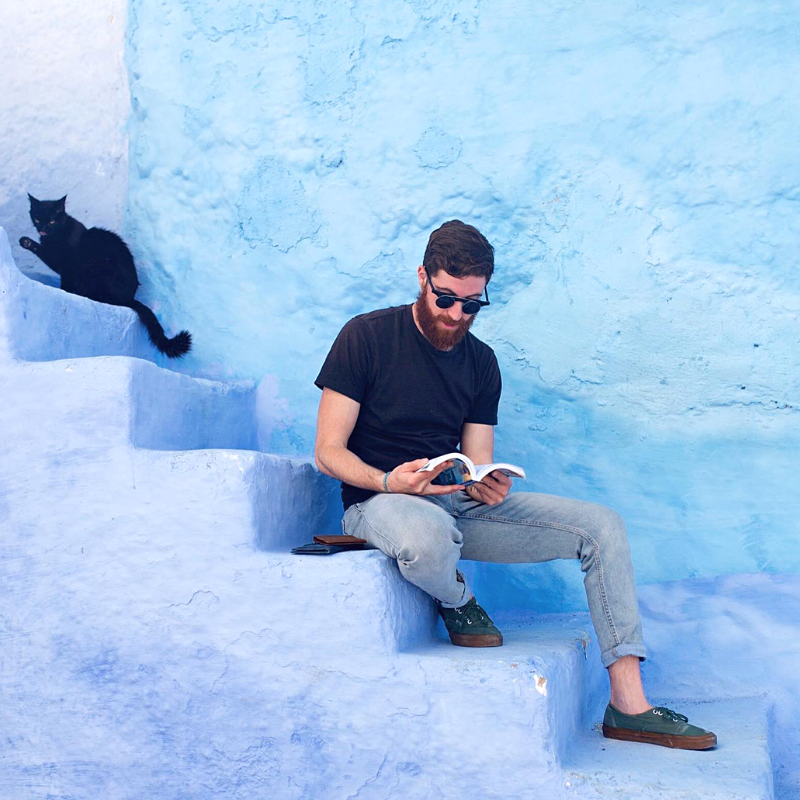
INTRO: This is part two of my interview with Joel Balsam. If you have not yet listened to part one, I highly recommend you go back and do that first because it provides some very important context for this episode. If you have already listened, you know that right now, Joel and I are in the middle of a bottle of Italian white wine. We are on a boat in the middle of the Atlantic Ocean heading to Brazil, and you can now enjoy the conclusion of my conversation with Joel Balsam.
Matt Bowles: I want to ask you now just a little bit about the professional dynamics of becoming and maintaining a lifestyle as a travel journalist. If listeners are interested in that type of career, and they would love to travel the world and be able to figure out how to get paid for doing the types of things that you do. What tips do you have for people who might want to get into the profession?
Joel Balsam: So Lonely Planet writing, and freelancing is a bit different. Mainly with freelancing, all I’m doing is I’m sending in a pitch to an editor with an idea, saying why it’s interesting, but more historical context and then who am I and why I should be the person to read the story. And then that’s where I would put previous stories that I’ve done.
So essentially, anyone can do it. Definitely really great for people from, you know, all backgrounds, all places in the world. If they want to do it to try and pitch editors, it helps if you’re going to school and have some bylines, as they say, to write for your local newspaper or your student newspaper, whatever, anything like that helps.
But yeah, it’s also very hard to sustain that. There’s a lot of frustration. It’s not paid very well. It’s quite a challenging profession in a way, but I don’t know if I made it work. And then it’s also key to have consistent clients most people won’t tell you upfront, but they also do commerce or content or copywriting on the side. Hopefully, it’s something that over time you try to get it to match with your values as much as possible, but I’ve done random things like writing for a real estate blog or like I’ve written about the business success stories for the government of Ontario.
Now I’m writing about travel gear for travel and leisure. So that’s something consistent that I have a very nice, slight bit of stability in my very unstable lifestyle. And then, I try and focus on the pitching and the freelancing, whether it’s travel writing or its other features as well.
Matt Bowles: Can you talk a little bit about what your lifestyle looks like and how you choose your destinations? How long you stay? How do you structure your lifestyle at this point?
Joel Balsam: I’m trying to figure that out. That’s one of the things I came here to think about and figure out. Cause this year was pretty intense. I went to like 10 countries or something. And because of the Lonely Planet, I did three in a row because of COVID.
I thought Lonely Planet was over. I thought travel writing was over. I got into a pretty dark place. Then it’s back. So, I’m going to take everything I can get. And then the Canada book came up, Quebec, I got to take that. Albania, Kosovo, sure, I’ll take it. That’s great. And then Armenia, like, you know, I’m passionate about these places.
And then they all came up and the way that I scheduled it, I couldn’t have a day off to hit all the deadlines. So, I went three months in a row, nonstop. And like, sometimes in these books, you’re like visiting like 20 places a day. I’m like driving for hours. I’m like pushing it. And then, so I got really tired.
I went to Turkey after, which is a bit awkward after Armenia. And then I went to Jordan and Nepal. And I was moving so fast that it was hard for me even to appreciate it. I went to the Himalayas, and I like was just in my head. I wouldn’t like to see it. I don’t know. People that travel a long-time kind of know.
You need some rest. You’ve, uh, you’re not enjoying the experience. So, I’m coming to Brazil, hoping to stay longer, try and figure that out. I’m also trying, I’m always been this like elaborate, like shopping the world for like my place to where I feel at home, where I feel the sense of belonging and where to stay.
And it’s like, ah, but interestingly in this nomad community, a lot of people aren’t as concerned about it, but. It seems like a good thing to do. Also, it would be good for me to establish more of a niche. So that’s one of the reasons why I want to stay a bit longer in Brazil, but when you have so many options and when things are coming up, sometimes I get these press trip things where destinations or companies fly me somewhere, like the Nepal thing.
I did that, you know, for Exodus travels. I did it as a press trip with them and I’m expected to write something, but as you know, a life experience, like I got, I got to do it, even, but also wasn’t maybe the best for my own mental health, but it was still really cool. I mean, I learned a lot. And I think also that the challenge of that was a learning experience.
I think it’s also like Buddhism is all about pilgrimages and like getting over the thoughts. And I had to kind of get over my thoughts in that moment too. So, it’s all valuable. I’ll write something. I also learned a lot about like the indigenous porters there. So, I’m trying to pitch that story.
If anyone’s listening and wants to know more about the other porters, not the Sherpas, the Tamang.
Matt Bowles: What is your take now, having been in the travel writing space for so long, and really having, I think, quite a comprehensive view of the space, because you’re a guy that really does, 1. Care, and 2. Pay attention to power and equality, the politics, the nuance of the places that you go.
And historically, the travel writing industry at large has not always played a very positive role, shall we say. And I’m curious today in today’s travel writing industry, given your priorities, your moral compass, and your values, what do you see in terms of the overall travel industry? And I kind of asked this question too, in terms of what people should be maybe aware of or what types of filters they might want to have or things that they might want to look at to be sort of, you know, critically assessing certain types of travel writing and things like that.
But I’m just curious, having been. In the industry for so long and knowing what I know of, of your values and how similar they are to mine, what’s your take on the overall travel writing space?
Joel Balsam: Great question. Really? Yeah. Let’s talk about this. I mean, just like I didn’t want to get into journalism because of Chomsky, I also didn’t want to get into travel writing because I just didn’t want to have the white man’s gaze.
I didn’t want to be all of these problematic things that we’re talking about. I mean, the other looking at people like a zoo or whatever. I didn’t want to do this, but then also I have all this experience. I do care. So, I gave it a shot. And I’m doing the best that I can journalistically. I really care when I do stories about indigenous peoples, I really try.
And you know, I’m trying to amplify their voices. I’m trying to get their side of the story when a lot of the time it’s ignored still. And, I mean, I’ve had good talks with indigenous journalists, too. I understand that it would be good if they do it. They should come first. But also, the Cree friend that I was talking to in Montreal is like, you know, yeah, go for it, man.
Like, you’re doing it, but do it with journalistic integrity. And I really believe in that. You know, I know it’s hard. It’s good to criticize the media, but I do ultimately believe. In that, in journalistic integrity, getting expert voices, getting to put myself out of the story. I feel a little uncomfortable when I’m in the story too, because it’s not about me a lot of the time I’m trying to show people to explore the world to say, you know what?
There’s more out there than my backyard. So, I really do care. I’ve been kind of trying to distance myself even in this conversation about just being a travel writer because there’s definitely some, like, I consider myself a journalist and I maintain those in that integrity in my life and in my work. I almost, it’s hard for me to even separate my journalistic values throughout.
But I met an influencer and she traveled very widely, and I just couldn’t believe that it didn’t seem like she knew how to respect or care for the local cultures. And then I’m seeing how nobody’s buying, like people like, Oh, Lonely Planet, that’s old. Why would I do that? Why wouldn’t I just get an Instagram or TikTok?
And I know how the influencer thing works. I take press trips sometimes and I feel often like crap because I’m like, how can I maintain my integrity when you’re paying? But every publication says, except for Lonely Planet, one of the reasons I really love Lonely Planet is that I am not allowed to take anything for free at all.
And I take it very seriously, but like all the other ones, they’re saying, get as much stuff as you can for free because you know, we’re not going to pay for it. But, also, I’m going to maintain my integrity when I do that, but then it does get to you, you know, of course, it does, you want to make them happy, you want to get on another cool trip, you want to get another luxury thing. So, it’s, I don’t know, I get disenchanted with that space, so, yeah, I’m just trying to maintain my journalistic ethics, I’m trying to illuminate stories, but I asked myself these questions.
I am very acknowledging that I am a white guy in this space. And that’s something I think about a lot. I carry a lot of guilt, white Jewish bad guilt that I’m working through, you know, because that’s just who I am at the end of the day. And I’m trying to do the best that I can to amplify voices, as I said, but I’m curious person that I don’t want to just stay in my suburb of Ottawa, where I was from.
I want to explore the world and understand the world. And I think that makes me a better person. I recently went to South Africa. You know, you can read about it in a book, but talking to people, being an Uber or whatever, like on the street in Langa, in the township, and learning about all these issues. Fascinating place for me to learn what was so key as a traveler and I haven’t written about that. I want to feel like I’m more of an expert, you know, in a way to do it. But anyway, suffice to say, I think about these things.
Matt Bowles: Yeah. I mean, you and I talked about the Lange Township in Cape Town and for folks that haven’t spent time in Cape Town, it is an incredibly segregated city, racially segregated class.
Segregation, all of this kind of stuff. And going into the townships for me and spending time there with people that are from the townships, like to your point, right? Trying to, to the greatest extent possible, avoid the voyeuristic gaze and this, and objectification, right? And instead, being able to connect with local folks and having people that live there and that are from there, take you through and introduce you to people and stuff like that.
But I was so remarkably inspired by so many of the organic local community initiatives that are going on in Langa, just as one example. They have art projects run by local men in the townships against domestic violence, trying to raise awareness about domestic violence in the township so that they can combat it locally, just within the community.
And they’re doing these art projects there and all of that. And then they have the Lange patrol, who are these, you know, community safety initiative that they created in their community for public safety and their regular folks that live there and they are patrolling and they have said that by creating a local community initiative for public safety, instead of having the police come in, they have been able to reduce crime exponentially because if somebody comes up and steal somebody’s iPhone.
They just go to the Lange patrol, and they’re like, who stole your iPhone? It’s like, it was this guy. And then they go to the house and get the iPhone back, right? So, and then they do this like victim-offender reconciliation and all this stuff, and they’re keeping the police out of their neighborhoods. So, they’re reducing police violence.
They’re also simultaneously reducing crime at the same time. And I was like, how are these people supported? Like who funds them or whatever? She, oh, all the restaurants give them free food and people donate to stuff and like all this.
I mean, and it was like such an inspiring thing to see how a local community can organize itself, can create public safety, can do all of these things to protect their community and try when there’s a problem, there’s domestic violence or there’s this, they’re going to raise awareness. You’re going to do these things. You’re going to try to help their own community. And it was just so inspiring for me to just go there and learn.
Joel Balsam: And that’s why I really always try and focus as much as I can on solution stories like that. Like you were saying before, the U.S. has such a problem with policing.
Getting more community policing, we can learn from there. And that other story I did about the river as a legal person, that’s the solution, you know? And I think that also becomes a problem when white guys come in and do the story, they like, kind of do poverty porn or whatever, and that’s not cool. I’m trying to, yeah, amplify and, and talk about the amazing things that are going on there. And one other thing, I guess, somewhat on the contrary, I was at Jordan when the Gaza thing was going on. And it’s just to be like, what’s the point of being like, you know, this is a cool place to go when ethnic cleansing is happening.
It’s disheartening, and I want solutions. And even, yeah, and going to Kenya too is like, man, like, all these like social businesses are here, but they’re all like, nothing we’re doing is working. Do we just like leave everything alone? Do we not care? No, I want to care. And I don’t want to like fix the world. I know that that’s not possible either. I want to have like a white savior complex with it. But like, anyway, I’m just like you, I’m fascinated in people trying and making some impact in their community.
Matt Bowles: Yeah. I think it’s super, super important. And I think the more that we travel and the more that we can pay attention to those things, the more we’re able to have an understanding of the world. And the more we’re able to connect things like, as we go around and you study what’s happening in Armenia and you look at what’s happening in Palestine, you look what’s happening, all these other places. Then you study the history, and you go to Rwanda or you go to Bosnia and you start to understand how these things come about, how they happen, what the environment is and the climate and the politics that create these situations and, you know, and all that.
And then you study, well, what did other people do? I mean, for me, I’m always also looking for inspiration. Amidst the horror and oftentimes cases, right? Like when I’m studying and I go to a place that’s had a genocide, I will like, go to the killing fields in Cambodia, right? Or I’ll go to the, I was at the mass grave in Rwanda just last year.
250, 000-person mass grave memorial genocide museum. And one of the things that I’m interested in when I’m looking at something like that, as I’m like, who are the people that were in the dominant group, the high-power group in the case of Rwanda, who are the Hutus that helped? You know, at great risk to their own safety, basically, they were told that they would be killed if they helped, that still helped the Tutsis, helped them escape, you know, stood up against it, you know, and you will always find people from dominant groups in any oppressive situation that took a morally upstanding position.
Oppose what was happening and help the people who were being targeted and abused, you’ll always find that. And for me, I look for that kind of stuff, you know, to find inspiration or I look for the, you know, the communities that are organizing themselves and doing these incredibly inspiring initiatives in Langa township in South Africa. That haven’t been able to be done in the United States, but here they are, you know, literally executing like this beautiful model of community public safety and things of this nature.
And I’m like, wow, like this is incredible. And so, I think that’s the complexity of the world we live in right now. Like there are all kinds of really horrible stuff going on in amidst all of that. There are these shining glimmers of humanity and incredible upstanding people who just melt my heart.
Joel Balsam: I think about that a lot. I mean, well, that’s also like, you know, Schindler’s list or whatever, but it’s one of my earliest, like, I guess, you know, formative political memories, you know, growing up with like the war on terror. And I’m thinking, would I, do I, should I, like, hide Muslims under my floorboards if they’re coming for the Muslim because of the rampant Islamophobia that was going at the war on terror and all that stuff?
And yeah, I think I would, you know? Like, it’s hard, but like, you’re risking your own life, but that’s a valid life, you know? And I learned that from, I would want that with my grandfather. Some people were harboring him while he was running away, like, running, like, over this, River, like, you know, trying to escape the Holocaust, man, but there’s more than that.
It’s, it’s like these genocides are happening, this oppression is still happening today. So, I really, I believe in like never again for anyone. And I mean, this is all that this is about in journalism, raising awareness so that hopefully people will do something.
Matt Bowles: People will do something that’s exactly right.
I can remember speaking of the September 11th attacks. I was in Washington, D.C. during September 11th. And my entire family was in Manhattan. They all lived in New York. My sister actually lived in the financial district. She actually saw the second plane hit the tower and was in that group of people that was running uptown.
So, it hit super close to home. And then I knew immediately what was going to happen with the Islamophobia stuff. I was in grad school. When it happened, I was finishing up my master’s degree in international peace and conflict resolution. And I was studying the Israeli Palestinian conflict, and I was doing Palestine solidarity activist work.
So, I was immersed in the Arab and Muslim community in DC quite deeply because of that activist work. And so, then this happened, and I knew what was going to happen. And it started happening in terms of Islamophobia and all of this reactionary rhetoric. And so, what I started doing literally on September 12th, on my way into work on the metro each day, I would wear my Palestinian kufiya as a sign to Arabs and Muslims that I was a safe white person to sit next to on the metro.
Be at people you don’t know, like, you see white people, you don’t know if somebody’s going to attack you, somebody’s going to jump you, somebody’s going to beat you, somebody’s going to commit violence against you. Like, it was a very scary place. So, I wore my Palestinian kofi every single day so that they would know that I was a safe white person to sit next to on the Metro or to walk near or that I wasn’t going to harm them.
And then I eventually got hired by the American Civil Liberties Union to do grassroots organizing against the post 911 civil liberty abuses that were targeting Arabs and Muslims and South Asians. And I did those grassroots political organizing work for many years. I was deeply involved in those types of issues.
But I mean, I think we just need to be aware of what’s happening to the people around us, to our neighbors, and so forth. And then what we can do to stand in solidarity with them. I just shared it on my personal social media an amazing initiative that was happening in Queens, New York, because right now, of course, with the genocide in Palestine, you have rising anti-Semitism and rising Islamophobia all over the world.
And in Queens, New York, the Jews for Racial and Economic Justice (JFRIJ), which is an amazing organization, were involved in organizing this cross-community event in Queens, where the Jewish community and the Muslim community came together to do trainings on community self-defense and bystander intervention so that they could support each other.
So that they could defend each other’s communities and they could, you know, they could do that. That’s the kind of stuff. I mean, it’s all about collective liberation. And so, what can we do when we see things happening and we understand what the situation is and how can we take a universally principled approach against oppression and in support of humanity?
Joel Balsam: It seems obvious to me. I mean, it seems clear. Like, yeah, just don’t oppress people.
Matt Bowles: Exactly. Yeah. It doesn’t seem very complicated.
Joel Balsam: It doesn’t make any sense. Like a twilight zone. They’d be like, wait, is everyone else watching the same thing here? Like, I don’t know.
Matt Bowles: What do you think? All of this travel, what do you think the impact has been on you as a person? Obviously, you’ve been politically thoughtful and curious and you’re reading books and that kind of stuff. But now that you’ve been out there and you’ve seen so much of the world and you’ve experienced it firsthand and you’ve met so many people in these different places and you’ve heard these stories and you’ve seen things firsthand, how do you think it’s impacted you as a person? I mean, at least, You know, over the last decade or so.
Joel Balsam: Yeah. I don’t know if you saw there was an article in the Yorker that was like, travels bad or something like we, it’s not an altruistic thing. It was kind of like a real antagonizer point. So, it got me thinking like, what is the point of travel? Is it just, I think it just made me refer more to vacations, but like, if you don’t like museums, you don’t maybe go home and you like museums.
Like you, it kind of enforces your values, but even if, let’s say if it does enforce my values that I already had shaped from hip hop, from the Holocaust, from Les Misérables, you know, revolutionary, like I know. I used to like to sing all these songs with my grandmother and it was like, yeah, man, like the press people rise up.
Yeah. So, um, I don’t know if it’s changed. It’s emboldened and illuminated. And I mean, I’m so glad to be having these conversations. Cause that doesn’t kind of get told sometimes behind the stories about how it’s told what I’ve learned on the thing. But I mean, it certainly, I think maybe a better person and I really want to do more though.
You know, like I’m not looking at it back. I want to even see, like, how can I, Illuminate people on different issues. I mean, I just heard a story, I just read a story in Washington Post about how acai, the smoothie bowls, is made by child labor. Things like that. It’s just like important to know. I do believe in the value of journalism.
And the traveling has been good, but I’m not trying to collect countries, you know, I also want to go to places that I care about, but I mean, you can learn a lot in other places, but I don’t know, I just, I do love it, I love talking to people, I love learning, it’s a constant journey, self-discovery, it’s all good.
Matt Bowles: What impact did Anthony Bourdain’s Content have on you. I think he was somebody who was inspiring to both of us. We, we talked about that, but also a white guy traveling through the world, you know, who did some pretty incredible things with his content. And I’m wondering how his content impacted, inspired, and influenced you.
Joel Balsam: Yeah, it’s funny. When I watched him before, like, I didn’t know he was everyone’s hero at the same time. I don’t know if anyone knew that until he died. And I, like, the publication I was writing for, I wrote, like, a passionate, like, obituary kind of thing about how he affected me. And people were like, yeah, like, okay, totally felt the same way. I mean, okay, that’s cool but I mean, he traveled, he asked questions, he gave space to people. And that’s one of my favorite things too. I mean, eating with people, going to the bar with people. But I really loved one of the main things. And I was telling you before that he said, he doesn’t really know anything like he’s going, he’s learning and he’s talking.
And that’s what I think as a journalist. And that’s why I feel uncomfortable being at the front of the story, even though he was the front of the story, but he was there to hand the mic. To pass the mic in our hip-hop thing. And that’s, that’s what I want to do too. But I mean, you know, people always tell me, Oh, you should be a YouTuber. You should be at the front of the brand. And like, yeah, you know, maybe, maybe I should, maybe that’s the way it goes, but I’m, I really like passing the mic. I really want to like to amplify the voices as I’m saying, and that was a cool thing with Anthony Bourdain. Also, yeah, going to like random places. He went to Armenia, got banned from Azerbaijan, you know, went to the West bank.
He was pushing it, exposing people to, to things that are in the world. Obviously very cool. And obviously a hero of mine.
Matt Bowles: Yeah, for me too. I mean, if people haven’t seen Anthony Bourdain’s content, highly recommended a number of travels shows that were, I think the most influential travel content that was produced in my lifetime.
I mean, it was just absolutely incredible. And I think you’re right. He inspires not only travelers, but I think also demonstrates this journalistic model where you can travel around the world and then platform and humanize and allow space for narratives to be told locally from the people that you’re visiting, which really, I think is what it’s all about.
I mean, that’s what I try to do with this podcast is interview people and allow them to speak and allow them to share their narrative and their story. And, you know, a lot of the places that we’ve talked about on this episode, I’ve interviewed people that are from those places, you know. If people haven’t heard the Lumjana Shehu episode, she talked about, you know, she’s Albanian and she talked about exactly what you described in the 1996-97 period and her family was Albanian refugees that had to flee the country and then they had to go to Canada actually eventually through Greece and get in on fake passports and sneak across borders and like have this whole refugee experience hiding in the back of trucks trying to cross borders and stuff like this.
And then eventually coming back to Albania. I mean, it’s an incredible story and I would encourage people to listen to it. But one of the things I try to do with the podcast is to platform these people who are now travelers and who are involved in this kind of lifestyle, but they have really important stories and they come from really important places.
And their experiences have shaped their view of the world and know how they engage with the world. And it’s just, it’s an incredible thing to engage with the nuance and the complexity of those and to learn from those people. I mean, I learned from every guest that I have on the show and it’s one of the reasons I love doing the podcast.
Joel Balsam: Yeah. I mean, good for you. Honestly, amazing that you’re still doing that. I remember I’m inspired by your spark and passion also. And I mean, even being on this Nomad Cruise or being in this, in the modern travel world, it can be easy to be like, let me just turn off the news. Let me just turn it off and not care.
I mean, let me just go have a vacation and not think about it. No, we have to care and there might not be such clear solutions all the time, but we got to try. We’re going to hit her, you know, put it together, work with local communities, ask them what to do, obviously, you know, things like that. And yeah, I just don’t want to, it seems like people have gotten so depressed sometimes with this world that they just don’t want to do anything.
And I think that’s not the way that’s not the answer. Use our knowledge, do the best you can, and work with local communities, but we’ve got to still care. We still have to do something.
Matt Bowles: It’s important. And you obviously heard the keynote speech that I gave here on the Nomad Cruise, and I was talking about the top five lessons that I’ve learned as a traveler over the last decade, a full-time world traveler, and the lessons I’ve learned from my podcast guests.
One of the final lessons that I mentioned is just the importance of, as we move through this world, observing and understanding the power inequality that is at stake and consistently stand with oppressed people. And I talked about how it’s particularly important for me to understand my government’s role, my foreign policy role of the United States.
And how it’s impacted the places that I’m traveling through, whether that’s South and Central America and overthrowing democracies and installing dictatorships and training death squads and destroying these countries, or whether it’s committing atrocities in Southeast Asia and Vietnam and Laos and Cambodia, and I go to these countries, and they’re fundamentally today impacted by the history of U.S. foreign policy. And it’s important to know that.
And then, of course, I talked about Contemporary foreign policy and what the U.S. is doing right now and funding and backing and arming the genocide in Palestine and why it’s important for us as travelers to be aware of that, to be conscious of that, and to stand up and do something about that.
So those are the types of things that I try to do is to open spaces where we can have those conversations and people can start to sort of engage on that level and hopefully be a little bit more thoughtful and substantive travelers as we move through this world, and we try to just align with people that are oppressed and in struggle.
Joel Balsam: It’s brave, it’s hard to talk about these things, but it’s worth it. It’s worth it and important to talk about
Matt Bowles: Well, I appreciated you coming up afterwards brother and you and I have had a lot of amazing conversations since then about all sorts of issues. But I think this is a great place to end the main portion of this interview.
And at this point, Joel, are you ready to move into the lightning round?
Joel Balsam: All right, ready.
Matt Bowles: Let’s do it.
All right. What is one book, maybe that has significantly impacted you over the years. You’d most recommend that people should read.
Joel Balsam: The Art of Travel. It was a series of essays of travel essays of early days of travel. And I remember very distinctly just like powered through it on like a, like a bank, like a grassy bank in Buenos Aires. I know a place that you love.
And it’s really like essays of the early points of travel when like after the industrial revolution, they were like, we need to get outside of this smoky place of London. Let’s go outside. Wow. Look at the grass. And there was also a really resonating point in it. That was like what you see on a postcard and then you go to the place. You’re still there. It’s still you in your head. You’re still going to be like me in the Nepalese Himalayas, still dealing with your own stuff.
Just because you go to the place doesn’t mean you’re automatically fixed and it’s all paradise. And, but that’s still worth it. That’s still part of the travel. So that was a really influential series of essays book I found in the library.
Matt Bowles: All right, if you could have dinner with any one person who’s currently alive today that you’ve never met, just you and that person for an evening of dinner and conversation, who would you choose?
Joel Balsam: I had to think about it, but I said Noam Chomsky in the end. You know, I used to get the chance. The guy’s got everything, you know, he’s got all the answers. You just got to ask him. They’re all in there.
Matt Bowles: That’s an amazing pick. Yeah. Noam Chomsky is in his mid-nineties, and he is still doing interviews like on a weekly basis about everything in the world. It is just unbelievable. All right. What is one travel hack that you use that you could recommend?
Joel Balsam: Shapeless plug. I’m going to say get a Lonely Planet book. I know a lot of people think it’s old. Their dad maybe had it. That’s fine. There’s a new style. In the last two years, all my books have been in this new style. It focuses on experiences and fewer lists of hotels and restaurants. It’s about the experience of what you want to do.
And people have told me, I wish the Lonely Planet had more photos and was more experience-focused. They’ve answered. They’re doing it. And it’s cool. Like, Oh, it’s heavy. It’s fine. It’s fine. It’s not that heavy. They’re smaller than they used to be. And also, you can get the eBook if you want.
Matt Bowles: All right. If you could go back in time, knowing everything that you know now, and give one piece of advice to your 18-year-old self, what would you say to 18-year-old Joel?
Joel Balsam: I do like these existential questions, but I think at the end of the day, everything’s going to work out. Don’t stress about it.
You know, that’s really, I just have to be reassured. I did an ayahuasca retreat and I confronted my childhood self as well. I hung out and I was just reassuring, you know, I’m not confronted. I took care of my childhood self and yeah, just everything’s going to be fine.
Matt Bowles: All right, Joel, of all the places you have now traveled, what are three of your favorite destinations you’d most recommend people should visit?
Joel Balsam: Brazil, my favorite country. Third time coming on, it’s just. So vibrant, so different than cold individualistic Northern Hemisphere colors and they want to dance to everything. Then you have all the beach and then you have the Amazon, and you have Lençóis Maranhenses. I don’t know if you’ve been there.
Matt Bowles: I have not, but it is so high on my list. Can you explain what it is for people that have never heard of it?
Joel Balsam: Okay, so it looks like a desert of sand dunes, but they’re filled with crystal clear rainwater pools that you can swim in. They’re unbelievable experiences that I just don’t understand are not like the number one wonder of the world. I don’t know, it’s just insane. It’s actually not a desert technically because it gets more rain that fills the water but absolutely go there Northeast Brazil
Matt Bowles: That is one. What are your other two?
Joel Balsam: I was going to say Armenia. We hyped it up. Yeah. You know what? Go to Armenia. It’s different. A lot of people don’t go there. It’s still a kind of off-the-beaten-track place. You can go and get a car and you can go on a road trip, and you can have these kinds of really interesting experiences and uh, you know, get my Lonely Planet book.
And then I really like Burning Man and AfrikaBurn and they’re like full-on experiences and intense experiences. And I guess they get talked about a lot, but nothing is kind of like as separate from the world. You’re, you’re detoxing from the internet for a week. You’re in this hippie city thing. I went to AfrikaBurn this year. I’ve been a Burning Man three times, and that’s just a travel experience. That should be on people’s bucket lists I’d say.
Matt Bowles: All right. Speaking of bucket lists, what are your top three bucket list destinations, places you have not yet been, and highest on your list you’d most love to see?
Joel Balsam: Iran. I really want to go to Iran. I thought about going after Armenia. Then someone told me that you can’t go to the U.S. for five years. I think it’s true, like same even with Cuba, but if you have to apply for a visa, but because I’m Canadian, I don’t know if I do, so maybe it’d be okay. But that’s crazy. Isn’t that crazy?
Matt Bowles: That is insane. I’ve not heard that. Wow. So, it’s like, ah.
Joel Balsam: Anyway, but also, we have to go on a tour. A Canadians and Americans and Brits, but I would love to go just the culture. Apparently, the friendliest people ever. There’s like the blue mosques, like just amazing.
I have a pen pal. She’s 72 and she went to Woodstock. She went to the Beatles for her first visit. Anyway, she just went to Iran. We’re like pen pals. She’d been to over a hundred countries. We’ve got a tattoo together in the Marquesas islands. Anyways. The second one is Japan. I was always afraid of it because it seemed expensive, but then someone told me it was the same price as Toronto anyway. So that should probably go.
And I haven’t been to Cuba. I’ve heard it’s very challenging, but I think I might try and go with my communist friend who’s very fascinated with it. And I’ve, I’ve fascinated with it too, from music Afro Cubans and, you know, it’s just a fascinating place. So those would be my three.
Matt Bowles: Those are great picks. Actually, Iran and Cuba are super high on my bucket list as well. I have not been to either, or I have heard amazing things. I’ve interviewed a number of guests that have just raved about both locations, and they’re very high on my list. Japan, I have been three times, and it is incredible.
So, when you are ready to plan that trip, my friend, feel free to hit me up.
All right, Joel, we have now come to the most important question of this interview. I’m about to ask you for your top five hip hop emcees of all time. But before you name your five, can you share a little bit about what hip-hop music means to you? Why you love hip-hop?
Joel Balsam: Hip hop saved my life. As we say, no, I mean, I feel like I was raised by hip hop, like just always the thing making big, like I was in like LimeWire and Kazaa, Napster, uh, you know. And just absolutely love conscious hip hop. And it was, you know, a gateway to the world from my like suburban Ottawa dystopia that I was born in.
Yeah. So, I, but as we talked about, I like the more the boom bop area. And it’s, it’s been hard for me with the newer stuff. And that’s, that makes me sound really old.
Matt Bowles: Me too. My friend, as you know, I was a hip hop DJ in the nineties and I too had my political consciousness raised by groups like public enemy, When I got a hold of the fear of a black planet album and I listened through that whole thing, not only did I love the music, but I was paying attention and I said, what are these people talking about?
Why have I not been told a lot of these things? And I started asking questions and then I started really going deep and learning about the African American history and struggle and stuff. And much of that was inspired by political hip-hop.
Joel Balsam: Do you know Dave Zirin?
Matt Bowles: Yes. Yeah.
Joel Balsam: So anyway, I interviewed you back when I was in university. He’s a sports journalist who really cares about hip hop and basketball. And he’s also got a podcast, but anyway, just it’s, these are all, I feel like we’d all have them, we’d be nerd out on this stuff.
Matt Bowles: Absolutely. So, all right, Joel, who are your top five? Okay, Promoe, this is the lead rapper in the Looptroop group. And he had like a head of dreads and just like the album, the struggle continues. It’s an amazing long-distance runner by Promoe himself. He also did solo stuff, just like all the lyrics about caring about the world and not going against Europeans and the police. And he’s a graffiti artist. I don’t know I just, I love Promoe.
Uh, Slug from Atmosphere. Also, like I made so influential Atmosphere, such a great rapper, the sunshine, one of the favorite songs of all time. Like just, and he made like a million songs that are just super influential for me growing up.
Talib Kweli, Mos def, Black Star. Talib Kweli, his own stuff. Just like all the time. Yeah.
K-os, Canadian. I don’t know if you know him, but he’s from Whitby, Ontario. He’s still making stuff, but super influential. His song, Heaven Only Knows or Joyful Rebellion, his album, just like such a thoughtful, great guy. And I really liked when, even when I was growing up, really supporting Canadian hip hop. Like, supporting the local staff too, so he was part of that. Um, he had a little moment where he was kind of popular in the U.S., but he’s kind of sinking his Canadian thing.
And I really did like Macklemore, even growing up, and I do like him now, and you know what? He’s coming on the right side of history, and he’s like, he’s out there, and he’s been exposing this stuff, and I was telling you before that I wrote a paper in school. I took a hip hop class at Concordia University, and I wrote about why white people love hip hop and Macklemore came into it, you know, but he’s acknowledging the white privilege in the thing. And I know, you know, I don’t, I like Macklemore.
Matt Bowles: Macklemore has been out speaking at the Palestine rallies. He has been doing incredibly important political things. So yes, salute to Macklemore.
Joel, I want you to let folks know how they can find you, how they can follow you on social media, how they can read your work and how do you want people to come into your world?
Joel Balsam: Great. Yeah. Definitely. Follow me on Instagram. I posted my story sometime and you know, maybe I’ll more people here will inspire me to put myself more into it and kind of lead into that a bit. I have some other ideas of how that could work, but at Joel Balsam. Click on my website. Definitely check out the links in the article. Yeah, I mean, you can reach out to me too. Reach out, send me a DM.
Matt Bowles: All right, we’re going to link all of that up in the show notes. So, folks can just go to one place at themaverickshow.com. Go to the show notes for this episode. There we’re going to have linked up the direct links to the articles that Joel discussed. We are also going to have the links to his social media handles so you can follow him and connect with him as well as the books he recommended and everything else that we discussed on this episode in one place.
Joel, this was amazing, brother. Thank you for coming to the show.
Joel Balsam: Give you a big hug. That was great. Thanks so much.
Matt Bowles: All right. Good night, everybody.