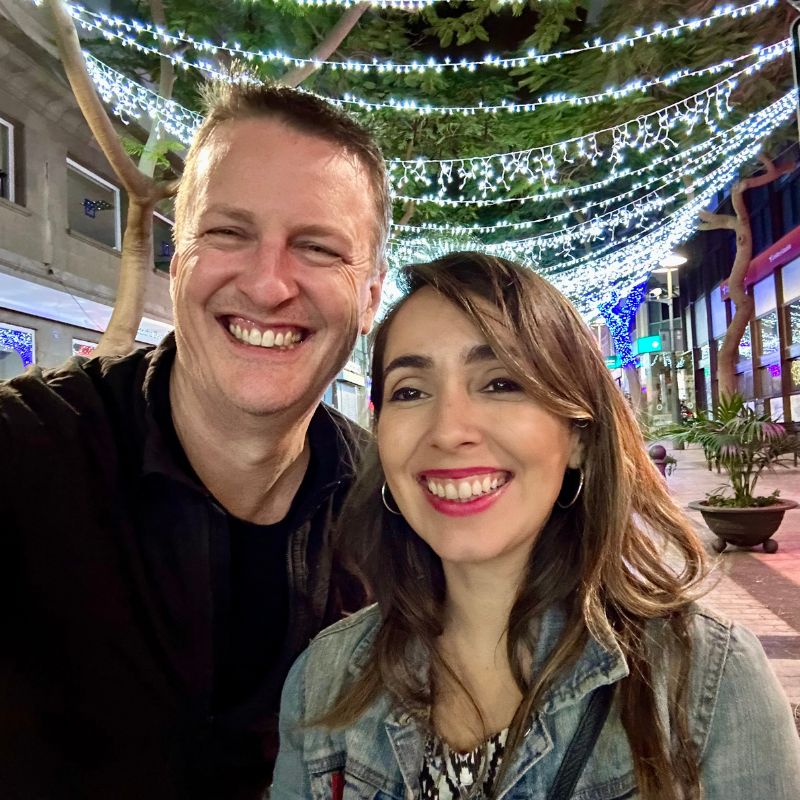
Matt Bowles: My guest today is Flora Mendoza. She is a public affairs professional, political consultant, and semiprofessional musician. She has an undergraduate degree from Yale, a graduate degree from NYU, and she is a classically trained opera singer, pianist and flautist who has toured internationally as a performer. She is also an actor and got her SAG membership as a recurring extra on Saturday Night Live. Flora is half Mexican, half Basque, grew up primarily in New York City, and is now a full-time digital nomad who has traveled to over 70 countries.
Flora, welcome to the show.
Flora Mendoza: Hey Matt.
Matt Bowles: I am so excited to have you here. We need to set the scene. We are starting this interview at almost 1 AM.
Flora Mendoza: Oh my gosh.
Matt Bowles: We have just opened a bottle of Saint Emilion red wine from Bordeaux, and we are sitting on the west coast of Africa in Dakar, Senegal, where we have just spent a month together.
Flora Mendoza: Yeah.
Matt Bowles: Now, this is your very first time in Dakar and I wanted to start off by just asking you for your experience in Dakar, your impressions, basically your highlights over the last month. For folks that have never been to Senegal, what has been your experience? What’s it like?
Flora Mendoza: Well, I knew I always wanted to come to West Africa at some point. And for me, I guess I was most familiar with Senegal because of the music scene and the artists I had heard about. And so, I knew that they had really amazing music in the city. And that’s why I wanted to come very selfishly. Like Sean, my partner, who’s also traveling with me, he was like, where do you want to go?
And I looked at the remote year offerings and I was like Dakar. And I was like, I really wanted to see some live music. And the city was not disappointed. I heard amazing artists, seen amazing dancers, and then the style here is incredible. The quality of the fashion and what the women wear. So, it’s definitely has a vibe. I love that. It’s exactly what I expected. I’ve loved the little islands that are nearby. Like Gorey had a lot of history. And Gorey was like so peaceful and artistic. So, I just love that you can just like hop on a little boat and be in a very chill place. And then come back to this bustling city.
Matt Bowles: Yeah, we are right on the coast, so we are walking distance from the beach and the sand and sunsets every single night over the ocean and cocktails during the sunsets and all of that stuff. It’s a super special city. I was first here in 2019 and then I have been back a couple times since. Just absolutely love Dakar. But you have also spent time in a number of other places around this continent, including some places I have not been to. You were just recently in Tunisia. What was your experience like in Tunisia?
Flora Mendoza: It was a total surprise. I knew I wanted to go there. It was a planned trip with a friend. I also wanted a place where I could get to Senegal fairly easy because I flew from Tunisia here. My friend canceled because of an easy issue. And I was like, well, I’m still going to go. And it did not disappoint. Honestly, it packs so much for a small country. And I barely saw the tip of the iceberg. I was only there for like a week, but I just felt like it’s super progressive, open minded. At least my experience in Tunisia and Carthage, it’s just people were laissez faire, doing their own thing, dressed however they want. There was definitely like traditional folks, nontraditional folks. It didn’t matter. Everyone was just doing their own thing.
Which I appreciated that because as a solo female traveler, I do sometimes want that anonymity. And I think that having that anonymity is really important to my experience. Not sticking out makes me feel safer. if I can just kind of blend in and mind my own business and talk and engage folks when I want to, but that I’m not like necessarily calling attention to myself. So, I felt really safe there. Super friendly. I was at a couple coffee shops and a couple Tunisian women heard me on the phone, and they asked that. They’re like, oh, are you Tunisian American? I was like, no, I’m not Tunisian at all. But they’re like, oh, well, let me buy you a coffee or let’s hang out.
I thought women were so open and engaging. I felt I just made friends there very easily from, like, locals, which I feel like sometimes you have to engage locals first. But they engaged me first, which I was really surprised about. They made me feel very welcome. And I didn’t even get to see all the stuff around it. I mean, it has the best-preserved Roman ruins anywhere, amazing beach towns, but just a lot of history. And I’m a total history nerd. And just like learning about Carthage and its rival with Rome it was fascinating. I really loved it.
Matt Bowles: Super high on my list. I have a bunch of Tunisian friends and I’ve been meaning to go for a really long time. So, you have just re inspired me to push it up higher on my list and get there. There’s so much amazing stuff to see on this continent. I have spent well over two years on this continent, and I still feel like I’ve seen so little of it. And you’ve been to a number of other places on the continent that I haven’t been, which I want to ask you about. You’ve been to Zimbabwe, you’ve been to Botswana, you’ve been to Zambia. Can you talk about that trip and that region and what that experience was like?
Flora Mendoza: I can’t say I’d spent too much time in Botswana. I went there for four days. I was in an area that borders Namibia, Zambia, and it’s Chobe, the Chobe area. So, I kind of spent some time out there. I was actually singing at a wedding in South Africa and then expanded my trip after and stayed for like an extra six weeks. I bought some really cool bangles. I always try to get a bracelet wherever I go. A lot of the things are made of copper. The folks are really friendly. My main motivation for going up there was going to see Victoria Falls, and I went with a friend and then we kind of just explored that region and did different safaris and stuff. But it was fun. It was really fun.
Matt Bowles: Well, I want to go all the way back now and talk a little bit about your background and sort of contextualize the journey that got you to the digital nomad life that you’re leading today. And I feel like maybe even before we do your life, if you want to start talking a little bit about your family history, because your mother is from the Basque country and your father is from Mexico, can you share a little bit about maybe their story?
Flora Mendoza: Yeah, I guess I’ll start with my dad’s side. My grandparents were from different areas of Mexico, but back in the 40s and 50s and even during the great depression, there was a lot of bracero program. The arm worker program was a legal program between Mexico and the United States. And folks could literally live on the Mexican side of the border and then go do their field labor on the other side.
So, my family did that for several years. So, my grandfather would go work in Texas or go to Chicago even. He went up to the Great Plains and then come back to Mexico. So, they were seasonal workers. And then I think it was in like the late 50s they got rid of the bracero program. And that’s when you saw like a pretty big spike in permanent immigration from Mexico to the United States. And so that’s when my family started moving over and most of them ended up in California. And my dad’s father was still a migrant worker. He was the first person in his field, I believe, first Mexican to drive the tractor, because that was usually reserved for very senior people and the other folks had to do more manual stuff. So, we have this pretty cool picture of my grandfather driving his tractor.
So, my dad finished school in California, was very artistic, kind of an outlier in his family, because all of my dad’s brothers are truck drivers, mechanics. But my dad was always very artsy, and he got a scholarship to the School of Visual Arts in New York City. He didn’t finish, but he still continued to be an artist. And while he was there, he met my mom. And my mom immigrated to the U.S. in 1972. She left a little bit before Franco’s regime. So, Franco was the dictator in Spain for around 40 years. My mom’s family all lived in Basque country and in Cantabria, which is like the province right next door. So, all of her family was spread throughout that region.
And they were not only Basque, but also pro union. And both of those things were not cool under Franco’s regime, he had bombed Guernica, the historical cabin capital there. And then the folks were under a dictatorship. It got very difficult economically for folks to stay there and also just like with all the repression. So, my grandparents actually moved to England for a while and left my mom and her sister back in Spain with their grandparents. So, there were more opportunities for them, safer for them. And so, they were out there for a while.
And then my grandmother passed away pretty unexpectedly. And my mom ended up sojourning and working throughout different areas of Europe. And eventually she decided to take a plunge and move to the U.S., one way ticket. I don’t know if she ever thought it was going to be permanent in the way that it turned out to be. But she met my dad at a going away party because my mom was going to go to California. My dad had just arrived from California, and he was like, don’t go to California, it’s not great. And so, he convinced her to stay, and they started dating. And I was at Adam’s Apple on the Lower east side, which doesn’t exist anymore, but that’s where they met.
Matt Bowles: And then you grew up in Queens as a kid. Can you talk a little bit about for you, how was that experience?
Flora Mendoza: Well, it’s interesting. I feel like I kind of have both an urban and a rural experience. So, my family was in New York. All of the Latinos there are not primarily Spanish or Mexican. Most of my friends, Latinos we knew growing up were Puerto Rican or Dominican or Colombian. So, I actually didn’t know a lot of Mexican or Spanish folks growing up at all, other than my parents. Now there’s a large Mexican population in New York, but that was not the case when I was growing up. At least I didn’t see that.
And so, I feel like whatever I knew was really from my parents. And I think they made a lot of effort to make sure they knew our culture. We visited our family on both sides at a pretty early age, spent time with them. But in terms of my mom’s identity as like a Basque person due to the suppression during that time, a lot of folks did not grow up speaking Basque. It was not taught in school. She went to a convent school where they had to learn French. I think she was very disconnected on some level from a lot of culture. You know, that’s what the regime’s intention was. And they were very successful. So now my cousins, who are younger than me, speak Basque fluently because of the school policies that allowed them to do that. But if those hadn’t happened, it would have been lost a lot earlier.
So, I think my first exposure, I think it was in 1996. I spent a summer there and that was the year that Miguel Angel Blanco, who was just a low-level government official, he was a Spanish guy, he was killed by eta. And I just remember these protests all over. When I was there, the country was in mourning and people actually were mourning there too, because I think people were like, we’re down with this cause. But there was a fatigue with the violence. And I remember that being really clear to me. I think I was 10 when that happened. It was the first summer I was there.
And I guess it’s also inspired by the political work I do. It’s why I organize; it’s why I’ve gone into advocacy. But knowing that there’s times to transition in a movement. There are times where there is violence, violence might be necessary when there’s extreme suppression, but we’re now in a really different time. Maybe that is not the way you’re going to keep the movement’s support. So, I think there was kind of an evolution during that time. And a few years later there was a ceasefire and things kind of leveled out.
Matt Bowles: I Actually remember that period really well because I studied abroad in Ireland in 1997, 98, and that was the year that they signed the Good Friday peace accords in Ireland. And I was there, and I was following that process incredibly closely. And I was in Belfast the day that they signed the Good Friday agreement. And I got to meet a lot of the people that were involved in that process, and I followed it very closely.
And then immediately after that happened, I remember Jerry Adams and Martin McGinnis were in the Basque country and they were advising Harry Pottsuna how to bring an armed struggle into political negotiations. So, I was very conscientious of the Basque country and the Basque struggle back then because there was so much solidarity in Ireland with the Basque people and the Basque cause and what they were fighting for.
And I remember that they were supporting them politically and trying to advise them on exactly what you’re talking about, about how do you steer this into a political negotiation and really try to institutionalize some of the things that you’re trying to get. So, I remember that period really well. So, as you then came up and you ended up going to college in Yale and studying a lot of this stuff more academically and really getting into the political history. What today does the Basque and the Mexican identities mean to you now?
Flora Mendoza: You know, it’s interesting because my mom’s the only person that left her town in Spain. My dad’s like the only person who really flew the coop in California. And I think they both just made me very aware of like even no matter what level of education, my mom never finished high school, my dad dropped out of college. And I think because they left countries where like my mom, her country was under dictatorship for a long time. Mexico was under a pre party dominance for a really long time. I think they both really did not take their ability to vote once they became citizens in the 80s at all.
They took it very, very seriously and saw themselves as participants in this process. And I really appreciate that because they always kept me very engaged. And I think that’s why I went into the work that I did. It was my parents’ relationship to the political systems in their own country that informed the way they’re like, well, you can make things better here, you can participate here. We didn’t have a choice over there. Things were locked in the way they were. But America has its problems, but you definitely can get your foot in the door and make an impact here.
Matt Bowles: So, let’s talk a little bit about your world travel journey because you have been to a lot of amazing places. But I want to start with your study abroad experiences. You have got to do a lot of studying abroad in a lot of places. Let’s maybe start with Brazil, though, which is one of my favorite countries in the world. So, I love talking about Brazil. But you’ve actually been to some places that I haven’t been to in Brazil. You studied abroad in Salvador de Bahia, which is the top of my list. For the next time I go back to Brazil, I really want to go. But for people that haven’t been there, like me. Can you talk about Salvador? Just give some context about it and then what was that experience like for you at that time at that age?
Flora Mendoza: I had traveled on my own to visit family before. I had traveled with music friends in college. But Brazil was the first place ever. I went there to do a language intensive. I took a Portuguese for Spanish speakers advanced class in college. So, I had an opportunity to get some language credits over the summer and deepen my command of Portuguese. So I was in Salvador, which I knew Brazil was awesome.
But I didn’t know a lot about the different regions until I got there. And Salvador is the capital of the Afro Brazilian culture. I was living in Ciudad Alta, and I just remember it was so transformative for me because I really just tapped into the music scene there and just hearing live music all the time. That city is just pulsing with music and dance. I was just diving into capoeira classes. I was taking every kind of class you could imagine. I’ve always loved a lot of the singers in Samba and just different singers. Astrid Gilberto, my dad listened to her a lot when I was growing up.
So, I just always kind of fell in love with the music of Brazil before I even got there. Being there was just amazing. And I remember one of the concerts I saw was Olodum, which you can really hear the influence from here. Senegal, where we are now there, it’s like the same colors, the same drums, but it’s very kind of central. They’re like legends there. Olodum. They’re kind of like an iconic band out there. Yeah. And then afterwards, I. It was like, the first time, I was like, I’m great. I’m going to get a backpack, and I’m going to actually travel on my own and have an end date flying out of Sao Paulo six weeks later.
But in between, it was like, what do I do? And at that point, I was very meticulous because I need to plan everything in advance. I can’t even remember the last time I bought a guidebook. Back then, I was very much, like, highlight orderly. I was very planned. And then it’s funny because I met a guy when I was traveling in Rio, and it kind of threw me off my plans. And I was like, oh, well, I guess I can spend a week with you in Allegrini. And I was like, okay. So, I feel like I had this plan there, and then it kind of just went all over the place. My paraglided for the first time, and I was there. That was my first real time, like, traveling by myself after the program, out of a structure, out of school. And I was like, I think I’m okay. It’s kind of like testing the wings a little bit. I was like 18.
Matt Bowles: I would actually love for you to share a little bit more about your journey with music and your relationship with music. You mentioned your connection with the music scene in Brazil but maybe take us a little bit back and talk a little bit about your trajectory and your journey with music and then what ultimately led you to Italy and what you were doing there.
Flora Mendoza: My first exposure to music. Even though my parents weren’t religious, we still went to church. Go figure. We went to a Catholic church, and that was the first time I really got a sense of music in church. And I actually cantered in church. I like singing in choir, in church. It was a really great musical community for me. And then I started doing this community theater workshop where I was doing a lot of singing. And this guy, it turned out he was like a singer at the Metropolitan Opera. He was in the choir there, and he was like, you have a great voice. You should audition for the Metropolitan Opera children’s choir. So that was my first gig, and it was great.
For three years, I got to share the stage with ridiculous musicians. I was just a kid, and just seeing them, it was incredible. Pavarotti, Placido Domingo, you name it, they were on that stage. It was the Met. So, there was just amazing access. And she’d just be on probably the biggest stage in the world. I think it’s one of the biggest. It’s just kind of crazy. But then my dad was also a photographer and loved to photograph jazz musicians. So, my mom was a classical music lover. My dad was like, funk, jazz. I definitely had, like, both worlds at a pretty early age. And my dad would always go to the Blue Note to take photographs of musicians.
So, this was back in the days when you could smoke in New York. Bars and clubs, and so literally, you could not see. But after rehearsals, sometimes my dad would take me there to photograph Artists at night. It was amazing. Some of the musicians would be like, who is this 11-year-old kid in the audience at 11:30 on a weeknight? And it was me. And some of them would be really nice and just let me hang out in the dressing room. So, like Roberta Flack, let me hang out with her while she was getting ready.
What just sat there and yeah, I just got to like to hang out with her for an hour. And she was super nice and gracious. So, yeah, I feel really lucky. I got to just be exposed to all kinds of musicians growing up. And then I kind of just stuck with it. I started singing at a restaurant, jazz standards. I was seventh grade, singing for tips. Jazz at a Sunday brunch hotel situation. And then I got serious, got a voice teacher. And then I got very serious about classical music because it seemed like this was a way to kind of sharpen my skills. Stuck with it in college and I took an Italian intensive slash opera program in Florence, and I did that for six weeks or so before moving back to New York and doing music and arts full time.
Matt Bowles: And when you were back in New York, you were also doing acting, and you got to spend time as an extra on Saturday Night Live for an extended period and be around a lot of the most talented people who are on that show. Can you talk a little bit about what that experience was like, both for you as an actor and pursuing that line of work, but also just in that space and being surrounded by those types of people. What was that like?
Flora Mendoza: You know, it was fun. I was just an extra. So, it was very low pressure, which was sometimes the stakes are super high, but your kind of just called in when you’re needed. What I really liked about it was being able to talk to the musical guests after. Almost everyone was really just gracious and kind. Everyone was very collaborative, fun, in a good mood. Everyone’s like, just trying to enjoy themselves. So, I actually approached Kelly Clarkson after she hosted once, and she’s such a pop star, but she was actually really nice and took like time to speak with a bunch of us. It was really fun. You have got to play and be goofy. There were random digital shorts that we would do too.
So, like Taylor Swift is actually in one of the digital shorts I did, and all you see is my back in the video. It’s like hilarious, but technically I’m there. There was a couple episodes where they would like edit my photo and like do all kinds of funny things like that. So, there was like a digital short called Sir Mix a Lots photoshop. So, they play Baby Got Back and they took a photo of me, and they’re like, don’t worry about any woman, what she looks like. As long as she has a big ass, she’ll be hot. And so, they put pimples all over my face in a photo, and they, like, blew up my ass. They’re like, see, she’s still hot. So, they was just random, goofy stuff.
Matt Bowles: Well, in your acting career, you have got the opportunity to work with a lot of really extraordinary people. I saw a picture of you with Michael K. Williams, who a lot of people know, played Omar on the Wire, which in my opinion and for me was one of the greatest characters ever played in the history of television. Can you share a little bit about the time that you got to spend with him? He’s obviously passed away not long ago, unfortunately, but the time that you got to spend with him, can you share a little bit about what that was like?
Flora Mendoza: Yeah. So, we both got cast in a video game called NBA 2K, and we were both in the single player mode, which has fancy storylines. So, I’ve done a few video games, and I’ve never played video games. I’m terrible at the times I’ve tried. But people have explained to me that in single player mode that there are this different kind of choose your own adventure and there’s real plot lines. And I think because I speak Spanish and Portuguese, I’ve always been cast in these very random roles in video games and in different cartoons and stuff. It’s usually because of language. So, I’ve done like Dora the Explorer episodes or, like, be a Portuguese samba. I was like, okay.
So, yeah, I got cast as a Portuguese owner of a restaurant in the Ironbound in Newark, which has a Portuguese Brazilian neighborhood. And he was cast as the father of a basketball player. And we had a few scenes together. He had to speak Portuguese to me, but didn’t actually know how to speak Portuguese. And they kind of just threw him into the ringer, which I felt really bad for him as an actor because how are you supposed to know this? Like, how if you have this in the script, how are you supposed to say this?
So, he was getting a little nervous during our take of it, but we kind of did a timeout and we kind of coached over what he had to his part more phonetically and practicing it phonetically in ways that he could remember. So, he was super kind. We bonded over being from New York. He was just super kind and gracious individual. And I know he had struggled with addiction, but I was really surprised to see the impact of fentanyl and what has been doing in communities of all kinds throughout the state. So, it was really, really surprising and devastating to learn that news. But I had just finished watching his Lovecraft stories on HBO and it was just great to see this next other chapter in his career. So, I’m glad we got to experience that before he passed, but it was great to work with him.
Matt Bowles: That’s really special. Well, I want to talk a little bit about your nomad journey and your transition into the nomad life and some of the experiences that you’ve had, because you’ve now been traveling the world full time for a number of years, and you’ve been to a lot of really amazing places. I think maybe what might be a good place to start is just contextualizing for folks what you do for your job and for your line of work. I think broadly, because we have music and the acting background. But that’s not your primary source of income.
Flora Mendoza: Definitely not.
Matt Bowles: So can you share a little bit about your professional career is.
Flora Mendoza: Yeah.
Matt Bowles: And has been. And then how were you able to do that remotely and start traveling the world? Because it’s not a traditional category of what people would think. Like, oh, yeah, I’ll do this and then I’ll go travel the world.
Flora Mendoza: Right. It’s true. And I would say a lot of the folks who are really interested in politics, at least in U.S. politics, are like, I got to be in D.C. like, or I’m missing out on the action. And I actually, I love politics, but I think there were so many other things I was interested in that I didn’t want to be in a place where I would be consumed. And so I was actually pretty intentional about not going to D.C. for that reason, even though I passed up on different opportunities to go, because I knew that if I went, I would be, like, schmoozing at cocktail hours at every free hour of my day, and I’d just be in that zone all the time, and it wouldn’t leave space for other things I cared about. It would just be too easy to get sucked in.
So, I did a public affairs fellowship a couple years after college. And after that, I had a chance to work for a really large Democratic polling firm that also did public affairs. I guess that’s where I kind of got a taste of working with different clients and seeing how politics wasn’t just in campaigns but also intersecting with so many different things and really working on strategy and the political process of getting a building built that was fascinating. Like, real estate fascinated me. I never would have ever thought that. But seeing projects go from A to Z in New York City.
So, some of the projects that I worked on were the Fulton Street renovation downtown after 911, and the revitalization project, South Street Seaport, Hudson Yards. I mean, these are huge development projects that have huge political. I did community organizing. I was working with communities to be like, okay, so what do you need to get this built? Where can we say yes? And I really loved being able to work with communities but also see something go up. And so that really exposed me to a different side of politics.
And then when I moved out to California, I started working on ballot measure campaigns, which was a very unique thing for me, too, because that doesn’t really exist in New York. Ballot measures are kind of you get a certain amount of people, like legislation initiated by voters directly. So that was a really new thing for me when I moved out to California. And then shortly after the 2016 election, I had a chance to connect with the founders of a company polling firm that was hoping to use technology to do better polling. And that really fascinated me because the data was so bad and actually so expensive at a lot of traditional firms.
And I was like, hey, I’m all in. If you can make this cheaper, more affordable, and more accurate, I’m in. So, I jumped at that opportunity to help build this company. And I’ve been with them for over four years now. So, it’s been a great journey. But I think traveling, I knew, was my happy space. I had always known that. And in 2019, I went through a divorce. And something just clicked inside of me where I was just like, I have to make a change. Like, I can’t stay in the same apartment. I have to do something different. And I think the first trip I did on my own during that process abroad was this trip to Holy Land. I was like, I’m going to go to Israel, Palestine and Jordan. I’m just going to go.
And that was like, December of 2019, and then the beginning of January 2020, and then the pandemic hit and obviously couldn’t do that anymore. I stayed with my parents for, like, a few months. And I think I realized when I was with them, I was like, all right, this is great, but I feel like my life is super stagnant right now, But I don’t want to stay in the bay where I was. That was a kind of this, like, merry chapter of my life, and I was ready to make a transition. So, I kind of decided to just pull the plug. And I didn’t know where to go at that time because the pandemic was in full swing, and I didn’t want to be in cities that were dead.
So, I was like, you know what? I just want to be in pretty places, warm places, places with a lot of nature. And that was really my only condition during the pandemic. And that kind of led to the different places I stayed.
Matt Bowles: So let me ask you this just sort of as context for your traveling. You and I have had a lot of discussions over the last month about all sorts of things relating to politics and history and feminism and all sorts of other things. But a lot of the themes relate to understanding the historical and political context and the social dynamics into which you are stepping when you travel.
Flora Mendoza: Right.
Matt Bowles: And one of the things that I admire very much about you is that you really do that, and you really dive into the history, and you look into the nuances. And that’s a very important and central part of the way that you travel. Can you talk a little bit about that? And if you want to give any background in terms of your development of that type of political consciousness, I mean, for example, you and I talked about when you lived in the Bay Area, you were in women of color reading groups that would read feminist books by women of color or international authors or things like this and really, you know, sort of cultivating that political consciousness and that global awareness. But can you talk a little bit about that journey for you and why that’s so important and how you approach your travel?
Flora Mendoza: I think this was always of interest to me. I feel like it’s like being self-aware and know what’s going on, where you’re going. I think it’s always Been essential to me to understand what’s. For your own safety, you should know, like, what’s going on politically in this country. We just had yesterday a protest and people were like, oh. And I’m like, well, the first thing I did is I go to the news, what’s going on? Why is it happening? Why are people upset? The why is really important. It also just allows you to have better conversations with people.
You can connect with people if you know a little bit more about what’s going on and why or asking them what’s going on and why. Obviously, there’s some language barriers sometimes, but hopefully I’ll get someone I can actually communicate with that can kind of give me their perspective on what’s going on. I don’t want to just be in a place and just see people or see places. Like, I want to understand what’s making them tick, what they’re really dealing with day to day. And so, I think that makes me feel more plugged in and more self-aware when I travel.
Matt Bowles: You mentioned that you traveled to Palestine, and I know that you were very politically aware of Israeli colonialism and apartheid and everything that was going on there when you went there. Can you talk a little bit about your experience on the ground in Palestine? How was that experience?
Flora Mendoza: I was really excited to go there. I arrived in Tel Aviv. That’s where I flew in. I arrived there around the holidays. And so, I decided to go to Palestine for about four days or so. My first hope was in East Jerusalem. I was just really struck by walls, the walls there. And also, because knowing that my family is from Mexico and they’ve been trying to build a wall, and I think I was just really struck by how even in this ugliness of this monstrosity, people still manage to make art out of it. And I think that’s, for me, this is the connection. People connect through culture. It’s like food, music, art, and dance.
These are things we all do. I just remember walking as long as I could on that wall and just taking a lot of different photographs, taking all the art in. It really moved me to say, like, how you could take something like so ugly and so divisive and make beauty for yourself. I think it was right near the Banksy Museum, so I stayed there for a night, which also had just amazing interpretations from other artists inside in there. And on that tour, I saw Yasser Arafat’s tomb. I spent Christmas Eve in Bethlehem.
Especially when you grow up as any Christian or Catholic, these almost seem like mythical places. And then you go there, and you’re like, this is a real place. This is not just in this old book. It is in West Bank. It is a Palestinian city. And I feel like most folks in the U.S. don’t even know that, right. They’re like, it’s in Israel. Bethlehem’s in Israel. It’s like, no, it’s not in Israel. I feel very lucky to have gone there when I did because literally a month after there was very aggressive encroachments from Israel into Palestine. I felt very safe there. I was with four girlfriends that I met on the trip.
Our bus broke down on the way back from Ramaala, and the whole town came out to help us and give us a ride. And they were like, we’re wonderful. And, you know, we couldn’t speak anything there, but everyone knew the situation and was super helpful. So, I was overwhelmed by people’s willingness to help and kindness, even though they might not have a lot of extra time or energy to do anything. The fact that one person saw us down and, like, was like, I’m going to get help. I was just very moved by that because they knew we were going back to Israel. They knew that we weren’t going to stay there for a really long time, but they did everything they could to help us. And that really stuck with me, that we all have an obligation to help each other.
Matt Bowles: That’s so awesome. Yeah. I’ve been struck by how amazing the Palestinians are as well. I’ve been a couple times to the West Bank. I’ve been a couple times to the Gaza Strip. And one of the things that’s been so remarkably amazing to me and heartwarming is the political sophistication of the people that live there who are under military occupation. They’re under bombardment from the air. They’re under assault from the army on the ground.
They’re just constantly under violent military assault of a belligerent occupation which they’re 100% aware is entirely funded and politically backed by the United States. There’s zero ambiguity about that. There’s not a single person that is not entirely aware of that. And yet, as an American, when I go there, they have the political sophistication to separate American government policy from me, an individual American citizen who is going there. And they are willing to welcome me there and treat me incredibly well with love and the same hospitality they treat anyone else. And that just melts my heart completely. It’s just amazing.
Flora Mendoza: And I think we have to remember that with every single government I’ve met, really progressive Jewish People when I was in Israel that were like, this state doesn’t represent me, but I don’t feel like I have any power now because of the way the government’s gone and there’s all this back alley party collusion and this alt right minority has a lot of power. So, yeah, I think that’s also important to remember that there are people that aren’t represented by their government. We knew that under four years of Trump that this did not represent us. So, I think we always have to have that nuanced perspective.
Matt Bowles: Yeah, I mean, I think that type of distinction is really important because there’s all sorts of countries doing all sorts of atrocious human rights abuses, and then the citizens of those countries which may have bestowed upon them dominant positions and the opportunity to benefit from that, and then they have a choice, right. I mean, they have a choice in terms of what politics to take. So, I meet somebody who’s an Israeli Jew. I don’t assume what their politics are. I give them the benefit of the doubt and I wait to see. Right. It’s just like I meet a white person in the United States. I don’t assume what their politics are. Just wait to see.
Like, there’s plenty of folks from any kind of dominant group that have the choice to take the morally, socially, politically correct position, even if it means standing in opposition to the structures that benefit them. And a lot of people do that. A lot of my mentors on the Israeli Palestinian conflict are Israeli Jews. They were born there, they grew up there, and they are amazing Palestine solidarity activists. And those are the people that mentored me in the conflict. I’ve been there with them. So, yeah, I mean, it’s the same anywhere in the world. There are amazing people. I met amazing Russian people when I went through and spent about a month in Russia, did the Trans-Siberian, went through Moscow and St. Petersburg, all through Siberia.
Flora Mendoza: That’s actually my mother’s dream.
Matt Bowles: Yeah.
Flora Mendoza: I don’t know if she’ll ever get to do it because of what’s going on.
Matt Bowles: Yeah. What’s going on now? But it’s really important to understand also that there are amazing Russian people that are completely opposed to everything that Russia is doing. They’re on the streets, they’re confronting the government, they’re doing all this kind of stuff. I mean, there’s just incredible distance. And that is the same thing in Israel. And it’s the same thing in the United States under Trump.
Flora Mendoza: China.
Matt Bowles: Same thing in China. It’s the same thing everywhere. And so that’s why it’s so important to make this distinction between a government and the people and just to evaluate every single human being individually and allow them to say what their politics are and what their individual beliefs are. Because you can have that choice. No matter who you are, what power structures you benefit from, where you come from, you have the choice to make a morally and socially and politically upstanding position.
Flora Mendoza: Yeah.
Matt Bowles: Let’s talk a little bit about your nomad journey because you’ve been to some amazing places. I think the place I want to start with is Puerto Rico, because you spend a lot of time there. Can you talk a little bit about your time that you spent in Puerto Rico, how long you were there, and what some of the highlights of your experience were?
Flora Mendoza: So, Puerto Rico was not my first time. I’ve already been there three times, but this is my first time spending a long time there. And I didn’t know how long I was going to go for. But one of my really great friends from college moved back to Puerto Rico, and so she’s like, well, I just bought a house. I’m renovating it. There’s space for a few friends to live here. Come on down. So, we called it Real World Puerto Rico. And so, we were just like all of these friends from college. And while I was there, I had been reading a book, Women who Run with the Wolves by Clarissa Pinkola Estés.
It’s one of my favorite books and I highly recommend it to everyone. But I started reading it with my book club for women of color in the Bay Area at the very end of 2018. It kind of hit during a really intense period of my life where my marriage is falling apart and all of this. And I kept writing this book just a little bit every day. It was kind of just helping me get through. And then when I was in Puerto Rico, I got to a chapter about the importance of having older mentors in your life, specifically wise women who can help you on your journey. Kind of the lights went off for me, and I was like, oh, my God. When I was in college, I did a tour of Puerto Rico with my acapella group. And we stayed at this hotel. It was a boutique hotel run by this artist who is now 89 years old.
She has more energy than half the people I know. She looks great. She wears birds on her shoulder. They just hang out. She is a legend. You meet someone like this, and you are like, wow. You will never forget them. And the first day there, maybe a little less than that. I first stayed there when I was 20, and then I was coming back around 34, 35. So 15 years had gone by, but I feel like I should go see her. I had the copy of the book in my bag, and I literally just showed up at that hotel. And it’s since expanded. Before, it was just this boutique hotel, but now it had, like, a full restaurant, piano bar. I had grown a lot since I was last there. And I was like, hey, is there a woman named Jan who still owns this place?
And they’re like, oh, yeah, yeah. She’s sitting right over there. You can go. Just say hi. And I was like, okay. It went up to her. She was sitting there with a glass of wine, her bird on her shoulder, another bird on his stoop here, and just eating her dinner. And she had an empty seat on the other side. And I was like, hey, Jan, I don’t know if you remember me. You let my acapella group stay here because she’s always supporting artists. And I was like, this was 15 years ago. You let me stay here in the hotel with this group. And she was like, oh, yeah, yeah. She’s like that Shades group, right? And I was like, yeah.
And she’s like, oh, you’re a singer, right? And I was like, yeah. She’s like, oh, I remember you. And then she was like, sit. And so, I sat down, and she was like, so why are you here? What brings you here? I was like, well, you know, the pandemic kind of, like, shuffled everything, and I wanted to be in a place that, like, I wanted to just feel comfortable in. And Puerto Rico was, like, on the top of my list, and I’ve always loved it. I had already gone there a few times before. And also, I read this book that really inspired me to just come here and just say hi. And she’s like, what book? And I was like, oh, I have it in my bag. And I pulled it out and she read the opening line for me. She was like, this is the most important book you’ll ever read. And I was like, oh, my God.
So, we were so aligned on that, and I basically just hung out there every day, and she made me sing. So, she had this piano bar. She’s like, I know you think you’re rusty, and you probably haven’t done it in a while, but you’re only going to get better if you do it. You can’t just be like, oh, I’m not good, or I’m not this or I’m not ready or I’m not that. She’s like, you just have to keep doing it. She’s like, I have TV monitors all over this place. She’s like, I want you to practice, and I want you to perform every day. So, she put me to work, and I was just gigging at this jazz club for over four months, and it was really fun.
And I was also just helping out with different special events at the hotel. And she asked me to help supervise a photo shoot with Bad Bunny. He was there, so I got to work with his team and another singer named Tommy Torres. So yeah, I felt like I was just all hands-on deck with this project. And then it’s literally right next to La Perla, which is. A lot of folks know it from the Despacito music video, but it’s also got a lot of history. It’s a really kind of small neighborhood right outside the old wall. And I would go there afterwards. I was working full time job then going to sing at night and then sometimes I would still go out after that. And that would be at La Pedla, which is just a really fun neighborhood too that for a long time had a bad reputation, but it’s pretty awesome. There’s always dancing and music going on there. So that was my five months there.
Matt Bowles: That is incredible. Would you be down to sing one of the songs that you sang in Puerto Rico for The Maverick Show audience?
Flora Mendoza: Sure. Now you say lonely you cried a long night through well, you can cry me a river cry me a river I cried a river over you.
Matt Bowles: That’s so amazing. Thank you for sharing that. What an amazing experience in Puerto Rico while we’re in the Caribbean. Before we go any further, you told me that you happened to attend the funeral of Fidel Castro in Cuba. Can you share that experience and the context for that?
Flora Mendoza: It was a total accident. So really randomly with my job, I decided to take a trip around in November of I think this is 2016 and very targeted. I’ve been doing a lot of political work at that time. Election season burns you out. And I was like, I am taking November off. A lot of people in the political space just clock out in November after elections are held. They’re like, I’m done. So, this was my trip, and I remember knowing that I was going to take that time off months in advance. And so, I was looking online for different deals, and I remember seeing Havana pop up from New York. I was like, what? Okay. And so, I booked it, and didn’t think twice about it. It was the first time I ever seen Havana pop up as a destination on Google Flights.
And I think Obama had just lifted the embargo, so flights were just starting to pick up again. But I didn’t know all the details of that. I just knew that the ban was being lifted. And there was a flight to Havana, so I booked it. And when I got there, I had no idea that I happened to be on the first commercial flight from New York to Cuba in, I don’t know, 60 years, 50 years. And I was like, why are all these reporters here? And they were just following. I kept walking, and they were all following the same direction. I was like, what is going on?
Someone getting married in the airport or something. I don’t know. It seemed like there was a special event. And they were like, oh no, you’re on this historic flight. And I was like, what? There are actually reporters who were actually trying to get on our flight and were offering us, I’ll do anything if you could let us go on this flight. And I was like, I’m going to Cuba. I’m not getting rid of my seat at all. But JetBlue gave us this swag bag that was ridiculous. I still have it with me. I travel with it everywhere. It’s like a great beach bag. But they put in all this amazing swag for being on that flight. I think a lot of the reporters were actually really pressed to go because Fidel had just died two days before that flight.
So, a lot was going on. The embargo was getting lifted. Fidel just died. And so, I got to Cuba, and I was expecting it to be like, tons of music, tons of dance, not the case at all. The whole country was shut down for about a week. But it was like an intentional period of mourning. No music was allowed. No dancing was allowed. It was quiet. And I was like, whoa, this definitely changes the dynamic of what I’m hoping to experience in Cuba. But I was like, well, you know what? I’m just going to ride the wave. I’m here for this historical moment.
And for that whole time, I was there, basically, Fidel’s hearse drew from Havana to Santiago del Este, where he’s from. But for a good few days, it was parked in the plaza, and dignitaries from all over the world, from Africa, all throughout South America, folks were coming in to pay their respects. And it was just very crowded. It was a really busy time. And then there was just a line to kind of see where the body was. It was an open casket, but they had the body in an area in the Plaza Resurrection, and they Had a guest book where you could just sign something.
And I was like, wow, this is pretty cool. Couldn’t take real photos during that time. You know, you have to still be mindful and respectful. But it was a very bizarre trip to Cuba and very historical, and I’m glad I was there. I definitely would love to go again to experience a different side of it, but I feel really lucky that I just happened to be going there. In November 2016 was just a very special time for both U.S. and Cuba, but also with that transition from leadership.
Matt Bowles: That’s incredible that you were there for that. Wow. Well, another place that you have spent time on your nomad journey is Colombia. Can you talk about your experience in Colombia, where you were and what that was like for you?
Flora Mendoza: Yeah. So, my first time in Colombia was in 2009. It was about a year after I graduated college. I got accepted to perform in this artist festival. I got a chance to sing some music in this festival. So that was back in 2009, and I was in Bogota most of the time. And then I went on my own to Medellin in Cartagena. I had an amazing experience, and I think I was a little initially nervous about it, because it’s just at this point, I only had heard so many of the people I knew in New York who were of Colombian descent had left for a very different time or their families had left during a very different time. But Colombia gives me so much hope for how much a country can change within a generation.
Countries that were, like, so torn apart for a long time, up until the Sierra War, Colombia had the highest amount of internally displaced people in the world. And now it’s been such a genesis. I was so pleasantly surprised by my first trip there. And then over a decade later, when I decided to be a digital nomad, a friend of mine in LA was like, hey, I’m in Colombia. And I was like, huh? I hadn’t thought about that. And Colombia was a place where I was like, you know what? I’m ready to do, like, a deeper dive.
So it went back to Medellin, which I honestly did not recognize. It literally changed so much from 2009 to 2022. I didn’t recognize so much of it. It honestly felt like a different city, and I loved it my first time there, but there weren’t a lot of tourists there at that time. This time, it was like entire neighborhoods that were like, this is the place. And it was awesome. And I happened to go to the super bowl one night there. There was a viewing party at a hostel, and I met my boyfriend there, who was also a digital nomad through remote years. So that was very unexpected for me.
Matt Bowles: Shout out to Sean.
Flora Mendoza: Shout out to Sean. Yeah, because I had been on my own, I mean, I guess on my own, but moving at my own pace, visiting friends, but not really traveling with people, per se. So, you know, I’m grateful for that random coincidence where we cross paths. And I think sometimes with digital nomads, too, it’s like, I kind of actually thought that I would never really date anybody seriously as a nomad, because these people who permanently lived in a town where you were visiting would be like, oh, well, you’re not that serious. You’re just in town for a few days. And I definitely felt like, okay, well, this means that this is kind of off the table.
So, I kind of just accepted that. And I was like, I’m okay with being single. That’s fine. So, I think that was also enlightening for me that, like, oh, it’s not like a zero-sum game, that if you’re choosing this lifestyle, you can’t also find someone who is interested in the same lifestyle. That didn’t even, like, occur to me. I just was, like, meeting people locally, that I was just like, yeah, I’m kind of here, but not really here, and I don’t know how long I’m going to stay. That makes it harder for people to invest in you when they’re like, you’re one foot out the door already.
Matt Bowles: So, I would love to get your reflections and tips on traveling with a relationship partner. I, as you know, because we’ve had conversations about this, have previously traveled with relationship partners of mine. I actually started my nomad journey. I was in a relationship and my partner at the time, and I traveled the world for three years together, and we were all over the globe, and it was an amazing experience. But I’m curious for you, because you met me in a nomadic context. You were both nomads. You happened to be in the same city. Because we were in the same city for years before we started nomading.
So, we were living together. We were already in a relationship. And then we’re like, you know what? Why don’t we go do this now, right? And then we just went. So, we had all of that foundation. And I’m curious for you how the experience was and also what tips you have, because I do feel still, even for people, nomads that are conceptualizing like, yeah, I’d be open to and really would love to find another nomad that I could be in a relationship with and just travel the world together and have this amazing time, and that would be the dream and all this kind of stuff.
And I feel like even people that are open to that and want that maybe still think that’s hard to get and that’s hard to find and that’s hard to do. So, I think you and Sean are amazing together, and it’s been really fun to hang out with both of you here in Senegal. And I’m curious if you have any sort of tips, maybe from your experience for how to make that work as well as it’s working for you.
Flora Mendoza: Yeah, I think it’s interesting. You do end up moving faster than you normally would, just by nature. The fact that your kind of transient and don’t really have a house and you’re not going to, like, follow each other to different cities and live in different Airbnb’s. It just doesn’t make sense. You know, if you were in your own town, on your home turf, maybe it would make sense. But you’re also a travel partner. You’re a travel buddy. But then I think what ends up happening sometimes, and I think I’m still learning that, you know, we had three months of just visiting each other because we had already committed to different places. But I would say February, March, April, May.
By month four, all of our previous plans were finished. And then we were like, okay, well, I guess we will be in the same place actually now and see what that’s like. And I think I’m an extrovert. He is more of an introvert. I definitely noticed shifts in how I was engaging in my own nomadic journey, adapting to partnership. You know, I was always, like, out and about and, like, I get up early and I like to explore.
And when you’re with someone working remotely at home, you’re spending a lot of time with each other, so you get to know each other, like, a lot faster. But I think one thing I’ve really appreciated about the ability of group travel and remote year in particular is the ability to create different spaces and interactions. And I think that’s been really good for me and good for us, because I definitely feel like there was times when we were just overly exhausted. We started moving faster when we were traveling together.
And I appreciate the opportunity to kind of break up our time together a little bit, because I think you want to have something to talk about at the end of the day. It can’t just be like, oh, I sat here and did work all day. And so did you. Sometimes we definitely would go out and explore together. But sometimes I think it’s important to have your individual experiences and then come back and talk about it and have something to share. It’s not like we’re going to work and then coming home and talking about that. We’re both working at home. So, I think that’s been really helpful.
Matt Bowles: And even here too, it’s been interesting, right, because you’ve had some nights for sure that I’ve seen you out and Sean wasn’t with you. Right. Like last night you were out, and he wasn’t. So, you guys do some different stuff. And then also, even in terms of the work situation, I know a number of the women here found this incredible workspace that a lot of people have been going to. Can you actually share a little bit about that in terms of Dakar? The third?
Flora Mendoza: Oh yeah. So, we just actually learned about the third very late in our experience, I think our last week of the experience. But the third is run by an American, a New Yorker named Monifa. And she just opened it up about four months ago. And it’s not even just a co working space, it’s like a hotel, it’s a spa, it’s a meeting center. She has a real full 360 vision. Its membership based and it’s definitely hoping to attract certain kind of professional women and community for women, for women of color. It was just amazing to see. I think we’ve been hopping around different coffee shops, different art galleries, but to see a place that was super intentionally designed.
Every single corner of that place had so much detail and was really, really meant to create a community around it that was so different. And I appreciate that someone is taking a risk to create something like that, to create community and been getting attention through word of mouth because it’s really special. And I know she has a vision for opening up different locations, maybe in other areas of Africa. And there’s so many talented people on Remote Year that are social media influencers or marketing folks or really good AV folks that kind of all came together to help support her vision. It’s amazing when someone creates a space for a community, it takes off a little bit.
Matt Bowles: Yeah. And this is your first Remote Year program. You and I are on the Remote Year program together. This is their all-Africa itinerary. And I know that Sean has previously done Remote Year. You met him while he was on a Remote Year program. And then now the two of you are doing this together as a couple. So can you talk a little bit more about that in terms of what have been sort of for you, the highlights of that. Because I know previously you were traveling solo. You weren’t doing the group travel thing.
Flora Mendoza: I didn’t even know about group travel.
Matt Bowles: You discovered it through Sean, right?
Flora Mendoza: Yeah, I didn’t know it was like a thing. I was on my own doing all of the heavy lifting, which I think I appreciate because I can still like, go completely at my own pace. So remote year kind of keeps you on a schedule. A month is a lot of time, but also not a lot of time. And I know you’ve spent time where you can really deeply dive in places and you meet someone or you become friends with someone, and there’s an event two weeks later. And so, it allows for a little bit of flexibility. But when I met him and I learned about this concept, I was, oh, wow, there’s like, people that actually do this together.
And I think it tends to be more women heavy, too, which I think is not necessarily intentional, but I understand why women might want to travel together. And it hadn’t even crossed my mind, but I was like, oh. Looking back on some experiences I’ve had been a little rough around the edges as a solo female traveler. It hadn’t even occurred to me that there were places or resources where you could join a group and do that together. So, I feel like I’m on stage there. So, year one was solo, year two was a couple, and now with more group. So, I’m getting a taste of all the different ways you can do it.
Matt Bowles: I would love to hear a little bit about your reflections and maybe tips for solo female travelers.
Flora Mendoza: I think this goes for any traveler is don’t let yourself be alone for too long. Talk to people. Even when I’ve gone by myself, the promise I make to myself is to even be more of an extrovert in terms of engaging people. That means less time on my phone, being distracted, putting the phone down, talking to someone who makes eye contact with me. I mean, there’s definitely more heightened safety thing you have to be more aware of. I’m a petite woman. I’ve actually never really been a victim of anything but anywhere but my own backyard in California. But I think that abroad, you know, there’s just been a certain level of awareness that I’ve tried to have. Just realizing that I am perceived in a certain way.
So very basic things that I would honestly do in New York City or do in Oakland. I’m not going to walk down a dark, lit street by myself. Follow the noise, just common safety things for everywhere I go. And it was actually really humbling that when I actually did get attacked, it was in my own backyard that reminded me. It’s like I’ve been putting so much effort into being hyper vigilant when I’m abroad. And then, yeah, me sitting by myself at 10:00 at night, by myself with my headphones, blah blah, blah, and being checked out, well, of course you’re going to look like someone who’s aloof and not paying attention.
So that was very humble for me to always be more self-aware about where I am. It’s not even just being abroad, but I think again, I try to blend in. I try to be mindful of what I’m wearing. I just tried to blend it in a certain way. I don’t want to stick out in any kind of way. And I think that’s generally helped me. But I also have always proactively, even when I was by myself, found a friend or a friend of a friend that was on the other side. I never ever went anywhere where I didn’t have at least one contact and a number on the other side. Unless it was a very short trip, like a layover, which I won’t count.
But I think I always did a little bit of research to be like, okay, you need to have someone on your side, even if they don’t know you or if they’re just a friend of a friend or you’re connecting through email to just have one local person that maybe won’t be willing to meet me for coffee. But I feel like I’ve always worked my networks enough and I know enough travelers and international folks to be like, hey, I’m going here. Do you have any friends here? I did that in Tunisia. I emailed the three Tunisian friends I knew and being like, hey, do you know anyone who I should say hi to?
So, I feel like I never really feel alone because I always try to make sure I know someone on the other side, even indirectly, and just have a number or maybe meet them for coffee. Not only adds to my experience, but it just makes me feel a little better to know that I’m not entirely alone.
Matt Bowles: You have been doing this nomad life for many years now and you are a working professional, and you are a full-time world traveler. Can you talk about the way that you balance that, the way that you structure your day for optimizing your work productivity, getting all of your deliverables done, and also immersing yourself in all of the amazing, exciting, fun, interesting things that there are to do in the places where you are. How do you design your lifestyle, optimize your work productivity and structure your days?
Flora Mendoza: Yeah, you know, it’s interesting. For most of the pandemic I was in Western Hemisphere time zones. Hawaii was the farthest west I went, but I was basically in Central and South America and the Caribbean for most of the time. So, I was basically working Pacific hours, East coast hours. It wasn’t actually too much of a time difference. So honestly it just felt like I was doing my regular routine, but I was staying in nice places, nice areas where I was close to a beach, or I could go to a museum.
And so, when I was working in Western Hemisphere time zones, I would cluster my meetings in the morning when I was really alert and attentive. So that was just an energy thing. I’m an early riser and I know a lot of coders and tech folks. They don’t even get up until 5pm so you have to like to know your work schedule and your energy. I’m up at 7 no matter what. If I go to bed at 2 or 11 or 3, I get up with the sun, I go and I have a lot of energy.
So, the earlier shift worked well for me. But when I transitioned to Europe in this greenish medium time, anywhere between Africa and Europe, these time zones, it was different. I was having my days free and then starting in the evening, which I was actually nervous about, but absolutely loved because I have a lot of energy in the morning. I don’t think I need a ton of energy to work at my computer. It’s kind of very sedentary work. So I was like, well, I’m going to use my energy to go do cool things during the day and then I don’t mind if I’m just being lazy because I feel like when you’re just working all the time on a computer, anyone with computer based work, you can be pretty sedentary and then you’re giving all your good energy to the job and then afterwards you’re kind of tired, maybe you’ll grab a drink after work. That’s what people do. That’s it.
And I feel like I’m so much more productive with my days because I’m actually using my energy to do cool things. And then when I’m tired and I’ve walked all day, I can sit at my computer and then be a lump and I’m okay with that. So, I actually have really loved this time zone. I think I’m actually very productive and in my element. I Don’t mind ending work a little late because people are not even going out until 2 in the morning. Here in Spain, they’re not going out until like two in the morning. One in the morning. So, it’s like I’m not missing anything.
Matt Bowles: Yeah. It is currently a Friday night in Senegal, and if we end this podcast interview at three in the morning and then go out to a club, it will be prime nightlife hour in Dakar. It’s just how it works. All right, Flora, when you think back about all of the travel that you’ve done and the places you’ve been, the experience that you’ve had, what impact has all of that had on you as a person? And why do you continue to keep traveling? What does travel mean to you?
Flora Mendoza: Honestly, I only thought I was going to do this for six months. And then in 2021, three people who I was friends with that were young, two of them I went to college with, one I went to high school with, they all passed away very suddenly. One had a terminal cancer that just came out of nowhere, and she was just super young. And then two friends from college just passed away very quickly. One had an allergy she didn’t know about. Anyway, it really shook me to have that all happen non Covid related.
But during the pandemic, and it motivated me, honestly, I felt like I wanted to carry the torch of living a little bit more because they weren’t going to be able to. So, I felt kind of obligated to keep living a full life. Everyone’s like, when are you coming back? What are you going to do? And I was like, well, I don’t know. I’m just going to get an apartment and probably sit in my apartment all day. And I remember in 2019, before I started being nomadic, that the day started to blur into each other. I was just like, oh, it’s another day. And I was also kind of dealing with all that personal stuff, going through divorce and all of that.
But I just remembered some days just bleeding into each other. And I think it just reminded me to really not take a day for granted because I might not wake up. Like my friend who just didn’t know they weren’t going to wake up. They just didn’t wake up one day.
Matt Bowles: That’s so profound. That’s so meaningful. I’m really glad I asked you that question, and I appreciate you sharing that. All right, we’ve still got a little bit of wine left. And actually, before we go into the lightning round, I want to give love to both of your homelands. And I want to share first of all, that Mexico and the Basque country are two of my favorite places on Earth. I have been to both of them multiple times. Arguably, if you were to name the places on the planet of Earth with.
Flora Mendoza: The best food, probably those two, Mexico.
Matt Bowles: And the Basque country is in any honest, reasonable person’s top five, for sure. No question about it. I can remember, I don’t know if you’ve seen Anthony Bourdain’s episode where he goes to Donostia, which the Spanish call San Sebastian. And he is there, and he says in his opinion, quite definitively, outside of Asia, this is the best food in the world in the Basque country. I mean, it’s the best food in Europe.
Flora Mendoza: It’s true.
Matt Bowles: He says it right, he calls it, he loves French food, and he loves Italian food and all that kind of stuff. But it’s a different level in the Basque country. And it’s amazing because I can remember I went there to Donostia and that was the first time I ever went to a three Michelin star restaurant. Which by the way, in Donostia they have the most Michelin star restaurants per square kilometer of any place in the world outside of, I think Kyoto.
Flora Mendoza: Wow.
Matt Bowles: Yes. The most Michelin stars per square kilometer. Yeah. It’s unbelievable. So, the fine dining is ridiculous. I mean, this was a 7, 8 hour long dining experience. Pairing 12 courses with a different glass of wine.
Flora Mendoza: I’m gone, have to hit you up, because I never did any of that stuff. I mean, we have some amazing home cooks in my family. So, we never like ate out. Actually, my mom’s sister-in-law, they’re amazing home cooks. For that reason, I’ve never eaten out. So, Sean loves fine dining. I’m gonna definitely need your tips on where to go.
Matt Bowles: I’ll tell you exactly about the restaurant I went to because I will remember it and was five years ago and I will never forget. It was called Akalare. I will send you the link. 3 Michelin star restaurant in Donostia blew my mind. Absolutely insane. First of all, I had never seen or tasted anything like I had that night. I mean, it was a sensory experience that was fundamentally different from anything I had ever experienced in my life. They were presenting me dishes. I had never seen anything that looks like that I tasted. I’ve never seen anything tasted like that. It was just an artisanal masterpiece. It was insane.
And there were like 12 courses or so served over a period of like seven hours. Right. And then we get the wine pairing with it, of course, because you must do that. And the wine pairing was completely insane because they would bring these first of all, incredible wines, because, of course, I mean, you’re just in wine country and it’s amazing. But they would bring them, and they would have a different wine that would pair with each course. The thing that I think blew my mind the most, though, each wine was in a differently shaped glass. There were literally 12 differently shaped glasses.
Flora Mendoza: Wow.
Matt Bowles: So, each wine was obviously different that paired with each course. And obviously you get a new glass, but you didn’t just get a new glass. You got a glass that was of a different shape that was the perfect glass for that particular wine, which paired perfectly with that particular course. And it was just the craziest culinary experience I’ve ever had in my life.
Flora Mendoza: Wow.
Matt Bowles: It was nuts.
Flora Mendoza: Wow. I have to put that on my list because I’ve never done anything like that.
Matt Bowles: I had never either. And you can do three Michelin star places around, but I’m like, I’m doing it the Basque Country. And so, I did. It was insane. But also, when you are in Donostia, the regular walk in off the street and get pinchos in the pub is still amazing. Will also just blow your mind.
Flora Mendoza: This is why I never go to tapas bars, by the way. I protest tapas bars worldwide.
Matt Bowles: Yeah, it’s amazing. And then I also lived in Bilbao for a month, which was also amazing. I was in the old city, and I would jog every day down the river by the Guggenheim Museum, which is this architectural masterpiece by Frank Gehry. I would just run by it every day. And then of course, obviously I went inside it as well and did the tours.
And they have these incredible sculptures outside the museum. You just walk around and walk under them and run around them, and then you go inside. And when you do the audio tour inside the Guggenheim and Bilbao, half of the tour is just about the architecture of the museum that you’re walking in, not even about the pieces that are in the museum. Those are just additional. There’s so much magicalness.
Flora Mendoza: The Basque country was always like the industrial heart of Spain. People migrated from there all over. People from Galicia, from other areas. Like, there was mines there, there was shipping there. And it was a really industrial town. I mean, we’re talking like Pittsburgh level industrial. The river that used to run on, my mom said it was so brown that you’d see dead fish there. It was very industrial.
You’d have to go out to the sea to get good water. It was just cargo ships. Industrial. They’ve done a complete 180 and the whole waterfront, the museum, it’s just completely revitalized. It’s amazing to hear this experience because if you were to ask my 10-year-old mom what it was like to grow up in Bilbao, she would have been like, oh, it was completely different completely different city.
Matt Bowles: Totally. Yeah. And now it’s just amazing. I mean, it is like I lived in the old city. It’s just cobblestones, just amazing architecture and entirely enchanting. Like it was just a magical month that I was there. And then I did a separate trip to Donostia because I didn’t even go when I was in Bilbao. And so, I went back, and I went and then from there, from Donostia, I went and did a day trip to the Rioja wine region.
Flora Mendoza: Oh, wow, nice.
Matt Bowles: Which is of course one of the most legendary wine regions in the world. And I just did all these wine tours at these vineyards. They have a wine museum there, which is incredible. I think everybody should go to the Basque Country. Read the history of the Basque country before you go. Understand the political struggles that have taken place there. Understand the cultural significance, the historical significance of the place where you are. Super, super important context. And then I just appreciate it so much.
Flora Mendoza: I know it honestly; it’s mostly skipped on itinerary. People go to Barcelona, Madrid or Barcelona, Sevilla. Yeah, the north tends to get overlooked in Spain a lot. Some people do the pilgrimage Camino. I’ve driven it as a kid. Yeah, I’ve driven it. And then we walked like the last like two miles. But like, that doesn’t actually count. That is on my bucket list one day. And I hope to do that with some family and friends. But yeah. Have you done it?
Matt Bowles: Have not done the Camino. Although my sister, who I’ve talked to you about a lot because she was also a professional political pollster for many years, did the Camino. And it was actually really interesting because when she left her job as a political pollster and transitioned to careers, I was like, take a little bit of a sabbatical, you know, take a little bit of a break. I asked, how about come visit me for a little bit. And at the time I was in Belgrade, in Serbia and I was there for the summer to just come over, just hang out. Right, let’s go just travel a little bit. She’s like, okay.
So, she comes visit me in Belgrade and then we go, and we do this trip around the Balkans, and we go to Croatia, we go to Bosnia, we go to Montenegro, we go To Serbia. And then I was leaving, I was flying out. I was actually going to Cape Town. And she’s like, all right, I’m going to continue traveling. I’m going to go see a friend of mine in Italy and keep going on and doing some fun stuff, whatever. So, then the next thing I know, she’s like, yeah, I decided to walk the Camino de Santiago. Just take a month and just do the whole thing.
And so, she did it. And so, she walked the Camino for a month and then she continues on, and she’s goes, I’m going to go do some earthquake relief work in Nepal. And so, she just goes to Nepal. So, then she just spent two years traveling the world and did this like. Yeah, and she did this like a two-year sabbatical.
Flora Mendoza: Amazing.
Matt Bowles: Yeah, it was amazing. She traveled all through Turkey by herself. I mean, she just kept going.
Flora Mendoza: And you guys didn’t overlap, really.
Matt Bowles: So, my sister and I try to do an international overlap trip together at least once a year. So, we did the Balkans trip and then we’ve subsequently done a number of other trips together. So, we try to meet up somewhere. Even though she’s now back working at a job in the U.S. now, she tries to take a vacation and come meet me somewhere once a year at least. And then she does another international trip or two with her friend’s kind of thing. All of that.
Flora Mendoza: That’s amazing.
Matt Bowles: All right, Flora, at this point, the wine bottle has run out. So that means are you ready to move in to the lightning round? Yes, let’s do it.
What is one book that has significantly impacted you over the years you’d most recommend people check out?
Flora Mendoza: I mentioned it earlier. Women Who Run with the Wolves, for sure.
Matt Bowles: What is one travel hack that you use that you can recommend to people?
Flora Mendoza: Well, for anyone who’s trying to convince people that they’re in a different time zone, because I have to do that, I don’t want to be sending messages out. I have all these timed messages that I send out so that when they come out, they’re hitting at 8:30 or 9. So it looks like I’m really on top of my job. But I’m actually totally clocked out. So, I do this all the time because I have to send things when I remember to send them.
But I can’t wait to send them tomorrow or forget everything that I’m thinking of now. Since I’m in a different time, I just tee up all these meetings and messages and emails to go out at 8:30 or 9 or 9:15. So people think I’m like, oh, Flora, she’s so on top of it. She’s like, blah, blah, blah. So that’s just for anyone who’s actually working and trying to deal with the employers back home.
Matt Bowles: That is an awesome travel hack. All right, Flora, knowing everything you know now, if you could go back in time and give one piece of advice to your 18-year-old self, what would you say to 18-year-old Flora?
Flora Mendoza: You have to take care of yourself. And I think that is something that I learned a little later. I was always just pushing myself, pushing myself. And I never had a massage until I was like 30. I never did anything to pamper myself. I just really dismissed self-care as something that was indulgent. And it took me a long time to accept that having a routine about certain things to take care of yourself is actually really important. I’ve always worked in nonprofits. I’m always accustomed to giving, and I always saw it as selfish to take care of yourself.
Matt Bowles: All right, of all the places you have traveled, what are your top three favorite places you’d most recommend people should check out?
Flora Mendoza: Well, we’re biased. We know Spain and Mexico are amazing. But I would say for places that I was surprised by, I. I really did love Croatia. I feel like there was so much diversity throughout the different regions there that I was just impressed by it. We were in the coast for one area, and it felt like you’re in Italy. And then we drove through mountains, and it was fall and I literally hadn’t seen fall because I’d been kind of staying in warmer places for two years and it made me emotional. Seed leaves and colors and yellow and I was like, there’s fall made me emotional to see because that’s like what I grew up around.
Matt Bowles: All right, top three bucket list destinations. Places you’ve never been highest on your list you’d most like to see.
Flora Mendoza: I would love to go to Egypt. Have not done that. Tanzania. Vietnam.
Matt Bowles: All right, Flora, this has been such an amazing conversation. I want you to let folks know how they can find you, follow you on social media. How can people come into your world?
Flora Mendoza: I’m on Instagram at fmendoza7. It’s probably the best way to find me. I’m also on Facebook, just Flora Elena Mendoza and then LinkedIn also Flora Mendoza.
Matt Bowles: Awesome. We are going to link all that up in the show notes. You can just go to one place at themaverickshow.com and there you’re going to find all the ways to contact Flora and everything else we’ve mentioned in this episode. Flora, this was amazing. Thank you so much for coming to the show.
Flora Mendoza: Thank you so much, Matt.
Matt Bowles: All right, good night, everybody.