
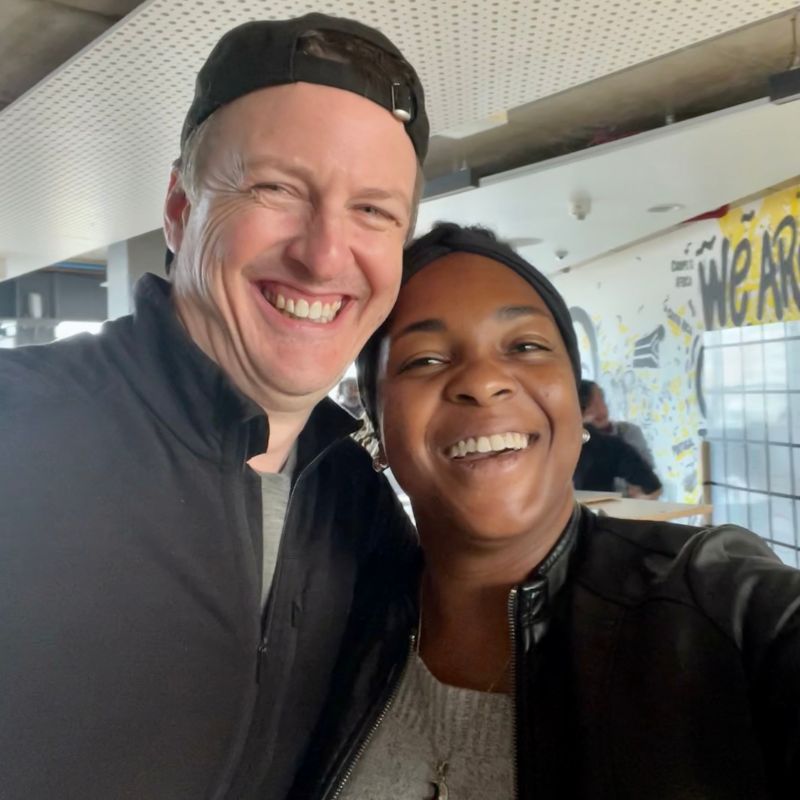
INTRO: This is part two of my interview with Dr. Aprile Andelle. If you have not yet listened to part one, I highly encourage you to go back and do that first because it provides some really important context for this episode. That was episode number #206. If you have already listened to part one, then please enjoy the conclusion of my interview with Dr. Aprile Andelle.
Matt Bowles: Well, you and I are actually here together on a remote year program. We are together now doing the four-month all Africa itinerary, the first time Remote Year has ever offered this. And we have a group of about 20 or so people that are traveling with us for these four months. And you hosted an awesome event the other night and you basically just offered it, and you said, anybody that would like to attend, you can just feel free to come. I’ll be doing this for free. I think literally every single person showed up. I mean, it was completely packed, and it was an amazing event. And I would love for you to be able to share a little bit about what you did at that event and what your reflections were on it, on how it went with our group.
Dr. Aprile Andelle: Yes, I was so very, very in surprise that everybody showed up to a mental health workshop. But they did, and it came out in full force, and I was really appreciative and it was so much fun. And I really did appreciate the fact that Remote Year opened up that possibility for me to do that because I wanted to give it back to the community when we were operating, continuing to try and live our best life. But while traveling, it’s like a completely different dynamic. So, I wanted to be able to contribute that to the community. And I really specialized in personality type. And just to go back the tiniest bit with my training and specialty. I’m a bit of a Maverick of a psychotherapist. I am not your typical therapist. So normally you see or envision that therapist who’s in office space, you’re sitting on the couch and then the therapist is behind you taking notes.
But I like to do a lot of things. I like to add in modern flair and flavor. And I do operate out of positive psychology. I’m also very focused on where I’m talking about more with my clients. So, focus on the present and the future and recognizing that the past is something that we see, that there were solutions previously that are no longer working. So, what are the solutions that we have now and are going forward? So less psychoanalysis and less freud of like your mother and how do you feel about that, right. So, you want this future step for yourself. What are you doing already that’s working and how do we advance and grow that? It’s a different framework of conversation. It kind of feels more attainable that way.
And the other thing I started adding in was personality assessment. I am so stunned. And it was just an experiment that I was doing with two of my clients after I had learned my own. But I started adding in personality assessments with my therapy, particularly the Enneagram, which is this amazing personality assessment process of nine different types of personalities that you would learn about yourself. And it showcases a person’s values and motivations. When I add it to therapy, it literally cuts therapy in half. It’s that powerful. So, this is what I brought to the workshop with Remote Year and was able to teach about. Just a little fun, just a little flair, just a little different of a therapist. People have a different level and perspective of self-awareness.
So, I proposed with this workshop just sharing the personality assessments. And I shared four, but I’ll share with you three just for sake of time. I was talking about the Enneagram like I just mentioned. I also talked about the five love languages, which I know is a very popular one and it actually is really powerful. And I talked about Attachment Styles, which is super base psychology and really helpful for understanding relationships and how they relate to yourself as well as how they operate in dynamic to each other.
Matt Bowles: Everybody I think was completely engaged. Every single person was raising their hands and contributing and asking questions to you. And it was an incredibly engaging, engaging workshop. And I think everybody was really interested in terms of better understanding themselves and being more self-aware of themselves. Because I think the more that we know and understand about ourselves, it also then gives us perspective on understanding other people and then our relationship with other people. Like the love languages and things like that. It’s incredibly valuable. And I think people at least had a sense, some people knew a lot more than other people, but I think everybody at least had a sense that this would be really valuable to them and to their relationships with other folks moving forward, whether it’s friendships or relationships or whatever else.
And so, it was great to see everybody engaged. One of the things that I did after that workshop is I came up to you, and of course, I gave you a hug and I told you were amazing, and you crushed it. But after that, I said these tests, because you gave everybody this preliminary homework to do before the event. And they were these short quizzes that we could take in each of those three categories that would give us a general ballpark sort of assessment of what we would maybe most likely be in these areas. And I went up to you and I said, those quizzes seem super short and not really in depth. And you’re like, yeah, those are the abbreviated version. There’s a much longer version that you can do. Some of them are paid and this kind of stuff. And I said, I would love to do the longer version and spend more time on it and kind of get a better assessment of myself.
Dr. Aprile Andelle: Yeah, leave it to Matt to do the larger homework.
Matt Bowles: The larger homework. And so, I did. And so, I sent it to you, and I thought it would be fun on this podcast for your sort of reflections or feedback on the results that I got on these tests and what that means for me or about me.
Dr. Aprile Andelle: Oh, sure, absolutely. And I’m encouraging everyone to definitely check these things out, because you said the key word there. It’s just a lovely additional level of self-awareness. And when you have that, you can see through so many different things, particularly how you operate your behavior, where they come from, what motivates them, as well as your important relationships around you. So, for you, yeah, tell me. And yes, talk about this on the podcast.
Matt Bowles: And for context as well, just for folks, what we’ll do in the show notes is we will put links to all three of these tests, right. So, there was a test on Love Languages, a test on Attachment Styles, and then the Enneagram personality test. And when you do the more extended ones, Two of the three are actually still free. One of them cost me $12. So that’s it. But we’ll link all three of them up in the show notes. So, if anybody wants to take this to learn more about themselves in these areas, we’ll link it up. And you can absolutely do that. But, yeah, for sure, I am sending you my results, so would love to hear your sort of just assessment and what some of this stuff means about me.
Dr. Aprile Andelle: Oh, sure. Well, let’s go from light to fuller. And first one, we go with the Love Languages, a lot of people know by heart because it’s. It was just this massive pop psychology. But the reason why it fled so well and became pop psychology is because it really truly had a lot of bases on how we connect to each other is essentially how we receive and understand love and being loved. So, the five love languages are Acts of Service, Physical Touch, Quality Time, Words of Affirmation, and then Gifts as well. And you did yours. Do you know what your top ones were?
Matt Bowles: Yes. So, on this particular test, I’ve done this test before.
Dr. Aprile Andelle: Okay.
Matt Bowles: And my top three are usually reasonably close, so I think on this one, Physical Touch came out as the number one. And then Quality Time and then the Words of Affirmation. And those three are usually my top three. But sometimes they change places.
Dr. Aprile Andelle: Yes.
Matt Bowles: So sometimes it’s a different order. So, this order, I think, was Physical Touch and then Quality Time and then Words of Affirmation. But sometimes it might be like Words of Affirmation and then Quality Time and then Physical Touch. But those three are for sure my top ones, I think. And then Acts of Service, which is basically like people doing nice things for you is usually then lower down, and then Gifts are usually the last one for me.
Dr. Aprile Andelle: Yeah, that’s exactly it. And when you’re looking at your five love languages, usually you’re going to want to follow your top two. And you were absolutely right. One of the key things that I was teaching is that your love languages, they change because different things happen in life. You have major life transitions. The example that I shared in the workshop was that you can essentially, like, start a family. Imagine being a teen or a young adult, and then suddenly you have a child. You can recognize that maybe Physical Touch and Quality Time is your top. But you have a kid, what do you think is going to come all of a sudden to the top? Usually Acts of service. Please, somebody help and support me.
Matt Bowles: Right.
Dr. Aprile Andelle: So, throughout those times, maybe every one or two years or every major life transition, you’d want to take your love languages again, which is why yours switches every now and then, like you said.
Matt Bowles: And I also feel like if you’re at a moment in your life where you are receiving less of one of those things, maybe because it’s lower down on their list and they are not giving as much of it. And sometimes you feel more deprived of one of those. Then when you take the test at that moment, it might and it pings.
Dr. Aprile Andelle: Straight to the top.
Matt Bowles: Be like, yeah, I’m getting this thing all the time. So, which is more important to you? This or this? I’m like, there’s other things that I’m not getting.
Dr. Aprile Andelle: Right.
Matt Bowles: And you’re inclined to answer that one. And so then maybe the one that you’re not getting as much of all of a sudden rise up as well.
Dr. Aprile Andelle: Absolutely. It says lovely blueprint ping to always check in with. I definitely recommend it. When you’re in intimate relationships, it’s really powerful. So, your physical touch and your quality time being top make no surprise to me just from knowing you, Matt. And there’s absolutely a lot of genuineness. It tells me that you connect very in person with people, with wanting those two things. So, the physical touch, I would tell you is it’s beyond just the aspect of the adult things. It’s the affection, its hugs, it’s pats on the back, it’s the daps and everything like that. Those are meaningful.
Your second one is quality time. Spot on. So, the quality time needs to be focused, uninterrupted time. So, this is the whole thing where you put down your phone, where maybe you’re turning off the television, maybe you’re shutting down the computer and you’re having one on one focus time. Sometimes that means eye contact, right. You are literally a client across the table talking, connecting with each other in that way you are having a moment of sharing about the end of your day. And the time has to be uninterrupted and focus time and attention on each other. And that’s what make it quality time. And it’s different from just sitting next to each other. So, anybody.
The adverse of that is that you don’t prioritize that person’s time in your life. Being able to spend time with them. That is the slap in the face when you choose repeatedly, over and over again to do other things rather than spending time with them. Even if it’s just sitting down for coffee at the end of the day. Very, very vital there.
Matt Bowles: Yeah. Or to your point, looking at the phone during conversations or having the TV on in the background or whatever the distraction may be. Right. Something that is taking away from the quality focus time.
Dr. Aprile Andelle: Correct. And it’s not necessarily that the person can’t do that. I know women, we are multitaskers, right. We do all of those things. But if you have a quality time, you Want to make sure that you’re dedicating a certain amount of time where you actually put those things down in that moment and that they receive that you are there, focused on them 100%. Just have small moments of that throughout the day and then go about, you know, other times where you’re multitasking. Yeah.
Matt Bowles: I found the Love Languages assessment to be so incredibly valuable to do about yourself, but then also to make sure that you understand what your partner’s love languages are. Because the entire purpose of this test, as I understand it, is to understand what the other person’s love languages are.
Dr. Aprile Andelle: Very good.
Matt Bowles: Even if they are entirely the ones that yours are not. The entire point is so that you can attempt to deliver love to the other person in their languages that they like to receive it in.
Dr. Aprile Andelle: Oh, Matt was paying attention. Very nice and beautifully said. When you learn the Love Languages, half of it, only half of it, is learning your love language. It does not stop there. You sit there and you look around at people who are important to you, particularly your intimate relationship, and then you make sure that you learn their love language. So, if they’re speaking Chinese, guess what? It’s important that you learn a little bit of that Chinese, too. It’s the same thing with the love languages and making sure that you’re always talking to them in that recipe, because that’s how they give and receive love. And then hopefully that will be a full circle for them to do the same for you.
Matt Bowles: And I think for me, that’s a good way to evaluate effort when both people can say, these are the ways that I like to receive love. And when you do these things for me, that’s how I will feel that you are making an effort to show me love. And both people can say that. And then you can just evaluate how much of an effort is this person making. Because there’s this whole sort of classic trope where it’s like, what do you mean you don’t feel loved by me? I’m doing this and this, and you should feel loved because I’m doing this and this. It’s like, dude, which part of the Love Languages tests that I told you about that you not listen to?
Dr. Aprile Andelle: It’s true.
Matt Bowles: You know what I mean?
Dr. Aprile Andelle: Yeah.
Matt Bowles: So, I feel like it’s a great way two partners can do it, and then they each know how the other one wants to receive love. I suppose if they’re the same, that makes it a lot easier, but if they’re different, then that’s a great way to just evaluate how much effort is the other person making to show me love in the ways that I want to receive it?
Dr. Aprile Andelle: Yeah, for sure. And then on top of that, it’s a continued way to get to know each other, to keep dating, to have fun together, to experience pleasure and joy on different levels. It really opens up because it continues to create new dynamics in your connection when you are purposefully, intentionally doing these things for your partner or your loved one.
Matt Bowles: 100%. So, what do we now know about my next test? If we’re to move on to the Attachment Styles, what does that tell us?
Dr. Aprile Andelle: So, the Attachment Styles, oh, that’s a big one. That was created with very key researchers in the field talking about how attachments that we created when we were younger, when we were growing up, the styles of how we connected to our parents or our custodians or the people who raised us, whether, despite whomever it may be. But when we attach to those people in our developing years, that dynamic continues throughout life, into adulthood.
So, when we attach in healthy and unhealthy ways, it follows us. So that attachment style then, you know, shows up in other relationships in our life, mainly in adult life. Some can be healthy patterns, and some can be unhealthy patterns. So, it’s important to learn those. The different types are you have secure attachment style, and then you have anxious attachment style, avoidant attachment style, as well as disorganized attachment style. And a lot of people in the workshop, they did this for me and blew them away. This was the part that was really deep. It got personal really fast.
I remember seeing a lot of looks of shell shocks. People are sharing like, oh, no, I’m anxious, avoidant, or whatever it may be. But the thing is, it is that you’re learning this just to understand how you relate inside of a love relationship so that you can catch if something is healthy or unhealthy. So secure is when people give and receive love openly, fluidly, confidently. They understand their worth and value. And it goes full circle in a way where they feel secure in the relationship. Anxious is usually when people need extra reassurance that constantly that the other person cares for them. And it usually means there was some kind of inattentiveness or neglect that happened inside of a relationship. And they constantly need that understanding that they are important to that person.
Avoidant attachment style happens through usually when there’s a disconnect between that parental figure. Where do I feel safe, secure in that relationship, or do I feel more like I need to be extremely independent? I have to take care of myself. So, they go through that process over and over again of coming back and forth, of needing people versus being independent and disorganized is kind of like a mixture of the two. So, you learn those lessons early and then you just kind of track them to understand your style and make sure that you’re staying on the healthier side of those. And then hopefully one day, if you are any of the insecure attachment styles, learn the small lessons and pieces that help you become secure in your attachment style.
Matt Bowles: Does your relationship partner have anything to do, or can they impact the way that you show up with regard to these particular Attachment Styles? In other words, can it vary from relationship to relationship depending, for example, perhaps on how your relationship is treated by the other person and what may be induced from that particular relationship dynamic?
Dr. Aprile Andelle: Yeah, absolutely. That was a big topic in the workshop, a big question. And the answer is yes, you usually do come with a very natural Attachment Styles of some sort because it’s based on when you were a kid and it had the process of being a part of how your brain developed and connected to understanding what relationships were, what love was. But people are always different, so it changes the dynamics per relationship. So yes, the answer is yes, it could change because you could be with a secure attachment style person and you have a little less insight into your own anxieties or avoidant behaviors, or you can be with somebody who is similar. Because a lot of times, especially with couples, I’ve counseled hundreds of couples by this point. Like attracts like. So, you can have an anxious and an anxious partner pair and they both either spiral or they both learn together. It just changes by the dynamic. Every relationship is different.
Matt Bowles: So, what were my results there and what does this mean about me?
Dr. Aprile Andelle: What do you think it was?
Matt Bowles: Well, I think I was a little bit of a blend. I assume, though most people are probably not 100% one thing, right? There’s a little bit of a blend. So, I think the of my attachment style was a secure attachment style, but I had a little bit of the other ones sort of blended in there.
Dr. Aprile Andelle: Yeah, absolutely. And that’s another thing, recent research has taken Attachment Styles and blended results as opposed to just like you are black and white, only one thing or the other. The recent research has added that, you know what, it’s going to be more on the pie chart. And your result was 72% secure. Hey, check that out, right. So, you had 72% secure and then 13% avoidant, 13% anxious. And yes, you have a very large minority in there. Your highest one was secure, it was three quarters of that pie. So that would be something that connects to how your dynamic connects to others. And I’d say that was accurate. But what do you think about it?
Matt Bowles: Yeah, I mean, it sounds right.
Dr. Aprile Andelle: I think this would be connected to childhood and how you grew up. And that process, when you look back and feel loved, feel secure, feel safe, was that a part of your childhood?
Matt Bowles: For sure. Shout out to my parents.
Dr. Aprile Andelle: There you go. Perfect. So that makes perfect sense.
Matt Bowles: Awesome. And then the final test was the Enneagram personality test. Can you tell us a little bit about that one? I know you’ve been pretty deep in the weeds of the Enneagram world for the last couple of years. Can you share a little bit about the significance of the test and then what my results mean?
Dr. Aprile Andelle: Yes, absolutely. And the Enneagram was actually what brought all of this together. I studied Enneagram. It was just like a whim kind of thing. Next thing I know, I’m certified in it. Who knew? And the Enneagram, because I learned so much about myself, and I still am learning about myself, I started working with it with clients. And that’s what made the whole rush of all the other personality assessments that really changed the way I approached therapy. It just becomes another tool in how we reach that well place faster.
So, the enneagram 9 types, and we definitely did yours. I gave you what I call the Ferrari of all the Enneagram tests. It’s from the Enneagram Institute. We will definitely have the link in your show notes. And this one is paid because it is research backed. And you had some very interesting results. Of the nine types, you had one that was clear ahead of all the others. And whenever you take your Enneagram, of the nine types, your top one is usually the one that you pay attention to, unless your top two are very close scores to each other. And then you can kind of read a little bit more. And then you deduce which one suits you best. But you had a clear lead type. What was your type?
Matt Bowles: It was number two, the helper.
Dr. Aprile Andelle: Yes, it was. You’re a type two helper. It’s also the caregiver as well. Were you reading a bit about it?
Matt Bowles: It gave me a whole giant long thing, which I haven’t gone through all the way. But do you want to summarize what that tells you about me?
Dr. Aprile Andelle: Yes. The helper. The caregiver is the person who is always wanting to help others. They’re always offering support. They want to be a part of your life. In being a part of Your life of helping you accomplish things, figure things out. They want to make sure that you are okay. That is really important to that caregiver helper personality. And it’s a part of the process of wanting to feel loved and feeling that love is a part of helping people be their best, be okay, be safe and secure. He knows that that also connects a little bit with your Attachment Styles there. And they’re usually very positive, they have bright outlooks, very happy people in general because they’re always looking to give of themselves to others. And that’s how they contribute into the world. And it’s always a process of giving of themselves. So how does that suit you?
Matt Bowles: Yeah, I mean, I think that sounds fairly accurate.
Dr. Aprile Andelle: Yeah?
Matt Bowles: I mean, I try.
Dr. Aprile Andelle: It’s a really beautiful one. There are some pitfalls that you want to pay attention to. A Type 2 can also get stuck in that want of feeling needed. So, what can end up happening is they can end up skewing accidentally or manipulating relationships to feeling always needed by saying certain things or sometimes even go into self-sabotage because they end up wanting to feel needed. And love isn’t that, you know, love goes beyond that, and it should be unconditional rather than the conditionality of you being needed. So, type Twos also have to kind of learn that lesson that they can let go and let other people be independent, not need them. And there’s still love in that too.
Matt Bowles: Right.
Dr. Aprile Andelle: Okay. There are eight other types. I don’t think we have time for it, but this is what I talk about all the time in several of my things. And it’s a really fascinating way of learning who you are. But if anything, I can just go through and share, type one is the reformer. They’re perfectionists. They do everything just right. They’re really high bar people. But they also have to remember that not everybody operates like that. So, they have to forgive. Type twos we just talked about. Type threes are the performers. They are the achievers. They’re the leaders. They go out and they do big things. But they also have to remember that you are not all the things. And failure doesn’t necessarily mean that you are not successful. It just means that you keep trying.
Type four are the creatives. Type four are the individualists. So, they have a lot of emotions, a lot of personality, and a lot of creativity. They want to be unique. They don’t want to be like anybody else. But you have to remember that you are not your feelings. Don’t put your identity in your feelings. And it’s okay to move through that. Type fives are the investigators. They are incredibly intellectual. They think about all the things. But type fives, they want to make sure that you connect out in the world and not just be scared of people taking your energy and, in that sense, to share and converge. Type six are the loyalist. They want to understand all of the things. They’re going to commit to you, but they’re going to rage against the machine first. But as soon as you prove yourself, they commit to you, but they also have to learn how to trust in that sense.
Eights are the challengers. They’re powerful people. They have a lot of strength, bravado. They are the ones that speak loudly. They have a lot of energy, and they make things happen. They’re also leaders, but they have big personalities. Intimacy and confrontation are kind of the same thing for them. But what they remember is that not everybody likes them. So gentle. And they can easily connect to others. And the final one is type nines. They are the peacemakers, the harmonizers. They’re the ones who want to keep everybody balance, have everything, lovely. Peace is really important to them. But they also have to remember that inaction is not going to get them ahead. And peace does not connect with inaction. So, in that sense, you want to make sure that those type 9 peacemakers also take action. Even if they’re facing confrontation, even if they’re facing conflict, it’s okay to get through those things. And those are just a little piece of each of those.
Matt Bowles: That’s awesome. Well, when you take the test, especially this paid Enneagram test, and again, it was only like 12 bucks. When we’ll link it up in the show notes, it takes about 45 minutes to go through it. When you get your results, it gives you a really extended explanation of all the different things. This means the positive things also things to look out for, as you just mentioned, it also gives you your secondary numbers, what your second and third one are and how they relate and how they connect. And it’ll give you a whole bunch of information about you. Super interesting. So, we’ll link that up in the show notes if you want to go take that test or the other ones that we have discussed.
Aprile, I want to ask you specifically for digital nomads and people that are in this world traveling lifestyle without a base, what have you found in your experience as well as your professional observations are some of the most important mental health aspects for us digital nomads to keep in mind, pay attention to. What tips do you have for people in this lifestyle in particular?
Dr. Aprile Andelle: Yeah, so many. Because you have to work really hard to keep your balance. I mean even landing from one continent to the next, it’s a different energy. You can feel it. So, you always want to make sure you center. Definitely, the healthy things people forget; supplements and like water, that is so basic. You know this, but yet you forget. So, you want to make sure of that. Keeping a routine. I know it doesn’t sound sexy a routine, but it’s actually really vital. I call it flow in my practice with clients. You know what’s your flow? Do you wake up early in the morning? Do you meditate? Do you yoga? Do you walk? Do you exercise? Keeping a routine to protect your mornings. Keeping very productive hours throughout your afternoon. How productive are you at the end of the day? How do you connect with? What do you accomplish by the end of the day? And then how do you end your day? How do you go to sleep and allow yourself to rest? And journaling and self-reflection in between connecting with people, that routine, it’s not fun or sexy as you’re young and you’re like ill. But it is powerful. It keeps you grounded.
So, make sure that you connect with that. Asking for help is okay, 100% asking for help. So also learn to ask in different languages. Right? Because of our lifestyle. Take a beat, rest. Especially when you land in a place. I think that has been my biggest thing is that it’s perfectly okay to step back. And Remote Year taught me this thing about JOMO. Instead of the FOMO; the fear of missing out, it’s JOMO; it’s the joy of missing out. So, you don’t have to do all the things. And that’s been really, really important and special to me. And I still enjoy it because I get the recounts from friends who come back from going to Machu Picchu or hiking Mount Kilimanjaro like somebody over here is going to do soon and sharing what their experience was life.
And it’s still a joy to listen to you protect your body first. Connect as much as possible with others. I think people always remember or forget that sometimes when they self-protect. But connection is another way to do that and give back as much as you can. I think those kinds of things are just some mental health tips I would offer. That was a lot. But you know, when you do it all together and you do it succinctly, it’s small little drops nut well that keep your cup full, you know.
Matt Bowles: That’s super valuable. Well, I want to ask about your transition into the nomad lifestyle. And I want to also ask about how you built your practice with a virtual infrastructure. You and I both run businesses that people don’t think traditionally are in a virtual category. I own a real estate brokerage. You are a licensed psychotherapist. And when most people think about those businesses, they think about a geographically specific operation, right? So, I’m curious, how did you build your practice with a location independent infrastructure? And then how did you decide to start traveling the world and being a nomad?
Dr. Aprile Andelle: Yeah. Well, being a psychotherapist has the additional challenge of licensure, and you can only work with clients inside of the states that you’re licensed. So, I am licensed in multiple states, first thing. And that’s a lot of extra. Sometimes it’s education, a lot of extra money. But it’s been worth it because my clients are so amazing. I always want to be able to make sure that I am fully vetted in their locations. But even that’s changing because we have clients who are virtual themselves, and then which state are they in exactly.
So, all that is coming up into arms and everything. But I started out with a location practice, I loved it. It was in Fort Lauderdale. It was next to a park. I did walk and talk sessions with my clients. I absolutely so enjoyed that space. It brings really fond memories. But just seeing the environment, it was like circa 2016. I knew online therapy was the next bet. I was positive about it because I had already tested it out. Some people couldn’t make it. And one thing that I did was I followed private practice software and business techniques that were virtual. I followed what they were doing. I only signed up for the things that had a virtual option and had training for it. And I just got onboarded a little bit earlier than everybody else. So by 2018, I realized I didn’t need the office anymore. I closed it down, made my first year in experiment, and it was amazing.
The feedback I continuously got was, this is a lot easier and more convenient. And there was little to no wall experience inside of therapy. It was just like we were in session. Granted, live and in person is always the gold standard. Right? You can still do it and have meaningful conversation, have meaningful effect. I still see their faces because some opt for video, some opt for phone, and they’re just as powerful. And all of it was just grown by the fact that I followed virtual business practices and just applied it to therapy. So that was pretty fantastic and fun throughout that journey and goal Covid hit. And because I had already shared that I specialize in therapy, which by the way, people just looked down their nose at me. Even my professors was saying, I’m sorry, what? And is that still really therapy? And I had to be very sound, marching to the beat of my own drummer and say, yes, it’s still effective, even to my professors who taught me the trade, because it wasn’t a thing. Yet even 2016, 2017, 2020 happens and it’s a global mandate. Essentially everything shuts down. My practice got full to the brim and then I had additional of my clients come back as well.
So, I was overextended for about a good eight months, working around 60 hours a week supporting everybody through this. And we all made it through. We all made it through. And that’s what heightened it to another level. Learning exactly what worked, what didn’t work, through that crisis situation. And it really took off. But it’s powerful, it still works, it’s still valid. And I have worked with clients all around the world and that just kind of ended up happening because I had worked really closely with expat communities. So next thing I know, digital nomads and expats and dignitaries and high-end people as well as everyday regulars who are just trying to figure out a different lifestyle as well.
Matt Bowles: And what was your motive for deciding to travel the world and be a nomad instead of just working from home in Fort Lauderdale? And what have been on your nomad journey? Some of your highlights. I know, for example, that you are a salsa dancer and that you have done that in all different places around the world, different cultures. You have sought this out and that’s been a thread, I think, just been consistent on your nomad journey, but you’ve had a lot of other experiences as well. So, on your journey thus far, what have been some of the top highlights or reflections for you? Moments that sort of stand out.
Dr. Aprile Andelle: Having such a large life in such a diverse community between Miami, Jamaica, California. Yeah, for sure, but definitely Miami and Jamaica. There are people from all over the world, all over the world. And always being exposed to those different cultures just made me want to go. I’m also a bit of an adventurer. I’m a bit of an explanation explorer. I’m a bit of a rebel. My mother tells me I didn’t really quite realize that. So, I always kind of raged against the machine therapist’s life as an office and only face to face. And I was like, no. And it worked and it’s still working. So, when I went out to figure it out, I wanted to Continue to meet people. And you’re right, the salsa dancing helped too.
And when you get to be a dancer, it takes over everything. And people literally travel to go and salsa and congress and conference and train and learn to dance all around the world. But they usually do it in spurts. Take a week off and go somewhere or there’s a new party down here or whatever it may be. But I was like, I think I can do this and like training myself further. That was another one I wanted to do. And I also love learning languages. Spanish is my favorite. Working on Swahili and French, that kind of just spurred me and I was like, I can do this, and I can still service my clients and still keep my connections. And I knew I could figure it out.
Matt Bowles: That’s awesome. Well, you’ve definitely been sharing with the group. Every place that we go in Cape Town, here’s the salsa night in Arusha, Tanzania, here’s the salsa night. How was it?
Dr. Aprile Andelle: Yes, I found it everywhere. Every single place I have landed. That’s one of my taglines, if you know me personally. I’m like, every place I land, I have to dance. I find the dancing. It’s usually salsa, bachata or kazamba. It’s amazing. No matter where I have gone, it’s always there because salceras are all around the world. Everywhere. It’s just epic movement just by itself. So definitely found it in Cape Town. Amsterdam previously held the limelight for a long time as my favorite salsa. But when I got to Cape Town, shout out to Sunkissed Salsa. That’s at Sea Point Park. Yes, and it’s literally right on the boardwalk of the park. And it’s captured not only by the ocean, but you look back behind you and you have Tabletop Mountain out in the sunshine. What an experience.
Because we were dancing in the daylight, we were dancing at about 3, 4pm, usually salsas at night. So, it was Sunshine, Ocean, Mountain. It was perfection with amazing dancers and dance instructors that came out from all around the city. Because it was the first of the season. I could not have been there at a better time. It was amazing. And then Arusha, Tanzania has salsa. Found it, you know. Shout out to Arusha Dance Company. They’re out here. Frank is holding it down and he’s working really hard to bring salsa and bachata and kazamba, which Kazamba’s already here, of course. It’s an African originated dance. I call it the African Tango, actually is what Kazamba is. And he’s starting to really Try to bring a community here. So, he’s doing it with the local youth here, and he’s doing a great job. Amazing. And we just went on Friday night, had a great time.
Matt Bowles: That’s awesome. Well, let me ask you one more question, and then we’ll wrap this up and move into the lesson. Lightning round. Aprile, when you think back on all of the travel that you have done up to this point, how it’s impacted you, why do you continue to travel? What does travel mean to you?
Dr. Aprile Andelle: I think travel means connection to me. I really value being able to meet people from all around the world. And when you have the connection, you find that even though you’re different from different backgrounds, you look different, you speak different languages. There’s so much that is the same, which is why I can go to a salsa spot and speak the language of salsa to somebody I can’t even communicate with, and we’re still connected. That means so much to me. And in that process of doing that, you’re opening up the world, and I think that’s really important to me. I really want experiences that open my world rather than close them. So, to have a rich and full life, which is really important to mental health.
Matt Bowles: That’s so awesome. All right, Aprile, at this point, are you ready to move in to the lightning?
Dr. Aprile Andelle: I’m ready. I’m ready.
Matt Bowles: Let’s do it. The lightning round. All right. What is one book that has significantly impacted you you’d most recommend people check out?
Dr. Aprile Andelle: There is a fun book by Sally Hogshead called Fascinate. And this book is actually about teaching you what it is about you that fascinates others. She talks about it in the format of your business or if in your entrepreneur or anything, but you can actually use it applied to just you and your personality. Go figure why I like it so much. Right? And she has a chart where you kind of follow through what you’re really good at. And between what I found, mine are persistent prestige and mystique. So, I speak and fascinate people really well by speaking in high quality, whatever I’m doing and then keeping it really focused and small so that I’m really focused on one person. Psychotherapist, right? Go figure. So, her stuff is spot on. The breed is really fun. It’s her own style and personality. She’s a really funny and it’s just a lovely way to understand a little bit more about yourself and then hone in on the things that potentially you can connect to other people with. Just starting from your proper self. Your own sense of self.
Matt Bowles: All right, if you could have dinner with any one person that’s currently alive today who you’ve never met, just you and that person for an evening of dinner and conversation, who would you choose?
Dr. Aprile Andelle: I’m going to go with Michelle Obama. I love her to death. Everything she’s accomplished, from her family life to her career and what she’s doing today, just reminding us of how special we are, each and of ourselves and making sure that every single one of us operates in being strong women and generationally going forward. I love that about her. I would love to sit there and have a conversation with her. I remember going to one of her conferences that she did with Oprah. They did a tour, and it was just after Obama came out of office and she was no longer the first lady. So, the first lady was down, the visage was down, and she was just Michelle. And just as Michelle. She’s fun, she’s hilarious. She had all kinds of fun quips to say, and she just was a good time. So, I feel like I could learn from her and listen to her and have fun with her all at the same time.
Matt Bowles: All right, Aprile, knowing everything that you know now, if you could go back in time and give one piece of advice to your 18-year-old self, what would you say to 18-year-old Aprile?
Dr. Aprile Andelle: I wanted to take a gap year. When I was 18, I wanted to take time to think about my next steps, be from high school to college. And my mother discouraged me. Love to moms. But I think I could have done that. So, I think I would have listened to my heart and gone in that direction just to explore a little bit more before I went into studies. And the reason why that is because that’s a time where you are still engaging and learning about who you are. So, I think I would have gone back and allowed myself that gap year just to figure out what I wanted to do. And who knows where I would have been. I could have been right here for all I know. But maybe there’s some alternative thing that I would have been doing that would have been just as meaningful or could have been here in a different way. Who knows? But I would have given myself that allowance.
Matt Bowles: All right, we are down to the final and most important question of the lightning round. Now, whenever I have hip-hop heads on the podcast, I always ask the top five hip-hop emcees. Now, you and I are also on the continent of Africa though, and you are a big fan of Afro beats. I am as well. And you are from Jamaica and you’re obviously a big fan of reggae and dancehall and all that as well. So, I am actually going to parse this question into three parts. And I’m first going to ask you to name your top five Jamaican artists. Reggae, dance hall, however you want to put them in there. Then I’m going to ask you to name your top five Afrobeat artists. And then finally, I’m going to have you name your top five hip-hop artists. This is the first time I’ve gone extensively on one episode, but I’m very excited for it. So, let’s start with top five Jamaican artists.
Dr. Aprile Andelle: Oh, I’m so very pleased. Thank you for not making me have to pick and choose because I am an audiophile. I love music. Those are my three jams right there. Reggae, Jamaican music, hip-hop, Afro pop. So, in Jamaica, in reggae, you know, I got to go to my top. Bob Marley’s always going to be at the top. Soulful Healing Tuts and the Metals. Absolutely bringing it back. Here’s one that a lot of people don’t think about is Alton Ellis. Alton Ellis is an old school ska, rocksteady artist. So phenomenal. He re-did a lot. My favorite thing is you’ve made me so happy. I absolutely love that song. But then we got to take it to the dancehall, right? And I still remember when Beanie man came out just lit, just crazed up the scene. And of course you have got to go with the voice. Buju Banton. Oh, that voice. So those are going to be my reggae dancehall, Jamaica.
Matt Bowles: Amazing. I remember very distinctly the first time I heard Beanie Man’s music and the first time I heard Byju’s Myrick music in the early 90s. And it was just a complete game changer.
Dr. Aprile Andelle: Game changer.
Matt Bowles: I was like, what is that? And how can I hear more of that? It was just amazing. So those are incredible picks, by the way, folks. We’re going to link all of this up in the show notes. So, every artist that Aprile is naming, we are going to put them in the show notes so you can go find them. Check out the music on Spotify or wherever you listen to music. So, all right, we’ve got the first five Jamaican artists down. Let’s now move on to Afrobeats. Who are your top five artists?
Dr. Aprile Andelle: Oh, my gosh. People out there, if you are not listening to the Afrobeats, get on it. It is giving me life like nobody’s business. And then the fusion between that and so much Jamaican music and artists is just absolute brilliance. So top of my list is still Wizkid love him to death. He came out with Made in Lagos. That album is absolute brilliance, the whole thing. Burna Boy is up there just lighting everything on fire. He’s going to be at Afro Chella this year. Ah, yes. Techno is always fun. I love Fire Boy and DeVito, but DeVito started out, you know, by us and went in and just lit up the place.
Matt Bowles: DeVito is also headlining the Afro nation festival that is happening in Accra in the lead up to New Year’s Eve. There are two festivals there this year which I will be attending. Already have tickets to both of them. Burna Boy is headlining Africa Afro Chella. DeVito is headlining Afro Nation.
Dr. Aprile Andelle: Oh my gosh.
Matt Bowles: Both of them are taking place in the same week in Accra in Ghana on the lead up to New Year’s Eve. So, it is going to be quite the party. If anybody is going to be on the continent or wants to come to the continent just to check that out, I am sure it will be well worth it. So, we are now down to the final question.
Dr. Aprile Andelle: What’s that?
Matt Bowles: Who are your top five hip-hop MCs of all time?
Dr. Aprile Andelle: Oh man, I was fed and led with hip-hop, I can tell you that. So, I am West Coast 100%. People don’t realize that about me, but I am West Coast. I was born in Cali, so I am on the West Coast, and I will always go by Pac number one. Tupac is always going to be the top. I love Tupac. And then shortly following there. I’m not condoning all of his music, but I still love Snoop Dogg. Isn’t that funny? I still love him. He’s just so funny and he’s just always entertaining. Then all the other West Coasters. But I got to jump back to New York, and I got to go Dilla and Most Def love J Dilla, RIP out there. He’s still in my memory. Mos Def, of course. And then if I’m coming back down and doing some modern stuff, I think I may go pass by. But you know, Drake, Nicki Minaj, even Common. I know that’s weird. It’s quite a mix out there, right? But that’s my hip-hop jams.
Matt Bowles: All right. That’s your top eight.
Dr. Aprile Andelle: Yeah, I know, right? I can’t. That was a hard one.
Matt Bowles: Well, we are going to link up all eight in the show notes along with the top Jamaican five, the top Afrobeat five. Everything is going to be in one place at themaverickshow.com.
Aprile, at this point I want you to let folks know a whole bunch of things here in terms of how to come into your world. The first thing is I want you to talk about your podcast that you host, which I have been binging, and I am almost through every single episode that you have done, because it’s that good and it’s that relevant and it’s that substantive. So, can you share a little bit about what your podcast is about and how folks can listen to it?
Dr. Aprile Andelle: Oh, yes. Family. So, my podcast is called Do I Need Therapy? Guess why I named it that? Because it was the number one question that I’m always asked professionally, you know, sphere and out of as soon as somebody knows learns that I am a psychotherapist. So, it’s just called do I need therapy? You can find it in Spotify, iTunes, Google podcasts. It’s everywhere. And I’m just talking about mental health, just openly, loudly, proudly wanting to make sure that questions are answered about how to approach therapy and the fact that it’s okay to ask for help. We got this.
Matt Bowles: It’s super well structured, too, because what you can do when you go to the podcast, you can scroll through the list of episodes and they’re clearly outlined by the specific topic, and you have really helpful and good quality topics on there that I was like, ooh, I need to listen to this one. Ooh, I need to listen to this one. And it’s like important things, like when there are really stressful and intense things happening in the news cycle and happening around us and all of this, but yet we need to function as human beings and do our work and be in good spirits for our loved ones and all that. How do we manage all of that? That’s one episode.
And I was like, I need to learn about that. I just like, listen through that and then I go to the next. I was like, oh, I need to learn about that. And you have them structured topically, and some of them are solo episodes, some of them you have a guest on. And so, I would encourage people to approach the podcast the way that I did, which is just go to it and then scroll through and start clicking on the ones that sound most interesting or relevant to you immediately. And listen to those first. And then I think you’ll be like, oh, yeah, I need to keep listening to a whole bunch more of these. So, I have thoroughly enjoyed it. We are going to link it up in the show notes.
And then for folks that want to connect with you, can you talk a little bit about your services? What’s available how people can come into your world and work with you, interact with you, consume some of your content, all that.
Dr. Aprile Andelle: Yeah, absolutely. So right now, I am online at aprileandelle.com. Feel free to come by. I have free checklists for different things. The latest one is How to Keep Depression Away? Come in and download that. That’s a free resource available to you and you can actually track how you’re doing as you go forward. Also, if you are interested in just kind of figuring out if therapy is right for you, you can book a discovery call with me. That’s aprileandelle.com/discovery and when you’re doing that, it doesn’t necessarily lock you into therapy. Let’s have a conversation about it. You can ask me all your questions and a lot of people find that really valuable to be able to talk to a professional, just to talk out what it is they potentially need. Sometimes it could be working with me, sometimes not. Sometimes they don’t need therapy and it turns out they actually need coaching and then figuring out how they can do it in their lifestyle, whether it’s nomad or traditional or expat, whatever it may be. And I’m able to point you in directions and always, always give you resources. So that discovery call you can always check out online. Just go to my website and work with me, discovery and I would be happy to meet with you.
Matt Bowles: Awesome. And I love that you have the niche, personal expertise both in your own life and working with clients of people in the location, independent, entrepreneurial space, expat, remote work, digital, nomad life and you have specific expertise in that niche. I think that is really super important for folks that need someone’s that really understands that aspect because a lot of people don’t understand this lifestyle.
Dr. Aprile Andelle: Yeah. And I just did want to say that sometimes people are curious. Do I work with people who are not black women? Of course I do. Absolutely. So, whether you look like me or look nothing like me, you are more than welcome because support it’s in all different colors and shapes and sizes, right?
Matt Bowles: Absolutely. We are going to link up all of this stuff in the show notes and everything else we discussed on this episode. It’s all going to be in one place. Just go to themaverickshow.com, go to the show notes for this episode. There you will find it all linked up in one place.
Aprile, this was amazing. Thank you so much for coming to the show.
Dr. Aprile Andelle: I can’t tell you; I had such a lovely, excellent fun time. It was great connecting with you and your listeners.
Matt Bowles: All right, good night, everybody.