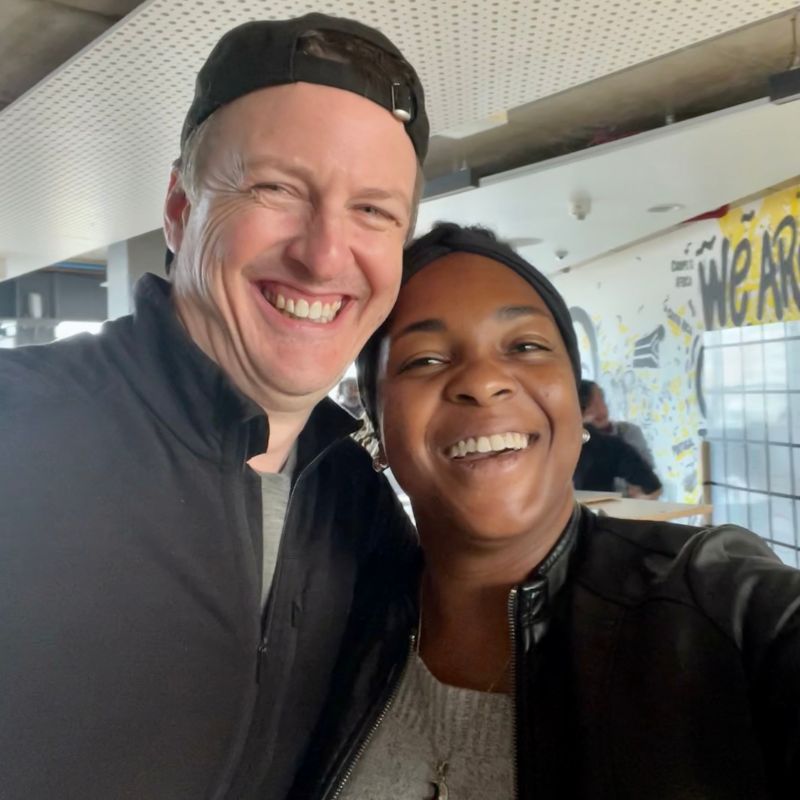
Matt Bowles: My guest today is Dr. Aprile Andelle. She is a licensed psychotherapist who has built her practice with a fully location independent infrastructure for the past 10 years. She has worked with clients around the world to break through depression, tackle anxiety, rise above trauma, nurture their most important relationships. And she is doing it all remotely as she travels the world. Aprile is also the host of the podcast Do I Need Therapy? Where she talks openly, loudly and proudly about mental health, love and life, the process of therapy and the strength found in asking for help. She is especially passionate about serving women of color and empowering them to develop the skills required for long lasting, positive mental health. She provides virtual therapy for clients in traditional as well as entrepreneurial expat, remote work and digital nomad lifestyles. Born in the U.S. to Caribbean parents, she was raised between California, Florida and Jamaica and she is now traveling the world full time and living the nomad life with no base.
Aprile, welcome to the show.
Dr. Aprile Andelle: Thank you so much, Matt. It is really good to be here.
Matt Bowles: I am so excited to have you here. We should just set the scene and talk about where we are recording this from. Today. You and I are in person, and we are in Arusha, Tanzania.
Dr. Aprile Andelle: Yes. Can you believe that?
Matt Bowles: I can. It has been such an incredible time. You and I have spent now a month in Cape Town together and we have spent at least a week or so already in Tanzania together. Let’s just start off with some of your reflections. Maybe we’ll begin with Tanzania, because this is our latest spot together. How has Arusha been for you so far?
Dr. Aprile Andelle: This is my first time to Tanzania. This is my second landing on the continent, and it is just beautiful here. I landed and just immediately felt, wow, this place is really special. And I got here and I’m learning all the little things. There’s so much hustle and bustle of the people. It’s a really incredible active city, and there’s people everywhere from all over coming in for all kinds of different things. I just ran into somebody from the UN, because there’s a UN office here in base. They have a huge conference this weekend, so dignitaries are all out. And just the beautiful foliage, the scent is so sweet in the air because there’s so much green and lush around. It’s a beautiful place. It’s absolutely beautiful and lovely.
Matt Bowles: Yeah, it’s a really cool city. I have been to Tanzania once before, but I’ve never been to Arusha. I’ve been to Dar es Salaam and then I have been to the island of Zanzibar, but this is my first time in Arusha. Super cool city. I totally agree. It is a really vibrant city. A lot of life energy, a lot of hustle and bustle and markets and all of that stuff. And then it is also the gateway to the Serengeti, the Ngorongoro Crater, Mount Kilimanjaro, all of that stuff. So, people that want to experience that fly into Arusha, and then from there you can go and experience all of these things. So, it is a really cool combination of access to amazing nature, but also this really cool, vibrant city. So, I’ve been loving it so far. But I also want to ask you about your Cape Town experience, because we just spent a month together there. What was your impression and experience like in Cape Town?
Dr. Aprile Andelle: Oh, my goodness. So, Cape Town was the first time I had landed on the continent. I cannot believe that I landed, and I was just like, oh, my goodness. Wow, this has officially happened. And I got to Cape Town and it’s this amazing place. And what was lucky for me was seeing the actual Cape of it, the layout, the geography, and how it’s sun, its ocean, and then that amazing huge tabletop mountain, right? And then also Signal Hill, and all of the city is backdropped by this amazing geographic masterpiece. It’s amazing.
And, you know, I can keep saying that over and over again, but it really, truly humbles me to be on the continent and to have found and felt so at home so quickly. So, my first impressions were of Cape Town. It had such an amazing culture. You hear it first by the accent of the people. And the people have different shapes, sizes and colors. So, you got to appreciate that and the fact that there’s so much difference in the music. The food is amazing. I think I gorged a bit. I went to town on the food and Cape Town people’s party like no other. That was definitely fun.
Matt Bowles: You and I went out to a local hip-hop show one night, which was really fun and amazing to get to see some of the local artists, like from Khayelitsha Township and from other places around the city. Kind of all came together and yes, performed. Yeah. What was your experience of visiting some of the townships?
Dr. Aprile Andelle: It was moving because when you’re going to the townships, you go there, but you go there with the perception that you’re going through a really large history of the country. So, my favorite was actually going to Langa Township and learning about how Langa had been a very foundational township. What was it from 1923? Something like that. And had found its way through the decades of just being a really large part of the community. So much so that, you know, by the time they were working really hard to fight apartheid, they had such a huge part in it with the Soweto uprising, they had their own demonstrations there. And just seeing that there’s a museum there that had a history of it, it was beautiful.
And Lenga is still growing. My favorite part about Lenga and actually all the townships is that everybody knows each other. Everybody knows everybody. Imagine a neighborhood where you know everybody in the area, and we sit there, and we don’t even know our next-door neighbor sometime. But these townships are so built together, strong as a community. And those communities have been through generations of struggle and strife and also victory and success. And they keep moving forward. So now we saw what Langa did in the history and you fast forward it to today and you can see how Langa has changed. There are new shops, there’s new restaurants, there are new businesses. You and I stopped at this awesome coffee shop that was fantastic. Right in the middle of Langa. You wouldn’t expect it, but there it was serving some awesome blend of coffee. And just the fact that there’s amazing African blend coffees all available to us. And then further, there’s academies that are there. We also ran into that music academy.
Matt Bowles: Yeah, they had a few of them, right. So, there’s the one that’s the music academy and kids can apply to go there and then they can get trained in different types of musical professions, including becoming a DJ or things like that. And then they had those other academies, there’s a culinary academy where kids can qualify to go into that and then learn to become a chef. Or they had a barista academy where you can learn to become a professional coffee barista. I mean, it was just remarkable. The other thing that I was completely amazed by, and this is to your point about how everybody in the community really knows each other and so they’re able to organize at an incredible level. And they developed this volunteer, what they call the Langa Patrol, to secure the community, which has simultaneously reduced the police footprint in the community and dramatically reduced crime.
So, there were women that were telling us, oh yeah, you know, I feel totally comfortable now just walking around at night with my phone out, all this kind of stuff. And I didn’t used to feel that way. And I was like, that’s unbelievable. I was like, tell me more. Like, we’re trying to do this kind of stuff in the United States, right? We’re trying to defund the police and take money out of there and put it into initiatives that are going to actually be alternative models of community safety that are going to actually keep people safe. Teach us how you guys have done this. I’m like you’re saying these people are all volunteers. And she’s like, yeah. And I was like, well, how do they get sort of compensated for their efforts? Like, oh, the community donates money, and all the restaurants give them free meals. And there’s just like this whole incredibly organized community dynamic there.
Dr. Aprile Andelle: That was my favorite part. Because the community is so tightly knit, they literally take care of each other. And the Langa Patrol takes care of the community and then the community takes care of them right back. So, a lot of times they were sharing that a patrol person would roll up to a restaurant, they don’t pay for their food, they get it automatically. And that’s part of how that full circle comes back and forth so that the community keeps growing together.
Matt Bowles: Right. And it was like, you know, I say, oh well, why aren’t you concerned anymore that someone would snatch your iPhone at night? And she’s like, well, if somebody snatches your iPhone, you just tell the Lanka patrol who snatched your iPhone. They go to the person’s house, and they get it back for you. That is unbelievable. And then I talked to somebody else that said they’re actually now working on this restorative justice dynamic with like victim offender reconciliation. And if somebody does something to someone else, there’s this whole process there, totally incredible stuff. We also saw these men’s initiatives against domestic violence and abuse through art. Artists are trying to raise awareness about this and there was just so many incredible community based positive initiatives there. It was just mind blowing.
Dr. Aprile Andelle: Absolutely. And I forgot the art, the creativity of just Cape Town in general. But just being in Langa, the creativity was so brilliant. Just beautiful colors using different mediums. There was an artist at the cultural center in Lange that created murals just from sand. It was amazing. He just colored sand, and he would put them together. Next thing you know, it’s a beautiful face of a cheetah or a tribal member, an actual portraiture. And I was just like, wow, that’s stunning. So, it really moved me. And that was just one tiny thing. Let alone the fact that throughout Cape Town I was ended up learning so much about other African countries because they’re all there in Cape Town. So, learning about Somali Shah and just a million other different cuisine and drinks and clothing and cultures just right there in Cape Town. It was fantastic.
Matt Bowles: It was awesome. And we did a movie night on our first week there where we watched the new-Ish documentary film Blind Ambition, which is this incredible story about these Zimbabwean refugees who came to Cape Town and stumbled upon the wine industry instead of working in the wine space and then became the Zimbabwe national wine tasting team and went to Burgundy to compete in these wine tasting competitions and stuff. I mean, just absolutely incredible stories about the immigrants that come to South Africa and then are just able to do and achieve these remarkable things.
Dr. Aprile Andelle: Absolutely. I mean, who would have thought of an African wine tasting team? And let alone the fact that they put their heart so fully into it and were working so hard, they want to be the champions and of course you get to back them up. That is something you want to see. It’s something different in that scene. So, it was just a great film, Blind Ambition. It was really phenomenal.
Matt Bowles: Super great. Yeah. But the whole month was incredible. Khayelitsha Township as well was just totally remarkable. I mean, the nightlife there was incredible. Talk about the coffee shops. Like the coffee scene in Cape Town was totally amazing. There’s an incredible coffee shop in Khayelitsha as well. Shout out to Siki’s coffee. This dude basically studied to be a professional level barista outside, left the township, left the country, even studied to be a barista, and then comes back to the township to open the first and only sit-down coffee shop in the township, which he has opened in his mother’s garage.
Dr. Aprile Andelle: Yeah.
Matt Bowles: So, the car leaves the garage during the day, the space flips into a coffee shop, which also they’ve opened up to local artists. They’ll put their art on the wall and sell it. So, it’s like an art gallery slash coffee shop. And the coffee there was just unbelievable. I tried the coffee, and I was like, wow. Like, this is really, seriously impressive coffee. You know, the espresso. And I started asking him about it, and as it turned out over the last few years, because he was this really serious barista and everybody knew him, he was able to crowdfund a roasting machine. And then he put the roasting machine in one of the other rooms in the back of the house.
So, they’ve now created this space where people can come and drink coffee and talk about art or have meetings or even work from there during the day. And then they have the roaster on the back. And he’s now importing his beans from three countries. I think. He told me it was Burundi and Ethiopia and Kenya, I think. And he does his own blend, and he roasts his own coffee. And he’s now not only selling beans, I bought a bag of his beans, but not just selling them directly to consumers. He’s actually starting to supply other coffee shops around Cape Town with his beans that he’s roasting from Khayelitsha with the roaster that was crowdfunded out of Khayelitsha. Remarkable stories.
Dr. Aprile Andelle: Yeah. And there’s so many. I can’t wait to go back and learn all the things I’m missing so many parties out in Cape Town. But my first arrival to the continent, it was such a wonderful city to get that introduction and really see such vibrancy of all African culture all in one place. Oh, my gosh. And we were there in time for the World Cup Rugby Sevens. That was not planned. Can you imagine? So, rugby is a world sport, and suddenly we were in town and realized that we were there for the finals in the stadium. The stadium that housed my favorite World cup ever, which was the 2010 South Africa World Cup.
Suddenly I was there in the midst of it for the Rugby Sevens, which is a huge tournament. Teams from all around the world come in and compete, playing their games. And then what was really unique and phenomenal about that experience, beyond just the fact that it was there? Everybody was in town. It was huge. And the fact that I was in my favorite stadium ever. But they also did their tournaments, both men and women, and that was the clincher. So, they would take turns. It would be the women’s term and then it would be the men’s term. So, we got to see both of them at play brilliantly and everybody was all out for it. So, by the time we were there for the finals, I think there was definitely South Africa holding in, hanging in there, hanging in their truths, Australia, New Zealand.
Matt Bowles: Fiji ended up winning the entire thing. Well, I mean, first of all, it was just amazing, the list of teams, because you look through the countries participating in this tournament that were present there. Jamaica was in the house, your homeland. Ireland was in the house, my homeland. And then there were teams from all over the world. And sure enough, Fiji comes out and just demolishes everyone and walks home with the World Cup. It was unbelievable.
Dr. Aprile Andelle: Fiji men’s team were amazing. It was like they’re playing ballet out there or something. One of the world’s most dangerous games. But they were so graceful and just killed it. And then Australia, Australia women’s won, and they were amazing to watch. So fast and swift and agile and everybody looked like they were just having so much fun. It was a great time. South Africa was a little sad to lose, of course. Home team, home stadium. I cried with them. But they were all the way up into the finals. They were phenomenal at hosting as well, as well as giving out their heart. It was amazing to be there for that world event.
Matt Bowles: We got to talk also about how we dressed for the event. So, first of all, shout out to Danny Dirks, who Maverick show listeners know because Danny has been interviewed on this podcast before, who came to the group. And we rolled in like, I don’t know, 12 deep or so. And she comes to the group and she’s like, guys, if we’re going to the rugby seven, the whole thing is that you go in costume, and you go with a group theme. And so, our theme was a rainbow-colored theme. And so, we had beards and mustaches and wigs and costumes and rainbow suspenders and all of this gear that everyone got. And we rolled in there like 12 deep with you.
Dr. Aprile Andelle: We sure did. I was rocking pink and purple. Sure was. I had never experienced it that much because I’m telling you, this was a world event. It packed the stadium there was everybody flown into town. Everybody was in town for this final and you had to, you had to go to Pomp and Circumstance and show up for the games. So, I’m so glad for Danny for reminding us of that. I think we did good.
Matt Bowles: We crushed it. There are pictures to show for it as well, so totally amazing. Well, April, at this point I want to take us all the way back to the beginning and talk a little bit about your background and so we have a little context and then talk about kind of how we got to where we are today. But let’s just start way back. Can you talk about where you grew up, a little bit about your cultural background?
Dr. Aprile Andelle: Yeah, absolutely. So, I was born in the States. I was born in Cali, and I grew up between Florida and Jamaica. So, I am sun through and through, heat and sun. That is what I was born of. And being born in California and of Jamaican heritage, I have that calm, easy, everything’s chill kind of vibe everybody tells me about. And then from that process of just being raised between the different cultures, I have a little bit of both, you know, and I really do appreciate that.
Matt Bowles: So, can you talk a little bit about what that was like for you, how that shaped your identity growing up and what some of those Jamaican cultural elements were in your household as you were coming up in Florida?
Dr. Aprile Andelle: Oh, my goodness, so many. I didn’t quite realize that I was being raised Jamaican. I was just raising my entire family, every single person I know. And I always joke, our family is so big because our principal sibling group there were 13. So, my grandmother had 13 children. My mother is the baby of all of them. And all of them had a whole heap of picnic, you know, except for my mother. She only had me. I’m an only child, which is very much an anomaly in our family. So, I have over 40 first cousins alone. So, I always joke that the entire island of Jamaica is pretty much my family. We are that big. So family was a very big part of the culture growing up. Being close to relatives through and through. We also had a lot of music in the house.
When I got older, I looked back, and I started to realize my entire family was a family of artists. I actually never realized that before. Not necessarily artists in the fact that they’re professional and out there making money, but rather the fact that every single one of them is creative in some sense. The biggest one is that almost everybody sings or plays some kind of instrument and nobody is formally taught, and yet we’ve gone so far. So, music was always a big part, gospel. But of course, you’re talking about a Jamaican family. Reggae was everywhere, all the time. So much to the point that one of the biggest memories that I have of growing up is that you go, and you have holidays, and of course you have Christmas. And we didn’t have Christmas music in our house. It was very, very rare. We had Bob Marley; Bob Marley was always playing.
And I don’t know why we associate him with Christmas and the holidays and family and everything, but it just works. And so, to this day, whenever somebody’s with me or at my house, we have to listen to Bob. Bob is just integral to that process of celebration. So that was another big thing. Food. I love the food so, so much. That is one thing with this digital nomad life that is a challenge, is being so far from Jamaican food. That’s a bit of a challenge. I do cry for that every now and then. But I’m always growing up with so much food to eat. Belly full, as I say, belly full. And we’re constantly being fed because it’s a part of the family culture, but it’s being fed really good food. Oxygen and rice and peas and Escovitch fish and every vegetable and fruit known to man. And just enjoying all of that and what that looks like as family unit.
Matt Bowles: And you were not just a Jamaican immigrant family that was living in the U.S. you were actually going back to Jamaica and spending many months every single year in Jamaica for your entire upbringing. Can you talk a little bit about your time in Jamaica, where your family was from and what your experience was like when you were there?
Dr. Aprile Andelle: Yeah, absolutely. So, my family’s from St. Elizabeth. That’s a parish and it’s basically in the mountains. So, a lot of times people will envision Jamaica, and their immediate thought is to the beach, the ocean, the water, snorkeling, all those things. And absolutely, my family was actually from the mountains. Remember you have the coffee, Blue Mountain coffee. So that’s where we were. And it’s a very lush area, very cool. Most times you envision Jamaica being hot, but in the mountains it’s very cool. Sometimes it’s downright cold, but it has everything you need because it’s so fertile. There was every single kind of plant tree, fruit tree, all the animals you could possibly ever need.
My grandfather created a property where he built the family home, helped build the church, helped build other people’s homes, and helped build shops. And the community was very self-serving. Almost like a township now they think about it, where there’s a lot of barter system and things, so we could literally be in that area and not need anything. So, when I was able to go back, I really felt like I didn’t need any. Anything else. I’m hungry. I go climbing one tree and, you know, pick a mango or a coconut. I wasn’t allowed to go as high as to get the coconut though. But things like that. There’s dogs and chickens running around all the time. So, you’re never lonely.
Family also was always there. I had a lot of family somewhere close to my age. A lot were grown and older, but every now and then they’d come back and, like, pay me some attention just a little bit. But for the ones that were close to me, we just played. We just enjoyed. There were some moments where we’d get in trouble, but it was really meaningful to me because of the beauty of the land and the fact that I never needed or wanted for anything, I remember that very vividly. So, when I would go back, and I went back every year, because I was educated in the States, so I was educated in Florida, and I went to private schools. I was very fortunate. Great experiences. But I do remember the tug of war between being in Jamaica and feeling so at home, where the time is just different. It’s so special. It just slows down. It surrounds you, and it’s more comfortable. It’s calm, it’s steady, it’s peaceful up in the mountains.
The cool air, the fresh breeze, and it’s different. And I could even feel it as a child. But I kind of just dragged back kicking and screaming. Go back to school. School. I was fine. As soon as I got there, I was fine. I had my friends; I had my family that were also in Florida. But I could very clearly remember the two differences and how that shaped me. And I very much lived in the process of being in both cultures. You know, I go to America, the consequences, I’m not American enough. I go to Jamaica, the consequences, I’m not Jamaican enough. But it was okay. I learned to balance it out, and I accepted both, and both became a huge part of me, who I am and who I still am today.
Matt Bowles: Well, I want to ask for your recommendations for people that want to visit Jamaica. And I am going to make a shocking confession about a massive gap in my travel resume. But it’s not on purpose.
Dr. Aprile Andelle: What?
Matt Bowles: I’ve never been to Jamaica.
Dr. Aprile Andelle: Oh, my God.
Matt Bowles: But here’s the thing. Listen, hear me out. I had an Airbnb in Kingston booked and paid for 30 days. I paid for the whole month, and I booked it for April of 2020.
Dr. Aprile Andelle: Oh, man.
Matt Bowles: Not even kidding you. Let me tell you what motivated me. I have always had a profound love for Jamaica for so many reasons, right? I mean, the music in particular. Everything from Bob Marley and then certainly dance hall and all of that. And I had always wanted to go, and I had never been there. And then I went to West Africa for three months in 2019. And it was one of the most incredible experiences I’ve ever had in terms of music, in terms of nightlife and all this kind of stuff. And you and I have talked. I mean, there’s this remarkable integration now, right? There’s this whole. There’s now a whole Rastafari culture in West Africa. There are people, West African artists doing dance hall. There’s all of this kind of stuff in addition to the afrobeats and the other different things that are there. So, I experienced all of West Africa, and I thought to myself, where on the planet of earth could possibly be at this level? And literally the only place I could think of was Jamaica.
Dr. Aprile Andelle: That’s right, JA.
Matt Bowles: And so, I booked a month in Jamaica right after that trip, and then, of course, Covid in March of 2020, and everything had to be canceled. So, I’ve still not been to Jamaica. So, for people like me who have not yet been to Jamaica, but would love to experience fully the richness and amazingness of Jamaica, what should the priorities be for people that want to visit Jamaica? What should we do?
Dr. Aprile Andelle: Okay, so normally when tourists go to Jamaica, their first taste is, like, Montego Bay. So, I’m very, very proud of you that you chose Kingston instead. Montego Bay is great, but it’s a very large tourist bubble. If you’d like to go and get your taste of Jamaica, Mo Bay is fantastic. It’s a great spot. But if you want to come a little bit out of the tourist bubble, you actually can go into Montego Bay proper and go and check out the town, the scene, the music bars, anything like that. But you have to come outside of the tourist bubble, so I always recommend that.
And Mo Bay is such a nice place to fly into anyway, so I never take it off the list. I just remind that if you’re heading to Mo Bay, make sure to actually visit Mo Bay, which is beyond all the hotels and everything. I love to recommend people go to Ocho Rios. That’s one of my favorite places. It’s just calm and chill. That’s where people go to visit Dunn’s River Fall. It’s a lovely waterfall that you can actually climb. And it’s a little bit of a sleepy town. And if you don’t need to run all over the place and paint the town red, that’s a perfect place to just go down and chill out and just enjoy nature.
And I love Dunn’s river just because of the water. You have the waterfall; you have the Ocean as well. And when you are right where the waterfall ends into the ocean, you have this really strange mix of the two ecosystems that it creates. And there’s so much life there in the water. It’s a perfect place for snorkeling. It’s the perfect place for looking at all the creatures that are around. And it’s a beautiful wonder, wonderful place to go there too.
Matt Bowles: I got to ask you about your experience with Jamaican music. You mentioned, of course, that you grew up with Bob Marley in the house and all of this Jamaican music. And then when dancehall came. I can remember when I first heard Jamaican dancehall, which was in the early 90s, when Beanie man and Supercut and Mad lion and all of these people were just coming on the scene. My mind was blown, and I was like, where can I get more of this? And I was a hip hop DJ in the 90s. So, the golden era of hip hop also dovetailed with this incredible surge of amazing dancehall music coming out of Jamaica. How did you connect with dancehall music and how was the dynamic there in Jamaican household?
Dr. Aprile Andelle: I connected with it right away. It was just everywhere all of a sudden. And it just blew everything up. And it took the Jamaican scene to a completely new level, right? So, Bob Marley had always been our cartel, Peter Tosh, Toots and the Maytals, of course, The Harder They Come movie and everything. But when Dancehall came, they just created a completely new and different scene. And it was fun and vibrant, and people could see that, you know, we know how to party. Always have, always will. But I was young when Dancehall came out, so I got right on board. It was fantastic. It wasn’t always well received throughout everybody. Because you’re talking about two different generations of music.
You’re talking about people going from ska and then reggae and then rocksteady and then coming into all of a sudden, like, whoa, Dancehall. It’s just this crazy, hectic, fast something. And there’s a definite generation divide of who can appreciate it and who can’t. And that was never more present because I was sitting there, I was on board. Lord, my mother did not like it. My aunties, sno. Some of my uncles were actually okay. They were cool, actually. But some of the family, they couldn’t get on board. And I think they’ve got it now. Like, for instance, my mother, even though this is not quite Dancehall, but my mother loves Shaggy, loves that man to death. But it took a minute, and I think Shaggy was the entrance to finally her accepting it later.
Matt Bowles: Can I Tell you something?
Dr. Aprile Andelle: Oh, what?
Matt Bowles: My mother and my father both love Shaggy as well. That’s unequivocally their favorite. Their favorite as well, which is amazing.
Dr. Aprile Andelle: It was a good meld for the divide. He did a good job, you know, just bringing it all together.
Matt Bowles: He played a role for sure. That’s amazing. And what was your first Dancehall concert that you ever went to?
Dr. Aprile Andelle: Oh, I got you. My first Dancehall concert was actually Sizzla. Oh, memories. That was such a fun time. I went for my birthday, and I dare I say I think it was my 21st. And I don’t really know what I was expecting. I think I was in Orlando and Sizzla was in Orlando. I didn’t expect too much because I didn’t know what was going to occur. And, you know, when Sizzla is singing his records, he’s singing a lot of culture. But when that man shows up on stage, he is lit all over the stage. You are there for a show. He is a performer. He was so much fun.
And I sat there and I remember that night with my girlfriends, and we were barely hanging on for dear life, just following him up and down the stage, and he’s singing all of his songs and then singing a bunch of other dancehall songs that he was, like, featured on at the time. So phenomenal. And I remember coming home just, like, drenched, Drenched. Like I was in a rain shower. I mean, it was amazing. And I will never forget that night. And I don’t know why I was surprised. Now I look back and I’m like, Sizzla would never surprise me ever again. Just the quality of his music. But I was so surprised at how much fun I had at that concert and how memorable it was. I will never forget it. It was phenomenal.
Matt Bowles: That’s amazing. So, as you grew older, can you talk a little bit about how your identity developed and how you connected with Caribbean specific cultural spaces versus broader black American spaces versus navigating primarily white spaces in certain cases? And then how all of that helped you to sort of shape your own identity.
Dr. Aprile Andelle: Oh, sure. There’s a lot of different points that kind of got me along that journey. I’d say the very first one that I was extremely fortunate to have and that was my schooling in the States. Even though Jamaica has extremely phenomenal education system, she was very insistent on schooling me in the U.S. So, I went to private schools most of my life, all the way up until high school. And I was fortunate even more inside of that particular environment that most of the schools that I went to were very diverse. It was very multicultural. You get a private school, and you have people sending their kids from all over. I remember having an entire friend group of just Filipinos. There were some Caribbeans as well, from all over, a lot of Asians. I just remember my Filipino people. Man, they held me down.
And it was surprising only because it was still new to me, but it was a very multicultural school environment. So, I learned a lot of myself, particularly in high school, about my culture. I didn’t realize that I was raised Jamaican. And when I was meeting other black cultures, that became a major clash. It just took me a minute to understand what was going on. And luckily, I had another pinpoint where I met other Caribbean students, and I had a more of a melt with them. And I started to understand that there were just some differences with how we approached life, how we talked music, we listened to, what our values were with family and school, et cetera. So, it kind of began there, and it just grew with different experiences.
Matt Bowles: Can you talk about your college experience and your decision to study abroad and how that all went for you?
Dr. Aprile Andelle: Oh, yeah, absolutely. So, I went to college. I went to Rollins College in Orlando. That was not multicultural. That was very homogenous. It was a very white population. And not only was it a white population, it was a very rich population. These people had money. They were coming from the Northeast; they were coming from abroad people. I went to school with, I think two princes. And that sounds really incredible and fun to say until you’re actually there on campus. And it’s really a challenge to be in an environment with that kind of headspace. It’s hard to explain. Sometimes it’s even hard for me to explain now. But they were extremely privileged. And I’m not sure if they were in touch with how privileged they were at that time.
You know, all of us, we’re all growing up, but just being in such a homogenous setting with such privilege, it was very challenging, very challenging to be there. But I chose Rollins College for a reason. I did not falter on it. They had the best program in international business of the time. That’s what I knew I wanted to do, study, and I picked it, and I just stayed focused. And the other process that kept me going was that Rollins College was actually a very excellent education. There were amazing professors, wonderful classes that I loved because it mixed people and culture and business, three of my favorite things, and doing the international business. I also studied Spanish and Latin American, Caribbean affairs, and it just was a beautiful mix.
And because I had amazing professors. I was able to find other people like me on campus. I think it was like 1%. But we were there, and we showed up. There was a Caribbean Student association, there’s a black Student Union. I also ended up in multicultural housing that really helped shelter me from. I’m really sorry I’m going to have to say this word, but there was some foolishness often on campus associated with the school population, frats and sororities. And I’m not saying that those are bad, but there were some really ill behaviors. That was hard and very challenging when you’re a studious person working so hard. And I was there on a scholarship, of course. So, it was just a challenge to get through and make sure that nobody marginalized me, make sure that I was treated equally and fairly. Nobody looked down on me, nobody spoke down to me or anything like that. It was really tough. And I look back on the experience, very pleased with what I accomplished. And then the person I came out despite the challenges.
Matt Bowles: And then your decision to study abroad in Spain, can you talk about that experience? You spent a lot of time in Spain. I’ve also traveled around to different parts of Spain, and I talk to people all the time about how culturally distinct the different regions of Spain are. So, can you talk about your experience in Spain, studying abroad, there, where you were, and then some of your reflections on your experiences in the different regions of Spain where you spent time?
Dr. Aprile Andelle: I studied abroad. My third year in college in Spain, I did not know exactly where I was going. So, upon just saying, oh, I’m going to study abroad and I made it work in my curriculum. I didn’t know where I was landing, still new to it. So, I get there and I’m actually way up north in Asturias, in Oviedo, and I was studying at the La Universidad de Oviedo and I’m studying Spanish and a bunch of other classes, you know, I’m a legit student there and doing all of this through Spanish, which I had been majoring in since I arrived. Actually. I’d studied Spanish in high school. I just knew that that language had my heart. I loved Spanish, so I was just happy to be there, right to have arrived. Besides Jamaica, it was my first major international landing.
So, I was really happy to be there. Bright eyed, bushy tailed. And I get to Asturias and I’m not saying this because somebody out there is probably from that region. It’s a beautiful place, it’s very conservative, it’s very traditional. And Spain, beautiful, large country, but it’s very different from the north of Spain to the south of Spain. The south of Spain is it hugs the coast of Africa. So, it has a lot of African heritage for generations now. And because of that, you see a lot of other flavors of people always in the south part of Spain. In the north part of Spain, closest to Europe, it is less diverse, right? And the funny thing is that in the city of Oviedo they have this huge university. Oviedo is gigantic, and yet there was still a very large population that had trouble with people who were different from them. So, I would say that Oviedo had a lot of European Spanish ancestry.
There unfortunately was a lot of racism. It was targeted towards me. And man, I was a lovely young, beautiful young lady arriving. I wasn’t out for anybody. I smiled all the time. I was just happy to be there. And even I encountered it, studied with a lot of African students, studied with students from Asia, and we all got it. It was just really challenging. I remember one particular instance and man; I just think back on it and it was just very harmful. I’m glad I got over it. But in the meantime, I still had faith because the city was really lovely, the university was an amazing place. But we all banded together, all of us, and that’s what kept part of me going as well. We all dealt with it together, we talked about it, we survived it, and we kept going. We all finished our schooling and our education and became such good friends because of it.
Matt Bowles: And then when you were in the north, you also went to the Basque country, which geographically is in the northern part of Spain.
Dr. Aprile Andelle: That’s right.
Matt Bowles: And folks look pretty similar there as they look in the other part of northern Spain. But when you went to the Basque country, what did you find there? What was your experience like there?
Dr. Aprile Andelle: Well, as you can imagine, there’s a lot of political unrest going on right there. But they were going through a process of struggle. And I look back and I don’t even remember how we were able to get in, but it was just a really lucky experience that happened right between like some blips of protests. And we were able to get into the Basque region and the experience was completely different. And the people looked just like the people I had just come from. And I was treated with immediate welcome. They were like, so happy to see us, all of us, it was a complete 180. But you sit there, and you realize they are a minority of their culture, right? Also, in a struggle for their own rights and equality.
And so, it makes sense when you sit there looking Back at it that we connected. It was almost immediately. And I still remember running into one person in particular. And it was amazing just to hear him talking about it and please go and look it up online and everything. It was a really interesting time in Spain’s history. And he just kind of went up on a soapbox. And I think the other part of it was the fact that we allowed him to, and we listened. We were there listening to what he and his family and his people were going through at that moment. We asked questions, we were curious, we weren’t judging, and we definitely didn’t associate ourselves. We just wanted to understand his experience. And for that, it came back to us twofold. And he was just so amazing and lovely and introduced us all around, and it was a great, amazing experience.
Matt Bowles: That’s amazing. So, after all of these experiences, you return back to the U.S. and what were your overall reflections or what overall impact did that experience have on you, do you think?
Dr. Aprile Andelle: First of all, it definitely made me stronger every single time I went through those things. As tough as it was, I came out on the other side stronger. I knew who I was. Even despite that one particular nasty event, I did not let it sway me and what I was there to do and focus on. And I really look back at those moments and I’m really proud of myself for getting through them. It’s taught me, because unfortunately, it’s still around, taught me how to get through them now. And one of the biggest things is that you have to just kind of grasp where you are in those environments. And then that person who committed, whatever it was, had their own perspective and thing too. Everybody has their own. So, I really did appreciate that I came out with amazing friends. Still to this day, I have these friends. I dated my boyfriend, he was from Benin, so that was my first exposure to African culture.
And when we met, part of it was recovering from a particular event. We had just been in the student center just talking through it, and we’d met. And by the end of that, we were connected. We stayed together for the rest of that year that I was in Spain. And we took really good care of each other. We are still friends to this day. So, I came back with so much of that third thing, which is really funny, right? One of the things that helped me survive in Spain, guess what happened? So, there was this amazing festival, and you already know I love music. There was this amazing festival that went on for a week, and every night was different. The first night was like Noche Flamenca, the second night was like Noche Salsa. Guess what the third night was. Noche Reggae. Nice. It was amazing. I cannot even tell you, because when I arrived there, guess who showed up on stage but Beres Hammond himself. Beres Hammond and his band showed up for Note Reggae right when I needed him most. I cannot tell you how much that filled my spirit. With utter joy, I stormed the stage with my friends. I just grabbed everybody and was like, we are going to the front, and we’ve somehow made it. I’m sitting there, I don’t look like anybody else, and I sit there, and I have my locks too.
So Beres saw me, and he sang to me the whole time. His band noticed me, and so it was like my own personal concert. It restored my soul. If you don’t know Beres Hammond, that’s exactly what he does in all of his Rocksteady reggae music. And afterwards, I got to go behind stage. I didn’t get to meet Beres that time. He was already gone. He had done an amazing concert, but I met his band, who just kind of welcomed me and didn’t hear Jamaica and patois and talk and. And laugh and joke and everything with my friends. That was just an amazing experience. And I am still friends with them to this day, too.
Matt Bowles: So awesome.
Dr. Aprile Andelle: Third lesson is Jamaicans are everywhere. And thank goodness for that.
Matt Bowles: That’s amazing. All right, so I got to ask you at this point about your professional trajectory. So, you said you studied international business, you studied Spanish, you studied Caribbean and Latin American affairs, and now you are a psychotherapist. How did that trajectory go?
Dr. Aprile Andelle: How did that happen? Yeah, I still look back and I’m so surprised by this. But I have had many lives. One of the lives was when I came out from international business in Spanish. I used it to platform media, and I went, and I worked at Viacom. So, I was up in New York City working with MTV and Nickelodeon, and there was a Caribbean network up there at the time, and I worked with them. I was under the production side of things, and that’s a whole other story. But what ended up happening was the downturn came in 2008. The economy was just lost, and that just fell through. So, I kept looking for something that I wanted to do. And I realized that people were my thing. People and the culture.
So, I had a list of criteria of what I’m going to do. Next thing I know, I found therapy. And I had never really thought about it. I had gone to graduate fairs; I’d gone to job fairs. I interviewed friends because I just had these listed criteria of what I wanted to do next. And this was the thing that answered it. And I really thought to myself, I prayed, I sat on it, and it felt right. And then on top of that, I went back, and I looked at some of my old high school assessments. You know, those personality tests. What would you be really good at when you grow up and everything. There’s like five of them. Every single one of them said the psychologist. And I was stunned. So surprised. So, I went there and I did that. And because I’ve always been very quiet, I listen more than I speak. So, because of that, you know, I listen more than I speak. I am very soft-spoken. People have always come to me. It just felt like a right fit when I was shifting gears. And it still applied everything that I loved, People, culture. And then, of course, being in private practice for myself, business as well.
Matt Bowles: That’s awesome. Well, can you talk a little bit about your niche areas of expertise, where you’ve chosen to specialize and what types of clients and what types of issues you’ve really been focusing on over the last number of years?
Dr. Aprile Andelle: Yes, my expertise is marriage and family therapy and just a fancy way of specializing relationships and things that matter most to you. The most important relationship being the one with yourself. And that’s where a lot of our mental health is stored. And I’ve been doing this, I think it’s been over 10 years. Oh my gosh, I am so proud of that. And my clients are so amazing. We’ve worked hard to stay mentally healthy and well together. Through Covid. And I think it just came about and one of the things that really spoke to me were women who were going through anxiety. And inside of that, I had a lot of people just kind of asking for tips on how to reduce worry, reduce stress, and how they’re able to essentially figure out how they’re operating with a well mentality, with work, life balance, and also with relationships. So, I specialize in anxiety and then also depression for a while.
And I remember when I very first started with my practice, that became something I was known for. And then I had this season where I was just flooded by men as well. So, it wasn’t just the fact that I was attracting essentially other women. It was just something that was very universally understood, the challenges of living in today’s world, working family relationships. And I was really proud of the fact that we had a couple of solutions. The biggest one being is just that therapy is out there and available. It is a resource. There’s nothing wrong with it, there’s no illness about you. If you decide that you want to go into therapy and actually there’s a lot of generational healing that can happen, you start it, you go into therapy and you have the process of making sure that you’re able to become self-aware enough to really address those things. And that was actually a really nice thing.
So, when I began, it was definitely anxiety, depression. I started getting certified in trauma. My favorite is EMDR, Rapid Eye Movement. EMDR is actually very popular. I’m trained in the first level, continuing my certification there. And also, Traumatic Incident reduction, which is this process of working with clients through recalling their trauma incidents. Talk about intense therapy. The goal is that you really discuss what occurred to you and you do it without any judgment, without any shame, and with sharing the full detail of what that is, what it looked like, what it felt like to be able to figure out how to get to the other side of it. It’s a very specific framework. It’s a lot of work. You have to be a very structured practitioner to be able to assist a client through TIR.
And on the other side of it, we’re hoping that the traumas were reduced so anxiety is lessened, depression is less prevalent, and the triggers that happen with traumas that sometimes never go away. We’re just working to lessen them and have the ability to assist clients to cope as well as have the clients understand that when they are triggered, you can bounce back faster because you know how to handle it. You know what’s going on. You don’t question it, you don’t judge it, you just, ah, this is it, this is what’s going on. And then you continue. So, trauma became my next focus. And through that trauma is when I really started working with a lot of black women. A lot of black women, women of color started coming through my practice just from that particular call to that resource of what I could do.
Matt Bowles: All right, we are going to pause here and call that the end of part one. Be sure to tune in to the next episode because on part two of this interview, Aprile is going to review my results from my love language test, my attachment style test, and my Enneagram personality test. You are not going to want to miss that. So be sure to tune in to the next episode to hear the conclusion of my interview with Dr. April Andel. Good night, everybody.