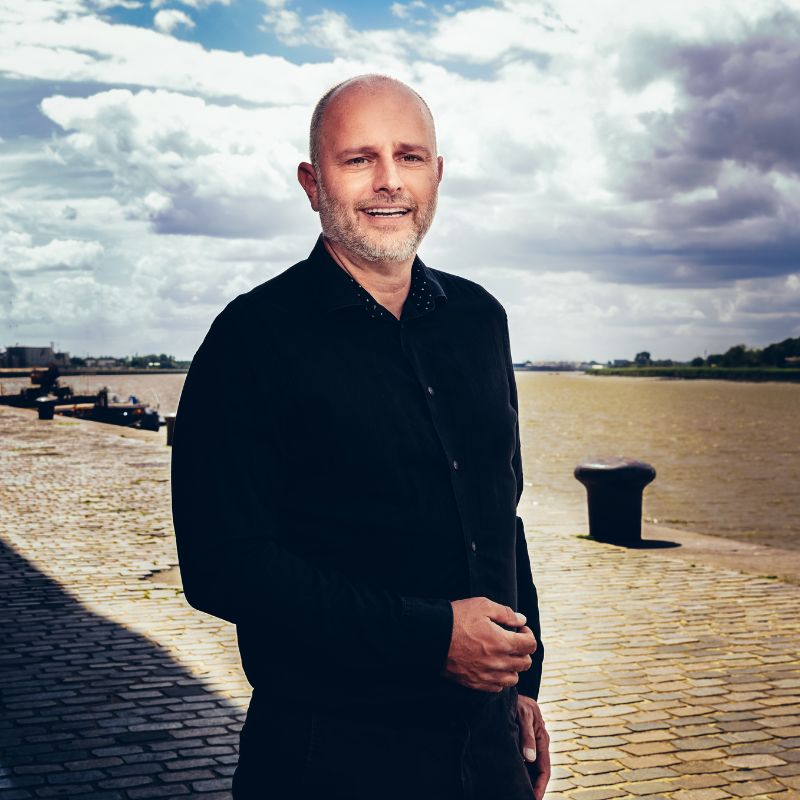
Matt Bowles: My guest today is Koen Blanquart. He is a location independent entrepreneur who has built and sold numerous companies. He operates at the cross points between business development, technology and organizational models. Koen is a photographer, a scuba dive instructor, and the author of three books, including his latest work entitled The Suitcase Office: What Digital Nomads Can Teach Us About Location-Independent Work. Born and raised in Belgium, he has been a digital nomad since 2011 and has now traveled to over 60 countries.
Koen, welcome to the show.
Koen Blanquart: Thank you so much for having me, man.
Matt Bowles: I’m so excited to have you here. You and I have known each other for about five years now. We’ve hung out in Thailand; we’ve hung out in Cambodia. I almost went on one of the scuba dive trips you were leading in Costa Rica, but unfortunately, I didn’t make it to that. So, it’s been a while since we’ve hung out in person, brother. But it is so good to have you on the show.
Koen Blanquart: We should make sure that it doesn’t take another five years before we get to that.
Matt Bowles: Exactly right, man. Well, let’s set the scene and talk about where we are today. Unfortunately, we’re not in person. If we were, we’d be sharing a bottle of wine. I am actually in Cape Town, South Africa, recording this today. And where are you?
Koen Blanquart: I’m in Antwerp, Belgium, currently in. What’s my original location, if you want.
Matt Bowles: Nice, man. Well, let’s start with that. That’s a great place, I think, to start off and sort of give folks a little context about your background, your experience growing up in Belgium. And as you were coming up, how did your interest in world travel start to develop when you think back?
Koen Blanquart: Well, I’ve always thought that Belgians were made for travel. I mean, we live in one of the smallest countries of Europe. So as soon as you start walking around or looking around, you start to cross borders. And I was born and raised before the opening of the European border. So, traveling from Belgium to anywhere felt like crossing a border pretty fast. But just to give you an idea, you can’t travel 60 miles in Belgium before you hit the next border. So that’s how small the country is. And so, I always thought that everybody would be traveling all the time. I found out that it wasn’t the case. But very soon in life, I think even at age of 18, I started looking into moving abroad. I lived in France for a while in my younger days, in Italy, in Germany, before returning back to Belgium. Because at that time, military service was still something we had to do.
Matt Bowles: If people wanted to come and spend time in Belgium, what should they know about? What should they do? How should people experience Belgium?
Koen Blanquart: Well, first of all, it’s a country with in itself a little history as Belgium, but it has an incredible history before that. It’s been the center of some of the medieval times, and you still find a lot of residues of that time. For those who are into history, that’s worth coming. And I don’t have to introduce you to Belgian beers, the only beers worth the name in the world. So, coming to Belgium and tasting all the beers will be a long, long journey with a very difficult waking up the next morning for every trial day. Belgium is actually the capital of surrealism. It’s invented here. It also makes that Belgians are the perfect people to compromise. And I’m not saying compromise in a bad way, but they’ll walk away from a conflict not by having one person right and one person wrong, but we made an art into finding a compromise. You have to, if you get complex language situations, complex politics, but I think if we have one export product that we’re not being promoting enough, it’s our way of being able to compromise on difficult topics.
Matt Bowles: And where should people go in Belgium? I have been there, but I’ve only been to Brussels, and it was only a very short visit. So, if I were to come back, what should be my priorities in terms of where should I visit in Belgium?
Koen Blanquart: Well, the reason why I’m in Antwerp right now, I believe it’s one of the nicest places in Belgium to be. It’s not big. I mean, we got 600,000 people in Antwerp, but it’s one of those places in the world where you get a lot of first-generation immigrants, you got a harbor. So, you get a lot of influences that make the city vibrant and that keep it alive. Lots of young people, universities. And that makes Antwerp a driving city, if you want. I mean, 600,000 is not a city everywhere in the world, but here, definitely it is. And then I would say yes, absolutely, Brussels. Although Brussels might be a less hospitable environment depending on what area of Brussels you are when it comes to English. Speaking language is a huge topic in Belgium. So, speaking the language, understanding the language in Brussels might be a bit of a challenge in the way people react to it. And then there is Ghent. Not too many people know Ghent. It’s a bit smaller than Antwerp, which everybody from Antwerp will keep on repeating. But it’s one of those medieval feeling, amazing cities with a vibrant nightlife.
Matt Bowles: Can you explain a little bit more and contextualize the language situation in Belgium?
Koen Blanquart: Well, if you look like 2,000 years back, we had the Roman Empire in what’s now the south of Belgium, and actually you had the German, the barbaric empire in what today is the north of Belgium. And the people in the north speak Flemish, which writes like Dutch, but is pronounced a little differently. And the people in the south speak French. And there have been, over the past hundred years, clashes between those two communities. If you’re from Belgium, people will ask you, are you Flemish or are you Walloon? Which means, are you from the Flemish speaking part or the French speaking part? And it’s a big deal. It’s kind of like one of those politics’ deals, if you want, that are shown bigger than they actually are because we get along with each other.
We are not fighting in the streets. This is not a civil war, but it gives some tension. And it happens in some other countries that have different communities. We have that between the north and the south, where the north is richer, it has harbors, it has a lot of the modern industry, and the south has more of the traditional industry, so it’s a little poorer. And then, of course, when people feel that their wealth is being used for somebody else, they feel a little upset. And that makes that in some areas of Belgium, people are very, very sensitive about language and the linguistic border. If you want.
Matt Bowles: Well, I also want to talk to you a little bit about your entrepreneurial journey. So, when you think all the way back growing up, what were some of your early entrepreneurial tendencies?
Koen Blanquart: I found very early in life that I was able to convince people to do something, buy something, work with me, help me with something. And I found out early in life that it was easy for me to. I’m going to use the word sale to sell something to somebody. And that’s where I start to meet people. As goes in life. Once you’re, you’re finding out you’re good at something, you meet people who have actually figured that out as well. And one of the first people I met soon after I did my military service, he was a very good software developer and hardware engineer. And he basically made me a deal. At the time I was like, join me in my company, you’ll help me sell my products. Because I’m an introvert and I’m not so much of a salesperson.
And in return, not only I’ll pay you salary, but I’ll teach you whatever I know in software development and computers. And that’s how I basically rolled into my first computer shop. And then 1995 comes around Windows 95 and guess what? The Internet is there. You would not believe it in 22, but we started an Internet school where people could learn how to Internet and we were able to sell it to them. So, it’s from that sales perspective that I’ve been able to fulfill some of my dreams and start off some of my companies added with that knowledge that I build up along the side with people I work with.
Matt Bowles: Well, you are truly a serial entrepreneur. You have built and sold numerous companies over the years. Can you take us a little bit on that journey? And I’m also curious about the mindset of a serial entrepreneur versus somebody who maybe founds one company and spends most of their life building that one company or that one brand. What was your mindset where you have built and sold and been involved with so many different companies?
Koen Blanquart: It’s not a preset plan. It’s not that. I was 20 years old, and I was like, let’s build and sell companies. And to be very honest, not everything I’ve started has succeeded. I’ve busted some as well. That’s how I learned to make the next one even better. I’ve been somebody who has been able to see the future. And this sounds crazy and stupid, but I can easily see what’s going to be next. For example, in the early 2000s in technology you used to have two very separate worlds. On the one hand, we had software developers building software. On the other hand, you had people who were in the system side, the hardware, the servers, the data centers. And when in 2002 we started a company that basically joined these two forces in one team with one knowledge shared amongst all the people, it turned out that we were ready for a revolution that would change the whole IT landscape.
Today, nobody would build two separate teams that would not talk to each other because they’re interdependent and because that interdependency existed in that company. We were, within two years after we started, we got acquired by one of the largest system integrators in Europe that used us as the stepping stone to build their integrated system on top of that. And that has been something that I’ve been seeing later as well that I started something that was probably a little too early in the market. But by the time we had figured out all the issues with the new technology or the new way of working, there was somebody coming along who needed that in order to get their big company to make a pivot or a growth. And that has been without a plan, the result of what goes on.
Matt Bowles: Well, I also want to ask you about your transition into the digital nomad lifestyle in 2011. Can you talk about that?
Koen Blanquart: It’s an interesting thing that happened because it’s not a one course and one action. It’s a series of actions that follow one. Another one of them is getting the freedom after selling one of my companies and starting to think like, is this what I’m going to do for the next 20 plus 30 plus years to go? Am I ready to go sit in another office or cubicle or work with or force somebody 16 hours a day, six days a week and keep on doing this? And the answer was clearly no. At the same time, that similar question, like, will I wait until 67 to do what I want to do? And I love to travel. I’ve always traveled a ton in my life, in between projects, in between companies.
And then at certain moment, there is a friend of mine who had a company that he wanted to take internationally, and I was like, you know what? I’ll give it a shot. And so, all of a sudden, I am traveling, and I am starting companies in different locations. All of a sudden, I am in New York and we’re working in Dubai to get stuff started. And we’re trying in Spain and we’re trying in the Netherlands, and we’re looking at the rest of the world and we’re trying to make an alias with Australia. And all of a sudden all I’m doing is traveling and so enjoying it that I could combine it that I never looked back, actually.
Matt Bowles: That’s awesome, man. Well, you mentioned New York City. I know that you have a very special relationship with New York, and I as well have a very special love for New York City. And I want to maybe just start with that because I want to go into some of your travels and some of the experiences and some of the places you’ve spent time. But maybe let’s just start with what do you love about New York City? Why is it special to you?
Koen Blanquart: If I have to give it in one word, then the word is going to be energy. In the meanwhile, I became a tour guide licensed in New York City as well. So, when I take Europeans on a tour and they ask me, why do you want to live in this city? It feels so weird, so strange, so dirty. So, whatever you want. I’ll tell them tomorrow morning. These 8.5 million New Yorkers who will wake up not in the hope, but in the absolute belief that they going to change the world tomorrow. And those 8.5 million people, they generate such an energy that things just are bound to happen day after day.
Matt Bowles: That’s amazing, man. I love it. Well, I want to talk to you about some of your incredible travel adventures and experiences that you have had. You took the train from London to Singapore. Can you talk about that experience, what prompted it and what you saw along the way and what that was like for you?
Koen Blanquart: The Trans-Siberian Railroad has been long on my bucket list because it’s magical when you hear about it, when you see the pictures. And so, I had, for a long time, on a virtual bucket list, put a Trans-Siberian. And then in the year leading up to this trip, I was doing another trip, and we’ll definitely talk about that one, sailing to crazy places. And I had a company that wanted to sponsor me on that crazy sail trip, and we were too late, and the technology was not ready to get something going with them. And so, we get into this conversation and they told me, what’s your next project?
And of course I’m like, yeah, guys, I’m going to do the Trans-Siberian later this year. And the later this year was kind of not set in stone. And they were like, oh, but that’s amazing because we have a headquarter in Belgium, it’s a Belgian company, we have a subsidiary in China. Couldn’t we make something for an event where we can do a video documentary or a photo book where we can also liaise with entrepreneurial artists? And basically, what happened was that I managed to work with them on a trip that we called partially from Brussels to Beijing, in which I was interviewing artists, buying art from them, not with my money, but with the company behind me. And then at a very big event where they invited all the C levels and executives of their major clients.
We showed what we had seen, what went on, and we used actually, the train ride as a metaphor for the old industrial times and compared it to the new digital highway times in which we were living. And we made it into a night event for all their clients. And of course, me being me, if I can go on somebody’s dime from Brussels to Beijing, I’m going to add a couple of miles to it. And so I made it for myself to depart in London, go through Paris, then of course make it to Brussels, go through Germany, Poland, the Baltic States, into Russia, where I took finally my Trans-Siberian train. Got through Siberia, into Mongolia, where I spent amazing weeks, made my way to Beijing, and then I wasn’t done traveling, and I made my way through China, all the way via Thailand to just before the border of Singapore. Because unfortunately, there is no train to Singapore. It stops just at the border between Malaysia and Singapore. But that way I could do a train ride between London and Singapore.
Matt Bowles: And what on that trip were the biggest highlights for you? What are the most memorable experiences that you had along the way?
Koen Blanquart: The most memorable part for me on the Trans-Siberian Railroad was actually for the first time that I was traveling to that area that we in Europe had seen as the big enemy. I’d been to Eastern Europe before, but never to Russia. And so, traveling through Russia, it looks like the pictures we had seen as young kids, and go to Siberia, where we had heard all these horror stories of people being sent to Siberia. But then finding out that there is a huge intellectual community, there is an amazing nature in Siberia. Rather than making a few stops, I made way more stops just to enjoy the incredible nature that’s in Siberia. The environment, the landscapes, the lakes. Lake Baikal is so big and most of us don’t know about it. And seeing it was amazing.
And at the same time, meeting people, of course, I could speak with a lot of entrepreneurs and a lot of artists there and see how they are so similar, but so different. Sometimes more traditional in their thinking, but at the same time more advanced in the way they executed things. One of the shocking things was for me, as a mild compromise, loving European was the very direct way in which conversations happened with them. And I’m still not able to keep up with any person in Russia when they start opening vodka bottles. I still have nightmares from those moments.
Matt Bowles: Well, I also want to ask you about this sailing trip that you did to Antarctica. I have not been yet to Antarctica but would love to hear about that experience.
Koen Blanquart: From my travel experience. It’s the one that I’m still bragging the most about. We left on A pretty small sailboat, 16 meters, 54ft from Ushuaia and spent a little under five weeks in the Antarctic Peninsula, which for a Belgian has a double dimension because the Gerlache was an expedition leader one hundred and something years ago who basically named half of that peninsula. The islands are called Antwerp and Ghent and Belgium. And the only insect in Antarctica is called the Belgica. Antarctica, for example, after Belgium. And so being there as a Belgian on a very small ship in a very big ocean and very big icebergs was amazing. And of course, as an amateur photographer, being able to take pictures of both whales, seals, and of course, way too many penguins over there, is overwhelming in so many different ways.
To be honest with you, when I came back, I’ve basically been in my Airbnb in Ushuaia for a week without leaving it, just to readjust to society, where there is noise, where there is the color green. It might sound funny, but the first thing you notice when you come back to Chile is, oh, that’s green. Because nowhere in Antarctica have you seen green. You get blue from the ocean, white from the ice and some browns from the rocks, but then you have green coming back and you smell the earth when you’re on your way back. It’s so many different experiences that I’ve never experienced before and most of them never experienced since, that not only the trip, the journey, the views, the people, was already beyond belief, but then it adds so many components to what we see, feel here that it makes it one of my most incredible experiences ever. Probably forever.
Matt Bowles: That’s amazing, man. Well, I want to ask you a little bit more about your travel photography. I know that you turned that Antarctica experience into a travel photography book, and you also turned that London to Singapore train trip into a travel photography book. Can you take us a little bit on your photography journey?
Koen Blanquart: Yeah, well, it’s one of those things in life, if you give a perfectionist hobby that he or she likes, you end up with crazy things. And for me, that was the camera. Let you in on a secret. The reason I started photographing is because I cannot draw the amount of books in my life that I bought on learning how to draw. Draw humans, draw, animal. Thanks for all the great books, dear people who wrote them, but for me, they haven’t worked. And so, I turned into the camera because I wanted to get my experiences, get my memories with me. And then all of a sudden, I start using it more, start doing classes, meeting people who do it, learning from them everywhere, where I traveled. I think between 2008 and probably 2015, my first thing would be to look for a photography hobby group or a meetup of photographers to go out with them, to talk to them, to see what they were doing.
And all of a sudden, I find out that people are starting to like my pictures. People asking me to take pictures of them, of their animals, people wanting to pay me to do some photography work. And then with some friends who like pushed me, like, do something with it. And then the Antarctica trip came along, and I was like, let’s give it a try. And so, I showed some of my earlier work, started a Kickstarter campaign to sell that Antarctica book. Even before I would do the trip. I was absolutely honest about that. And basically, with the sales of my Antarctica book, I was able to do the Antarctica trip. So, the Kickstarter with the photography book brought me onto the trip and to the financing it. And not only that, but all of a sudden you start to get interest from people who publish photography books, other companies who want to do something with your work. And as soon as you make money with something, you’re apparently professional, but before you know it, you’re a professional photographer.
Matt Bowles: Can you talk about your travel photography trips to Alaska, what you saw there and what that was like?
Koen Blanquart: I did two amazing photography trips into Alaska, one at the end of the summer, where I was lucky enough to spend some time in grizzly bear country. Being able to walk around with a camera without a guide, I was shocked that it was possible in areas where the grizzly bears roam freely. I mean, it’s their territory. It’s like when you dive, you’re diving in shark territory, you’re not asking permission, you’re basically hoping nothing happens. And so being able to be there, taking pictures, it was overwhelming as an experience. And of course it makes kind of a unique set of pictures. A lot of people have pictures from dogs, and I love many of them, as I do with cat videos, but showing up all of a sudden with grisly pictures, some of them good, a lot of them very bad. But if you come back with six to seven thousand pictures from a three-day hike, there’s bound to be a few good ones in there.
People started to take notice and it helped me again to move forward by not being in the middle lane. But being in that exception part, it learned me also a lot of my weaknesses. Because when you’re used to be able to take your time to take a picture, put on the tripod, get the thing going, make sure it’s all set and the framing Is right when the grizzly bear is moving and it’s moving in your direction, you want to take that shot and move out of the way because you’ve been trained to do that and because it’s common sense. And so, all of a sudden, you start to force yourself into becoming a better, faster photographer and trying to get those two combined. And that was an amazing trip I did at the end of the summer.
And then I went back to Alaska to have a look at the bald eagles. And that was like early November. When you go in November to Alaska, you’ll find some places where rivers are partially frozen, but not completely. And because they’re only having that small part of flowing water in the middle, that’s the only place where the bald eagles can find their salmon. And so, you know where the birds are going to be, you know what area they’re going to be, because that’s where they can eat. And that’s been an amazing trip. But if I think about it, even today, Matt, my hands still feel cold, and my fingers start tinting again from spending hours and hours in the freezing Alaskan cold with the camera.
Matt Bowles: Well, some of your pictures are quite amazing. I have seen them. What tips do you have, Koen, for people that want to start trying to take better travel photos?
Koen Blanquart: I think my first tip would be to not spend much money on a camera. And I typically explain it with the same joke, which is the photographer who invites a woman to his home, and she looks around and she’s like, oh, what an amazing set of pictures do you have here? Wow, that’s amazing. You must have a great camera. Come over to my place and I’ll cook you dinner, because I could see your pictures. And so, the guy goes there, starts eating, and tells the woman, wow, what an amazing food you’ve made. You must have the best stove in the world, thereby basically telling me what I had to learn the hard way. The equipment supports the photographer. It doesn’t make the photographer.
And of course, once you get better, you’ll spend some money. But I would say start making pictures with whatever can make a picture, be it an iPhone, an Android, a compact camera, or a reflex camera, and learn first how pictures are made and which ones you like and how it works before you invest in equipment. And the next one is finding the people who tell you why your pictures are not good yet. Because of your friends and family, they’ll tell you how great your pictures are. But you want to find the people that tell you your framing is not right. It doesn’t Tell a story. Look at here, it’s completely burned out. Because that’s going to make you learn and going to make you improve fast. At least it did for me.
Matt Bowles: Awesome. Well, you and I are both coffee enthusiasts and we seek out coffee experiences around the world when we travel. Can you share a little bit about your coffee journey, Kuhn, and maybe any top coffee highlights from your travels? Maybe favorite coffee shops around the world or coffee experience experiences that you’ve had that you’d put on people’s radar?
Koen Blanquart: Well, absolutely. I think there’s two things with coffee for me that make them stand out. It’s first of all the coffee itself and how it’s made. But there’s another thing there that is important for me. When I try to look back on my best coffees, there’s a lot of contexts involved. I’ve had some coffees that were mediocre at best, that actually make part of some of the best coffees I had. For example, when I came back from that trip in Alaska following the bald eagles, I had a coffee in a very small place next to an airport where the water plane would pick me up later to get back to a bigger city. The coffee they made there was barely worth the name of coffee. But because of what just had happened, because of me feeling so excited about what I had just seen, and because the fact that my fingers were starting to defrost, finally made it one of the more memorable coffees when I look at the coffee quality.
I’ve had some amazing coffees in Indonesia from people who are on their small farms burning them themselves, making them slow brew where you are when you’re their coffee that does not need anything in it that’s so good in itself. For example, in Vietnam, when you take the pure coffee from Vietnam, I need either a little bit of something creamy or milky in there or some sugar. But some other coffees like the ones in Indonesia I tasted, are so good by themselves and so well burned roasted that it doesn’t need anything. And those are the ones that I love a lot. But at the same time, I found, for example here in Antwerp, a small micro roaster as well who’s making an amazing set of coffee. But they never do the same, so it’s in batches depending on what they can buy. And then next week you might find a different set of coffee when you go and buy it there. And I love that artisanal part of coffee, not that I’m anti industrial one, but when you have somebody who puts their love in the coffee in roasting it and then in making it as a barista. For me, the process is almost as important as the taste in the end.
Matt Bowles: All right, Koen, I want to transition now to talking about your new book that just dropped. It’s called The Suitcase Office: What Digital Nomads Can Teach Us About Location-Independent Work. What inspired you to write this book now and who is the book for?
Koen Blanquart: Well, the inspiration as you know, even when we met for the first time in Thailand, I was already working on a draft note, scenario, documentary, bookie thing that one day would come out. Who are digital nomads? So, I started to look into the lifestyle and how that worked, and I was trying to consolidate it all in 2020, Covid hit and I’m working as a consultant with a lot of corporations on both sides of the Atlantic Ocean. All of a sudden, I saw how much difficulty managers have to manage that remote team, and I was shocked. We’ve been doing this for so long. We collaborate, we create ecosystems of nomads who work together, who stand up as one in front of a client, who find ways to collaborate and to agree on what we’re going to do.
And here are these seasoned managers from large corporations who’ve been getting bonuses year after year, and all of a sudden, we take away their bricks and mortar and they’re scrambling. They’re burning their people through zoom meetings nine, ten hours a day. They’re not understanding the context of people working on a kitchen table where there is a parent and a partner and kids and dogs and cats walking around. And I was like, I needed to do something here. Let’s look at how we can support middle management and senior management by giving them the hints and tips that we as nomads have been using for so long on how we collaborate over location and overtime differences. That’s where the inspiration for The Suitcase Office comes from.
Matt Bowles: So, let’s start with the macro big picture. What is your vision for how you see the future of work?
Koen Blanquart: When we look at hybrid work, as apparently it should be called right now, I often tell people hybrid work is exactly like hybrid cars. A lie that we tell, and we accept in society because we’re moving from something we want to get rid of, but we don’t know where we’re going to land with the new. So, when you look at hybrid cars, for example, when we start looking at electricity to power cars, nobody knew if we would charge our cars or exchange batteries or exchange cars or would we still use cars. We just knew we got to get rid of petrol and moving into something else. And I think the hybrid work situation in which we are today, typically for knowledge workers, is the same uncomfortable situation, right now.
We know we’re moving into something new. We know it’s going to have less of a location dependency and probably less of a time dependency than our old work does. But we currently are still figuring out a lot. Do we need offices, do we need the same style of management, do we need those 40 hours a week work week? Or do we need to make agreements on output? And it’s a search, it’s a quest in which we are as knowledge workers. And at the same time there is an inequality between knowledge workers and what I call typically presence workers, that everybody who has to be in the office or the company, and that can be the ER doctor, that can be the receptionist, that can be the people who take care of all the facilities of a building on the one hand. And on the other hand, here’s the knowledge workers, the creative people who now can travel to Thailand and to Antarctica, and we need to make sure that they all can collaborate together.
Matt Bowles: So, what are the top tips that you have or what you see as the most important pillars for effectively managing a fully distributed team?
Koen Blanquart: I think the first important thing anybody who runs such a team needs to do is to make a distinction between which of the tasks that we do as a team should do synchronously, where do we need each other, direct input, conversation and so on, and what can be done asynchronously. And we’re going to have to learn that we’re going to do this async first. We need to first look at all the tasks we can do asynchronously and what’s left on the table. We need to figure out when we are going to do them together. And so, once we have figured that out, we know how much time we need to spend together. And together we can be on a video call, it can be in the same room, it can be in a remote office or in the central office and everything else. We need to find ways with our team to look at what’s the expected output and when do we expect it and then give them back the freedom to organize their life.
Matt Bowles: Well, I also want to ask for your tips on how to build company culture in a fully remote company.
Koen Blanquart: First of all, I think culture is not just something that you want to have, but there is a part of the culture that’s showing what you’re already doing. So, there is the desired culture and it’s what you’re already doing the Further they are away from each other, the bigger the issue becomes. And the two core elements to get the right company culture driven in your team or driven by your team is first of all to trust your people. And I keep on repeating this, if you don’t trust people, don’t hire them. And if you don’t trust your people anymore, why are they still working for you? And because there is going to be trust, there can be an openness that can be even defined explicitly. When can we talk about something personal? Can we talk about something personal? What if you’re not feeling okay? What if you have a problem with a coworker?
Currently we’re trying to, because of whatever reason in corporate culture, not to talk about it until it basically explodes in our face or makes life unbearable. And by telling people that they are safe, and we trust them, and we can work together, we can create that cohesion between the team. And what helps most in there is this is not a drip down type of situation. This is a collaborative effort. The manager is not standing above the team as a bulldozer to push them forward. He’s now the liaison officer. He must make sure that the team works.
Look at the three simple questions we ask in a stand up in the morning, what have you do yesterday? What are you going to do today? And what’s blocking you? A manager today has to understand the three answers that come out of there. And whatever is blocking, he’s going to be having to stand up and help the team in removing those blockages rather than telling what to do is going to have to get involved. Adding more empathy to middle management will dramatically improve the culture of a company already. But that’s not something we’re going to impose. It’s something we’re going to have to teach, train, repeat and work with people.
Matt Bowles: Koen, one of the most important parts of your book was that you devoted an entire chapter to mental health, which I think is a very under discussed topic. And I thought it was a really important piece of the book. Can you share a little bit about what you see as the primary mental health challenges in remote work environments and what tips you have for properly attending them?
Koen Blanquart: Oh, absolutely, and thanks for noticing. I spent more pages on that one than probably most other topics in the book. We all, as manager, business owners, every time we talk, we speak, we talk and we say our people are our most important assets. Fine. But every other asset we know when the asset is not functioning well, we also know it’s dangerous. Don’t oil the engine and it might explode. Stop working, hurt somebody. And we have not taken the same care into our people. And it’s even more when you look at knowledge workers. These are people that we actually have hired because of their individual skills to be part of the output of our company. So, if we’re unable to see their individual personality, that makes them these creative, smart people that help us go forward. We’re actually running into a robot factory. We’re making algorithms out of our people.
On the other hand, people know what they expect from life. We can talk to somebody and ask them, what’s your dream life look like? And then they might talk to us about how they’re seeking rest, or they want to have some time to do sports, and we neglect them because we have been hanging on to that 9 to 5, you have to work now mentally. And on top of that, especially in the early days of COVID putting them in front of cameras and managers don’t understand, but if you put somebody nine hours a day in front of a camera and you make them so self-aware, so conscious that they’re looking at themselves all day, not only at their colleagues, they feel cramped and forced and we going to increase unhappy feelings they have and we’re not giving them explicit permission to come out with that and talk about it. In Europe, we did a study in the past few months. Three out of four European employees expect that employee engagement and employee well-being is taken care of by the employer. And then we ask how many of those three quarters of the interview people felt that it was done and there was less than a quarter of that remaining group.
So, people feel like I want to work for you, but I want you to acknowledge me in who I am? On my good days, you’re already doing it. But could you please acknowledge me on my worst days without me hesitating to tell you because I’m going to get fired, or without you yelling at me because we’re not in that target. And if you look at the whole idea of creating a successful career in a meaningful life, I think the more as an employer, as a colleague, as a customer of a freelancer, the more we help them to create a meaningful life, the more they’re going to be able to create a successful career there and not the other way around.
Matt Bowles: Well, you and I have both been living and thriving in digital nomad life for over a decade now. I’m in my 10th year. You’ve been doing it longer than me. Can you share any tips you have for newer nomads or people that are just starting and getting into this lifestyle. They’ve found a way to become location independent and to generate their income remotely and they want to start traveling and doing this lifestyle. Can you share tips on how to balance the travel lifestyle with work and how to be a successful professional and pursue your career goals and all of that, while also being able to have these incredible, immersive, meaningful, substantive travel experiences and how to develop that in a way that’s sustainable over the long term?
Koen Blanquart: think the first one, even post Covid, don’t make your career out of bragging about the fact that you have an independent lifestyle. Yes, it’s nice and I love it every day and I don’t want to give it up. By all means, but the more you brag about it, you’ll create some tension with people who feel or think they’re not yet able to live this lifestyle within the team, within your friends, within your family. Of course, tell them what you’re doing, but keep a balanced conversation.
Secondly, especially in the beginning, when you start doing this in a company who’s not used to working with nomadic people, you’re going to have to be overcompensated. It’s an under promise, over delivered type of situation. For the first months that you work in this situation, especially if it’s not a remote first company, but you’re one of the exceptions in there. Be aware that there is a non-glamorous part and that you’re going to have to do a little bit more than anybody else because you need to show more than anybody else that you deserve to get this freedom. It’s been better after Covid, but it’s still present in many larger and older corporations.
But also, as soon as people start to acknowledge that you’re doing a great job, that’s when you want to start telling them, and I did it remotely. So, you see there is no problem. So, they understand that you’re indeed not underperforming there. One of the biggest mistakes I made when I started my nomadic life and I did it for a long time, is traveling too fast. If you’re an eternal tourist, you’re not a nomad. If you’re jumping from city to city trying to get to all so many countries, all so many regions in the world. And oh, I was just on the airport of Geneva on my way to I don’t know where, so I was in Switzerland. Yeah, it’s nice to know that you’ve been to places, but take the time to meet the locals. Take the time to meet nomads who’ve been there for a while because they’ll be probably more accessible. But if you think that you could travel slower, do it. It’s worth it. It gives you a deeper experience.
Don’t forget, nomadic life can be very lonely, especially if you’re traveling by yourself. In a couple, it’s different, but somebody who starts doing this by himself, life can be very lonely. And by traveling slower, you’ll be able to create deeper connections with people that are worth maintaining. And that’s the other thing. Don’t expect people to maintain contact with you, your old friends at home. It’s going to be you who have to take the initiative. And don’t be frustrated about it, don’t yell about it, don’t blame them for it. It’s out of sight, out of the heart, and it’s your responsibility to pull them into your world because they don’t see you every week in the bar or every month at the soccer game. So, understand that it’s not against you, but it’s part of who we are as humans.
Matt Bowles: Well, you’ve been able to build businesses, write books, and also travel the world and really integrate some of your incredible passions into your lifestyle, including scuba diving, becoming a dive master, becoming a scuba instructor, and diving in some of the world’s greatest locations. Can you talk a little bit about your scuba journey and some of your most memorable dive experiences?
Koen Blanquart: When I came back from the first New York experience and that enlightenment of do I want to live this life in the big city for the rest of my life? I was thinking, what do I want to do? I was basically even thinking a certain moment about switching careers into scuba dive instructor, maybe not full time, but be part of it there. And basically, what I did was I called a dive shop that I had done with before in Costa Rica, who I knew they had dive internships, and I asked them, like, do you put an age limit on interns? And the woman, she’s Dutch speaking, amazing person. She was like, no, we don’t. Why do you ask? I’m like, okay, when can I start?
And so, I spent three months hauling tanks out of boat, cleaning gear, preparing people, following dive instructors to become a divemaster in a couple of months in Costa Rica. And then of course, it had bitten me because now you’re a dive master, you can guide people, but you cannot teach. And then, of course, I wanted to move up. And within the year, I became a scuba instructor in the same location. And I’ve taught some of my friends to scuba dive. But then again, you find that passions sometimes can Work together if you want it. I’m not a bad photographer. I’m not a bad scuba diver. I can instruct scuba diving. So, guess what? I can also instruct people how to take better pictures on the water, which again, gave me my small niche. With my experience, Grizzly bear pictures help to sell underwater dive courses, even though no bear has ever been 20 meters, 60ft underwater. But it shows who you are, what you do.
And then as a scuba diving instructor, you meet other instructors, and instructors are often nomads. So, they work for three, four months in one place and then they go to another place. And guess what? After you’ve been working or having an internship or training in a couple of dive shops, you all of a sudden have a network of 50, 60 dive instructors who within the year find themselves in Indonesia, in Thailand, in Panama, in Costa Rica, and anywhere in the world. So that not only you have a friend to dive with, but you probably have a diving shop where you can find some kind of a discount or maybe even make a little bit of money by being an extra guide or following the group or taking over some difficult trainees in a dive shop. And then amazing dives are the result of that. Because again, if you’ve been diving a thousand times in your life, you’re bound to have seen some amazing stuff.
And then still it happens at the most unexpected moments. I mean, I’ve been dying to see a whale shark. And in Costa Rica there is huge opportunity to see them and to see whales on the water. And I’ve got some bad omen over me when it comes to whale sharks in Costa Rica. I’ve never been underwater with a whale shark in Costa Rica. And then here I am in Thailand, I think maybe one or two months after we met on a trip with some friends I’ve made there, purely recreational, to sail rock near Koh Pha Ngan and Koh Tao. We dive in the water, I have my camera in my hand and what shows up in front of my face, is a whale shark and a baby whale shark. And you’re like, okay, this is just meant to be here. It’s one of the most memorable dives of my life. Dead one recreation without an expectation. Actually, it was almost looking like we were going to make this a booze cruise, but it ended up being an amazing dive.
Matt Bowles: Well, I also got to dive with a whale shark off of Koh Pha Ngan in Thailand. And it was remarkable because I was doing my PADI Advanced open water certification, my scuba training. And you go out on a handful of dives in the course of that training. And when you’re at the dive shop, they literally have a tally on the wall of the instructors that work there in terms of how many whale sharks they’ve seen. And they have people that come here, and they go out and go diving every day in hopes of seeing a whale shark. And some people just never see one. The instructions that go on every day keep a tally of how many in total they’ve seen in their entire time working there. And sure enough, just in the course of the five or so times that we went out, one of those times I can remember, we were on the boat, and they said, okay, this is the curriculum for the day. This is what we’re going to do, and we’re going to learn this, this, this, and practice this and this. Unless we see a whale shark, in which case all bets are off, and we swim with the whale shark. And sure enough, one day, this amazing whale shark just came up and just swam around with us for 10 minutes and just hung out. And it as well, was the single most memorable dive of my life as well. So totally amazing.
Koen Blanquart: I understand what you’re saying. Yeah, they’re amazing creatures. And then of course, there is a surprise because as you say, it’s not usual. You would go to another place in the world where they see whale sharks for three months in the year. Consistently, you dive in, you expect one. But it’s the unexpected and the amazing creature in combination that makes it.
Matt Bowles: Well, one of your other passions, Kuhn, is sailing. And you have an unbelievable sailing adventure coming up. Can you talk about what you are planning to do?
Koen Blanquart: I recently was struggling with the id. Should the nomads have a home base or not? Long story short, I ended up just like the snails have their small house on their back. I was like, I need a house that I can move with me. And I ended up buying a small sailboat. And so now the plan for the next years is to first slowly, because I still have things to do in Europe. So, I’ll probably spend 20, 23 in the Mediterranean area, hopefully to see a lot of it, but being able to go back and forth to European clients from there on. But by October 23rd, I want to be ready in Gibraltar to do the last changes on the boat and actually start the tour around the world. Starting by crossing the Atlantic and then taking it from there one ocean at a time. But there is no end date there. But if we talk about slow travel earlier, this is my new take on slow travel. We’ll do it 6 knots per hour if the wind wants to help me a little bit.
Matt Bowles: That’s amazing, man. Well, I will be following that on social media very closely, my friend. That is going to be an extraordinary adventure. Koen, let me ask you one more question and then we’ll wrap this up and move into the lightning round. Why do you continue to travel after all the places you’ve been to, all the things that you’ve seen and experienced today, when you think about it, what does travel mean to you?
Koen Blanquart: When I arrive in a new place, I feel inspired, creative, out of my normal habitat, literally and figuratively. And that challenges me to rethink my beliefs, talking to new people, but also just seeing different things than I saw before. And that triggers me to remain creative, remaining critical in my thinking. And I became addicted to that feeling of arriving in a new place and getting that hey, let’s look at what’s going on here type of feeling.
Matt Bowles: All right, Koen, are you ready to move in to the lightning round?
Koen Blanquart: I hope I am.
Matt Bowles: Let’s do it. All right, what is one book that has significantly impacted you that you’d most recommend people check out?
Koen Blanquart: It would be the Ten Rules for Strategic Innovators, a book that explains existing companies how to finally get real innovation disruptively going.
Matt Bowles: Who is one person currently alive today that you’ve never met that you’d most love to have dinner with, just you and that person for an evening of dinner and conversation?
Koen Blanquart: Richard Branson.
Matt Bowles: All right, what is one travel hack that you use that you can recommend to people?
Koen Blanquart: It’s a generic one pack less and pack into packs. So don’t put stuff in one big backpack, especially if you’re going to travel for a longer time. Make sure that all the types of things you have and need, whether they are chargers, adapters, underwear, each have their own designated small bag in the big bag. It’ll save you hours and days. And also, when something goes wrong, not everything is ruined.
Matt Bowles: All right, knowing everything that you know now, if you could go back in time and give one piece of advice to your 18-year-old self, what would you say to 18-year-old Koen?
Koen Blanquart: Stop overthinking everybody before acting because failure is an option and it’s a valid option.
Matt Bowles: All right, Koen, of all the places you have traveled, what are your top three favorite destinations you would most recommend? Other people should definitely check out.
Koen Blanquart: No surprise on number one, Antarctica. Alaska, definitely go and check it out. And number three, New Zealand.
Matt Bowles: All right, last question. What are your top three bucket list destinations? These are places you have not yet been highest on your list you’d most love to see.
Koen Blanquart: First one, Beirut Lebanon. The second one is I want to walk the Kilimanjaro. And despite being on the northern hemisphere a lot, I finally want to see those northern lights.
Matt Bowles: Amazing. All right, Koen, I want you to let folks know how they can find you, how they can follow you on social media. We definitely want to be following this incredible upcoming around the world sailing trip. And I also want you to let people know how they can buy a copy of your book, The Suitcase Office: What Digital Nomads Can Teach Us About Location-Independent Work? Where should they go for that? How do you want people to come into your world?
Koen Blanquart: Let’s start with the easy one, the book is available through most of the larger online booksellers, so Amazon is carrying it. I’ve seen Barnes and Noble has it on board so we should find it in most of the bookstores. And if you don’t, then there is thesuitcaseoffice.com where we’ll make sure you can get your copy. Following me I know it’s a difficult name, but koenblanquart.com is where I try to explain my story every once in a while combined with a website called Boarding Today because we’re boarding every day again where you’ll find both my travels and the travels of Vagabonda, my new sailing vessel.
Matt Bowles: Amazing. We are going to link all of that up in the show notes folks. You can just go to one place, go to themaverickshow.com go to the show notes for this episode. There you will find the direct link to buy Koen’s book as well as all of his social media handles to follow him and everything else that we discussed in this episode. Koen, this was amazing brother. Thank you for coming to the show.
Koen Blanquart: Matt, thanks so much for having me. This was a great experience. Thank you.
Matt Bowles: All right, good night, everybody.