Matt Bowles: My guest today is Sean Tierney. He has been a Digital Nomad since 2016 and is currently an entrepreneur in residence for Portugal’s largest incubator startup, Lisboa. Sean is the founder of the Problematic app which empowers knowledge workers around the world to contribute their skills towards solving global problems from anywhere for just a few hours per month. Problematic enables you to donate your skills to help address the societal issues that you care about most, all while making new friends, learning new tricks, and using your spare time to make the world a better place. Sean is also the host of Nomad podcast and is one of the organizers of the Lisbon Digital Nomad meetup, the largest nomad meetup in the world with over 13,000 members. And he is also an investor in a variety of asset classes and he is currently building his turnkey rental property portfolio through Maverick Investor Group.
Sean, welcome to the show, my man.
Sean Tierney: So good to be back.
Matt Bowles: It is good to have you back. We need to just set this context. If this is people’s first time hearing an interview with you, this is actually your fourth time on The Maverick Show.
Sean Tierney: Feel very lucky.
Matt Bowles: Our very first interview we should do a little throwback was in Brazil in 2018 in Jericho Cuara.
Sean Tierney: Yeah, this place actually reminds me a lot of Jericho. It’s kind of that same sandy town vibe and no paved roads kind of feel.
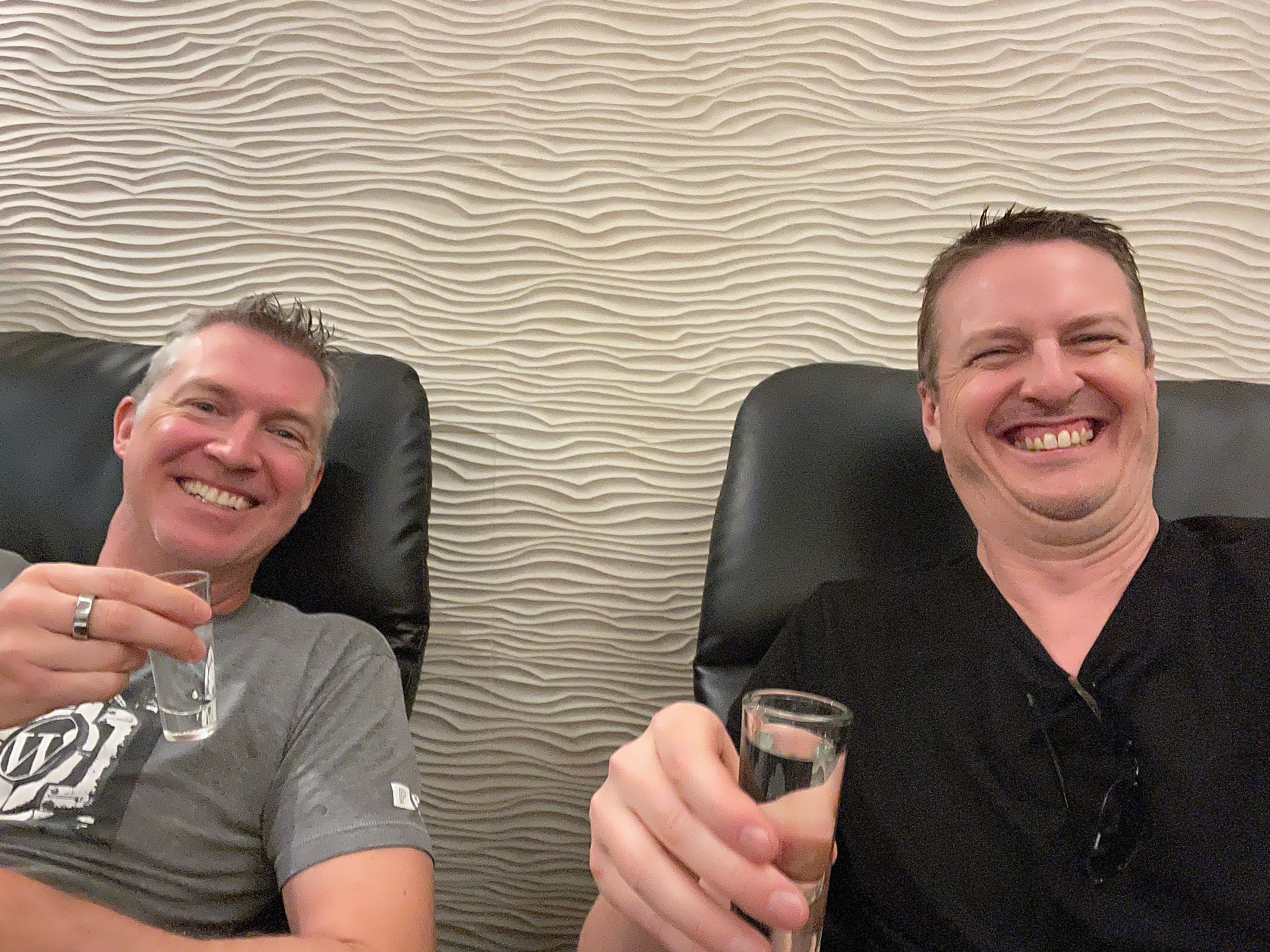
Matt Bowles: Let’s talk about where we are today, my man. We are together in person. We have just opened a bottle of Cabernet Sauvignon from Chile. We’re going to be drinking through that, through the episode. And we are in Portug, Puerto Escondido, Mexico.
Sean Tierney: Indeed, we are.
Matt Bowles: What an amazing town. You and I have been to Mexico together now for about a month. But let’s talk a little bit about Puerto Escondido because I agree it does have a little bit of those same vibes of Jericho Cuada in Brazil. Everything is sand. Every restaurant you go to, the floor is sand everywhere. And it’s just a very rustic type of beach town.
Sean Tierney: Yeah, for sure. It’s totally different vibe. So, we just came both from Playa. We were at the Nomad based conference and I would say just fundamentally different vibe. I don’t know what your take is, but it’s just very different here.
Matt Bowles: Totally. There’s not like big resorts on the beach and all these international hotels and all this other kind of stuff. It’s very, very rustic. True kind of beach town. I walk out of my place, I’m on the sand. I go jogging on the beach every day. I’m right there and I’m not looking at international hotel brands.
Sean Tierney: Right.
Matt Bowles: Like, it’s actually like a really nice beach. And then there’s local cafes. You and I just had dinner tonight and at a local restaurant on the beach with our feet in the sand, as we do every night.
Sean Tierney: Yeah, 100%. I would say, like the vibe of Playa. And it’s funny, I discovered playa in 2006, so I had been there early when it was like this. And to see the change. It’s not that it’s bad, it’s just different now. It’s kind of a Disneyland for what I would say is like Vegas cruise ship kind of tourists. And this place is very much still kind of undiscovered, it feels like.
Matt Bowles: Yeah. And it’s been very, very cool. We have had some amazing experiences here in Puerto Escondido. One night you and I are walking. It’s like one o’ clock in the morning. We’d come out of some bar or something. We’re walking along a very local street and there is a backyard hip hop cipher going on. And as we walk by, they invite us to come in. So, these are all local Mexican folks here and they are sitting around a fire in a backyard, passing around a bottle of mezcal and passing the mic and they’re just spitting hip hop bars and they’re going around and around and around the circle. They call us to come in and we just got to hang out with them at one o’ clock in the morning.
Sean Tierney: Dude, you should throw the clip at some point, maybe when you produce this, like, throw that clip of that guy. Because it was amazing. It was a Venezuelan guy, I believe, but he was crushing it.
Matt Bowles: Yeah. Incredible. Incredible hip hop talent there. And we just stumbled across it at one in the morning, like walking around the streets here.
Sean Tierney: For sure.
Matt Bowles: It was amazing. The other thing that’s been really cool being here is that our very good friend Travis King has lived here now for about 18 months. He spent the pandemic here and just stayed. And he’s basically liked the mayor of this town. I mean, he knows everybody and he organizes all of these different musical events all around the town.
Sean Tierney: Yeah. Shout out to Travis. That guitar in the corner is his. And people should definitely listen to his episode because the title alone says it all.
Matt Bowles: It’s amazing.
Sean Tierney: Yeah.
Matt Bowles: If you have not heard the Travis King episode of the Maverick show, we will link that up at the show notes. One of the most legendary Maverick show episodes of all time. Shout out to Travis King. But, yeah, the fact that he’s here and we just came. He knows everybody and he’s a musician and he play music all around in bands and stuff like that around town. And he organizes these open mic nights. And you, of course, are also a musician and have been able to jump up and participate in some of the events with Travis. How was that for you?
Sean Tierney: It’s definitely the biggest open mic I’ve been a part of. There was probably 300 people in the crowd, and it was just such a supportive, chill vibe. It’s amazing. What they’ve built with that community is really impressive.
Matt Bowles: Yeah, super awesome. Yeah, they have the Thursday night open mics, which we’re going to go to again this week. And then also Travis was playing. We had a Super bowl party, and he hooked up the VIP table for us there. And then after the super bowl was over, they started playing music again. And he called you up and you got to do a song. And so, I’ve got this great video of you on the guitar singing and then Travis playing drums behind you. And it was like two of my favorite Maverick show guests of all time doing things together was awesome.
Sean Tierney: Yeah, that was really special.
Matt Bowles: So, before we go any further, would you be down to play a song for the Maverick show audience?
Sean Tierney: Yeah, yeah, happy to. So, the one that I want to do, this is a song I wrote way back in the day in 1995, believe it or not. That’s going to date me. But, yeah, this is an Original, and it’s called Catalyst. It was just about a moment. I almost don’t want to tell the story of it. I’d rather, like, people kind of make what they will of it, but it’s just like if you’ve ever just shared a moment that was kind of surreal and it was just about like a split-second moment with a homeless person. And, like, the whole song is kind of an exploration of that moment.
Matt Bowles: Awesome. Yeah. And if anybody has not heard Sean Tierney’s previous episodes, I try to get him to play at least one original number in each of the episodes. Because you are not only a talented musician who of course, can do cover songs and things like that, but you are a songwriter and you have written some incredible songs that I continue to listen to. I mean, I record these episodes, get the song, and then I will go back and I will keep listening to your songs because they’re that good. So, we’re going to link up your previous episodes in the show notes if people haven’t heard them yet, so they can go and listen to a couple of the other songs you performed as well. But super, super excited because I’ve never heard this one. So here we go. Sean, take it away with Catalyst.
Sean Tierney: All right, let’s do it, Sam.
Matt Bowles: 27 degrees and freezing out here. It’s freezing out here and life is an idiot’s tale and it’s meaningless. The idiot wails and I’m freezing, I’m freezing. Can you using the whole word to say something new? Rearrange the letters and change my point of view? Yeah, I think I can, she said and so I dropped the quarter by her bed, you know, she started to sing, she started to scream and she said, take me to where the sun meets the land where the rocks turn to mountains, mountains crumble in the sand. I show you heaven on the head of a pin. Where the sound and the fury and come back again. You can take away everything else you can strip it all down you can clear off the shelf Til there’s nothing left behind with the cobwebs of an empty mind. It’s a fine line we walk these days between happiness and suicide ways and it’s ripping me, no, it’s tearing me apart. Can you use an old word to say something new? Rearrange the letters and change my point of view? Yeah, I think I can’t, she said. And so, I dropped the quote up by her bed, you know, she started to sing, she started screaming. She said, take me to where the sun meets the land where the rocks turn to mountains crumble into sand, I’ll show you heaven on the head of a pin where the sound and the fury come back again. There are too many windmills to fight every day know that too many dragons for me to slay, you know there’s too many cottons candy clouds to chase away so we stay wandering my mind and find my own Find my own way. Sam. And I’m the voice in your head as you lie awake in bed the wind through the trees when you cannot sleep, I’m that kid on the corner buzzing in the street singing, I know your secrets and you don’t know me. And I want to see the Easter bunny and I want to see Santa Claus. I want to go back to the way that it was before Because I like the way it was. The voice of all wonder speaks without words and it’s louder than thunder yet it is never heard Then it travels through the sky no one lives in the ground Then when you ask me why I say it’s all around singing it’s all around singing it’s all-around singing Na na na na na na it’s all around singing it’s all around singing it’s all around all around See, it’s all around it’s all around.
Sean Tierney: Here.
Matt Bowles: That was so amazing, brother. I am such a fan.
Sean Tierney: Thank you, man. It’s been a while since we played that one.
Matt Bowles: Well, it’s awesome because you have also played your original numbers at the Nomad Cruise talent shows in front of hundreds and hundreds of nomads. And so, a lot of nomads not only are aware that you’re a talented musician, but they actually know your original songs. And so, it was really cool this past week because we’re here in Puerto Escondido’s, a whole bunch of nomads that you and I have known for many years that are here now. And they asked you the other night if we could go to the beach and if you could play for us on the beach. And so it was, I don’t know, midnight or so, and a whole crew of us just roll down to the beach. And it was you with the guitar, and we’re sitting, like, right by the waves coming in, right on the sand, underneath the stars, which you could see perfectly. And we’re just sitting, like, 10 or so of us just sitting in a circle, and you’re just playing songs. And people are requesting your original numbers, which was amaz, man, man.
Sean Tierney: Well, I have also you to thank for it because we’ve done two Blind and Mermaid Song, both of Those on your show. So, thank you for spreading the vibe.
Matt Bowles: Absolutely, man. We’re going to link them up in the show notes if people haven’t heard those. The other thing, of course, that happens when you play a song and you and I are in the same city is that I get all of the compliments for the songs that you play because people mix us up all the time. And so, for people that have never seen the two of us together, apparently a lot of people think that we look fairly. We are about the same age. We’re both Irish American. We’re both around the same height. I’m about 6 5, you’re about 6 7. And so, people will see you just bring the house down. This is exactly what happened the other night, right? You brought the house down with a musical number at the open mic night. 300 people there, they’re all into it. They’re all blown away by this. The next day, I’m walking on the beach. I get stopped on the beach, right? I’m literally walking behind the beach volleyball courts. This woman who is playing in the volleyball game, she’s about to serve. She stops her serve to say, oh, hey, like, just shout out to me. I was like, yeah. She’s like, I loved that song. You played the open mic. That was amazing.
Sean Tierney: At this point, we got to have, like, some kind of, like, pager or something. You got to tell me when that happens, man.
Matt Bowles: That’s exactly right. Man. What a fun time, man. This has been a really, really fun month in Mexico.
Sean Tierney: I.
Matt Bowles: Awesome, man. Well, the other thing that I’m super excited to talk to you about is your real estate investing journey, because you and I have been, of course, talking about real estate since we met many, many years ago, and you told me that you were interested in the concept of rental property investing and all that. So, we’ve been talking about it a lot. And finally, over this past year, you started your official real estate investing journey with Maverick Investor Group and started closing properties and all that kind of stuff, which I’m super, amazingly humbled and appreciative for. And it’s been so fun to work with you and have such a good friend as a client of our company. I mean, that’s been amazing, but I want to just sort of hear a little bit from your perspective and maybe just kind of all the way back in terms of why did you decide, let’s just talk about rental property investing in general as an asset class. You had an initial interest in that. What drew you to want to own rental properties?
Sean Tierney: So, it’s been on my mind for a while and then literally I think we had a conversation on one of the cruises and I saw the talk that you gave and the thing that kind of clicked for me was the part where you talk about the five profit centers and it just makes so much sense. My goals are to get self-sustainable off of just the cash flow from properties and the double sided of that is also inflation is going bananas, so I want to be at least something in hard assets that are hedged against inflation. So those were really my goals. And yeah, I’ve been meaning to get into real estate and just the idea of turnkey, I don’t have to worry about it. Like I’ve owned a house before where I had roommates and I took care of it and it’s just, it’s a pain in the ass. I don’t want to be the guy who has to go and fix the drip system. Not to mention I’m not even in the location where the house is at this point. So, it wouldn’t even be possible if I wanted to. But I don’t want to manage that. I’m happy to pay commission or whatever to have someone else deal with that. And so yeah, it just made a ton of sense. And I’ve wanted to work with you I think since that one cruise. And so, it’s finally nice to be able to do it.
Matt Bowles: So awesome, man. Well, let’s break some of these concepts down just for folks that aren’t familiar with Maverick Investor Group and they’re maybe not even familiar with real estate investing and some of the advantages of the asset class. So, you mentioned the five profit centers and let’s talk through some of those and how those are different from most investments that people are familiar with. Right. Most people think of investment like, oh, I’m going to buy stock, I’m going to buy a mutual fund, or maybe I’m going to buy a precious metal like gold and then if it goes up in value, okay, great. I have no control over it. So, I just hope and pray it goes up. If it doesn’t, I’m screwed. If it does go up, well, now I got to sell it and then I got to pay tax on the capital gain and then I got to hope that what’s ever left over actually beat the rate of inflation in order to actually have a gain in real terms. Right, right. And that’s what most people think of as an investment. So can you talk a little bit more about the five profit centers and what sort of stood out to you and differentiated that, particularly in an environment like this with high inflation.
Sean Tierney: Yeah. You’ve got the income from the thing; you’ve got the cash flow. You’ve got a tenant that’s paying down your principal.
Matt Bowles: Right.
Sean Tierney: You’ve got the tax advantages of it, the deductions that you’re getting on it.
Matt Bowles: Right.
Sean Tierney: You’ve got the fact that it’s a hedge against inflation.
Matt Bowles: Right.
Sean Tierney: So, you’re not getting bitten by that. And the fifth one is the appreciation on the property itself, right?
Matt Bowles: Exactly. Yeah. So, you’ve got all five of these profit centers working for you at the same exact time. So even if the housing market goes down or stays stable or whatever, you’re still getting your passive income every single month from your tenant. They’re paying the rent, the tenant’s covering your expenses, they’re paying down your mortgage. Principles. So, you’re building equity that way, even if the property is not going up in value. So, it’s not like a speculative thing. We say, oh, I got to, I want to buy this and I’m going to hope and goes up, and if it doesn’t, I’m in trouble and all that. You’re making your money when you buy, if you buy. Right. So, you’ve got that passive cash flow coming in your tenants, paying down your mortgage, and then you’re taking your tax benefits. Right. That’s the thing that is also crazy about this, is that the US government heavily incentivizes you to buy and hold rental property and to provide housing for the population so they don’t have to do it. Right. If you’re willing to do that, they will heavily incentivize you. So, they allow you to depreciate the structure of your property. You can’t depreciate the land. You got to break that out. But the structure of your property, even if it’s going up in value, you can depreciate it and take that as a loss on paper against your real estate gains that would otherwise be taxable. Right. And then of course, the inflation thing, which is wild because right now inflation is at an incredibly high rate. And for most people, that’s really, really, really, really bad because it just eats away your savings. Right. So, if the inflation rate is like 7%, well, that means if you get $100,000 in the bank a year later, all of a sudden you didn’t touch it. But it’s only worth $93,000 in terms of real buying power, right?
Sean Tierney: Yeah.
Matt Bowles: So, it just silently eats away at your savings, at your wealth, at your net worth. Whereas when you own a rental property, it’s the other way around. You can actually profit from inflation because home prices rise with inflation and rents rise with inflation. And if you locked in that 30-year fixed rate mortgage, you borrowed that money in today’s real dollars and you’re paying the bank back in dollars that are worth less than the ones that you borrowed future diminished nominal dollars. So, you’re actually able to profit from inflation. So, when you buy and own a rental property, you flip a lot of these things on their head and all of a sudden, you’ve got all these profit centers, which is also a downside hedge because if one or two of your profit centers doesn’t work out one year, you still got all the other ones. Right. So, it can still be a profitable investment overall. So yeah, man, that is awesome. And then the other aspect of it that you mentioned, which is one of the things that when we founded Maverick, we really tried to differentiate ourselves on and really provide value to people like you, is with the turnkey model, it’s a lot of people that are sort of these DIY, do it yourself people that they want to fix and flip a house and they like the TV shows about renovating and designing and then they want to try to sell it and be a landlord or do all of this hands on stuff. And for our clients, that’s not our client base. If people want to do that, that’s great, they can go and do that for our clients, it’s people that want to have all of the benefits of owning the hard asset, the deeded real estate, and all of these five profit centers that go along with it without having to be the rehabber or the landlord and without having to live near the property.
Sean Tierney: This is something that I think is worth talking about. So, the difference between going in on like a REIT versus what you do, I didn’t understand that until you explained it, but maybe that’s worth mentioning in terms of like the value of owning the hard deeded real estate.
Matt Bowles: Yeah, I mean, so there’s a lot of different mechanisms where people are sort of securitizing real estate. Right. And they’re selling real estate backed securities. So, you get what they’re calling kind of exposure to real estate in some way. Right. Because the security that you’re buying is backed by real estate and some form. But that doesn’t mean that you own the actual hard asset itself. Right. So, you just bought a house. So, you own the lumber and the bricks and the glass and the granite and like all of the things that are inside that physical house, you actually own a hard asset. It’s deeded. Somebody can’t steal that and run off with it in the middle of the night. Right. It’s not going to disappear in a scandal. It’s not a paper asset, it’s a hard asset. Whereas when you start securitizing things all of a sudden, now you’re in the realm of paper assets. Right. Which also removes a number of these benefits that we’re talking about. Right. In terms of actually having full control over this thing, are you going to raise the rent for the next tenant? Are you going to sell at this particular moment? Are you going to do this, are you going to do that? You have total control over this and you own the physical hard asset. When you start securitizing things all of a sudden, you’re not the one that’s in control anymore. And you don’t necessarily get all of this profit.
Sean Tierney: Right.
Matt Bowles: So those are a lot of the, sort of the major differences, I think. And one of the reasons that a lot of people have gravitated so, so arc, that’s our client base. It’s different. People want to do different stuff. Somebody that wants to do rehab a house and be a landlord and do all that kind of stuff, great, like more power to them. It’s just not our client. What we try to do is enable people to be get all the benefits of owning the real estate, get all the five profit centers of owning the hard asset, but without the headaches of the rehabber and the landlord role and then also without having to live near it. That’s also key, right. Because we help our clients to buy in the Most investor advantaged U.S. real estate markets, regardless of where they live. And those markets change over time. Right. I mean, you’re from Phoenix, man. So, you Remember back in 2010, 2011, Phoenix was the hottest market in the United States to buy in.
Sean Tierney: Yeah.
Matt Bowles: And so, we were helping our clients buy in Phoenix in 2010. Right. Because these were like houses that had been built like five years ago, they crashed and you could now buy almost nearly new houses for less than builder replacement cost. But the rental market hadn’t crashed. So, you’re buying these incredibly priced properties and you’re able to rent them for really compelling rates and lock in this great price to rent ratio. So that was literally our most popular market in 2010, 2011. And then what happened is the home prices soared way up, way faster than the rents did. So now you have this process of yield compression where you’re paying way more for the house, but you’re not getting that much more rent. So, the cap rate gets squeezed in. Phoenix no longer is the most advantageous market to buy in for those reasons. Right. If you’re looking at cash flow and cap rates and things like that. And so, then we moved over to Atlanta. So, we’ve been helping our clients buy in a lot of different real estate markets. A lot of markets in the Midwest right now are a lot of the most compelling cap rates in the country. And these things change. And so, one of the things we wanted to do with our business model is to be able to always help people to buy in the most advantageous markets when they’re ready to buy, you know?
Sean Tierney: Yeah, yeah.
Matt Bowles: And then I’m curious too. How was your actual experience working with Maverick Investor Group as a customer, as a real estate buyer, how was the experience working with our company?
Sean Tierney: It was good. The timing with this was weird because it was when the supply chain stuff was going on. So, like the ever given, like it just. Just a lot of things happened that set it back a few months, but other than that it was great. And that was nothing related to you guys. But yeah, no, it was fantastic. Highly recommend. Happy with the cap rate that I got out of the whole thing and it’s solid. If it’s any indication, I sent you Rick and he’s now bought three properties. So, he’s ahead of me now, so I got to catch up to him.
Matt Bowles: Yeah, exactly right, man. Even referring other nomads into my rental properties, which has been awesome.
Sean Tierney: And I appreciate what your role is to me is almost like a router. Like you sit where you’re doing the investigation of the different markets and you have a single interface to all that, where I can just go and I can see the properties whether they’re in St. Louis or Jacksonville or Phoenix or wherever they are. And yeah, that’s fantastic. You have just a kind of single pane of glass to look into all these different places. And you know, you deal with the same people every time and I don’t know what else I would rather do that it doesn’t do now.
Matt Bowles: Right? Yeah. No, I appreciate that, man. Yeah. And it’s a relationship-based model. So, we’re a licensed real estate brokerage, but we’re not a traditional brokerage. We don’t help people buy houses to live in or list their houses on the MLS or things like that. We serve real estate investors only and all of our real estate investor clients is a long-term relationship. Like we’re helping people to build portfolios of rental properties over the long run. So, you mentioned Rick, shout out to Rick, who’s already at three and you’re picking out your next ones and stuff like that already. And so, for us, it’s about building a solid relationship and connection with each client and then understanding their individual real estate investing goals and then helping them to achieve those goals and build that portfolio over the time to hit that, as you mentioned at the beginning, the passive income number that you want, right? Like how much cash flow do you want coming from these properties to cover your lifestyle expenses so that you don’t need to generate active income and work and stuff like that to cover your expenses? So awesome to have you as a client, my friend. I also want to talk to you a little bit about your project Problematic, which is the latest iteration of an amazing trajectory of initiatives that you’ve been involved with over years. And we have talked about, I think, the different iterations of it over the past episodes. But just let’s assume that for the purpose of this episode, people haven’t heard those episodes. Can you give us a little bit of the background and what led to the creation of Problematic App and what it is today?
Sean Tierney: Sure. So, I mean, I believe the last time we talked I was in Bali, that was the third episode. And so that was when it was right as Covid was just starting. So, two years ago and we were doing charity makeover. We just thrown our largest event at that point in Bali. I think it was 32 people. And what this was is it was a hackathon designed to bring together knowledge workers of all different skill sets and they would contribute their skills in a single day event where we would build these kind of game changing assets for different local causes, little nonprofits in Bali. And we killed it. One of these things that we built is now today reliably generating something like $4,000 a month, which doesn’t sound like a lot maybe if you’re in the US but like in Bali, for something that had zero income prior to that, it was self-funded by this woman. I mean this is a like a life changing funds for her. And they’ve built out this whole shelter. They feed like a hundred families now. Like it’s a really impressive operation. And that all was directly resulting from that, that one event. So that was really charity makeover that was kind of, I guess proof of concept or preamble to what I’m attempting to do now, which is to fix some of the things that are flawed. So, what happened was Covid shut down the ability to do physical events. We tried to do a virtual one. It worked to some extent, but it wasn’t ideal. And the vision with this project now problematic is what’s the compromise? How do we do this at a micro scale where we can orchestrate very small meetup events all around the world, pairing people up with other folks who share affinities for the same causes and have complementary skill sets and it doesn’t require that I be there to host these events anymore, that these are like little ad hoc kind of meetups and partnering with Croissant app to be able to provision workspace and orchestrate all this. It’s been an interesting project and the idea is that we can solve massive problems.
Matt Bowles: That’s amazing, man. Can you give some examples of the scope of some of the different organizations that you have supported in the past? Because it’s been a really broad range with some pretty incredible organizations.
Sean Tierney: Yeah, for sure. We did an animal shelter projecto Caraja in Argentina. El Hogar was an animal shelter in Barcelona. We did Esperanza was a fun group. We still in communication with them, but we had built an app. This is really an interesting project. It’s two women that over the last, I guess now it’s been like eight years since they’ve been doing this, but every weekend, they’ve literally never missed a weekend. They go out twice on the weekend and with a group of people feed the homeless in Barcelona. And this was all coordinated. They used Google sheets to do it. And it’s just really impressive what they were able to do without any kind of good technology behind it. And so, we saw that and we’re like, yeah, we can definitely make this better. And so, we built an app that helped them coordinate things. And yeah, it had a number of people using it, made it easier, streamlined it and allowed them to do their thing.
Matt Bowles: So yeah, so awesome, man. It was. One of the things that I feel like I connected with you on very early on was your commitment to this type of stuff and your commitment to it the whole time I’ve known you has been not just you personally want to do some volunteer work or contribute some money to some things, but you’ve been thinking about these massive global problems at a much larger scale and trying to conceptualize and organize these very decentralized solutions to organizing people and addressing these problems at scale in a way that harnesses all of the different assets and value that people can bring to the table in a way that can really make large change at scale. Which has been amazing.
Sean Tierney: Yeah. Look, my thesis is this. Anytime you’re told that that’s just the way it is. There’s nothing like that’s just how it is. We can’t solve that. Like climate change. What can you do about it? There is always something you can do about it. I believe we have all the people and talent that we need to solve every one of these things. It’s just a coordination problem. So. So tackling that coordination problem is how I intend to spend, I guess, the rest of my life. Like, it’s what I think is most interesting.
Matt Bowles: So amazing, man. Can you talk a little bit about what the experience has been like for participants and what it’s actually like as somebody that comes to the table to participate in one of these events?
Sean Tierney: Yeah, I mean, we should link in the show notes, the. The video. There’s like a two-minute video that does a really good job of this. But yeah, testimonials from a lot of nomads that, you know, Juliana and Krista and all those folks. Yeah, I think everyone really takes something away different from it. I think it’s a way. Some people find it just fascinating to learn about other adjacent skill sets that they’re never. You learn so much at one of these events because you’re literally shoulder to shoulder with people of all these different backgrounds and you’re working on something real together. And it’s just very unique. How often does this happen? Startup Weekend is the closest thing that comes to mind of what approximates this. But I think because this is truly like, there is no real commercial reward for this. We’re doing it for literally just to help these people. It comes from a really pure place.
Matt Bowles: That’s awesome, man. So, if folks are listening to this and they’re interested in getting involved, who can get involved from where? What is sort of the contribution expectation that you’re looking for from people and how should they get involved?
Sean Tierney: Yeah, so you can go to the site Problematic with 2T’s Problematic app, AP. I actually personally built the first version of the app. It sucks. So, we need. If you’re technical and you want to help fix it, that would be great. But there is an app there that you can log into, you can add yourself. It will ask what types of roles you are and therefore then what type of skills do you have associated with that role? Where are you in the world, what’s your availability, that type of stuff. And we’re really just basically trying to get an idea of who wants to be involved. And so, the idea is down the road that we’ll do episodes like these where we interview the people who are already working on this problem, deconstruct it, brainstorm solutions, and then we have like this army of knowledge workers we can deploy on it.
Matt Bowles: Awesome, man. Sounds good. We’re going to link that up in the show notes so folks can just go to themverickshow.com go to the show notes for this episode and we’re going to link all of these things up so people can find problematic and connect directly and plug into a really awesome initiative. Let me talk to you a little bit about Lisbon, Portugal, a city that has a lot of really special meaning to you. I understand. Understand you were just in the newspaper recently.
Sean Tierney: Literally got a text today from a guy who actually hosts a conference in Portugal. He said, hey, look what I saw. And I’m on page like 6 of the Lisbon newspaper. It’s myself and Michelle Case. They did an article on digital nomads. It’s a very popular destination. I think it’s like number one right now on Nomad list. And so, they were just writing about, you know, why did you choose Portugal and how has it been and what do you think about it? So, yeah, it was really fun.
Matt Bowles: Awesome, man. Well, can you share a little bit about why you love Lisbon and what the city means to you and why you are spending so much time there?
Sean Tierney: I think you should choose the place you live. Like a jacket that just fits, right? And you shouldn’t necessarily live where you grew up. You should live where you feel most at home. And I just feel really good in that city. So, it’s amazing food, amazing people, it’s close to the ocean. The geographic proximity to everything is nice to be close to the US if you need to fly back. It’s just a beautiful country like the all of Portugal. We amazing camping, coastal area, Lagos. The whole thing is amazing. The wine, I’m sure you’ll appreciate that. I mean, Portuguese wine, hugely underrated. I think you would agree.
Matt Bowles: Absolutely, man, 100%. And I agree about the city of Lisbon. I mean, I remember the first time I went there, I was just like, wow, like there’s something special about the city. It’s really spectacular. I try to go through once a year or so to Lisbon. We hang out and I get to spend time in the city. So, it’s really, really special place. And it is the home to the largest digital nomad meetup group in the world. I interviewed Rosana Lopez a while ago, who is one of the co-founders of the Lisbon Digital Nomads group, which is amazing. If anybody hasn’t heard that episode, we’ll link that up in the show notes as well. But you are now also one of the organizers. Can you talk a little bit about that and what the meetup group is all about?
Sean Tierney: Yeah. So, it is the largest nomad meetup group in the world. World. So much so that meetup sent delegates there to understand, like, what are these guys doing? How are they getting this kind of attendance? And the answer is they just do these events reliably or we do now. I’m one of the organizers with them. So, we do multiple events per week. The Thursday event is always the biggest. It’s like two to 300 people. And it’s just an amazing glue for the community. These creative collisions that happen. I think it just takes seeing people enough times and getting exposed to people and. And it’s a neat asset for the town in terms of just knitting together the community.
Matt Bowles: That’s awesome. And you are also an entrepreneur in residence at Startup Lisboa. Can you talk about Startup Lisboa and what you’re up to there?
Sean Tierney: Yeah. Startup less BOA is Portugal’s largest startup incubator. So, they take in startups early stage and the idea is provide them with mentors and office space and access to just anything they can to improve their odds of success. And I’m lucky. I basically was a mentor for them for two years prior to this and then suggested, hey, have you considered having an ear? And they said, let’s try it. And so, it’s been now over a year and I get to meet with their 52 companies and just help solve problems. I’m basically a resource at their disposal and they can book me and we have conversations all over the map. But it’s always some challenge and it’s neat to be able to just kind of get to see all these different scenarios and kind of provide. Provide some experience.
Matt Bowles: So awesome, man. And I have such good memories of me and you hanging out in Lisboa too. Hitting up a bunch of amazing restaurants, including our favorite Neapolitan pizza spot, which.
Sean Tierney: We go to, American Tina. Every time I walk by that place.
Matt Bowles: The Margarita pizza, we got to tell that story, man. So I go to Naples, Italy and while I’m in Naples, Italy, I get all these historical tours about the history of Neapolitan pizza and all that. And of course, that’s its origin and that’s where it is the best in the world. And what happened was there was people that would start making pizzas around the world and calling them Neapolitan pizzas. And they were nothing like Neapolitan pizza. And so, what they did in Naples is they created this Neapolitan Pizza association. And in order to be a member of it, you have to be independently verified that you are making pizza. And it’s this whole giant list of compliance requirements, right? Making it in this certain way, using these specific calendar, library of ingredients, all of these types of things. And once you’re verified that that’s what you’re doing, you can be a member of the Neapolitan Pizza Association. And then you receive a number, because there’s a finite number of members. And then you get to put the number in your window of your pizza shop, verifying your member of the Neapolitan Pizza Association. So, I learned this while I’m in Naples. And then when I’m in Lisbon, I’m walking down the sidewalk, right? And now I have all this information about neop Neapolitan pizza in my mind, and I see a place that says Neapolitan pizza. And of course, I’m immediately suspicious, like, are these people calling themselves Neapolitan pizza? Even though they’re probably not. And then I look in the window, I was like, oh, my gosh, there’s the number there. A member of the Neapolitan Pizza Association. Holy cow, this is legit. And so, I walk in, and I have the pizza, and it is unbelievable.
Sean Tierney: It’s so good.
Matt Bowles: And so, I was actually there when I discovered this. I was on remote year. And so. So, you and I both did Remote year, which is how we know each other initially through some of the Remote Year network. So I was there in Remote year, and I discovered this place, and I’m literally going to dinner there, like, every night. I’m, like, taking a different person from my Remote year group. I’m taking them there every night, and I’m like a regular. They know exactly who I am. And every time I would go in, I would order the Margherita DOP pizza, because with real Neapolitan pizza, you just want the core ingredients, right? You want the tomato sauce, you want the buffalo mozzarella, you want the basil. And you don’t want to put a whole bunch of toppings on it because you’re just going to dilute the essence of the perfection of a Neapolitan pizza. So, you just always want to order the Margherita DOP pizza. So that’s what I would order every single night. So, they know this. Right. So, I’m a regular, and I come in and I’m ordering this stuff, and I’m bringing different people with me every time, and I’m introducing them to Neapolitan pizza and all of that. And so, this amazing, magnificent place in the middle of Lisbon. And so, I took you to that place. And so, then each time we go, I go to Lisbon, you and I will go there. And the one time you were going to be there earlier than me, and I was running like 15 minutes later, something like that. And you get there.
Sean Tierney: Yeah, yeah. So, I beat you there. And then you text me, you say, hey, man, get me a margarita dop. And so, I tell the waiter, I said, my friend would like a margarita. I don’t know what dop. It’s probably some kind of New York thing. Like, just, can you make a margarita? Yes, you get a margarita. You didn’t get the pizza?
Matt Bowles: I got the drink, the margarita. So, I show up, I’m like, where to be a margarita? He’s like, okay. So, I show up, and there’s a margarita drink at my table. It was amazing. So, then I had a margarita drink paired with the margarita pizza. And it was a beautiful thing, man. But that’s a really nice Lisbon tradition that you and I have, and you are actually really committed to the city in a major way. You are actually working on getting your second passport in Portugal. Can you talk a little bit about that in terms of why you’re choosing to get a second passport, why are you choosing Portugal and how the process is been for you?
Sean Tierney: Sure. So, the first step is you need a visa, and then you travel on the visa, you get temporary residency, and then you maintain that you have to meet certain criteria, be there a certain amount of time per year, and then eventually you get eligible for. For permanent residency. I think it’s in the fifth year, and then the sixth year, you’re eligible to apply for citizenship.
Matt Bowles: Awesome.
Sean Tierney: Yeah.
Matt Bowles: And you’re getting close, man.
Sean Tierney: Yeah, I’m four years into it. What’s nice is, even with temporary residency, you get access to the healthcare and to the Schengen. You’re not bound by Schengen restrictions. You’re able to travel freely in Europe. You get access to the home loan rates, which are incredibly low. 2%, 1.7%. Like that realm. So, yeah, you get all the perks of being a citizen. And when you just have residency, it’s really nice.
Matt Bowles: That’s amazing, man. And what was your initial sort of impetus for wanting to get a second passport and then choosing Portugal as the place to do it.
Sean Tierney: So, I don’t know if listeners have heard of flag theory, but it’s this idea of diversifying in the way that you diversify a portfolio of investments, that it’s never a bad idea to have diversified passports and options and money in different places. And so yeah, so I like the idea of just having a separate passport. You also get access to different countries based on the US doesn’t have good relationships with a country, then you can’t travel there. So yeah, I’ve always wanted to have a European passport and really looking forward to it.
Matt Bowles: That’s awesome, man. And then I talked to Becky Gillespie about this, who’s a mutual friend of ours and she is doing the same thing. She’s a little bit earlier in the process than you are, but it’s about. There’s a physical presence requirement, right. You need to be in Portugal for about six months of the year and then you can travel in nomad around the world for six months. Months, which is pretty much what you do normally. Right.
Sean Tierney: So, there’s two different requirements. There’s a tax requirement and then there’s a residency renewal requirement. So, tax wise you have to be there. I think it’s 183 days like over half the year plus one to be to be considered a tax resident. And then for renewal purposes there’s a two-year window. So, it’s 24 months. I think out of those 24 months you can’t be outside of Portugal for more than, than like eight months or something. So, you got to be there a fair amount, I think whatever that works out to be. But yeah, but I love Portugal so it’s not a big deal.
Matt Bowles: Somewhere around half the year. So, you spend about half the year. I mean your nomad life basically, pandemic notwithstanding.
Sean Tierney: Yeah.
Matt Bowles: The way you normally structure it is you hang out in Portugal and for about half the year and then you nomad around for half the year and you hang out in Mexico or in Bali or in Dubai or wherever. We’ve hung out before around the world. Barcelona or Brazil or. I’m trying to name all the cities where you and I have hung out over the last five years. Years. There’s a lot of them, man.
Sean Tierney: Yeah, well, this last stint I stayed for actually a little over a year, but that’s because the Bali experience ended up being prolonged. Like I was intending to be only like two months in Asia and it ended up being eight months. So, I had to then kind of build back my Portugal days to then qualify to be able to renew residency. So now that that’s done, I put all my stuff in storage and I figured go somewhere warm for winter for sure, man.
Matt Bowles: And what a fun place this has been. So awesome, man. Well, I want folks, first of all, if this is their first time meeting you on this episode, I’m going to link all of the past episodes up that we’ve done, because we went through a lot of amazing stuff that I normally do on an interview in the previous episode. So we went through your whole story, some of your unbelievable travel stories, which are incredible and inspiring and amazing, as well as a lot of your entrepreneurial experience and. And incredible tips on sales strategies and all sorts of amazing stuff. And so, the reason you’ve been on the show so many times is because you’ve had so many different categories of things to contribute, and I wanted to just really pull them out. We’ve done that over the years. Right. Our first interview was in 2018, so we’re going to link all those up in the show notes, so hopefully people will be inspired to go and check those out and hear some of your other original songs, which are fricking amazing. And for this episode, at this point, Sean, are you ready to move in to The Lightning Round?
Sean Tierney: Let’s do it.
Matt Bowles: Let’s do it. All right, So I have asked you a lot of lightning round questions already. Because this is your fourth interview, we’ve.
Sean Tierney: Kind of run out of lightning round questions.
Matt Bowles: I’m going to be trying, but the thing is, that’s beautiful about the lightning round questions is I can ask you for additional recommendations. So. So you are someone that reads a lot of books. You’re a really voracious reader, and you really read a lot of very interesting stuff. So, every time that you and I are going out having dinner or whatever, we get in incredibly deep and interesting conversations, and you’re going down rabbit holes for new avenues of things that you’re interested in, and you’re working on developing skill sets and new things and all that kind of stuff. So, I’m always fascinated to hear what you’re up to, what you’re reading. So let me just start this off by asking if you can recommend a particular book that has had an influence on you lately.
Sean Tierney: I can. The one that I would tell people to read in terms of the most wisdom dense book that I think I’ve ever read. I know it’s a strong endorsement, but this book, Super Thinking. The author is Gabriel Weinberg, and I believe his wife and he’s the founder of the DuckDuckGo search engine. And they did a masterful job in basically taking 300 mental models. Mental models are kind of like design patterns of thought. So, things example like availability heuristic or Shirky principle or Chatelier’s principle. It’s something that you see happening and then you say okay, oh, that’s one of those. So, I can recognize that now as a pattern and use it in future to make sense of things that happen. So, I think his premise is like this understanding, like having this toolkit of Lego blocks box helps you be wrong less often and makes sense of novel scenarios faster. So, it’s just an incredible book and they package all these things up and they put it in a narrative format and you end up remembering and using these things. I found it so useful that I actually turned them into space repetition cards. Space repetition. This is a flashcard that have a way of repeating and you kind of drill yourself on these things because I think they’re so useful. And it’s so important to internalize these that if you can build this up, Warren Buffett’s guy Charlie Munger was a huge fan of this stuff. I think it’s a superpower to internalize this stuff.
Matt Bowles: Awesome. We are definitely going to link that up in the show notes. And if anybody doesn’t know DuckDuckGo, I actually interviewed Ali Green on the Maverick show who at the time that I interviewed her, which was back in 2018, was the director of people ops for DuckDuckGo who at the time had just over 50 employees. I mean they’ve scaled since then, but fully remote company. So, she’s got a senior level position at this company and she’s a full time itinerant digital nomad. I literally interviewed her in Nairobi, Kenya, which we were just hanging out for a month together in Nairobi, kicking it. And she’s the senior director for people ops at Duckgo. So super interesting company on so many levels. I mean their product is interesting, what they have and then the way that they’ve actually built their business and the way that they run it and how remote and everything it was from day one is just super fascinating.
Sean Tierney: Yeah. And for people that don’t know what that is like, DuckDuckGo is a Google alternative. It’s a very privacy focused search engine so they don’t track your results. And yeah, I switched to it, I use it now. It makes a lot of sense.
Matt Bowles: So awesome, man. Another lightning round question that I want to ask you is to share some of the top travel hacks that you have developed.
Sean Tierney: Okay, so this is one that, if you’re listening, if you take nothing away from this episode, I think this is important enough. Enough where you should go immediately set this up. So, this is for anyone who’s using an iPhone, iOS users. There is. I don’t know if you know this, but there’s a feature called SOS and if you are on the road, what this does is three things. So, you set it up. If you hit the button on the right five times, I’m just going to try it. I don’t know if this is actually going to work. So, I have in flight mode, but we’ll see. See, it’s doing it right now. There’s a countdown. And then. And then I’m going to stop it. So, it doesn’t. Okay, so I just stopped it right before. What it’s doing in the background is it’s figuring out the local equivalent of 9, 1 1. Wherever you are in the US 911 is the emergency number. It’s not necessarily that. In Portugal, I think it’s like 2, 1, 1. So if you’re on the road and you’re traveling, moving countries, you may not know what the emergency number is for your local. This will figure it out for you and dial it on your behalf. That’s number one thing that happens when you do that. Number two thing that happens, we didn’t get there, but it sounds this loud siren. It’ll override whatever your noise settings are and it will start making a loud noise that will draw attention to you. Number three is it will then place a message to anyone that you have registered as an emergency contact in your health app, and it will contact them and start sharing your location so that they know where you are. And to me, I don’t know why Apple hasn’t made a bigger deal out of this, because this seems like a really important thing for people to understand. This could be the app that saves your life in a situation if you know how to use it. And it’s something where anyone can remember, like, whether you’re threatened or whether you’re hurt. Just remember, like, push the button on the right five times and it’s going to do all those things on your behalf. That is my number one travel hack for people.
Matt Bowles: Awesome. So, the way that people get it, they just go to the app store?
Sean Tierney: No, it’s. It’s embedded in every phone.
Matt Bowles: Oh, it’s already in the phone.
Sean Tierney: You don’t install anything?
Matt Bowles: No app.
Sean Tierney: Yeah. What you need to do is set up your emergency contacts in the health app.
Matt Bowles: Health app?
Sean Tierney: Yeah.
Matt Bowles: Okay, so open the health app that’s on the iPhone.
Sean Tierney: Yep.
Matt Bowles: Set up your emergency contacts.
Sean Tierney: Yep. And that’s all you need to do.
Matt Bowles: Okay.
Sean Tierney: Yep.
Matt Bowles: Awesome. Cool. Any other travel hacks?
Sean Tierney: I’ve got a ton. I’ll just give you a few. I’ll rattle them off here. So, everyone knows or I think if you’ve been on the road, you appreciate like an eye mask and earplugs. I am partial to silicon earplugs. I’ve tried them all. I think they work the best. But silk eye mask, silicone earplugs, that’s just a staple. You got to have them. If you’re in a place like we are now, where there’s roosters in every corner of this place and its construction and crazy noises, then the nuclear option. There is actually, I would say second gen Air Pods are. They have the noise canceling and to be able to use that with white noise app on your phone is priceless. You can be anywhere whether it’s trying to go to sleep or whether it’s loud. Coffee shop, trying to get work done. But the ability to block out distractions and loud noises I think is really important on the road. Here’s another one. So, posture is a big thing. I’m a tall guy, you’re a tall guy. So, I don’t know if you had the same back issues. I mean, just, I think tall people are particularly prone to this. But working on a computer, which most of us do because we’re remote workers, you just end up getting back problems like on the road. And so, something that I found this last year that was super useful, we can link in the show notes, but this idea of purchasing a second Bluetooth keyboard and then you split them and there’s a piece of software for the Mac, I’m sure there’s one for Windows. But the ability to run two different keyboards and you just open up your shoulders so you can basically hold your arms as far apart as you need to so your hands are back. And I know this sounds weird, but imagine now typing the left part of the keyboard on the left one and the right part on the right one.
Matt Bowles: So, it’s like a split keyboard. No, two full keyboards.
Sean Tierney: It’s two full keyboards that are virtually melded together. There’s a piece of software that treats it as a single keyboard and it’s just been fantastic.
Matt Bowles: Is there a manufacturer name for the product?
Sean Tierney: Well, you can use it with any Keyboard. I use the Apple; I think it’s called the Magic keyboard.
Matt Bowles: Okay.
Sean Tierney: They are Bluetooth keyboard. And then this is an open-source piece of software. It’s called Elements Carabiner.
Matt Bowles: Okay. So, you get Elements Carabiner software and then you just buy a second whatever your Bluetooth keyboard is that you want to use.
Sean Tierney: Correct.
Matt Bowles: And you can use any Bluetooth keyboard. You just buy two and then this piece of software allows you to spread them apart and type on both of.
Sean Tierney: Them and virtually join them. So, it treats it as one.
Matt Bowles: Wow, that’s super interesting. But.
Sean Tierney: Yeah, but that’s been super helpful this last year. Couple more here. Air Help, that’s a service that I can highly recommend. This is something where if you’ve ever missed a flight and they don’t want to refund you, these guys will work on a contingency basis on your behalf and fight to get you money back. And so, it’s a free service. AirHelp.com super useful. They just basically do battle on behalf of customers who’ve been wronged by airlines.
Matt Bowles: Wow.
Sean Tierney: Yeah.
Matt Bowles: And is it a service that you pay for on like a subscription basis or how does that work?
Sean Tierney: No, they take a cut. It’s contingency only.
Matt Bowles: Contingency.
Sean Tierney: You pay nothing if they don’t get you any money back.
Matt Bowles: Wow. Yeah, they take a percentage of anything they get and you pay nothing if they don’t get anything.
Sean Tierney: Right.
Matt Bowles: Amazing.
Sean Tierney: If you have a ticket there, you can go. So even retroactively you’ve got a ticket right now that you lost money on and you might as well register it and try to recoup some of it.
Matt Bowles: Is it an app or it’s a website you go to?
Sean Tierney: It’s a website. I think it’s airhelp.com okay, so we’ll.
Matt Bowles: Link that up in the show notes for sure. I didn’t know about that. That’s awesome.
Sean Tierney: Yeah, that’s a good one. Okay, tip five or four, whatever we’re on. Always, always decline the conversion at ATMs. I don’t know if people know this, but this is kind of what I would say is like dark UX patterns. Like when you go to withdraw money in a foreign country, country, almost inevitably the local ATM is going to want to have you use their conversion rate and they’re going to screw you on it. So just always when it gives you that screen, they make it look like you’re going to prevent the transaction from happening. But read it, it says, would you like to accept or decline the conversion? Always decline it you’re going to get a way better rate if you let your bank do that conversion.
Matt Bowles: And not just at ATMs, but oftentimes restaurants will ask you this question and they’ll say, do you want to pay in the local currency or do you want to pay in US dollars? Meaning do you want us to ring this up and bill you in your local currency or wherever you’re from? Right. Do you want to pay in euros or US dollars or whatever, or do you want to pay in the local currency? Always pay in the local currency because any conversion that they do back to your thing is just going to create a margin for them and cost you more money.
Sean Tierney: Yeah. If you use the Schwab card, which I have, they will reimburse you. So, it doesn’t necessarily matter on that card. But for everyone else, like some of these euro net ATMs, especially in Europe, like the conversion rates are just terrible. And so always decline the conversion. It’s such terrible UX, they just make it like the default. So, you’re going to press.
Matt Bowles: Yes, always pay in the local currency 100% of the time. Everywhere.
Sean Tierney: Yep. Yeah, agreed. Okay, so two more Trip Box app. So, this is something that highly recommend and they do have a Google and an iOS version of this, but it’s. What it is is it’s crowdsourced WI fi passwords. And so, you can go anywhere and know that you. You can just get on the WI fi and like odds are like, depending on what city you’re in, it’s not perfect coverage in the really remote places, but a place like Lisbon is super up to date. You can just basically not ever have to ask for the WI fi password again. Beyond that, when you’re planning to go to a cafe, they have crowdsourced speed tests as well. So, you can look on the map, you can see what’s around you and you can actually go in and see how fast and good their connection is. You get the ping time and up and down speeds. So super useful. They rebranded it. It used to be called WI Fi Maps Pro. It’s now called Trip box.
Matt Bowles: Awesome. And is that an app that you download from the App Store?
Sean Tierney: It is.
Matt Bowles: Okay, cool.
Sean Tierney: And they have a free version. I think the paid version enables you to cache the result. It’s useful if you don’t have connectivity, you can still use it, but the free version is free, so.
Matt Bowles: Nice.
Sean Tierney: All right, and last one, there’s one called Trip Mode, which is an app that I use on my Mac. And what that does is it allows you to throttle if you’re on a crappy connection. Like this is the perfect example is Puerto Escondido where we are down on the Punta area. It’s very spotty WI fi and the connection is not solid. So, you want to basically block out all the non-essential apps that are hogging band bandwidth. And this is an app that you run. I don’t know if there’s a non-Mac equivalent, but you run it on your Mac and it allows you to say, look, don’t sync my Dropbox, don’t do any virus updates, don’t do any background updates on any of these other things. You get to like selectively prune out the apps that will hog your bandwidth. And so, it lets you make the most of a crappy connection, basically.
Matt Bowles: That’s awesome, man. Yeah, I saw you actually sent that out to the group here because we have a group chat of nomads.
Sean Tierney: Yeah.
Matt Bowles: And the Wi-Fi is not great here. And so, people were like, you know, where can I find good Wi-Fi? Where can I find good Wi-Fi? And you were like, well listen, even if you can’t find great WI fi, if you do this, it’ll allow you to make the best of what you have. Whereas right now you’re probably running like all this stuff simultaneously in the background. So, it’s half as good as it could be with what we have.
Sean Tierney: That’s right.
Matt Bowles: And so, yeah, so a lot of people were like, oh wow, I never heard of that. Like, that’s super helpful. And like they’re giving you like all this positive feedback on it. So yeah, that’s awesome, man. Yeah, no, these are great travel hacks. We’re going to link all this stuff up in the show notes. So just go there and then you can just download most of these things. And most of these things have a free version that you can use, or there’s a paid version, it’s not too much. So, you can check all of those out. Awesome, awesome travel hacks, man. I’m always looking for new travel hacks. That’s one of the reasons I love to interview nomads on my show, because I keep learning new stuff and then I’m like, okay, download this, download that, and then keep up on my travel game. So that’s awesome, man. All right, Sean, we have now come to the most important part of this.
Sean Tierney: Interview, the part where I never get invited back to be on the Maverick show.
Matt Bowles: All right, we have to give the context here. All right. For people that maybe haven’t heard of Sean Tierney interview Before we have to give them the full context here. So, one of the things that you and I bonded over very early on, we’ve bonded over a number of things. It was actually pretty wild because we have a mutual friend, Trevor Gerhardt, who introduced us. He’s like, you guys, not only do people confuse us because of our physical appearance, but Trevor’s like, you guys simply need to be friends immediately. You must meet. Just trust me, you guys are going to be best friends from day one. And sure enough, he was right, which was crazy. And we bonded over so many things. But one of the things that we bonded over was our love for hip hop music. Music. And so, one of the Lightning round questions that I often ask my guests that Maverick show listeners know is to name their top five hip hop emcees of all time. And so, of course, when you were on the show for the first time, I asked you to name your top five, and of course you named your top five. And then I hedge around for a second time, and I was coming up with The Lightning Round questions. I said, you know what? Why don’t we round out your top 10 and go ahead and name six through 10 in terms of hip hop MCs. And so, you did. And then I had you on a third time. This was during the pandemic. It was like the height of the pandemic. Everything around the world was shutting down. You were in Bali, I was in the US like, the world was going crazy. And I was like, you know what? For the lightning round, I think we should have you name, Name your next five name 11 through 15. So, you have thus far on the Maverick show, named your top 15 hip hop emcees of all time. And of course, on episode number four with Sean Tierney, I am going to ask you to name your number 16 through 20 so we can round out Sean Tierney’s top 20 hip hop MCs of all time. But just for the listeners recollection, why don’t we review your top 15 before we get in to 16 through 20? So, who did you pick for your top 15? Let’s just start with that premise.
Sean Tierney: Well, so two of them were just in the Super Bowl. So. So number one, Eminem. Number two, Dr. Dre. Number three, Ludacris, Ice Cube, and Beastie Boys. That was the top five. All right, six through ten. I got Kendrick Lamar. Also, Super Bowl, Jay Z, Sage Francis, People under the Stairs, and Zach De La Roca.
Matt Bowles: Yep.
Sean Tierney: And for 11 through 15, it was DMX, run DMC, Tupac, Rock, Kanye, and Chuck D. Yes.
Matt Bowles: I was so happy that Chuck D. Was in there. However, I have also noticed, noticed for example, that the Notorious B.I.G. has not been in your top 15. And I am really hoping that. Well, I don’t even want to say anything. I don’t want to prejudice your picks at all because these are your personal picks. These are very, very, very personal. So, I don’t want to pressure you in any way as to who your top 20 might be. But I would love though actually before you name your final five, to round out your top 20, for you to share a little bit about. Because you and I actually had some really cool conversations about this. I mean one, we were in the middle of a fricking hip hop cipher in Mexico, which was crazy and amazing. But we’ve also had some discussions about. You and I came up in the exact same era and we had some discussions about. Because you ran to a lot of different topics, types of music, right. And we talked a little bit about some of the parallel cultural dynamics in terms of some of the anti-establishment forms of music ranging from punk rock to hip hop, and how these are very culturally different, but in many ways politically and socially. I mean they had a lot of congruence and overlap and things like that. So maybe can you just share a little bit about what hip hop meant to you coming up and how that sort of integrated with some of your other love for different types of music especially as well?
Sean Tierney: Yeah, I actually grew up on punk, No fax, Face to Face Propaganda, those were my bands growing up. And what we were talking about is like hip hop shares a very similar stance. Speaking power to it, speaking to authority basically and saying no, I don’t agree with this, you know, and it basically like standing up for yourself. So, I think that vein is reflected. I probably would have to admit that I identify more with punk, but to me, hip hop represents that exact same thing. It’s a way to put that message out there. It’s a way to package it and make it acceptable.
Matt Bowles: Yeah, no, I totally agree. I mean, you know, for and for me coming up, it was like all hip hop was like. That was just like the first time I heard it, it just like spoke to my heart and impacted me emotionally in particular way. And then I became a hip hop DJ in the 90s and that was just like a huge part. I just immersed like full on into that culture. But I always had a respect and appreciation for what the punk rock culture was doing. Even if I didn’t emotionally connect as much with the music. As I did with hip hop, skateboarding culture and the politics that were coming out of the punk rock movement. And like, a lot of the things that it stood for, like, I really appreciated sort of that as the anti-establishment types of things that was going on over there. So, I always had a sort of a parallel respect for that culture. But you eventually, though, did begin appreciating and connecting with hip hop as well, which I appreciate.
Sean Tierney: I think it’s inevitable. How can you not? It’s just in the same vein, right? It’s a different type of music, but it’s more about, like the gist of it and the zeitgeist that we’re in. So.
Matt Bowles: Yeah, absolutely, absolutely. All right. So, you have not told me anything. You would not give me any precursors as to who your final five are going to be to round out your top 20. So, I am just going to open the floor. I’m going to let you take it away. Sean Tierney, 15 through 20 hip hop MCs of all time.
Sean Tierney: All right, before I do this, what are the odds of being back for episode five?
Matt Bowles: Okay. I might have told you that if the Notorious B.I.G. is not in your top 20, that this might be your last Maverick show episode ever. I might have said it. I might have said it and I might enforce that.
Sean Tierney: Wow, there is so much pressure here because I’ve got one that’s a swing vote here. So, I don’t know how this is going to go. So let me give you. What is this? 16. And I don’t know how this. This was my omission. Rakim, of course. How did he not make the.
Matt Bowles: I don’t know. But I also don’t know how big. He didn’t make a top 15. So. Yeah. Okay, so Rakim is clearly in the top 20 now for you.
Sean Tierney: Yeah.
Matt Bowles: Okay.
Sean Tierney: Yep. Talib Kweli.
Matt Bowles: Nice. Good pick.
Sean Tierney: Yeah. This one may be a little far field, but like Kid Cudi, I don’t know if he qualifies, like, he’s a kind of a crossover musician, but yeah, certainly. Okay, this one is going to raise eyebrows. Tyler Joseph of twenty-one Pilots, he is not a traditional MC in the sense of, like hip hop, but I think his style, he is just a poet and he embodies the essence of that. Just speaking his mind. I don’t know, like, it’s. You got to listen to this guy. So, Tyler Joseph, I think belongs. He needs a seat in the top 20, even though he’s kind of a relatively new addition in this scene. So. And number 20.
Matt Bowles: This may or may not determine whether you’re invited back at the Maverick show.
Sean Tierney: No, man, I’m going to give it to Biggie. I’ll give Biggie a seat. I give Biggie a seat at the table. Yes, you won me over. I listened to a of bunch of his stuff.
Matt Bowles: Okay. Just behind the scenes, I may have been texting you one Biggie song per day in the week leading up to this interview. I just would drop on WhatsApp a biggie song each day. I would just have no text preface to it. I would just drop a Biggie song, a Spotify link into your WhatsApp each day in the week leading up to this episode.
Sean Tierney: With the insinuation being, yeah, if this doesn’t wind up, there will be no fifth appearance.
Matt Bowles: You might have forgotten about this song. You might have forgotten about this song. You might have forgotten about this song.
Sean Tierney: I sent you a video. We had actually covered Big Papa, the band that I used to play with in Conjugal Visit, a duo acoustic band, but we played a show and that was one of our closing songs. We played Big Papa.
Matt Bowles: So amazing, man. And you have done a number of acoustic numbers where you will drop hip hop songs into your sets for me in particular, which I greatly appreciate. So fun, man. I’m so excited for the upcoming open mic this Thursday in Puerto Escondido were.
Sean Tierney: You bring some heat. Wait, wait till you see.
Matt Bowles: You’re going to bring the heat, man. I’m so stoked, bro. And then you and I are rolling out the weekend right after that. So, it’ll be an amazing closeout night and I’m sure I will get a lot of appreciation for whatever song you sing the following day.
Sean Tierney: Yeah.
Matt Bowles: Amazing. All right, Sean, as usual, brother, this has been an incredible fun wine night with you, my man. How do you want folks to come into your world, learn more about what you’re up to and how can people best connect with you?
Sean Tierney: So, I did a social media fast about starting last Christmas. So, it’s now over a year and I still haven’t really reentered Facebook and Instagram.
Matt Bowles: Can you share a little bit about that, actually, because that was actually super interesting. I remember you writing a really extensive blog post when you decided to do it, and then you’ve subsequently reflected on the impact of that. So actually, before we close this out, I would love for you to share what led to that, what you actually did and then your reflections on how it went.
Sean Tierney: Sure. Well, so what prompted it was I’d already. I’d seen the movie Social Dilemma that’s definitely a documentary that’s worth watching. This is by. They interview a bunch of people that are involved in various social media projects. Projects. The gist of it is that this might be the cigarettes of our generation. You know, back in the day they didn’t know that cigarettes caused cancer and then eventually realized that, oh wow, this is actually terrible for us. So, this could be to our mental health, the new cigarettes. And we’re using this stuff daily. We’re engrossed in it and some people to more extent than others. But I don’t know, I just had this feeling that, you know, maybe this isn’t the greatest thing. And I want to know more about this. And the movie kind of prompted it. And then there was a negative experience on Facebook that you saw the blow up and that was just kind of my cue to say, okay, let’s test this out. I’m never going to know this until I try it. So, I just wanted to see how long can I go and feel what it feels like not to be on social media. And then it’s been now over a year and I haven’t really gotten back on Facebook or Instagram. I use Twitter. I don’t know, that’s kind of maybe taken the place a little bit. But yeah.
Matt Bowles: So therefore, in light of that, if people want to learn more about what you’re up to or come into your ecosystem, what is the best way for them to do that?
Sean Tierney: That I would just send them to my blog. It’s scrolling on Dubs.com.
Matt Bowles: Yeah, it is.
Sean Tierney: I’m scrolling on dubs on pretty much all social media. I just don’t use all of it anymore. But yeah, no, just go to scrolling on dubs.com. it’s kind of a hub. I’ve got links to what I’m working on and those posts that you just mentioned regarding social media, the before and after, it’s kind of interesting to see what my premise was going in and then kind of what the result of that year long experiment was.
Matt Bowles: Yeah, for sure. Yeah. Okay, so we’re going to link up your blog in the show notes so folks can just go to one place themaverickshow.com go to the show notes for this episode. There we will have all the links to everything we have discussed in this episode, all of the links to the travel hacks and websites and apps and books and everything that Sean recommended as well as his blog website, where to contact him how to get involved in problematic if you want to contribute your skills to making the world a better place and connecting with some other amazing humans that are doing the same thing. An incredible project to be a part of. We’re going to link it all up, just go to themaverickshow.com. Sean this was amazing brother. As always, thank you for coming on the show, man.
Sean Tierney: I thought you were going to mention as soon as I get my next STL property I’ll be in St. Louis scrolling on those.
Matt Bowles: Yes, as soon as you buy your next turnkey rental property in St. Louis then we can find you in St. Louis scrolling on doves. 100% brother. That’s how I told you. You know that St. Louis is the next market where you need to buy because then you can tell people that’s.
Sean Tierney: How I make all my real estate decisions.
Matt Bowles: They can find you in St. Louis scrolling on dubs 100% Absolutely. My man. Thank you for coming on the show brother.
Sean Tierney: It’s been a treat man.
Matt Bowles: Awesome. All right, good night, everybody.