Matt Bowles: My guest today is Jamie Downs. He is an education leader, travel and outdoor adventure storyteller and the founder of the Black Travelers Bucket List. He helps create transformative outdoor experiences for Black travelers around the world. His content explores travel, identity, belonging, and what it means to build a fulfilling life beyond traditional definitions of success. Jamie, welcome to the show.
Jamie Downs: Thanks for having me, man. It’s such a pleasure being here.
Matt Bowles: Absolutely, brother. I am super excited to have you here as well. Let’s just start off by setting the scene and talking about where we are recording from today. I am actually in Bangkok, Thailand. And where are you?
Jamie Downs: I’m actually at home, man, in Atlanta, Georgia, for a change. I stay on the road so much. This weekend has been a much-needed break. I’m home, settled. I’m in my comfort zone.
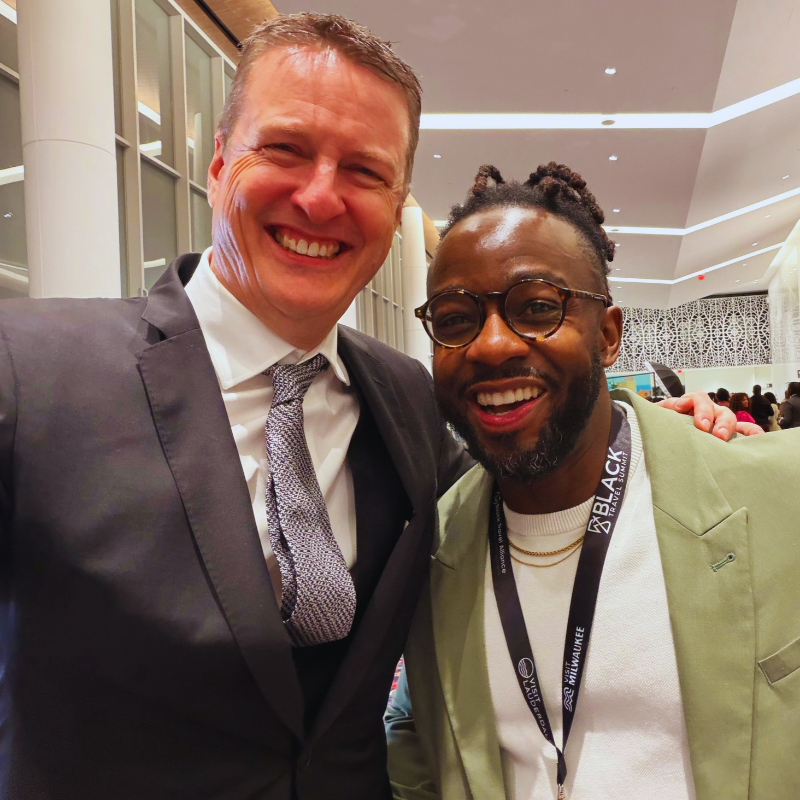
Matt Bowles: Well, you and I just hung out together in person at the Black Travel Summit in Milwaukee, Wisconsin, where you were a featured speaker. I would love to hear just your reflections on the overall conference, maybe share a little bit about what you presented on and the type of feedback that you got from the community on that. And then also just what was your experience like at the event?
Jamie Downs: So, this was my first Black Travel Summit. I found out about it last year right before the one in Brazil. So, Rio and Milwaukee are kind of two different places. But I said, hey man, I still want to pull up to check out the summit. And it was an amazing time. I got to connect with so many great folks that are doing things in the space. Like you finally got to meet in person, but also got to connect with so many other just great creators. industry folks that are just mission-aligned, really want to expose Black travelers to the beauty of the world and create welcoming environments for them. And so, I got the chance to get on stage with Lauren Gay, the Outdoorsy Diva, and Erick, the cycling nomad. These are folks I’ve been following since I started becoming a creator. So, to get the opportunity to sit on stage beside them as peers, talk about our experiences, connect on travel. And our panel was about reclaiming the outdoors. We were all kind of into the outdoors and understand how unfortunately how segregated that space can be when it comes to black folks and people of color haven’t had access, so we just talked about how we have built our own lanes there and encouraging other folks to get out. And the feedback was awesome, man. People are excited about it. Just appreciate the authenticity, but also the encouragement to get in the outdoors.
Matt Bowles: Yeah, Maverick Show listeners of course know Lauren Gay. She has been on the show as well. And all of you up there had this amazing synergy. And so, it was a really special panel. And then of course we all got to hang out and there were amazing parties and events and everything else. And I agree, it is such a special community and keep going back every year. And love the Black Travel Summit. I would love to actually kick this off with giving folks a little bit of your background and your backstory. And before we even talk about your story, in terms of where you came up and all that, can you share a little bit about your parent’s experience? I know they came up in the American south during Jim Crow. Can you share any stories that they told you about what their life was like coming up?
Jamie Downs: That is a story I love to tell because my parents are from South Carolina, both born in rural parts of South Carolina. And I think sometimes because we’ve just gotten so used to modern society and technology and all the things. My parents were born before cable TV. My parents were born before electricity was a commonly used thing. Running water, air conditioning, all the things that we take for granted. My parents were born during that time, so the things that they’ve seen over their lifetime, they spoke about a lot. My mom was the 10th of 13 children, my dad was the 9th of 9. And so, growing up, family was a big part of my life. And still is a big part of my life. My mom, her family was just huge. They just embrace everybody that comes around. So, my dad actually just became an adopted member of the family. But he jokes about when he used to date my mom, that when the school bus used to come to their house to pick them up; it would fill up because it was just that many people in the house. You can imagine that a lot of multigenerational homes back then were nothing. So, my mom shared a bed with probably four or five other kids as they all just made what was really a tin-roof shack work. My dad very similarly growing up south of Greenville. It’s called Easley, South Carolina. And so, I would say we were rich in all the ways that don’t involve money: family, health, love, and all those things. But we didn’t come from a lot. My parents took that. They both graduated from segregated high schools. My dad wasn’t allowed to go to college, so he was drafted into Vietnam. And my mom, she actually worked the same job for 35 years. She was a nurse secretary in labor and delivery in a local hospital. She got that job when she was 18. She loved it and she kept it until she retired. The day she retired, she retired. And so that was what life was like, man. I think full of family, full of church. We grew up on dirt roads and just going out in the creek and playing. I always tell people that. They all say, when did you get into the outdoors? Well, I kind of grew up in the outdoors. Not the outdoors as we know it, but growing up in the rural South. Being down there, my uncle had a hog farm, lots of land. And they tell us to go explore, man. And so that’s what life was like for us.
Matt Bowles: What did your parents teach you about success, responsibility and what was possible for your future?
Jamie Downs: My mom was really intentional, and my dad too, really intentional about identity. They wanted me to know that I was a Black man and what that meant to be a Black man in America. But anything I dreamed of; I could do it. They really spoke life into me. I was a student who struggled very early on. And I would say not necessarily because school was hard for me. I just didn’t enjoy it. And so doing the work and doing those things, they were not something that came easy to me. But my parents, they were diligent about making time for me, sitting down with me, telling me the importance of education, telling me that I could do whatever I put my mind to, and really challenging me to really lean into my strengths and take that out. I grew up almost being kind of thrust into a lot of different leadership positions as a kid because I was very vocal, but that came from home. My mom forced us to speak up. I also have five brothers and sisters. And so, when I grew up in a house full like that, you got to speak up because you’re going to get left out. And so that was something that always stood out to me and really has carried me through my adulthood.
Matt Bowles: Well, I know you’ve written that some of these outdoor adventures that you do now when you were growing up, that they seemed like things that only other people did. Where did that perception come from when you were growing up?
Jamie Downs: I think a lot of different things, man. I would say that growing up in a rural south and just given my parents background, there were certain things. My mom never learned how to swim. My dad actually had to learn how to swim cause he was in the Navy. But I think just the trauma from segregated pools and not knowing how to swim and things like that, they kind of passed on to us. We would go on a trip or if I would go on a field trip with school, my mom be like, don’t you get in that water. Don’t you do that. We don’t do that. Those type of things. And I think it really just became. It was almost like a safety mechanism for her to make sure we didn’t get hurt, to make sure that we didn’t do things that put us safety in jeopardy. But then I also think that was reinforced by the media. You didn’t see a lot of snowboarders growing up that were black. You didn’t see a lot of skiers that were black. You didn’t see a lot of people in the outdoors that were black. I think subconsciously it became something that white boys did or white people did. It wasn’t until I got into high school, got into college, and my friend group got more diversified and I got introduced and I was like, hey, this is actually kind of cool. As I got noted, man, I just realized it was an access problem. Our communities, especially growing up in South Carolina, you don’t really live close to the beach. Your kind of live close to the mountains, but they not going to give you any snow or anything like that. That’s going to teach you how to ski or snowboard. So, it wasn’t really until I got out of my comfort zone and started experiencing life that I was able to really start tackling those narratives.
Matt Bowles: So, what were your earliest experiences with travel? When did you first realize the world was bigger than the one you grew up in?
Jamie Downs: My very first would just simply be family vacations. Never flew or anything like that. Didn’t get on a plane until I was 21. But my mom had this old Buick station wagon and I remember the day she got it. And my dad was so excited because all of us could fit in the car. And we would go on road trips, we’d go up to the Smoky Mountains, we’d go down to Florida, we’d go out to Arkansas. My dad was also a truck driver, so he liked to drive. And so, their intentionality in terms of showing us, even if it was just a theme park or going fishing, those were things that exposed me to life outside of my little small community. And I think that put an itch in me to want to strive for more. But when I was 21 years old, my mom was actually retiring from her job and my brother was in the military. He was placed in Wurzburg, Germany, and my mom wanted to go visit him and I was like, well, let’s go. We booked her a ticket on Priceline or whatever you can book a ticket on at a time. I just went online and booked herself a ticket and booked me a ticket and we flew to Germany. From Charlotte to Germany, that was my very first flight. While we were there, my brother was like, hey man, look, we were going to be there for a month. And this was my junior year, going into my senior year of college. And he was like, man, you’re not going to just sit around this house the whole time you’re here. And so I remember he took me to the military base and on the military base you could buy these multi-day trips and tours of different places in there because the military folks got a lot of family coming in. So he sent me on one of those group trips that took me to Amsterdam, it took me to Paris and took me to some other places in Germany by myself. He gave me a prepaid cell phone and was like, go have fun. And that trip changed my life. I just never thought that I would be seeing the Eiffel Tower. Never thought that I’d be out in Paris by myself. That’s really my first time even having my own hotel room and things like that. And that just literally put an insatiable hunger in me to travel and do more. And I’ve been traveling ever since.
Matt Bowles: So where did you go to college and what did you decide to pursue academically and then professionally as a career path?
Jamie Downs: Crazy enough, my major going to college was business. I majored in business. I actually wanted to major in international business. I went to the University of South Carolina. They had a really strong international business program. I actually changed my major from international business back to marketing, because if you were international business major, you had to minor in a foreign language, and if you minored in a foreign language, you had to study abroad based on South Carolina’s program. And I was like, “I’m not missing these parties. I’m not studying abroad. Why would I do that?” That’s young me thinking, “What an idiot” at the time. But I ended up graduating with a BA in Marketing from the University of South Carolina. And honestly, I didn’t really know what I was going to do. I graduated at the worst time. I would say for a lot of folks who graduate, maybe they feel that same thing now. But this is during 2007, 2008, so a lot of places weren’t hiring. And so, I got an opportunity to do a program called Teach for America. I was between that and a job with the Barack Obama campaign. And I remember talking to my mom and she was like, well, look, you can take this job with the Barack Obama campaign and not have a job in six weeks, or you could take this job as a teacher and go do the Teach for America program. And so ultimately did that and became a teacher. Was not expecting that to be on the cards, but actually became a big part of my professional career.
Matt Bowles: What did you love about teaching and working with kids? What were some of the highlights of your career in education?
Jamie Downs: Man, I’ll tell you that I knew about six weeks into the classroom, it was hard. Hard as shit. Oh, my God. I don’t know what I thought I was getting myself into, but it was not that we were working in inner-city schools with kids that had not necessarily had the best experience with education. A lot of them were multiple grade levels behind. But in that same vein, man, I met so many folks that looked just like me, that were hungry, wanted good opportunity, and honestly just needed some people to really see them and care for them in a way that allowed them to see what was possible for themselves. And so, after about six weeks in the classroom, man, looking at those faces and just seeing how much fun we were having, I loved it. I loved that no day was the same. I loved that there was always a challenge. I loved that the kids were responding well to me and that we had a mutual respect for one another and we started growing. And so, I stuck with it. I taught for four years, and then I actually followed my students. The kids I taught in sixth grade, after my four years of teaching, they were now in high school. And so, I actually got hired by that high school to become an assistant principal. And so, I stayed with those kids until they graduated high school. And then I opened up my own school. And I would say being a principal of my own school, the school I created, that was probably the highlight of my career. I will never have a job that was that fun. It was also completely hard and took literally everything I had. But it was such a refreshing experience, man. I still keep in contact with all those students today. They follow my travels and honestly reach out to me often telling me how much I’ve inspired them to see the world, which is what it’s all about.
Matt Bowles: That is amazing, man. So, at what point did you realize that this career that you had worked so hard to build was burning you out? How did that manifest?
Jamie Downs: Oh, man, honestly, I’m such a high-functioning person that it took a long time for me to see that. When you think about being a principal, many times you’re expected to be there before the school day starts. Shout out to anybody who figured out how to leave when their school day ends. But I never figured that out. So, I’m there for the games. I’m there for the parents that want to talk. I’m there for the kids who are having trouble. You’re waiting for the parents to come pick the kids up who are staring behind, sometimes taking them home, and the parents are taking too long. In addition to especially working in the inner-city schools, I found it hard to actually do the work that I needed to do while I was at school. So many times, I would take that stuff home. And so, you’re talking about 15, almost 17 years of doing that. It started to wear on me, man, because I made a lot of personal sacrifices to do that job and do it well. Relationships, friendships. A lot of times my ambitious nature took hold of me and poured a lot of that into work. I actually left Houston and moved back to South Carolina and I was working for a charter school network there where I was their chief school’s officer, which is essentially equivalent to being an assistant superintendent. Again, doing the same things, really, just giving work my all. If I’m not traveling, I’m at work. I’ll never forget this. We’re having a conversation about whether or not we should teach science to students. In the state of South Carolina, kids don’t take a standardized test in science until they’re in the sixth grade. And I was having a heated debate with a colleague about whether or not we should be teaching them science in kindergarten, in first grade, second grade, because they’re not tested until sixth grade. And I’m sitting here saying, especially knowing what I know about the world now we have all these corporations in the state of South Carolina. Boeing, Mercedes, they’re letting us know there’s a big gap with students of color and their access to STEM. And we’re going to try to make an argument that we don’t need to expose them to science until sixth grade. That’s problematic for me. And at that point, I thought so much about if I just work really hard to change the system, that I could ultimately have an impact. And don’t get me wrong, I had impact in the places that I could. But the education system in the United States, it’s doing exactly what it’s designed to do. Let me say that. But it’s not what we think it is. And once I learned that, man, I just couldn’t justify in my mind working myself to death for a system that was honestly a hamster wheel that was just churning and burning folks out. And the more I talked to former superintendents, the more I talked to folks who had stuck in the work that was their narrative. And I decided, man, I’m bowing out and I’m just going to do it my way.
Matt Bowles: So, I want to hear about Camp Yoshi. I know you didn’t grow up camping or hiking, so how did you end up attending your first Camp Yoshi experience?
Jamie Downs: Bringing it full circle. A friend of mine shout out to Casey Brock, who noticed that I was really stressed at work, was like, yo, me and some friends were going on this camp trip with this group called Camp Yoshi. Can you come, man? Say less. This was after the pandemic, so I’ve been boxed up for however long. Working in schools during the pandemic was not it. And so, I needed a break. And so, she sent me the link and I just paid my money. I was like, I’m going. I’m camping. Black people outside. Sign me up. I didn’t know anybody on the trip other than her, but I just knew we were going to go camping. And so, man, we went on this Camp Yoshi trip. And it was transformative being outside, just being connected with nature, seeing things that I’ve only really seen on a Microsoft screensaver. We were actually up in Montrose, Colorado, and I remember it took us about 40 minutes to get to base camp once we actually got to place where we’re camping and just riding up and seeing the waterfalls and seeing us taking those jeeps over the rocks. And then we finally get to the landing pad. We’re overlooking this great lookout, and, man, I just felt my nervous system just come down, and I knew I was onto something special. That trip was transformative. I still keep in contact with those people today, still talk to them all today, still travel with a lot of them today. That was my very first experience in the outdoors. And I was like, man, I need more of this. So much so that after my next Camp Yoshi trip, I started working with them.
Matt Bowles: So, on that very first trip, what was the community dynamic like? Did being outdoors with other Black travelers in particular change the experience?
Jamie Downs: Yeah, I would say that, yeah. Camp Yoshi just does a great job of cultivating a vibe. But when we got there, we were mobbing through Colorado in these jeeps, and they spread us out randomly. So, we listen to good music, they’re taking the tops off, and we’re having a good time. Then we get to camp. We get up, and immediately once we get there, man, they got drinks flowing for us. They have a beautiful setup. It’s designed for people who maybe aren’t familiar with the outdoors. You don’t have to do anything but literally bring your stuff. We get there, they got the Snow Peak gear. Rashad’s a chef. They got the staff that’s essentially like a camp counselor, if you will, to keep the morale high and keep the vibes going. I just felt so welcome, and I really felt like I was in middle school and I’m at, like, camp, but I’m an adult, you know, and so it really just opened the door for people to just put themselves in situations that they probably wouldn’t have and just embrace the outdoors. I remember we had a wood chopping contest. We had their foot races. Man, we just having a good time like kids.
Matt Bowles: I’ve heard you describe nature as a form of therapy. What did you experience out there that you were not getting in your everyday life?
Jamie Downs: Well, number one, your phone doesn’t work. Maybe it works now, but back then, your phone didn’t work. That was the first time I had ever been unplugged from my phone. No social media, no emails, no anything. It just didn’t work. Which honestly was a cheat code to unlocking so much that we hide behind in these phones. I would say to the fear of not knowing it was a safe space to not know, because they cultivated for folks who didn’t know. So, they did their best to make a makeshift bathroom. But if you know, you know, when you camp outside, you got to go to the bathroom outside, and so it made it very comfortable. For us to not know. But three, my nervous system was just more regulated, man. I just felt at peace. I found myself laughing. I found myself being a lot happier than I would the stress that I would have in a normal day to the point where one of my friends was like, man, I haven’t seen you like this in a very long time. And so good to see you just having a good time. That was the thing that really just set it off for me. I just knew that there was something onto this, and so I had to have more.
Matt Bowles: So how did you go from attending Camp Yoshi as a guest to partnering with them and hosting experiences?
Jamie Downs: Well, I actually cultivated a private group for a friend of mine. He had graduated from graduate school, and he wanted to do a trip. So, I got a group of guys together, and we actually went to Moab, Utah. And this one was a little bit different from your traditional Camp Yoshi trip because it was a bunch of guys. We kind of upped the ante a little bit. We camped at four or five different campsites the whole time we were there. And so, we got to see Moab in its true beauty. This was when I had that very stressful job as a chief school’s officer, and I had started making Camp Yoshi a regular part of my personal maintenance. And I remember we were sitting by this campfire, and we were just doing some reflecting as the guys and just talking and having a good time. And my former roommate, a good friend of mine, he looked at me and said, man, you deserve to feel like this all the time. And I remember sitting with that. That really just lit a fire in me, man. But then when I got back home, I had a lot of life changes. My father ended up passing. Trying to go back to work after experiencing such a loss like that. And things, man, it’s kind of just changed things for me. And I was like, something has to change. And at the time, I was applying for new jobs, and I got this job that I currently have where I was able to work remotely. And so, I was like, man, I’m just going to take this remote job, and I’m going to spend my freedom traveling the world. And that’s what I did.
Matt Bowles: So, what’s a particularly memorable Camp Yoshi experience that you’ve helped facilitate for other people?
Jamie Downs: I would say I have a special love for Moab. People think it’s cool, but until we get this space tourism under wraps, Moab is the closest thing to going to Mars that I’ll probably ever get. And so, getting people out of their comfort zone, when we are making that turn off the road to actually go into Canyonlands and start going around those switchbacks and. And going up those mountains. When they see the views, when they see just how beautiful this world is and the conversations, you’re able to have in a car, but when you in those Jeeps and you leaning sideways trying to get up the cliff, man, to see people overcome that fear, but also just be able to take in that beauty, man, that makes it worth it every time. People ask me all the time, they’re like, do you get tired of hosting these trips? And I’m like, man, look at what we’re doing. This is fun. It’s refreshing to me to be able to experience that with people. It almost feels like I’m back in my teacher seat, and I’m just taking people on this guided journey through figuring out what nature is, trying to tell them, what are they going to get out of this trip? Because they all come for some reason, and I feel like exposing them to all those amazing views and seeing the things that they never thought were possible or doing stuff that kind of gets their adrenaline going. It starts unlocking things. And so, seeing them being able to bring that full circle, man, it makes it worth it every time.
Matt Bowles: So, what have you seen happen by the end of one of these trips for someone who never considered themselves an outdoor person and try something like this for the first time?
Jamie Downs: So much. I’ve seen people who come by themselves leave with a whole new group of travel friends, people that they didn’t even expect to connect with, they’re connecting with. I’ve seen shy people start coming out of their shell and are now leading the group. I’ve seen folks have emotional reactions, do things that are going through trauma, going through grief, going through big life changes. They’ll want to go. And I remember this one girl, she was like, man, I just got to get this release. I got to do this release. She did the tandem jump in Moab, which I was like, hey, look, I’ll go watch, but I’m not doing that. But she did it, and she jumped off the cliff and did the tandem swing. Man, she screamed the whole way. But when she came back, she was just so emotional. She said, I needed that. And I think that sometimes we don’t realize how much being in these cities, being connected to our phones, being caught up in the rat race, how much that takes out of us. Going into nature, removing yourself from that, really letting your guard down, and being in a place where you feel safe and seen, it’s Therapeutic. And I’ve just seen people come back and either change careers to start doing more of the things that they said they were going to do for themselves or for their business or for whatever, man. It’s just truly a beautiful community because many of the folks that participate are doing the same. So now not only do you have a community of, like, interests, you also have a community of folks that are going to support you throughout your other endeavors. One of the girls that went on a trip, she just did a book tour. And every time, I just remember seeing those Camp Yoshi people that she met along the way in the pictures from the different stops. So, it’s truly a family where people connect and grow together.
Matt Bowles: Alright, Jamie, at this point, I have got to ask you about this polar expedition you did in the Arctic. First of all, let’s establish something: You are from the south and you hate the cold. So how did you end up applying for a 300-kilometer Arctic dog sledding expedition?
Jamie Downs: Man. So again, it goes back to Camp Yoshi. Shout out to Gabby, who also works with Camp Yoshi. So Fjällräven is an outdoor gear company that every year they do this Arctic expedition. And Gabby was an alumnus of the program. And I’m just on social media scrolling and I’m type friend, if I follow you and you’re doing some great content, I’m just going to support regardless. So, I saw this picture of her in the outdoors in somewhere very cold, obviously the Arctic. And I just liked the picture. And I said, man, that looks so amazing. She responds back, you be perfect. You should apply. And I’m like, let me go back and see what I even just liked, because I didn’t even really look at the picture. I was just trying to support. So, I go back, see the picture, watch the video, and I see this Arctic expedition that just talks about everything, that I just am a proponent for getting out of your comfort zone doing something you never thought challenging yourself. And I’m like, man, if this ad wasn’t written for me, this algorithm knows me to a T. And so, I’m like, all right, well, you know what? I’m not signing up for anything because it’s a competition. So, you have to submit a video. And they had over 30,000 applicants. So, I’m like, all right, you know what? I’m just going to do this video. If I get it, it’s meant to be. And so, I submitted the video. You just had to tell them who you were and why they should pick you. So, I just told them my story, man. And sure enough, I didn’t even get a chance to watch the actual selection video because I had a meeting. But I started getting these texts from friends like, oh, my God, you got it, you got it. And I was like, “Oh, my gosh.” Like you said, man, I hate the cold. I’ve never been to the Arctic. No desire to even do a trip like that. But I say, you know what? Got it. Let’s do it. And that’s how I ended up doing it. And as challenging as it was, it ended up being just another life changing experience.
Matt Bowles: So, what were you feeling as soon as you got it? You knew you were going to do it if you got it. As soon as you heard the news that you were in, you were selected. What was your feeling at that moment?
Jamie Downs: It was, oh shit, I got to do this. When I think about cold, I now know that with the proper gear, you can manage in the cold. But I’ve never had the proper gear. I’ve never needed the proper gear. I heard people talking about a parka, but I don’t necessarily even think I knew what a parka was until they actually gave me a parka. And I was like, oh, wow, this is heavy and very warm. Growing up in the south, man, you just don’t think about those things. And a lot of the folks from Y’all revenue, they live in Sweden. That’s their normal life. It was just a lot to take in because I knew it was going to be a challenge. Honestly didn’t know a lot about dog sledding. Almost a fear of unknown in terms of what it was going to take. But you start looking at the videos, you start talking to people. I was talking to my friend Gabby. She was telling me about how frostbite is the opposite of a burn. And she was working on something without her gloves. Her nose ended up bleeding. She was down for a day. And I’m just like, what type of conditions are we going to be in? What is really going on? And so, I started to get worried. But my personal philosophy is when things like that make me a little uncertain, my brain starts going in survival mode. Those are the things I want to run to. Those are the experiences that I’m like, all right, you can figure this out. You can navigate this, man. And so, I kind of just sucked it up and said, you said, you’re going to do it, you got to do it.
Matt Bowles: So, take us through the expedition from the beginning. What happened when you arrived, met the team, encountered the dogs, etc.
Jamie Downs: I will say the first day and a half is all training. So, you get to Sweden, they take you to an actual base where you get to learn the gear, understand what the gear is for, learn how to put your gear on. They’re very meticulous surviving the Arctic. I think what I didn’t realize is how much planning and work it takes. You almost got to be two steps ahead. You got to be thinking about, what are you going to be doing tomorrow, tonight. Cause time is of the essence, and it is a big race against the sunlight. Once it’s dark, you can’t see shit and it’s cold. Our only source of fresh water was boiling snow. So, we have the little burners, and they want us to practice the dexterity needed because you have to do it in gloves. If you try to do it with your hands on, your fingers are going to freeze. It’s not going to be good for you. They don’t actually want you taking your gloves off for an extended period of time for any reason. So, you’re really just learning the survival skills. But honestly, man, you get about a day and a half of that. And then let’s get this show on the road. You fly to Kiruna, Sweden, where we started. You get off the plane, you hop on a bus, and they take you straight to the dog kennel. Those dogs, they are wild huskies. They wake up every day when their sun rises. They’re ready to go. We’re out there, they’re barking all over the place, just doing dog stuff. And we got to get them set up. You got to get them hooked up to your sled. You got to get your sled packed up. They showed us a little bit of how to maneuver, but nothing really beats them putting you on their sled. And you got the brake. And as soon as you lift that thing up, man, those dogs take off and you’re on your way. They tried to ease us into it, so each day got progressively harder and harder. But after the first day, I was like, this is pretty damn hard. And so, when you’re on a dog sled, you’re not really driving. The dogs aren’t going to run you off a cliff or do anything crazy. But the whole time you’re watching them because you’re maneuvering your body weight to make sure the dog sled doesn’t flip over. When you’re going around turns, you’re trying to lean into the turns so that you can maintain your balance. It was a lot to learn. Man, I will be lying to you, but I flew off a couple times, hit a couple trees, earned my stripes there. But even that wasn’t the hard part. After a day of that, I’m talking hours, man. First day, we did like three hours. The next day, we did like four and a half, five hours. Next day was like six hours. After being on those dog sleds all day standing up, and you’re holding. Driving those dogs. Beautiful scenery. You’re riding across frozen lakes, seeing the mountains, truly traveling through Scandinavia. When you get back to camp, that’s where the work really starts. You got to feed the dogs, you got to tie them up, get them ready for the evening, put jackets on the dog so they can sleep. Once you do that, now, you got to get yourself ready. So boiling water so you have enough water for the next day, boiling water for your meals, making sure everybody on your team has meals, making sure your tent gets set up, doing all of that before it gets dark. And then by the time it gets dark, man, all you really want to do is get in your sleeping bag and crash. And so, we used to use this hack where we would heat up our Nalgene bottles with warm water. Stick that bad boy in your sleeping bag, man. You sleep like a brick. I got some of my best sleep out there, but it was because we were working so hard.
Matt Bowles: I saw some video footage. Didn’t you guys have a couple nights where you were roasting reindeer over the open fire?
Jamie Downs: Yeah, man. One night, they wanted to give us a treat, and this was the night that they allowed people to cowboy camp outside. You’re listening. You don’t know what cowboy camp is. It’s. You don’t sleep in the tent. Some people might do it on top of their car if they’re in a warm environment. But here in the Arctic, you just build a shelter to shelter you from the wind, and people sleep out exposed in the tent. I didn’t do that. That was just my black card kind of just got revoked. I couldn’t do it. It’s just too cold. I’m going to go in this tent, but we got to do that. But then also, they gave us reindeer. I didn’t even know people ate reindeer, to be quite honest with you. We saw them along the way, but they had some ready for us. We were learning how to build a fire. And our treat for building a fire was that we got to roast some reindeer, man. And that reindeer was. Was amazing. It was slapping my first time having it. But I highly recommend if you go up to Sweden, get you some reindeer.
Matt Bowles: Well, I’ve also heard you describe feeling like you were on an episode of Survivor. What were the most physically and psychologically challenging moments that made you feel that way?
Jamie Downs: Again, its teamwork, and so group dynamics are a real thing. The teams are four. It was four people from all around the world, different cultures, different ways of being, different ages. And so, you literally got to deal with the interpersonal dynamics of your team to make it work. My roommate, he’s a younger guy from Amsterdam, and in the mornings, I’m waking up, I’m like, all right, we got to do this, got to do, got to do that. He wants to sleep in late. And so, you got to deal with that. You got to navigate that because you can’t pack the tent up with somebody inside of it, but you can’t leave until your team’s ready to go. So that team dynamic really made a stressful situation. Sometimes stress is brewed up as people were trying to work together. You also are on the clock as soon as you wake up. Weather changes quickly. We have specific routes that we got to get to, and we got to get to them at certain times because if the weather shifts, we could be in a bad situation. So, you got to be up and ready to go. So as soon as you wake up, it’s not like a leisure morning. You got to get up, make sure you got your water, make sure your dogs are ready to go, make sure that you got everything packed up and back inside your sled. It’s a hard time when we’re departing from the campsite. Making sure you didn’t forget anything, making sure you’re packing in a strategic way. You may have your parker on. You want to take it off. You need to have space in your thing to put it in there, or you may have your lunch or something that you need. You don’t want that deep down in your thing because you’re not going to have time to get it. Making sure you have enough water. It was literally a quest every day to do what you got to do early in the morning, then you’re riding. Then when you get back, the timer goes again to do it all over again, man. So, we were on the clock.
Matt Bowles: Well, you’ve also written about being the only Black American man on the expedition. How did that shape your experience?
Jamie Downs: I’ve been in a lot of situations in my life where I’ve been the only Black American man, the only black person in many cases. I would say, for this particular expedition, I can’t remember the last time, however, on a trip or in a setting that was just so casual that I’ve been around so many different types of people. And so, it was just a great experience for me to really just learn from others perspectives, learn about cultures. I don’t have friends who identify with those cultures. So being able to learn from people’s experience, whether it’s Indonesia or Cuba or Sweden or people from Mexico, there’s nothing like being able to connect with people from the land individually and really understand their individual stories. But two, I think it also just reminded me of there were also some folks on the trip that they just normally do this. They’ve been skiing all the time. They had gap years in college, and they come from what I’ll say is a life of privilege in some ways. And so just seeing how they were navigating the space and making themselves comfortable and honestly, looking at those two just gave me power to kind of just own my own experience. And I ain’t going to say like, I belong, but know that I belong. And while we may have taken different routes to get here, how many times do we look and see things like that and say, oh man, we can’t do this, or, oh man, Black people aren’t doing this. I don’t know if I’ll be able to do it. Versus having a little bit of that audacity to say, you know what? I made it here. I’m going to own this experience and I’m going to do it. That’s how I really felt at the moment. And I really tried to live that throughout the experience. It’s like, nope, you’re meant to be here. You’re where you’re supposed to be. You belong. Embrace that. It took a big lift off of me because I was able to just be. I was able to be in that moment and really learn my own superpowers.
Matt Bowles: In one of your essays, you describe standing on a frozen lake and realizing that a young black kid from Greenwood was somewhere that he never imagined he would be. Can you take us into that moment and describe what you were feeling?
Jamie Downs: So, one thing about dog sledding is you got a lot of time to be in your thoughts. And so, as you’re riding around on these beautiful landscapes, man, I was thinking about my parents, I was thinking about their background, I was thinking about my family. I’m probably the only person in my bloodline that’s ever even had an experience like this. And what a powerful thing to say. And also experience. And so, for me, thinking about all the limits that life will put on your life, the limits you’ll put on yourself in terms of what you can and can’t do me as somebody who I just told you I hate Nicole. This is something I didn’t even want to do. Here I am getting pulled by these huskies across a lake in Scandinavia. That’s an amazing life. And so, I couldn’t help but feel gratitude. I couldn’t help but feel like my ancestors were talking to me and proud of me. Look at what you’ve been able to accomplish. And all of this came from me saying, hey, I’m going to take that risk. I’m going to leave this career that I worked so hard for. I’m going to start putting myself out there, go through the awkward phase of creating content online about the things that I’m passionate about, travel the outdoors, taking those. When I look back on a very small risk, look at the payoff, and what else in my life am I playing it safe on, that I could be taking bigger risk and thinking about what the payoff can be? Those are all the feelings that were kind of rushing to me at that moment, which is ultimately why I wrote that essay.
Matt Bowles: Well, I also want to talk to you about your travels on the continent of Africa. I know you’ve been to multiple countries at this point. I think I want to start with South Africa. I know you’ve been their multiple times, but it was your first country that you ever went to on the continent. So, if you think back to that very first trip, what do you remember about how it felt to set foot on the continent for the very first time?
Jamie Downs: South Africa just has a special place in my heart. One is my first place that I flew, but also, it’s the first place outside of the country where I felt like I have a home. I have a few people there that I consider to be family. My first time on the continent, man, I’ll be honest, I was actually really shocked at the number of Black people I didn’t see. I think when you’re a Black American, you think of going to Africa, you think of, like, coming to America, and Eddie Murphy’s going to come around the corner with his lion crest on or something, and it’s going to be like this huge welcome. And I’m not going to say that there weren’t moments of that, but the history of apartheid in South Africa is real. And so, I think one of the most sobering things that happens when you go there is like, oh, wait, it’s very colonialized, whitewashed, if you will. That was one of my first things. But it wasn’t until I actually went to the Langa Township, and that’s where I met my friend Siviwe, who runs a few things, but he runs a tour company called Siviwe Tours, where he gives people a deep understanding of Langa, of apartheid, the implications of that for South Africa. But he also shows you the beauty that despite all of that trauma and inequity that existed during apartheid, does a great job of showing you how some of the Black South Africans have built their own townships and the beauty that comes along with that. And so going into the Langa township really felt like I was back home in South Carolina, man. I was with my family, I was with my uncles, I was with my friends. Good food, good people, so much history and just so much connection. That really opened me up, honestly, was a highlight of my trip to South Africa.
Matt Bowles: I have been to the Langa township and I as well, was completely moved and impressed and inspired. What were some of the experiences or initiatives or moments in Langa that really impacted you?
Jamie Downs: Well, one, if you ever go look up Siviwe Tours also has an after-school program called Happy Feet. And Happy Feet is an after-school program for kids in the Langa township, but it really teaches them their history. There’s a big history of mine workers there in Langa, and so they’ve taken the old uniforms that the mine workers used to wear and they’ve made these beautiful dances. And just being able to tell the story of the Langa township through that. So being able to connect with those young people, being able to see somebody who has a big affinity for kids and learning, being able to see that somebody across the world is doing something so beautiful in their own community, has inspired me to do work of my own in my own community, where I come from, and to connect those two communities globally. The food man, I got to go to, I think it’s called 16 on Lerotholi. I might be mispronouncing it, but it’s an art gallery. Some young guys there, man, have started this art gallery where they are showcasing some of the beautiful work of the Langa township and South Africa across that. When you think about a township, we think of these shanty towns, we think of poverty. There’s just so much beauty there. They’ve turned this space into a unique art gallery. And they were closed. We were just walking down the street. They saw us, they opened their doors and we were able to connect with them. But even that was just a beautiful space. So, we got to go to the home of one of the former leaders in the Langa township who was actually assassinated. His wife cooked us a meal, set us down in there. And I remember sitting around the table, there were so many folks in the room, people from all over Africa that were a part of that community there in Langa. But she was just telling us the history, but not only letting us understand the importance of what the Black South Africans has built in South Africa and the stories that go beyond that. But two, we got to have such a unique conversation because there’s a whole bunch of black guys. It was me and a couple friends, whole bunch of black guys from around the world having a conversation about our experience. So, it was cool to kind of see what the people from Malawi think of the South Africans and what the South Africans think of the Americans, what the Americans think of the people from Ethiopia. It was just such a unique conversation that you probably just would never even get a chance to get. But seeing that, understanding the things that unite us, but also getting to understand different perspectives from around the world, man, there’s no tour, there’s no excursion, there’s no boutique hotel. There’s nothing like that, man. And that’s what I live for when I travel.
Matt Bowles: Yeah, man. I can remember when I went to the Langa Township as well, some of the local community initiatives that they had just blew me away. Like, I remember there was a men’s art project against domestic violence and some of the issues that were going on in the community. And here were men in the community using art to raise awareness and to organize against that and to take that initiative also. The other thing that blew me away was the Langa Patrol and the way that the community has organized this alternative community-based public safety initiative to get the police out of their neighborhoods and to have their own community members be the ones that are doing the public safety. And it’s all community supported and community funded and the restaurants give them free dinners and all this kind of stuff. I was like, this is an unbelievable case study. We’ve got this whole movement to defund the police in the United States where we’re trying to do a lot of this kind of stuff. We need to be studying what Langa Township is doing as a case study. It was unbelievable.
Jamie Downs: I remember we were looking at what had gone on and we were like, man, this is black excellence. And that’s a term that we use in the States all the time. But they had never heard it. And so, they were like, man, we like that. And so, they started saying that, man. But it’s truly that when you think about a community could have very easily just folded, they said, nah, we’re going to turn this into ours. And to your point, something that needs to be studied and I’m just grateful to have experienced that. And so, anytime I tell people that they’re going to South Africa, I’m like, go to Langa. You will not regret it.
Matt Bowles: Absolutely. And I know you’re also aware that the best nightlife in the Cape Town area is in Khayelitsha township. And so, I want to ask you, I know you’ve been to the Rands party and all of that. So, tell me about Khayelitsha township as well. What were some of the highlights there?
Jamie Downs: When I go into the Khayelitsha township, first of all, again, we just don’t get a good view of what is even possible in Africa, and I remember I’m getting there; I see Amazon prime trucks. I’m like, what is going on? You know, like, in the township. We were going there for the party, man. But again, another beautiful township that has just truly kind of made it his own. They have the party man. Rans, I don’t know what I was expecting, but that was my first introduction to the African nightlife. And let me tell you, we partied until the power went out. It was a time the power went out, which is a thing in South Africa in terms of the power grid. They had a backup generator and we went into the generator went out. It was literally like a movie. The food was amazing. You just go up to the bar, you can just buy bottles and they not the bottle prices here in America. They bring you these gourmet meat plates and you have the section and you got the stage, man. And the Afrobeats are just booming and the Amapiano is just booming and people are having a good time, man. You can really just walk around the crowd. I’m sure you’ve seen the Matrix and you know they had that party underground in the Matrix. That’s what it kind of felt like. Just a big party. Everybody’s having a good time, everybody’s dancing, man. Highly recommend. You want to get a true African experience, you got to do Rans when you’re in South Africa. Africa, man. It’s well worth the trip.
Matt Bowles: It was funny man, because I did Khayelitsha first and went to the Rands party and all that. Rands party is every Sunday and a lot of times I’ll stay in Cape Town for a month or so at a time. So, if I’m there on a Sunday, you’ll find me at the Rands party. But then when I went to Langa, I asked him, I was like, all right, listen, I got to Ask you what is Langa’s answer to the nightlife in Khayelitsha? And they’re like, we don’t have an answer. We all go to Khayelitsha for the nightlife. I was like, fair enough. It’s pretty amazing.
Jamie Downs: One of these days we got to let me know when you’re there because we’re going to Rands together, man. We’re going to have a good time.
Matt Bowles: Let’s do that, man. So, the other thing that you have done is you have gone into the wine region, which I also go to as well. And I know you went to the very first black owned winery, which is incredibly significant given the political history. And for people that don’t know the political history, Stellenbosch was really the epicenter of white capital and the white political center of apartheid. The apartheid thesis was written at Stellenbosch University. I mean, this is a region that is really deeply imbued in that. And so, the whole history of the wine industry in South Africa and everything is really steeped in that. And so, can you share a little bit about your experience learning about that history and then being able to go to the first 100% black owned winery?
Jamie Downs: So, I’ll take you back a second. When I was there in Cape Town, we actually were planning on going to Stellenbosch. When I talked to Siviwe, who is our guide, I told him, I said, hey man, we came here to see black history. We want to learn about the Black people that are thriving here in South Africa. And so, he actually made a last-minute shift and he took us to Klein Goederust. Klein Goederust is, like you said, the only 100% Black-owned winery that we know of in that region in South Africa. And man is a small winery, but also powerful. Getting to sit down with the owner, hearing his story, his mom, who he named his wine after, she worked on that farm. So, he learned the winery business growing up as a child of wine workers on the farm, thinking that there’s no way possible that he’d ever be able to own this farm. And so, to hear his story about things he had to go to even buy the land. To your point, what was written in the law against him, to him finding this abandoned winery, revitalizing it, and turning into honestly the best winery experience I’ve ever been to. The food was amazing. All the staff are local to the area and represent the culture of South Africa. I’m not a big wine drinker, but I drink that wine and I bought a caseload home just because I want to be able to tell that story. But when you think about that industry and how it was honestly not something that Black people were even able to participate in. Nevertheless, own to see his story, how him and his childhood friend have come together to create this space and honestly, their plans of growth and what they’re looking to do I think is something that we could have easily skipped. But he’s there every day. If you go, you’re likely going to run into him and he’ll tell you, his story. He’ll sit down with you and just make it super personable. Such an amazing experience, man. And honestly, and it’s stories like this that remind me what’s possible when you believe in yourself and you are not afraid to go off that beaten path and take risks. So being able to just remember stories like this and experience it like that, it only encourages me more as I pursue the things that I have going.
Matt Bowles: All right, we’re going to pause here and call that the end of part one. For direct links to everything we have discussed in this episode, including all the ways to find, follow and connect with Jamie, and it’s all going to be in one place. Just go to TheMaverickShow.com and go to the show notes for this episode and be sure to tune in to the next episode to hear the conclusion of my interview with Jamie Downs.