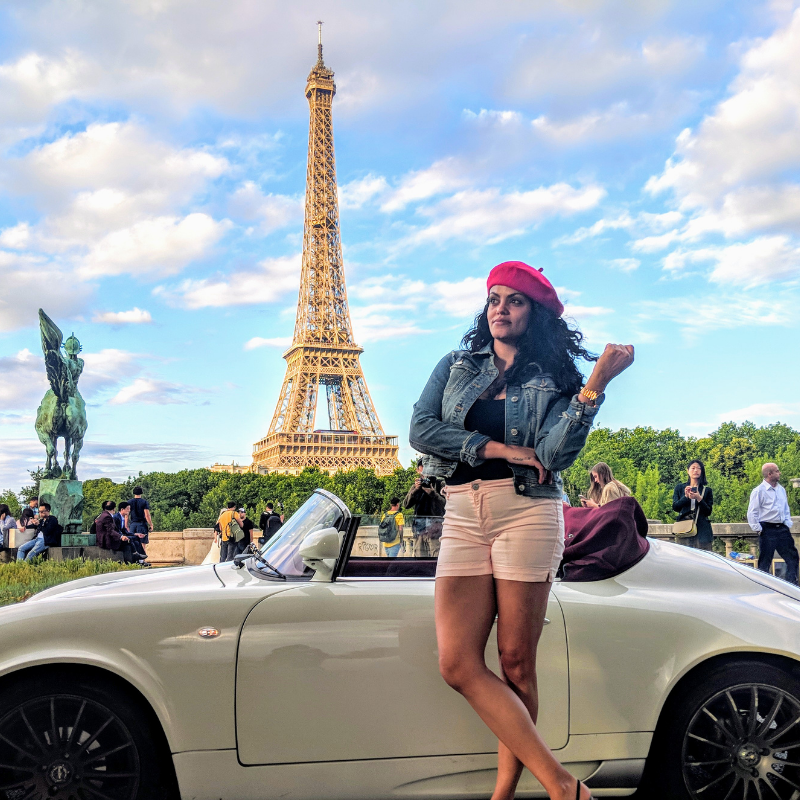
Matt Bowles: My guest today is Karisma Shackelford. She is an avid world traveler, entrepreneur, business coach and founder of Color Me World, a global travel, lifestyle and empowerment community primarily for Black and Brown world travelers. The Color Me World community represents the underrepresented traveler of color demographic and is made up of over 10,000 trendsetters, innovators, entrepreneurs, creators, influencers and changemakers, all with a passion to unplug from the norm and elevate their mindset, health, wealth, power, and freedom. Color Me World also hosts group trips, retreats and events that immerse their members in culture, adventure, spirituality, wellness, creativity and giving back. Born in Los Angeles, California, Karisma has been to over 35 countries including world-schooling her son in 15 of those countries. Karisma also organizes Moving Forward, an anti-racist town hall for the travel industry. a series focused on solutions-oriented dialogue for Black creators, allies and brands to discuss actionable steps to foster anti-racism in the travel industry. Featured in Forbes and named a changemaker by Business Insider magazine, Karisma is committed to inspiring today’s generation to cultivate a conscious life filled with true freedom, purpose and fun. Karisma, welcome to the show.
Karisma Shackelford: Thank you for having me. I am actually smiling from ear-to-ear hearing all of the amazing things that you have said about me. I’m like, ‘What, is that all me?’ But thank you.
Matt Bowles: That is definitely all you. And you are doing amazing things and you deserve to have all of them said and promoted because you are up to some super awesome stuff that I’m really excited to dive into during this interview. But first of all, we should just set the scene because we are not in person today doing this interview, unfortunately. So let folks know where we are tonight and what we are drinking, because you and I have agreed that this would be a wine night. So, I will go First, I am actually in the Blue Ridge Mountains of Asheville, North Carolina, and I have opened a bottle of Pinot Noir from the northern part of Italy and I will be drinking through that tonight. But where are you Karisma and what are you drinking?
Karisma Shackelford: I am dead smack right in the middle of Los Angeles. If any of you have ever been here, I’m right across the street from The Grove. So, if you want to get any more central, I am there and I am enjoying a glass of Pinot Grigio and mine is from Santa Barbara actually. It was a gift that someone actually sent to me last week. So, I’m just popped it open and going to enjoy this glass or glasses for tonight.
Matt Bowles: Well, we should start off just by giving props to your amazing city. I lived in LA for seven years and I have missed it every day since moving out. And when I first moved to LA, I was actually right there on Melrose, like walking distance from the Grove. I mean this is like a section of the city. I’ve lived in a few different parts of the city during my seven years, but that’s a section that definitely is near and dear to my heart because it was actually the first place in the city that I lived when I moved there.
Karisma Shackelford: Yeah, it’s definitely for many others, it’s a great destination for me. As many countries as I’ve been to and places that I travel to, I still love to call it home.
Matt Bowles: Yeah, it’s an amazingly special city and I think it has just some of the most spectacular things of any city in the world. Like it’s fine. Even though you travel the world and you appreciate all these great things about other places in the world, you can still appreciate some extraordinary things about LA that are completely unique. And I tell everybody that they should visit and that they should put on their list. I mean, it’s one of my favorite all-time world cities, even with everything else included to this day.
Karisma Shackelford: Yeah. And one of my favorite things is I guess because I relate to it so much. It’s a melting pot. Like me, it’s, it’s all these different people from all parts and walks of life and we’re all just mixed together. You walk down one corner and you’re in Little Ethiopia. You turn the next corner and you’re in like you’re in another neighborhood with a totally different demographic. But yet we’re all just intertwined with one another and living happily as we can be.
Matt Bowles: I do love that. So, I would love to start a little bit with your background, Karisma. And even if you want to go way back and share a little bit about your family history and how that has shaped your identity and your sense of purpose today.
Karisma Shackelford: Yeah, most definitely. Before I was even born, I’ve come to realize that, you know, God had a big purpose for this human being that he was going to bring into this world. And I’m a really proud Black woman by way of my ancestors who were taken from West Africa and brought to Haiti, who they mix and mingled with Spaniards. And then we were sold off to the Shackelford plantations in America, which actually still exists down south today, and that’s still my name today. And once slavery ended, my ancestors actually migrated and settled in Louisiana for some time. And then in the late 1960s, during the Great Migration to California, like the Bay Area, my grandmother moved my father and my siblings to Oakland. Then they moved to Los Angeles, California, where my father met my mother. And it’s where I still reside today. So That’s my dad’s side, and then my mother’s side. I’m also. I. I tell everyone I’m a proud Hungarian Jewish woman. And by way of my mother, who was primarily raised by my grandfather, who survived the Holocaust and moved to the USA to start a new life. So, I have, like, these struggles, but yet triumphs on both sides. And I am very unapologetic about loving every piece of me. And I believe that has a direct reflection on how I view the world is I love every single person. We all bleed red. At the end of the day, I cheer for the underdog, and excuse my language, but if you’re with someone, I’m going to be that girl that’s going to, like, be having their back. And I’m like, no, no, no, no. That’s just not going to happen. And I don’t care if you’re black, white, Asian, it doesn’t really matter. And it’s so crazy because you don’t really pay attention to all of these things that you’re doing and until you become a mom. And it really hit me over the pandemic when my son got to experience right outside where we live. We had the riots that happened here right after one of the protests, and my son and I were stuck dead smack in it. We’re walking down the street, and I’m on my phone trying to tell people what was going on, and someone grabs me, pulls me to the ground, and then there’s the rubber bullets being shot by the police. My son and I are walking back, and he goes Mom, what is it going to take? Do we have to go and fight against another planet for people to realize that we’re all human beings? And I just stopped and I was like, that is how I have always felt. And I’ve never had that conversation with him, but he’s a direct reflection for me. They say the apple doesn’t fall too far from the tree, and he too felt it. And yeah, it’s a direct reflection of what I do in life. I wake up every day. I just want to empower everyone and especially my Black and Brown communities because we have been underrepresented, we’ve been left out. And a fun fact that I loved sharing at the Moving Forward event, the series that I did was people don’t really understand why it was so relevant that these things occurred in 2020. Well, if you looked at the U. S. Census and started to pay attention to what was happening around the world, for the first time, people of color became the majority. So, my family history, it all goes into my passion and love for everything that I’m doing today.
Matt Bowles: Yeah. Well, I love the way that you articulated that Karisma, because my politics are exactly the same as yours. And I distill it down to the very simple principle that you just articulated, which is if someone is being oppressed or they’re being bullied or they’re being mistreated, they’re the low power group in a particular situation, you support that group. And in some cases, they might be in a totally another situation or in another period of history. Maybe they’re the high-power group and maybe they’re the ones oppressing somebody, in which case you support the ones that they’re oppressing. Right. Like I’m Irish American, right? So that’s my heritage. So, in Ireland, we have an entire history of a struggle against British colonialism. Ireland was Britain’s first colony, actually, that occupied six counties of the northeast. Ireland remain Britain’s last colony. They’re still there. And there’s been this ongoing struggle against colonialism in Ireland. But then in other contexts, if there’s Irish Americans who become part of, let’s say, the New York Police Department and start brutalizing Black folks and like all this kind of stuff. Well, no, that’s a problem. Now your group is, you know, is participating in an oppressive institution and you need to stand against the oppressive institution, whether it’s the British military abusing Irish people in Ireland or it’s the NYPD abusing Black folks in New York. If you take a principled approach to it, I Mean, it’s basically like what we all learned in preschool and kindergarten. You know, like, if someone’s being bullied or being abused or being oppressed, you stand with that group. I mean, it seems pretty simple.
Karisma Shackelford: Pretty simple for us. Some people, unfortunately, and I pray and I hope that we begin to see change and. Or as I say that we have a dirty glass of water, the more clean water we pour into it, hopefully we’ll get that dirty water out. But, yeah. And it’s one of the reasons why I love travel, because to me, the more I traveled, the more I got to learn about more cultures and their differences. I became so much more understanding. And it was like, oh, that person wasn’t being rude and bumping me out of the way. They bump everyone. That’s what they do in their culture. They don’t say, excuse me, may I please? We’re like what we’re accustomed here to here in the USA. They just do life differently. So, you don’t tend to take things as personal.
Matt Bowles: Well, I would love to hear a little bit about how your interest in travel initially developed. Can you talk a little bit about your experience growing up in LA and how you got interested in world travel?
Karisma Shackelford: Yeah. So, growing up, I was watching this show called Reading Rainbow, and as many people know, it was on TV, and they would literally read these books, and then on the page that had a destination, they would jump into it. And all of a sudden, so if Paris was on the page, they jump, and they were in Paris. So, my mom has video of me jumping on books that had destinations, and I’m jumping hard, and I’m like, closing my eyes and praying, and I’m like, it’s not working. I believe that I can jump into the books. And so, I just wanted to go to these destinations. And that is where my love came from, is watching this Reading Rainbow and then finding out about all these wonderful destinations. But then on the flip side, when I talked about it, my mom would tell me, she goes, Karisma, get those thoughts out of your head. We don’t have enough money for that. Or my dad said the family was like, Black folks, don’t go there. And I’m like, why not? So, I had this burning desire, but I had this underlining belief that I couldn’t afford it and I didn’t belong there. And so, it took me a long time. I didn’t start traveling until I was in my 20s, actually, late 20s. So, I became a mom. And then I started. All of a sudden it was, no, it’s not for me. Let’s figure out how to take him. And it took someone that was doing network marketing for a travel club, and all I saw on the thing, and I was like, wait, those cruises are $69 less important tax fees for five days and six nights. And I was like, I can afford that. All of a sudden, I saw different destinations for just a few hundred bucks. And I was like, I can afford that. And so, I signed up and I joined, and I started going on trips, and all of a sudden, I just started sharing my photos on Instagram, and I didn’t realize that people were following and watching the things that I was doing, and I was just having fun. And then I started taking my son. Like, all of a sudden, I realized, wait, I can go here and take him there. So, we just kept going to more and more places because it wasn’t all of a sudden, that belief that I couldn’t afford it was gone. I wanted to go more because I was like, wow, my friends don’t want to go. And there’s not as many Black people when I’m traveling. Why aren’t there? Let me try to figure out how to get more and then come to find out, like, this travel club was. Were majority Black and Brown people. And I was like, wow, this is really cool. But I still saw people having the problem of, well, I’m not traveling because I don’t have money. And I was like, all right, cool. So, I’m going to create a community. I’m going to teach you guys what. I’m doing this. So out of that travel club, I got a BMW out of it, made some residual income out of it, and then I ended up at the Los Angeles Travel Show. And I’ll never forget, because I. I went there and with the intention of selling memberships, and this young lady came up to me, and she goes, hey, we’re having a women’s travel convention that starts tomorrow. You should come. And I was like, how many women? And she said, 500. I was like, 500 more women than I can get to go buy my travel club. But what I didn’t realize is that I said I wanted to start a community to help people make money. But I walked into this women’s event, and I was like, wait, there’s 500 women? And not one of them do network marketing. They’re blogging. I soon come found out that I had 10,000 followers, and I could get paid for those followers that were on my Instagram sharing the stories that I was sharing. They were photographers, digital Content creators had their own online travel business. These. These are women in. In the travel space that were creators. And I went home and one year later, I was making an income full-time. And I called. Began to call myself a work from Anywhere coach because I wanted to show other people what it was, I was doing. And then began creating a community so that we cannot just travel, but elevate our lives. You got to change your mindset if you want to get out there and go and do something different. And usually when you start traveling, you’re like, your health improves. So, I wanted to encompass all of that into the community and just help others.
Matt Bowles: So, when you started coaching other folks on the location, independent, entrepreneurial journey and all of that. Can you talk a little bit about over time now, since you’ve coached a number of people? What are some of the biggest challenges or obstacles that people have that they come to you with, and how do you coach them through those and help them overcome those?
Karisma Shackelford: I would say the number one biggest thing that I’ve encountered is the lack of belief, the lack of believing that they can do it. And I’ve coached some students all the way through, building their brand, getting it together, and they just sat on it. And I was like, well, what are you doing? You have all the tools, all the resources. Well, nobody will sign up. Nobody’s. I think there’s too many coaches out there doing what I’m doing. And I’m like, no, there’s billions of people in there. If you just stick your finger in there and just lick it, you can have all. All your doors would be open. So, I started just talking more about manifestation, because that was the light bulb that went on for me. And I remember how I unintentionally helped my son. He was coming home with D’s and Fs in school, having a. Not enjoying school whatsoever. He was like, mom, I’m not going to go to college. I don’t really want to do all those things. School’s not for me. And I was like, well, why? And he was like, it’s just not fun. And I was like, well, school is fun. And then he was like, no, I like skateboarding. And I was like, all right, cool. So, I’ve been reading on the laws of attraction and realizing that it was working for me. And I was like, I’ve never even shared this stuff with my son. So, I was like, let me share it with him and let’s see if this works. So, I sat him in front of the TV and I said, hey, we’re going to watch a movie together and I want you to take some notes. And mind you, over the years he’s been to like, motivational stuff with me, so he got a little bit of background from that. However, we watched the Law of Attraction and when it was done, he turned to me, he goes, mom, so you’re telling me that if I want to get good grades, first I have to believe that I have good grades. And I have to say, see the good grades happening before they actually become true. And I was like, yeah, this dude within two semesters went from D’s and Fs to A’s and B’s.
Matt Bowles: Wow.
Karisma Shackelford: His light bulb went on because now he believes that he can do it. So, yeah, I just started applying the tactics that I have sharing with my son that I had learned. But just understand that you do have the power to change you. Everything that’s happening, everything that’s happening is a direct reflection of your thoughts and those that the things that you think about the most manifest.
Matt Bowles: I want to ask you to build a little bit on your parenting philosophy and I wonder if you can talk a little bit about the concept of world-schooling, just in general. What does that mean? And also, then why has that been such an important part of parenting for you?
Karisma Shackelford: Yeah, so world-schooling, it wasn’t intentional at first. It was a direct reflection. I had a second-born son and he passed away when he was a month old. Sometimes it’s really tragic events that have to change you forever. And I became an individual that valued my time and experiences with people more than I had ever done before. So, all of a sudden, I did not want to travel without my son. And I wanted to spend and pour as many memories as I could because I was like, I don’t know if tomorrow is guaranteed. That’s where it started from. But what I realized on our travels is that when he came back, we would write notes, but he started remembering the things that he was doing. And then he went to. This is where it became very eye opening is he went to school one day and he was like, mom, my teacher’s going to call you. And I was like, why? He was like, because she’s upset with me. And I said, why? He goes, because I told her she was wrong. And I was like, well, what happened? So, he’s telling her about an experience that he had in Italy and she’s showing him some photos and he was like, no, that’s wrong. And she goes, how do you know? And he goes, because I’ve been there, but I Realized that he was learning things that history books could have not have taught him. But then he started coming back and when he was writing an essay to go into private school and talking about the experience and the fact that we were in Costa Rica and he said, people on welfare in the USA make more money than people making an entire year in another country. And he had, he was being waited on by a 12-year-old girl at the time and he was about 10, 11. He was like, mom, she doesn’t get to go to school. And then he was like, she has to work. So, he had maybe a 20 or $50 bill that I had given him and he gave it to her and that was like a really big deal for her. And I think it was 17, 18 cents per hour that they made. So, it’s just this world-schooling thing. And I realized that it was shaping this young African American man to have a different outlook on life. So here he was hanging out with his friends. One day they’re heading to downtown Los Angeles, they’re in the alley and there’s some bums and his friends are throwing stuff. And he goes, stop. He was like, why don’t you have more compassion? And he was like, since when do you like bums? And he was like, we’re all the same. And he was like, in another country, he’s rich, you just don’t know it. So, I realized the more that I was traveling, I was like, oh, this kid is getting an education that I can’t give him in school, but he’s learning love and compassion. And then he started, I realized that we were traveling, he was buying things and bringing them back home and selling them. So, he was learning how to sell goods and buy them international trade. Like he was doing some really fun stuff. And I just started talking about my friends and I was like, we got to start world-schooling these kids. And from there my friends kept saying, well, we can’t take our kids out of school that long. And I was like, aha, you can. And I found out that there was a law here in California and most states have them where your kid can be taken out of school up to four weeks and the school has to homeschool them. And this allows the kids to go back to their home countries. But for those of that, the US is our home country, use that and go take a month-long vacation, do it around a holiday. So, we would do it around the Thanksgiving where the school was off for a while, or we would do it around Christmas. And that gave us over a month So a couple of days travel there, a month we were there, and a couple of days travel back. And according to school, we didn’t miss a day of school. We were. But he was out getting educated instead of having to sit in the classroom for a while.
Matt Bowles: That’s amazing. So, can you talk a little bit about how you select your destinations and then what is your sort of total, you know, travel cadence and duration, you know, now, like, what’s sort of your routine in terms of how often you travel and for how long and how do you pick your destinations?
Karisma Shackelford: Yeah, how do I pick my destinations? Gosh, I don’t even think I have a rhyme or reason. Sometimes it changes. It’s really this thoughtful thing. I do love going to third-world countries, things that are not so modern, because I do like history. And I do love seeing things that are really old compared to the USA, because the USA, like, we’re young, like we are babies compared to some of these other countries. So, like, when choosing India, it was the culture, it was the history, it was the religion that I wanted to learn. So, it was things that were going to enrich me. And then also it’s a place that I knew that I can also give back. So, it’s another thing that I do is wherever I go, I take a little piece of my time and I try to find somewhere that I can pour back into that community versus just taking out of it.
Matt Bowles: I love that. Can you share a little bit now about your experience in India? I know you and your son went there together and spent about a month there. I always love asking people about their travels to India because it always produces some of the most interesting and usually amazing and transformative travel experiences. So how was your experience and what did you guys do and see there?
Karisma Shackelford: Gosh, let’s say India will be one that I will never forget. And it began with me losing my luggage. And I landed in India with my Lululemon pants and jacket on, which were very tight. And my son and I were walking around town and men were gawking and whistling. And he was like, mom, these guys are so rude. And then someone had to pull me aside and they were like, you’re like walking around in your underwear. And so, I went to the nearest store. Someone took me over to the store near the Taj Mahal, and I bought some traditional Indian dresses. And all of a sudden, they stopped. But then my son goes, mom, everyone said that this was going to be like the most stinkiest place, like it’s the armpit of the world. And he was like, where’s it going to stink? And he goes, like, all I smell is good Indian food. And I’m like, yeah, it didn’t smell bad to me. We couldn’t wait to eat. But one of our really interesting stories is with the other part was people kept saying, don’t get on these buses. Be careful, because you’re a single woman hanging out. My son at the time, maybe he’s about 6, 7 years old, he was young. He couldn’t protect me. But we got on one of these buses because I didn’t want to fly from place to place. I wanted to see everything live. So, we got on a sleeper bus. And by the way, you have to be a local to book the buses. So, I had to find a local that I could trust to take me to a place to give my money to so I can buy tickets, because he had to. A stranger had to do these things for me because I didn’t have. Because you needed an Indian credit card to be able to do these. And then he charged a little bit more on top of that. But we got in this bus. We’re the only Americans there can’t speak a lick of language. They’re like, it is a large barrier. And so, we’re going, and then we stop at a place, we get some food. Everything’s going great. And then we’re driving and driving. All of a sudden, we stop in the middle of nowhere. At least I thought it was in the middle of nowhere. And my son goes, mom, do you have that pepper spray? And he’s like, I think this is. Oh, my gosh, the police are out there. And he was like, I think we’re going to get robbed. Because this is what everyone kept saying. They were like, you know, be careful. By the time we got off, we were at our final destination. We were just not too far from where we needed to go. But we overcame, like, these fears of traveling in a place unknown. I took them to other places. It was really interesting that one of our tour guides took us to the Ganges River and took us over to where they were cremating the bodies. And my son went, mom, why are they showing me this? He had never seen death before. And to them, a totally different culture. Like, that was something that everyone saw, and it was okay. One of the other things he loved was the cows and the sheep that just ran freely amongst the streets. And I remember one time the cow came up behind me and, like, kind of nudged his head, said, excuse me, ma’. Am. And my son were like, oh, mom, watch out, the cow’s trying to get by. So, it was just all these fun and different experiences. And it was a total opposite of what we had heard. It didn’t stink, people were nice. We didn’t get robbed on the bus. Going to destination to destination. When we actually got there, one of the little toot toots was like, hey, we’ll take you to you. Your hotel. Yeah, we’ve had such amazing experiences. And I’m just. I knock on wood all the time. So very blessed.
Matt Bowles: That’s amazing. So how often are you and your son taking trips together? Like, what’s sort of your travel cadence at this point? I mean, notwithstanding the pandemic, obviously. I mean, pre-pandemic, what was sort of your travel cadence?
Karisma Shackelford: Yeah, so pre-pandemic, I would take him on at least a month-long vacation out of the country every summer. Or we would go like around the holidays, we would go somewhere, and in between there, I would take him on a few trips here within the country or something that I can get to really quickly that we can go to four or five days and get back total. Pre-COVID, I was doing total of about eight trips. So that month-long in addition to another seven more. And when COVID hit, I didn’t stop. I just stopped leaving the country. And so, we just went from planes to getting in the car and we just started driving. And I found out that California is much more beautiful than I realized and fell in love with Sedona, Arizona, and went up to Lake Tahoe, like, places that I was like, wait, these are sitting in our backyard. Did a Santa Barbara trip with him. Stayed in a beautiful, beautiful place. And he’s like, mom, this place is bigger than our entire house. I love vacation. So, yeah, we didn’t stop. We just did it differently.
Matt Bowles: So how old is your son now? And also, since you’ve been doing this for so many years and you’ve taken him to 15 different countries all over the world, what do you think he would say has been the impact on him of all of this world travel? If he was to reflect on it, what would he say would have been the impact on him?
Karisma Shackelford: So, I would say that the impact that he says that travel has had on him is to understand that we’re all human beings. It goes back to that little saying. He was like, what do we have to do? Fight against another world to realize that we’re all human beings, we all bleed red. And I just think it really gave him a worldly understanding. And when he has Conversations with people. It also has made him confident because he understands, like, no, I’ve been there. And so, he has these different conversations and. Or he’ll tell his friends. And this is was the part that was really funny because he has a couple friends that are from Beverly Hills, which is where he went to elementary school most of his life. He goes, mom, my friend. So and so, you know, they haven’t been outside the country because I told, and I told him he has to go get cultured because, you know, just because you have lots of money, you have to go get cultured. So, he’s having these really confident conversations with others and which is what I love.
Matt Bowles: That’s so awesome. Well, I want also to ask you about the event series that you organized called Moving Forward, an anti-racist town hall for the travel industry. Can you talk about first of all, just sort of what inspired you to organize this event and then what was the event?
Karisma Shackelford: Yeah, so let’s go back to that conversation when I was telling you I was at the travel show and I met this girl that invited me to this all-women’s travel convention. That convention was called Women in Travel Summit Wits and it was put on by Wonderful and Wonderful is the same company today that I partnered with to do the Moving Forward event. We have a really close relationship with one another. I’m very intricately involved in the community. I love it. Hands down, again, it’s another segment of underrepresented travelers that needed to have a voice. And I strongly believe that, you know, women are some of the biggest decision makers when it comes to travel. So, the founder, Beth and I were having a conversation about everything that was going on with 2020. And I told her and I was like, we need to have an uncomfortable conversation, people. It’s time. And so, I’m okay with having uncomfortable conversations. And she was like, well, I don’t want to lead it. And I was like, I’ll do it. These conversations need to be had. And swiping them under the rug wasn’t going to start solving solutions. It was going to just continuously make the matters that were at hand even worse. So, we got together, had some conversations and decided we were going to put it on. And voila. And I’ll tell you, after the first event, we had a sponsor that backed out that was like, you know what? That didn’t align with them. And I was totally okay with it. But the people that were there, they were like, wow, that was really uncomfortable. But thank you, thank you for realizing that some white folks were like, I didn’t realize that the things that I was doing was racist. My own friends were listening in and they were like, I had no idea. Like, you don’t have any idea that some of the things that you were doing, what effect it was having on another human being, but yet you were calling this person your friend and she was black, but you were doing racist things. So, these conversations had to come to the forefront. So, we, the very first one, we separated the Black community from the white community and we had different conversations because there’s also conversations that we can’t have together yet. And then we brought them all together and we started having these conversations one by one. And we had a series of three of them. And that has actually led to me sharing with Wonderful that I had wanted to not continue on doing moving forward. But let’s talk about how we travel. And so, we can continue to have those conversations, but within a different space and talking about the many different underrepresented segments that exist within the travel space and to not end the conversation. And I’m really excited because on June 29, you can go to sheswonderful.com and that will be the first live segment. We’re going to be doing it on their YouTube page, and voila, we’re going to have these uncomfortable conversations, but now we’re going to have them with different segmented groups.
Matt Bowles: That’s really important stuff that you are doing. I’m super excited for the show to come out, and I’m wondering if you can just share maybe a little bit more about the types of conversations that took place at Moving Forward and some of the main takeaways that came out of it as you reflect back on it. If you can, you know, share whatever sort of you think some of the most impactful things were to come out of it or some of the, you know, important things that came out of it.
Karisma Shackelford: Yes. So, a lot of it had to do with the creators and the space. And a lot of people didn’t want to have conversations about the fact that. That white creators were getting paid more than Black creators for doing the same exact thing. And. Or there was a group of individuals, they didn’t realize they were doing it. Some of them. Some of them did, but they were intentionally keeping out other segments of races because they were keeping the money for themselves. So, you had all these things going on, but then you had the white men at the top of these companies that weren’t allowing changes. So, people were wanting to have the change. So, we started to have these uncomfortable Conversations which led to some really amazing things that came out of that. And, you know, talking about how much did you make from that campaign? And we talked about transferring the information. I was letting people know that if you had a tool, a resource that you wanted to share with the Black community and you haven’t shared it before, let’s go and give it to everyone. Let’s go and level the playing fields. Because I don’t believe that everyone should get paid the same just because everyone should get paid the same. But if my worth, the value that I’m giving you as a Black woman is the same as hers as the white woman, I should not be getting paid less. You should not be telling me that all you’re going to offer me is, you know, $5,000 for this campaign, but you offered her for the same exact deliverables, $10,000 for that campaign. So those were some of the conversations that. That. That were being had. But then bringing the brands into the conversation, too, and holding them accountable so that they were doing the things that they needed to do to work with the creators so that we can change this story that was being put out to the world. It’s not just white women that travel. It’s not just white men that travel.
Matt Bowles: Yeah. I think that’s super important work that you are doing. Really, really awesome. I also, of course, now want to ask you about Color Me World. Can you talk about what led up to the founding of Color Me World and what it’s all about?
Karisma Shackelford: Yes. Color Me World is my other baby. So, I have my son, and then I have my baby. And Color Me World is just that. It’s a community that is colorful in regards to the color of our skin. It is colorful, as in it is enlightening, and it makes people smile. We’re having really highly elevated conversations in there. And it just spun off of the things that I wanted to have. And I started talking to people, and they wanted it too. So back when I said I started was doing the network marketing, and I realized that people wanted to learn how to make money. Originally, I called it Travelpreneur Life, but then I realized it was bigger than just teaching people how to be entrepreneurs that were traveling. We had to do mindset changes. People were like, oh, well, I can’t get that travel credit card because my credit sucks. All right, cool. So, we brought in a credit expert, helping everyone to turn around their credit, giving them all the information. All right, cool. I have my credit in there, but I can’t seem to save because every Time I’m saving, something else happens over there. Fine. We have a generational wealth expert in there and literally has taught not just everyone, but she taught me too. Like how to make enough money off of investments so you can just travel off your investment money. You don’t even have to touch the money that you’re getting from work. And then people were like, well, I can’t travel because of my health. You know, whenever I travel, I get sick. So, I was like, cool, we’re going to bring in a health and wellness this person and she goes around the world and she finds herbs to heal. So, all of these objections that people were coming with as to why they weren’t traveling, we just kept looking for the solutions. But what I realized is it you didn’t have to travel. Some people just wanted to elevate their lives in general. And so, when it transformed from Travelpreneur Life to Color Me World, it became about the human experience that happens when you decide that you want to travel and elevate your life. Empowerment. All this happens together because I believe that us people that travel like we beat to a different drum. Like we’re conscious, we’re like, we’re just doing things just a little bit different. So that’s what Color Me World is. It’s a community of experts that are like, we’re out there changemakers out there changing the world and finding more people that want to do the same. We and it starts with you, the person that you’re looking at in the mirror.
Matt Bowles: So, you’ve got a lot of this virtual content, you’ve got these experts. And then once we are in a post-pandemic world, can you talk a little bit about the actual trips that you are involved with?
Karisma Shackelford: Yes. So, it’s one thing being virtual, but there’s another thing being in person. So, we put together some conscious trips so that you’re going out there and having an elevated experience. Experience being around other people that are wanting to manifest and doing just different types of things. You’re traveling with people of color; you’re traveling people that are like-minded with right in alignment with you. But even if you don’t want to travel, we have, you know, city groups so we can meet up in our city and we can do fun things within your local like you can have this tribe where wherever you’re going and the really awesome thing is that you know you’re connected to the community on your phone. And let’s say I go to Dubai, I can open up my phone and I see members that are within 30 miles of me and I can go, hey, I’m in Dubai too. What are you doing? So, you have this, you can travel alone, but you’re never traveling alone. You’re traveling with the Color Me World community always at your fingertips.
Matt Bowles: I love that. I want to ask you to build a little bit on this concept of being a conscious traveler. What tips do you have for folks on how they can be a more conscious traveler moving forward?
Karisma Shackelford: I would say the very first thing that you need to do to be a conscious traveler is really think about your actions before you do them. And I’m not just talking about against other human beings, but other animals. One of the most devastating things that, like, I was pissed we were in Thailand going to Monkey Island and when we got there, I’m literally watching someone hand a monkey beer and he’s holding McDonald’s in the other hand and stop for a minute, take yourself out of that situation and be like, if I was the monkey, would I be able to survive long-term without these things that you humans are giving me? You’re putting toxins in, into that little guy’s body and, and you’re forever changing him. When you’re going to another country and you see a little 11 year old girl working, think about it. If you got a couple extra bucks, give it to them. Because what you have, that little bit means a whole lot more to me to them than it does to you. You may leave them 10,000 rupees or whatever it is, and to you it was 10 bucks. But to them that was probably their rent for a month or two, whatever that means. And just really like, just, just step outside of yourself. And just whenever you’re having that conversation with someone else is I like to think about how would I feel if the roles were reversed and I’m looking at the person that had everything, how would I want them to treat me? And I do that all the time. Like if I met the most wealthiest person in the world, how would I want them to treat me? Well, you would want to treat them, to treat you with love, respect, understanding, compassion will treat those other individuals, those animals. When I go into a space, I ask permission to that land for me to come and enter that space and just think about these things before you’re doing it. Because everything is living. And I love that. My son learned this concept when we went to Hawaii because I kept telling him and I said, do not take the sand, don’t take the rocks. We got to ask permission to do anything. And specifically, our tour guide Said, do not take rocks because you know this is the place that you don’t want to do it. So, we’re on our flight heading back to LA and literally the plane goes and it drops and then the plane is shaking and my son goes, mom, it’s all my fault. And I said, why? He goes, I stole the rocks. He never touched a rock or anything from another piece of land without asking for permission. And so, like you got to have these understandings like this is God’s world and you need to ask permission and be respectful in every place that you go. And to me that’s the conscious travel. It’s just thinking before you’re doing.
Matt Bowles: I want to build on that a little bit as well and ask you specifically for your tips on how people can be more eco-friendly world travelers and what things people should keep in mind and how they can be more eco-friendly in their world travels.
Karisma Shackelford: Yes, I’m still trying to figure out how to be more eco-friendly when we’re traveling by plane. Other than when I get to a destination, I try to use more local travel than going from plane to plane to plane. When you’re in like a place like India, use a tuk-tuk, use one of the places or that maybe it’s a horse carriage or just something you do, something to ride a bicycle. When you’re going out, look for hotels and restaurants that are participating and using recyclable goods are things that are eco-friendly. And then when you’re packing your bags, use eco-friendly products like it just, it all has to go around. Like my straws have been around the world with me. I have baggies that are reusable that they have been around for a while. So, I’m not dumping this garbage off along the way. Just be very mindful. It’s just paying attention to how much garbage is going out there and the little role that we can do and how that actually transforms to the other person. Because I only learned it because I was watching her name is hey, Ashley Renee. And I was like, wow, she’s doing all this sustainable travel and all these. So, I’m like, wow, I want to do it too. But because she shared it and she’s sharing what she’s doing, it rubbed off on me, which rubbed off on another person and so forth. So, share what you’re doing with the next person so that they become knowledgeable too.
Matt Bowles: Well, first of all, shout out to Ashley Renne. She’s a very good friend. She’s been on the podcast, so Maverick Show listeners know her and we had an amazing discussion about eco-friendly travel and all sorts of other stuff. So, she is definitely an amazing person and resource for, for all of that as well. Karisma. I want to ask you, sort of big picture now, when you reflect on back on all the travel that you’ve done and the impact that you that has had on you, why do you continue to travel? What do you get out of it at this point in your life? What does travel mean to you?
Karisma Shackelford: Travel calms me down. Travel is like, it’s my drug, Like I need it, I can’t live without it. But it also, I realized that when I go, my happiness, my fulfillment is exchanged and put out to the world. And a great example of what I’m going to say is I was in the grocery store shopping with my son a few years ago and this were the guys ringing up my groceries. And the lady in front of me, she went to go pick up her bags to leave and she goes, I know you from somewhere. She goes, are you an actress? And I was like, no, not at all. Well, my girlfriend that was in line with me, she was like, I’m an actress. And she goes, no, no. She’s like, I know you from somewhere. And then she was like, are you got to have Karisma? And I was like, yeah. And my son’s like, oh no, mommy, you’re going to become famous too. And then she goes, I wake up every morning, she goes, your motivational quotes. She goes, how was India? She goes, is that sankhwas? She goes, oh my God, he’s gotten so big. And I was like, wow, it was giving me peace of mind. But for someone like that, she couldn’t travel and she doesn’t travel, but she’s like, I vicariously travel through you. I wake up every morning looking for something inspirational. And she was like, and I love following you. And so that made me feel good because it was more than just realizing that I was traveling, but through sharing my travels and my positivity and my outlooks on life, I was helping other people to go through whatever they were going through too.
Matt Bowles: So that is awesome. What tips do you have? Karisma. For Black and Brown travelers in particular, and maybe especially folks that are at the earlier part of their world travel journey.
Karisma Shackelford: One, go get your damn passport. You can’t go anywhere without it. And number two, if you have an excuse, go and find someone that you have a conversation with. Don’t talk to negative Nancy. Don’t, like, don’t talk to anyone. Go find someone out there that has Traveled. And let them tell you all the reasons why you should travel. Because you just need to go. No excuses. Just go. It’s not as scary as you thought. It’s not as expensive as you thought. Yes, Black people go there. We go everywhere. And when you realize it, when you start traveling the world, this is the most beautiful thing is people love Black people when we’re traveling the world. Ah. And it’s such an amazing experience to be able to feel it when you’re traveling abroad. And people’s like, wow, you’re so beautiful. And yeah, you just got to go out there. And I just say, just do it and surround yourself. Put yourself in a community. It could be Color Me World. And I’m going to give shout outs to some of my other favorite ones. Travel Noire, Nomadness Travel Tribe, with respect to other Black travel communities. I am not the only one. I am not the founder of this. I love Evie Evita and what she did in re-sparking this movement. Because the movement happened way before any of us were even born. We had people that were traveling the world, but just go out there and do it and find a community that resonates with you. Because one of the problems that many people say is, well, I don’t have anyone that wants to travel with me. Trust me, there’s a lot of people out there that would want to travel with you. And they look like you, talk like you, and want to go out there and travel with you.
Matt Bowles: Yeah. Shout out to Evita Turquoise Robinson as well. She is a good friend and has also been on the show. So Maverick Show listeners know Evita, and that’s actually how you and I connected. Karisma. Because you were speaking at her Audacity Fest event, and we connected through that. So, a lot of amazing people doing amazing things in the space. Let me ask you this as well. What tips do you have for white travelers on how they can be better allies?
Karisma Shackelford: First off, go educate yourself. Don’t turn to a black person to try to get educated. Go and try to do the work yourself first. And then when you have questions and you want to have the conversation, you’re going to come to the table with a different mindset because you need to go read some stories on the things that have been done so that you can let that guard down and then be okay with, have been had, made mistakes in the past and just take accountability for it and just be like, you know what? I realize that I may have done some racist things in the past. I may or may not have been aware of them. But I’m making a pledge today that I am going to make a conscious effort to not continue to be that same person, period. From there. When you see a black traveler, a brown traveler, a handicapped traveler, whatever kind of traveler it is that is having any kind of difficulties, and specifically black travelers right now, because it is as sad as it sounds, as much as that has happened in 2020, we haven’t even begun to rip the Band-Aid off of that huge scar, that wound that is there. It hasn’t even begun to heal yet. It’s going to take a long time. But when you see someone that is being treated unfairly, someone’s being racist towards them, stand up, be that voice that is going to be unapologetic and do the right thing because that’s another human being standing right next to you and imagine yourself being in their shoes. Imagine if you were black and imagine if you were treated like that. Or imagine this. Imagine that Black people were the majority. Would you want them to do this to you?
Matt Bowles: That was perfectly said Karisma. And I feel like that is the perfect note to end this on and move in to The Lightning Round. Are you ready?
Karisma Shackelford: I’m ready.
Matt Bowles: Let’s do it. All right. What is one book that has significantly influenced you over the years that you would most recommend people check out?
Karisma Shackelford: I’m going to say The Law of Attraction. That is like my life-changing book. And I actually read it over and over again. And because I feel that every time I read it, I learn something new or I’m adding more clean water to that dirty water that is still existence inside of my brain. Because I tend to have doubts sometimes. And I can tell you I have used it, read it over and over, more in 2020 and 2021 has been phenomenal. I mean, I got to bae. And everything I asked for in that individual, like he just showed up. And I’m like, wow. Because I had been asking for it, I had been manifesting it. Money has just been flowing. I have this little thing so ching-ching goes a money tree. And every time it changes, it comes to me. So, I’m like saying these chimes, so what does money do? It started finding me because I was being happy about it and talking about it. So yeah, the Law of Attraction and it’s by Esther Hicks, it’s a great read. And it to me, it didn’t ever conflict with my religion or anything else that I believed. It just helped me have a different outlook. And understand the power that God blessed me with to have within myself.
Matt Bowles: Awesome. We will link that up in the show notes. Karisma, what is one travel hack that you use that you can recommend to people?
Karisma Shackelford: My travel hack. So, I have these little travel capsules and I am a big fan of only doing. I will pack a whole entire month in a carry-on. And so, there is these capsules, these travel capsules that I love and I just go and find them. You can find them on Amazon. You roll your clothes up and you just stuff as much clothes as you can and you zip it and it flattens and I get the entire month in my carry-on. My son will get the entire month in his carry-on. And we don’t have to bring a whole lot of stuff now. Doesn’t mean I don’t come home with more luggage. I always come home with another piece of luggage because I know I went shopping, but I’m not taking around that luggage. That would be my number one travel hack.
Matt Bowles: All right, if you could go back in time, knowing everything that you know now and give one piece of advice to your 18-year-old self, what would you say to 18-year-old Karisma?
Karisma Shackelford: I would tell her to go pack her bags and move overseas as soon as possible.
Matt Bowles: Awesome.
Karisma Shackelford: I was afraid and I stayed stagnant and I prolonged it. And I strongly believe if I had moved overseas, my life would have been completely different than it was today.
Matt Bowles: All right, of all the places that you have now been, what are your top three favorite travel destinations in the world that you’d most recommend people check out?
Karisma Shackelford: I would say I had the most fun in Bali, specifically the Gili Islands when we went there. There’s no form of transportation other than horse carriages. You’re just like dead off remote. Number two, I would say India. That was culture and I actually lost £10 and I was eating like crazy. But we were walking just having so much fun. And then I would say number three would be Thailand.
Matt Bowles: And you have also just picked some of the greatest culinary destinations with some of the best food on the planet of Earth. So, you know, there’s also that. But yeah, I agree, those are all super amazing picks. All right, Karisma, what are your top three bucket list destinations? These are places you’ve never been, the highest on your list.
Karisma Shackelford: You would most love to see Ethiopia, Morocco and Zimbabwe.
Matt Bowles: Nice.
Karisma Shackelford: Yeah.
Matt Bowles: All right, we have come to the final and most important question of the interview. Karisma, I’m about to ask you who your top five hip-hop emcees of all-time are. But before I do, let me just give you a moment and ask you, what does hip-hop music mean to you? Why do you love hip-hop?
Karisma Shackelford: Hip-hop… It moves my soul. It tells a story about what we have been through. And it’s kind of like this, like. Like you’re reading this, you’re singing this book, you’re rapping this book. It is art at its finest. And in a very creative way that some people don’t get it. But, yeah, hip-hop just. It’s just a part of my soul.
Matt Bowles: That’s amazing. Yeah, I was a hip-hop DJ in the 90s, and it’s. I mean, a huge part of my heart and soul as well. Which is why this is my favorite question when I have my guests on who are hip-hop fans? It’s also a very personal question, right? It’s not an objective question. Who are the most influential or who are the most commercially successful? It’s a very personal question for you personally. Who are your top five favorite MCs of all-time?
Karisma Shackelford: So, I’m going to start with MC Lyte, and I’m going to take that back, because MC Lyte, that reminds me of my fun teen years. Like, yes, that was one of my first introductions into seeing this powerful Black woman unapologetically voice her experiences. And for everyone else to have these me-too moments to go right along with it. And I felt when she would be telling these stories through music, I was like, gosh, did she know I was going to that, too? Lauryn Hill. Gosh, ‘To Zion’ was the song that I sung to my son when he was born. I went through heartbreaks, like, through her songs. Common. I loved Common Conscious, like, having these real conversations that I believe that a lot of rappers were talking about, you know, bitches and sex, and he was talking about enlightenment. So, yes, they, like these individuals, all connected to me. And then there was Biggie. I never knew that I can learn that many rap songs. I thought I was Biggie Smalls. I wish that was Lil’ Kim up there. Being able to rap with him and have fun. I actually was. At the time, I was living in New York and I was trying to learn how to rap because in my brain I thought that I can learn how to do this. And so, I joined this girl group and I was like, yeah, I’m going to be the rapper. And we had a little bit of fun. It was quite corny, but we had our days. Then I’m going to end it with Missy Elliott. And Missy, because that woman behind the scenes in front of the scenes. She just, to me, she did a lot of changes for hip-hop and crossed the genres and. And did things that I don’t think that many other women or MCs were doing at that time. But again, when I think about dancing and just having fun, like right along, right along with hip-hop. But then there’s more because I’m like, leaving out Jay-Z and Nas, like, this is a really hard question.
Matt Bowles: So, first of all, those are amazing picks. Like, I was smiling the whole time that you were going through them, and it was warming my heart. The people that you were picking, I think it’s amazing. Let me ask you a question. All of the MCs that you named are East coast or Midwest MCs, and you grew up in LA, so I’m curious about that. Right as you were coming up in LA, did you have a greater affinity for the music that was coming from those east coast artists than you did for West Coast? Or, like, how was that for you coming up in LA?
Karisma Shackelford: Yeah, I’ve always had this really strange attraction to the East Coast. And when I was a teen, I literally just like, I. I wanted to travel, I. I wanted to go somewhere else. And so, the Big Apple was one of those destinations. And so, I tend to listen to a lot of the music. And I went there on my first week. It was like one of my first trips that I did. And I ran away from home and I stayed for years. I told everyone I grew up in LA, but I became a woman in New York City. I learned how to hustle, because when I called home to ask mom and dad for money, because I was like, I’m going to stay here. They were like, well, our money’s staying here. They were like, good luck. Because I was. I had to tell them. And I was dropping out of college, so, like, they didn’t like to hear those conversations, but I had to. And that was the first growth that I had as a woman. And it stuck with me. It’s like I was just like the hip-hop. My head, which is bounced back and forth, it was like as if it was speaking to me and said, we created this just for you, so you could feel good. And it’s not that I don’t like West Coast rap like I do, but that’s not where it began. Like, I became a woman listening and enjoying that music.
Matt Bowles: That’s so amazing. And I love this too, because I’m also like, my heart is completely in love. New York City, 1990s hip-hop. Like, that’s where my heart and soul is, right? And I have tons of respect for the West Coast and the South and all these other regions that have done really incredible stuff. But, like, my heart and soul are the East Coast 90s hip-hop. So, it just made me so happy when you went through those pigs.
Karisma Shackelford: And a part of it is that they grind. So, when you grow up and you live in the snow, you actually, you grind differently. So, like, I just related because I was like, wow, these people, it’s cold outside, it’s below zero. But they’re still out here working, shoveling snow, selling music, doing whatever they had to do. They were. If it’s a rainy day here in California, I know growing up, I’m like, oh, I’m not going outside today. It’s raining too hard. So, it was just different mindset. And so, I. I brought that hustling, like my wake, one of my themes. So, I’m a hustler, baby. Just want you to know, like, that was my theme song back there because I just wanted to come. And so, I tend to, even till today, most of my girlfriends, they live on the East Coast and I’m here, but we kind of meet up. I’m just attracted to people that have this hustler. I’m going to be grinding and I’m not going to stop until, you know, I accomplish and manifest everything that my heart desires. And then when I’m done with that, I’m going to help other people do it.
Matt Bowles: So, yeah, that’s amazing. All right, Karisma. I want you to let folks know how they can find you, contact you, follow you, connect with you, and check out all of the different awesome stuff that you are up to. How do you want people to come into your universe?
Karisma Shackelford: Yeah. So, across the World Wide Web, you can find me at gottahavekarisma. I’m on Instagram, Facebook, YouTube, you name it. And it’s also my website, GottaHaveCharisma.com, but you can also find me through my brand. It’s Color Me World. So, it’s. That’s ColorMeWorld.com and our Instagram for that is. It’s a pretty colorful world.
Matt Bowles: Amazing. We are going to link up all of this in the show notes. So, everything we have talked about tonight, including all of the ways to follow and contact Karisma and check out all of her amazing content and the incredible things she’s up to and get involved in her communities will be at one place. Just go to TheMaverickShow.com go to the show notes for this episode, you’ll find it there. Karisma, this was a blast. Thank you so much for being on the show.
Karisma Shackelford: No, this was a blast. Thank you for having me.
Matt Bowles: All right, good night, everybody.