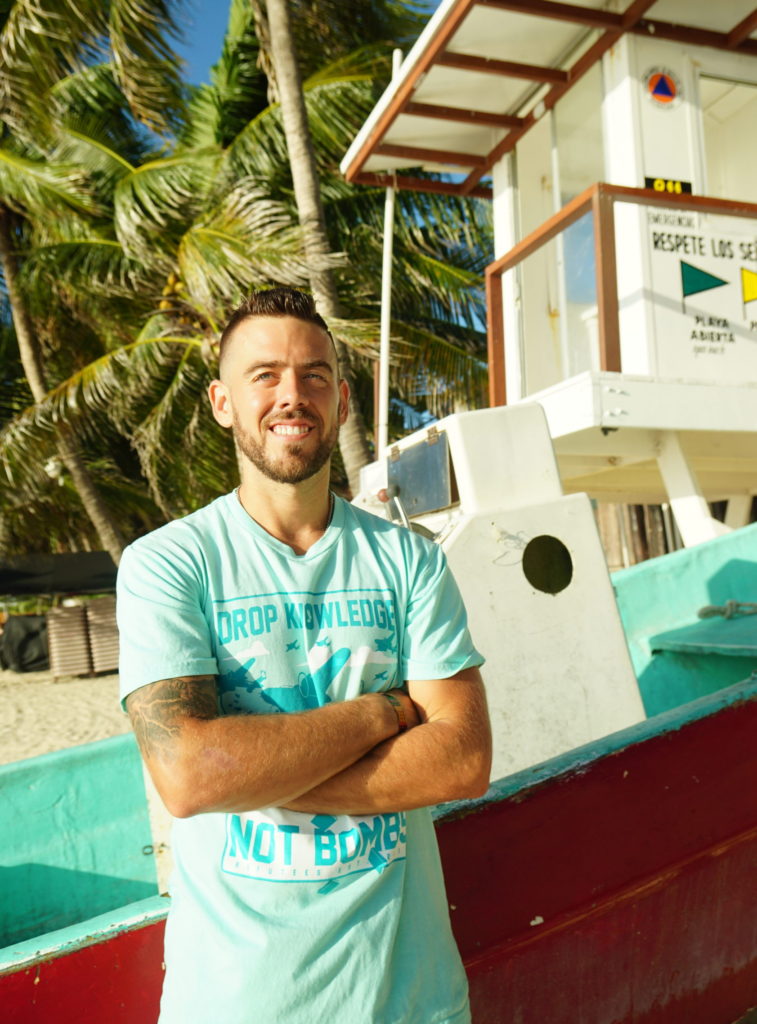
Matt Bowles: My guest today is Jordan Carroll, better known as the Remote Job Coach. He specializes in helping high performers land their ideal remote job and gain the freedom and flexibility to design their dream lifestyle. After seven years working remotely himself for companies ranging from startups to Fortune 100 companies, Jordan has now coached hundreds of remote job seekers on his methodology for landing their fully remote dream job. He is a member of the Forbes Coaching Council and the founder of the Remote Job Club, a high-value membership program that helps you get connected to premium remote jobs while giving you access to the tools, coaching, and proven strategies to help you land the right job for you. Jordan, welcome to the show.
Jordan Carroll: Matt, let’s go. I’m pumped for this, man. Really pumped for this.
Matt Bowles: I am so excited to have you here, man. You and I have known each other for at least a couple years now. Super excited to have you on the show because you’re doing amazing stuff. Before we dive into it, though, let’s just set the scene and talk about where we are doing this interview from today. We’re not in person, unfortunately. I am actually recording this from Chicago, Illinois.
Jordan Carroll: Town Chi Town.
Matt Bowles: Chi City, baby. I’m right downtown by the Riverwalk. And I was actually born in Chicago. So, this is you back to the roots, man. But where are you today?
Jordan Carroll: We’re both rooted, bro. Which is weird because I feel like your podcasts are usually not with, with people in the certain city that they were born. But I’m in Fremont, California, which is actually a pretty large city in the Bay Area in Northern California, in between Oakland and San Jose. And this is where I was born. So, we’re both going back to the roots here.
Matt Bowles: Well, big up to the Bay Area, man. What a spectacular area. One of my favorite regions of the United States for sure. To maybe start there in terms of, you know, growing up in the Bay Area and just, you know, take us back there a little bit. And as you were coming up, how did your interest in travel develop, and what was sort of your path to working remotely?
Jordan Carroll: Yeah, you know, growing up in the Bay Area, I think you get exposed to so many different cultures when you’re young. Amazing food, amazing people, and you kind of just get this worldly experience just walking outside. So, I think as I’d grown up, there was a normalization of all these different cultures. And to me, there was always like this deep burning desire of, like, I need to go see these other cultures, like in these other countries. And I felt like it happened the way that the universe needed it to happen. You know, it was not linear. I don’t think any of our paths are linear. I went into corporate after college. I kind of did the normal life, “for quite some time”. And then, at some point, I had an existential crisis. At about 25 years old, I broke up with my girlfriend, left my job, said, “I need to go travel the world.” So, I feel like some of these thing’s kind of buildup in you. And the closer that we can get to listening to our intuition, listening to the universe, tapping into that law of attraction, and just seeing what it is we actually want to do, those are the things that I felt like finally pushed me. And it finally felt more uncomfortable to be in the U.S. than it felt to leave the U.S. at the time that I did it.
Matt Bowles: Well, let’s talk a little bit about some of your remote work experience, because one of the things that is super interesting about you is that you have done pretty much all the different types of things that you can do remotely. And I would love for you to share a little bit about that in terms of your personal remote work history.
Jordan Carroll: Yeah, no, it’s a great question. And I think this is what has led to my ability to do what I do as a profession, but having the unique experience of starting at a Fortune 50 company. Basically, IBM is where I started. I wasn’t working for IBM remotely at the start, but about nine months into my job there, I was working fully remotely for them other than visiting customer sites. I then worked for a small company of about two to five people, for a small PR organization in Portland, Oregon. Then I worked for a dating coach, which was really weird. I don’t put that on the resume very much, but it was a dating coach for women as well. So, I was an enrollment coach for her. This was at 100% commission job. And I did that to support my initial journey into traveling. I worked for Remote Year, as you know, Matt, 100% distributed, fully remote organization. I’ve had my own businesses in coaching, and I’ve had a couple other contracts with small startups too, where I’ve done affiliate work with them, or I’ve driven business to them, or done writing. Man, it’s been all over the place. And the constant that I’ve seen throughout that, that I loved was the flexibility of being remote.
Matt Bowles: Can you talk a little bit more about that and go a little bit more in depth? Because one of the things that you talk about a lot, and I’ve heard you talk about this publicly, and I know you talk about it with the people that you coach, is starting with why and starting with your motivation and why you really want to do this and what you hope to get out of it and so forth. Can you talk about that for you personally? What is your why? What does location independence mean to you? Why has it been so important and what value has it delivered for you in your life?
Jordan Carroll: The why is choice, man. Remote work saved my life. I say that in the sense that when I’ve been at my lowest, substance abuse, depression, anxiety, suicidal thoughts, shit that’s deep that I think a lot of people are scared to talk about. Remote work was that constant in my life that gave me the freedom to change environments, to explore passions, to try other professions. Because I had the mobility in my life locationally, I could figure out more about myself. I could learn more about who I was by being able to change my environment. And I feel like some people who are really stuck or they’re really hurting or they’re really traumatized or whatever it is that they’re dealing with, if they don’t have that ability to change their environment because they’re not location-free, that can be extremely detrimental. I mean, it could be something that continues to put them further down in that spiral. And I think we’ve seen that with the pandemic, right? Like, a lot of people have been stuck in their homes, and when they’re not, when you’re not location-free, when you don’t feel like you can go outside and you can’t see your friends, when you can’t change those things, man, humans, we’re meant to connect, and when you take that away from us, I think it causes a lot of problems.
Matt Bowles: I would love for you to share a little bit more about your personal growth journey and how you’ve integrated it with travel. I mean, you have done a lot of really incredible things in terms of building a healthy lifestyle. I mean, in terms of fitness, in terms of, you know, being able to now run marathons and things of this nature. And you’ve integrated that with your travel journey. So, I’d love for you to share a little bit about that if you could.
Jordan Carroll: Sure. I used to hate running. That’s the funny thing. But then the best way to learn a new city that you’re traveling to is run. Now I’m not just getting to learn the culture more by being on foot and actually running through the city and seeing things up close, but I’m exercising. So, running for me is one of those things. It’s free. And if I have the ability to do it physically, I’m physically blessed enough to be able to run. There are some people who cannot. Once you realize that, man, I’m lucky. I’m literally lucky to live in this body to be able to do these things. I would be a fool not to take advantage of it. So, I use running as kind of an anecdote for how I align my travel with personal growth. Because maybe I run by a really interesting coffee shop or a place where people are meeting or co-working space or something that becomes an opportunity. Oh, maybe I should go check that out. And now all of a sudden, I’ve given myself all these really interesting pathways that I can go, and you never really know what could come out of that. In addition, when I’m looking at going to a new place, I always look at the community that’s already there. I don’t want to feel like I have to create everything every time I go somewhere. Being part of a group like Remote Year, being a part of a group like the Nomad Cruise, being a part of the Selina Nomads Road trip, which I was, the Nomad Summit. You and I cross a lot of those same communities. I mean, you can really easily, when you’ve done the work up front to provide value to those communities, you can really easily find people to hang out with, and you can find people who share that like-minded vision. You can tap into things like Nomad List or any of these other apps where you just go in and say, “Hey, where are the co-working spaces? Where are the gyms?” Where all these things. And I always want to be in walking distance of whatever it is that’s going to help me become a better person. So those are the huge things for me.
Matt Bowles: And can you also talk a little bit about the mental health journey? You mentioned that, you know, you were really struggling with a lot of stuff.
Jordan Carroll: Yeah.
Matt Bowles: And the travel really helped you emerge out of that. Can you share a little bit about that particular part of the journey as well?
Jordan Carroll: Yeah, it’s a good observation, Matt. I think it can go both ways because the travel can actually push you further into it. Because if you’re alone and you’re feeling lonely and you go start traveling alone, there’s nothing more lonely than that sometimes. So, for me, again, there’s the tapping into the community. I talk a lot about my issues. I feel like if you keep things in, you hold them in, you’re the only one who bears the brunt of carrying them. But if you talk about them, you’ll be very surprised. I wrote this article about quitting alcohol. I’m three years sober from alcohol. And the article that I wrote from the first year, like the first 365 days, still to this day, I get at least one to five emails a month, every month since I’ve posted that, like over two years ago. And people will send me four, five, six paragraphs about their journey and how my article had helped them. Now, when I think about my own mental health, yeah, selfishly, by putting those things out there, I am relieving myself of that. And I’m also helping other people. So, I do a lot of self-reflection. I do a lot of journaling. I got a journal right here. So, I’m kind of always tapping in, checking in, and I’ve got people around me. One thing that I’ve done and been very careful to do is that if there are people that I want to keep in touch with from my life that I know I’m not going to see for half a year, a full year, we’ll have a quarterly conversation in the calendar so that both of us know, “Hey, this is the time we’re catching up.” And doing that intentionally, I think, still allows you to keep working on the health battles and the things that you’re going through.
Matt Bowles: I think it’s really important what you said at the very beginning of this, which is that traveling alone is definitely not going to be a solution to what you’re going through.
Jordan Carroll: No.
Matt Bowles: And I think that’s really important because I think that people get inspired by the concept that you articulated about the change of environment being important and being an important component to creating a base and a framework and a potential for you to do new things. But traveling alone is absolutely not sufficient. And sometimes what happens is people are traveling to run away from something without doing the internal work that they need to do themselves, right, to actually transcend what some of these problems are that they’re having. And so, I’m wondering if you have any tips for people in terms of how to approach that, and particularly with travel, so that it’s not a substitution for doing the important personal work.
Jordan Carroll: Yeah. Again, another great observation. And I think you and I are very aligned on these things. That was me, man. I was running from a breakup. I was running from this idea that I didn’t know where my career was going. Like, at the beginning of all this process, back in March of 2018, when I did the Remote Year program, I was running for sure. What helped me was being in that group, having those other people around me. When you can put yourself very intentionally and pay for proximity to people that—not that they’re going to have the answers for you, but they’re going through their own things and they can share with you, and you can share with them, and they’re like-minded, and you have those mutual experiences that can mean the world, man. So, my recommendation is don’t do it alone. Don’t feel like you’re alone in this world. Again, we’re humans. We need connection. We need other people. And putting yourself in a position where, especially if you’re in the beginning of a travel career and you haven’t really done any traveling— Remote Year, for that, was me, man. It just, it gave me so much.
Matt Bowles: That’s awesome. Well, you and I met through the Remote Year network. We were not on the same trip. I had done an earlier Remote Year program, and yours started after mine ended. But we met through Remote Year because we were both alumni of the program. And then, after you were a customer of the program, you then landed a job with Remote Year. Yeah. And maybe what we should just do as well is contextualize this. For people that are listening to this, they’ve never heard of Remote Year. They don’t know what it is. Can you explain? Let’s just start off, what is Remote Year, and what was your experience like?
Jordan Carroll: I see Remote Year as turnkey digital nomadism. If you have a remote job, if you have something that allows you to be able to travel, you pay a monthly fee. Remote Year takes care of all the logistics for you, provides you with a community, they provide you with an apartment, a co working space, events. You just show up. Right now, a lot of people had the misunderstanding that Remote Year gets you a job, that’s not the case. So, over the course of time there’s a few different parts of the story. One is I wanted to work at this company because they’re 100% remote. I remember talking to their program consultant, Luke Woolley, which you probably know, and he’s in Argentina or he’s in somewhere and I see behind him during the call these vines hanging over this fence and he’s just outside in this South American wonderland. And I’m like, dude, I want your job. I was like, dude, I want to go on this trip 100%, but I also want your job. And I said that to him. And for him, he’s probably like, everybody says this, right? But in my head, I’m like, okay, well and this is part of the principles that I teach as the remote job coach. And one of the things that I say is put yourself in the ecosystem of the company that you want to work for. Find a way to become a customer. Find a way to understand how they talk to their clients, find a way to add value to their organization. And that might look different depending on the different things. So, I sign up for the program anyway. It’s the first four-month program that they ever do. I go on this program and during that program I’m doing like webinars. I’m meeting all the employees; I’m doing informational interviews. They had votes for two of the months of like, who’s the most impressive person? I got voted twice out of four months, you know, whatever. And that’s not to say like I want to brag about it, but what I was saying was that it was important to me to provide value to the community and to be a leader. Whenever there was a chance for me to help one of the program leaders or do something to kind of assist, I knew that I could prove myself now so that if the job were to come up, it would be a no brainer. So that’s what happened. By the end of the four months there was a job that came up as a program consultant selling the programs. Two of the people in Remote Year had already put my resume forward. I didn’t have to apply at all. And that’s really what I try to get through to people about is we get so stuck in our minds with job searching. It’s like we’re job searching in a box. It’s like tick the apply button, put your resume in there. It doesn’t work, man. Companies are looking for more than that out of people. And before I digress into that, I want to just close out that Remote Year story. Remote Year ended up being one of the best experiences I could have had because I got to travel with the organization then as an employee, and it was half off, by the way too. And I got to go around and hop in and out of various different programs. So, I got to meet all these really cool people. And then that also validated being on the calls with people. It validated. Oh, 50% of the people that are calling into Remote Year to apply for our programs think that we’re going to give them a job. So, it was also this huge market research for me to know this is where my career is going to actually go.
Matt Bowles: Well, one of the things that I love about this case study, in terms of your goal and intention of landing a job with Remote Year as a company and how you went about landing that job, is, first of all, you found a company that you believed in. You believed in their mission; you believed in their values. You were passionate and excited about what the company was offering and what their product was. Then you went and became a customer of that company, and you fully immersed and experienced the product offering. And you experienced it fully. Yep. And then once you did that, you were then positioned as the premier candidate to talk about other prospective people who want to go on Remote Year. I am not an employee of Remote Year, but I talk about my experience as a customer all the time too.
Jordan Carroll: People all the time.
Matt Bowles: And I just send people over to Remote Year because it was the best year of my life as well. And I’m just ready to talk about it. So, who better to sell something for a company than the satisfied customer themselves, right? And you had the foresight, I think, to understand that from the very beginning. Like you said, you wanted this job. That’s what you wanted to do. And you knew the best way to do that was to become a fully immersed customer first, then deliver value and build relationships and network with people that were already working for that company and integrate yourself into the ecosystem. Then get positive feedback from your peers and from the other customers so that the leadership could see that you were adding value to those customers. And now, once a job opening is there, you’re a shoo-in for being the premier candidate.
Jordan Carroll: Exactly. And even with all that, a lack of attachment to it actually happening. If they chose not to go with me, I was fully prepared to not. That was fine too. And I think that’s a huge thing with job searching, is that people get in their head and they start idealizing a job, they start attaching their self-worth and identity to whether they get this job and all these things. I just wanted them to know I was a no-brainer. If they didn’t go with me, that was probably a really stupid choice. But at the same time, I had other options. And that’s also what made me desirable too.
Matt Bowles: Right. Now, one of the other things that you said in the course of that is that you were able, when you were working for Remote Year, to also just kind of on the side observe, in the course of doing your Remote Year work, that there was this massive demand and need from potential Remote Year customers that was not being filled by Remote Year or anybody else really, which was that they wanted to figure out how to find a remote job. And Remote Year is, of course, a service for remote professionals that are already working remotely. They already have the remote income. So Remote Year doesn’t do anything to help you find a job. That’s not their niche, that’s not their product offering. And you observed that of this giant customer base and potential customer base in all of Remote Year, that there was a big portion of them that also wanted this additional service that was not being offered. And so, from there, once you realized that and you had all of that information from what people told you, what was your move then when you went in the entrepreneurial direction to start servicing that need?
Jordan Carroll: Yeah, well, Matt, I have to give hats off, man. Your ability to distill this is incredible. I feel like you’re me talking about me. You just know this, so you can see it so well, which is which I’m so happy because being able to understand and distill these concepts and like what’s actually happening is really great for the job seekers, right? So, for me, I was on the phone every day with people, and as mentioned, like, I was doing the sales of the Remote Year programs. And basically, what would happen was someone would get to a point in the conversation like, “Yeah, well, but I don’t have the remote job yet.” So, they are now a lead for us that at Remote Year is not actionable in the sense that they need this other step. So, I started to really write down the different things that these people were saying. I started to also create resources and find resources online that I could send these people. I never wanted it to be a conflict of interest. So, I was very interested in just collecting this information and making sure that, at the time, I was doing as much as I could to get them to a place where they could do Remote Year. And then, at some point, it clicked to me, like, maybe I should try to partner with Remote Year. Maybe I should try to do this coaching on the side and all this stuff. So, I started exploring that, and I eventually got to the point where it was like, pretty obvious that I needed to go all in on this. I needed to, like, make this my thing. And if Remote Year wanted to be part of that, great. If they didn’t, then that’s fine too. So that’s really what happened, man. It was like getting 50% of the phone calls that we would get, people thought that we were giving them jobs. And it’s not to say that the marketing wasn’t there, because I think Remote Year adjusted their marketing time and time again. But, you know, some people just didn’t read enough before they would set up calls.
Matt Bowles: Right. But you knew that the demand was there and that it wasn’t big. So, you knew there was a high demand for this service. And you also knew where people were at, what the questions were that they had, what the needs were that they were articulating.
Jordan Carroll: Exactly.
Matt Bowles: So, when you built your business, I mean, let’s talk about that now, right? As the remote job coach today, coaching remote job seekers, can you start off maybe and just share what are the main challenges and obstacles that remote job seekers come to you with? Let’s just start there.
Jordan Carroll: Yeah. Well, let’s paint the picture. I wake up and I want to go find a job. What the hell do I do? I open my computer and now what? This is what I’m hearing. And then for the most part, what people are doing is they’re just opening job boards. That’s it. Like open job boards apply to jobs. That’s not a strategy. It’s not. I’m sorry. Everybody has been misled to think that going on to your computer and applying to jobs is the way to do this. That is what I would call the front door. There’s a lot of people knocking on the front door. There’s a big line at the front door. How do we find the side door? How do we find the back door? How do we find these little low hanging pieces of fruit that other people aren’t even seeing the tree, right. So, the biggest mistakes that I see is one, there’s just no strategy. Right? So, like, if I’m being completely reactive in my job search, I might be doing the easy applies 15, 20 minutes a week and just hoping. But hope is not a strategy. Matt., I know you know that in the work that you do, you can’t just Hope that things happen. You have to actually have a strategy. Everything’s virtual now, especially with remote jobs and the remote resources that are out there. You can’t rely on going to a career fair, for instance, or handing your resume out to someone in person. You know, the days of that happening are no longer there. So oftentimes, what becomes your landing page, what becomes your dynamic piece of your personal brand, is what people find online about you. And that starts with LinkedIn. This may change over time because technology changed, apps change, but right now, LinkedIn is the premier place for you to be able to connect with the decision makers with you to really highlight your personal brand and the skills and things that you offer to articulate yourself in a way that companies might see that and say, that’s our guy, that’s our gal. So, kind of looking at it holistically, I think most people are just not connecting with people. They’re just applying on job boards and they’re really focused. Like, there’s still this huge focus on resume. And I get it, like, a resume is still kind of necessary in some circumstances, but if you sit there and you just retweak your resume over and over and over and over again, and that makes you feel productive, it’s not actually productive.
Matt Bowles: So, let’s go a little bit deeper on the LinkedIn strategy. This is one of the areas where I feel your content is extremely substantive in terms of how you have designed a number of these LinkedIn strategies and help people to transcend some of the really consistent mistakes that smart, talented, impressive, high-performing people continue to make. And you teach them how to just get substantially better results by doing a few things that are, in many cases, not that sophisticated or challenging. They just need to know how to do them. Can you talk a little bit about the concepts on LinkedIn of optimizing your settings to avoid being filtered out and writing headlines to enhance SEO and how frequently you’re going to pop up and things of that nature?
Jordan Carroll: Yeah, and I like how you said these high performers, you know, who are extremely talented in their job and just so good at what they do, but it’s okay to not be good at a job search as well, right? Like, we all have our own lanes. If you asked me to go analyze this data set in Tableau and give you some sort of actionable decision, I’m not going to be able to do that, right? So, for a data analyst, for instance, like this woman I worked with named Esther, she was just not using LinkedIn at all. She had her current job on there, she didn’t have really an About section. She didn’t really have any experience on there. She wasn’t using it. And I kind of look at it in two ways, right? There’s how you set up your profile. So that’s optimizing those settings. You’re talking about keywords, making the profile look like a landing page. And then there’s usage. How do you actually use the platform to connect with the right people? So, if we break those down into two different things, for Esther specifically, we needed to go find five to 10 job descriptions and pull out the keywords from those job descriptions that were the common denominators. What are these companies using as words to describe their ideal person? That’s who we need to make you. Let’s use the keywords that are being used the most. There’s a tool called WordClouds.com. We’ll just put a bunch of those job descriptions, qualifications, requirements into WordClouds, and then it’ll give us a list, and it’ll say, “Analyst” was used 60 times. “Analyst” probably should show up in your headline. You know, like, LinkedIn is searchable. Let’s remember that. Is that what we’re trying to create, is a situation where if a recruiter has a job that is absolutely perfect for you and they’re searching, that they find you and they find you on the top? In order for that to happen, your profile needs to not only be optimized, but you should probably be following that company. You should be connected with someone at that company. You should be engaging with that company’s content, because those three things help the algorithm from the recruiter side to see that you have some sort of vested interest in them and gives them the indication that you’re ready. Then there’s, of course, some of those other settings in the background where you are putting exactly what types of roles you’re looking for. You’re not applying to jobs, especially if you’re looking for something remote. You’re not entertaining situations that are in-office. This is one of the craziest things, but it happens all the time, is that I’ll talk to people. They’re like, “Yeah, you know, I’m looking for a remote job.” Well, I was like, “Okay, so have you been applying, interviewing?” It’s like, “Yeah, I’m actually interviewing right now for this job.” And I’m like, “Okay, cool, so tell me a little bit more.” And they tell me about it, and they’re like, “Yeah, but it’s in the office.” I’m like, “Why are you wasting your time?” Let’s go from a reactive focus of going on a job board and seeing what they have for us, and let’s start backwards. Let’s start with who are the ideal companies that you want to work for. Who’s a company that already has the policy that would support your ideal lifestyle? For me, that was Remote Year. For instance, how can I use my information to now infiltrate that company? And I’m a sales guy, I’m a lifelong sales guy, I’m a marketer. So, like, these things come really naturally to me. But I noticed that there’s still sometimes this disconnect with people who have a very logical brain or have a very numbers-based brain. So, I do work with a lot of analysts, financial people, and people all across the board. But I see it as those few things. And then, once you have that LinkedIn locked in with optimized keywords, you’re starting to use it effectively. You’re going to get inbound messages, and that’s the beauty. Esther started getting three to five messages a day. It was so much that she couldn’t even reply anymore. And she’s one of my favorite ones because literally all we did was change her LinkedIn, and everything in the world changed for her.
Matt Bowles: Wow, that’s amazing. The other thing I want to ask your tips for is to build on what you just talked about in terms of the concept of networking. And today, a lot of that means virtual networking on LinkedIn, and there’s some very ineffective ways to try to do that. And there’s some very effective ways which you teach people on how to do it efficiently and effectively. Can you share a little bit of that and how people should think about networking?
Jordan Carroll: Follow Matt Bowles’ example. The best way to network with people is to create a platform where you put other people on, man. So, I look at networking as just building friendships that are valuable. How can I create a valuable friendship? And that’s mutually beneficial. That is something that feels good, that’s something that feels authentic. If, Matt, if you ever needed anything from me beyond this day and you sent me a message, the likelihood of me responding and doing that for you is 100% because it’s, it’s like you’ve had me on the show, you’ve put me on, you’ve showed love. Like, when you can come up with a way to do that in your own right, blog, podcast, video, interviews, article mentions, introductions, information, whatever is your little sweet spot. That’s what I encourage people to find out is what they can do for themselves. And the very minimal thing you can do if you’re saying, “Oh, I don’t want to start podcasts, I don’t do this, I don’t want to.” Totally understandable. The very minimal thing you can do: find some target personas on LinkedIn, types of people at companies, types of roles, things like that. And then search for people that are posting content on LinkedIn, comment a thoughtful comment on their post. Everyone who’s posting on social media is looking for validation from others. No matter what they say, they are looking for validation. If you validate them with a compliment plus your own perspective, plus an open-ended question, that’s a nice little comment formula. And then you connect with them after that and say, “Hey, thanks so much for posting that thought. That was really an awesome post.” And if you do those five times a day, think of what your network will be after a year.
Matt Bowles: Or even then share their post with your following. Because now you’ve delivered more value to them by amplifying their post to your customers because you were so impressed with it, and you’ve actually delivered some value. I mean, I think what you just mentioned about the value exchange, right? Like, that’s really important. So, with the podcast, for example, right? You and I have known each other for a while, of course, but the value exchange here is that I say, “Hey, Jordan, I think you’re doing really awesome work and putting out really good content,” which is true and which is a requirement for me to invite anyone on The Maverick Show. So that’s a baseline. But since you’re doing that, right, I said, “Hey, I think you’re doing great work, and I think that you would add value to my listeners, and I would like to add value to your business by giving you exposure on my podcast so that my listeners can hear about what you’re doing.” And the people that are in that position, that are remote job seekers, let’s say, will hopefully come over to your ecosystem and check out your content, see what you’re up to, and, you know, come into your ecosystem and vice versa. You, once we finish this podcast and it comes out, will be willing to share the podcast with your network of people who are remote workers or job seekers or aspiring nomads or whomever that might be interested in The Maverick Show and listening to my podcast and subscribing to it and all of that. And once you and I have had this conversation and we’ve produced this podcast episode, this is basically a piece of art that you and I have collaborated on, and we’re both proud of it and we’re both proud to share it and all of that kind of stuff. And now our connection, even though we’ve known each other in different community capacities, our connection is deeper moving forward, right? And so, as you said, things that we’re going to need to do for each other, if I need something from you or you need something from me, we just have a deeper networking connection, right? And so, I think that concept is really important and can be applied at any scale, right? Like you said, go on to somebody’s LinkedIn thing, say, “Hey, I just shared your post with my audience because I thought it was so awesome. Thanks for writing this,” you know, this and that, whatever. And you just do something that adds value without asking for anything, 100%. And now you’re starting a relationship, you know, and you just start a lot of those, and you network and you connect and you just kind of build it from there. So, I think those are awesome tips, man.
Jordan Carroll: The beauty of all this is that there’s never a scorecard. The scorecard’s with the universe. So, the more you do this, especially without asking for anything, the more that this is going to come back to you, and it’s going to be something that you don’t have to worry about. I love co-creating content. And like you said, this becomes a piece of creative art. Like, that’s the most fun thing for me, is co-creating content with someone else, because both people are invested intellectually, both people are invested into whatever gets created. And it’s just this awesome chance to give people a view into a life that maybe they don’t really have access to or they didn’t understand before.
Matt Bowles: So, Jordan, you talked a lot about how these traditional approaches to job applications that a lot of us were sort of raised on and socialized into are really becoming extremely ineffective. And if all you’re doing is looking at a job board and being one of hundreds of people that submits a resume to something, you’re usually not even going to hear back. And even if you do, it’s going to be an extremely competitive route, and you’re not going to have usually specific advantages to try to get into that position. So, I want to ask if you can go a little bit deeper on these non-traditional approaches to finding jobs that are much more effective today. And I know that you have even systematized a three-step approach that you teach for how to use some of these non-traditional approaches effectively. Can you share a little bit of an overview of that?
Jordan Carroll: Yeah. So, within the spirit of the three steps, I really see it as kind of strategy, proximity, and branding. So, within the strategy piece, it starts with mindset. It starts with a belief of success. I think after you’ve gone through some rejection, it is very easy to just start expecting that you’re not going to get a response back, expecting that these things aren’t going to happen, expecting that it’s not achievable for you. And if you go in thinking that it’s not a possibility, you’re right. Like anything with anything, this is just life. There’s that quote where it’s like, “If you believe you can or you can’t, you’re right.” So, I think that starting with that and then actually having a strategy where you can systemize, that’s great. The proximity piece is really figuring out how you can be part of that ecosystem, get closer to decision-makers, create that trust. And the branding piece is articulating yourself in a way that makes people come to you and makes it very clear that you know what you want to do. Now, a couple of interesting strategies. One is starting proactively rather than reactively, which we spoke about briefly. That means you start with target companies, whether or not they have jobs available. Start with target companies because those companies are the ones that are hiring for whatever your ideal lifestyle is. So, figure out what your ideal lifestyle is. If it’s living in Mexico like I’ve been doing for the past two years, you should only be focusing on companies that would allow you to live in Mexico. There should be no focus on companies other than that. So, starting with a company focus is huge. Now, from there, what I would ask you to do is think about what are these lowest-hanging fruits of how to get involved in this organization? Is it to join their email list? Do I know somebody at the company? Do I know somebody who knows somebody at the company? Are there people posting content on LinkedIn at that company that I could comment on and message them? Is there something that I’m recognizing? Let’s say I’m going to use a very real-world example. I had a guy who was looking for a customer service job at this very small organization. Now what we did was we said, hey, this is a pretty small organization. We’re going to probably be able to get pretty high up in the organization as far as talking to someone, networking with someone. He ends up signing up for their email list. Two days later, he gets an email from the CEO. This is an automated email that says, “Hey, you signed up for our platform, you know, really excited to have you on. I’m the CEO, and I look at all these messages. Let me know if you have any feedback.” What we did was we went through a customer service experience. We submitted a ticket in the customer service and documented the entire process, put it into a PowerPoint, and created a Loom video where the guy actually walks through his customer service experience, recommendations of how he would do it differently, and requesting an interview for the open position. He sent that directly back in the email from what this automated email had sent him from the CEO, and he had an interview the next day. So, we’re thinking creatively. We’re thinking about how can I prove that I know my shit? It’s not told me, it’s show me. If you’re going to look at a customer service job, do the customer service experience and then tell them how to do it better. If it’s sales, it’s the same way. If it’s an analyst role, take some sample data that they have out publicly, do what you can to show them beforehand what you’re capable of.
Matt Bowles: I think that’s really important advice. Everything being highly customized, you already being a passionate, raving fan about their specific company, their specific product and service, become a customer of that company or do something, like you said, that could add value to that company in terms of taking some data or doing some stuff and then submitting it in a way that could add some value and show them that you went out of your way to deliver some value to them for free and that you’re invested and passionate about what their product and service already is. And so, they know that they’re bringing someone in that’s already completely familiar with their company, their product, and is already a raving fan. So, I think that’s super important advice.
Jordan Carroll: Huge, huge quality over quantity. And some of the things that I’m saying, you know, this applies to in-office jobs too, but where it really changes is the landscape of what level of remote are you looking for, right? And that comes back to lifestyle. It comes back to what is it that you want? Do you want to work from home in the middle of Arkansas and, you know, be with your family, or are you trying to travel the world? Like, that’s going to influence what types of companies you search for, what types of resources you find, and really what types of communities you might join, too, to become closer to these organizations and these people. Organizations are nothing more than just a set of people. So, you’re just as much trying to figure out how you fit in that culture. And so, I think that that’s important too. If you start getting some red flags about a culture of a company in this process of trying to get to know them more, don’t be afraid to also just say, “Hey, like, this isn’t for me.” I’ve had clients who’ve backed out of interviews or they’ve declined job offers. And that’s one of the most liberating feelings in the world, ironically, is knowing that something isn’t right for you and saying no to it.
Matt Bowles: So, let’s say that something is right for you. It does feel right for you. It is that dream job with that dream company, and somebody goes through all of your techniques and they land that interview. You also coach people on how to crush the interview, including questions that the job applicant should be asking the company during the interview. Can you share some of those tips? Yeah.
Jordan Carroll: The first tip is, try to never ask something that can be found easily online. If you can find the answer online, you shouldn’t be asking it in an interview. I love to ask more personal questions. People have a choice, a lot of times, of staying at organizations. I like to look at their background. I like to do kind of two things, right? One part of the interview process is I’m interviewing the company, and one part is I’m interviewing the person. So, I want to find out about these company’s initiatives. I want to find out about what this company stands for, and then I also want to find out about this person. So, I would come up with a set of questions about the company by looking at their initiatives. One interesting thing you can do is you can look at what jobs they have open, and by using an intuitive feel of what they’re hiring for, you can back into some of the initiatives that they might be looking to start. And so, you can say, “Hey, you know, I noticed that you’re hiring for X, this position. I saw that online. You have an initiative for this. How do you think that that’s going to change the landscape of this organization?” You are actually asking the opinion of that person based on the research that you’ve done beforehand and making some of those intuitive kinds of things. And then you can ask someone more personally. You know, it looks like you came from blank background and got here. Why is it you choose to stay at this organization? Like, get them to really reflect on what it is. And that’s going to help you too. Because if someone says, “Hey, man, I really love this about our culture. That’s why I stay,” and that really vibes with you, then all of a sudden, you’ve done even a little bit more homework to understand if this is the right position for you.
Matt Bowles: That’s awesome, man. Well, one of the things that you have done is created a whole bunch of free content, as well as a Facebook community called Road to Remote. And I’m wondering if you can first just talk a little bit about the Facebook community and what is Road to Remote, who can join it, and what will they find there?
Jordan Carroll: Yeah, and anyone’s welcome to join the Road to Remote community. It’s like you said, it’s a Facebook group. It’s just over 1,200 people. Each week, we post articles in there that are relevant to what’s going on in the world of remote. Who’s hiring? I post videos in there a lot of times from my YouTube or from other places as well that have to do specifically with remote job searching, remote job skills. I posted one in there today about the seven mandatory remote job skills that you need to have. So, I’m trying to keep people, one, educated on the industry of remote. One of my favorite posts in there was actually about Goat to Meeting. Have you ever heard of that?
Matt Bowles: No.
Jordan Carroll: Okay, so at the beginning of the pandemic, there were a lot of these animal sanctuaries that were having a really hard time with money because they would rely on in-person tours, and they stopped giving tours. So what this company did, they’re actually in California, and I’m forgetting, blanking the name of the sanctuary, but they would give out 30-minute, hour-long tours of their animal sanctuary, and they’d put a goat or a cow or some type of animal in your Zoom meeting. So you’d just be on your Zoom meeting with your team, and all of a sudden, like, it would pop up, and there’s this goat there, and it’s called Goat to Meeting. And I thought it was really funny. So, like, sometimes we’ll post things like that where it’s just kind of a funny thing that we’re seeing in the industry. Because I think more than just, like, all these tactics, strategy, like, I want people to know what the future is. Like, there’s a future in innovation. Like, that’s a great case study of innovation. There are remote jobs that are not out yet that will be out in six months to a year that you would have never thought. There are digital painter jobs. Telehealth is huge. People are doing nursing online. Like, the future of this is crazy. So, the more that you can be updated on what’s actually happening in the world as far as remote work and what companies are going remote, I provide that, as well as tools on how to become a more effective job candidate.
Matt Bowles: That’s awesome, man. I mean, one of the things I’ve been also super impressed with is the quality and caliber of content that you give away for free. You have on your website a number of free downloads. You have a webinar on there that I have gone through in terms of a remote work masterclass, in terms of what your approach should be, which is like 45 minutes long of super substantive content. Your YouTube channel is packed full of really substantive video content on a lot of the themes and stuff that we’ve been discussing and going deeper and giving really specific tactical advice to people completely for free. So, can you share a little bit about where you think people should start? So, they’re hearing this, they say, “Okay, I want to learn more. I want to go consume some more content on this and go deeper.” With respect to all of the free content that you have out there, where would you suggest that people start to learn more about this stuff?
Jordan Carroll: Yeah, and I appreciate that, man. That means a lot because, as a content creator yourself, you know how much it takes to do this. It takes not just time, energy. It’s crazy, man. I get emotional about it because it’s like I put my life’s work into free content for people. Obviously, I have paid resources and coaching and stuff like that, too. But if you go onto my site, RemoteJobCoach.com, I like to think that a lot of my free content is better than other people’s paid content. I love creating, and I know that at some point all of it comes back. So, I’ve spent tens, if not hundreds, of thousands of dollars on my production, like, of my content, of whatever I’m creating. And people can start on those free resources page. Totally recommend you go through a bunch of videos on YouTube and just see, like, if you agree with my methodology in the way that I talk and the way that I explain information. And if you agree with that, then coaching might be a better step, or moving on to a paid subscription plan might be a better step. But I do want people to feel like it’s a no-brainer, you know, by going through the free content.
Matt Bowles: For sure and we’re going to link all of that up in the show notes. So, folks could just go to one place at TheMaverickShow.com and just go to the show notes for this episode. And there you are going to find direct links to all of this free content from Jordan that we’re talking about. I think it’s an amazing place to start because it’s super substantive. You know, it was strategic and it was also tactical. It was the macro and the micro tactics. And just going through it, I was very impressed with it. And then once people do that and they’re really familiar with you and with your approach and all of that, can you talk a little bit about the Remote Jobs Club and what that offers?
Jordan Carroll: Yeah. So, the Remote Job Club is essentially my version of this subscription service that’s very accessible for people that are looking for help in their job search. There is a range of different plans, and I think because it’s not necessarily evergreen, the plans might change at some point. Instead of getting too far into all of that, I’d say go there and take a look at which plans would be best for you. From a high level, there’s one that includes pretty much just content. If you want to do this on your own and you want a very detailed, in-depth, step-by-step course, and also an app. I have an app. It’s called Placement. So, I use that from another company, but they white-label it as my own. So, it’s basically a job search organization app. You can organize your entire job search in there. There’s an explainer video on that page that’ll tell you exactly what those things are. So, if you want to do it self-paced, you can do it self-paced. If you want to do it asynchronously with unlimited email coaching, there’s also that option, which includes co-working sessions too, where we work together throughout the week with all my clients. We get together, we do virtual co-working. So, it’s a great little community to get tapped into and be productive. And then there’s the Accelerator, and that is for like two months, meeting weekly in group calls. Like, if you want to go fastest, furthest, that’s the way to do it. We get really, really in-depth. You get text-line access to me; you get introductions to companies. I have partnerships with various different remote organizations where I send them candidates and I introduce people. So, if you’re looking for more of that higher end, that is going to be a much more significant investment. But the way that I look at it is, if you’re not investing in your career, what are you investing in? Your career is going to be the one thing that determines pretty much all the other stuff, and it’s the thing that you’re going to be doing the most. So, there’s a lot of options out there, depending on what type of scope of help people are looking for.
Matt Bowles: Well, I think your content is super important, I mean, in the macro scheme of things too. I mean, one of the things that I think is so important about the niche that you have in terms of the remote job coaching is that I feel like a lot of people that aspire to have the freedom of the digital nomad lifestyle and be able to travel the world and live that life, there’s a wide-ranging perception I find among aspiring nomads that the only way to do that is to either be a travel influencer and be a content creator and find a way to monetize your content and build an audience, and you do all that kind of stuff independently, or to be a location-independent entrepreneur of some kind, you know, and you have to be a business owner and you have to do this stuff, or maybe to be a freelancer and to do that where you’re able to actually help people find their dream jobs at the ideal company that is right for them at the point that they are in their professional career, where they want to go, all the normal stuff that someone would do at this stage in their career to try to move forward, except ensure that it has a completely remote arrangement so that you can do all these things while working at your job. Because one of the things that I have found is that, I mean, I’ve traveled, as you know, with a lot of different digital nomads since 2013. I’ve been traveling the world full-time, and I’ve traveled with a lot of digital nomads, and there’s only a small percentage of them that are travel influencers that are able to monetize their lifestyle to such a degree that it fully funds all of their life. And so, there’s a huge percentage of people that are full-time employees, and they have just negotiated a remote work location, and they’re leveraging that remote work location to travel the world at whatever their own pace and style is, design their lifestyle, stay where they want, be where they want, spend time with the people that they want, and do that. And you can do that with a regular salaried job position. And at the other side of this pandemic, the ability to do that with a regular full-time job is going to be exponentially greater than it was before the pandemic. And so, let me just ask you this, in terms of how you want people to come into your universe and contact you and find you and connect with you, what are the best ways? How should people start?
Jordan Carroll: Yeah, I mean, obviously, going through the links that you have down below. If you’re listening to this podcast, going on to The Maverick Show and going through those links to get to me. I hope it’s easy enough to understand. If you go to my website, how to get ahold of me, you could set up a remote job strategy session. You can sign up for one of the Remote Job Club subscriptions. You drop me a note on the contact box. I’m on Instagram, I’m any of those things. TheRemoteJobCoach.com is a place where everything is housed. So, it’s super easy to get a hold of me there.
Matt Bowles: All right, Jordan, at this point, are you ready to move in to The Lightning Round?
Jordan Carroll: Oh boy.
Matt Bowles: Yeah.
Jordan Carroll: Let’s do it, man.
Matt Bowles: Let’s do it. All right. What is one book that has significantly influenced you over the years you’d most recommend people check out?
Jordan Carroll: Untethered Soul or Crucial Conversations. I know I gave you two. Untethered Soul is more of the spiritual, more of the mental side of things. Got me out of the lowest of lows, depressive times in my life. Crucial Conversations is how to improve your communication with every single person you’re ever going to come across. It’s my dad said that it did more for my parents’ marriage than 10 years of counseling.
Matt Bowles: So amazing. All right, Jordan, if you could have dinner with any one person who’s currently alive today that you’ve never met, just you and that person for an evening of dinner and conversation, who would you choose?
Jordan Carroll: Isiah Thomas. New school Isaiah Thomas, 5 foot 10 NBA Isaiah Thomas. He is not currently on a team, but he should be. And for anybody who doesn’t know, he was the very last pick of the 2011 draft, I believe for the NBA. And he’s my height and I’m a big Celtics fan as well. So, when he made that run with the Boston Celtics, it was just like that magical year. And I would just love to pick his brain on his work ethic and how he’s gotten to where he’s gotten being a 5-foot 10 NBA player who finished 4th or 5th in MVP voting that year, just insane. And he’s also created a media company which is something that I’m really into as well.
Matt Bowles: That’s amazing, man. I’ve actually seen him play in person when he was on the Sacramento Kings. I went to a Sacramento Kings Lakers game in Sacramento and got to see him play in person and he just brought the house down. I mean, he had an unbelievable game. So, what a fun conversation that would be.
Jordan Carroll: Walking bucket. I got a handshake from him, actually. I think I flew to Boston at that time, saw the game and hanging over, like, did as much as I could to get the dap and I got it. It’s on video too, in case you need proof. Matt.
Matt Bowles: That’s amazing, man. All right, Jordan, at this point in your life, knowing everything that you know now and everything that you’ve experienced, if you were able to go back in time and give one piece of advice to your 18-year-old self, what would you say to 18-year-old Jordan?
Jordan Carroll: It doesn’t matter if you have the right answer. If you’re asking the wrong question.
Matt Bowles: Awesome advice.
Jordan Carroll: Yeah. I don’t know if I need to explain it more than that, but I find that a lot of times in my life, if the universe feels like it’s against me or if I feel like I’m not in my flow, I realize I’m not asking myself the right questions.
Matt Bowles: Awesome advice, man. All right, of all the places that you have now traveled in the world, what are your top three favorite travel destinations you’d most recommend people to check out.
Jordan Carroll: Quintana Roo. So like Playa del Carmen specifically. But if you’re in Playa del Carmen, you got Cancun, Puerto Morelos, Tulum, everything over there. So, Playa del Carmen is just like so easy to live, so easy to walk around, so many different cool things you could do around there. Medellin, Colombia. It is what it is. I just love being like, feeling like you’re in the middle of the jungle and, and just everything there. But the Playa del Carmen takes my heart because it also has the beach. And then Prague, I went to the Czech Republic and I just had this weird connection with Prague that I hadn’t felt with anywhere else.
Matt Bowles: Well, you’ve now established somewhat of a base and even a residency in Mexico right in the Playa del Carmen area. Can you talk a little bit about that? Why you chose that area and what Mexican residency involves?
Jordan Carroll: Yeah, that’s a great point not to skip over because I think I was doing the really nomadic thing for a while where every month I was changing spots, and did that for a few years. And it just gets so tiring, you know, and you really yearn for that community. And that’s another point. If we bring this point back to travel not solving your problems, it’s like, if you get in that habit of just changing locations all the time, you have to deal with the fact that your relationships in person are going to be transient. So, I realized I wanted to live in Mexico. I love the culture, I speak Spanish. I really wanted to be near a beach. That kind of gave me a few options. And then I ended up meeting my now ex-girlfriend in Playa del Carmen, and it was just like I had to move out there for her. And also, it was the perfect place to be. So that’s what kind of took me out there. And then I built this incredible community there. Just a lot of awesome nomads that come there. I got really involved in the basketball scene there with all the locals. If there’s any hack to, like, get close to local culture, it’s play sports. Like, go out and play sports at the local parks. I learned more Mexican slang on the basketball courts than anywhere else. So that was super fun for me.
Matt Bowles: That’s amazing. How does the residency thing work?
Jordan Carroll: Yeah, residency. So, when you go to Mexico, as an American, I can speak from an American’s point of view. You get six months on a tourist visa now. For me, I’ve been wanting to have a second residency. There are tax benefits to that also. I’m living in Mexico, like I had—I lived there for almost two years. So, there is a reason to not want to have to do those visa runs. And I basically had to go to a consulate in the U.S. So I went to Miami, had my interview there, which I definitely thought that I failed, but somehow, he gave it to me. And then I came back and I dealt with some legal things with a lawyer in Mexico. You can get the residency in one of a few qualifications. It can be a certain amount of money that you have on a monthly basis coming from an employer. It can be pension. It can be like an account that you have, or you can have bloodlines in Mexico. So, I met the requirements for the money, and that’s what I used to do that. And the process itself took maybe three, four months. A couple of visits to the immigration office in Mexico, talking with my lawyer there, and then coming to the U.S. one time. So then after this year, I’ll have a three-year renewal, and then once that’s done, I’ll be a permanent resident. So right now, I’m temporary. That’s what they call it.
Matt Bowles: That’s amazing. That’s so awesome, man. All right, Jordan, what are your top three bucket list destinations? These are places you’ve never been done the highest on your list you’d most love to see.
Jordan Carroll: Yeah, this one was really tough, so I kind of put French Polynesia in there. Bora Bora, Tahiti, just that area. I just want to get out there. I’ve seen some insane pictures. I’m a big, like, water guy. I actually don’t go into the ocean that much for living so close to the beach, but I love being around water. It’s a weird, calming thing for me, but I’m sure if I’m there, I would definitely be in the water all day. I would say the Maldives, and I would say Gold Coast, Australia, which I haven’t been to either.
Matt Bowles: Nice. Good picks, man. I have actually not been to any of those three either. Good. Yeah, those are really good picks, man. Maybe we should go, bro. Like, when you’re ready to set that trip up, man, hit me up and we’ll make it happen. We’ll look it up, because they’re on my list as well. All right, Jordan, we have now come to the final and most important question.
Jordan Carroll: Oh, geez.
Matt Bowles: I am about to ask you your top five hip-hop MCs of all time. But before I do that, I want to just allow you to give a little bit of context in terms of your background and connection with hip-hop music. What does hip-hop mean to you? Why do you love hip-hop?
Jordan Carroll: Yeah, I mean, growing up in the Bay Area, there is the obvious influence of guys in this area who really paved the path: the E-40s, the Too Shorts, the Mac Dres. And for me, the hyphy culture was really at its peak when I was in high school, like, junior year of high school, I think. So, it influenced all the schools here. You know, like, the way of, like, going on BART. You got people playing speakers, doing the Thizzle dance. Like, that’s just what you see. And it just was like, man, this is really cool. And then I figured out, oh, I can actually rap. Like, I actually could rap. I was a decent rapper at the time, and I wrote a few songs. I actually have some songs that I’ve done and produced on GarageBand and everything. Like, super low quality. But I would put it on my MySpace. Like, I had a MySpace page, and I’d make it my MySpace top songs. And then I had, yeah, I remember it was happening. I had one girl who’s like, “Who is this? Like, you need to, like, send me this MP3 or, like, tell me what to search on LimeWire,” all that. I was like, “This is me.” And she’s like, “No, it’s not.” And then we had this whole thing where I had to actually perform it for her. So that was cool. And then I got really into, like, slam poetry too, and, like, really loving it. I did creative. I was always an honors English student. I hated math, but English, creative writing, slam poetry, and stuff like that, I was always really into. So that’s kind of how hip-hop became my choice of music. And I think it’s evolved so much. When you think about hip-hop and rap, there’s just really not this line anymore. Everything’s just kind of like music. And the reason I say that is because I know when you’re going to ask me my top five, like, these are going to be guys that, a couple of them, you probably never even heard of.
Matt Bowles: So, with that, Jordan, who are your top five favorite hip hop MCs of all time?
Jordan Carroll: Okay, so I’m going to break this down in a couple ways. So, one is who I find myself really drawn to listening to all the time, because I think that that’s different than maybe who I think is the best. So, I’m actually drawn to Lil Peep. I don’t know if you know Lil Peep. He is my favorite hip-hop, rap, pop-rap artist of all time. He’s more of like an emo rap and kind of like, I used to also be into alternative rock, emo, and kind of like, I got a lot of influence from that. And he kind of transcended a lot of boundaries with that. He also passed away about two years ago now. So, I find that, depending on my mood, I just love listening to him because he transcends all things hip-hop. I also love Nipsey Hussle. So, a couple of guys that have passed away. Nipsey just kind of has this grind attitude where it’s like, if I’m at the gym or I’m trying to get shit done, trying to be motivated, I’ll be into Nipsey Hussle. I like this guy named Darci. He’s really kind of new-age Auto-Tuney, but has the beats that, his beat selection and his production. I also like guys that produce their own beats and, like, have the full range of doing that, plus their vocals and all those things. Dude, I love Post Malone. I don’t know what, like, Post Malone for me is, again, another guy. And again, this is why, like, I had to preface all this, because these guys transcend hip-hop. I don’t think they’re, like, hip-hop people necessarily, but they have this transcendence that I find to be fun to listen to. And I love the Migos. For whatever reason, the Migos, all three of them, I think have their own spot in the group, but then, kind of like, more who I think is really good at what they do. Mac Dre was one of the huge influences growing up. Eminem and Living Legends. Living Legends, I think, are probably, like, the best group that I’ve ever heard, listened to, and they just have so many cool jams, man. And yeah, I don’t know. I’m all over the place with my music, though.
Matt Bowles: That’s awesome, brother. We are actually going to link up all of these artists in the show notes so that people can go and check them out, listen to their music, and learn a little bit more about them. So, I appreciate those picks, especially some of the more esoteric ones that people may not have known about, because one of the things I love to do with the podcast is put people on to maybe some music that they’re not already listening to. So, all of those picks are going to appear in the show notes, along with everything else we have discussed on this episode, including all the ways to contact and follow Jordan and check out his incredible free content. Jordan, thank you so much for coming on the show, brother. This was amazing.
Jordan Carroll: Matt, bro, I love what you’re doing, man. Thank you so much. You’ve had so many amazing people on here, and I always also appreciate just how many different, eclectic voices you put on your podcast. You just see such a range of different people, and I think that’s so important to help represent different voices and then help put people on in the ways that you see are going to be best for the world. So, keep doing you, man. And, you know, always here to support you, and obviously, whatever you need from me, let me know.
Matt Bowles: Means the world to me, brother. Thank you so much for coming on the show. All right, good night, everybody.