Matt Bowles: My guest today is Jen Ruiz show. She is a location independent entrepreneur, world traveler, five-time Amazon bestselling author and three-time TEDx speaker. Originally from Puerto Rico, Jen left her job as a practicing lawyer at age 30 to become a location independent entrepreneur and travel influencer. Today she helps budding travelers and digital entrepreneurs work from anywhere and see the world. She has been featured in The Washington Post, ABC News, the Huffington Post, CBS This Morning, Matador Network, and the list goes on.
Jen, welcome to the show.
Jen Ruiz: Thank you for having me. I’m so excited to be here.
Matt Bowles: I am so excited to have you here today. This is going to be an amazing conversation, but let’s just start off by setting the scene and talking about where we are today. We are not in person, unfortunately, I am actually in Charlotte, North Carolina today. And where are you?
Jen Ruiz: I am in Rio Grande, Puerto Rico.
Matt Bowles: Amazing. Well, let’s start with Puerto Rico because you were born there and I would love to hear a little bit about your upbringing, where you grew up. And as you were growing up, how did your interest in travel initially start to develop?
Jen Ruiz: So, I actually was born in Puerto Rico, but I only lived there till I was six and then I grew up in Philadelphia. So as child, my mother was a teacher and she always made us take these random road trips to places. Like I very distinctly remember going to the second tallest bridge in Pennsylvania because I was wondering why we didn’t make it to the tallest bridge and why this was an attraction in and of itself. So, I always had that love for random obscure places, learning about culture, learning about history. You know, Philadelphia is right next to Amish country so we could go and kind of explore and just do something different just an hour away from the city. And so that was what started my curiosity for learning while traveling.
And then after high school, my mother and I took a two-week trip throughout Europe, hitting up Switzerland France, the UK, Italy. And it was just such a wonderful trip that it showed me because we went with a tour back when AAA was still, you know, everybody was booking their tours through them and the tour was not what I wanted it to be. So, I ended up planning a lot of the trip myself. And that’s when I first realized that I could get around in a foreign city. I actually at the time was using like a Europe for Dummies book. But I remember telling my mom, like, mom, I think I can get us to Stonehenge. This book says we just got to go here and take the train. And it drops us off right at the site. Like, I’m pretty sure I can get us there. And that was at around 17. So that started my love of solo travel. I spent a summer in Australia during law school, and then from there it just spiraled.
Matt Bowles: That’s amazing. Well, I would love to ask you to talk a little bit more about Puerto Rico, which actually has a significant place in my travel journey because the first place that I ever went outside the continental United States was Puerto Rico. And it was part of a volunteer program that I signed up for. This was like way back when I was in like kind of middle school, going into high school age. And it was a Caribbean sort of volunteer program where high school age kids could go down as part of this group. And you’re doing things like helping sea turtles, beach cleanups, you know, that sort of volunteer work. But they would take you around and show you these amazing places in the Caribbean. And one of the places we went was to Vieques. And I can remember really distinctly swimming in the bioluminescent bay there. And that was one of my most amazing memories from the entire trip. And really, I think probably inspired my interest in world travel and going on to other places and all of that. But I would love to hear from you what you love about Puerto Rico, why it’s so amazing, and why folks should come visit and spend more time there.
Jen Ruiz: Absolutely. Well, I’m so happy to hear that you had a wonderful experience. And the Vieques was so memorable. It is the brightest bioluminescent bay in the world. You cannot swim in it anymore though, because they’ve been trying to revitalize the population of the plankton and the mito things that are in there that make it light up. And so, to do that, they’ve tried to just limit it to kayaks as of recently. But the bay is really magical and that’s one of my favorite places on the island. I also think there’s a lot of little-known places like the salt flats in Cabo Rojo that give the appearance of a pink lake similar to those in in Mexico. There are different swings all over the island that are very scenic Instagram spots kind of right in the middle of the mountains. There’s a place called Heladería Lares, which is a an ice cream shop that has really weird savory ice cream flavors like garlic ice cream or cilantro ice cream.
And they’ve had offers to franchise, but they’ve decided to keep it because they’re world famous and people come from all over to see them. But they decided to keep it there in Lares because this is a really kind of obscure mountain town that wouldn’t have much reason for people to visit otherwise. So, they’re really proud of being an establishment there locally and it’s been owned by generations of family for generations. So those are some of my favorite places on the island. But I definitely think that in addition to all the beaches, which are plenty and beautiful, there’s also a lot of natural ponds on the island that people can go and see. Charco Azul, which translates to Blue Pond. There’s three of them. And it’s so stunning. It’s just a gorgeous place where you can feel like you’re in the middle of Land of the Lost practically, you know, and just have these hidden waterfalls and this beautiful water all to yourself. So, there’s a lot of magical places around the island.
Matt Bowles: That’s so awesome. Well, I want to ask you now a little bit about your personal and professional journey leading up to the age of 30, which by the way, you and I actually have in common, that we both made a major life transition at the age of 30 out of an office job into becoming location independent entrepreneurs. So, I would love to go into that. And maybe you can just start by giving us a little background about sort of your personal and professional journey up through your 20s and then what led up to inspiring that transition for you.
Jen Ruiz: Absolutely. So, I imagine probably similar to you, that the office lifestyle just really wasn’t appealing after a while. I think that we glamorize it and we think, okay, if you just get this really prestigious job like an attorney, that everything else will fall into place. But I realized very quickly that even those that were highest up in the firms, you know, the partners, like, they didn’t really seem that happy. They really seemed to enjoy what they were doing. They were just trying to get through the day and get out of the office as soon as possible. And so that was something that rang some alarm bells for me, where it just seemed that money was the reward for the job, not necessarily the job being enjoyable in and of itself. And that wasn’t something that drives me. It’s not something that really appealed to me. I enjoyed the work that I did as a lawyer because I feel I could help the people that I came into contact with. And I feel I was meant to be there to teach, take on those particular cases.
But after a period of time, I just got tired of fighting with people every day. And I ended up taking 12 trips and 12 months challenge the year before my 30th birthday, because I’d gone straight through college to law school and then took the bar and clerked for a judge and then began working. So, I never really had time to do fun things. Like I never did a keg stand. Like I never, you know, like studied abroad anywhere other than in law school when I realized it was my last chance. So, I really felt like I had a limited time to make the Most of my 20s, my youth, quote unquote. And I did a travel challenge to make the most of that, thinking that at least if I had one trip to look forward to every month, then work wouldn’t be so bad because I’d be busy planning my next trip. That ended up spiraling. And I ended up taking 20 trips in 12 months. I took all of my sick days. I double booked a trip towards the end by accident. Definitely got to a point where my boss was suspicious because I was. I called out sick on my way up on a hot air balloon at the Albuquerque International Balloon Fiesta. And I have no regrets about that because I feel like at the end, that time was time well spent for me. And those days were days that I had earned as part of my package.
But afterwards I just realized that as I had depleted all my days and that year was coming to an end, that I didn’t want it to end, and that I was happier and more looking forward to the trips than I have been at all any of the cases I’d had that year. So, it was a very emotional transition. I remember very distinctly crying in December when I went home because I felt so overwhelmed. And at the time, I really hadn’t had proof of concept that I could monetize my website. I had begun teaching English online. And so, I knew that if I didn’t live in the U.S. I could afford to travel and live elsewhere with just teaching English online because that was paying me like $20 an hour. So, I had a remote job and a way of making income remotely. But when I quit, it was right after I had published my first book. And my book at a time was earning me like maybe 200amonth or so in royalties.
So, it was definitely a big leap that I took. I didn’t have, you know, six months of saved expenses. I just knew I could make money doing something else. I waitressed on throughout college, so I knew I could always waitress if I needed to and make cash that day. And I knew that I didn’t want to stay there waiting for the perfect circumstances to then quit because the perfect circumstances would never come to pass. And then I’d be stuck there 30 years later miserable in the same office. So that was a big motivator for me just in not wanting to waste that time and in wanting to take the risk. And I figured it’s just me, I still don’t have children or pets or anything like that. So, it was easier for me to take that risk because I knew I just had to account for myself.
Matt Bowles: Okay, so you took 20 trips while you were working at a full-time job over the course of a single year when you were 29 years old. Can we dive a little bit deeper into that? Because I would love to hear about the logistics of that, but I’d also love to hear about the motivation for that. Can you talk about why you chose that particular challenge and also how exactly you pulled that off and any tips that you have for people that want to do more traveling while still working at a full-time job?
Jen Ruiz: Yeah, it was challenging, definitely. It was an exhausting year. But I did have that adrenaline rush. I felt like I was on the Amazing Race and have like this chance to really see what I want to see and do what I wanted to do. I had just worked non-stop, especially as a young attorney. You don’t really get a lot of vacation time. So, one big defining factor was that I switched from a private law firm to working at a non-profit. And there I got 10 days a year off. And I also got all of the bank holidays that previously I used to have to work on Thanksgiving and Christmas. As a lawyer, like nobody cared that it’s a holiday, but as a nonprofit, they allow you to take that time off because I mean, it’s just a much easier work atmosphere. They also close the office at 5 o’clock. You know, they’re not accepting any more people. I was at law firms where I’d be there till 1am so it was a big difference. And that switched happened when I was 28. And then that gave me the confidence to be able to say, okay, I have a little bit more flexibility now, perhaps for the first time ever.
And I really wanted to do something special to commemorate my 30th, because I felt like I hadn’t made the most out of my youth. My first trip was to Athens for my birthday, because around 25 or so, I started celebrating my birthdays with trips because I realized that just trips were much more fulfilling, something you remember, rather than the Miami lifestyle that I used to live, where, you know, a birthday is good if you have everybody in a VIP line for a club and they bring out, you know, sparklers and champagne bottles on your cake. And that was what I thought birthdays should be celebrated like before. But then once I took my first birthday trip, I realized, oh, my goodness, this is so much better. These are memories I will remember forever. And treas. And so around 25 or so, I began taking a trip every year for my birthday. And that was my only big trip. So, I took that big trip again. For 29, I went to Athens, Greece. I loved it. I had such a great time. And while I was there, I thought to myself, you know, why not do this every month from now until I turn 30? I think I can figure out a way, even if it’s just small trips. It was all learned as I go. Because also at the time, I didn’t have any travel credit cards.
So that year I started taking out my first travel credit cards and learning about travel hacking. I read every book I possibly could on how to afford this. That’s why I started teaching English online so I could supplement my income and be able to afford the different trips. So, it was definitely a lot of learning as I went and a lot of just doing and taking a leap and having faith that it would work out. But I’m so glad I did. And I think some of the things that really helped me, I maximized all my sick days and leave. I think in general, I’ve always had this mentality, even from high school, I would think, you know, I should take a day off. I just want to go and just like, enjoy and go to the mall or something. And actually, I was a straight A student, so in general, my mom supported that. I called it mental health days, where I just felt, you know, overly stressed and I just wanted to do something fun. And for me, so I’ve always had that mentality. And I always feel that, you know, sick leave doesn’t necessarily mean that you have to Have a broken leg or a cough, it could just mean that you need a day to reset and take your time.
And those days are promised to you. It’s part of your benefits package. It’s what you’ve worked towards. So, I don’t feel guilty about taking those days. I never did. And so, I took all the sick days, I took all the vacation days and then I planned everything around whatever the upcoming bank holiday was. So, if I had President’s Day off in February, that President’s Day weekend, I’m taking a three-day trip. If I fourth of July fell on a Tuesday that year and they gave us Monday off as a gratuitous day, again, something that would have never happened at a law firm, a private law firm. But that allowed me to take a six-day trip to the south of France using just two vacation days coupled with the weekend and that time off for fourth of July. So that was how I managed it. And it was maybe a little bit crazy, but I’m so glad I did it.
Matt Bowles: Well, I definitely want to talk with you about some of your travel experiences, starting with the trip that you recently got back from in Jordan. Now, I have been to Jordan only very briefly. I have seen Petra. I have spent more time in other countries. I love the Levant region of the Middle East. I’ve been to Palestine a couple times. I’ve been to Lebanon. But you have spent more time in Jordan than I have. And I would love to hear how was your experience there?
Jen Ruiz: Absolutely. Jordan was incredible. So, after 18 months of not traveling, I needed an international trip. I just wanted a big adventure. And it wasn’t even necessarily on my radar, but I had friends that had gone on a worldwide honeymoon that they travel hacked and they, their pictures from Jordan looked amazing. And they mentioned that whereas Petra had, you know, previously maybe 5,000 visitors a day, that this time around they were having maybe 50. And so, I thought this is a once in a lifetime opportunity to get a world wonder basically to myself to not have to fight, you know, 50 other people for the picture. And so that was a big attraction for me. I’m part of the points guy travel advisory panel and we have a stipend that includes us traveling it and kind of writing stories from different places. So, I had the opportunity to spend part of my travel stipend on a trip to somewhere, on a flight to somewhere.
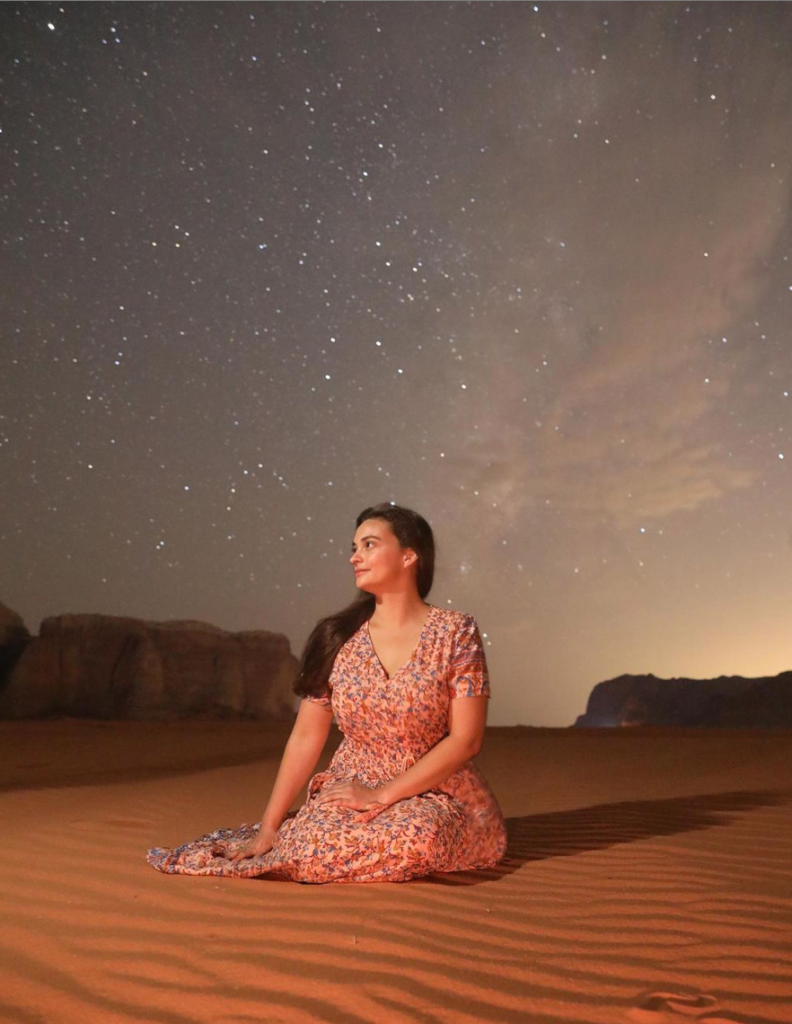
And after hearing about Petra having that opportunity, I decided to just book a trip out there. I did coordinate with the Jordan Tourism board and they were really helpful in terms of helping Me set up an itinerary to see the highlights in the time I was there. 10 Days total, but 8 days including taking travel into account. And they had a private driver, which was really helpful for me. I was nervous about driving in Amman. I don’t mind renting cars in most places, but I just think desert off roading, sometimes things like that make me nervous because I don’t want the car to be damaged. And then I have a rental issue that’s a whole other story. And they were really helpful. I went to Petra was the first thing I saw. And then I spent some time in Wadi Rum, the desert, which is a beautiful place, untouched, so peaceful. They filmed, you know, Aladdin, some Star Wars movies there. And I spent two nights in a glass dome under the stars at a place called Memories Asia. Only the local Bedouin people are allowed to make camps in the Wadi Rum desert.
And so, most of the camps are pretty basic, like what you would expect a camp to be. But this is the ultimate luxury resort with a panoramic tent and buffet meals every meal. And it was just a beautiful setting. If they can get WI fi out there in the desert, it would be perfect. But apart from that, it was so stunning. The owner is a really talented Astro photographer and he includes astrophotography for people who book through booking.com. So, I was in awe. I mean, I saw the Milky Way, I saw Jupiter, I saw Mars, I saw every possible constellation you can think of. And it was maybe the first time I’ve really seen the stars that bright. And now I actually have pictures to capture it. So that was once in a lifetime. And then afterwards I went to the Dead Sea.
Matt Bowles: So awesome. Well, you have also been to a number of places that I have not yet been to, one of which is Central Asia, which is super high on my list. You have been to Kazakhstan; you’ve been to Kyrgyzstan. I was looking through your pictures and reading your blog post about it. You’ve been to the Sunken Forest and all these really, really epic places there. Can you share a little bit about your experience in Central Asia?
Jen Ruiz: Yeah, absolutely. That was unexpected for me. I ended up doing that as a press trip as well through a different female traveler network. And they just wanted to shine a light on lesser-known areas. And so definitely the Sunken Forest was a big memory. It was caused by an earthquake, which is kind of sad, but the trees are perfectly preserved under the water and then the trunks are up above the water. So, it’s a really otherworldly sight and just so many things I saw there that I wouldn’t have expected. You know, I held an eagle, which was starkly contrasted with when I returned to the States. And I remember I was in somewhere in the Midwest and there was an eagle show and everybody was like, stay at least 20ft back from the eagle and then encourage the stand. They’re like, here you go, here’s the eagle on your hand. So, it was a big, big difference. And they just, the honey there, I remember was really delicious because they had this like mountain whipped honey. It’s just amazing. All the food that I ate, a lot of different, thicker pasta noodles, making thicker dumplings and things like that. It was really wonderful to get to explore that area.
And there was a lot of post-Soviet Union influences. So, there were some buildings that looked a little bit kind of what you would expect Russia to look like, just very industrial and things like that. But there were also places where there were beautiful murals or other things that they’ve done to make it just colorful and fancy. You know, Almaty is like a desert oasis and it’s such a green place with irrigation channels all throughout the city and they just really emphasize those green spaces. So, it was a once in a lifetime experience. It’s still one of the most foreign places I’ve been. I know I tell everybody like, oh, my time in Kyrgyzstan or Kazakhstan, and they’re like, what? So, it’s one of those locations where it maybe makes you feel like an adventurous traveler. But I. I definitely recommend it for anybody who’s interested in something like the world Nomad Games or just driving the Silk Road. And I’d like to return and go to Uzbekistan and see a couple different places in the area as well.
Matt Bowles: Definitely. Yeah. I’ve seen so many pictures from Central Asia that are just this stunning landscape. And also, the animals that they have there. You mentioned the eagles, but they also have like snow leopards and things like that, right?
Jen Ruiz: Yes, I did go to a snow leopard sanctuary. So, hunting snow leopards is illegal and carries a really big find. Something along the lines of like US$20,000, which is a big deal for anybody there. So, they’re very careful about preserving the snow leopards. And in the sanctuary that I went to, I was able to see one up close. Just a small fence barrier between me and him, just a regular fence. So, it was an up close and personal experience. And it was nice to see that preservation is so important to them and that they are being so strict on trying to maintain that particular species.
Matt Bowles: Well, one of the things that I have really appreciated about your blog and following your travels is how intentional you are about connecting with the people in these local areas that you go to. I mean, there’s a lot of travel influencers that just go to really epic places and then just take pictures of themselves in front of beautiful scenery and things of that nature. But you are really intentional about making those local connections and then writing about those local connections and the stories and the narratives of the people that you meet. Can you talk a little bit about why that is so important to you and also maybe share some of the stories, perhaps even just starting with the people that you met in Central Asia?
Jen Ruiz: Absolutely. I understand the need to take pretty pictures, but I don’t feel like I’ve really visited a place until I get to speak with somebody and learn something new about the local people. And so, I’ve had connections everywhere. Even in Petra I had a guide I initially went in with and I ended up being hijacked by a Bedouin guy because. And spending the whole day with him because A, he took really amazing picture, so that is one way to get my attention. But B, he really made it a point to talk to me more about the culture, invite me to different places, you know, introduce me to different people. And I like that. I felt like I could ask my questions and really just know more. In Central Asia, all the different eagle hunters and things like that or the children that were there and I was able to speak to because the children are very fluent. I think they learn it in school. So sometimes easier to communicate with children when you’re traveling. It’s always. I have a child friend on Jordan that in Jordan that we’ve know we’re not TikTok friends and I’m. I met him at a co-op when I was tasting the different yogurts.
But they get so excited to see you. They get so excited to hear something different, to follow along. When I was in Italy during my 12 trips and 12 months challenge, I actually met a family that the son at the time, you know, was one of the ones that was translating. And now he’s grown a little bit older and mentioned that he started a blog because of our meeting. And so that was where you can see how impactful you are for others. I had a month that I spent in Bali at a homestay that honestly, my favorite part was not going around Bali beaches or doing any of that. It was the breakfast at the homestay. You know, they brought me a birthday cake for my birthday, was attending a Balinese ceremony with them that they invited me to. So, I really felt like they took me in as part of their family. And that is what makes traveling worthwhile for me. And those are the connections that I’ll still have years later. You know, we’re all still friends on Facebook. People are still reaching out to me, and I think that that’s really what makes traveling so special. The pictures are great to have, and I. I know that you need them as a business, but the experiences are what make you want to keep traveling.
Matt Bowles: Can you talk a little bit about how you choose your destinations? What is your process for selecting where you’re going to go and what you’re going to do?
Jen Ruiz: So initially, during the 12 trips and 12 months challenge, I was going to where I could find the best flight deals. So, for instance, I ended up in Aruba. That wasn’t necessarily on my radar because Caribbean islands can be similar, although Aruba is very distinct. It has those Dutch influences. But I ended up finding a flight for $70 round trip. So, Aruba, here I come. Because for 70 bucks, I’m not going to say no. Similarly, I had found, you know, a $300 round trip flight to Argentina. So that’s what made me go to Argentina. So originally it was how I could find the cheapest flights, and that was what dictated my locations. After that, I was traveling a lot for conferences. The year that I went full time, I was trying to attend as many travel conferences as possible so that I could network with other people in the industry and then attend the press trips that many of these travel conferences have included.
So, I did that in northern Italy and I took a press trip with them. New York, I did a press trip with upstate New York for one of the conferences there. So that was what I did for pretty much the first year, just to try to get my name out there, build my brand. And then beyond that, now I’m at the point where I pick destinations kind of based on who wants to work with me. Like, I’m heading to Montana tomorrow because Montana reached out to me to want to work with me. And when I’m lucky to have the ability to pick anywhere in the world, like with my points guy stipend, I pick places that have bucket list world wonders, you know, really amazing things that I can cross off my list.
Matt Bowles: Well, I definitely want to ask you about some of those. I have been to Ecuador, I’ve been to Quito, and I’ve done the Galapagos Islands, but I have not yet been down to Banos. And I know you Went down there and did the Swing at the End of the World. And I would love to hear about that. And I know you’ve also done the sea caves in the Algarve region of Portugal, which I’ve probably spent like three months in Portugal. I love the country of Portugal, and I have not yet done that. So, I would love to hear how some of these bucket list experiences were for you. And for folks that have never heard of these things, can you share a little bit about them?
Jen Ruiz: Sure. So, the Swing off the Edge of the World in Ecuador Banos is generally an adventure capital. And they have, you know, for anybody who wants to go whitewater rafting or skydiving, anything you want to do, you can do it there if you want to get throws. Bungee jumping. The Swing at the Edge of the World became famous because of different pictures. It’s just kind of a treehouse swing swinging off into the abyss over these massive landscapes. And just it looks like a really steep drop off. And it wasn’t a low drop off, so. And it was foggy when I went. So, it’s always interesting because I do all these things as a solo traveler. And so, you think, okay, no big deal. I’ll figure it out. But some things definitely turn out to be more of a challenge than anticipated. And getting up to the swing was a challenge. And then being swung out into the abyss while it was foggy added to the sense of kind of like, kind of motion sickness, because your ears and your body can’t distinguish all the movement that’s happening and see the horizon or anything like that.
So, I definitely threw up after going on that swing. I have pictures of me doing that too. So, it’s not always as glamorous as it may look. Look. But I’m happy that I made it. And there was a really nice couple I met from Spain, and they drove me back down and pulled over the car so I could vomit a couple more times. So, it was an experience. I was okay until the swing person, because there’s a person that pushes you out. And the swing person started to get crazy and he wanted to flip me. So, it wasn’t just going out back and forth, like back and forth regular. It was like going out but still spinning. It was like that ride in the carnival where you spin so fast you stick to the walls. And so, they had me spinning on the swing. I already have a delicate composition, so I just wasn’t going to make it. So that did not work out the way I thought it would.
Matt Bowles: I am with you 100% on that stuff. I have a lot of friends that are into these action adventure sports and things like that. We’re, you know, traveling around in a lot of beautiful areas and stuff like that. And so, a lot of times I’m like, okay, this looks really epic. I really do want to try it and have the experience, but I want to do the most mild version possible, right? So, I could remember, for example, we had the opportunity to go paragliding in Medellin, Colombia. And what this is, it’s basically you go with a professional, right? A person who’s a professional at this, they call them a pilot. And basically, you strap on a parachute and this person is attached to you. But then what you do is you run as fast as you can and you jump off of a cliff. And then the parachute catches, right? And then you’re sort of floating around with a parachute, right? You’re basically parachuting. And then the professional pilot is sort of like steering and guiding the parachute, right? In terms of, like, directing you and stuff like that.
So, you can go, having never done it before, because you’re going with a professional, right? But you’re the one that’s in the front. And so, they’re just basically like, sprint towards the edge of this cliff and then just keep going and jump off and don’t slow down. You’re like, oh, my gosh. So, what happened was we were up there, so my friends went first, right? And so, I was watching, and they’re like, experience action, adventure sport type people. So, they would go and they would run off the cliff and the parachute would catch. And then I was watching them up in the air, right? And they, once they get up there, they were able to do, like, these flips in the air where they’re going, like, in circles, like feet up in the air, like all the way around. Full circle 360 and doing these, like, weaving patterns, going completely upside down. And I was just like, oh, hell no. So, I’m like, taking my guy. I’m like, pointing up, up to what they’re doing, and I’ve just given him the nuh, not with me sign, right? So, I’m like, tranquilo, tranquilo.
Like, I’m being really clear that I do not want to do any of that stuff, right? So, it’s my turn and I go and I’m sprinting towards the edge of this cliff and just jump off the cliff, right? They’re just like, oh, man. So, parachute catches and then you’re just floating around up there. And it was just absolutely amazing because it’s, like, totally silent. It’s totally peaceful. And you have this unbelievable view. Like, if anybody’s ever seen the TV show Narcos, in the beginning of that show, they do sort of the aerial shot of the valley of Medellin. And that’s basically what you’re looking at. You’re, like, way up, and you’re just overlooking the valley of Medellin. And it’s incredible, and it’s super peaceful, and you’re just floating there. And then, like, once I was kind of comfortable, and we’re just, like, floating around. I’m like, wow, this is gorgeous. Amazing. The guy’s like, you know, he’s, like, looking at me and he’s like, do you want to do a little of the floor flippy stuff or whatever? I’m like, no, I do not. Thank you.
So, I think with those kinds of things, you just need to be, like, super clear with the person that is facilitating that experience for you in terms of what you’re looking for. Because there’s some people that really do like to do all of that stuff, and they want to do as many flips as they can, and there, like, into that stuff. And for them, that’s fun, and that’s getting them the most out of the experience. And for people like you and me, we just want to have a much more mild, sort of peaceful, tranquil experience. And so, I think communication with the person running the experience is definitely the key. I have found.
Jen Ruiz: I don’t know what it is about air people that they’re really crazy. Like, my first time flying an airplane, too, they were like, do you want to take it for a loop de loop? I was like, no loop de loops. No loop these. I just want to come down safely and not have a major accident. Accident. And also with paragliding, I think the hardest part, I imagine, is just getting off, like, running off the mountain, because it’s terrifying. I had a similar instance where I had to step off the New River Gorge Bridge to just kind of zipline down. And I’ve ziplined a million times, but something about letting go when you’re on the edge of the bridge. Like, everything in your body’s like, no, it’s a bad idea. Why are you letting go? Hold on to the bridge, you know? But, yeah, some of those aerial people, they get really bold with things, and they just love the thrill of things, and they don’t realize other people just they were just trying to make it safely through this experience with our stomach still where it’s supposed to be, not in our throat. So, I’m really happy that your guide understood and didn’t force you to do anything crazy acrobatic in the air.
Matt Bowles: Yeah, exactly. So important. Well, let me ask you this, Jen. When you think back on your travel experiences from your late 20s until now, everything included all of the people you’ve met with and connected in these areas, the bucket list, things that you’ve done, you know, the. All the different places that you have seen. What impact do you think overall that those travel experiences have had on you as a person?
Jen Ruiz: That’s a good question. I think it’s definitely made me more aware of the passing of time. I think before, when I had a normal job, I was very much into routine, and so I would look forward to time going by quicker so I could get to the weekend and enjoy my time off. And then once the week started again, I’d wish for those days to fly by just to get to the point where I could enjoy myself. Whereas now that I travel all the time, I panic over how quickly time is passing and how little time I have to really do all the things I want. So, I think one of the biggest benefits for me is that travel knocks you out of that daily rut, that daily bubble, that feeling of just monotony, and it forces you to be present. I think I’ve always had issues with, you know, meditation, kind of quieting the mind, things like that.
So, for me, the whole power of now, which I’ve tried to master in my regular life, it doesn’t really come into play the same way as when I travel, because when you’re traveling, you’re dropped somewhere completely foreign. So, all of your senses are heightened. You’re taking in new sights, you’re taking in new smells, you know, you’re speaking new languages, you’re touching new textures. I mean, and it’s just, you’re present, you’re not zoned out, you’re not going through the motions. Like, you are alive and you feel alive. And that, to me, has been the biggest benefit of travel and making me see how much more living I want to do and already feeling like I. I don’t have enough time to do all the amazing things I want to do. So, it just feels like a much more fulfilling life rather than going through every day being like, oh, it’s this again and this same mess and this same person and I really hate my life kind of thing. So, it helps me to be more appreciative.
Even when trips go away wrong, like even telling you a story about vomiting on the edge of the world. I’m happy I went. I’m happy I did it. I’m happy I could speak to that experience. So, it’s just something that you never regret and that always adds to your understanding of the world of different cultures and makes you feel appreciative for having the privilege to be able to travel, for having the ability to see new things and cultures, whereas so many people, you know, never even leave their own cities. So, I think it’s just, just, it’s amazing. I love travel. It was a no brainer for me to make this my job because I just felt so much more passionate about it than anything else.
Matt Bowles: That’s so awesome. Well, I want to go into your entrepreneurial journey now and I also want to get pretty tactical for the entrepreneurs and aspiring entrepreneurs who are listening. Your new book in fact is called From Blog to Business: How to Make Money Blogging & Work From Anywhere. And that was obviously informed by your own journey and your own experience in doing this. So, can you take us through that journey and really break down the different elements of this business model? How you make money and how you built it up to the point that it is today.
Jen Ruiz: So, when I started blogging in 2014, I actually rebranded my blog twice. I think I started; my first site was twenties Chic. It was when I had just graduated law school and I wanted to help people be fabulous throughout their 20s while, you know, they were working and trying to be young professionals. So, I was writing a lot of general lifestyle pieces and I started writing for Elite Daily back when they were taking contributors and that helped me get seen. And at the time a lot of people were like. Because I had things go viral with them, like 10 million plus views and people were like, wow, you’re not getting paid for that. And I was like, I’m not, I’m just contributing. But it was such, you know, I hate, I don’t use it now. And I hate to say that people should get paid in exposure, but for me as a brand-new blogger, it was good exposure.
And so, because I had all those articles go viral and backlinks to my site from a higher domain authority website, the dailies are seen as more legitimate in the eyes of Google. That helped me to get my site on the map. I did rebrand it twice. The second one was what’s Jen Up To? Which was going to be more experiential because I knew I wanted to talk about the things I was doing and then finally landing on Jen on a jet plane, which I love. It took a little bit to get there, but with my articles on Elite Daily, a travel editor from Pace magazine had seen one of my articles and then reached out to me offering me my first paid writing gig. And it was in the travel space. And at this time, I was still working at that private law firm where you’re there till 1am and you don’t really have a life.
So, I didn’t expect this to be, you know what it was? I thought it maybe would just be a nice side gig or something I could do for fun. But I remember my first article was on staycation because I hadn’t gone anywhere, like I hadn’t traveled anywhere. So, it was like how to do a staycation in your own city. Because I had nothing to write about. So having that now in with the editor and actual paid articles that I’m getting assigned motivated me to start taking some trips. So I went to Barcelona, I went to the Rocky Mountains, I went to a lot of different places with the goal of writing about them. And I had my first sponsored trip to Universal Studios where my ticket was covered. And I remember just being Floridian, you know, these tickets cost $100 plus a day. And I just felt like such a VIP. I was like, I’m in this park for free to write about it because I’m a travel writer. And it was that feeling of just like, this is awesome.
So that was the first hint of travel writing for me when I set out to take my 12 trips in 12 months challenge. I had a friend who worked at the Washington Post and so she wanted to feature me. I thought they were just going to write an article about me. And then I was a little bit sad when I realized I was writing the article. But then I was excited, ecstatic when I realized that that actually let me into the Washington Post Talent Network. So now I could pitch ongoing articles for them and get paid. That was my first really big media channel to feature me. After them, ABC News did a feature on me. And so, it was just really wonderful to have that in.
And then after I quit my job and I was monetizing just with work, teaching English online and my first book, I saw that books could make money and that in self-publishing it takes something like 20 plus books to make six figures as an author. So, I just figured I just have to keep cranking out more books until I get to that point. That was something that could be easily scaled and done. And then my website, which was a big one, just to take it from like random lifestyle articles to having more of a business strategy. And the game changer for this for me was going to a full day SEO session. I paid an extra like $150 on top of the conference fees to attend this special day long training on search engine optimization, SEO, and with the goal of getting your articles to show up on the top page of Google so that traffic comes to you and you’re not constantly sitting there on your Facebook page trying to bother all your friends being like, read my article, please, I beg you.
So, it just was a much better way of marketing your content. And once I started to understand SEO, everything changed. Within six months of attending that seminar, I made it into Mediavine, which is an ad publisher network that pays you per views to your site. And so now with Mediavine, I’m at the point where I’m practically replacing my full-time attorney income just with Mediavine passive income earnings. And that was so exciting for me that I was putting a lot of work into my blog. And then the pandemic came around and then nobody was searching for travel. So, I like lost a couple of thousand dollars of income from my blog. And then I got really upset because I was like, I don’t like being kind of susceptible to these twists and turns and I want to have something steadier. Like I’m so upset that I’ve put myself in this position. It was a big hesitation and I think it still is an internal struggle with what society tells you is like a stable job and a stable salary and realizing and knowing that nothing’s really stable.
And so, the only way that you can be assured of having continued income, especially if you want to work remotely, is to have multiple different income streams so that when one drops to nothing, you can have the other one pick up on that. So blogging is one of them. My books are another. Social media management is something that I do because I’ve had, for instance, I did a video that did really well on TikTok and that I guess got a lot of people to sign up for the program that I was promoting. It’s a coding bootcamp because it was like a Hispanic heritage thing. And I was like, oh, they’re offering this free class. A bunch of people shared it, a bunch of people signed up. And so, they reached out to me because they said in the class everybody was referencing my video is how they found out about it. And so, they hired me to then manage socials or TikTok for them. Specifically, and that’s a great income stream that feels more steady because I’m creating content for coding Bootcamp, a tech startup that feels like it’s just more not susceptible to the same kind of dips as travel, or at least if it were dipping, it wouldn’t dip at the same time as travel.
So that’s a great way that I make money as well. It’s public speaking. So that’s why I did the TEDx talks. I was very strategic about what I wanted to do to build my portfolio, and I knew that if I could land a TEDx talk, it would give me immediate credibility, even though TEDx talks are unpaid. So, I did that, and I’ve done it now three times. And because of that, it’s led me to other paid speaking engagements where now I can charge significantly more. And those are great when they come around. And then this past year, with my TikTok following significantly growing throughout the pandemic to 190,000 plus, I’ve now become much more prevalent for brand deals and sponsorships, which was not the case before because maybe I had 20,000 on Instagram, but people are looking for, you know, a hundred thousand plus and things like that. But now that I have the bigger numbers on TikTok, I have brands approaching me. So, this summer I worked with Samsonite, Airbnb, a bunch of different big companies that approached me because specifically they did not have a presence on TikTok and they wanted marketing there.
So now brand sponsorships, books, royalties from Amazon, the public speaking, my social media management. I’ve tried to diversify as much as I can so that I always have something else to fall back on. And I’m never at the point where I’m just like, I was making so much money on the blog and now it all went away. But now the blog money has come back and now it’s a nice bonus on top of all the other things that I’ve built. But I try to understand that things are going to be in flux, and I try to let go of that mentality that you have a stable job because you’re salaried, because at the end of the day, if somebody decides to fire you, like, you have to start from scratch and you really don’t have the stability there.
And I think blogging is just underrated. I think a lot of people look to real estate as passive income. And I look at blogging like digital real estate. It’s your home online, and it’s where you can really monetize and do A lot of things there without the same kind of HOA or, you know, tenants or any of the mess of having actual real estate, you can just put right about anything you want to write about. You can write about underwater basket weaving or like, I don’t know, Boy Scout life. And there will be somebody who’s looking for that content online. So, I think it’s just such a minimal barrier to entry and it’s something that if somebody’s passionate about writing, if you know what people are looking for and you can optimize your site, you will make passive income just by people coming and finding those articles.
Matt Bowles: So, for the folks that are listening to this and they are still in the full-time job, as you were in your late 20s, right? And they are interested in starting to monetize their passion on the side and maybe eventually turn it into a full-time business. Where should they start of all the things that you just talked about? Yes, they eventually want to become a best-selling author and a TEDx speaker and all of these things. But right now, what are the first steps that people can and should begin with?
Jen Ruiz: I think the first step is identify which medium you actually like. So, I did enjoy writing. I still do. I like it a lot. So that was why I started with writing and that was why blogging was easy for me. Because as a lawyer I’m cranking out documents left and right. So, it’s actually fun for me to write 800 words about something frivolous. That’s what got me to start for Elite Daily, because I would be doing the same kind of mundane motions and insurance paperwork and things like that. But then I could crank out a story about the beef between Kanye and Taylor Swift. And that all of a sudden became something I really wanted to write about. And that came out naturally and flowed out.
So, I would say pick what medium appeals to you? Is it writing? Is it video? Is it audio? Do you want to do podcasting? What is it that you want to do that you think you could really do? Can you talk forever like you really love just special effects and editing? Anything that you want to do? I pick one medium. Start there and then from there identify what are some ways to gain credentials in that medium. So as a writer, it was important for me to get featured in different places because now I can say when I’m pitching articles, I’ve been featured here, here and here. And that allows me to have instant credibility with other editors. So, in public Speaking, for me, TEDx was a credibility maker. So, what is it that is going to make you be seen as legitimate in that field that you’ve chosen. Is it getting featured in a particular venue? Is it getting a certain number of followers on YouTube? Is it having podcasts that reaches number one new release kind of thing?
So, find that goal of what you think will give you the credibility. And even if it’s something that doesn’t necessarily pay the way you want to, the credibility. So, in the important, because that’s going to lead to paid opportunities, then once you have, you’ve established what you’re good at and what you really like to do and what you can lose time doing. Because people who love to edit videos, like they’ll be there for like four days editing videos and they won’t eat or anything and they’ll be like, I’m totally cool because I’m loving editing this video. I think that’s crazy. But you know, like, so you have to pick what can you lose time doing and then find how you can establish credibility in that field. And then from there I would say network. It’s so important going to conferences was a big deal for me. Even now I’m thinking about trips that I want to be taking with the remainder of my stipend.
And I’m going back to conferences and business cards that I have already so I can reach out to those contacts individually versus just being one of hundreds of people that go through their general inbox or their general press email. If you can contact the person who is working, like the name of the person, you can reference the time that you met them, things like that. It’s so valuable in establishing connection and actually getting a response because there’s. It’s a saturated online space and connection is underrated. So, I do think that going to conferences is a big game changer.
Matt Bowles: I also want to ask for your advice on optimizing productivity on time management, on how you are able to generate the level of output and productivity that you do. And I’m also curious about tips that you have for staying on, focused, motivated as a remote worker, as a location independent entrepreneur. What tips do you have in all of that realm for how you do what you do so well?
Jen Ruiz: It can be challenging, absolutely. When you’re the only one accountable to you and your success is directly attributed to how hard you work. So, it can feel challenging and it can be easy to burn out because you want to do so well that you’re there at two in the morning still writing that blog post and then you’re exhausted or you’re at these press trips, you know from 6am to 10pm and you’re doing your best. But it’s really easy to get worn out and to feel overwhelmed as a solopreneur because you’re doing the content creation, you’re doing the marketing, you’re doing the negotiations with brands, you’re doing everything, you know, taxes, behind the scenes, editing everything you need to do. So, it is easy to get burned out. There’s a reason why most bloggers don’t make it past the first two years. There’s a reason why most people don’t do not succeed in this. And it’s because it’s hard to stay consistent.
But honestly, it should make people feel better knowing that all you have to do is keep showing up consistently and you at some point will see success and you will find your audience if you’re able to consistently put out content in your niche, in your area of value to other people, like it’s just a matter of time. I know Nas Daily talked about this because he did his thousand video challenge and I was in a camp with Aline recently and we talked about his journey and around like a two, 300-day slump. He was like, nobody’s watching my videos. This is so depressing. And he almost missed that day of making the videos. He’s like, I’m so glad I didn’t miss that day because if I would have missed that day, I would have missed another day and that would have been the end of the challenge. So, it was really showing up consistently for him a thousand days in a row that made him now, you know, the million dollars plus content creator. It’s consistency and that’s the hardest part.
And it’s what I admire most about creators that can really show up every day across multiple platforms because that is not easy. So, I try to schedule my things so that I’m most productive and knock out things. In the morning. I wake up and I do an audiobook for self-development. I found that that improves my mood so much more than watching the news and it helps me learn something new along the way. So I’ll be reading books about public speaking, reading books about running your own business, things like that. So I start my day motivated with somebody’s, you know, best stuff in a book and ready to tackle the day. From there I go and I work out because it’s important for me to stay fit. And when I travel, I just feel like I am gaining weight, sitting in a plane for 12 hours eating all their airplane food. So, I try to be as active as I can when I’m home and I have those days. And then I try to take the chunk of that’s left of my morning, usually from like 9 to 12, and knock out as much writing as possible or any top projects, anything that really requires my undivided attention, and then try to take the rest of the day to do social media interaction, responding to comments, you know, responding to emails, things like that.
And then I cut it off. Then I enjoy watching Netflix or Hulu. You know, I’m not there till two in the morning doing these things anymore because I’ve noticed that it’s just not sustainable and it makes me resent what I’m doing rather than actually enjoy it. So, I have to set a schedule for myself where, you know, after 6 o’ clock I’m just enjoying dinner and watching whatever the new Netflix series is of the moment. And I appreciate that.
Matt Bowles: I also want to ask you about writing. As a creative writer. How do you think about, on the one hand, literary travel writing and on the other hand, optimized SEO, rich listicles or formulaic types of travel advice that are probably going to do well in the search engines? And as someone who is both a very talented writer, but also running a business and prioritizing SEO for the financial purposes of doing so, how do you navigate between the two?
Jen Ruiz: I’m very specific. And so, since I know that it’s not going to perform well on my site, something like that, kind of a storytelling piece, I try to save those pieces for things that I pitch to the magazines and newspapers that I write for because they are interested in storytelling. And it’s more likely that my storytelling pieces will win awards when they’re published on a major channel than when they’re on my blog. Because traditional literary places and society, American travel writers, Nastra, all these different conferences, they still heavily favor traditional mediums. They have categories for blogs, but it’s not as prevalent as your chances on if you have an article in Nat Geo, then that Nat Geo article is going to carry weight no matter where it is, you know, and people are going to see that and consider it for awards. So, I’ve won two awards for my work in the culinary travel category writing for Matador Network.
That Matador actually is kind of infamous among the blogger circles because they don’t pay that well and they have like kind of internal issues sometimes. But they have been such a great resource for me because the food editor there has been wonderful in terms of accepting all the pitches, I send his way. And so, I have now my story on a big platform that I can use to enter that into awards. And that’s where I pitch things like unique stories of businesses, you know, a person that I met along the way, things I’ve learned, anything like that that isn’t really SEO optimized or friendly and isn’t a long tail keyword that people are going to be searching. I just know it’s not going to do as well on my site and I could really make the most of it better if I get it on a bigger site, use it for awards, use it for recognition and things like that. So, I usually save my site stories to pitch to different outlets.
Matt Bowles: That’s awesome. Well, one of the other categories that I want to chat with you about that you have really developed quite an expertise in, you even have a book on this topic as well, is travel hacking ways to get really super inexpensive flights. Because I feel like one of the main perceived barriers or obstacles that a lot of people have is they assume that all of this international travel must be very expensive. Can you give us some of your top tips and techniques that regular folks can start putting into practice today to begin traveling the world very inexpensively?
Jen Ruiz: Well, I totally agree. I think flights are cost prohibitive for a lot of people because they think I can’t afford for the thousand plus dollars to get to wherever it is. Whereas once you get to a place, you can find cheap housing. You know, there are hostels or just budget hotels everywhere you can find cheap food, there’s street food almost everywhere in the world. So everything else you can do on a budget, but the flight is the most cost prohibitive and usually the first barrier that people have to cross. So when I recognize that, I mean, that was why I wrote my first book on affordable flights, The Affordable Flight Guide, because I thought it was going to be, you know, more of a travel memoir. But that was what people kept asking me about, like, how’d you get that 70 flight to Aruba? Where did you find that deal? You know, all of that. So, I gave the people what they wanted.
And for me, there’s three main ways to find cheap flights. The first is by flight alerts. There’s so many different flights alert programs now. They’re just a dime a dozen. But my favorite it’s Scott’s cheap flights. He has a list of a couples million people. It started just with him finding like $140 round trip deal to Milan and his friends being like, can you email me the next time you find deals like this? And now it’s Gotten to the point where he has a staff of like 30 plus people around the world that I imagine are just constantly on their computer, like looking up flight deals. It’s constantly nonstop. And so, once they find a deal, they email it to you. So, you don’t really have to do a lot of work. You just stay tuned to your inbox and you get different deals. During the pandemic, one of the hardest things for me to do, they found like a $73 round trip flight to Japan from Pittsburgh. And I was like, oh my God, I can’t believe I have to pass on this. This physically hurts me to not take advantage of this. Like, I’ll get to Pittsburgh, who cares where I am? Like $70 round trip to Japan.
And so I constantly get those emails in my inbox and I check them every day because you have to be quick about it. Sometimes they’re error fares, meaning that like somebody’s thumb slipped when they were listing it and they forgot the one. And now that 1400 fare is $400, and if you can catch it before the airline, you can still possibly get it honored. If not, they just refund your money or you choose to pay the fare difference so there’s no real loss there. You just decide you don’t want to take it at the higher price. But I try to take advantage of that as much as I can. So, I get those emails every single day and I open them all the time. Number one way to find for lazy people who don’t want to know anything else about like points or hacking or miles or credit cards and just want to get flight deals sent to their inbox. I really like Scott’s cheap flights. I’ve been with him now since 2017.
Then second way budget airlines. And they’ve gotten a little bit trickier now with different airlines going under. But, you know, new budget airlines are coming up all time. The time specifically Avelo is a new one that’s operating off the west coast in California now. And Breeze is another one that I think is affiliated with JetBlue is another budget airline that’s just launched in the U.S. so Frontier Airline spirit, you know, it’s not going to be the most comfortable. It’s definitely you are piecemeal tickets. So, everything that you pay for is individual. So, like let’s say if you want food, you have to pay for the food. If you want to check bag, you have to pay for that as well. But this is a great way for people who just want the bare minimum price ticket. And then if you can bring your own food in your bag, if you can pack light, you know, if you can sit in the random middle seat that you get assigned, you can get these flights for super cheap. You know, I flew in across the country for like $20 before, so that’s less than like a tank of gas to get you to, you know, the other end of your city. So, it can be really affordable, especially within Europe.
So, Ryanair, EasyJet, all these different places will get you to and from countries for next to nothing. When I found a flight deal initially, my 2017, 12 trips in 12 months challenge, let’s say I, I remember one deal specifically that went out and it was like 300 round trips to the UK. And I bought that deal because I thought once I get to the UK, I can connect almost anywhere for super cheap on a budget airline. And that was actually how I ended up going to Athens. And it was like another maybe $50 to get to Athens. So, it was nothing. So, once you can get into the area in general, there are a lot of budget airlines that can connect you. Once you get to Southeast Asia, you can get to Singapore, Bali, like Cambodia, anywhere for like a 70 flight on one of those budget airlines. So that’s the second way.
The third way is through travel hacking. And this is where most people tune out and they’re like, look too complicated. Not for me points, miles, math. But it doesn’t have to be that way. It’s actually super simple. All you do, especially for the just beginner travel hackers, is take out a travel credit card, redirect your expenses onto it so you meet the minimum spend threshold, and then you get enough points to take a flight to anywhere. When I was starting out, I did this with a Delta card and I ended up getting like an 80 flight to Thailand with points. I’ve flown to New Zealand for $38. I remember with my American Airlines points when I took out an American Airlines credit card, and then I flew back from Hawaii for $5 because I couldn’t get all my coin coins months in for New Zealand round trip. But I got the flight to New Zealand for 38, and then the flight back from Hawaii to Miami for five. And then I paid out of pocket from New Zealand to Hawaii, which is like $200. So, all in all, my New Zealand trip came out to like 300 round trips.
So, if you’re flexible and all this actually helps your credit. So now I have excellent credit. When I started this, my credit was like, we’re struggling. We’re a paycheck-to-paycheck attorney. Please don’t look at us. And now my credit score has gone up by like 150 points or something ridiculous. Because now I have massive credit and low credit card utilization. It seems like I’m playing the credit game. So, it’s done wonders and it can really do well for your understanding that people spend this money either way. Like, this is something I, I don’t understand how in the past year, everybody’s been shopping online and nobody’s seen the urgency of like this money that you’re spending online could be getting you a free flight. And even with the cashback programs or anything else, like, there’s just no better reward than a free flight.
So, I’m just like, I don’t care about any of the other credit cards. I only care about the travel credit cards, even hotel points. I’m just like, that’s still, I’d still rather have the flight because I feel like I can find hotels and places. But if I can get a free flight with points and miles and you can even go, you know, first class if you have enough points and miles, it’s so worth it. And it’s just a byproduct of spending what you would already be spending on your regular card and taking that, spending it on a travel credit card to meet the minimum spend threshold. Beyond that, there’s much more that people can do in terms of transferring points and manufactured spending. But that’s just basic. Anybody can do this. Just take out a card and spend your money on that card for that, you know, first three months instead and boom, free flight. It’s really that easy, right?
Matt Bowles: And there’s ways to double dip and turbocharge this stuff because a lot of these airlines will also have an online shopping cart portal where if you buy through that portal, that website, you can just buy the same stuff that you were going to buy. But if you’ve gone through the airline portal to get there, you will also get airline points. So, for example, if I’m going to book an Airbnb the same way I normally would, if I get to the Airbnb site through the Delta Airlines portal, I also get Delta points for the Airbnb’s that I book in addition to if I use the credit card that you just told me to get, I get the credit card points as well for doing that? And so, the same is if true, if I’m buying consumer items, I’m buying a pair of Bose noise-canceling headphones through the Bose store, but I got to the Bose Store website through the Delta portal or the United portal or whatever. Then I’m also getting those Delta points or those United points in addition to the points on the credit card that I used to buy the headphones.
So, there’s a lot of ways that you can really ratchet this up, turbocharge these things and these techniques and develop a lot of points in a relatively short amount of time just by buying the things that you would normally buy anyways, as long as you route those purchases through the right channels and you know, on the right channels, credit cards. So really awesome advice. We are going to link up your book on this. If people want to go deeper on this topic and are serious about it, want to learn more and learn the more specific tactics, we’re going to link that up in the show notes. We’re actually going to link up all your books in the show notes. So, if people want to go deeper on any of the topics that we have discussed in this interview, all your books are going to be in the show notes. And at this point, Jen, are you ready to move in to The Lightning Round?
Jen Ruiz: I think so. I’m nervous.
Matt Bowles: Let’s do it. Alright, what is one book that has significantly influenced you over the years you’d most recommend people check out?
Jen Ruiz: It’s actually a newer book, I just read it this year, We Should All Be Millionaires by Rachel Rodgers is amazing and helps you really get into that money mindset of why you deserve to make money. You know, if you’re a budding entrepreneur, highly recommend this one.
Matt Bowles: All right. If you could go back in time knowing everything that you know now and give one piece of advice to your 18-year-old self, what would you say to 18-year-old Jen?
Jen Ruiz: I would tell her that life is so full of surprises and to not stick to any one plan because sometimes the curve balls are what make it worthwhile.
Matt Bowles: All right, Jen, of all the places that you have now been, what are your top three favorite travel destinations you’d most recommend people check out.
Jen Ruiz: I’m so glad you asked for top three because people always ask for my one favorite and I’m like this is impossible. So south of France I love because you can just relax, smell lavender in the summer, just really enjoy complete peace and happiness and sunflowers and amazingness. So south of France, I love the province kind of area. Cambodia, I really enjoyed if you want history and I Angkor Wat is the biggest religious monument in the world and it’s so cool to see how they’ve changed from Buddhists to different religions over time and how they alter the statues. So, I love that. I felt very spiritual in that place. And then lastly, I’m going to throw in Puerto Rico because I do think that this island has a lot to offer, and I’ve had the pleasure of rediscovering it now as an adult, but I just think it’s really underrated sometimes, and a lot of people think kind of Hawaii as the U.S.’s tropical island, but Puerto Rico has so much to offer, and it’s definitely in need of the tourism after all the hurricanes and earthquakes. I’m going to do a little plug for my island there.
Matt Bowles: I love that plug. That is amazing. All right, Jen, what are your top three bucket list destinations? These are places you’ve never been highest on your list. You’d most love to see right now.
Jen Ruiz: Easter Island off the coast of Chile. I’d like to go and get some photos of me with those statues. Japan, I want to go. And it’s maybe a random reason why I want to go, but I want to go race in Mario Karts, like, in the middle of the street dressed as Princess Pei-Pei, and then I want to eat a cotton candy the size of my head afterwards, and that’s going to be amazing. I can’t wait. Like, that’s why I want to go to Japan. I just want to go wild on the streets in my go kart dress as Princess Pei-Pei. That’s a bucket list item for me. And then finally, also, I would say the Philippines, because you can dress up as a mermaid there and see whale sharks. Those are two water activities I would like to cross off my list.
Matt Bowles: That’s an awesome one. I have actually had the amazing privilege of swimming with a whale shark in the wild in Thailand. I mean, it was incredible because I was doing my advanced scuba certification in Thailand, and people go out scuba diving every day for months trying to see a whale shark and never do right? Like, at this dive shop, they had a chart on the wall where the dive masters who work there and dive every day would keep track of how many whales sharks, they’ve seen over their entire time diving. And it just so happened we got unbelievably lucky on our first day.
And, it was amazing, right? Because of course, they preface this where they’re taking you out of the boat. They say, okay, in general, this is the curriculum we’re going to do today. These are the things we’re going to do, the skills we’re going to teach and work on and all that kind of stuff and learn. Unless we see a whale shark, at which point all bets are off and we swim with the whale shark, right? And so sure enough, we’re on our first day of the dive and a whale shark comes and. And just. It just hung out with us for like 10 minutes and just swam around with us. It was absolutely incredible. So that’s a really awesome pick. One of my most memorable experiences, for sure.
All right, Jen, we have now come to the most important question of this interview. I’m about to ask you to name your top five hip-hop emcees of all time. Before you name the five, I want to ask you what you love about hip hop. What does hip-hop music mean to you?
Jen Ruiz: Well, growing up in Philadelphia was something that I heard a lot, but I just appreciated it as a way of escaping, of getting lost in the lyrics, of appreciating the art of like, they’re really, they’re poets, like some of these lyricists and that. And I love seeing. Because I love words and I love seeing the same thing in books. So, it’s just seeing the same thing, but to music and how creative people can be with the words and how they tie things in. And it’s just so tight and you just get so amped up when you’re listening to it. Like, yeah, that was awesome. That was like, such a great riff and something I wouldn’t have thought of. So, I just, I get really excited and I’ve always listened to it and grew up listening to different kinds of music. But hip-hop was very prevalent where I’m from, so it’s definitely near and dear to my heart.
Matt Bowles: And you’re from the east coast now? I was a hip-hop DJ in the 90s and 90s. East coast hip hop is by far my favorite of all time. Now, let me ask you this, Jen. Do your followers, your hundreds of thousands of social media followers and blog readers, do they know your top five, or is this going to be breaking news that you’re giving us here today on The Maverick Show?
Jen Ruiz: Yeah, I don’t even think they know I like hip hop. I mean, there’s a whole secret life to me that people are not aware of. They just think I’m like a kind of fun, perky influencer and not understanding that I have this, like, street side to me. So, yeah, I don’t think they understand. Most people, when they get in my car and then I put it on, too, are also really shocked that I’m listening to what I’m listening to, so it’s interesting.
Matt Bowles: Okay, so we have a Maverick Show exclusive today on the podcast. Go ahead, Jen, who you top five?
Jen Ruiz: Hard to pick just five. Definitely my number one is Biggie because I love him so much. I used to have like every season CD of his in my car. I love his lyrics. It just makes me feel happy. And east coast loyalty. So, Biggie Smalls, The Notorious B.I.G. I used to have his album hanging up in my apartment. Like it’s serious. It’s a serious love. Number two, I would say Jay Z. I’ve seen Jay Z in concert at least twice and I’ve always been really impressed by him. I think he’s really just a talented. And his music has also been part of my upbringing. So, it feels very nostalgic to listen to his songs because it reminds me of my kind of teenageness. I would say Common. I really love Common because he’s so uplifting and just so you just want to listen to him. You just feel like he brings light into your life. Talib Kweli is one of my favorites. So maybe showing some different sides of myself here and then one that’s commonly accepted. I’m going to throw out Drake because I do think that while he’s a little bit overrated, some of his songs, they’re just good as his. His albums can be good. And then Drake himself as a personality is one thing, but Drake’s music, there’s a reason why, you know, he’s so cocky sometimes and he has had a lot of hits and his songs are good. So, I really enjoy listening to this album. I feel embarrassed admitting that because I feel like in the league of people that I’ve thrown up there, Drake is kind of like doesn’t fit with the people I’ve thrown. But I’d be lying if I said I didn’t listen to him and if I didn’t know the lyrics to the songs, because I do.
Matt Bowles: Jen, this has been so awesome. Today, I want you to let people know how they can follow you on social media, read your blog, find out more about you. How do you want people to come into your world?
Jen Ruiz: Absolutely. So, you can find me at jennonajetplane.com also under social media handles, TikTok, Pinterest, Instagram, Facebook, Twitter; same handle jenonajetplane. And on Amazon my books are under Jen Ruiz.
Matt Bowles: Awesome. We are going to link up all of your books in the show notes as well as your social media handles and everything else we have talked about on this episode today, so folks can just go to one place at themaverickshow.com and go to the show notes for this episode. Jen, this was awesome. Thank you so much for coming on the show.
Jen Ruiz: Matt, I had a great time.
Matt Bowles: All right, good night, everybody.