
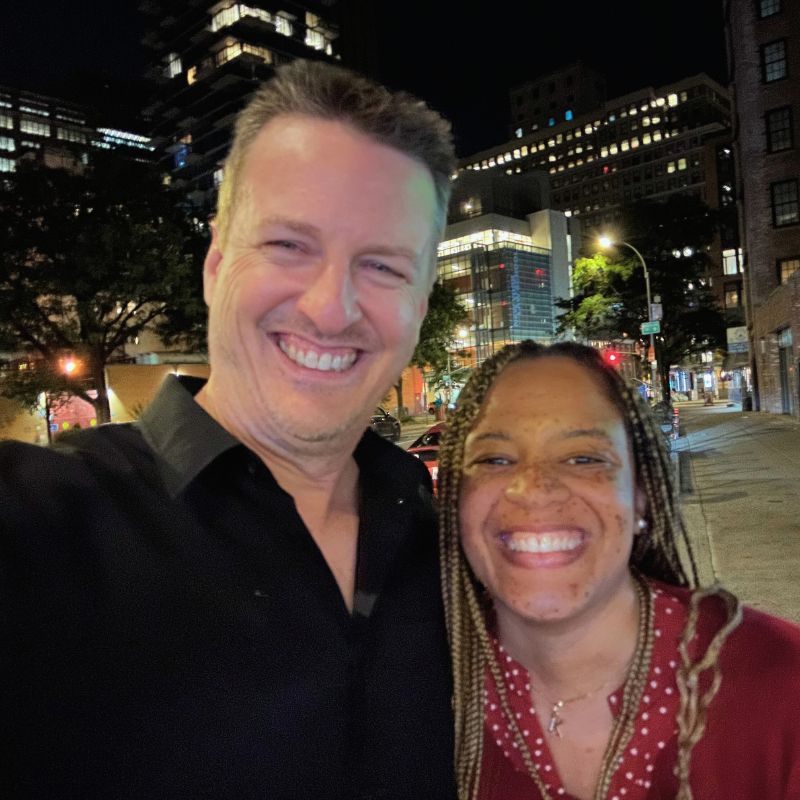
Matt Bowles: My guest today is Kareemah Ashiru. She is a Nigerian American content creator, world traveler, and founder of Hijabi Globetrotter, an online platform that highlights underrepresented travel stories from a Muslim perspective. She also runs the Muslimahs Who Travel group, which is a safe space for amazing and adventurous Muslim women travelers from around the world. It’s a judgment free community for members to connect, meet up, share stories and advice, and talk about the issues impacting them day to day. Kareemah has been featured in the New York Times, the Huffington Post, the Airbnb magazine, and the list goes on.
Kareemah, welcome to the show.
Kareemah Ashiru: Thank you so much. Thank you for having me.
Matt Bowles: It is so great to have you here. I am super inspired by all of the awesome things that you’re doing and look forward to chatting about them today. But let’s start off by just talking about where we are recording this from today. We are not in person, unfortunately. We’re actually not even on the same continent. I am in Alba, Italy, which is in the Piedmont region in the northern part of Italy. And where are you today?
Kareemah Ashiru: I am in the Big Apple. New York City.
Matt Bowles: Yes, New York City. And you are in the borough of Queens in particular. I would love to hear from you. How long have you been maintaining a base in Queens and what have you found? How has New York and the borough of Queens in particular been for you?
Kareemah Ashiru: I have been in Queens, New York ever since I moved in March 2019 and I really love it. For me, Queens, New York, it encompasses things I love like diversity, diverse food, warm vibes and there are a lot of families here. It doesn’t represent that cold hearted stereotype of New Yorkers of people not caring my old apartments, my laundry lady will wave at me, ask for me. I was talking to everyone in my neighborhood, which is not what you would think of New York. So, I feel home in in Queens, New York. And there’s a lot of great food here. Greek food, Mediterranean food, African food, Asian food, everything is here. So even the grocery store represents like that diversity of the people. So, I can’t imagine living in any other borough right now.
Matt Bowles: Yeah, I feel like New York City, one of the things that I love so much about it is I feel like it’s sort of the entire world just condensed into one city. And I feel like the borough of Queens probably represents that more than any other borough. I heard there was something like 130 first languages spoken in the borough of Queens alone. I mean, it’s just this unbelievably diverse and beautiful and wonderful place.
Kareemah Ashiru: Yeah, exactly.
Matt Bowles: Well, I would love to chat a little bit about your background. Can you talk about where you grew up? And as you were growing up, how did your interest in travel start to develop?
Kareemah Ashiru: Yeah, so I was born in Nigeria. I grew up in both Nigeria and the United States. I would say my interest in travel started at the age of six. My dad had work trips around the world. He was a chemical engineer. So, his job will take him to Europe, mostly Europe and America, and will join him occasionally. My first trip was to Amsterdam, the Netherlands. And I was just fascinated by everything. And I think that’s where that travel bug, the spark of travel came alive. And I was just curious about everything. And I remember just going with my family and just thinking that one day I’m going to do this on my own and explore. So, I think that’s where the story started and that’s where I am right now.
Matt Bowles: So how old were you when you moved from Nigeria to the United States? And what was that transition like for you?
Kareemah Ashiru: I was 16 years old. I was a junior in high school. And the transition was a big change, of course, because for many people, whenever I tell them I’m originally Nigerian, they always ask like, do you speak Nigerian? And that is not a thing. And that is not a language. Nigeria was a colonized country, so we had a lot of British influence. Of course, there are the native languages which the three main ones are Igbo, Yoruba and Hausa. But the lingua franca was actually English. So, I’ll say like one of the biggest changes was just like my vocabulary and sometimes I still use some British pronunciations or words and people are like, why would you say it like that? And my mom, she’s a teacher, so sometimes she says aluminium and all her students just start busting out laughing or she’ll say some words like that would be normal in England and will be weird to say or inappropriate to say here.
And then also my high school was a little bit like mean girls. Seeing some things that happened in the movies in real life, it made me realize it’s fun to watch it behind your screen, but when you’re in it in the middle of that, it’s not fun. Because high school is, like, survival. And so that was a big change. But I was lucky because I have three siblings and we’re all two years apart. So, my sister was a freshman with me. So, it was really nice to have someone that understood my background. And we went through that same transition and not be by myself going through all of these changes and differences and looking different. I wore the headscarf too, in high school, and people didn’t understand that. People were like, are you black? Are you Arab? What are you? Being with my sister, it really helped during these transitions, when times were difficult.
Matt Bowles: Yeah. So, can you talk a little bit about how was the situation when you got to Toledo, Ohio, in terms of how big was the Muslim community that was there? It sounds like there was not a very big Muslim presence at your school at that age. How did you navigate through all of that?
Kareemah Ashiru: Yeah, I would say Toledo has a lot of Arab population, but not particularly in my school. I was in a small town of Whitehouse, a lot of cornfields there, very few Muslims. But I feel like everyone was surviving. People didn’t want to stand out. People wanted to fit in. So, anything that made you the other, they wanted to disassociate themselves from. So, I’ll say, like, my parents were strict growing up, and there were times when my mom was like, you know, you have to be proud of your identity. And I was like, no, the earth is going to swallow me. I don’t want to do this. And my parents just, like, put their foot down at that time was, like, horrifying. But then I think it’s one of those things that I’ve taken in life that, you know, it’s okay to be yourself even if the world is not doing the same thing as you are. Because when those things happen, the world didn’t end. And I’m still me. And at the end of the day, people respect you for you sticking to what you believe in.
And then, yeah, as I mentioned, were not many Muslims there, so people didn’t know what to think. This was also after 911. So there was a little bit of fear from people. If a teacher asked a question, the whole class would turn to look at me and to see what I had to say. But I feel like there was a little bit of inkling of fear as well. People in Ohio, they don’t want to ask questions because they’re scared of being offensive, whereas people in the south, they’re just blatant. They just say what’s on their mind. But people in the north, in Ohio, they just keep everything to themselves. So, you could tell that they were kind of not sure, maybe nervous or fearful, but they would never ask until maybe someone was bold enough to ask. And then it all turned to like, oh, yeah, I did have that question. Yeah. So that was a culture there.
Matt Bowles: And I know that you currently identify as Nigerian American, and you’ve spent about half your life sort of based in each of those countries. Can you talk a little bit about that hyphenated identity and how that has been to sort of live between those two cultures?
Kareemah Ashiru: Yeah, that’s a great question. In terms of being Nigerian, there’s that value of being respectful to your elders, valuing education. Nigerians are always aspiring to be the top in many things. So, there’s that overachieving attribute that sometimes it’s good and sometimes not so good because you’re always striving for perfection. I mean, there’s that term of model minority. I feel like Nigerians also are examples of those, because we’re always trying to be the best of the best. But at the same time, Nigerian culture, there are only, like, very limited ways of being successful. That’s by being a doctor, an engineer, those kind of typical immigrant ideas. But then also growing up as an American, it’s that idea of the world is your oyster and not only very few options equal success. So that is something that I believe in. So, I believe in, like, working hard and striving for the best. But at the same time, it’s like, you don’t have to only be limited to these options. I think that’s one of the ways of how I balance that identity, I guess.
Matt Bowles: So, I’m really curious about your path to becoming a world traveler. You mentioned that you were super inspiring to travel starting at the age of six. Obviously, your parents had extensive experience traveling, but as you said, they were also kind of strict and had some traditional cultural expectations for you and all of that. So how did you sort of navigate that to pursue your dreams of world travel?
Kareemah Ashiru: Yeah, as a kid, I’ve always wanted to be independent in terms of financially independence, not always relying on someone to fund my goals or my dreams. And so, as I mentioned, my parents were strict. And after I graduated from college, I saved enough money to go on my first solo trip to Spain if I had to ask my dad for that, I probably wouldn’t have gone because it would be like, well, I’m paying for this. And I said no. But it was more of like, well, I’m letting you know this is what I’m doing, but I’ve already saved for it. So, I think that was one way I was able to maybe break away from that expectation of what you have to do is now like, okay, this is your choice. And I’ll credit being, like, financially independent as the motivation for me to do what I want to do.
Matt Bowles: So, let’s talk about travel and that first trip to Spain, and maybe let’s talk about very beginning of it as the first trip. What was your feelings and expectations and hopes going into it? Maybe also trepidations and fears and concerns. Where were you at when you launched into that? And then what was that first travel experience like for you in Spain?
Kareemah Ashiru: I was very nervous. I wasn’t taking a normal path. As I mentioned, there is just, like, that limited idea of what is successful. My family is pretty flexible. By the same time, there are still parents. And I was very nervous because no one in my family that I know of had done this. I didn’t know what to expect after college. I studied financing in college, and everyone was getting into one of the big fours and they already had jobs lined up. And I was like, I’m off to Spain. I don’t know what my future is going to be like, but I just want to learn a new language. So, I was so scared, and I didn’t know how the culture would be like as a Muslim in Spain. So, there was also that concern as well. Slight concern as well. But I was just more so excited to be able to, like, you know, speak another language and improve on that and see where it took me.
Matt Bowles: That’s awesome. Well, Spain is also one of my favorite countries. I try to go through Spain probably once a year. I would say that I’ve spent at this point, maybe about six months or so living in different places around Spain. Because it has so much cultural diversity, just from the Basque country to Madrid to Catalonia to Andalusia to the islands. And all of these different places. And I know you’ve been to a lot of them as well. And I definitely want to get some of your perspective. So maybe let’s start with Madrid, though, because I know you spent a lot of time there. Can you share a little bit about your experience in Madrid? And I will also say one of the things I was most excited about, because I know you’ve written a lot about SPAN on your blog and I was reading through some of your blog posts, including the one about the hidden gems of Madrid. And when I opened that blog post, I was hoping that you were going to include my favorite hidden gem, which is literally hidden. And you did. You didn’t even just include it, but it was the number one thing on your hidden gems post in Madrid, which was the tobacco factory in Madrid that has the best street art in the city is underground underneath this old tobacco factory.
And when I went to, I’ve been to Madrid a couple times now, but one of the times when I went there, I signed up for this street art tour of the city because one of the things I love to do when I travel is to see the street art from the city and to see how the local street artists to represent their own city, the social and political critiques of marginalized groups and how they see their own city. So, I love to do that. And I’ve done that in Sao Paulo, Brazil and Bogota, Colombia, and, you know, all of these places around the world that have these epic street art scenes. So, I’d been on the street art tour in Barcelona and I’ve been on the one in Valencia. And so, I wanted to see if there was one in Madrid. And I signed up for the one in Madrid and we went on the tour and the guy takes us around and shows us all this street art in Madrid. And then at the end of the tour he says, of course I’m talking to him around like I’m walking next to the tour guide and talking to him about street art in other cities and all this.
And at the end of the tour he said, I’m going to be honest with you, I didn’t show you the best street art in Madrid on this tour. And I look at him, I’m like, why not? He goes, because I can’t. He goes, but I will tell you where it is and you can go and you can see it yourself. He said, there’s no way I can take 20 tourists into this place to see this stuff. It’s like a low-key thing, at least at the time that I went, right? Like, who knows how it is now or whatever. But when I went, he was like, you got to kind of go in this way and go in yourself and go downstairs and do this thing. So, I went and it was just this massive trove of like political street art in this huge underground tunnel thing. It goes out into the courtyard and they have all this stuff. And it was just amazing. And so, I’ve been telling everybody about that. And sure enough, number one on your hidden gems of Madrid was the tobacco factory and all of the amazing street art that’s in there. So, I was so excited to see that. But I would love, though, just to hear from you about your overall experience in Madrid and what impact that first trip to Spain had on you.
Kareemah Ashiru: Yeah, it was marvelous because it’s one of those trips that I’m personally proud of because I went in there not knowing what to expect. There were obviously trials and tribulations because at first, I did not have a job, you know, didn’t have a job, didn’t have an apartment. Like, who does that? Ghost just hops over. I told my parents something so they can’t freak out. That’s probably the craziest thing I’ve ever done. But then I got all of those within a month. And Madrid is the capital and it’s usually slept upon because people just go to Barcelona. It’s like more of the hype, but it’s more calm, it’s more artsy. They say it’s like the traditional part of Spain, not as contemporary or cosmopolitan as Barcelona. And I just like the vibe there.
Everyone just living life, enjoying life, and it’s something that lacks in the United States, to be honest. Even the older people, they’re living their lives. I just love that the food is just great. You can have so much food for like €10. They have the like menú del día, which is like a three-course meal for less than €10. It’s there. I improved my language and I guess also my confidence in navigating a country that isn’t mine. There I learned about the culture. I taught English there. That’s how I was able to survive. And I taught in finance companies, I taught in schools, private and public schools. I even taught in private homes. So, I got to see the different facets of the culture and the people of Spain from different walks of life. Even their office culture was really eye opening. And then I got to meet lifelong friends. Yeah, that’s awesome.
Matt Bowles: Well, you are now fluent in Spanish as a result of that. And one of the things I love about your content on YouTube is that that you’re doing basically bilingual content, which if you’re speaking English, it’s got Spanish subtitles, and if you’re speaking Spanish, it’s got English subtitles, which is really freaking awesome.
Kareemah Ashiru: Thank you.
Matt Bowles: I also want to ask you about one of my other favorite regions, the Basque country, because you’ve done A bunch of content on the Basque Country. I lived in Bilbao for about a month and then I went back a separate trip and I went to Donostia, which in Spanish is called San Sebastian. But you have actually been to a place, and I was watching your video on this, that I have not been. You have been to San Juan Gaztelugatxe? I don’t know if I pronounced that correctly, but I would love for you to share a little bit about that because it’s in the Basque country, but I think a lot of people are not familiar with it. Can you talk about what that was and how your experience was?
Kareemah Ashiru: Oh, that was an amazing trip there.
Matt Bowles: Yeah.
Kareemah Ashiru: I don’t know. I like looking for like these kinds of hidden gems. And the Basque country is awesome, but it’s also very unique because the Basque language is one of the oldest languages in the world and there are no roots or connecting language to that. And the people are really nice. I mean, when you’re in Spain, people always like, oh, the people from Barcelona are not nice. And there’s always stereotypes of each region. But I found the people really nice. San Juan Gaztelugatxe was one of those hidden gems I wanted to visit. It was also one of the places that Game of Thrones shot. I don’t watch Game of Thrones, but I think that some of the places they shoot are really cool looking and so getting there is not easy actually. The bus there is like two hours interval, so I was lucky to even find a way to get there. I went by myself, but I made like friends with these French couple and we were both all lost. So, we just like, let’s just be friends and figure out how to get here. And so that’s literally what happened. And I had a train back to Madrid that day at 5pm But I did another risky thing and just went. Even though the buses were two-hour intervals, I went really early in the morning. I was like, I must go to this little cute place. And then we hiked up to the medieval looking castle. But it was totally worth it and I’ll do it again.
Matt Bowles: Well, your video was amazing and it inspired me definitely to go the next time I am in the Basque Country for sure. I also want to ask you about Andalusia and the time that you spent there and maybe just start a little bit if you can, by sharing a little bit about the history and influence of Islam in the south of Spain and then how your trip was and your experience visiting there.
Kareemah Ashiru: Yeah, Andalusia is definitely my favorite region of Spain, just because I feel connected to it for religious reasons and is also a part of Spain that is not often talked about. Even as I took Spanish classes. My professor was from Spain, but he just glossed over that fact. So, the, you know, the Islamic empire was an Andalusia region starting in 7 11. It lasted for over 400 years; I believe. And when you go there, especially when you go to Granada, the Alhambra castle or palace, you can see those Quranic or Arabic inscriptions around the wall. And they’re from the Quran, most of that. So, it’s just hard to ignore that part of history when it’s there. And millions of people go visit every year.
So, there’s just something so magical about Alhambra. I’ve been there twice. I went there the first time. I was enamored, invited my mom to go there. I was in love with it. And I know I’ll probably go again. It’s just so magical. And then even, like the food culture, you can see that hint of people always say, like, are we in Morocco? You can see that connection of North Africa and, you know, southern Spain all blended in Ganada and the Andalusian region. Aspects of it, like the siesta that comes from that era as well. Some of the names were from Islamic eras too, in Granada and. Or Andalusia region. So, it’s something I really want to talk more about. And, you know, many people do not know, but it should be known.
Matt Bowles: Yeah. The Alhambra is one of the most incredible pieces of Islamic architecture anywhere in the world. I mean, it is just breathtaking to go and see that. So, I’ve been telling everybody they should do that as well. I know you have also been to Morocco. Did you take the boat from Europe to Tangier? Is that how you got to Morocco?
Kareemah Ashiru: I took a ferry.
Matt Bowles: That’s awesome. So I’ve been to Morocco a couple times. I have never taken the boat, though. I feel like that would be such a cool way to arrive to Morocco by boat. I have just like flown into Marrakech, like, both times. But I would love to hear, because Morocco is one of my favorite places as well. But I would love to hear for you, how was your experience in Morocco? Where did you go and how did it impact you?
Kareemah Ashiru: Yeah, so I went to the student group. They had like a really great deal. I think it was 99 Euros for 10 days. Nine cities in Morocco. So, it was amazing. We went, we drove down from Madrid to Tarifa, got on a ferry from Tarifa to Tangier. And then just had a van take us all around the whole of Morocco. It was my second Muslim majority country. And it felt really nice because just hearing the adhan was really fascinating. I know many American and Canadian tourists were kind of like, what is this sound? Well, like, yes, it’s a call to prayer and then being able to eat anything there. Is there alcohol? Is there pork there? I didn’t have to worry about that. And it was just really nice. I didn’t, unfortunately, get to do the hammam, which would have sealed the deal.
And, yeah, and then the people, they were really nice as well. They felt connected. I felt connected to them. Like, for example, going to the market, I will haggle with the shopkeepers. And also, being Nigerian, that’s something that we do. So, they were like, this girl is like an amazigh, or they said Berber, but they mean amazigh because she’s, like, haggling with us. Let’s see if she’s from our culture. And I was like, yeah. I mean. And then for my other fellow Americans, they didn’t know. They were just nervous. I don’t want to do this. I’m like, no, this is half the fun. You have to, like, you know, reduce the price and be willing to walk away and they’ll drop the price for you. So that was one of my favorite things to do there. So, it was really a really nice experience. And it’s a very beautiful country, topography wise. And then I had my first mint tea there. I love tea, by the way. So, the mint tea was amazing.
Matt Bowles: Yeah, mint tea is the thing to do for sure, in Morocco. And I also spent probably about a year in Cairo in Egypt. And it’s the thing to do, right? Because as you said, there’s no alcohol. And so, what people do is they just go out and in Egypt, they smoke the shisha and drink mint tea for, like, the whole night. And the amazing thing about that is that you can be out till 3 o’ clock in the morning, and then your bill comes at the end of the night, and you’ve had one shisha and maybe like three or four mint teas. And like the whole bill is like $4. You know, like, for your entire night.
Kareemah Ashiru: Nothing to worry. It’s all about socializing.
Matt Bowles: Exactly. That’s right. And everyone’s just like sitting outside a cafe phase. It just like. But mint tea is definitely the thing. So that’s amazing. So, I want to ask you about the other Muslim majority country that you have spent time in, which is Turkey. Because Istanbul, by the way, is Also one of my favorite cities in the world. I mean, it is just absolutely. I mean, it blew my mind when I went to Istanbul. But can you share a little bit about your experience in Turkey and how that was for you?
Kareemah Ashiru: Yeah, Turkey was amazing. To be honest, I was kind of nervous going there. I didn’t tell my parents at first because it was a very tumultuous time. Was not in 2016, I went and, you know, just so much political situation. So, I was literally at the verge of canceling my flight because there was just like all these things happening. But I just went because I didn’t know when else I’ll be able to do this. And I don’t regret it because Turkey is where the east meets the west in every way. The food is phenomenal, the culture is rich, the architecture is breathtaking, the geography is just wow. And the people are really nice. I had people asking me for my Instagram handle, which had never happened. Just walking on the streets. I guess they like making new friends. I don’t even know a lot of Turkish words till now, but I can’t even explain it, to be honest. But I really loved it and I just love how modern Istanbul is. I hope I can visit more parts of Turkey in the future. I only got to see Istanbul. I stayed there for a week and I went to the Asian side a little bit and then I was more so in the. In the European side. I think my favorite part of Istanbul or Turkey will be the breakfast. It’s the best breakfast I’ve ever had in my life and it’s not even expensive at all.
Matt Bowles: Yeah. And I mean, talking about Islamic architecture, oh my goodness, the Blue Mosque and the Hagia Sophia and like all of this stuff is just absolutely breathtaking.
Kareemah Ashiru: It is.
Matt Bowles: Well, I also want to talk to you about your experience in South America and particularly to talk to you about Peru. Amazing country. One of my favorites in South America. I’ve spent probably about a month there. I’ve been twice there to Peru. But I know you have also spent a good bit of time there. You’ve produced a good bit of content on Peru as well. And you have done some things there that I have not done. So, I have been to Machu Picchu, for example.
Kareemah Ashiru: Right.
Matt Bowles: But I did the version where you take the train to Aguascalientes and then you just go up for a day, you walk around Machu Picchu and then you come back down in the same day, which by the way does include a terrifying death-defying bus ride where you are going back and forth on the edge of a cliff where you just literally have to close your eyes and just pray that this bus drive. You just keep telling yourself, he’s been doing this every day for 10 years. He’s been doing this every day for 10 years. I know this is not a new bus driver. This is definitely not his first week. It cannot possibly be. I am going to live through this. But you have actually done the four-day trip trek to get to Machu Picchu, which I have not done. So, I would love to hear how that experience was for you.
Kareemah Ashiru: I still cannot believe it as you even say that I did a four-day trek because people that know me now know that I’m not like a great hiker. I was literally in Utah not too long ago and I was told to hike. I was like, no. And like, but you did a four-day trek. How can you not do it? But I feel like it was just like the determination of I want to do this, even though I’m scared of doing it. I want to go to Machu Picchu, but through a very sacred and unique experience. I think what motivated me for doing that is just to walk through and see the people, see the locals walk through the mountains. If I went all in the train, it’s more limited to just tourists like me. I just wanted to know what it was like there.
And on this trek, I actually went with a group and everyone there that organizes were locals. They were indigenous Peruvians, but they will cook their Peruvian food. And that was the first time ever trying Peruvian. I’d never tried Peruvian dish before. And they made it a five-star experience. Laid a table with like the beautiful, colorful Peruvian textiles. So, you just were immersed in the experience and they were all guys and they cook better than me. And they had all this delicious food from Lomo saltado to ceviche to chicha morada and just delicious soup and potato dishes that all I’d never tried before. So, it was amazing. I wasn’t the fastest hiker and you know, actually at that time I was living in New Orleans. And if, you know, New Orleans is really low in elevation. So, I was going from a very low elevation to a very high, reaching like 16,000ft. So, I am surprised I did not get sick. It was very hard to walk up. It just felt like even taking a step was climbing a mountain. So, we went through a Salcantay Mountain, which is, I think the top is 25,000ft, but we went to the 17,000ft part and there was a point where I wanted to give up. So, they gave us a cheat option to ride a mule. And I felt really bad for the mule.
And it was like, my lazy ass is sitting on his meal and it’s like making it sober and we’re climbing a mountain. I was like, do not look down. Do not look down is literally really below with rocks. And I saw cows on top. I don’t know how they did it. I was like, if those cows can do it, I should be ashamed of myself. But there was a point while I was climbing on the mule, the mule literally slipped and dropped me. And I was like, this is it. I was so scared. Thank God it didn’t fall on me. So, I decided to walk for the rest of the trip. It was definitely like one of the experiences where I pushed myself.
And after the four-day hike, we didn’t like, have a typical shower. We were intense for the most four days. But I got to appreciate all these things, like having a bed to sleep, having a hot shower. And when we finally reached Machu Picchu, it was just a different experience because it’s like you went through all this hardship to just see this beautiful thing, and then you’re just fascinated by everything, by the civilization that created it. What was it like for them? And I just sat down there for like straight 30 minutes, just marveling because the beauty of this and also the journey that I had gone through to see this beautiful site.
Matt Bowles: That’s amazing. Yeah. Well, I know you also spent time in Cusco and the Sacred Valley as well. How was that experience?
Kareemah Ashiru: Cusco is so beautiful. I mean, in the U.S. we don’t really see. Well, maybe I’ve grown up in the U.S. I don’t really see Native American culture, but I was able to see that very closely in Cusco. It was just so fascinating new novel and exciting. The people there were nice, and Sacred Valley was also nice. Like, I just wanted to buy everything there. The textiles were beautiful. And then they had these beautiful llamas, which I’m obsessed with. I was like, oh, my gosh. I was a little bit scared of them. I felt like out of this world. It was a trip of a lifetime.
Matt Bowles: That’s amazing. And then you finally got to Lima as well, right? You get to hang out there and you spent some time with the Muslim community in Lima. You did a video on it on your YouTube channel that I watched, which was very cool. But can you share a little bit about that in terms of what you learned and how that was connecting with the Muslim community in Lima.
Kareemah Ashiru: Yeah. So Lima is very different from Cusco is more modern and it’s by the ocean. And so Lima is also really interesting because it’s a mixture of different cultures. At that time, I didn’t know that there were a lot of Asian immigrants that had come to Peru. So that’s why, like for example, their previous president, Fujimura, I think it just shows that fusion of like Peruvian Asian culture, which I would never have envisioned. And so, you can see that in the food. They have like a stir fry called Shifa. And also, there’s Afro influence as well in Peru. And you can see that in Lima. For many people that don’t know, there’s Susana Baca who is a great Peruvian artist. She’s Afro Peruvian and I love her work. And so, she also is from Lima in Peru. And the people there were really nice as well. We lived in the Miraflores neighborhood and I’d actually reached out to someone from the Muslim community there prior to going visiting Lima.
And so, I just wanted to talk to them and ask how their experiences were. And the mosque that was there was actually Miraflores. It was very convenient to go. There were Peruvian Muslim converts, most of them were women. And then also some immigrants, Muslims from Egypt, Palestine and a couple. So, I just got to talk to them about the experience as Muslims in Peru. And even from my experience and from what they said, the people there, they are more curious than aggressive towards the differences. So, they didn’t have like negative things to say about being Peruvian and Muslim, just like more curious questions as you can see in that video. And that mosque was created by the immigrants there and that their Peruvians are curious and then we’ll learn about the religion and some of them would convert. So yeah, that’s awesome.
Matt Bowles: That’s so cool. Well, let’s talk a little bit about your website, Hijabi Globetrotter. Maybe just start off with why you founded Hijabi Globetrotter. What inspired it, what the mission is.
Kareemah Ashiru: Yeah, so Hijabi Globetrotter actually came about when I was moving to Spain. I wanted to see what the Muslim community was like there. Most of the information I found were not positive, was just mostly very fear mongering, Islamophobic and just not even enough resources for someone that was visiting or moving there to have. So, I decided to create Hijabi Globetrotter to share my experience moving to Spain and then even helping people that wanted to do the same by gathering information about resources like where to meet people, where to have Zabiha or halal food, where to pray and all of that. So that’s kind of how it came about. And also share my experience working in another country. Some Muslim women might feel fearful of doing that. Like how would people react to me wearing a headscarf? So, it was just sharing my own truth and my experience and that’s how Hijabi Globetrotter came to be. And ever since then I shared more places and now trying to share more about living in the big city, New York, who I am.
Matt Bowles: And so today when people go to hijabiglobetrotter.com what will they find there? How has it grown and what is it like today?
Kareemah Ashiru: Today I think right now I’m trying to focus more on the video. So sharing not only my story but also stories of people with Muslim backgrounds because I feel like those voices are stifled in mainstream media. So recently I just did an ask an Afghan. There’s just a lot of misconception about Afghan or women or Afghan people. And so right now Hijabi Globetrotter highlights these voices so you can actually hear from people. And although I share my experiences, my experience is not the only experience. So I want people to hear from people that are from those culture and ask those questions.
So, it’s more so of that sharing other people’s stories through video. And also, right now I’m trying to gather resources to help people that are moving somewhere because just from my story, I’ve always moved around different continents, different cities and to share how I did it and help people like oh, how to find an apartment in this place, how to get a job in this place or how to find a Muslim friendly facility in this place. That’s what Hijabi Globetrotter is evolving. And then occasionally I will share travel stuff that is limited right now because of COVID but I think that’s where the focus and the direction will be.
Matt Bowles: Yeah, I think it’s really cool how you have platformed a lot of guest bloggers. So, you’ve done sort of your interview series where you’re interviewing people, but you’ve also platformed a lot of guest bloggers of other Muslim travelers who are sharing their experiences, traveling to places that you haven’t yet been and you’ve really compiled and curated and aggregated a lot of really high value content on your site. I also want to ask you about your Muslimahs Who Travel Facebook group that you are one of the co-founders of. Can you talk a little bit about that group and how it came about and then who it’s for what it offers and how folks can join.
Kareemah Ashiru: Yeah, it came about as a way of supporting Muslim women. As I mentioned, many Muslim women are fearful of going out because they don’t know what to expect. That group is just a way of encouraging them to support it and also to know they have a friend somewhere else. When my sister did a study abroad program in Hong Kong, it was through that group she was able to make new friends who showed her around Malaysia and Indonesia that she’d never met before, but was just through that group. So that’s the goal of the group. And we have ladies from Mongolia, Russia, United States, South America. So, it’s more of like you have a sister somewhere and you’re not alone. The old Kareemah. When Kareemah moved to Spain and she didn’t know anyone. Now with this kind of group, it wouldn’t be like that. It’s like you always have someone that you can connect with wherever you decide to go.
Matt Bowles: That’s so awesome. We’re going to link, by the way, all of this stuff up in the show notes so folks can just go to one place at themaverickshow.com and go to the show notes for this episode and there you will find links directly to the Hijabi Globetrotter website and the Muslimahs Who Travel Facebook group and all of that kind of stuff. So that’ll all be linked up in one place.
Kareemah, I also want to ask you for some travel advice based on all of your experience thus far. And the first piece of advice I want to ask you for is about budget travel and how to do things. Because a lot of your content has been how things do not have to be as expensive as you might imagine them to be. So, can you give some tips or hacks on how to travel the world inexpensively?
Kareemah Ashiru: I’ll say do a lot of research, know what the minimum basic necessity cost of things are. I will also advise join groups on ways that you can save money. Like for example, for housing. I know some people do couch surfing or Airbnb is a great way to reduce costs on housing and also connect with locals as well. There are car sharing options, for example in Europe, if you’re going to Sevilla, for example, in Madrid, you look for someone that’s going the same direction as you and you can just kind of hop on the ride with them instead of paying like €50 for a train ride.
I would say social media is a great way for connecting communities on ways that you can reduce certain costs with flights. I will check Google flights. You can see comparable option of flights and whatever is more affordable and that is not too far or not having too many layovers. You can choose that as well. So those are some tips I think I can share in terms of budget travel, of course. Last one, go with a friend that you trust. That’s a great way of sharing. My recent trip Southwest trip would have been really expensive if I went by myself. But going with friends always helps because you can reduce costs on food, accommodation and transportation.
Matt Bowles: That’s awesome. Well, I know you have though done a lot of solo travel and I want to also ask you about your tips and advice for solo female travelers in particular.
Kareemah Ashiru: Yeah, just the recent news about female travelers and all of that has been quite dark to be honest. But I’ll say be careful of how you share your location. Like these days I don’t share my current location. Especially where you live in hotels, there are times you’re sharing, I’m in this hotel and maybe one of your, if you have a large following can identify that hotel. And that might not be safe for you. Not telling strangers exactly where you live. That’s obviously one I would say trust your guts too. Your gods are mostly rights. Sometimes I’ve had to put on a fake ring, especially in Turkey. And when you feel unsafe, always stick with the crowd. I also use that methodology in New York City as well. Sometimes some people might seem sketchy, but you know, being with a crowd, it’s always a safer option.
Matt Bowles: I also want to ask about your tips for Muslim travelers and hijabi women in particular.
Kareemah Ashiru: I’ll say have an open mind, try something different. I think the best way I’ll say is like a lot of Muslim women, as I mentioned, are always scared, like what could happen. But just go out there and do it. Of course, be wise about it, research a lot, find out about that place that you’re going to. Go on Facebook groups and ask people out there, maybe Muslim women what it’s like. It’s kind of like why Muslim as who travel also exists because there are women all over the world. So, groups like that where you can ask, hey, is there any lady in Australia, what is it like? I think that also can give you an ease of mind that okay, you know what to expect in a certain location. And then also whenever I go to new place, I try to visit the mosque because there you can meet the Muslim community and then ask the locals there that are also Muslim what it’s like and get some tips from them.
Matt Bowles: And amidst all of the Islamophobia in this world that we live in, how can non-Muslims be better allies to our Muslim brothers and sisters?
Kareemah Ashiru: I’ll say listening to us, like, you know, really listening sometimes there are some experiences that we can have that maybe non-Muslims would not understand. So, if we’re very frustrated about something, don’t compare it to yourself. So, I’ve been in groups where a Muslim lady was passing through airport security, and they told her that she has to take off her headscarf. And she was quite upset about that. And then a lady was like, well, it’s not a big deal. They tell me to take off my hat all the time. Those kinds of comments are not helpful because it’s really not the same thing. So, comparing that is not helpful to the matter, because most of the time, it’s not really similar. And then if you see someone that especially don’t speak the language of the locals and has been harassed, if you can and you can handle it, definitely speak up for that person. It’s really helpful sometimes.
Matt Bowles: I appreciate you sharing that. All right, so, Kareemah, with all of this travel that you have now done, from the time you were getting ready to leave for Spain and now all of these things that you’ve seen and experienced, how do you think that all of those travel experiences have impacted you?
Kareemah Ashiru: I think, for one, it makes me want to see more, and it definitely makes me not look at the world in a rigid way, understand that there are different ways of doing things. Every culture has its own yardstick of success, and success is really subjective. I think that’s what travel has taught me. You need to know what your own version of success is, even if it’s different from your family members. So, I think that’s one of the things I’ve learned from travel. Experience something new, experience something that scares you at least once in your life, and be open to trying new things.
Matt Bowles: That’s awesome. All right, Kareemah, one more question, and then we’ll wrap this up and move into the lightning round. Why do you continue to travel after all these experiences and all the impact it’s had on you? What does travel mean to you today?
Kareemah Ashiru: I think for me, travel is education. It’s definitely things I learned beyond the classroom. I’m no longer in school, but just immersing myself in a different experience helps me understand people’s different point of view and also understand myself in reaction to this different experience. It helps me see the world in a different way, and then it helps me sympathize with people that are different from me. Sometimes we don’t understand the decisions that people have to make. But if you’re putting yourself in their shoes or in their world for a second, you’re less judgmental. I think that’s the best way to put your less judgment and more forgiving and more sympathetic.
Matt Bowles: That is an awesome note to end on. And at this point, Kareemah, are you ready to move in to The Lightning Round?
Kareemah Ashiru: Yes, I am.
Matt Bowles: Let’s do it. All right, the first question, because you’re from Nigeria, I have to ask which country has better jollof, Nigeria or Ghana?
Kareemah Ashiru: I’ll have to say Nigeria. That’s a no brainer.
Matt Bowles: Can you share with folks who are not familiar with jollof what it is and why they should definitely find it and try it?
Kareemah Ashiru: Yes. So jollof rice is basically a stewed rice, well-seasoned stewed rice, very delicious. It’s usually accompanied breads, succulent meats, and fried plantain. And sometimes people add additional stews, tomato paste on top. And there is just this rivalry of jollof between these two West African countries, Nigeria and Ghana. Although ironically, jollof is actually not originally from either of those countries. It is from Senegal. But Senegalese people are really nice, so they let Nigerians and Ghana go at it. You should definitely try jollof. If you’re in New York City, there are a lot of really cool African restaurants. There’s this place called Lagos Lounge where you can try delicious jollof rice. There’s all of cool Senegalese restaurants in Brooklyn and Harlem. So, I would say try it at least once in your life. If you are intolerant to spicy food, you might want to tell the waiter so they know ahead of time.
Matt Bowles: And actually, while we are on this topic, let’s also give a plug for the homeland, Nigeria. And why should folks come visit? Because I just went there for the first time in 2019, spent a month in Lagos and it was absolutely incredible. But I would love to give you an opportunity to share a little bit about the homeland and why folks should come visit Nigeria?
Kareemah Ashiru: Yeah, I would say that with Nigeria, for its hospitality. People there love meeting travelers, they love meeting visitors. You get to try really delicious food like the jollof rice I mentioned, fried plantain, which is so delicious. They have this skewered meat called suya. You should definitely have that. Also get to learn about a different culture and different way of life. Also experience the lifestyle of people. I know people in Lagos really like to live it up. So, if you are that kind of person, then you will not have a hard time fitting in. And then you get to learn about the music. Nigeria is very rich in arts, especially with writers. They have great writers like Wole Soyinka, Chinua Achebe, Chimamanda Adichie. There are lots of writers there, a lot of great artists, musical artists, and also arts. So, you get to experience that and also see the beautiful cultural attires, colorful attires, and the diversity of the people as well. So those are some things that hopefully that will entice you to want to visit.
Matt Bowles: Yeah, it’s amazing. I want to go back and see more of Nigeria and a lot of folks don’t, I think, really understand how enormous Nigeria is. It’s just so huge. It’s the largest country in Africa by far. I mean, it has like 15% of the entire, entire population of the continent is in Nigeria. It’s twice as populous as the second most populous country in Africa. So, it’s absolutely enormous. And there’s so much to see. So, I just spent my entire time in Lagos, which is also the biggest city in Africa, so that’s a good place to spend a month. But there’s like so much more of Nigeria that I want to see, and Lagos was just such a special place. So, I’m super excited to go back sometime soon. But this is The Lightning Round, so we got to keep this moving.
Kareemah Ashiru: Oh, yeah, for sure.
Matt Bowles: All right, Kareemah, what is one book that has significantly influenced you over the years you’d most recommend people read?
Kareemah Ashiru: Oh, I wish you said two, but one, I would say, I’ll say is the Alchemist. I love that book and I know I’m going to read it many times because it’s very insightful. It teaches you the meaning of life. It has a lot of layered meanings as well and puts you the edge of your seat. So, I recommend read the Alchemist by Paulo Coelho.
Matt Bowles: Awesome. Who is one person currently alive today that you’ve never met that you would most love to have dinner with. Just you and that person for an evening of dinner and conversation.
Kareemah Ashiru: Trevor Noah, although you live in New York City, it’s so hard to meet anyone.
Matt Bowles: That would be an amazing dinner. That is an awesome pick.
Kareemah Ashiru: I think we’ll have a great conversation.
Matt Bowles: Absolutely. All right, Kareemah, knowing everything that you know now, if you could go back in time and give one piece of advice to your 18-year-old self, what would you say to 18-year-old Kareemah?
Kareemah Ashiru: Not to worry too much. I went through a path in life where I was just like, who am I going to be? Am I going to be a doctor? Am I going to be, I don’t know. And I just went to business school because I was so confused. My dad was like, you know, just go into business school. I mean, it’s very versatile. And right now, I’m doing something totally different from business. So, I was just very worried about what the future will be. By the age of this, I will have gotten married, I’ve had a house. I always thought life was going to fall into a certain progression. I think one thing I’ll tell myself is not to over plan and just go with the flow of life and enjoy the present.
Matt Bowles: Awesome advice. All right, of all the places you have now traveled to, what are your top three favorite destinations you’d most recommend people?
Kareemah Ashiru: Check out number one, Spain. Number two, Turkey, and I’ll say Peru.
Matt Bowles: Awesome. All right, what are your top three bucket list destinations? These are places you’ve never been highest on your list you’d most like to, see?
Kareemah Ashiru: Uzbekistan, Japan, and I think Azerbaijan.
Matt Bowles: Nice. I just spent a month in Azerbaijan in 2019 in Baku. Super interesting place. Yeah, really, really interesting place. And then, yeah, I’ve spent probably about three months or so in Japan. I’ve been back three times. Absolutely amazing country. So, when you’re ready to plan those trips, definitely hit me up and I’ll give you some tips on those. All right, final question. Kareemah, who are your top three favorite Afrobeat artists? And just for context, I have been trying to put my audience onto Afro beats ever since probably 2018, actually, when I went to East Africa and I started really getting into Afro beats. And then, of course, I went to West Africa. I would love to hear from you, being from Nigeria. Who are your three favorite Afrobeat artists?
Kareemah Ashiru: Okay. Burna Boy, Yemi Alade, and Tiwa Savage.
Matt Bowles: Nice. All right, we’re going to link all of those up in the show notes so that folks can go there and find these artists. And they’re all on Spotify or wherever you listen to your music. So, you can go and download their music there and check it out, put it on your playlist, and give it a listen.
All right, Kareemah, I want you to let people know how they can find you, follow you on social media, check out your YouTube channel, check out your blog, all of that good stuff. How do you want people to come into your world?
Kareemah Ashiru: Yes. Thank you. So, check out my YouTube channel. I post videos every week on lifestyle life in New York, travel occasionally, and people sharing about their culture. So, you never know what culture I’m going to highlight so I should subscribe and find out on my blog. I share resources for some of the videos that I post and then you can also find me on Instagram. All of this is hijabiglobetrotter.com. My YouTube is hijabiglobetrotter and my Instagram is also hijabiglobetrotter.
Matt Bowles: Awesome. And we are going to link all of that up as well in the show notes so you can find all of that as well as everything, we’ve discussed on this episode linked up in one place. Just go to themaverickshow.com, go to the show notes for this episode and there you will find it all. Currently. This was amazing. Thank you so much for coming on the show.
Kareemah Ashiru: Of course. Thank you for having me.
Matt Bowles: All right, good night, everybody.