Matt Bowles: My guest today is Dr. Kristina Liu. She is a mental fitness coach, executive coach and international best-selling author. She helps entrepreneurs and corporate leaders maximize their potential at work while experiencing more happiness and fulfillment in life. Kristina is also the owner of Selva Vida Lodge and Retreat Center where she conducts life transformation programs and hosts travelers who want to explore the Peruvian Amazon. Her holistic retreats address the body, mind, heart and spirit and use a combination of workshops, plant medicine, yoga, meditation, mindfulness, connecting with nature and follow up coaching. Prior to becoming a coach and business owner, Kristina worked in multinational corporations in the U.S. And Singapore and held a variety of positions ranging from strip strategy and marketing to business improvement and portfolio management. In 2018, Kristina left her corporate job to travel the world while building her coaching business. She wrote about her experience in her best-selling book, The Inside Out, an elusive search for self across three continents. Kristina holds a master’s degree in accounting, an MBA and a PhD in Psychology.
Kristina, welcome to the show.
Dr. Kristina Liu: Wow. Thank you so much Matt for that warm welcome. I’m so pleased to be here.
Matt Bowles: I am so excited to have you here. You and I have known each other for about four years now. We have traveled together on multiple continents and had some really incredible experiences together which we will get into. But let’s just start this off by setting the scene, talking about where we are recording this from today. Unfortunately, we are not in person and the fact that we have agreed to make this a wine night. So, let’s also talk about what we are drinking. I am actually in San Salvador in Central America, the capital of El Salvador. And I am drinking a Montepulciano d’ Abruzzo from Italy, which tends to be actually one of the most confusing wines because as you know, there is a Montepulciano region in Tuscany and there is also a grape called Montepulciano which is the one that I am drinking today, made in d’, Abruzzo, not made in the region of Montepulciano. But where are you today, Kristina, and what are you drinking?
Dr. Kristina Liu: You know, just based on what you said there, Matt, that just shows how much you know about wine.
Matt Bowles: I learned at least half of what I learned about wine from you. So, I’m just going to give you that props. And we will get into our wine stories in this episode. But what have you open? What are you drinking?
Dr. Kristina Liu: You’re too kind. So, I am drinking also an Italian wine. It’s from Montefalco. So, this is a region called Umbria, and the town is actually called Montefalco, and we were just talking about that. We both have been to Italy and done some wine tasting. So, on the same trip that I went to in Barolo and Barbaresco, I also went to Umbria and I discovered Montefalco, which was not a wine that I had drank before, but once I discovered it, I love it. I was surprised that you don’t see more of them being sold elsewhere. But it’s a fantastic wine. It’s tannic, it’s dry, it’s delicious. And so that’s what I’m drinking. And I am calling in from Breckenridge Colorado
Matt Bowles: A beautiful and legendary ski town with some incredible natural scenery. So that’s really amazing. So, let’s talk a little bit about Italy first, because we’ve both been there totally separately on wine trips. I just, for my very first time ever, I’ve been to Italy multiple times, but I had never been to the Piedmont region in the Northwest. And I just went in October for the White Truffle festival in Alba, Italy, which is a small town at the base of the Barolo and Barbaresco wine regions. Both wines are made from the Nebbiolo grape and are both considered certainly within the top five or so wines of Italy. And it was just absolutely incredible. But you have been there as well, and you actually went there before I did. What was your experience like in the Piedmont region of Italy?
Dr. Kristina Liu: It was amazing. And what you’re talking about a truffle festival for a month drinking Barolo and Barbaresco. That sounds epic. I mean, I’m envious. I was there probably seven, eight years before you went. This is before I went on that year of travels where we met. And I was only there, sadly, for a couple of days on a trip, you know, that was actually the trip. By the end, that was when I realized that I wanted to travel more Extensively. And that’s how epic that trip was. You know where I went to? Started out in Croatia and then went to Barolo and Barbaresco and then down to Umbria and then drove up to France. And on that last day, in a small village in southern France, drinking wine and eating this delicious food and looking out into this beautiful scenery, that’s when I realized, you know what? I just want to keep doing this. I don’t want to go back to my corporate job in Singapore. And don’t get me wrong, I didn’t hate my job. It was actually a great job. But it was just. That was how much I loved traveling and drinking wine and eating delicious food.
Matt Bowles: It’s amazing. Well, let’s go back now and start sort of at the very beginning, because I want to give folks a little sense of your backstory before your travel journey and adventures begins. Let’s start all the way back at the beginning. Can you talk a little bit about where you grew up and sort of your cultural background and sort of give us a sense of that?
Dr. Kristina Liu: Yeah. Yeah. So, I was born in China in a city in northeastern China called Shenyang, and lived there for 10 years. Then I went to Germany at the age of 10, from 10 to 12, in a city called Aachen on the western border of Germany, because my father was doing a fellowship to get his Western medical doctorate degree. And then we moved back to China when I was 12 to a different city, to Beijing this time. And at the age of 14, I moved to the U.S. this time to Burlington, Vermont. So that’s on the East Coast. And then after a year, I moved to Chicago. That’s where I spent most of my time in the US on the North Shore of Chicago. That’s where I went to high school. I went to university in Urbana Champaign, but also, well, three hours from Chicago, and also worked there for a couple of years, and then went to LA to work for a biotech company. Then I went to get an MBA in France and also in Singapore. And that’s how I ended up in Singapore for the last almost 10 years of working for an agribusiness company. And that’s when in 2018, when I went on Remote Year when I left that corporate job. So that’s a quick background of my kind of chronology. I know it can be a little confusing. I moved around a lot, and that’s probably where the love for travel started.
Matt Bowles: How would you say that living in all those places, especially as a kid growing up, how would you say that that impacted your identity when you think back on it.
Dr. Kristina Liu: Wow. Yeah, that’s a great question. As a kid, when you’re moving around so much, at least for me, you know, part of it was exciting because I got to go to all these new places. When I first left China at the age of 10, I had never left the country. You know, going to Germany with a different culture, different language, you know, people that looked different, that was, on one hand very exciting, on the other hand, quite daunting and scary. As a kid, you didn’t speak the language, you didn’t know anyone, you had no friends. So, I had to experience those multiple times. Basically, every time I moved; it was that kind of an experience. On one hand, exciting, but on the other hand, daunting and scary.
So how that shaped my identity? One of the most difficult questions I get asked is, where are you from? Because I really don’t know how to answer that. Sometimes I envy people who can just say from one place, I’m like, oh, that just would be so easy. Whereas for me, I have to go. This whole long story. But at the same time, you know, I think it makes me appreciate different cultures, different kinds of people, different languages. It also made me more adaptable. It’s probably also created this curiosity and this love for exploring different cultures, for traveling, for different kinds of food, for meeting different kinds of people.
Matt Bowles: Absolutely. Well, you and I met each other in Marrakech, Morocco, in 2018. So, let’s give a little context for that. Can you take us, I guess, back to your career transition in terms of what led up to your career transition and what that was like, and then your decision to do Remote Year in particular, and maybe just share a little bit about. For folks that have never heard of Remote Year, what is Remote Year?
Dr. Kristina Liu: Yeah. So how that decision came about. So, I kind of alluded to that in the beginning of our conversation at the end of that epic trip. This was, you know, in 2015 or 2014, even when I just kind of realized, wow, I really want to travel more extensively. And before that point, I had traveled a lot already, but always kind of for these two-to-three-week vacations that you get in when you have a corporate job. And while they were exciting, I just think it felt like it was not enough. And so, at that time, when I went back to my job in Singapore, I had seriously considered perhaps doing something called a gap year, where people just travel for a year and then quit their job. And while that sounded romantic and exciting, I couldn’t follow through because I think a part of me felt that I couldn’t really just travel because that wouldn’t be interesting enough. While it’s exciting sighting, I felt like I needed something more to do because I still like working. It wasn’t that I hated my job or I didn’t like working.
When I saw this ad about Remote Year and I think it was on Facebook and it said, travel the world with us while working. And my immediate reaction was, oh my gosh, that’s what I’ve been looking for. This is like, you can have your cake and eat it too. You know, you can travel and work. You know, these are the two things that I love the most. And that was in, gosh, it must have been in April 2017 when I first saw that ad. But at that time, while I got excited, but there was one problem. I didn’t have a job that I could do remotely while I was traveling. You know, the corporate job that I had at the time, I had to do it in Singapore, even though I was taking business trips a lot. But it wasn’t like I could travel the world and still do that job. And so that was when I started considering, you know, what else can I do? What is a job that I can do while I could still travel.
And so, at that time I had already started my doctor of psychology studies. About a year and a half before that I started those studies. And at that time, I had already kind of contemplated, you know, maybe this corporate job is not something I want to do for the rest of my life. Not that I didn’t like it, but just from a kind of fulfillment and finding meaning and purpose perspective. I didn’t know if that job gave me that enough meaning, you know, for me to say, oh yes, I’m contributing and I’m making a difference. And so that’s why I started the psychology studies, you know, kind of thinking about perhaps I can help people more on a direct level, maybe becoming a therapist or a counselor. And so, after I saw that ad, I also started doing something called a coaching training. I discovered there’s something called coaching and found it could be perfect to combine, you know, my corporate background with the psychology studies that I was doing.
And so, as I was doing this coaching, more and more ideas came that said, oh, you know what, this coaching thing, I could actually perhaps do it from anywhere because I started coaching clients while I was in Singapore and many of the sessions we did in person, but there were some that we did over zoom where this video conferencing. So, I said, well, it doesn’t really make a difference if I did it in Singapore or if I was traveling in Marrakesh, for example. And so that’s when this idea started coming to say, hey, maybe I can do this Remote Year thing. But it still took me many months to finally decide to make this decision to actually go because it was one of the most scary things that I’ve done. I think for anyone who is working in a corporate job, maybe not so much now, because Covid, I think, has made this remote work so much more accessible to a lot of people. But at that time, imagine this is 2018, when very few people worked remotely. Matt, you excluded, but I think, you know, many people didn’t have this concept, right.
So, for me it was really scary to say, I’m going to leave this very comfortable and good paying corporate job that where I had a good trajectory to doing something on my own, like start my own coaching business while traveling the world with a group of that I didn’t know. So. So that’s what Remote Year is. Right. It’s a company that puts groups of professionals together in groups of sizes of, you know, I had 29 people. And I think you probably had more people in your group that travel together while working together. So yeah, it was a scary decision. But ultimately in the end, I’m so glad I made it because that completely changed my life, you know, that year is what kind of started the next chapter.
Matt Bowles: That’s amazing. Yeah, it was the best year of my life too when I did Remote Year. And just for context as well, I did Remote Year before you did. So, we were not on the same trip. I had done a 12-month Remote Year trip. And then what happens is when you finish Remote Year and you become an alumni, you get certain benefits as an alumni, one of which is that you can join other 12 months programs for a month or two at a time. You could just drop in and participate as a full participant for a month or two. And that’s what I did with your group. Mine started in 2016, we ended in 2017. Your group was in 2018. And I dropped in and spent two months with your group, the first of which was in Morocco. So that’s where we initially met. And let me maybe just start there and ask you what your experience was like in Morocco.
Dr. Kristina Liu: Oh my gosh, Morocco was amazing. I loved Morocco. That was our second month. So, I did the 12-month program. We started in Cape Town; second month was in Morocco. And I had been there once before during my MBA when I did it in France and I already loved it then. And to be able to spend a whole month there, that was such a treat. There’s something about the Arab culture that I really connect with. There’s something so ancient about it. So, something about me. So, I’m Chinese by origin, but in China, there are many different ethnicities. The majority of the people, about 98%, are this ethnicity called Han. And I am of a Hui ethnicity, which is an ethnic minority in China. And these people, actually, their ancestors came from the Middle East. This is about a thousand years ago. So, I don’t know, maybe there was something about that ancestry that makes me really connected to their Arab culture. So, I love my time in Marrakesh.
And in my book, you know, you talked about it, The Inside Out Journey I have, the second chapter is on Marrakesh. And I had this one of this blissful moment, euphoric moments that I had was in Marrakesh. It was after just this wonderful day, you know, walking around the Medina, which is the old town, and just sitting on a bench, a park bench just outside the Medina, and just feeling so much joy, bliss, gratefulness. It’s just everything. Just appreciating the kind of day that I had and appreciating all the chaos that was around me, but just really appreciating the beauty. And so, you know, that’s what Marrakesh was for me. It’s so beautiful and yet so chaotic, but there’s something so beautiful about that. And then the food and the people and the colors. So, yeah, that’s how I think about Marrakesh. What did you think about it?
Matt Bowles: Yeah, no, I thought it was amazing. I as well, had been to Morocco before, and it was super great to come back and spend a longer time there and be based there for a month. And one of the things that I think both of us did on that trip, but separately, is we went out to the coast and we went to the fishing village of Esweira, which I thought absolutely magical and enchanting in so many ways. Completely different vibe from Marrakech. But what did you think about Esguerra?
Dr. Kristina Liu: Oh, I loved it. I had to go there twice. The first time with our Remote Year group, just a day trip. And because I loved it so much, I later went with two of my best friends in my group and we spent a weekend there. We rented this little Airbnb that was just so charming. And we just spend our days walking around the medina, the old town, and exploring, looking at all the colors, smelling all the smells and having all the delicious food and sitting at Cafes, drinking wine, you know, eating at this fish market. That was amazing. We went to a rooftop for a little, like, party thing. It was just the most perfect weekend that we had there.
Matt Bowles: So amazing. And then after the month in Marrakech, the whole group, and I was still part of the group at this time, we all went up to Spain, and we spent a month based in Valencia, Spain. And you and I took one of the most epic travel trips, experiences that I have ever done, like, period, in my entire travel experiences. And I have still been talking about it to this day. I tell the story four years later, and I tell people about the experience that you and I had when we went up to the Basque country and we went to San Sebastian and we went to the Rioja wine region.
And let’s give a little bit of context for that, though. Actually, I feel like we started developing this idea back in Morocco because we knew we were going to be in Valencia. And then we got there, and there was a group of basically foodies on the trip who would go to every place that we went. They would organize, like, find the best restaurants and organize a group trip, whoever wanted to go. And we would usually have, like, five or six people. We did that in Morocco, and we did that in other places. And so, there was this group of foodies that loved food, and they loved the wine, and they wanted to experience the best in every place. And so, there was a group of us, and we were like, we must definitely go to San Sebastian, because that is widely regarded as the best food in all of Europe, and we must go to Rioja, which is probably the most famous wine region in all of Spain. While we’re there, this is a must. And five or six people were like, oh, yeah, definitely. We’re all in. We’re all in. We’re definitely going to go. So, we were thinking, oh, we’re going to go with a group of six people.
We get to Valencia, this is the weekend we’re going to go, and then everybody else drops out, and they’re like, no, can’t go, can’t go, can’t go. This happened, this happened, this happened. And then it’s me and you. And we didn’t know each other that well at that point, right? So, it’s just going to be the two of us. None of the other group is going to go, are you still down to go? And I think you asked me the question first. You’re like, are you still down to go? If it’s just the two of us, I’m like, like, 100% absolutely. And you’re like, me too. Let’s do it. And it turned out to be one of the most incredible travel experiences I have ever had. And I’m still telling stories about it. So, I want to maybe, though, just preface this a little bit before we talk about the experience. Can you share a little bit about your journey with wine prior to that, leading up to that? What do you love about wine? How did you come to appreciate wine and just share a little bit of that background? Because I will tell you, I learned a lot about wine from you on that trip. So, share a little bit about that background, if you would.
Dr. Kristina Liu: Yeah, well, thanks for asking that question. My love for wine started this was in 2005, when I was about to move from Chicago to LA, and I watched this movie that many of you probably know, Sideways, and you’ve probably seen this, Matt. Well, for those of you who don’t know, it’s a movie about wine about this two guys that go on a trip to this region in California, kind of a little bit north of Santa Barbara, where they tasted a lot of Pinot Noir wine. And watching that movie just made me so intrigued about wine. And at that time, I hadn’t even drunk a lot of wine. You know, in college, you drink, but your kind of more binge drink, and you drink jungle juice, whatever, in, you know, frat house parties. And my experience with wine was maybe a little bit of white wine. That was kind of what I could take, that was easier drinking for me. But after watching that movie, I just went, wow. Especially this monologue that this girl, Maya is her name, and she gave this monologue about wine and how she likes to think about how, whether it was sunny or rainy and, you know, what the wine lives through and how when you’re drinking a bottle of wine, it’s still alive. It’s not just this thing that you drink, but it’s actually a living thing. And the way she talked about it, I’m like, wow, this is so amazing. And I love learning. I’m a little bit of a nerd in that way. I love learning topics that are complex. And for me, wine is one of those topics, the way they talked about it. And I’m like, wow, there’s so much to learn about it. Even though on the surface I it’s so simple, but, you know, underneath that, there’s so much to it. So that’s when and where my love for wine started.
And so, when I moved to la, I had a colleague who also loved wine, and we kind of almost learned about wine together. He gifted me this book called Windows to the World Wine or something to that effect. It was a pretty thick book, but it’s a book that basically introduces you to wine. All the different regions, different grape varieties. And I literally read it over a weekend and that’s actually where most of my knowledge of wine came from. And after that we basically, so, I lived in la, kind of in the same region where those two guys, they went on that trip kind of where they lived. So, I was living in north of la and we would go to the wine countries that those guys went to. Pretty much we could do it every weekend if we wanted to. So did a lot of wine tasting there. And when I went to instead to business school in France, that’s when I got more opportunities to do wine tasting. I took wine classes. And then basically since then, wherever I go around the world where there is wine, I will make sure I go wine tasting.
Matt Bowles: That’s amazing. All right, so I’m going to let you tell this story. I sort of set it up. It’s basically you and I decided we are going to go to one of the best food and wine locations on the planet of earth and architect a completely over the top culinary experience. And I will let you share how that ended up and how it went.
Dr. Kristina Liu: Oh boy, we did. Gosh. By the way, you’re the one who said San Sebastian has the most number of Michelin star restaurant per capita. And I think that’s still true.
Matt Bowles: Yeah, I think that’s true. Maybe like outside of Kyoto or something like that, but certainly in Europe it does for sure.
Dr. Kristina Liu: Yeah. And so that really intrigued me and I don’t know if I would consider myself a foodie. I feel like a foodie is like someone who only eats like buying foods all the time. And I’m not like that. I eat simply as well on day-to-day basis. I eat pretty simply. But I do live for those epic dining experiences with good friends, you know, with good wine. And up until that point I hadn’t been to a three Michelin star restaurant. I had been to two Michelin star.
Matt Bowles: Okay, me neither. It was both of our first time together.
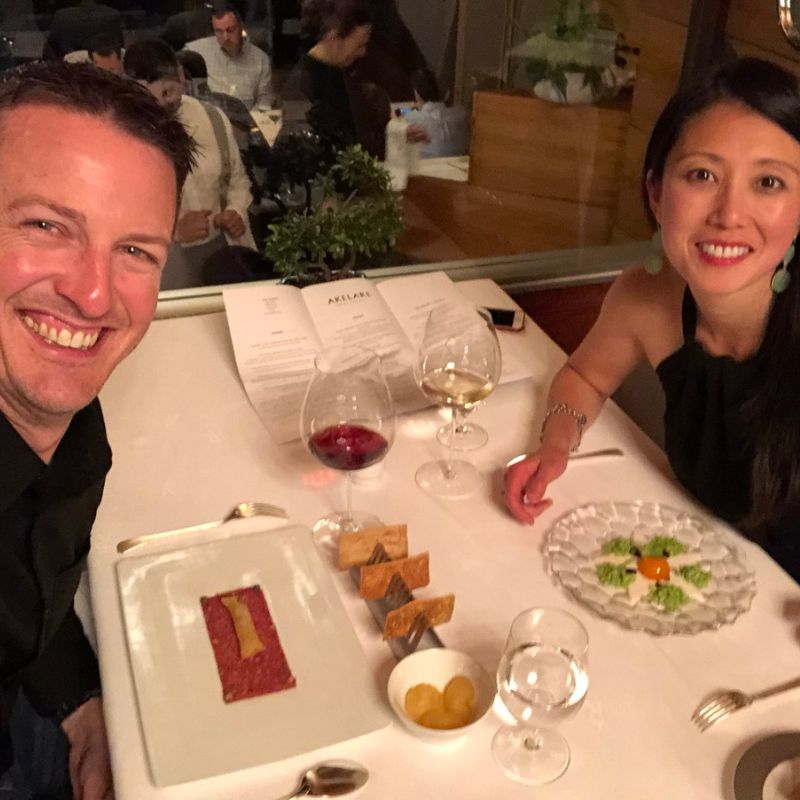
Dr. Kristina Liu: Right, and we went to this place called Accolair and I highly recommend it. And to this day it was still the most epic dining experiences I’ve ever had.
Matt Bowles: Mine too.
Dr. Kristina Liu: Yeah, you too?
Matt Bowles: By far.
Dr. Kristina Liu: Yeah. I mean in terms of everything, just in terms of the quality of the food, the presentation, the taste and the wine that came with it, you know, the Frugal me was saying, you probably remember this. I’m like, oh, well, maybe we should just get a bottle, right, instead of doing the wine pairing. And I’m so glad you convinced me to do the wine pairing instead, because that was probably, if not as good, not better, but as good as the food itself. Because having that wine pairing just really elevated that dining experience. And the fact that sommelier came with every course with a different wine glass on that tray with two different bottles, I mean, I still have that picture in my head.
Matt Bowles: It was completely insane. And just to sort of give folks some context for this. So, one of the things that I’ve basically come to realize is that it is much less expensive overall, at least in my experience, to go to like a Michelin star restaurant in a place like Tokyo, like a Michelin star sushi restaurant. Because you pay for the Michelin star sushi meal and then you drink like a $6 beer with your sushi, right? So, you might pay a lot of money for the dinner, but you’re not paying a huge amount of money for alcohol. Maybe drinking some sake or maybe drinking like a beer or something that pairs with your sushi. In Europe, when you go to a Michelin star restaurant, you have the option usually to pay for a wine pairing of really premium wines.
And the wine pairing is usually about the same price as the food, right? So, if the food is like $250, let’s say, say for a three Michelin star restaurant, and it’s a 12 course plus meal, which by the way, you’re at one of these restaurants for like six to eight hours, like over the course of like you and I got there like 6 or 7 o’ clock, and we left at like 2 in the morning or something. I mean, it’s an all-evening event, but you pay for the wine pairing to go with the food and it’s very expensive. And so, you basically double what the meal would normally be because you have the wine pairing. But as you just said, it was so extraordinary because you have these incredible sommeliers who pair a different wine with each course. So, if it’s a 12-course meal, you’re getting basically 12 different wines to try with each course. And I remember the course that was the cheese plate. They actually brought me two different wines. And they’re like this wine pairs with that one piece of cheese. This, this other wine pairs with the rest of these pieces of cheese, right? So, it’s like that specific.
But the other thing that was amazing was the actual glass, like the actual Stemware itself, they had like a different shaped glass for each of the wines. So, I feel like we drank out of 12 differently shaped glasses that night while trying the 12 different wines with the 12 different courses. And it was just, just completely insane. And the other thing that I tell people about that experience is when you’re at a restaurant like that, a three Michelin star restaurant, like Akalari in San Sebastian, it’s basically like a show, right? It’s like you’re not like having conversation about your day and like what was your, you know, you’re talking about all these other current events and stuff. No, it’s a show. They are preparing some things and putting them in front of you. You’ve never seen anything that looks like that. You’ve never tasted anything that tastes like that. And you are just having this multi-sensory experience and talking about what it is that you’re experiencing at that moment for like six straight hours.
Dr. Kristina Liu: Absolutely. You know, as you were talking, Matt, it just came to me why I enjoy those experiences so much. It’s about, you know, this concept of being present as a coach and my own journey. It’s a lot of it is about how do we become more present? Because when we are more present, which just means you’re being present with the experience that you’re having. You know, if, if you’re talking with someone like what we’re talking now, I’m fully present with you and you’re fully present with me. And when we can be like that, that is when that experience just becomes so much more enjoyable. And that’s what these dining experiences are for me. You know, when you’re talking about, you know, you get a dish, you know, a course, and that’s what you talk about and you really taste it, you savor it, you’re not talking about something else. Your mind is nowhere else but on this food that you’re having with the company that you’re having. I feel like that’s what makes it so extraordinary.
Matt Bowles: It was completely extraordinary. And so, in that sense, when you tell someone, I went to this restaurant and I paid $450 for my dinner, a lot of people might say that’s crazy, that sounds insane, right? But when you think about other stuff that you might spend money on, and if you actually saved up, up the money and decided to have an experience like this for $450, and it is a multi-sensory experience that you and I, well-traveled people who have done all kinds of really epic stuff all around the world are still talking about four Years later and are still telling people about four years later. And it’s still. We think back on it, and it impacted us four years later. That’s why it’s worth $450 for the overall experience. It was insane.
Dr. Kristina Liu: Absolutely.
Matt Bowles: And by the way, also, I mean, let’s just talk about the full range of culinary experience in San Sebastian, because it’s not all fine dining. So, we did one fine dining experience at the three Michelin Star, and then we spent an entire Sunday walking around to pubs and just hopping into these pincho bars and eating these pinchos for like A$52 each. And it was also completely next level. I mean, it was amazing.
Dr. Kristina Liu: Oh, absolutely. You know, pinchos became one of my favorite foods, and you’re the one who introduced me to it. And if you want to have pintxos anywhere in the world, you got to go to the Basque country to have it. And I think that’s where it came from. Right? Pinchos. It’s basically for those of you who don’t know, it’s kind of like bruschetta, but it’s the Spanish style. It has a toothpick in the middle that holds all the stuff together. So, it’s on a piece of bread. And you can have different toppings, whether it’s meat or cheese or seafood and or a combination of all of them. In San Sebastian or in the Basque country, you know, people get really creative with their pintxos. And I think that day, on the Sunday, we hopped to, what, four or five different pintxos places, and we had four or five different pintxos at each place, and we would share a glass of wine. And that was, again, an epic Sunday. And we walked around the town of San Sebastian. I think I must have clocked in over 20,000 steps that day, just going around the whole city, and it’s such.
Matt Bowles: A beautiful city, and even the pintxos are unbelievable and very inexpensive. And so, it’s not all fine dining there. Even if you want to just spend 10 bucks, you know, hopping around and having pintosh, for 10, $12, you can have unbelievable food that will just blow your mind. I mean, it’s just an incredible place overall and just a gorgeous town. It’s really a special place. The other thing is that it is within driving distance of the Rioja wine region, which we decided to make. I don’t even want to call it a day trip. I tallied this up. You and I literally were drinking wine for 18 consecutive hours. So, let’s just call It a day and a half trip where we left San Sebastian in the morning. We got out to Rioja for our first wine tasting at noon, right? And so, we had our first wine tasting, then we had lunch with wine, then we had afternoon wine tasting, then we had dinner with wine. And then we just said, you know, we bought a bottle from one of the vineyards that we were at and all this kind of stuff. And we spent the whole day and we spent the whole night.
And then the most amazing thing that I have ever seen, Kristina, I was so impressed with you. We get back to our place at 5 o’ clock in the morning. Okay. After drinking wine from noon, and we have this one bottle that we had bought from the vineyard. And you’re like, I think we should open that bottle and drink it now. We opened a bottle at 5 and drank it until 6 o’ clock in the morning. So, we had literally been drinking from noon until 6am 18 consecutive hours. It is absolutely a record that I suspect will never be topped. It was unbelievable.
Dr. Kristina Liu: No, yeah, absolutely. And, you know, now when I look back on that day, I don’t think I was drunk, because I remember everything during that day. I think one, it must be the quality of the wine that we were having, and also just the food that we had.
Matt Bowles: And we spaced it out for 18 hours, right?
Dr. Kristina Liu: Yes. That was the trip that really took Spanish cuisine to another level for me, you know, because up until that point, I felt like I loved French food, I love Italian food, because they’re both, you know, packed with flavors, very sophisticated, whereas Spanish food, you know, all I knew was tapas. And while they’re good, but to me, they were nothing special until that trip. I mean, I really started looking at Spanish cuisine from a whole new light. We just had some of the most delicate and delicious food that I had ever had.
Matt Bowles: It was amazing. And tell me your impression of the Rioja wine region. You, of course, had been familiar with the wines. And then when we finally got to the region and spent the day in the vineyards, we went to the wine museum, all that kind of stuff. What was your impression of Rioja?
Dr. Kristina Liu: Oh, my gosh. So beautiful. I had always loved the Rioja wine, and this is the reason that I love wine tasting so much is you get to experience where that wine comes from. You get to see the region that this wine is made from. You get to see the grapevines, and you get to taste multiple wines. You get to learn about the wines from the people pouring your wine. And when you go with great company. And I always do wine tasting with great company, you know, such as yourself. It’s just. Just makes the experience so special.
Matt Bowles: It was completely amazing. And the other place that we went in the Basque country was Bilbao, albeit briefly, but we did go through there. I had lived in Bilbao previously for a month, and so I had said to you, like, if we’re going to the Basque country, like, you must see Bilbao. You have to see the Guggenheim Museum. And, like, you just have to at least get a taste of it, because you will not want to miss this. So, what was your impression of our time in Bilbao?
Dr. Kristina Liu: Oh, it’s such a charming little town. You know, the Guggenheim Museum was so beautiful. I feel like it’s one of those structures that makes the city. And I started eating pintxos from Bilbao when we first landed there. That was when had that vividly. Remember, we were in the middle of the old town in a little square, and we just had three or four different pint shows at this. This little restaurant and had a glass of wine each. And that was a beautiful experience. I really enjoyed it.
Matt Bowles: So amazing. Absolutely amazing. One of my favorite travel experiences of all time. And so special that I got to share it with you.
Dr. Kristina Liu: Likewise.
Matt Bowles: So, after that, I ended up then departing, because I spent the two months with your group, and then I was off doing other things. And you continued traveling and doing other things, which I really want to hear about, because I know that when your group got down to Peru, you started doing some side trips, spending time in Amazon and all that kind of stuff, which ultimately ended up impacting your future trajectory a lot. Can you share a little bit about your time in Peru?
Dr. Kristina Liu: Yeah. Yeah. So, Peru, that was my month nine of Remote Year. So, our Remote Year itinerary was two months in Africa, that was where we started. And then four months in Europe, and then six months in South America. So, we had moved from Europe to South America. And in the first month in South America, this was in Buenos Aires in Argentina. And I talk about it in my book. This is kind of the turning point of my experience on Remote Year. And I won’t get into too much detail, but that was a monumental month on so many levels. On one level being, I went to this workshop not sponsored by Remote Year, but it was held in the workspace. And it was from this coach from LA and she opened the workshop by saying, I just came back from Peru. I had ayahuasca there. And I got so enlightened, I created this workshop. You know, I’m paraphrasing you know, something to that effect.
And that really piqued my interest because I was like, what. What is this thing that she said she had in Peru? Because I never heard about ayahuasca until that point, but the way she described it, I’m like, wow, that. That’. That’s interesting how it can get you so enlightened that you would create something like this. And being a coach myself, you know, I saw the way that she did her workshop, and that was something that I thought I might want to do someday. And when you can get so enlightened by something that can help you build your business, I was in. I was, you know, I was intrigued. And so that’s where I heard about ayahuasca. It was in Buenos Aires. And then next month, I traveled to Salta as a side trip. This is in northern part of Argentina. And I met a fellow traveler who talked about something called combo. And she said, it’s a frog poison. You know, she experienced that. She was from Germany, and she said it changed her life so much, you know, for the better, that when she described it like that, I said, well, you know, it sounds a little bit similar to this ayahuasca thing that this other coach and Buddhist Iris talked about. And she said, oh, yeah, they’re kind of related. They’re both from the Amazon jungle in Peru. So that’s how Peru came about.
And as we were leaving the restaurant, we bumped into this gentleman who is from Peru. And I was like, oh, I’m going to Peru next month. And he said, oh, when you’re there, you have to go to Iquitos. Then you take a boat down the river, down the Amazon River, and it would be so beautiful. And at that time, I had no idea Iquitos. Like, I didn’t even know how to pronounce the place. You know, I didn’t know how to write it. But just. Just the idea of floating down the Amazon, it just intrigued me so much. That planted the seed. And plus, the ayahuasca and the combo, it’s just so interesting to me. And I mentioned I like learning. You know, I like everything. Personal development, especially, you know, being a coach. That’s what I do. And so that was what planted the seed for me to say, hey, I think I need to go to this Amazon jungle. While I’m there, I want to experience ayahuasca and combo. And so that was my experience in Peru.
So, we landed in Lima. I was in Lima for two weeks first. And I loved Lima absolutely adored it. It’s a big metropolitan city. In terms of food, it’s amazing, but also right. And you told me about this restaurant called Central. I wasn’t fortunate enough to go because I was too late to book anything. By the time I got there, everything was booked out. But what I also love the most is that waterfront that Lima has. It’s. It’s along the Pacific Ocean, and it has this cliff that overlooks the ocean. And basically, every day, I would run from my apartment or jogged from my apartment to the waterfront. I’ll do a little jog there, and then there are so many grassy areas that you can just sit on. And, you know, I would do some exercises sometimes, do a little bit of yoga and do some meditation facing the ocean. And that was beautiful for me to be able to do that every day. So that was Lima. And then by my third week, I went to the Amazon, and I did this retreat where I experienced ayahuasca combo and this other medicinal plant called San Pedro. And that experience was so transformative, even though it wasn’t transformative at first. At first, I was resisting it. I actually didn’t like it. It wasn’t what I was expecting. But I’m so glad. By day four, day five, I started embracing this experience, and it became so profound. That’s why I ended up buying this property in Peru that I’ve turned into a lodge and retreat center that I am hosting my own retreats in.
Matt Bowles: Let’s talk about that for a little bit. Can you share about the Selva Vida Lodge and Retreat Center? What experiences do you offer there? Who is it for, and what’s available?
Dr. Kristina Liu: Yeah. So, I do a retreat there. There are two things you can do at Selva Vida. One is to join one of my retreats, which is seven days. I’m actually doing one this month, later this month, 26, where we do some workshops, we do jungle tours, we do some meditation, yoga, healthy eating, and also the plant medicines that I talked about for the people that want to do it. You can still come to the retreat. Like, one of the girls who is coming to the retreat, she’s not going to be doing plant medicine, but she’s still coming for all the other things. And so that’s one way you can come to Selva Vida. The other way is simply to book a stay there. So, you can book it on the Selva Vida website. So, it’s basically selvavidalodge.com. You can book anywhere from two to however many days you want to stay there, or you can Book it on Airbnb. So, and when you book there, you can book your meals, you can book some jungle tours. So, it’s basically a way for people, for travelers who want to come to the Amazon to experience the beauty and the magic of the region.
Matt Bowles: So. Awesome. And I know that some of your retreat customers also do ongoing coaching with you after they do the retreat experience. And I want to ask you a little bit about your coaching programs and who those are for and what type of coaching you offer.
Dr. Kristina Liu: Yeah. Great. So, I do a combination of one-on-one coaching and as well as a group program using what I call the positive intelligence theory or framework and who it’s for. It’s mainly I coach entrepreneurs as well as people in the corporate world, call them corporate leaders, but you don’t have to be a leader or I believe everyone is a leader, but anyone kind of with a similar background as me, in my experience. I found those are the people that have connected with the most, that get the most out of my coaching because I feel like, you know, they feel like I understand them and I feel like I can support them. Whether it’s challenges, obstacles or desires that they have, whether it’s to get up to the next promotion in their corporate job or perhaps a lot of people come in and say, you know, I don’t know if this is for me forever. Just kind of like the dilemma I had five years ago. And you know, I want to figure out what else I want to do. Is it to start my own business or is it to perhaps just shift my mindset so that I can enjoy my current job more?
And then with entrepreneurs, a lot of times it’s basically to help them to grow their business, you know, help them to become build more mental strength. Because, you know, as you probably know, Matt, you’ve been an entrepreneur. While it’s rewarding, it’s really satisfying, but it’s also challenging, right? It requires mental strength. So that’s what I help them to do. And with this positive intelligence framework, I really like it because I’ve gotten to know it for about two years. And before that I had learned from lots and lots of theories and frameworks. I got a doctor of psychology, so I learned a lot of theories there. I’ve been to a lot of Tony Robbins events. I got trained with coactive coaching, so lots of frameworks. But still, this is the one that I connect with the most because one, it’s really simple and two, it’s really effective. It’s simple because it’s basically acknowledging that we all have these two parts of us.
So, this author, Shiraz Shamin is his name, he talks about, we all have these two parts called sage and saboteurs, using his language. So sage is that powerful part of us that if we can tap into that, we can do anything and we feel good emotions. However, being humans, we also have this other part he calls saboteurs, which can come in and sabotage you from living your true potential, living your best life, and also generates these negative emotions. So really the challenge, being humans is how can we recognize our saboteurs and how can we tune them down so that they don’t control our lives. Rather, the sage part of us, that powerful part of us, controls our lives. And if so, if we can all do more of that, let the sage drive our lives. That’s how we can live happier, more successful, and more fulfilled, fulfilling lives.
Matt Bowles: Do you have any specific techniques or tactics that you can share with us now as an example for people that want to start thinking along those lines and possibly maybe start implementing something after this podcast? What would be maybe some good first steps towards that end?
Dr. Kristina Liu: Yeah, great. Thanks for asking. I would say the first step, go on positiveintelligence.com and underneath there there’s a tab called Saboteurs. And there’s a free assessment that you can take. It takes about five minutes or less and it tells you what are your top saboteurs. So according to this author, there are 10 saboteurs and then this test, it tells you nine of them. And the 10th one, or that’s actually the first one, the judge, we all have. So, it’s not showing up in the test. But most people find it really enlightening when they get an understanding of what their saboteurs are. So, this is that first step of getting that self-awareness of, ooh, what are these forces that are coming in and sabotaging me on a regular basis?
So, for me, even with all the other work that I had done, once I took this test and understood this theory, it was life changing because then I could actually put a name on these behavioral and emotional patterns that I’ve had for my whole life that were not serving me. And up until that point, I always felt like maybe there’s something wrong with me or, oh, this is just the way that I am. I’m never going to overcome this. So, there was a little bit of this defeatist thinking pattern that I had. Whereas after I learned that these are actually just saboteurs, we all have them. I’m not so special that I’m incurable or I’m just something was wrong with me. So, once I was able to put a name on them, I was able to work on them, I was able to reduce their power. So that’s the first thing I would say that people can do. And it, you know, takes very little time and it can give you this understanding.
And I’m just thinking about other things you can do for free. There’s a TED Talk by Shiraz Shamin. You can watch that to understand a little bit more about the theory. And of course, there is the book Positive Intelligence. You can get it on Amazon in various formats, you know, 20 bucks, relatively cheap. So, these are kind of the low entry point ways that people can get a little bit of more understanding of this concept. And of course, once you realize, okay, I like it, I want to go further. I host this eight-week program to help people to understand this concept more. So basically, learn more about their saboteurs, how to tune them down, and how to tune up their sage. So that’s that eight-week program for people who are more interested and more committed, want to go deeper.
Matt Bowles: Awesome. We are going to link all of that up in the show notes so folks can just go to one place, themaverickshow.com, just go to the show notes for this episode. We’re going to link up those free resources to TED Talk and also how to find out more about Kristina’s program and everything else. So, you can just go there and all of the links will be right there in one place. Kristina, the other thing that I want to ask you about is your book that recently came out and is crushing on Amazon and other places. Can you share a little bit about what led to writing the book?
Dr. Kristina Liu: Yeah. What made me want to write the book, it was actually also a long journey. It came about, I would say, quite organically. I would say the first version of that book is my blog post throughout Remote Year and my Instagram posts. Basically, it’s just a way for me to document my travels because it was such a special experience. And also, before I left Singapore to go on this trip, many people were asking, you know, how are you going to document this? And I didn’t really know how and I wasn’t a blogger before, but I said, you know what, maybe I can just start with some simple Instagram posts and then write a little blog. And so that’s what I did. So that was kind of the first version of the book. And then the second version was my doctor of psychology dissertation. So, I mentioned I started the studies when I was still working in my corporate job. And when I went on Remote Year, this is at the beginning of 2018, I had already gone into the dissertation writing phase. I had finished my coursework.
And so, during this trip, partly I was. My work was building on my coaching practice, but the other part was doing research for my dissertations. And at one point, and I changed my dissertation a few times. Anyone who has written a dissertation probably can relate. But in the end, I decided on writing about transformative learning because this is a learning modality for adults to learn through experiences, through having experiences and then reflecting on it and making it so transformational that it really changes your worldview. And I had wanted to do this topic based on, you know, kind of your traditional quantitative research. I thought about maybe interviewing a large-scale Remote Year participant to see how a program like Remote Year Work and Travel can facilitate transformative learning.
And then my professor convinced me to do it otherwise. He said, you know, you are doing this program, you’re having this transformative learning experience. Why not write from your own perspective? And so that’s when I decided, okay, I will write my dissertation from my own perspective, of course, with theoretical research and with some interviews and surveys from Remote Year. But the majority of it was my own experience looking at my whole life, but especially during Remote Year, how a lot of the experiences were transformative and were transformative learning experiences. So that’s kind of the second phase of the book. And so, I finished my dissertation at the end of 2019, and there was this yearning in my heart that said, you know, this story that you wrote in your dissertation might be a little bit more interesting than just for academic paper for your professors to read.
But I sat on it for about five months, not knowing really what else to do with it, until this writing coach, an editor on LinkedIn, contacted me. And long story short, basically, he helps coaches and authors and experts turn their ideas into books. And so, I started working with him over several months to basically kind of talk about this dissertation and how I can turn it into a book that more people would want to read. And so over, I would say, nine months period, that’s when he helped me to kind of structure the book. And then, of course, I did all the writing. And that was a little challenging for someone who didn’t consider herself a writer, even though I had the dissertation, but I had to rewrite a lot of it to make it much more interesting than what was in the academic paper. And so, yeah, that’s why I decided to write the book.
Matt Bowles: So, let me ask you a little bit about the impact of the experience, of writing down your experiences. So, you mentioned that Remote Year experience of travel and everything that you experienced and the people you interacted with and the experiences you had was completely transformative for your life. Can you talk about the process of actually writing it down on paper and what role the writing down of the experience has played in process processing the experience and what role it played in the overall transformation?
Dr. Kristina Liu: Yeah, I feel like, because I went through the writing in so many different phases. You know, first the blog post that was the first reflection, and then the dissertation. So, reflecting on a deeper level, more from an academic level, and then writing again from a more kind of people that want to read it perspective. So, I feel like every time I wrote about it, it deepened the learning that I had from that experience. I feel like I took more out of that experience. It’s interesting that you asked, because part of transformative learning, there are kind of three main components of that. What composes of transformative learning? The first one is the experience. You have to have an experience that is a little bit different from the world as you knew it, and so that the experience is very central. But the next one is the reflection of the experience. So, you can have a great experience that could potentially change your life, change your worldview, but if you don’t reflect on it, it still won’t do that, right? It still won’t change your life.
And so, the more I write about it, the more I reflect on it, the more I feel like I’m learning, the more. And the third phase is about actually changing your view, your reflection, your perception of the world, and then taking some action about the new reflection. And so, you know, every time I do it, it’s kind of like some new learning comes about. And also, the other thing is just appreciation about the experience, like what you talk about. You know, you can have this epic dining experience, like an accolaire. And it was epic at the moment. And I feel like, you know, every time you remember it and you talk about it, it becomes even more epic. You know, it’s like one of those things you can just savor and savor for a long time.
Matt Bowles: Yeah, 100%. So, when you think back on the whole thing, you think about Kristina Liu in 2017, right when you were leaving your corporate job and making that transition and starting to travel and where you are now, and you just think about the last five years of your life, which is a very small portion of your whole life. Can you just sort of think about and maybe share a little bit about the impact that travel has had on your life? How would you summarize that?
Dr. Kristina Liu: When you reflect back on it, it’s completely life changing. When I talk about transformative learning experiences, I would say travel is right up there in terms of the opportunity to have a transformative learning experience and then to be able to reflect on it just makes it so much more rich. And so, my life has completely changed in a short span of five years or a little over four years. At the end of 2017, I was living in Singapore in this big metropolitan city, working at a corporate job. I just recently went back to Singapore and it was amazing to go back there, you know, see some old friends. But the other thing I did when I was there is I still had a storage unit during all these four years that I was away. And I went through some of me. This was a fun experience. You know, I had some clothes packed up there. I saw all these clothes. I was like, wow. You know, I had high heels, I had these corporate work wardrobe. I was like, wow, did I really wear this to work every single day?
And on one hand I’m like, wow. I must have looked pretty good back then, you know, like with my high heels and pencil skirt and all that. I’m like, wow, how uncomfortable. But talk about it. Just to give you a context of how much my life has changed. Oh, and the other thing that my life has changed, I must thank you for. So, when I first came on Remote Year, I brought this huge suitcase. It was about 30 kilos, so like £70, right? Plus, a carry-on suitcase, plus a backpack. So, I was carrying a lot of weight, just thinking I would need all of that. Right. And then we had this conversation in Marrakesh at this cafe and you said, you have been traveling the world for three years with a carry on and a backpack. And I said, no way I can do that. You know, you’re a guy, that’s probably why, you know, you don’t need as much. But then you said, oh, no, I actually have met a girl who does that. It could even be easier for a girl because your clothes are smaller.
So that’s what planted the seed in my head to say, hey, maybe I can do that. So, by the end of month four, I was down to a carry on and a backpack. And that was how I traveled for the remainder of Remote Year and pretty much until now. And that’s another big change that it made in me. This kind of minimalism, just the realization of how little that we actually need to be happy and to be fulfilled and to do what we love to do and then to make an impact and make a difference and be. Be good in this world. And so, for me, that was huge to have this boiling down to very few things that I need. And the other thing is just my lifestyle. Now my full-time job is a coach and I also run this retreat center. And then I’ve also been recently become a writer. And I have freedom, I have flexibility. I do work that I love. I have complete autonomy and control over the type of work that I do. And I feel like I make a difference on a much more direct basis into people’s lives because I coach people one on one or in small groups. And, you know, that gives me so much meaning and satisfaction.
And so, yeah, short answer is, my life has completely changed and it’s for the better. And at the same time, I’ll say, I’m not saying it to make it like this romantic view like, oh, you can, you know, just quit your corporate job and travel the world and then like four years later, your life will be perfect. No, there have been lots of challenges along the way. I didn’t talk about them. And even starting your own business, becoming a coach, trying to get clients, there have been challenges. There are days when you don’t know where your next paycheck is going to come from. And so, all of that takes mental strength. And that’s why doing the work that I do, building this mental fitness, tuning down my saboteurs and tuning up my stage has been so important to help me through the challenges.
Matt Bowles: That’s amazing. And I think that’s actually an amazing place to end the main portion of this interview. And at this point, Kristina, are you ready to move in to The Lightning Round?
Dr. Kristina Liu: Yes. Let’s do it.
Matt Bowles: Let’s do it. All right. What is one book that has significantly impacted you over the years you’d most recommend people check out?
Dr. Kristina Liu: I would say A New Earth by Eckhart Tolle. That was the book that started me on my self-discovery and transformation journey.
Matt Bowles: Awesome. With all the travel that you have now done, what is one travel hack that you can recommend to people?
Dr. Kristina Liu: I don’t know if it’s considered a hack, but I would just say based on what I said, travel light. You don’t need as much as you think you need. Yeah, just really travel light. I always just travel with a carry on and a backpack as much as I can.
Matt Bowles: Yeah, I love that awesome. All right, Kristina, knowing everything that you know now, if you could go back in time and give one piece of advice to your 18-year-old self, what would you say to 18-year-old Kristina?
Dr. Kristina Liu: Wow. I would say really be yourself. I know it sounds cliche, but don’t care so much about what other people think. Really go deep into your heart, ask yourself what is it that you want and follow that.
Matt Bowles: Awesome. Of all the places that you have been to now in the world, what are your top three favorite travel destinations you would most recommend? Other people should definitely check out.
Dr. Kristina Liu: I’ll have to say Peru is up there just because of my special connection with it. The other place I love, Myanmar, I had some just amazing experiences there. And the other, gosh, Matt, this is a really hard question but I’ll say Croatia. Just how beautiful the beaches are.
Matt Bowles: Amazing. Those are really good picks. All right Kristina, last question. What are your top bucket list destinations? These are places you’ve never been highest on your list you’d most like to see.
Dr. Kristina Liu: I would say Bhutan. This is one of the few Asian countries I haven’t been in because I lived in Singapore for so long. I’ve been wanting to go and hadn’t had a chance. And then I would say somewhere in Africa. Let’s say the Congo. So, my partner boyfriend, he’s traveled extensively in Africa and he always talks great things about the Congo. So, I will say that.
Matt Bowles: Wow. Amazing. Awesome. All right, Kristina, I want you to let people know how they can find you, follow you, contact you, definitely how they can buy your book, how they can learn more about your coaching services, your retreat center, all that good stuff. How do you want people to come into your world?
Dr. Kristina Liu: Yeah, thanks for that. So, you can find me. I have a website. It’s very simple. It’s basically kristinaliu.com. And on Instagram I am coachkliu. And my book is theinsideoutjourneybook.com and my retreat center is Selva Vida Lodge. So, it’s selvavitalodge.com.
Matt Bowles: We are going to link all of that up in the show notes so folks can just go to one place themaverickshow.com go to the show notes for this episode and there you will find all of the ways to contact Kristina and get involved with all the amazing things that she’s up to in that one place. Kristina, this was amazing. Thank you for being part of some of my most amazing travel experiences ever. And thank you for coming on the show.
Dr. Kristina Liu: Oh, thank you so much Matt for giving me this opportunity. And this was so fun. I really enjoyed it. It’s such a gift to be able to connect with you after so many years after we traveled together.
Matt Bowles: Absolutely. Hopefully we can cross paths again soon. Thanks so much. Good night, everybody.