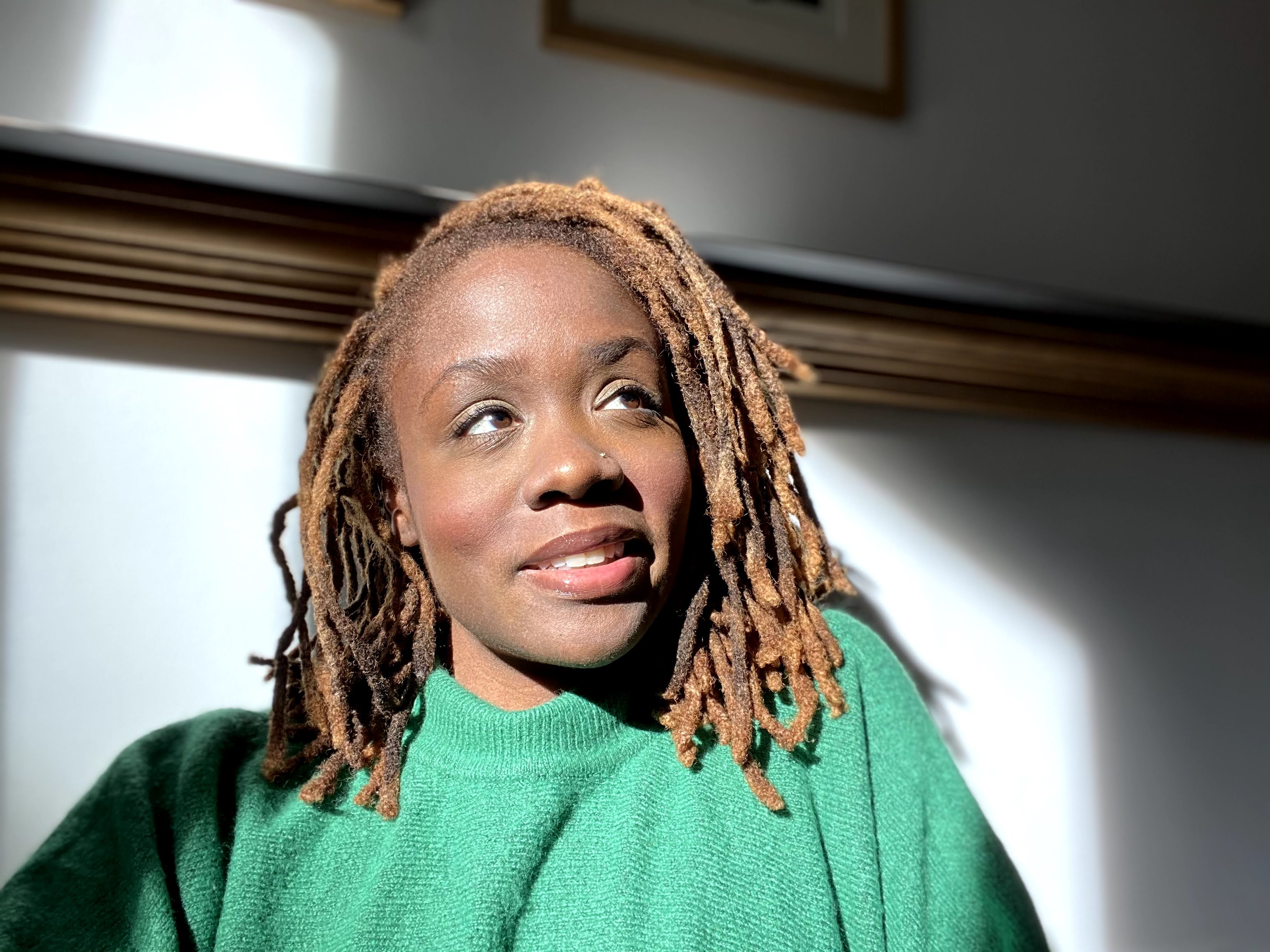
Matt Bowles: My guest today is Christine Job. She is a location independent entrepreneur, award winning podcaster and business strategist. Christine helps Black women and other women of color leverage their expertise and talents to build sustainable businesses that are professionally fulfilling, financially abundant and that empower them to live a thriving life abroad. Originally from Atlanta, Christine is currently based in Valencia, Spain. Her podcast, Flourish in the Foreign, celebrates, elevates and affirms the voices and stories of Black women living and thriving abroad, while also exploring world travel as a pathway to wellness. Flourish in the Foreign won the best international podcast award at the 2021 Black Podcasting Awards and was also shortlisted at the 2021 International Women’s Podcasting Awards.
Christine, welcome to the show.
Christine Job: Yeah, thank you so much, Matt, for having me. And I like that pronunciation, the Valencia. You stepped into that Castellano accent.
Matt Bowles: You got to make an effort, right? And it’s a little bit different from where I am right now, which is San Salvador in Central America. So, you know, depending on where you are in the Spanish speaking world, I kind of try to make a little bit of the effort. I was just in Argentina two months ago and there they pronounce the double L sound like a sh. So, the word for chicken is pocho in Argentina. Right. So, your kind of, you know, you have to be aware of where you are. But I am super excited to have you on the show and let’s just set the scene here. We are unfortunately not in person today. If we were, we would be sharing a bottle of wine. However, we have agreed to make this a wine night. So, I just mentioned that I am in San Salvador, the capital of El Salvador, and I have just opened a bottle of Montepulciano d’ Abruzzo from Italy. Where are you and what are you drinking, Christine?
Christine Job: I am in Valencia, or Valencia, Spain, and I am drinking a Catalan wine. I haven’t really gotten into Valencian wines yet because I just kind of got settled. And it’s a red blend. It has Syrah, it has Garnache, it has, like, a Cabernet Sauvignon, it’s Merlot, it’s quite tasty. Catalans, they know how to make a good wine and cava and all those kinds of things, too.
Matt Bowles: Indeed, they do. An amazing region, the Catalan region. I’ve spent time there, been a number of times. You have spent way more time in Spain than I have, though, and in wine country and everything else. And we’re going to get to that. But first, before we go there, I just want to set a little bit of the context and talk a little bit about your background. Can you talk, share where you grew up? And as you were growing up, as you think back on that, how did your interest in international travel start to develop?
Christine Job: Yeah, so I’m from Atlanta, if you’re from Atlanta, I’m from Suwanee, Georgia. And you understand why I say I’m from Atlanta. And you know, my interest for international travel, I think I was born with it, truly. My dad is from Trinidad. My grandparents are Trinidadian, so they emigrated to the United States in the 70s. And so that’s in our blood. And on my mom’s side of the family, I always call them like a small nomadic tribe of women, always up to move for economic opportunities or just because they wanted to. And so, there was never any apprehension, hesitation. I never was instilled with fear, fear of travel or other places, other people at all. I mean, my mom, she was actually deployed in the Philippines when I was really, really young.
And so, I also remember growing up with coins and currency of different places. And later on, my parents separated and my dad was stationed in Germany, visiting him when I was 10 and doing a lot of international travel solo, you know, as an unaccompanied minority, which back then was super awesome. I don’t know how it is now, but it was amazing then. Not a lot of rules, just vibes, basically. And so, I feel like all of those things combined together really not only planted seeds, but really watered and cultivated who I am today. A woman who decided on a whim to be like, I guess I’ll move to Spain, and then did so.
Matt Bowles: Well, let’s talk about that. And let’s talk about what led up to the move to Spain. Can you talk a little bit about your academic trajectory, your professional trajectory, and what ended up leading to you making the choice as an adult to start traveling internationally and living abroad?
Christine Job: Yeah. So, I always knew I wanted to live abroad. Ever since I was about 17 years old, I knew I wanted to live abroad. I knew that there was something more, something different. I didn’t believe what people were telling me. I wanted to see things for myself. I just didn’t. People were always like, oh, that place might be dangerous. And I was like, how do you know? You’ve never been there. So that started at a very young age. I went to University of Georgia for undergrad, where I studied business management, minored in Spanish and minored in music business. And I knew I wanted to study abroad. No need to convince me to study abroad. In fact, I would go to study abroad office. And they were like, oh, so you’re thinking about it? And I was like, no, I’m going to study abroad. And my academic advisor like, well, I’m not sure. And I was like, look, I’m not asking for permission. I don’t really need you. Except for I need you to, like, tick the box so I can go register for classes. I’m just telling you what I’m doing. I’m just going to go. Right? I would go to the study abroad fairs, and back then, we weren’t sustainable or eco, so they gave these amazing brochures that were all glossy and full color and amazing.
And of course, since it’s college, they give you free T-shirts and a free bag. Gotta takes that along with your free pizza. Got that. And I would go to every single table in that study abroad fair, and I’d pick up every single brochure. I’d write my name on everyone’s little list. And people were like, what is she doing? Because it would seem like you were just at my table about Kenya. Now you’re at this table at Costa Rica. Because I just want to go. I don’t really care where I’m going. I just want to go. But good sense and money actually dictated that I would actually go abroad within my major requirements. And so, I wasn’t completely ridiculous. So, I wouldn’t go to Costa Rica and study biology when I was a business major. So, I was like, that’s not going to happen. And so, I got the opportunity to actually study abroad here in Valencia 15 years ago.
Matt Bowles: Wow.
Christine Job: It was actually spring semester. So, every day these couple months, I’ve been getting these, like, notifications from, like, Shutterfly. This is how I’m, like, dating myself. This is from Shutterfly about 15 years ago. This is what you’re doing. Do you want it on a mug? And I’m like, I don’t want it on a mug. Thank you very much. And I studied abroad here. It was an amazing experience only because that. It actually wasn’t a great experience for me. So, I think a lot of times people study abroad, and you have this romanticized notion of what studying abroad is going to be. You’re like, oh, it’s going to be in Spain. And maybe you think Spain is, like, warm everywhere all the time. And you’re like, no. Or maybe you think, like, Spain is, like, Latin lovers. You’re like, no. Or maybe you think, like, Spanish food is, like, flavorful and spicy. Unless you consider black pepper spicy. Like, what are you talking about? Right? So, it was one of those experiences that really impacted me. I was the only Black person of color in my entire cohort. And this was in 2007.
And Spain was different that time. And going to school and going to university here where there wasn’t a lot of Black students. I don’t remember any Black students because I remember people being, like, at the university, like, people turning around and being like, is that a Black person? I’ve never seen one in real life. And being like, oh, okay, this is interesting. And then also for me, the experience was a big stretch for me and my family at the time. My family had gone through a lot of kind of economic turmoil at that time. Both of my mom and my stepdad had corporate jobs that got laid off right before I studied abroad. So, for me, actually, studying abroad was a huge kind of economic stretch. And I was in a cohort of individuals where it clearly wasn’t. I encountered so many different feelings and different aspects of my identity. And also, I really was challenged to think about my own experience and what I wanted to make from it. And it really put the onus on me.
And so even though it wasn’t this fantastic romanticized experience, it actually didn’t deter me at all from living abroad or traveling abroad. What it did was it told me, as a Black woman, this may be my experience. I may be perceived or received this way. It also put it on me to think about, what do I want from these experiences. I don’t want to just go on vibes. I want to be intentional. And so, if I’m intentional, then I’m going to think about the places I go, the people I travel with, how I do it, and also take ownership of my experience. Not just be like a passive person who’s just like, things are happening to me or whatever. I want to be in the action and actually create an amazing experience and an amazing life. And so, I studied abroad and then I came back to the States and I wanted to live abroad. I was like, how can I make it happen? But I graduated from university in 2009, which wasn’t like a super great time to graduate from college at all.
The economic downturn, couldn’t get a job. It was horrible. I was a waitress, the worst waitress. For like six months I worked at the Gap. I was actually an excellent salesperson, which I think actually opened up my pathway to entrepreneurship, actually was selling jeans at the Gap. I learned how to meditate at the Gap too. Cleaning out the Gap fitting rooms and learning how to fold the jeans. I learned how to meditate. And people think I’m joking when I say that. And I was like no. I had to learn how to meditate or I would have gone crazy. You’re sold a dream of like, if you go to school and you do all these things, you’re going to have amazing life. I graduate, don’t get a job, got to work at the Gap, which is not horrible, but at the time I thought it was like the worst. How do you get through those things? How do you take those lessons and utilize them to fuel you to move on? I had to learn how to meditate, and that’s what I did. After that, I decided to go to university or back to university and go to law school, which in hindsight, I don’t know if that was the best thing to wait out an economic crisis. I don’t suggest people to go to law school. Maybe go to like another grad program. Not law school though. That was intense. I did that. I went to University of Miami, had a wonderful experience for the most part as again, law school.
But what happened in Miami really changed the trajectory of my life. What happened in Miami was that I was on the university. I was on the law school campus and I received an email that the university puts out. They put out these bulletins. This is what’s going on campus, and no one reads them. I read them because I’m a nerd. So, I read has amazing stories, people, you should read them. And one of the stories was a write up about the entrepreneurship director and teacher on the undergraduate campus. She was like this really badass woman who had started her own Music Magazine when she was 16 and, like, toured with like, rock and roll people and did all this other cool stuff. And she had. She was a director of this incubator on the undergraduate campus. And I was like, wow, I just want to meet her. I think she’s so cool. So, I would leave the law school campus, go to the incubator and stalk this lady. I would be like, hey, is Dr. So and so around? Is Dr. So and so around? Like, what’s going on? And finally, like, the associate director was like, who are you and what do you want?
And I’m like, I’m Christine and I’m a law school student and I don’t like law. I want to do something else. You know, I want to talk to her about it. And he was like, well, she’s really busy, but do you want a job? And I was like, oh, yeah, sure. And I became the law fellow for this incubator called the Launchpad on the University of Miami’s undergraduate campus. And it really changed my life as a law fellow. I became a business consultant. As such, I had students and alum come in talking about their business ideas. And really it was like a kind of. Like a cosmic kind of interaction that happened. It really aligned with just who I am as a person. Being able to hold space, space for people to bring their thoughts and their ideas from the ether into physical form. That’s what business is to me. For me, business is a form of self-actualization, right? And so, to have a taste of something that I really liked while I was in amidst a situation where I was like, I don’t really want to be a lawyer.
And I’ve tried in all different types of ways. I did all the things you’re supposed to do. I clerked for a federal magistrate. I worked at a really cool place, like in the general counsel’s office, like Zumba. I did that. So, I did all the things you could do, and that was cool. And this wasn’t a fit, but that was an amazing fit for me. And it really changed my life being able to hold that space. Like I said, some of these people were coming in and they hadn’t told anyone their business idea and they were so afraid to and to have that safe space for them, especially women. All the women that would come in, they would be like, yeah, I’ve had this idea for three years and I have like this huge binder of a business plan. Do you think it’s viable? And I’d be like, yeah, girl, you need to execute on some things we got to see. What does the market say? Like, let’s get some things going. So that was really important and really did affect my life, but it also allowed me to actually take another job after law school that took me abroad.
And so, after law school, I joined this director who was fantastic and amazing. I finally met her, and she offered me a job at her private incubator accelerator in downtown Miami. And after graduation, I was on a business trade mission to South Africa and Namibia. And that really set it in motion because all of a sudden, I’m on a trade mission. I’ve never done this before. This is cool. And at the time, I, the U.S. ambassador to Namibia, was a Black woman. And intellectually I knew that Black women could be ambassadors and things like that. But meeting a black U.S. ambassador in Namibia in her compound as she’s hosting this mission and this event, it was like, oh, yeah, I want to do this, I want to be around this. I want to know more Black women like this.
So that really helped to shape me truly. After that experience, I ended up going back to Atlanta, starting my own consultancy, doing business strategy, primarily in the holistic wellness space. Got burnt out from that fairly quickly trying to run around and do that. And that was kind of where the ideas of moving abroad to Spain started. Right. I took a break. I actually got a job offer in Kuala Lumpur that fell through at the last minute. And I had already left my amazing apartment in Atlanta and I needed to do something. And so, I got a calling to walk the Camino Santiago. That was really strange because I had only heard about it one time before, and I went in and walked the community of Santiago within a month. That’s kind of how I ended up over here in Spain.
Matt Bowles: Okay, so I want to go a little bit deeper on a couple things that you mention. The first thing that I want to ask you about is your experience the first time when you studied abroad in Spain, and the feelings that you had when you were observing the economic class dynamics and you were observing the racial homogeneity dynamics. And can you talk a little bit about how that impacted you at the time and how you navigated that at that age, and then what you came away with from that, that would then inform form your additional choices because you obviously ended up going back to Spain. And when you contrast that initial experience in Spain with the experiences in South Africa or Namibia or Trinidad or other types of locations, I’m curious if you can talk about how, you processed all of those different experiences and then made the choice to go back to Spain eventually, for the longer term.
Christine Job: Yeah. So, studying abroad brought class awareness in a way that I hadn’t thought about because I grew up in a fairly affluent, I think, neighborhood in Atlanta. But I was always aware of our resources. There were some things, like I was told no, like, no, you can’t do that. But also, like, my mom was very generous. She bought me TLC tickets and NSYNC tickets and things like that. Like, we did things, but there were things that, like, no. And I think at that time, especially because there was some economic difficulty, I was very aware of it, you know, have younger siblings and things like that. To be around people who, in my opinion, didn’t respect the resources that were afforded to them. That’s what it comes down to. You can’t help what family or what kind of economic circumstances you’re born into. But I think respecting resources and being a good steward of being of resources starts at a very young age. It’s how you’re raised. It’s gratitude, it’s appreciation. And it really has nothing to do with comparing yourself to someone else. Like, you don’t need to be like, oh, there’s starving kids. I hate that kind of stuff. There can just be appreciation, right?
And I think for me that was really eye opening because I think that I don’t know where the self-awareness came from because I was young, young, so I don’t know where the self-awareness came from, but I understood I could actually parse that. I didn’t take it personally and I didn’t dislike them because they could be like, oh, I’m going to London randomly. And I was like, I can go on these field trips that we already paid for, these excursions that were already paid for, and maybe like one other place, that’s it. I’m not going to London. I’m not going to all these other places while I’m on study abroad. I’m not going out every night and drinking. I’m not doing that. I’m not going in these wild shopping sprees. I’m just going to go to class and do my homework and Skype with my boyfriend. At the time, you know, like that was what it was. But that experience, I think that’s why it didn’t deter me from returning to the Spain is that I understood that that was just who they were as a person. It wasn’t indicative of the place. I think that’s something that a lot of people conflate with their experiences abroad, right. Like you see it in all the forums.
People are Like, I hate this place, and da, da, da. And I’m like, you hate every place because it’s you. It’s not the place. Like, Colombia was there, minding its own business, living its life. It is not going to conform to you. Sometimes it’s a good fit, sometimes it’s not a good fit, but it is not the country’s fault. And, I mean, when I think about why Spain as opposed to other countries, if I’m being really honest, it was the easiest place to go at the time. I had gotten a job in Kuala Lumpur. It fell through. And then I was just like, you know what? I can teach English. And I use that very loosely because I don’t feel like I taught English at all, but for, like, nine months and go to Spain, and I can figure it out while I’m on the ground. And that’s exactly what I did. I have health insurance. I have a stipend. All right, I could go. That’s why I chose Spain, because I was like, I can make it work no matter where I am.
Matt Bowles: So, I also want to hear more about the Camino de Santiago. And for folks that have never heard of the Camino, can you share a little bit about what it is? And then what was that experience like for you. And what impact did it have on your next life moves?
Christine Job: Oh, my goodness, Matt. This is so crazy, because the Camino is super popular now, but at the time, this was, what, in 2014, I walked the Camino Santiago. I had never heard of it. So, my friend had told me in January of that year, we were talking about, like, New Year’s resolutions and bucket lists and things like that. And she was like, I want to walk the Camino Santiago. And I was like, what is that? She’s like, yeah, it’s a really cool thing where you just walk across the country of Spain. I was like, what do you mean you walk across the country of Spain? She’s like, yeah, you just walk with your backpack and all your belongings. You just walk every day across the country of Spain. I was like, what? Like, how long does that take? She’s like, oh, it’s like a month or so. I was like, that does not sound like fun, but you do it, girl. Love it for you. So, when it came back around, literally six months later, the job had fallen through in Kuala Lumpur. I was in the suburbs, miserable. I was hiking a lot so that I wouldn’t be, like, an angry, rageful person. So I was, like, outside, like, rage hiking.
And this thought came to me. It Was like, you should go on the community of Santiago. And I was like, what? At first, I was like, what does that even mean? Like, these words don’t make it mean anything. And it kind of jogged my memory to this conversation I had. And this thought dogged me in a way that nothing has dogged me ever since. It’s actually very strange. It, like, haunted me for a couple of days. And finally, I was like, okay, let me, like, look up online. What is the Camino Santiago? The Camino Santiago is a pilgrimage. It’s an ancient pilgrimage that is in tribute to St. James. So, it’s a kind of a cat. It’s not kind of. It’s a Catholic pilgrimage. And it’s about 800 kilometers. The most popular route is about 800 kilometers, 500 miles. And you walk it. I think in the olden times, they had, like, horseback, and now people take their bike. But it’s traditionally you walk it, and you walk six to eight hours a day. And then you stay in a pilgrim hostel called an Albergue.
And some of them are super nice, and some of them are. They look like a pilgrim hostel. Like, what would you expect? And it is an amazing experience. So, I started mine on the Camino Frances, which is the most popular route. And it starts in St. Jean Pied port, which is on the French side of the Pyrenees. And I started that, and that day it was fine. It was fine. It was, like, cute. Like, French cows. It was really cute. Right? There’s, like, I don’t know what kind of ponies. Like, the furry cute ponies. They’re, like, wild. It was, like, cool stuff. Hiking the Pyrenees was dope. But the last 5km were straight down and rocky. And of course, there were a lot of very athletic older Europeans, usually Scandinavians. They were, like, passing me, passing me. And I was like, what? You’re like, you know, 75 years old. They were like, this is easy. Get on our level. And I was like, I’m never going to get there.
And these last five kilometers, I broke down. I walked into Ronces Valles, which is the next stop, in tears. And I guess that’s not unusual because the people who checked me in didn’t even blink. They’re just like, you’ll be all right. They’re like, there you go. Your cot is this number, and stuff like that. You know what I’m like, I came into Ronces Valles, like, what the hell am I thinking? I have to go home. And it was a huge ego blow. I had already told my friends I was going to move to Kuala Lumpur. That fell through. Egg on my face. Then I was like, I’m going to go and walk this community to Santiago. I can’t just be quitting everything. Like, they’re going to be like, who is this girl? I had such a life crisis. My feet were hurting. I was crying. But I learned so much. So that day I was like, man, I’m going to call my mom. I’m coming home. Don’t ask me no questions. I’m coming home. But a couple things happened. One, I’m not a beer drinker. I had two beers and a sandwich.
And I felt much better after that, actually. So that’s been a really big thing for me to know about myself, especially with hiking. I never drink beer, but I drink beer when I hike and I feel better. So that was like, okay, life doesn’t suck as much. Then I was wandering around the little town, and I went into the church there, and I was sitting in the back because I was like, I’m not Catholic. I’m not really sure what’s going on here. I’m just in the back, just, like, soak up the good vibes. The priest comes and finds me, and he was like, oh, where are you from? And I’m like, oh, I’m from the United States. And he was like, okay, come sit over here. And I was like, oh, are we still segregating, like, via nationality? Like, what’s this? But I was like, I’m not Catholic. So, I’m like, maybe this is normal. I don’t know what’s happening. And so, the mass starts, and he’s speaking in Spanish, and it’s all great. I’m like, okay, this is like, good vibes soaking it up. But I realize there’s a whole group of people I’m sitting amongst, and he’s calling on each one.
And each person gets up and takes the tablet. Very tech savvy, this Catholic Church. And they start saying something, and I don’t know what they’re saying because they’re speaking in different languages. Then he points to me and says, oh, we have our friend Christine, the United States, who’s going to say this for us. And I was like, what? So, I take the tablet because I’m like, wait, I don’t know. What can you tell a priest? No, I have no idea. And I bow to him really weirdly, because I was like, I’m not Catholic. I don’t know what to do here. And so, I took it and I read the scripture. And then he was like, he like, Scrolled up. He’s like, there’s more to it. And I was like, what?
Matt Bowles: I don’t know.
Christine Job: I read it, and then, like, I, like, bowed with the tablet and was like, here you go. I don’t know. And I sat down and, like, I can tell people are like, what is wrong with this girl? You never to church before. And it was so funny. And I was just like, I got to tell my mom. I got to tell my friends. And I was like, you know what? I wonder if I continue doing this, there’d be more funny stories. And that’s why I really continued doing the Camino. Santiago was. I was like, this could actually be quite hilarious. And it was actually. It was more and more stories of just hilarity and me bumbling along in Spanish-on-Spanish country roads, going the wrong way and having, like, Spanish people driving, stop their car, get out, and, like, point frantically in the other direction. And I was like, oh, this way. Okay, yeah, thanks. Like, a lot of stuff like that. And it really taught me.
And this is going to be cheesy, but please just stick with me. It really taught me the importance of. It’s all about the journey. It really isn’t the destination. And let me tell you, I was definitely a person that was like, bump the journey, destination all the way, type A Capricorn, kind of overachiever. I’m like, let’s get the stuff. Let’s get to the stuff. Let’s get to the accomplishments, not the journey. Let’s just do it. But that was an experience that slowed me down. I mean, talk about acts of meditation. Everything that you’ve compartmentalized bubbles up. Crying uncontrollably, walking down this, like, path, this country road. Other people are next to you. Maybe you’re all crying, not talking. It’s a really strange kind of experience. Really life enhancing. And then you find yourself in Santiago de Compostela. I went on actually three days more to the Atlantic coast of Spain to Finastera.
And, like, I have to tell you, it was insane walking on the beach, right? I started in the French Pyrenees. Now I’m walking on the beach on the Atlantic coast of Spain. And I was just like, wow, I am that girl. Like, I’m that girl. Like, there’s nothing, like, I can’t do. There’s nothing I can’t do. And some people may find that be like, oh, you’re full of yourself. I’m like, I walk the Camino, Santiago. Like, yeah, I’m that girl. But more than that, I recognize that I Could do anything. I can do anything. And that’s not an egoic kind of statement. It takes time, it takes effort. You will go slower than you thought. You will get massive crazy tendinitis in your feet. But it’s possible, right? You have to become the person that you need to become to accomplish these things, but you can do anything. And that was really the game changer for a lot of the projects I pursued after. And even living abroad, I was like, I can do anything. If I did that, I could do anything. It’s paso. El paso. Like, it’s not that big of a deal if you take these things step by step order.
And so, I did that, and I was like, oh, I’m moving to Spain because this is nice wine terrace, really chill vibes, beautiful country. Honestly, Spain doesn’t get enough credit for how beautiful it is because everyone just thinks of Andalusia when they think of Spain, right? They think of flamenco, they think of Sevilla, and that’s it. And Spain is so much more like Galicia. Galicia is like, you’re in Ireland. You’re like, where am I? Like, what’s going on here? It’s a beautiful, beautiful country. And I was like, oh, yeah, I’m moving to Spain.
Matt Bowles: I love that. I agree 100%. I try to go to Spain at least once a year. I mean, pre pandemic, right? And now starting again, hopefully this year. I feel like I need to go to Spain at least once a year. And I have spent time in a number of the different regions of Spain, which are incredibly culturally distinct and different. I’ve lived in the Basque country for a month. I’ve lived in Barcelona in Catalonia for a month. I’ve lived in Valencia, where you are, for a month. I’ve spent time in Andalusia, and I just kind of keep going back. Spend time in Madrid and I keep going back. And you go to all of these different places, and they are so fundamentally different, but so consistently amazing. The food is insane everywhere. The wine is insane everywhere, and it’s just a magical experience. So, I just keep going back to Spain. But I would love to talk to you a little bit about some of the different places in Spain where you have spent extended time and where you love the most. I think you told me that you actually lived in. In the Rioja wine region for a period of time, and I would love to hear about that. I was in Rioja in 2018. Went out to the wine country, went to some of the wine vineyards. They have a wine museum there that I went to absolutely stunningly beautiful region. But can you talk about your time there and what that was like?
Christine Job: Yeah. So, I moved to la Rioja in 2017, so we actually probably had some crossover. So, like I said, like, I decided I wanted to move to Spain, and Spain was, like, the easiest way for me to go, because they had an auxiliary conversation visa, which is like a language teacher visa. I got placed in La Rioja, which was cool, because La Rioja and La Grono and other parts of it are on the Camino Santiago. So, it’s actually kind of familiar to me. It was like, I’ve been here before. So, I moved to la Rioja in 2017 under very interesting circumstances because I had landed in Spain in Barcelona in August of 2017 on a Tuesday. On the Thursday, there was a terrorist attack on Las Ramblas, Catalunya. So that was crazy. And everyone was like, are you okay? Are you coming back home? And I was like, I was nowhere near that. And, no, I’m not coming back home. No. But also, for those of you that keep up with, like, international politics, this was when the independence movement started really gaining steam. The referendum in Catalonia was really gaining steam.
And I was living at the time close to Arc de Triomphe in the parliament building. And so, the day that I left to go to La Rioja was September 30, October 1 was when the referendum happened. And that’s when all the bloodshed happened. And my mom was like, where are you? And I was like, I’m in La Rioja, lady. I’m not even in Barcelona. You know, I’m not there. But it was really interesting because I was in La Rioja, and I told them, like, oh, yeah, I was just in Barcelona. And they were like, oh, that’s a lot. Like, you could hear, like, the polarization. And that was really fascinating because I think, being an American, I understand that we have a very polarized society, but it was quite interesting to be, like, the foreigner. And being on the outside of it, I was like, oh, this is what it sounds like. Okay, so that was interesting. But living in La Rioja was quite lovely because it’s a capital, or living in La Grono is the capital of La Rioja, but it’s like a little town, really.
Everybody knows you. But it was wonderful because the lifestyle was great. When I was teaching English, I worked three days a week, and I taught for 12 hours a week. So, I had a lot of free time. All of my other friends there were language assistants, so we would have these long wine fueled lunches that turn into dinners. We would be like, okay, everyone brings a bottle of wine. All right? And we would sit there and drink the entirety of everyone’s bottle of wine. So, it was like four of us were like, we’re drinking all of it. And it was funny because one of the girls that I was hanging out with, she had a Spanish roommate and she would always come in and just see us like laughing and drinking. She was just like, wow, this is what you guys do, just drink and laugh all the time? And I was like, yeah, because this.
Matt Bowles: Is great because this is Spain. It’s amazing. I remember one of the first times that I went to Spain and I was walking around at lunchtime and I was seeing all these people sitting outside at these cafes and eating lunch. And they were all drinking red wine. Two people would be at a table and they would be sharing a bottle of red wine for lunch. And they would do this every day. And I would ask people and I’d be like; you guys drink an entire bottle of red wine every day for lunch? And they’re like, yeah. And I’m like, well, doesn’t it make you exhausted in the afternoon? And they’re like, yeah, that’s why we have a siesta. And I’m like, oh, this now makes perfect sense to me. Like, this makes total sense. And then you stay in Spain for a while and then you 100% understand the wine at lunch, the siesta in the afternoon, the late-night dinners, and then the late-night nightlife after the dinner. And then it just goes in the circular thing. You’re like, I now understand. This is amazing.
Christine Job: Yeah, I mean, that’s what’s so cool about traveling and seeing other people’s culture, especially their culture around alcohol and in social life and what it means, especially being an American where it’s very much like this bin shrinking culture. In Spain, I mean, particularly in La Rioja, people would go for breakfast, they would have beer or sometimes a glass of wine. And that was okay because it’s fine. And I mean, during our teacher break, it wouldn’t be unusual if it was someone’s birthday or if like the teachers were just like, had it, like, we would go for a glass of red wine. And I was like, oh, but don’t we have to go back to teach the children? They’re like, yeah, that’s why we’re going to drink this red wine. Like, come on.
And I was like, well, I just, well, okay, let me just do as the Romans and started drinking red Wine during school hours. I think it’s really amazing because it’s an appreciation, especially in a region like La Rioja, where it’s an appreciation of nature, right? Really getting into viniculture, it’s so different. I think in the United States there’s this kind of arrogance with wine. I live in the region where this wine is produced, and they’re like, drink the wine and appreciate it and really have like this humbleness. Humble farmer. That’s how they really refer to themselves. Like, it’s not this arrogant weirdness that I guess is like marketing. I guess that’s how you get Americans to buy bottles of wine for like 18, 20, 25, $30 that are like €5. And you’re like, okay, girl, like, if that’s what you need to feel, because you need to justify the price. The price is import tax, right? The price is the middleman. And the wine store. It’s not actually what is happening in the vineyard.
Matt Bowles: This is one of the other things that I explained to folks that haven’t spent time in the wine countries of Europe is that you can get an unbelievably high-quality glass of wine by U.S. standards for about 25% of the price of what you would pay for the same glass in the US so $4 will get you a glass of wine that would cost you $16 for the same glass in the United States. So, you can drink really nice wines at incredibly affordable prices in Spain.
Christine Job: Or even cheaper. Lario have ruined me, basically. I think that’s why I don’t drink as much wine now. Because you really need to drink wine within a certain region. Like when I moved to Catalunya, I drank Catalan wines. One because it’s economic, but also, it’s like you want to learn about the place that you’re in and going to the wine shop and shooting the shit with a wine guy. I seem to find a wine guy in every city that I live in. And I’m not like a huge wino, I don’t think. But I don’t know. That’s what happens. But you, like, learn so much about history and culture that way. But La Rioja, I mean, you can eat well and drink well in La Rioja. Go get pinchos in glass of wine. You could be drunk and full and happy for €10. People think I’m joking. And I’m like, no, I mean some of these wines, and they’re like house wines, which are amazing. One euro, two euro. Maybe you want a Crianza, maybe one Reserva. Okay, 250. Like, it’s amazing. And so then going to other places or especially going back to the States and they want 30 bucks at the grocery store and 60 at the restaurant. I stopped drinking wine when I was in the States. I was like, no.
Matt Bowles: Yeah. After you go through the European wine countries and you drink wine there and you see the quality for the price, and then you come back to the States, you’re like, this is crazy. So, it’s an amazing value proposition to be in Europe and particularly a wine producing country like Spain. So, tell me about Valencia. Why did you move there? Why are you choosing that as your base? What do you love about it?
Christine Job: I chose Valencia after I had been living in Barcelona for three years. I moved from LA rioja to Barcelona because my ex-partner at the time lived there. And so, I moved to be with him and have that experience. And the thing is, that Barcelona is a lovely city. I had so many friends and I made friends really easily there, which was really surprising because people say, like, making friends as an adult is hard, especially if you’re in a new country and new city, and da, da, da. I was like, it was really easy. I didn’t really try. I just showed up places and people started inviting me places. I made friends. I just showed up at one place and people were like, come on, you’re my friend now. And it was an interesting experience, I think, for me. Barcelona, obviously it’s very international. It’s not very strong Spanish. And I’m not even sure if it’s really that Catalan either. Sometimes I think because it’s such a touristy city, it’s just kind of become generically European in ways. And I would say that the energy is a little frenetic for me. And I always thought, I’m a city girl. I’m like, no, I’m probably a smaller city kind of girl.
And so, after I ended my relationship and also, I went through the pandemic in Barcelona with my mom. Actually, my mom was in Mallorca and she was doing a cooking course. I was moving in Barcelona and she came to help me move and she got stuck with me in Barcelona in my new apartment. Like, I moved in on Monday and the country shut down on Friday. So, she actually stayed with me for that time. And after that kind of experience, I was kind of like, I wanted to see something else. I wanted to experience something else. I saw it on Valencia because I had spent some time Malaga and I thought Malaga was maybe a little bit too sleepy for me. A little bit too small. I needed more things. So, I thought, let me come back to Valencia and see how it feels. But also, I did have, like a coming to Jesus’ moment with myself. Look, it is on you to make it work out though, right? You can’t just show up to a city and be like, hey, everyone, I’m here. Welcome me. Make my dreams come true. Like, you need to actually be involved and proactive to cultivate the experience that you want.
Matt Bowles: Absolutely. But what a cool city. You have everything from the old city and the cobblestone streets and cathedrals and all of this amazing old Europe. I found it to be a surprisingly, remarkably impressive street art scene. The graffiti artists in Valencia are next level. Then you have, in contrast to the old city, this hyper modern architectural complex around the theater and all of these fountains and everything else, and this huge green area park. I went to see a show at that theater. I saw Dirty Dancing, the stage musical in Spanish in Valencia, and it was amazing.
Christine Job: Wow, this sounds amazing. That sounds amazing.
Matt Bowles: It was amazing. So, you can find these, like, wildly fascinating cultural experiences. But yeah, amazing food, amazing wine. Like, what a cool city. I was there for about a month and just thoroughly enjoyed it. So that’s awesome. Let me ask you a little bit about your business and professional trajectory. So, once you sort of realize that working for somebody else is probably not going to be the right thing for you in the long term, what then did you do? What was your path to entrepreneurship?
Christine Job: When I land that remote job, which I felt like, so excited about, I’m like, look at me. I landed a remote job while I was abroad. I interviewed for it. It’s full time, da, da, da. Like, I’m that girl. Get at me like, I’m like, in Southeast Asia doing it. Check out my IG. Like, I was just like, wow, this is not for me. It’s just not. Mostly because I don’t want to take direction. I want to create my own thing. And so, for me, I came back to what I knew and what I loved, which was business strategy. It’s what I love to do. It’s what I’m the best at. And getting back into it was nerve wracking because I was coming back into it in 2020 and I had all these hopes and dreams of what was going to be happening. And the pandemic threw everything out the window. But it was actually a blessing in disguise because it’s also when I produced my podcast and launched my podcast, and my podcast has really influenced how I have niched in my business.
So, before I was business strategist, I kind of worked with anyone, everyone. I was in the holistic wellness sector. But really launching my podcast Flourish in the Foreign niched me into a specific demographic of women who were asking for my help and who wanted to know Black women, women of color who were like, but how do you do it? And what do I need to do? Do I need to take a certification? And I was like, no, what you need to do is bet on yourself, leverage your skills and your expertise, leverage your experience, utilize that. There are so many breadcrumbs there. You don’t have to reinvent the wheel. You don’t have to learn new skill so much. If you just know how to repackage what you’ve done, if you understand what are the things that you have done and what services you’ve provided in the past, maybe within the context of a job that you can maybe piece that out and create a whole business out of whether it be a done for you kind of service, consulting or coaching or what have you.
And for me, that has been so rewarding one to see Black women, women of color be like, oh, I don’t have to do whatever is like the trend, like the business trend. I don’t have to do this. No, you don’t. You don’t have to make a TikTok about it either. You don’t get to dance. You know how to dance and point to things. You can create a business that works well for you. You can create a business. You don’t have to burn all your bridges from your toxic past corporate life if you don’t want to. You can actually get all those people to pay you a higher rate to do the things that you used to do for them, right? So that’s how my business has evolved. It’s so exciting because my clients live all around the world, right?
So, I’ve had a client in Bangladesh. I have a client now that’s in Taiwan, but a client that was in UAE I have several clients who are based in the States. I have a client that was in the UK. And it’s amazing because these women are betting on themselves, that energy that is so powerful. And not just betting on themselves, right? Because I am approaching it from not just a gig, but to like pay your bills while you’re abroad. I like to plant the seeds of like, what if you built a business, maybe it’s a legacy business, or what about you build a business and you sell it and they’re like, what, you can sell a business? I’M like, yeah, girl. So, planting those kinds of seeds of like, what we’re doing is not just trying to make some money, always trying to make some money, always trying to get to the bag, but also, it’s about developing assets. I want to empower Black women, women of color, to take their brilliance that is often undervalued and undermined. Package that sells at a premium, build an asset, and if they want to sell it, sell it. That’s me.
Matt Bowles: That’s amazing. Can you share some specific tips for folks that are interested in building a business abroad? Because I know that you coach on this and you do a lot of content on this. So, if someone is thinking about that would actually be a great move for them. Or maybe they’re in the position that you were, which is maybe they are location independent, but they’re working for somebody else and that’s not the right fit. And they want to have the lifestyle to be able to live abroad or be a digital nomad or travel when they want. And they want to do it by building their own business. What tips do you have for them for how to think about that and how to move in that direction?
Christine Job: The foundation of building any business, in particular a business to go abroad. You need to really understand your why. I don’t think that you should build a business at all. If you would prefer to work for someone else, you would have a side hustle. If you want to work it that way, that’s totally cool. But I’m not a person that says everyone should be an entrepreneur because I don’t think everyone should be an entrepreneur. Not everyone wants to, so you don’t have to. So be really honest about your intentions. So many people say, I want to build my own business because I can’t get a job in France or whatever. And I’m like, no, that’s not true. It’s just that you perhaps haven’t found a good recruiter. Like, you might need to invest in getting a recruiter involved to get you the job.
So, make sure that one you understand that. Why? Why do I want to be an entrepreneur? Why do I want to build something? Why do I want to create something? Why do I want to be of service? Why do I think my service is transformative to people? Like, why? Like, how do I affect change? How do I impact? That’s something to think about. The other thing is, think about is what is your number? What is the number that makes your world go round? And that can be a series of numbers, right? It could be what your number is now for your life to be sustained. It could be the number that you want to maybe retire on or your dream number.
But I think it’s actually really important to understand what your number is. And I think women in particular, and I would speak mostly for myself, I was very scared of numbers because I was like, oh, but if I don’t hit it, then I’ll have to feel like I’m a failure. And it’s like, no. If you understand your number and what I mean by number, I’m talking about revenue, monthly revenue, annual revenue or monthly profit take home. What’s that number need to look like for you? You can then reverse engineer the types of services and products you need to create to sustain that number. Because you may feel like, oh, I’m going to sell these $20 gadgets and like cool.
But if your numbers such and your products and your services of such that maybe not sustain that kind of volume that you need to get to your number. You may need to rethink about how you approach your business. Perhaps you want to sell $20 kind of entry level things in addition to a higher price point premium kind of package. So, it’s really important to understand that number, really important to itemize that number. I think it’s also good practice to get familiar with those numbers as you grow as an entity. But also, I would say you really need to understand what is your zone of genius, what is your unique take. I know that everyone is a multi-hyphenate now and everyone can do so many different things and I think it’s wonderful. But you need to pick one. When we first start, we need to pick one and it would be really great if you pick the one that is the easiest to monetize so we can like get in there and work it. You need to have that self-awareness.
And I think that’s what entrepreneurship really brings. As I said before, I believe entrepreneurship is a form of self-actualization. It is not for. For people who are not really looking to have at least a little bit of introspection. Especially if you’re going to go out as a solopreneur, you’re doing it by yourself at first. Maybe you don’t have a team. You’re going to learn a lot about yourself. You’re going to learn a lot about your habits. You’re going to learn a lot about your own integrity. You’re going to learn about when I say something, do I mean it? You’re going to learn a lot about what are your triggers in life. Like when people, people say this, this happens I spiral. You learn so much about yourself. If you’re not willing to face that and utilize that as information to help you succeed and like pivot, I think you got to get out the game because entrepreneurship doesn’t take a day off every day. There is a problem to be solved, even when I don’t want any problems to solve. And I’d be like, why do I got a problem to solve, why I don’t want to solve any problems? Or why is this happening? Or if you don’t feel like you have the capacity to handle that kind of thing and you don’t have the funds to have a team to handle it for you at first, I don’t know if it’s for you. I like to give those kinds of tips because I want people to succeed. You have to succeed by being real with yourself. You have to be real with yourself. It’s okay if it’s not for you.
Matt Bowles: And most people are not entrepreneurs, and that is 100% fine. And there’s also plenty of paths to a location independent lifestyle that is extremely fulfilling and exciting and amazing and wonderful without entrepreneurship. So, I agree with you 100%. I mean, doing that self-assessment and saying, is it better for you to have a remote job and work for somebody else and know exactly what that paycheck is going to be every single two weeks when it comes in, and just use that to finance your lifestyle and you’re happy doing it and your part of a copy cool company and a cool team and all that. We have staff people in Maverick Investor Group, my company, and they’re all location independent. They can all live wherever they want. They can design whatever lifestyle they want, and they get paid through Maverick, right?
And they love what they do and they’re good at what they do, and they don’t want to be entrepreneurs and business owners, and so it works for them. Right? And so, I agree with that 100% in terms of there are many pathways to this lifestyle. And really doing that self-assessment and figuring out which path is best for you is a really important first step. Now, once you decide that, I want to ask you also about this lifestyle, because one of the things that you also talk a lot about and that you teach is this concept of Moving Abroad with Intention. Can you talk about what that means and what tips you have about that in terms of getting into this lifestyle style?
Christine Job: So, on my podcast, I end it and I say, remember, it’s not about moving abroad. It’s definitely not about being abroad. It’s about thriving abroad. So go abroad and cultivate a life well lived. That is what it means to move abroad with intention. The thing about moving abroad is that it really exposes who you are as a person. And sometimes people can face that, and sometimes people can’t face it. A lot of people hurt their own feelings. Move abroad and manifest, if you want to say, the exact same cycles, whether it be with money, relationships in a different country, except that he or she has a different name, right? And you’re like, how did I have this exact same relationship? Because it’s you, it’s you. And look, I can say that because it was me. It was me. And I had to figure that out. I had to figure out why living in Spain, working for 12 hours was like, still not cutting it for me, like what was going on. It was because I lacked deep intention about what I wanted my life to be.
I think the thing is that living abroad and doing it intentionally can be magical. But what does that require? It requires you to really consider, deeply consider and write it down. I actually have a guide for it, it’s called Moving Abroad with Intention. And write down what is going right for you in your financial life, what is going wrong for you in your financial life. And then you take that, what’s going right and say, how much of that is internal, like, but how much that is me, my stuff, and how much of that is external. And then taking those kinds of assessments and say, what am I going to do about this before I make this leap? Like, what is my game plan? And doing that in all different kind of sections of your life, whether it be your mental wellness, emotional, your physical wellness, relationships and things like that. Because living abroad isn’t some kind of balm to whatever ails you. A lot of the things that don’t make you sustainable abroad, like finances, emotional, mental wellness are things that were occurring before you went abroad.
Matt Bowles: 100%.
Christine Job: That’s just facts, right?
Matt Bowles: 100%. Because a lot of people think if you just start this new lifestyle and you just travel and you just change location, all of a sudden, maybe that’ll solve all your problems. But it doesn’t solve any of your problems. You just now have the same problems in a new location, right? And so, I think your guides are super helpful on that front. And they’re also helpful not just for the pre-launch period as well. But one of the things that I find is as you’re going through this lifestyle of nomading around or living abroad or whatever it is, what happens is over time, certain things get depleted, right? Like, you might start off and be totally financially fine. And then if you just party every night for a year and do no work, guess what? By the end of the year, you’re going to be in financial trouble. Or maybe you start traveling around and you’re not paying attention to the social sustainability pillars or some of these other emotionally fulfilling and uplifting things that you need to be attentive to in your life, and those start getting drained, and then you start becoming lonely, and then you start becoming, you know, all this stuff.
And so, I think continuing to sort of reassess success where you are with those things are the choices that I’m making, continuing to keep all of those different buckets full and fulfilling me. And I think that you do an amazing job and that your guides are really important and really helpful structure for sort of thinking about those before you go. But then also, as you’re out there moving around to make sure that you’re paying attention to the right things. All right, Christine, we’ve now been drinking wine together for over an hour, and I wanted to wait until we’ve been drinking wine for over an hour to ask you this next question. You have done multiple episodes of your podcast on Dating Abroad.
Christine Job: Oh, no.
Matt Bowles: And in fact, you told me that the way that you initially came across the Maverick show and started listening to my podcast was that you found the episode that I did on Dating for Digital Nomads and how to find love and connection in a nomadic lifestyle. And you were doing research. And I have now listened to your episodes on Dating Abroad, and they’re amazing. You have interviewed so many incredible people. And what you’ve done is you’ve curated the sections of those interviews where they talked about their dating experience, experiences in all different countries, all around the world. And there’s super fascinating, really compelling stories, really interesting insights, a lot of extremely diverse experiences, I will say.
And it’s been really fascinating. So, I know this is a topic that you have really researched and spent a lot of time thinking about and talking to other people about. So, I would love to ask you about your experiences, but also your reflections and tips after talking to so many people about their experiences on dating abroad, because this is one of the number one questions that I get right. Like, anytime I tell people I’m a digital nomad, I travel the world, I do this stuff. How does dating work? How do you find love and partnership and all of this kind of stuff? And so, I would love to ask for your reflections and thoughts on that topic.
Christine Job: Oh, my goodness. It was smart for you to wait till I’d been drinking wine. That was a good move.
Matt Bowles: I was experienced podcast host. You see. I have my techniques. This is why we drink wine on the show.
Christine Job: But it’s a hard question, because I think people think that it’s wildly different, and I don’t think it is. I don’t think it’s that different. So that might be bad or good, depending on what you’re expecting. My experience dating abroad, I haven’t had that much experience dating abroad because I met my ex on a layover, I guess. Very traveler kind of thing. I met him on a layover when I was in Barcelona. That was it. We dated.
Matt Bowles: That’s a good tip, though. Be attentive on the layover. That’s a good tip. I like that.
Christine Job: Yeah, actually, it was so insane. It was a layover in Barcelona. It was El classico. El classico is for people who don’t know about, like, soccer, football. It’s the major tournament between Barcelona and Real Madrid. El Clasico. So, I put on my profile for Tinder. I said, hey, I’m in town. I would love to watch the soccer match with someone, right? Like, because I would, you know, like, let’s do it. No dude wants to watch a soccer match with, like, some chick he doesn’t met. Like, no, Especially Spaniards. Like, they love football. Like, no, they’re in it. They’re very serious about. They’re very passionate about it. Not trying to entertain you at all. So that was my bed. After the match, my Tinder blew up. It was like, why? It was crickets. I was like, okay, I guess I’m just going to leave. Bye. But then it blew up. You know, the same kind of nonsense that you get in any city. You know, people just want to hook up. They want you to come over to their house. I’m like, no, I come to your house. Crazy. And my ex actually read my profile, so that’s a good start made a comment that said that he had read the profile, invited me out to this Cuban jazz party that was happening close to Las Ramblas, and that was it. That was like, we met, and we were like, yep, that was it.
And so, I was in a relationship for three, three and a half years. And so, I was wrapped up in that. And now, as a single lady, I have to say that, like, my priorities aren’t really on dating, because I really like to work, and I like my podcast, like, my work. But as I’m starting to get out there. I would say what I’ve learned from the podcast and my friends and things like that is that you really need to understand what your objective is in dating. Are you dating to get married or are you dating to have fun? And a lot of times people conflate them. They’re like, I’m just going to have fun until I find the one, or I’ll see where it goes. No, you need to have a clear objective. Like, you have a clear objective in anything, whether it be a workout plan or maybe it’s a sales goal for the quarter. You’re not saying for the sales quarter. Like, it’s just vibes. Whatever happens. Usually, it’s not like that. Usually, you have a definitive goal. Maybe it’s not the end of the world if you don’t hit the goal. But we have a number. We have something clear, measurable, tangible that we’re going for. So, we understand if we’re on track or if we’re not on track. That is something that you still need to have, even if you’re abroad. You need to know that for yourself. Because then the next tip is that if you have a clear objective for yourself, you can then assess the cultural norms that you’ll encounter that are different.
And you’ll be able to actually gauge whether something is just a cultural norm or if it’s just not in alignment with who you are and what you’re wanting. I also think you have to be more assertive about saying the things that you want. I think women have been conditioned to be like, if you say what you want, then you’re desperate, you’re needy, you’re whatever. And I’m just like, no, that’s not how it works. The thing is, that there’s so many varieties of people, there’s different flavors of people, and there’s plenty for everyone. But it becomes confusing when people try to cater to who they’re with instead of being who they are. That’s how you get the change up. That’s how people are not satisfied. There’s all this other stuff. Just be assertive and honest about what you want. If somebody says like, oh, your high maintenance or blah, then that’s easy for you to filter out and say no and to move on. The podcast is hilarious, though. I would say if you haven’t listened.
Matt Bowles: To Flourish before, it’s amazing. I mean, let’s talk about that right now as well. Your amazing award-winning podcast, Flourish in the Foreign, which I am a big fan of and I like as well that you have episodes that you use different editing formats for. So sometimes it’ll be an interview with a guest and you’ll go through and talk to them about all of their experiences and reflections and tips and advice and all that kind of stuff. And then other episodes are a thematically curated episode where you will say, okay, this episode, I’m going to take the advice that all of these different guests gave when they gave their feedback on dating abroad and curated into one episode about dating abroad.
And so, you get to hear all of these different stuff, stories and tips from people in one single episode on a particular theme, which I loved listening to those and going through those really amazing. And you’re doing the most important thing, which is curating incredible guests and just having these really amazingly brilliant and impressive guests on your show, which makes their input awesome. So, super, super big fan of the show, but can you talk a little bit about how the show came about, how you decided to do it, and for folks that haven’t heard it yet, what they can expect from the show and what’s coming up?
Christine Job: Yeah. So, the podcast is Flourish in the Foreign. It had been an idea on my heart two years before I actually launched the podcast because, like a lot of people, I second guess myself, and I’m like, oh, I don’t know how to produce a podcast. I shouldn’t do it. But honestly, what started me thinking that I wanted to do it was a couple of things. Traveling and living abroad, I encountered Black women all the time. Fabulous Black women who are living abroad, who’d lived abroad for 20 years in different places where you’re like, there are Black people there. Like, I didn’t know that. Yeah, thriving. And I was having these amazing conversations. After these conversations, I’d be like, wow, I wish I could share this with someone. I guess I’ll just have to soak it in and bask in it by myself. And I just wanted to showcase that. I wanted to share that. But also, I had a very interesting encounter with a white Australian man in Barcelona. I was at a startup event, like, trying to network, trying to see what the scene was like, and I was just like, milling around.
And he approached me and was like, you know, made a little bit small talk and was like, oh, you’re American. I was like, oh, yeah, I’m American. And then he asked me, he was like, but what are you doing here? Which I thought was really interesting. And I was like, I’m going to startup event. You know, I used to work in startups. He’s like, yeah, but what are you doing here in Spain? I’m like, I’m just, like, living. And he was very confused by that, which was very strange because we’re both non-EU citizens, right? So, it’s actually equally hard for us both to, like, obtain a visa and residency in Spain. So, I thought it was really interesting that he was, like, so baffled at my presence at the startup event in Spain. He just didn’t expect. Like, his mind was blown. And I was like, we Black women across the diaspora are out here living abroad, minding our own business, I would say, and thriving. And I recognize that this is a story that mainstream media does not showcase and is not interested in showcasing. I mean, I’ve had people who’ve heard the show say to me, I like your show, but aren’t you afraid you’re going to run out of Black women to interview? I’m not going to run out of Black women.
The reason why you think I’m going to run out of Black women is because you don’t see Black women from any parts of the world living abroad. You see Black women in migratory situations, and it’s surrounded by struggle and strife. And although that is a valid story, that’s not the complete story. That’s not the entirety of the story. That’s not our entire narrative. It’s a question I still get. People ask me all the time. They’re like, oh, are you studying here? I mean, that might be because I dress like a teenager. I wear like kids. And they’re like, oh, you’re a kid? And I’m like, no, it’s like, kids. I just like them. Okay, I’m a casual dresser, right? But I tell people, like, no, I’m just living, just rocking and rolling. They’re like, huh? They are very perplexed. That’s fun. But I want to showcase these stories. Not for white Australian dudes. I don’t give a fuck. Like, if he gets it ever. I want to showcase it for Black women. Black girls. Me, who I was at 17, who I was at 20, 21, 25, when I was trying to figure out, I want to live abroad, but I can’t figure it out. And had I heard these stories of all these women living abroad, I would have gotten some kind of inspiration. I may have figured it out faster or maybe thought of a different country and been like, whoa.
I thought I wanted to live here. I want to go here. I wanted to showcase us and FUBU for us by us. I didn’t want our story to be damaged. I didn’t want it to be commodified. I didn’t want it to be bastardized, as it often is in history. In history, the stories are written by the victor. And a lot of our different histories across the diaspora, Black women haven’t been the ones holding the pen of their own narrative. It was really important for me to showcase our own narrative and how very different we are across the diaspora. How we consider our womanhood, how we consider our blackness. Do we consider our blackness? Right. That’s a huge topic. And how we see the world and why we think the things that we think. It was really important for me to showcase that, and I love it. It’s been such an affirming experience. I feel very blessed to speak to all the women that I’ve spoken to. I feel very honored that they share with me amazing stories to a complete stranger who’s just like, I have a podcast. You tell me your whole life story, please. It’s the most wonderful thing I think I’ve ever done in my life, for sure. And it also has brought so many blessings to my life. So many opportunities, so many opportunities for my business, so many opportunities just for meeting more incredible people. It is so, so incredible.
So, if you listen to Flourish in the Foreign, what you’re going to hear is a personal narrative podcast. So, it’s very little me. It’s mostly my guest. And the reason why I set it up that way was I want you to feel an intimacy with the guest. I want you to feel. Feel like she’s one of your new girlfriends and she’s telling you about her story. You’re getting to know her. And I also do it because I want my guests to tell their story. I want their story to be recorded for history. It’s really important that way. And so that’s what you can expect. It’s funny, it’s sad, it’s weird sometimes. There’s a lot of different things that happen on the podcast, but what I think you’ll get is you will start to understand just the diversity of experience of living abroad as a Black woman, what that means, some of the commonalities that we have faced because there is anti-blackness and it’s global, but also how people are still thriving in spite it all or because of it all, or how people don’t experience anything negative and they just like live their life. So, it is a wonderful, wonderful podcast, if I do say so myself. And I think you all should check it out.
Matt Bowles: Yeah, I agree. I’m a big fan. And one of the things that I really like about it as well is the diversity of your guests. So, you are interviewing people that are living on all different continents. Black women that are living in Europe, Black women that are living in Asia, Black women that are living in Africa, and Black women that are from all of these different places, right? Not just African Americans, but Black women that are from all of these different countries that are now living in all of these other countries, right. And so, there’s this incredibly fascinating, I think, international diversity that you’ve brought to the table and really curated some just incredibly impressive and amazing guests. So, we’re definitely going to link that up in the show notes, and I want to encourage everybody to check it out. All right, Christine, let me ask you one more question, and then we’ll wrap this up and move into The Lightning Round. When you think back on all of the travels that you’ve done, and I know you’ve also been through South America, you’ve been through Asia, you’ve been through Europe, you’ve been to a lot of places of the world. How has all of that international travel impacted you as a person up to this point in your life? What does travel mean to you?
Christine Job: Travel means freedom. That’s something that everyone says. But I think how it has impacted me is when recognizing passport privilege, something we talk about my podcast as well. You know, I’ve interviewed several third culture kids whose parents hold different passports than them and how they’ve traveled around the world and how they’re perceived. I’ve interviewed and I’ve also spoken to Black people who live in different parts of the world, people who lean into the passport privilege because they’re just like, I’m from America, so this is my reparations I’m never going to get from the United States. People are very uncomfortable leaning into it. For me, travel has brought an awareness to, obviously, geopolitics, obviously to the power of these types of dynamics and the inherent unfairness of a lot of these systems.
Hearing stories of people having to purchase the tickets and having letters of recommendation or accommodation and stuff like that, to even present to an embassy to get a visa and then get denied and lose money, I’m like, what? I was like, oh, if I had to do that, I wouldn’t go. That’s the reality. Traveling for me, brings that home. It brings it home all the time. I think, especially as a Black woman, it’s so funny how people switch it up. So funny how they switch it up. They’re like, Black girl. Oh, American Black girl. You know, even here in Spain, right? It’s like Negra. Oh, Black American, you’re cool. But travel for me has made me, I think, a more sensitive, a more, I guess, open traveler, more an open global citizen. I don’t understand anyone’s experience. Experience. I won’t say that, but I definitely have sympathy for it. And I have a deeper understanding than I ever did just being at home, for sure.
Matt Bowles: That is an amazing place to end the main portion of this interview. And at this point, Christine, are you ready to move in to The Lightning Round?
Christine Job: All right, let’s do it.
Matt Bowles: Let’s do it. What is one book that has significantly impacted you over the years you’d most recommend?
Christine Job: People check out The Game of Life & How to Play It by Florence Scovel Shinn. I think it’s an amazing book about the power of thoughts and beliefs, and I read it all the time, over and over again. And I think that’s probably also part of why I’ve been successful and do the things that I do is definitely because I read that book a lot.
Matt Bowles: Awesome. With all of the travel that you have done, what is one travel hack that you can recommend to people?
Christine Job: Confidence is the travel hack. Don’t look like you don’t know what’s happening. Like, even if you’re in places where you stick out like a sore thumb and they think you’re a tourist or a traveler or a foreigner, I find confidence puts people who may try to, like, pull some game on you. Put them on the back foot because they’d be like, wait, are you from here? And I’d be like, you don’t know, so don’t try me. I have confidence. Confidence stops a lot of riff raff. Also, I think knowing how to speak different languages helps, even if it’s a little bit, because people might try to approach you in English and if you speak a different language, they might be like, wait, I’m confused. That stops a lot of riff raff too. So be able to throw some other languages at them.
Matt Bowles: Awesome. If you could have dinner with any person that is currently alive today who you’ve never met, who would you choose? Just you and that person for an evening of dinner and conversation.
Christine Job: Adele. But I’ve actually met Adele, but it was like, I didn’t meet her. Like, she doesn’t know me, obviously. Like, I’m not her best friend. I met her long time ago in Little Five Points in Atlanta. She played a really small venue, Variety Playhouse. And this was, like, right before she won her first year, I mean, or right after I discovered, “Adele from like NPR”. They have one of these shows they put on one of her songs. I was listening to her on Myspace Kids. Okay, yes. What is Myspace? Don’t worry about it. And I remember when she said she was coming to Atlanta, her tickets were $25 also. And I put it on Facebook and I was like, who wants to come with me to see Adele Crickets. No one wanted to come to go with me except for one friend. I ran into her before her concert. My friend thought it was Adele impersonator. She was like, look at that girl trying to dress like Adele. I look at her, I’m like, that’s Adele. What are you talking about? We got a picture. It was wonderful. It was wonderful. But I would have dinner with Adele because Adele’s my type of chick. I just feel it. I feel like we would just talk about all of it. We would shoot the shit; we would roast each other and it would be hilarious and fun. And yes, I would talk to and have a great dinner with Adele.
Matt Bowles: That’s awesome. All right, Christine, knowing everything that you know now, if you could go back in time and give one piece of Advice to your 18-year-old son yourself, what would you say to 18-year-old Christine?
Christine Job: I would tell 18-year-old Christine to bet on yourself. Every idea that you have, you should do it because you execute the out of most things and if it doesn’t work out the way you want it to, then you will still have an amazing life and interesting stories. I spend a lot of time in my 20s, almost all of my 20s with self-doubt, lots of anxiety, a lot of hesitation and now recognizing like, just do it and it work out and if it doesn’t, it’s fine. But I think I spent a lot of time worrying and trying to be a perfectionist and not believing in myself. Girl, just do it because it works out. It may not work out for other people, but it works out for you. So, you should just keep on doing all things you want to do.
Matt Bowles: I love that. All right, Christine, of all of the places that you have been in the world, what are your top three favorite travel destinations you would most recommend? Other people should definitely check out.
Christine Job: Okay, top three, Trinidad. I’m biased because I’m Trinidadian, but it’s a beautiful country, beautiful people, incredible culture, incredible food. And I don’t think Trinidad gets enough play. Go to Tobago. Gorgeous. Very serene. So, I think definitely go and you’ll eat so well. I mean, you can go for Carnival too, but you can just go any other time. The other place I would say is Bali. And I know that’s, like, pretty cliche, but Bali really is amazing. It lives up to its hype, I think. I think there’s enough for any types of things that you want to do partying or just chill out or even do the yoga thing. I really enjoyed Bali a lot. And I would definitely go back. And the other place is Panama. I really enjoy Panama. I stayed in Nueva, where I say it’s Nueva Gorgona. Nueva Gorgona on the Pacific coast side of Panama. I love Panama. I think it’s such a beautiful country. Get outside of Panama City, though, because Panama City for me is like Miami. Like, I landed. I was like, I’ve been here before. I live in the city. It’s called Miami, Florida. Like, Panama City wasn’t for me. But outside of that, I think it is spectacular.
Matt Bowles: Awesome. All right, Christine, what are your top three bucket list destinations? These are places you’ve never been highest on your list. You would mostly love to see.
Christine Job: I want to go to Senegal and learn how to surf. I want to go to Rwanda because I’ve had several guests who live in Rwanda, and I actually have an online friend I haven’t met in real life who’s opening up an inn in Rwanda with her husband. So, I just feel like I got to go. I got to go to Rwanda and Patagonia because I like to hike or New Zealand again, because I like to hike. I think New Zealand would be quite lovely for the landscapes and the hiking.
Matt Bowles: Nice. Good picks. I just spent a month in Senegal in 2019, based in Dakar, and it was magical. Absolutely amazing. Have been talking about it ever since. One of my favorite cities in the world. When people ask me, like, the favorite cities in the world, like, shortlist question, Dakar in Senegal is now on that list. Absolutely spectacular. So, when you’re ready to plan that trip, hit me up and I will give you some recommendations.
Christine Job: I will.
Matt Bowles: Christine, we are now come to the most important question of this entire podcast interview. I’m about to ask you to Name your top five hip hop MCs of all time. But before I do that, let me just ask you in general, what does hip hop music mean to you? Why do you love hip hop? What do you love about hip hop?
Christine Job: I think hip-hop music is music that I was raised on. It’s part of the soil I grew out of. So, my dad is from Trinidad, but when my grandparents immigrated, they moved to New York. My mom lived in New York, right? So, like, that whole culture is very much part of who I am. And also living in Atlanta, it’s just part of who I am. It’s part of the culture. You know what I’m saying? So even though I don’t consider myself a hip hop head, but I guess I do have opinions on things. But yeah, hip-hop for me is so much. It’s like air. It’s part of the soil, it’s part of the nutrition, nutrients. You know what I’m saying?
Matt Bowles: I love that answer. That’s so amazing. That’s so freaking awesome. All right, Christine, who you top five.
Christine Job: This is hard. I’ve been thinking about this for a long time and I wrote it and I rewrote it. One, not in any particular order. I will say my list. I thought about it and I recognize that for me, I really gravitate to people who are obviously very creative. I like people who are lyricists, but actually I like people who reset culture and who change the game for me. And I think this list is indicative. I think we’ll see. So, I’ll start off with one person who I don’t think gets enough credit for being an emcee. Missy Elliot. I don’t think she gets enough credit. Credit for her lyricism, obviously, her creativity. I mean, she’s Avant Garde. She brought Avant Garde to hip-hop as a space to be Avant Garde in a unique and organic way. Nobody is touching Missy Elliott’s videos even today. Like, no one. No one. And that’s what’s also very fascinating, right? Like, you have someone who does something that is so incredible and like nobody’s trying to do anything else. Not even similar.
That’s a discussion that we had. But Missy Elliott, because especially I think in her. I won’t say her prime, but definitely like when she was putting out music and obviously, she’s a prolific producer, but when she’s putting out her own music and doing that, I mean, a cultural reset about not only music videos, but even like melody and ad libs and what you could say and not say and nonsensical. And it still being okay. Like true creativity. True creativity. Deep. And I also say is like, Missy Elliott was always having fun. She was always like; this is the best. This is incredible. And I think that’s a sentiment that is lost on a lot of people. Okay, you might have had a hard knock life, but you are doing something that you like to do, right. I find like her joy in it was still. It’s very unique kind of experience. The next person I’ll say is Queen Latifah. And I’ve loved Queen Latifah. I feel like I grew up with her. Like, she was always around. From being really little, hearing my mom play unity, to her being on living single, to her just being a cover girl, she, I think, is really profound.
Because you want to talk about crossover. You want to talk about bringing hip-hop to the mainstream. Actress, singer, Broadway cover girl. Like, who did that before her? No one. Like, are you joking? The way that she has created so many lanes for MCs to get other bags and to be diversify themselves and to be able to express their creativity in different ways is Queen Latifah, period. And also, so beautiful and always has been amazing. The next one, I would say is Outcast, because no one is better than Outcast. I’m going to say that I’m like, no one is better than Outcast. And it’s, like, laughable when people make these kind of MCs, top tier, and they like one. They try to separate Andre from Big Boy. And I’m like, don’t do that. That’s not necessary. Outcast. Are you joking? Outcast as a duo, outcast as individual MCs. Talk about lyricism. Talk about actually creating visions, seeing what they’re talking about. The impact of a group on a community, but also on the entire world.
But also, being so Atlanta. So, Atlanta, but also cultural reset. Like, are you joking? On so many different levels, there’s definitely, like, pre-Outcast, post Outcast. And I think you definitely still see people who try to tap into Outcast, whether it might be aesthetics from, like, Andre 3000. They’re trying to go for it. I don’t think anyone has been able to do that. But they are iconic and definitive. And the south has on the say and always has, like, period. The next one, I’m going to say, I don’t think you’re going to expect it. Maybe you will. Gucci Mane. I’m going to go with Gucci. Why am I going to go with Gucci? Because he’s iconic. But I think he really started this whole exporting of this Atlanta sound outward. That trap sound, the flow that then kind of then got influenced and then created mumble rappers and things like that, which then created mumble rappers here in Spain. I’m like, why y’ all mumbling? Y’ all don’t speak like that. They rap like that. Cause that’s how they talk. That’s how they talk. What is wrong with you?
For me, Gucci really represents something that’s really important. Atlanta doesn’t get a lot of respect. Even now, me being here in Spain, I tell people I’m from Atlanta, a lot of glazes over looks. But then they’ll say, like, they like trap music. And they say, bad Bunny. Bad Bunny doesn’t make trap music. Fight me. He doesn’t make trap music. He makes reggaeton music or whatever subsection of reggaeton. He does not make trap music. And he is influenced by trap artists, but he is not a trap artist. But I guess you could even say black culture, that’s another conversation. Gets exported and then the originators don’t get credited. And then people like to like whitewash it and then put a stamp on it and be like, this is trap music. No, trap music is not from Spain. Never will be. Let’s talk about that. It will not be mumble. I don’t know why y’ all mumbling. Y’ all don’t talk like that. Don’t know what that is about. Don’t know why y’ all talk about these subject matters if that’s not your life. I don’t know why y’ all talk like that. Don’t understand it. And I feel like Gucci, he was like the beacon. Like he launched a thousand ships that then influenced the entire world. Without Gucci, there definitely wouldn’t be amigos and amigos. Like, you can hear that in so much music now. So, Gucci, 100%. Especially because Gucci has always been hot. In Atlanta, he was like a regional artist. And then till he wasn’t. So yeah.
And then I’ll say Lil Wayne, obviously, he’s an amazing lyricist. Incredible, crazy. I mean, I’ve listened to records sometimes and be like, wait, that’s what he said. The layers, it’s deep. Even when he’s talking about ridiculous things, it’s deep. The metaphors are insane. You’re just like, what? That’s great. And again, another one that was like just having fun, like the time of his life. I love it. Also, there’s clearly Lil Wayne era. He dominated and not just like, oh, he was the hottest thing out, but he dominated and influenced so many other genres and obviously so many other people. And I think he’s just a top tier lyricist for me. His cultural impact, his lyrical abilities, and the fact that he was having so much fun for me. Fun. I don’t know why, but fun and joy is really important to me in hip hop. I think too many people take themselves too seriously and they’re like, I’m Serious. And I’m like, and you being serious makes me want to not take you seriously. So, there’s that. Okay. And then a couple of, like, honorable mentions. I would say Lil Kim, because Queen Bey, talk about unabashed power, power of the pussy. I’m going to say it unabashed. I love it. I love it. I think that obviously without Lil Kim, none of the girls would be here. Especially in this era, this particular era of female rap. Obviously, there are some other women rappers, you know, Chika, like all these other people who are doing things. But in this very popular, like, what’s popping right now, none of the girls would exist without Lil Kim. That’s just how it is. And the Barbs can be mad about it if they want to, but that’s what it is.
I also want to say Trina, because I don’t think Trina gets enough credit. I love Trina and I love Trina because again, unabashed power of the pussy kind of thing. But I love her flow. I’m Southern, so I like that Miami flow. I like that attitude. And again, obviously, the city girls would never be in existence without Trina. And I think, like, those types of things, like regional dialects and things like that don’t get enough play when we talk about, like, top MCs. I think that’s so important because what ends up happening is slang and flow and ad libs that are regional then get put into the mainstream and then they’re just like, oh, this is what this is. And it’s not. It actually comes from a very specific place. And I don’t know, I just want to show love. So that is my highly controversial list, probably.
Matt Bowles: That was amazing, Christine. Thank you for that. All right, and at this point, I want you to let folks know how they can connect with you, how they can follow you on social media. I want you to share a little bit about some of your free guides that are available and how people can download those as well as how people can listen to your podcast. How do you want folks to come into your world?
Christine Job: Yeah. So definitely check out Flourish in the Foreign. It’s across all major platforms; Spotify, Apple, Pandora, IHeart, Google, all the big ones, all the small ones. And you can listen to it on the website. And I actually have some really great episode a show note there. We can learn more about the guests. You can get to know them and also connect with them via the episode show notes. At flourishintheforeign.com you can get the Moving Abroad with Intention guide, which I think is A really great resource. I think I’ve gotten a lot of good reviews from it. I think it’s over 40 pages. Basically, journal prompts to help guide you in doing that self-reflection so that you are being transformed true to yourself and you’re honoring yourself because let’s face it, moving abroad is a hassle.
So, like you want to make sure you’re doing it for a reason and that it’s going to be in alignment with your vision of this next chapter in your life. You can get that guide at flourishintheforeign.com/resources. I also have a Build a Business Abroad guide that really gives you some key considerations to think through before you decide on building a business logistics infrastructure. All different types of things for you to really make that kind of solid choice. You can also get that at the Flourish in the Foreign Resources page, flourishintheforeign.com/resources and I think that’s about it. You know, I have a Moving Abroad with Intention course that you could definitely join if you are interested in that. And of course, I do have a Build a Business Abroad group coaching that’s a quarterly membership and I help people who have no business or they have a side hustle, really scale. I’m really, really passionate about that.
Getting you from idea to strategy to launch and then to really morph that into a brand if you’re thinking about really positioning yourself. So, it’s not about just the vibes of having a business because you don’t have a business unless you make money. You just have a hobby and sometimes expensive hobby. So, it’s really aimed at helping you get to the bag as efficiently as possible, but also in a sustainable manner because that’s the whole thing. It’s about creating and coming at entrepreneurship outside of kind of bro culture. It’s about creating something that’s imbued with wellness and sustainability and also love and happiness and all the good things. So, if you’re interested in that, definitely go to the website flourishintheforeign.com. There’s more information about Build a Business Abroad and all of my offerings and you can follow the podcast across all social media platforms at Flourish in the Foreign everywhere.
Matt Bowles: Amazing. We are going to link all of that up in the show notes. So, folks could just go to one place at themaverickshow.com go to the show notes for this episode. There you will find the links to all of the amazing stuff that Christine is up to, how to listen to her podcast and everything else that we discussed on this episode. Christine, I think you are amazing. I think you are doing amazing things. And thank you so much for having this wine night with me and coming on the show.
Christine Job: Thanks so much, Matt. Thank you so much for one having a super dope podcast and being so gracious and so generous with your time. I really, really appreciate it.
Matt Bowles: All right, thanks so much for coming on and good night, everybody.