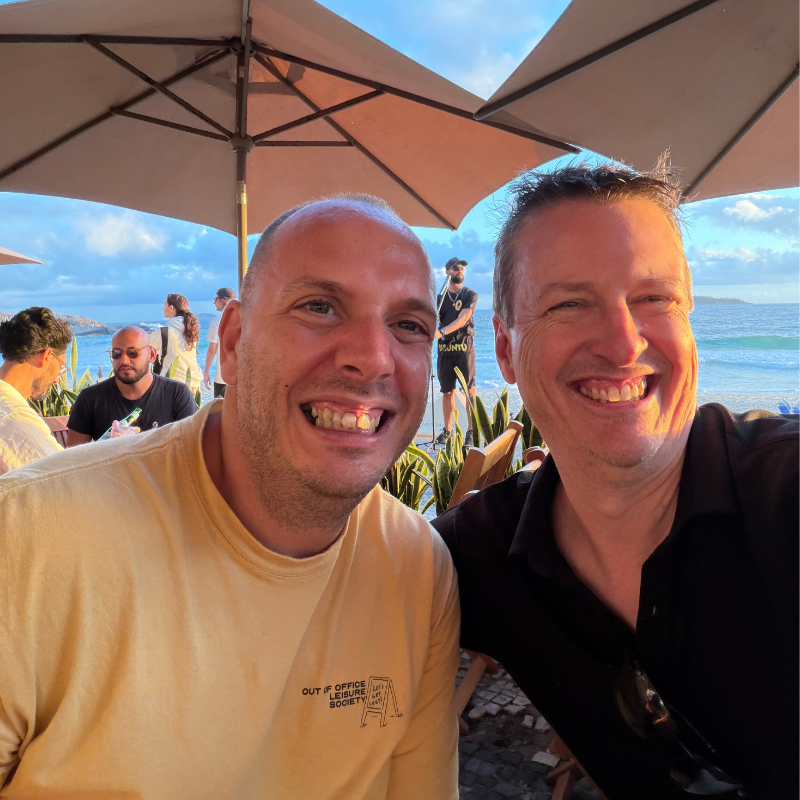
Matt Bowles: My guest today is Goncalo Hall. He is the owner and CEO, CEO of Nomad X, one of the largest digital nomad communities in the world. In 2020, Goncalo founded the Digital Nomad Village on Madeira Island, Portugal, a community of digital nomads focused on positive local impact and deep human connections. The project was featured in CNN, the Washington Post, Lonely Planet, the Irish Times and many other international publications. In 2021, he replicated the project on the African is Cabo Verde with the goal of attracting thousands of remote workers and entrepreneurs while positively impacting the local economy and empowering the local population to work remotely for any company around the world. Born and raised in Portugal, Goncalo has been a full-time digital nomad with no base since 2017. He has been traveling the world with his wife and he has now been to over 40 countries.
Goncalo, welcome to the show.
Goncalo Hall: Hello. Hello. What an intro, man. I’m excited now. Let’s do this. Thank you so much for the invitation.
Matt Bowles: I’m excited to have you on the show, man. You and I have known each other virtually for quite some time now and I have been watching what you’ve been doing and it has just been so incredible and inspiring. So, I have been meaning to get you on the show for quite some time. Super excited we could put it together today. Let’s start off just by setting the scene though, because unfortunately, unfortunately we are not in person today. If we were, we’d be sharing A bottle of Portuguese wine and all of those good things. But I am actually in South America. I’m in Medellin, Colombia today, recording this. And where are you?
Goncalo Hall: I’m right now in Madera Island, Punta do Sol, maybe the best village in the world.
Matt Bowles: Amazing, man. I definitely want to dive into that during the episode, for sure. But I want to just start off giving folks a little bit of background on you and just going way back. Can you just really start from the beginning and talk a little bit about where you grew up? And as you were growing up, how did your interest in international world travel start to develop when you think back?
Goncalo Hall: So, I grew up in Lisbon, so I’m a little bit spoiled. We’re saying this. I’m a little bit spoiled because I grew up around such an international community with Africans, Indians. Just so fun now that I’m looking back and see the opportunity I had to grow up in the city like Lisbon, that is a melt pot from different cultures. So, I grew up there. I want to see seven schools in 12 years. I was never very good in staying in the same place. And then I stay. I went to three universities. I say I have three half degrees, which is not true. I never went to half part. But yeah, I grew up in this beautiful place surrounded by international cultures, people from Cape Verde, from Angola, from India, from Brazil, from Ukraine. And just so fun now afterwards, seeing how this played such a key role in my development and how different it is to grow up around these different cultures.
So, I grew up in Lisbon. As soon as I could, 18 years old, I moved to Porto because I was curious on how is life in Porto. I actually didn’t like it. A little bit too cold. So next year I went to Algarve, did my first year of half university in Algarve. And I was always like that. I first choose a place; I was curious about where I wanted to go. Curiosity was always how it is to live there. So, it started in school, how it used to go to the African school, how it used to go to the fancy schools with guys playing rugby and stuff. And I thrived in mixed cultures. So, I did the same university. I went to Algarve University. I had no idea what degree I wanted to go. And I landed in landscape design.
Out of nowhere, I knew zero about design, zero about biology. So, I completely failed at it. Got bored in Algarve, went to Alvaro, which is another city in Portugal, more in the north, beautiful city, the same. I landed in languages out of nowhere. But my curiosity was always how it is to live in that place. And I think that curiosity came with me since I was born because I don’t remember not being curious about it. When I was on vacations. I always look like Croatia and like, oh, must be cool to live here. This is beautiful. I wonder how the locals live always. I didn’t finish my studies at all. I started working in sports betting and then after sports betting I went to Germany, then to Poland, then to the world, became a nomad and again I can just bring my job anywhere, which is incredible. And I can meet these incredible cultures and actually deep dive in all these cultures I grew up with, which is kind of my dream.
Matt Bowles: That’s amazing, man. Well, let’s talk a little bit about your professional trajectory and your entrepreneurial journey. Can you talk about that and how you came about realizing that you were an entrepreneur first of all and then what that path was like for you?
Goncalo Hall: Oh man, I suffered so I worked for companies before and I started my career in companies and started working in first data like I mentioned. Then I went for email marketing. And there is two key points for this. The first one was still during university. I landed in this association called Isaac, which is quite a famous student association that is spread all around the globe. And this was the first opportunity where actually did some work and understood what I am really good at and what I’m really bad at. And there was this tournament which is a competition called the leadership tournament, where companies, real companies, bring problems and groups of students try to solve those problems. And the problems were around marketing and sales and management.
And it looks like I was in this group with five people I never met before against groups that were real organized people from management, people from marketing. And out of nowhere we got second place because it was so easy for, for me without any business background to solve the issues of marketing and to solve these issues of sales. And the only reason we got second was because we wanted to be very democratic and everybody needed to present that. And so, this was my first cue. You are somehow naturally good on marketing. You should follow this. So, I moved to my next half degree marketing and I didn’t finish. But I understood that I can be really good at understanding people motivations and understanding what’s behind the motivation. So, this was the first cue for understanding what I wanted to do in the future.
The second cue was as an employee. I was very frustrated. I wanted to solve all the issues from the company and it never worked out for me because looks like managers from big companies don’t like to people who actually solve problems. And so, I did a personality test of Meyer Briggs and it gave me ENTP, which basically is a crazy entrepreneur, super high level. But I really suck at the details. I really suck at the operation. So, every time I try to launch myself as an entrepreneur, I failed at the operational level. I became like a sunglass American sunglass brand represented in Portugal. I loved it, the marketing was great, everybody was in love with it. But I suck at just taking these boxes of sunglasses and take them to the post office. I always failed at operations.
So, my entrepreneurial journey was inspired by all this. Every time I started, I failed. I was not good at jobs. I fell in love with the remote work. I fell in love with how remote work is designed. This tool that can change the whole world. I understood this as soon as I saw a video about digital nomads in Bali could they could work remotely on the laptop. So, I completely fell in love. I dig deep when I fell in love with something. So, I was researching, I was checking GitLab, DoIst and How They Work. I was reading Remote, the book from DHH. I was just consuming every single piece of content. And I landed my last job with Remote How. And I was lucky enough that my job was to speak with these remote work influencers. And that then helped me launch my first business, which was a consulting for companies that wanted to move remote. So that was my first actual business.
And since then, this was one year before COVID And then Covid happened. I exploded because, well, the timing was right. I had the right information; I had the right knowledge. And I just started too many businesses during the pandemic. Some people fell in love with Netflix, some made breads. I created businesses so Remote Europe. A job board was created during the pandemic, Remote Portugal. And the content website for Portuguese companies was built during the pandemic. I acquired Nomad X during the pandemic. I started working with governments during the pandemic. My whole entrepreneurial journey exploded during the pandemic. But because I was reading and studying this for five years. So right now, I have more businesses than days of the week. And I’m really happy because as an ENTP, this is my happy place. I thrive this priority, but I’m always successful. And this is my very big because I partner with the right people. I’m not in any business alone. The first partner is always someone from operations. This is key. I don’t even start a business if I don’t have a partner from operations. I will never do businesses alone again. And now I’M fairly successful, I guess.
Matt Bowles: I think that’s a really important tip for entrepreneurs is selecting the right business partner. And I think the first layer of that is exactly what you just said, right, which is identifying someone with a complementary set of skill to you that’s really good at stuff that’s really important to a business that you’re either really not good at or you really don’t like doing, but somebody else loves doing it and they’re amazing at it. So that’s the first layer for sure, in terms of business partner selection. And I did the exact same thing when I started Maverick Investor Group, my company.
But let me ask you about the second layer of that, which is among the pool of people that are good at those skills that you need. How have you then narrowed it down and actually selected the right person that would be the right human being to work with and that has made these businesses thrive and successful and have the right kind of founder partner synergy? Do you have any tips for that level of the selection process?
Goncalo Hall: Yes, because I’m going through the selection again and I’m hiring a marketing manager that will be across all my businesses. And I look into two things. Your operating system, your personality. Again, I’m an ENTP, so I look for more. The opposite of me, because I need people who solve my problems and I really look for people I want to hang out with, look for their values. So, everyone that works with me needs to be in love with remote work. I hire some friends because they were superstars at their companies. Nobody recognized them. They had the right values and I just hired them so they could thrive and I gave them full freedom. And I don’t even know when they work. I just know their job comes. So, my two things are definitely some association backgrounds. Isaac background is massive for me or any other association. Show me your work. Show me what you do when you have free time. Show me what are you trying to build. Show me that you can work with others.
Sports teams also work really well, but I prefer associations. But if you have an athlete background, for me it’s a massive green light because I know you thrive. I know you work hard. I know you had to do teamwork. I know you can listen to advice. I know you had a coach. So, all these sports go to transfers really well to business. I have a sports background myself. And again, people I want to hang out with, if their personality is right. I don’t even look that much to the skills. It’s much more for me about personality, values and what you did in your free time before.
Matt Bowles: Can you share a little bit about your sports background? And for you, what from that translated to your business success, do you think?
Goncalo Hall: Yes, I played volleyball. I played professional volleyball and then beach volleyball as well. And I have fun when I travel and I play beach volleyball sometimes. We still win tournaments. Even with my wife, we still win tournaments around the world, which is quite fun playing beach volleyball in different communities. So, I had volleyball and beach volleyball. I played in the youth national team of Portugal and what they taught me and I did all the mistakes. I was very opinative. I thought I knew everything. And I remember at 18 years old, I had a really good coach and I was good at what I did. But this guy taught me a very important lesson. I didn’t like to practice, for example, I just like to play. I just like the fun part, not the repetitive part. And I just gained a massive respect by working every single day with this coach.
It was not about technique. I had technique. It was just about giving the appreciation to the daily work instead of giving the appreciation to the final stage. It’s not about the result. You only become good when you fell in love with the process. And for me, this was the biggest lesson from 18. I started love to practice and I didn’t. I hated to practice before, so I just fell in love with the process. The games were to have fun, but I fell in love with practice. I became very good at practicing. I was there, I was not thinking about life, girls, et cetera. When I was practicing, I was practicing. And this only happens from the 18, 19-year-old. So, for me, that was the most important thing, to fall in love with the process, not just focus. In the end, when your company is all good and shiny, if you don’t fall in love with the process, that will be a very painful ride. So, the process was very important to me.
Matt Bowles: Do the reps. That’s really important advice, I think. And what a fun sport to be able to travel around the world and play beach volleyball over the place. I want to talk to you a little bit about your travels and your nomading that you’ve done, especially since 2017. I know you’ve now been to over 40 countries; you’ve been to a lot of different places around the world. But I know that Bali had a particular impact on you, especially for folks that have never been to Bali. Let’s say I was in Canggu for about a month back in 2019, so I got to spend some time there. But for folks that have never been to Bali, they’ve never been to Canggu. Can you talk about what it’s like there and how your experience was, what impact that had on you?
Goncalo Hall: Oh, man. Bali was always a dream. The way I found out about digital nomadism was through a video talking about Valley. The way all the co working spaces. My dream was to work from dojo. It was. I was checking dojo stories every single day. I was manifesting this so hard. I saw people on their motorbikes and I want to go there. I just need a remote job to do this. So, the expectations were so high because this became my dream, this became my obsession. I was even afraid that I go there and I would not like it. Maybe the expectations are just too high, but they were not. Bali is chaotic. I was in Canggu as well. And I love Canggu. It’s like my second house and it’s just good. Like the place is beautiful, but I don’t think it’s about the place. I think it’s about the people. The locals are incredible. It’s an Indu community. I think it’s the only Indu Island in the whole Indonesia. And Indu just makes people so kind. People are kind. People are chilled. It’s an island, so the locals are very chilled.
And then in Canggu, we just built. We, the nomad community just built the most incredible, almost utopic nomad community. It’s just too perfect. There are these incredible workspaces like Dojo and Outpost that build such incredible communities around them. They’re just a great place to work, to meet other founders, to meet the right people. You can go to different places to meet the right people. And in Canggu, I met so many interesting founders. I met the VP of UX from Trivago. I met founders of startups, big startups in Singapore. There was just this meltdown of interesting people in one place that there was no boring conversation. It was almost a shock to go back home in Lisbon and have normal conversations with people. I was not that this is not interesting anymore. So Canggu has this ability to gather the most interesting people I know in one place at the same time. It has the best cafes in the world with the best coffee, incredible food. It has the beach with surf, it has beach volleyball, which is very important to me.
But at the same time, it also has the best CrossFit gym. And I fell in love with CrossFit. It has everything digital nomads care about in one place. And it’s not perfect. There is too much plastic. There is a lot of pollution, there is traffic. But even though it has all these imperfections, Canggu really became for me this utopia of what a nomad community should be. And it’s something I transfer to all my communities. This utopia of what would be a perfect place, what would be a perfect community, what do we need to have? So Canggu is very high in my preferences because first was the first place. It’s for me the perfect community, even with all the problems it has. And it’s just what a utopia of a place for digital nomads should be.
Matt Bowles: That’s amazing, man. Well, let’s then talk about what that inspired you to go and do. Can you talk about the nomad village in Madeira Island and give a little bit of the backstory there in terms of your first experiences in Madeira, and then from there, what the different steps were all the way up to having meetings with the government and everything else. So just give folks to a little bit of the context and background for people that have never heard of this. Let’s just assume people have never heard of Madeira Island or the nomad village at all. Just take us from the beginning and explain how it became what it is and what it actually is now.
Goncalo Hall: So, nomads don’t travel to locations that travel between communities. At least I would say 90% of the nomads, they don’t travel to a specific place, they travel to a specific community. We love communities, we love the people. It just happens that commute is usually a hard in very beautiful places. So, I actually designed the whole project for the nomad village in my first year of nomading. I was in this European project from Erasmus plus and I was in the mountains of Italy, and I was in this crazy beautiful village in the mountains of Italy with a beautiful castle and everything you can imagine Italy is with great pasta and everything in between. And the theme of this project was intrapreneurship, how to bring entrapreneurship to rural areas.
And I designed the whole project there, inspired by my travels, also inspired by Grow Remote, doing an incredible job in Ireland and all this information I was already reading. So, I designed a whole project on how we can use this tool, remote work to repopulate villages. So, I designed pretty much the whole skeleton of this project was designed there. And I tried to do it with the local government. Didn’t work out and never paid for the project. Oh, this is interesting. They didn’t believe in it; they didn’t invest in it. So, it was somewhere on my ever note, forgotten a couple years later, one year and a half ago, I came to Madeira. I came to Madeira when I was a kid to play a volleyball tournament. They had a really cool tournament, but mostly around Funchal, the main city. And I didn’t remember Madeira much. I came here two years ago to organize this online conference.
One of the things I do is organize the future of four conferences. And they invited me. It’s an online conference, but they invite me to come and organize from here so we can show the world that you can have good Internet and people can work from here. And there was no agenda on my side. I just like, cool, free trip. Let’s go to Madeira. I got to know Madera again. I got to travel for free. This is a dream. Let’s do it. So, I came here in the first day, rented a car, and we went around with a car. And that my mind just was completely blown off. This place is way too incredible to be true. I felt in the mix of Bali with all the nature, all the banana trees, like these really high hills, this dramatic scene that we have here. And my mind was just like, what the fuck is this place? I can’t believe I traveled the whole world and this is in my garden. I’m in Portugal. So, it was completely blown away. This was the day before.
The first day of the conference was just traveling around. So, the second day, I’m here opening the conference. I have the Secretary of State of Portugal and second one the second person speaking was the Secretary of Economy of Madeira. And I was doing this in a beautiful place called NIDI Design center, which is a castle in the center of Funchal. And next to me was the Secretary of Economy to present and to talk a little bit on why they brought me here to organize this from here. But just before he spoke, I was just like, dude, you guys are missing out. The Canary Islands just invested half a million into bringing these tournaments there. This place is ten times better. I was in the Canary Islands when I was saying this. This place is 10 times better. This statue is just unbelievable. The Internet is fast. What the hell? Why are you sleeping on this? This is impossible. You need to invest in this.
And then he was speaking, and then I was speaking right after him. So, there was no follow up to the conversation. And I was just speaking like, I am with you right now, and I hear he very serious. Goncalo needs to speak with Miguel tomorrow. And I have no idea who was Miguel, but okay, yeah, I need to speak with Miguel tomorrow. Some guy. So, Miguel is the president of Madera. It’s Miguel Alkerque, the president of Madera. Second day of the conference, lunchtime, I went to the palace of the president and I said the same. There was like beers, wine, honey, cake, all this incredible food prepared for us.
And I was with the head of the government, the president, the Secretary of the Economy, the number two of the government, the president of Startup Madera, speaking about my vision on how we could bring digital nomads and remote work to Madera, and how this could influence the social economy and how this could influence the whole structure of the society here. And the craziest part is they believed me, which nobody else did. I tried this with so many places and nobody listened to me. And these guys said, wow, this looks an incredible project. How many millions these costs? I was like, no, millions. We just need you to pay me, like a consultant and I can build this. And they were like, oh, interesting. We went back and forth. I was designing the project, designing this as a consulting project. Two months later, I was here signing the contract. TV was around, and I was preparing the first digital nomad village.
Matt Bowles: One of the things that I know that you prioritize in your community building initiatives is first and foremost, the positive impact that this will have on local folks. And it’s a really central part of everything from your planning and designing and building and implementing of this. So, can you talk a little bit about within Madeira example from there, how was the positive impact on the community sort of initially conceptualized, and then how did that actually impact the community?
Goncalo Hall: Of course. So, we designed the project thinking about doing this in the village, not in the city. It would be very easy to do this in Funchal, the main city. But we chose a small village with 5,000 people called Ponto du Sol. So, this already, in the winter, was quite dessert. This is a place where people from Madeira come for summer, but in the winter, you couldn’t see many people here. You see also people taking pictures and passing by, not people staying. And usually, it was very elderly tourism. So, Madeira has tourism for 200 years. This is not new for them, the tourism part of things. They know the tourists, they walk around, they leave the money, they go away. The whole island is created on the base of tourism, the whole economy.
So, another thing is there is a massive amount of age gap here between the 18 and the 35 years old, because when you are young, you leave the island to study abroad, and you stay working abroad, unless you work on tourism, which most people don’t want to do. So, you don’t see many young people around, not locals not foreigners, not tourists. And the way I wanted was, can we actually redesign a whole village, repopulate the whole village so the locals can see some value on this. So, the whole community was built around the local businesses. We didn’t open any business. The only thing we did for free was the co working space. We have a free co working space that became the epicenter of the community. And then we went to the locals. The person renting or our houses is a local business. The person doing us. The restaurants are all locals. And we had to adjust the restaurants for us a little bit because 25, 30% of the community digital community is vegetarian or vegan.
So, we taught the locals how to cook vegetarian, how to cook vegan. And the best vegan restaurant right now in Punta do Sol is called Steak and Sun, which is quite ironic. They never changed the name, but they became very good at creating vegetarian vegan food. So, this was the basic. We went to a village that was kind of depopulated and lost a lot of the dynamics. And we brought here digital nomads, this community sense. And from here we created a lot of activities to impact positively locals. I remember last year, full lockdown. We created a project for local artists, how to use NFTs for all for local artists. Which one year ago was before the madness of NFTs. I barely knew what NFT was and we brought four CEOs to speak to the locals in the fully booked room. How what is NFT? Which I didn’t know I was mediating the panel. What is NFT? How to create NFT. How the local artists can focus on this to make money.
One year later, that event was spot on, right? And then we do small things like beach cleanups. We are now integrating more and more with the local startups to. We have so many incredible people in the community that the local startups need to hear about it, they need to exchange knowledge. So, we are not focusing on that. Every week we go and we give time for the local dog shelter and we help the dogs. They don’t want money, but we could give money. They just want our time. And we play around with dogs, which we do. And it’s almost hiking, so it’s cool. And we do anything we can. And that is quite a hard place because of 200 years of separation between locals and tourists. And what we are seeing is that the impact we had, the number of businesses we save is just unmatched.
So, they really took what we did here to the heart. They embraced it, they support us like I never saw any community support foreign people before and it’s just beautiful. So, the local impact we are having first was economic, of course, and now it’s social. Like schools come to the co working space. We have nomads speaking with the schools and with the kids saying, guys, you can work remotely from anywhere. You don’t have to leave Madeira. This place is incredible. You can stay with your parents, with your friends, you don’t have to leave the island anymore. Now we are connecting with the local startups and it just keeps growing. So, the next step will be to connect the expat community, the nomad community and local community and have all these people creating a group to improve Madera in all aspects.
Matt Bowles: That’s amazing, man. So, when you launched the nomad village, can you share a little bit about the experience of the nomads who came and participated in that? What was that like?
Goncalo Hall: The reason why I love Bali is that it became my foundation for everything I do. The communities I visit, not just Bali, but Chiang Mai and. And even Sunday, a co living space in north of Spain became the foundation for my vision to Bordeaux. So, we opened with 20 people only. But these 20 people, we had events every single day from watching the sunset with beers, which was the first event. And then we started with yoga. Then we started with CrossFit on the beach. Then we started with skill sharing. Then we had the design thinking session with the professional on what the nomads want this community to be. So, what the first nomads here experienced was a level of freedom and entrepreneurship in the community like you don’t see anywhere else. The nomads were making the community when people came to me and asked Goncalo, can you do something with the local dog shelter? Sure. You are now the leader of this project. Go do it. We empowered people, we facilitated people.
So, what we built here, and it’s not just because I built it, just what I see and people are coming back for the second year. We built deep relationships. We built this in a way that people don’t came here and met people. They came here and make friends. And during, after coming here, they were calling me during the summer around. They were around Europe. Goncalo, where do I find communities like this? Where do I found this centralized community that you build? What other places are there where you can just come in and make friends? And there is not. There are very few places, I think Canggu is one of them. But there are not many places where you have a centralized community.
So, the way I build everything is community centric. The community is everything. If the community complains about someone posting shit on our slack, I’ll just go there, delete, warn this person. This takes 30 seconds. If the community says, Goncalo, the corn spice doesn’t have recycling, we create recycling. If the community says, we mean more wellness activities, we will go out and find locals to do more wellness activities. Everything we do is community centric. So, you will experience a level of thought on this community, a level of customer centric, nomad centric approach that because the other commits are not centralized, nobody else can actually replicate.
Matt Bowles: Well, I’ve interviewed a number of people on this podcast who have been to Madeira and who have participated in the village experience and everyone has just raved about it. I want to ask you now about your next moves after that in terms of selecting other locations to replicate this concept. And I want to ask you specifically about the African island nation of Cabo Verde, which I was so excited to hear that you were going to be working with, because Africa has a super special place in my heart. In my nomad journey. I’ve probably spent about two years on the continent in total. I have been to Cabo Verde, but it was a very brief swing through. I’ve really been wanting to go back ever since. And then I saw that you were doing this on Cabo Verde and I was super excited. So definitely going to be a very high place on my list that I’m going to want to go and spend time. But first of all, for people that have again, never heard of Cabo Verde, don’t know where it is or anything about it. Can you share your initial experience there on the island, what it’s like, and just sort of describe that for folks and then how the project started to evolve there?
Goncalo Hall: So, Cabo Verde was my dream for a long time. When I was 40 years ago, I was at Bolster Turismo, a tourism trade show, and I was already speaking with Cabo Verde government, saying we need to build this. And even before Madera, Madera was not even a project, I was already speaking with Cape Verde government. And this scale up very fast. So, Cabo Verde is a group of 10 islands in the coast of Senegal, and it’s a country. They speak Portuguese, a previous Portuguese colony. And it’s just almost like a mix of different countries inside one. So, we have Saint Vicente, which is a little bit of everything, has mountains, has surf, has kite surf, has the cultural center of Cabo Verde in the city called Mindelo, where the best singers, the most famous people came from in the culture Scene.
So Mindelo is a very cultural city. But then you have Boa Vista and Sal, which are beach islands. So, you have incredible white sand, unlimited white sand. You can swim with turtles, you can surf again, kite surf is a big sport in Cabo Verde and people are so friendly. It was the most friendly community I ever created. It’s just incredible how the Cape Verdeans see foreigners, how much they want to integrate. It was so easy for all the nomads to just go there, go to a bar and meet 20 locals. Which usually is not very easy to do in the nomad communities. So, Cape Verde is incredible. It’s just four hours from Lisbon. Actually, the reason why I love it is that you have direct flights to Boston, to Africa, to Senegal and to Morocco. You have direct flights to Brazil and you have direct flights to most Europe. So, it’s very well connected because lots of people do vacations in Cabo Verde. So, we chose San Vicente and Mindel specifically because it’s the cultural center. And I believe you should go to San Vicente because you can meet the culture. Sal is only beach and resorts, which is okay, but that’s not what we want to share with the nomads. We want to share the culture.
So, we built this community in San Vicente. We have co working spaces, we prepare the whole accommodation. We have a centralized discord community, we organize daily events, we have a local community manager and a foreign community manager. But it’s just a beautiful place that now is more and more known by nomads and we have more and more people going there. And the whole idea for this is can remote work change a whole country? Because KVR doesn’t produce anything, they have to import everything and the only thing they can export is knowledge. So, can we put these people working remotely? Can we go there and teach locals how to work remotely? Because now they have the right infrastructure to do it. Can we share with the locals? So that’s the whole idea for the Cabo Verde project. And we sent it was the first test. We will spread the project to more islands.
Second season we have the first partnership with the airline Cabo Verde Airlines was grown. We have fixed price for nomads. We have a remote work visa in place which is very easy to do. The salary requirements are €850. To do this you only need two to three weeks before you send an email with the documents. We take care of everything. You have a remote work visa on arrival, you have a stamp and you just enter with a six-month entry stamp, which is quite cool. So that’s the story behind Covert I am sure, I’m just sure that Covert was will be the star of the movement and will be a top 20 place in the world because it’s so close to Europe. The time zone is the same as the soil. So, one hour behind Lisbon. You can work there if you are a European startup. You can work there if you are working for America. It’s just beautiful. The locals are incredible. We can swim with turtles every day. It’s just incredible. Just Africa in a nutshell. It’s incredible.
Matt Bowles: That’s amazing, man. I am so excited to go and participate in Immerse in that. It sounds incredible. Let me ask you this now, Goncalo, I want to talk to you about your acquisition of Nomad X. Now, Maverick Show listeners know Dave Williams, who has been on the show, who was the founder of Nomad X. I know you and Dave have a great relationship, but can you talk about your decision to acquire the brand, become the CEO of the brand, why you chose to do that? And for folks, let’s just say that have actually not heard that interview with Dave Williams and this is their first-time hearing about Nomad X. Once you acquired the brand, what does that brand do today and what is your vision for where you’re taking it?
Goncalo Hall: So Nomad X, if you don’t know Nomad X before from Dev, it was incredible. And it grew this brand so big. It was incredible. But due to the pandemic, they were focusing in creating the perfect housing market for digital nomads. So like Airbnb for nomads focus on this market, they were way too early. They started this like four or five years ago. So, they went too early to the market, massive investment and they ended up selling the whole accommodation business to flotayo.com so Nomad X was there just without any direction. And on the other side, I was growing. I have Madera. I have a lot of people reaching out to me, different countries and I cannot be everywhere. So, I needed a brand to represent what I do with the local communities, to represent the kind of communities I’m building and to make sure that people know that if there is this seal of approval from Nomad X or from whatever I’m doing, the community will have certain structure that you would expect from us.
So, I actually acquired Nomad X. I spoke with Dave. Dave didn’t know what to do exactly what to do next. With Nomad X there was this beautiful brand. He was working for this for five years and for me just made sense. I was here. It Was a tough decision because lots of people told me not to do it. Just create your own thing. You are big in the market, everybody knows you. You can just create a brand from scratch. But I love the brand. Nomad X helped to create the scene in Lisbon. Nomad X helped to create the scene in Porto. Dave, you’re such an incredible guy. Such a luck to have this guy behind me and teaching me what he did and sharing with me. So I decided actually to acquire Nomad X, to get Nomad X and to bring Nomad X to a new direction. What is this new direction? Exactly what we do, the community. So Nomad X is just a community centric brand right now. We are now redoing everything and we want to create legendary experiences for nomads all over the place.
So, we started with these communities, we are working with governments. The work I do with the government start to be work that Nomad X do with the government. And we want actually to be the most community centric ever brand in the world. So Nomad X is not even a business, it’s the community. If the community says we want to experience Nigeria, we will create an experience in Nigeria. If the community says they want to have more impact, we’ll find a way for the community to have more impact. So that’s the vision. We’ll do different things inside Nomad X, working with governments, of course, and create new communities with the governments always focusing on structure and having positive impact. We will do the first deep learning retreat, which is something I was trying to do for like four years. I thought about this in Bali, swimming in the pool. It would be really cool actually to learn how to surf. But we only get one or two classes and then we quit because we moved to a different place. What if we could stay in one place for a whole month and surf every single day with a professor? That will take you from 0 to 5, not from 0 to 1.
All the professors are training, like always the same paddle, stand up. No. What if you have a professor for the whole month and you can serve every day? So, we are launching our first deep learning retreat actually in the village where Dave lives in the south of Portugal in a refiner. And to be one month with co living, with the co working and with the surf coach where you can serve every single day. We are opening co living spaces. The first one will open here in Madeira because there is a massive issue with accommodation right now for nomads. So, we are open decent priced co living spaces for around €850, which is very Cheap for the most co living space. We see co living spaces as accommodation. We are opening co working cafes, which is a model I fell in love with. We are doing Nomad experiences. We will go to a new place and just experience a new community for a month to see if we should work more there. Imagine we go for a month to, I don’t know, south of Spain, to an unknown village, or to the mountains of Portugal.
And then we decide, should we actually build a bigger community here? Yes. No. Well, how was the experience? So, everything we do will be like this. There is no real business behind it, but there is a business behind it. Our business is to provide what the community is asking for. And also, very important. I love what Tarek is doing with Nomads Giving Back. So, a big focus will be to empower and give more power to Tarek and to Nomad’s Giving Back. And they will be our NGO right arm. They will be our impact partner. And I’m very excited to actually bring what they are doing to even more people, but not also that, but to bring my community and have everybody understanding the power of this. Because I met Eric right in the beginning in Bali a long time ago, and they were starting this Nomad Giving Back, and I learned so much with him. It was my inspiration to have local impact. So now I want to give back to him as well, and I really want to empower him and give more power to what he’s doing, because it’s unique and it’s incredible.
Matt Bowles: That’s amazing. Well, Maverick Show listeners know Tarek Kholoussy. He’s been on the show twice. I actually just hung out with him in person this month in Medellin, and I interviewed him on the Maverick show for the second time. So just a few episodes ago. And the first interview that I did with him, we were reminiscing about this was literally the week that he launched Nomads giving back in 2018. And this was the first podcast platform that he had ever announced to the world that he was launching Nomads Giving Back. And that was four years ago. And so, we have this incredible history and friendship, and he’s a very, very dear friend of mine as well. So, I was so excited to see that the two of you were partnering up and connecting and working, working closely that he was involved as well. So that’s amazing.
Goncalo Hall: I learned so much with him. Fun fact, Tarek actually launched Nomad’s Giving Back at Nomad Cruz in Cape Verde. So, when I launched Cape Verde, reached out to me, Goncalo that place is so special to me. That place where the place I launched nomads giving him looks like, wow, that’s the full circle. I’m so excited for this. It’s unbelievable.
Matt Bowles: And Cabo Verde was his 100th country that he had ever been to, so that was this huge milestone. And I was on that nomad cruise, and I was there in Cabo Verde with him, and. And all that, and we talked about that. And so, yeah, man, all of this stuff comes full circle. That’s amazing. So, fun. Well, let me ask you this, Goncalo. How do you balance the concept of traveling for the purpose of experiencing the local cultures, right? Like what you started off talking about at the beginning of this interview. You were so interested in learning about these other cultures and experiencing these other cultures and wanting to go to these places and immerse in these other cultures. How do you balance that with the nomad communities, which can sometimes create the opportunity for people to travel to a place and then stay entirely within a nomad bubble and interact almost entirely with expats, at least in a social capacity and maybe not have as immersive of a travel experience. And I know that you’re a guy who’s passionate about both of those things and talking about the importance of community and also the importance of immersing and connecting with locals. So, can you maybe share some reflections on that and maybe some tips for nomads to navigate that?
Goncalo Hall: It really depends on where you are. And how much do the locals actually want to hang out with nomads, which I found it’s very different from place to place. What I do, usually I go to the locals through sports, so I play beach volleyball, and I do CrossFit. And usually, nomads don’t have these bubbles. They have to integrate. You cannot just create a CrossFit team out of nowhere. And beach volleyballs, you need some structure. So, for example, in Las Palmas, my whole friend circle is locals because they are the ones who play beach volleyball. So, I was playing beach volleyball every day with locals. I speak Spanish, so it was easier for me, and it was my way into the local community. In Las Palmas was one of those places where I actually hang out so much more with the local community than with the novel community because of beach volleyball. So, it was somehow beautiful. Other places where I did this a little bit like bigger cities, but it’s not easy everywhere. We did this in Cape Verde as well. It was more through the culture.
We went to live concerts, we met locals, and they are so open in Cape Verde that it was just easy to mingle and to meet people just drinking a beer in the bar. People just talk with you. But there are other places and Madara is a little bit on that. We are working really hard to build this connection, but it’s not easy where the locals are a bit closed. And we try to understand why Madara is because they saw 200 years of tourism, they saw way too many tourists and the tourists never tried to integrate because well, they were here for one week, so what’s the point? So, they are used to this kind of people that don’t want to integrate themselves with the locals that just came here for visit to see this beautiful island. So, the way I am solving this and I think this will be very important is through a local community manager. And this will be key. By bringing a local to manage the community of nomads, we can actually have this local entry barrier completely removed. So, for example, in Madara we have made fitness friends started by a local and that mixes every week in the workout. Locals, expats and nomads. And they create these events every single week where locals, nomads and expats can just mingle and share a common thing, which is their love to support.
So, what I’m finding right now is that when you add a community manager, if you have a centralized community, when you add a local community manager that has this mission of bringing nomads to the local community, this becomes much easier in places where the local community is not so open, which is mostly touristic places. So first, true sports are the way for me to connect with local community. I think it really works well. If you go to a local yoga studio, if you, you go to the local CrossFit gym, if you go to play football with the locals, it’s not always easy, but once you break where they hang out, it’s very, it becomes very easy. And the second one, if you manage a community or if you go to a local co working space, just ask the community manager, the locals, where do they hang out? What events do they have that you can just join? Where are the English speakers? Because sometimes there are not many English speakers in the local community. Where can you find, is it the business community? Are there any business community around? So, it’s not an easy feature always, but depending on the locations where you are, there is different ways of doing it. The one that always works for me is sports. Always never misses.
Matt Bowles: Let me ask you this, what is your vision for the future of the digital? Nomad movement, where all of this is going and particularly the role of Nomad X within that context. What is your vision for the future of Nomad X?
Goncalo Hall: So remote work is a new normal. I think we will divide the work into online work and offline work. Where the online work is all the work that can be done remotely. Everything that can be done remotely will be done remotely. And the offline work is things like your local cafe, the people that work in restaurants, et cetera. What we are seeing first is a balance. So, before the online work was much better paid than offline work and now, we are seeing things slowly balance it out because this happened with marketing. In marketing, when you leave university in Lisbon in Portugal, you get offered €800, which is the same as an offline worker win. So, you see already some balance in professions that are online that have a lot of people trying to enter into them. And at the same time, you see the offline work raise the salary. So, what I see in 50 years is a salary balance between online and offline. But most important of that a salary balance across countries. So, we see when we pay a high salary in Nigeria for a programmer or when we pay a high salary in India, we are slowly balancing it out.
And when we see companies like Automatic and even Buffer had a salary calculator, that was one of the things they had was a location-based percentage which they now they completely remove and now they embraced. Same position, same salary, the same that Matt Mullenweg from Automattic is trying to promote for so many years. So, we in terms of society, I see a slow balance of the online work and the slow balance on the salaries across the world. And with more money in places like Nigeria, convert offline work will also be better paid because people have more money to spend. So, this is more like my high-level vision about what’s changing in the world about the nomads. I think it will be very interesting. I think we’ll see more managed communities again. I true believe that nomads travel between communities, not between locations. So, we will see for now a war of countries trying to attract nomads. Most of them are failing. I’ll say 99% of the countries who launch nomad visas are not really trying to target nomads, are trying to target remote workers.
So, once they realize this, if they ever realize this, they will start adapting their visas to actually attract nomads, attract remote workers and have moments like a repopulation funnel which we in Europe and in North America that we strongly need to Attract people because of population is just in the deep decline. So, we will see more and more countries trying to attract remote workers. And Portugal is thriving on this. So, for the nomads, I think we will grow. I think it will be as normal as study abroad for some years. It will be something that most people that work online would do for two, three years of their lives just to test it out. Some people will fell in love with the movement, like I did, like you did, and want to stay longer and maybe never leave. And we conquered something that’s important for us, which is the freedom to go anywhere. So maybe even if you stop becoming a nomad, you acquired a freedom to move seamlessly between locations. So, if you are in love with Medellin, you can stay in Medellin. If suddenly the political landscape changes, you can come to Lisbon and just seamless move to a new country without thinking twice. So, we will see also the countries fighting for attracting remote workers. And it’s already happening.
What’s the role of Nomad X? Nomad X wants to, number one, help the right countries and the right communities to attract digital nomads by creating incredible communities. The way we create community is very centralized, and we believe we have to centralize, to decentralize. So, we have to centralize people in the platform like Slack, like Discord, to then help them to thrive and decentralize everything we do. So, we are working with countries and we will work with more countries. Specific countries that are now developing, like Brazil and Cape Verde, are good examples. Countries we are working with, with to start to create these nomad communities in very cool places. But we will help build the infrastructure, we will help build the right visas, we will help empower the local businesses, like we did here in Puento do Sol, to offer the right services to digital nomads.
So, this is the first thing that we will do. This is with the countries, and it’s something we are really focused on. We will keep pushing it forward. We are working with the Portuguese government and we will soon launch Brazil. That will be quite incredible. And the other part we are doing is on the nomad community with Nomad, Giving Back with Tarek, want to help spread the word that we should be mindful of our impact. And by knowing our impact, by knowing that we need to create relationships, by understanding that where our money goes, where our time goes, this has deep impact in the local communities where we are living. We want to help people make better decisions wherever they look like. So, this is kind of our mission to the nomad. World trying to show new places, trying to show how to have a positive impact with our economics giving back. At the same time trying to create unforgettable experiences. And it’s a big mission, but well, I did it once in Madeira, so I think I can replicate this.
Matt Bowles: That’s amazing, man. Let me ask you a couple travel advice questions if I can. Goncalo, first of all, you have been traveling now full-time itinerant nomad with no base with your now spouse, previously relationship partner. And I’m wondering if you can give folks some tips for traveling together as a couple in an itinerant nomadic lifestyle.
Goncalo Hall: Okay. First, we have a list of what we love and we both love the same things. So, this is important to us. We only go to places that have at least one of the things we love. So, we need a CrossFit gym or a beach volleyball community. And this is very important to us. This is the key to our happiness. This is the key to also our health because if we don’t have any of this, we will struggle with our health. We will get fat. We will not work out in a normal gym. We already know this. So, we need orbit volleyball community or a CrossFit community so we can work out and do things we love. The second thing we do always is to find a place where it’s easy to meet others. So, the community. And we both love people. I’m super extroverted, she’s more introverted. And we found a balance where we can hang out with locals, we can hang out with another community.
But also, we retreat and we have date nights. We just did one yesterday where we can retreat and just enjoy the movie. So, we found this balance which was very hard to find. And for me it was hard. We spent two years trying to figure it out, to be honest. But we have to find a compromise of the things I love and the things I need and the things she loves and the things she needs. And we try to bring this to every single community and the way we live our day-to-day life. And then it’s just respect and listen, I believe there is no secret to relationship. The way we did it was every time we found a problem. And there is like stupid problems and more profound problems for us. For example, sharing the dessert was a problem. We both love food and this seems stupid, but we actually had some tension because of sharing desserts.
And we thought, okay, this is something that’s not right. How can we do this? We created a rule, we never share desserts again. So, well, it’s more three or four euros like it. And I just prefer to spend more five euros. And don’t even think about splitting a dessert. We split everything else, the whole life with only rule is on split desserts. So, find whatever works for you. If there is some tension around anything, the location, the co-working space, understand what are the motivations of your partner and what your motivations, how you can compromise in the middle. It’s a constant negotiation, but once you nail it, once you understand, it becomes easier with time.
Matt Bowles: Awesome. When you think back on all of the travel that you’ve done, all of the places that you’ve been, all the experiences that you’ve had, what has been the impact of all of those travel experiences on you as a person now? And why, having already done all of that, why do you continue to travel? What does travel mean to you?
Goncalo Hall: I believe the more I travel, the less preconceptions I have. I believe that once you travel to cultures that you may be biased against, it’s impossible to be biased against them. So, if someone has bias against African people, once you go to Cape Verde, it’s just impossible. You just embrace it. If you are in the city and there is a small African community and you see them as the bad guys, and I’ll just use this example because it’s a Portuguese example. Once you go to Cape Verde, once you make friends and once you are surrounded by incredible people, you just drop any misconceptions you have about color, about countries. You just lose all these misconceptions because you learn, I think most of bad things that happen in the world are just based on lack of information.
So, once you go to the places, once you meet the locals, once you are surrounded by the people you are biased against, suddenly you see that we are all pretty much the same. And this is true for Africa, it’s true for Asia, it’s true for South America. It just happens. And humans are always biased against something. It’s just the way we’re built on and it’s something we have to work on. It’s our nature. It’s always us against them. That’s why we have so many problems in the world. What travel did for me is completely annihilating that bias I may have against any culture, any country, all these misconceptions, because I went to Bali and I was surrounded by locals. I went to confer and I was surrounded by locals. I went to Budapest, I was surrounded, I went to Mexico, I was surrounded by locals. Anywhere in the world I go, I mostly see Kindness.
So whatever place you are, no matter whatever preconception you have, once you travel, it’s impossible to be racist at all. It’s just impossible. It doesn’t work because you were there, you fell in love with Cape Verde. How can you be racist? It’s impossible. So, for me, traveling has this power of inform you about different cultures. It has the power to give you this information that you are not right. There are other ways. There are always other angles to the way you live. And it has the power to make you introspect in the way you can grow with these experiences. So, this is why I keep traveling. The world is way too big. I have FOMO, which is the biggest issue I have as a nomad. I want to be everywhere. I want to go to Medellin, I want to go back to Brazil, but also want to go back to Bali. I want to do so many things and be in so many places. So, this is the biggest impact that travel had in me and that I see travel having in people. You just become a much more open person and you just acknowledge that we are all different, but at the same time, we are all the same. And most people are actually kind. Not whatever misconception you have.
Matt Bowles: And, well, that I think is an amazing place to end the main portion of this interview. And at this point, Goncalo, are you ready to move in to The Lightning Round?
Goncalo Hall: Let’s go.
Matt Bowles: Let’s do it. All right. What is one book that has significantly impacted you over the years you’d recommend people check out?
Goncalo Hall: I’ll say one of the first books in my life. I read this in my second, Diversity, and it’s Poke the Box from Seth Godin. It just taught me how to whatever you want to do. It may seem very big to create a community in the country if you just poke the box. If you just send that email, things can happen. Always poke the box.
Matt Bowles: What is one travel hack that you use you can recommend to people?
Goncalo Hall: I learn how to avoid jet lag, so I don’t sleep on airplanes or any transportation usually. So, what I do is as soon as go into the airplane, I change my watch to local time and I only sleep or try to close my eyes in the local time evening. So, with that, I rarely have any jet lag.
Matt Bowles: Awesome. If you could have dinner with any one person that’s currently alive today that you’ve never met, just you and that person for an evening of dinner and conversation, who would you choose?
Goncalo Hall: I have two, man. I will have to say the two. One is because it’s the father of all of us, it’s Tim Ferriss. This guy just knows so much. It’s just incredible. I am a fan. My first podcast, I learned so much with him from intermittent fasting to whatever people he brought. I just, I’m just a better person and a more knowledge person because this guy does what he does. The second one, well, I love this guy for a long time. I know he’s very polemic, but I would love to have dinner with Will Smith. I think the way he created his life, like I went through his biography, I know his YouTube channel and he’s a wonderful human. I think even wonderful humans can have bad days and do bad things. It just happens that he did one bad thing in a very big stage. But this guy’s incredible. The way he hustled, the way he built what he has today, it was just through hustling and being a good person and being smart. So, I respect a lot this guy and I would love to have dinner with him.
Matt Bowles: If you could go back in time, knowing everything that you know now and give one piece of advice to your 18-year-old self, what would you say to 18-year-old Goncalo?
Goncalo Hall: Well, 18-year-old Goncalo was very rebel. But the one thing I learned with time is to trust my instincts and double down on my beliefs. So, I have strong instincts. I had it around remote work, I had it around several things. Now I have, I’m having them again. And when I doubled down on my instincts like I did with remote work, like I do the repopulation project, good things happen. So somehow, I’m a high-level visionary and now just need to trust it and double down and poke the box.
Matt Bowles: Awesome. Of all the places you have now traveled in the world, what are your top three favorite destinations you would most recommend? People should definitely spend some time in.
Goncalo Hall: I’m so biased on this one, so I’ll say some that I actually manage and some that I don’t. So Canggu is my number one. You know this by now. I love Canggu in Bali Madeira. It’s just crazy beautiful. Even if I didn’t build anything here, I would just say Madara Rio Gennaro in Brazil. I was just there for a while and it’s amazing and unbelievable. I say Rio is everything, is the all the best and all the worst. And I’ll have to add one more Cape Verde just blew my mind. I spent five months there meeting the locals, swimming with Turtles, the nature, the kind enough people just out of this world. So, I have to say four. Sorry, man.
Matt Bowles: That’s all right. We’ll give you four. Okay, Goncalo, what are your top three bucket list destinations? These are places you’ve not yet been highest on your list you most want to see.
Goncalo Hall: First one is Sri Lanka. I almost been to Sri Lanka for three, four years ago, but there was an attack there and the church, and they closed the country. And I really wanted to go there. I’m betting hard that Sri Lanka will be one of the best places in the world to be as a nomad outpost, just open there. They are proving me right. They say they love it. So, Sri Lanka is number one. Argentina. Argentina. Never been to Argentina. It will be number two. I really want to go. I know a lot of Argentinians. I love them, so I really want to go and visit their country. And the third one, sir, is the place where you are right now. Colombia. The same. I love Colombians. I haven’t explored everything in South America, and that country must look amazing. The people are out of this world, so I need to go to Colombia.
Matt Bowles: Those are three great picks, man. Those are actually three of my favorite places. So, whenever you want to go to any of them, man, just hit me up for some tips that I got you. All right, Goncalo, I want you to let folks know, first of all, if they want to participate in some of these Nomad Community village projects, they want to come to Madeira, they want to come to Cabo Verde. How can folks do that? How can they learn more and get involved and participate?
Goncalo Hall: Awesome. So right now, we are redoing the whole website. So, if you go to our website, nomadx.com actually can see all the communities that we are currently managing and shopping. So nomadex.com you’ll see a tab saying communities, and you just go down, you see a little bit of each one of them. You have Madara, you have Cape Verde, and you can just register. So, there is a button to go to the official website. You register, then you book your ticket and you come wherever you want to go in our community. So that’s the right way to do it.
Matt Bowles: Amazing. And then if folks want to connect with you, follow you on social media, find you in any other way, how else do you want people to come into your world?
Goncalo Hall: I’m always changing, but LinkedIn is my second home, is where I share my deep thoughts about things. Maybe they are not always right, but LinkedIn is one of my favorite places. So just look for my name, Goncalo Hall and Twitter. I’m falling in love with Twitter more and more. So gonzuhall is where I also share my short thoughts and I love it. If you want to follow my Instagram of course Nomad X is everywhere but gonzuhall also on Instagram.
Matt Bowles: Amazing. We’re going to link all of that up in the show notes so folks can just go to one place at themaverickshow.com go to the show notes for this episode. There you’re going to find the links to Nomad X so you can participate in some of these amazing community projects. You can also find all of Gonzalo’s social media handles and links to everything else that we’ve talked about in this episode. themaverickshow.com, go to the show notes for this episode and there it will be.
Goncalo, thank you so much for coming on the show, brother. This was fantastic.
Goncalo Hall: I love it. Thank you so much for the invitation. Keep pushing. This is amazing what you are doing. So, congratulations for you as well.
Matt Bowles: Thanks brother. I appreciate you. All right, good night, everybody.