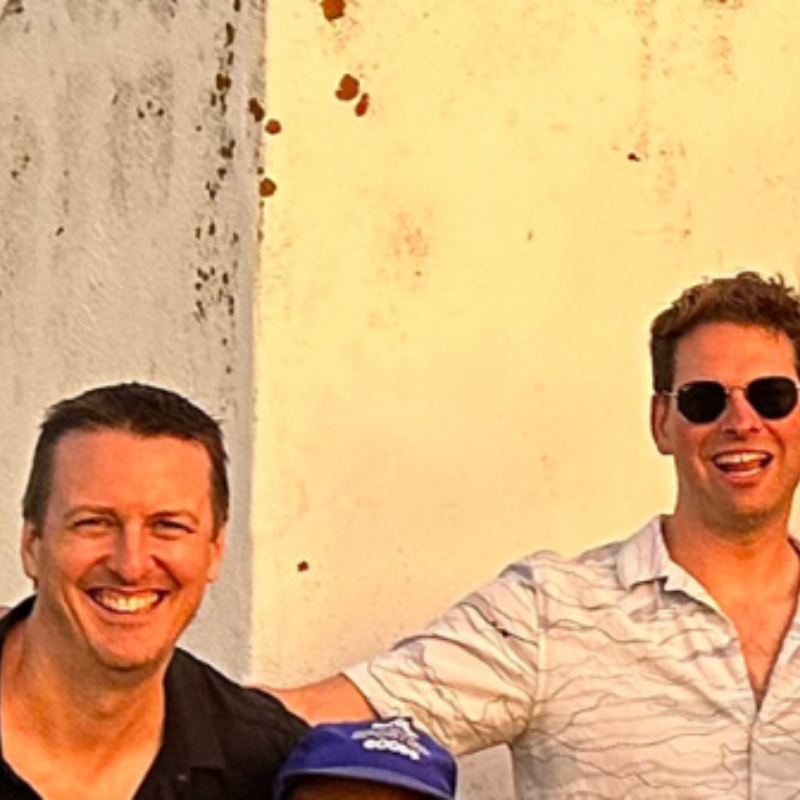
Matt Bowles: My guest today is Matt Gray. He is a full-time world traveler and the founder of Pangea, the leading app for travelers to coordinate their plans, exchange recommendations and connect around the world. After spending 10 years in in leadership roles in product and corporate development at a global fintech company where he worked in places like New York, London, Italy, India and Indonesia, he left the corporate world to focus on building Pangea. To solve the problems that he faced firsthand during his travels, he is now on a personal mission to visit every country in the world with as many friends as possible. Over the last 12 years, he has lived, worked and traveled to 108 countries.
Matt, welcome to the show.
Matt Gray: Hey. Thanks for having me.
Matt Bowles: I am super excited to have you here, brother. You and I have known each other now for probably at least three years. So, it’s been a long time coming for us to have this conversation. But let’s just start off by setting the scene and talking about where we are recording from today. We are actually unusually close to each other. I am in the Blue Ridge Mountains of Asheville, North Carolina today. And where are you?
Matt Gray: I’m in the Raleigh area where with some family close to home.
Matt Bowles: We are in the same state. It is quite amazing. We’re not in person, we’re doing it virtually, but we are in the same state, which is pretty incredible. Well, I feel like we need to start this off by talking about how we met, which was back in 2023 in Cape Town, South Africa. What are your memories of how we first connected?
Matt Gray: That was my first time outside of the solo travel world. I was still in my corporate job. No one really knew I was there for a month. And it was the first time I did one of these longer travel programs with Remote Year. It was funny because I had hit some milestones personally the year before, was thinking about what was next in my career chapter and decided to try a remote year really as an alternative to quitting my job and doing an MBA. I had been at the same job for 10 years. I thought about what do I want to do next? And the three values were really, I want to continue to travel more, but not to the same place. We had offices, places I wanted to go and I wanted to do it with community and meet more people.
And then I also wanted to end up working on Pangea. I had had it as a side project at that point and wanted to focus on that as my new full-time thing. So, I was considering doing an MBA. And then when I did the math of how long it would take, you’re not working for two years, you spend all this money on tuition and then a lot of the people you meet are going to go back into corporate world. At the end of it I thought, okay, well if those are the things I’m really looking for, what else is out there? And I found programs like Wi Fi Tribe and Remote Year and ended up signing up for the Remote Year in Cape Town. It was somewhere I hadn’t been before. And at that point in my travel career, it’s probably at like 80 or 90 countries and over a hundred of the countries and territories on that list. I really hadn’t done much of Africa, so it seemed like a good starting point to do Africa and to meet a lot of other interesting people who were working remote jobs who would continue to want to travel with me.
And that’s where I met this group of 40amazing people, yourself included. And I think one of the funniest things about that group, I’m six foot two and obviously also named Matt and there’s a third Matt. So, I was one of three mats and I was at six foot two, the shortest of the three mats. So, I was either Pangea Matt, Ostrich Matt, which is another story, or short Matt for the first time in my life.
Matt Bowles: Yeah, that was amazing, man, that was such a fun month. So as your very first month doing a work travel program with a community like that and also your very first month in Cape Town. I know both of those things have become really significant and central parts of your life. Let’s just talk about the city though. What did you love about Cape Town? I know you have gone back to Cape Town. What do you love about the city?
Matt Gray: For people that have never been the things I really liked about it were there’s just so much in the city. It’s a world class city. World class restaurants, nightlife, amazing people, community. But then you’ve also got some of the best hiking in the world, 10 minutes from downtown. Not like 30 or 40, but 10 minutes. So, you can go hike up Lion’s Head or Table Mountain on a whim. There are amazing beaches there, there’s amazing wildlife right off those beaches. So, you’re in this world class, but you feel like you’re actually in nature. And because there’s so many different things to do from abseiling down Table Mountain or rappelling down Table Mountain, paragliding, kayaking with dolphins, the lifestyle you live in that area. From a city perspective and lifestyle perspective, there’s so many different things you can do. And then the last piece is the community.
There are people from all over the world, there’s a super vibrant local culture and there’s so many cool ways to embrace it. It’s sort of this true melting pot of people from all over the world. Perfect weather and a million things to do together. You end up connecting with the people you meet, I think at a much deeper level than somewhere like New York or London where it’s like you’re going to brunch or you’re going to dinner, you’re going to grab a drink, you’re like going kayaking with dolphins in the morning and then grabbing brunch and then can go up a hike and then you do your work day and then you go out at night. And it’s just a totally different lifestyle. And I think people who haven’t been there, they’re like, I can do that in my city. And having been to over 100 countries, you can. It’s the only place in the world in my view that has that depth.
Matt Bowles: Yes. And the wine scene is incredible. If you are into wines, the South African wine country is right there. Stellenbosch and Franschhoek and these incredible wine regions. The city is preposterously beautiful. I keep going back as well. The first time I went there for a month was in 2015 and stayed in the Bo Kaap, which is the Muslim quarter of the city. And it’s the one with all of the super bright, different colored houses. And it really was amazing. And I was just so enamored with that month. And then I continued to go back. I think the month when you and I met was probably the fourth month that I had spent there in coming back for one month increments year after year because it’s just so special.
But, Matt, you have done something that I have not done, and I want to ask you about. You have taken the bungee jump, which I understand is one of the highest bungee jumps in the world. Can you explain about. Well, first of all, just what the Garden Route is, and then what that bungee jumping experience was like, because I’ve seen the video on your Instagram.
Matt Gray: Yeah, it’s incredible. And I think that’s another example of absurd things that you just are casually doing on a Saturday with people you just met. What you’re able to get to in a weekend and do in a weekend trip is insane. And the Garden Route is one. The Garden route is technically a district of South Africa, so a lot of people think it’s the route because you typically drive it. But it’s a district of South Africa, southeast of Cape Town on the southern coast of Africa, and it’s sort of split between the Atlantic side and the Indian Ocean side. So, the two oceans meet somewhere on the drive out there, there’s several towns and places you can spend anywhere from a few days to a few weeks. I’ve gone back twice and will continue going back. I think the bungee jump you mentioned is off Boulders Bridge.
So, we had a group of, like 15 of us staying out in Plettenberg, and then me and maybe three others had committed to going bungee jumping, including my friend Mizba, who had done it the year before. So, the second year you can go backwards, and the third year you can do a running Superman off the bridge. So, I think her and I need to go back this year for that. But it is the tallest bridge bungee jump in the world. So, there’s taller bungee jumps, but not off a bridge. I think it’s 760ft, which is maybe 200ish meters. So, it’s absolutely insane, the anxiety leading up to it. We all ordered coffee in the morning because we’re normally coffee drinkers. I had one sip of my coffee and had the anxiety of, I’m about to jump off this bridge.
So, I remember it sitting in the cup holder untouched, which is very unlike me, but absolutely incredible experience. We’re just up on this bridge. We ended up convincing pretty much everyone to come with us. So, there were 20 people who said they would never bungee in their lives. And then by the third day of the trip, we had convinced them all to join us. And one by one, they strap your feet in, you jump off, and you have to jump out so you don’t Fall down and flick down, but super cool. You fall for five seconds, it feels like it didn’t even happen, but you get this amazing rush. And then you’re just hanging there and you have the bridge above you. You have this amazing valley below you, so stunning scenery in the background. And then you’re on this adrenaline high for the rest of the day.
Matt Bowles: That is absolutely incredible. And you’ve got the video, all this on your Instagram as well, which we’ll link up in the show notes so folks can actually watch you do this. Matt, at this point, I want to go back and talk a little bit about your backstory and how you got to be jumping off of bridges in Cape Town. You and I, in addition to both being named Matt and both being digital nomads, we both happened to have grown up in Westchester County outside New York City. Me, for a period of my childhood. I eventually moved over to Buffalo, New York, which is where I went to high school. But before that I lived in Rye. You were right there living in Larchmont. And I’m wondering if you can share a little about your experience growing up in Larchmont, because you and I also both started DJ companies in high school. So, I would love to hear what it was like coming up in Larchmont and what your experience was like starting a DJ company.
Matt Gray: I grew up in Larchmont. It’s for Anyone unfamiliar, about 40 minutes outside New York City, sort of suburban town, and my parents both grew up in the Carolinas, that we have a lot of family here, hence recording this down here. So, my summers growing up and sort of my travel growing up was always between New York and North Carolina. And my mom loved exploring. So, we as kids, like stopped at pretty much every town on the East Coast. I think any historical town I’ve probably seen as a seven- or eight-year-old and when we weren’t moving around, was based up in Larchmont and as you said, started a DJ company when I was in high school. And it was pretty random. I was in a theater program called Pace at Marink High School.
You got exposed to dance, theater, music. I was a tech nerd, so I was in it for the technical aspect. But I did end up getting in front of the stage and that’s a whole another discussion. But with two of the guys, I met there, Chris and Theo, we started a DJ company. There was a classified ad in our employment office that some local restaurant was looking for a DJ for a Bat Mitzvah. And we said, hey, yeah, we can do that, and in reality, we had never DJ anything. We didn’t have any speakers; we didn’t have anything. But we were talking to them. And then we started talking to two or three other potential parties, and we had three of them agree to hire us. So then about a week before, we went to the Guitar center and bought DJ speakers, the cheapest DJ speakers you could buy.
But it ended up blowing up. And we ended up, over the years, hiring 15 other kids who went to our school. At our peak, we were DJing three or four parties a weekend. So. And it was everything from bat mitzvahs, sweet 16s, and I think that the thing that kind of set us apart at the time was we were more in touch with the customer, with the kids who are at the party, than the people who were doing it professionally, who had these larger entertainment companies, because we were a few years older than them. And it became wildly popular, all word of mouth. And that was my first foray into the entrepreneurial side of things, which is so cool. Building it from the ground up, expanding it, and seeing how much of an impact we can make on the community.
Matt Bowles: Well, you then subsequently went to Villanova for college in the Philadelphia area. Big up to the Wildcats. I actually have followed Villanova college basketball for many, many years. As you know, I have been to a lot of Big east college basketball tournaments and have been a Wildcat fan for quite some time. But while you were there, you decided to study abroad. I’m wondering if you can share a little bit about what led up to that decision to want to go and live in another country and then where you chose and what the experience was like.
Matt Gray: It’s funny because that decision probably shaped the rest of my life more than any other one to that point in my life. And it was pretty random. So, I had never grown-up traveling. I think I looked at University of Rochester. We drove over Niagara Falls and saw it from the Canadian side. That was my first time out of America. And I think I was 16 or 17, my dad and I used to always do a father son trip every other year he would take either my brother or me normally down to Myrtle Beach. And at some point, I got bored of that and said, can we go to the Caribbean or something else? But aside from that, I never left the U.S. at that point in my life. And I didn’t have a strong desire to study abroad. It’s not like I had always wanted to or was really dying to do it. All my friends were doing it.
So, I was like, well, if everyone else is going to be studying abroad. I’m going to be bored on campus. I went to the study abroad office just to literally be like, tell me about the world. Where can I go? I had no idea walking in there. I did no real independent research. They basically gave me a list of options. And some were like Australia, London, and then there were a bunch of European countries. I had taken Spanish in high school. I’m awful at languages. I actually regret giving it up and wish I had kept with it. It was a very challenging subject for me. So, all these English-speaking places seem kind of boring. I’d want to go somewhere where they don’t speak English, but I don’t speak any languages. And that immediately narrowed the field down to a single program through a company called IES in Vienna.
And I spent the semester studying in Vienna. And I would say probably the most transformative four months of your life. Where you go from being a kid growing up in the northeast, in college, fairly small worldview, to really an adult like that. Like all the things we’re not allowed to do at age 19 in the U.S. you can do in Europe and you’re living on your own and you’re going out for dinner and drinks. You’re not dining in the dining hall. You’re a real person in a real city. And I think it did two things. One, during that semester we traveled all over Europe. So, I think we hit Vienna, Prague, Budapest, Bratislava, and we did Oktoberfest. We were all over Italy with our group. So, I realized just how cool it was exploring new places and how every one of those experiences was so cool. And then also just the community of people I studied abroad with; people were strangers then a month in, they’re your best friends.
I’ve read a lot about why travel is such a powerful catalyst for community and, and one interesting article about the science of friendship and of building deep connection. It’s hanging out with someone five to seven times and exchanging some mutually vulnerable information with each other. And if you do that in a city or you do that on campus, or you do that anywhere, it takes weeks or months because you see someone for dinner. You’re like, meet your friend’s friend at a party and then you meet them again a month later. And then after like a year or two, you’re like, oh yeah, we became friends through this other person. But it takes forever when you’re traveling. You’re going out for dinner and then you have breakfast together and then you go on a walking tour together and then you have lunch together and then at the end of three days, you actually have had the same amount of interaction and same amount of touch point with that person as it would take two months in sort of ‘real life’. And that’s one thing I love about travel. And I think that was where I realized how powerful of a catalyst it was for building community.
Matt Bowles: Well, you’ve done a lot of very different types of travel, the study abroad and college experience. I totally agree. I studied abroad in Dublin, Ireland and got to travel around Europe as well. And for me, exactly what you’re describing. Completely transformative and really impactful. After your study abroad experience though, after college, and you got into the professional workforce, into your career track, you got to do a lot of international travel with work in a professional context. Can you talk a little bit about that experience?
Matt Gray: Yeah, similarly random experience. I ran into this company I’d never heard of called Ion Group during on campus recruitment at Villanova. I applied, met them, seemed like a cool company, was a fintech growing and they were starting this rotational program that year where they would bring you in, you’d try a bunch of different roles, figure out what you liked, what you didn’t. I studied finance and business, so I was actually quite nervous about getting close to technology and going into product because it didn’t seem what I wanted to do or what I thought I wanted to do at the time. I don’t think colleges do a good idea of teaching us what the options are.
So anyway, I joined it in New York and what was cool about it was an Italian company. Our founder was Italian, but our headquarters was in London, so it was like New York, London, Italy. And when I joined it was about a thousand people. So, it was not tiny, but it was not huge. And in that first couple years, as I was rotating around, trying different things, we got exposure to people from all these interesting places, like someone from our Prague office or someone from our PISA office. The head of our Indian office was in New York. And you just connect with them and you’re like, wow, I could do this whole thing working at a desk and doing whatever I’m doing on my computer, but from any of these other locations around the world.
And then around the same time, I’d gotten out of a serious relationship. So, I was kind of ready to leave New York and just do something else. Moved to London with the company and then just kind of leaned into it. I got rid of my apartment. When I moved to London, I was in corporate housing for a bit. So, I’m like, all right, before I sign another lease, where else can you send me? And I did a bunch of in-depth testing for a project in India. I was in Italy where I ended up managing a team for one of our internal startup initiatives. And I really just leaned into the travel. For me the driver was travel, the work was interesting, but what I loved about the company was the travel aspect. And I ended up managing our internal community product team. So, it was a think like intranet meets talent management solution. We called it Connection or Connection. And that was a tool that was used by our whole company of around, I think at that point were about 2,000 people. And over the next five years we built and scaled a team that was across Indonesia, UK, India and Italy. And I was going to those locations. I hired a whole team in Indonesia. One of the guys from there is actually part of the Pangea team today. And over that time that product became a core piece of infrastructure for the company to onboard all the other companies that we were acquiring. So over the course of my 10 years at ION, we were about a thousand people. When I left we were 13,000. And it was all inorganic through acquisition. So we acquired competing companies in similar spaces, we got into new areas by bringing companies together and it was just a fascinating place to go from having zero work experience to 10 years of career experience globally in all these different locations. But I think the thing that stuck with me through that was I can really do my job from anywhere. If I’m in the India office working with people in New York, I’m in New York working with people from India, you really can do most of your job from anywhere. So that was a aha moment of I don’t necessarily need to be in a single location to work.
Matt Bowles: What were some of the places where you spent the longest amount of time for that particular job? Like how long were you in some of these places?
Matt Gray: So I think in total I have been to 26 of our offices in 11 countries. I was hired into New York, I spent close to two years in London and before I was in London I was visiting once a month at my peak. And you know, once I was back in New York, same thing. I spent probably about a year and two- or three-month stints in our office in Pisa. So, the leaning tower of Pisa, small college town, but we have a very large development center there and there’s incredible engineers, including some I’m very close to now and then. I think I’ve been to India 15 or 20 times. We had a huge office there and we had a large team there. I also had proposed at one point the rotational program I started in. We scaled out and we built that same program in 15 of our global offices. At one point I pitched to our CEO, we should do a global onboarding for everyone and do it in India.
And he’s like, yeah, good idea. Go plan it on top of your day job. So, I love the company because it was such a cool place where you could have ideas, execute them at scale. That also became, especially as I started traveling more, that became one of my personal missions was to help the people we were hiring out of university who were six, seven years younger than me, have those same experiences. And we ended up expanding the program into Hong Kong, into London, into Dublin, into Italy. So, a lot of our U.S. based analysts had a lot more opportunities without having to ask for them and push for them than I did at the time, which I think is really powerful for anyone new in their career.
Matt Bowles: That’s awesome, man. And what a wonderful opportunity to get to travel and see the world and then be based in those other places. And then all of a sudden, you’re very close to other places that used to be far and now you can do trips, those places. So, you at this point have been to a lot more countries than I have. And I want to actually ask you about some places that you have been that I have not been. I think I want to start with Africa. You have been to Reunion Island and Madagascar. I have not been to either one of those. I would love to hear what your experience was like in those two places.
Matt Gray: It’s a funny story actually, because Reunion, I wasn’t supposed to go there. I was supposed to go and meet a good friend of mine who was on sabbatical. He was an investment banker at td. I had done a sabbatical of my career at ION after about five years. And that’s inspired, I think at least five or ten others to tell their boss, like, hey, I’m either going to quit my job and do a sabbatical or I’m going to take five months off and then come back, which I also think everyone should do. If you’re in the corporate world, do a sabbatical. It’s life changing. But he was on his sabbatical about a year after mine and I was supposed to meet him in Cape Town and then meet him up in Tanzania and do a safari together. I was at my friend’s wedding in Pittsburgh. My flight back to New York got canceled.
So, it was during COVID when it was really annoying to get your passport renewed. I had only one page left and South Africa is super, super strict about having two pages. So, I had an appointment booked to get the same day renewal at the passport office in New York. But at the time it took two weeks to get the appointment. It was really annoying to get them because they were so backed up and my flight got delayed, so I missed the passport appointment. So, then I had to cancel the entire trip to meet my friend because I couldn’t get to South Africa. And then he had all his stuff locked in, was in Africa already. So rather than complain about it, I said, okay, well, where are you going to be next? And he’s like, okay, cool, I’m going to be in Madagascar.
So, then I started thinking, can I get to Madagascar? So, I ended up getting the passport renewed and I couldn’t find any flights into Madagascar, but I found a flight for 20,000 Air France miles that I transferred to from my Chase card and five bucks from New York, a full day layover in Paris and then Paris down to Reunion. And then there was another flight, I think through Mauritius or something, but it’s only two or three hours from there. So, I spent about five days just solo exploring the island. It’s a huge volcanic island in the middle of the Indian Ocean. I think it’s the tallest point in the Indian Ocean. And absolutely beautiful island. Super cool. It’s kind of like Maui meets Paris in terms of geology, but then super French. It’s a French territory. And then ended up meeting him in Madagascar. So very random trip. I wasn’t supposed to do it and I think if I hadn’t done it and went to Cape Town, I’m curious if I would have actually met you.
It’s kind of crazy how all these butterfly effects and how serendipity works, but Madagascar was incredible. I think it’s somewhere everyone knows about from like the movie. It is not an easy place to travel. I mean, there’s some tours and stuff you can book, but in general, if you don’t, everything is offline. We booked flights across the island which operated only once a week and we had to pay for them in cash. They didn’t accept credit card or any sort of electronic payment. So, we had to basically book them two days before, Hope they didn’t sell out, arrive and then pay the person at the airport in cash for these flights. And then because they only operated once a week and our timetable was the way it was, we had to spend 14 hours driving across the country to then meet a guy who would drive us up through the baobab trees, up to Tsingy National Park.
It’s like a huge piece of granite that’s been eroded over hundreds of millions of years by the water. So, you can walk through these massive spires of granite. But that’s Tsingy National Park. That’s a nine-hour drive from Morondava where we cross the country from the east coast to the west coast. That’s the skinny way. So that takes 14 hours driving. Then it’s nine hours up through the baobab trees. You’re on an off road 4×4. There are three rivers and there’s no bridges, so you get put on a ferry.
And when I say ferry, it’s more like a floating dock with like a motor drilled into the back of it and they actually have you get out of the car because when the car gets on the dock, the dock like goes halfway into the water. I asked the guy, I’m like, how many cars fall into this river each year? And he’s like, oh, probably like six or eight. So, it actually happens. So, they have you get out of the car. But it’s totally worth it. There’s amazing wildlife, amazing things to see. It’s. It’s one of the most unique places I’ve been. You don’t try to work from there, you’re not going to be able to. The WI-Fi is terrible, connectivity is terrible. This was 2022, so it may have improved, but definitely should add it to your list. And for anyone going to Cape Town, it’s not super difficult to get to from there if you have a week to spare to do it.
Matt Bowles: Well, another place that I have to ask you about, just because I go through your Instagram and I just see these absurdly gorgeous pictures, is your trip to Lapland, Finland. Seeing the northern lights there, riding in the dog sleds. Can you share a little bit about what that experience was like?
Matt Gray: Absolutely. And that was one of my most memorable trips. Lapland is northern Finland and they do the winter super well. So, it’s only light like four hours a day, but the inns are super cozy, like fires and amazing culture around it. And I was going to go solo, but then I actually, my mom had always wanted to see the northern lights, so I’m like, hey, I’m going to go to Lapland for like, like four or five days. Do you want to join me? She’s like, ah, it’s like pretty far from the U.S. and I’m like, I bet there’s a way to get there with points and to get you there with points, with nice business class airfare. And my mom and I met up in Finland for four or five days. We did the dog sleds. Absolutely incredible. We got super lucky. Don’t go in January because apparently, it’s cloudy every day. So, the 10 days before and after we were there, it was cloudy every single night except one, which we happened to be there for amazing northern lights display out in the Arctic tundra up there. So incredible place, highly recommend. But if you do go and want to see the northern lights, either stay for longer or go in March, it’s a bit better.
Matt Bowles: So, after you do Lapland, Finland and have that experience and that climate, you then subsequently decide to go to Greenland. Can you share what your Greenland experience was like?
Matt Gray: Yeah. So that one’s interesting. It was kind of a spur of the moment trip. I’ve flown. I actually tallied it up at one point. But I think I’ve flown to London from New York 80 times, times when I was working between the two cities. And you always fly over Greenland and you look outside and you’re like, I wonder what’s down there. Or at least I look outside and I’m like, I wonder what’s down there. And I know it’s Greenland, but at the time it was very difficult to get to. You could only fly from Iceland or from Copenhagen. And I was in Europe in August. I needed to be back in the States by mid-September and I didn’t have plans for Labor Day.
So, I kind of was like, I wonder how much it would be to go to Greenland. Was able to find easy flights from Copenhagen and popped over for probably six nights and spent most of it up in Ilus lot, which they call the ice maker of Greenland. So, it’s got this fjord that just spits out ice from the glaciers. It kind of pushes ice down, it breaks off into these icebergs. And if you think you’ve seen ice before, go up there, because the first day I was there, it’s light 24/7 at that time of year. After working around 10pm I went on a sunset whale watching cruise. And we saw probably a dozen whales out near the icebergs. But the icebergs are like 30 or 40 stories tall. So, you can’t go too close to them because they can roll as they melt, they’ll roll and they can create tidal waves. So, we’re in this little boat and you’re just looking up and its buildings the size of the ones in New York City. But they’re just made of ice. And it’s 10 or 11pm at night. It’s like golden hour because the sun is down in the sky and there’s whales everywhere. And it’s like a $30 tour that I can do in the evening after working a full day. What an amazing place to spend some time.
Matt Bowles: That is unbelievable. And I know that that trip then inspired you to go to Antarctica. Can you talk about that trip?
Matt Gray: That was my first time in the Arctic, I guess Lapland. So, second time, but the first time in the summer and you’re like, oh, wow, it’s actually really pleasant. I’m not a cold weather person. I like to ski. So aside from skiing, I like to be in warm climates. But it was just such a cool experience if you’re prepared for it. And so beautiful. Ice is just something at that scale you don’t see. So immediately I was like, okay, Antarctica needs to go on the bucket list at that point. I had been to around 100 countries. I’d been to all six of the other seven continents, so logically, I wanted to see the seventh. And I was down in Argentina last year, adjacent to one of the one-year remote year programs that was traveling.
And about a month before they announced this Antarctica cruise. And I was like, probably not in the cards for me this year, but they had an amazing group discount and I was already in Argentina. And then I had six friends sign up and I was like, all right, well, if I’m going to do this sometime in my life and it’s 45% off and I’m already here and I have six friends, I don’t have to convince other people to come with me. I should just do this. Totally glad I did. Absolutely incredible. Like the number of penguins, you see just being out with ice every day. I guess for anyone who’s not familiar, you cruise down from the southern tip of Argentina, a town called Ushuaia, and you go on a cruise. It’s about a day and a half to two days down across the Drake Passage, which is one of the roughest areas of sea in the world.
We got lucky on the way there, you felt the boat moving, but it wasn’t too bad. So, you’re two days at sea, and then once you’re down there, you stay on the ship the full time. There are no hotels in in that area of Antarctica. There’s one or two on the South Pole for incredibly wealthy people now, but you basically stay on the boat. And every day in the morning we would take the Zodiacs out and go land on the land and see penguins in the snow. One day we actually did land on the ice cap. So, we had the boat in the ice cap. It was like a beautiful sunny day, 40 degrees, not a cloud in the sky, and just ice in every direction as far as you could see. So, one of the coolest experiences I’ve had.
Matt Bowles: That is so incredible. Well, the other country that I want to ask you about I haven’t been to, I know you went to for your 100th country is Armenia. Can you share a little bit about that experience, who you went with and then what Armenia was like for you?
Matt Gray: It’s funny because I was on this whole ‘I want to get to 100 countries by 30’ kick. And I did, but I didn’t understand there’s a lot of nuances to what a country is and what that means and who recognizes it. So, I used the Been app back in the day to track that. And they have a different list of countries that includes territories like Greenland, which are fairly different and unique from Denmark, but technically not sovereign countries under the un so depending on who you ask and who cares, there’s a distinction. My first hundredth country was Panama for my 30th birthday, that included all these territories on the list. And then in Uzbekistan, I met a bunch of people from one of these country collector clubs called NomadMania. And they’re like, well, like, how many countries have you actually been to on the UN list? And I tallied it up, I’m like, oh, 98.
So, I went to Georgia after that with a Wi-Fi tribe chapter. And then I basically told everyone there, it’s like, look, I’m going to Armenia because I’ve heard it’s amazing. I’ve got a good friend who I met in Cape Town who’s an Armenian guy who was going to be in Yerevan when I was in Georgia. And I was like, I’m going to road trip out there if you want to join me, let’s go for it. We had a couple other friends meet me for that and ended up convincing the entire WI-FI Tribe chapter to come out with us. There were like 20 of us in four or five cars that went over two days. Yerevan was one of the coolest cities I’ve been to. European vibes, super concentrated, so there’s all these amazing restaurants and things to see and huge public squares and displays, but it’s all within a five-minute walk of each other.
So, it’s such an easy city to live in. And being there with my friend Hovo, who is Armenian and had so many connections in Yerevan. We ended up at a salsa pool party with an Armenian salsa dancing group. I don’t salsa myself, but it was this amazing community of people from all over the world, but about half Armenians there, plus our group, which was probably 2/3 American, European, who came together and just had this super authentic local experience, which I think is really the purpose of traveling, is to try to find those experiences and try to share them with people. Because I think it’s not the places, it’s the experiences you have and the people you share them with.
Matt Bowles: Well, shout out to Wi Fi tribe. Diego, one of the founders, has been on The Maverick Show. So Maverick show listeners know Diego, and then I hang out with Julia all over the world. She and I just happen to keep running into each other and have been too I don’t know how many countries together. I’m always popping in and connecting with Wi-Fi tribe groups and all that. And also, big shout out to Nomad Mania. Harry Mitsidis and Orest Zub have both been guests on the podcast. I’m curious about that Uzbekistan experience that you mentioned, though. Can you share a little bit about the context, the event you were going for? And then what was Uzbekistan like? Because I haven’t been there either.
Matt Gray: Yeah. So, I heard of NomadMania. Central Asia had been on my radar. It’s another region at that point, hadn’t spent any time. So, I’ve done some of the caucuses now with Georgia and Armenia and Azerbaijan, but I had found their annual conference that they were holding in Uzbekistan. It was in Fergana Valley, which is a way less touristed part of Uzbekistan. One thing that Nomad Mania does is get people really off the beaten path. So, I figured I’d try it out and see who I would meet. There was another community to experience. It was super cool in that we went very deep into that local tourism scene. We went to one of the top hospitality universities in that region of Uzbekistan, where the students were our tour guides around the town and got to learn a lot about that area, which did not get much tourism yet, but it’s forecasted to grow as the region continues to grow as a tourist destination.
But the NomadMania crowd, you realize for someone like me who had been to a relatively large number of places, I would be at the table and be the least traveled person in the room. And it was incredible because you could ask these people about, literally, instead of being like, have you been to insert country name here? It would be, hey, what did you think of this country because I think there were like 25 people there who had been to every country in the world. And that kind of reignited my passion for going new places. It’s not about ticking the box. It’s more about the realization that every single country in the world has so much to offer and so much interesting stuff to see. And I think many of us, our worldview is like, okay, here are the safe countries you can go to and you talk to a lot of these people and they’ve been everywhere and you realize that there’s so much more to the world to see.
Matt Bowles: I want to use this as an opportunity to go a little bit deeper with you and ask you a little bit more about the concept of community building, which I know has become a super important and central part of your life and your travel style. Can you talk a little bit about that and the evolution and the prioritization and the centralization of community building in your nomadic travel lifestyle?
Matt Gray: So, I guess if I just think of my own travel journey, it started with abroad and that was such a cool community because we had this group of people from all these different universities in Vienna. We had tons of Austrian friends, we had had tons of American European friends. Like, who’s this melting pot there? And then I went into corporate world and then travel became very different. I’d be going to a client site, I’d be the only person there under the age of 50. And you’re traveling, but you realize quite quickly the travel is actually not the glorious part, it’s the people that you’re connecting with.
And when I was traveling, that was the genesis of the Pangea idea, which we can get into later. But I always thought, where’s everyone else? Who else is going where? Who else is going to be in these cities that I have to visit at some point, at the same point that I’m going to be there, I was like, I want to connect with more people. And then on the personal side, I was doing a lot of travel with my friends who in our 20s, everyone was traveling all the time, and we were all pretty excited about that, so had a lot of friends to travel with. As I got later into my 20s, sort of early 30s, a lot of my friends started to settle down and take different paths, which I think is fine and great, But I did a lot of solo travel to some of these more off the beaten path places because I wanted to go, but no one I knew wanted to go or wanted to waste vacation days doing that.
And as I realized how much I miss the community that caused me to go looking for it with these programs like Remote Year. And also to discover how much deeper, if you’re traveling with people for a month, where everyone’s arriving at the same time, everyone’s leaving at the same time, that creates this arc of people meshing, norming, forming, storming, all of that, where everyone’s on the same timeline. The first week, no one has any friends or maybe, you know, one person in the group at the end, you’re all really close friends. And if you go into a hostel or you go into a city and do it on your own and you go to different meetup events, not everyone’s on that same arc. You might meet a group of people who have known each other for three or four weeks, who are all leaving in a few days. They’re not interested in meeting new people. They might be friendly, but they’ve got their own stuff they’re doing.
And they’ve probably done all the stuff in the city that you, as the person who’s new to the city, want to do, like the first loop of tourist stuff that people do. So, yeah, I think in one month I realized how deep that connection went. And as I’ve continued to travel, you realize the people you meet on those types of programs are super like-minded and are the ones who are going to continue to travel. So, a lot of them I’ve traveled to 20, 30 countries with at this point. And those relationships over months and years deepen even more. So, we’ve been with Pangea, a huge supporter of all these different communities that are out there. You mentioned Wi-Fi Tribe, and then we talked about NomadMania. But all of these communities that cater towards travelers who are looking to travel but also connect with other people deeply in these places because it’s not an easy business to be in. But I think they’re so powerful for people to expand their horizons, their network and their own community.
Matt Bowles: And at this point also, you have organized a couple trips where you just bring together a couple dozen people and go do something like a safari in Botswana or renting castles on the beach in Cape Town. Can you talk about some of those more ad hoc trips that you’ve been able to put together?
Matt Gray: Yeah, for sure. I had always kind of done that with my friends at home. And then as I was doing, I think the first one, I was with one of my best friends growing up, a guy named Sam. We had convinced our whole high school friend group one winter break to drive up to Montreal. I think we were all like 19, so we could legally drink in Montreal. And we all drove up and rented some Airbnb’s. They’re probably on Expedia. I think it was like pre-Airbnb being big. These shared apartment rentals, they were $12 each, super dungy. It was the worst time to go to Montreal. It was freezing cold, like you couldn’t walk outside. But we had an absolute blast because it was 10 of us exploring a new city and again, going from like that being a kid to kind of being an adult mentality.
So ever since then, it had always been what I did. And then as I was newer to these nomad groups, I wasn’t necessarily jumping in, saying, hey, everyone, follow me. But as I got more connected, more familiar, I started saying, okay, well, I haven’t been to Botswana. I’d like to go to Botswana. And rather than go on a tour, what are the things that you can’t book? What are the things that you would love to do in Botswana that you can’t actually find online? So, I was like browsing around Airbnb and I did the filters. I looked at anything with 16 or more people in southern Africa for any time. And I was just browsing cool locations. That was my third year in Cape Town, so I bet I can find 20 people to fit into these things if it’s sort of cost effective.
And I found this safari lodge in Botswana in the Chobe River and was chatting to the guy who owned it. He had actually just opened it. It wasn’t even like fully built, so he had a couple of the chalets operating and we were chatting and I was like, well, we kind of want to do safari. And he’s like, I can arrange all of it for you. So, we ended up doing this absolutely incredible four-day experience in Botswana and then spent two days in Victoria Falls afterwards with a group of, I think 24 of us. And it was this amazing villa on the Chobe River. We did two safaris out on the river. So, you’re seeing hippos swimming and running out of the river onto the land. We did two land safaris and then we did one night camping three hours into the Chobe National Park. Just absolutely incredible experience.
And if you had booked that for one or two people, the price would be like three or four times higher. But by bringing the group together, working with the operator directly, you could get really advantageous pricing because they normally aren’t filling up the entire thing. So, if you think of like their total income, they’re better off having 24 people on this experience paying a lot less per person than like 6 because their costs are the same. And that was the first of, I would say, many of the sort of next level of travel. Like, what are the things you absolutely cannot do without a group and without someone organizing it? And it is a lot of work, but I love it. And it convinced 24 people to come see Botswana with me, whereas I don’t think anyone in the group had a particular desire to go to Botswana over some other place for safari. But they were dying to be a part of that experience. And I think we had like 20 people who wanted to come who we couldn’t fit, unfortunately.
Matt Bowles: That’s amazing, man. Well, you are co-hosting the upcoming Nomad Week in Cape Town in January of 2023. Can you talk about that event and what people could expect from that if they would like to attend?
Matt Gray: So, I went to Nomad Week last year in Cape Town. I had not done a lot of these nomadic conferences because I didn’t really know what they were. They were kind of short and I didn’t really understand the value proposition. But I went because I was in Cape Town. It was in March last year, and a lot of my friends had left in February. And I got connected to Andrea, who is the founder of Nomad Week, who’s now a very close friend. And she grew up in South Africa and she also has spent the last eight years digital nomading. She was a marketing executive at a tech company and then left that and decided that she’d rather travel and work rather than just work in a city, even if the city is the most beautiful in the world in Cape Town.
So, she put on Cape Town Nomad Week last year really as a way to connect her community of South African travelers and digital nomads to the wider community and just try to attract more people to the city. And afterwards, I was chatting to her quite a bit about the community that we had built up. Last year was my third year in Cape Town, and after that first Remote Year, I think more than half of that group came back the following February of 2024. And then everyone, all of us collectively met, traveling over the year. We told come to February in Cape Town next year. And 80 people showed up.
And then fast forward to 2025, we had the same thing happen. And then when Remote Year went under, all of the people who are signed up for the January and February programs in Cape Town were freaking out. So, like, I’ve already booked my flight. It’s nonrefundable, my airfare is not refundable. So, we had basically said, look, come to Cape Town, we’ll help you navigate it. You’re not going to be at a shortage of community. We’ve got our huge group of friends there. In a way, I think from a pure community perspective and the experience a lot of those people had, it was almost better because instead of it being this restricted group, everyone who was there, whether they were doing the program or not, were allowed into the group. And obviously, Remote Year did a lot of work marketing and finding those people to bring them together.
But in 2025, in January and February, we had a community of about 300 and there was very little overlap with Andrea’s community of about 1500 people of digital nomads and South Africans. So, her and I basically said, you know, this is a logical partnership. She’s been helping us with some of our app marketing as well. So, we decided to cohost Nomad Week this year. The idea is to bring the two communities together. And really some of the same thing I was describing with the Botswana thing, what are the things that you can’t book without a large group of people to back it? What are the experiences that you can’t just go and get your guide provider and book? And I love working with Andrea because she is South African.
And I think a lot of these nomad programs, while they do a great job of creating community between the group, they don’t do enough to connect the group to the local community. And as a result, you get a lot of media around digital nomads being the problem and causing housing prices to go up and some of these adverse effects that travelers have in general. And there’s not a lot of good that’s done. And I think Remote Year had a level that none of the other travel communities really did, where they had a city leader, someone who is South African or from whatever country leading the group. Many of the other groups are hosted by chapter leads who are incredibly good at building community, but are not connected to the city itself. So, you end up just being this little bubble of foreigners enjoying a location for all the great things, and you leave nothing of value behind.
So that was kind of our starting point for Nomad Week this year, is how can we use it as a platform to not only connect all the people who are going to be in Cape Town anyway, help create amazing community? How can we use it as a platform to also encourage those people to that leave a positive impact on the local community and also just connect with the local community and now from last year was 40% South Africans in the event. We wanted it to be even more balanced this year.
Matt Bowles: That’s incredible, man. Can you talk a little bit more about what you have already scheduled and structured and built into this in terms of the Africa Expo, the way that you are empowering local entrepreneurs and that aspect of the event?
Matt Gray: Last year the week was four days of conferences and sessions and speakers and there were some really interesting ones. But in general, we’ve condensed that into two days, two afternoons. This year we’ve allowed more time for co working and focusing more on just building community throughout the week with lots of events, whether it be stuff in the morning, going kayaking, going hiking, some of the sessions or co-working sessions and then stuff in the evening. So, it’s a fairly do what makes sense for your schedule week where it’s not too overbearing, but where the community of. There were 200 people last year, we’re hoping for about 300 this year where everyone has lots and lots of opportunities to connect.
And thinking about that idea of okay, if I hang out with the same people like five or six or seven times, I actually build connection. And then along the thread that we talked about on local impact, Andre and I spent a full day in Bulgaria just brainstorming ideas of how can we with this amazing group of people from all over the world who are in all sorts of interesting careers and jobs. Jobs. How can we create meaningful impact? Because I think there’s a lot of ways where you can tick a box and do some sort of social impact thing and it is positive, but it’s like a one off and it doesn’t create any meaningful impact. So, we had a lot of ideas and we’re going to pilot as many as we can in what we’re calling the Africa Expo.
The general idea is to bring in a combination of local aspiring entrepreneurs so people who are trying to start businesses and in various fields to the event also uses an opportunity for local vendors in tourism or crafts or food and hospitality to come in and meet the community and also for the community to connect on a more authentic level. So making sure everything that we’re sourcing and everyone we’re working with is locally owned, but then the newer entrepreneurs who are trying to start businesses and then also Cape Town’s a great startup scene in the African region, trying to tap into some of the more successful companies on that scene to bring them together. In our nomad communities we have a lot of startups and entrepreneurs from the U.S. and Europe, so bringing them all together to one encourage and empower this younger generation who are trying to start things. We’ll fundraise a grant where we’ll give out some grants to them to take their businesses and run with them, funded by a combination of the nomads and some of our partners that we’re speaking to.
And then for the companies that they might be off the ground and successful and doing well. But how can we connect in meaningful ways with those business owners? And the same way at a professional conference, I might connect with other people in tourism and hospitality and figure out partnerships with Pangea. How can we have those conversations with people in a centralized way where we don’t even know holistically what’s the list of problems each one of these companies is against? And are there skills in the audience? Are there people in the audience who can help? And that’s just the starting point. I think that’s the catalyst. And by doing Nomad Week early in the season, season this year, a lot of people stick around for all of February and all of March. The goal is to make the introduction. And we’re not expecting some amazing business deal to be made over a cocktail the first time you meet someone.
But it’s the introduction and then the hope is that these people who are like minded and share these same values of wanting to work from different locations, super entrepreneurial, that they can connect in a meaningful way to this amazing group of location independent folks coming from all over the world, start the conversation, go hiking together, get to know each other over the course of the season and what else might come out of those conversations. Whether it be partnerships for distribution on a worldwide level, whether it be contracts for international companies to work with the companies in South Africa, we don’t actually know what the outcomes will be. We just want to create the forum to almost be the spark that can lead to that as a catalyst.
Matt Bowles: I love that you guys are prioritizing that and you have all of that structured into the event already. I also have to ask Matt for people that love wine and would love to experience the wine scene in Cape Town, in the wine regions, you have a Winelands weekend getaway that people can’t participate in. What does that entail?
Matt Gray: Correct. That is another piece of the week. If people are taking a week off work, they want to explore and experience some of the more touristic things in the city. We want to try to be intentional where we can and work with vendors. And Andrea’s got an amazing group of connections. Having grown up in Cape Town, less typical More off the beaten path. Wineries and locations and venues all over the city. But the Winelands weekend, really an opportunity for the group who get to meet throughout the week. They have coffee together, networking or at the sessions or at the Africa Expo or at some of the evening events.
Events or on the yacht cruise. It just becomes an opportunity for that group to go away. And I think anyone who’s traveled, if you’re staying in the same accommodation, you just, like, have more touch points to go deeper from a relationship perspective. And the Saturday will be a wine tour through the Stellenbosch and French UK areas. We’re still finalizing the wineries and then the Sunday. It’s a beautiful part of South Africa. You’ve got mountains in the background, these wineries, just a super great landscape. So we’re working to get at sort of a party together at one of the pools out in one of the wine estates. Again, what are the things that. That would be an incredible experience with this group of people that we’re bringing together. And that’s not an experience you can book online. That’s not an experience that you can go do on your own. And that’s what we really want to do as part of Nomad Week this year.
Matt Bowles: That sounds completely amazing. So for any Maverick Show listeners that would like to come to Cape Town to attend the Nomad Week in January 2026, is there a discount you can offer?
Matt Gray: Absolutely. I think your listeners and the community you’ve built here are super aligned to the people we want to join us for Nomad Week. So, anyone who’s listening can get $50 off with the code “Maverick”.
Matt Bowles: All right, so we’re going to link that up in the show notes, folks. You can just go to themverickshow.com, go to the show notes for this episode. There we’ll have the direct link as well as your discount code and the website, of course, as well, so you can learn more about Nomad Week when it is and all the details of everything that will be happening. Matt, at this point, we have to talk about the Pangea app, how the app came about, the problems that you recognize that you identified in your own personal travel experiences that you were trying to solve. Where did the Pangea app idea come from?
Matt Gray: When I was traveling largely for work, I had a lot of flexibility on when I was going places, but I was going to the same places. So, I might go to London one week a month. And the thing I always wanted to know was of my friends, of anyone I’ve Ever met my college friends, my high school friends? Who’s going to be in Europe in October and where are they going to be? Because if I was flying to London for the week for work, I wanted to understand who could I reach out to to have a cool weekend experience together. Convincing your friends from New York to fly over to Prague for the weekend is kind of a tough sell. But if you realize your college buddies are going to be in Amsterdam, I could take a train over and meet them after my, my trip in London.
And I, at that point, I had been doing a lot of solo travel to these cities because I wanted to explore them. And then in some cases, at the end of the weekend, I’d be at the airport and I’d be looking on Instagram and someone had posted a story in the city I was in. And it’s like we both knew we were going to be here ahead of time. Sometimes maybe I’d be able to, you know, we have an extra day, we can connect. But in general, the missed opportunity was we both knew that we were going to be in that location weeks ahead of time when we booked the flight or weeks ahead of time when we made the plan. And there’s no way of sharing that information. There’s no way of sharing where you’re going to be with your people, with your network. So, I might tell my close friends where I’m going. My close friends can track me on Find My Friends, but how do I tell my extended network, everyone I’ve ever met, from college, from high school, from work, personal, professional, family, here are the cities that I’m going to be in over the next year.
And also here are the places I’d like to go over the next year where I do have flexibility. I might want to spend a few weeks in Kazakhstan in the spring. I don’t know what month I’m going to go. And if you really want to go in, maybe let’s make it happen in May. So that was kind of the genesis of it. It was just a platform for capturing all of that as a way to help consumers or help travelers make better decisions on where they were spending time and explore a lot of these places where they might go solo but go with friends instead. I like the term hacking serendipity because we all have these serendipitous experiences where we run into a college friend in a random city. You’re like, oh, shit, I didn’t realize you were in Budapest. Also, for every one time that happens, you miss it at least 99 times, probably more. And we don’t have to because again, all the data is out there somewhere. It’s just not being shared with the right people. And that’s really what we’re focused on around Pangea at its core. And there’s a lot more to it. But that was the major problem I was trying to solve as a traveler.
Matt Bowles: Love it, man. Well, as you know, I am a user of the app. I am a big fan. You and I, of course, are connected on the app as well as with a lot of our other mutual friends. And so, we’re actually using this for people that it’s their first-time hearing about it. First of all, folks, it is a free app. Go to the app Store, type in P-A-N-G-E-A, and you will be able to download the app for free. Once someone does that, what are the current features and benefits and things they’ll be able to do on the app?
Matt Gray: So totally free. And our intention is to keep it free for users forever. But once you’re on, you basically have a profile like any other social network, and you can add the places you’ve been, the places you want to go, and you can explore who else on our app in general, if you’d like to, like, people can share plans publicly. So, if you’re going to any city, you can see all the other travelers that are going to be in that city at the same time as you are. Where it’s really cool, though, and where I think it’s really different is you can connect with your actual friends. So, we could we recommend your friends that you already know on the app based on if they’re in your contacts. Like if I’ve Matt saved as a contact, he’s recommended as someone I should connect with. And then based on mutual friends, the same way that Instagram or other platforms do, here are some other people you might know.
And the goal is not to just make random friends on an online platform or swipe left or right to meet strangers. The goal is to keep track of people you already know and where their travel plans are. And that’s where it’s super powerful. And where our most power users are getting immense benefit is being able to see their entire network. Where are they going in the future? They get notified when their friends are planning new trips. So, if Matt plans a trip to car, I’ll get a notification saying he’s going. And then I can also see on a map view where all my friends are right now at the city level. But then I can see in the future like, where are my friends going to be in October, November, December? And I think one of my favorite parts is because we’ve built these amazing profiles of all of the places you’ve been and places you want to go. We visualize that out for you.
So, if you’re using a different app to track the countries you’ve been, to track the cities you’ve been to, you get this awesome map that’s shaded with all the countries based on what’s on your profile, and then your friends can search and see that.
So, if I’m going to somewhere obscure, let’s say Malawi, which I’m planning to do in February this year, I can search and see which of my friends have been to Malawi. I can ask them for recommendations. And if they’ve actually added recommendations to Pangea, like specific hotels or tour guides or restaurants or coffee shops or whatever, I can see those recommendations immediately. So it’s from people I know, from people I trust, rather than. There’s like so much information online and it’s all kind of the same. And if you ask ChatGPT, it’ll all be the same. What are the things that you’re going to get from your friend who’s been there and capturing all of that into the app.
Matt Bowles: App, yeah. So I’ve got the app open right now and I can just type your name in, let’s say if I want to see where you’re going to be going and then your profile comes up and I can just click on plans and I see all of the different places that you’re going to be. I see here clearly that you are going to be in Cape Town for the Nomad Week, obviously, that we just talked about. And then I can see these other places that you’re going to be and this other stuff that you’re going to do after Cape Town, all the different places you’re going to be going and so forth. And so since you and I are friends and we’re connected as friends, we can see that. And so then I can choose to make a trip plan that overlaps with yours or connects with you, or maybe we’re just coincidentally going to be in the same place anyways or going to be at the same conference or event and I didn’t know you were going to be there and now we know and all that kind of stuff.
So, it is a really amazing way to do that. The other thing you can do on here is get recommendations from people because you can see places that your friends have. Have already been, which I love. So, on this podcast, for example, as you just saw, I was like, matt, I haven’t been to this list of places. I want you to tell me about them and give me wrecks on them. But on the app, I can see all of these different people that I’m friends with, where they have already been. And I’d be like, oh, this person’s been there. Let me hit them up for a recommendation about that. And then people also have these bucket list aspirational destinations, like, I don’t have a trip planned here yet, but I would love to go to the safari and Botswana that you organized or something like that. I would love to do this. And then your friends can be like, oh, this person wants to go to this place. And then you hit them up like, yo, I want to go there too. Like, let’s plan a trip there or something like that. So, I love all of the functionality. And then finally, ultimately, as you mentioned in the beginning, if you’re actually looking to meet new people and just build new community and find out who is in this place that you may not know because you, you want to meet new travelers that have some of the same travel interests, it allows you to do that as well, which I love.
Matt Gray: Yeah, 100%. I think the example you gave on recommendations, that was sort of the other origin story of these pin maps where you could track what countries you’ve been to. I remember being at restaurants, comparing my bin pin map to my friends on our individual phones, being like, oh, you’ve been there. I’m going, what are your recommendations? And I think the example you just gave with Uzbekistan, some of the other places we talked about, you might remember to ask me about them if you do plan a trip, because we had this conversation, but you probably know 20 other people who have been to those places and we’re all going to have different recommendations and you all know us in different contexts and what we’re into, and that’s the beauty of it. But there’s not an easy way to just track those down and say, okay, cool, I should ask these 20 people. And you don’t necessarily want to ask everyone you’ve ever met every time you’re going on a trip. So, it just makes it a bit more structured and organized.
Matt Bowles: I love that, man. Well, we’ve got a lot of entrepreneurs and aspiring entrepreneurs that listen to the show wondering if you can just give us a little bit of the behind the scenes on your personal transition from your job working remotely at a company to a full-time entrepreneur, business venture and then take us a little bit on that journey in terms of how you’ve built and scaled Pangea.
Matt Gray: It really started slowly. A friend of mine was quitting a shop and jumping into a travel app and he asked me for advice because he knew I traveled more than he did. And he was new to tech, he was a sales guy, so he wanted to just hear my, my thoughts as a product guy. And that kind of got the light bulb. I have all these ideas. I’ve been working for five or six years. I’ve always said I want to get a little more experience before jumping in myself. And that was sort of the first step of, okay, let me take some of these ideas and think about how those ideas might look in practice. And at that point, I had experience designing and building products at my full-time job. So, I designed it out, I showed it to a lot of people. Everyone’s like, this is really cool. I would totally use this it.
And then I ended up hiring one of the engineers I had worked with to build a very crude prototype. It was like a profile with like the cities and countries you’d been. It was super ugly. But we then started just getting a lot of feedback and at some point, we got it to a point where other people could log in without it crashing. And I launched it to my hundred travel friends and people who were moving around to get their take. And then we just kept iterating. And I didn’t jump into it too early because I knew it was a problem to be solved. But I didn’t understand the travel industry, the business models. Is this a business that can be real? Because I think a lot of people have ideas and they’re like, oh, this could be the next Facebook. It’s like, yeah, in theory there’s like a 0.0001% chance that any idea could go there.
But I used the next couple years with this sort of experiment prototype, thinking about, okay, what’s working, what’s not working? Talking to users, and as you talk to people about an abstract idea, they think it’s great when they’re using it. In reality, you get a much different, different sense of feedback. And we continued to slowly burn on that trajectory. We didn’t move too fast; we didn’t jump in and try to raise a bunch of capital too quickly to scale something that we didn’t know if it was right. And I think if we had scaled Pangaea in like 2021, 2022, and we started working on it, it would have drastically failed because we would have gone in the wrong direction. It’s like if you’re flying to Mars and you’re off 2 degrees, you end up in deep space. And I think building a product is the same thing. You’ve got to thread the course and then start moving more quickly. Yeah, it took a couple years before I was in a position where I said, okay, this has legs. We know what we need to do to scale it upwards. I’m going to jump into this full time, and it really needs more of my time in order for it to go from an idea to a viable business.
Matt Bowles: Well, Maverick Show listeners know Sharon Rosenberg, who is the founder of the Overlap app. She and I have traveled extensively in Africa and seen each other elsewhere around the world as well. Very dear friend of mine, you are now acquiring the Overlap app, and you and Sharon are going to be working together, which is amazing. Can you talk a little bit about that and then what Pangea’s future plans are? Where are you hoping to build this and go over the next five years or so?
Matt Gray: I am super excited about joining forces with Overlap and having Sharon on the team. I think the first of your podcasts I listened to was when you had interviewed her, because at the time, they were our biggest competitor in the digital Nomad space, specifically. Yeah, I just wanted to get to know, like, what she was thinking, what she wanted to do, the same questions you’re asking me now. It’s quite serendipitous that it’s come back and we’ve been working with their team and talking to their team for a bit about what the future is for both the companies. So, we’re super excited to bring them on to Pangea. Super excited to have all the communities in one place. I think one of the biggest feedback items that her and I both were getting from users was, yeah, it’d be great if I could share my trips in one place, not like three.
And that’s very much the goal. It’s tedious enough to manually share your plans, and we’ve got a lot planned to try to make that more automated. But in general, having everyone in one place and having the people who have all come up with this idea from different origin stories, I don’t think it’s a rocket science idea that we’re sharing our future plans with other people and then we can plan around them. But the execution and the nuance of the execution is the hard part, as all of us have found. And I’m super excited for them to be on the team and to work with them as we take Pangea from where it is to where we want to get it and to talk a little bit about that. And the vision, I think part of it is actually this acquisition and fragmentation issue.
So as a traveler, there’s a hundred apps I use on my phone and the solution in a super fragmented space is generally not build a super app that does everything. Or at least the way we look at it is there’s a really interesting acquisition play where we can bring these communities together, we can bring these apps together, we can bring these into one platform where it can serve the needs of a large group of users. Of course, it’s not like a super simple. You just smush it all together and it works. There’s a of nuance in that. But that was my background at ION and what I saw us do over 10 years at ION. In the fintech space, we kind of want to apply that same playbook to the travel tech space, the consumer travel tech space. And our advisory team includes the head of corporate development from Ion, who led over $20 billion of acquisition, and several of the team members who helped execute that.
And then we were sort of on the back end of okay, once we acquired these companies, how do the products fit together? How do the different users of these products come into one user base? So, I personally and my team at Ion had integrated more than 40 products together. So that’s part of the vision is what else out there that has been created and is another sort of piece of the puzzle can we bring into this holistic thing to make the traveler’s journey easier and the traveler’s experience easier, but really focusing on the things that others aren’t doing first? So, there’s a million apps out there to book hotels and flights and all sorts of useful things. What are the things that are underserved as consumers? Because that’s how we got to the original vision for Pangea to start solving for the specific problems we were solving for. So, I think in the short term, it’ll be continuing to make those workflows just more robust and easier to use as a user. Making it easier to plan your trip. Once you say, I want to plan this trip and discover other people’s plans in the app.
Matt Bowles: Well, folks, again, the app is completely free. Just go to the app Store, type in Pangea and you can download the app. And once you do, feel free to hit me up and invite me to be your first friend connection on the app. Just type in my name, Matt Bowles in the Pangea app and I will come up and you can send me a friend request and we can connect on Pangea. Matt, let me ask you this. Now that you are a fully itinerant digital nomad entrepreneur and you have full control over all of your travel choices as you move around the world, how are you choosing to structure your travel lifestyle, where you go, how long you stay, all that kind of stuff.
Matt Gray: There’s two key drivers. One is the people. So, where’s my community? I think traveling can be lonely if you do it on your own. You’re never with people, building connection. So, I continue to look at where some of these communities, like Wi Fi Tribe and others are going to be and planning chapters around places that I haven’t been to yet, because I do want to go to every country in the world. So anywhere new is pretty exciting for me.
And when I’m not doing that, it’s a combination of going places that are near the region I’m already in and trying to just be logical with the logistics and not fly across the world 20 times to get from point A to B to C and trying to spend a bit longer in places. So, I think there’s always this itch to go faster and go do something quickly. And there are a lot of places that you can have a great experience in three, four, five days. But in general, if you can spend longer somewhere, one month, two months, three months, I think it allows you to connect on a much deeper level. That’s the, I would say, eternal conundrum, as someone who wants to go everywhere but also wants to go deeper, is you only have one life and there’s so, so much to see and do.
So, my personal philosophy is I want to get everywhere. I want to be able to experience everything at least for a few days, and then I want to continue to spend more time in the places that are meaningful to me and in the places where the people who are meaningful to me are located. And that’s a combination of friends and family and cities at home in the US and the cities that my sort of nomad friends is wanting to go that maybe are places I’ve been before, but are places I’d love to go again with them.
Matt Bowles: When you think back about all the travel that you’ve done up to this point in your life, what impact do you think it has had on you as a person?
Matt Gray: The size of the world just gets bigger every time you go deeper into it, and I think that helps you come out with this deep sense of empathy for people all over the world. I think we all are Born in a bubble. Everyone actually is in a bubble because no one is truly connected to every point of view on Earth. And if you think of countries as a starting point, how many people can say they have a friend in every single country? Probably not very many. And then within each country, there’s obviously distinctions in way that people think and religion and geography and all these different things. So, if you think of true cultural or worldview, like there’s, I don’t know, a thousand thousand.
So, for you to be super well educated on everything the world is, it’d be having firsthand connection to a thousand plus people where you’re really close friends with all thousand who are in every single one of those locations and political views and religions or whatever. And I think all of us need to realize that we are in a bubble because we don’t have that depth, we don’t have connections outside of all of us. Probably have most of our connections where we grew up or in our home locations. But traveling just helps you understand that you have some sort of ignorance to you, we’re all ignorant of what we don’t know. And as you continue to connect with other people, I think it builds this deep empathy for the fact that everyone on Earth is human. I think 99.99% of people are good people who are trying to live good lives and have the same things that they care about on a human level.
And I think it’s really hard to remember that. I think so many people forget that and then boil someone down to a stereotype because of what they’ve seen or heard or read. But if you haven’t been there and if you don’t know a bunch of people who have firsthand views, I think it’s important to remember that we’re all a little bit ignorant of what the world really is and what each sort of culture really is. No one can truly know it all. But traveling can help you increase the size of your worldview.
Matt Bowles: Matt, I think that is actually the perfect place to end the main portion of this interview. And at this point, you ready to move in to The Lightning Round?
Matt Gray: Yep. Absolutely.
Matt Bowles: Let’s do it. All right. What is one book that you would recommend that people should read?
Matt Gray: The 4-Hour Workweek by Tim Ferriss. I know it’s a common one for nomads, and I think it gets the wrong reputation. People are like, oh, it’s for people who are lazy and don’t want to work hard. And it’s actually quite the opposite. It gives you sort of one philosophy of how to build a business where it doesn’t take much of your time. But that philosophy is actually really good one, because even if you’re spending 80 hours a week running a business, it allows you to scale those 80 hours into way, way more by focusing on what’s important. So that book changed my life and the way I approach my career and my life in general. And I think everyone should read it.
Matt Bowles: All right, who is one person currently alive today that you’ve never met that you’d most love to have dinner with? Just you and that person for an evening of dinner and conversation?
Matt Gray: The founder of Airbnb, Brian Chesky. I’ve heard a lot of his interviews and heard a lot of how he speaks. I think he came into the travel space and disrupted what was otherwise ruled by these massive empires. You have Expedia, who owns 100 travel companies. You have booking.com that owns the rest of them. And then Airbnb came along and just turned the world on its head. And I think while the current version of Airbnb is people booking houses, and there’s a lot of people who just buying apartments to rent out Airbnb’s, the vision was connecting people with other people in the cities that they were in. And he was able to take that vision and build something of scale that’s creating real change in the travel space. So, I’d love to dive in with him on his vision for the future beyond what he said publicly.
Matt Bowles: All right, Matt, what is one travel hack that you use that you can recommend?
Matt Gray: On Ryanair, I always do the priority with one cabin bag, and then I bring my super oversized American carry on those fits in the over overhead. And then I wait not in the gate area, because they’ll go around measuring your bag and tell you that you owe a lot of money because your bags too big. I’ll wait for them to start boarding and then I’ll wait for the priority line to go away to fully board, and then I’ll from the nearby coffee shop or whatever, walk to the front of the line as they’re boarding the other line. And because they don’t expect you coming, they don’t look at the bag ever. And then you can bring your full size carry on onto the flight without having to wait in the line to check it. With Ryanair, which is such a pain, like it fits on the overhead. There’s nothing wrong with it. And that’s worked for me like 20 times. And that priority in cabin bag is like 20 bucks. And it comes with a free seat and the free cabin bag. So, it’s a no brainer if you’re the carry on only squad.
Matt Bowles: All right, knowing everything that you know now, if you could go back in time and give one piece of advice to your 18-year-old self, what would you say to 18-year-old Matt?
Matt Gray: Probably to just stay true to the things that excited me. I’ve gotten very far in my career professionally and with the app to just continue to work on things that I loved working on. So that was an advice that I got from an early manager at my old company. I think you’re told a lot of things in college and by the world that you’re supposed to do. And for me, a lot of that was the antithesis of what I actually wanted. But I kind of felt like I had to follow some of those paths and I ended up finding, I think the exact place I wanted to end up, but not without some bumps. So, I think just stay true to the things that you’re passionate about.
Matt Bowles: All right. Of all the places you have now traveled, what are three of your favorite destinations you would most recommend? Other people should definitely check out.
Matt Gray: Cape Town, South Africa for sure. There’s nowhere else like it. I’ll say the Atacama Desert in northern Chile. Like the most amazing stars you’ve ever seen. And it’s like a controversial answer, but probably Bali. And I would go solo and I would make two nights of accommodation plan and just see where the world takes you because it is such a melting pot of people from literally all over the world. It’s such a beautiful island. But don’t make a plan because that’s the beauty of it. Your plan will take shape.
Matt Bowles: All right, Matt, what are your Top 3 Bucket List Destinations, places you have not yet been that are currently the highest on your list you’d most love to see?
Matt Gray: One has to be New Zealand, another is Iceland. So, both actually fairly common places I haven’t been. And then the last is probably Mount Royama on the border of Guyana and Venezuela and Brazil. It’s like the largest plateau in the world. No one’s ever heard of it. But I definitely want to go and go camping on the top. You can do some really cool trips up there.
Matt Bowles: That is awesome. All right, Matt, at this point, I want you to let folks know how they can download the picture Pangea app, how they can learn more about Nomad Week coming up in Cape Town and how people can find you, follow you on social media and come into your world.
Matt Gray: The Pangea app is our handle and website and everything and you can find all the Nomad Week stuff there. We’re heavily partnered with Nomad Week, but nomadweek.co the Nomad Week handle and URL and everything. So, you can get tickets and learn more there with your Maverick show discount and follow me on Instagram @matte.gray24, but M-A-T-T-E like the color Matte Gray, like the shade of gray. And yeah, I would love to hear from you and if you’re ever anywhere that I am, find me on Pangea. You can see my schedule. It’s totally public. I would love to connect and chat more.
Matt Bowles: All right, all of that is going to be linked up in the show notes. So, you can just go to one place at themaverickshow.com go to the show notes for this episode. There you’re going to find direct links to download the Pangea app, learn more about Nomad Week and get your $50 Maverick show discount and the direct social media handles to connect with Matt and links to everything else that we have discussed on this episode. Matt, this was incredible, brother. This has been a long time coming, my friend. Thank you so much for being on the show.
Matt Gray: Thank you. Great to be here.
Matt Bowles: All right, good night, everybody.