
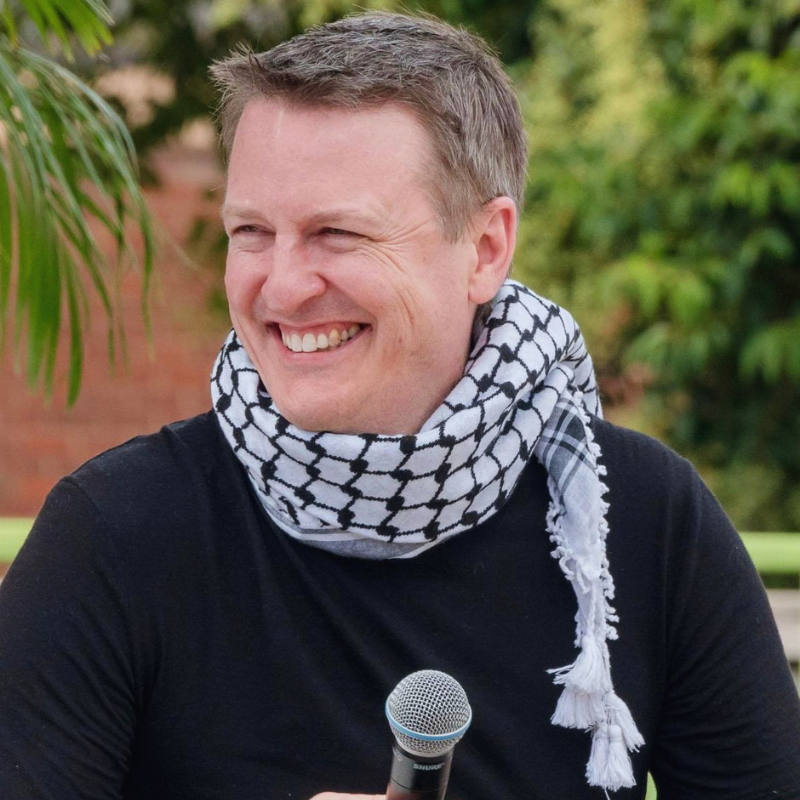
INTRO: On this episode, I asked today’s most interesting world travelers, why they travel and what travel means to them. And I compiled their answers for you in this special mixtape episode.
Matt Bowles: For the past five years, I’ve been interviewing today’s most interesting world travelers. On average, my guests have been to at least 50 countries. Some of them have been to over 150 countries, and I asked them why they continue to travel and what travel means to them, and here’s what they said.
Youmie Jean Francois:That’s when I started getting on planes to travel and I was like, oh, this is it . I love the smell of the airport, the lights, the glory, the waiting, the desire to get on the plane and get to the next destination. Oh my God. I fell in love with knowing that someone could take me across the world. And I could be there, and I could meet new people and learn their culture and speak their language, man I got bitten. And I’ve been in love since.
Jason Moore: There’s something about stepping out of your culture and seeing it from far away and then gaining an understanding of the fact that that is just one way to live and that you happen to grow up in that way, but it’s not the right way. It’s not the way, it just happens to be one way in a larger world, like when you open your mind in that way and understand that what you’re a part of is really just one thing that you are a part of because of happenstance. Where you were born and how you were raised, you start to question a lot of things, right?
And then you start to have a lot of realizations. And I think that one thing travel has really done for me is it gives you a lot of time to reflect and then ask those questions of yourself and then face them.
Libryia Jones: I grew up with a very limited view of what was available to me. As a person that did not come from a rich family, as a Black person, I think only a handful of us had even graduated from high school, and I was the only one who graduated from college.
Travel has just been a way to expand what’s outside of the neighborhoods that we grew up in, and the schools that we went to. Though those places are places that raised us and taught us so many important things. Feeling like I can go anywhere, and I belong anywhere is so important, especially in these days and times where we often don’t feel like we belong here at home.
For me, I think it’s just important that we get to expand our experiences, that we get to see beyond our neighborhoods, that we get to see beyond our country, and that we get the impression that No matter where we are, we belong there.
Tarek Kholoussy: They say sometimes people who are traveling and wandering around or lost and they’re trying to find themselves that cliche, and I like to think that we’re actually creating ourselves because we are a culmination of all our past experiences. And in this lifestyle, you can seek out experiences that you want. Like you just went for a salsa dance lesson an hour ago, right? How cool is that? Salsa classes in South America. So, we can create the experiences we want to become who we want to be. And the love is sometimes easier because you’re surrounding yourself with the people who you want to be with.
Dani Dirks: In a world where you’re constantly facing change, you also constantly have the opportunity to be someone else in every place you go. And so, every time you’re in a new place, you’re constantly questioning who is this person I want to be, and it gives you that opportunity to keep asking that question. And so, I think you grow so much faster as a nomad than you do as someone staying in one place. As a nomad, that is something that we are so gifted to have the opportunity to do. Every new place, I get to say, who do I want to be when I land in this next destination? And I get to be that.
Sondre Rasch: Travel is exploration, and I love exploration. I love new ideas, discovering new people, new perspectives. It restarts my mind. Everything becomes vivid again. One trip would suddenly be filled with color and life again. And it’s like I live more and live longer. And then I meet people, and I learn new things. And because I break up my habits and thought patterns, I suddenly see my existing life in a new light as well. And I discovered solutions to problems that I was stuck in. So, travel is. amazing. It keeps you alive.
Dr. Aprile Andelle: I think travel means connection to me. I really value being able to meet people from all around the world. And when you have the connection, you find that even though you’re different from different backgrounds, you look different, you speak different languages. There’s so much that is the same, which is why I can go to a salsa spot and speak the language of salsa to somebody I can’t even communicate to. And we’re still connected.
That means so much to me. And in that process of doing that, you’re opening up the world. And I think that’s really important to me. I really want experiences that open my world. So, to have a rich and full life, which is really important to mental health. Right?
Jimmy Naraine: I feel like for me, it’s just this feeling of the flow. When you have stale water when water is in one place, it kind of gets dirty and, and when the water is free flowing, it’s crispy, it’s clean, it’s fresh. I think travel it keeps you on your toes. It teaches you about appreciation for life. It gives you so many hidden blessings. Blessings that you couldn’t have expected otherwise. Things come to you from the most unexpected places. It makes you humble. It also gives you confidence. It’s one of those paradoxes that on the one hand, you become more confident when you travel, but you also become more humble Taveling, I honestly feel like it’s the best university out there. And no matter how much you travel, no matter how much experience you have, you always keep learning.
Martine Volmar: What traveling gives me is, A, to seeing other folks who have their own marginalization and how that plays out, but also it gives you space from your own and gives you the space to process it and to think about what are the engagements that get us from A to B and moves us forward, right? So, it allows me to not fall into despair and to fall into action.
Maya Angelou says, be angry, but don’t be bitter. Anger is a catalyst to action. Bitter just eats you up. And I find that I need to travel not to fall into bitter. I need it. I need the space from it. I need the break so that I can be renewed about what is the action I can then take.
Sean Tierney: We’re meant to lead extraordinary lives and somehow along the way we get walled into a sedentary lifestyle where we’re expected to go to a nine to five and expected to be in a cubicle and somehow people get the idea that that’s normal. To me, this is how we’re meant to live. We are hardwired. As a species, we’ve lived in tribes far longer than we haven’t. And I think there’s something that is unacknowledged with this whole travel program thing where Remote Year provided the modern-day tribe. You felt it, it’s a squad, it’s your people and you’re moving as a unit from place to place.
I don’t think we can underestimate the value of returning to this tribal existence. I think there’s something incredibly powerful about that. That just, at least in my situation, it awakened me, it revitalized me. I was in a social rut prior to going into Remote Year and it just shocked me back to life.
Shakeemah Smith: If I’m being completely honest. I’m able to do a little bit of healing and a little bit of growing in every single place. And when I leave from every country, there’s a part of me that’s been reborn again. And there’s a part of me that has also died. When you’re traveling to different countries, you are able to slow down time a lot.
So, you’re able to think about some of the things that you did or some of the things that you didn’t do, missed opportunities. And whenever I’m solo traveling, it’s really a moment where of clarity and reflection for me. And I’m able to make peace with a lot of things. And also make new personal agreements with myself, create personal expectations with myself, be a lot more confident and then move on to the next country. And whatever I didn’t like about myself, I left it in that country. And whatever I liked about myself, I took it with me to the next country.
Eddie Rich: When you travel, you see the world from a different perspective. Your friendships grow outside of your three-foot circle. You don’t really give a crap what your neighbor buys anymore. And you try to outdo them. You don’t care what size house you live in. It doesn’t matter how much money you make or how little money you make. There are people on these trips that I meet that are barely getting by. And their CEOs traveling together, going out, bar hopping together, eating dinner together, and learning from each other.
We’re learning the perspective of life from all different races, religions, nationalities, and cultures. And that makes you much more open-minded and it makes you see the world from a completely different set of eyes. And I would not trade this experience for any materialistic item ever.
Jessea Lu: I just think that stimulus from the travel, all these new things that makes you start thinking and reflecting or seeing things from different angles, different perspective is very liberating in many ways. And while I’m in Kenya, I went to these few places where how people are living there seems to remind me of my childhood. I feel almost a sense of time travel too, in that way. And things that’s in my memory, but if I don’t revisit it, it kind of got forgotten, right? So being able to connect these different distant thoughts, time wise or spatial wise, it creates a certain kind of new chemistry, and I feel life is more fun and interesting that way and more fulfilling.
Jordan Carroll: Remote work saved my life. I say that in the sense that when I’ve been at my lowest, substance abuse, depression, anxiety, suicidal thought. Shit that’s deep that I think a lot of people are scared to talk about. Remote work was that constant in my life that gave me the freedom to change environments, to explore passions, to try other professions. Because I had the mobility in my life locationally, I could figure out more about myself. I could learn more about who I was by being able to change my environment.
Justine Abigail Yu: It brings me face to face to so much of these complexities around colonialism and western imperialism and capitalism and all of these different things it shows me a much bigger world and it shows me how I am part of a much longer history and a longer future.
Tammer Abiyu: If I had to sum up why I travel, I think there’s a motivation and then there’s also a no going back type relationship I have with it. So, the motivation was I just wanted to explore. I come from a physics background, I love space, I love the concept of going into the unknown, of being uncomfortable, of just witnessing things that you couldn’t have conceived of before, and then just growing your image of what reality is, and barring going to space, the next best thing is to travel this earth, right?
So here I am, crisscrossing this planet, trying to experience as much of human society as I can. Trying to learn as much about our world as I can. And I think that it never goes away. So that was the impetus for it. But the state of things now is that I really can’t, like, have a hard time envisioning going back to not doing this. You kind of have like a dopamine resistance almost that you develop after going through so many different experiences that just elevated your quality of life at so many different points in time. I remember when I was living in New Jersey, I had read online a thought experiment that was like, how many days of the last month do you remember?
And I remember thinking to myself, I barely remember what I did yesterday. It’s such a monotonous level of living that I had been experiencing at that time. But I realized I wanted to get more out of each day in this limited amount of time that I have on this planet. And it just so happens that one of the best ways of doing that is to travel. And so, this is the status quo now for me. This is the baseline. Especially, I keep telling my parents, I’m only like six months away from settling down. Don’t worry. Like, they’ll be like, ah, when are you going to pick a place to live? You need to have a community. You need to get married. You know, the whole nine yards.
And I’m like, yeah, it’s four and five, six months away tops. And it has been like five years of being six months away. So, at this point, Matt, I really don’t know what I’m going to do and how I’m going to walk this back. There’s no putting this genie back in the bottle.
Ali Greene: I feel like for the first. time probably in my life, I have complete control over where I’m spending time and why, who I’m investing in and why and how open I’m letting myself be to new people and new experiences and learning from them. Whereas if I had just lived in one city or a few cities my whole life, a lot of that would be based off of circumstance. And so, this life for me, just shows so much proactiveness about pushing your limits and pushing your boundaries and learning about yourself and cultivating self-awareness. And a lot of that comes from the mirrors of the people and places you choose to be around.
Ray Blakney: I feel more comfortable in cultures where I’m not supposed to fit in. So being in Mexico, I speak Spanish, but I’m not a native Spanish speaker. So, if somebody says a Mexican joke, and I don’t understand, they don’t look at me weird like they did in the United States because, eh, he’s a foreigner. He’s not supposed to get the jokes.
If I do, bonus. But nobody looks down on me when I don’t kind of get humor, the cultural references. In the U.S., I felt like they did. It’s like, wait, you’re American, but you don’t get it. So now I feel much more comfortable being an expat. I’m kind of a professional expat. I plan on probably remaining this way for the rest of my life because I feel much more comfortable in places where I’m not supposed to know what’s going on.
Megan Mann: Travel is everything to me. I thrive off of change. I thrive off of experiences and adventures. If I get married and have a child one day, we’ll be traveling. I don’t foresee myself ever going and having just one place that I reside in again. I think it’s bigger than that. And I think my purpose is bigger than that. And I think I owe it to myself to be bigger than that.
Monet Hambrick: Another model of ours is the world is your classroom. And we truly believe that when we travel to places, we’re enriching our kids’ lives. They’re learning about things. And when you do something, you often remember it way more than if you just read it. So, when we’re learning how to samba dance, that’s very different than just watching someone else do it or reading about it. When we’re learning how to make traditional Costa Rican food, it’s very different. I think they’ve learned so much, and it just builds character and hopefully will make them into some pretty amazing humans.
James Baldwin: I was surrounded by a language I didn’t understand. I was surrounded by conversations that I didn’t know what was being said. I was using a currency that I didn’t grow up with. I was eating foods that I had never encountered. I was seeing refugees from North Africa and my apartment in Sicily. Looking out of this hill down to the coast, and right off the coast are a set of rocks jutting out of the sea. According to history, were thrown there by the Cyclops. I don’t know, that’s the shit that makes me feel like I don’t know anything. And something about that feeling, like, I don’t know anything feels like home.
Tiffany Green: Seeing things for myself is very important to me. So, I got to touch it, feel it. I want my account of something, not someone else’s story. And sometimes history can be so tainted, and I need to just go see it for myself and acquire history. And I think travel allows you to compare things because if you grow up in just one environment and all you have to compare is that one environment, it’s like, you’re living in this great cloud. You don’t really know what is what, until you can go outside of those boundaries and compare it with other things.
Gareth Leonard: My why starts with my curiosity. And it has to be this true, authentic sense of curiosity. I am curious to know how people live in India and Africa and Middle East in these places. And these conversations that I have, I thrive off of my times when I’ve been most alive in my life have been through foreign connections with local people or through adventure.
Flora Mendoza: Honestly, I only thought I was going to do this for six months and then three people who I was friends with passed away very suddenly. And I remember in 2019 before I started being a nomadic that the day started to blur into each other. I was just like, oh, it’s another day. And I was also kind of dealing with all that personal stuff going through divorce and all of that.
But I just remembered some days just bleeding into each other and I think it just reminded me to really not take a day for granted because I might not wake up like my friend. Who just like didn’t know they weren’t going to wake up. They just didn’t wake up one day.
Mel Judson: Travel is this idea of taking in information about different ways of being and letting that expand your overall worldview. And its problem solving. And it’s exciting, and it makes the mundane, everyday tasks of living, of buying a toothbrush, of finding a place to sleep, figuring out the currency exchange rate. It makes those things exciting, and so every single day is an adventure where your brain is engaged. And that, to me, is why I’m so drawn to travel.
Amara Abara: Going to different parts of the world, especially being from Nigeria and like experiencing life in England, being gone to China and all these different places, it gives you perspectives on different cultures and helps you empathize with them. It’s like, okay, this is why they do things like that. And also helps you create art for yourself, be it your business, where you can infuse learnings from these different cultures into what you’re doing, which enables you to stay away from the sameness because if your competitors are all getting their ideas from where they are, then all the products and ideas are going to be the same. So, I think travel enables me to see different things and it gives me inspiration that I can bring back into my life, not only to improve my life, but also my business.
Sharon Rosenberg: Traveling every day is different. I’m in a new environment. I’m meeting new people. I’m learning languages. I’m climbing mountains. I’m starting businesses. I am living such a varied lifestyle and meeting incredible people that inspire me along the way. Like you, Matt.
Matt: Ahhhhh
Sharon Rosenberg: I can’t imagine ever stopping.
Johnny FD: I think the reason why I travel so much is because I almost got stuck in a world where this wouldn’t have been possible and If it wasn’t for me really stretching my boundaries and trying to figure out what makes me happy, you know, and making a lot of mistakes on the way, doing a lot of stupid things, I never would have stumbled upon this life.
And then that really kind of led me down a path where accidentally I ended up in Thailand and I found scuba diving. And that was the first time ever in my life where I was like, you know what, none of that other stuff mattered. You know, the things I thought mattered, you know, really cool clothes, going to clubs, just, you know, impressing other people. That wasn’t it. What makes me happy is nature, animals, seeing new places, eating different food, you know, the variety of life and getting to know cultures. And ever since I found that, I was like, you know what, this is what I want. The reason why I go to these random places is because this is the one life we have to live.
And there was a huge chance I never would have experienced it, but because I was lucky and fortunate enough to have found it, I don’t want to give it up.
Beth Santos: Travel makes me better. I am one of those crazy people that thinks that travel actually does have the power to change the world. It can connect us to each other’s experiences.
It can give us first person perspectives on other people’s realities. And that’s why I think everybody should do it because to be able to step into somebody else’s life for a day and to see how they lead a beautiful life in a completely different way from yours, it gives you so much more tolerance and acceptance for other people that I wish all of us could have.
Santiago Sosa: To me, travel, I call it sometimes life university. The times and the experiences that I’ve had all throughout, there is no money in the world that will pay for it. There is no school that could ever teach you these things. And it just gives you so much empathy. Just knowing how small the world is like, that is my biggest thing.
Like you take 10, 12-hour flight and you are literally on the other side of the world. Where people have completely different cultures, but the more you travel, the more you realize that the world is super small. And I think through everything that’s going on today, in terms of biases, racism, and everything else, I just always tell people travel.
You just learn so much from people. The small things. The guy in the corner that’s selling you the pancake that’s treating you like you were the nicest relative ever, just whatever little interactions. There’s no money, there’s no education, there’s nothing that could relate to the experiences you learn on the road.
Libryia Jones: Travel has been a way to protest against traditional view of what womanhood should be. For me personally, it’s about taking control of the way my life looks. It’s me making a decision about what I want for my life. And that does not have to look like the formula that’s delivered to us from the time we get our cycle.
Michael Thelin: So, traveling to me is the number one thing that lets me really appreciate life. I am a culture freak. I love just immersing myself in a certain culture to just to hear their comedy. The way they speak, the way they fight, the way they do a lot of things, especially from an emotional standpoint. And again, I think there’s similarities to everyone, but ultimately travel allows me to feel like I’m actually telling a story that’s accurate.
Agnes Nyamwange: Travel means to me everything. I think everyone needs to travel because it has been the most eye opening. If you think, you know, a lot of things, you need to travel and realize how little you know, and I love that. I love change and that’s why the nomad lifestyle is perfect for me.
Liam Martin: I think it makes me less of an asshole. I think it makes me a more interesting individual that is not just stuck in my little slice of culture, which is Canadian culture. I’m able to expand out into different ways of looking at problems, different ways of dealing with issues. I think that travel, it adds more layers to your onion. And I think that those types of people are generally people that I like to spend a lot of time with.
And I think that they think deeply about issues. They think about issues from multiple perspectives. You know, if I was a person in a party, I’d really want to hang out with somebody that’s been to 60 countries. As opposed to someone that’s been to two. And so that’s kind of the gift that I think travel gives you is it makes you a more interesting and I might even say kinder person.
Lydia Lee: Traveling and deep immersion in a foreign country serves as a pattern interrupt. for a lot of the things that I never knew I needed interruption on. And so when I move to a new place for six months and I have to figure out even little things like where the grocery store is or when am I going to get my stand up desk that I was used to and now there’s no desk here and you know all the things that you have to do interrupts even my routines because I can be quite a ritualistic person and be robotic and monotonous at times without knowing I’m doing that because we just get stuck on habitual things we do.
And never question it, right? So, moving to new country, immediately a curveball is thrown away, and I have to start from scratch again. So, in a way, I have a new opportunity to rebuild my rituals, to rebuild and question, hey, when I did that before, is it still serving me? And if not, I can kind of rebegin again.
So, it gives me permission, if you will, to restart. So that’s been a really rewarding experience and I think it necessary for humans, you know, where if we aren’t conscious enough to give ourselves these sabbaticals to question our life choices or whether our values are still our values at the moment, travel can be sort of a push and a force that allows you to do that.
Travis King: And then when you start to travel, I saw just so many different versions of what success and happiness look like for people across the world. And it made me feel like my future was full of infinite opportunities and possibilities and who knows what it’s going to be full of. But that, that who knows part makes life so much more exciting.
Dr. Lydia Machova: Why would you not travel? Why would you not want to see this beautiful, amazing planet with everything that it has to offer? Meet different people, grow as a human. Traveling always puts you in this environment where you’re forced to grow because you always have some adversity and adversity is not bad if you learn how to understand it correctly.
But when you’re traveling, like you’re not in your own comfy little bed. I honestly don’t know how to stay in one place for too long anymore because I feel like I get depressed when I’m in one place and not doing anything that prompts me to become better. But when I’m traveling, it just forces you to think and to be more present in your moments transcribed and that’s what life is all about, being here now. And when you’re traveling, you get a lot more of here now.
Martine Volmar: Traveling is my favorite teacher. I love to learn. And there’s no better way to learn than to leave where you’re from and what you know and go discover another place and surrender and humble yourself into another person’s home. It happens to me every single time.
Every time I feel like I’m good. Nope. I go into a different place and I’m humbled and honored. And I’m just like, oh my God, you learn so much about other people’s culture. There’s just a lot of judgment that leaves you when you travel around the world. You learn to respect so many people so quickly. You don’t want to meet; you just offer it. You give it. I think traveling has helped me see God’s glory. Every time me and God is going through it, I’m just like, let me just get on a plane. And just look at your world that you created. Let me just go. I’ll remember who you are then.
Travis King: I feel like travel to me is just creating this really awesome highlight reel or epic memory reel that I could relive often. And so, I just want to collect such a rich, dense collection of memories. in my memory reel. So, whenever I have a moment of downtime, I can lean back and just enjoy and relive that again. And I feel like if I do it right, when I’m on my deathbed and I just revisit those memories, I’m going to smile and be like, holy shit, I did some really cool things along the way. And this life, this one chance that we get, I didn’t squander.
Martinique Lewis: It means storytelling. There are still so many stories we don’t know and just about everything.
Matt Bowles: All right, if you enjoyed that compilation, feel free to go back and listen to the full episodes. I will link them all up in the show notes and make sure you are subscribed to the show. So, you don’t miss any episodes moving forward.
Also, if you enjoyed this episode, it would mean a lot to me if you could share it. Sometimes short compilations like this are a great way for new listeners to get a quick overview of the vibe of the show. So, if you’re a fan of the show, it would be amazing if you could help spread the word.
And it would also help the show out a lot. If you could leave an honest rating and review on Apple podcasts, even if that’s not the primary platform where you listen, thank you in advance for that. And thank you for being a listener of The Maverick Show. I appreciate you and good night, everybody.