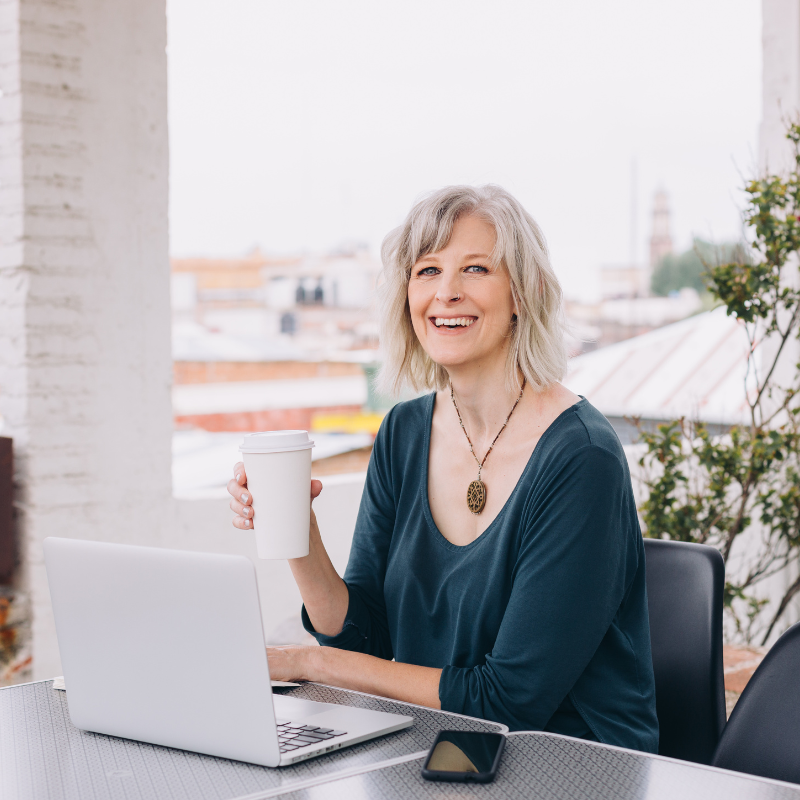
Matt Bowles: My guest today is Amy Scott. She is the founder of Nomad Topia, which connects and supports people around the globe who are building their own version of a location, independent lifestyle. Originally from the U.S., she has been traveling and living abroad since 2004. She’s passionate about helping entrepreneurs, freelancers, and remote workers harness the power of location independence to create freedom in their life and work. She has also been hosting the Nomad Topia podcast since 2014 and is currently based in Mexico with her Argentine husband and their two kids.
Amy, welcome to the show.
Amy Scott: Thank you. It’s great to be here.
Matt Bowles: I am so excited to have you here. Let’s just set the scene and start off talking about where we are doing this podcast from today. Unfortunately. We’re not in person. If we were, we would be sharing a bottle of wine. I am actually on the West coast of Africa today. I am in Luanda, Angola. And where are you?
Amy Scott: I am in Santiago de Queretaro in central Mexico.
Matt Bowles: Amazing. I was in Mexico last year for a little bit, about a month. I try to go through Mexico as frequently as possible, just because I love it so much there. And I’ve been to different parts of Mexico. It’s so big. It’s so diverse. It’s so amazing. And I just keep going back. So definitely one of my favorite countries. I want to get into your journey that brought you there and all that kind of stuff, but I feel like it would be good to just start with some basic context.
Can we go all the way back and can you talk a little bit about where you grew up and when you think back on that time as you were coming up, how did your interest in world travel initially start to develop?
Amy Scott: So, I was born in New Jersey, and we moved around a bit. When I was growing up, we lived outside Seattle. We lived outside Denver. We moved back to a different part of Jersey when I was in middle school. So, kind of all over the country, really. And I did the same as an adult. I went to the school in DC and then ended up on the West coast and then back to the East coast before I left the country. So, it bounced around quite a bit.
And we as a family, I always took epic road trips. When I was in high school, we drove from New Jersey out to Seattle and back. Which was amazing, but also probably not what you want to do on your summer vacation when you’re 16. So, my parents definitely set the scene for travel in general, and they actually took me and my brother with them to Europe for there, I think it was their 25th wedding anniversary, and they decided it was going to be a family trip.
And we all went, and I just obviously knew there was a big world out there and I wanted to see more of it. So, yeah, it was mostly domestic growing up and then little by little started exploring further abroad.
Matt Bowles: So, let’s talk about that. When you first started going outside of the country, how did your international travels begin? Where did you go?
Amy Scott: So that very first trip with my parents, we went to France and Italy. And I think we popped into Switzerland just for a quick hike in the Alps, basically. And we were traveling mostly by car, and I was studying French in school. So being in France while I was trying to learn French was really cool. And then obviously learning the foods and just how different things work in different countries. And I will never forget my dad. driving the wrong way down a one-way street in Italy that was about as wide as our car.
And suddenly we were all like, no, every piece of it was an adventure. And I learned so much from that experience. I also got hit on by this French guy at the Virgin record store in Paris. He wanted to take me on a picnic and the whole thing was hilarious because my parents were five feet away. And I have a picture of me with him. Actually, he wanted to take a picture. Every different piece of the experience was really something.
Matt Bowles: That’s incredible. And so, when did you start traveling by yourself and where was your first international trip?
Amy Scott: When I lived in San Francisco, my boyfriend and I had regular jobs and all of that, but we were very focused on using as much of our vacation as we could for some notable trips. So, we went over the course of a few years and I don’t remember for sure which one was first. We went to Mexico. We went to Spain, France and Southeast Asia. And I remember our trip to Southeast Asia was 12 days, which is intense. And I remember people being, oh, that’s it. I was like, well, where are you going? You know, you have got to make do with what you have.
Matt Bowles: Well, eventually you would go for a lot longer. I know 2004 was a hugely pivotal year for you. Can you talk a little bit about what led to that and then where you went, what you were doing, how you were funding it?
Amy Scott: So, to set the scene, it was 2002 done these trips with my boyfriend. We were living together in San Francisco. I went up to Washington state for a weekend with some of my cousins who are older than I am. And they knew I’d been doing all this traveling. They’re like, well, don’t you want to travel more before you so called settle down and like, is two weeks’ vacation enough? And I don’t know what exactly they were getting at. They never said you should quit your job, or you should do this or that. But I was like, yeah, you’re right.
So, I’m thinking about it all the way home. I got back and I said to my boyfriend, okay, here’s the plan. We’re going to quit our jobs. We’re going to travel for at least six months. I think he wanted to move to New York cause I’m like, then we’ll move to New York. And he was on board. Initially, long story short, we ended up breaking up about a year later. I was obsessed, saving money, planning, reading every single travel log and memoir and everything I could get my hands on.
And I never wavered even after I knew I’d be going by myself. And so, it would have been about two and a half years altogether. Saving money in fall of 04, I hit the road, and I started in Peru and did an immersion Spanish program and then traveled around South America for a while, passed back through the States for Christmas, and then went to Southeast Asia and India and passed through England on the way home.
Matt Bowles: I want to ask you also about Argentina. I know that has an incredibly special place in your journey and your life. And actually, interestingly, my nomad journey started in Buenos Aires as well.
Amy Scott: Nice.
Matt Bowles: And it started back in 2013. I left Los Angeles and got rid of all of my stuff and went to Buenos Aires for about three months. And then I have subsequently been back a number of times since then and a truly spectacular city, but for you, you spent a lot more time than I have there and have had some really important impact on your life. So, can you share a little bit about what brought you to Argentina and then what your experience there was like?
Amy Scott: Yeah, so I had been there on my round the world trip. And, I had narrowed it down to three places. I knew I wanted to go back and spend more time in one place, really have a deeper experience because on my round-the-world trip, I was on the move, which reminds me, I didn’t talk earlier. You asked about how I found it and stuff. I was living off savings. I wasn’t working at the time. It was full in backpacker mode. And so, because I wasn’t working, I wasn’t worried about, oh, I need to sit in one place for a while and work.
So, I spent a handful of days in each place. It was really crazy. So, I’d really liked Buenos Aires. I knew I wanted to go back. I also was looking at a couple of other places and decided that BA was the best fit. So, after my trip, I had gone back to the States. I started working for myself as a freelance editor because my background was in publishing and moved there in 2007, thinking might be there six months, a year, I don’t know. We’ll see how it goes just on a tourist visa.
And just fell in love with the place. I made a ton of really good friends and about two years in. I was just starting to get itchy feet. I’m like, you know, I could be anywhere. Maybe it’s time to go somewhere else. And then I went out salsa dancing with my friends and met Roberto, who is now my husband of more than 10 years.
Matt Bowles: That is incredible. This is one of the most incredible nomad love stories I have ever heard. You are a single woman. You go to what is widely regarded as one of the most romantic cities on the planet, Buenos Aires. You go into a salsa club, your salsa dance with a local porteño and you fall madly in love, get married and travel the world together. I mean, that is the dream, Amy.
Amy Scott: I know. And believe me, after two years there, single, I was not expecting that that was going to be the place I would meet a long-term partner by any means. Dating there is quite an adventure. But yeah, I was actually out with some guy friends. They often have class and then you stay and do the dance part.
And Roberta was in the class, and we just caught each other’s eye from the beginning in the class, and then we ended up connecting after that and barely danced. We sat and talked until four or five in the morning. And he’s like, wait, what are you doing here? How did you get here? How do you live here? And I said, well, I work for myself.
And so, I can be anywhere. And I really wanted to live here. And he was like, that’s amazing. Sign me up. He was like, I knew there had to be another way. So even though he had a regular job, he’d never left the country before. As soon as this possibility was open to him, he was a hundred percent on board.
Matt Bowles: I love that story because you start dating a local who has not traveled the world, who is not location independent at the time that you start dating but decides that a combination of wanting to be with you and also wanting the lifestyle for himself. He’s able to become location independent and then travel the world with you and go off into the sunset and live happily ever after. I mean, that’s unbelievable.
Amy Scott: Yeah, I know. I couldn’t have asked for it any better, for sure.
Matt Bowles: Alright, so then when the two of you start traveling together, where do you go and what were some of those experiences like?
Amy Scott: So, we got married in March of 2012. He quit his job like right after that. And we started traveling. First, we actually went to the States. I mean, we didn’t really call it a honeymoon, but it kind of was gallivanting around the States, meeting friends and family. And my parents had a reception for us in New Jersey for the people who couldn’t get down to Argentina and did a huge road trip up and down the West Coast.
And then We left for six months and then we went back to Argentina because we have a place there. So, we left, rented out the place, and then we went back to Argentina, I think for maybe four months. And then we left again for longer and then they went back for like two months and then we left again and came back for one month and then years and years passed so that we didn’t go back at all.
So, we went to Southeast Asia a couple of times. We were there about eight months the first time and spent time in Bali, Malaysia, Thailand. Oh, and that was also when we took his first, my second trip to India. And then since 16, maybe we’ve been spending more and more time in Latin America and basically haven’t been anywhere else.
And we came to Mexico for the first time in 14, I think. And it was kind of the inverse. We came for a month, and then we left for a while, and then we came back for four months, and then we left, and then we came back for six months, and now we’ve been here full time for five, six years.
Matt Bowles: So, for people that have never been to Argentina, what do you love about Argentina, and why should people definitely go and visit Argentina? What should they do there?
Amy Scott: There are so many things I love about it. Some of the things that people are surprised by their ice cream is phenomenal. They’re known for the wine and the meat, and that is definitely true, but the ice cream is amazing also don’t pass it up.
And then there’s a really big reading culture. I don’t think I realized how notably have many bookstores there are in Argentina before I was going other places. There are no bookstores around here. Where are all the bookstores? It feels like there’s one on every corner in Buenos Aires, which is awesome. And then also I just maybe less. So now with kids, but oh, I’m spoiler alert. I have kids now, but when I lived there, it was a perfect time in my life for the late night, everything. I’ve always been a night owl to be going out late, staying out late, sleeping in. That schedule worked very well for me also.
Matt Bowles: I have been telling people it is the latest night culture I have seen anywhere in the world. And it’s obviously very influenced by the Spanish and Italian immigrants that came there who also have a very late-night culture, but I feel like that culture in Buenos Aires is even later than it is in Spain and Italy. It is Wild.
Amy Scott: It’s crazy.
Matt Bowles: For folks that have never been if you try to go out to dinner at 8 p.m., there will not be any restaurants on the street.They open the doors around 9 p.m. But nobody shows up for dinner until 10. 30. The prime dinner hour is like 11 p.m. And then people eat dinner. And then it’s a long dinner. Bottles of wine coming and flowing and food and all this. It’s an event. And you eat dinner from 11 to 1. Then you go to the bars from 1 to 3. And then you go to the clubs from three until seven or so. And this is like every night. This isn’t just on the weekends. I mean, this is Tuesday night, Wednesday night. I mean, it is wild, and you go and it’s just, that’s just how it is.
Amy Scott: Yeah, exactly. There’s no last call. I feel like in the States, you have that, you have some idea of what time it is because they kick you out of the bar and do that in Argentina. There were so many times I would be out somewhere and are those birds? What time is it? And suddenly I realized, oh wait, is the sun coming up? It’s 7am and you have no idea because you’ve just been having fun, and the drinks have been flowing all night.
Matt Bowles: And it’s still packed. Yeah. I can remember the last time I was there; it was like a Tuesday night and turning into Wednesday morning and it’s like 5:30 to 6 in the morning. People are coming in. They’re still coming in. to sit down to start ordering drinks and they’re opening the door, and the sun is already up. It’s the wildest thing I’ve ever seen. It’s unbelievable.
Amy Scott: Yeah. It’s a good time.
Matt Bowles: It’s an incredible time. So, then what brought you to Mexico? You were in Southeast Asia. You were there for an extended period of time. What made you decide that you wanted to go to Mexico?
Amy Scott: Right off the bat, it was the food. We were hoofing it across Chiang Mai in the middle of the day, in the hottest time of the year, looking for this Mexican restaurant. And I was like, what are we doing? Why don’t we just go to the stores? I love Mexican food. We haven’t spent any time. I’ve been here a couple of times on vacation, like a million years ago, but I was like, why don’t we just go to Mexico?
So, yeah, that was really our initial motivation to come here. And of course, since then, we’ve also found a lot of other things we like about it, but we still love the food. And. just started spending more and more time here. So, it was a good choice.
Matt Bowles: All right. So, you meet the love of your life on the dance floor in Buenos Aires, you travel the world together, and then eventually you decide that you want to have kids and have a family. And I want to ask you about that and about family planning in a lifestyle of world travel. What was the thought process that went into where you wanted to have kids and give birth and all that.
Amy Scott: Where to do it was probably the least complicated part at the end of the day. But what was really challenging is one, deciding when we were ready. And also, once you decide, okay, we’re going to do this now, that doesn’t mean it’s going to happen immediately. It actually took us five years. And so, it influenced our travel dramatically for a very long time. We were spending time in Mexico, but there was a period of that where it was the height of Zika.
And I don’t know if you remember, but a lot of it had to do with pregnancy. Women being at risk and all of this stuff. And so, we still have not been to Oaxaca. We haven’t been to a lot of places on the coast in Mexico, because when it would have been the right time for us to do that, it was total Zika period. And they were like, don’t go to those areas. So, we primarily stayed in the central Highlands because those mosquitoes were not a risk here. And then we went to Bangkok. I spoke at a conference in 2016. We were planning to stay for a while. Instead, my mom sends me a message. The CDC just put Thailand on their list for Zika. I was like, oh, are you kidding me?
And so, we went to Thailand and turn around and came back. I’m just going to be stressed the time I’m there. So, it really influenced a lot of things, just not knowing, am I going to get pregnant tomorrow? Am I going to be pregnant in six months? So, I can’t commit to X thing. So that was challenging for sure.
I have residency in Argentina from marrying Roberto. And we were like, I hear that you can get residency from having kids somewhere. Where else could we do that? That would be a benefit to us. And so, we looked at different places that were an option for some reason it seems like it’s primarily Latin America where that’s a thing. So, we kind of narrowed it down to Costa Rica and Mexico. And we went to Costa Rica in 2015.
I got dengue there, which was not why we decided not to have a baby there, but that didn’t help obviously. And yeah, we’re enjoying Mexico and spending more and more time here. I’ve been working with an acupuncturist and naturopath and all that stuff here. So, we just kind of got more and more focused on our little hub here in central Mexico. And so, it just felt like the right place at the end of the day. So finally got pregnant with twins in 18. They were born in 19. And needless to say, finding out that we were having twins put a whole other spin on like, wait, what? Like, how are we going to do this? How do we be nomads with two babies? So yeah, our life has definitely taken a turn since then.
Matt Bowles: How are You choosing to integrate the values of world travel and all of your different appreciation for experiencing different cultures and being a citizen of the world, if you will. How are you integrating that into your parenting? How are you choosing to raise your kids?
Amy Scott: Well, we’ve been slowed down a bit by the pandemic. We had envisioned, especially before we knew we were having twins, we’d envisioned we’re going to be doing all kinds of crazy adventures. And then they were nine months old when the pandemic started.
So that definitely put a damper on things. So even if we’re not going a lot of places, we’ve only taken one big trip with them so far, which was to Argentina. But we talk a lot about different countries. We talked about where daddy’s family’s from, where mama’s family is from. And they also go to a Montessori preschool here with a lot of kids from different countries. And so, we talk about that too.
One kid just moved to Costa Rica. And so, we’ve been talking about where’s Costa Rica and just talking about people speak different languages. My son is constantly like, do they speak English or Spanish? And I’m like, well, they speak Japanese. And like, we talk about how they speak different languages and different countries.
And actually, the other day we were out somewhere, we were having tacos, and my son goes, what do you call tacos in English? I said, well, they’re actually called tacos. So, watching them wrap their heads around the two languages has been one of my favorite things, and it’s just amazing seeing how they distinguish between them and are perfectly comfortable in both. So, it was really fun.
Matt Bowles: And when you think about the next 10, 12 years of them growing up, how do you envision integrating travel into your parenting at different age thresholds of their lives?
Amy Scott: Depending on how old they are. Like it changes everything. We actually had a trip to Argentina planned for March of 2020.
It was going to be the first time an airplane, first big thing, take them to Argentina and meet the grandparents and the whole thing. So, the planning that had gone into that trip to nine-month-olds, like there was a lot to figure out. And then we ended up canceling that trip two days before our flight.
And then when we were finally ready to do it again, there were almost three, and it was like planning a completely different trip because three-year-olds need very different things than nine month olds. I actually am probably taking a trip to the States with them this summer by myself. And I’m feeling very daunted about that, but then when they’re 10, when they’re 15, the fact that there’s two of them is not going to be quite so intense, but the pandemic and everything has just worked out well for us is to really have a base and then take trips from there.
And I envisioned that something that I would want to stick with for a while, not necessarily a base in Mexico. We’ve been exploring other options and then maybe back to more of a full-time thing. We’ve been all over the place in terms of figuring out what we want to do in terms of schooling, what’s best for us, what’s best for them. And it always feels like you have so much time. And suddenly I’m like, oh my God, they’re almost four. We probably need to figure this out.
Matt Bowles: So, what tips do you have for say nomadic couples that are traveling the world together and they want to start thinking about family planning. Because I feel like there’s a lot of mainstream pressure on folks that, oh, you got to do this lifestyle before you have kids, all this kind of stuff. So, having been a world traveler and all of your experiences, what tips do you have with respect to family planning for people that are in the nomad lifestyle?
Amy Scott: Well, I think just from what I’ve been talking about, you can tell that there’s a lot of unknowns. And I think the good thing is that nomads tend to be pretty adaptable and ready to roll with it. And this is definitely another piece where you just don’t know how long the different pieces are going to take. Amanda, who I interviewed on my podcast, ended up getting pregnant immediately. And they were like, oh no, what do we do now? So, it can go either way. You just don’t know if it’s going to be tomorrow that you have to start thinking about this or it’s going to be years from now.
So, it’s just an added piece of uncertainty for a while. So good luck with that. Be ready for that. And it’s definitely a question of thinking about where you want to do it. I never was concerned about choosing, for example, a place in Latin America because I speak Spanish. If you don’t speak the language, you’re going to have to think about what kind of support you will have. When you’re in the middle of labor, that’s not necessarily the time to be pulling out Google Translate.
So that’s a concern. And in fact, I had a really hard time when I was in that phase. I really wanted to talk to other people who had done it the way we did, which was basically you’re already traveling. You’re going to start a family and you’re going to do it on the road, so to speak. Most people I know go home and mostly just for logistical reasons because they have health coverage back home or they have the support network. And so, we didn’t really want to do it that way. That really was not really something we considered ever, but it’s definitely a factor too.
And of course, it was easier for us because we spoke the language and so on. And my parents were able to support us at least initially, they came down for six or seven weeks, right around the time they were born. And so that was a huge help, even though we didn’t have a ton of local support at the time.
Matt Bowles: And how was your experience giving birth in Mexico with the Mexican healthcare system and everything else? What was your experience like?
Amy Scott: It was very positive. I mean, obviously I don’t have experience anywhere else, but I’ve heard a lot of stories about the U.S. and other places. I knew that the C section rate is high in Mexico. And especially with twins, I was very particular about finding a doctor in a hospital that was going to support my desire for a natural birth, even though I knew obviously things happen. It might not be possible at the end of the day, but I didn’t want healthcare providers that were going to be pushing me initially in that direction.
And we did find that, and they were an amazing support system all the way through. And I was 43 when they were born 43 with twins, like in the States, all the red flags go up. And here, at least to my face, they treated it just like any other no big deal pregnancy. Like you’re not high risk. You’re totally fine. I had a great pregnancy and just felt very supported and just, you can do this your way. And it all worked out.
Matt Bowles: Well, I definitely also want to talk to you about the podcast Nomad Topia because you’ve been podcasting longer than me. You started that back in 2014. You’ve been talking with digital nomads all over the world and maybe let’s just start all the way back. There’s a really cool thing that I learned about you is that both of us were DJs back in college.
So, I have never heard your DJ story. My story, I did a radio show on the college radio station. I was a hip-hop DJ, and I did that. But I also then built a mobile DJ company that I started building in high school. And then every summer that I was on a break from college, I would DJ high school proms and weddings and all of these mobile gigs. And it was this great summer job.
And so, I had that whole background and then I just kind of hung it up. Yeah, years ago and stuff, but returning to the microphone and the podcast is like a really nice, nostalgic continuation in some ways of some of that lineage. But I’m curious about you, what was your DJ experience like and how for you has been returning to the podcasting?
Amy Scott: So, I had a radio show in high school. I was in a broadcasting class. So, a friend and I had a radio show. We were infamous for having gotten Pearl Jam band from the entire radio station. We were playing a song. And then we were busy talking, get faded out. And the next song started, I don’t even remember what song it is, but someone starts with like, what the fuck is this world coming to? And then we’re like, Oh shit. So, we turn it off.
And then apparently some priest was listening. And called our teacher and was like, you won’t believe what I just heard. And so, he was like, no more Pearl Jam. And this is 92 or something. It was a terrible time to have Pearl Jam banned from your radio station. Everyone was really pissed. So that was high school.
And then in college, also, I had a radio show once a week. I think I had a terrible time slot. I felt like nobody was listening, but I always had a ton of fun with it. And for a brief period, I was like, this is what I, you know, I’m going to do this. I thought I maybe wanted to be a radio DJ. I also thought about being like a music critic. I worked at a record store. I was super into music and that whole scene. And yeah, like you, then I was just kind of moved on to other things, started studying literature and went in a totally different direction.
And 2014 was super early days of podcasting. I’m good friends with the women who run the She Podcasts group. And in the early days, Jessica, who’s co-founder of She Podcasts, was doing I think it was called podcasting school for women. And she was like, oh, I should totally do a podcast for Nomad Topia. That would be awesome. I was like, yeah, all right. I like to talk to people and I have some experience with that. So, I was like, what do we call it? Nomad Topia Radio. So later this year, it’ll be nine years.
Matt Bowles: When you think back about all of the different guests that you’ve had and the conversations that you’ve had with them, what have been some of the biggest lessons that you’ve learned from the other people that have come onto your show?
Amy Scott: Part of the reason I started the podcast is because obviously I’m only one person. I have not lived every experience. I have not done this every way that one can. And so, I wanted to hear from people who are doing it a different way. People who started out nomadding with three kids or people who one of them really wanted to do it and they had to convince their partner, all of these different things that I hadn’t lived through myself.
So that sticks with me as one of the overarching things is just that there are so many different ways to do it. And you have to really want it, but that there are so many life circumstances that one could use as a reason or excuse not to do it, but if you really want it, you can still do it. Before I had kids, I’d be like, okay, they have three kids and they’re doing it. So, I think I can do this. And it’s true, but you have to really want it if you’re going to make it happen. And also. If it doesn’t feel right to do it a certain way, then by all means, do not do it that way. If I’m happy or having a home base right now with two little kids, totally fine. I’m not going to push myself to have to fit a certain mold or a way to do it. So do it your own way and do it all the way, I guess.
Matt Bowles: What do you think has been the impact on you on all of the travel that you’ve done over the years? When you reflect back on all the places you’ve been and the experiences that you’ve had and everything else, what impact has it had on you as a person versus if you had not traveled at all and you just stayed in the U.S. and got married and have kids and just live a more traditional life in the U.S. who are you today as a person? What impact did those travel decisions have on you?
Amy Scott: Probably there are ways that I don’t even realize. I started on this path at the right time. I was in my late twenties when I took my round the world trip and lived with my boyfriend, had a steady job. I was on the road to just following the path that everyone follows. And it was also right at the time where working online and all of these things were becoming a possibility.
I think if I had stayed in the States without thinking twice, I would have stuck to that path. But at some point, probably 20 years later, been like, wait, actually, maybe not even that long, but I’m sure I would have hit a point, especially as nomad stuff and all that became more visible than I’ve been like, wait a second, I went the wrong direction.
I feel like I wouldn’t have been satisfied with the status quo, but it’s also possible it was that first trip and meeting people who were already doing different things and maybe that’s what made me not happy with the status quo. It’s hard to know because that’s my life.
Matt Bowles: Well, I also want to ask your reflections on the different types of travel choices that you have made and the different experiences you’ve had, because you’ve done both the itinerant nomad thing. And you’ve done the expat extended stay type thing, you’ve done solo travel, you’ve traveled with a partner, you’ve traveled with kids, you’ve done all of these different types of travel and after having all of those different experiences with those types of travel, what tips do you have for folks that are trying to design their ideal lifestyle? How should they think about the different options and what might be best for them?
Amy Scott: Obviously a big part of that is going to be decided for you. If you already have kids, then you should probably bring them with you. Although I’ve connected with a lot of people over the years. I’m on board with this as soon as my kid graduates from high school or whatever the thing is, because there are definitely people who are like, nope, I’m not going to uproot them right now. And then there are other families that do exactly that. And
I think it can vary so much depending on what you’re going to do if you uproot them. Your kid’s personalities, how they feel about the whole thing. And also, with a partner too. I was lucky that I never had to convince Roberto. Like I said, he was totally sold from day one. And that’s something I’ve talked to people about on the podcast too. When one of them gets this idea and floats it to the partner and they’re like, meh, I don’t know. It can take a while to convince someone to be on board.
So, at the end of the day, it’s really looking at. What is the right fit for the kind of experience that you want to have? And also making sure that obviously any situation in relationship, there’s compromises, but making sure that everyone’s needs are getting met at least to some extent with whatever you decide to do. And I think about people, I followed their blog 20 years ago, they were traveling with their daughter. And made a point of staying longer times in certain places because her daughter got super into violin, for example, I think it was violin or piano. I think it was a piano, cause it’s something that’s not super portable, especially 20 years ago.
So, they made a point of staying in one place so she could take her lessons and do whatever. And, um, if you get super attached to like, no, we have to be 100 percent nomadic. We have to be on the move all the time at some point that just might not fit what’s really best for you and your family. So, I try not to get too attached to any one way to do it because sometimes it’s not the best way.
Matt Bowles: Exactly. And you’ve obviously pivoted and tried a lot of different things and used your location independence to adapt your lifestyle to what was going to be the best fit for you at any particular time. And so, at this point in your life, what is your optimal lifestyle? What is Amy Scott’s Nomad Topia?
Amy Scott: Right now, I’m happy to have a base. I’m happy to have the local community, mom, friends, and kids making friends. And that’s been really nice. And it’s interesting being in this position because there are definitely times. And I’m like, yeah, but I don’t know how long we’re going to be here. So, I’m definitely not feeling a hundred percent committed to this location. And so that changes the way you approach things sometimes. And in fact, a friend moved away a couple months ago and I was like, I’m never the one saying goodbye, or I should say, I’m always the one leaving. I’m never the one staying.
So, it’s really interesting to be kind of on the flip side of that for now. At this moment, this feels pretty good. And we have the idea that maybe we’re headed to Europe in a few years, but we haven’t figured out the schooling thing. There are so many pieces that play into how often the travel happens and for how long? And it feels like there are a lot of variables. We’re kind of living day by day over here.
Matt Bowles: Okay. So, let me back away from the logistical detailed question and just ask you the larger philosophical question, right? You’ve seen so much of the world at this point, you’ve experienced so many cultures, why do you want to continue traveling. What does travel in general, what does it mean to you today?
Amy Scott: For me, there’s a million places that I would love to go. And there’s a lot of things I like about the experience. And yet for me, a big part of it is being in one place, but it’s not my culture. It’s an international experience on a different kind of level, right? Then just travel. And I really value living in a country where I speak the language and where I’m learning about local customs and integrating that with teaching our kids about our cultures and our traditions. And just the global mix of what life can be that’s not necessarily tied to one place, and we feel pretty confident.
I’ve definitely learned to never say never, but we don’t have any intention of living in either of our home countries anytime soon. So, it’s more about just kind of embracing the world as our home and going where we feel happy and where we can get what we want.
Matt Bowles: Let me ask you one more question and then we’ll wrap this up and move into the lightning round. You’ve obviously chosen Mexico as your base, and you love being there for folks that have not spent time in Mexico. Can you talk about what you love about Mexico and why folks should visit, maybe where in Mexico they should go and give Mexico some love.
Amy Scott: Well, the food, of course, if you’ve ever watched a food TV show about Mexico, you are probably already aware that it goes way beyond what Americans know about Mexican food. There’s so much variety regionally and also just fascinating things that I’ve never heard of before. And also, they call them different things depending on where you go. It’s confusing, but that also makes it even more fun to just try different stuff because you order something, and you don’t know what you’re going to get.
I love the color. It is just bright colors. And I was going to say, I love the noise, fireworks and dogs barking and mariachi at any random time of the day, even in the suburbs where I live. But I love that because obviously that’s not like home and what else? The people are super nice, super welcoming, and I feel really comfortable here.
So, in terms of places to go, naturally Mexico City is an amazing place. And I had a lot of good times. There is a lot to do and see and eat, but it’s also massive. It’s like 20 million people, which makes where I am a good choice. Queretaro is just a few hours North. It’s very different. And yet at the same time, you can say it’s kind of a mini–Mexico City.
Like that, it has a lot of the same things to offer. There’s a beautiful Centro. There’s a lot of activities and cultural stuff happening here. There are some museums. And it’s a very livable, more chill place. And then also Guanajuato, which is North of San Miguel de Allende, which usually gets all the attention, but Guanajuato is also super fun to explore all these crazy steep hills and not so overrun with foreigners.
Matt Bowles: I am such a big fan of Mexico. I want to go back, spend more time, see more of it, eat all the food, and just hang out with the delightful people that live there. So, I am super, super happy to cosign on that recommendation. All right. I think that’s an awesome place to end the main portion of this interview. And at this point, Amy, are you ready to move in to the lightning round?
Amy Scott: Yes.
Matt Bowles: Let’s do it. All right, what is one book that has significantly impacted you over the years you’d most recommend people check out?
Amy Scott: One of the very first travel books I read, uh, specifically about different and more unique kinds of travel was Vagabonding by Rolf Potts, and I met him, went to a book signing of the whole thing a million years ago. And yeah, he’s really awesome. And in fact, I haven’t seen it yet, but I hear Nomad Topia is mentioned in his new book.
Matt Bowles: Amazing. I just got his new book, actually, The Vagabond’s Way. It is incredible. And so is the original book, Vagabonding. So, we’re going to link both of those up in the show notes. Amy, what is one travel hack that you use that you can recommend?
Amy Scott: Make sure that you know the exchange rate and the currency of the place that you’re going to because you show up at the ATM and you’re just frozen. I don’t know. Am I getting out 100 or 100 million of this local currency?
So, I remember showing up in places and being like, all right, I’m in a new country. I didn’t research any of this. And then you have no clue.
Matt Bowles: That’s a good tip. All right. Amy, who is one person that’s currently alive today that you’ve never met, that you’d most love to have dinner with? Which is you and that person for an evening of dinner and conversation.
Amy Scott: There are a ton, but I think I’ll have to go with Michelle Obama.
Matt Bowles: All right. Knowing everything you know now, if you could go back in time and give one piece of advice to your 18-year-old self, what would you say to 18-year-old Amy?
Amy Scott: It’s okay if you don’t end up studying abroad in college because you’ll make up for it later.
Matt Bowles: Alright, of all the places that you have now been in the world, what are your top three favorite destinations that you would most recommend other people should definitely check out?
Amy Scott: Rajasthan in India, northwestern India. Patagonia, really both Argentina and Chile sides of Patagonia and Machu Picchu.
Matt Bowles: All right. Last question, Amy, what are your top three bucket list destinations, places you’ve not yet been highest on your list? You’d most like to see.
Amy Scott: These are a bit more experiential, I guess, than super specific on destination. Top for me is the Camino de Santiago. Actually hiking, at least some of it. See the Northern lights. I’m not even sure the best place to do that and to go on an African safari.
Matt Bowles: Amazing. Alright, Amy, at this point, I want you to let folks know how they can find you, follow you on social media, listen to your podcast and anything else you would like to let folks know about how do you want people to come into your world?
Amy Scott: Yeah, thanks. So nomadtopia.com is the hub of all things Nomad Topia. I’m nomadamy on Instagram and Nomadtopia Radio. You can find anywhere you listen to podcasts.
Matt Bowles: We’re going to link all of that up in the show notes. So, folks can just go to one place that themaverickshow.com go to the show notes for this episode. And there you will find everything that we talked about in this episode, including all of the ways that you can come into Amy’s world. Amy, this was awesome. Thank you so much for coming to the show.
Amy Scott: Yeah, it was a lot of fun. Thank you.
Matt Bowles: Alright, goodnight, everybody.