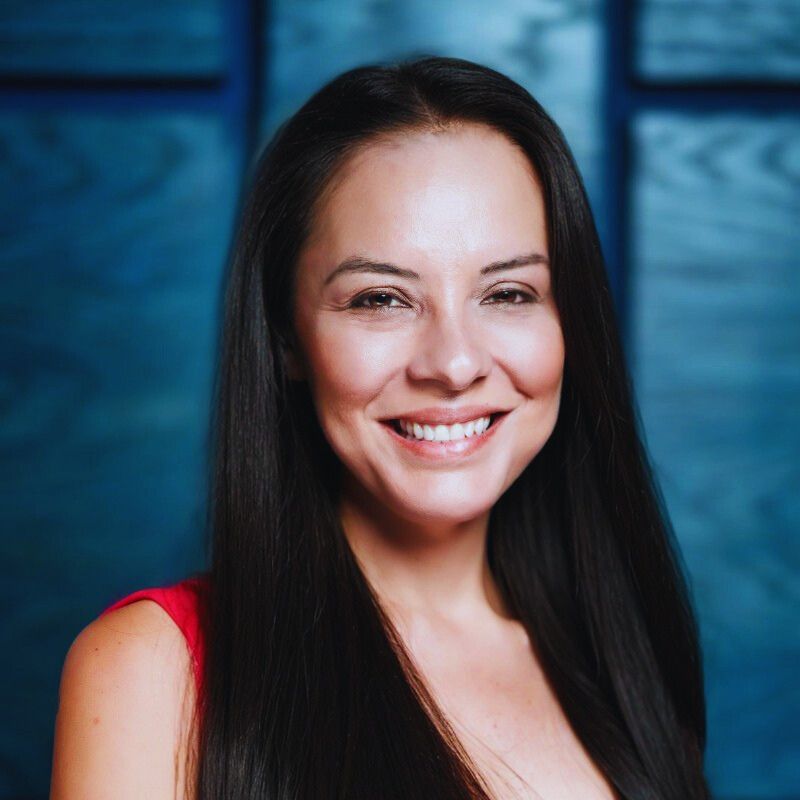
Matt Bowles: My guest today is Paula Gean. She is a Colombian-American world traveler and the co-founder of Africa Culture Journeys which offers camping safaris in Botswana that celebrate the country’s culture, heritage, wildlife, arts, traditions and cuisine. It’s a mission driven company that offers once in a lifetime journey which include unique cultural experiences, promoting sustainable tourism and driving local economic support. She grew up mostly between Chicago and Texas and was a featured speaker at this year’s Latino Travel Fest.
Paula, welcome to the show.
Paula Gean: Well, thank you, Matt. Thank you so much for having me.
Matt Bowles: I am super excited for this conversation. You and I just hung out together. But before we get into that, let’s just set the scene and talk about where we are recording from tonight. I am actually in the Blue Ridge Mountains of Asheville, North Carolina this evening. And where are you?
Paula Gean: I am in the south side of Chicago.
Matt Bowles: Amazing. And we should let people know that we have agreed to make this a virtual wine night. I have just opened a bottle of red wine; this is a Gamay that I am going to be drinking through this evening. What are you drinking over there, Paula?
Paula Gean: Well, that sounds really good. You know I can’t have red, but I do have some white sparkling wine. So, cheers.
Matt Bowles: Cheers to you. And we just hung out in person at the amazing Latino Travel Fest. Maverick show listeners know Vanessa Fondeur, of course, the incredible founder of the event. But I want to ask you, because you were a featured speaker and gave an amazing presentation there that I, of course, attended. What was the experience like for you? And maybe for people that have never heard of the Latino Travel Fest, this is their first time or what was the overall festival all about?
Paula Gean: Oh, my gosh, if you could capture joy in the bottle, I think that’s what the feeling was. So, lots of dancing. So, you were there, lots of dancing, lots of connection, lots of being with each other in the community, which is what we need now more than ever. It doesn’t matter who you are, what your background is. I think these times are really pressing on everybody and these are the times that we really need to lean to those in person connections. And the Latino Travel Fest was just full of new people to meet from all over the world. I think there were 17 states and like several countries it represented beautiful weather in Chicago. So already have a perfect scene there. And just being able to meet people that understand where you’ve come from and what you may be going through, whether you are Latino or Latina or whether you’re not. And you just really appreciate the culture and want to understand the culture. Very welcoming. I mean, you were there, Guerito, so, what do you think about the welcome?
Matt Bowles: It was amazing. I was at last year’s Latino Travel Fest as well, and I keep going back because the community is incredible. Vanessa attracts absolutely amazing people, wonderful speakers. A number of Maverick Show guests were speakers this year. Also, Maverick Show listeners know Sibu Szymanowska, who is a speaker, and Elsie Paulino, and the list goes on. So, there are just amazing people there every year. So, I keep going back and just love hanging out with everyone there. And as you said, it was in Chicago. You have a long connection with the city of Chicago. And before we even get into your story coming up in the U.S. can you share a little bit about where your family is from in Colombia and what life was like there in the 1980s and where you were born?
Paula Gean: My family is from Pereira, Colombia, and I actually don’t know my family that well. And I immigrated to the States when I was three, so in 1989. But when we immigrated, I lost a lot of those stories and through the trauma and everything, I just didn’t feel comfortable asking my family. But from what I know, so the story goes, my family had just incredible land in the coffee regions in Colombia or near that, and they had so much land. You could start at one end of our property and buy horseback, go all day and not reach the end of our property. So, it was just this vast amount of land.
And my mom had her first son, my older brother. He is Afro Latino because he’s part Black. So, she was pregnant with me, and she knew that she couldn’t stay in Colombia because the cartel. Keep in mind this is 1986, mid-1980s, in Colombia. The cartel had just finished murdering three of my uncles. So, three of her brothers, they were executed off of the same bridge. So, my mom, with her son and with me, was like, I can’t stay here. I got to go. And she made up her mind. She decided that she was going to come to the States. So unfortunately, she was not able to bring us, so she had to come alone. So, she left us, and she had to leave me when I was two months old. So, I know very well the repercussions of separation of families, especially very early in that age. And I’ve studied what that does for children.
And let me tell you, it is not good. It sets you up for a lifetime of issues to work through. So, we spent a couple years with a nanny, and then some of our family members managed to get us out of the nanny situation because it turned out she was very neglectful. So, we faced some neglect there and some, as I like to say, some very minor child abuse. So, my mom, by the grace of God, somehow made it in the States. So, when she arrived, she had nothing. So, she had just the clothes on her back. And she arrived in the legal way, as I will say it. So, she literally had to just work from the ground up.
Fortunately, she knew a couple of people here and she just paid her dues. So, everyone that’s been through the struggle, being new to a land and not knowing the language, you just do what you can, right? You hustle every day you get money; you make more money the next day than you did the day before. You squirrel away your money, save as much as you can and accomplish your goals. So, she had this timeline of two years to come back for us, and she managed to meet that. And a huge reason she met that timeline was because she met my father. So, before she left, she separated from my biological father, and she met my stepfather here in the States. And she was not interested in getting married, and he pursued her. And then, you know, he’s just my stepfather was an incredible man. He passed away a decade ago, and. Just incredible, just very sweet. And no one could resist him. He’s very charming.
So, she was very set on not dating, just working this whole time. And he managed to woo her. And she told him; “I’m here for my children and I’m going to go back for my children. I’m going to grab them either way, I’m going to make it or I’m going to go back to my kids. And he said, okay, I could get down with that. And he was 20 years older than my mom. My mom was about 30 at this time. So, it was a bit unconventional, right? And my dad, in a similar situation to my mom, came here, not the most legal route. And I call him my dad in case I slip up. Because of my stepdad, I did not realize that he was my stepdad until I was 10.
But yeah so, my stepdad ended up marrying my mom. And at that point, my stepdad had legal residency. And then through that, this was the late 80s, at this point, 1989. So, I was born in 1986. My mom was able to come back to us in 1989. And by that point, my mom and my stepdad were together in Chicago. And Chicago is a sanctuary city. It just becomes recently a sanctuary city at that point. And I smile because now I live in Chicago, and I’ve stood up for sanctuary city rights. So, it feels really like a full circle moment. My mom was able to come back for us because during that time there was a Reagan era law that you could bring your family members. So, she married my dad, and they came back for us.
And I lived in Chicago in 1989, and we lived in the west side and, you know, with an Afro Latino brother and not knowing the language and everything, in 1989, Chicago, my mom said, oh, hell no. I did not just leave Columbia to come to Chicago for this. I came for tranquility and to make some money, not to be surrounded by gangs. So, the story goes that one day we were visiting my uncle, my stepdad’s brother, in Louisiana, and we drove from Chicago to Louisiana, and we took a wrong turn in Texas, and we ended up in this little town called Tyler, Texas. And my mom said, I love this place. We’re going to move from Chicago to Tyler. And in 1992, we moved from Chicago to Tyler. And I would spend the next, I think, 30 years in the Tyler and Dallas area.
Matt Bowles: So, what was your experience like growing up in East Texas? And how did you navigate your Colombian identity, coming from an immigrant home, your American identity? What was that experience like for you, coming of age in East Texas?
Paula Gean: I’ve been thinking about that a lot more lately. Because everything that’s going on, and at this time of taping, its summer of 2025, and everything going on in the world has really made me remember what it was like in the 90s, the racism that we face. But when you’re a child, you just don’t understand that, right? You get pieces of it, but you just don’t really understand the depth of it as you do as an adult. So, growing up with this multiculturalism, I just knew I had to survive in East Texas. I mean, it wasn’t a bad place. I don’t know how to explain it. It’s duality. It’s a very beautiful place. I mean, the whole East Texas area is filled with piney woods. As soon as your car goes in on i20, you just smell the piney woods when your windows are down. When I get that look of the tree line and the smell of pine, it feels like home. But it was racist. I mean, there were racist pockets.
And I got by being exotic, so I got by being a girl. I recognize that privilege now and how I was able to navigate fitting into a world that perhaps wasn’t ready for me at that time. I really regret not embracing more of my Colombian roots. My mom tried so hard, and she did. I mean, I love Colombia. We grew up dancing in our kitchen and listening to Carlos Vives. And I have incredible memories of making tortillas and arepas and Christmas in morning and buñuelos. So, I love Colombia more than anything, and I just feel such an affinity to it. But I wasn’t raised in that. So, I’ve been able to appreciate this from afar and really see myself. How do I integrate into that community and that culture that I wasn’t raised in, but that I have such an appreciation? Of course, it’s my roots, and you feel it deep down inside.
So, it was difficult navigating that. I think I’m still navigating the two cultures. But in East Texas during that time. The short answer is, I was just lucky to get by, so assimilated. My actual name is Paola. But I started going by Paula when I was 6 because no one could say my name. And I was just so. I mean, even as a little kid, I was just over it. I was like, fine, I’m going to the registrar’s office myself without telling my mom. And I changed it to Paula. I was like, whoops, there’s a typo. It’s. You never got questioned. So, I went by Paula for the next 10 years. Yeah. That was when I was in first grade.
Matt Bowles: I want to ask you about your trip back to Colombia at age 14 and what you were feeling at the time in the league lead up to that trip. I mean, just in terms of you mentioned the history of your family’s trauma in the 80s and the violence and everything that happened and the reason that your mom left and the circumstances and all of that, and yet the way that Colombian culture was preserved in the home. Can you think back to that time,14 years old, where were you in terms of your personal feelings about Colombia, connections with Colombia? And then when you went there at age 14, what was that experience like for you?
Paula Gean: We weren’t able to go back until I was 14 because we were getting my citizenship, and I didn’t get my citizenship until I was 14. And then as soon as I got my citizenship, we went. And I could tell it was important for my mother for me to understand where I came from. And it was a difficult trip because I remember right before the trip, my biological father reached out to my mother and he said, hey, I actually would like to meet her. And my mom presented me with that option at 14 years old. And keep in mind that I had gone through all this trauma with a father and everything. So, this background, this baggage that I hadn’t worked through, and then all of a sudden, this new person introduces themselves to my life, and I declined it. I had a good thing going with my dad, my stepdad there, and I was like, definitely not messing this up as a 14-year-old.
So going to Colombia was something that was very complicated for me. There’s something about going back to where you were born that really does make a difference. Your land kind of calls to you, and that land is so rich, and Colombia is just beautiful as is. So, it was insightful to see my family because I didn’t know them, but also just really troublesome with dealing with those feelings of man, there’s like this person I should meet, and will I regret this? You know, just difficult feelings to deal with. But in my family, you don’t really have those discussions about your feelings and never talk to my mom about it, hey, I’m struggling with this. I tried. And she’s like, yeah, I can’t help you with that, but if you need me to clean, I can do that, right? She’s very action oriented, which I appreciate. So, yeah, it’s a difficult thing even now. And my husband keeps asking me to go every year, so I know I need to sit down, and I’ve got to go back.
Matt Bowles: Well, I also want to talk to you about your experience after that trip back to Texas. Coming of age in Texas, you started to get very involved in volunteer work, activism, positive impact, and I think one of the themes of your life has been affecting positive changes in the world in various different ways and things that you’ve done. Can you trace that all the way back and think about where that came from? And then just some examples about what types of volunteerism and activism you started to get involved with.
Paula Gean: I’ve been very fortunate to be a part of numerous nonprofits, and I have been very fortunate to be trained by the World Economic Forum. I even was the Dallas City leader for the Global Shapers program. And I was able to fly to Geneva and train in their HQ and work with asylum seekers in Geneva. I’ve led mission trips. When I was 18, I led a mission trip to Monterey, Mexico, and I was the interpreter for that. Anyways, I’ve been very lucky. And as I look back now, I’ve done some things that have been really bold.
And the reason for that is because I can trace it back when I was three, we lived in someone’s basement in Chicago. So, when we came here again, my mom had nothing before I even got here, right? She had nothing. She even told us a story once about she was working in a Chinese food restaurant, and she hadn’t eaten for days. And she was the busser, right? And someone didn’t even touch the rice. And it was like a side. So, she ate it. It’s like, okay, yeah, that makes sense. But that’s how poor she was, how broke. And it wasn’t much different by the time we got here. So, there was a man in Chicago, Mr. Kaminsky, and he let us live in his basement. And I remember we had a little yellow coach. And I remember we would have the best times. Just so grateful.
Matt Bowles: I want to ask you as well, because right now, as we’re recording this in the United States, it is one of the most crucially important moments to be in solidarity with immigrant communities that are being so brutally targeted. And I know this is an issue that is and has always been so close to your heart. And I just want to ask if you can share any tips or advice about how we can rise to meet this moment and any things that people can do to be in solidarity with the immigrant communities in the United States right now.
Paula Gean: Thank you, first and foremost. My favorite organizations are the Illinois Coalition for Immigrant and Refugee Rights, the icirr.org so that’s a good one to go to. The Resurrection Project, that’s another good one. These are all different organizations that help people day in, day out, and they need volunteers. They need people to even write to the senator. So, depending on what kind of volunteerism or time or wherever in the world you are, there is an ability to help. So, there are programs where you can write to your local elected officials pushing back on some of the things they’re about to pass and are passing in the House and the Senate. You can send; you can donate even as much as $5. Some of these organizations get by like micro donations. And we’re talking five, ten dollars even. I’ve seen donations as one and two dollars. So, anything, honestly at this point in time really does count and it helps. So being able to write to someone at this moment, there’s just so much volatility and so much vitriol out there that civil discourse is just not something that’s guaranteed. And just having these simple conversations or just sending a note to someone is just a really big deal right now.
Matt Bowles: So, we are going to link all of that up in the show notes. Folks can go to themaverisckshow.com, go to the show notes for this episode, and we’ll have direct links to organizations that you can donate money to. You can donate your time, you can volunteer, you can get involved with, you can get in their email list, you can stay in touch with what’s going on, and then you can contribute in whatever way, whatever capacity, whatever resources you have to do that. So, appreciate that direction, Paula, I also now have to ask you about the country of Botswana, which I know is very near and dear to your heart. And here’s the crazy thing, I’ve told you this, I have spent two and a half years, cumulatively total, on the continent of Africa across about 12 different countries. I talk about the continent all the time on this podcast. I have not yet been to Botswana, but of course, everyone that has ever been there that I have talked to has amazing things to say about it. But with your story, your Botswana connection, can you take us all the way back and talk about how you first learned about and connected with Botswana?
Paula Gean: So, it was honestly my husband, Matthew Phillips, on our very first date, he was wearing a backwards baseball hat that said Botswana and it had the flag. And of course, as the journalist, I said, oh, what’s that about? He spent three years in Botswana, one year in undergrad. So, Botswana is actually an economic success case. It became independent in 1966. So of course, my husband was studying economics, and of course Botswana was a big topic, and they offered study abroad. And while everyone was going to Europe, he went to Botswana to make his money last longer. I love that green flag, by the way, if you hear that on the date. And when he got into the Peace Corps, they saw that he had been in Botswana, so they sent him back. So, he ended up spending three years, and on our very first date, he had the hat. And I remember very vividly he said, I am going to go back there one day, I’m going to start something. And I thought to myself, okay, yeah, I can do that.
Matt Bowles: So, can you talk about your first trip to Botswana? What was your experience like on that trip?
Paula Gean: So, the first time I went to Botswana, jet lag, right? And the flight, 14 and a half hours for me. I love going directly to Cape Town, spending two days in Cape Town and then taking a flight from there. And it’s probably like 150 bucks and 90 minutes, maybe two-hour flight to Maun. And that is the landing pad for the Okavango Delta. It’s the mouth, the place to be. And that’s where all the national parks are and it’s in northern Botswana. And the first time I went, I didn’t realize how pristine it would be it is. The Garden of Eden is just incredible. Like, it is just authentic and beautiful, and the people are so gracious and they’re just a loving community. And I hate to over talk about it because, let’s be honest, everything is good and bad. They still have some equal rights to fight for, especially in the LGBTQ community, and then some gender gaps there, and some a little bit domestic violence. So, it’s not perfect.
So, I’m very clear about what’s happening. But it is amazing. Like, it is incredible. And then when you start understanding the history, Botswana was literally built on love. The country of Botswana started in 1966 because a Black man married a White woman in 1948. The chief has a kid and the chief dies. And the kid is 9, 10, whatever. So, the chief’s uncle steps up and he says, you know what, I’m going to keep the seat warm, I’m going to help you and make sure that you go to London, get a proper education. So, Sir Seretse Khama is this child/king. He goes to London, gets an education, and Seretse Khama in London in the 1940s falls in love with Ruth. And she is badass. She is amazing. And she was even an ambulance driver in World War II. Because she could and because she wanted to do something to help.
So, she falls in love with Seretse Khama. He’s black, she’s white. And apartheid happens the same year. And Great Britain and South Africa get involved because Botswana land is right above South Africa. And they’re like, you can’t fall in love. What are you thinking? Do you know what apartheid is? And they’re like, we don’t know what apartheid is. Also. We don’t care. Like, we’re in love. And you can’t dictate what two people do, especially adults that are educated. And the government of Great Britain in South Africa said, no, we can tell you what to do, and we’re going to exile you guys. So, they were exiled. So, Seretse Khama and Ruth Khama got married. They were neglected. Ruth’s family and parents are pretty much disowned. Her family was like, what are you doing? Why did you do this? Why did you create this drama? And then they have two governments on their backs. The South Africa government and then the Great Britain government.
And so, they get tricked into going to London. They are exiled for seven years. They fight to get back. And Saretse finally breaks a deal with them and says, you know what? If part of the deal is if I give up my chieftain, can I come back? And they’re like, okay, fine. If your people accept, you give up your chieftain, fine. You can do whatever you want. And so that is like, all right, and we can become a democracy, and all this stuff completely separate. And they’re like, fine. Great Britain’s like, this is the poorest nation in the world that’s not giving us any revenue, right? We’re spending a lot of money, so let’s throw them a party. They threw him a party. And I think one of the princesses went and declared Botswana a nation. And one year later, they found diamonds.
And also, Seretse Khama became the first president of Botswana. So, the chief that renounced his chiefdom for the love of his life, who happened to be a different skin tone, ended up finding diamonds for this nation and also changing the course of this entire population by giving them a white first lady for this very black nation. And they were a nation built on love, acceptance and love.
Matt Bowles: Can you also talk about Bessie Head to people that have never heard of her, who she was, how you came across her work and what she means to you.
Paula Gean: Bessie Head is very poetic. I would say that she’s almost like the Maya Angelou of Botswana of that region. Actually, she’s South African, and then she went to Botswana as an immigrant, leaving this terrible situation in South Africa, and Botswana embraced her. She wrote these beautiful stories about Botswana and how she just felt these people and this land very dearly and soulfully. And she has this way of speaking to you that makes you really realize what’s important and what to value because of the way she writes.
Matt Bowles: In the time that you’ve spent in Botswana, what similarities did you notice between the culture in Botswana and the Colombian culture that you came from?
Paula Gean: Botswana and Colombia are very similar. Even South America and Southern Africa have a lot of similarities. The cultures are very similar. The backgrounds are very similar. The way that they approach family life and that they do not allow their immediate family to go homeless or go hungry like that family structure, the nuclear structure, that’s very important to them. That is very similar on the two occasions, and their generosity is very similar. So, in Botswana, it is typical if you’re a guest for them to give you their bed for the night, right? Like the principal bed.
And then also the tourism, this travel industry is very important to both regions, both Botswana and Colombia. And also, they’re very dependent on minerals. So, Colombia is the number one producer of emeralds in the world. They produce 80% of the emeralds 80 that the world consumes. And then Botswana produces 20% of the world’s diamonds, the highest quality concentration of diamonds in the world. And the people that love to take safaris, when Safari bookings put their 2025 report out, they found that over thousands of bookings, Mexico was in the top five countries of people that went on safaris. So, Mexicans love safaris. And we really need to capitalize on that because they love safaris because it’s amazing. Safaris are awesome and the cultures are very similar. And it’s not just Mexicans, it’s Latinos.
Matt Bowles: Well, I also want to ask you about the founding of your company, Africa Culture Journeys. Can you talk about the background, the context of how the company came about and was founded, and then the mission and vision and how you’ve differentiated your company among the others in the safari tourism space?
Paula Gean: Yeah, well, first and foremost, thank you for the space to talk about it. Africa Culture Journeys, it’s really are a passion. We’re very value driven, we’re very mission driven, which is to share the culture of Botswana with people authentically, but also to uplift the community simultaneously. So, we’re a profit-sharing organization. We are making sure that our employees, our staff, our team members, are paid a minimal livable wage. The Africa Culture Journeys started with four people. My husband, when he was in Botswana, he ran the world’s debate, and he ran it with a woman named Tato and they stayed friends for 20 years. And then Tato met a man named Mosey. Mosey has been a guide in my own area for 20 years.
And he actually has led programs for Ker and Downey. And Ker and Downey is the OG Safari operator. So, they’re the original from I think 1920s that started going to Africa and offering safaris. So, he ran programs for Ker and Downey. He is very well respected in the safari industry, so very fortunate to have him. He’s also guided some of the world’s biggest celebrities and businesspeople and incredibly humble. So, he’s got some awesome stories. And then Tato worked for the Botswana government, and she also worked for the sporting committee. Tato is incredible. She’s very funny. So, I met some Olympic athletes through Tato and when I turned around and I said, who are these people? Tato was like, oh yeah, they won bronze at the Olympics in 2020. I’m like, oh, okay. So, Tato will just randomly introduce you to just some of the best people. And she’s a really good person.
And my husband spent three years there like I mentioned, and he fell in love with the country. And Tato came to him, and she had a business proposal, and he was a consultant advisor for Mozi and Tato. One day he looked at me and he said, you know, I think we could just be investors in this thing and what if we just started a camping safari with them? Mosey has experience and Tato worked with me on worlds debate and you and I can consult it. And I was like, yeah, why not? This is what we talked about. So, we started it and completely self-funded. So, first Latina in the world to have a camping safari and the only Colombiana.
Matt Bowles: So, I also wanted to ask you, just with your activist background and the socially and politically conscious lens with which you operate and move through the world, going into the safari tourism space in Africa, obviously there’s a lot of colonial history there. There’s a lot of neocolonial dynamics intertwined with so much of the tourism industry across Africa today that I observe. And I’m just curious about how you approached that, how you thought about that, how you ethically navigated that when you were building your company on those values of sustainability and empowering the local communities and how you did that.
Paula Gean: Yeah, well, first and foremost it is important to partner with the local community, with people that are of the region and get them to lead the way. So, we really let Mozi and Tato lead a lot of it, and we led the strategic direction as far as communications, right. We should have this messaging over this messaging. But like Mozi and Tato picked the logo. So, it’s important to work with your people that are local. It’s important to work with diverse people. It’s important to work with people that are diverse, not just in thought and background, but also in emotions, because you need a diversity of emotions and I don’t think we talk about that enough. And then you need people that are going to hold you accountable, and you can trust, like family, but that you are also very keenly aware that you are in the struggle together. So just being true to our values, being graceful to each other, having the right team around you, that makes the huge difference in being able to execute on that authenticity.
Matt Bowles: So, what does Africa Culture Journeys offer today for people, listeners of the Maverick Show that would like to come and experience Botswana? What are the opportunities to do that? What would that trip be like? And can you offer a special discount to Maverick Show listeners?
Paula Gean: Well, just because you asked, we will be offering a very special discount of 20%. And if you are Latino, Latina, speak Spanish, want some kind of Spanish interpretation or Spanish help? I will make myself available to assist you with your trip and help you understand the parallels between Latino culture and this particular African culture, Botswana culture. It is a full-service camping safari. So, in Botswana, in that part of the world, you call it mobile because you’re going around, you’re being mobile. It’s a glamping safari. So, a whole team goes with you, you got these tents. I mean, it’s a regular safari in the national park and we’ve got a trusted certified guy, we’ve got insurance, we’re bonded. So, a whole team goes with you. They will set up the tent for you. While you are enjoying a lunch that your private chef created for you in the bush and you’re watching the animals, the team is finishing up, setting up your tent. You get a real bed, you’ve got this ensuite bathroom and then, you know, you’ve got the little different tents and you’re in a national park and you’re being taken care of, and real amenities.
And you spend anywhere from three nights to, we’ve had people spend 12 nights, which to me is a bit much. Two full weeks out in the bush is a lot. I like about four or five nights. It’s a sweet spot. But you spend these days and you’re camping among the animals. And then during the day, you get to go watch them. You get to go around local villages if you want. You get to go on the mokoro ride, which is the canoe ride, which is a very cultural ride. We can tell you more information about that, where the mokoro is and how that came about. And then you get to learn about the history of Botswana. The origin of man actually comes from Botswana. A great story there. And you spend your days watching these animals, being immersed in this culture, understanding the team around you, because you build a bond with these people that you’re camping with that are serving you. But there’s also an opportunity to serve them back. At the end of the trip, we have a day where you can go into the kitchen, and you can cook if you want to and serve if you want as well.
And we’ve had guests take us up on that. And that has been one of our favorite nights and the guests’ favorite nights. Being able to serve back the staff, that’s been really fun. And you get these camping safaris. But imagine that when you wake up, you see this elephant that’s drinking water with its family right outside your tent. Sometimes you don’t even have to go outside your tent. The flaps of the windows will be open, the screen will be down, but the flaps will be open. And you just see these animals that are far enough away where you’re not in harm, right? They don’t come to you. These animals don’t give a crap about us. These animals do not care. So, you’re thinking through all this, like the beauty of humanity and life and like how animals just naturally know what to do. And it’s just so in sync. You watch the rhythm of life in front of you, then you’re watching these animals drink outside while you’re getting up in the morning. And it’s a whole different experience. So, it hits differently to take a camping safari than it does to go on a regular safari. So, if you can, you’ve got to try it. I would say nine out of 10 people, it changes their life somehow.
Matt Bowles: Well, I greatly appreciate the 20% discount offer for Maverick Show listeners. That is significant. We are going to link that up in the show notes. We’ll put the direct link as well as how to get your 20% discount. And learn more about all of the details for Africa Culture Journeys. Just go to themaverisckshow.com and go to the show notes for this episode. Paula, I also want to ask you about the impact that all of this World travel over the years has had on you as a person and why you’re so passionate about continuing to travel. What does travel mean to you today?
Paula Gean: So, growing up, you know, we didn’t have any resources. Very poor. And our travel was through National Geographic. So that’s when me and my family really got to know each other and when we got to spend time together and we got to love on each other. And those were really incredible times for me and just really fond memories. So, I traveled in that way. And in this day and time, when we’re being restricted in the way that we can travel, we’re having travel bans. People in the United States, I don’t know if some listeners know this, but there are immigrant populations that are afraid to go outside. Especially right now, they are very scared to go outside their home. People are giving them food. They’re scared to go to the grocery store. So, people aren’t able to travel. That’s what I’m trying to say.
And sometimes travel comes in the way of reading books and watching National Geographic and understanding that there is a light at the end of the tunnel. So, what’s fueled my travel and what’s made me really passionate is understanding these different cultures and knowing that even if I’m not there physically, I can still appreciate a culture like Colombia. I can still appreciate a place like Botswana where I wasn’t born and I don’t get to be at 24/7, but I do have a business there. I get to appreciate these places without having to be physically there.
And I think that in this day and time, when some populations and a significant amount of the populations can’t travel as much as they’ve wanted to, I think this is an important thing to remember, is that we can’t travel with our stories, we can’t travel with our reading books. We can’t travel with other ways. And travel really is about opening awareness, opening our minds, and understanding appreciating these different cultures and how we fit into them and how they fit into us and who we are.
Matt Bowles: Well, I think that is the perfect place to end the main portion of this interview. And at this point, Paola, are you ready to move in to The Lightning Round?
Paula Gean: Yes. Let’s do it.
Matt Bowles: Let’s do it. All right. What is one book that you would recommend that people should read?
Paula Gean: The Alchemist. Of course. It’s the classic.
Matt Bowles: All right. What is one travel hack that you use that you can recommend?
Paula Gean: I always bring a portable bank, maybe two. I always have something charged up.
Matt Bowles: All right. Who is one person currently alive today that you’ve never met that you’d most love to have dinner with just you and that person for an evening of dinner and conversation?
Paula Gean: Dolly Parton.
Matt Bowles: Wow. Why is that?
Paula Gean: She’s Dolly Parton.
Matt Bowles: What would you ask her? What would you talk to her about?
Paula Gean: Oh, man. Can you imagine? Dolly Parton has led the way for women in music, in business. How did she get through that? She was a beautiful woman that had to beat them off with a stick, literally. You see her in her interviews and everything. And she had to hold her own while still being gracious and fun and also making millions of dollars. She turned down Elvis Presley. He wanted to sing I will always love you and Elvis’s way of singing the song, which at that point, when Elvis sang your song, you were it, right? You were made. He would only sing that song if he got rights to that song. And he went to Dolly, and he was used to getting his way. His team went to Dolly and was like, hey, we’re going to take your song, and we get the rights to. And Dolly was like, no, wait, no, no, no. That’s not how I do business. Elvis’s team was like, what do you mean? Like Elvis Presley. We just said we’re going to sing your song, and you should be grateful. She’s like, oh, no. First of all, thank you. Very honored. But that’s not how I do things. And you’ve got to understand that this is how you do business, and this is how I do business. And I do not give away the rights to my song. So unfortunately, if you don’t want to sing it, then I understand we’re going to have to move on. Then we all know what happens with I will always love you all because Dolly refused to sell that song to Elvis Presley.
Matt Bowles: Wow. All right. Knowing everything that you know now, if you could go back in time and give one piece of advice to your 18-year-old self, what would you say to 18-year-old Paola?
Paula Gean: Focus on gratitude. Gratitude will lead the way even in the hardest of times and it will bring out joy. So just focus on gratitude. Focus on gratitude.
Matt Bowles: All right, of all the places that you have now traveled, what are three of your favorite destinations you would most recommend other people should definitely check out?
Paula Gean: Botswana, Colombia and Japan. I love Japan so much.
Matt Bowles: All right, last question. What are your Top 3 Bucket list Destinations? Places you have not yet been highest on your list you’d most love to see.
Paula Gean: Vietnam, Argentina, and the Maldives.
Matt Bowles: Amazing picks. All right, Paula, I want you to let people know how they can find you, follow you on social media, connect with you, learn more about what you are up to with Africa Culture Journeys. How do you want people to come into your world?
Paula Gean: Thank you. So, you can find us online through our website at africaculturejourneys.com our handles on LinkedIn, YouTube, Facebook, and Africa Culture Journeys. And then if you want, you can email me directly. So, my email is paula@africaculturejourneys and happy discuss partnerships. Or if you want to know more about Latinas in Africa or travel, happy to have that conversation with you.
Matt Bowles: All right, we’re going to link all of that up in the show notes. So, you can just go to one place@themverickshow.com you’re going to find direct links to everything we have discussed, all the ways to find and follow Paola and Africa Culture Journeys and how to get your 20% discount if you want to go to Botswana. All that is going to be in the show notes Paula, this was so amazing and special. Thank you for coming to the show now.
Paula Gean: Thank you. You’re fantastic and thank you for all you do.
Matt Bowles: All right, good night, everybody.